
How does a Strehler Papillon actually work?
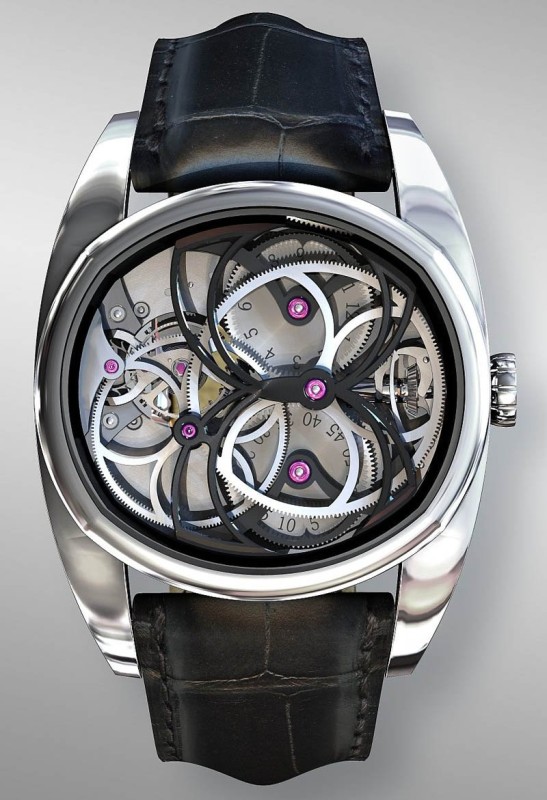
We got so mesmerized by the weird reading of time that I forgot to ask a simple question: How does it work?
Forget about the hour display at the top and the minutes display at the bottom with fixed papillon bridges and rotating sub-dials.
The technical blurb reads:
"Spring barrels normally turn too slowly for the display of minutes and too fast for the hours. But in the Papillon the timing works differently. Its spring barrels are not firmly tied into the sequence of the movement. As a result the time display can be adjusted by means of the hand setting. In addition, two giant gear wheels with 192 and 175 teeth remove the need for a third wheel. This reduction in the number of wheels and the double spring barrel arrangement result in energy savings which extend the life of the watch enormously."
But what does that mean actually?
If there is only 1 escapement, no 3rd wheel and 2 rotating display discs -- how is it all connected for time-keeping? How does ONE escapement output link to TWO display dials without a linking 3rd wheel?
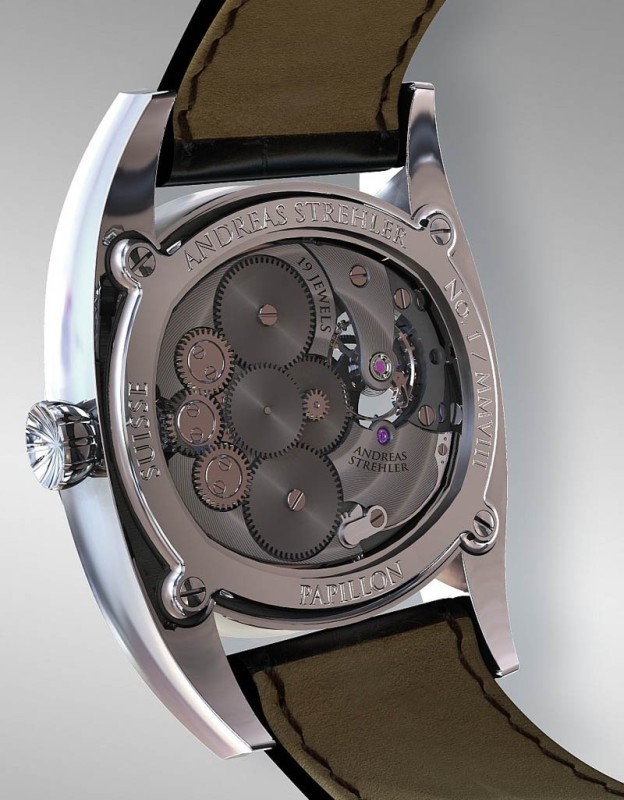
Answers understandable by mere mortals required......
Regards,
MTF

It works...
Don
Transparent discs understood but......
since there are 2 time display discs and only one escapement without a 3rd wheel, how are the display discs connected to the escapement part at the same time?
I'm usually good spatialy and in 3D 'in-my-mind' but somehow I must have a mental block or the curvy papillon bridges are distracting me.....

MTF
This message has been edited by MTF on 2009-06-09 21:57:35
I've been waiting for an article explaining this watch
ever since I first read about it a year ago. I am fascinated by this design, which is both technically innovative and beautiful.
Creating a movement from scratch like this and being able to put it into production is boggles my mind. I wish Andreas much success.
Bill
3 more questions
1. Does the 2 toothed sapphire discs synchronized to the rotations of two main spring barrels?
2. The two mainspring barrels are said to be not firmly tied into the sequence of the movement. How are they regulated by one escapement?
3. From what point of view should we admire this design?

I like this idea that it's the caliber which tells the time.
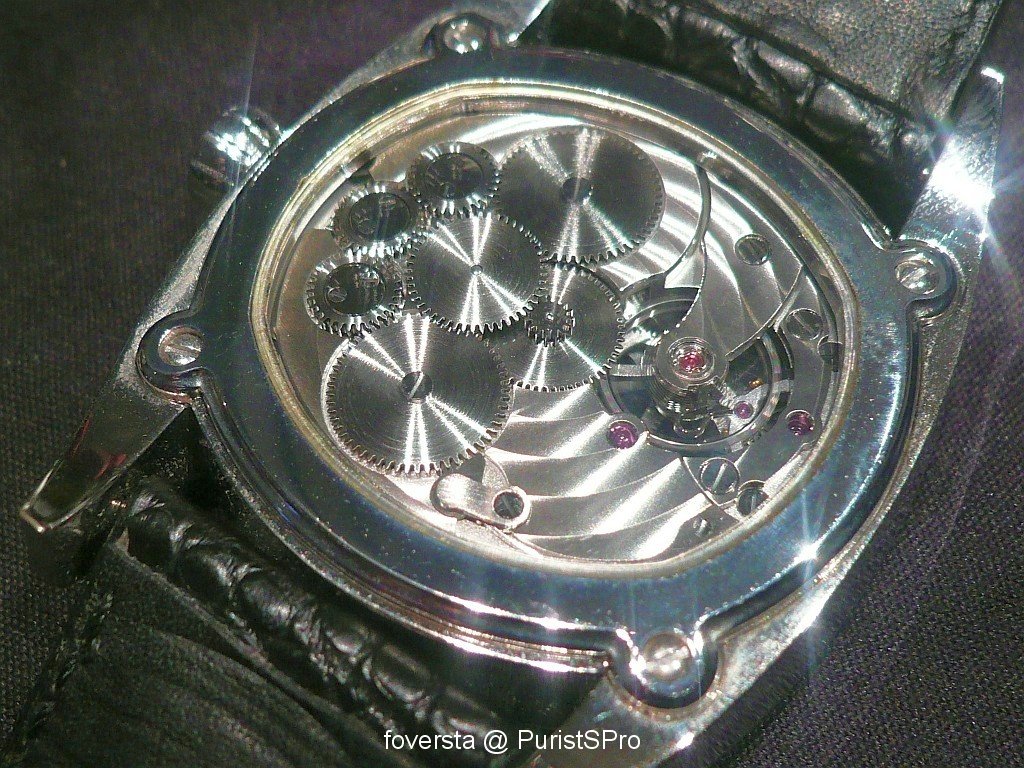
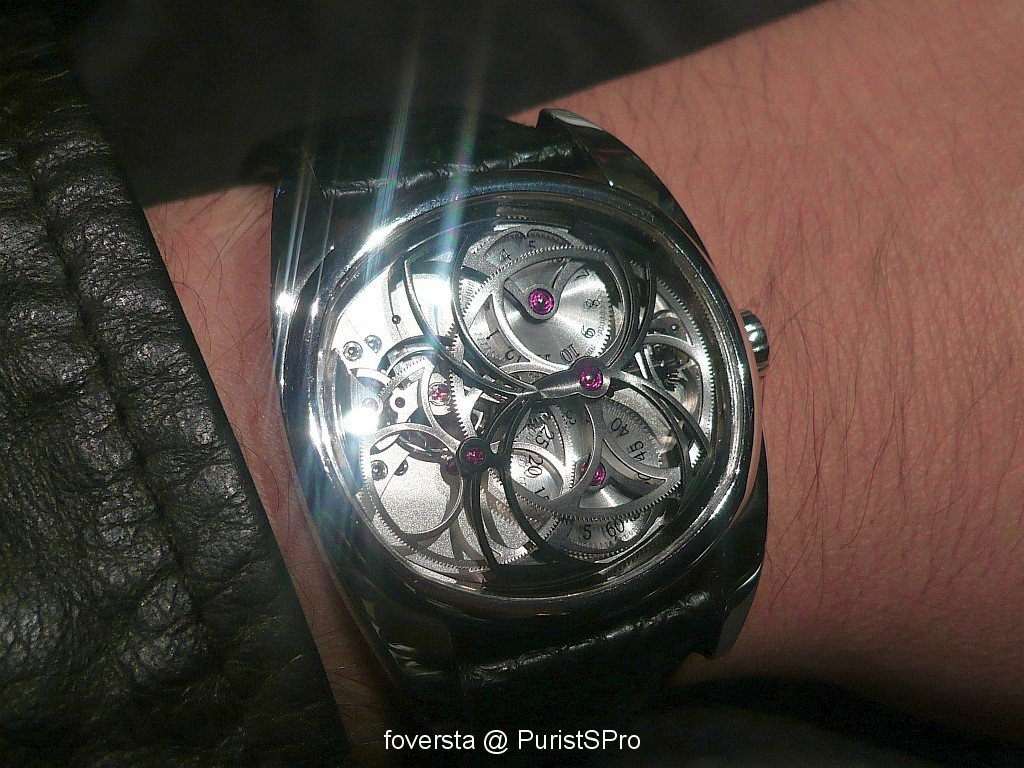
Fr.Xavier

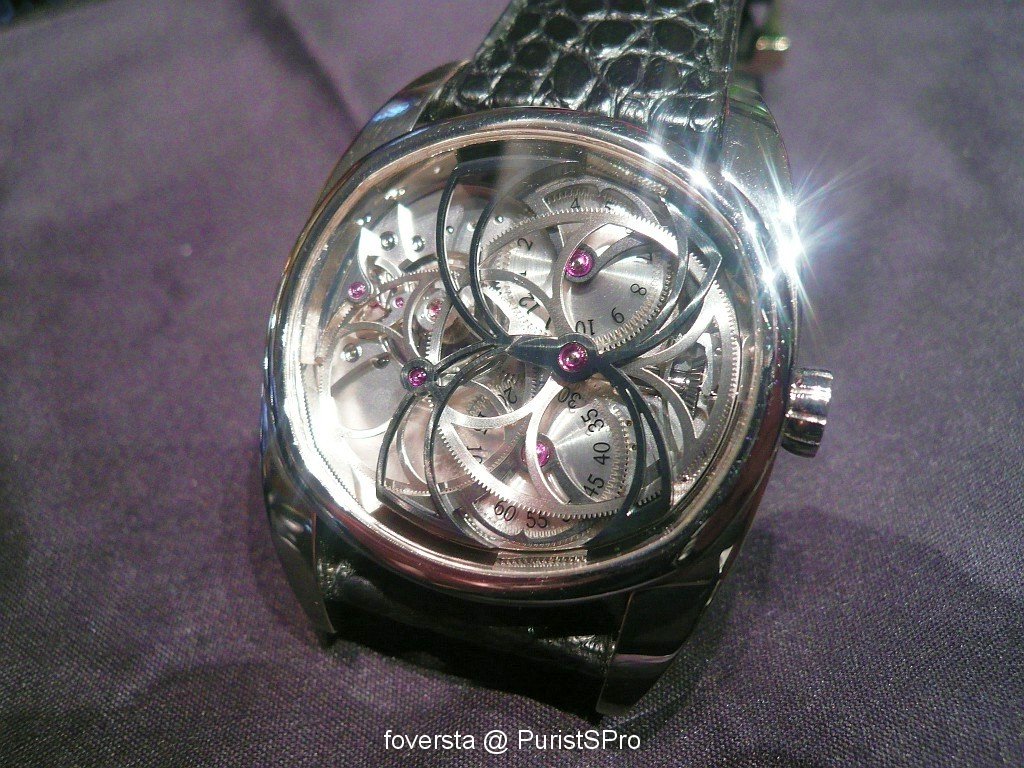
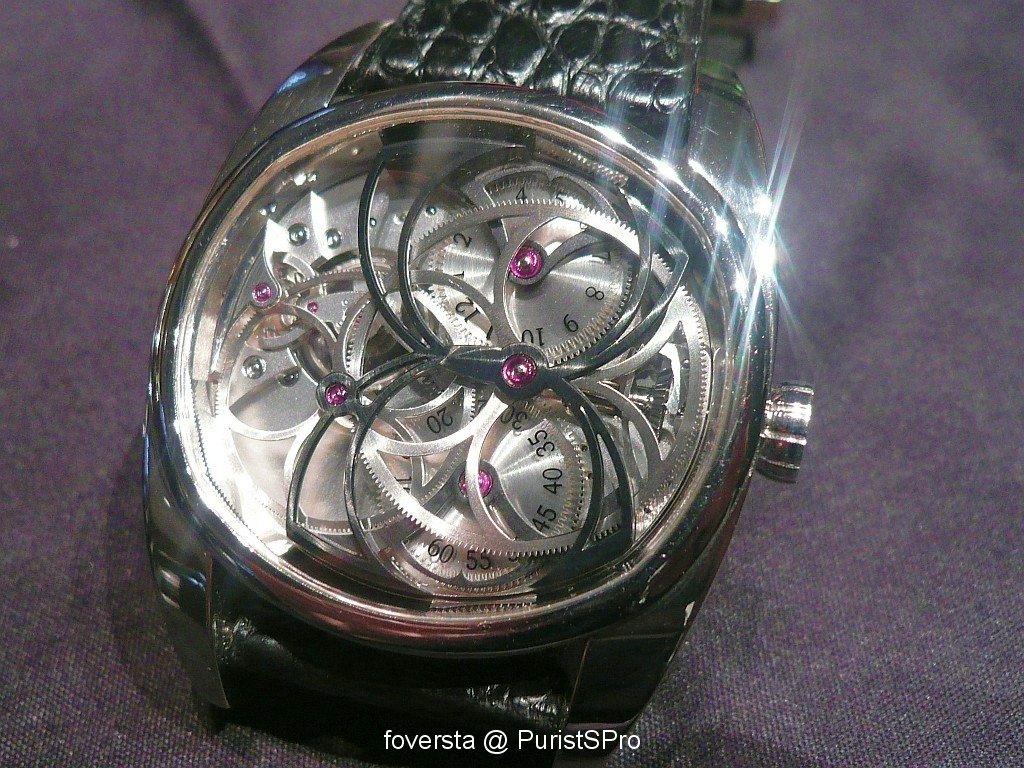
You can see the sapphire disks here
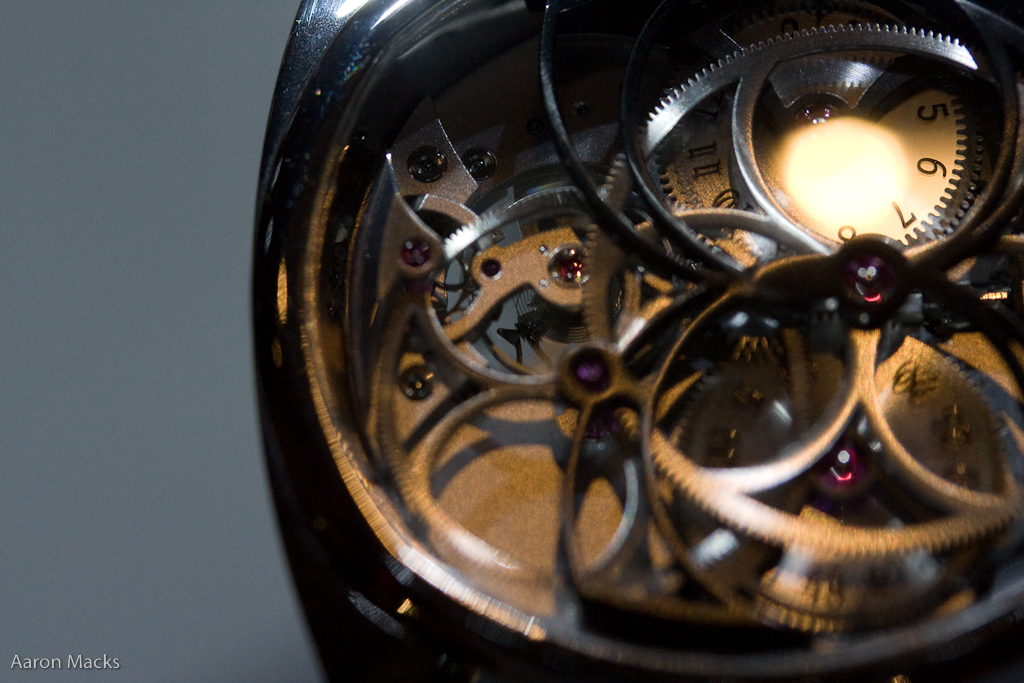
It's a challenge to shoot, but not as hard as FrX makes it out to be

A
