Montblanc Villeret - iW - PuristSPro HKG Evening
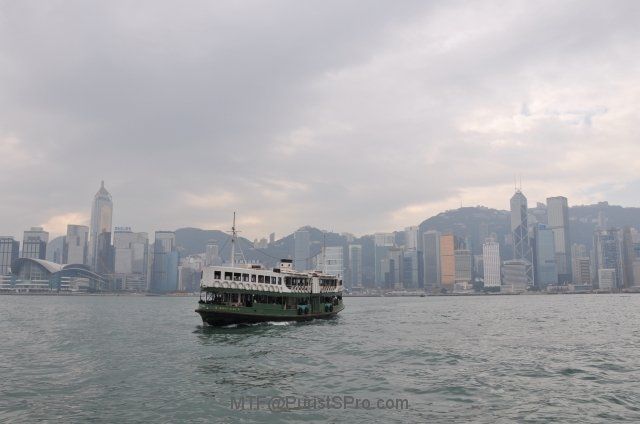
Star Ferry - Hong Kong
This scene immediately evokes the flavour of Hong Kong: busy, bustling, riding the waves and reaching for the sky.
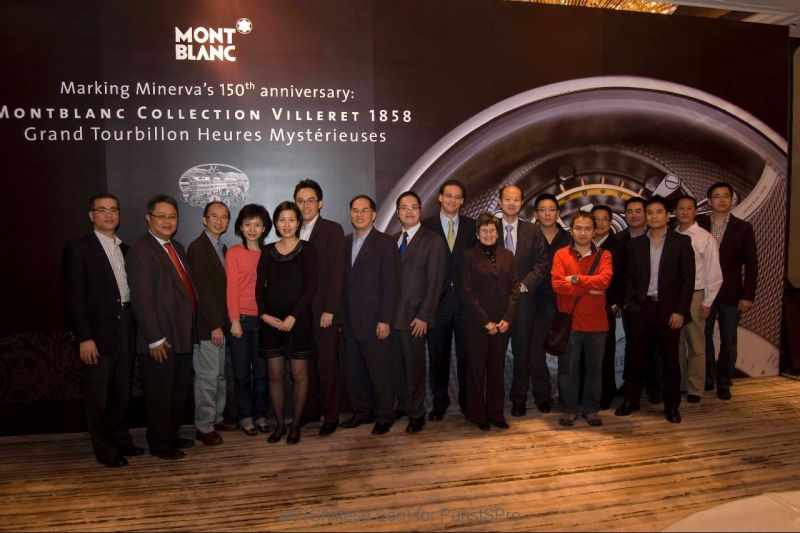
On 22 Nov 2008, Montblanc Villeret kindly hosted a iW (Chinese Edn) - PuristSPro GTG in Hong Kong for iW magazine readers and PuristS community, it was an opportunity to get up close and personal with Montblanc Villeret (Minerva) to learn more about this high horology division of Montblanc and also to dispel some myths.
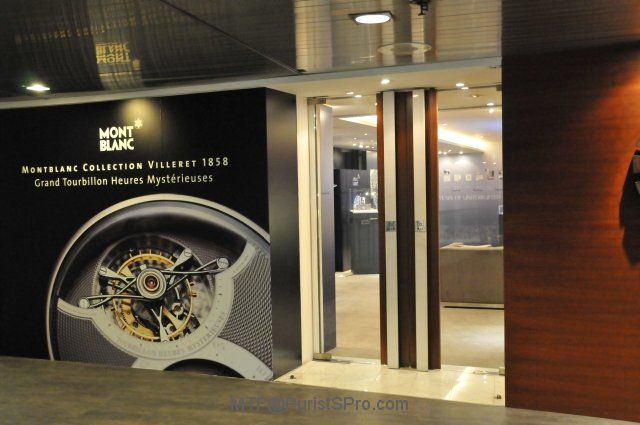
King Fook Watch VIP Rooms - Kowloon
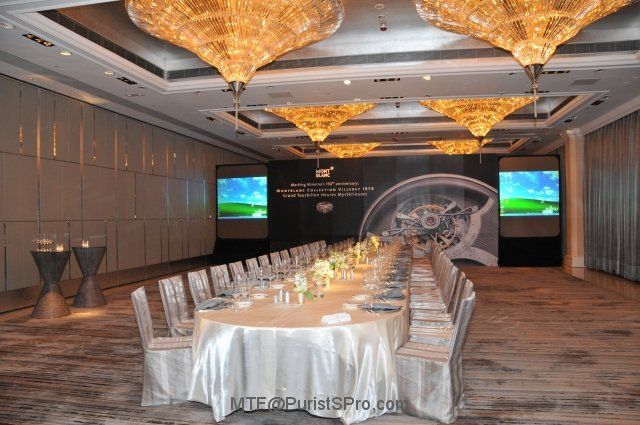
Ostensibly, the event was to celebrate 150 years of continuous watchmaking at Minerva, as well as to introduce the Montblanc Collection Villeret 1858 Grand Tourbillon Heures Mystérieuses. We were there to also find out about the high-end Montblanc timepieces from a brand better known for it's pens, leather goods and accessories.
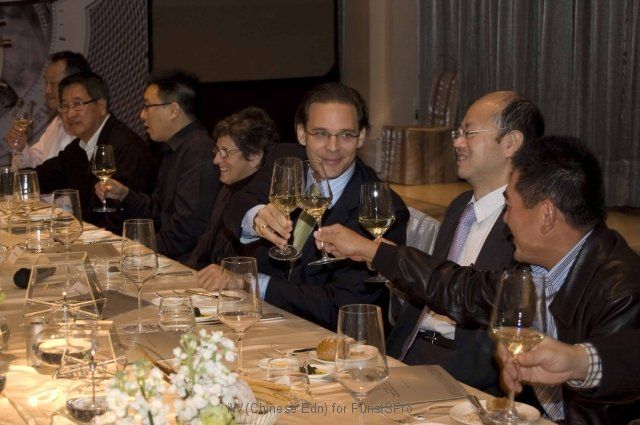
It seemed a logical step-wise progression:
First, there were watch designs that matched the pens; I remember looking for a Montblanc watch to match my pens.
Then, there came watches with reliable 3rd party and Montblanc in-house Rieussec movement.
Finally, the high-end Manufacture in Villeret.
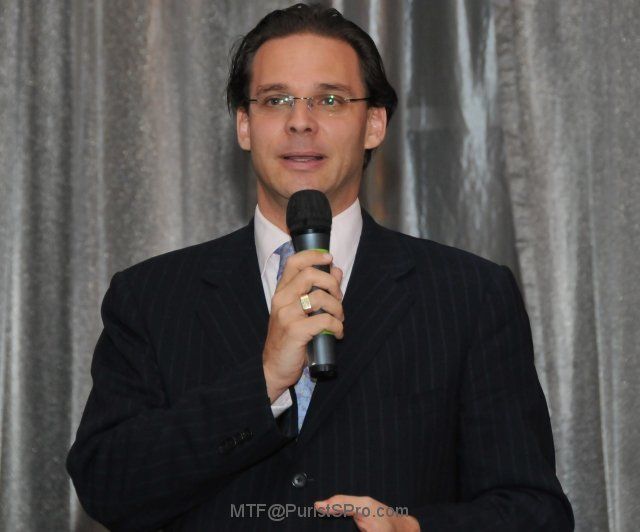
Alexander Schmiedt welcomed guests and presented
Alexander Schmiedt is Business Director of 'Villeret 1858' Manufacture of Montblanc. The technical Director of Institut Minerva de Recherche en Haute Horlogerie is Demetrio Cabiddu, whose signature is found on some of the Collection pieces.

Monique Wyssmueller
Monique Wyssmueller was a key member of the "demonstration team" on her first trip to a number of cities in the Far East. We were rather intrigued to hear that Monique's hobby is restoring vintage tractors...yup - those hulking, agrarian machines are her "other love". She has more than 60 tractors! We thought that she must have the largest garden in Villeret but Moniquer tells us that she parks them very, very, close together 
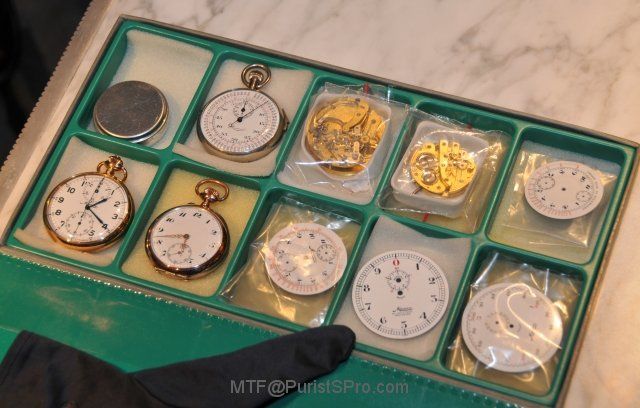
Let's start with a little Unauthorised History of Minerva:
1858 – H & C Robert Co. founded in Villeret
1887 – Minerva and Arrow trademarks
1902 – Pocket Watch movements
1908 – Pocket Watch Chronograph
1909 – Wristwatch movements
1923 – Cal. 20 wristwatch chronograph
1929 – Renamed Minerva S.A.
1935 – Sold to 2 employees; 19-ligne Caliber 42 @ 36,000vph; 1/100th second chronograph
1936 – Winter Olympics timekeeper
1978-1984 – Swiss Watchmaking Crisis
1998 – Low point and Internet watches
2000 – “Italian Holding Group”; “Wanna-be” Patek Philippe prices; “gift watches” for Italian owner
2006 – Montblanc investment; Institut Minerva de Recherche en Haute Horlogerie
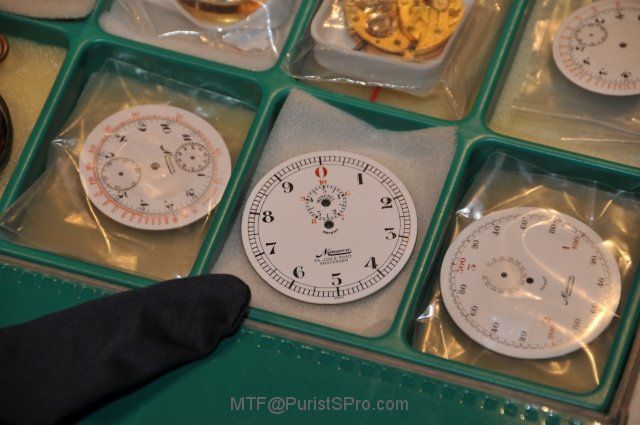
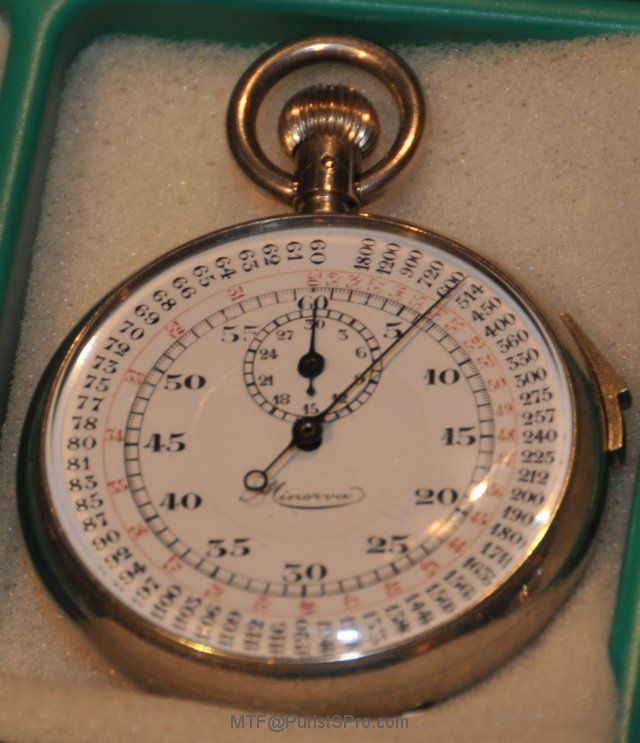
Note the dials and movements of past famous high-beat chronographs and stop-watches 1/100th seconds resolution.
Minerva survived the quartz era by continuing to make small production runs of stop watches and simple time only watches.
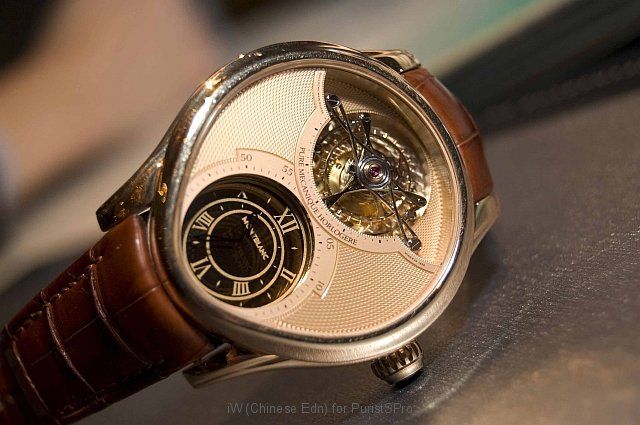
Grand Tourbillon Heures Mystérieuses
The Grand Tourbillon Heures Mystérieuses will be available as unique, bespoked versions in platinum and editions of eight in either white or rose gold (5N). The tourbillon revolves around its own axis once a minute; including the balance, it comprises 95 individual parts and weighs in at 0.96 grams. The tourbillon cage, measuring 18.4mm in diameter, contains a large balance 14.6 mm in diameter, which has a high moment of inertia of 59 mgcm2 and a classical frequency of 2.5 Hertz (18 000 bph).
There are three moveable compensating weights with the Minerva arrow, which can be pushed to and fro on the curved arc of the tourbillon cage to obtain perfect equilibrium. The steel tourbillon bridge takes the form of two horizontal, overlapping figures of eight, which are also symbols of infinity. All the steel parts in the bridge and cage are carved from solid pieces of metal and then painstakingly shaped, chamfered and polished by hand; that takes three weeks for each tourbillon and calls for standards of craftsmanship mastered by only a handful of master watchmakers.
There has also been comment over the Internet that this watch was presented in 2005 before Montblanc acquired Minerva. Mr Schmiedt made it clear that although development prototypes and concept may have been discussed before, no finished and production grade pieces were realised until the Montblanc investment allowed the concept to become reality. Like the previous series of owners, Montblanc's investment allowed the Manufacture to continue existence and even re-establish traditional production methods.
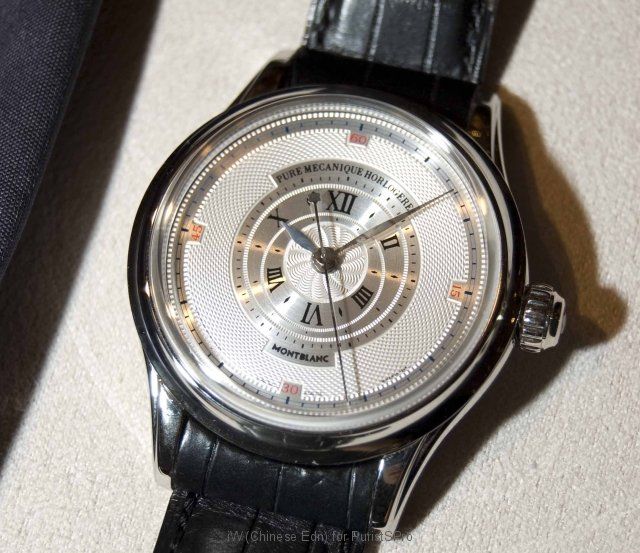
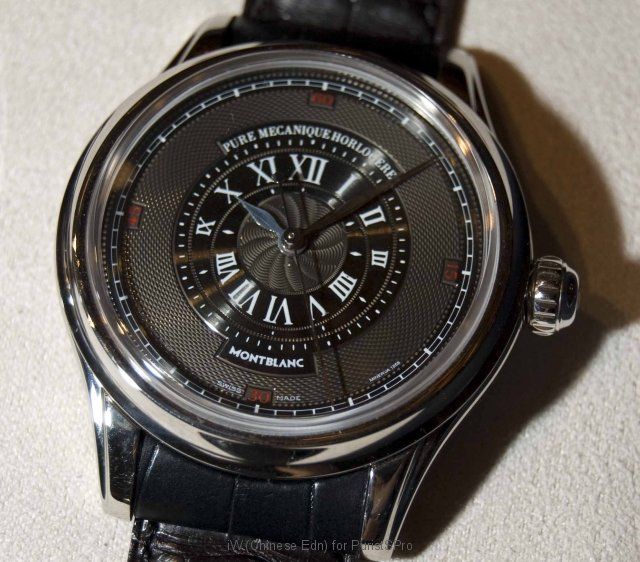
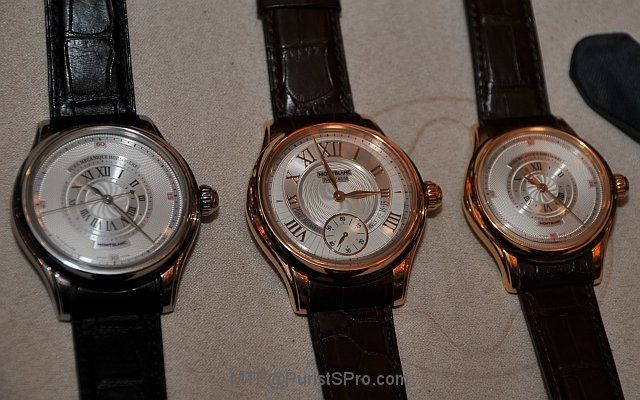
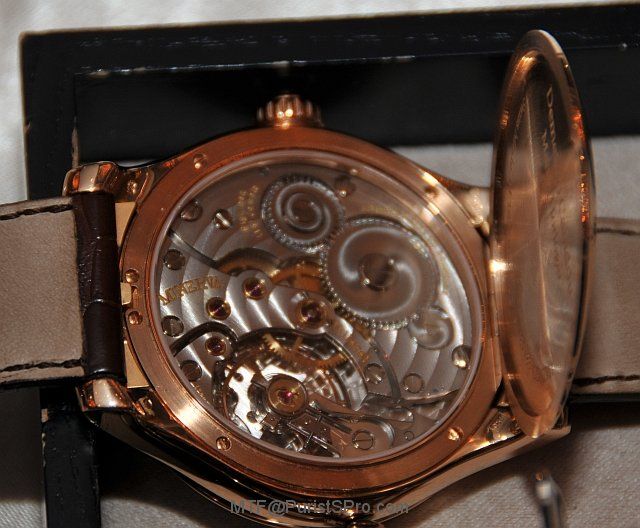
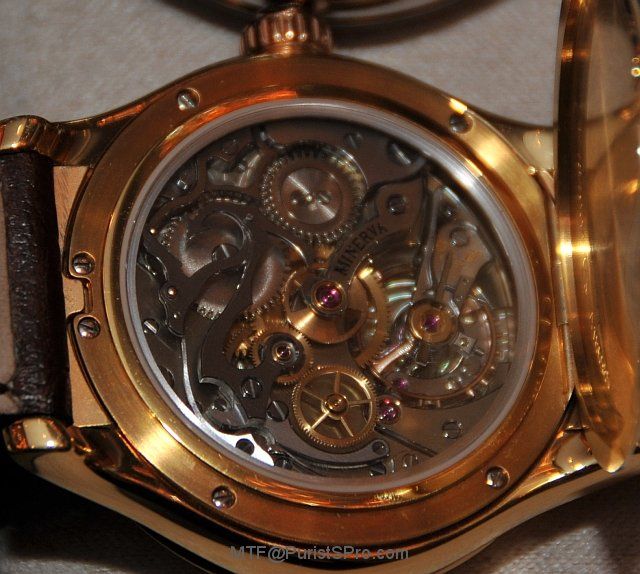
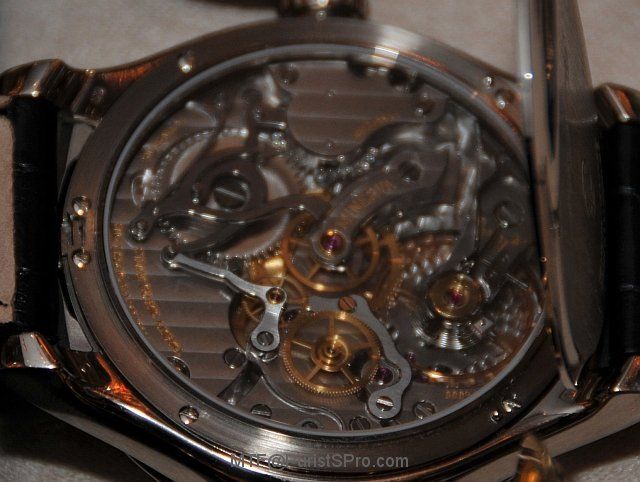
Each timepiece in the Montblanc Collection Villeret 1858 is accompanied by a set of lithographs presented in a leather-bound case: historic depictions of the old Minerva workshops, landscape impressions of the Jura mountains, illustrations of watch movements, and a lithograph of the watch in question.
The latter is at the very heart of each portfolio because, like the watch itself, it is unique. It bears the watch‘s serial number, its number in the limited edition, and the handwritten signature of master watchmaker Demetrio Cabiddu. Each set of lithographs is assembled individually and is thus a document of the philosophy that makes each and every watch in the Montblanc Collection Villeret 1858 something unique.
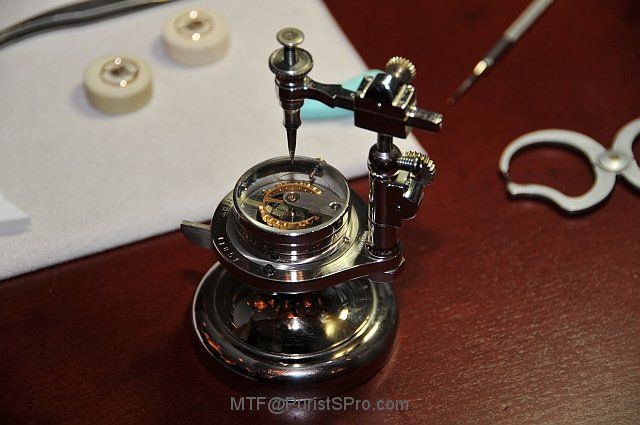
The process tha blew us away was that Montblanc Villeret (Minerva) is amongst a handful of Manufactures in Switzerland that poise their own balance wheel and make their own spirals (hairsprings) by hand. There has been much discussion on the Internet as to the reasons for this.
In the first place, slow-beat large diameter (14.6mm) balance wheel and spirals with Phillip's terminal curve cannot be sourced from Nivarox. Minerva have to make their own and that they do so allows autonomy for future designs and preserves the patrimony of the watchmaker's art.
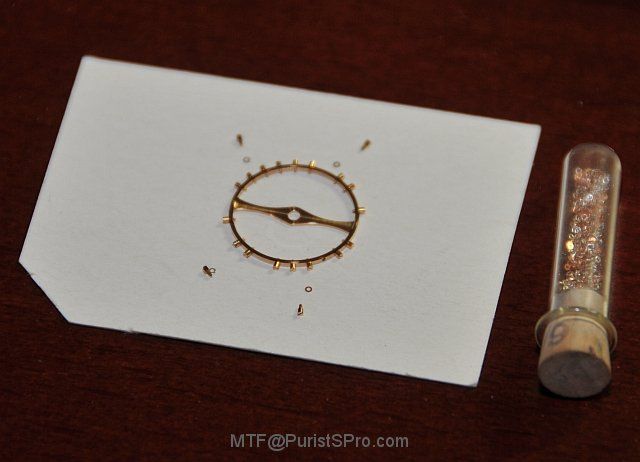
Unlike some other brands, the screws on the Minerva balace wheels actually perform a task. They fix the washer-like weights at appropriate positions on the wheel to poise or balance the weight distribution.
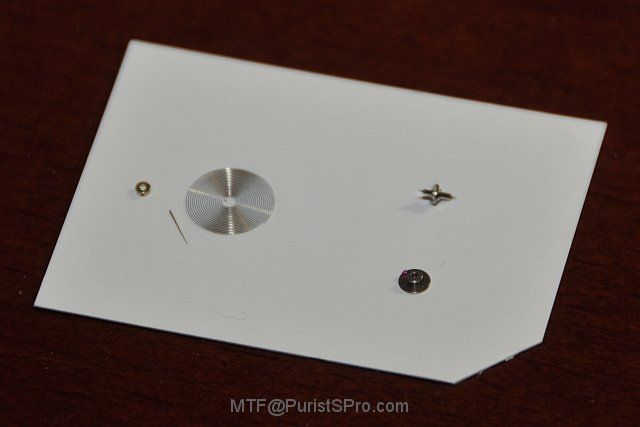
Starting with straight round wires, the manufacture flattens the wires and forms them into coils. Heat treatment alters the 'memory' of the wire to maintain their spiral shape. The central collets are fixed by hand to the spirals with the wedge-like wire.
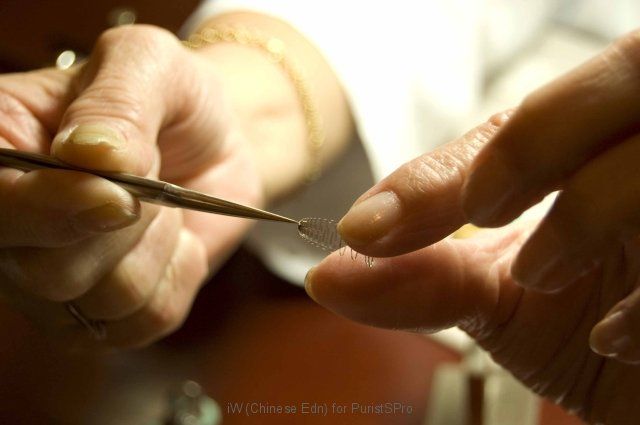
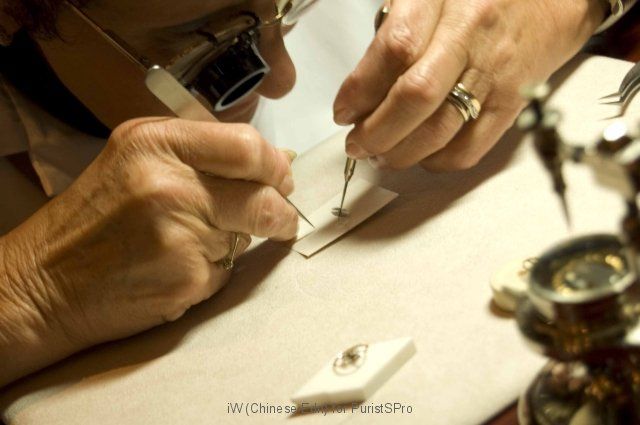
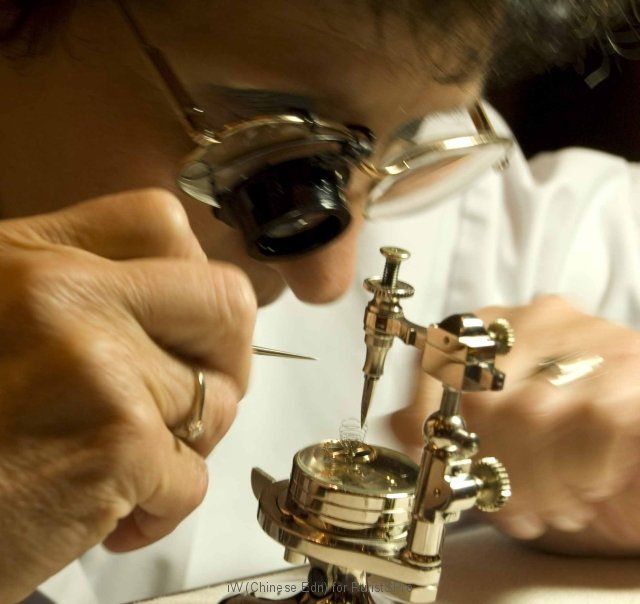
The exact length of spiral determines the beat frequency (18,000 vph), and that length is determined by using this machine. The large reference balance wheel has been calibrated and selaed by a official observatory. The test balance wheel is set in motion with the reference wheel.
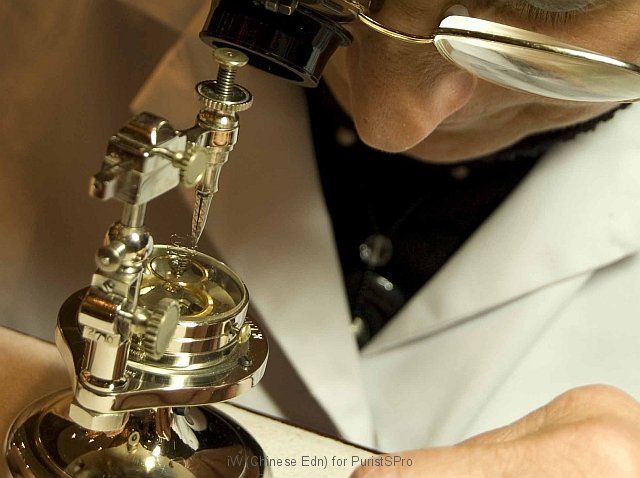
By altering the length of the spiral, the test balance wheel achieves the same beat frequency as the reference wheel. This "counting" process compares the difference in beat count of the two wheels, hence the French term for the process. The spiral is cut at the right length.
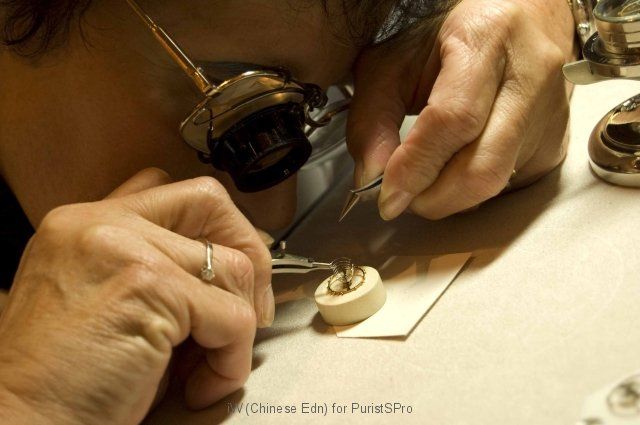
Monique bends the Philipps terminal curve by hand to improve isochronism.
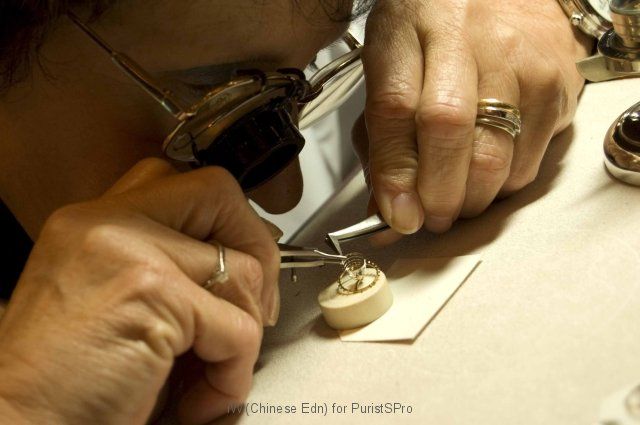
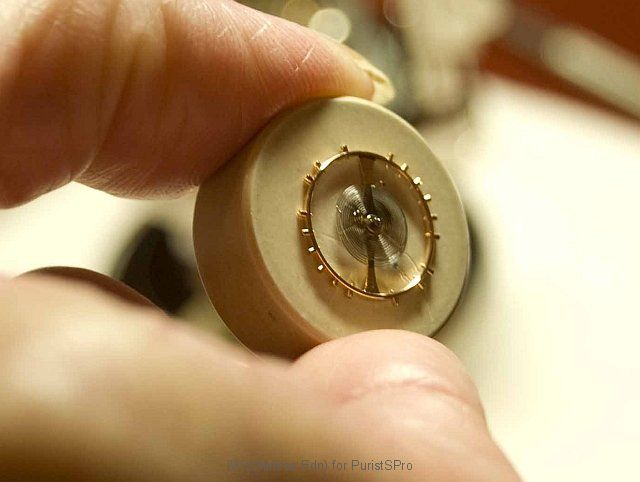
The product of 4 hours work: hand-made spiral with terminal curve and balance poised
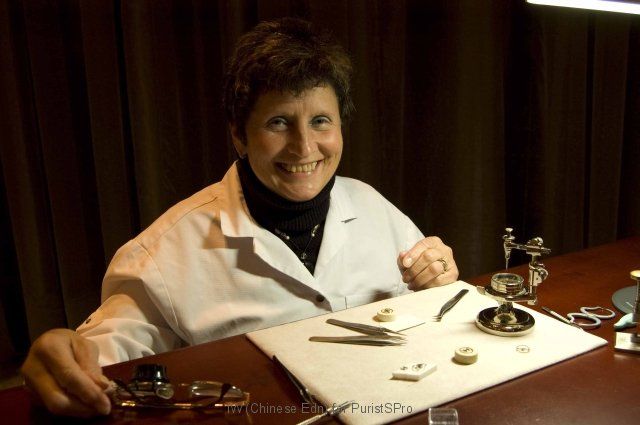
Monique is one of only 2 balance wheel spiral makers at Minerva; both are ladies.
Monique trained the other lady to keep the art alive at Minerva. Prior to being re-employed by Minerva, Monique worked at the village post-office and did part-time work attaching hands to quartz watches for Cartier. Such was the devastation of the 1970s quartz revolution to tradtional skills but luckily, she kept her tools and skills alive.
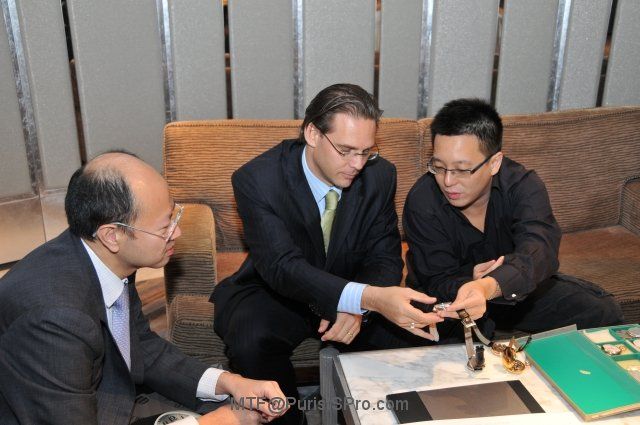
Alexander Schmiedt showing Hong Kong PuristS the Collection
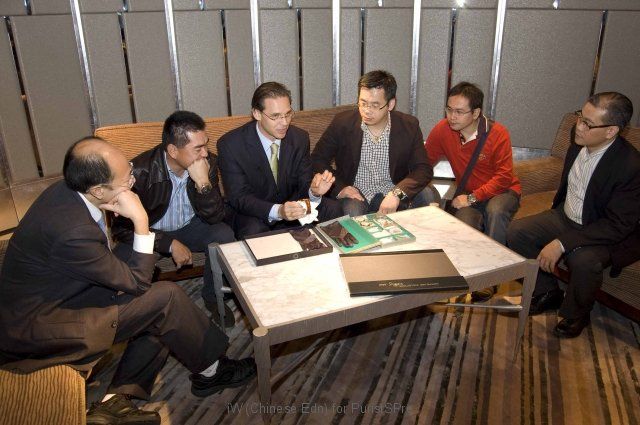
PuristS all !
Regards,
MTF
We would like to thank:
Montblanc Villeret and Montblanc Hong Kong teams for an educational and eye-opening evening.
iW (Chinese Edn) magazine for photos and helping with logistics.
Hong Kong watch-fans and PuristS for joining the event, asking questions and holding discussions.
Photo credits as marked.
Text Copyright Dr Melvyn Teillol-Foo & PuristSPro LLC, 2008.

Thanks for the picture and write up, interesting reading! And thanks to Montblanc and iW

Thanks a lot Melvyn for this excellent report !
Fr.Xavier

The survival of the mechanical watch industry in the wake of . . .
. . . the 'quartz crisis' is a matter of record, but it's astounding how tenuous the continuity of production can be - just consider the example of Mme Wyssmueller. One wonders if the Minerva manufactory would have maintained it's traditional way of spiral making if her expertise had been lost . . . amazed, Art

Thanks Melvyn
Minerva is one my dear brands and the Montblanc Villeret models are indeed quite appealing!
Watches of a rare breed!
Cheers
Dje
Keeping an open mind - PuristS open mind.......
of course.
Some people have commented that Minerva is still Minerva even with Montblanc logo on the dial. Or that the watches were conceived before Montblacn investment in 2006.
That is not disputed by Montblanc. In fact, they embrace the continuity of Minerva and see themselves as keepers of tradition. In fact, after feedback from customers, they will remove extraneous words from the future dials. Having established the integration of Villeret into Montblanc, there is no need for the horological words.
When I was offered Minerva watches in 2002 at Patek Philippe prices, I did not take up because of no confidence in sustainability of the brand under those owners (2000-2005). I guess many people had the same feeling because quod erat demonstratum - by 2006, Montblanc could buy out and inject capital and confidence. With the might of a 105 year-old brand and the Richemont Group behind the venture, the Institut is well placed to focus on haute horlogerie now..........current recession notwithstanding.
Regards,
MTF

Dear Melvyn, I am certainly one of those 'culprits'...
Montblanc has to be commended for (i) understanding the potential the sleeping gem Minerva had, (ii) exploiting it by transforming it into competence center (the institute), and (iii) acknowledging this by engraving the Minerva name on the movements.
I am glad you mentioned the aspect of sustainability. This aspect is not only important for the customer, but of course for the employees as well. I meet Dimetrio Cabiddu several time before and once after the takeover by Richemond. While he was always confident about the technical and artistical abilities of Minerva, his mood and his joyance were quite different!
And finally and funny enough, I had a very similar experience than you at the very end of the italian ownership. I was offered a brand new Minerva 1858 at a very attractive price. I ultimately declined, pastly thanks to the recommendations of several fellow purists - which were based on the long term perspectives of the brand. Today, I could kick myself that I did not follow my heart, as I still love those watches!
This again indicates that watch aficionados are not purely controlled by emaotion as we might think (or pretend in order to justify our purchases). There is some rationality still remaining!
Cheers,
Magnus
This message has been edited by Magnus Bosse on 2008-12-03 00:07:33 This message has been edited by Magnus Bosse on 2008-12-03 00:08:31

What a fantastic post, thanks for sharing
That was very enjoyable. Thanks!
Does the upgrade make your collection better?
Jeff,
Does the continuous lineage of your Minerva watches with the current Montblanc Villeret line increase their historical worth? That they are the link between the heyday of the 1940s and 2008...........and beyond.
Regards,
MTF
No, but not worse either
I appreciate the small collection I have without too much concern for the future of the brand. I do appreciate the history of the brand though because they were able to accomplish things (operating a family business, introducing new products and beautifully designed truly limited editions) with few people and relatively little capital. It's a totally different game today of course, and I no longer recognize the Minerva brand in the current offerings (not that this is a bad thing of course; change is good).
Jeff
A true 150 years
Maybe because of isolation in Villeret and previous owners' determination to continue as much in-house production as possible, the company has a continuous 150 year history of operations.....through wars, famines, revolutions and economic depressions.
No need to revive brand names, or drag out descendents of the founder
Even through bad times, the manufacture still continued to make mechanical watches.
Regards,
MTF


Great post!
Thanks Melvyn!
Nice detailed post MTF...
Looks like Jester does not speak French
Kong

Watches and...tractors?
First, MTF, thanks for the great report and lovely pictures. Best part of this article? Monique. Wyssmueller. The woman is a balancier and restores tractors? Bizarre...and I mean that in only the best, most complimentary way. She's awesome! Seeing evidence of the human factor in the process of mechanical watchmaking is part of what feeds my ever-growing love for this hobby.
Something lost in translation but.......
Monique speaks French and I don't, but when I asked about tractors vs watches.......she said:
they are both mechanical albeit a tad different scale !
MTF
This message has been edited by MTF on 2008-12-04 09:34:17What would've been really amusing...