
AnthonyTsai
[PuristS]
22366

The new LANGE 1 TOURBILLON PERPETUAL CALENDAR in white gold
The new LANGE 1 TOURBILLON PERPETUAL CALENDAR in white gold turns the 29 February into a holiday for connoisseurs of precision watchmaking.
Correctly switched
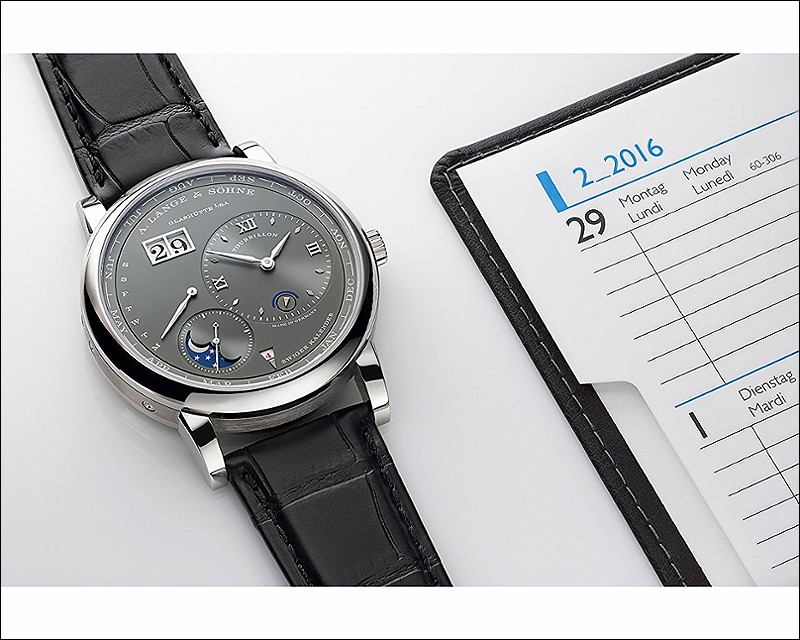
The LANGE 1 TOURBILLON PERPETUAL CALENDAR – precisely set to 29 February 2016
A secret holiday for owners of a perpetual calendar watch is 29 February. This is the date on which the Gregorian calendar gives us an extra day. The reason: the earth does not orbit the sun precisely once every 365 days. It takes 365 days, 5 hours, 48 minutes and 45 seconds. As a result, we are missing nearly a fourth of a day every year. To avoid Christmas eventually being celebrated in the summer at some point, every four years, an extra day offsets the difference between the solar year and the calendar year.
Once again this year, timepieces with perpetual calendars can demonstrate their capabilities. In two respects, actually: they must not only correctly transition from 28 to 29 February but then also jump directly to 1 March at the end of the day. This may sound simple, but it is a formidable technical challenge. It requires the development of a mechanical programme that maps the different durations of all 48 months across the entire four-year cycle. As a rule, this task is handled by a wheel with 48 teeth in which the durations each month during a four-year period are permanently stored in the form of gaps that have different depths.
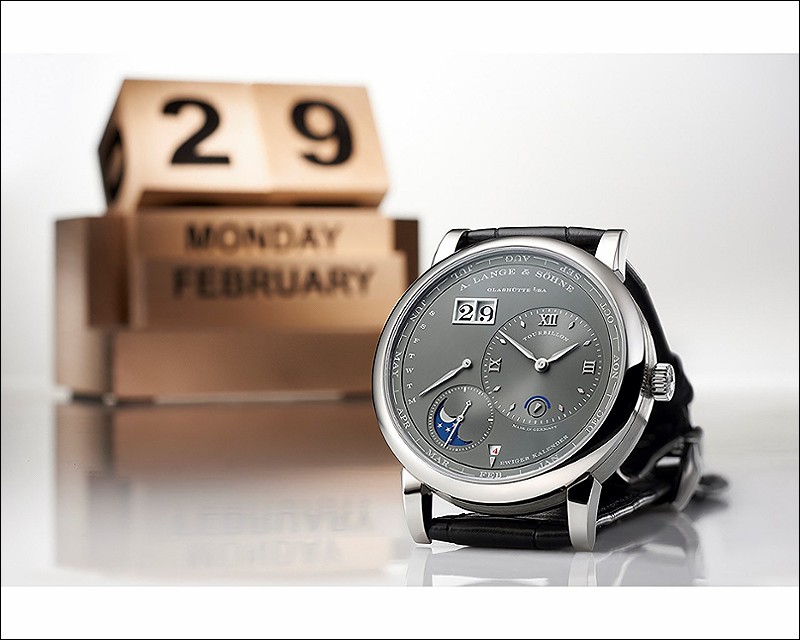
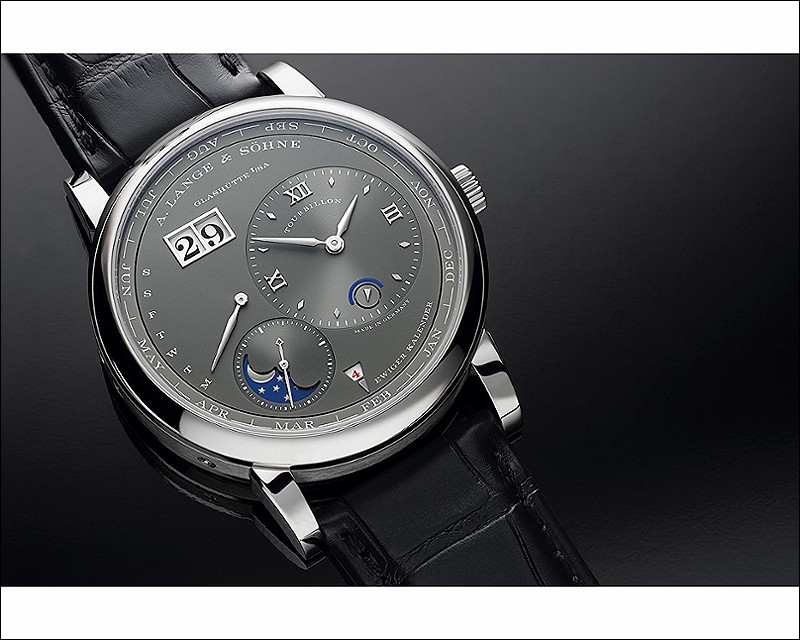
The special sampling mechanism of the LANGE 1 TOURBILLON PERPETUAL CALENDAR allows for the correct indication of 29th February in a leap year.
With the LANGE 1 TOURBILLON PERPETUAL CALENDAR, A. Lange & Söhne’s product developers chose a totally different approach. They placed the month indication on a large circumferential ring that rotates about its centre axis once a year in twelve 30-degree steps. The display is endowed with recesses of different depths for the individual month durations as well as with a complex sampling mechanism that also takes leap years into account. Additionally, all displays of the perpetual calendar switch forward instantaneously, so they deliver precise readings at all times. The force needed for the switching cycles is gradually built up during a period of 24 hours. For this reason, the switching process does not affect rate accuracy. The mechanism is designed such that a first one-day correction is not needed until the year 2100. In 2100, the centennial rule of the Gregorian calendar omits the leap year and skips 29 February as an exception.
About A. Lange & Söhne
Dresden watchmaker Ferdinand Adolph Lange laid the cornerstone of Saxony’s precision watchmaking industry when he established his manufactory in 1845. His precious pocket watches remain highly coveted among collectors all over the world. The company was expropriated after World War II, and the name A. Lange & Söhne nearly vanished. In 1990, Ferdinand Adolph Lange’s great-grandson Walter Lange had the courage to relaunch the brand. Today, Lange crafts only a few thousand wristwatches in gold or platinum per year. They are endowed exclusively with proprietary movements that are lavishly decorated and assembled by hand. With 54 manufacture calibres developed since 1994, A. Lange & Söhne has secured a top-tier position among the world’s finest watch brands. Brand icons, such as the LANGE 1 with the first outsize date in a regularly produced wristwatch and the ZEITWERK with its precisely jumping numerals display, rank among the company’s greatest successes. Sophisticated complications such as the RICHARD LANGE PERPETUAL CALENDAR “Terraluna”, the ZEITWERK MINUTE REPEATER and the DATOGRAPH PERPETUAL TOURBILLON reflect the manufactory’s determination to achieve ever new pinnacles in horological artistry.
This message has been edited by AnthonyTsai on 2016-02-26 08:30:53