
DonCorson
[AHCI]
3358

Romain Gauthier - Logical One
Romain Gauthier - the Logical One
Logical One ?
The first of a series of Logicals? The one that is logical?
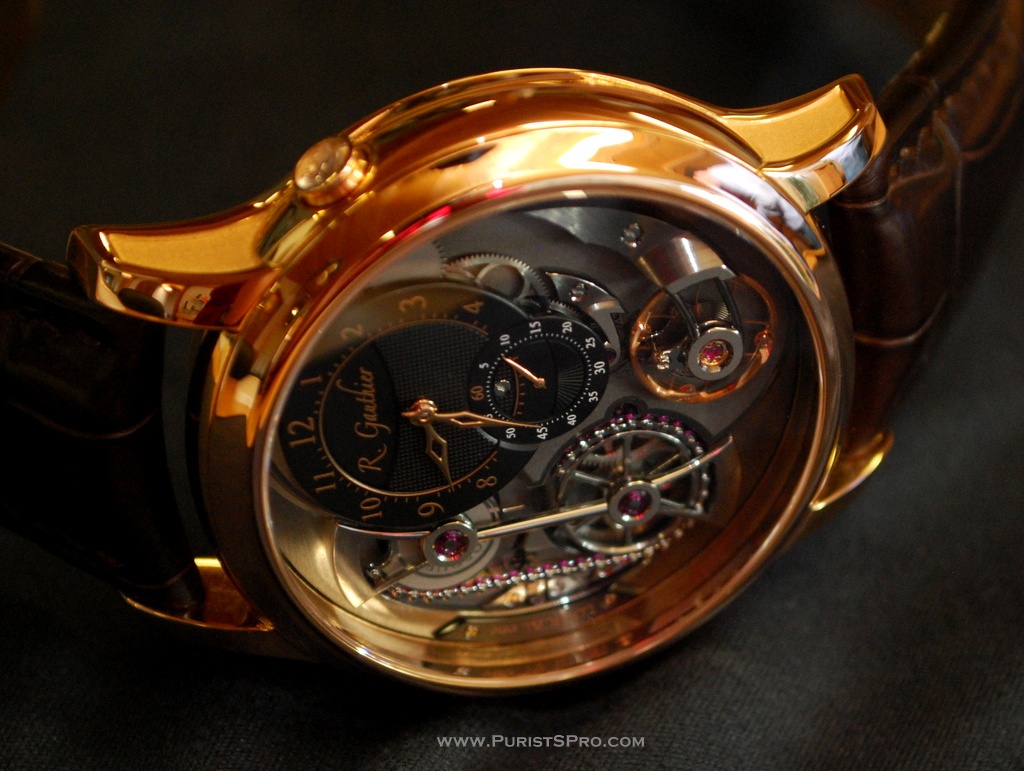
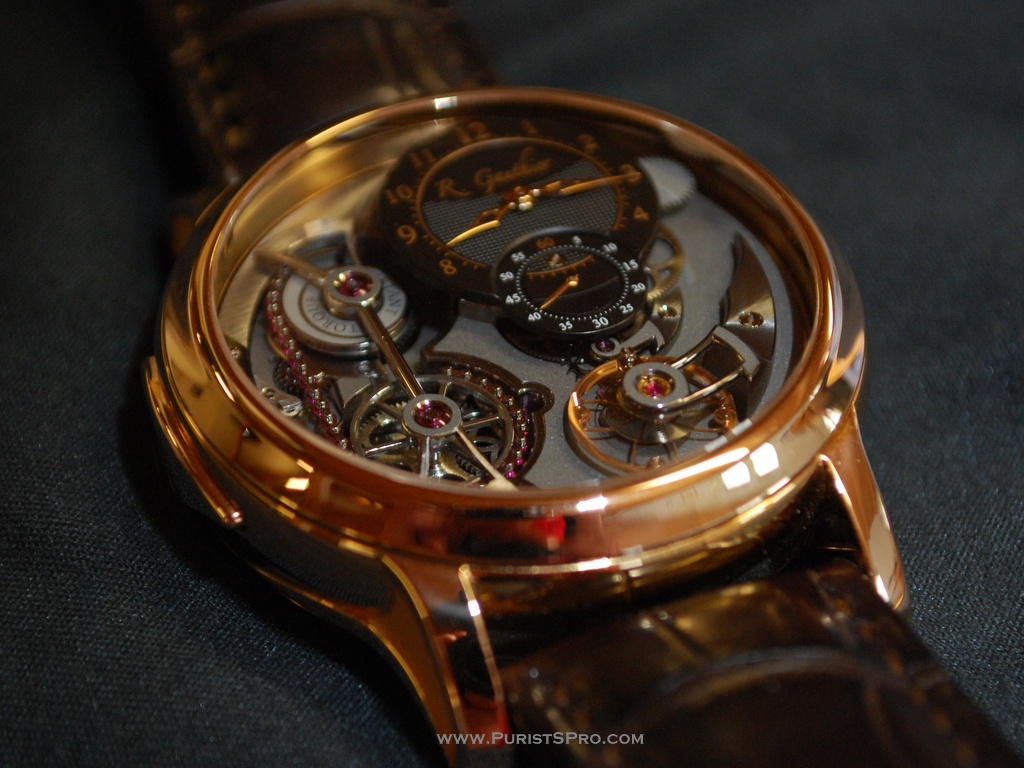
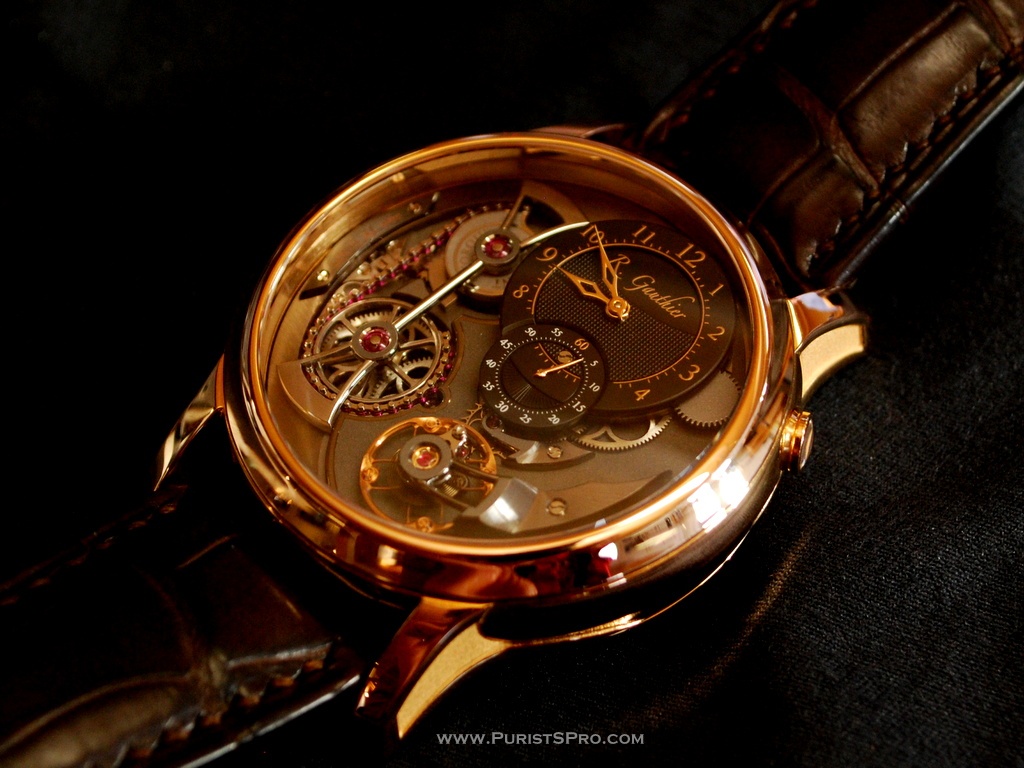
Whatever the definition, Romain Gauthier's Logical One is a logical step forward to achieving better chronometric results from a wristwatch (as well as delicatessen of finishing as are all of Romain's watches.)
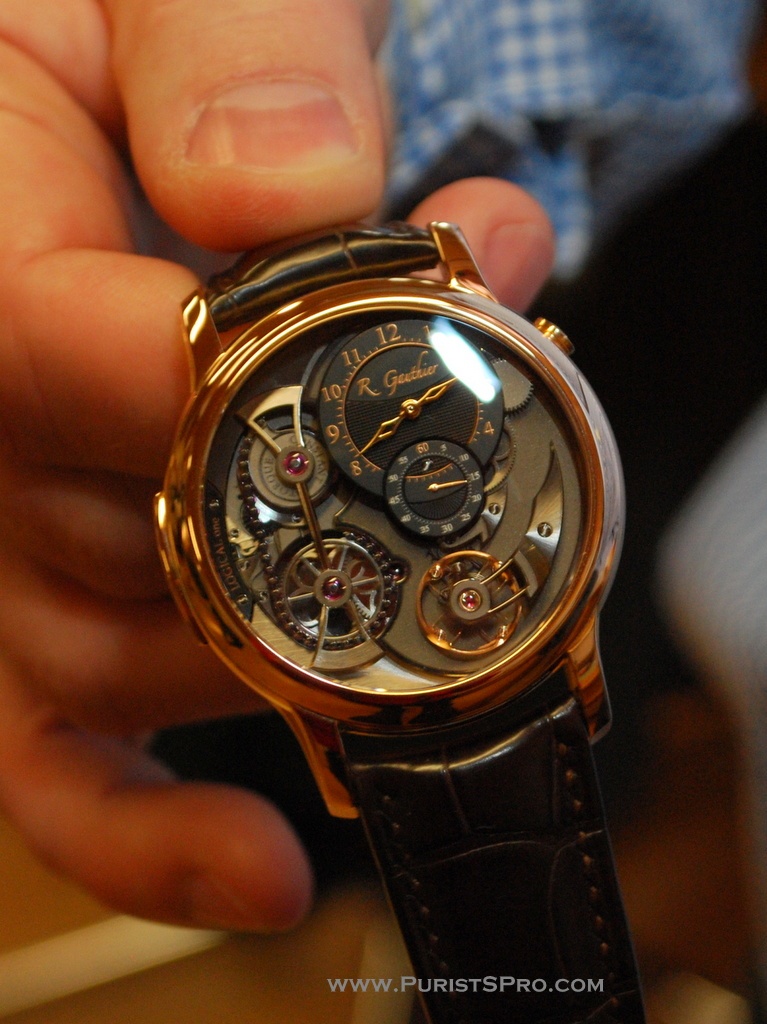
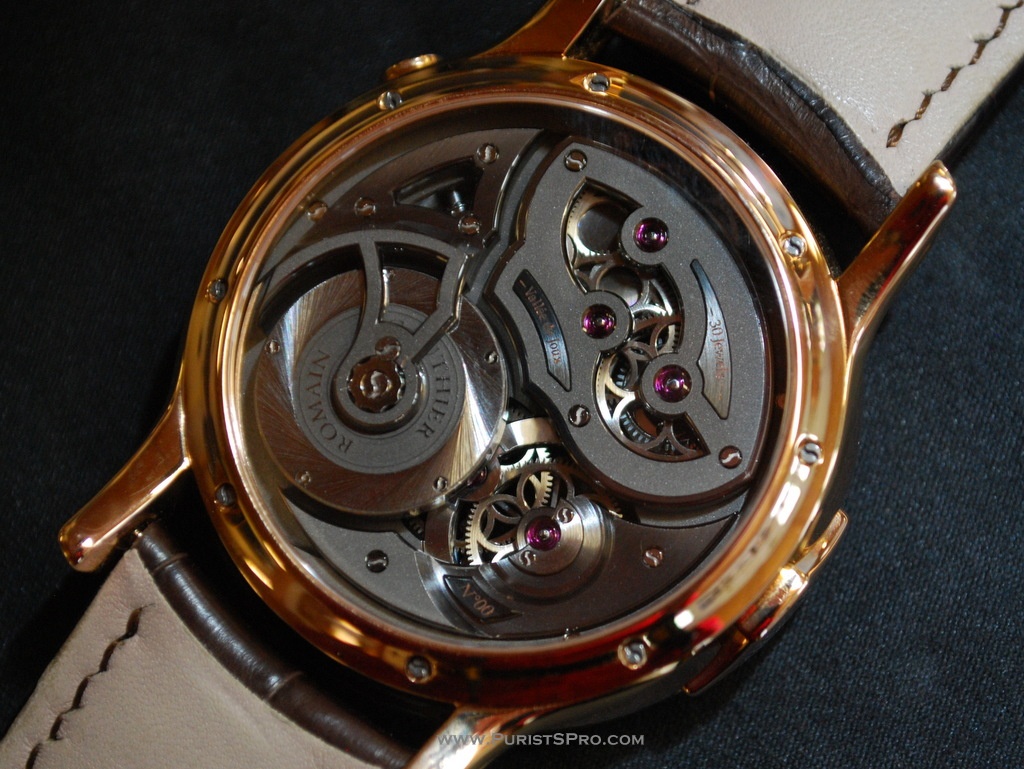
Looking to make a measurable (not just theoretical, logical) step to improving the chronometry Romain found that the chain and fusee system provides the constant power to maintain isochronism over the entire wind of a watch in a simple and robust mechanism. It has the advantage of providing the entire going works with constant power, not just at the level of the escapement, but the disadvantage that it takes up quite a bit of space. The challenge was to fit the fusee mechanism in the confines of a wrist watch while maintaining its simplicity and robustness.
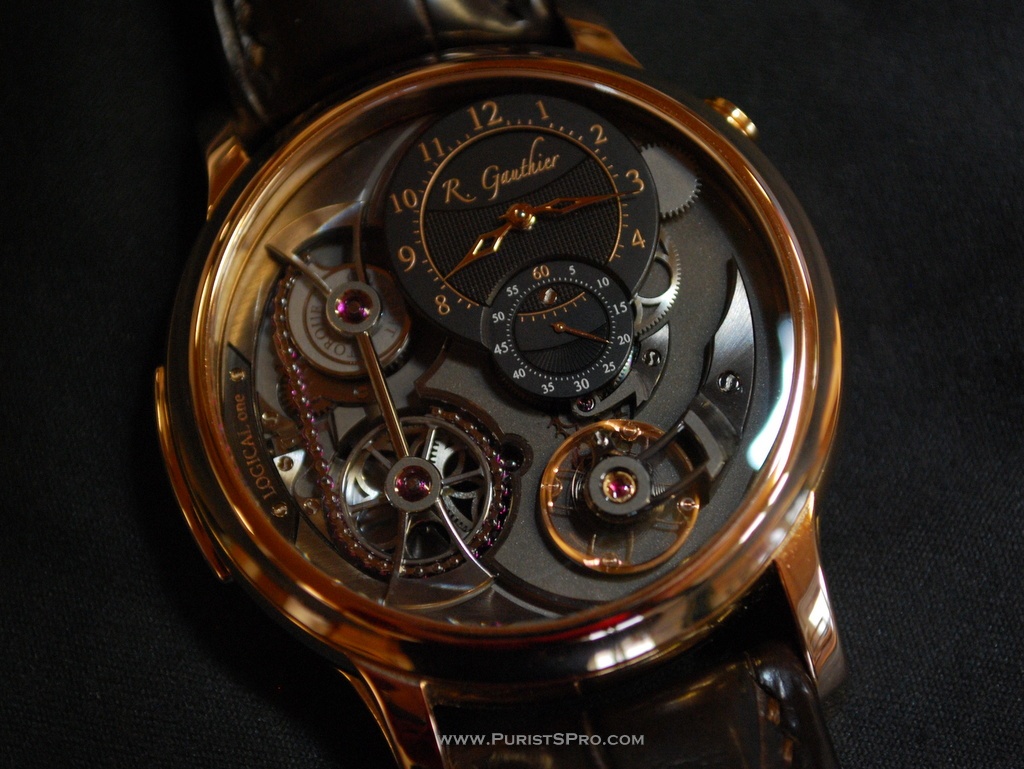
The results of this research are what we see here in the Logical One watch. To achieve the goal of fitting the fusee in a wrist watch the multiple turn fusee of the pocket watches of yore has given way to a single turn fusee. Thus the thickness is reduced to something wearable, but that means that the forces are increased. Although the fusee turns less that one turn for its entire winding the autonomy of the watch is still 60 hours.
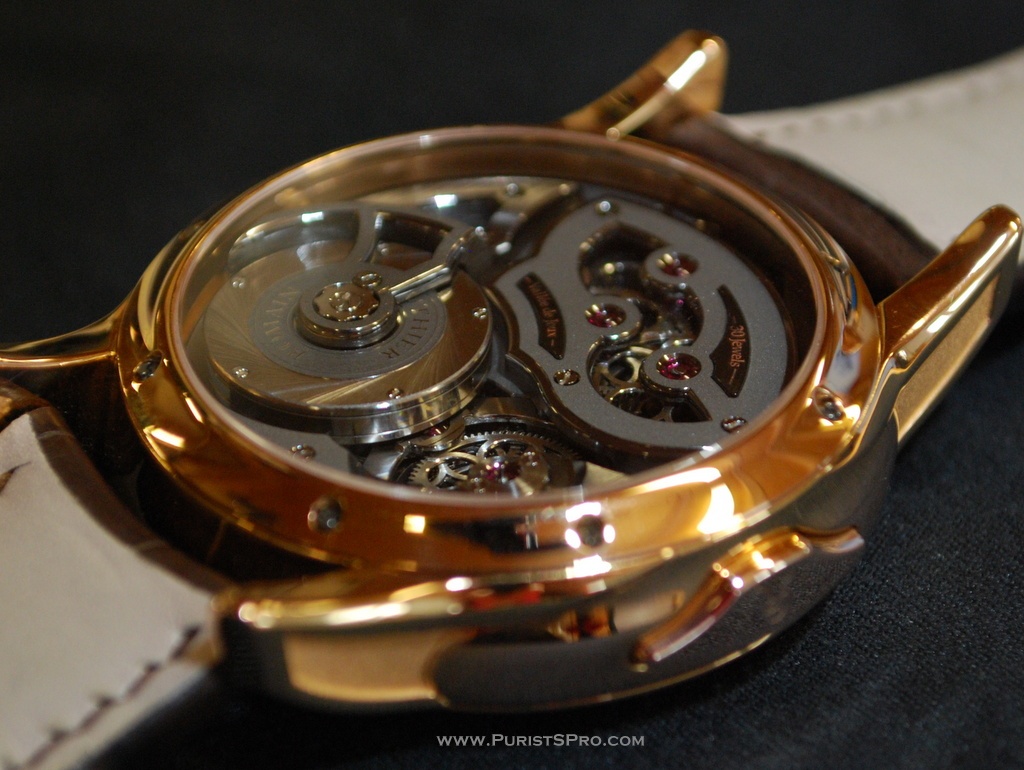
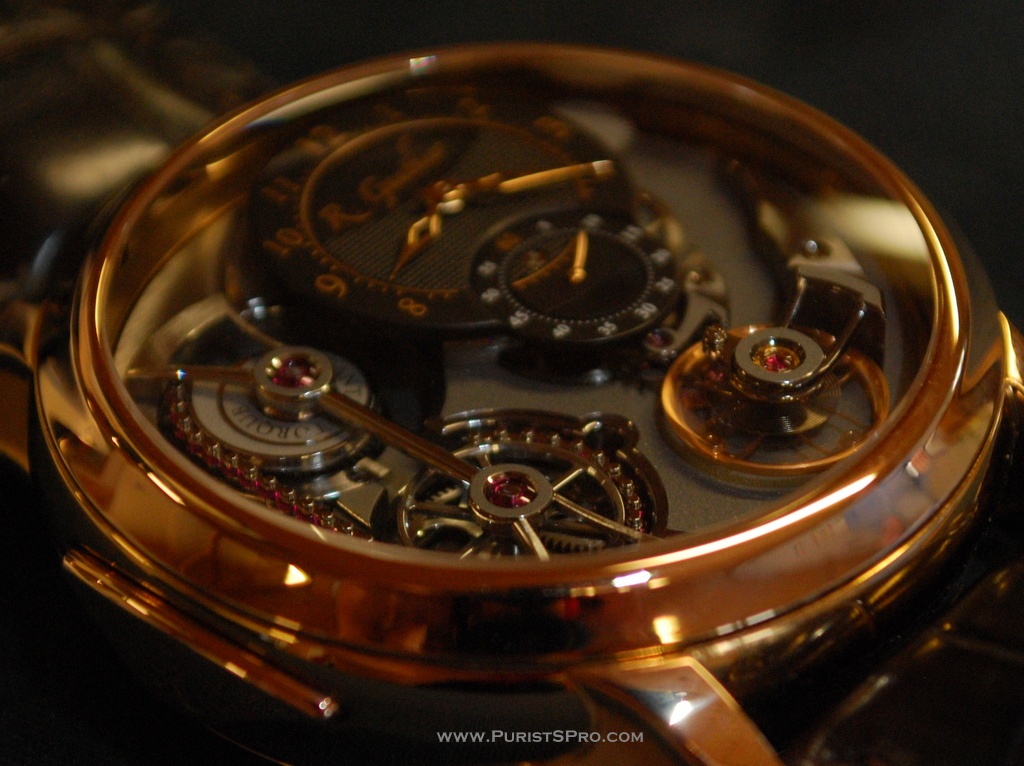
This means that the chain also needs to be especially stable and Romain has created a riveted chain using rubies as separators. The chain also rolls on the rubies and not on the rivets themselves. The chain is guided by running in a groove around the outside of the wheels which only the rubies touch to ensure low friction.
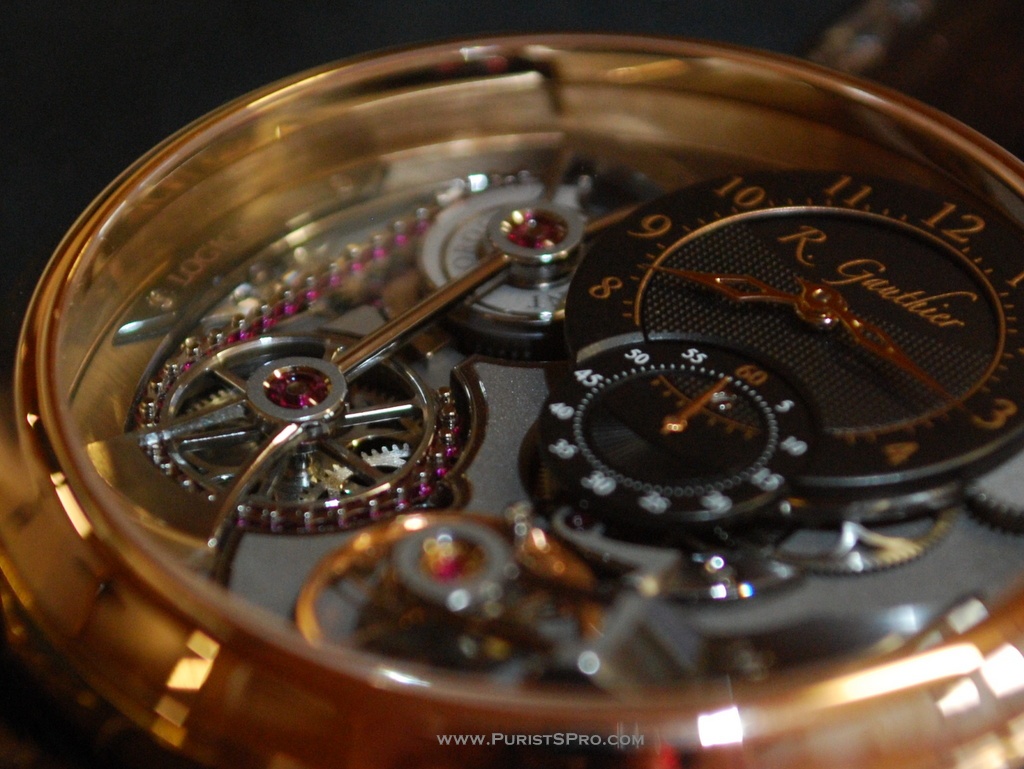
This watch is the subject of 3 patents pending, for the chain and fusee system, the method of fabricating the chain and for a very esoteric way of cutting the gears.
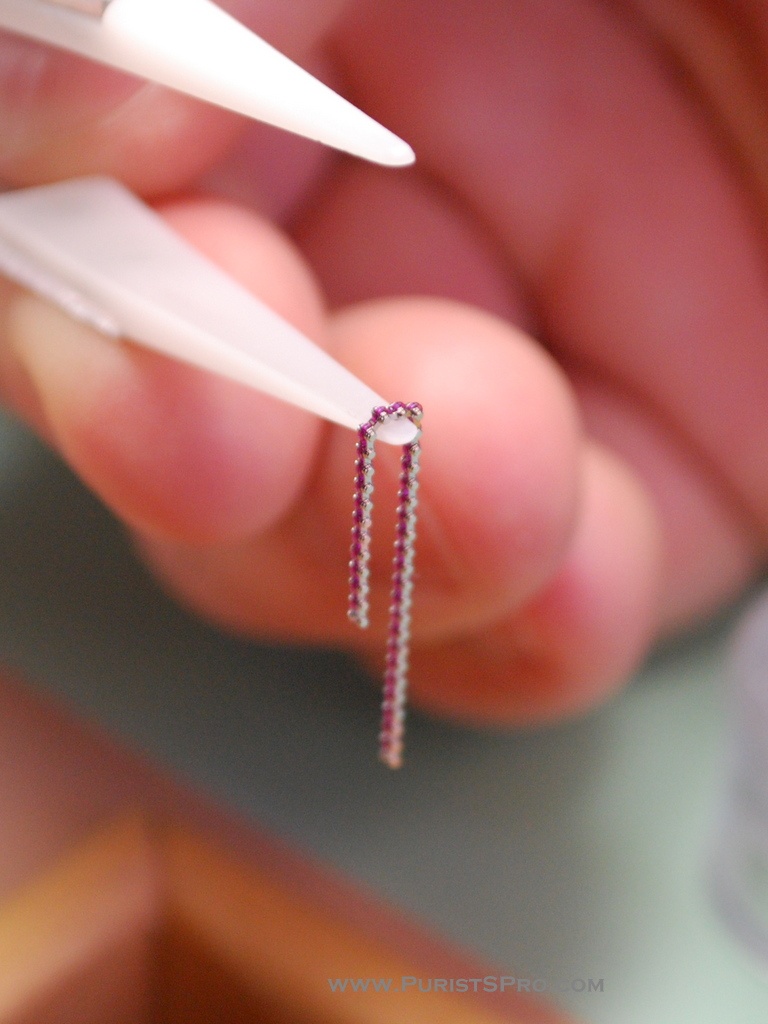
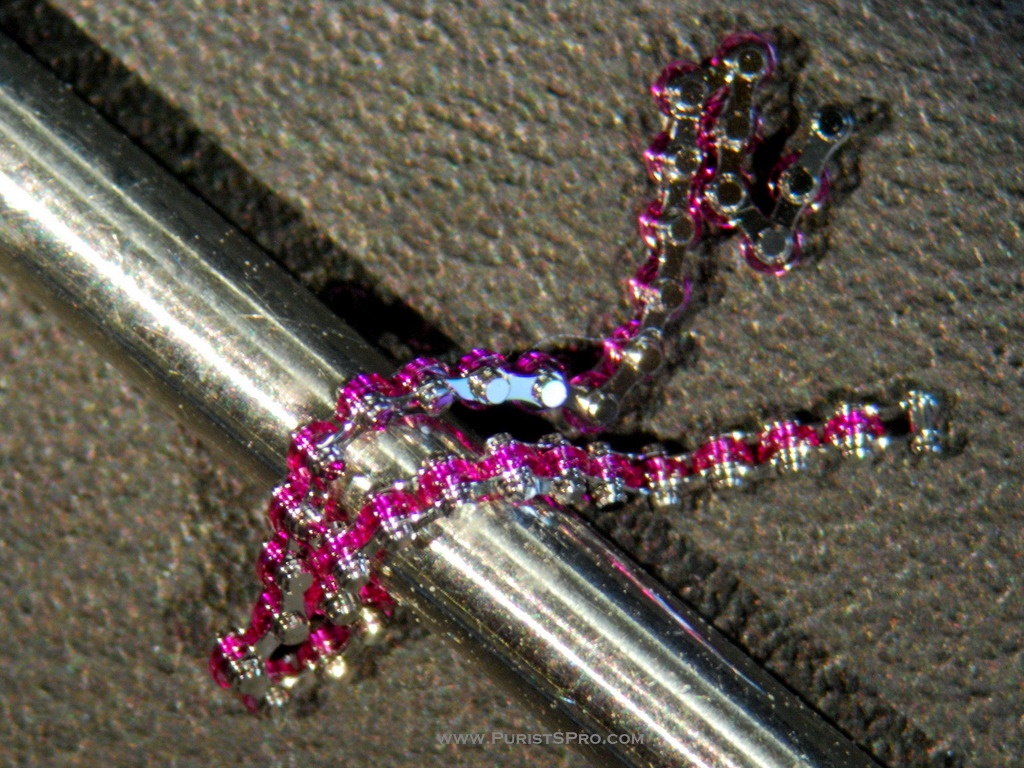
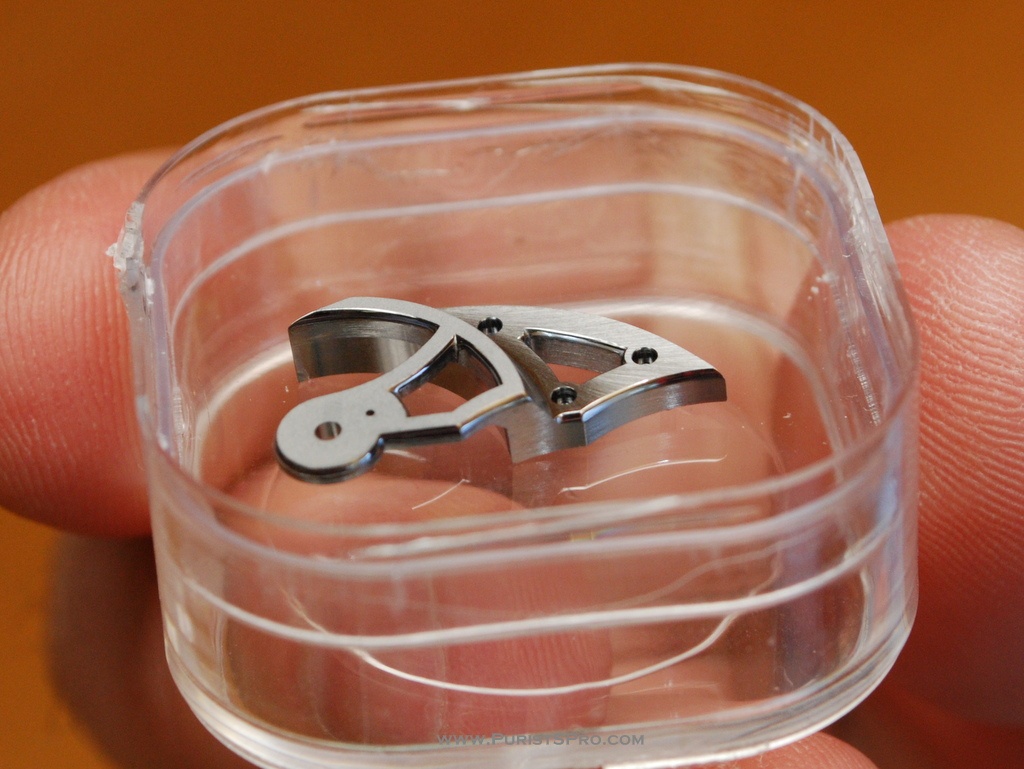
Here we can see the level of finishing on some of the parts before plating.
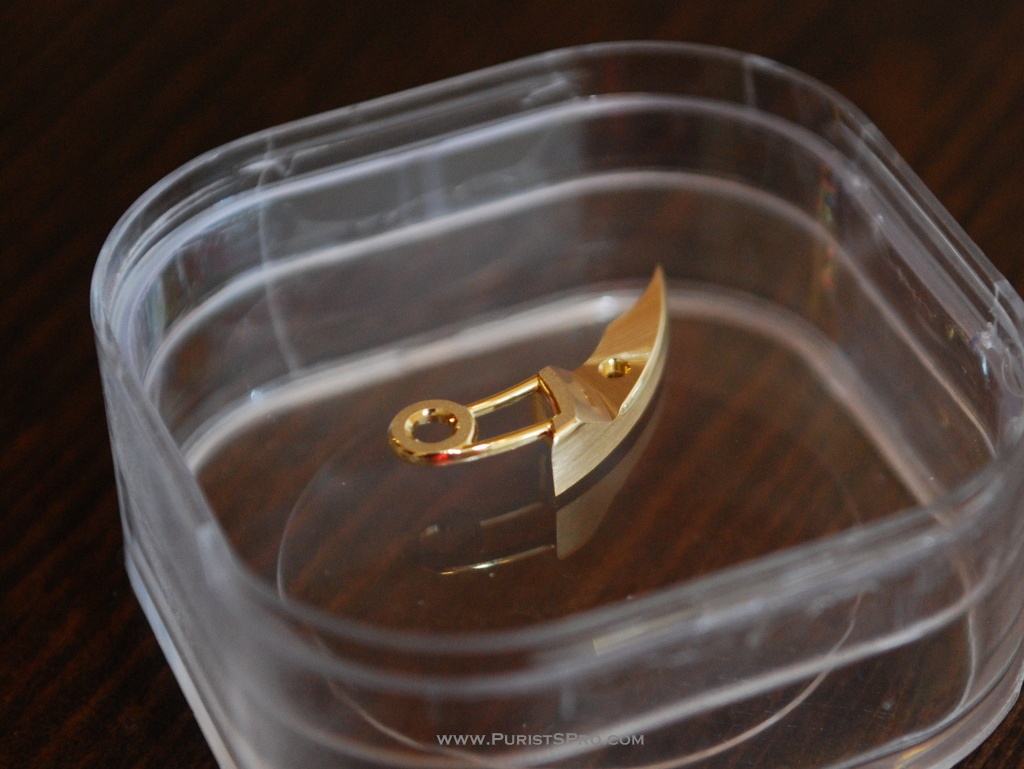
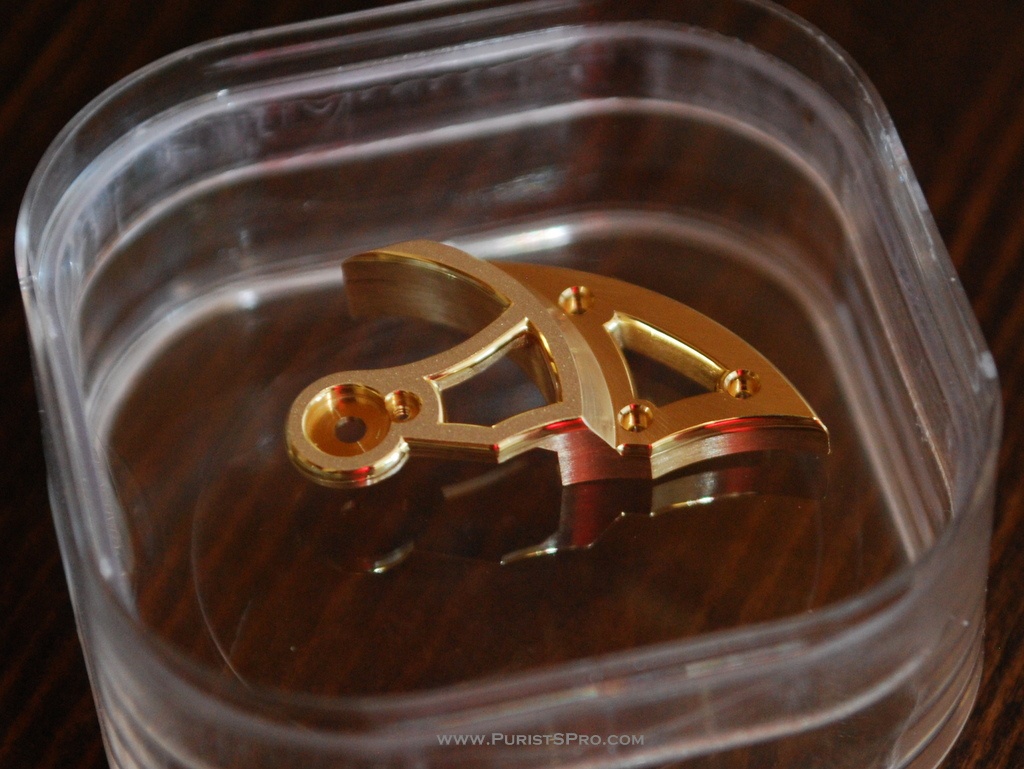
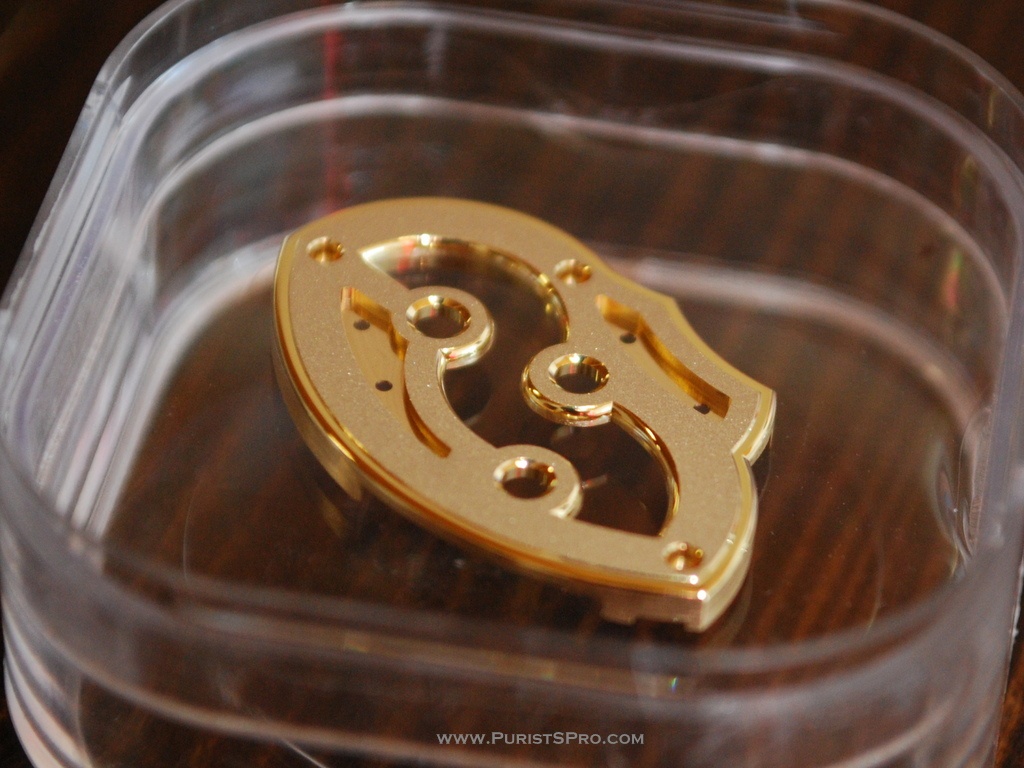
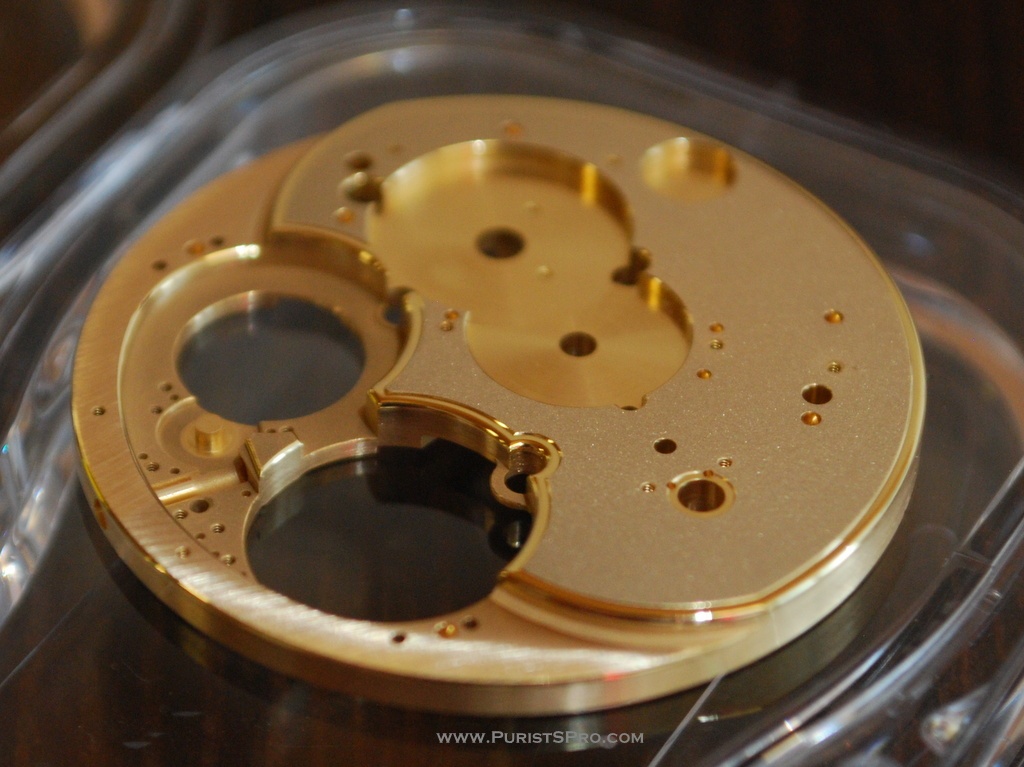
After ruthenium plating we see this.
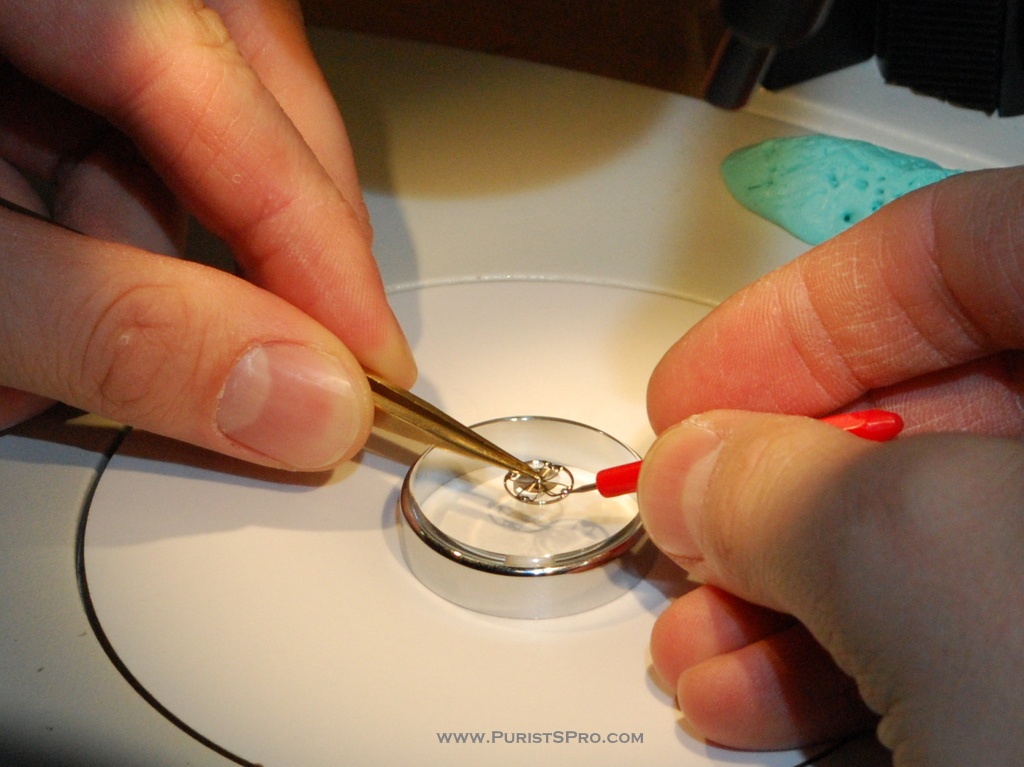
During my visit one of the watchmakers was busy pinning and adjusting a hairspring under the microscope.
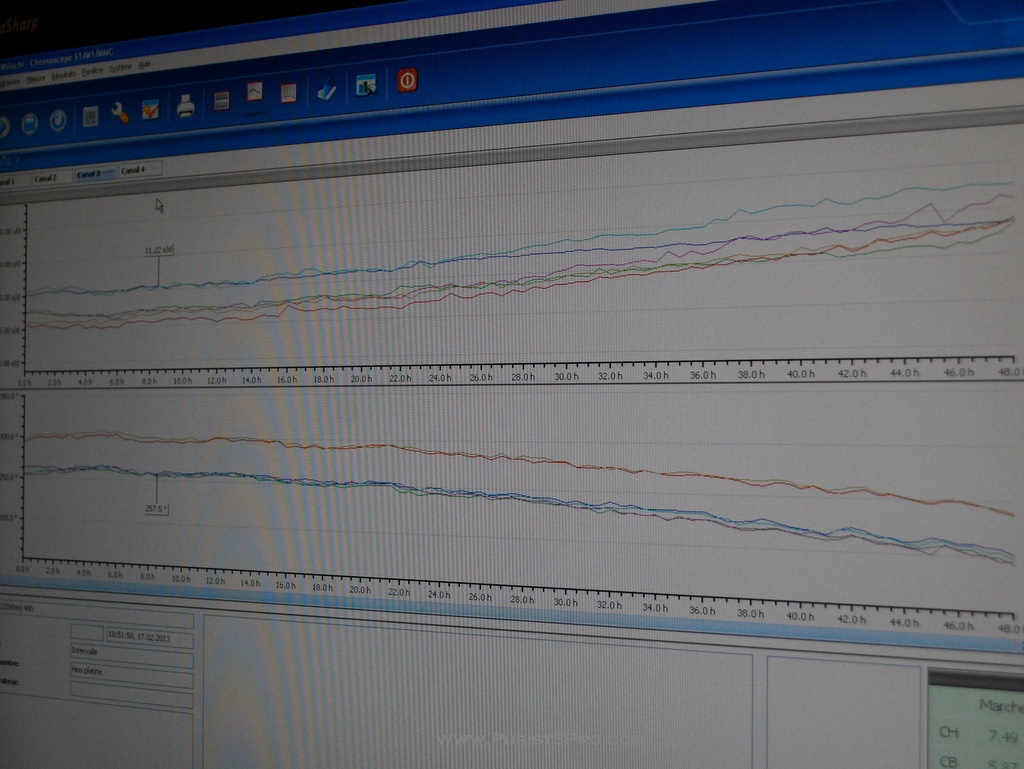
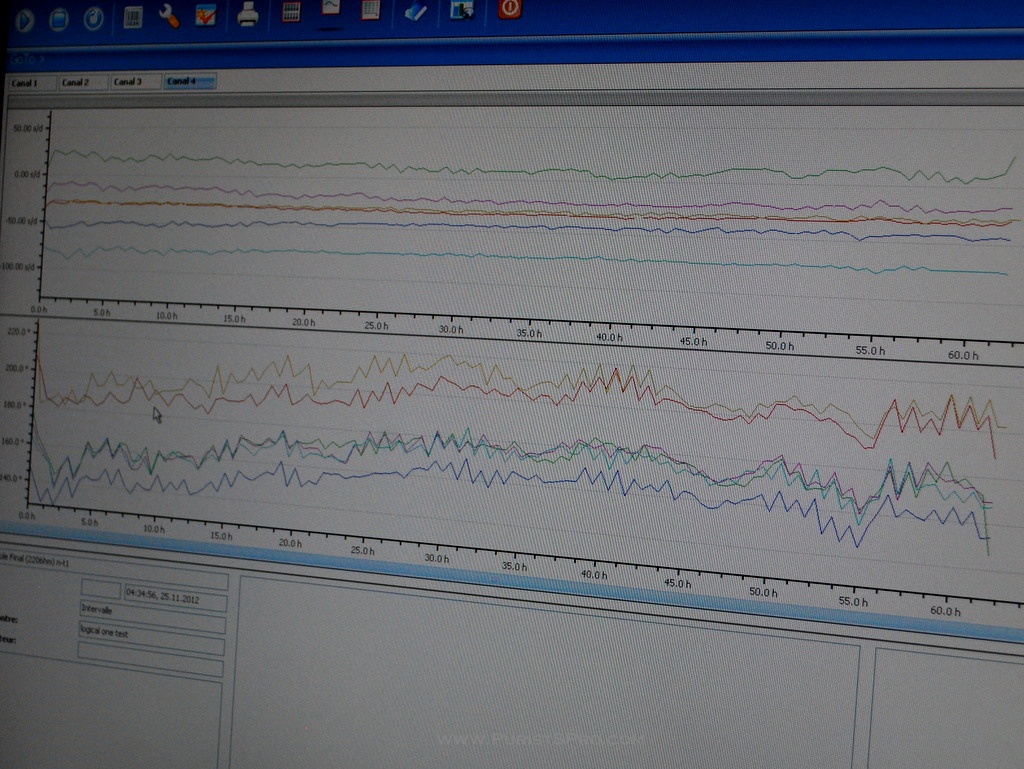
Romain's goal is to have a measurable improvement in the chronometric qualities of the watch. And he is willing to test and show his results. Here we see the comparison of the first prototype over 60 hours, with a standard watch which shows the typical errors of isochronism as the power falls over time.
First the timing curves as they come from a standard watch. Here we see the typical speeding up of the watch as the amplitude falls over the approx. 40 hours of autonomy. (the upper set of curves is the timing for different positions, the lower set of curves the amplitude for different positions)
In this second diagram we see the results of the Logical One prototype. As we can see there is almost no change in the timekeeping over the entire 60 hour autonomy. Note that this prototype is not terribly well regulated, but this test shows that we will have unchanging chronometric performance over the entire autonomy.
Romain is making a bold step measuring and publishing such information which we rarely see from all of the rest of the watchmaking community. This underscores his intention to start the debate, what is the best way to improve timekeeping in a wristwatch. I welcome this and hope other watchmakers will take up on it and publish their results too.
I am looking forward to seeing and photographing the first series watches at the Basel Fair. These watches will be getting some updates based on the experience of the first prototype.
Complications
Explore innovative watch crown designs, from Romain Gauthier's back winder to Ulysse Nardin's bezel crown. Community shares favorite crown aesthetics.
62 replies20475 views

Community
Meet Alkiro1, WatchProSite's Purist of the Month. Discover his journey from finance to horology, his collection, and community insights.
117 replies18513 views

Independents
Discover the value of atelier visits to independent watchmakers like Romain Gauthier, De Bethune, Kari Voutilainen, Vianney Halter, and Philippe Dufour. Gain insights into their unique philosophies and craftsmanship.
35 replies17414 views

Collection
Explore holdemchamp1225's Romain Gauthier Logical One with a rare Anita Porchet blue enamel dial. Discover insights on its fusée and chain mechanism, unique provenance, and exceptional wearability.
98 replies15928 views
Complications
Explore the Audemars Piguet Natural Escapement through holdemchamp1225's review. Discover its lubricant-free design, exquisite finishing, and unique movement architecture.
62 replies15435 views

Wristshot
Explore SalonQP 2013's top watches with foversta's wristshot selection, featuring Akrivia, Urwerk, MB&F, Voutilainen, and Zenith novelties.
34 replies12637 views
Romain Gauthier - Logical One
Romain Gauthier - the Logical One Logical One ? The first of a series of Logicals? The one that is logical? Whatever the definition, Romain Gauthier's Logical One is a logical step forward to achieving better chronometric results from a wristwatch (as wel...
Unbelievable!
Thanks for sharing Don! Amazing watch! It's by far Romain's best watch!
Beatiful pics, nice write-up!
Thanks Don. Definitely one of the most impressive and desirable watches around today, by one of the nicest and down-to-earth guys in the game. Cheers

LOVE this watch
Thanks for the great report, Don! Saw this piece in person and it was just as good as the photos. Mouth watering! Best, Gary

Don, thanks for the report. It would be good for everyone to have..
the same availablity of data on chronometry as Romain will make available. Since there are other constant force escapements, will they be equivalent to his? What about dead beat seconds movements?

That is a really interesting and goodlooking watch
Interesting way he has constructed the chain. I suppose its to prevent the wear on the joints? The finish looks impeccable. It seems he is moving away from the more classical, traditional finish toward a more modern type that seems to suit his very techni...


Wow... very, very nice...
... couldn't wait to hear more detail and spec and see in person, if at all possible.... Thanks for the report, Don! Ken

Fantastic watch..
had the chance to see it live in Geneva,Romain finish is second to none..... Thanks Don for the presentation,great job. Mo

Absolutely stunning piece.
Congrats to the watchmaker/s behind it. Thanks for the review. Vte :)


Quite something
Must be a lot of strain on those ruby links, any more details on that Don, Very interesting piece Tim

What a beauty!
The chain reminds me of the Opus 9. A novel winding system? Thanks for the presentation Don. cheers fernando

A question on measuring and publishing information
Thank you, Don, for sharing really interesting information and beautiful pictures on a stunning watch. I have a question for you. You have written you wish other watchmakers will publish their results on the timekeeping efficiency measurement, like Romain...

This is so beautiful.
Yet using all of what already exists, this is one watch which has transalated so much of tech into art. Certainly a MUST BUY if budget allows!!!!

Thank you Don, very nice review, beautiful pics....
really appreciate this High Caliber of Horology, the fantastic imagination and the serious integrity. The finish has a Philippe Dufour flavour, admirable! Cheers. Francois
That's some fine engineering...
...and beautiful too. It appears to have that perfect balance of novelty with traditional design. I also appreciate Mr. Gauthier's sharing of technical performance data. A fine watch should keep time well, in my opinion. Regards, Jon

I know I should love this watch
but each time I look at it (albeit in pictures only) I see novelty first. the chain feels like SUCH a gimmick, and I know it has deeply traditional and terribly serious functionality, but... I dunno!
That's fair.
There are certainly watches that other people love that leave me cold. As independent watchmakers tend to target narrower audiences with more specific tastes, it'll happen more with them; I would suppose. On the plus side, the independents don't hire offp...
Little question
To start: I really love this watch. The finishing is just superb (to me, one of the best on the market today). I just want to ask one little thing regarding the second diagram (the one of the Logical One). My impression is that there are big variations in...
The take-away here is...
The take-away here is that even with these low amplitudes the power is constant so the timing remains good. These tests were made on the very first prototype watch. For example the axles where not burnished and there are still many corrections to be made....
thanks for the answer...
Thanks for the answer, Don. I was actually not wondering about the fact that the amplitudes might be a bite low but about the variations (up/down- up/down) of the amplitudes and the fact that this does not seem to affect the rate. Anyway, this watch is am...