Theodore
54

My newest addition….
Roger Smith’s watches have an exceptional reputation and kind of legendary status for several reasons, one of which must certainly be that very few people indeed get the chance to have them on their wrists, or touch and handle them, even if only for fleeting moments at a watch collector’s gathering or dinner somewhere. Of course, that is due to the fact that Roger’s workshop makes very few timepieces per year, and they are therefore correspondingly expensive as well, so it logical that you don’t normally come across them in the flesh or even spy them on someone’s wrist in passing. For a collector like me who ordered one, years back, the decision was actually taken on the basis of just a short contact with one of his watches. So now that I finally have mine (since last fall) I have finally had a chance to get to know his work better and I thought it would be fun to do a review here. Although I love Roger’s dials very much, I ended up ordering the Open Dial version. I admit with slight embarrassment, that I have always been enamored of the inherently naked Breguet ‘Marie Antoinette look’ and am fascinated by all kinds of Victorian period machinery. Roger’s Open Dial conjured up visions of amazing 19th century steam engines and those beautifully decorated Victorian pumping stations with their giant pistons and levers decorated with gold leaf and copper and bronze ornaments that you sometimes see on historic sites on the BBC’s Antiques Road Show. So it was to be a platinum version Open Dial for me.
Case
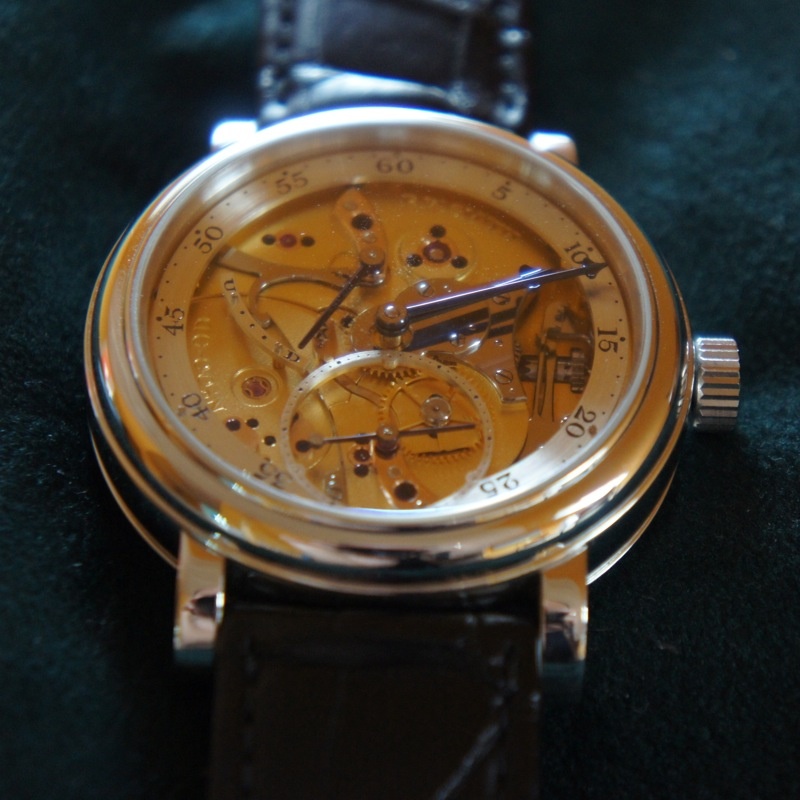
The full bodied case for me is stunning and I love the weight of it on my wrist. The lugs curve in a different way than they did some years back and this makes the fit on my wrist even better than I recall from the older versions, but I could be dreaming here. The diameter of 39mm is perfect too; neither too large nor too small, and it will still look perfect years down the road.
Dial
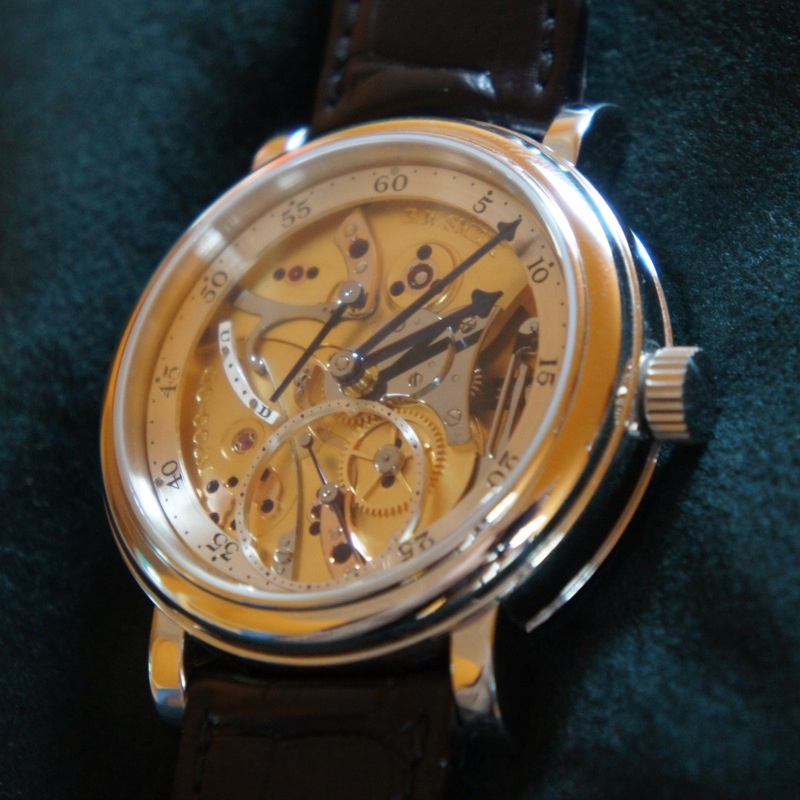
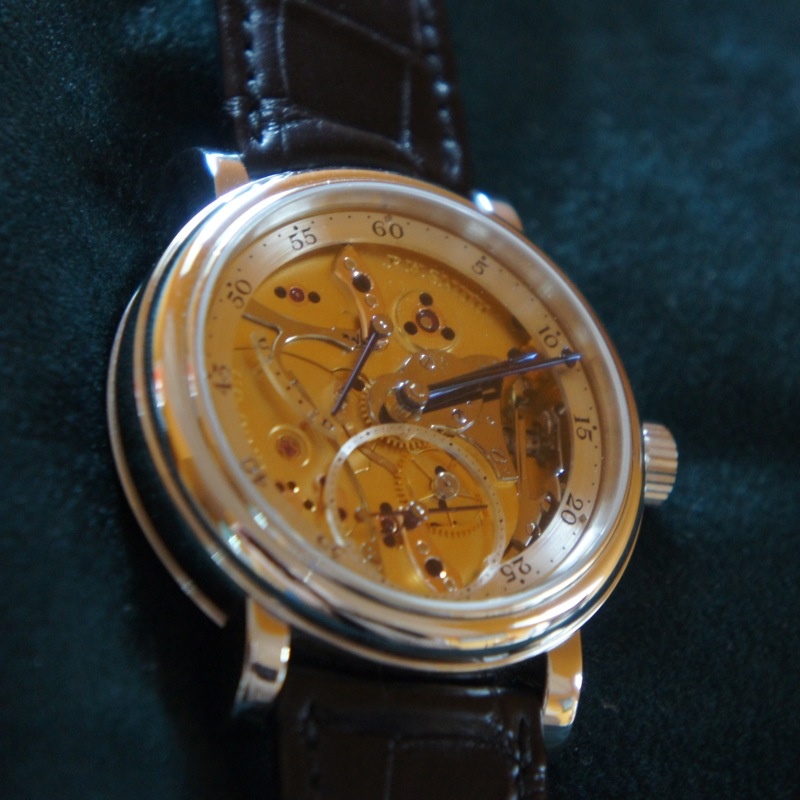
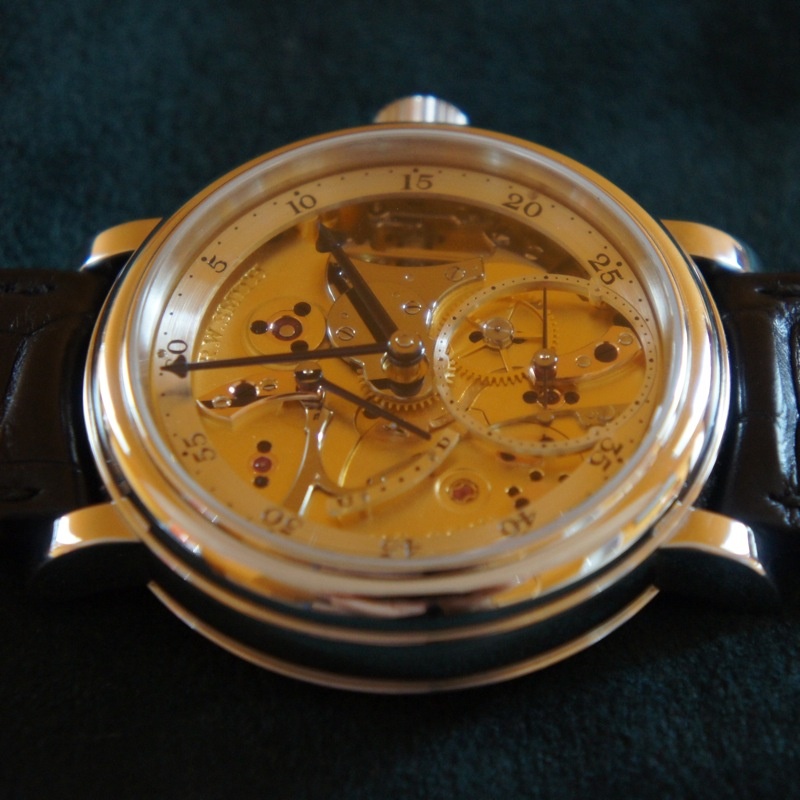
For the dial, or better said the lack thereof, I preferred a simple, slightly wider chapter ring to the version I was shown with small jutting bits at 2, 4, 8, 10 and 12 o’clock as in the first picture. Roger was a little bit unhappy, as he felt that his movement work got covered up at certain spots, but I have no difficulty with that at all, and like having a little mystery in the movement’s appearance.
Crown & winding
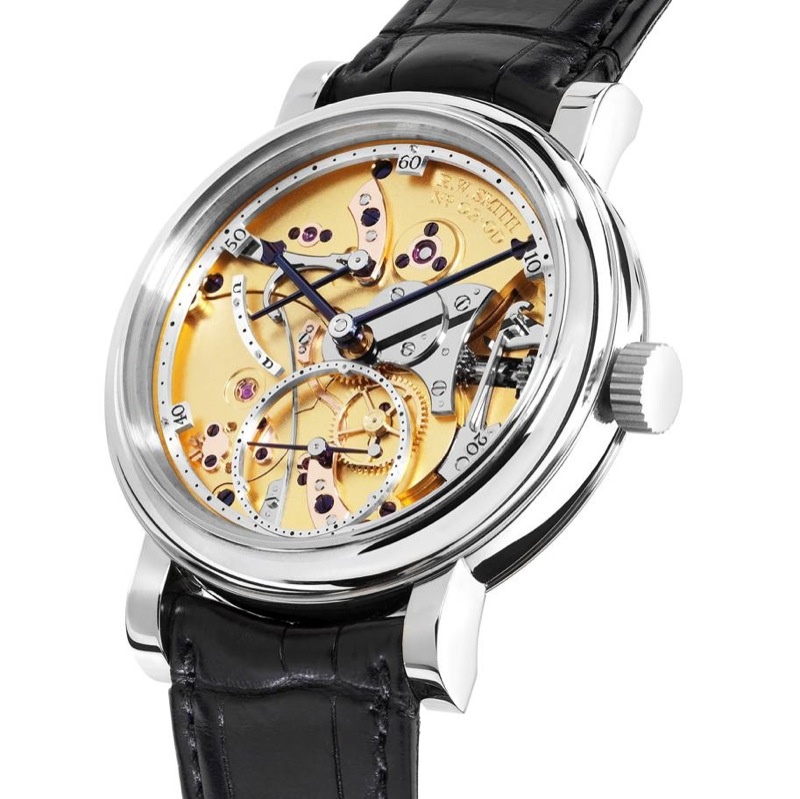
Small detail, but I love a full sized crown on a manual winding watch, with a strong tactile feel like Roger uses. Coupled with a rather firm winding sensation, it automatically makes one think of winding up one of those ship’s chronometers, or a key winding pocketwatch from the past. Since the act of winding is one of those rare moments of direct contact with a watch like this, it gives that much extra pleasure to the experience.
Workmanship
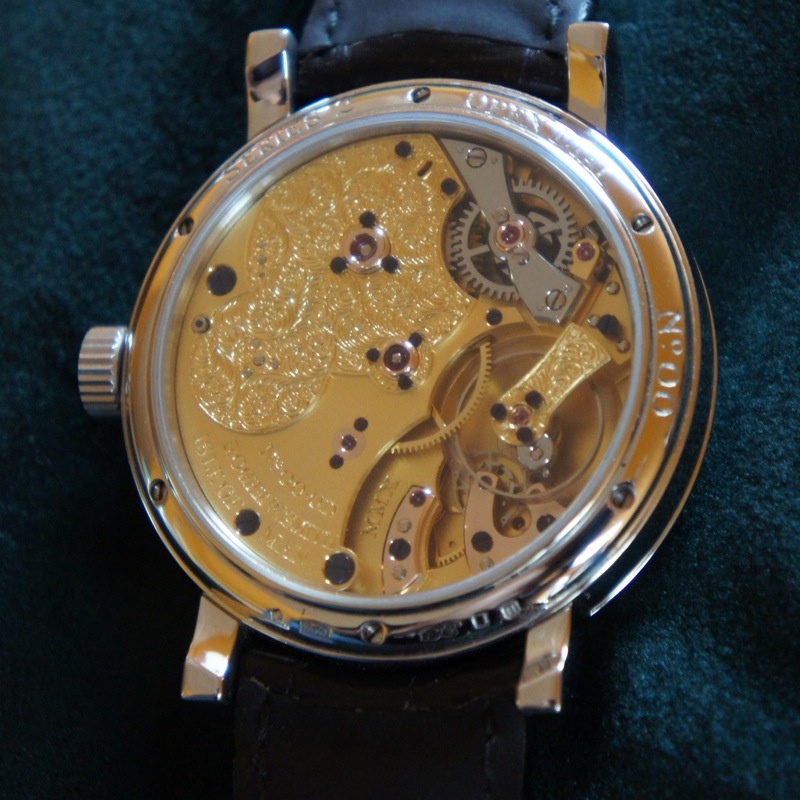
Well, what can I say about that? It is breathtaking, and I enjoy examining my watch all the time under a loupe. The lovely bluing of the screws and hands, with the changes from purple to dark blue (the sign of hand bluing), the engraving on the winding barrel plate and balance cock, the patina of the brushed gold surfaces….This is a watch that’s alive somehow, where you can sense how there was a lot more hands on work done here than that found in countless mainstream Swiss watches where oftentimes many parts are pumped out virtually ready to install, and parts like hands are punched out in a press by the hundreds in just minutes. Don’t get me wrong; I still love my Swiss watches, but this contact with purebred English watchmaking is an experience that can't be described; a R. W. Smith is unlike any other watch on the market in this respect, and if you can get a hold of one and look at it I am sure you will immediately feel what I am trying to say.
The co-axial
The timing of watches in daily life is always an issue because the greatest errors tend to arise when you take the watch off. Whether you place it crown down/up, or dial up/down, any watch will start running slower or faster accordingly during the night, and can really raise havoc with timing results, whereas during the day on one’s wrist it can keep fantastic timing results. As a fanatic watch person, I research these things and place my watches at night accordingly in the way it gives the best outcome. Same for this watch. When compared with my other watches, Roger’s gives me clearly better results by some seconds a week over the regular Swiss escapements I own. However, that being said, I have understood from Roger that it is not so much on the daily rate of the co-axial that one has to concentrate, rather the long term timing over several months is where the co-axial starts to stand out. Alas, I never wear this watch for that long a period, but I hope someday to do an ‘endurance timing’ in daily life over months to see what happens, just for my horological curiosity.
Strap, buckle, presentation
Here also, accolades all around. The supplied strap is of very high quality, very supple and a good width with a full buckle also of platinum and hallmarked. The presentation box is exquisite, made by David Linley of London, with a solid silver medallion in the center with the serial number and other information hand engraved on it. A really thoughtful and useful touch is the travel pouch, also made of high quality leather and wonderful for protection when traveling – small, discreet and compact.
Conclusion
Well, I think my conclusion is clear…All I can say in closing is that I went crazy waiting for this watch to be finished, and now that it is here I can also state with conviction that is was worth every day of the waiting. Having a watch like this is simply indescribable, and it is like experiencing the act of watchmaking every day of the week on your wrist, that’s the only way I can get close to describing it. And for a horologist, it never gets better than that….
P.S. Please excuse these pictures. If I had the right light for a detailed depth of field, I had too much shine, so I had choose the lesser of two evils whilst wrestling with my camera….
This message has been edited by 219 on 2012-06-13 08:28:31
My newest addition….

My dream watch
As requested: Box and bits

Congratulations!


Thank you for this review


your watch....

HUGE congrats Theo!
Cousins ;-)


Brilliant!

Excellent!
Congrats!
