
AndrewD
[HoMe Moderator]
12829

Obelisks as sun clocks
The history of time telling is interesting, particularly how we came to arrive at the 24 hour day and the hours, minutes and seconds we are all familiar with. Over a few posts I thought it might be interesting to draw out some of this history. So I will start with some information about the enigmatic obelisk that I was not aware of. Namely as a way to crudely divide the day.
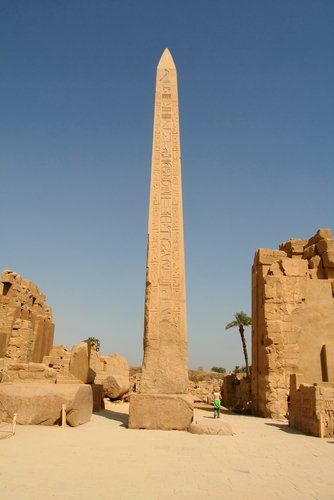
The term Obelisk comes from the Greek obeliskos, meaning "pointed pillar" (the ancient Egyptian name being Tenjin). It is a tall, tapering, four-sided monument ending in a pyramid. We associate obelisks with the ancient Egyptians who erected these structures in pairs at the entrance to temples from as early as 3500 B.C. They were thought to resemble the petrified ray of the sundisk and provided protection and power.
The Sumerians and Egyptians were the first civilizations to divide their day into parts. The moving shadows of obelisks formed a kind of sundial, enabling the day to be divided into two parts by indicating noon. The shadow would slowly shorten from sunrise to noon and then lengthen again until sunset. The obelisk also marked the year's longest day (summer solstice) and shortest day (winter solstice) when the shadow at noon was the shortest or longest of the year. Radial markers were later added around the base of obelisks to further subdivide time. The Egyptians went on to use formal sundials (or shadow clocks) to more accurately subdivide time.
Andrew
This message has been edited by AndrewD on 2010-10-01 06:13:49


