
AndCavanaugh
515

Grande vs Petite Sonnerie, how it works and why a petite sonnerie is more complicated
GS strikes the hours on the new hour, and the hours and quarters on the quarters. PS strikes the hours on the new hour, and only the quarters on the quarters. Grand strikes always strike the same way, while small strikes behave differently on the quarters, omitting the hours. Some more affordable clockwatches (such as those made by Cesar Racine) omit the petite sonnerie function. JLC’s hybris mechanica grande sonnerie’s PS mode only strikes on the new hour, so it changes when the watch strikes, not how it strikes.
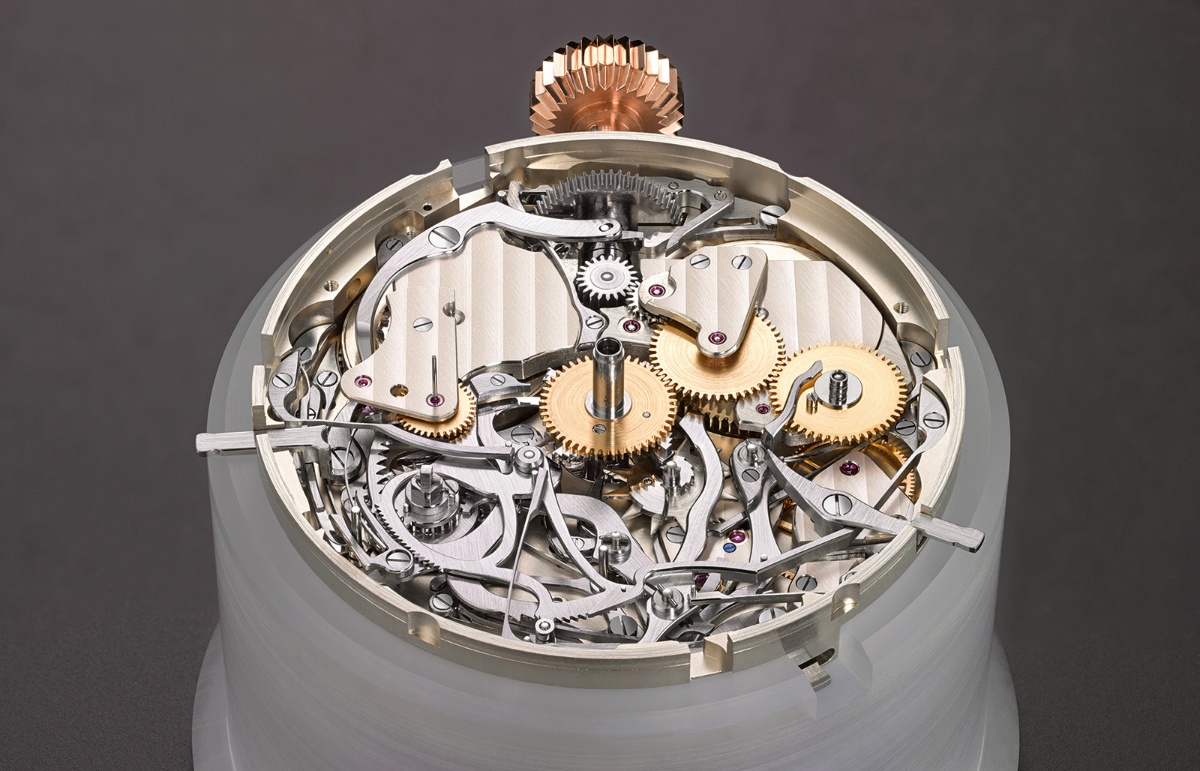
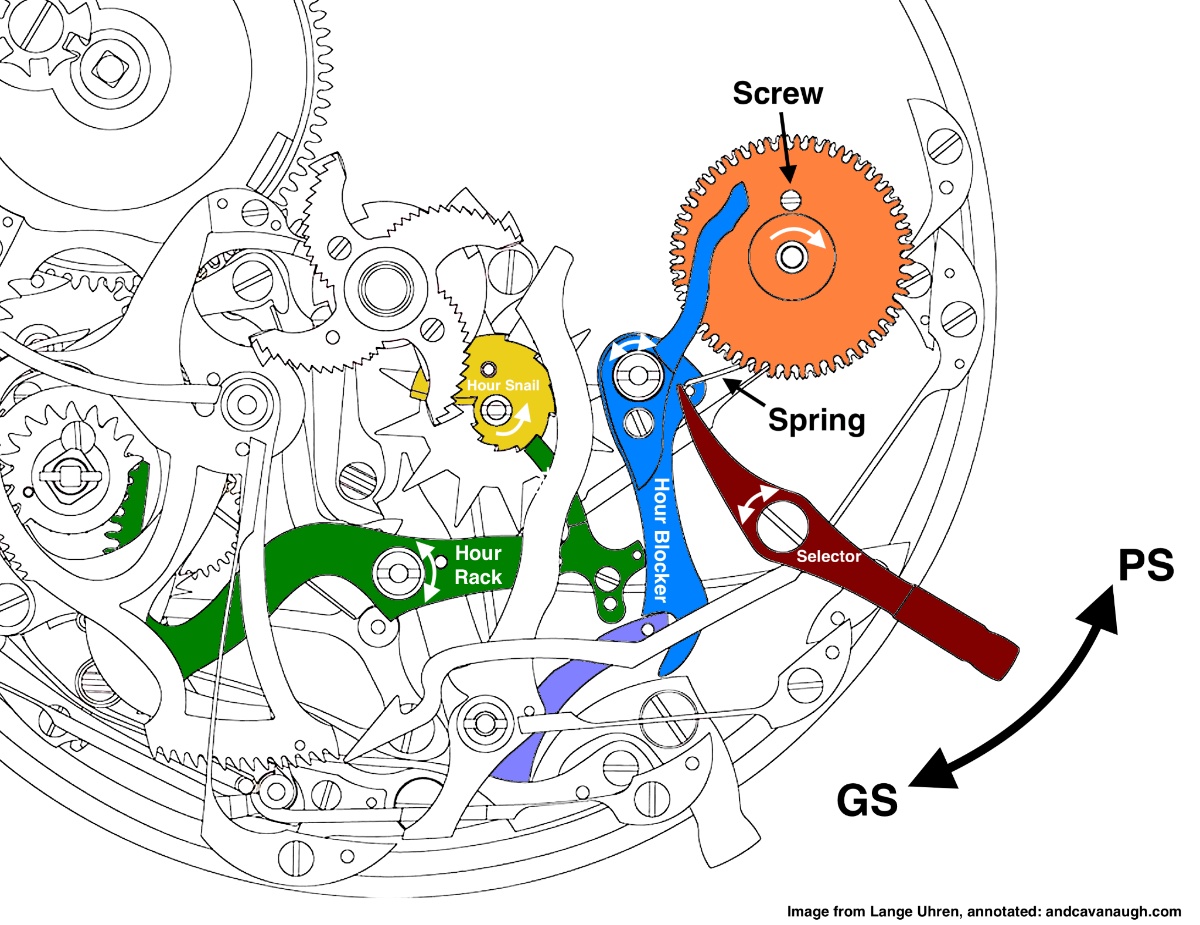
This movement, by Lange Uhren, was reverse-engineered (then shrunk a few lignes and improved) from an antique grand complication movement. The petite sonnerie mechanism is unusually easy to see, which is why I am using it as an example. I've annotated and color coded the image above. The photograph (top) is set to PS mode, the drawing (below) is in GS mode.
When striking, the hour rack (green) will fall onto the hour snail (yellow) and then be pulled back. The further it falls the more hours it will strike. The hour rack barely clears the hour blocker (blue). There is a spring pushing the blocker into the way of the hour rack, but the mode selector (red) is holding it out of the way.
If we change modes to PS, the spring will push the blocker into the way of the hour rack. On the quarters the hour rack will be stopped short of the hour snail by the blocker, and will not strike any hours. So how does it strike the hours on the new hour? The orange wheel turns once an hour. Notice the screw. Before the new hour, this screw pushes the hour blocker out of the way, and allows the hours to be struck.
When the repeater is tripped in PS mode, the purple piece pushes the hour blocker out of the way. The hour blocker then falls against the hour rack and the two slide against each other until the hour rack has moved out of the way and the blocker can return to its original position.
Engagement question: on this watch specifically, do you need to manually silence the strikes before setting the time?
Grande vs Petite Sonnerie, how it works and why a petite sonnerie is more complicated

This is really informative, thank you