
quattro
[Moderator]
20795

Five unique aviator hour angle watches
According to Christie's, in spring of 1936 both Patek Philippe and Vacheron Constantin were "approached by a private to develop, produce and supply a very small series of hour angle wristwatches for testing".
These five watches are never presented together, so I thought it would be interesting to do so.
What exactly an hour angle watch is and how it works is quite complex (to say the least), so I've placed some explanations at the end (just what I've been able to understand).
A/ VACHERON CONSTANTIN
1/ CASE NO. 260919
Diam. 57 mm. Thickness: 15 mm.
Victorin Piguet based calibre 20''' M73, frosted gilt brass, 17 jewels, straight line lever escapement, beryllium balance with gold timing screws, selfcompensating Breguet balance-spring, index regulator.
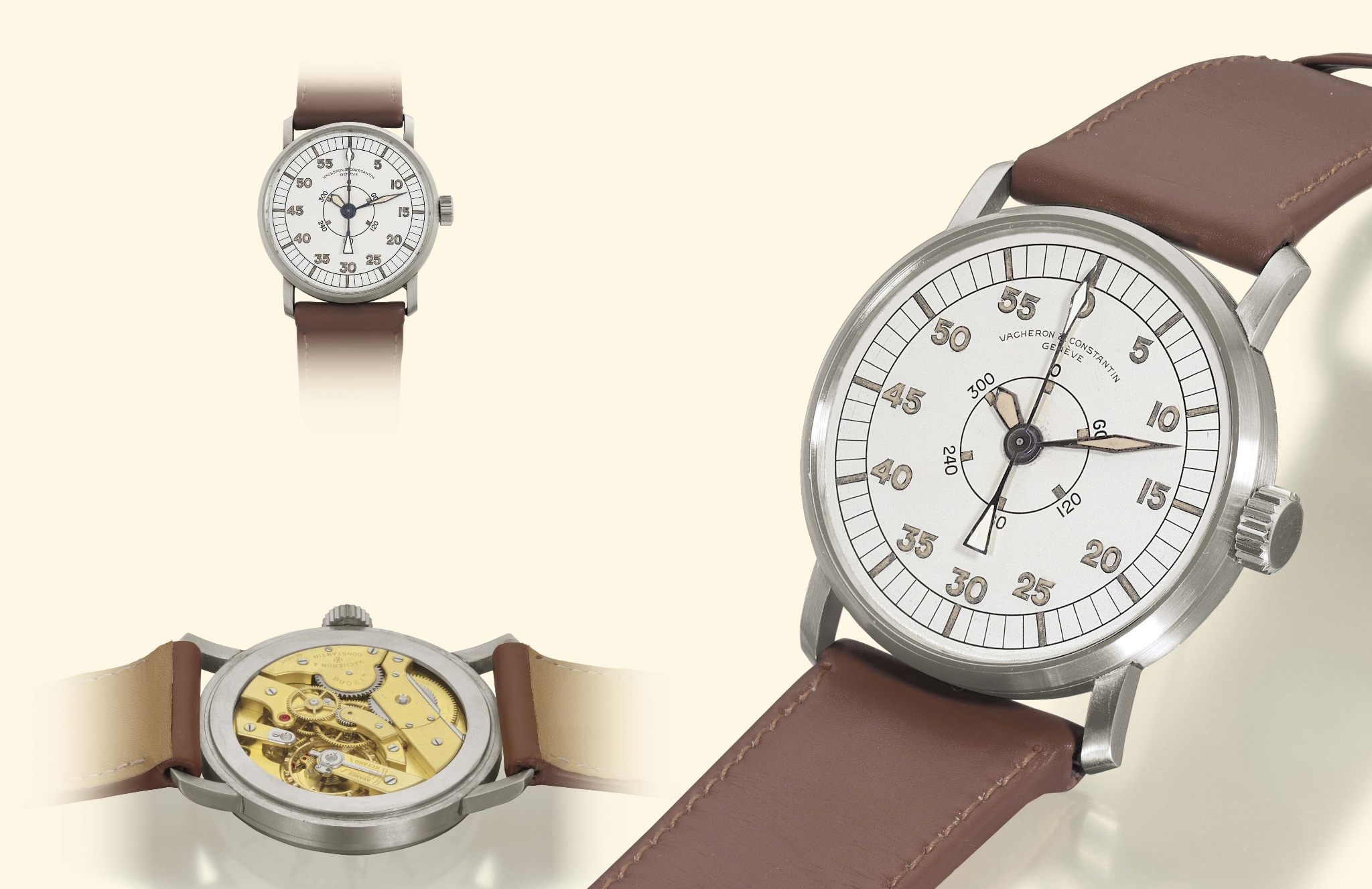
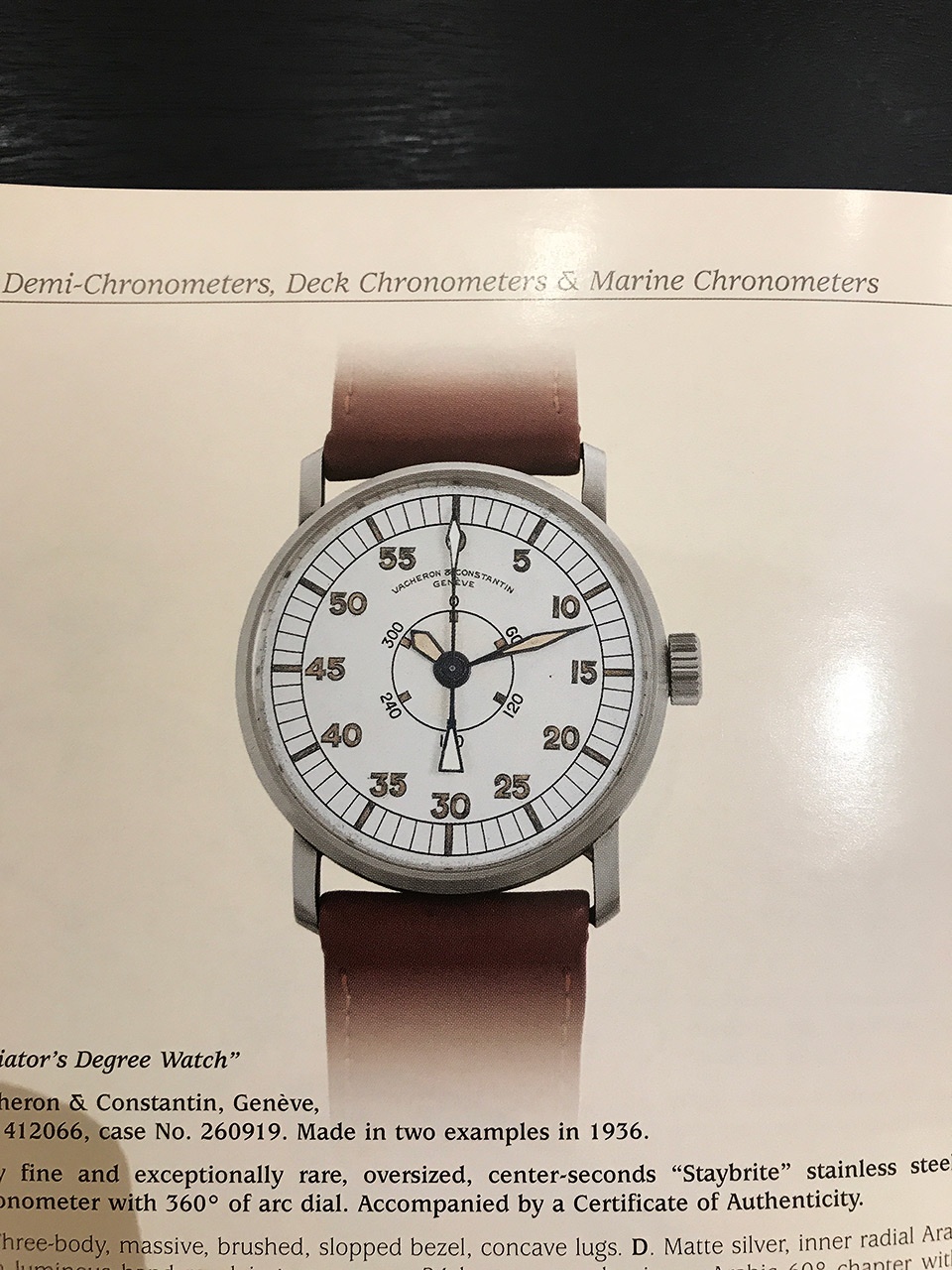
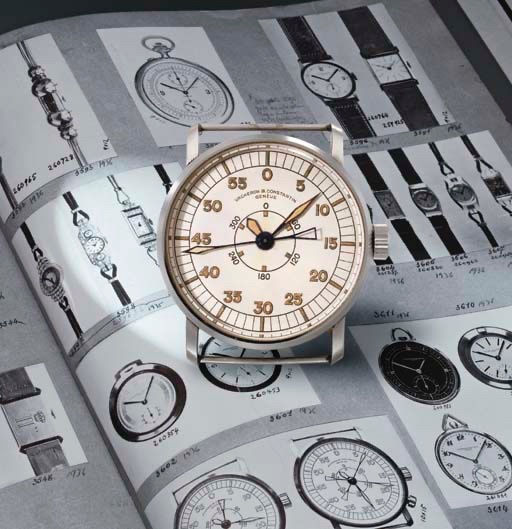
credit: Antiquorum, Perezcope & Christie's
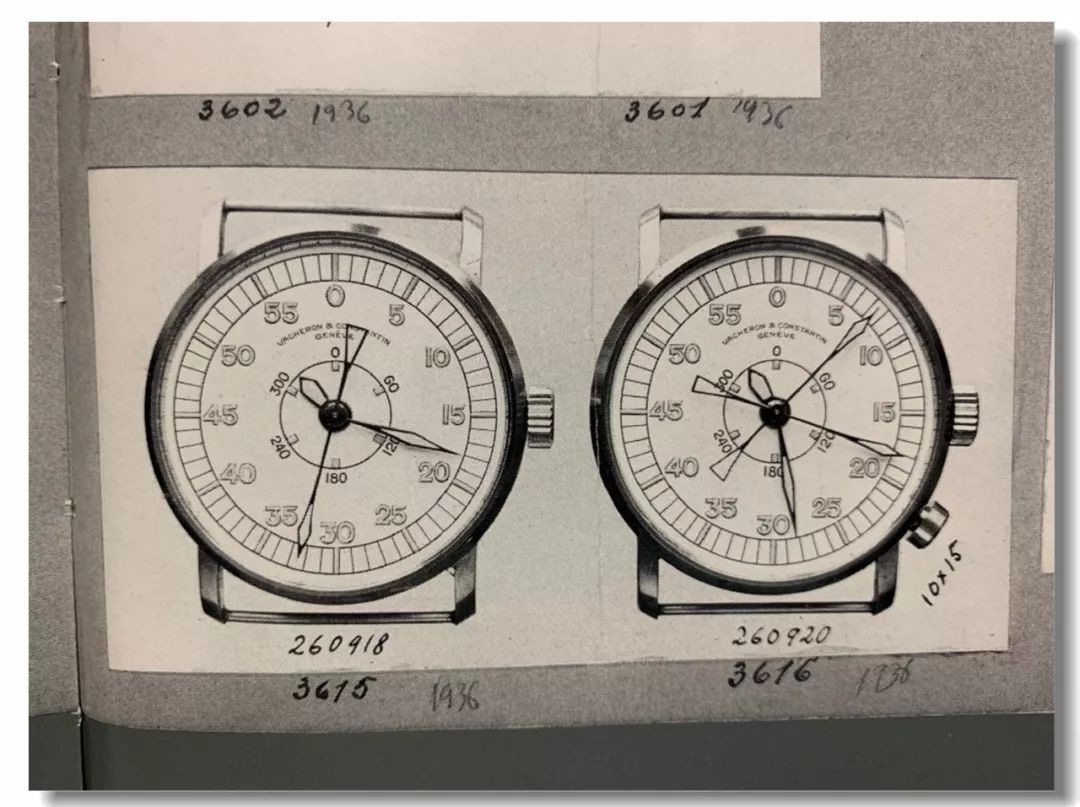
2/ CASE NO. 260918 & 260920
No. 260218 is similar to no. 260919 above.
But no. 260920 features a splittable centre seconds activated by the split-button in the band.
The whereabouts of these two watches are unfortunately unknown. The photo below comes from the book The World of Vacheron Constantin Genève , by Carole Lambelet and Lorette Coen.
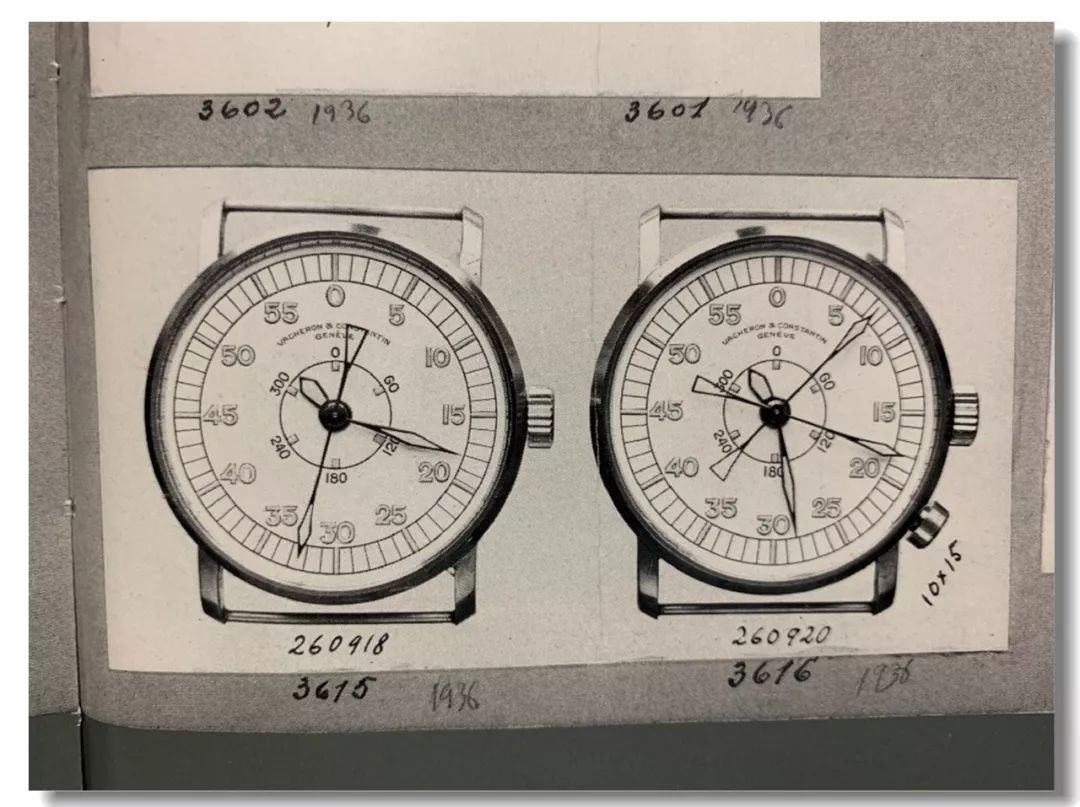
credit: zhuanlan.zhihu.com
The whereabouts of these two watches are unfortunately unknown. The photo below comes from the book The World of Vacheron Constantin Genève , by Carole Lambelet and Lorette Coen.
credit: zhuanlan.zhihu.com
B/ PATEK PHILIPPE
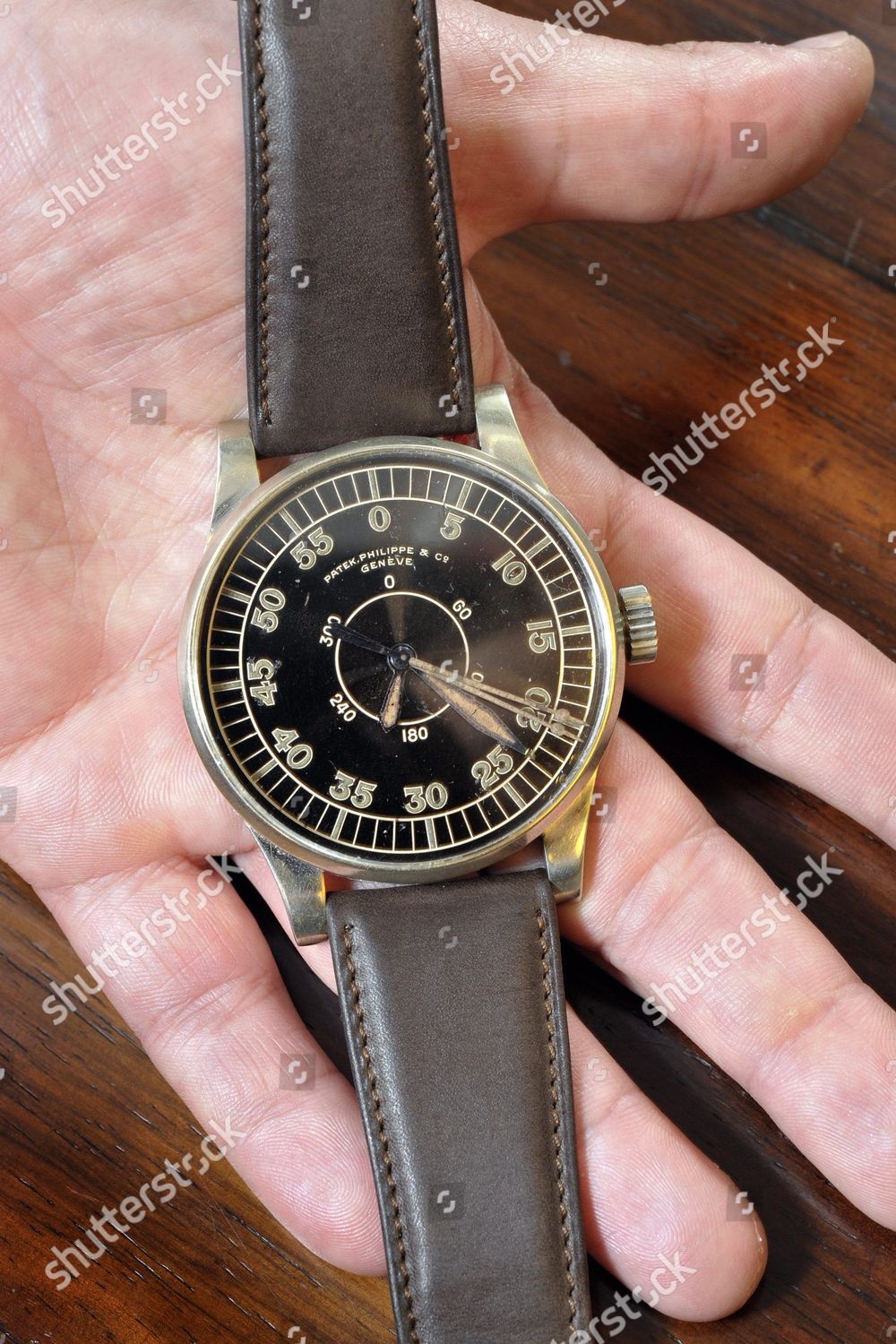
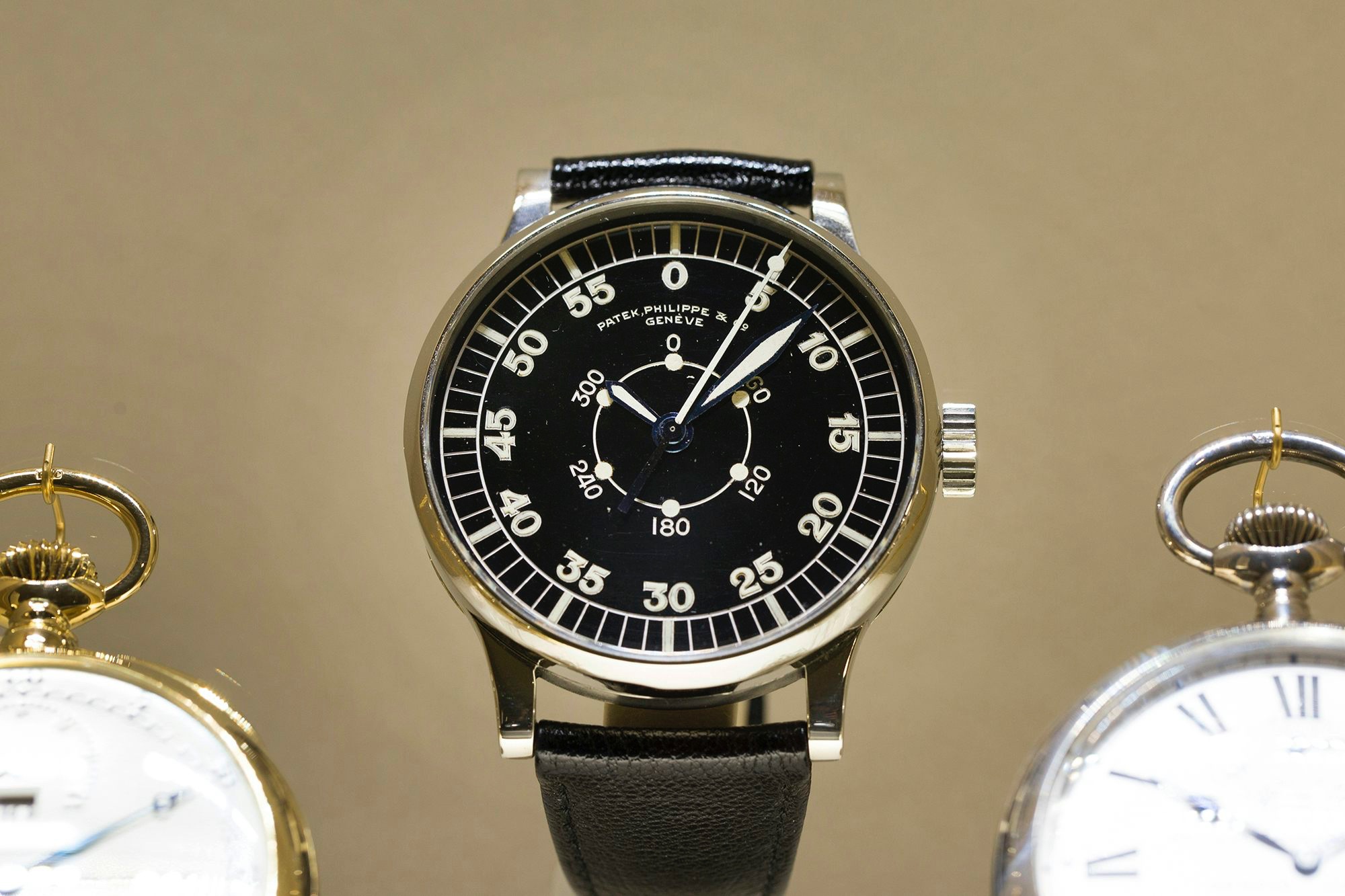
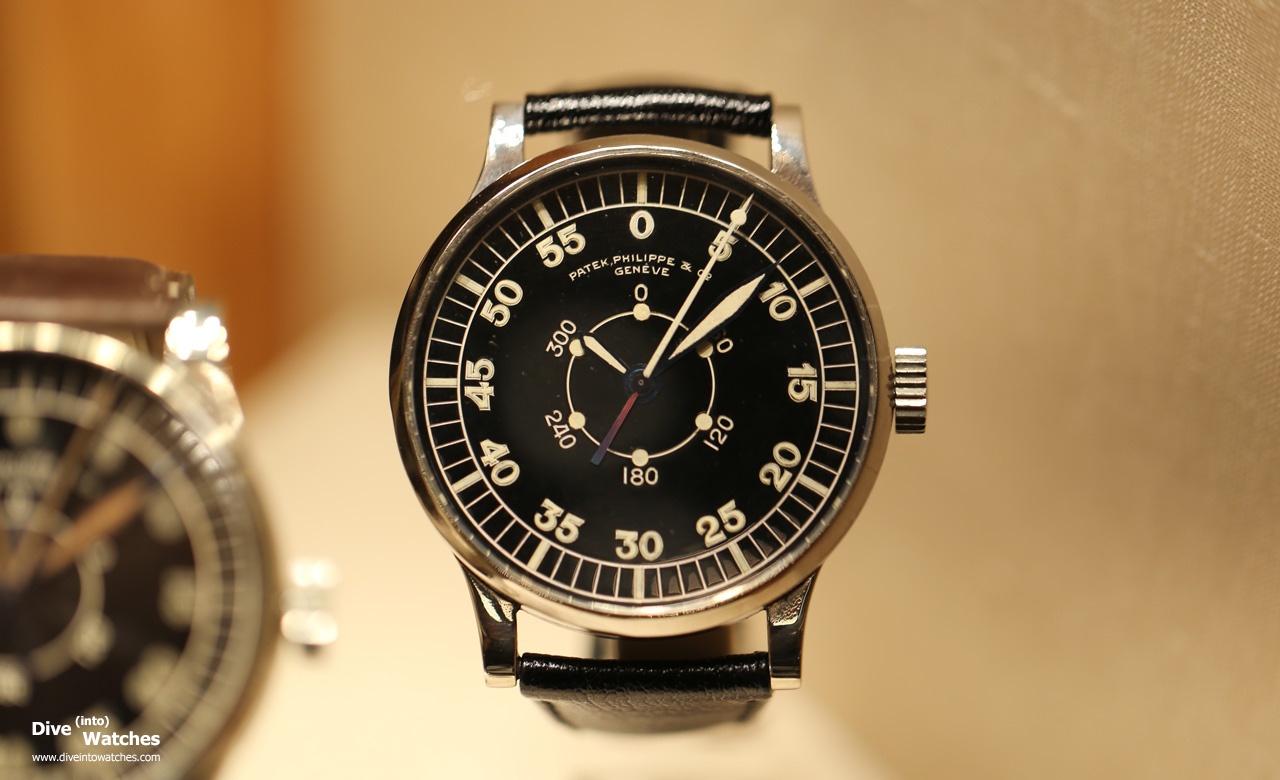
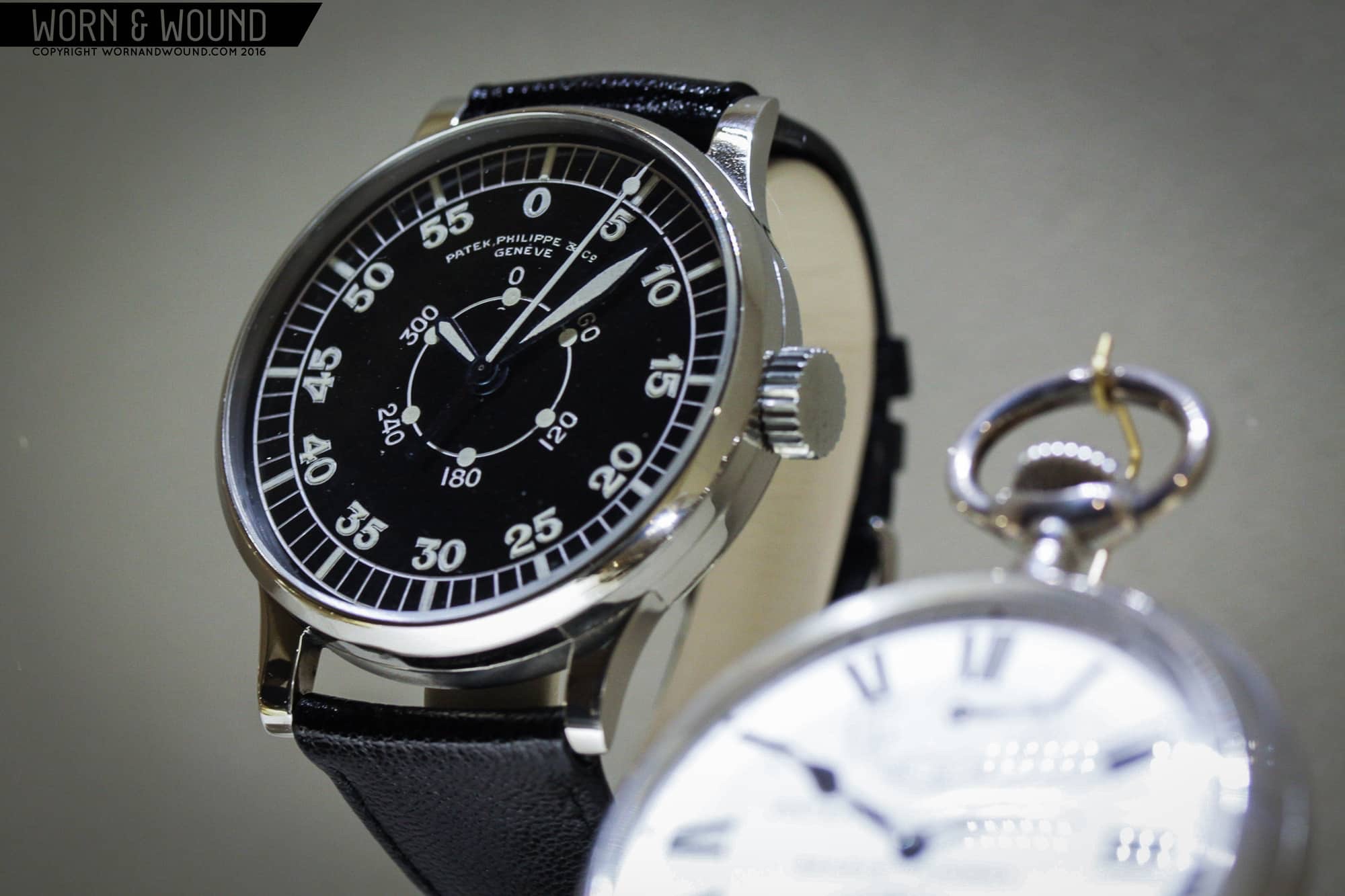
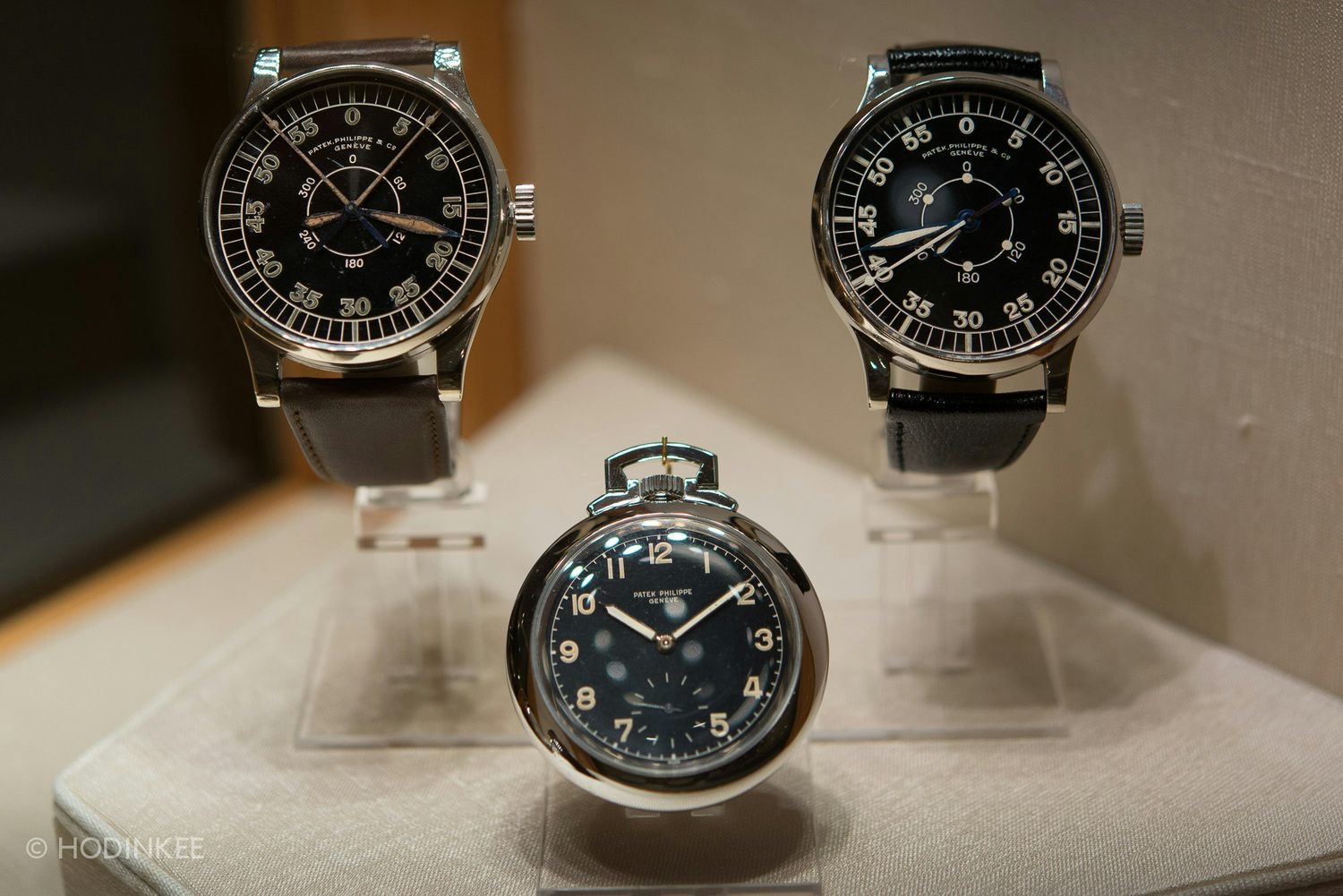
Both watches shown below now belong to the Patek Philippe Museum
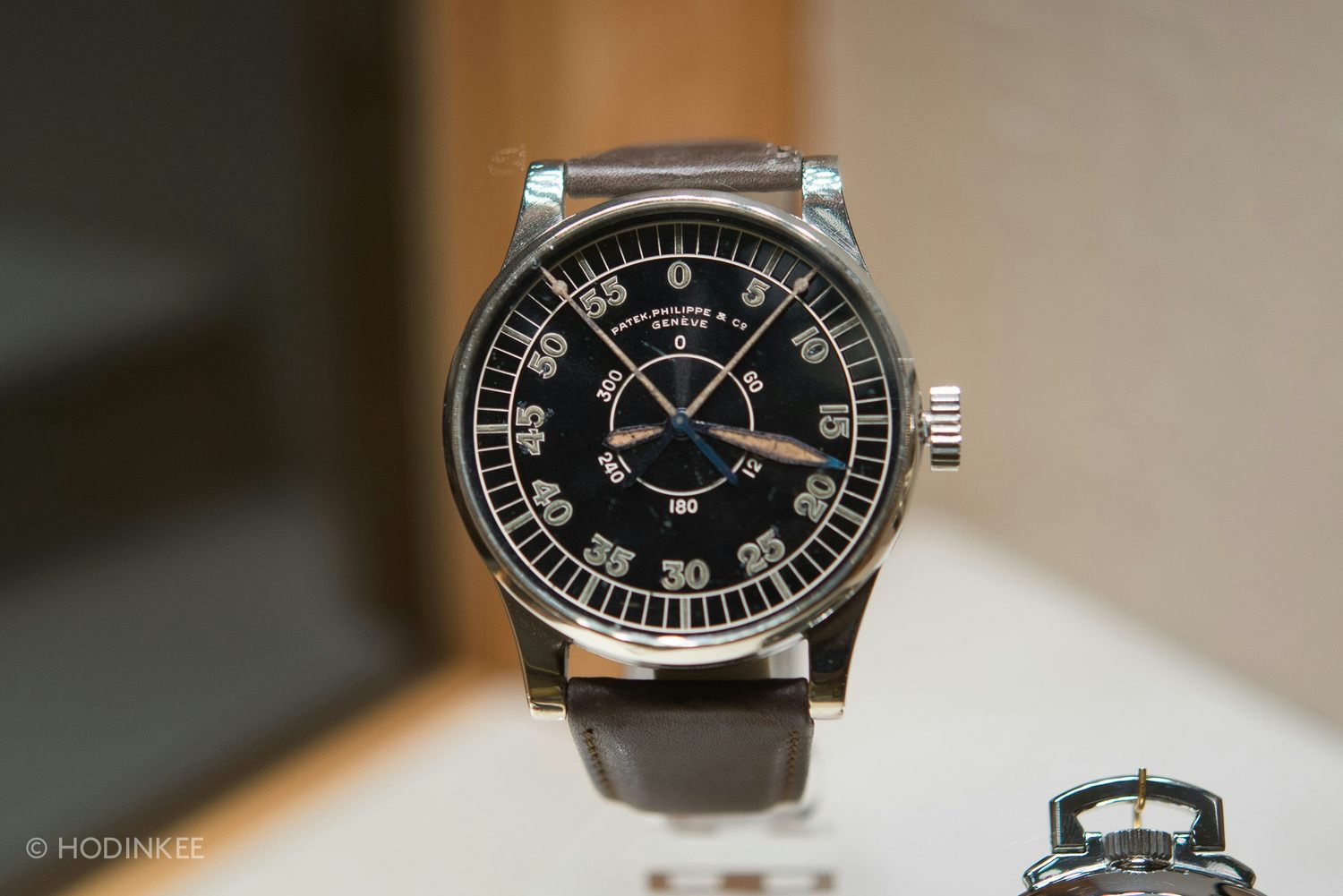
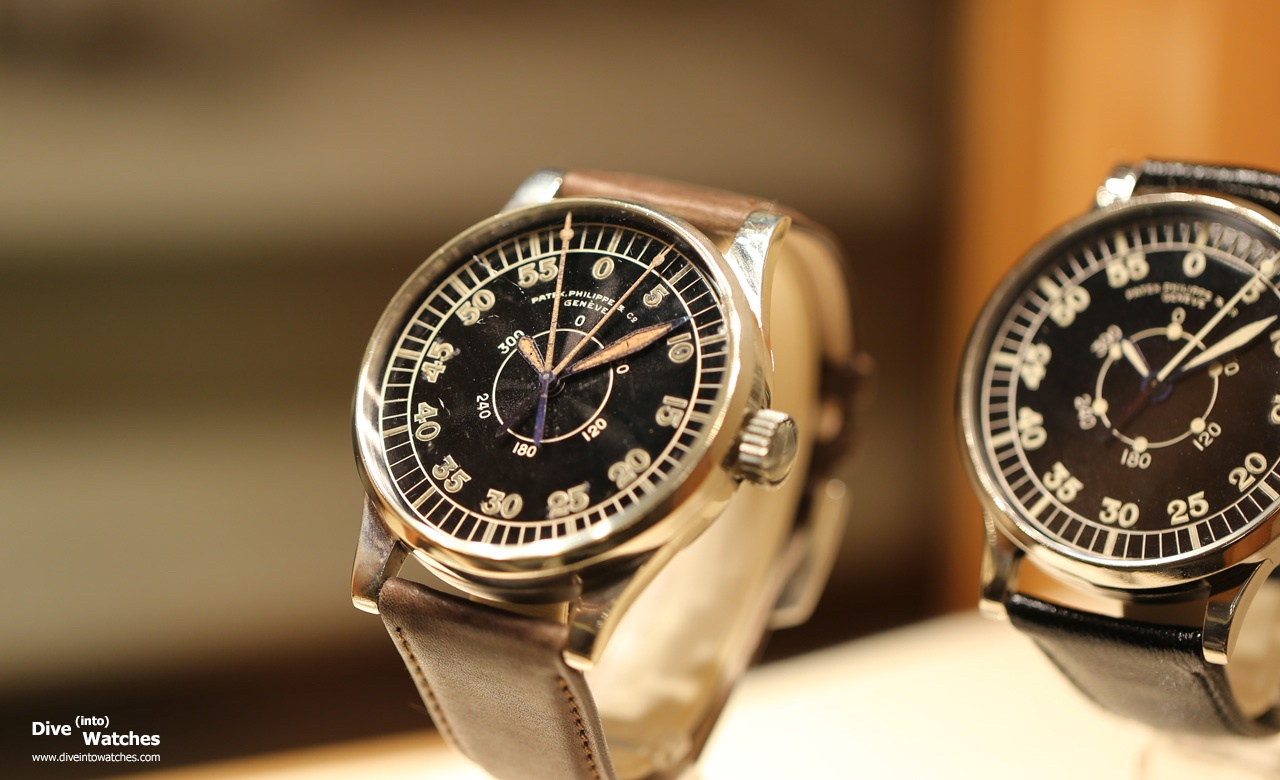
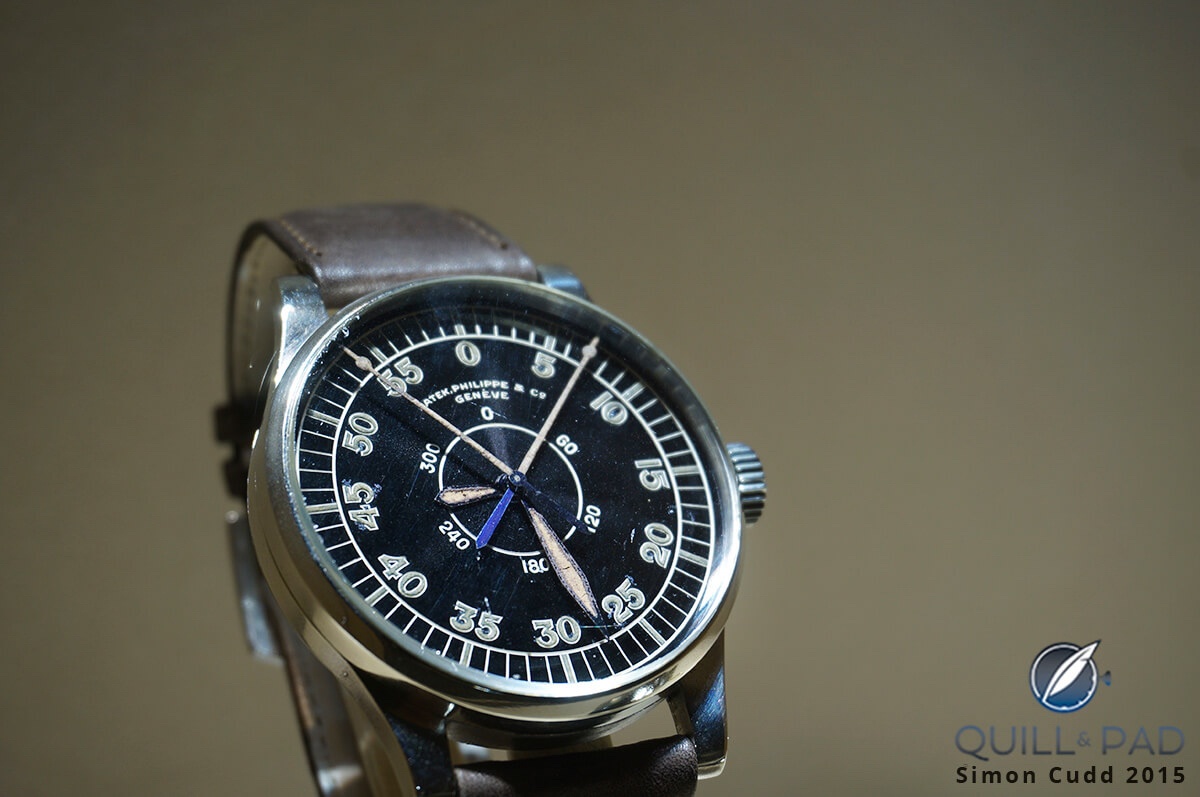
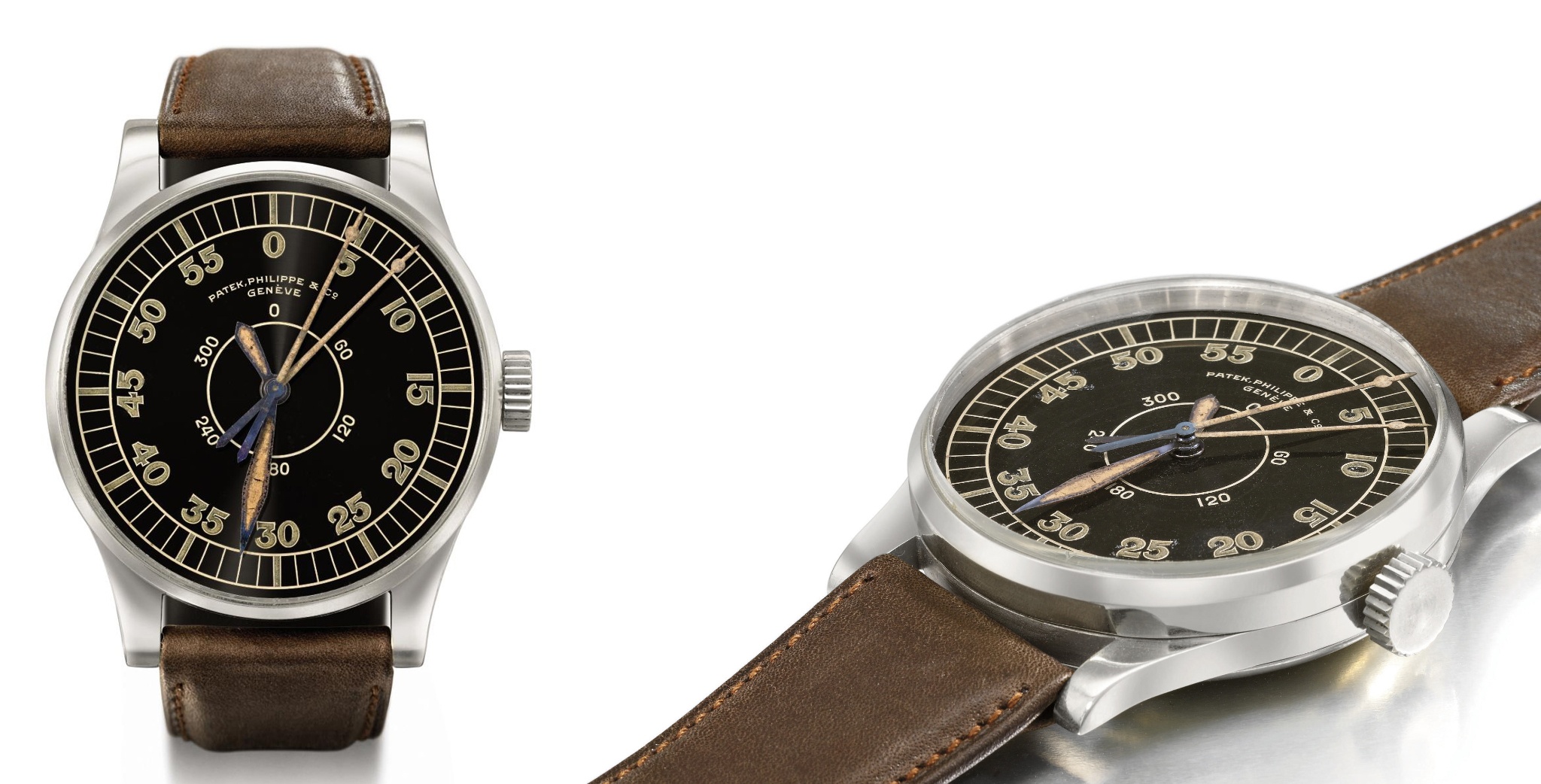
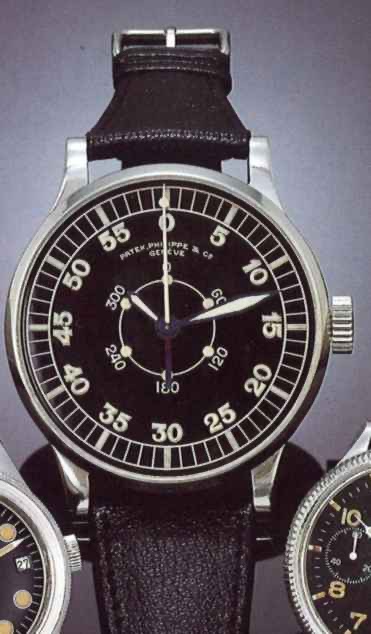
1/ MOVEMENT NO. 170381
Diameter: 55.3 mm
Splittable centre seconds activated through the crown.
credit: Hodinkee, Diveintowatches, Quill & Pad, Christie's & shutterstock
2/ MOVEMENT NO. 170383
Calibre 19"' "Extra", Geneva Quality Hall-mark, rhodiumed, "fausses-côtes" decoration, 21 jewels, lever escapement, "Guillaume", balance, Breguet balance-spring, micrometer regulator.
credit: Hodinkee, Diveintowatches, Worn & Wound and Antiquorum
NO. 170381 (LEFT) & 170383 (RIGHT) SIBE BY SIDE AT THE PATEK PHILIPPE MUSEUM
credit: Hodinkee, Diveintowatches, Worn & Wound and Antiquorum
NO. 170381 (LEFT) & 170383 (RIGHT) SIBE BY SIDE AT THE PATEK PHILIPPE MUSEUM
credit: Hodinkee
WHAT IS AN HOUR ANGLE WATCH AND HOW DOES IT WORK ?
An hour angle watch is a watch designed to help aviators determine their longitude while in flight. It was famously developed by Charles Lindbergh in collaboration with Longines after his historic transatlantic flight in 1927.
Since the Earth rotates 360° in 24 hours, the "hour" hand rotates once in 24 hours, indicating the degrees of arc against the center circle divided into 360°. Each "hour" therefore corresponds to 15° of longitude.
The "minute" hand rotates once every 4 hours, corresponding to 60° of longitude. So each "minute" =1° of longitude.
The "second" hand revolves every 4 minutes, corresponding to 15° of longitude. So each "second"=0,25° of longitude.
For example, in the photo below (hopefully, my calculations are correct...):
- The left watch indicates 10h, 18min and 32 seconds=300° + 18° + (32 x 0,25)°=318° + 8°=326° of longitude.
- The right watch indicates 10h, 28min and 7 + 18 seconds=300° + 28° + (7 x 0,25)° + (18 x 0,25)°=328° + 1,75° + 4,5°=334,25° of longitude.
The watch being accurately set to Greenwich Mean Time (GMT), for example via a radio signal, it indicates the longitude of Greenwich.
In the cockpit, the pilot uses a sextant and a nautical almanac to calculate the local solar time. Then, by calculating the difference between the local solar time and Greenwich Mean Time, he can determine his exact longitude.
I hope this explanation is roughly correct. At least, that's what I managed to understand...
Thanks for reading.
Best, Emmanuel
Available on the marketplace
1,360 Breitling listings are live on the eBay market and 216 collector listings on the WatchProSite marketplace.



Automotive
Experience the Richard Mille Le Mans Classic through stunning photos and insights. Discover how racing car design influences Richard Mille watches, from integrated case and movement to shock resistance.
14 replies7845 views

Vintage
Uncover the truth behind the Vacheron Constantin 'Wright Brothers watch' (Ref. 287275). Tick Talk investigates its provenance, challenging marketing claims.
13 replies4100 views

New Release
IWC Schaffhausen unveils new Le Petit Prince collection at Watches and Wonders, featuring Perpetual Calendar ProSet and white ceramic Pilot’s Watch Chronograph. Discover the Portofino expansion.
5 replies506 views

New Release
Discover the Bell & Ross BR-X3 Patrouille de France, a 250-piece limited edition. Explore its multi-layer case, blue dial, Alpha Jet seconds hand, and COSC-certified BR-CAL.323 manufacture movement.
0 replies100 views

Discussion
Is the Swatch Group listening to collectors? KMII explores the rise of no-date watches from Longines, Tissot, and Omega. Join the debate.
94 replies20192 views

Vintage
Discover the Longines Lindbergh Hour Angle with the rare in-house Caliber 990.1. Explore its history, authenticity, and collector insights.
18 replies8621 views
Five unique aviator hour angle watches
According to Christie's , in spring of 1936 both Patek Philippe and Vacheron Constantin were "approached by a private to develop, produce and supply a very small series of hour angle wristwatches for testing". These five watches are never presented togeth...

From the time…
A pilot actually needed a watch on the plane, rather than on the ground 😁 Thanks a lot for the explanation - the only question remaining what the significance of the split seconds complication was in this context? 🤷🏻♂️
Very good question indeed.
Maybe it was a way to make it more easy to measure the extra degrees to fly before a change of direction (and latitude). Each "second"=0,25°, so starting from zero, it's very easy to count 1 or 2 more degrees (4 or 8 "seconds")... Best, Emmanuel


Thank you for this truly fascinating post and pictures of these unique watches.
It was obvious to me from the start that these were professional use watches and somehow worked for aviators but at this size they make even a Panerai look small. I kind of understand how they work in the cockpit of a plane but wouldn't be able to make th...
Yes, flying, at that time, was an epic adventure that required many qualities, both intelligence and temperament.
And some good and useful tools! Best, Emmanuel

Yes, the two Patek usually steal all the light,
but I agree that the VC is wonderful. And the movement looks gorgeous too... Best, Emmanuel

Thank you so much for the introduction!
I was not acquainted with these beforehand! Cheers, Filip
