
MTF
[PuristS]
13383

PIAGET UPSTREAM -- a Downstream Review
Piaget Upstream – a Downstream Review
By Dr Melvyn Teillol-Foo
When Piaget launched the Upstream in 2001, CEO Philippe Léopold-Metzger hoped to change the way people perceived Piaget, saying, “The idea with Upstream was to be very innovative, very different. We are trying to change the perception of the brand to make young people more aware of the brand and position it as innovative and trendy – a brand that is ahead of the trends.”
The Upstream was reputedly the first steel Piaget watch since 1957, when the firm started making gold and platinum cases exclusively. Later, we will find out that this was not strictly correct. It had little in common with the high aesthetics of gold and precious-stone jewellery watches that Piaget is best known for. It had three features that surprised the industry and consumers – the deployant bezel; that it was a men’s sports watch; and came in steel.
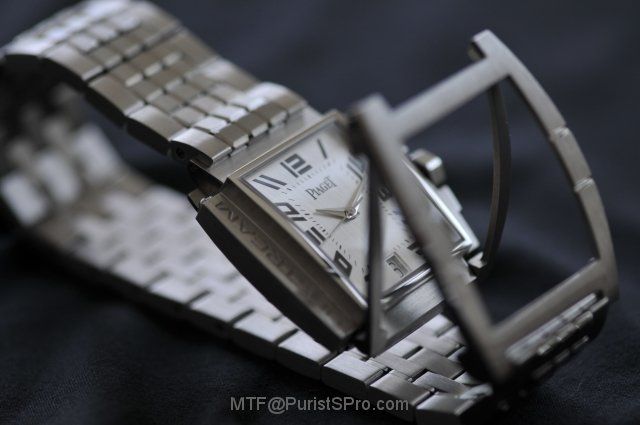
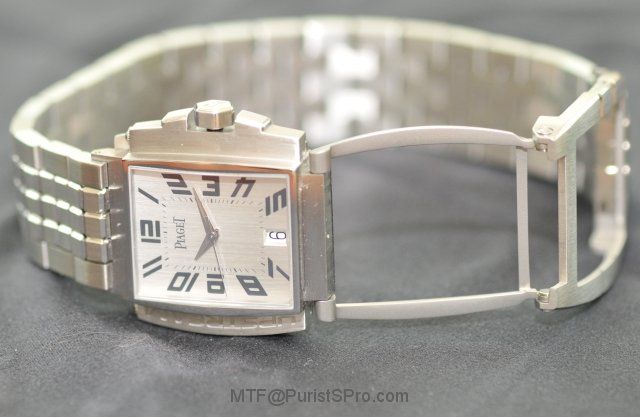
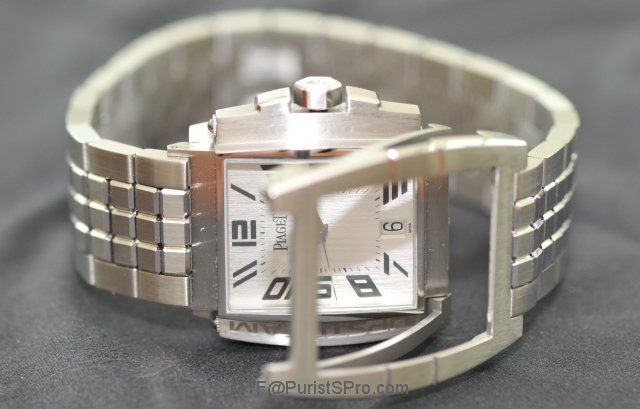
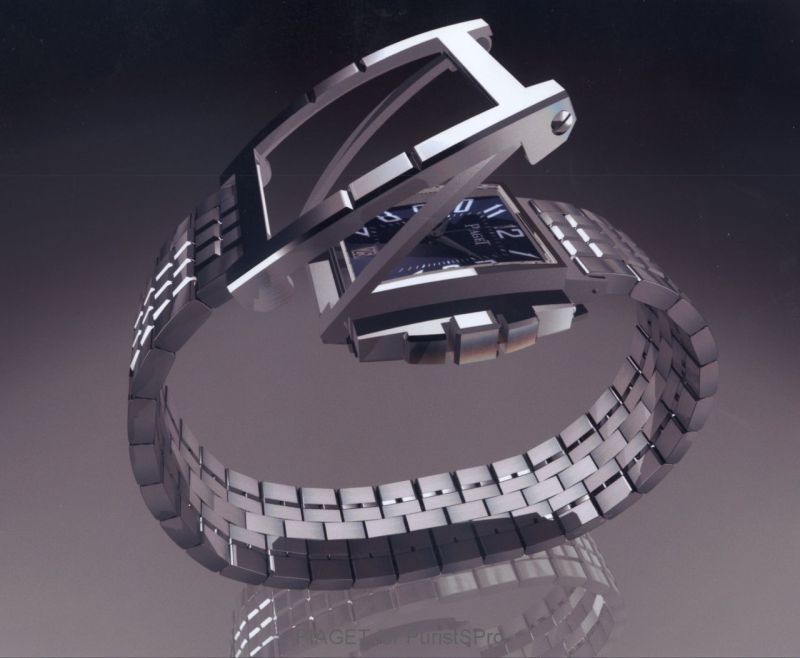
Upstream’s unique front bezel deployant system was a real advance in horology that made the watch easier to wear and more comfortable. It took two and a half years to develop, mainly because of the unfolding bezel action.
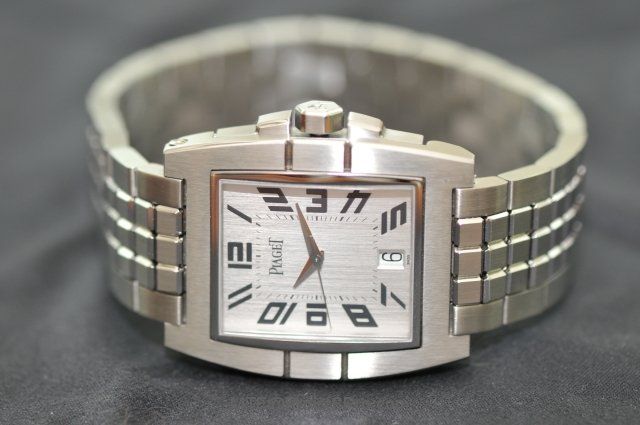
The casual observer may not notice design cues such as the stylised Arabic numerals that mirror the horizontal and vertical lines of the case and bracelet, with matching cut-off tips on the dauphine hands. The hexagonal crown with an engraved ‘P’ and polished crown protectors add to the elegant, masculine look of the integrated bracelet. The two rows of square emerald-cut matt-finished links are framed by polished rectangles.
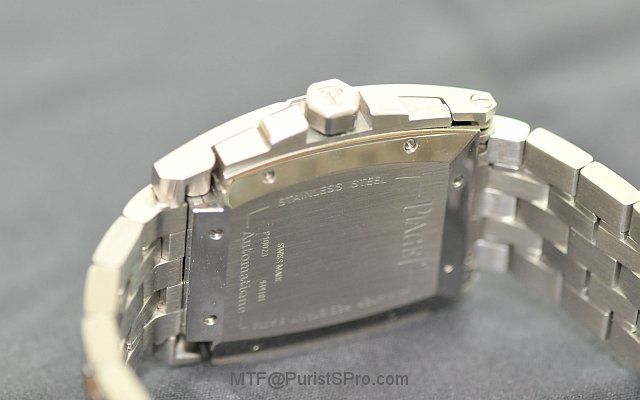
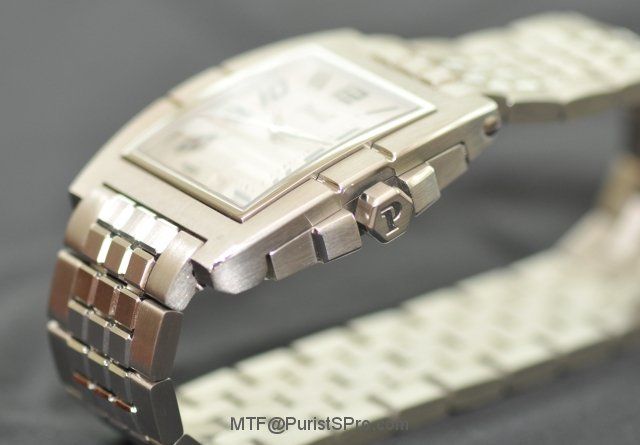
The Upstream had to be offered in steel as a sports watch. Whilst industry commentators focused on the “first cheap steel watch in 45 years” headlines, Piaget’s futile protestations that they made a few steel watches for the Japanese market in the early 1960s went unheard. Furthermore, the Upstream was not ‘cheap’ at around $6,000. The new case and bracelet were not the only new Upstream developments as Piaget created two movements especially for it.
Initially, there were seven different models in the collection: four in steel (two chronographs), two 18K gold models (yellow and white) on leather straps and one yellow gold bracelet watch. Simple models contained the Caliber 504P, an 11-ligne, self-winding movement with 40 hours of power reserve. The steel chronographs use the Caliber 222P, with 30-minute and 12-hour counters and a large date window at 12 o’clock. It also featured a flyback hand, calendar and mechanism to change the time zone. The new movements emphasised Piaget’s reputation as a true manufacture.
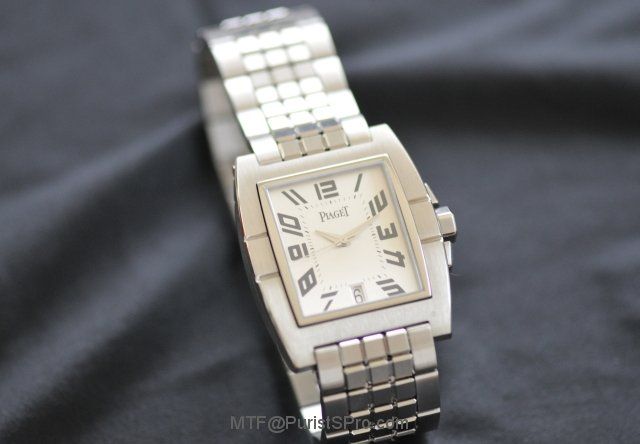
G0A26006 (Silver dial)
Large model, stainless steel case with folding bezel and steel bracelet. 504P automatic winding movement. Date window at 6 o’clock.
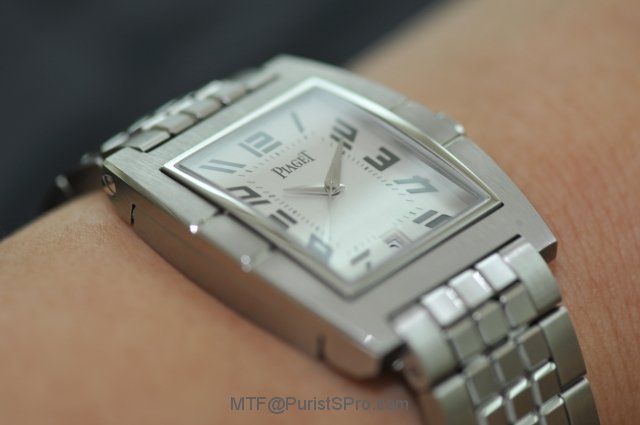
This is my personal watch.
I had to move fast to acquire one after the announcement of the stoppage of production. There may be still some pieces out there, folks. One only needs a moment to get acquainted with the unique front folding deployant. It does require a new manoeuvre to deploy – the index and third finger are placed on the top edge of the watch and the thumb on the bezel at 6 o’clock. Using the thumb as the pivot point, the clasp is disengaged and engaged by the two fingers...pulling and pushing respectively, on the top bezel.
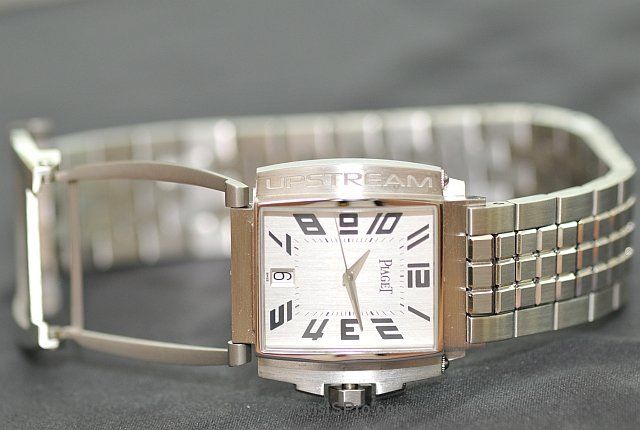
The watch is very comfortable because the bracelet links are smooth and flexible, conforming to the wrist. Like any great property, not one bit of real estate on the watch is wasted in completing the aesthetics. Unlike other big watches whose cases are enlarged with non-functional metal mass, every cubic millimetre of the Upstream does a job and still contributes to make an honest and fashionably big, sporty case.
Despite its heft, the Upstream is elegantly wearable because Piaget has not forgotten their prowess in ultra flat watches. No other sporty watch in my collection fits under my office wear shirt cuffs so well, nor attracts comment for its sporty demeanour when arms are bared and 'at play'.
INTERVIEW
After the recent cessation of production, Piaget CEO, Philippe Léopold-Metzger, agreed to a short interview to ‘fill in the blanks’ about this remarkable model line.
PPro = PuristSPro
PLM = Philippe Léopold-Metzger
PPro: Can you comment on the folding bezel system and technical treatments?
PLM: The patented folding-bezel system required 800 hours of R&D and underwent tests, including 20,000 consecutive openings and closings to simulate 50 years of usage. The bracelet is entirely hand-finished at the Manufacture.
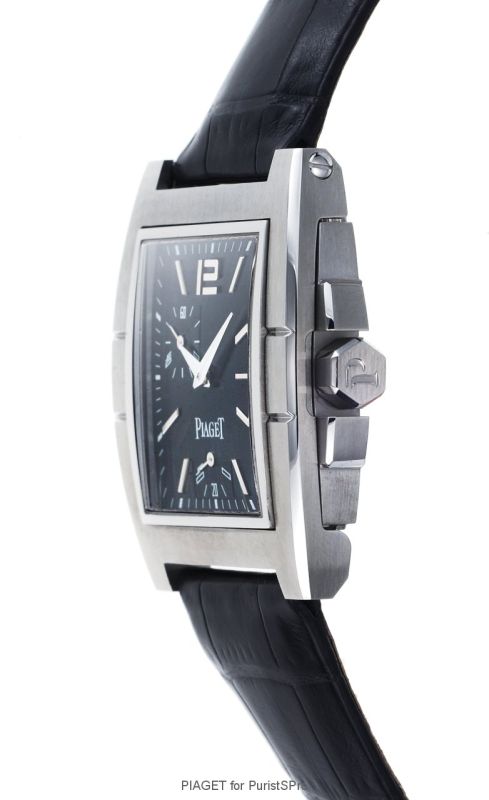
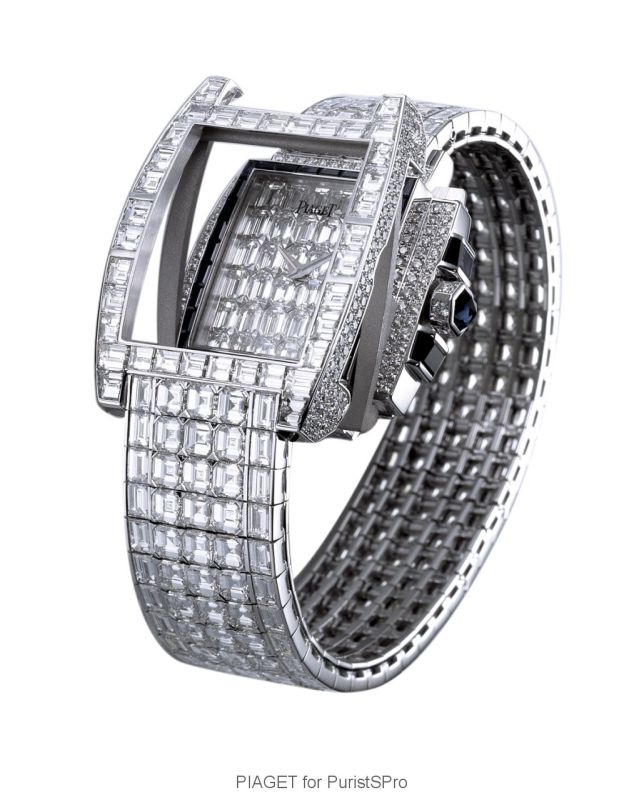
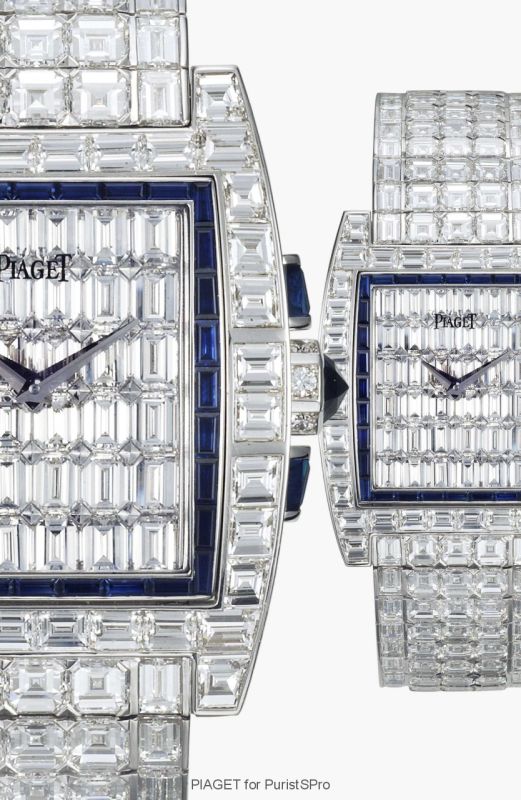
Here are some pictures of several Upstream aesthetics: steel, pink gold, white gold set with diamonds and also two exceptional pieces set with baguette-cut diamonds, showing Piaget's expertise with setting and technical savoir-faire. Indeed, even fully gem-set, we used the same clasp opening system.
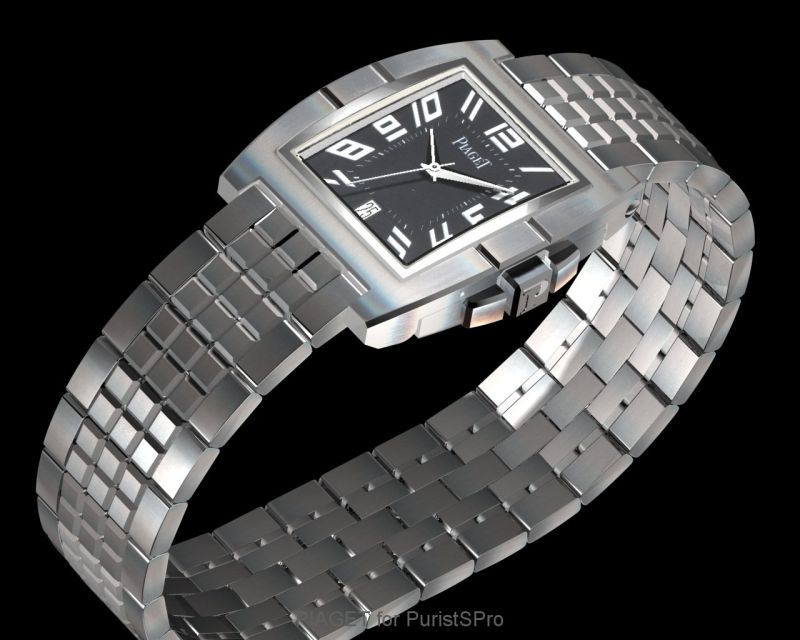
G0A26005 (Anthracite dial)
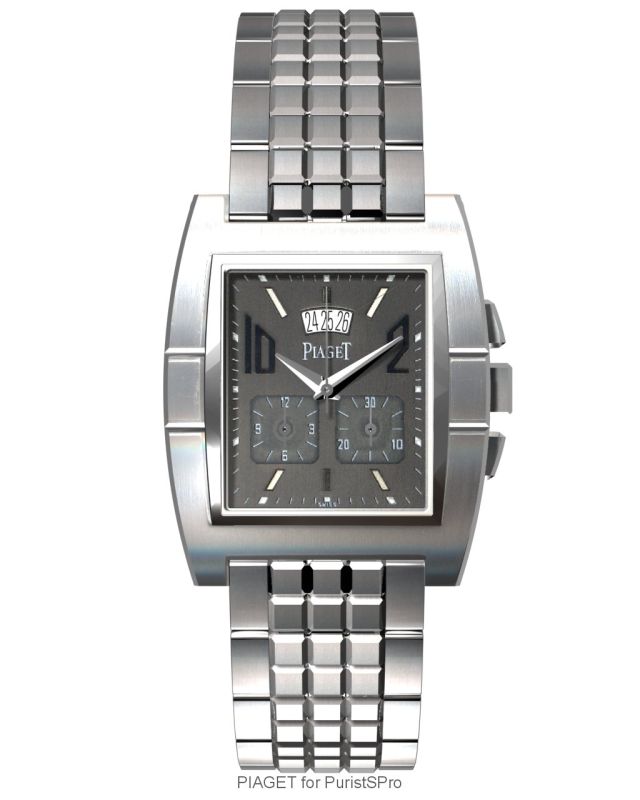
Chronograph
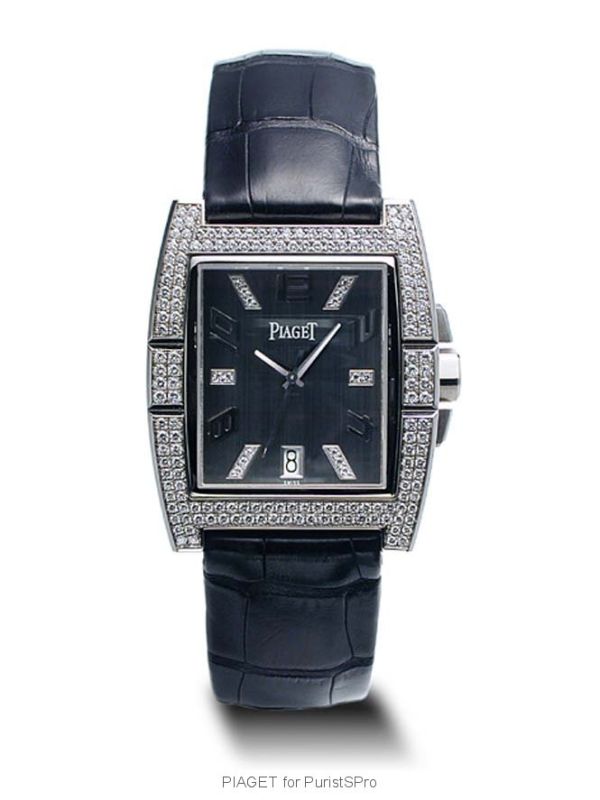
White Gold with diamond setting
PPro: What were the years of production?
PLM: The Upstream was launched at the SIHH 2001. It was the first Piaget steel watch but has also been developed in white, pink and yellow gold. The production lasted 7 years representing 34 references (steel and gold models). We started the production in 2001 and stopped in 2007.
PPro: How many steel bracelet and gold variants were finally made?
PLM: 12 models in steel and 22 in gold.
PPro: How many variants with leather strap were there?
PLM: Among 12 references in steel, only two had an alligator strap. Regarding the gold versions, 12 out of 22 references had an alligator strap.
PPro: Did Piaget make the whole watch?
PLM: We made all the gold cases (Geneva Manufacture) and all the movements (La Côte-aux-Fées Manufacture) used for the Upstream model.
As Piaget is used to working only with gold, the steel cases and bracelets were outsourced but finished, assembled and encased internally.
PPro: What was the rationale to stop Upstream? Was it purely marketing or poor sales or were you conserving precious movements for higher value watches?
PLM: The sales were very high and we had an important commercial success. However, we stopped the Upstream model because Piaget's objective of offering a cost-attractive watch could no longer be met with the very high production costs, in particular for the very sophisticated bracelet. Furthermore we have new exciting projects in the pipeline.
(Editor's Note: Pre-SIHH 2009 Interview)
PPro: Will there be a replacement model?
PLM: No other model can replace the Upstream concept with this unusual opening system. However, it's true, Piaget offers nowadays "sport-chic" watches in gold on leather or rubber strap such as the Piaget Polo Chronograph that was launched at the SIHH 2007. The Upstream concept remains a wonderful idea, and it may certainly be used again in the future.
PPro: Thank you.
Copyright Melvyn Teillol-Foo, PuristSPro. 2009.
This message has been edited by MTF on 2009-02-13 13:28:11


PIAGET UPSTREAM -- a Downstream Review

Thanks for bringing the Piaget Upstream to our attention MTF

I've never seen this model before...
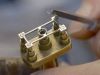
Interesting patented folding-bezel system....

After seeing yours
I didn't even know that there is bezel deployant system.
Excellent article
sigh....the story of modern PIAGET

Thanks MTF for the Piaget Upstream review

What is the difference?

Dear Dr. MTF