
Independents
DonCorson's post offers a rare glimpse into the intricate world of Maki-e dial creation, a traditional Japanese lacquer art. His detailed photo essay, shared courtesy of Daniela Speake-Marin, illuminates the painstaking process behind the 'Visionary Lion' timepiece. This article explores the nuanced techniques and artistic depth involved in crafting these unique dials, making a decade-old forum discussion relevant to new enthusiasts.
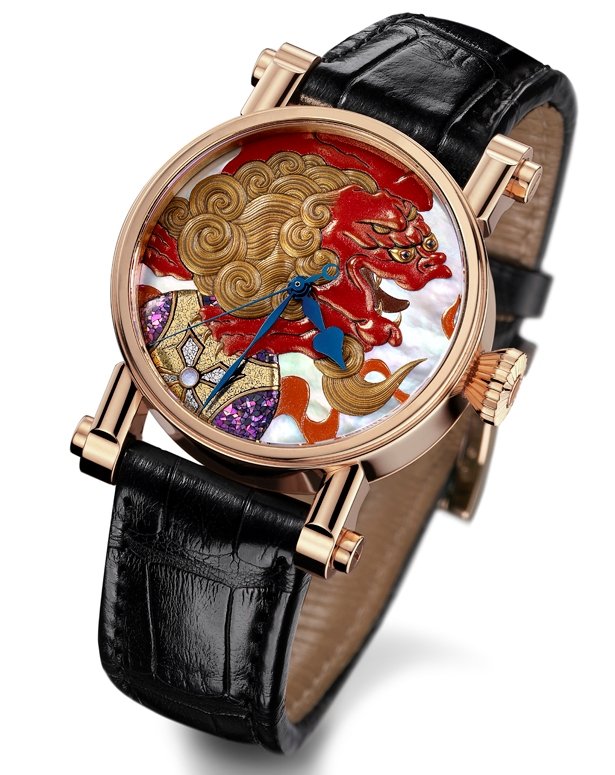
How to make a Makie dial Draw the design. Copy the design to the dial. Make scratches on the dial to make urushi stay. Put black urushi for 4 times. Draw the design with gold. Put red urushi on face part. Sparkle gold powder. Put black urushi to make the gold powder stay. Put ash to make the design stereoscopic. Put black urushi on the ball part. Draw the ball design. Put the red color shell on the ball part. Put black urushi on face part. Put platinum on eyes part. Put gold on hair part. Put ro
Those shots really make you appreciate the work, and price. I'm awed with Mr. Speake-Marin's talent and skill.
I don't understand what's the purpose of applying the red urushi on face part in the beginning The entire section is then covered in gold powder, then black urushi, and then everything else. What's the purpose of the red urushi on the face then? Red urushi is applied again later at the end on top of all the previous coatings. Cheers, Anthony
Not sure if Urushi is like normal gilding where using a red ground (base coat) will give warmth to the gold colour.. similarly a whiter background will make it pale and colours like blue and green can do weird things... my thoughts .. as always may be nowhere near accurate Tom
One technique for executing taka maki-e requires urushi to be used to build up layers so that some parts of the motif are higher than others, giving it depth and fullness. - SJX
This thread is active on the Independents forum with 17 replies. Share your knowledge with fellow collectors.
Join the Discussion →