
Discussion
Baron - Mr Red's insightful post challenges the common perception of Rolex, arguing that its true innovation lies not in complex horological breakthroughs, but in its unwavering commitment to reliability, integrity, and robustness. He traces this philosophy back to Hans Wilsdorf's foundational principles, highlighting how early chronometer certifications set the stage for Rolex to become the quintessential adventurer's watch. This article explores the core identity of Rolex, prompting readers to reconsider what truly defines innovation in watchmaking.

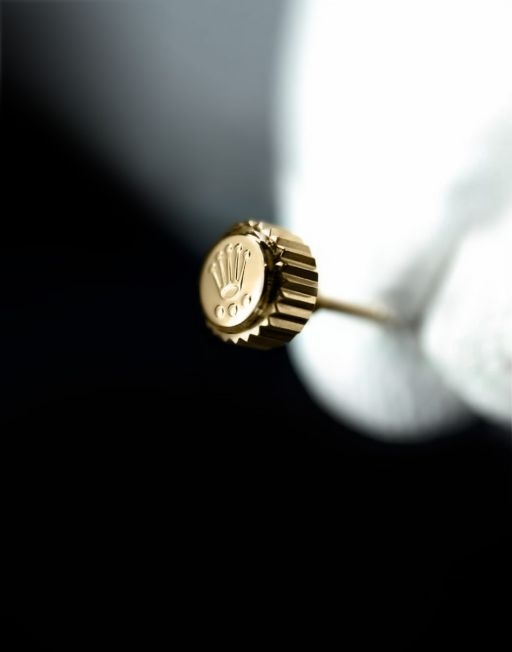
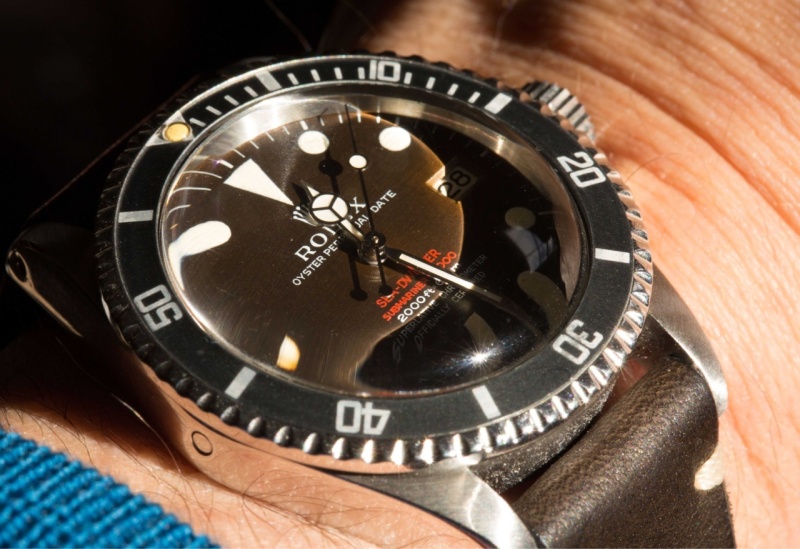
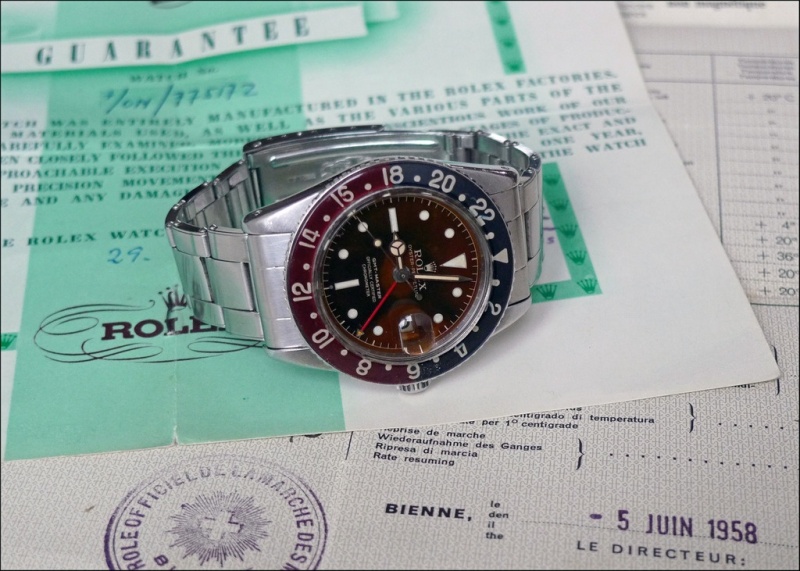
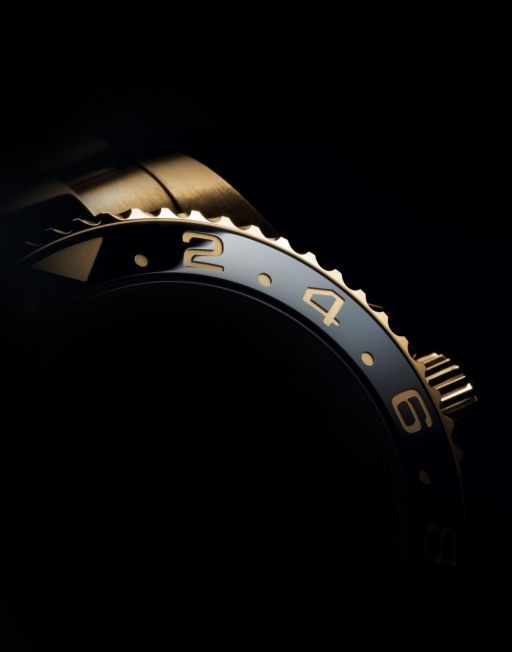
Rolex doesn’t grab the headlines for its innovations. Houses like Patek Philippe and Jaeger LeCoultre have their histories replete with examples of ingenious horological breakthroughs and clever, highly complicated innovations. Rolex seemingly sails under the radar in this area. However, having given this some thought, it occurs to me that understanding the true nature of Rolex is at the heart of its innovation persona. Rolex is not about complications. It is not about novelties and quirky functions. Rolex is about fairly ruthless reliability. If one owns a Rolex, one expects it to be totally dependable and for it to fulfill its functionality in the toughest of environments. Reliability. Integrity. Robustness. These are all words that spring to mind when I think Rolex. What jumps to my mind when I think of Rattrapante Perpetual Calendar? Certainly not Rolex. However, what springs to my mind when I think of exploring, diving, travelling……. Uhm….Explorer 1, Submariner, GMT. Rolex is the watch that Indiana Jones would have not just worn, but would have needed. OK, maybe I am a touch biased, but to my mind, Rolex invented the Adventurer’s Watch.
Proof? Well, I think it is worth touching on some of the historical roots. I don’t think it is necessary to trawl through each and every part of history to garner a flavour, but some historical context provides the aperitif for the more recent innovations.
With Rolex, knowing what was “the beginning” is harder than it seems. I am going to start at 1910, five years after the company Wilsdorf & Davis Ltd was born. In 1910, Rolex sent their movement to the School of Horology in Switzerland where their watch was awarded the world’s first chronometer rating. This was followed in 1914 by a Class “A” Certificate of Precision from the British Kew Observatory. Again, this was a first. These tests of accuracy were performed under varying conditions of stress. Wilsdorf decided that this Certificate of Accuracy was going to be something that every single Rolex would have. Sometimes a watch manufacturer loses its way. One can think of many examples where this has happened. But, I would argue that the success that Rolex has today stems from never truly having departed from the key principles laid down by Hans Wilsdorf back in 1910. The word Rolex was to be synonymous with reliability. In terms of innovations, I would argue that these accuracy tests laid the foundation for pretty much everything that Rolex was to become.
Building on this success, Rolex went on to introduce a number of crucial horological innovations. The first self-winding watch was offered to the public by Rolex in 1931. Some say it was never released until 1933, but if we say between 1931-33 we can be safe. The Bubbleback. What was this innovation really about? Well, not needing to wind the watch manually removed the risk of forgetting to wind it. For an explorer, or diver, one can see how such a complication will have been so useful. Of many complications that a modern watch has today, I find the automatic function one of my favourites. I have heard many people argue than the action of manually winding their watch provides great pleasure. Of course, I can see that, but equally the marvel of translating potential energy of body movement into powering a watch is similarly a wonder. This innovation also allowed the power to the mainspring to be kept more consistent, thereby allowing more reliable time-keeping. Reliability. Accuracy. Pragmatism.
It is, perhaps, the arena of diving where Rolex is most well-known. As mentioned, Rolex pioneered the waterproof watch, and then went on to make it more and more waterproof. In an effort to demonstrate how Rolex wanted to be seen as pushing the envelope on reliability under stress, Wilsdorf had a Rolex specially manufactured and subsequently attached to the side of the Trieste Bathyscape, the vessel that went to the bottom of the Mariana Trench. Jacques Piccard telegram-ed Wilsdorf following the successful dive;
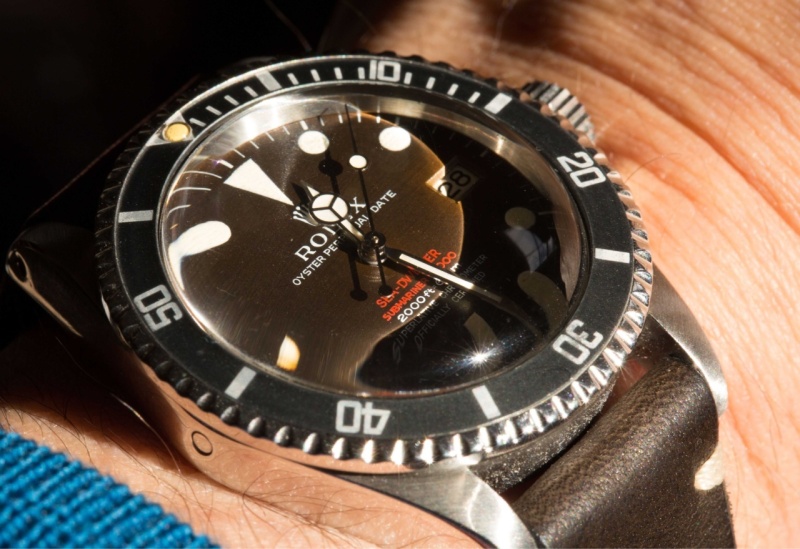
But expertise in water was not the core of Rolex. It is the issue of reliability under varying stresses that is the DNA, in my view.
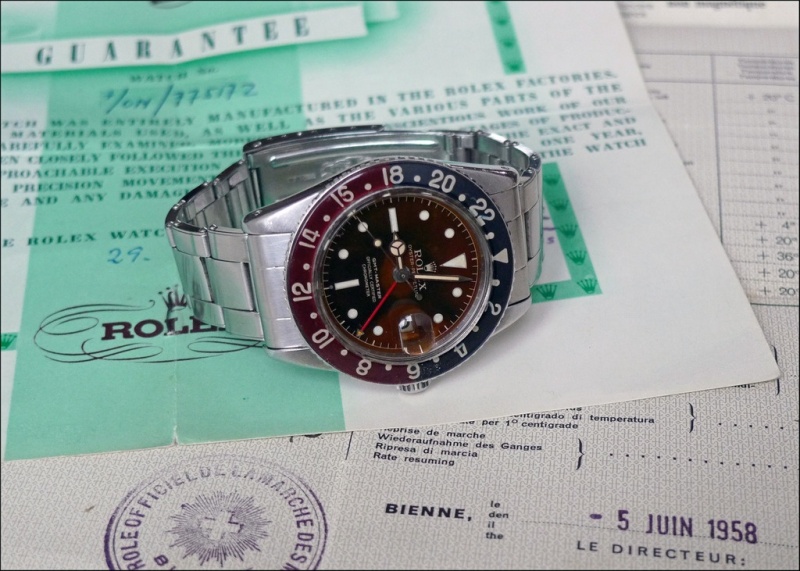
A common theme runs through many, if not all of these horological landmarks. Sometimes it is the simple things that make such a difference. This leads me neatly into the current era. As technology has advanced, so the potential complications in a watch have risen exponentially. Soon, there will be a watch that can wash the dishes too. I feel fairly certain that Rolex will not be a pioneer in that direction. Where Rolex will be a pioneer is in its core competences; reliability, accuracy, and performance under pressure. It is worth looking at some of the recent patents and innovations from Rolex.
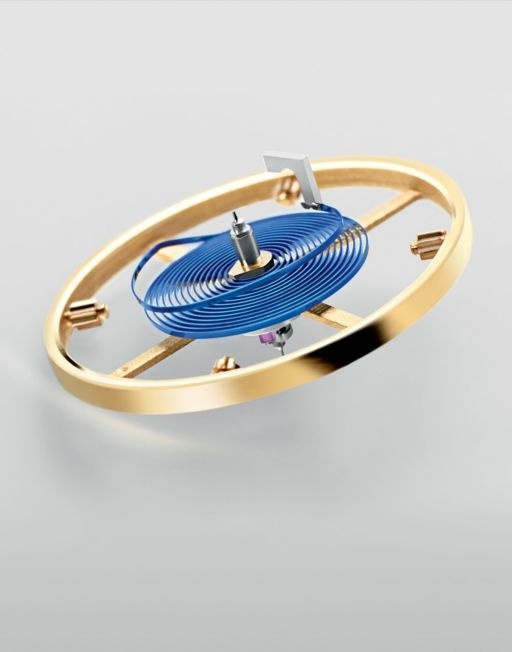
Innovation, however, can take place not just inside the watch case. Take the Submariner transition from 16800 to 168000 in 1980s. To look at these two watches, they appear identical. There is only one difference really, and that is the new type of steel used in the latter model. What makes the Submariner 168000 special is the fact that it was this reference that introduced the use of steel 904L instead of steel 316L that was used before. Why the change? It is all about attention to detail.
How did Rolex notice that a new steel was needed? Rolex discovered that watches that had been taken in the sea sometimes had water trapped in some of the caseback threading. Sitting in these threads for years (presumably between services), the chemicals in the water caused a reaction with the 316L steel….causing corrosion and pitting. Rolex tested the steel and found that it was susceptible to certain types of corrosion.
With the 168000, Rolex moved to 904L, a steel with a different composition – containing more nickel and chromium. Furthermore, 904L is also more resistant to chloride. Since it would be expected that a Submariner would be used in the sea, switching to a steel that was especially resistant to the chloride in the sea seemed straightforward. But actually, it is far from straightforward.
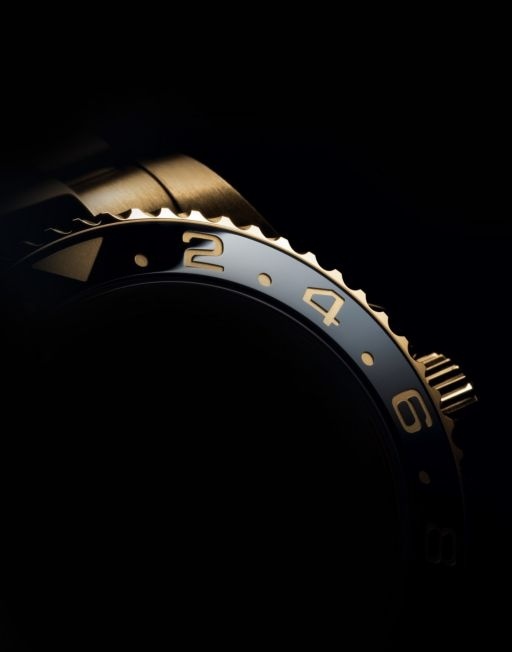
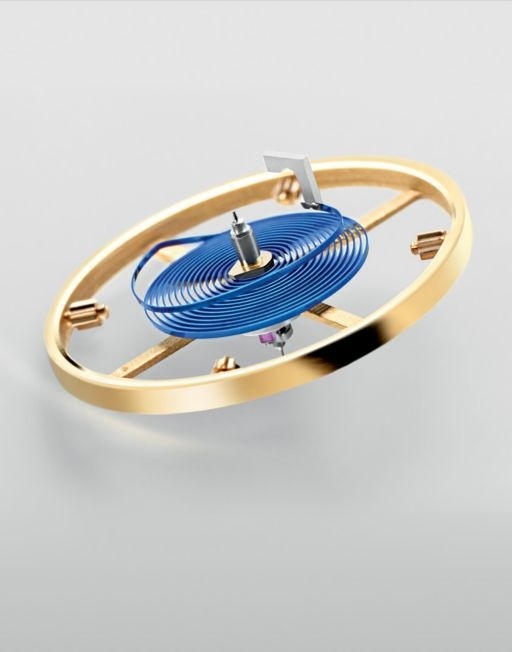
The idea that Rolex is falling behind other manufacturers in terms of innovation seems to be a criticism that is commonplace. I think it is an unfair criticism. One can quite simply locate the patent application pages for Rolex applications to see just how active Rolex have been. If anyone wants that, just PM me. Over the last 12 months, I can see no less than eleven new patent applications, ranging from an optimised balance wheel assembly, an articulated bracelet design through to atomic oscillators.
The Rolex Oyster Perpetual Date reference 1500 represents a foundational model within the brand's Oyster Perpetual Date collection, offering a classic and robust design with the practical addition of a date complication. Positioned as an accessible yet fully featured Rolex, it provided the core elements of the Oyster case and an automatic movement, making it a popular choice for daily wear. This reference was produced for over a decade, establishing its presence in the Rolex catalog as a reliable and understated option. It is distinguished by its straightforward design, focusing on legibility and durability without extraneous features.
The reference 1500 features a 34 mm stainless steel Oyster case, known for its water resistance and durability. The watch is powered by the automatic Rolex Caliber 1570, a chronometer-certified movement recognized for its reliability and accuracy. This movement typically offers a power reserve of approximately 42 to 48 hours. The case is fitted with an acrylic crystal, a common feature for Rolex models of this era, and is rated for a water resistance of 100 meters. The smooth steel bezel contributes to its clean and unadorned aesthetic.
For collectors, the reference 1500 is appreciated for its historical significance as a core Oyster Perpetual Date model and its versatility. Its 34 mm case size appeals to those who prefer more modestly sized watches, and its robust construction ensures continued functionality. While often seen with a silver dial, variants such as the blue dial mentioned in the collector's post demonstrate the range of options available during its production run. It serves as an excellent entry point for collectors interested in vintage Rolex, offering a blend of classic design and mechanical integrity.
This is a good pleading for Rolex. You mentionned all what we sue to read about and against Rlex, but it was fair- and necessary- to recal all whar rolex did and still does, for watchlovers. Cirticism is good, too, and there will be also a lot to say about the current collection, but yes, it was good to read all the ideas, concepts, innovations and ameliorations Rolex achieved all over these years. There are two or three things to hilight: 1/ Rolex does some of the most amazing and achieved brac
.....it is exactly spot on. Reminds me of a joke I know. A man discovers a leaking pipe in his attic. He calls a plumber. The plumber takes his hammer and taps the pipe in several places. Then, on the fourth tap he says the problem is fixed. He charges £100 for the 5 mins work. The man complains to the plumber that it only took 5 mins, so £100 is expensive. The plumber explains...."5 mins to tap the pipe, but 25 years of experience in knowing where to tap the pipe." This is how it feels with Rol
Thank you very much for the thoroughness. I love reading about the history of these watch companies. I learned a great deal from your article and that much more educated =D Greatly appreciate it.
A few low key, but solid improvements over the years equate to a solid watch. Good job Rolex, and I know that Rolex is the definitive watch for someone who needs pure reliability and dependability. Great watch! No matter what!
This thread is active on the Rolex forum with 37 replies. Share your knowledge with fellow collectors.
Join the Discussion →


