Vintage
amanico presents a fascinating comparison of two rare Rolex references, the 5508 Submariner and 6542 GMT-Master, both featuring the elusive 'exclamation dot' dial from 1958. His post highlights the significance of this dial variant and its potential connection to the transition from radium to tritium luminous materials, sparking a rich discussion among vintage Rolex enthusiasts.


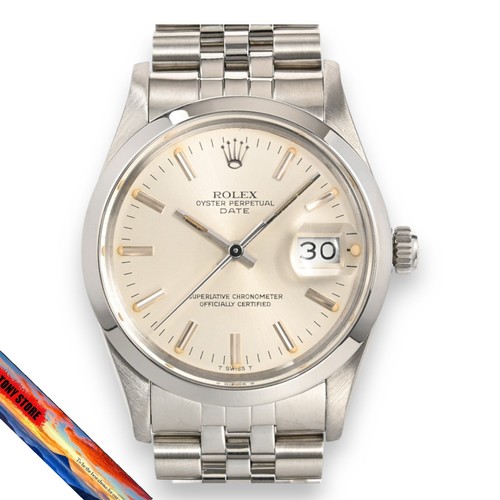
The Rolex Oyster Perpetual Date reference 1500 represents a foundational model within the brand's Oyster Perpetual Date collection, offering a classic and robust design with the practical addition of a date complication. Positioned as an accessible yet fully featured Rolex, it provided the core elements of the Oyster case and an automatic movement, making it a popular choice for daily wear. This reference was produced for over a decade, establishing its presence in the Rolex catalog as a reliable and understated option. It is distinguished by its straightforward design, focusing on legibility and durability without extraneous features.
The reference 1500 features a 34 mm stainless steel Oyster case, known for its water resistance and durability. The watch is powered by the automatic Rolex Caliber 1570, a chronometer-certified movement recognized for its reliability and accuracy. This movement typically offers a power reserve of approximately 42 to 48 hours. The case is fitted with an acrylic crystal, a common feature for Rolex models of this era, and is rated for a water resistance of 100 meters. The smooth steel bezel contributes to its clean and unadorned aesthetic.
For collectors, the reference 1500 is appreciated for its historical significance as a core Oyster Perpetual Date model and its versatility. Its 34 mm case size appeals to those who prefer more modestly sized watches, and its robust construction ensures continued functionality. While often seen with a silver dial, variants such as the blue dial mentioned in the collector's post demonstrate the range of options available during its production run. It serves as an excellent entry point for collectors interested in vintage Rolex, offering a blend of classic design and mechanical integrity.
Well...well...now...now....my friend... :) Sincerely Damjan
friend are two lucky men!! Thanks for posting my friend! Cheers, K
This thread is active on the Rolex forum with 19 replies. Share your knowledge with fellow collectors.
Join the Discussion →