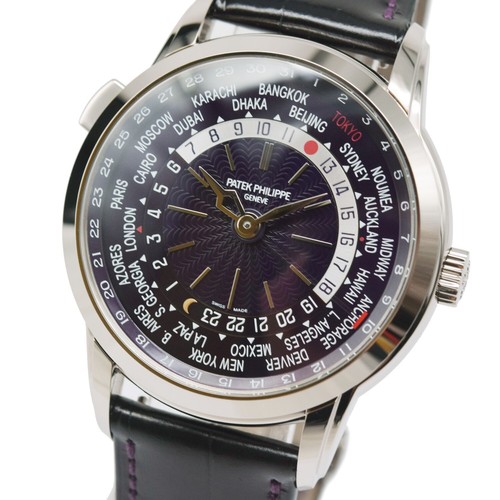
foversta provides a comprehensive hands-on review of the Patek Philippe Ref. 5230 World Time, a significant update to the brand's celebrated travel complication. His insights delve into how this reference synthesizes elements from its predecessors while forging its own distinct identity. This article is essential for understanding the evolution of Patek Philippe's modern World Time watches and their design philosophy.
The world timer watch is one of the Patek Philippe specialties. While it was absent from the catalog for several decades until its come-back with the 5110, it has always contributed to the reputation of the Manufacture. It must be said that there is an unique style and a great know-how from Patek Philippe in the execution of this complication based on the principles defined by Louis Cottier.
Patek Philippe has perfectly understood that a world timer watch must remain legible, easy to use and practical. It is the reason why, the 5110, the 5130 and the new 5230 which was unveiled at Baselworld 2016 share in common this quest for the essential: they only handle 24 timezones (the "full" ones) and they don't feature neither a second hand nor a date window. So, admittedly, it is somehow regrettable that the movement that powers the 5230 hasn't changed and that the watch doesn't manage the "non-full" timezones, leading to the exclusion of significant countries like India or Iran from the scope of the watch. But on the other hand, simplicity is an undeniable asset for this type of complication. The cities ring (which includes the latest "geopolitical" changes of recent years) is legible, well balanced and the timezone of reference (on which is based the main display) is immediately detected at 12 o'clock. Reading the 23 hours of the other timezones is relatively easy and the timezone of reference change is done simply thanks to the pusher at 10 o'clock. It is this simplicity and the elegance in the execution that explain why I am a proud owner of a 5130. The complication makes me travel in my head, even if I don't need everyday to know the time in Mexico City or Karachi.

Until the release of the 5230, the fans of the contemporary Patek world timer watches could be split into two categories: those who felt that the 5110 was the most beautiful reinterpretation of the complication, thanks to its reasonable diameter (37mm) and the beautiful guillochage on the central part and those who thought that the 5130 deserved this distinction thanks to its more contemporary size (39mm) and its very specific hands ("scissors hands" or aiguilles ciseaux in French).
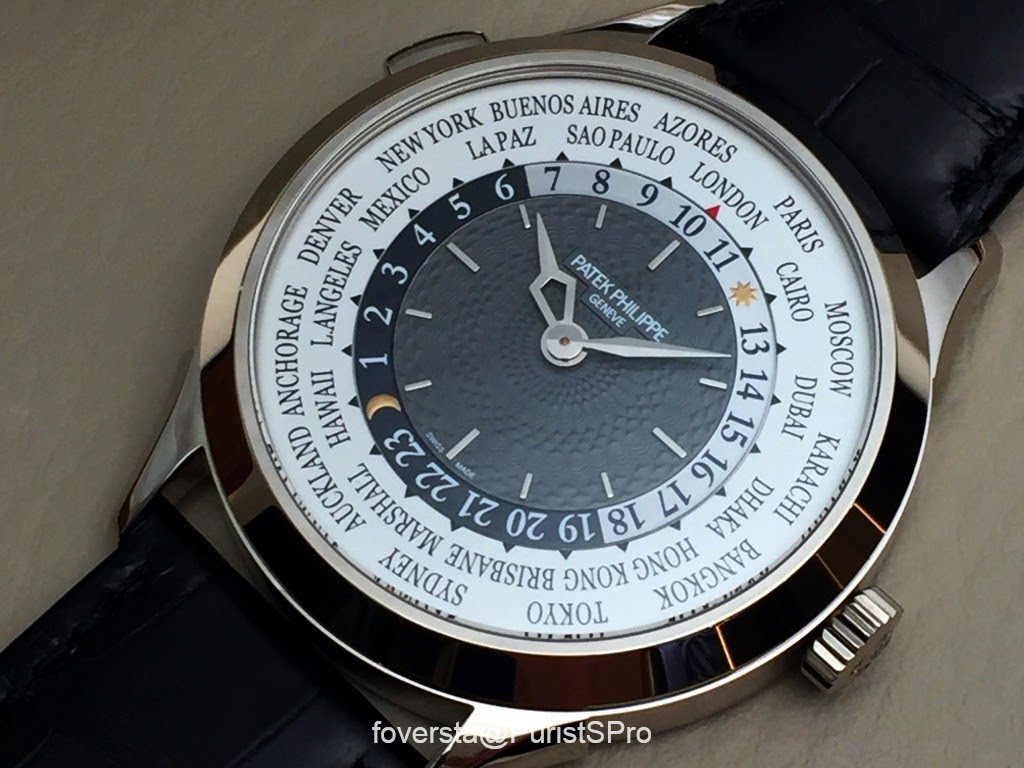
When I closely look at the 5230, I feel that it can get everyone to agree. Indeed, it brings together the strengths of the 5110 and 5130 ... while generating its own identity. This identity is primarily based on the case which contrasts significantly with those of the 5110 and 5130. If the diameter of the watch is slightly lower the 5130 one (38,5mm vs 39mm), the 5230 has however a stronger presence on the wrist due to the wing shaped lugs and their more geometric rendering. The polished bezel, which is also thinner, increases the dial opening and the same time, the perceived size. I love this case, its classic inspiration that perfectly matches the historical world time complication. Besides, Patek Philippe has strengthened this "neo-retro" atmosphere by using a thin, elegant and slightly outdated font for the writing of the cities of reference on the timezones ring.

But the great asset of the 5230, compared to its two predecessors is the beautiful combination between the two hands and the guillochage of the central zone of the dial. This combination is not only an aesthetic success. The 5230, now available in white and rose gold, offer a significant colors contrast between the central area and the hands (and with the hours and timezones disks) which was not the case with the gold versions of the 5110 and 5130. The legibility is greatly improved, especially compared to the 5130 for which it was not the strong point. This is a detail I would like to highlight and which largely explains why the 5230 is so much appealing to me.
The shapes of the hands and the guilloche patterns also meet my expectations. The hands are beautiful, especially the hours one whose shape is inspired by the Southern Cross constellation. Even if it is hollowed, it is more easily noticeable that the "scissors" hand of the 5130. The "diamond shaped" minute hand significantly differs from the hour one, what is good news since they almost have the same length.
The basket weave patterns of the central guillochage are subtle and elegant. They testifiy the will to preserve the watchmaking tradition in the manufacture since it is achieved through an almost centennial rose engine. The preservation of the skills also requires the preservation of the tools!
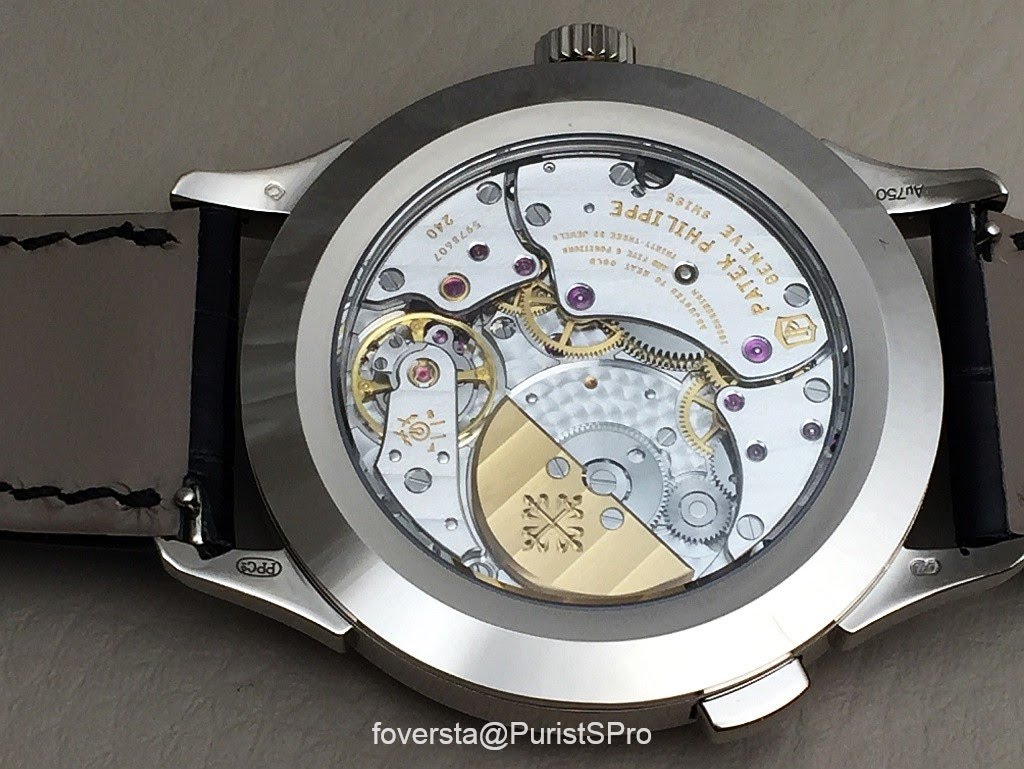
The movement that powers the 5230 is, without any surprise, the caliber 240 HU which is used once again. Its lay-out is very nice, enhanced by the micro-rotor. The finishes are excellent but without any particular difficulty since the shapes of the bridges avoid inward angles. Its frequency is 3hz and its power reserve is around two days. I appreciate this movement on a daily use because is reliable, accurate with an excellent winding efficiency for a micro-rotor. However, I find the pusher which has to be pressed to change the timezone of reference still a bit too stiff ... especially when coming back from London, I need to press it 23 times to make Paris again as the city of reference!
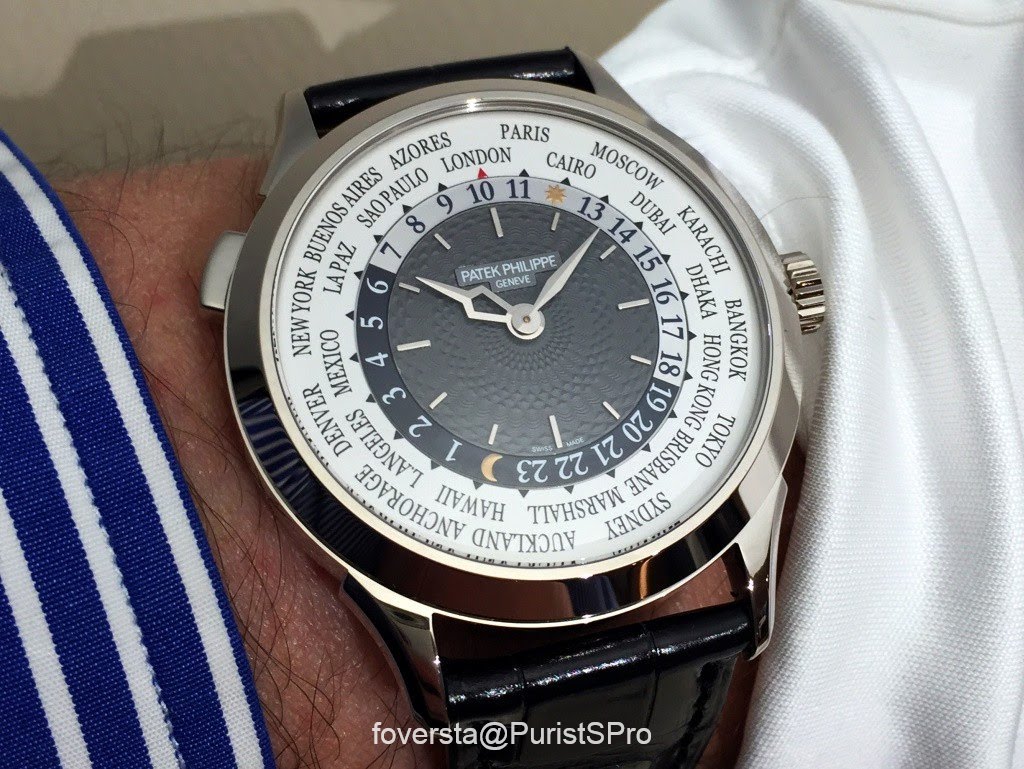
But unless constantly traveling, it is not necessary to frequently change the timezone of reference! The strength of a world time watch is the direct reading of the hours of the 24 timezones and the 5230, thanks to its perfect balance, its efficient and refined presentation, greatly simplifies this task. Practical and attractive, magnified by the beauty of its hands and of its central guillochage, offering a nice and quite strong presence on the wrist thanks to its case, the 5230 is in my opinion, the most successful piece of the trio 5110-5130-5230. Patek Philippe reaffirms its mastery, and I would say, its supremacy in the execution of this complication through this successful watch.

Pros:
+ The character of the case
+ The beauty of the hands and of the central guillochage
+ The reliability and the efficiency of the caliber 240 HU
+ The watch is easy to use and very legible
Cons:
- The pusher is still a bit too stiff
- The caliber 240 HU doesn't handle the non full timezones (like India) but the limitation to 24 timezones contributes to the legibility
Fr.Xavier