ochs und junior, the Lucerne-based boutique watchmaker founded on Ludwig Oechslin's concept of
radical simplification, has created some of the most fascinating timepieces in watchmaking, at least if one is interested in the
intellectual complication which is a prerequisite for the
mechanical essence and simplicity that characterise their watches.
'Radical simplification' is applied on ochs und junior's materials as well: using in-house
patinisation techniques, the manufactures manages to lift the veil covering hidden qualities, such as texture, colour, shine, of their materials used. In other words, working
with materials allows for variety while keeping material diversity to a lowest number.
As a scientist, this trickles most os my senses, and thus,
one Friday morning towards the end of last year I took a detour to
Lucerne to see and handle the latest creations from this truly
integrated atelier, very affectionately called the
oxloft.
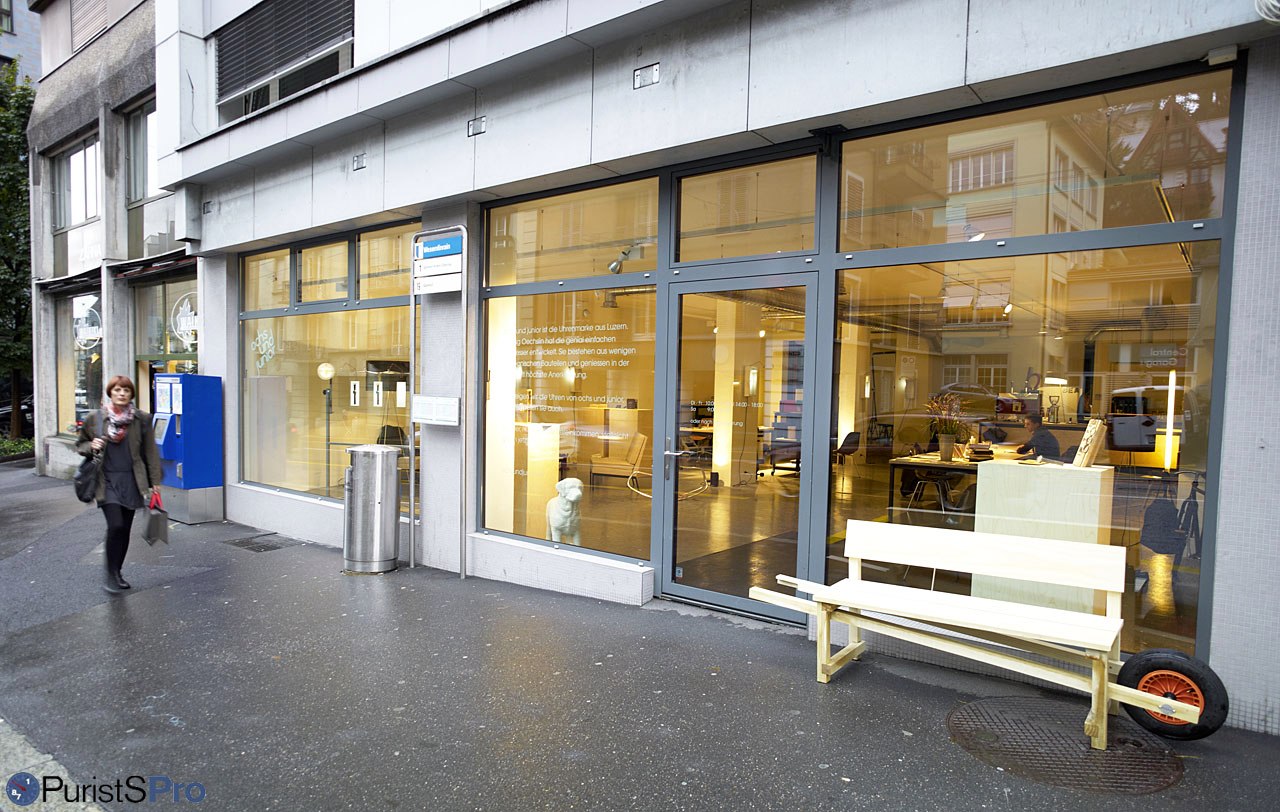
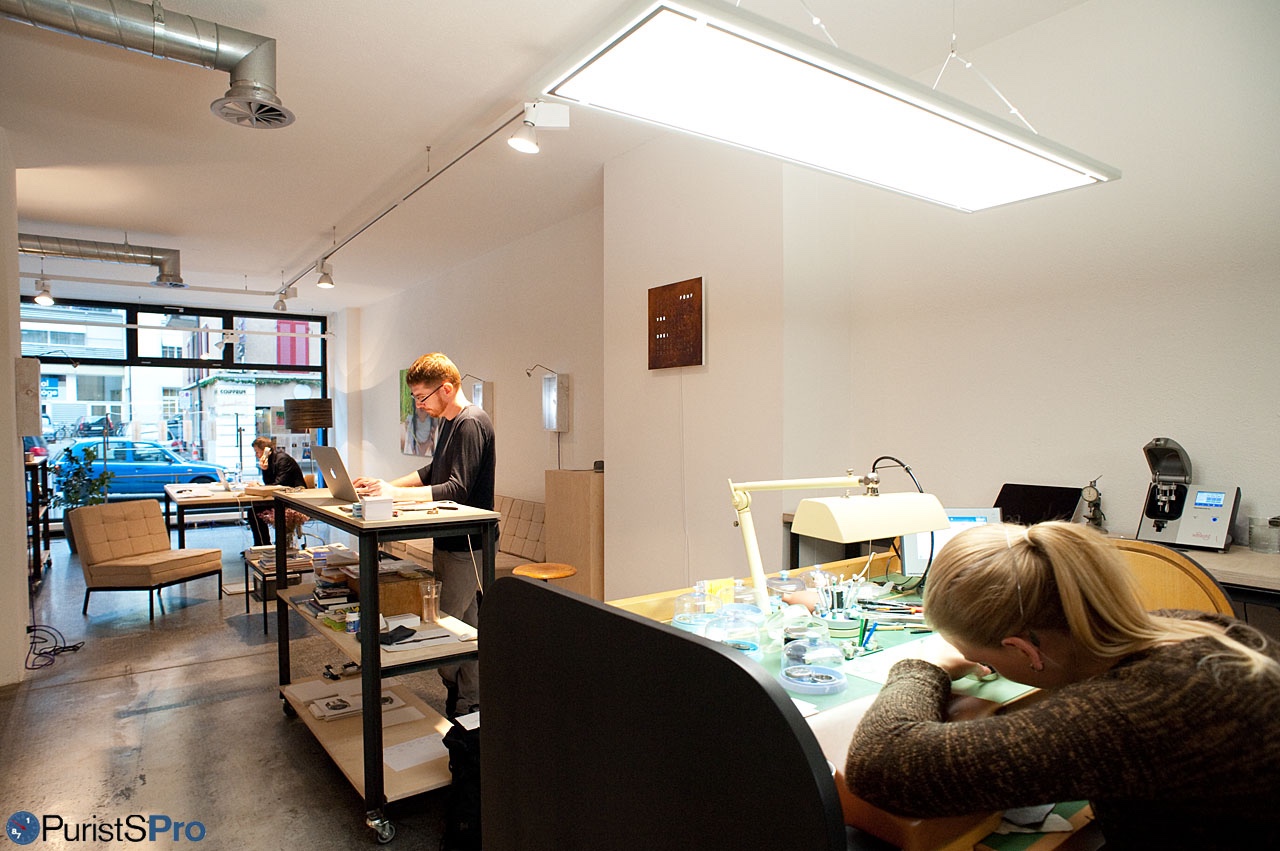
The
oxloft is everything for ochs und junior, its their headquarters, their
marketing, sales & shipping department and their production
workshop - all
under one roof in one single room:
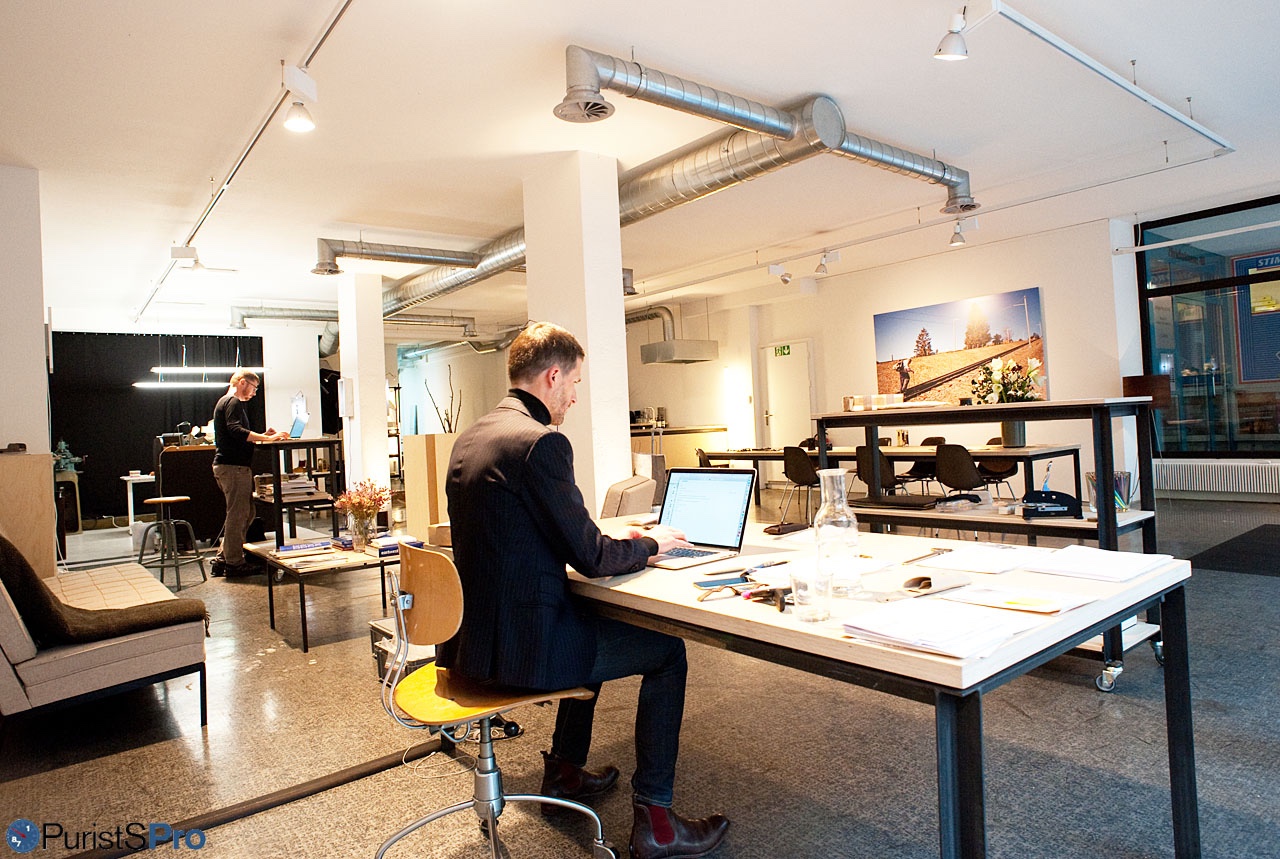
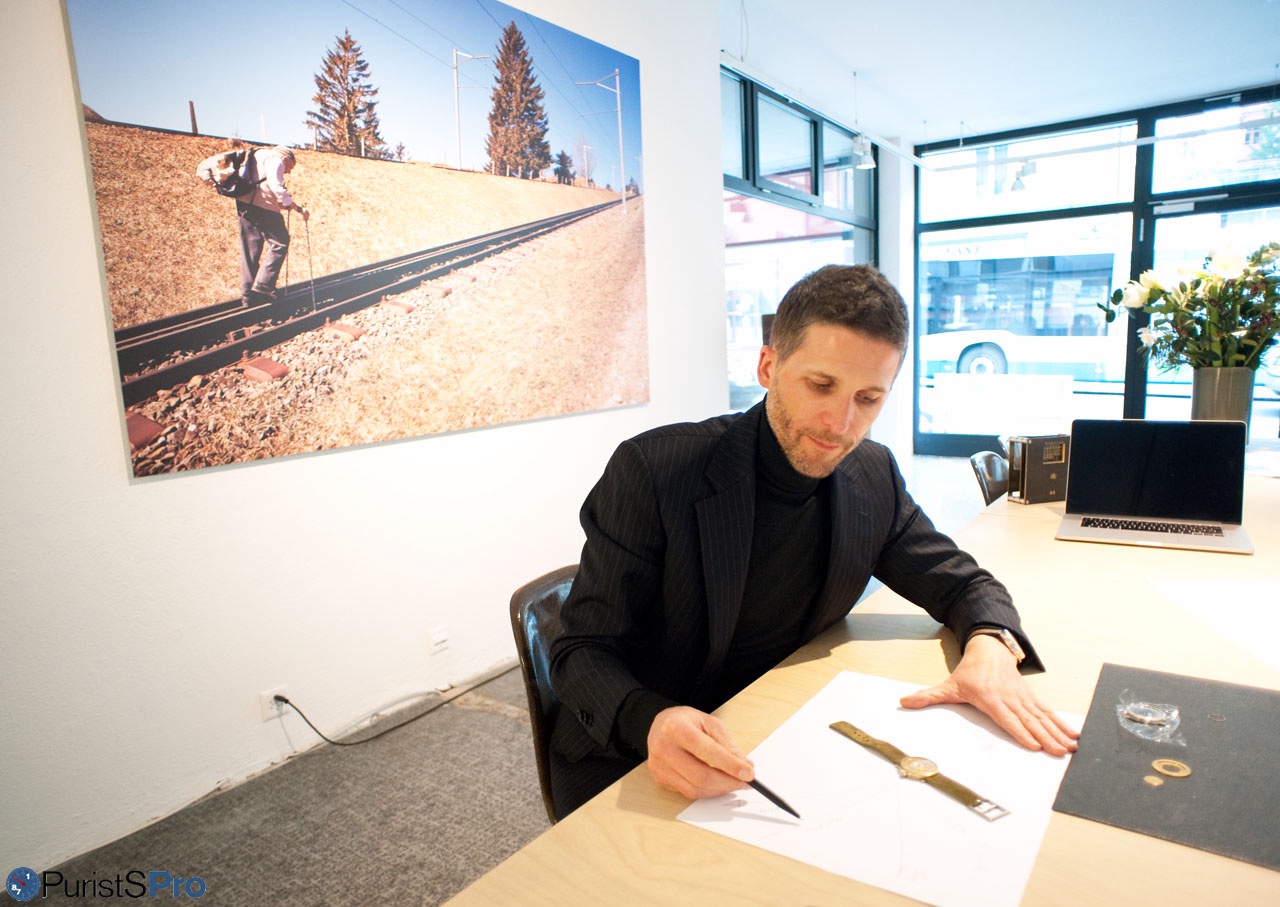
Right in front facing the customers sits
Beat Weinmann, co-founder & CEO, followed by
Cail Pearce, ex-Silicon Valley tech guru and now responsible for ochs und junior's communication and web-presence, and finally
Sandra Flück,
the young and very talented watchmaker who joined the team right after
finishing her watchmaking apprenticeship. Behind Sandra's table you'll find a fully equipped photo studio, put to good use by
Bea Weinmann,
ochs und junior's in-house photo artist (and Beat's wife).
On Sandra's desk I found a new
ochs und junior moon phase watch being given birth, Ludwig Oechslin's ingeniously simply and astonishingly precise astronomical complication, which needs
just 5 moving parts to display the actual phase of the moon that precise that it will take
3,478.27 years before its calculation will be off by 1 day!
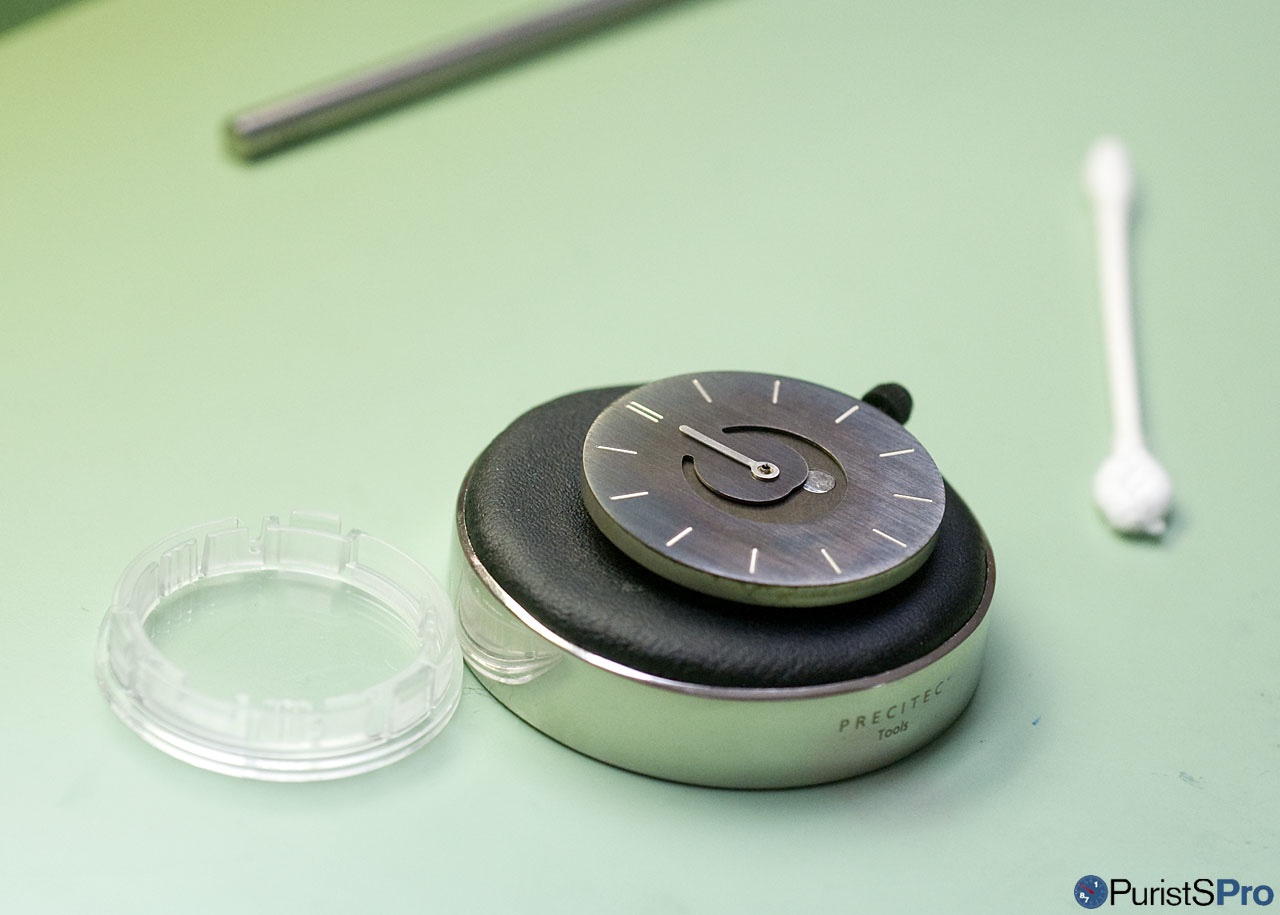
Hands are receiving a fine hand-applied matte finishing...
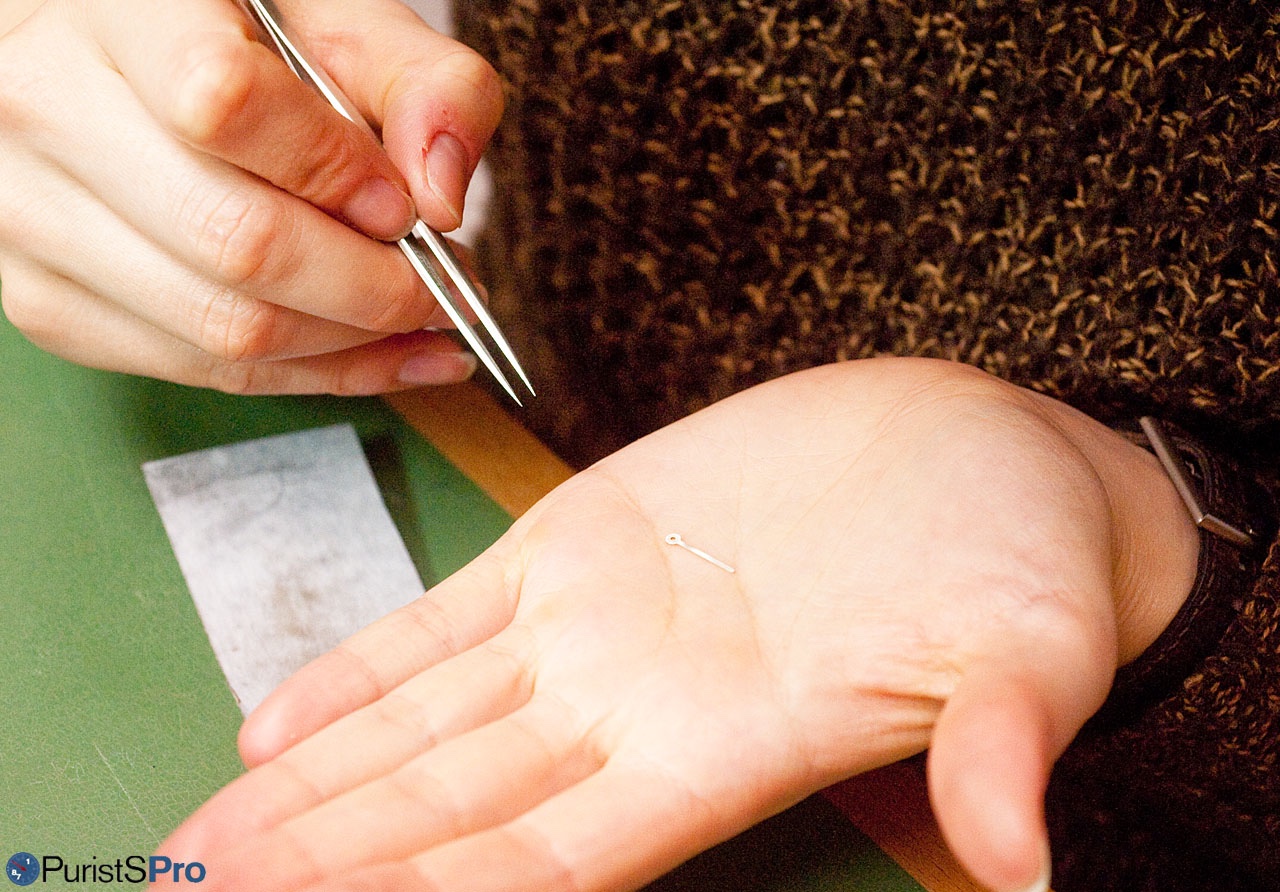
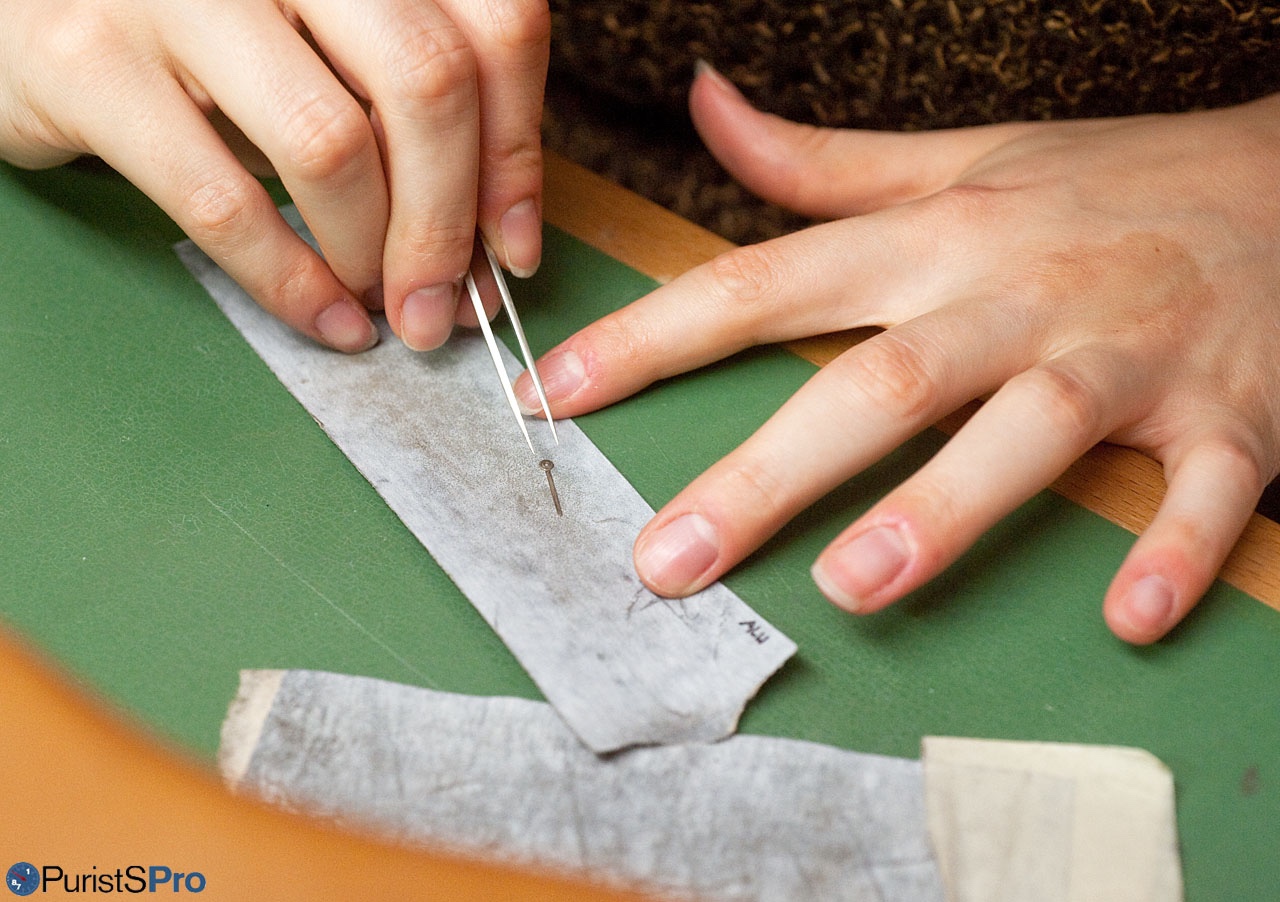
... before they are cleaned...
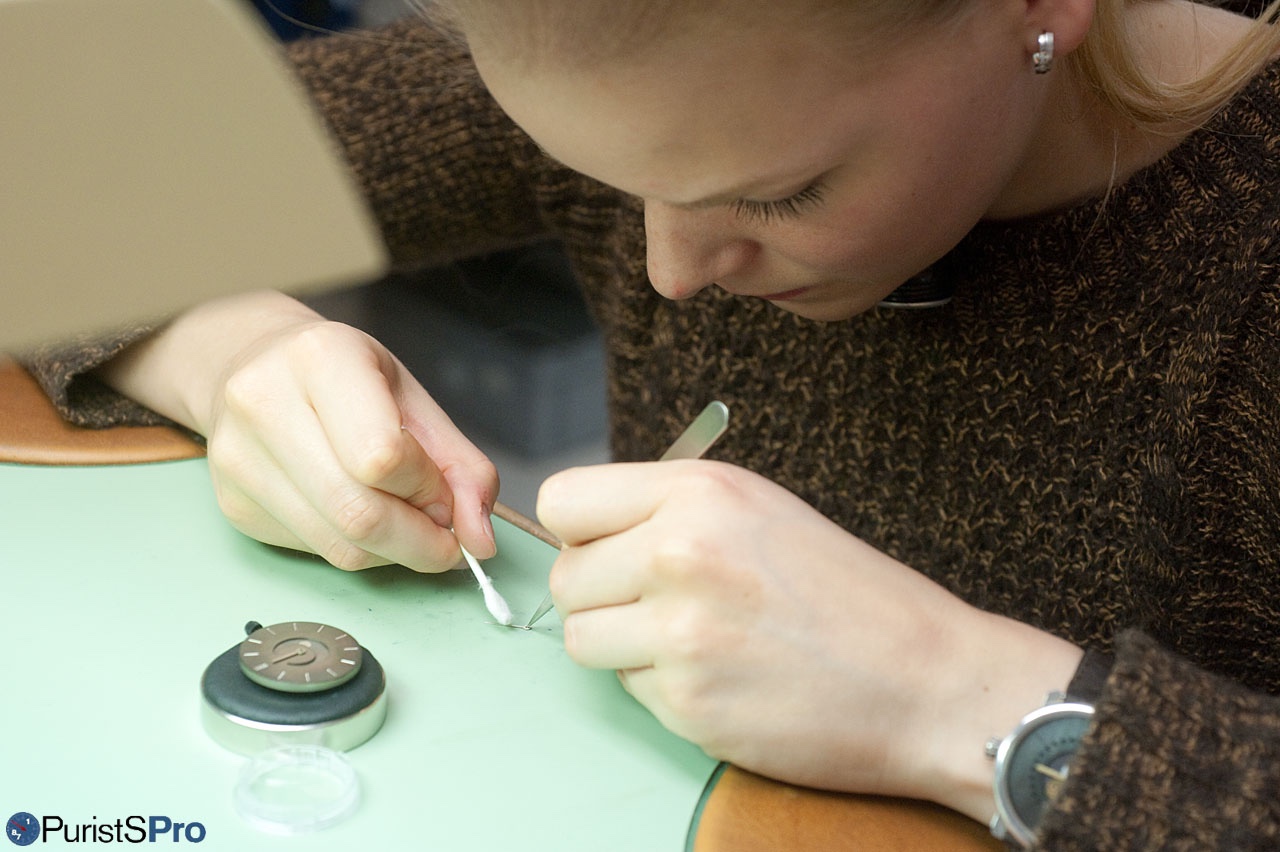
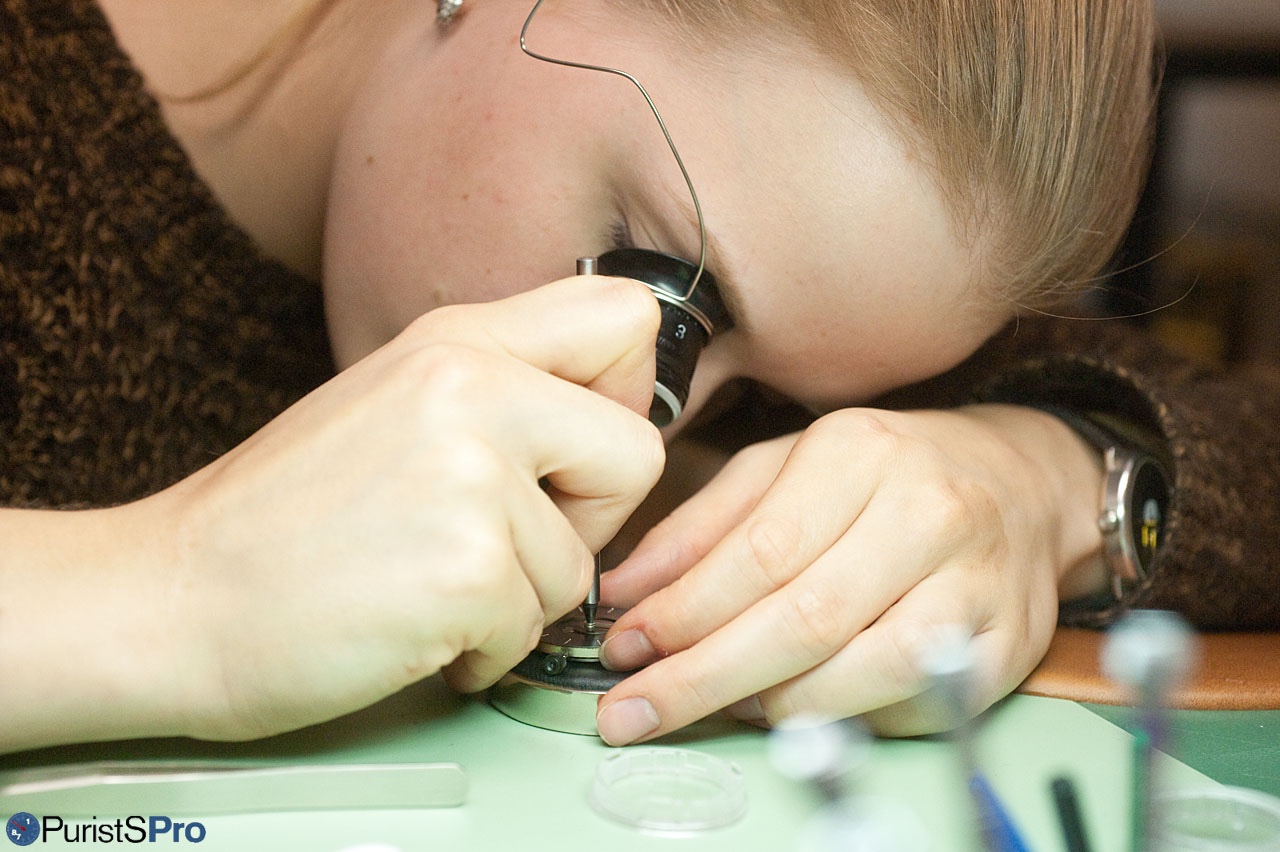
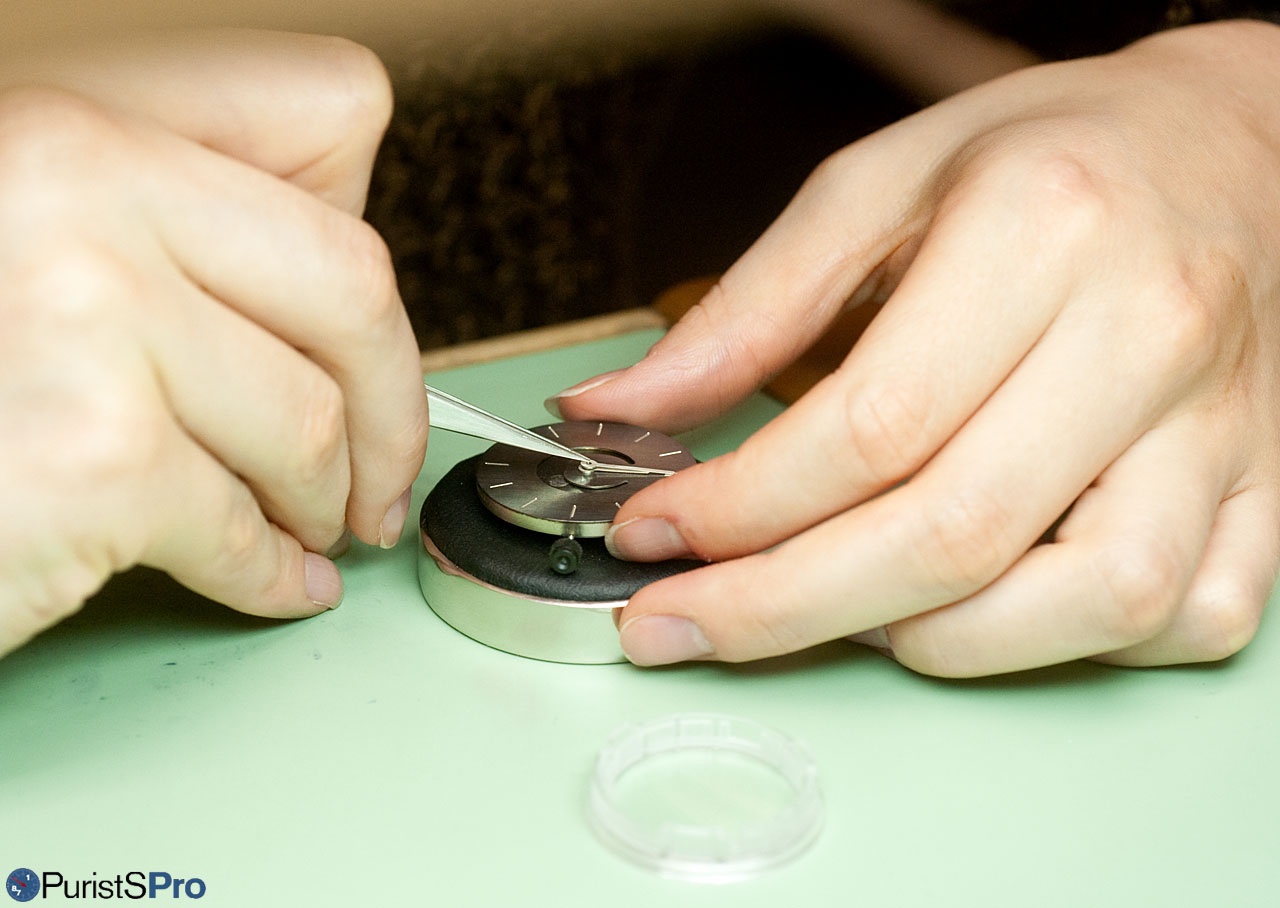
... and finally mounted on their pinion with utmost care and concentration:
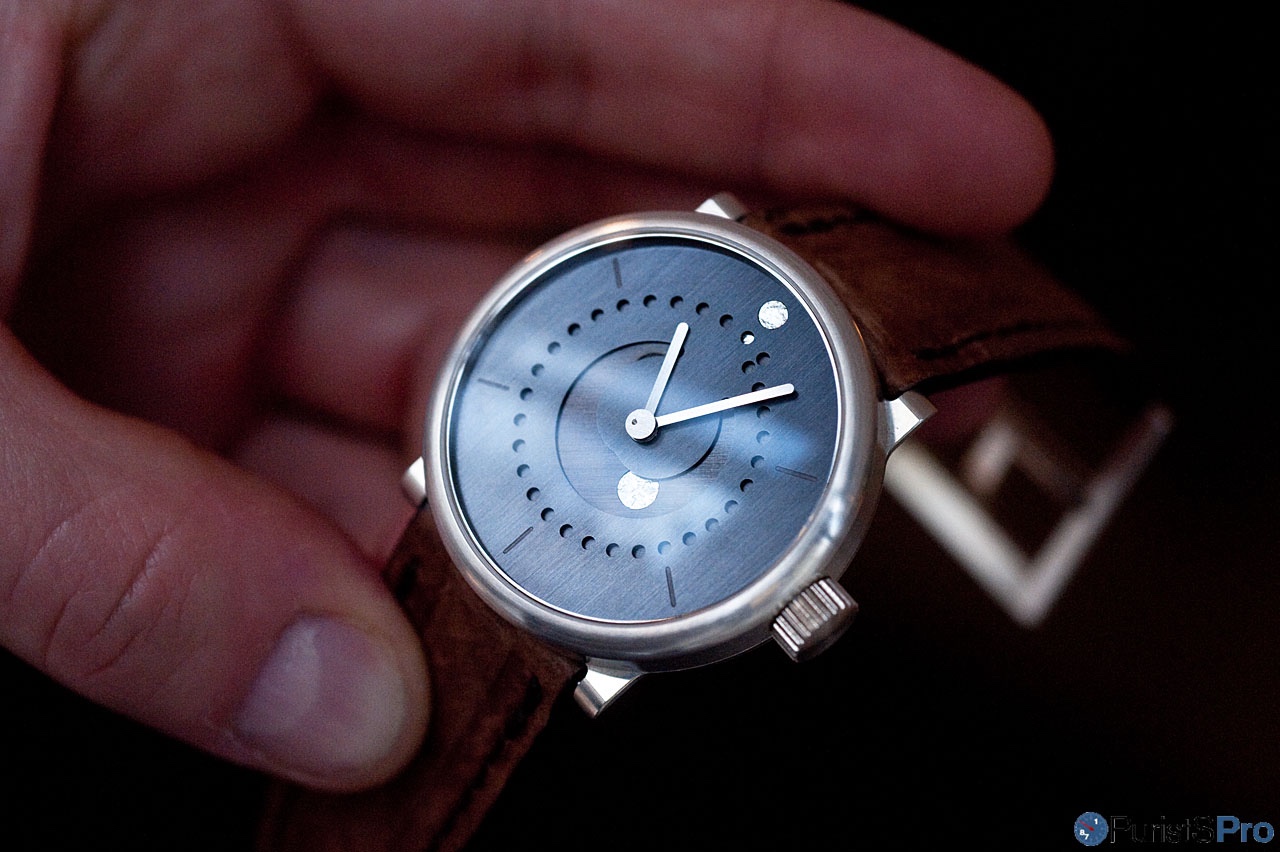
The completely assembled watch struck me with its cool but mystic, apparently monochromatic motif.
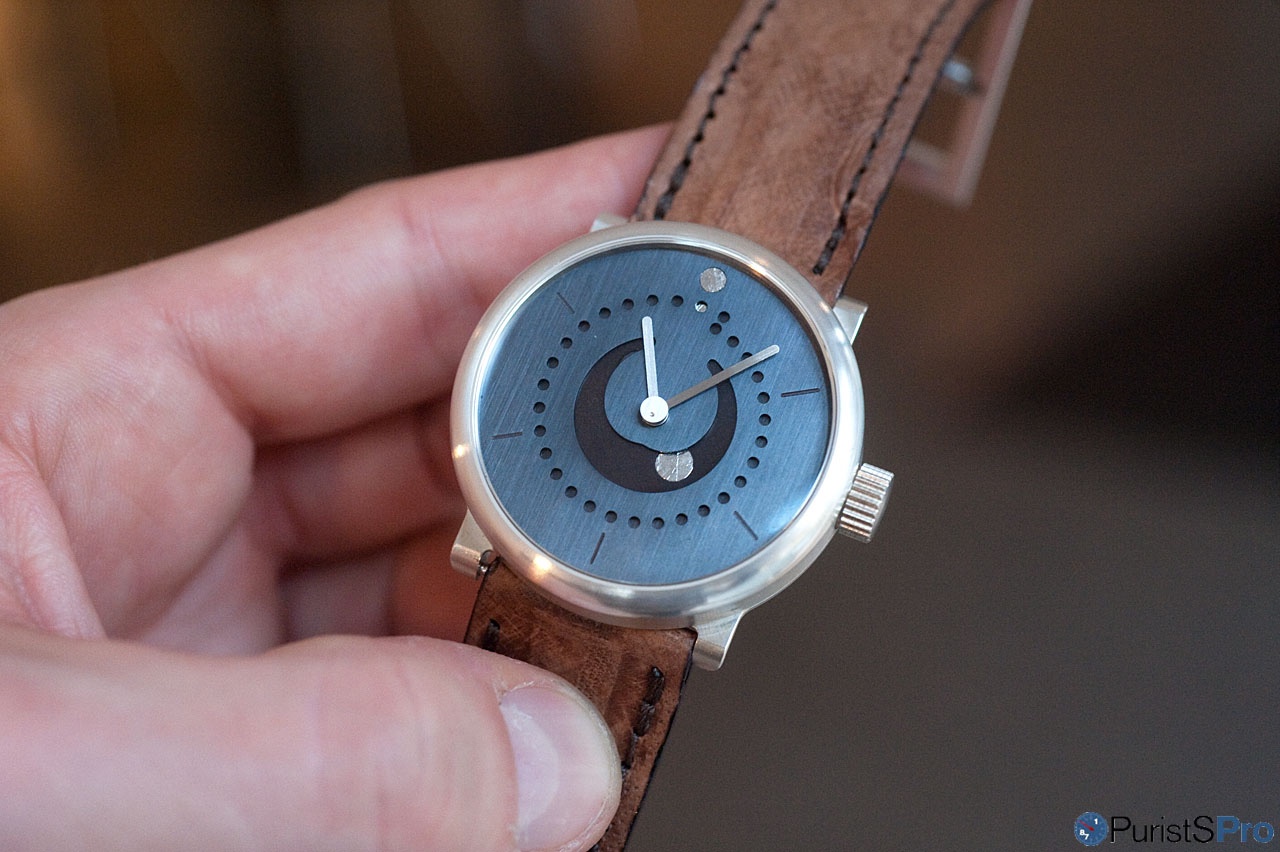
I quickly noticed that its face changes constantly with viewing
angle and light so I started to wonder what spell would be the origin of
this magic:
Luckily Beat Weinmann, CEO and ambassador at large, was more than happy to share some fascinating insights with me.
ochs und junior have a come a long
and fascinaintg way in defining and sharpening their identity. Core to the manufacturer's identiy is the
adandonment of decorative finishes which distract from the origin
or
nature of a workpiece, particularly polishing steps. In their original
offerings, the only surface treatments acceptable were precisely applied
thermal exposures resulting in a distinct hue. Cases, dials and hands
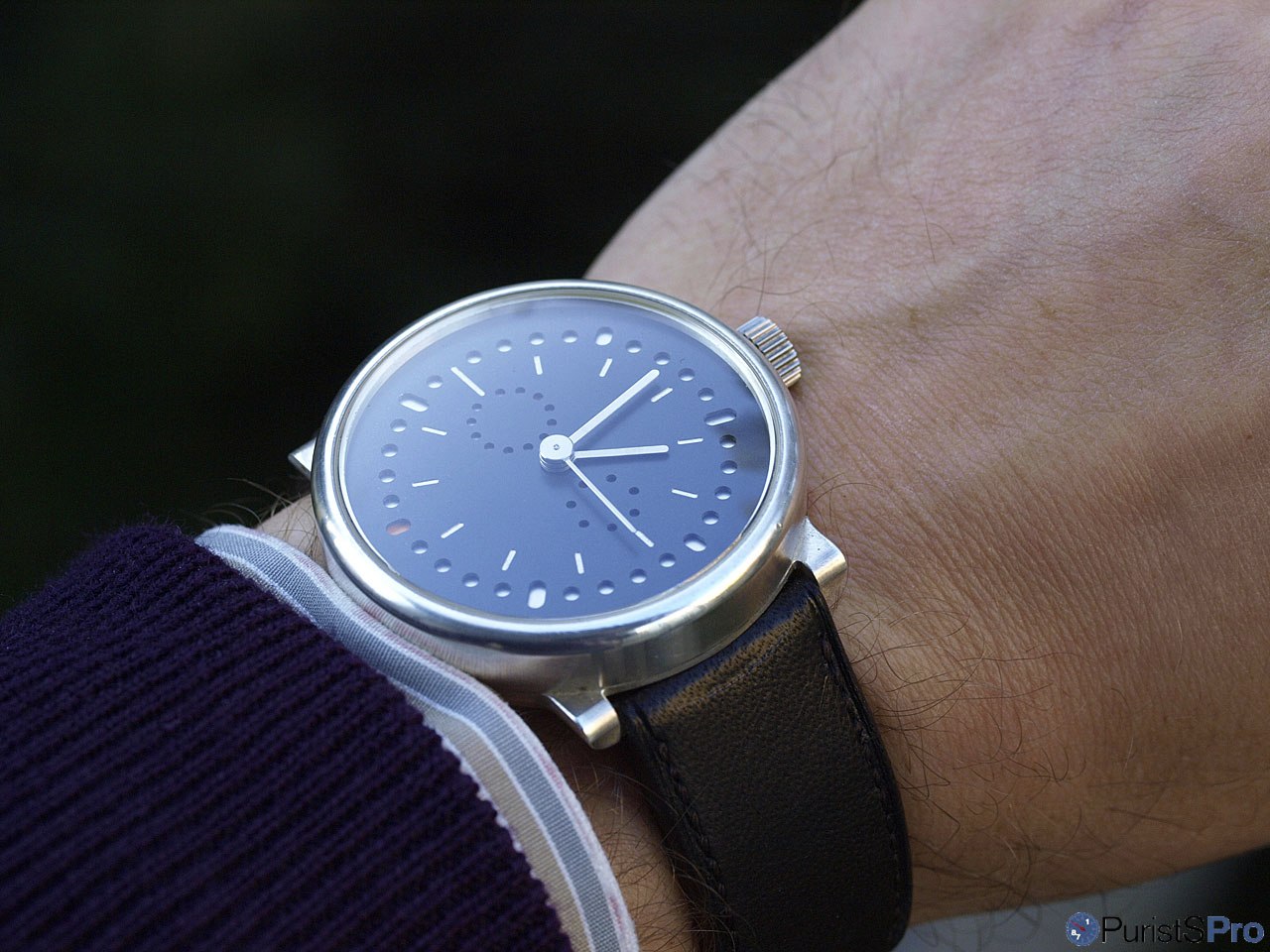
were used straight from their (extremely precise) machining, such as my
ochs und junior anno cinquanta in sterling silver:
This
resulted in the need to look for supplies outside the mainstream Swiss
watchmaking supply chain, e.g. the mechanical workshop of
Peter Cantieni, who supplies parts and tools for the Sauber F1 racing team as well as for the aircraft industry.
For more on the production philosophy I invite you to read
my presentation of their first watch, the anno cinquanta.
One
does not need much imagination to anticipate the reaction of the
classical watch collectors community, which was squarely divided into
admirers (myself included) and rejectors, who mainly missed the fine
hand-finishing and complicated constructions they were used from pretty
much the remainder of comparatively priced watches. That was essentailly
a very valid point, as Beat admits. In addition, a large percentage of
the price point could be attributed to the use of a purpose-made
Paul Gerber movement
with 100h power reserve, which - despite its merits - was not necessary
to bring across the essential message of ochs und junior watches -
radical simplification.
Thus, a move to
ETA/Sellita movements, solid case backs and the addition of titanium as a
case material alongside the characteristic sterling silver helped to
drive prices significantly below the 10.000 CHF barrier. Furthermore,
colourful dial/hand/index combinations brought an entirely new flavour
to the collection.
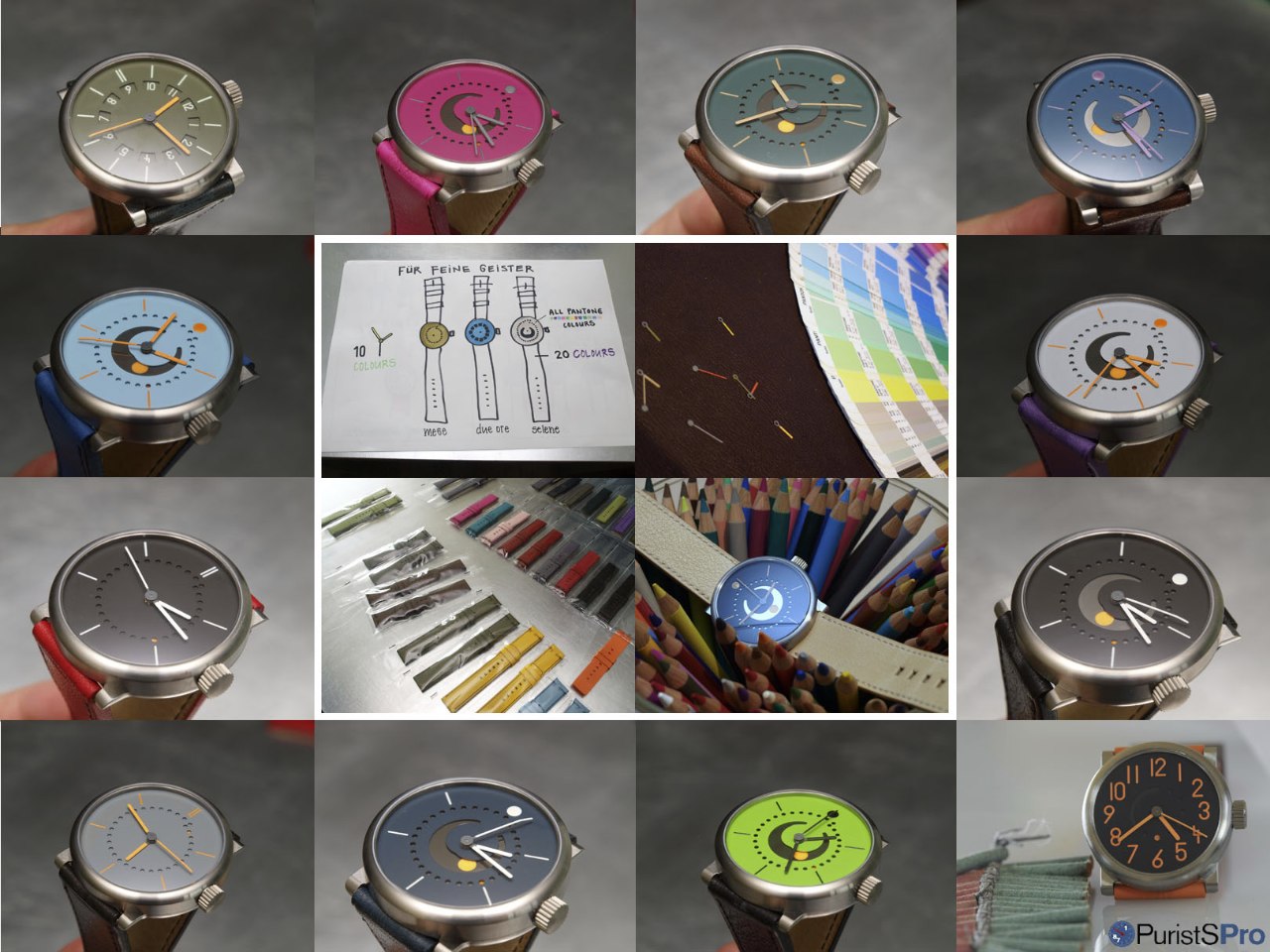
Essentialy every colour of the
Pantone colour chart can
be realised, thus enabling the atelier to embark upon a concept of
'open-ended customisation', exemplified by an interactive online watch
configurator.
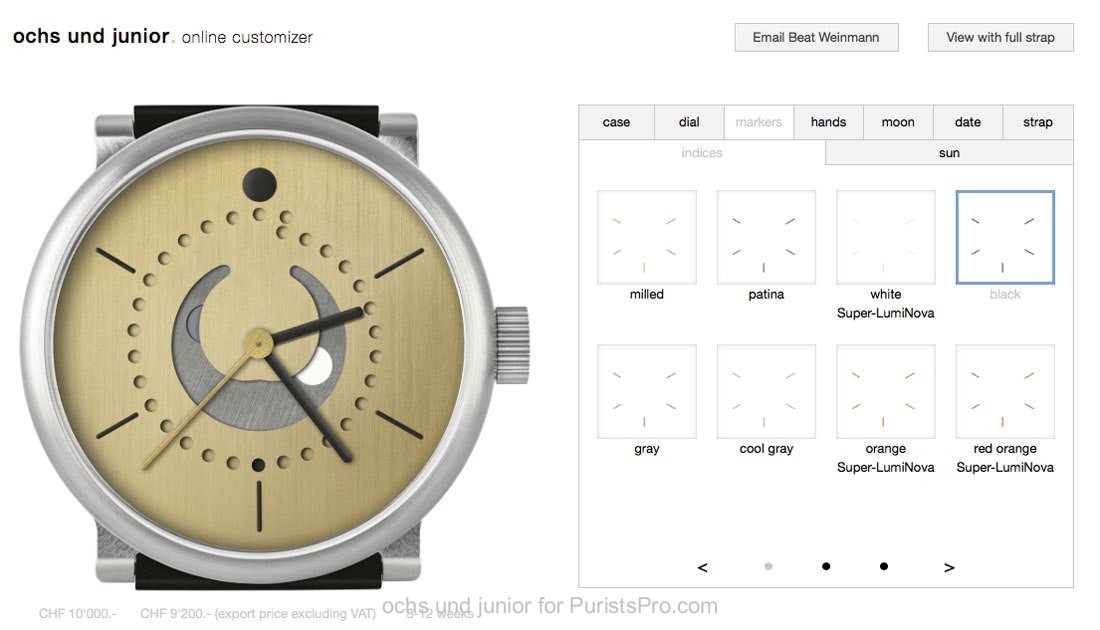
This new element has been trickling and sparking the brains of many creative people, amongst them for example
Helmuth Esslinger, famed product designer and founder of
frogdesign, the studio which gave the early Apple computers their distinctive shape.
However, ochs und junior have always cultivated and expanded their expertise in
patinisation.
Ludwig Oechslin's experience as a clock conservateur, his scientific
curiousity as well as his contacts to universities, but also ideas from
customers and friends gave way to much experimentation, with some really
outstanding results. Patinisation is a way to add colours and surface
structures without adding artificial material, e.g. paint, rather than
by
bringing into light qualities of a given material which are normally hidden.
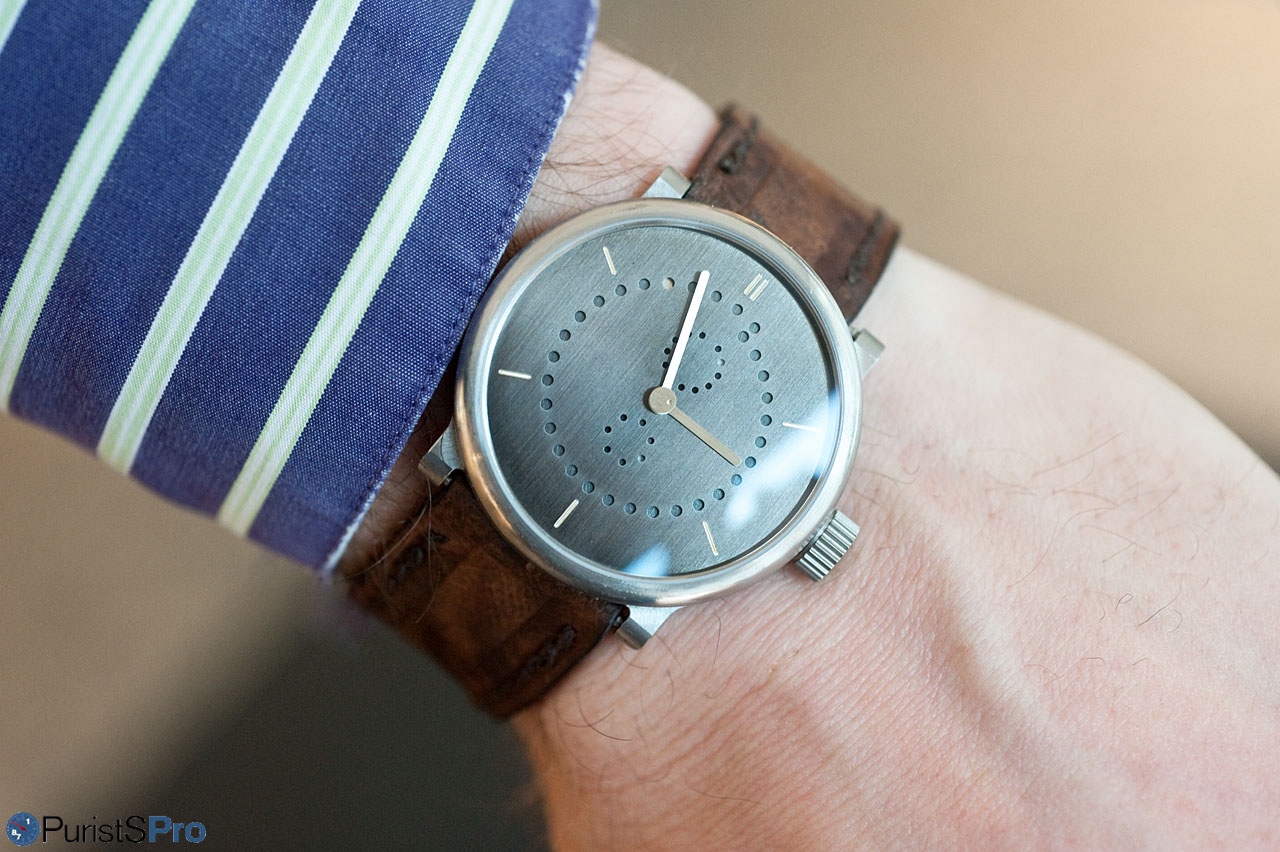
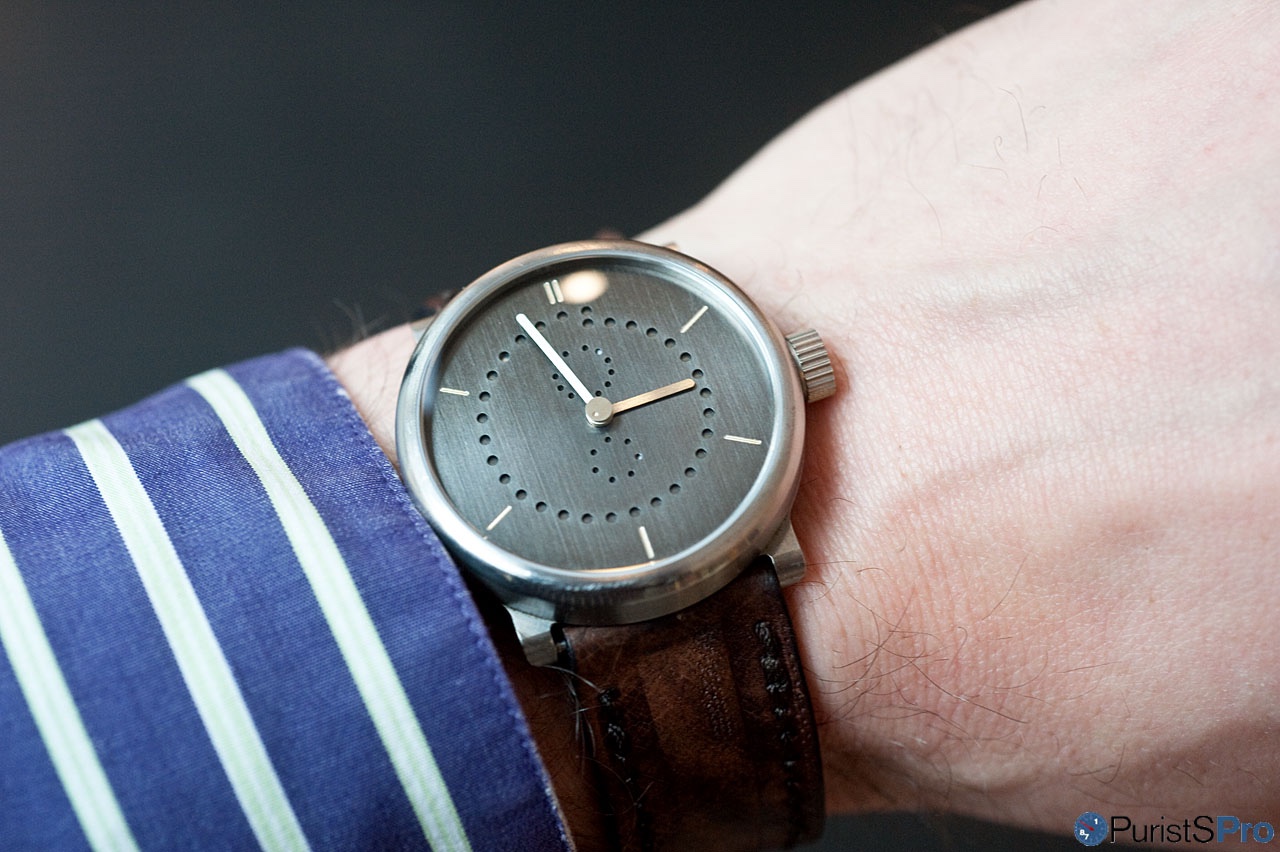
Case in point is also the watch at hand, called the
moon phase blue patina :
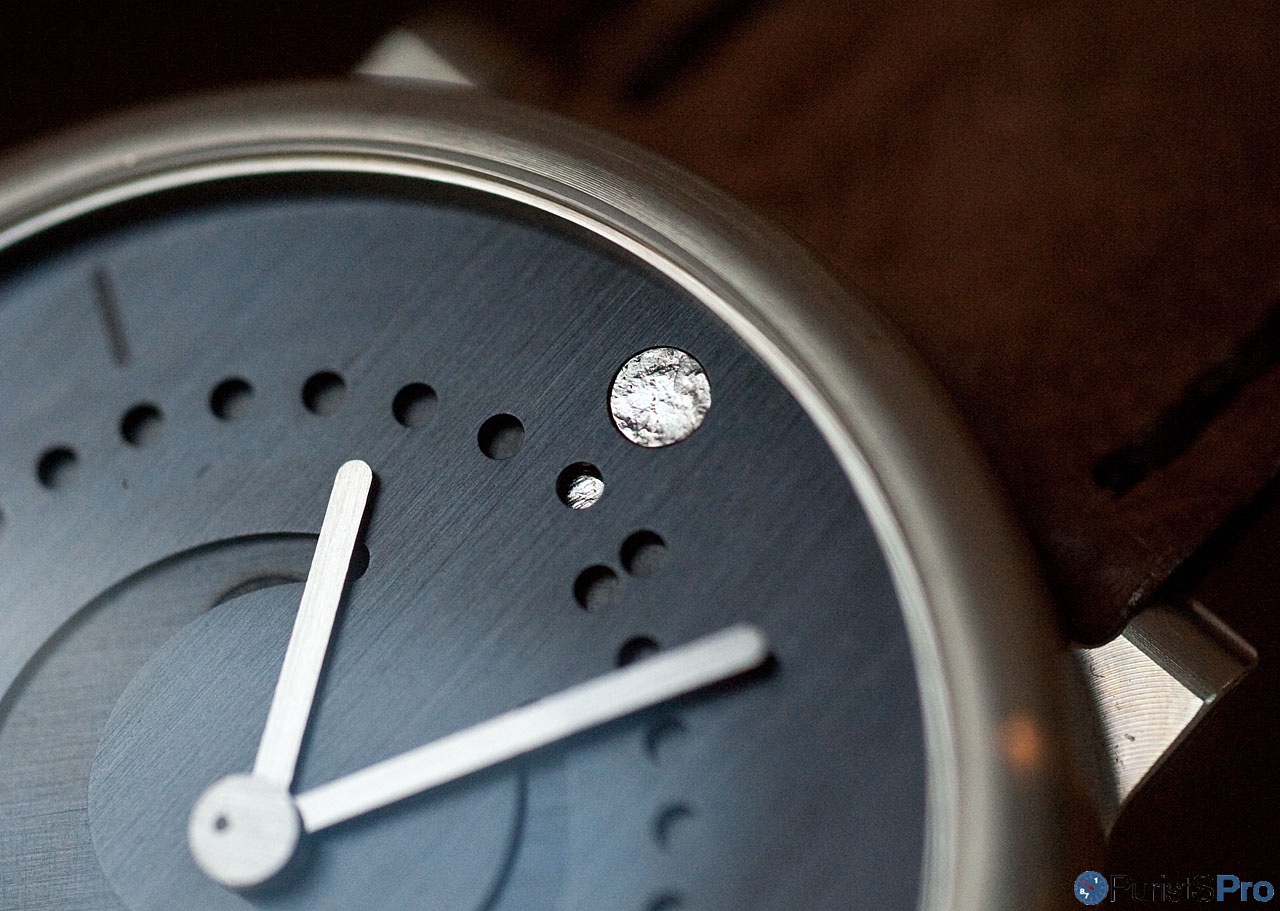
Would you ever guess that this material is simply
brass?
There is no coating or lacquer added, it is just a tightly controlled
chemical process which required a precise dose of heat. Thus, watching
its gestation reminds me a bit of looking over your favourite chef's
shoulder...
For brilliant reflection of light, the full moon, sun at 12 o’clock, and date dot are executed in
hammered platinum, while “the dark side of the moon” is hammered, dark patinated sterling silver (at 11 oclock, barely visible).
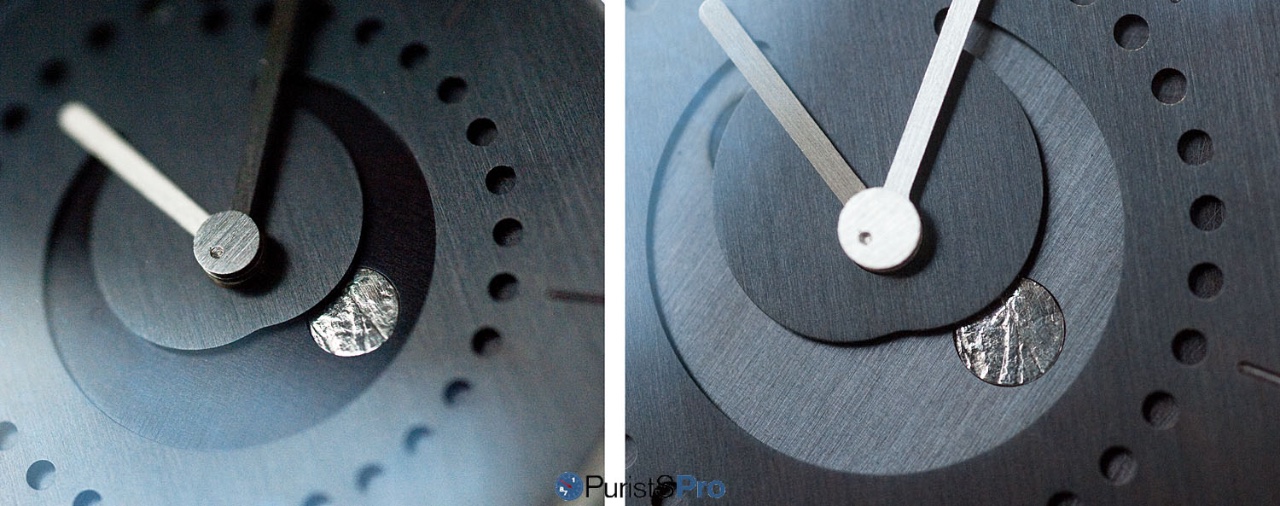
As the above two images already hint, the material is a master of
light and subtle changes in color hues; mysterious, yet intrinsic to
brass but only realized thanks to some chemical
wizardry:

Patinisation goes further also with the strap. Together with 'material scout'
Sabina Bragger, ochs und junior discovered
sturgeon leather as an extremely durable and beautiful material for straps.
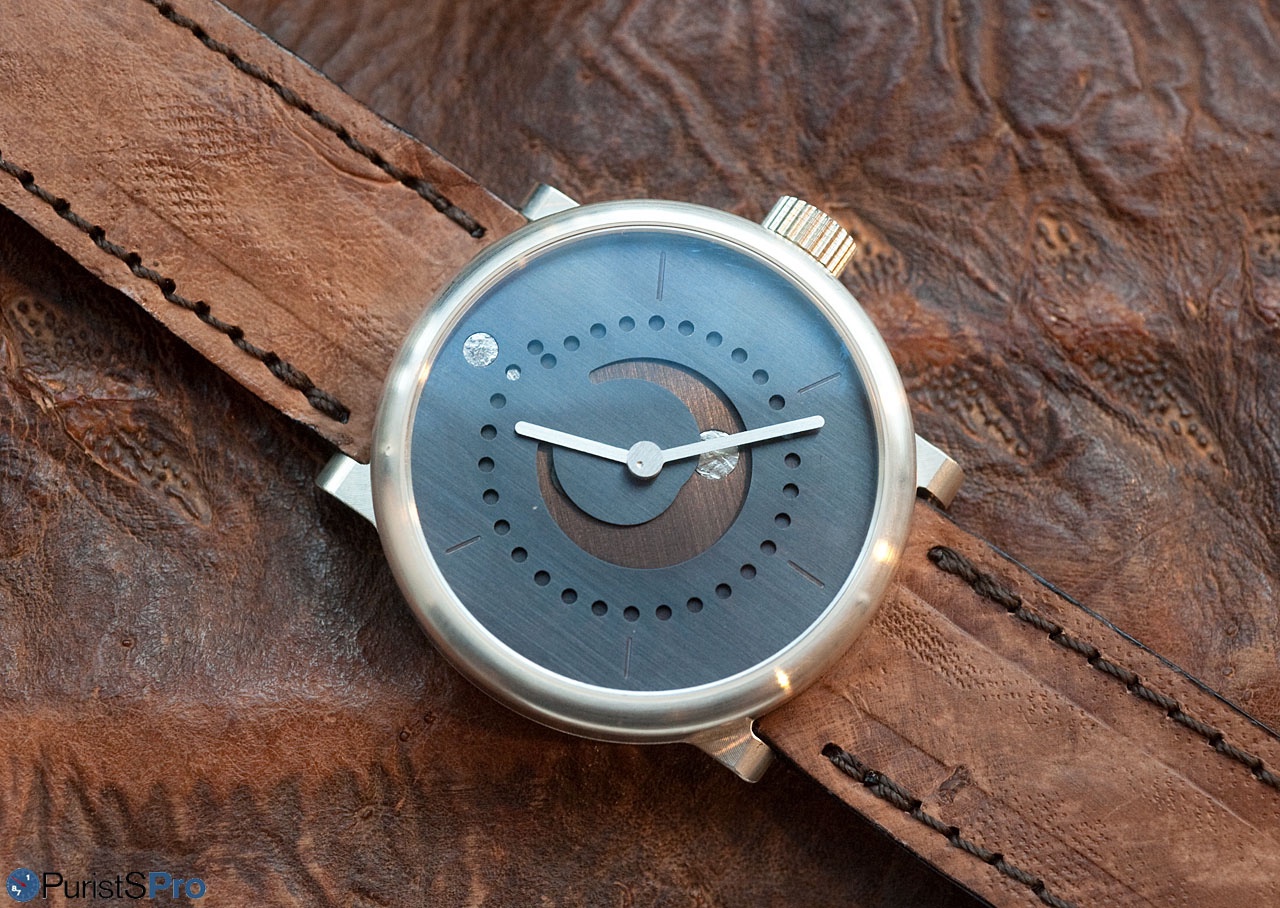
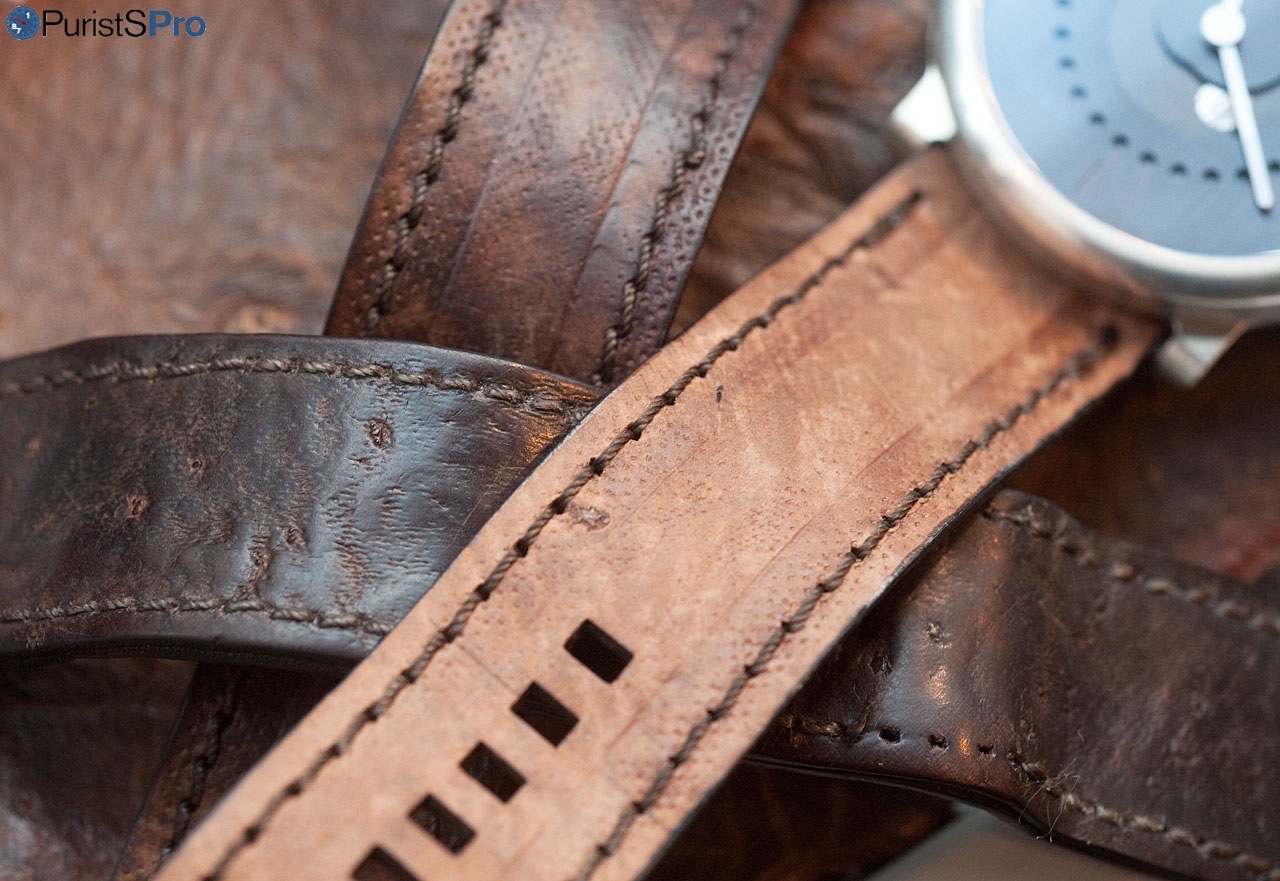
Below,
from right to left, you see a brand new strap, one worn a few months,
and another one used by Beat for two years, on a daily basis, including sports, swimming, holidays and fun. Like a silver case, it
accumulates markings of its use, but still is solid and secure. Actually
I had to crop wisely such as not to show you a watch that is due to be
presented later this year - a watch that made me seriously - silent
& thinking... ;-)
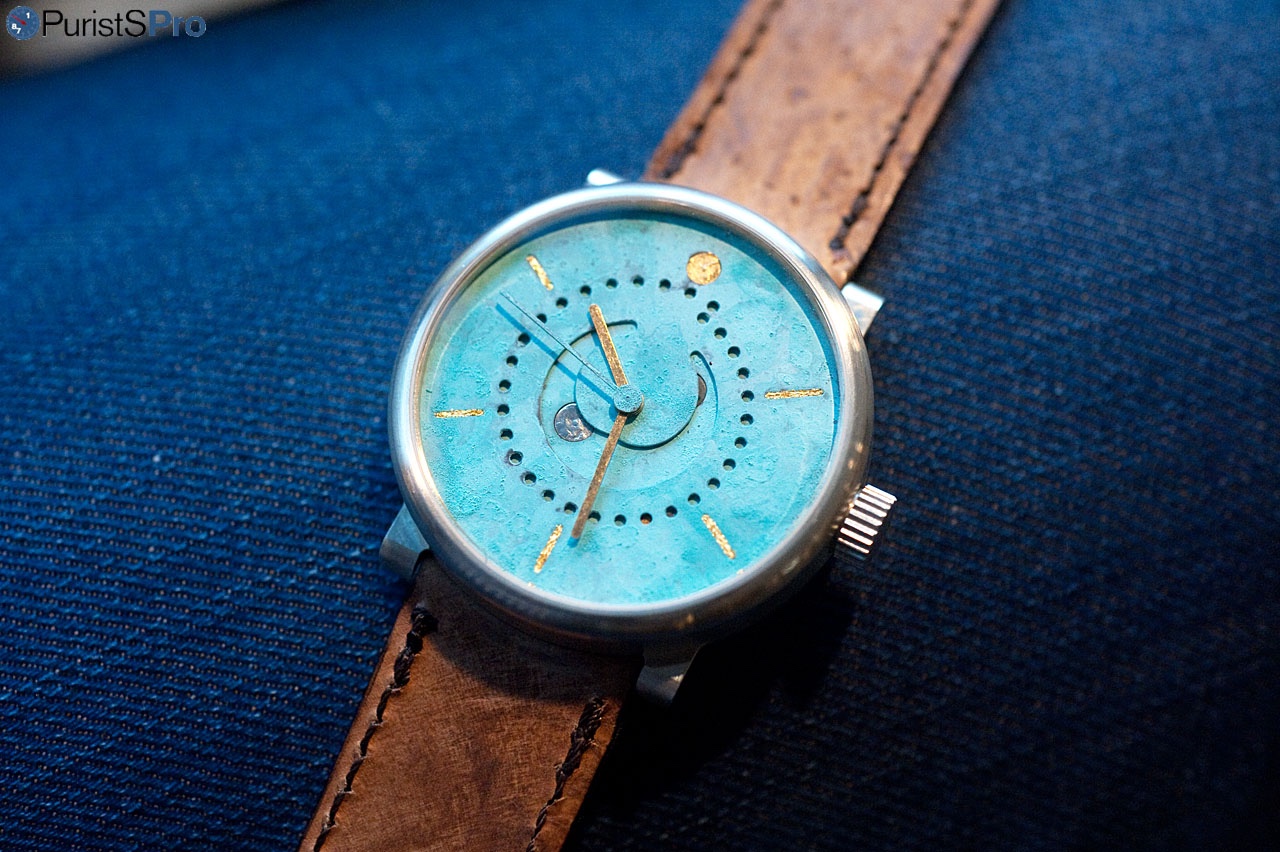
So, finally, a few images of other patinised watches, such as this
moon phase nebra :
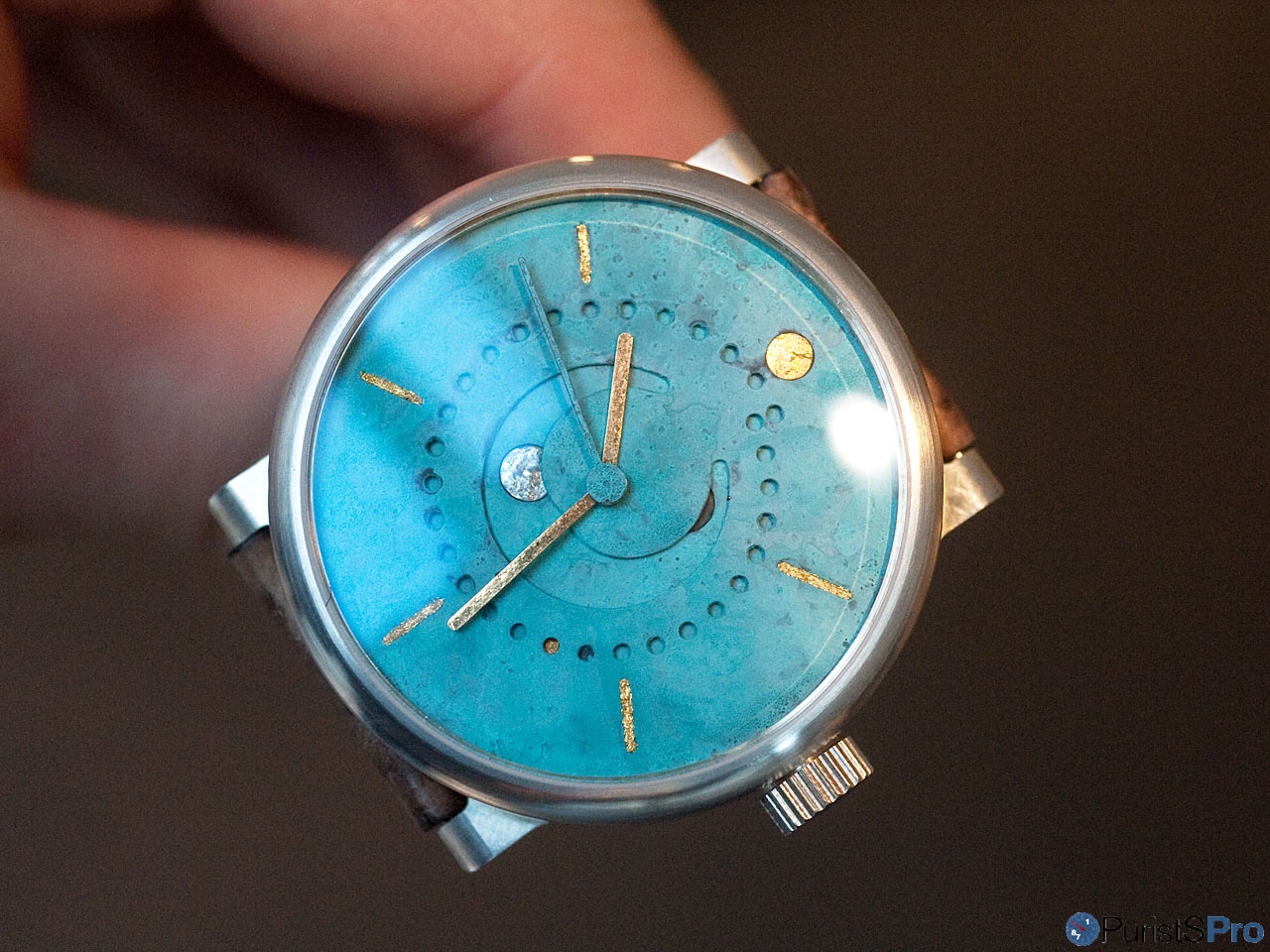
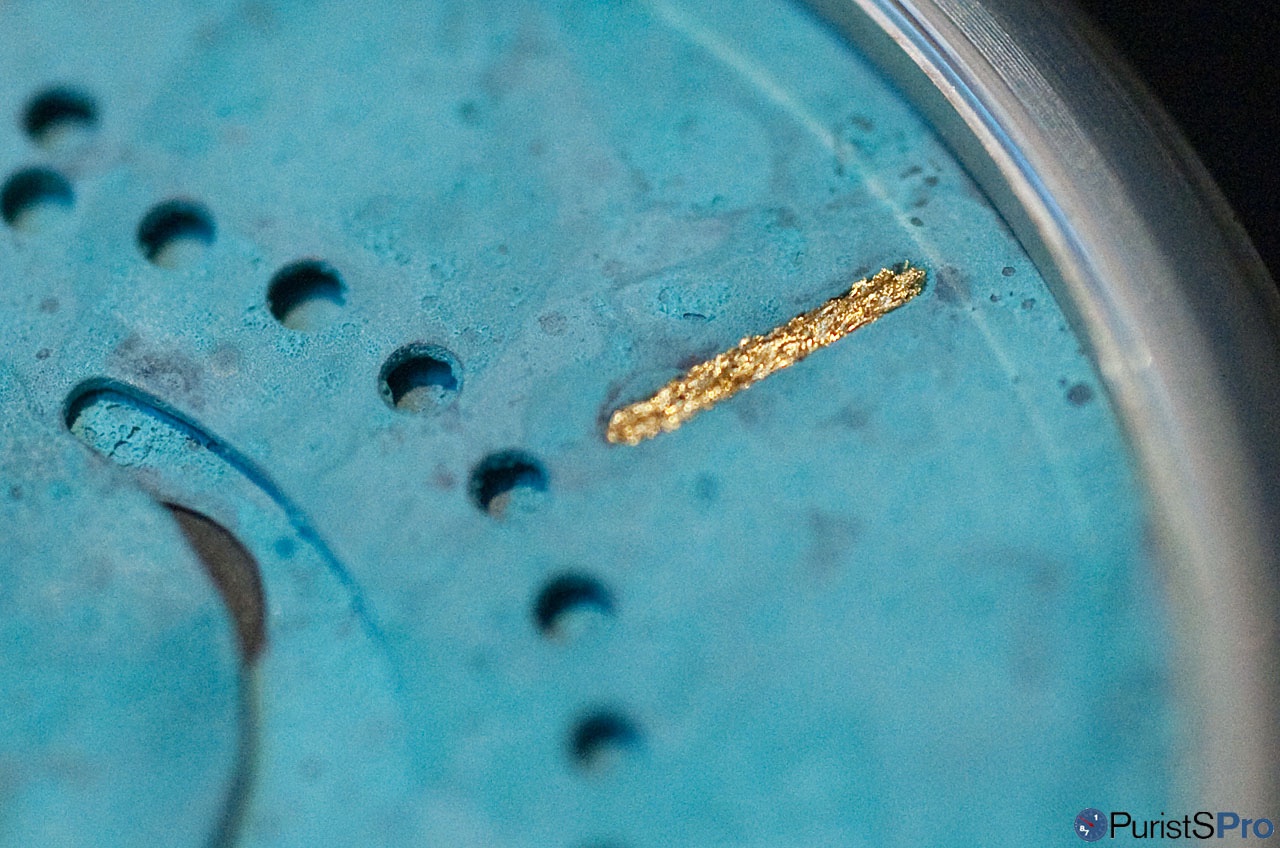
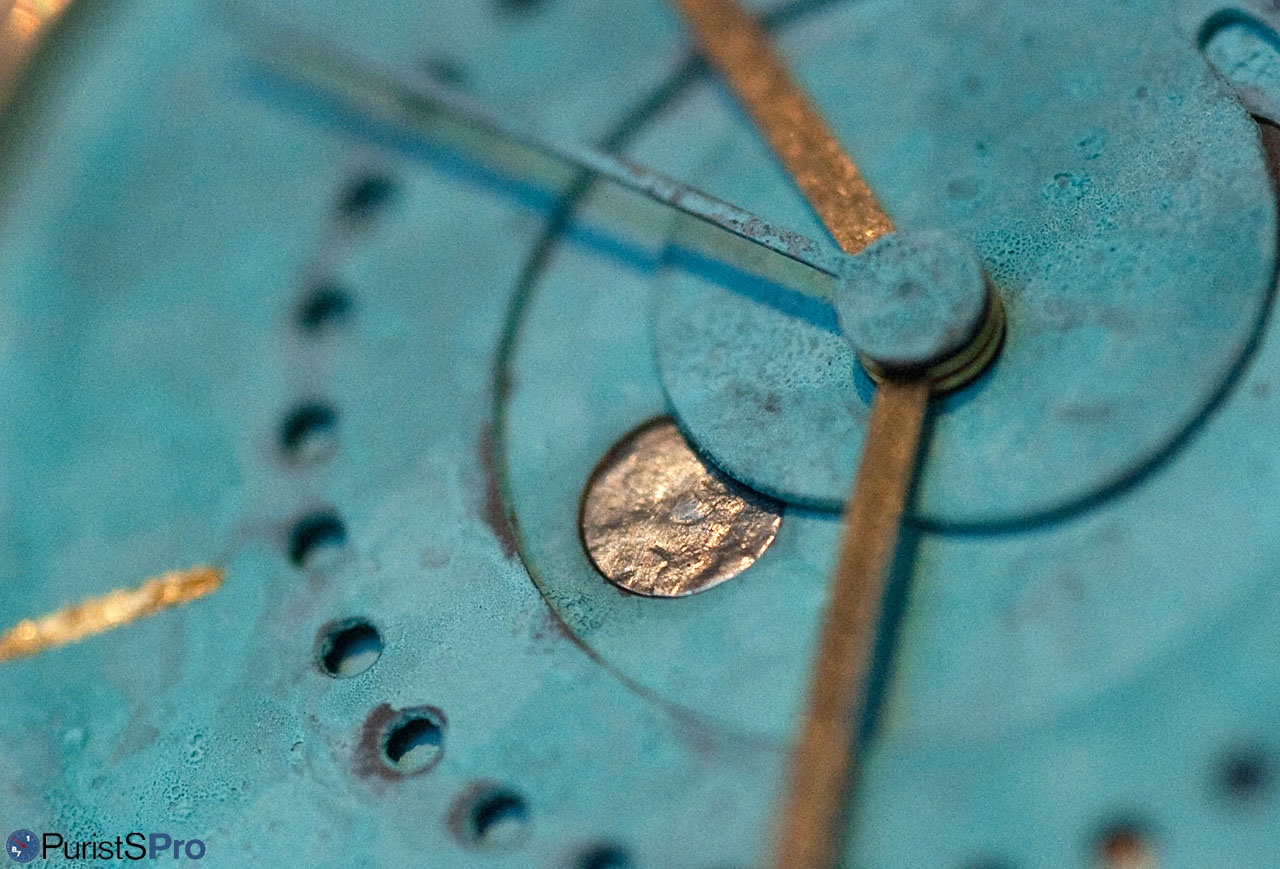
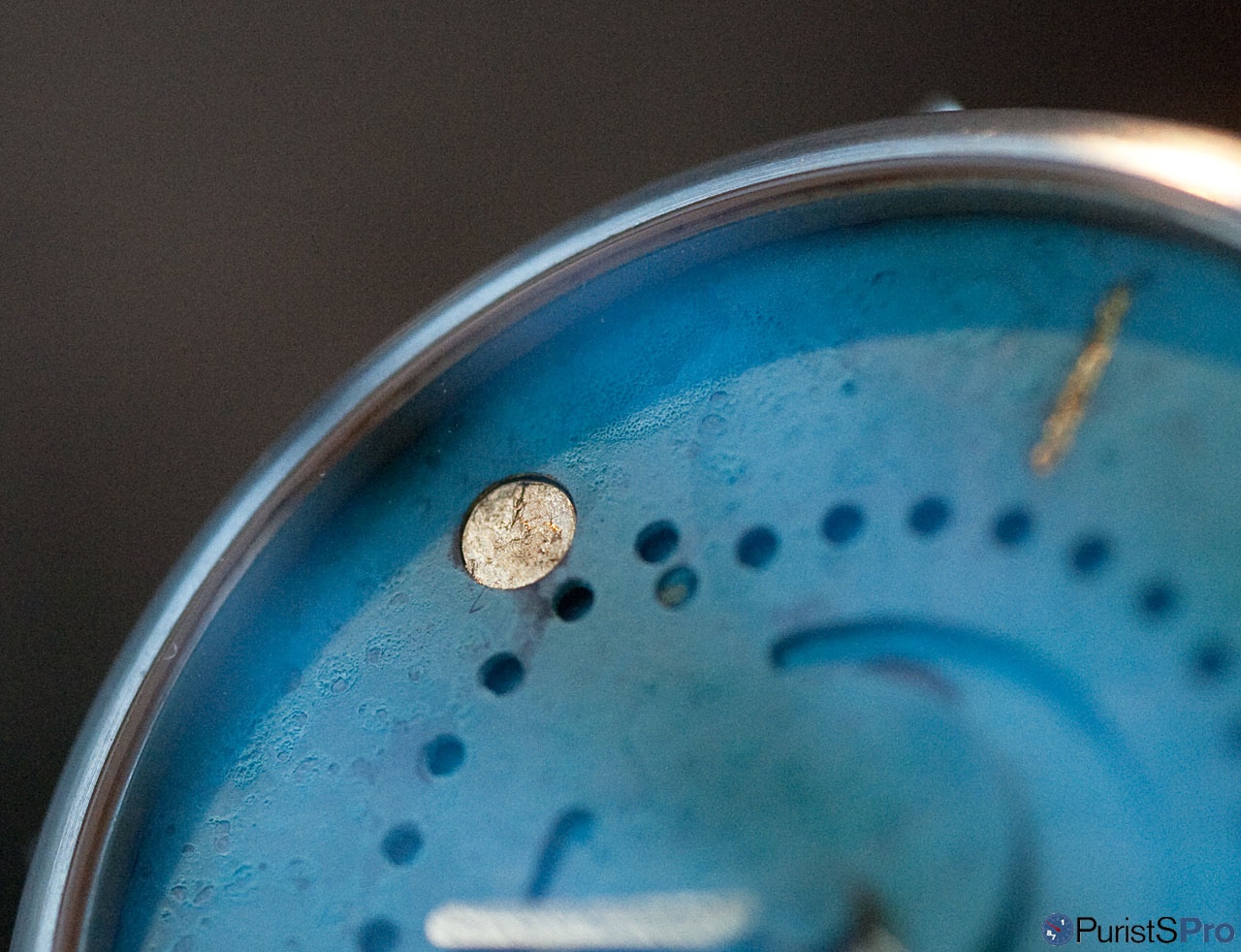
It was created using a copper-patinated dial, moon phase disk and second hand, 24k
gold sun and date dot, gold-plated hour and minute hands, platinum full moon and patinated sterling silver new moon. All indices
are insert gold leaf:
Remarkable!
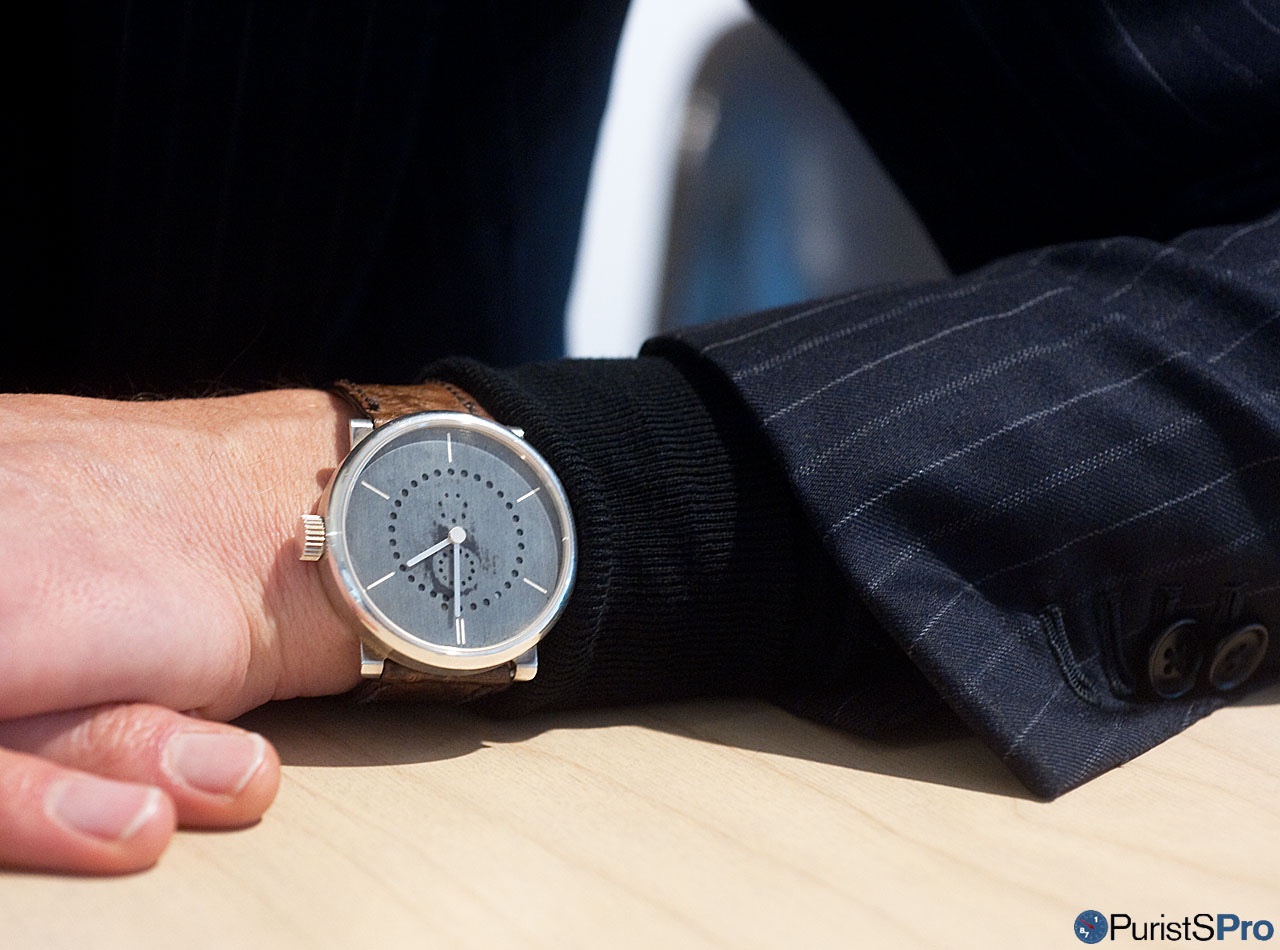
Finally, this
annual calendar made of
German silver
(i.e. dial, hands, date disks), a delicate-to-handle alloy (your A.
Lange & Söhne watchmaker will attest to this!) which changes colour
over time.
Note the slight hue around the date holes:
What about Beat's personal watch that day? He wore this
annual calendar
with an 'accidental' dial: it was one of their first forays into
using
sterling silver throughout the entire watch. Special care
is needed in
machining this material, particularly to mill the 0.2 mm internal screw
threads that set the month and weekday disks directly out of the dial –
in a soft metal like sterling silver – a very demanding task!
At
its thinnest, where the month and the weekday gears fit into it, the
functional dial is just 0.25 mm thick. It is exactly here where in this
early piece there were a few
impurities around the 'subdials', most likely from machining on the
dials backside. Quite charming, don't you think?
Thanks for reading,
Magnus
This message has been edited by Ornatus-Mundi on 2016-01-07 06:09:47