Ornatus-Mundi's detailed post introduces Ochs und Junior, a cooperative founded by Ludwig Oechslin and Beat Weinmann, dedicated to a unique philosophy of watchmaking. This article delves into Oechslin's intellectual approach, emphasizing practical utility, reduction to essentials, and an 'archaic beauty' aesthetic. It's a foundational piece for understanding the brand's innovative spirit and its commitment to conceptual clarity over conventional complexity.
Dear All:
in my
earlier posts I promised to show the pictures of the two prototypes. Now I am set to deliver. But first, I would like to reflect a bit more on the concept and reason behind
Ochs und Junior and why it necessitated the establishment of a new cooperative :
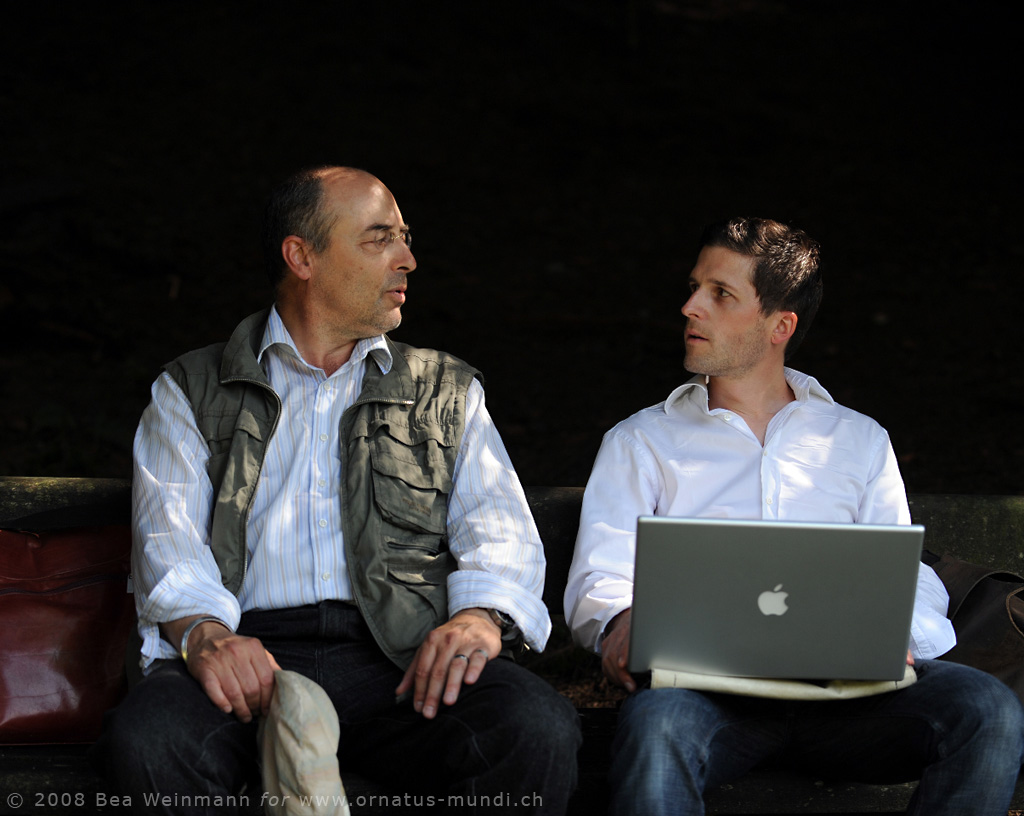
The Ox and the Junior: Ludwig Oechslin and Beat Weinmann As I alluded to in my previous posts, Oechslin's intellectual approach to watchmaking is that of synthesis. His analysis of clockworks and complications focusses on practical utility and the reduction to the bare essentials. Simplicity and logic draw the red line in his thinking.
What does this mean in praxis? The foundation is a different understanding of
complexity. In common watchmaking approaches, complexity is understood as a function of indications (representing the technical capacity of a watch) and the sum of parts (the watchmaking equivalent of the first).
Oechslin goes a different path. He understands complexity as the intellectual challenge to distill the essence of a mechanism into a conceptually clear product. The resulting gear systems often are of strikingly simple construction, but endowed with a transcendent, ethereal elegance. Complexity with actually
fewer (!) components means that those have to fulfill multiple tasks at the same time. And that
is indeed a challenge! Let's take the central switch wheel of the MIH watch as an example:
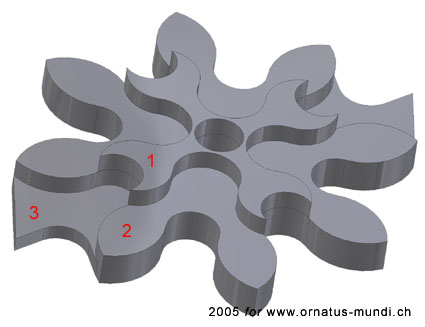
The 3-layer column wheel of the MIH watch's annual calender mechanism This little wheel is a role model of the extend Oechslin strives for with his synthesis: It orchestrates the annual calender of the MIH watch and has three functional layers: Layer 1 couples the weekday disk with the month disk, layer 2 is driven by a stud plate on the hours wheel of the base movement, and layer 3 advances the date under certain conditions - in months with only 30 days. At the end of these months, the date is advanced by the existing date mechanisms of the base movement and by the hours wheel via weekday and months switch.
Much to his amusement, it seems to be impossible (or at least discouragingly difficult) to transform the fruits of Vico's constructional intransigence into actual watches. Oechslin constructs without tolerances. The fact that the annual calender of the MIH, comprising of only 9 additional moving parts, has not yet been used by another brand although this is encouraged, is a telling sign.
So, if Oechslin wanted to stay true to his ideas without compromise, he would have to fully control the entire process.
Another important aspect is Vico's specific sense for
aesthetics, which can be described with a passion for 'archaic beauty'. Watches are not luxury objects for him at all, but tools suitable for everyday use. Artifacts which give account of their manufacturing process and their history of use. The prototypes he produced himself illustrate this aptly. Here are pictures of the early protoypes for the
MIH watch and the new Ochs und Junior watches, the
Anno 50 and the
Settimana Junior:
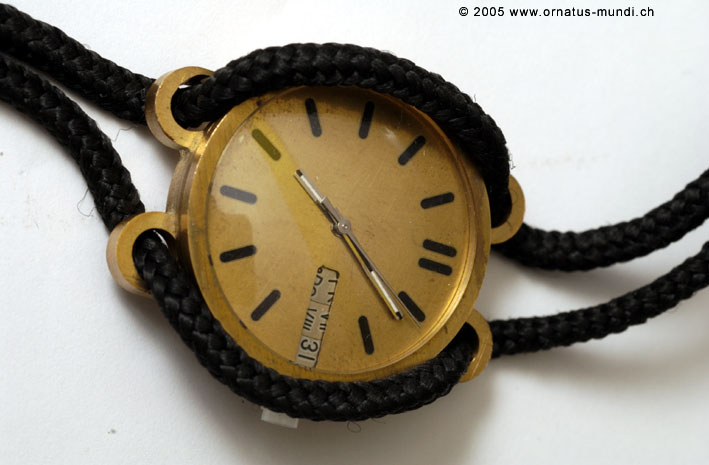
Oechslin's protoype of the MIH watch...
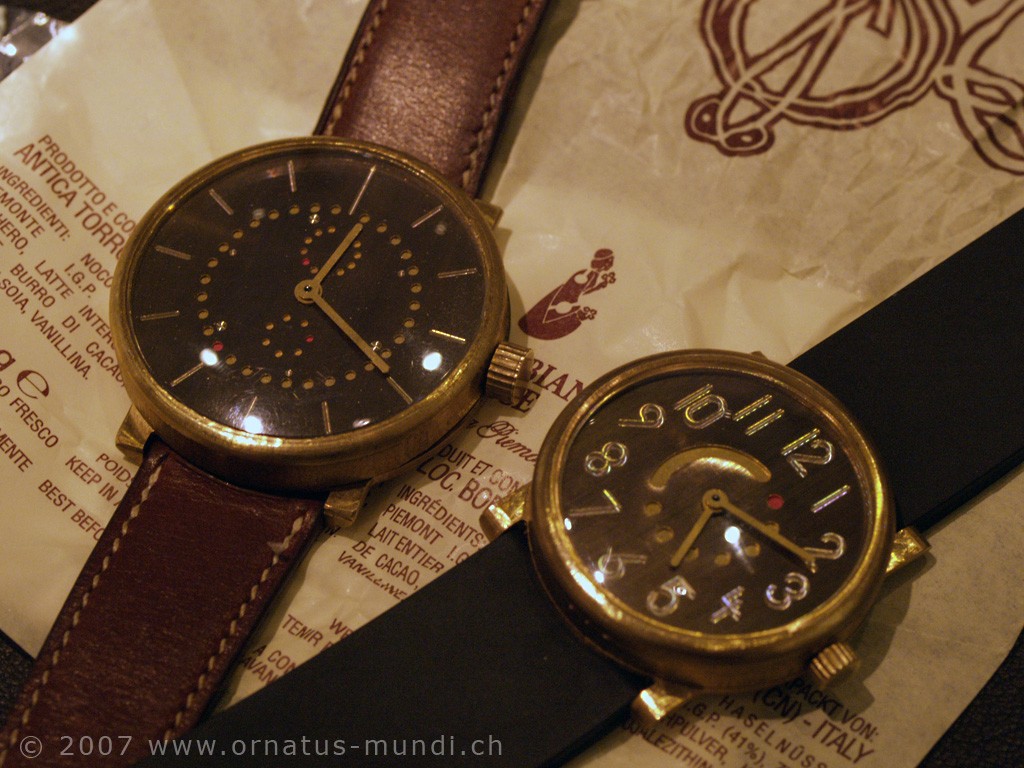
...and of the Ochs und Junior Anno 50 (left) and Settimana Junior (right) So how to put this concepts and thinking, which are certainly not compatible with widespread notions of
fine watchmaking, into praxis?
Vico took Beat Weinmann, with whom he realised the MIH project, aside and asked him: "Do you want to establish a watch manufacturer together with me?". This was a question you don't hear often, and Ludwig does not pose such questions twice...
Thus,
Ochs und Junior was born! It was clear to both that the new watch cooperative cannot be a 'brand' in the traditional sense of the term. They wanted something different.
 Sustainability
 is the key word here. It has multiple meanings for Ochs und Junior and is embodied throughout the cooperative:
Watches. The watches have to be true and honest to Vico's ideas. They give account to the production process and are not decorated and polished to hide it. The materials and workmanship is top notch as required by the construction. As many components as feasible will be sourced in Switzerland. Compromises for financial reasons are not to be made. Deviations only to secure best possible quality. True to Vico's words: "95% is perfect! The rest is human!"
Small is beautiful. The lack of large organisational structures creates the necessary leeway to avoid compromises. The cooperative is small enough to accommodate for this, but sufficiently large to concentrate all expertise needed to built watches from scratch. Does it surprise that the team is a group of friends...?
Expertise first! The collaborators are chosen for their ability to deliver the expected in time and for their flexibility to adjust to changes, regardless of whether they are established names in the watchmaking scene. As it turns out, most aren't...!
Eco-Friendliness. Local production and environmentally friendly materials and processes are of particular importance for Vico and Beat. Take example the packaging. The watches are packed into a so-called 'data-storage', a file (reminding on the ones used in Swiss government offices) containing all the background information as well as the object of desire, wrapped into a leather pouch: The pouch is made of ecologically tanned calf skin using rhubarb juice and oak as tanning agents, and is hand-crafted by Ludwig's sister in law.
Quite naturally, Ochs und Junior does not consider themselves as a 'brand' (see above). 'Branding' comes from animal husbandry where cattle and other livestock were burned the owner's signature into the hide (herds from several farmers were often mixed and jointly watched by one shepherd). Today, a 'brand' is often much more than the product(s), brands are associated with a certain lifestyle, convey membership to a certain social (elite?) group and serve to recognise a product on the global markets.
Ludwig wanted to let
only the watches speak for themselves. Thus, the Ochs und Junior watches do not feature any brand logo, yet Oechslin makes ironical reference to the historical importance of branded stigmas (did he have a choice? After all, his family name is ancient German for 'little ox'...) in that he created an indentor to heat-glue the Ochs und Junior logo into the back side of the straps:
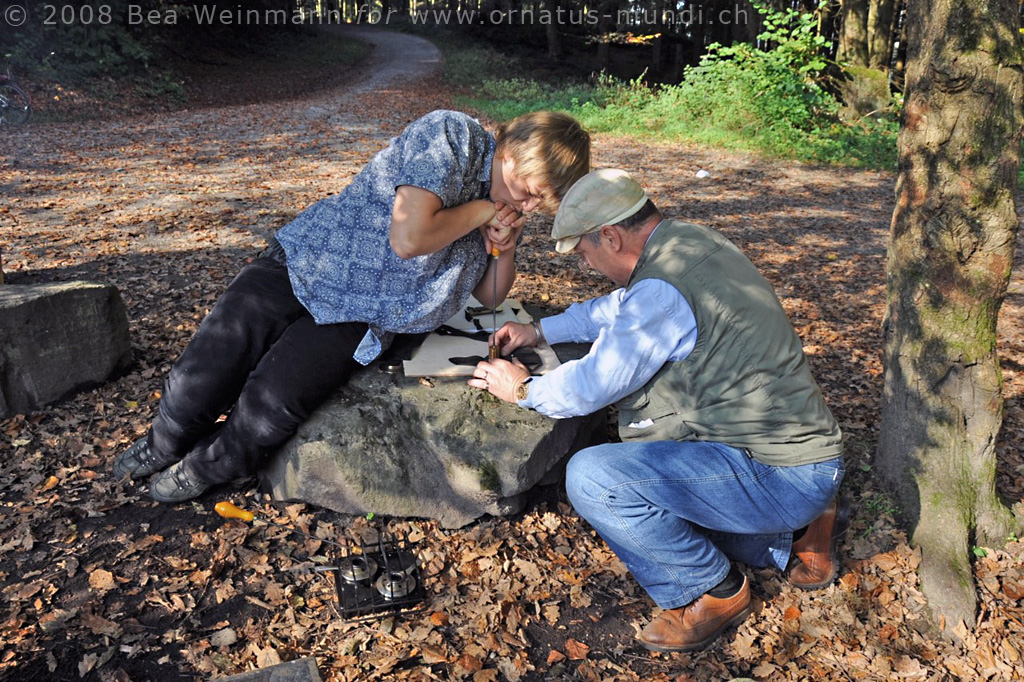
Ludwig and Giorgio Oechslin 'branding' an Ochs und Junior watch
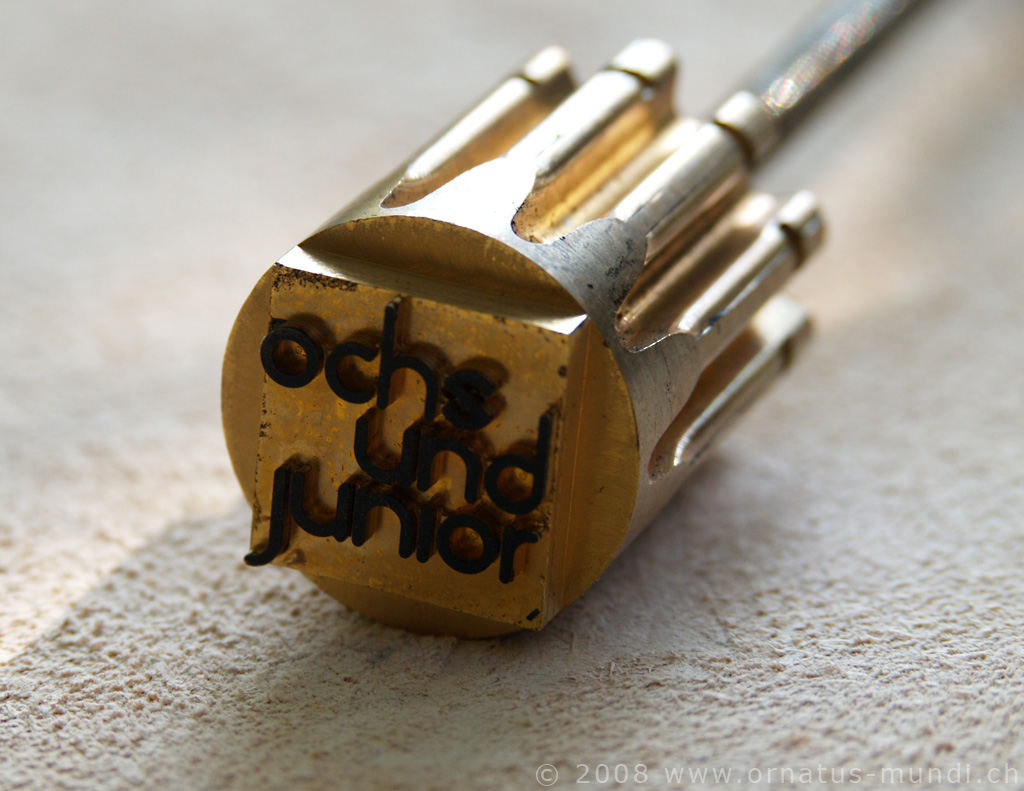
The indentor and the result

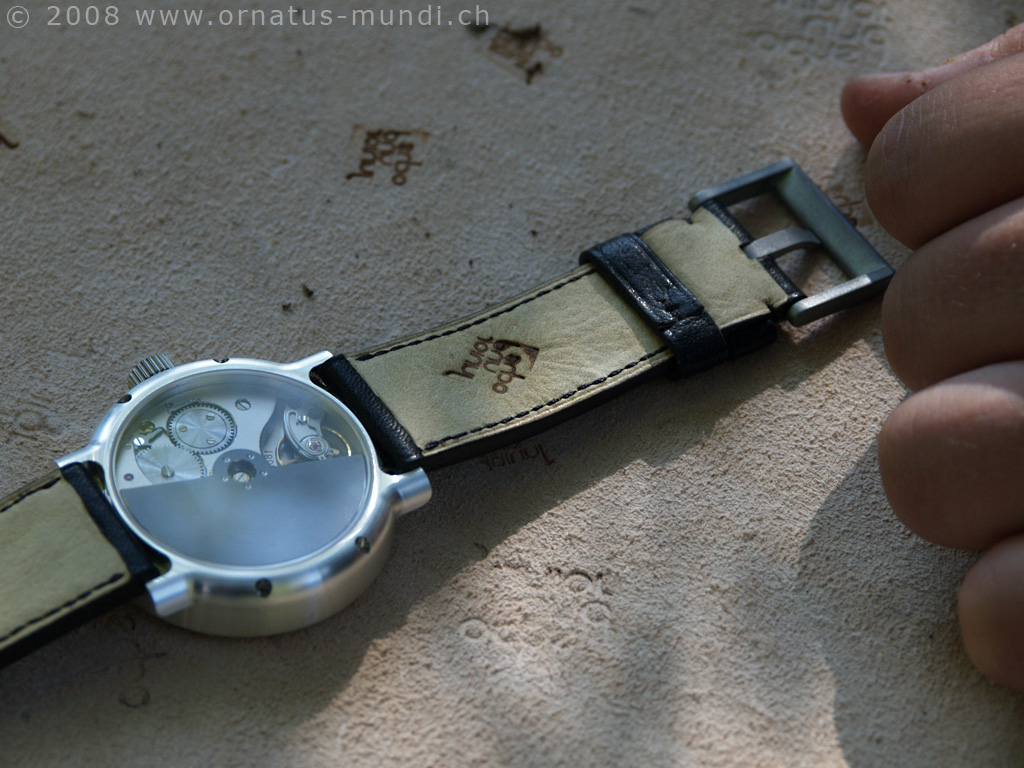
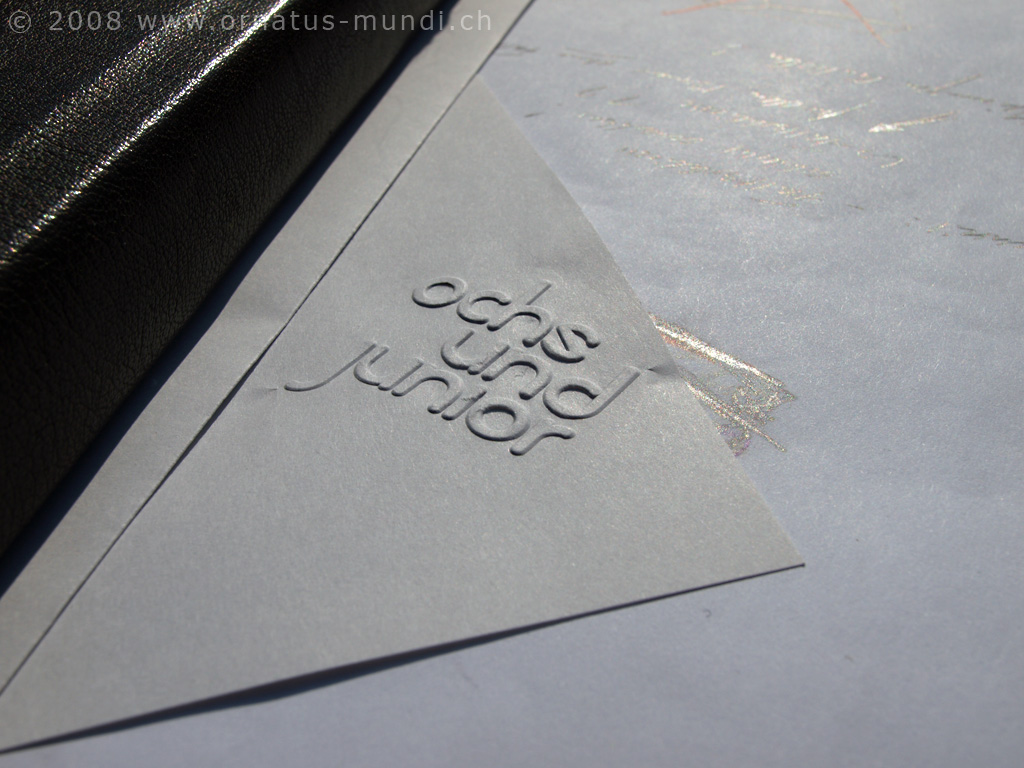
The indentors also mark the business paper... This shall suffice for now. In the following, I will finally show the watches!
More posts later today!
Cheers, Magnus
This message has been edited by AnthonyTsai on 2008-12-24 10:15:14 
