Manufacture
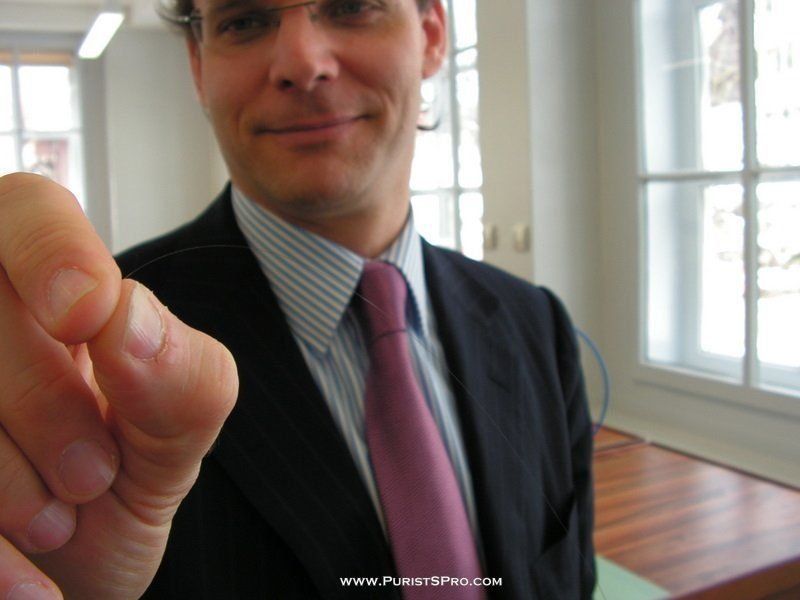
In this insightful interview, mkt33 sits down with Mr. Alexander Schmiedt, the Business Manager and Director behind Montblanc's Villeret collection. Schmiedt, whose family has deep roots in the watch industry, shares his vision for integrating Minerva's esteemed manufacture into Montblanc's high watchmaking ambitions. This discussion offers a rare glimpse into the strategic decisions and unexpected challenges of leading a niche haute horlogerie division within a luxury conglomerate.


For the third chapter in this series of interviews, I thought it would be nice to get to know the business manager and director behind the Villeret collection. So often the success of a small niche brand depends on the vision and energy of this person at its helm. I went to the top man himself, Mr. Alexander Schmiedt. Very passionate and articulate Mr. Schmiedt was willing to share some thoughts with the PuristSPro community. I have no doubt Mr. Schmiedt will bring success to Montblanc's new venture.

Please tell us a little bit about your background and how you came to be the Director for Montblanc Villeret.
My family was in fact in the watch business. We were distributors of various Swiss watch brands in Austria and eastern Europe- that is how I basically got the watches virus in the bloodline. In fact we were for a period of some years in the 60s even distributor for Minerva. Funnily enough, when I was 18 I spent 6 months in St. Imier at Longines and lived 200 metres above Villeret.
Then I deviated for a few years, finishing my law studies and an MBA in the US and working for a the Boston Consulting Group in management consulting. However, I always wanted to go back to the luxury industry- and this is how I ended up with Montblanc and Villeret.
Can you please share the historic sequence of events after Minerva was acquired by the Richemont group. How and why was Minerva entrusted to the Montblanc brand?
I guess the details are pretty well known from the various discussions. Richemont bought Minerva from the Italian investor Mr. Gnuti who purchased it from the Frey family. I believe the reason for which Richemont entrusted Minerva to MB is that they saw the win-win situation of our business concept: the name and the history of Minerva continues as a manufacture of complete watches under the guidance of MB- and MB receives a competence boost in the area of high watchmaking. In other scenarios (if we exclude the one of maintaining Minerva as an independent brand which Richemont ruled out for mainly brand portfolio reasons) this would have most likely resulted in "Minerva" disappearing as a movement supplier for one or more group companies.
What have been the unexpected challenges to your job so far? The unexpected joys?
A big challenge of course- although not totally unexpected- was to merge the culture of a small company which had stayed independent (almost family owned) for almost 150 years with the organization and rhythm of a global luxury brand. Although we made from the beginning clear that we want to keep Villeret as the "Montblanc atelier for haute horlogerie" and maintain the way of how the company worked, I remember that I saw a lot of suspicion in the eyes of Dimitri Cabiddu and his team when we first presented the Collection Villeret 1858 at SIHH 2008 - even if it was not said out right away. It took some months of close cooperation to convince the people in Villeret that we actually meant it- and that the support of Montblanc actually offers some unique opportunities for development for Minerva and their staff.
We've already seen the manufacturing capabilities of Villeret. What do you say to people who think capabilities like making a balance wheel and mainspring is not needed? Besides flexibility in design are there any technical advantages using the custom balance wheels and mainsprings rather than using "pre fabricated" ones?
You might get a longer and more technical answer from Dimitri on that (and this is for sure worth asking), but my take is the following: the balance wheel so far still remains the heart of every mechanical watch and in the end determines the precision of the piece- no matter how complicated the movement itself might be. Thus, it is a crucial part of the movement, and if we want to Villeret to be a completely integrated manufacture in the traditional sense, a big piece would be missing if we were to use standard balance wheels and spirals. In the Minerva movements, we consciously decided to follow the traditional rules of watchmaking- using the large balance, slow beating balance wheels. The balance wheel of the 16.29 chronograph weighs 59mgcm2- almost 6 times heavier than a standard industry balance wheel- and it is simply very difficult if not impossible to source them ready made. So by wanting to stick to the rules of traditional watchmaking, we are almost obliged to make the balance wheel and spiral in-house.
Another important aspect of course lies in the future: as the objective at the Institut Minerva is to further develop and innovate the existing tradition, the capability to produce our own balance wheels and spirals will be important to give us flexibility for future new developments.
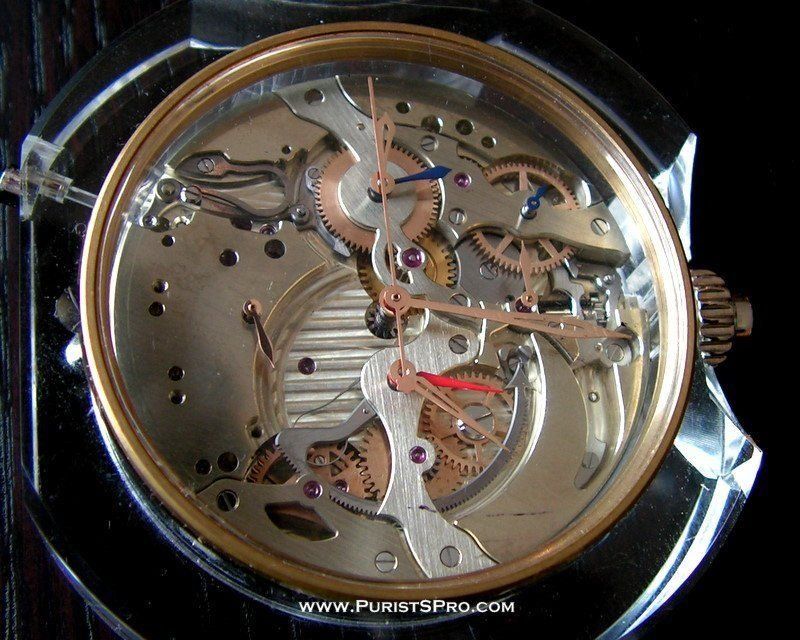
One aspect of traditional watchmaking which MB Villeret is focused on is aesthetics. Can you give us an approximate amount of time it takes to hand finish a typical Villeret Chronograph? For those collectors who value the "Geneva seal" as a sign of excellence can you compare and contrast the MB standard? Are the functional surfaces finished as well?
It takes alone almost an entire week for a watchmaker to only assemble and finally adjust a chronograph movement. This does of course not include all the decoration and finishing work that has been done before. All in all, you could count maybe 1 month of working time across all production steps for an entire movement to be finished from the raw material to the finished movement.
All the surfaces- functional and non functional- are finished by hand to the highest level. Even the invisible parts, e.g. the inside of the spring barrel- are decorated in the same quality than other, more visible parts.
As a follow up question many enthusiasts are surprised at the entry price level of the Villeret offerings compared to other "venerable" watch houses. What do you say to these enthusiasts? Let's say a customer was looking to purchase a Lange Datograph, tell us what you would say to highlight MB's Villeret offerings?
Of course I do not want to evaluate any competition offer, but if a customer buys a Villeret, he purchases a watch with some very exclusive traits:
A watch of a natural limitation- due to the high level of hand-work required, we can only produce around 250 watches per year across the various calibres.
A rare movement: of each caliber, we oblige ourselves to make a maximum of 288 watches (2 "grosses"=(12x12)x 2- being based on the traditional production lot size of dozens that we still use today in Villeret).
A traditional beauty: the movement forms take close inspiration from the historical Minerva calibers. With the large balance wheel and the characteristic form language, they combine functionality with aesthetics at the same time. The forms are deliberately constructed that they can only be perfectly finished by artisanal hands: the inner angles of the V-shaped chrono bridge and the arrowhead in each movment to name just a few.
A unique piece with a soul- none of the pieces is alike as each watch is assembled and adjusted by one watchmaker from beginning to end, they all bear the personal touch of their creator. Even in an edition of 58 pieces, each of the watches is different.
A "mechanical piece of art" - manufactured in the purest sense of the word, technically crafted to the highest levels but also conceived to show all the beauty a mechanical watch can have.
There are also concerns about the generally large size of these watches at 47mm. Why was this dimension chosen? Please tell us a little bit more about this years new release: the Grande Chronographe regulateur. What was the inspiration behind this model?
First, we do not work on 47mm exclusively – almost 50% of the collection comes in 41mm cases. Generally, the case sizes follows the size of the movements. We work on 2 base sizes for our calibers- 16''' and 13'''. The choice of these caliber sizes again follows the heritage of Minerva (the famous calibers 17.29 and 13.20). As our objective is to make beautiful movements, the 16'''calibres perfectly lend themselves to show the entire beauty of a large movement, whereas the 13''' movements are more filigrane but share the same form language as their larger brothers. So the 16'''movements makes a large size case with 47mm, no doubt. That is why the construction of our cases is conceived in a way that you don't feel the 47mm (the curved case back, the outward bend lunette and the flowing form of the case). For those who feel those too big, the 41mm watches offer an alternative with equally beautiful movements in their own right.
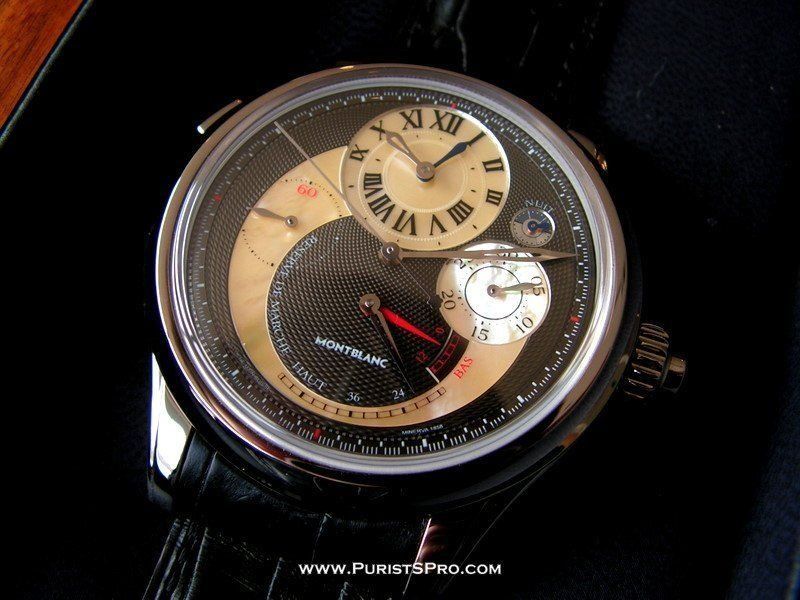
The Grand Chronographe Regulateur is actually exactly following the objectives of the Institut Minerva: to further develop tradition with innovation. It is based on the 16.29 chronograph movement, but blends it with 2 innovative and useful new functions: a home time indication with connected day/night display and a patented power reserve with a special "emergency" indication. Also design wise, we tried to show this combination of innovation and tradition, using the traditional "Regulator" time indication but giving the watch at the same time a contemporary look.
How many watchmakers are employed by MB at its Villeret facility? One increasingly important aspect of ownership is after service sales. What is the size of the afterservice department? What are the general turnaround times and customer service expectation? Will MB Villeret provide support for those customers who purchased "Minerva" timepieces a few years ago?
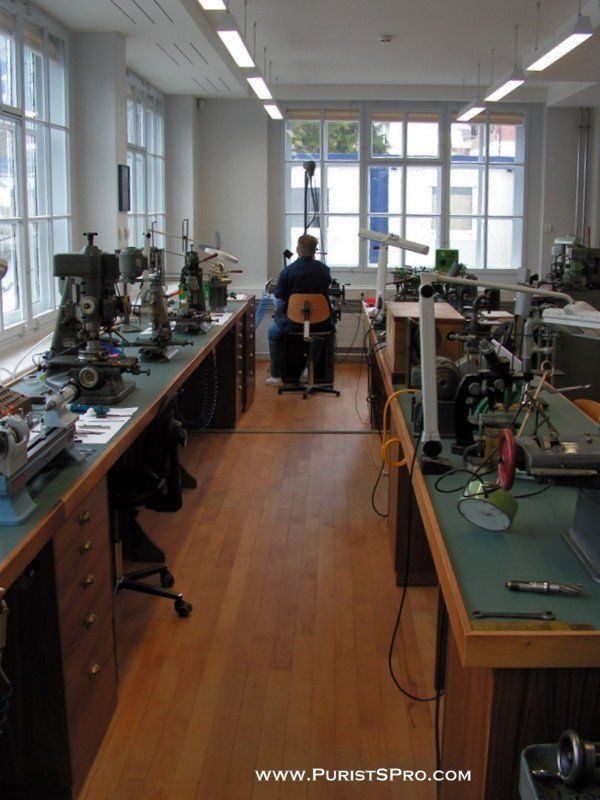
There are currently 37 people employed in Villeret of whom the majority works in the production. As this is still a comparatively small operation, there is no special after sales service department but the watches that come in for repair will be actually repaired by the watchmakers who initially assembled the piece. Due to the sensitivity of the movements and the high standards, all repairs or service have to be done in Villeret and not in local service centers. While it is difficult to speak about a general turnaround time, we target to get the watch back to the customer within 6-8 weeks.
Of course Minerva watches can be turned in for service at every MB boutique or retailer- for historical pieces however, repair or service might take some more time.
Will there be any collaboration between the Villeret facility and the one at Le Locle or do these two facilities have completely different objectives and goals? Will there be any collaboration with the brands within the Richmont group?
Villeret and Le locle are the 2 watchmaking competence centers of MB. However, they operate in 2 completely different market segments. Le Locle manufactures over 100.000 watches per year, using modern and state-of-the-art industrialized manufacturing techniques whereas Villeret is in the segment of small, highly specialized series of complications and hand crafted watches. F rom a manufacture standpoint, these are completely different competencies and thus the two entities will remain separate.
However, there are areas of cooperation in the field of movement development and case construction as well as design creation where the capabilities of the 2 sites complement each other very well.
At the moment, there is no operational cooperation with other Richemont brands except for the fact that Villeret supplied the 13.22 chronograph movement for Panerai.
Do you have any words for our community you would like to share?
Keep your passion about horology, continue the open discussion on our watches, and if you like what we do, help us spread the word…
Please leave a note of thanks for Mr. Schmiedt and feel free to post some add on questions you would like to have answered.
Enjoy, Mike
PS- By the way, if you enjoyed the series so far, please contribute to the next important interview. It will be with master watchmaker Mr. Cabbidu! Click Here to post your questions. Thanks.
Copyright June 2009 - Dr. Michael Ting & PuristSPro.com - all rights reserved
PuristSPro Homepage | ThePuristS Homepage
Comments, suggestions, and corrections to this article are welcome.

The Rolex Bubble Back, reference 1858, represents an early example of Rolex's self-winding waterproof wristwatches. This reference is part of the broader Bubble Back family, characterized by its distinctive domed case back designed to accommodate the thicker automatic movement of the era. It showcases Rolex's foundational efforts in developing robust and reliable automatic timepieces for everyday wear, laying groundwork for future Oyster Perpetual models.
This particular reference features an 18k white gold case, measuring 38mm in diameter. It is fitted with a sapphire crystal, protecting a silver dial. The watch is powered by an automatic movement, specifically the Boucheron 1858 caliber, offering a power reserve of 42 hours. The fixed bezel and leather strap complete the watch's classic presentation.
For collectors, the reference 1858 holds interest as an early and relatively rare iteration within the Bubble Back series, especially in white gold. Its larger case size for the period also makes it appealing to modern tastes. The presence of a date complication adds to its functionality, distinguishing it from simpler time-only Bubble Back models and highlighting Rolex's early integration of practical features.
Thank you Mr. Schmiedt for telling us about the Villeret watch production facility. It is good to see that Villeret has remained a somewhat separate entity on its own rather than become completely assimilated among other Richemont brands. I was also very surprised to learn that Villeret comprised of such a small team of only 37 employees that make approximately 250 watches a year. I find it surprising that such a small team of 37 employyes can be able to create such astounding pieces on their ow
"A rare movement: of each caliber, we oblige ourselves to make a maximum of 288 watches" Are they really only making 288 of each caliber? In that case they'll be constantly having to fine tune calibers, won't they? Even at 250 watches a year, they're gonna exhaust a caliber every few years.... A
Looking forward to the installment with Mr Cabbidu. - SJX
Thanks to Mr. Schmiedt for his insight into Montblanc Villeret. The more I learn about Villeret, the more impressed I am by their offerings. You have really opened my eyes to the promise of Montblanc's horological undertakings. Cheers, Daos
A very enlightening read. It is encouraging that even in these times of consolidation, there is the backbone and vision to allow "the small but worthy" to not only survive, but actually to thrive. Bravo! Cheers, TM
For those who are a fan of sports watches, will MB Villeret ever create a sports watch using a new case design w/ the same Villeret movement finishing quality? Cheers, Anthony
This thread is active on the Montblanc forum with 9 replies. Share your knowledge with fellow collectors.
Join the Discussion →