Complications
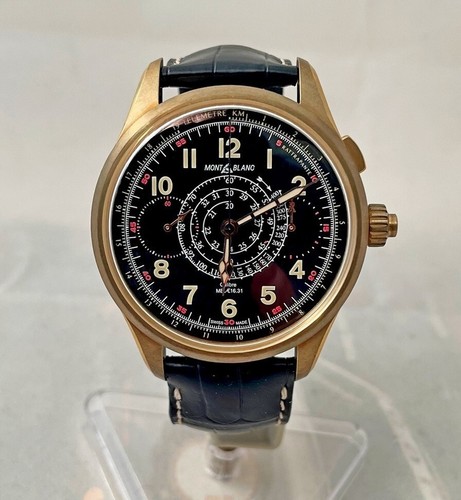
Michael Ting (mkt33) delves into the technical intricacies of Montblanc's Villeret 1858 Grande Seconde au Centre Retour-à-Zéro complication, building upon a previous review by Art. This article focuses on the unique 'Retour-à-Zéro' function, a highly practical feature for precision-obsessed collectors, and compares Montblanc's approach to similar mechanisms from other esteemed brands.



Montblanc Villeret 1858 Grande Seconde au Centre Retour-à-Zéro - A Review of its Complication
By Michael Ting
© June 2010
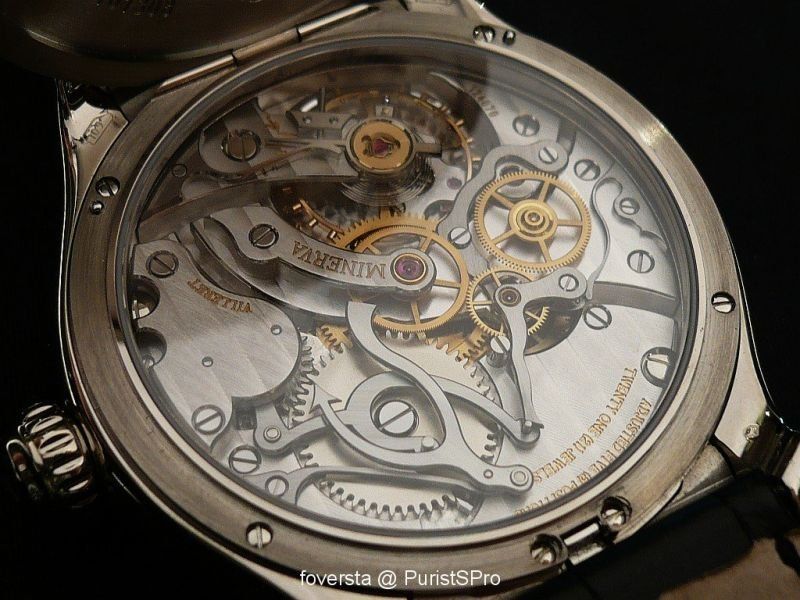
Of all the mechanical complications out in the marketplace today, I cannot think of anything more useful than a “Retour-A-Zero” function. For those of us obsessed with accuracy the ability to reset the seconds hand and synchronize it to a reference time source is invaluable.
Of course many companies have taken advantage of this desire by putting out movements with similar complications.
Lange & Sohne with their patented Zero-Reset mechanism.
Glashutte Original incorporates this complication in their new chronometer with the Caliber 58-01 model.
Chopard’s small seconds return to zero version is found in the LUC 10CF.
And we can’t forget Panerai fans who also got their wish with a similar function found on the P.2002 movement.
Although all of these watches allow their owners to reset the seconds hand to zero, their mechanisms of action are slightly different.
It should be no surprise that a company known for its chronograph movements would fall back on its expertise and devise a “Retour-A-Zero” complication based on a chronograph.
Montblanc’s Minerva Institut de Recherche created two calibers: 16-18 and 13-18 both with the same complication but for timepieces of differing diameters each in limited quantities.
Caliber 16-18 is reserved for use in the Grande Seconde Au Centre Retour A Zero with a diameter of 47mm.
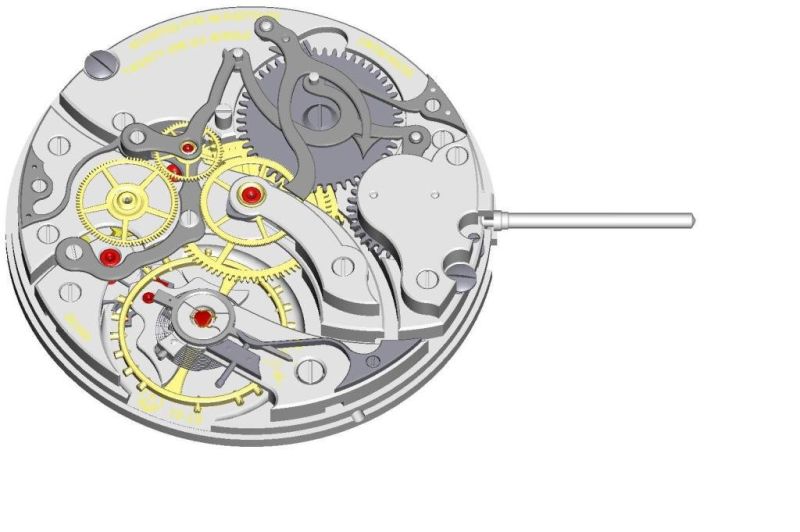
While the Caliber 13-18 is reserved for use in the Seconde Au Centre Retour A Zero with a diameter of 41mm.
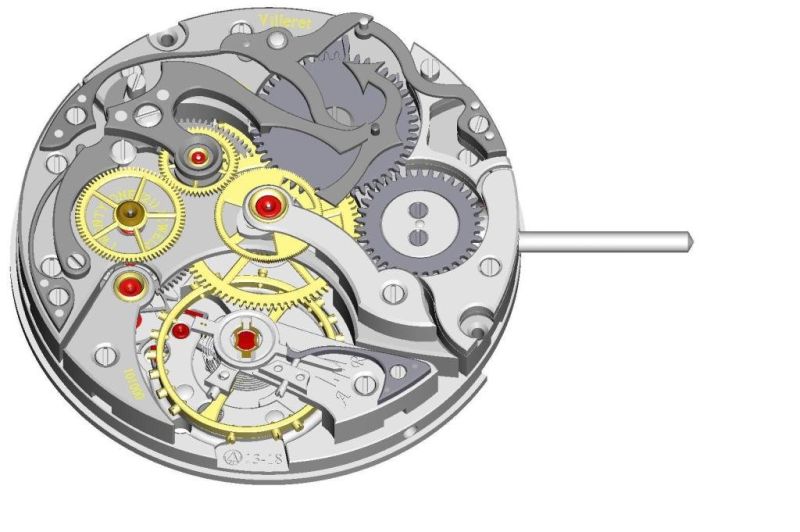
Despite the slightly differing layouts, both movements are simplified chronograph mechanisms with only a reset and start function.
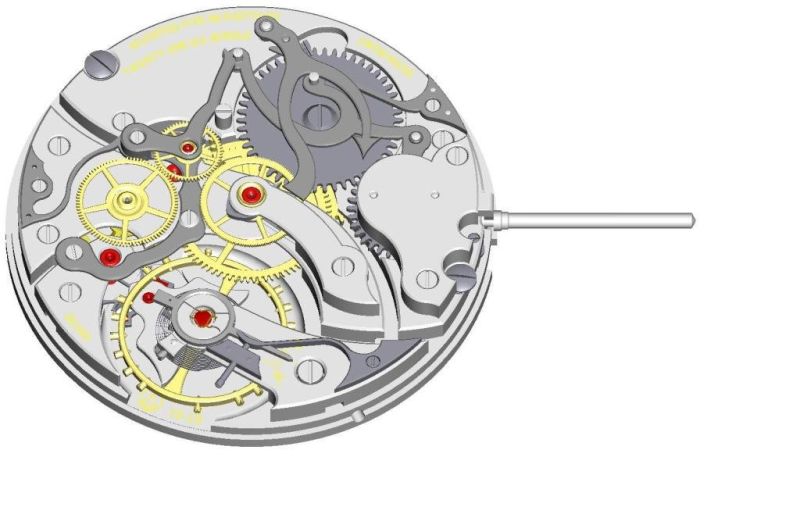
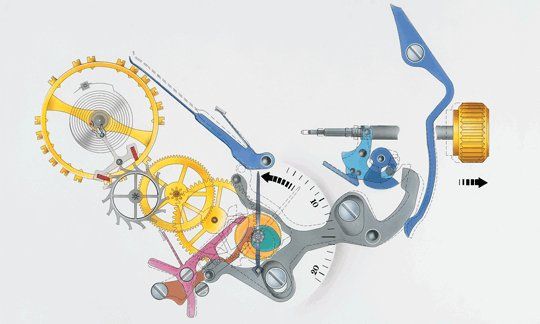
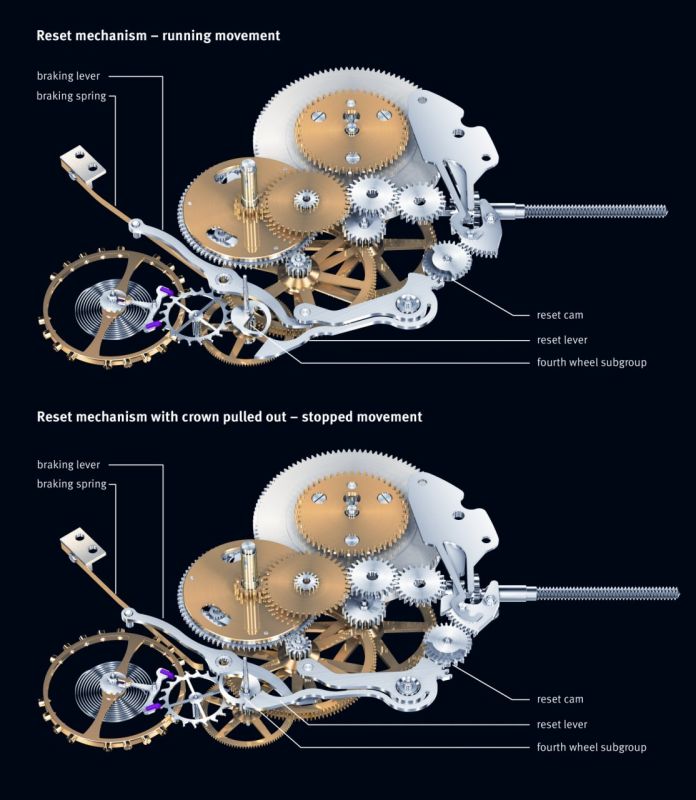
The basic function mimics that of all horizontally coupled chronographs with the energy flow from the 4th wheel (which would carry the running seconds hand on a true chronograph) through the chronograph transfer wheel to the chronograph center wheel (which would carry the chronograph’s center seconds register hand). In the Montblanc R-A-Z this is continuously activated.
To reset the seconds hand to zero, the center wheel is uncoupled and a hammer descends on the heart shaped cam to turn the chronograph center wheel back to the zero position. The hammer stays on the heart cam holding the seconds hand at zero while the time is set. When the crown is pushed back in, the hammer is released, and the chronograph center wheel is coupled back into the energy flow, starting the movement of the center seconds hand.
The analogy is:
Pull the crown (brings the seconds hand to zero)=> stop and reset the chronograph
Push the crown back in (lets the seconds hand start)=> start the chronograph
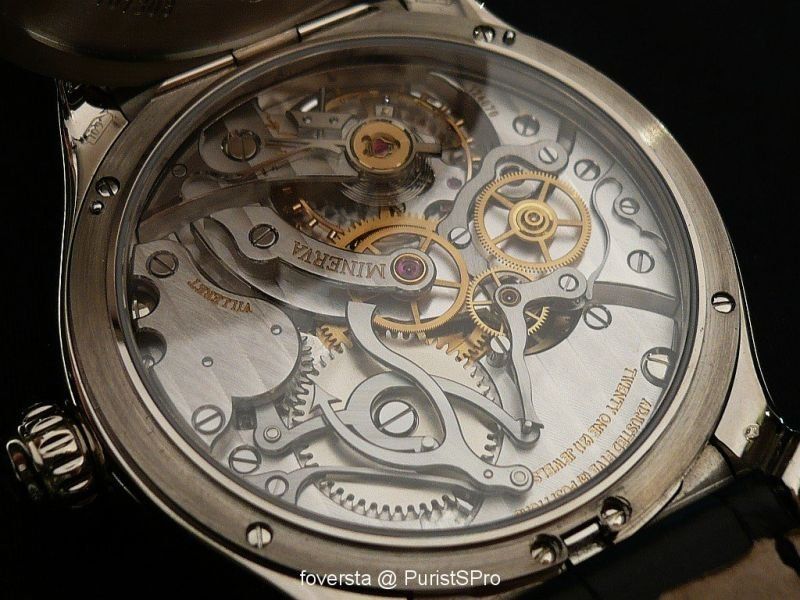
The “hammer” on both of these calibers are distinguished by the “Minerva arrow”.
Two issues to highlight.
There is the assertion that horizontally coupled chronographs should not be left running continuously for fear of causing excessive wear and tear at the coupling wheels’ contact points.
This concern is partially addressed by Mr. Cabiddu and Minerva’s design team when they modified the wheel teeth profile to a more epicycloidal shape. This change, while not a new concept in horology, is an attempt to minimize friction at crucial contact points.
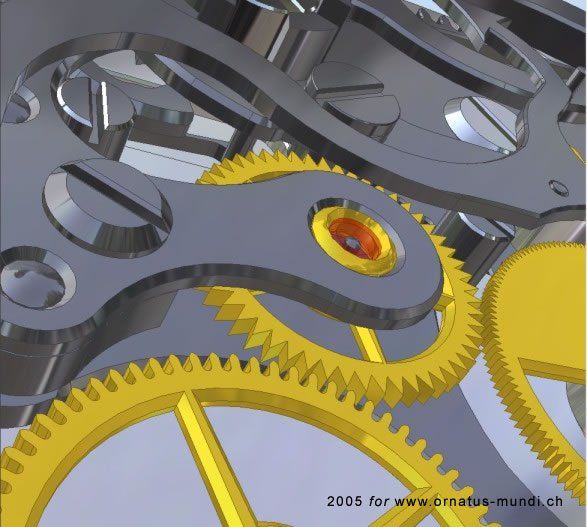
(Photo: Dr. Magnus Bosse)
Also since both of these calibers use a horizontal coupling mechanism, the balance wheel is isolated and can freely swing uninterrupted when the crown is pulled to reset the seconds hand.
This is important for Montblanc since the balance wheels used in the Villeret models are large and have a substantial moment of inertia.
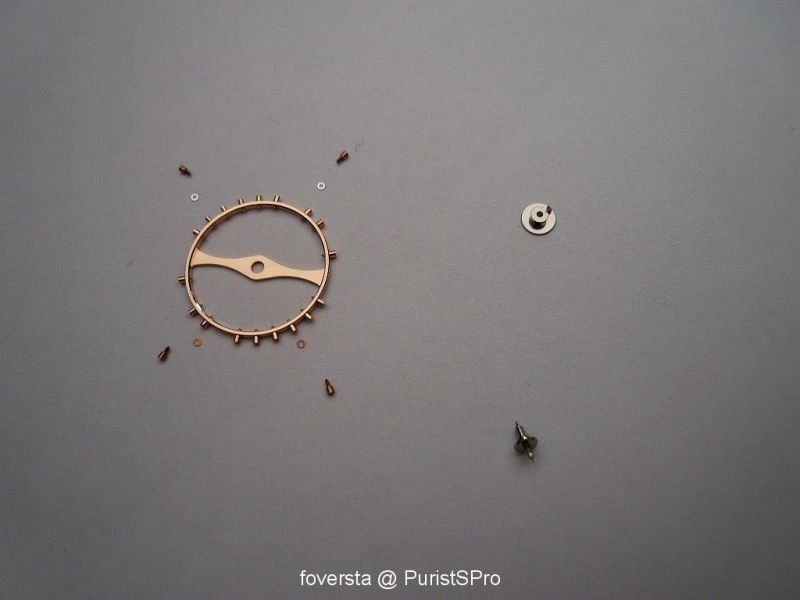
For the caliber 16-18, the balance wheel measures 14.5 mm and has a moment of inertia of 59 mg-cm2
For the caliber 13-18, the balance wheel measures 11.4 mm and has a moment of inertia of 26 mg-cm2
I will leave the actual physics up for discussion but in general the size/mass of the balance wheel and the oscillation rate both contribute to the stability and accuracy of a timepiece. It is less likely that external forces will be able to disturb the frequency of an escapement which uses a larger balance wheel. Similarly, the higher the oscillating frequency the less sensitive the escapement will be to external mechanical disturbances as well.
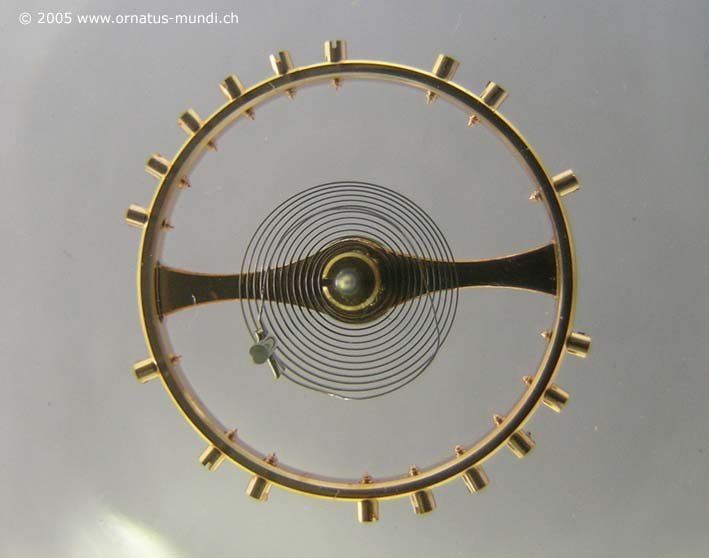
(Photo: Dr. Magnus Bosse)
Since these Villeret calibers operate at the rate of 18,000 BPH, stopping or hacking the movement would adversely affect their accuracy since it would take a measurable amount of time for the mainspring and balance wheel to get back to their stable oscillating frequency (large moment of inertia, low beat). So by designing a Retour A Zero complication which does not disturb the escapement, Montblanc is able to preserve the advantages of utilizing a large balance wheel.
Montblanc’s Retour-A-Zero is a simple and elegant solution wouldn’t you agree?
In summary and for comparison:
Lange- decentralized seconds display, vertical coupling, balance wheel stopped
Chopard- decentralized seconds display, vertical coupling, balance wheel stopped
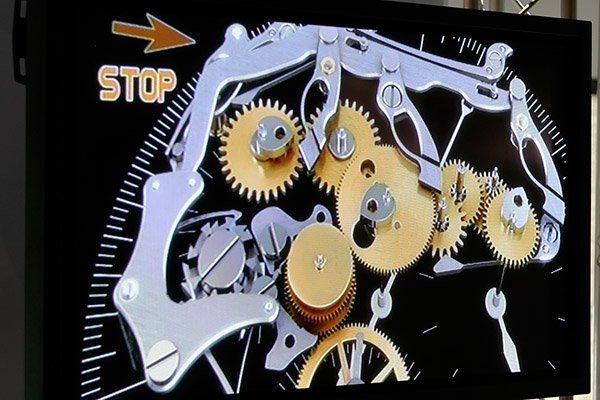
(Photo: Edward Hahn)
GO- decentralized seconds display, vertical coupling balance wheel stopped
Panerai-decentralized seconds display, vertical coupling, balance wheel stopped
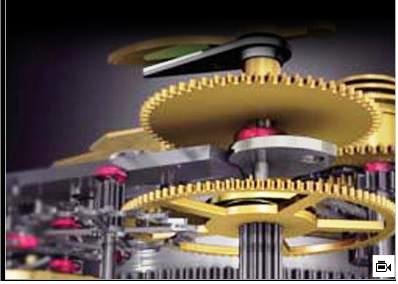
Montblanc- centralized seconds display, horizontal coupling, balance wheel free
Enjoy,
Mike
Copyright June 2010 - Michael Ting & PuristSPro.com - all rights reserved
PuristSPro Homepage | ThePuristS Homepage
Comments, suggestions, and corrections to this article are welcomed.

The Rolex Bubble Back, reference 1858, represents an early example of Rolex's self-winding waterproof wristwatches. This reference is part of the broader Bubble Back family, characterized by its distinctive domed case back designed to accommodate the thicker automatic movement of the era. It showcases Rolex's foundational efforts in developing robust and reliable automatic timepieces for everyday wear, laying groundwork for future Oyster Perpetual models.
This particular reference features an 18k white gold case, measuring 38mm in diameter. It is fitted with a sapphire crystal, protecting a silver dial. The watch is powered by an automatic movement, specifically the Boucheron 1858 caliber, offering a power reserve of 42 hours. The fixed bezel and leather strap complete the watch's classic presentation.
For collectors, the reference 1858 holds interest as an early and relatively rare iteration within the Bubble Back series, especially in white gold. Its larger case size for the period also makes it appealing to modern tastes. The presence of a date complication adds to its functionality, distinguishing it from simpler time-only Bubble Back models and highlighting Rolex's early integration of practical features.
. . . that buttresses my conceptual appreciation of the Retour-à-Zéro as a practical chronometer. Incidentally, my understanding is that there's a slight difference between the operation of the two movements. With the cal 16-18, the re-set lever actuates the hammer and clutch separately, but with the cal 13-18, the clutch is mechanically coupled to the hammer. Just another reason why it's worthwhile to observe both movements in action ;-) . . . cordially, Art
You can tell that with the schematic of the two movements Thanks Art, Mike
I'll have to re-read it a few more times to understand exactly how the mechanism works, but thanks for the detailed explanation. Great to learn about this. Regards, ED-209
Very interesting technical comparison of the R-A-Z function in the Montblanc to marketplace competitors. While I generally don't consider these in-depth technical things when buying a watch (beyond the issue of does the design make the watch more/less robust), it is good to know that the watchmakers at Montblanc are trying to better the mechanics of their timepieces. Cheers, Daos
and utilizing them in new ways. Looking forward to seeing what they come up with next! Best, Mike
Thank you for the descriptive information. And for putting all this information in a concise and easy-to-comprehend manner.
60 Montblanc listings are live on the eBay market and 32 collector listings on the WatchProSite marketplace.
This thread is active on the Montblanc forum with 7 replies. Share your knowledge with fellow collectors.
Join the Discussion →