Can you believe it was already 10 years ago? In September 2005 the dream team
Ludwig Oechslin, Beat Weinmann, Paul Gerber and
Christian Gafner presented the fruit of the unusual collaborative project - am minimalistic watch with a unique technology, realised without having a large watchmaking corporation in the back: the famous
MIH Watch:
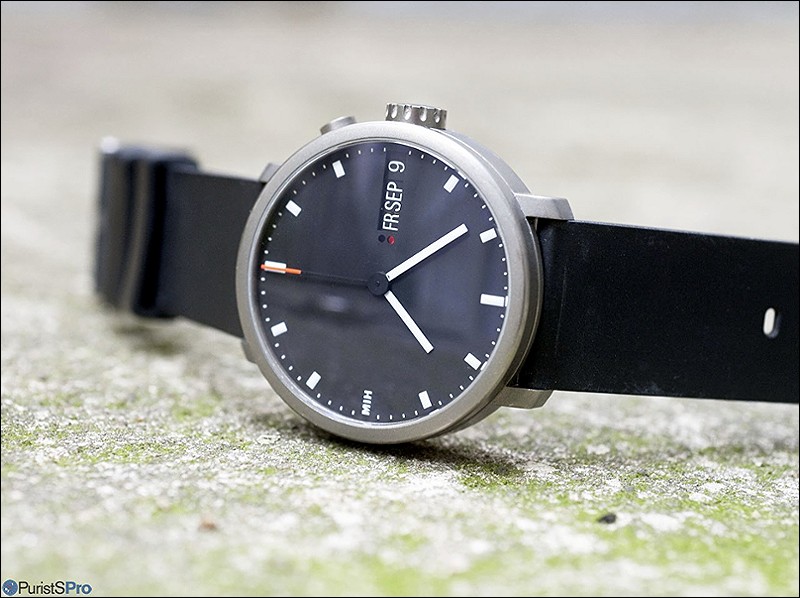
Incepted as a fundraiser for restauration works at the namesake
Musée International d'Horlogerie (MIH) in La Chaud-des-Fonds, the MIH watch stood out of the mass primarily thanks to its ingenious
annual calendar mechanism, composed of only
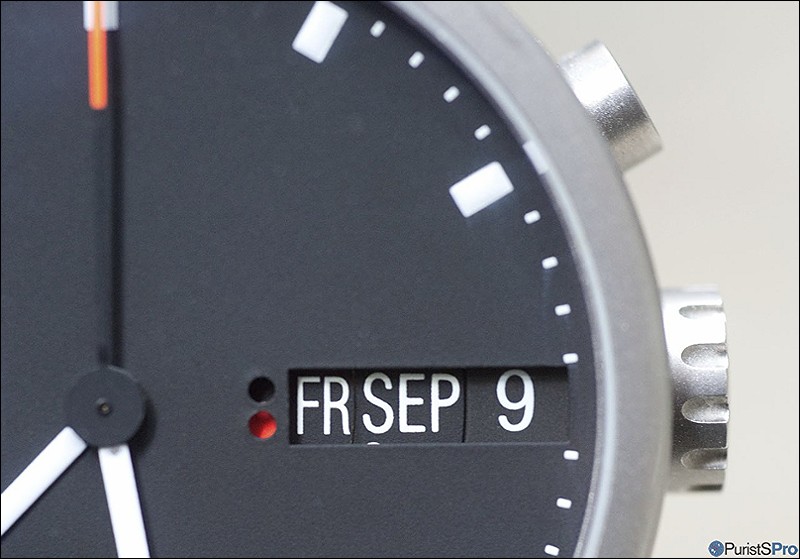
9 (additional) moving parts, thereby displaying the complete date indications (
weekday,
date and
month) in one single window.
The annual calendar is an archetypical brainchild of
Ludwig Oechslin and represents his philosphy of watchmaking in a very illustrative way. A philosophy that is based upon the notion of
'synthesis', which already implies, if one is observant enough, that 'complication' will be interpreted with 'complexity', and thus might likely yield unexpected outsome (I have had ample opportunity to study both 'complex' and 'complicated' situations on my metagenomics studies, so this was a welcome exercise...).
Beat Weinmann, in the meantime founder and CEO of
ochs und junior, but back then managing director of the Lucerne-based jeweller Embassy (who backed the project) and also coordinator for the MIH watch, said:
"At Embassy, we are Ulysse Nardin authorised agents and therefore familiar with Oechslin's complicated creations, and consequently expected something ultracomplicated as the MIH watch. We were completely wrong...". What a - aehem! - surprise when Dr. Oechslin proudly presented this prototype as the MIH watch:
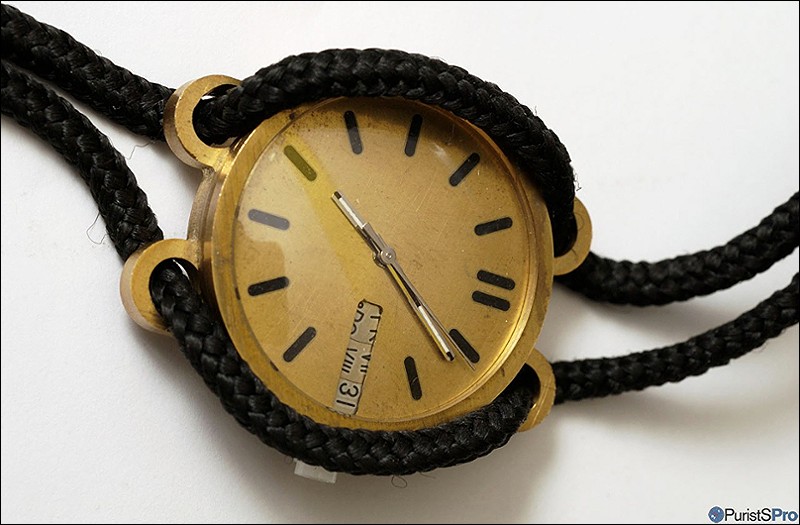
In a nutshell, the 'complication' with the MIH watch lies in the comprehensiveness and intensity of the thought-process which ultimately led to an amazingly simple construction:
- annual calender, that is a calender which automatically displays the correct month lengths, except for February each year, when it has to be corrected manually.
- the calender can be adjusted via crown, and not only in forward, but also backward direction, because Oechslin avoided the use of springs, but instead employed wheels.
- the watch displayed the date easily readable in one window, and not scattered over the dial like many complete, annual or perpetual calenders on the market.
- the mechanism consists of only 9 (nine!) moving parts!
The 'synthesis ' I referred to earlier is visible e.g. in the use of both the date as well as the hour gears of the base Valjoux 7750 movement to drive the calendar. The result is all of the above, an astonishingly simple, beautiful, readible and practical complication.
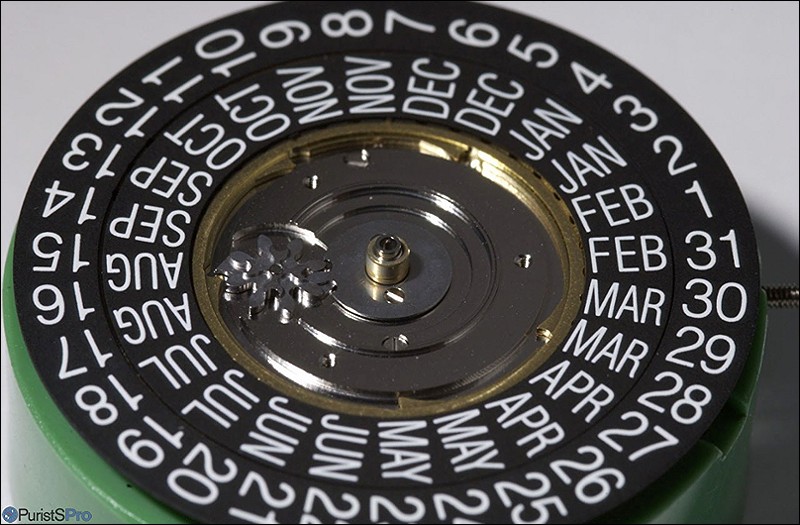
A complication which does not define itself by the number of its constituent parts, on the contrary, it is defined by the maximal reduction to achieve a given aim. So the complication lies more in the 'software', the brainworks needed, than in (more easily marketable) high number of parts. And as one could see, there a numerous added benefits to this as well.
Now one added complication was that such a reduced construction is not very straightforward to produce. Not only because of the tight tolerance and precision such a mechanism requires, but also because of Ludwig Oechslin's idiosyncratic way of construction: he does not consider tolerances which are inherent to any mechanical product, he creates 'in a perfect world'. Thus, it needed the expertise of master watchmaker
Paul Gerber to interpret and translate Ochslin's score into production-ready timepiece - very much like a conductor does with a Bach symphony.
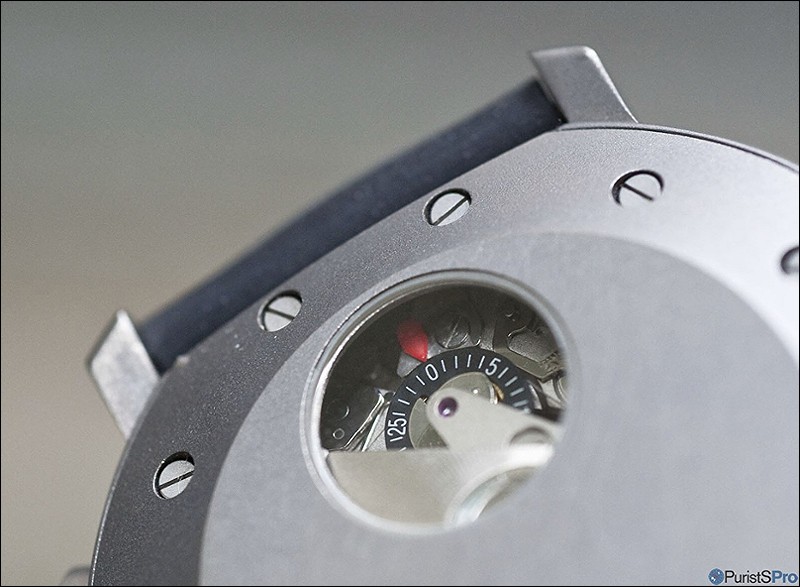
Paul Gerber not only 'industrialised' the MIH watch - he added his own personal mark with the inclusion of a porthole on the back, alllowing for using the base movement's chronograph function. Paul also modified the Valjoux for a monopusher operation (which is considerable more difficult with the Valjoux' cam/lever mechanism than with a traditional column wheel operated chronograph).
Responsible for an adequate packaing of the MIH watch was product designer
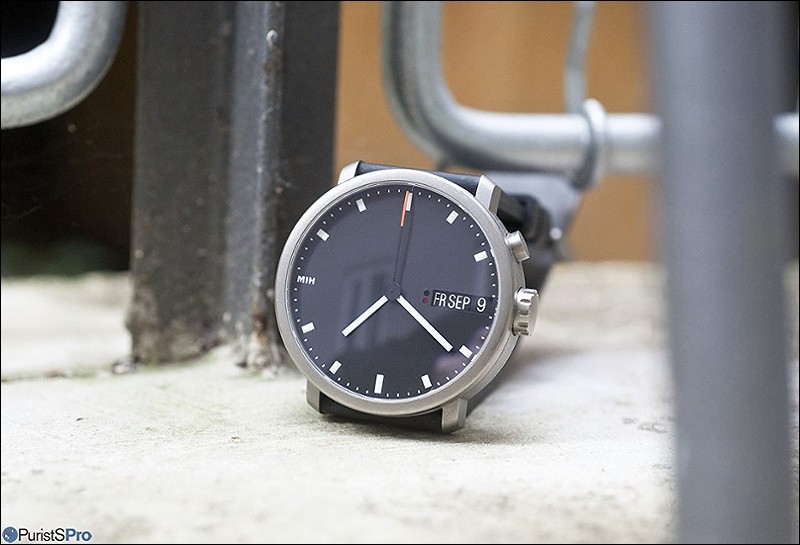
Christian Gafner, who created a modern, graphical design based upon the concept of explainable, transparent relations of all design elements to each other, with everything is centered around the axis of the hands, the central point of this watch:
- The curvature of the crown, the pusher, the outer edges of the lugs, and the curvature of the buckle. Even the width of the lugs corresponds to the width of the bezel;
- The dial has 12 indices (if one counts the "MIH" and 9 and the date window at 3 o'clock), representing the 12 hours of each half-day, also the crown, which features 12 kerfs, and the case-back, which is secured to the case by 12 screws;
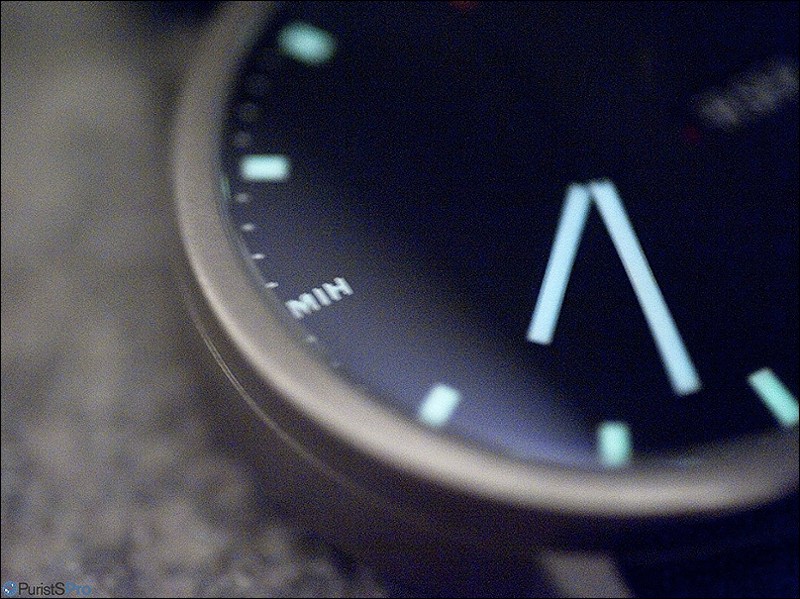
- The "MIH" has the exactly same dimension as the indices at 12 and 6 o'clock, demonstrating the equalty of each of the 12 hours. As already mentioned, the "MIH" is at 9 o'clock to hint to the 9 parts comprising the calender mechanism;
- Also, the strap, made of rubber, features 9 holes (which are angled to perfectly accept the pin) to indicate the same.
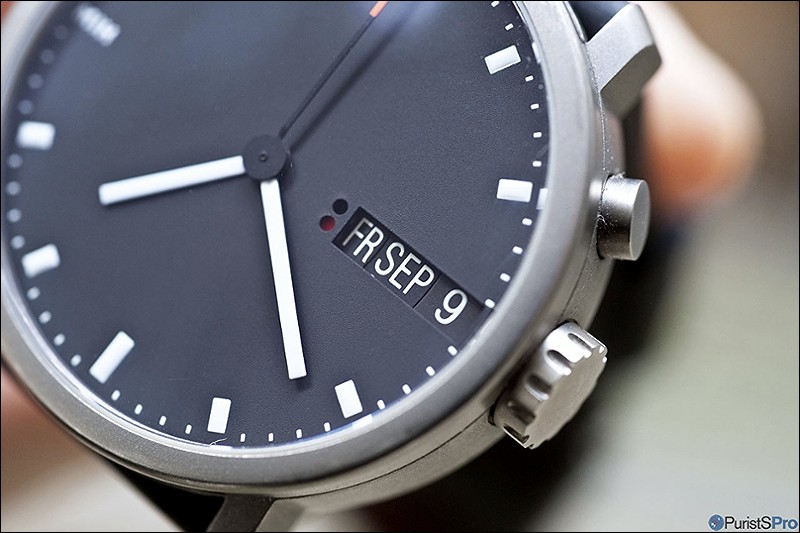
(perfectly harmonised details (see text above))
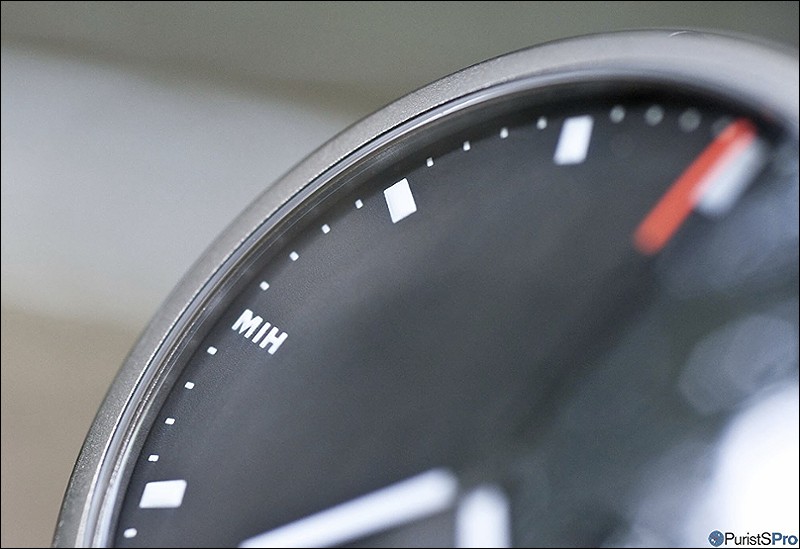 (the only logo (and sole text) - MIH disguised a 9 o'clock index)
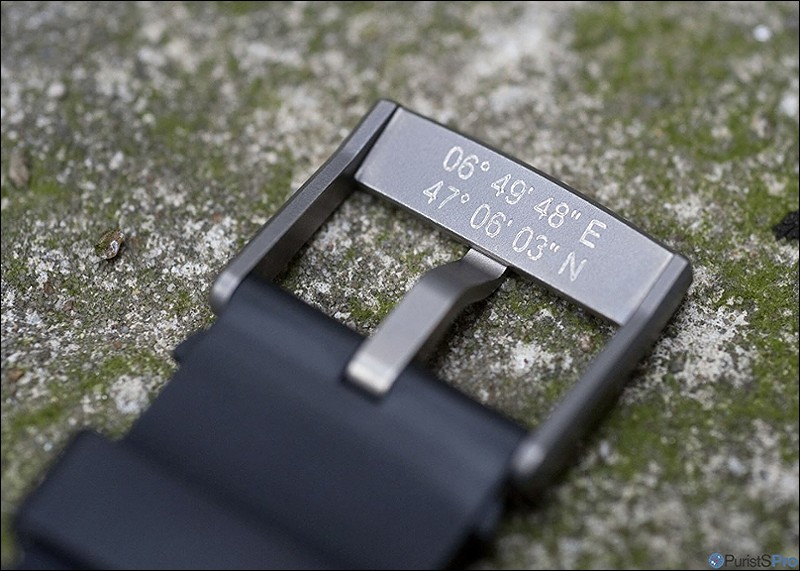 (the only indication of its origin - the geographic data of the MIH)
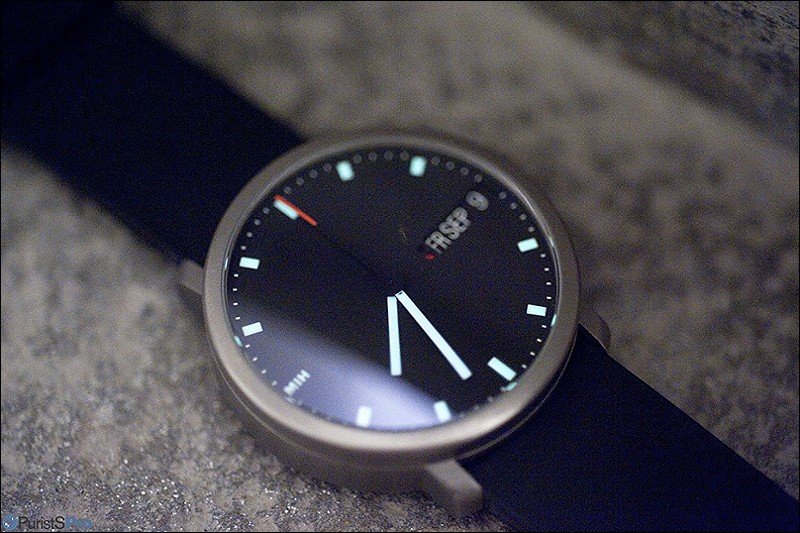 (straightforward luminosity of the MIH watch including the details)
So, as a result the MIH watch offers ample horological content and philosphical inspiration. It is a watch that helps us focus on the essentials, and start to create from there on. It is also a watch which could barely been created in the traditional watch industry, for many reasons. First, there are the technical challenges which such a watch inherently poses. Second, the entire design, technical as well its aesthetics, are pretty much outside the industry's mainstream. Third, there is an abundance of stories to tell about this watch, but their narrative do not bode well in a (marketing) world of 'the more, the better', of celebrity 'endorsements' an so on.
Totally in contrary to the exuberant embelishment of mainstream watchmaking the MIH watch came simply wrapped in the current day edition of the Swiss Newspaper
Neue Zürcher Zeitung (NZZ), a daily of international repute:
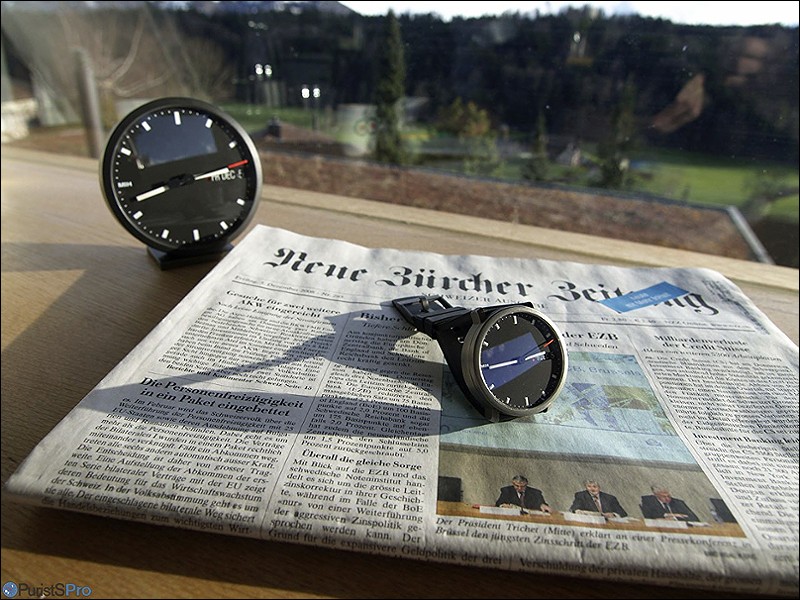 (MIH watch, a lone sibling and its packaging)
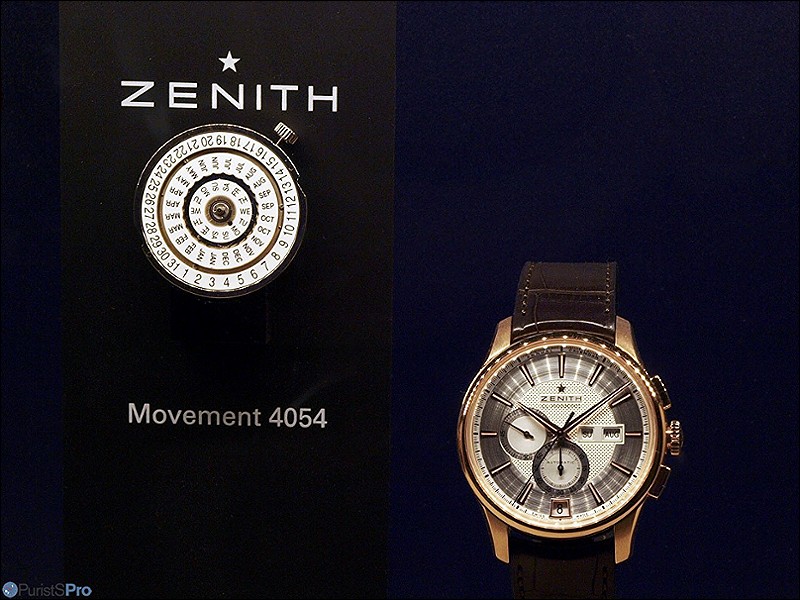
The MIH watch is not easy to communicate today, and this is maybe a critical stumbling block in corporate watchmaking. But ony brand tried it though, Zenith, who licensed the MIH annual calendar for use on its own El Primero watch - a notable exception and a commendable move, but one which also clearly showed that the industry ticks differently than the MIH team:
The MIH watch attracted people different from typical watch collectors -- architects, designers, people who would have never bought
any different watch. Keith Jarrett (!) is one owner...
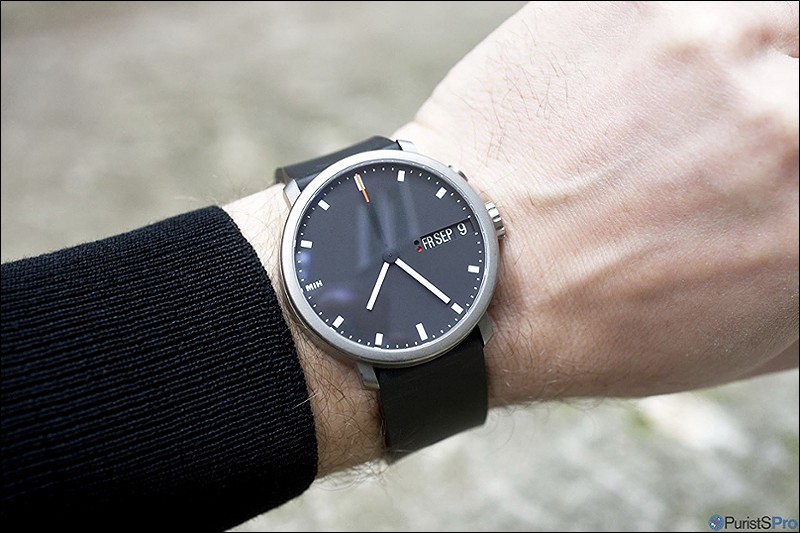
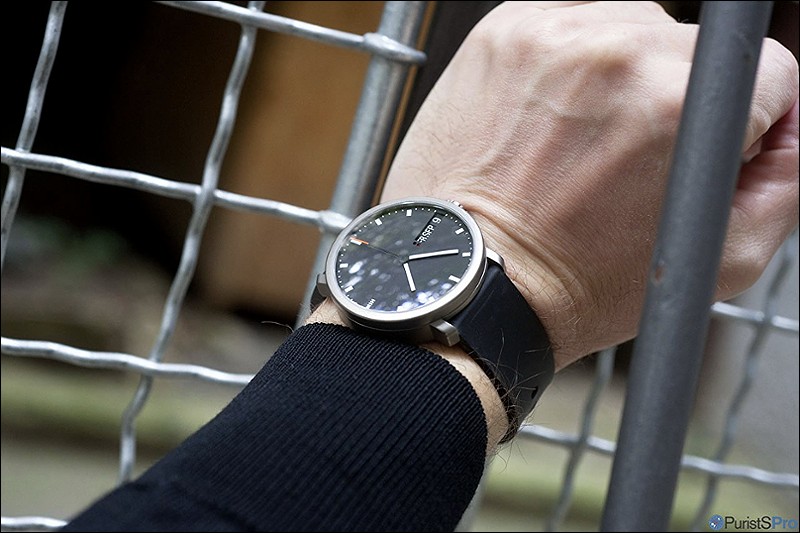
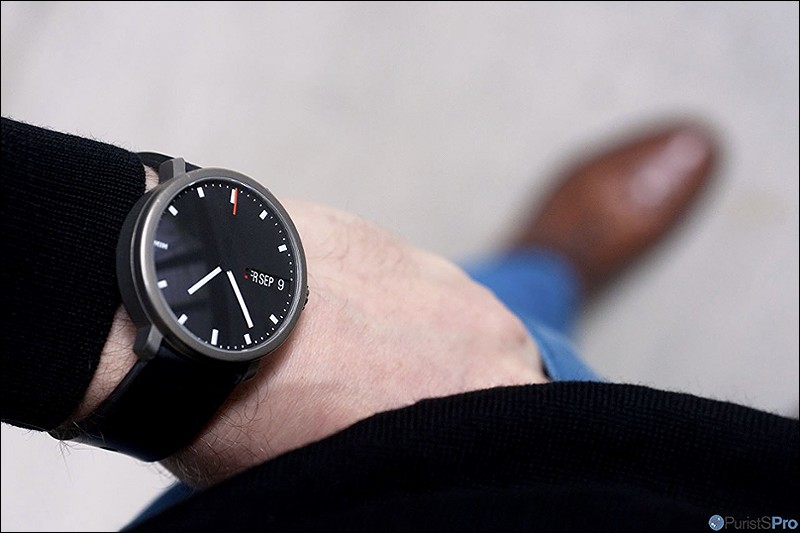
But its unique conception makes one of the most intricate charms of this piece. It did not come into reality based upon a business case study, it happened because a group of crazy enthusiasts (and a jeweller who believed in it, we should not forget this!) embarked upon a journey. With all of them having their personality shining through the watch's face. And the journey brought some unprecedent issues. One of them was the unexpected success of this watch. It sold many times more pieces than anticipated, clearly exposing the logistical limitations of the project. Furthermore, there were a few hitches with the construction, but those were ironed out.
There are a few stories about it:
- On my flight back from Zurich the weekend after its presentation, I was asked about this watch while I did not even take my seat: 'Really, is this the famous MIH watch'? I was astonished
- One report goes that a homes was looted by burglars who took everything valuable, but the MIH watch /(which lay on the table in good sight) there - obviously not considered being of value.
I wrote a bit further above:
"It is a watch that helps us focus on the essentials, and start to create from there on." Well, this is also true for (parts) of the 'dream team'.
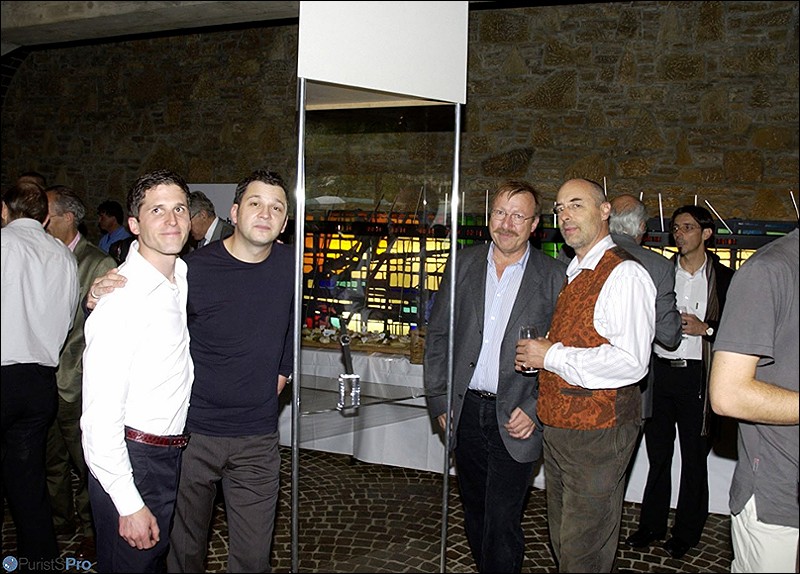
(from left: Beat Weinmann, Christian Gafner, Paul Gerber and Ludwig Oechslin, during the inaugural ceremony at the MIH, 9 September 2005)Beat Weinmann and
Ludwig Oechslin continued their journey together: they founded
ochs und junior, designed as an outlet for radically unfiltered ideas of Oechslin, this time not only in terms of construction, but also in terms of design, packaging, communication.
The two took an important lession from the MIH project: there is a niche for authentic watchmaking, thriving on values like simplicity, transparence and traceability. which can be totally off the tracks of
haute horlogerie common denominators: focus on the intellectual essentials, let the product speak of the process of its creation. Do not embellish, do not 'hide'.
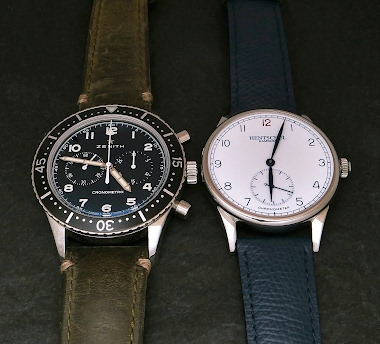
Their first product, the
Anno Cinquanta, is based upon the same annual calendar mechanism, now further simplified to utilise
only 3 moving parts (and sacrificing a bit of intuition in the process, but isn't intuition too often based upon habit?). I own both so here is a side-by-side shot:
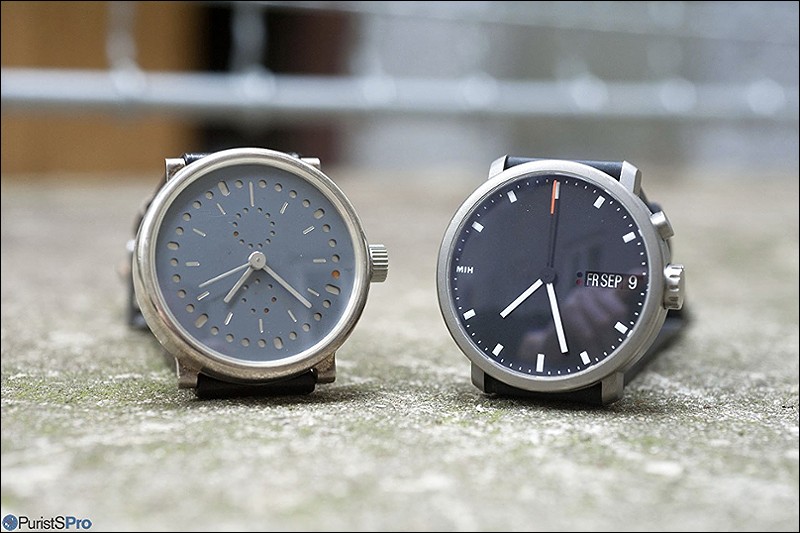
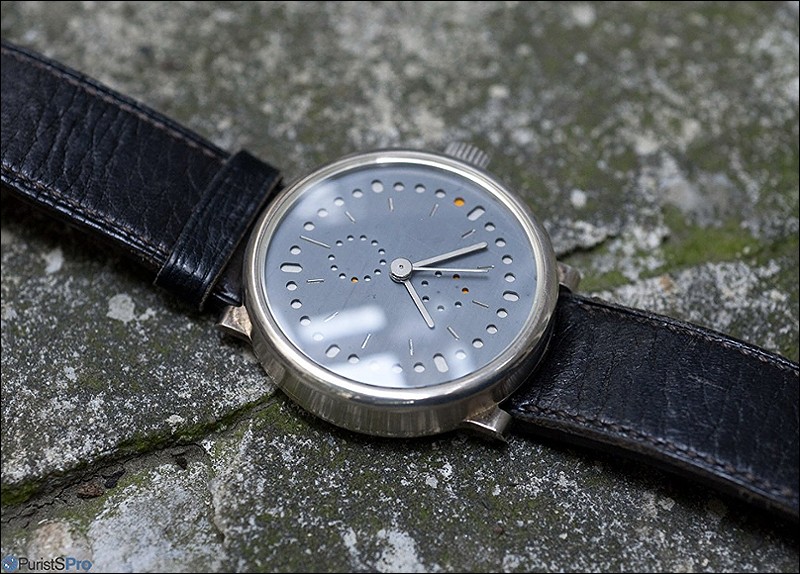
The case is sterling silver, the dial heat-aged white gold, its movement a manufactory Paul Gerber movement with 100h power reserve:
 Christian Gafner later on revived a German sports shoes brand, basically implementing the same principles MIH stood for with shoes. Paul Gerber continued his legend, and used the technical and industrial basis he expanded thanks to the MIH watch as well as the esperience gained to further his own creations - I will come back to his latest Model 41 (and a very special version of it, a 'unique' one, on top) a bit later.
While I agree that the MIH watch was not for everyone, I am immensely thankful for its existence and in particular for the intellectual teachings it gave me. Not only enriched it my horlogical knowledge and understanding, it also offered me the acquaintanceship of four outstanding personalities I now can call friends.
What are your thoughts on the MIH watch? Do you own one, did you contemplate one? Do you have
your story to share?
Thanks for reading and have a great week,
Magnus
This message has been edited by Ornatus-Mundi on 2015-09-29 00:06:54 This message has been edited by MTF on 2015-09-29 01:05:00