Masahiro Kikuno Mokumegane Dial Progress
Independents

Masahiro Kikuno Mokumegane Dial Progress

By KIH · Nov 27, 2013 · 8 replies
KIH
WPS member · Independents forum
8 replies5827 views32 photos
f 𝕏 in πŸ’¬ βœ‰ πŸ”—

KIH provides an exclusive progress report on Masahiro Kikuno's new project, focusing on his meticulous craftsmanship and the evolution of his "Mokumegane" dial. This article offers a rare glimpse into the independent watchmaker's atelier, showcasing the labor-intensive process behind his unique dials and the technical refinements of his movement prototypes. KIH's detailed account highlights Kikuno's dedication to traditional Japanese artistry and horological precision.
This report is sort of the progress report of his new project.  Please see: ahci.watchprosite.com /
He continues to work on to improve further and complete, and he showed me the second prototype and his old creation he made when he was still at the watchmaking school.

1. Mokumegane (http://en.wikipedia.org/wiki/Mokume-gane )
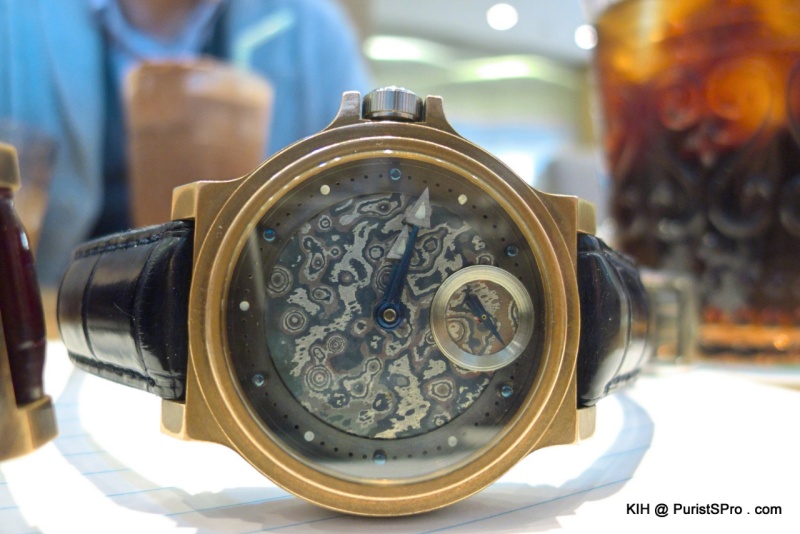
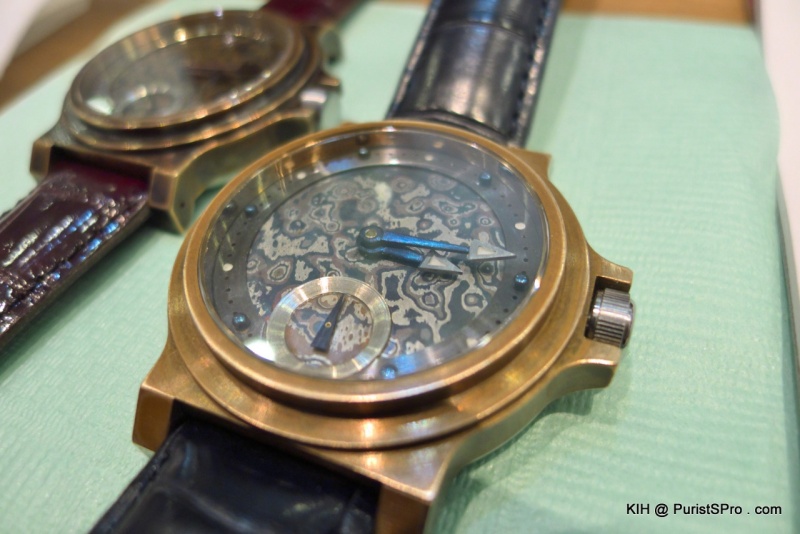
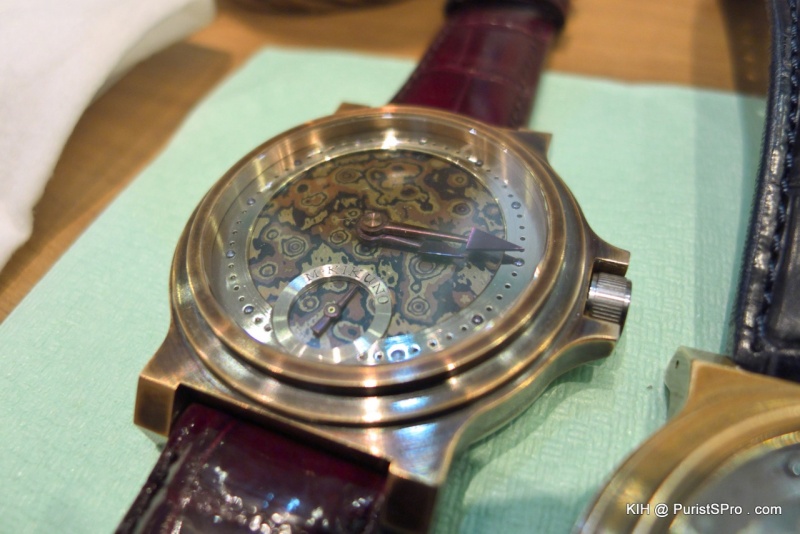
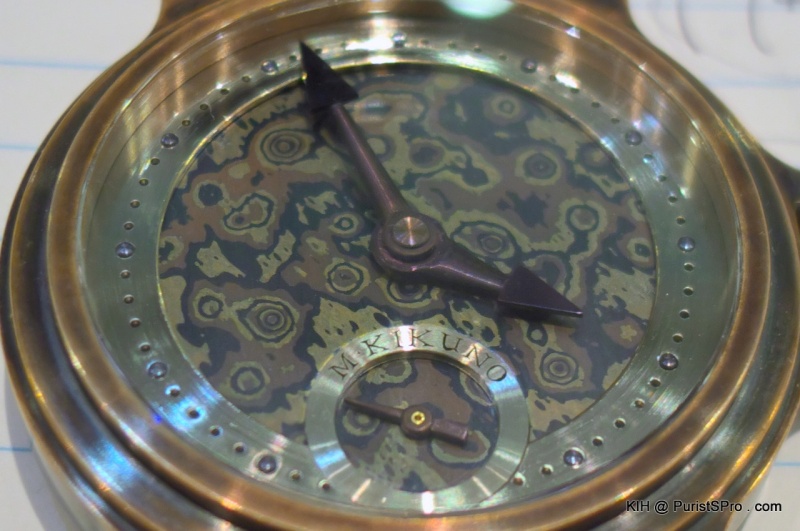
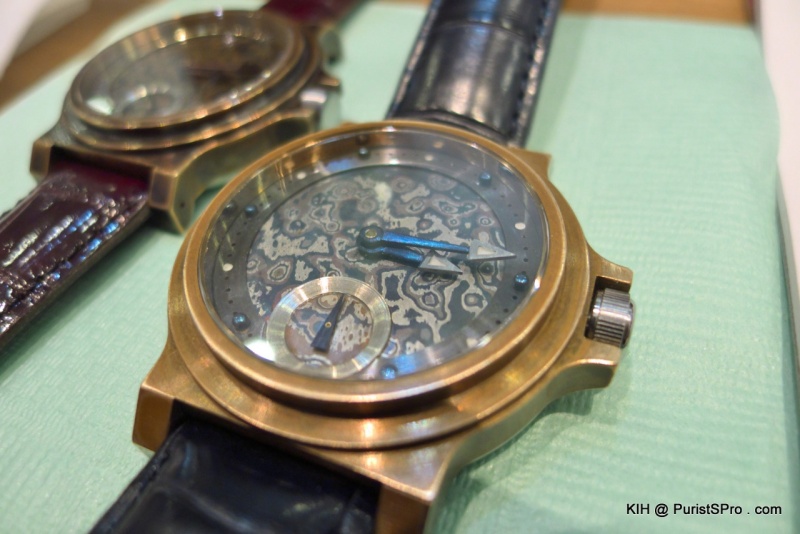
I was shown the actual process to make "Mokumegane" dial - it takes about a week to complete....  Wow....

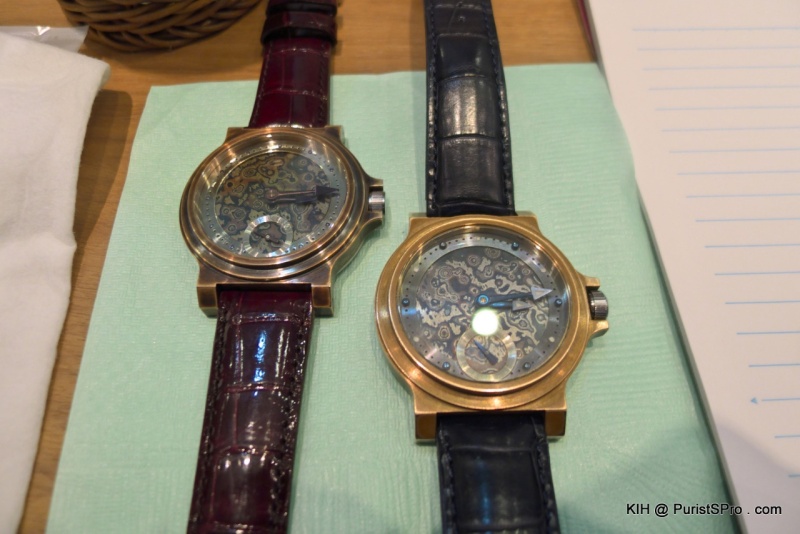
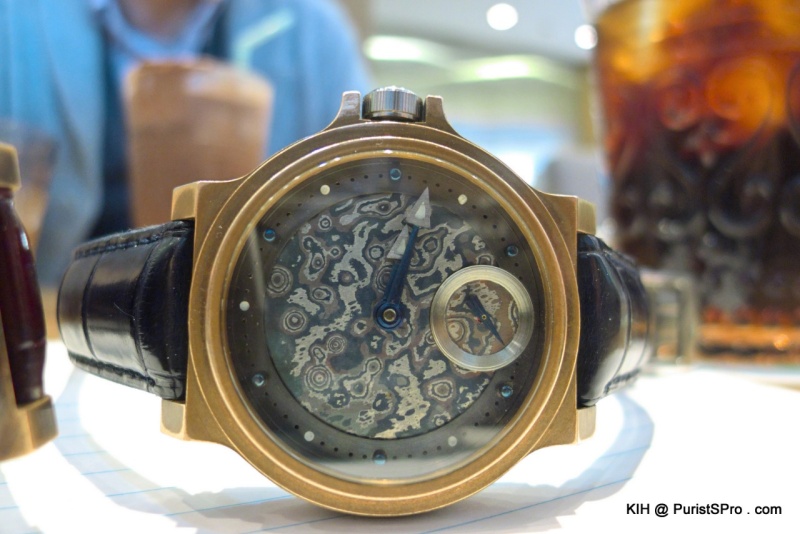
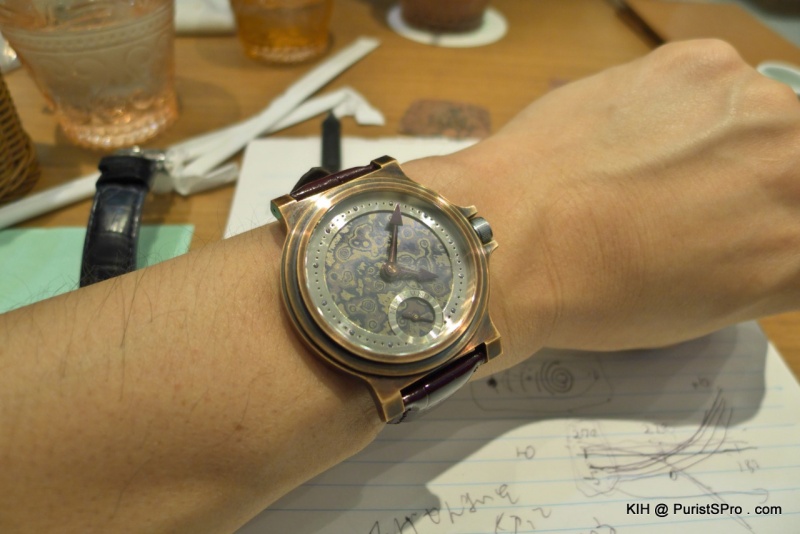
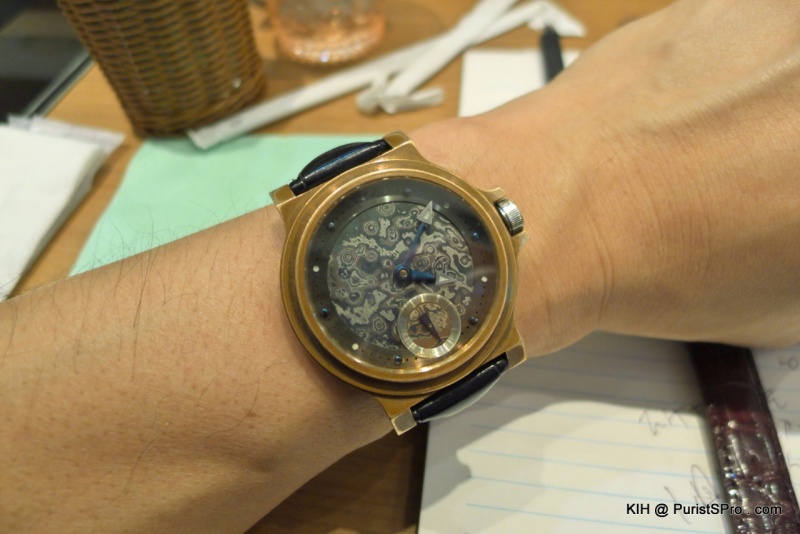
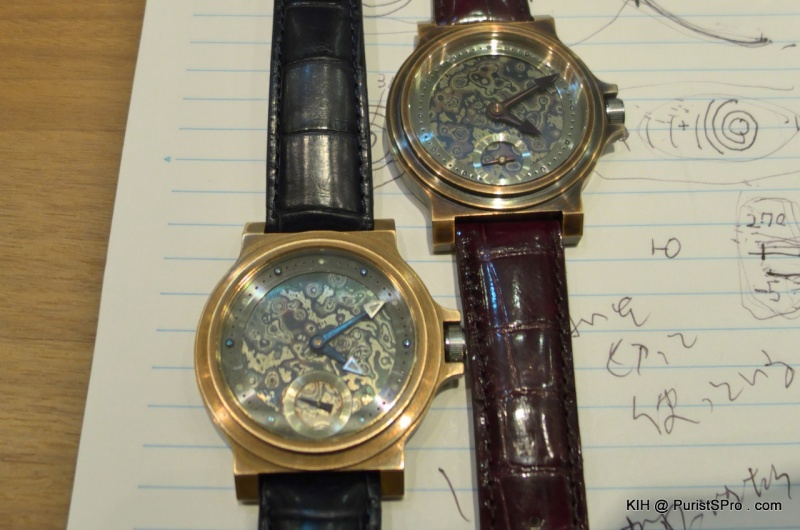
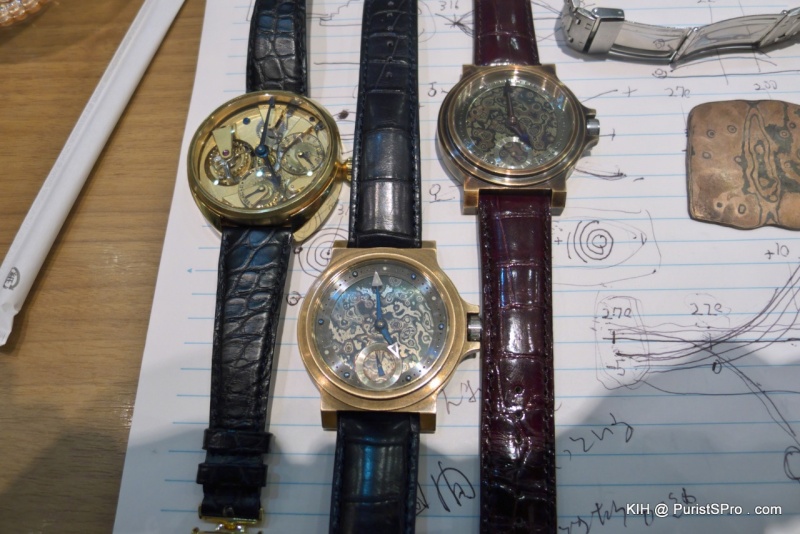
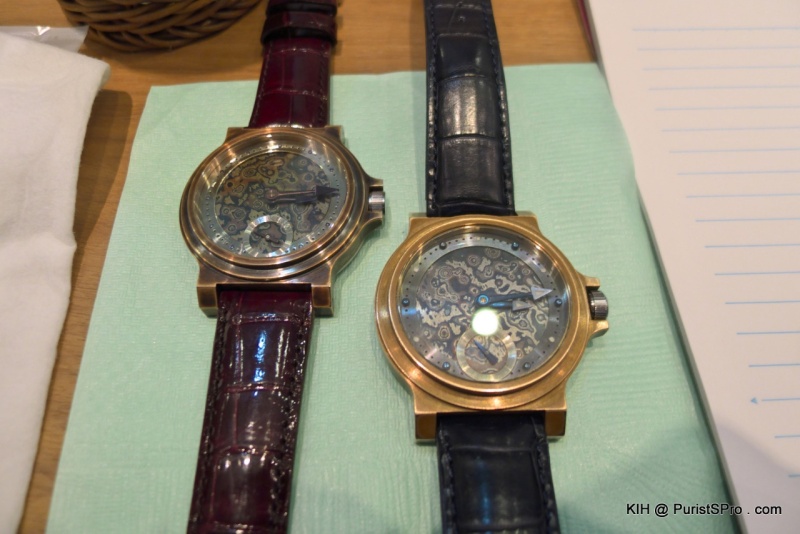
The right one was the prototype I saw the last time.


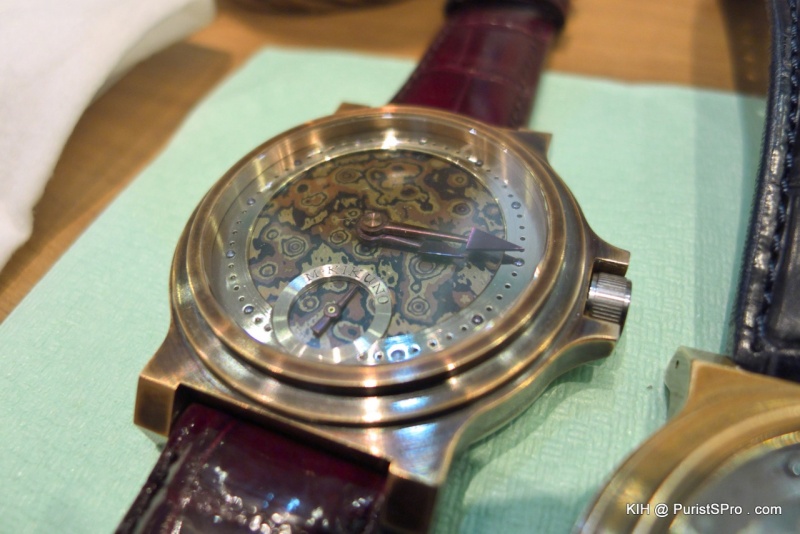
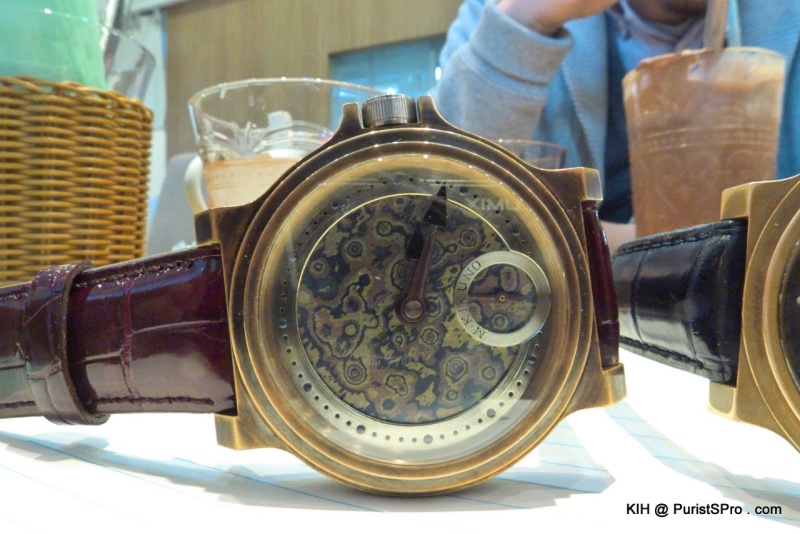
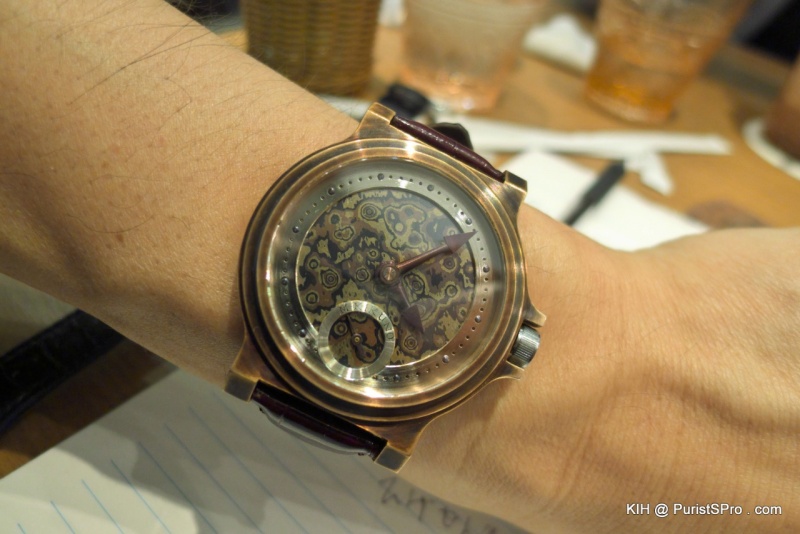
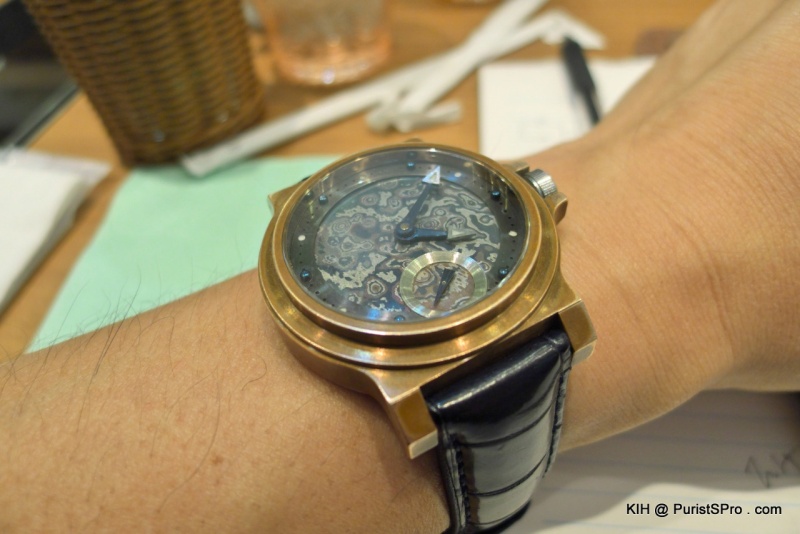
The second prototype.  A bit reddish color overall by adding a bit more copper in the dial composition.  More oxidized case.


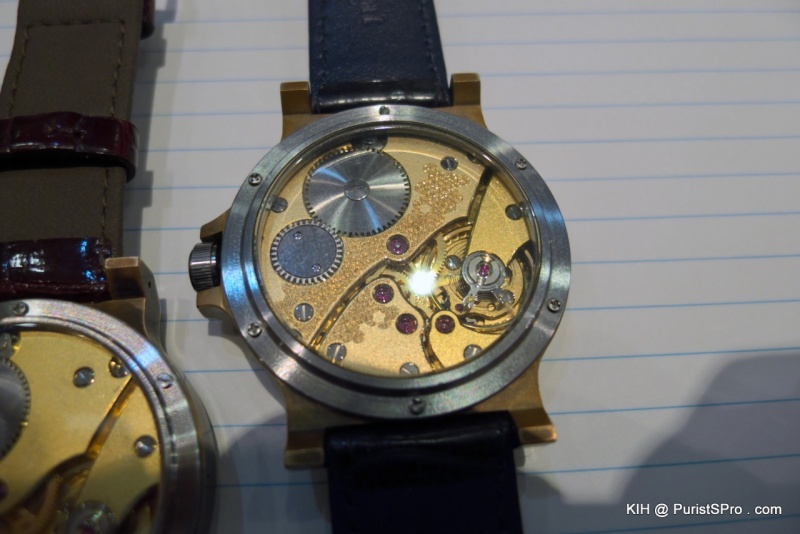
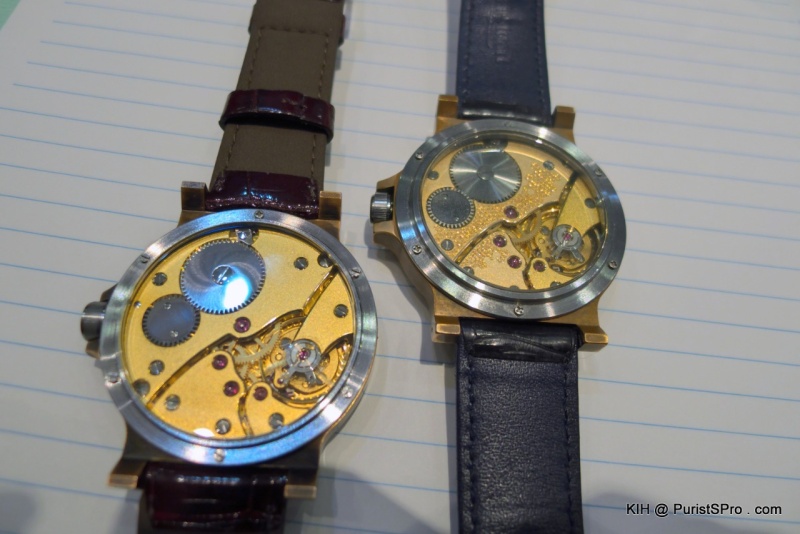
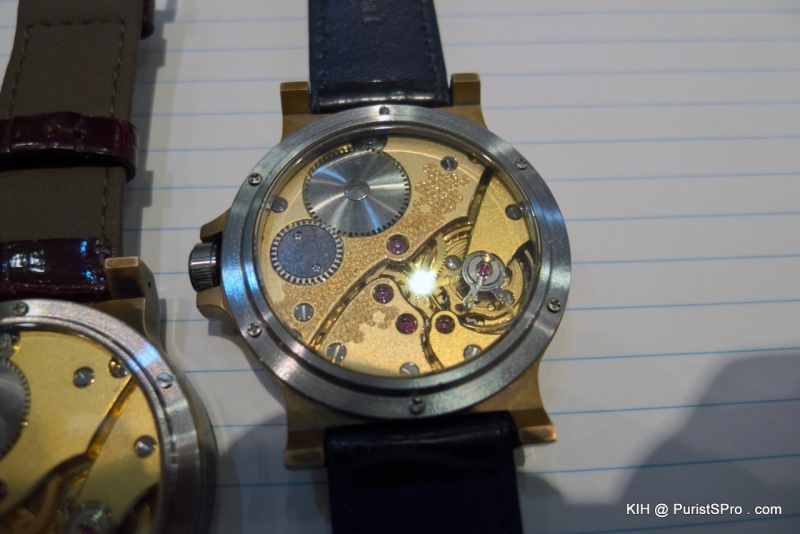
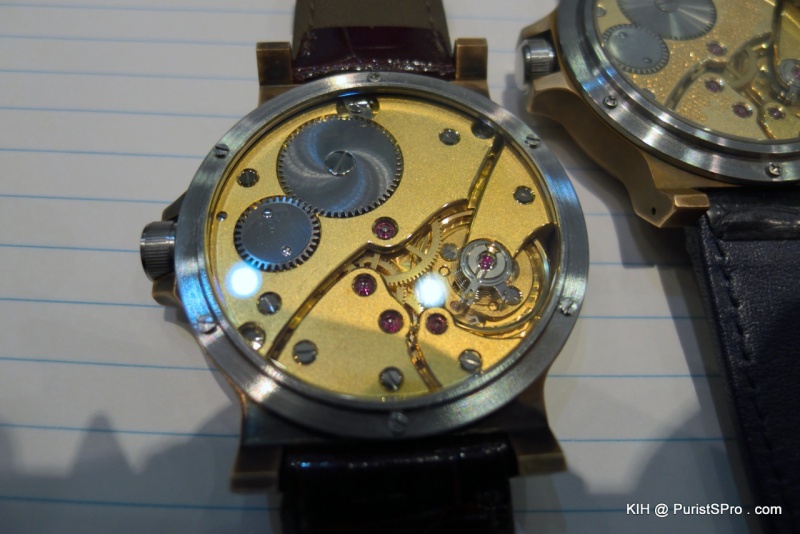
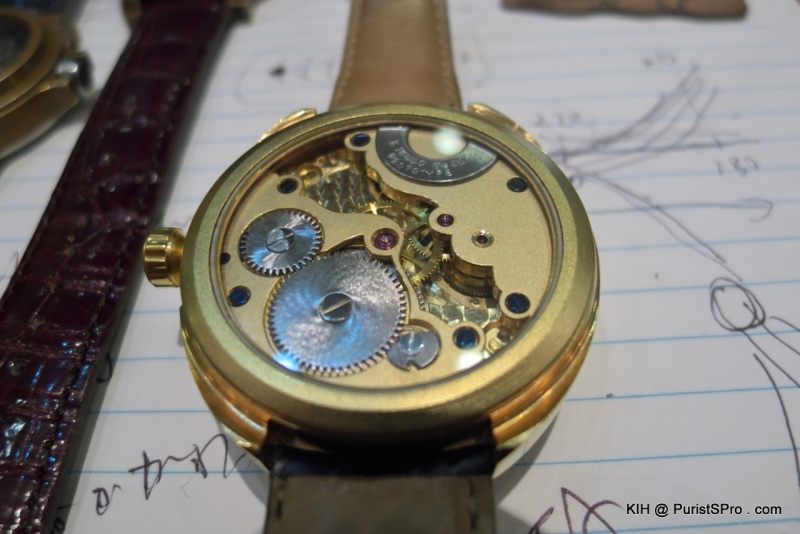
ETA6498 based - sure, he wants to make his own movement on the next one, but 6498 is robust enough and he made some modification.
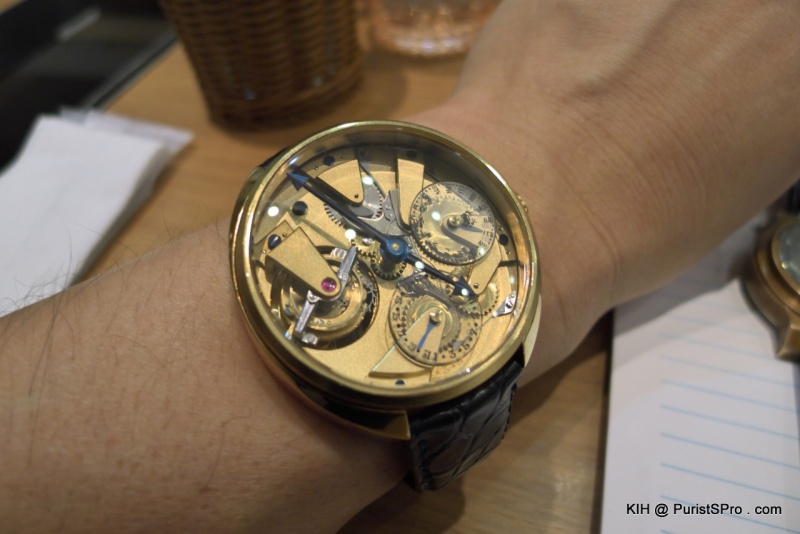


The first prototype is just plain hairspring.


The second prototype has different finish pattern on the barrel gear, and a counterweight has been attached to the hairspring to eliminate the position difference - the other movement prototype at his atelier is now showing 3 sec deviation per day at ANY position.  The theory, logic and implementation are all classified - I heard it, but sorry, I can't disclose.


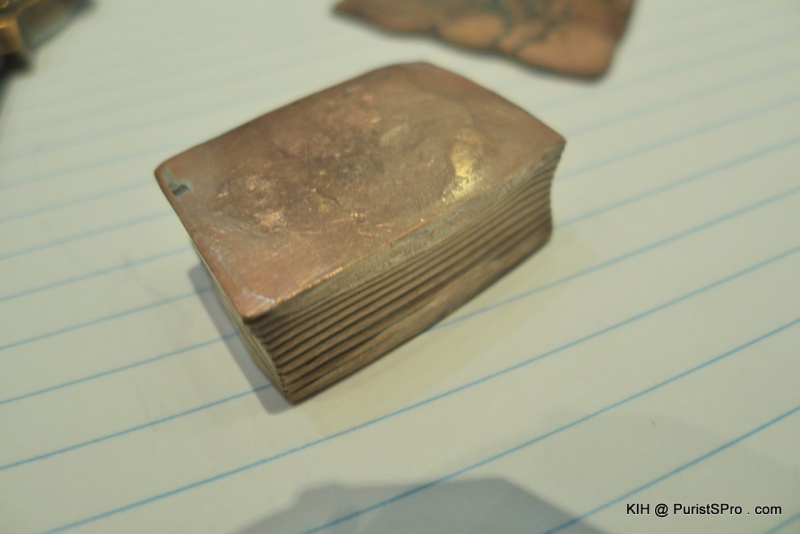
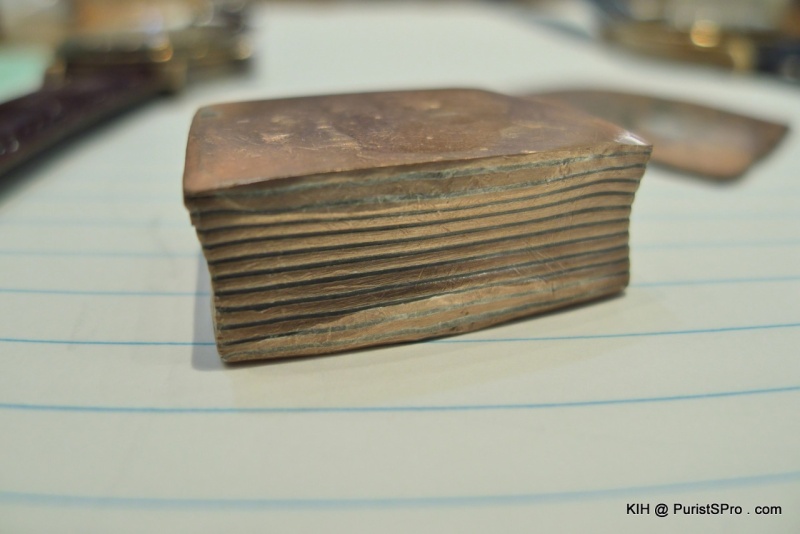
Now THIS is the "Mokumegane" dial BEFORE.  (well, actually, after several times hammed)


As you can see, in this case, 1mm copper plate and 0.5mm other alloy plate are heated and glued together - total 22 metal sheet.  The original size was 2cm x 4xm.  After several time hammering.


This is almost a week of hammering (all manual, his own hand hammered) the above thick metal sheets.


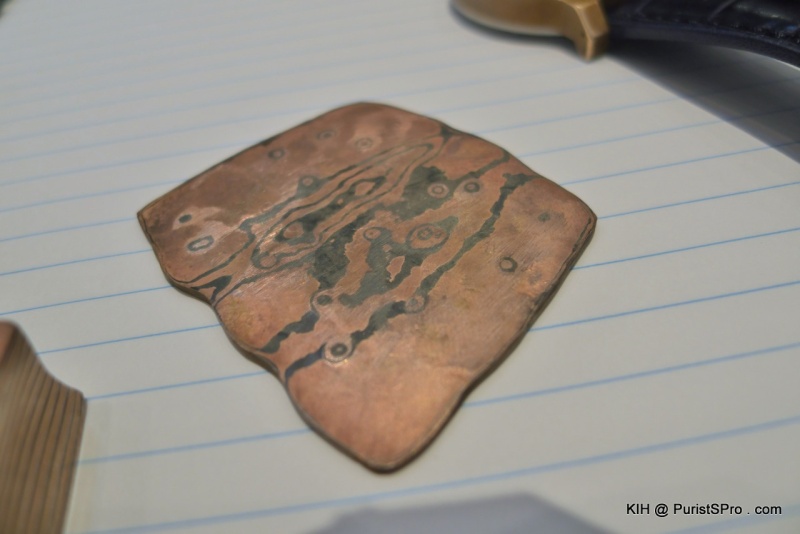
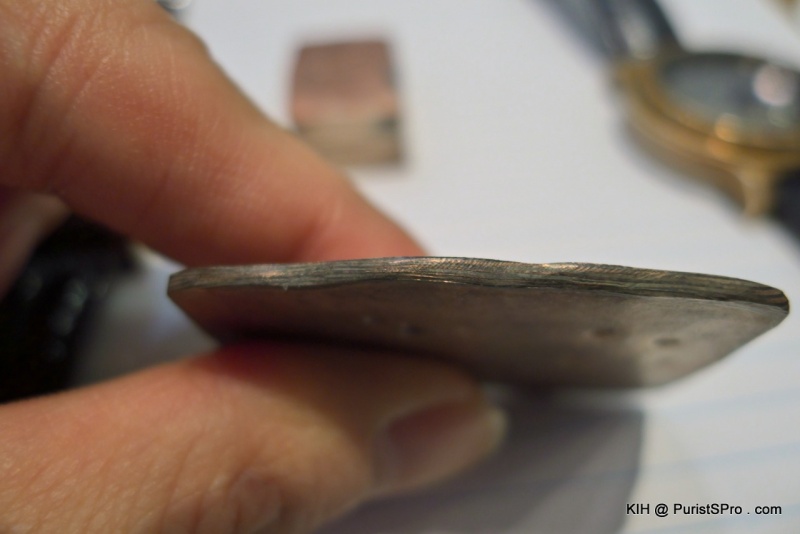
This is about 1.5mm and the final thickness will be 0.8mm.  Several more hammering to go.


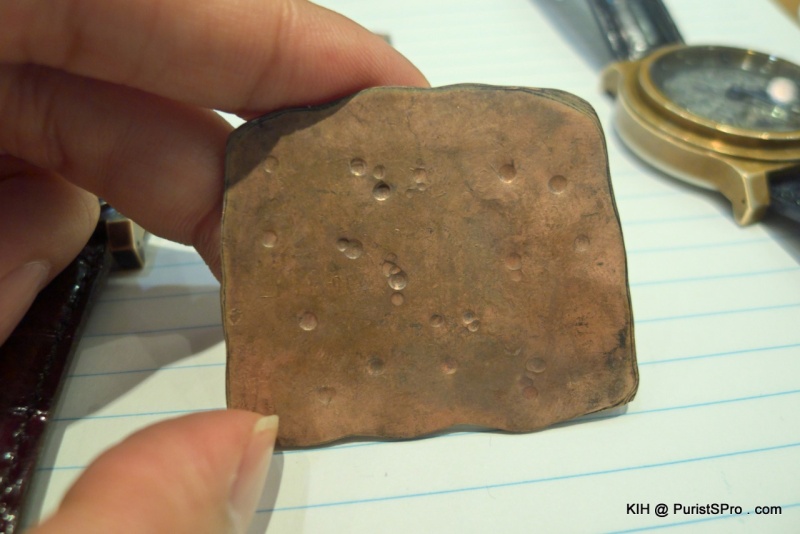
He does not actually punch the holes, but hammer with sharp side of the hammer from the back and polish the dial side to smooth, thus make such a beautiful pattern.  He continues the process for a few more days.


From 2cm x 4cm 22-24 sheets, he can make only enough for 2 dials after one week of hard hammering with his own hand - he now sort of regrets choosing the method as it takes more time than he expected and not sure how to make many more of this model once it is ready to be sold.....


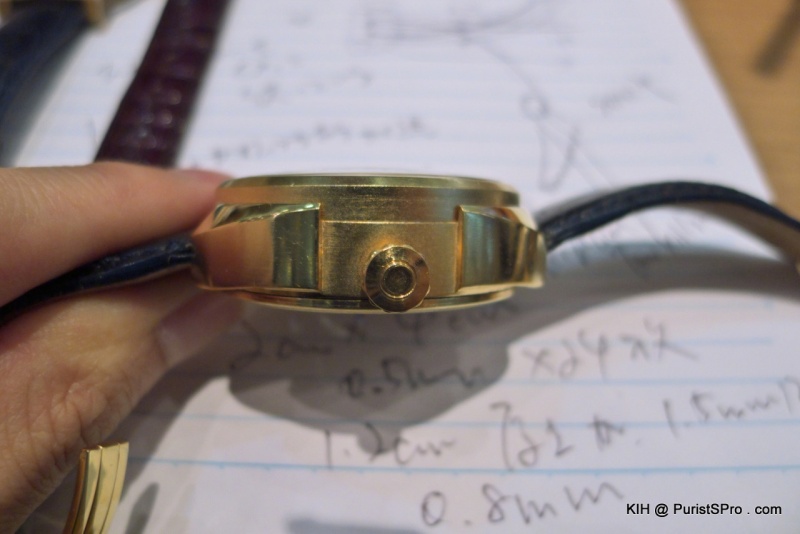
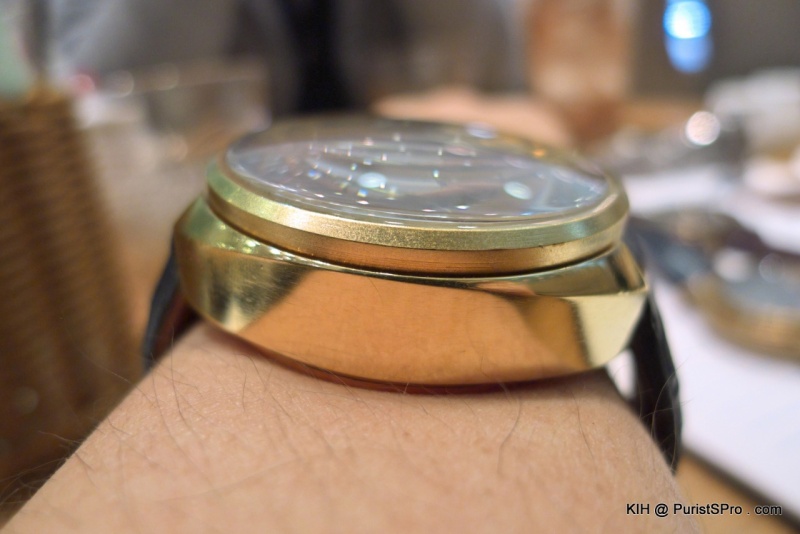
Notice more oxidized case (bronze).


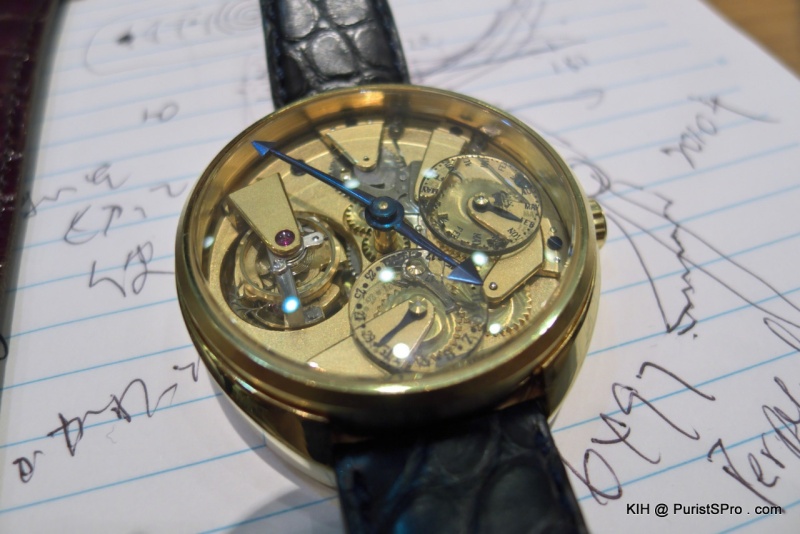
2. And his very earlier model which he made while he was still at the watchmaking school.


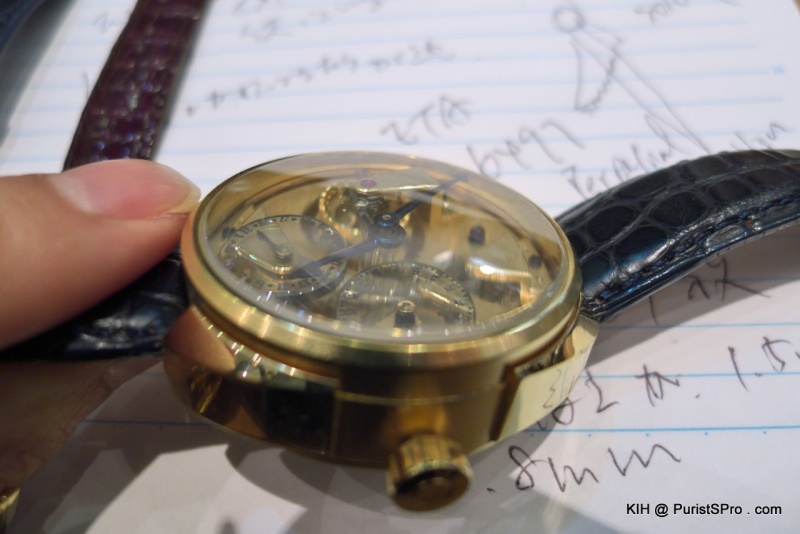
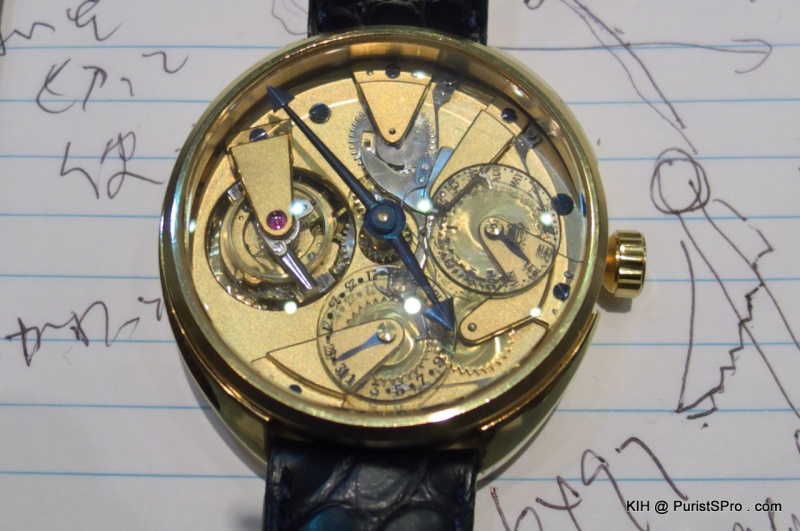
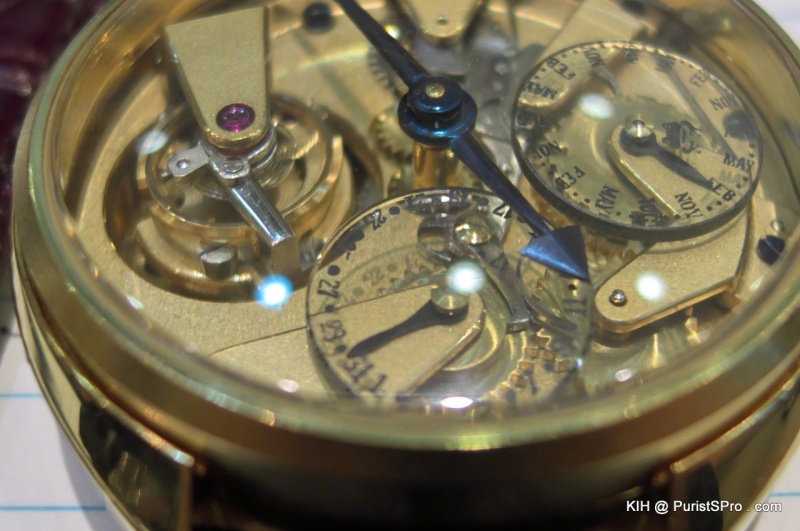
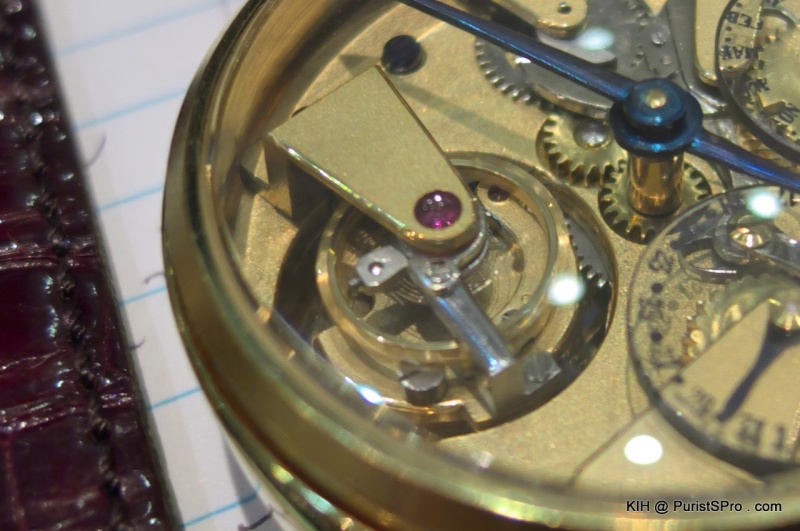
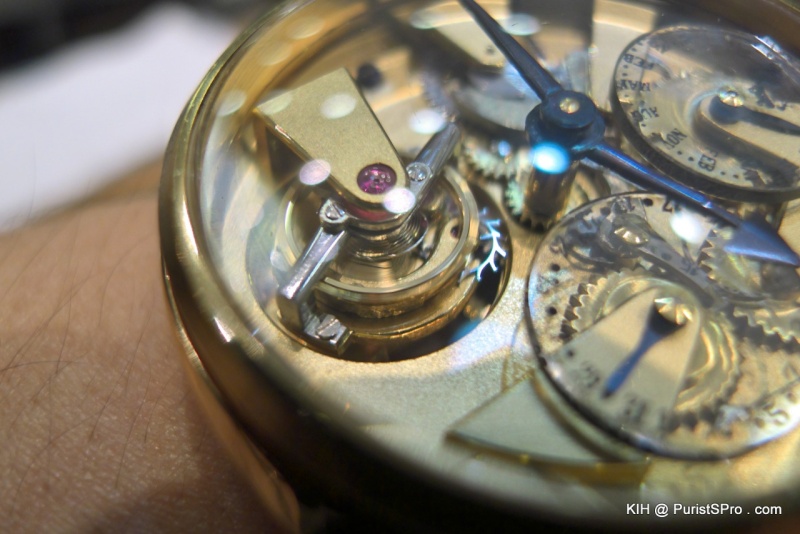
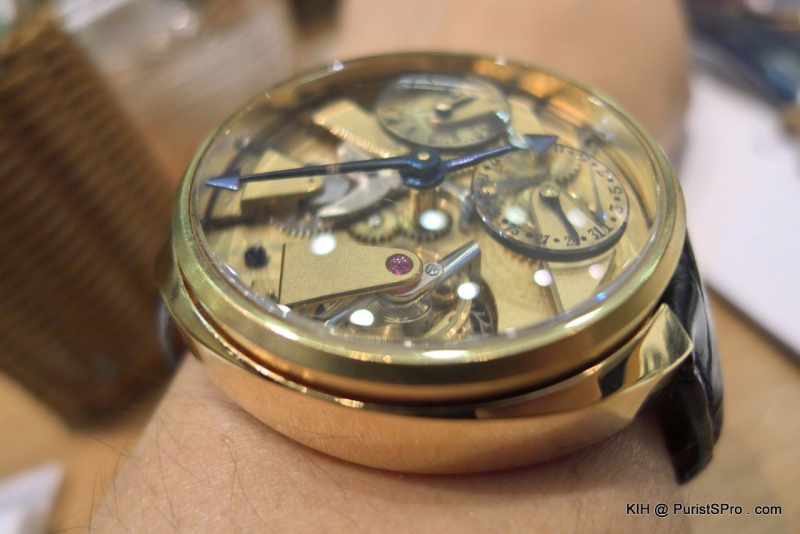
Perpetual calendar Tourbillon


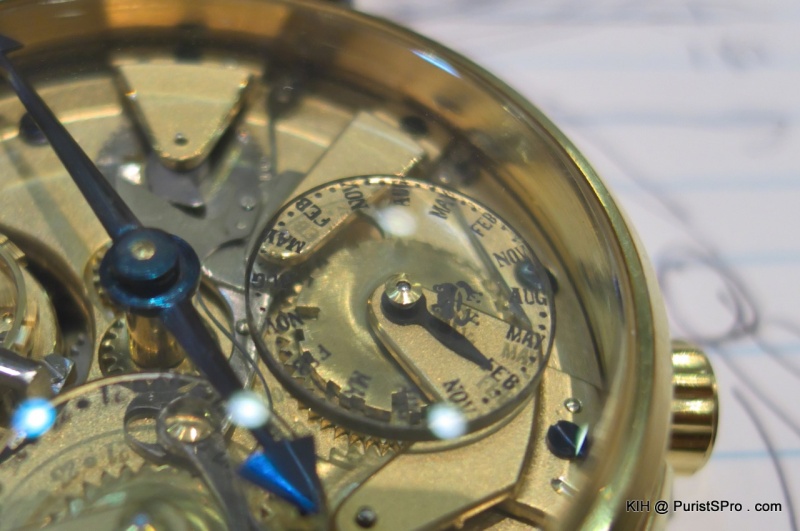
48 months sub dial.


Date dial


Several month after he made this, Breguet announced "La Tradition" and Masahiro was so surprised smile


He was first thinking of making a flying tourbillon, but changed his mind to make normal tourbillon.


These watches will be featured in NHK (Japan's National Broadcaster) program about watchmaking early next year.


Thank you Kikuno-san.

Please keep up your good work.  Looking forward to the complete of this new model and your next project!

Best,
Ken
This message has been edited by KIH on 2013-11-27 19:10:32

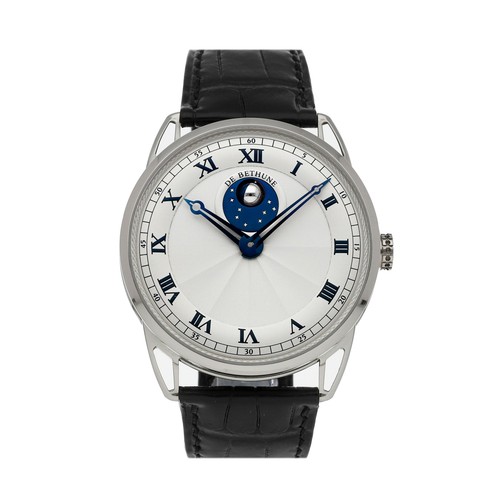
About the De Bethune DB25 Ref. DB25

De Bethune DB25 Reference DB25

The DB25 represents De Bethune's entry in the 44.5mm manual-wind category, distinguished by its silver dial configuration within the DB25 series. This reference launched in 2006 and continues the brand's approach to contemporary haute horlogerie complications.

The 44.5mm case is crafted from 18k white gold with a fixed bezel and sapphire crystal. Water resistance extends to 30 meters. The manual-winding caliber DB2105 movement provides a substantial 120-hour power reserve. The watch features a leather strap attachment.

This reference appeals to collectors seeking De Bethune's technical approach to timekeeping in a precious metal case. The extended power reserve and manual-wind operation position it for enthusiasts who appreciate hands-on interaction with their timepieces. The 44.5mm sizing places it in contemporary proportions within the independent watchmaking segment.

Specifications

Caliber
DB2105
Case
18k White Gold
Diameter
44.5 mm
Dial
Silver
Water Resist.
30m
Crystal
Sapphire

Key Points from the Discussion

Advertisement
The Discussion
TA
takashi78
Nov 27, 2013

I was wondering, is it another type of broze he used for the 1st version that it did not oxidize much? When i was holding it few months back i was wondering why it still looks so "new". My bronze watch oxidized waaaay sooner. Very much looking forward to see his final product when its all done. So the 6497 is the final decision for the movement with maybe more modifications?

KI
KIH
Nov 28, 2013

.... maybe have something to do with the surface treatment? Yes, he settled on 6497 with his own modifications (bridges, counterweight on the hairspring to eliminate position difference). Ken

OP
Ophiuchus
Nov 28, 2013

Many independents have started by modifying existing calibers, many of those being 6497 or 6498. It's a nice large, robust, simple caliber that's a good experimentation platform. I like that he hand folds the mokume gane, and only uses a hammer to form the pattern. That's the original Japanese method, I believe, not drilling holes in it, but peening it. It would have been done that way by smiths for sword fittings and such. The 3 second delta is very nice, but not unheard of. A very good adjuste

WH
Whirling
Nov 28, 2013

What I love about these watches is that they represent a hand-made craft that doesn't try to be anybody else's work. The aesthetic is personal to Mr. Kikuno. The labor-intensive process of creating the dials is one that no businessman would ever choose, but artists have compulsions sometimes. Among the many fine details, I love the robustness and three-dimensionality of the hands. The hands on watches draw my eye immediately, as I feel they're supposed to, so it is crucial that they not be an af

Advertisement

Continue the conversation

This thread is active on the Independents forum with 8 replies. Share your knowledge with fellow collectors.

Join the Discussion →