Independents
KIH provides an exclusive interview with Masahiro Kikuno, an AHCI candidate, offering a rare glimpse into his workshop and philosophy. This article introduces readers to a young, mature watchmaker from Japan, detailing his journey from the Japan Self-Defense Forces to the intricate world of independent horology.


Interview with Masahiro Kikuno - AHCI
Candidate
I had an opportunity to meet him and visit
his workshop (he had never invited anyone there). We spent
hours and hours talking about his history and passion, as well as his
watches and philosophy. The following interview is just a part
of the conversation.
To sum up, as an
AHCI candidate, although he is still 29 years old, he sounded so matured
and very solid. I just can't help hoping a big success for
his
future.
=======================================================
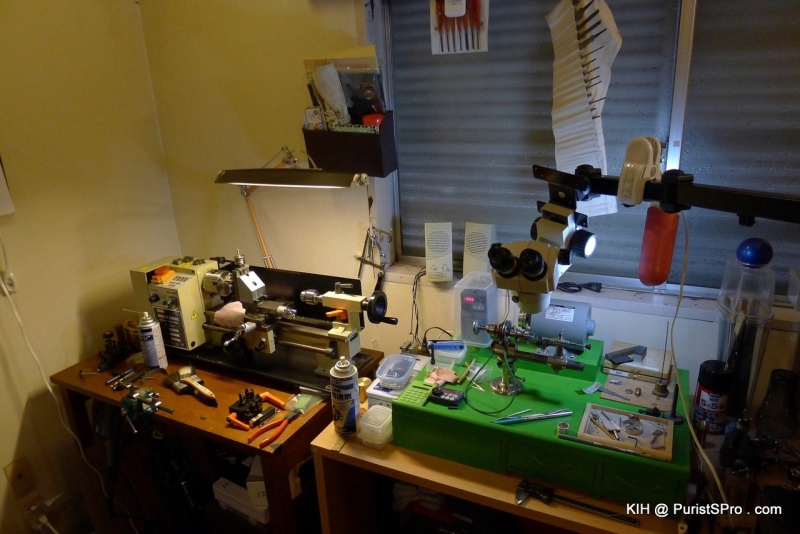
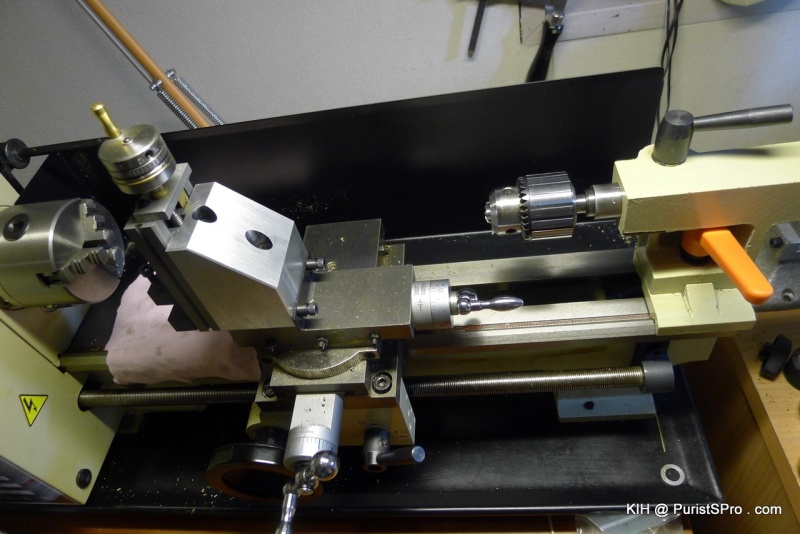
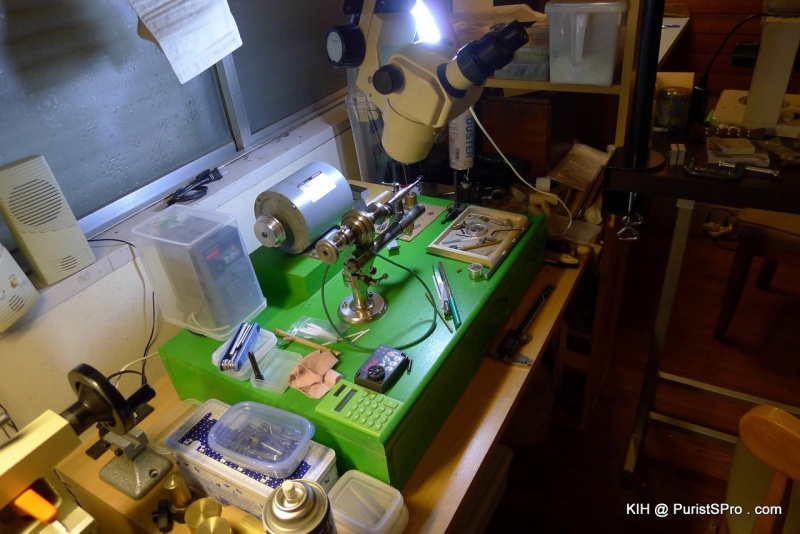
His
Atelier (World Premier  )
)
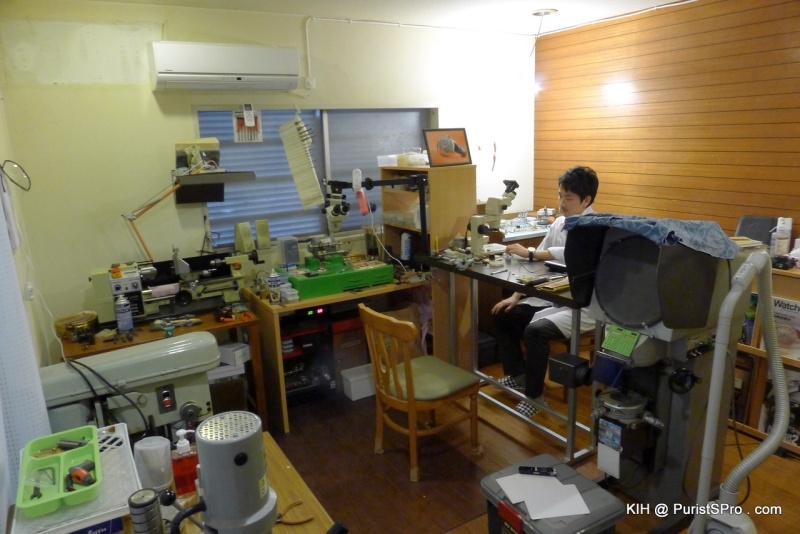
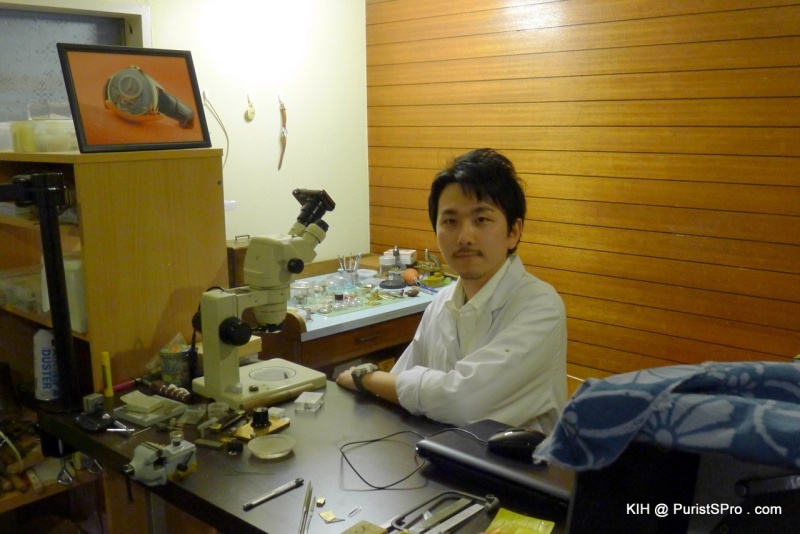
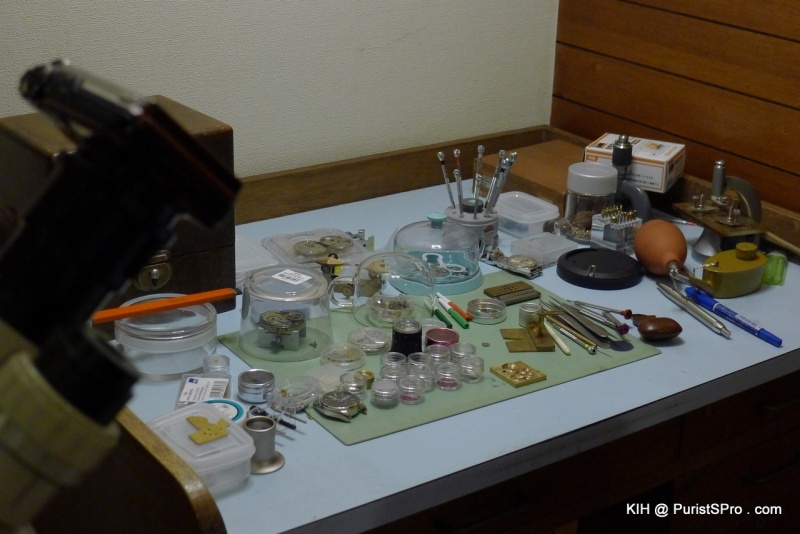
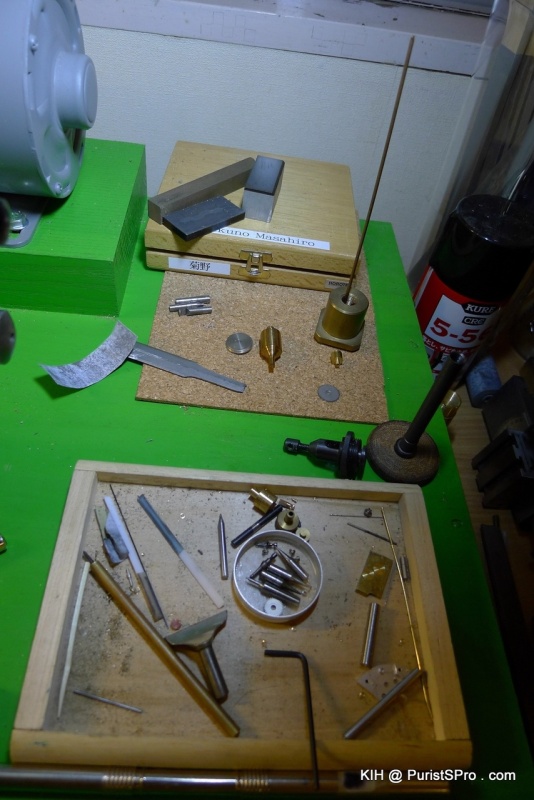
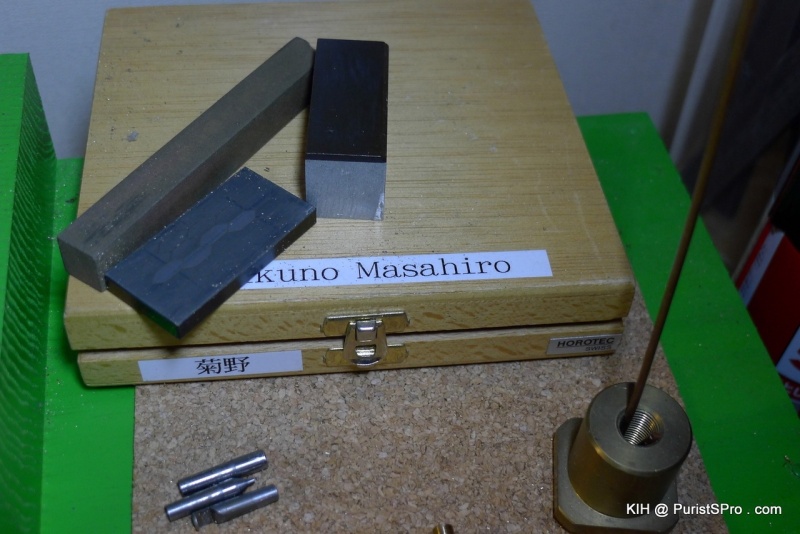
His
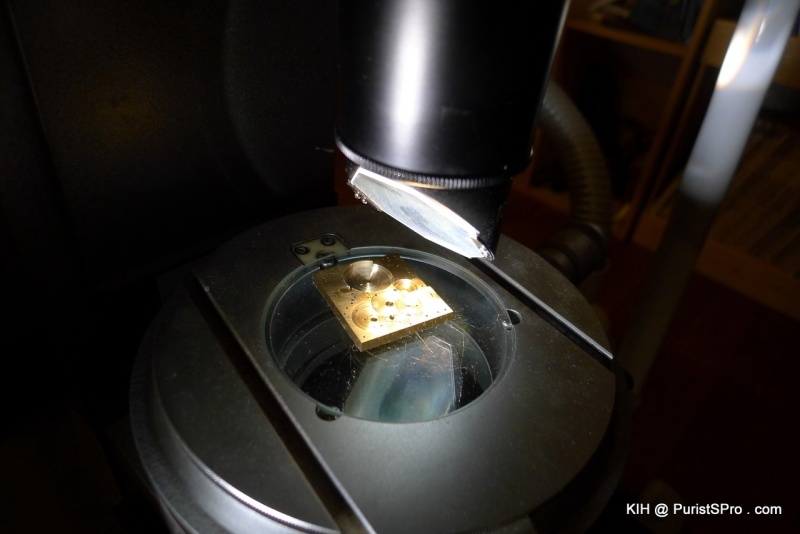
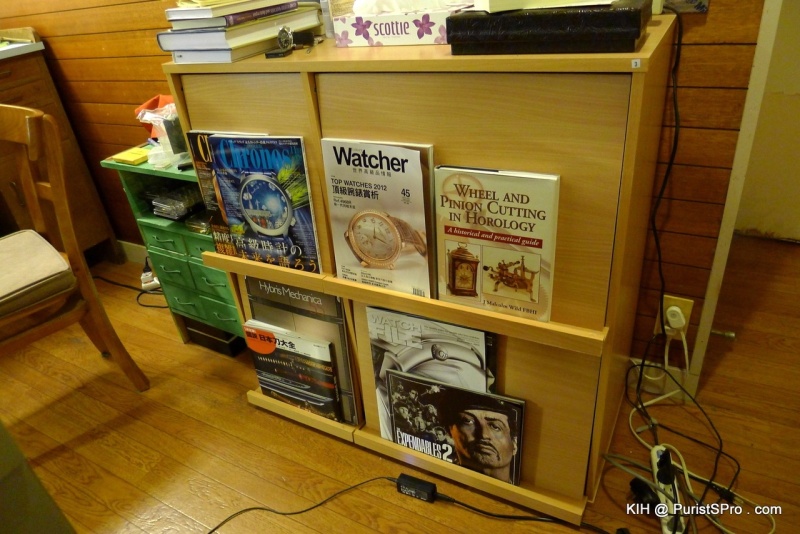
tools for "hand made" parts.
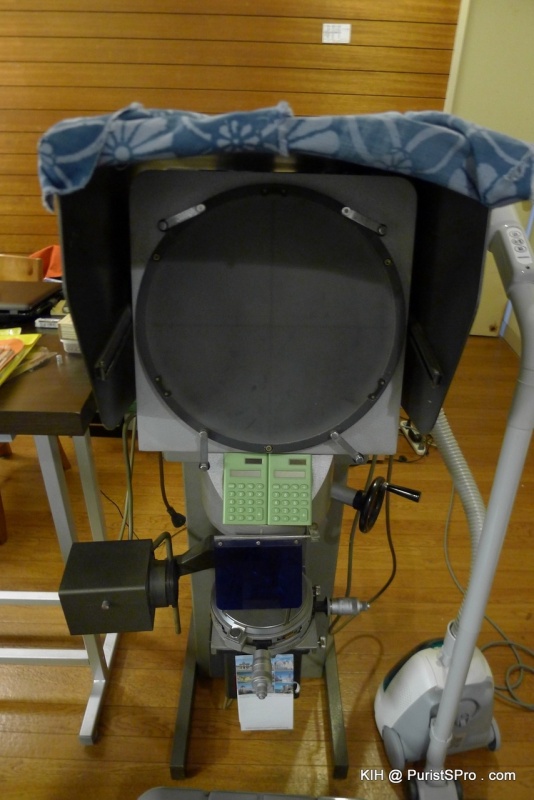
Projector.
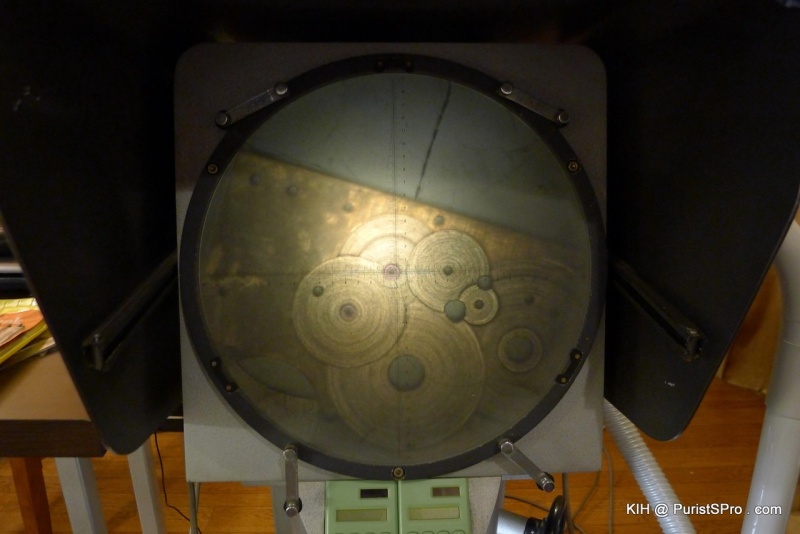
The object for above...
KIH (PPro):
Tell me your history - how and why did you decide to become a
watchmaker?
Kikuno ("MK"): I was
born and raised in Hokkaido (the northern most big island of
Japan). After high school, I was really not sure what I wanted
to do, so when a friend applied to join the Japan Self-Defense Forces
(JSDF), I thought I would too. I liked mechanical stuff and
gadgets that I use with my own hands; and that may attract me
to it. At the JSDF, I was assigned to the Arms (Ordnance)
Department where I was in the unit responsible for maintenance of small
firearms. I picked that field as it seemed to require "using
my own hands" routines. I left the JSDF (voluntary discharge) 4
years later, when I was
22.
PPro: Had you
decided to go down the watch path when you left the
JSDF?
MK: Yes, I
had. During my four-year service, my senior officer showed me
his brand-new Omega Seamaster Chronograph, which he paid nearly USD4000
for. At that time, I knew nothing about watches, wearing one
which had cost me about USD10, so I was surprised and got
interested. I went to the bookstore and read many watch
magazines. When I saw the Datograph movement, it was so
beautiful and opened my eyes. A tiny movement powered only by a
mere spring, beautiful, and so small. I got excited as it
seemed very difficult to make such a "machine". I bought my
first mechanical watch - Oris Chronograph. I was back then
still a bit sceptical of its reliability or durability and
decided to use it very roughly on JSDF training days. I did
anything with this and went anywhere on training including winter
mountains at -20C, but it never broke, and just kept reasonably accurate
time. I was just a watch lover who bought watches and be
happy, but I then realized that I wanted to make one myself.
So, then I finally found what I wanted to do with my life. I
decided to leave the JSDF and enter a watchmaker school in Tokyo (the
school is called "Hiko Mizuno").
His actual Oris Chrono, still on his wrist everyday even
when in bed.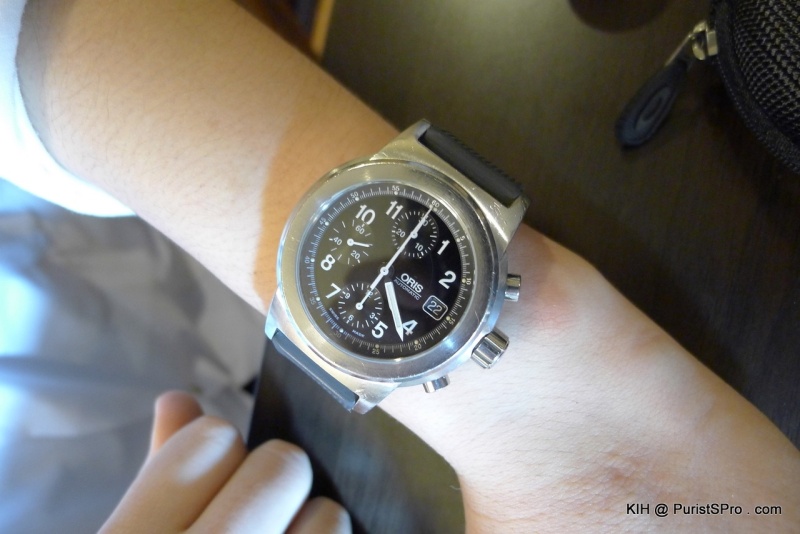
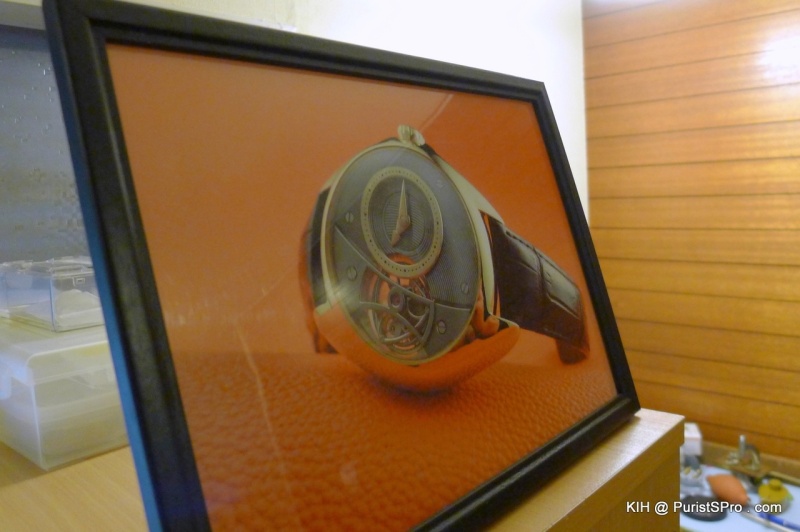
His last year Basel piece -
Tourbillon 2012 in Red Gold (Silver case - Prototype - has been
sold)
PPro: How was the
watchmaker school in Japan?
MK: We studied for three years (out of four) about
repairing the watches. Back then, watch repairer was so needed
in Japan. The flip side of it is that even if you learn to
make watches, there are not so many places you can utilize what you
learn at the school (i.e. big guys in Japan like Seiko raise their own
watchmakers from scratch). Now the repairers market is getting
saturated and you see lots of watchmakers in the retailers as sales
persons. Most of the graduates find jobs at repair shops - and
most of them are very small. Japanese people have tendencies
to like new ones and if it is broken, then many people don't want to pay
expensive repair or servicing cost and buy a new
watch.
PPro: What did
you do after you finished school?
MK: School curriculum was four years.
After that, I was fortunately offered a position there as a "researcher"
as well as a teacher for two years, during which time, I was able to
design and make several watches at the school's factory space and also
make money for teaching. Even this workshop is
actually not my place. This is the Dean's second house and I
am "renting" it for free. I am really grateful for what he has
done for me. I owe my achievement so far to many people
including him.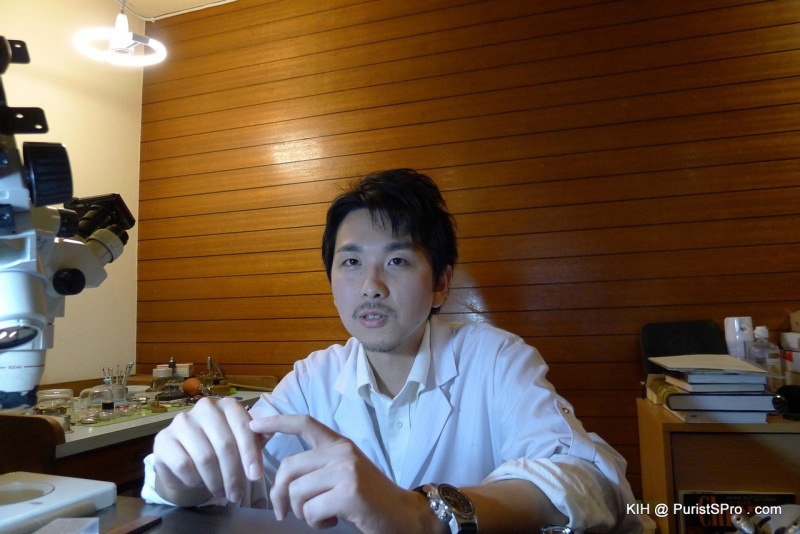
PPro: Then, you brought your
watch to Mr. Philippe Dufour.
MK: Yes. There is an annual
festival at the school where students including the "researchers" can
exhibit his/her own creation of the year. There is a French
interpreter who always accompany us when we go to Switzerland as a part
of the training. She lives in France, but when she comes back
to Japan, she always stops by. She saw my Temporal Hour Watch
and recommended me to show it to Mr. Dufour. So, I went to see
him with her and show him the watch and others I had made. He
asked me whether I was interested in Basel, and I said Yes.
He then looked for someone to second my proposal to be an AHCI
candidate and told me to exhibit the Temporal Watch at Basel.
That was the beginning of all.
His first creation
for Basel - Temporal Hour Watch. There are of course western
version which has Roman index instead of "12 animals in Kanji" hour
markers.
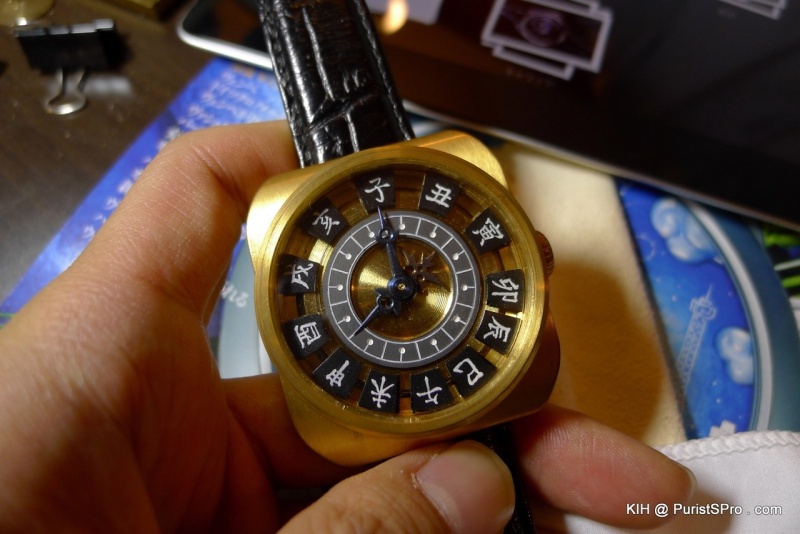
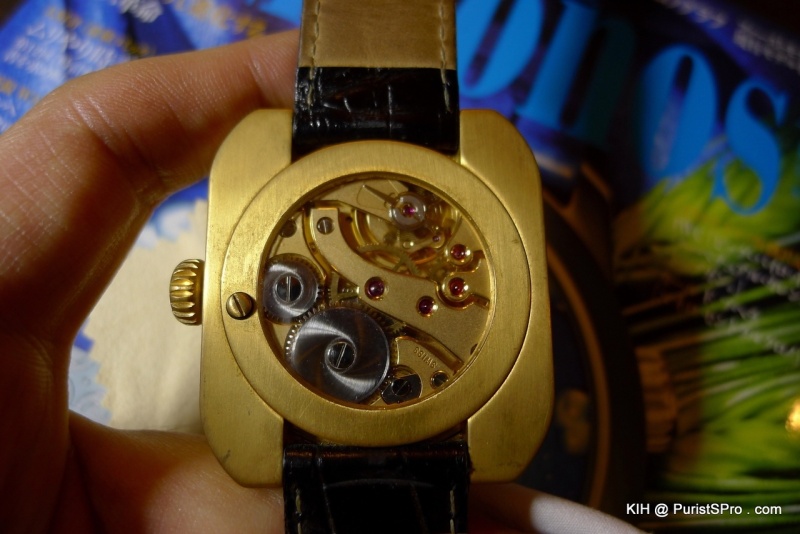
He will try to make it smaller next
year to be available for sale.
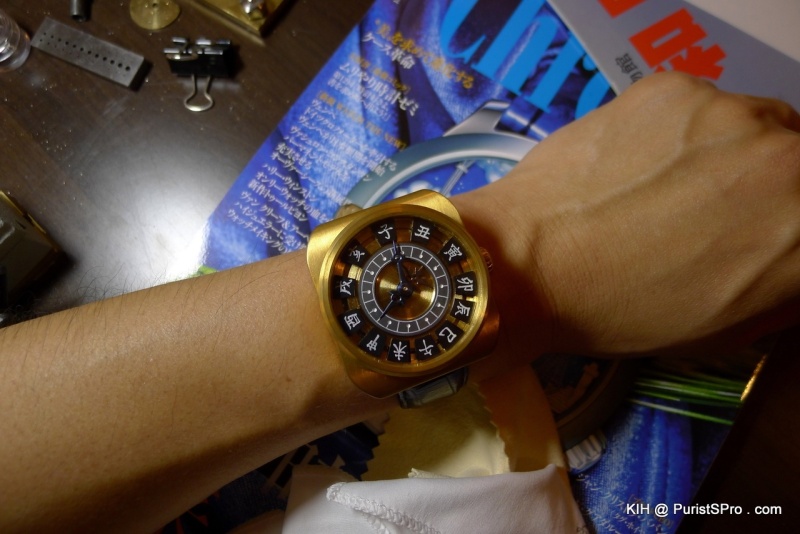
Videos by M. Kikuno and me to
show how the temporal hour mechanism works during the year.
1. How the index moves around the year - temporal
hour watch shows when the sun rises and sets and devide each day time
and night time by 6, naming the "hour" with animal's (just like 12
animal years used in some of the Asian countries). So, the
length of the day time and night time changes everyday. Like
Equation Of Time watches, this can be made for another place (of course
the index will NOT be in Kanji, but Roman index) based on the
latitude of the customer's location.
2. Vidoe by K
Hokugo - How it works.
3. Video by
M. Kikuno - Making a key component
with fretsaw.
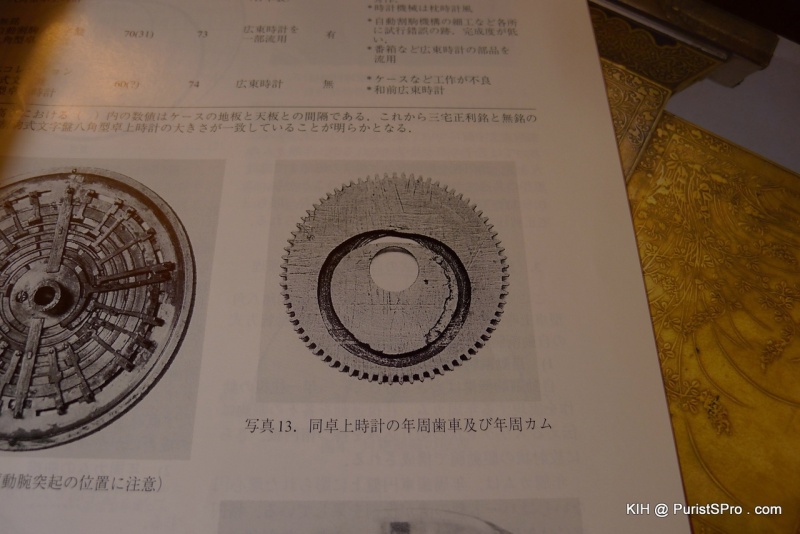
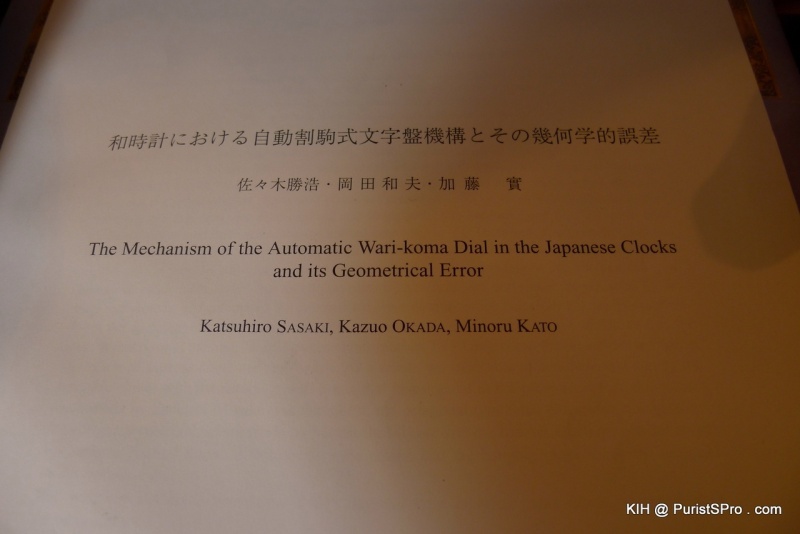
From the
thesis document found on the internet.
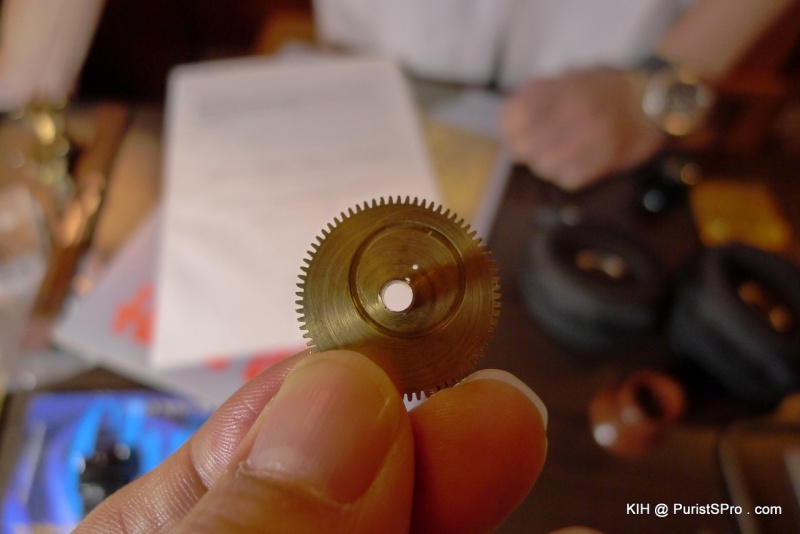
The hand-made special gear with an oval
"guide"
with eccentric center.
Information from the Internet - Thesis on
the Temporal Watch (Wa-Dokei)
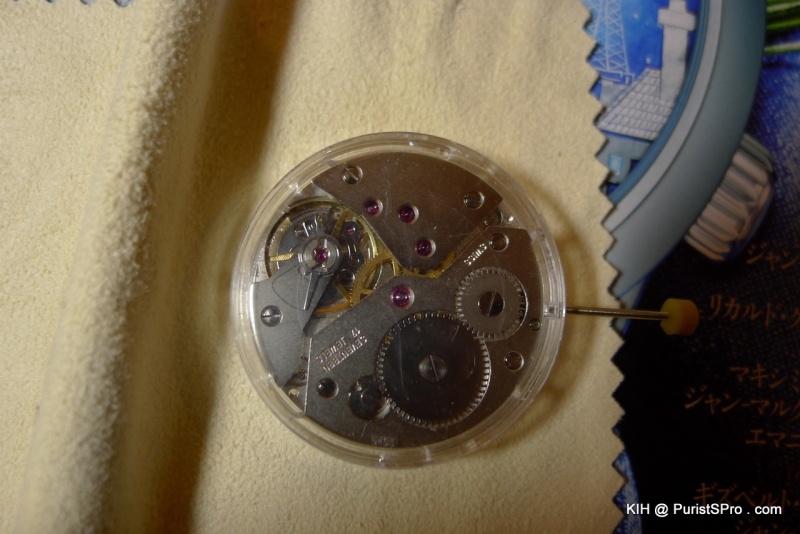
Base caliber is Unitas
One of his
notable creations during school days (also shown to Mr.
Dufour):
Double-Axis
Tourbillon
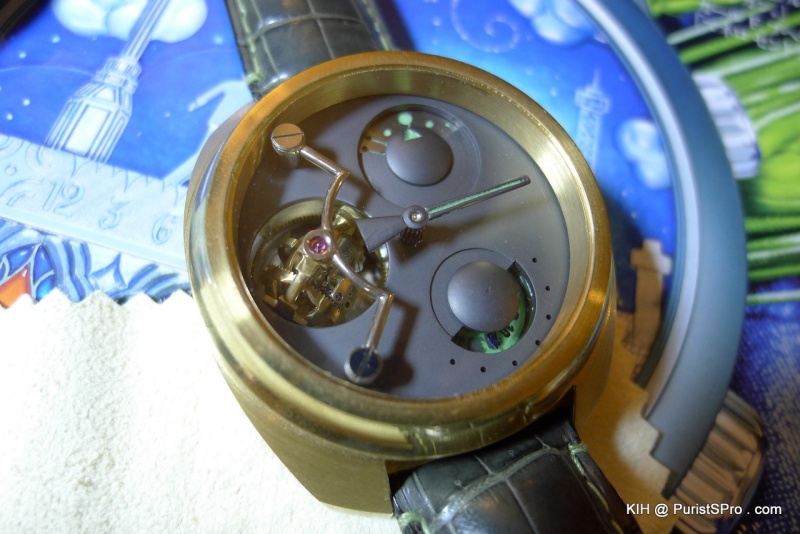
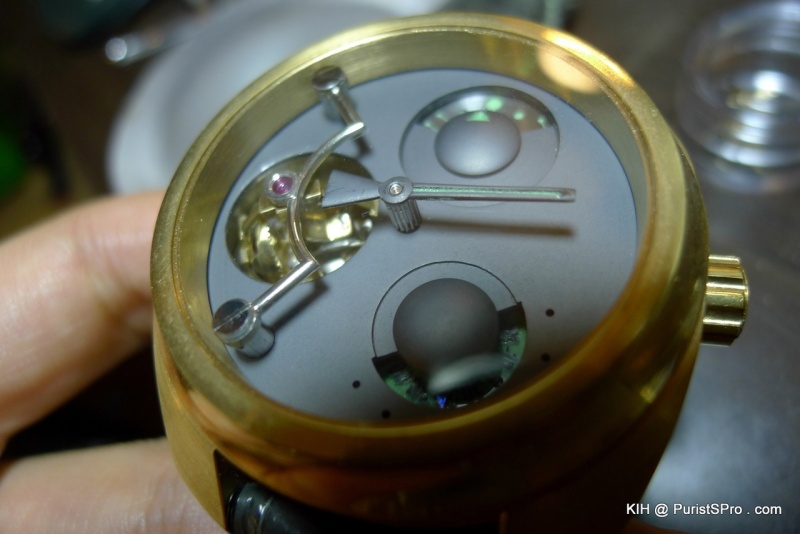
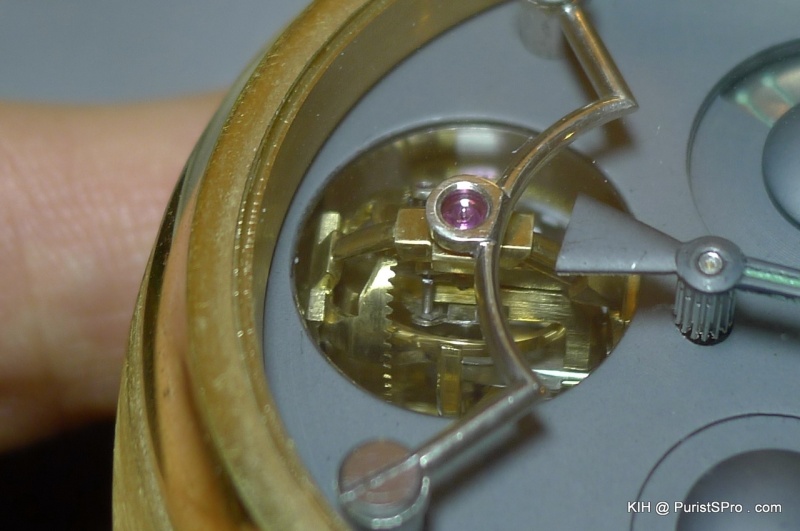
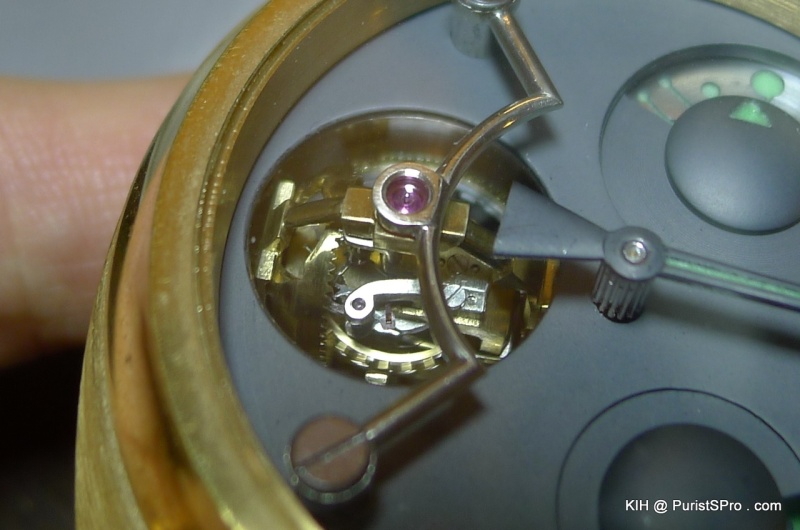
PPro: How long did it take to
make this Tourbillon 2012?
MK: I could make
only two pieces last year. A few months were
spent for designing. So, it may be 400 to 500 hours, but it
will be shorter next time. I could make it much faster if I
use computerized machinery to make parts, but it is not my style
now.
PPro: Although
you have made only a few models, is there any "Kikuno DNA" you put in
each model?
MK:
Honestly, I am still searching for it. For now, I make what I
want to make or think is interesting. Which function or
complication I would like to try, and then design follows - where to put
the hour/minute dial, seconds, and other parts. So, I am sure
that nobody thinks that my 1st one (Temporal Hour Watch) and the second
one (Tourbillon 2012) were made by the same
watchmaker.
PPro: Is
there any "principle" that you would never do or you would definitely
do?
MK: For
high-end models, I would like to stick to the "all hand made"
way. Of course, it would take much longer and the parts may
not be perfectly precise, but I would keep challenging to make the parts
as precise as humanly possible by hand. The value or
attraction of mechanical watches is the "warmth" of the hand-made
machine. The watches have been made by hand for a few
centuries and those watches are still working with surprising
accuracy. Of course, if we use computer controlled machines,
we can make the precise parts and achieve the very high accuracy, but I
would like to stick to the warmth of the human touch, hand-made
watches. It has been done in such a way for such a long time
and it should be possible.
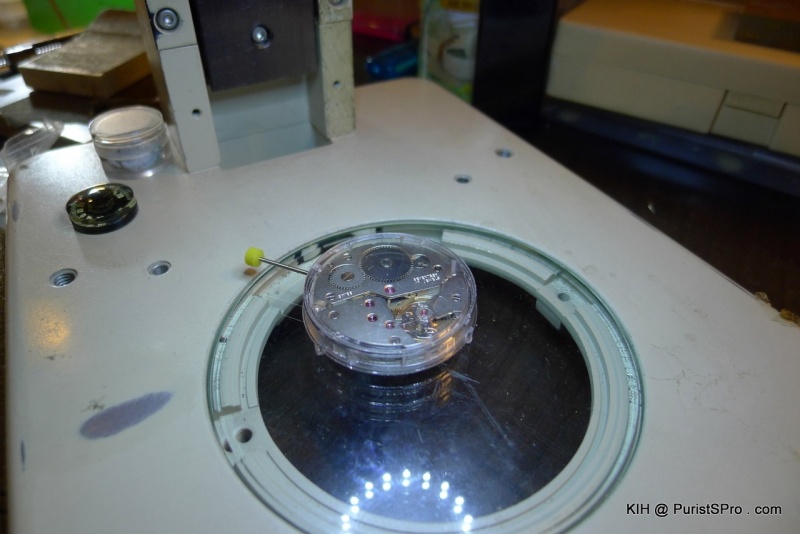
His microscope with Exilim camera and
high-speed video mode.
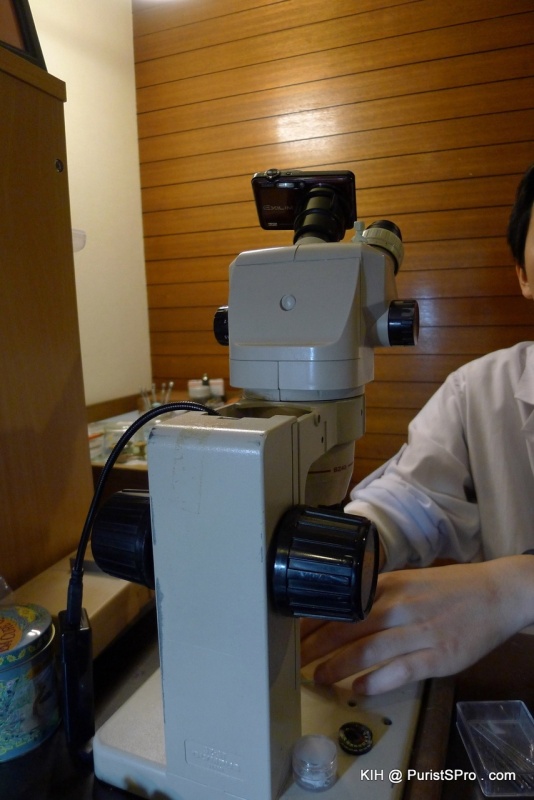
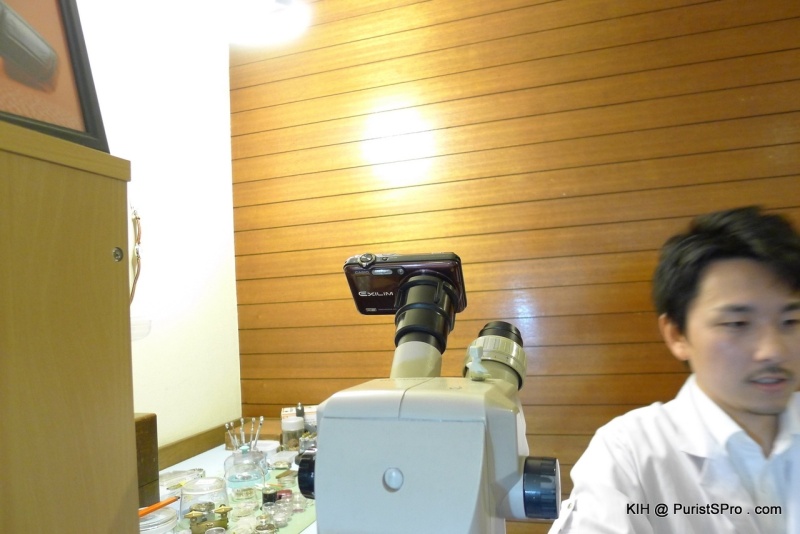
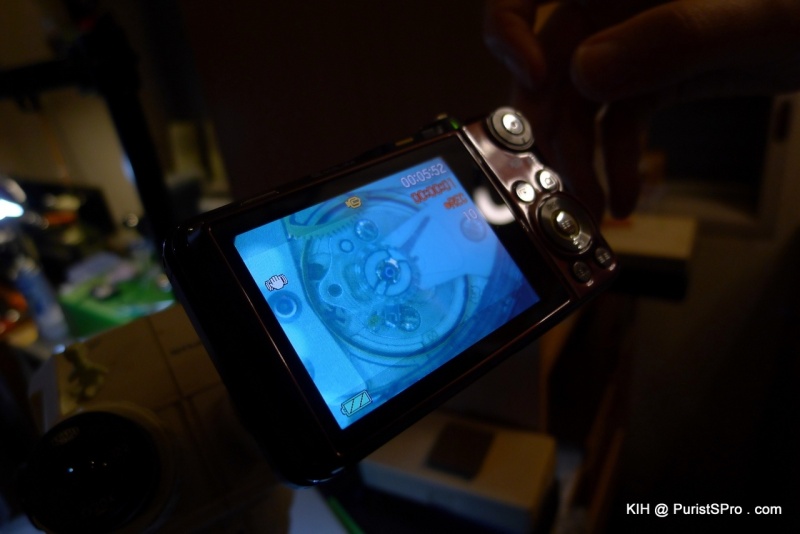
Video to show the slow-motion of the balance
wheel.
PPro: What
do you think is the main difference between Japanese watch and
Swiss/German/British watch in terms of style, design, or
uniqueness?
MK: Japanese watch
brands have been making watches as accurate as possible and at the same
time as affordable as possible to make it available to as many people as
possible. Quartz is one of them. They (Japanese
watch brands) did not have the objective to make expensive watches that
only a handful people can afford. I think that it is one
unique aspect of Japanese watch, in terms of its history. So,
very high-end watch is not what they are good at and movements are made,
relatively speaking, easy to make. It is a good thing that
many people can buy a Seiko, for example, at around USD100 which has very
reasonable accuracy. But, the research to make high-end
watches may have been a bit behind European counterparts. I
think it is changing now, though. I am expecting the high-end
watches from Japan will emerge sooner or later.
Also, Japan has
its own watch manufacturing history, but when European watches came to
Japan, people modified it to fit the time system (temporal hour) of its
own culture back then while other Asian country didn't really pay
attention to it, because it is not practical as a watch, but as an art
or something. Japan's uniqueness is to always try to adopt or
improve whatever/ whenever they acquire from
outside.
PPro: Does
the nature and Japanese philosophy to "craft something" show in
watchmaking as well?
MK: I believe it shows in the historical direction of
the Japanese watch brands where they make and sell accurate and
affordable watches to everyone. "High quality products to
everyone" - this is one important aspect of Japanese philosophy in
crafting things. Also, as I said above, Japanese like to make
efforts to improve things all the time - not only copying
things. I am talking in general, and not talking about
watchmaking of myself .
PPro:
Do you have particularly favorite complication and
why?
MK: I just
can't forget the Datograph movement that I saw in the
magazine. I like chronographs, but I like perpetual calendar,
minute repeater, etc. Having said that, most of all, I like
vintage or antique complication watch - makes me think of how it was
made by the watchmaker in the past. I am so attracted by
an old complication watch, which, I can only imagine, who and
how they designed it without computer and how they made each parts so
accurately and such. It is so
fascinating.
PPro:
How much do you put yourself into finishing?
MK: My goal is Mr. Dufour's
finishing. I am impressed that he did it 200 times. I
am trying to achieve that level - but as you may see, not quite
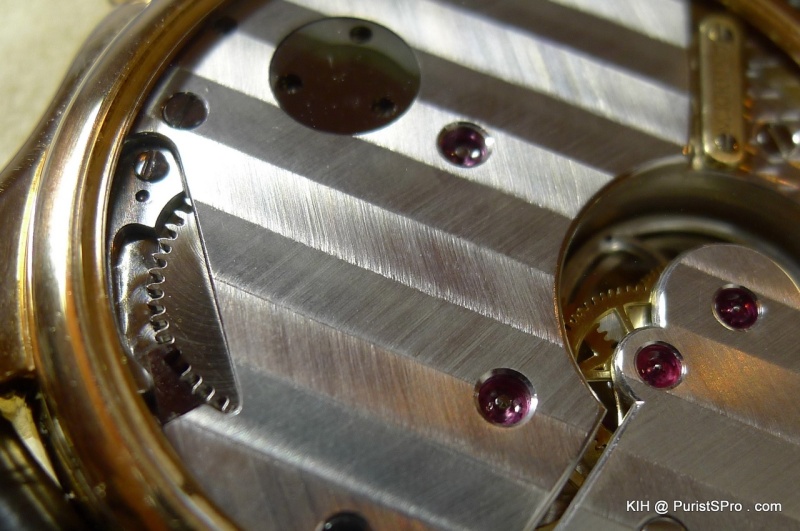
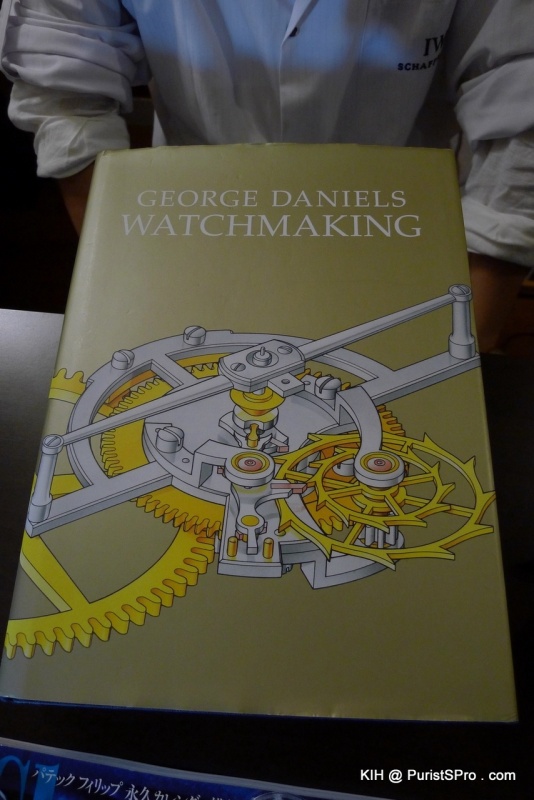
yet. In my "Herring Bone" finishing (like cote de Geneve) is
done by a very old way which I found from Mr. Daniel's
book.
The latest one (last
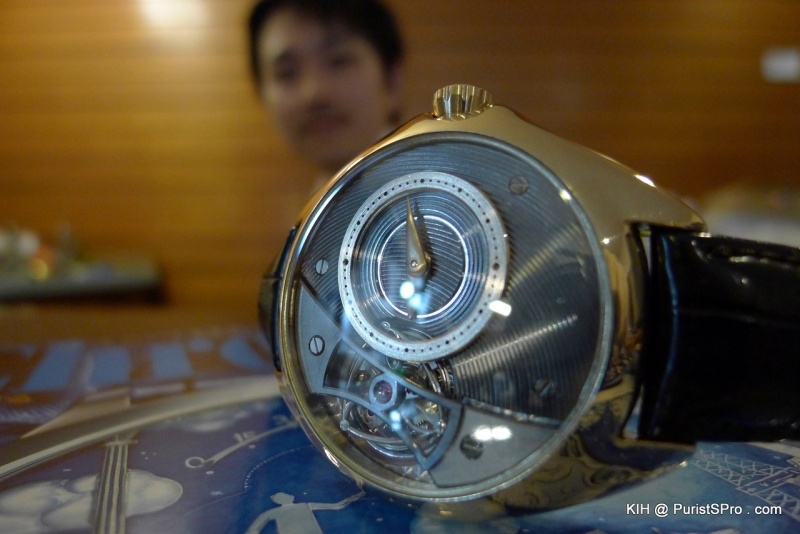
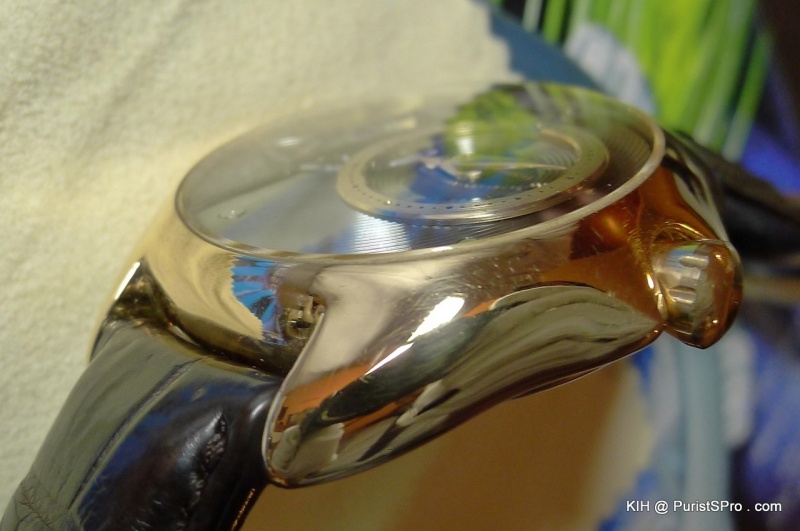
year Basel) creation - Tourbillon
2012
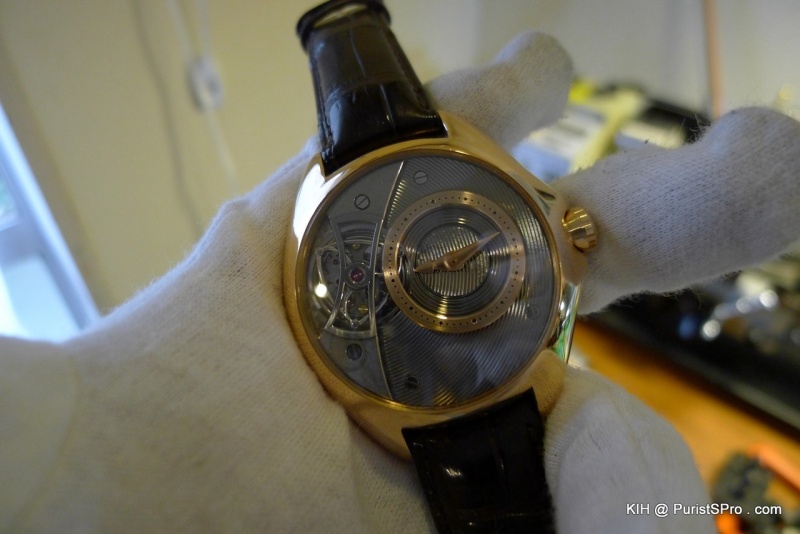
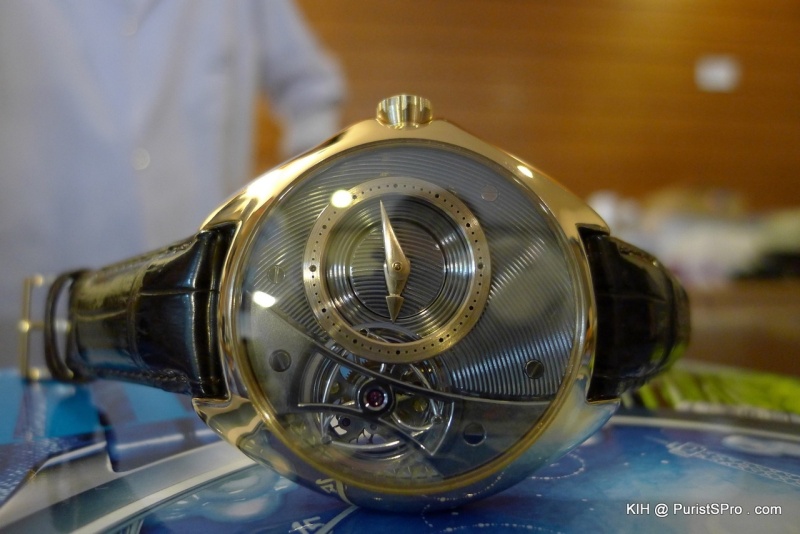
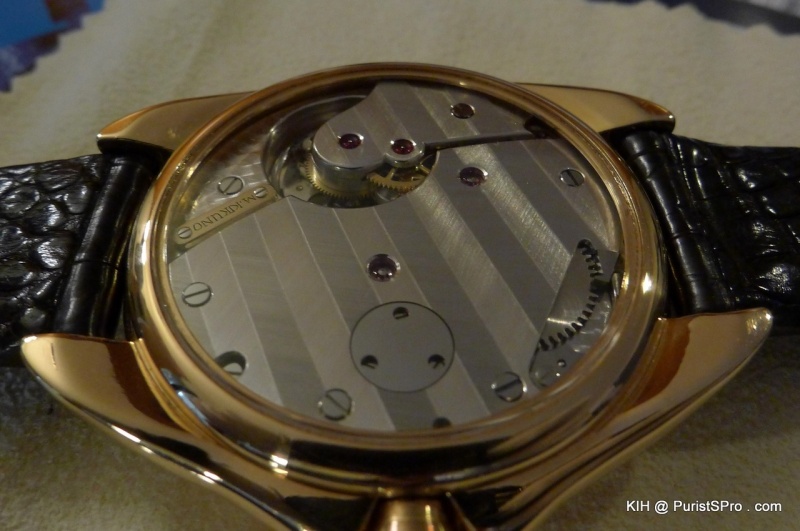
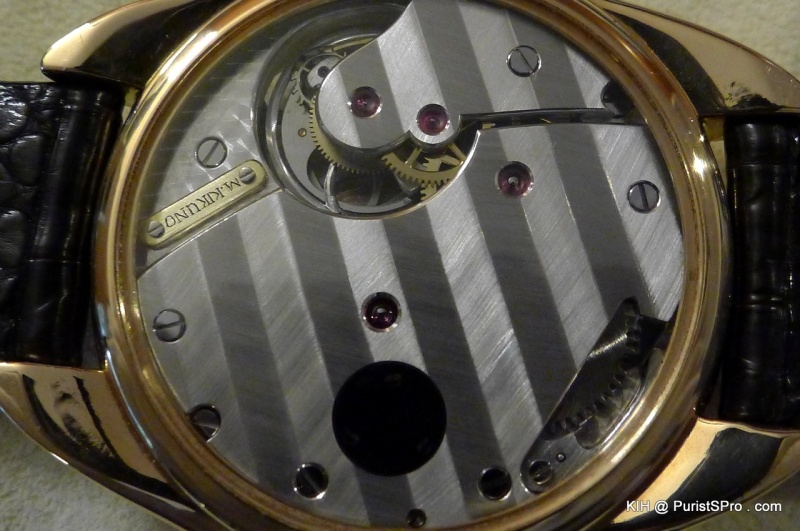
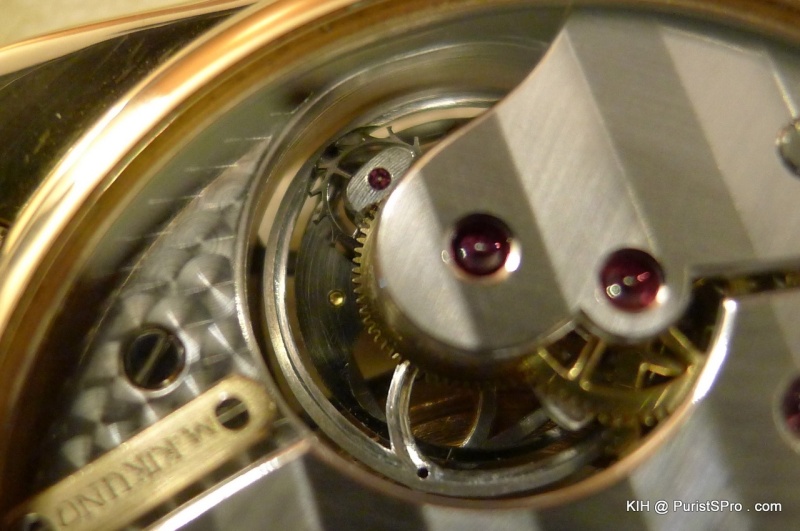
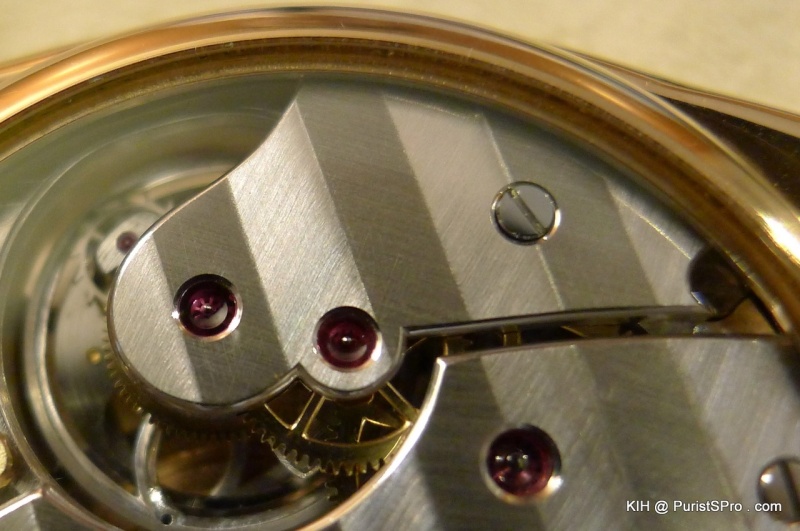
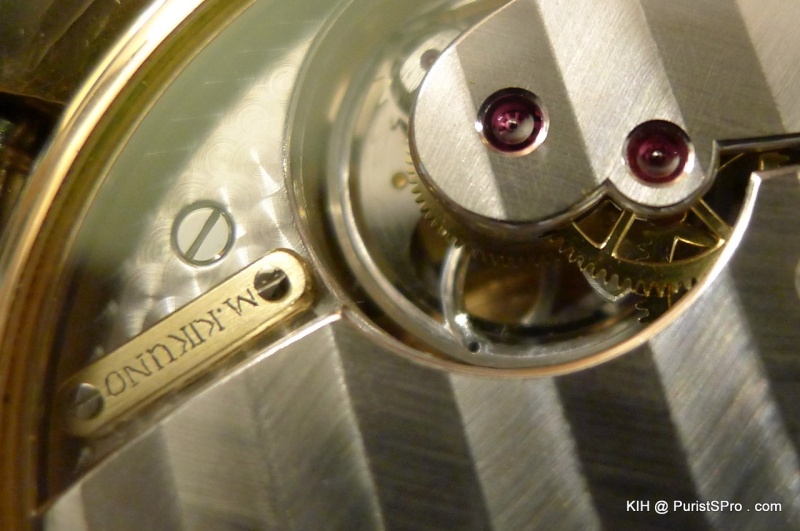
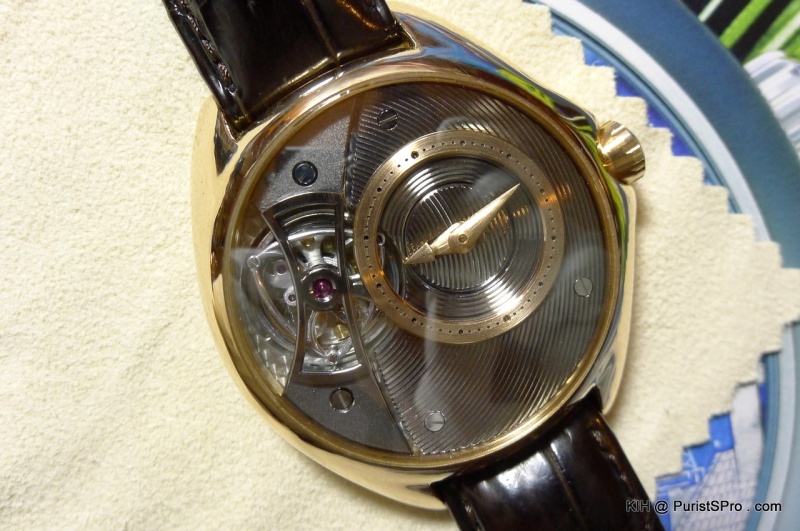
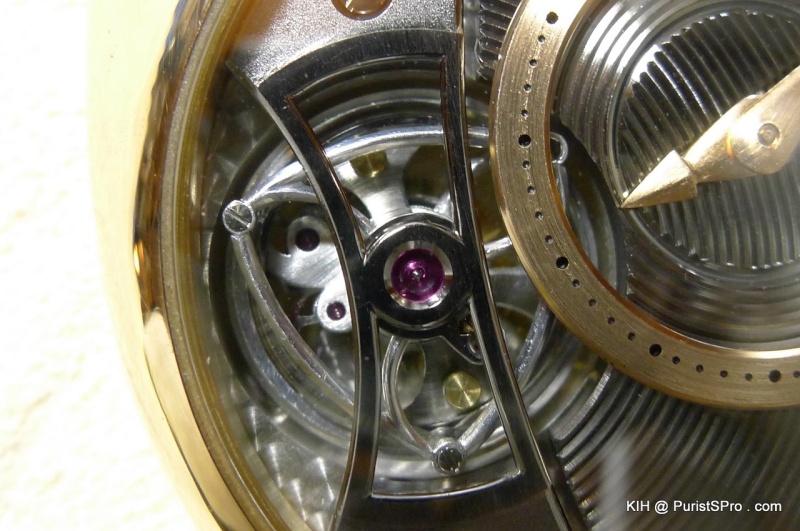
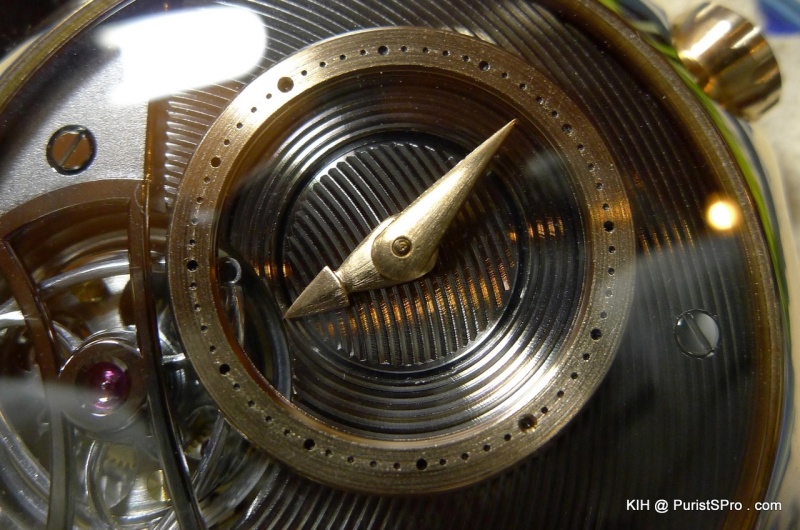
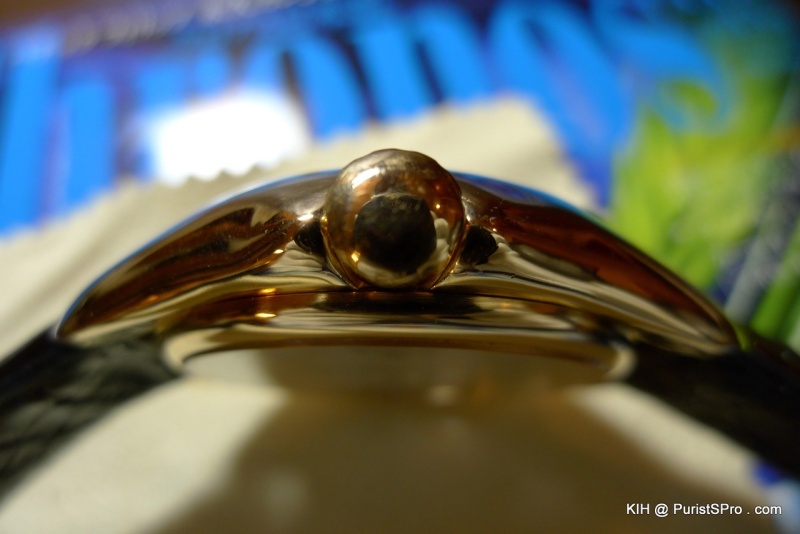
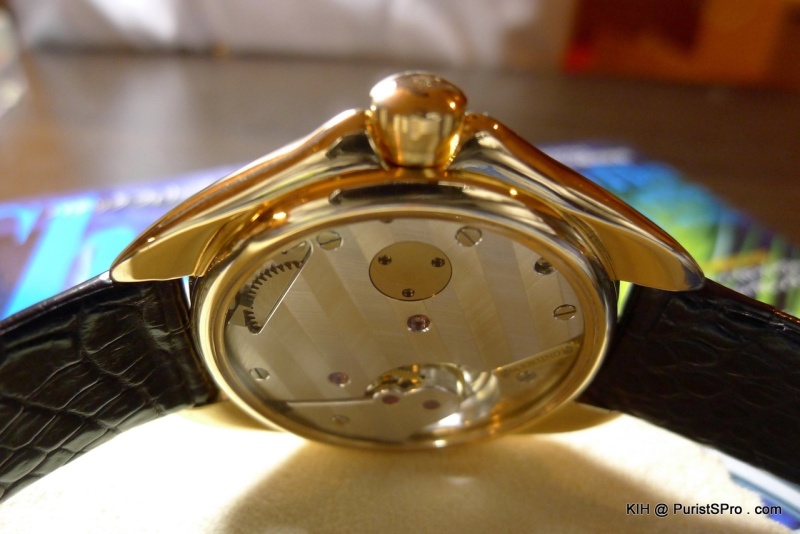
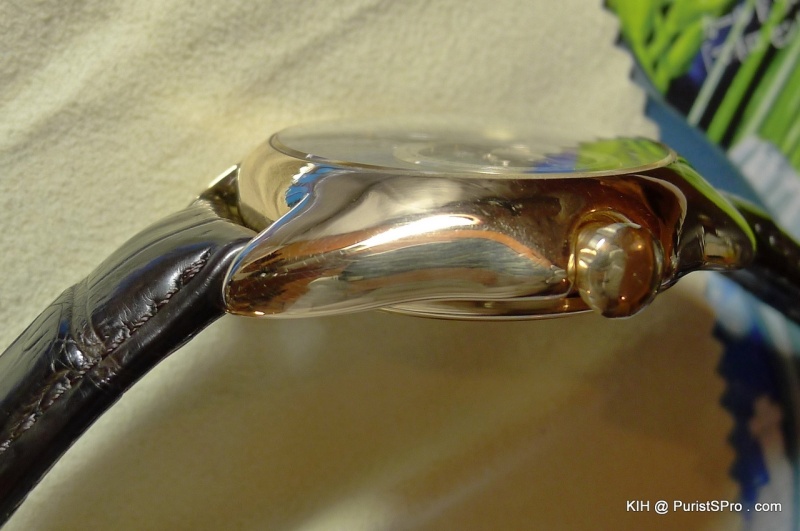
This is his original what he calls
"Herring Bone" pattern finish.
And the tool to make
it.
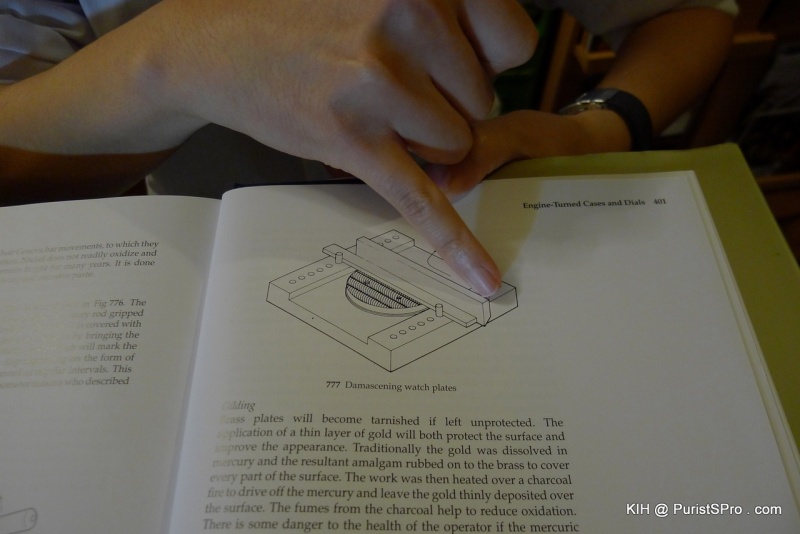
Taken from....
Video to show how he does
it.
PPro:
Would you tell us about your business plan, if any?
MK: I know it is very
difficult. I am still a candidate for AHCI and I have to focus
on becoming the member first, which hopefully will be the next Basel or
a bit after that. Right now, I don't have anybody who works
for me or have 100s of thousands dollar equipment, and someone wanted to
buy one of the Tourbillon 2012, so I am fine at the moment. I
know I will have to plan how many to make what kind or or how many
models are appropriate. But for now, honestly, I haven't given
much thought about it yet. But I have decided to make a
living as an independent watchmaker, I will work on that aspect as
well. In the meantime, I would sell my creation so far to
those who are interested, to have more "solid" financial
ground.
In the
treasure box - these MAY BE completed in the
future.
1. Perpetual calendar with mechanism on the
back - to show the perpetual module which is more interesting.
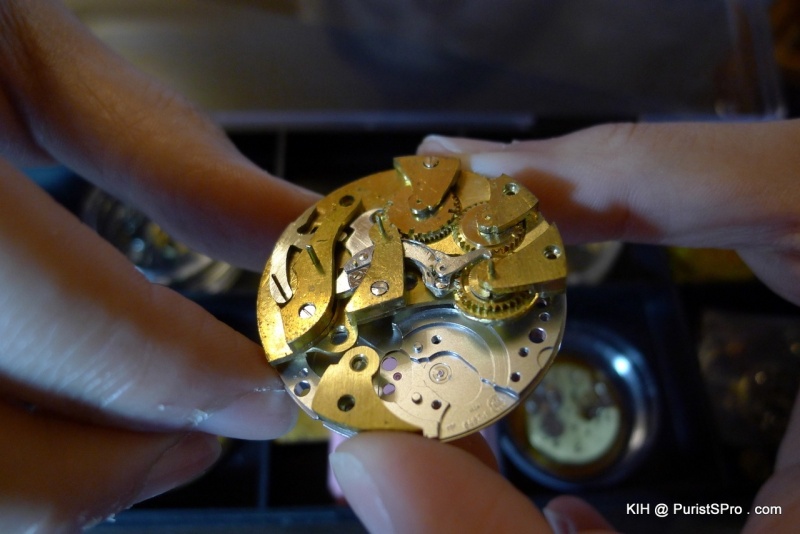
The dial side of
it.
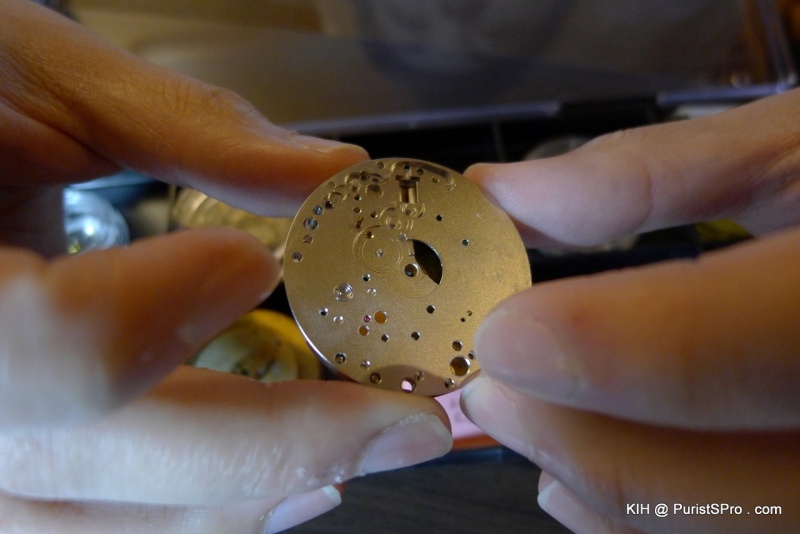
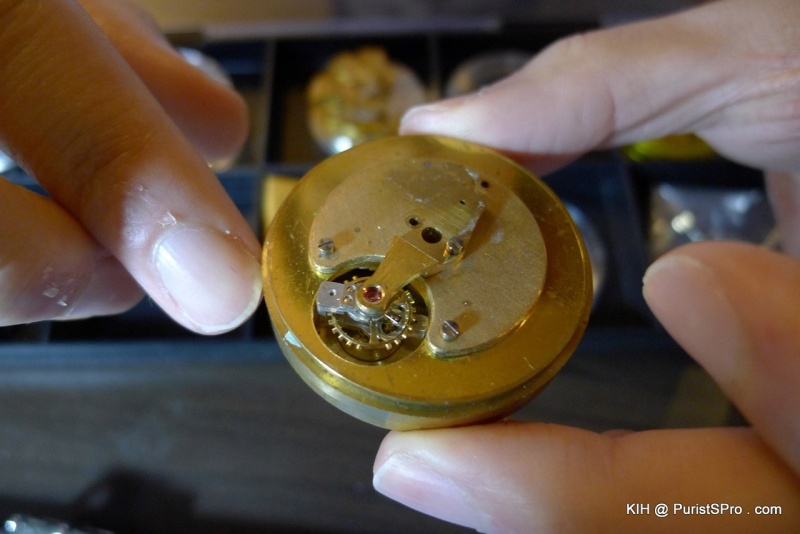
10-second
tourbillon...
PPro: Thank you very much, Mr.
Kikuno and good luck for the next Basel Show. If possible, I
would love to go there. Let us see you soon and talk a bit
more. We need more time and things to discuss
=================================================================
Where were you seven years ago? Many of you were already "here" discussing watches? - while he started studying watchmaking and chosen as AHCI Candidate. How about five years ago? It took him just five years from ZERO watch education to meet and show his own creation to and impress Mr. Dufour....
He was a very humble guy who wants to do almost everything by hand with what he can afford to have, yet easy-going mind set with perfectionism and attention to details as we see in many great watchmakers.
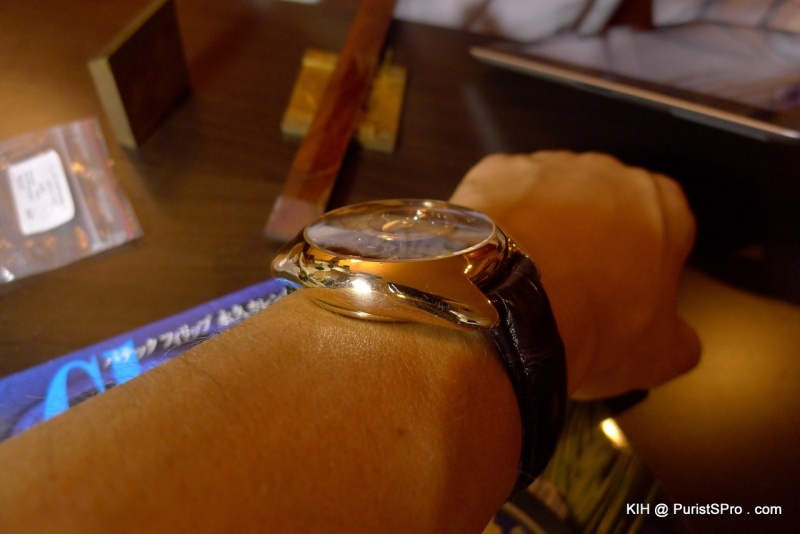
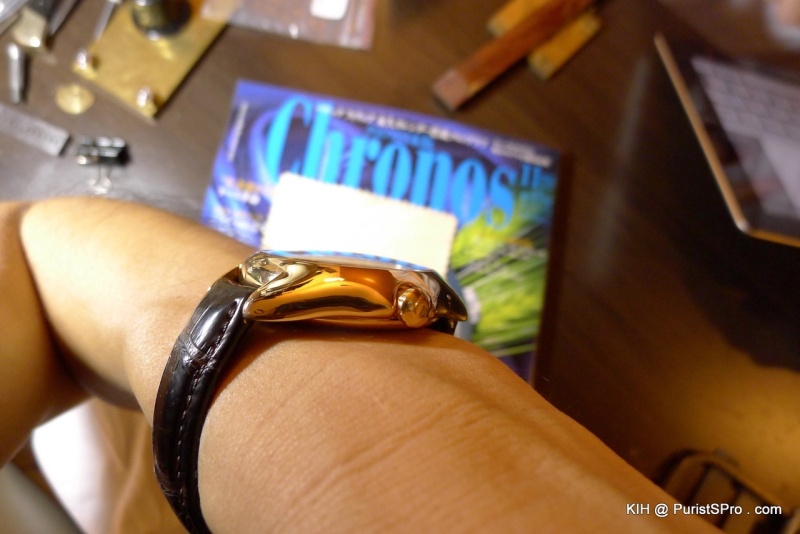
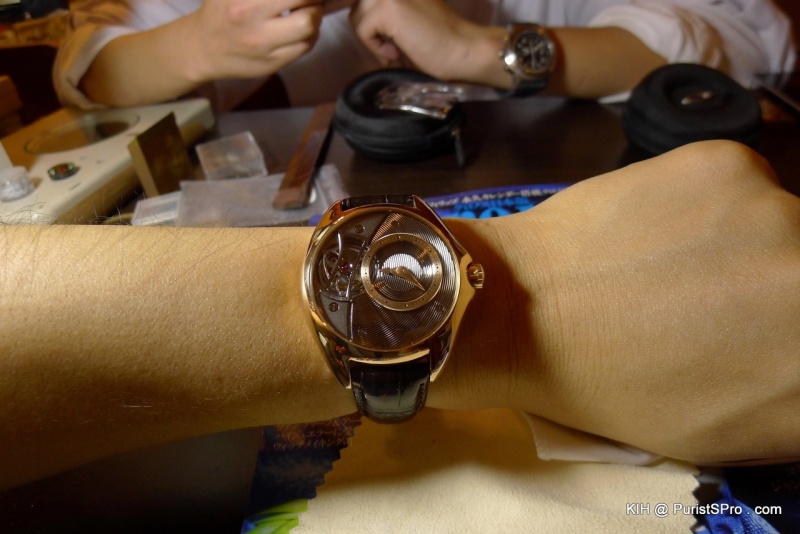
Wrist shots of Tourbillon 2012
=======================================================================================
Hope you enjoyed
the interview and I am looking forward to his 2013 Basel
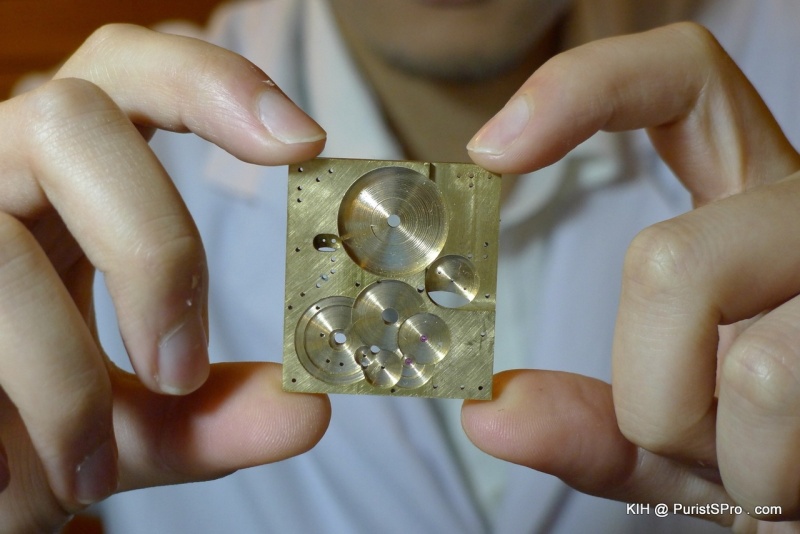
creation. He gave me one hint...
What is going to come out of this base plate? - please stay
tuned!
Special thanks to
Kikuno-san!
Thank
you!
Ken
The Patrimony reference 4000 represents a specific offering within the broader Patrimony collection, known for its focus on classic watchmaking principles. This particular reference emphasizes a clean aesthetic, aligning with the collection's overall design language that prioritizes legibility and understated sophistication. It is designed to appeal to collectors who appreciate traditional watchmaking without excessive embellishment, fitting into a lineage of timepieces that highlight fundamental horological craftsmanship. The model maintains the collection's reputation for refined proportions and a balanced dial layout.
This reference features a case crafted from a precious metal, typically gold, with a diameter that ensures a comfortable presence on the wrist while adhering to classical dress watch dimensions. It houses a mechanical movement, often an in-house caliber, known for its reliability and finishing. The watch is protected by a sapphire crystal, providing durability and clear visibility of the dial. The movement offers a power reserve suitable for daily wear, reflecting the brand's commitment to functional excellence.
For collectors, the Patrimony reference 4000 is a compelling choice for its adherence to enduring design codes and its representation of the brand's core values. It appeals to those seeking a versatile dress watch that can be worn for various occasions. The reference contributes to the Patrimony collection's reputation for offering timepieces that are both technically sound and aesthetically enduring, making it a relevant piece for those building a collection focused on classic horology.
Addendum - for those interested. The photos (from his iPad) to show how he made Tourbillon 2012... Tourbillon parts Balance wheel inside tourbillon cage Hand made with fretsaw The "second hand" of tourbillon Again, hand made with fretsaw Branch of hydrangea Branch of willow Rhodium plated Pelraging manually... How he makes "Herring bone" pattern on the bridges He is very thorough about "hand made"..... Thanks again, Kikuno-san. Ken
Cause that's how it should be as each character accounts for roughly 2hrs of time lapsing when using for telling a day's time how much r these AHCI candidate's prototypes r going for? they r quite interesting:) cheers, Ed
As for the temporal hour watch, he will make it smaller and available for sale next year, so there is no price set. One Tourbillon 2012 has been sold and this pink gold one is available for sale, but he doesn't even have the box or paper yet...... He will get to it after next Basel, I am sure.... Ken
thanks for this wonderful post, Ken. I had the pleasure to talk to Kikunosan at Basel 2012 and was impressed with his Tourbillion 2012 and his nice and modest personality. It was wonderful for me to learn and see more abou this work through your report and interview now. The value his achievement even higher considering the relatively simple tools he put at work. It is handmade in the best of the sense. thanks a lot, Ken, for this great report! And my best wishes to Kikuno-san for a successful f
.... he would like to speed up making process, but not easy... Yes, best wishes for his success from me, too. Ken
Very interesting and definitely unique. Thank you Ken for introducing us to this talented young man. Looking forward to his future and career with great interest!
This thread is active on the Independents forum with 44 replies. Share your knowledge with fellow collectors.
Join the Discussion →