Independents
SJX provides a comprehensive look at the Maitre du Temps Chapter Two, a watch born from the collaborative genius of master watchmakers. This article delves into the brand's unique concept of 'Chapters,' each conceived by a trio of horological grandees, and explores the design and technical innovations of this particular model. It offers a critical perspective on the brand's market positioning and its potential for success in a competitive landscape.


Maitre du Temps is a brand started by an American watch businessman, Steven Holtzmann. It is premised on the concept Max Busser pioneered at Harry Winston which has since been appropriated and tweaked by others.

Steven Holtzmann of Maitre du Temps and Thierry Oulevay of Jean Dunand
Maitre du Temps (along with Jean Dunand) will be represented in Singapore by Sincere Watch Ltd, which was recently acquired by a consortium including its former owner and an arm of LVMH. This came after a period of uncertainty after the then owner of Sincere, Hong Kong-based retailer Peace Mark, went bust.
Sincere Watch was one of the world’s first retailers of Franck Muller and later on, F. P. Journe and Lange; it picked up these brands years before they were popular or successful. That gave its management team a well deserved reputation for betting on the right horses and being able to build brands.
Maitre du Temps will not be an easy brand to sell, despite the industry grandees involved in each Chapter, especially in a developed market like Singapore. It will appeal to a fairly small audience; it is further hindered by its price and the youth of the brand. However, with the right clientele it could potentially be a lucrative brand for Sincere. Given the company’s track record it could very well turn out that way.
The Chapters
Each Maitre du Temps watch – they call each model a Chapter so the first one was Chapter One – is conceived by a trio of famous watchmakers. Chapter One was the work of Christophe Claret, Peter Speake-Marin and Roger Dubuis. Though the specifics of each watchmaker’s contribution were not revealed, it would not be hard to imagine that Claret and Speake-Marin worked on the technical development, Claret built the movement while Dubuis provided an aura of genteel, old world legitimacy.
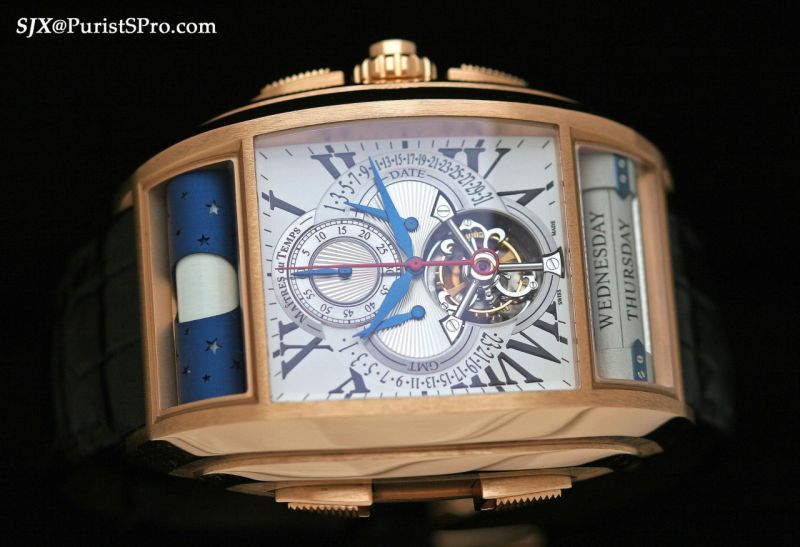
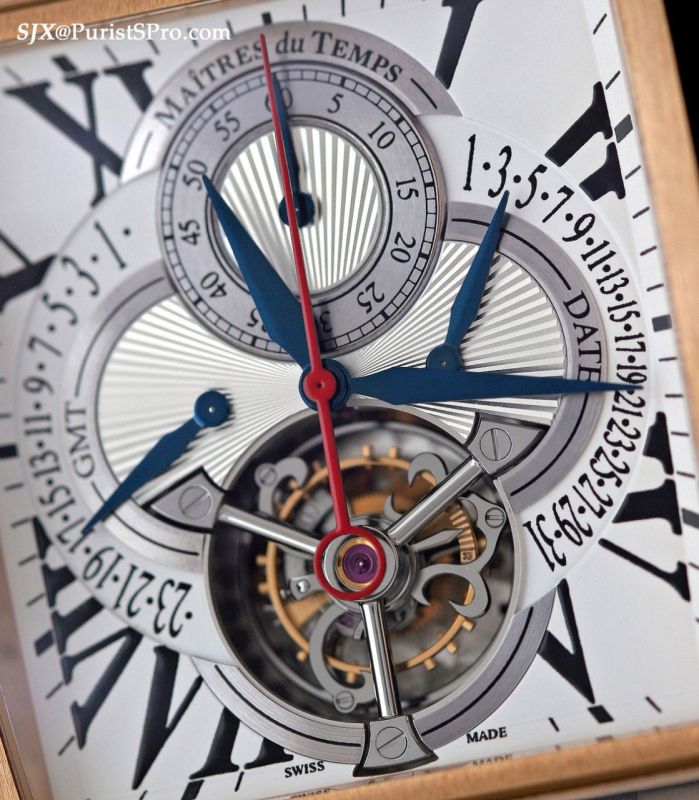
Chapter One (shown above) was a grand complication with perpetual calendar, tourbillon and chronograph. Chapter Two on the other hand is a triple calendar – smaller, cheaper and more practical.
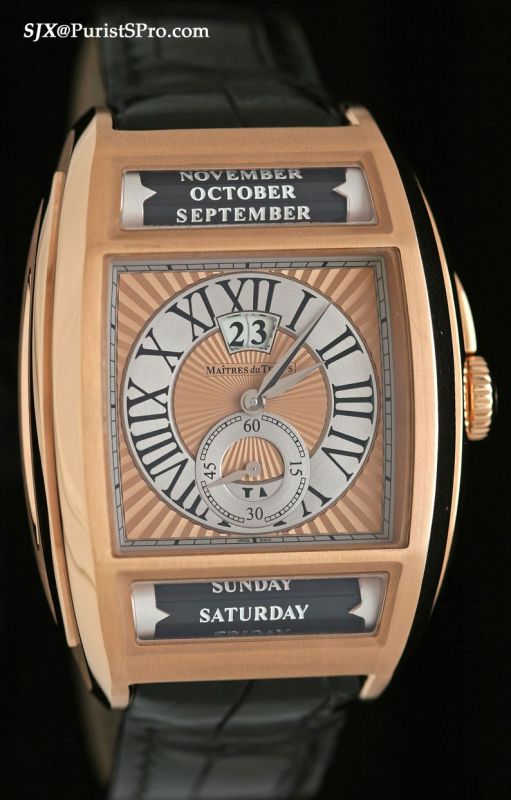
The Chapter Two
Speake-Marin and Dubuis reappear for Chapter Two, while Daniel Roth lends his imprimatur to the project and rounds off the trio. The base automatic movement is produced by Vaucher and likely similar to what the company supplies to Richard Mille, Hermes and others. However a custom module is added for the triple calendar – big date with day and month on rollers.
The Chapter Two is one of the most fascinating triple calendar watches I have ever some across. It has no additional complications beyond the calendar yet it is very elaborate and also weirdly practical.
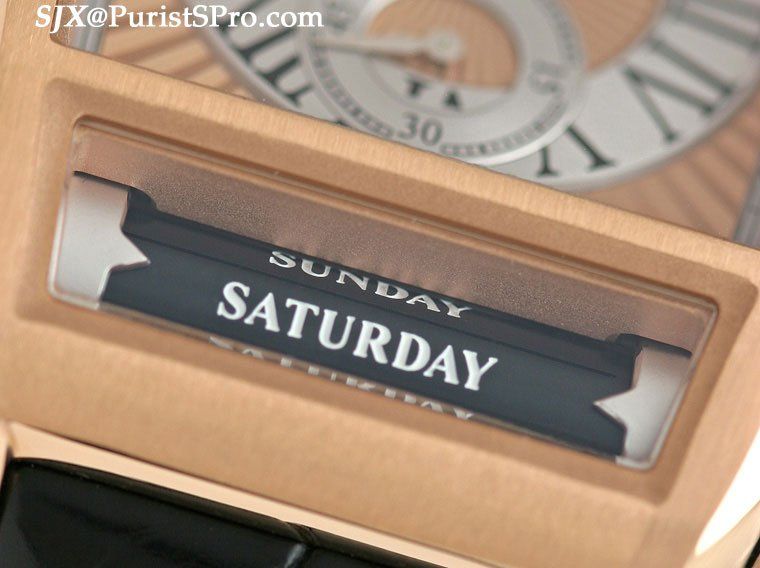
Uniquely, the Chapter Two is an instantaneous calendar, so all the calendar indicators jump precisely at midnight. That is a fairly remarkable achievement, given the size of the rollers and the diminutive base movement. Maitre du Temps got around that by machining the rollers out of an aluminium alloy before anodising them for colour. Not everyone will like the aesthetics of the rollers – I can’t decide if I like them – but they are exceedingly legible.
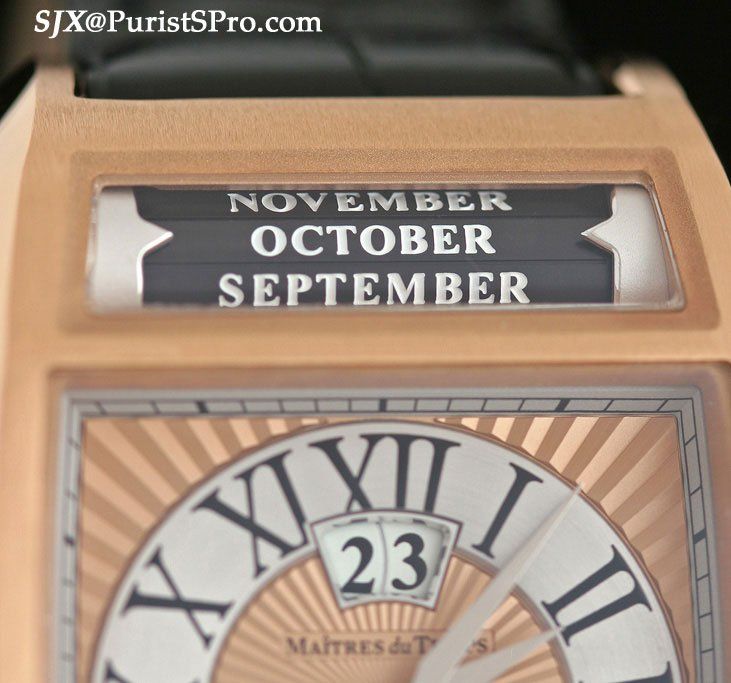
The big date is operated by a pusher beside the crown, while the day and month are changed via paddle pushers in the back. Since the pushers for the rollers are in the back, Maitre du Temps cleverly put numbers on the rollers indicating the month displayed in front so that the wearer can advance the day or month without flipping the watch over.
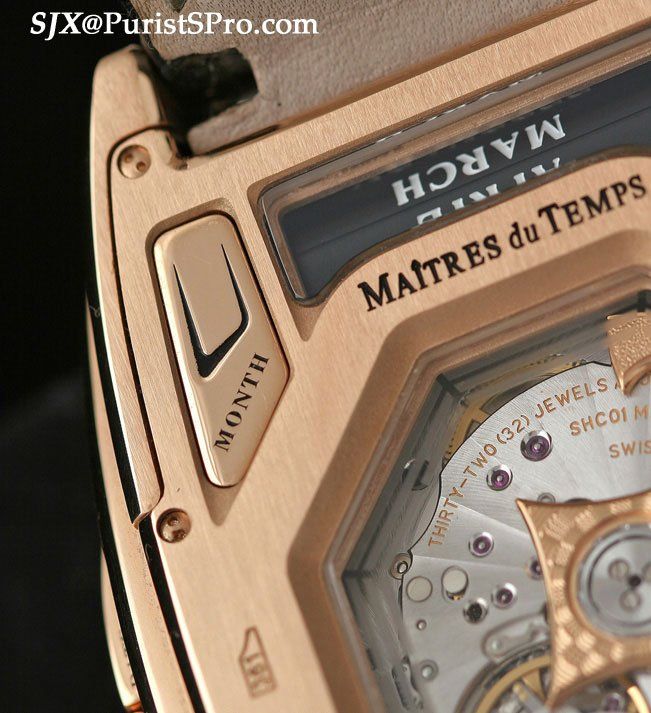
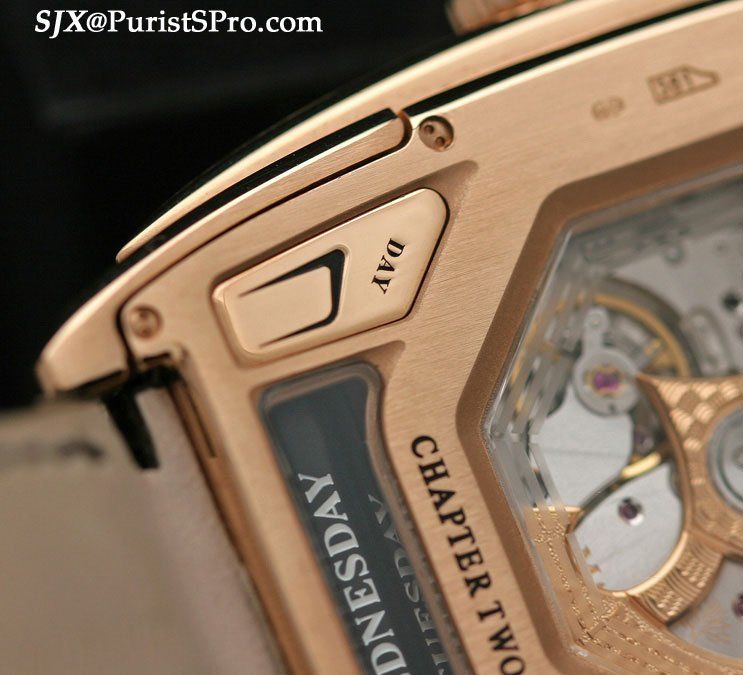
Above: The paddle pushers for the day and month
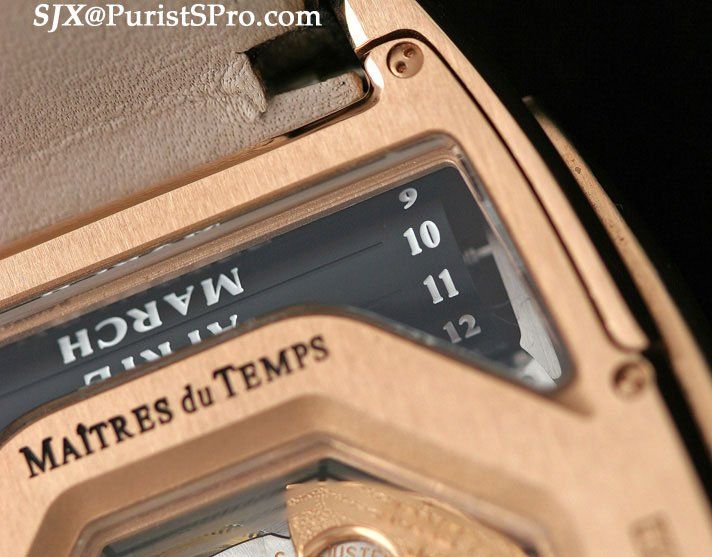
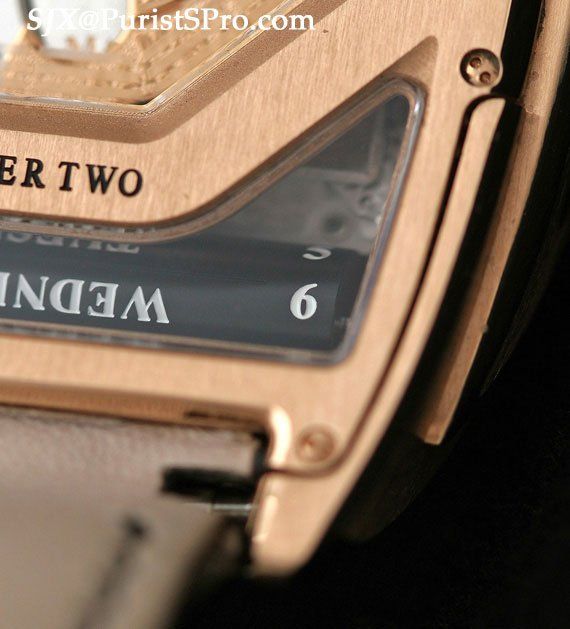
Above: The numbers on the rollers for adjusting the day and month from the back
This message has been edited by SJX on 2009-11-07 04:49:04De Bethune DB25 Reference DB25
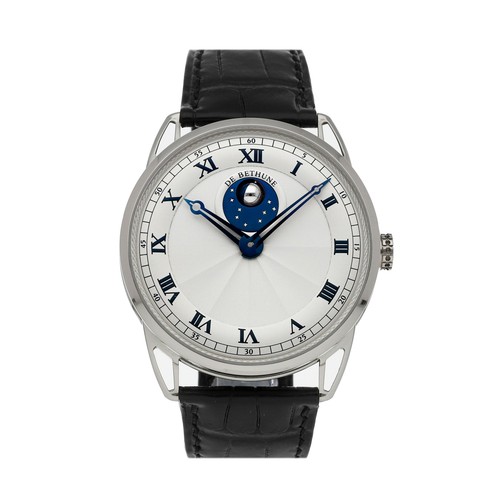
The DB25 represents De Bethune's entry in the 44.5mm manual-wind category, distinguished by its silver dial configuration within the DB25 series. This reference launched in 2006 and continues the brand's approach to contemporary haute horlogerie complications.
The 44.5mm case is crafted from 18k white gold with a fixed bezel and sapphire crystal. Water resistance extends to 30 meters. The manual-winding caliber DB2105 movement provides a substantial 120-hour power reserve. The watch features a leather strap attachment.
This reference appeals to collectors seeking De Bethune's technical approach to timekeeping in a precious metal case. The extended power reserve and manual-wind operation position it for enthusiasts who appreciate hands-on interaction with their timepieces. The 44.5mm sizing places it in contemporary proportions within the independent watchmaking segment.
On the back of the Chapter Two one can see the movement and a rotor decorated with a delicate guilloche. The idea for the vannerie (basketweave) motif of the guilloche came from Daniel Roth. My most lasting impression of Daniel Roth is an old photograph of him published in a Japanese watch magazine many years ago. In it he stands beside a Mercedes SL in a well tailored blue suit with what was then still his manufacture in Le Sentier in the background. He looked every inch the successful entrepre
If you are a very good boy (or girl), and / or speak French, you may be able to persuade Monsieur Roth to reveal his 'original' designs of the roller display concept watch from decades ago! When Maitres du Temp approached him with their 'new' Chapters, he trotted to his storage to dig out the original note book (paper variety and not computer) of the drawings. The original concept watch was deemed "too avant-garde" for the buying public then.......mayhaps, for Maitres du Temp, it is time for "ca
The rose gold Chapter Two is available with black or copper dials. The copper dial is pictured here.
The white gold is also available with black or copper dials; both are shown here.
the concept, I don't think anybody beat Max grandeur collaboration concept yet. I don't like the design of the watches. It's like too many cooks and no chef. cen@jkt
This thread is active on the Independents forum with 19 replies. Share your knowledge with fellow collectors.
Join the Discussion →