DonCorson provides an exclusive look into Kari Voutilainen's new workshop, offering a rare glimpse into the meticulous craftsmanship behind independent watchmaking. This report is invaluable for enthusiasts seeking to understand the environment and processes that define Voutilainen's renowned timepieces. DonCorson's detailed account and accompanying photographs illuminate the dedication to traditional techniques and modern precision that characterize this esteemed atelier.
Several days ago I had an occasion to visit Kari Voutilainen shortly at his new shop.
His old shop above the post office in Môtiers having gotten too small he had an eye out for a new premises in the area and was able to acquire a beautiful house with a big garden from the beginning of the 20th century only a couple of hundred yards from his old shop.
Gary G had some great pictures in his post last year:
ahci.watchprosite.com
=
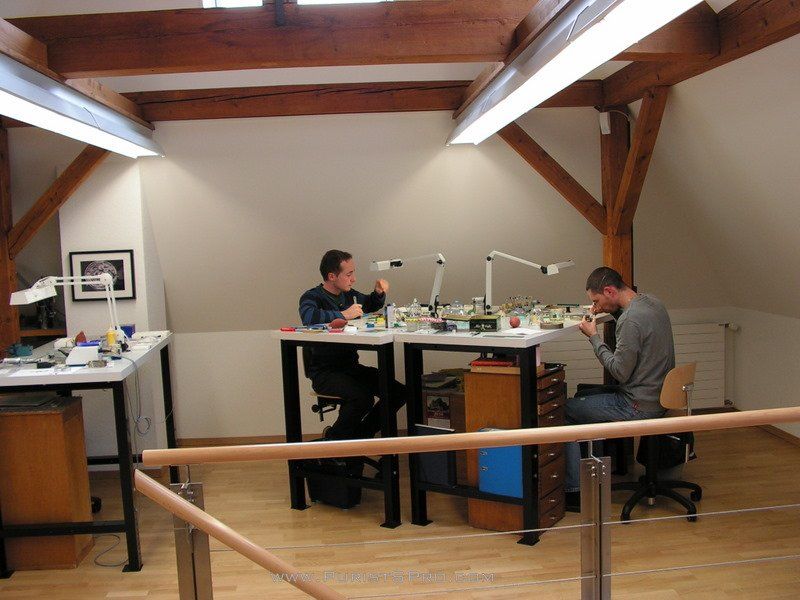
After some renovation work, mostly to turn the old attic into a wonderfully light flooded watchmakers shop, he has been making watches and completing the move of his shop during the last year. He says there is still much to do, but things look pretty good to me.
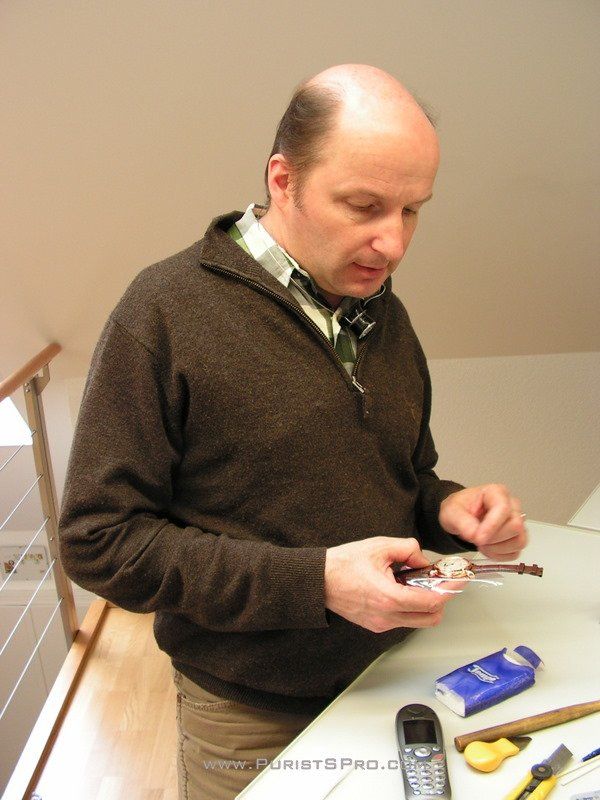
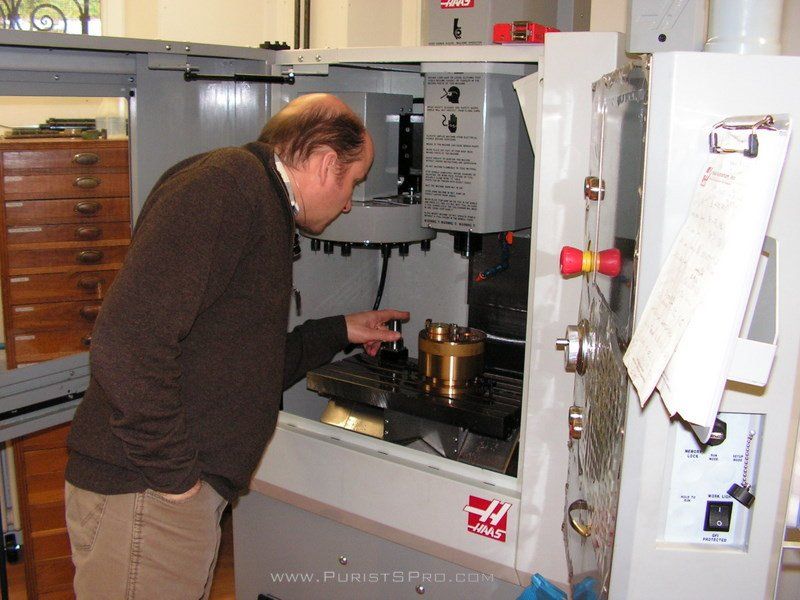
The big machines have moved into the cellar of the house. Here Kari showing me his new milling machine from Haas.
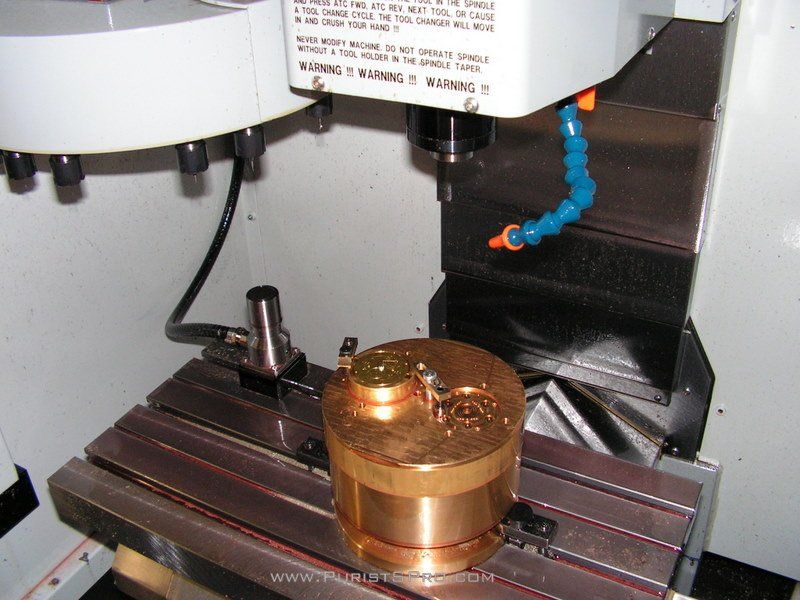
He presently has a fixture mounted to hold dials for their initial milling before moving on to the hand guillochage.
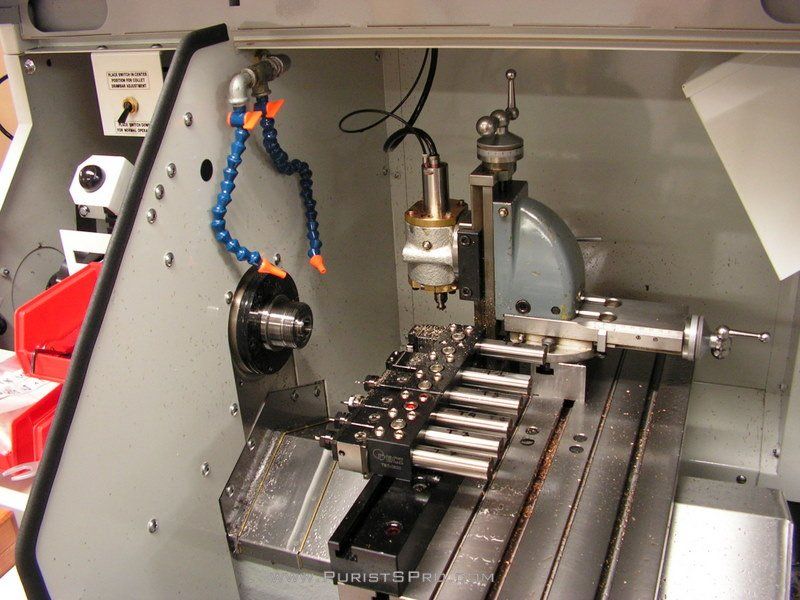
To this CNC lathe Kari has added a milling head from Schaublin as can be seen in the back. His allows gear cutting on this lathe. The machine is set up now to make the barrels for his new movement. The turning and gear cutting is all done in one pass to ensure absolute concentricity.
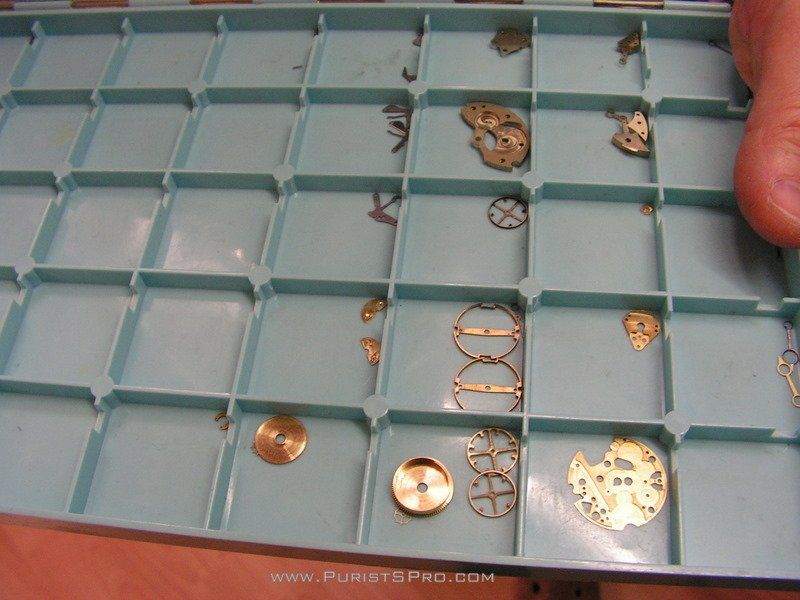
A small selection of the parts he has been making recently.
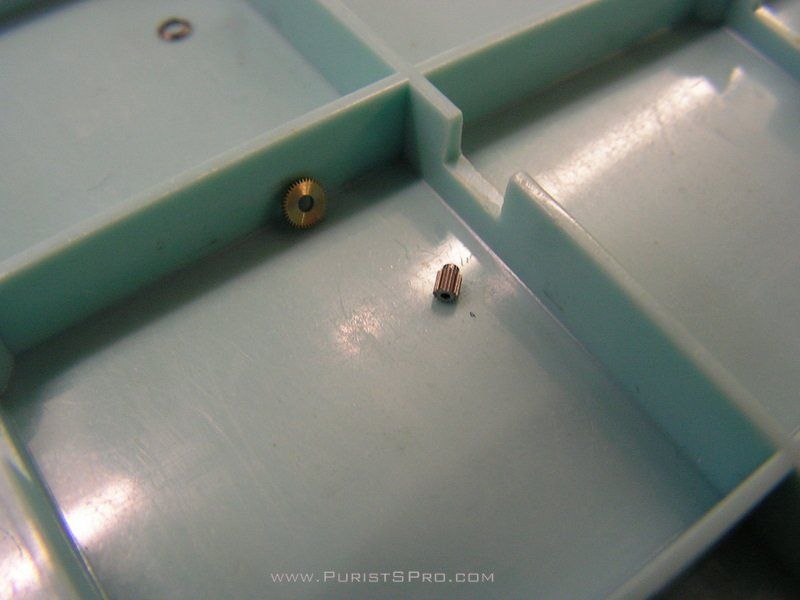
Note this tiny steel pinion. The hole in the middle is 0.3mm in diameter.
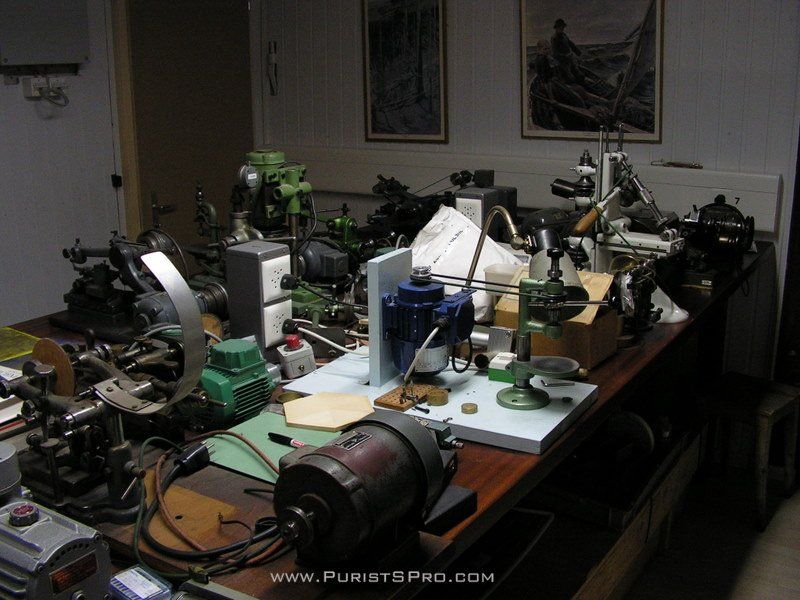
This table full of small machines for particular operations like gear
tooth polishing and other finishing operations came like this from the
old shop and is awaiting some time to be set up properly again.
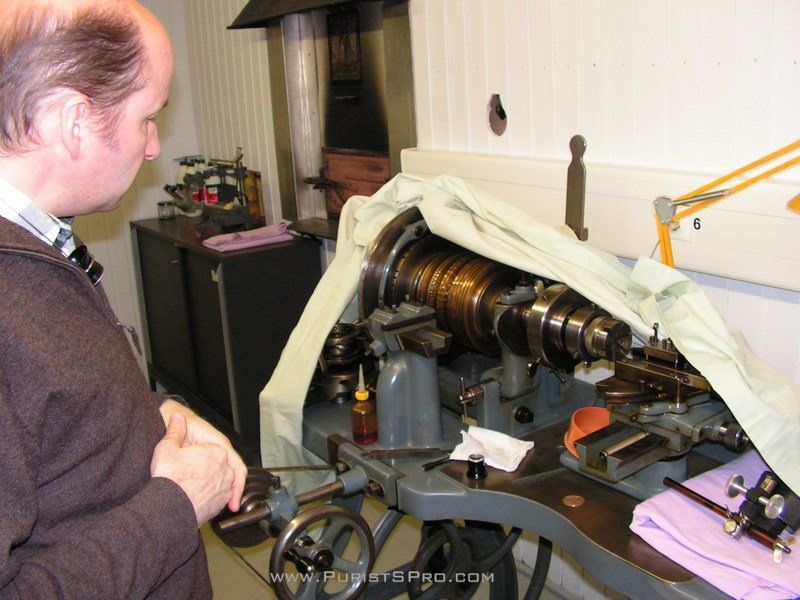
Here we see a reason for some great news from Kari. Soon he will be doing his own guillochage. Partially hidden by a cloth to keep it clean this is a rotary guillochage machine. I also saw two differrent machines for linear guillachage. This is very exciting and I can't wait to see the first dials done in house with these machines in Kari's shop.
Moving up from the cellar we come to the first matchmakers shops. Here they do the parts preparation before decoration.
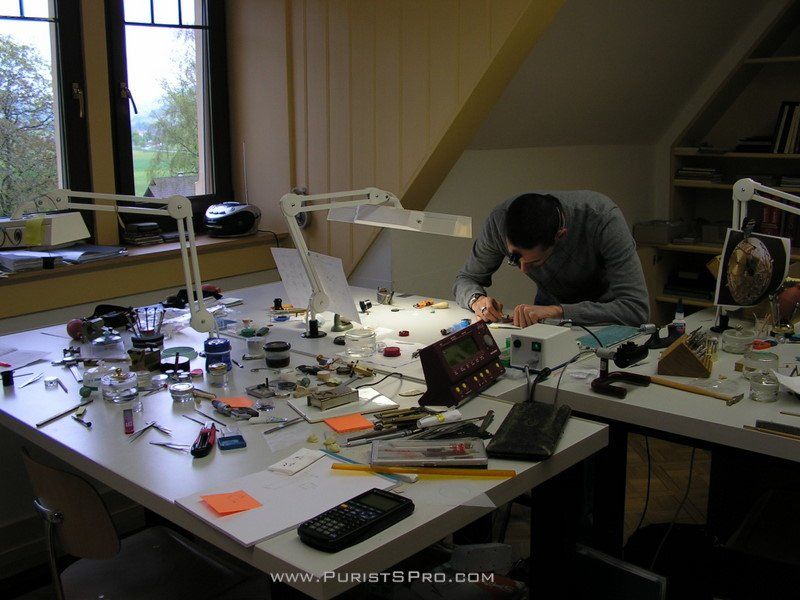
Here a watchmaker is preparing a repeater movement to place the jewels. I saw several repeater ebauches, kits of parts made in "the good old days". These kits were made by Le Coultre and are just the machined parts, not including the escapement and balance, and need a great amount of work to be completed.
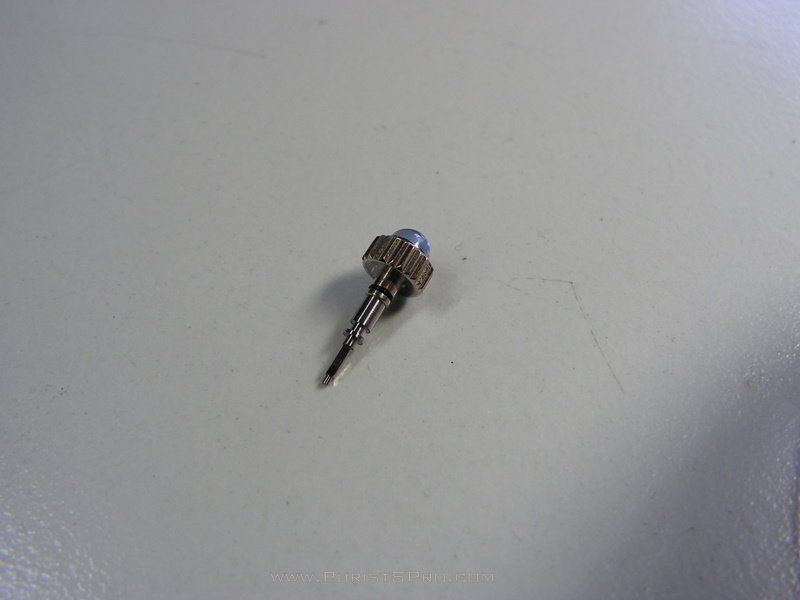
How do you like this stem assembly? Not that there is no further adjustment necessary, no cutting off to length of the stem. Stem and crown fit perfectly.
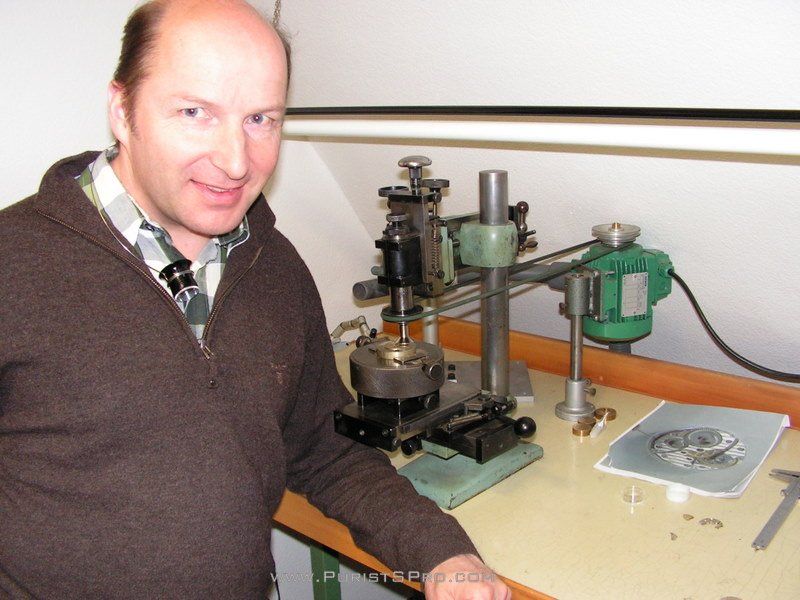
A machine for making côtes de Genève.
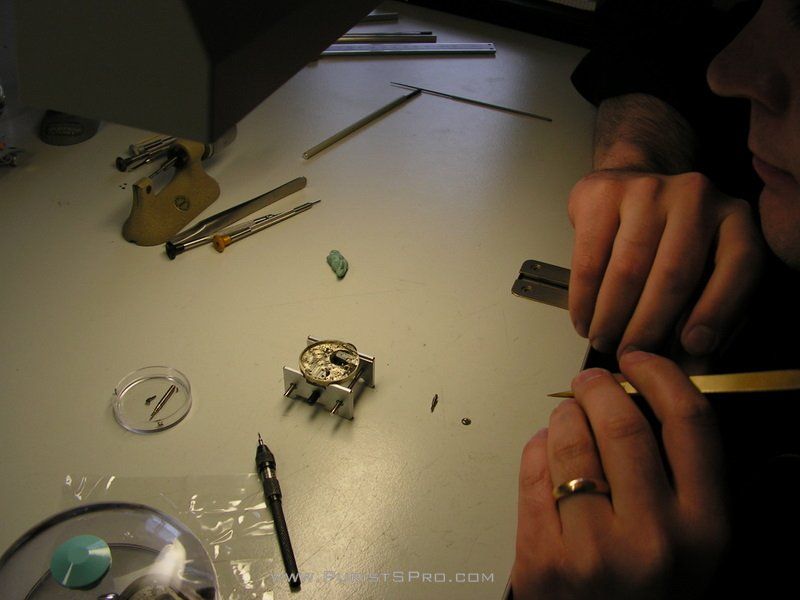
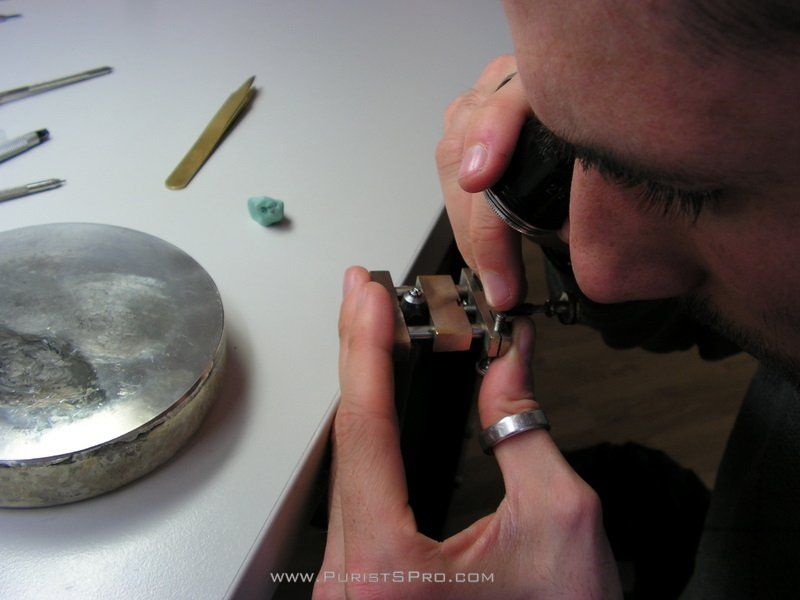
Note the care in screw polishing. One by one the screw heads are polished with increasingly fine abrasive. The abrasive is here on a bronze block. The jig is to present the head of the screw perfectly flat on the abrasive.
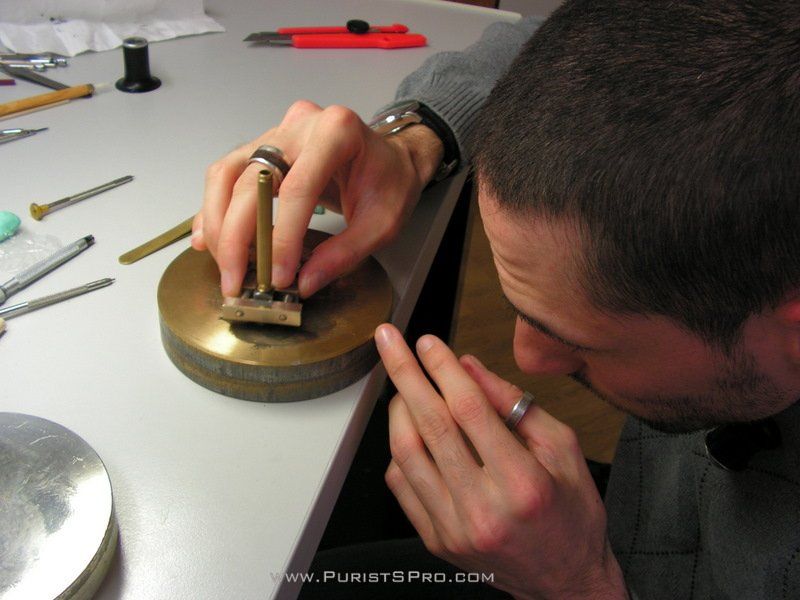
For the final polish the abrasive is on a tin block. Perfection is checked under the loupe.
You certainly all recognise this, one of the best known movements of the recent years. The Peseaux observatory movement as finished to perfection in Kari's shop.
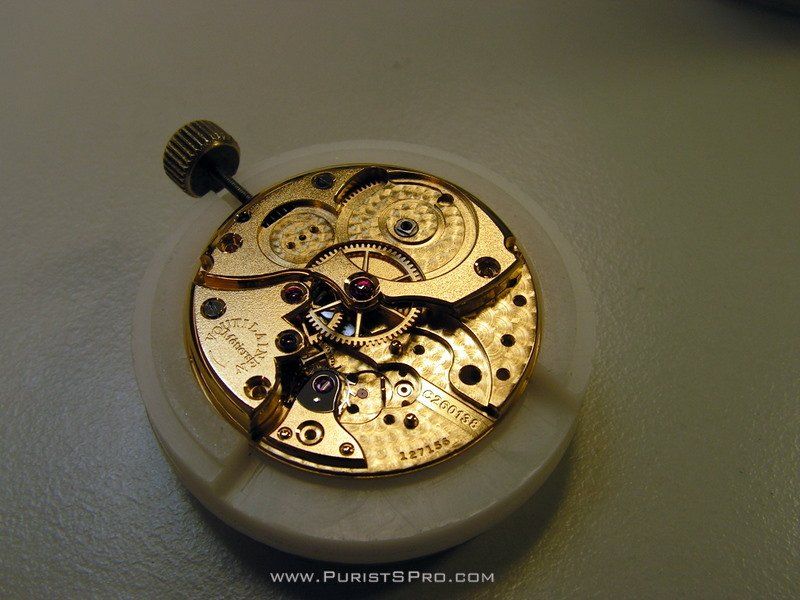
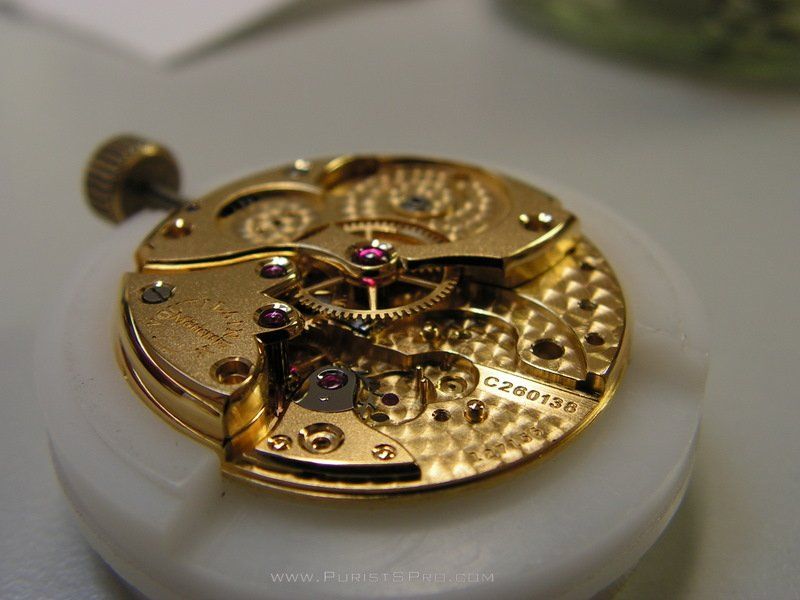
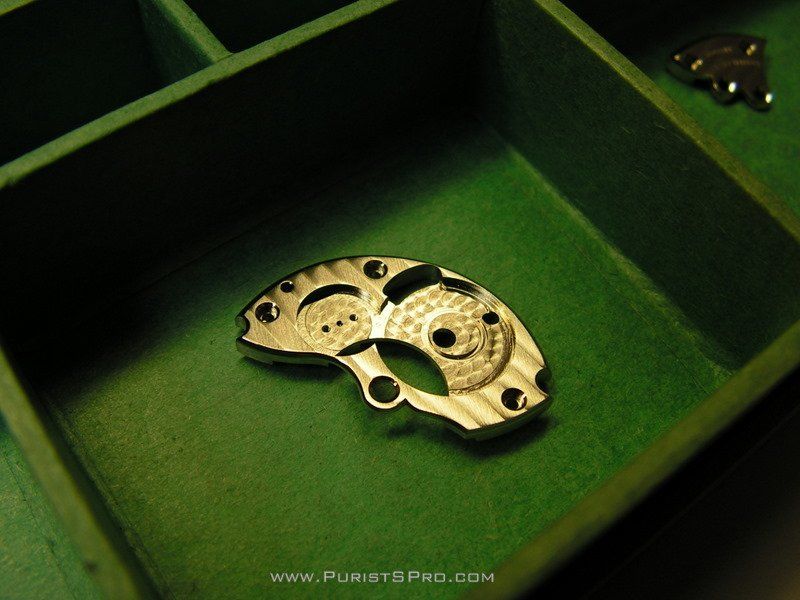
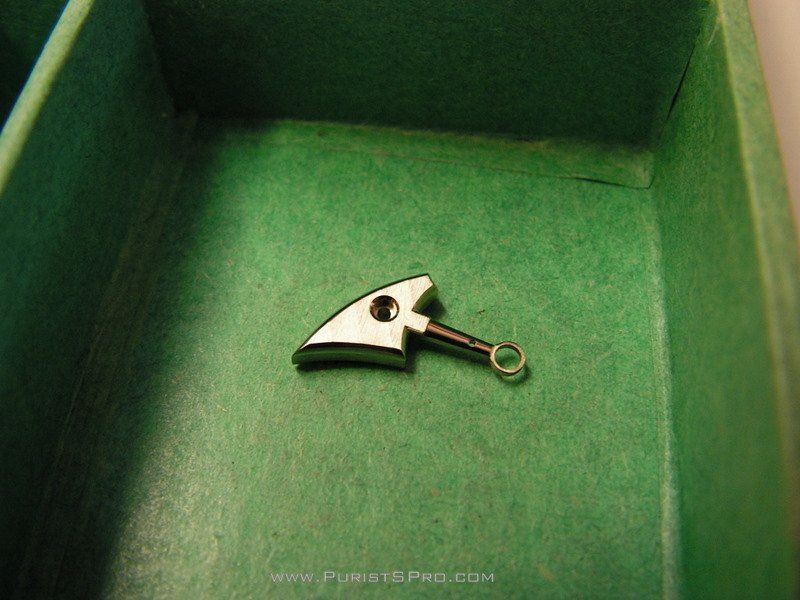
As Kari told me, these are parts of the very last Peseaux movement hes has. These parts are made of maillchort (German silver) and will not be plated, retaining the intrinsic luster of the maillchort.
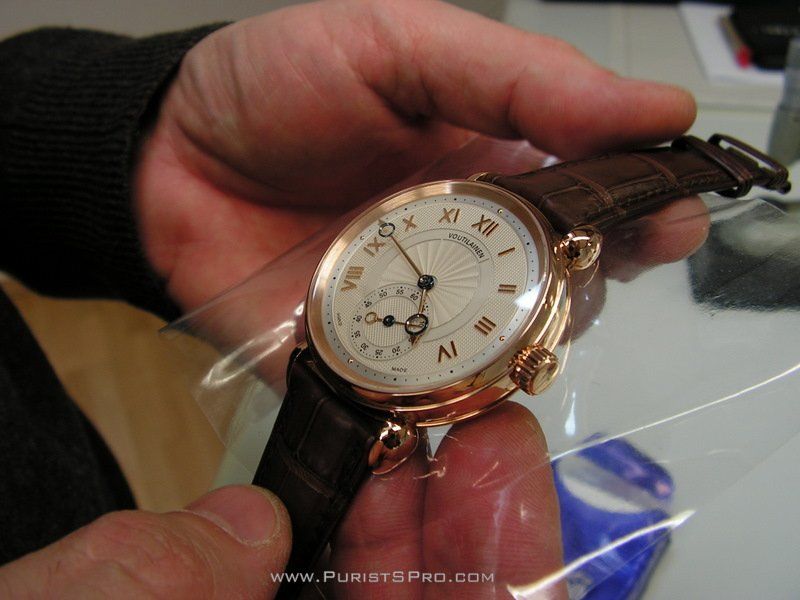
After all these parts now it is time for a completed watch.
Say WOW with me.
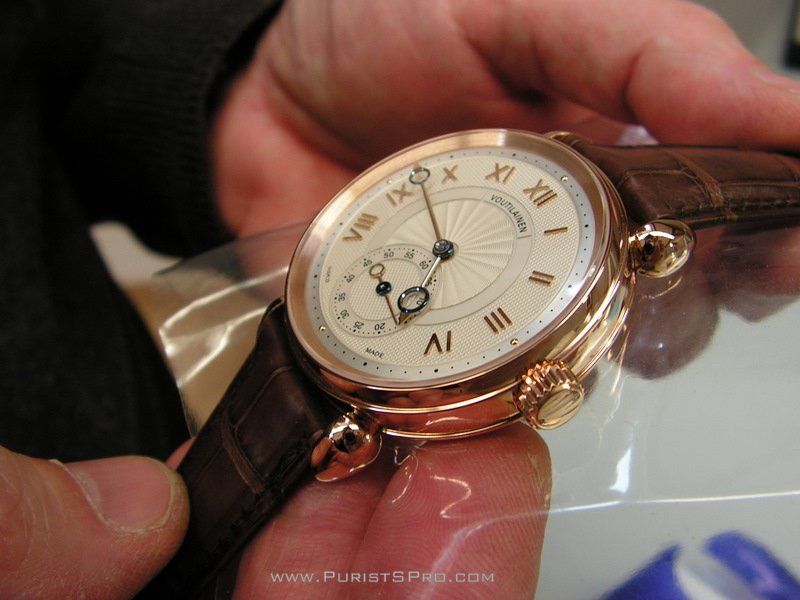
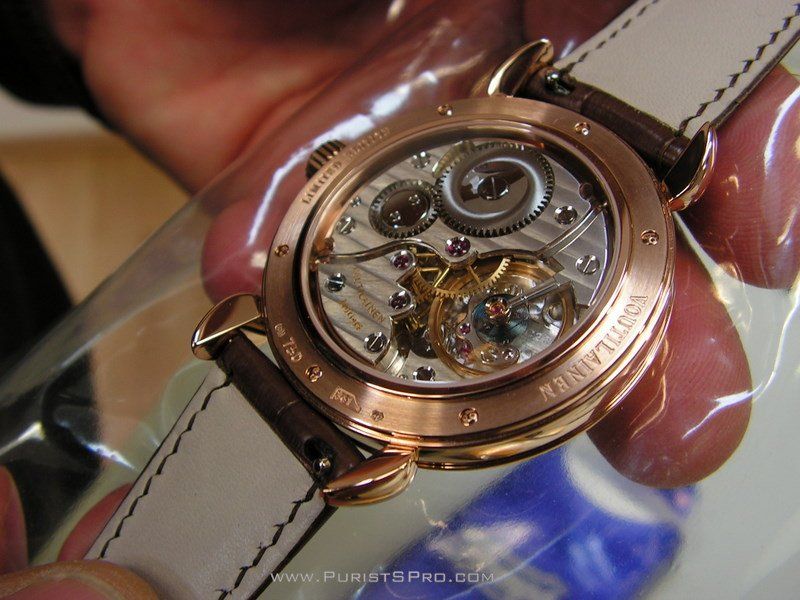
I hope you have enjoyed this visit.
You have certainly noticed, as I did, that the lack of any indication of what the new movement will be like.
The anticipation is terrible.
Don


