Andrew (219) offers an in-depth look at the Greubel Forsey Double Tourbillon Technique, a watch that exemplifies the brand's relentless pursuit of horological perfection. His article highlights how small, iterative changes and an obsessive attention to detail transform an already complex mechanism into a showcase of transparent engineering. This piece is particularly relevant for understanding Greubel Forsey's design philosophy and their commitment to pushing the boundaries of traditional watchmaking.
It’s the small changes that make all the difference; that almost fanatical obsession with getting it exactly right. While all the Greubel Forsey watches are finished to the limit of what is possible, the “Technique” watch was introduced to showcase the watches and the particular escapement. This was more than producing a skeleton version of the same watch, this was detailing the mechanism of the watch so that the owner could see exactly how the mechanism works. As such a number of changes were made over the original Double Tourbillon 30 Degree watch, and with it, the size of the case increased from the 43.5mm diameter up to 47.5mm. To still accommodate the average person’s wrist the lugs to the case were designed to curve around.

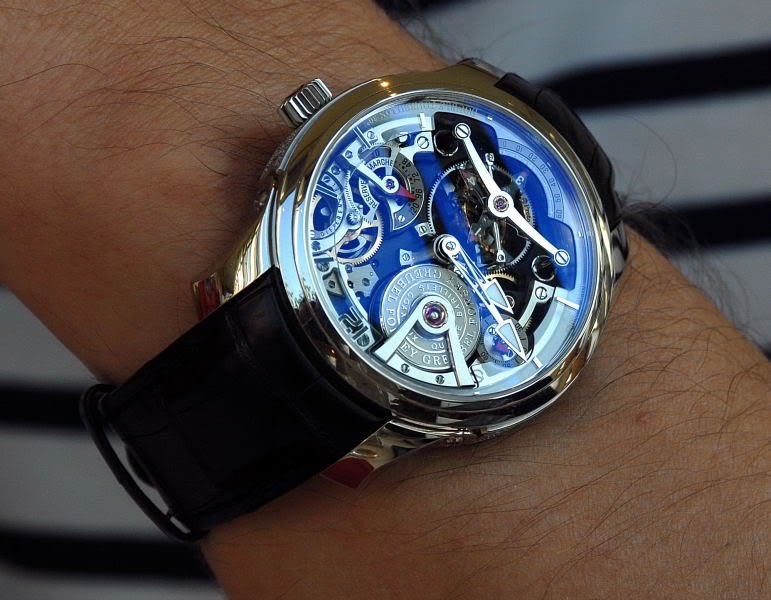
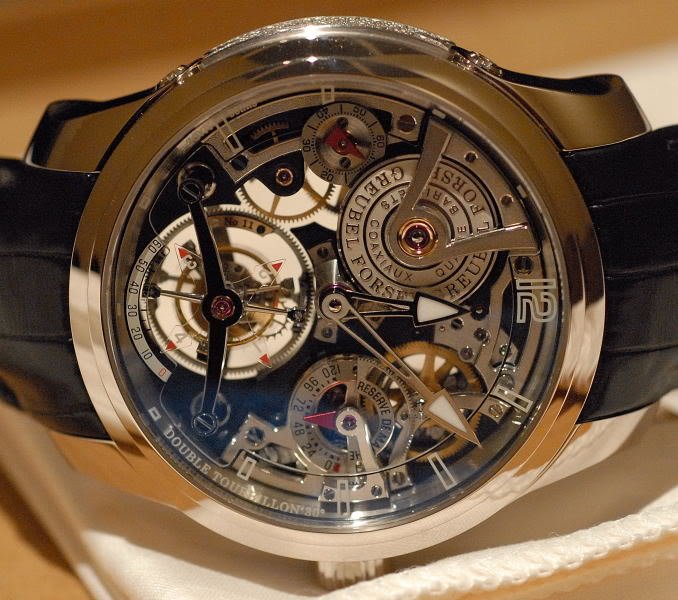
The Technique watche is a new chapter for Greubel Forsey. Announced at Basel Fair 2009 (http://ahci.watchprosite.com/show-forumpost/fi-16/pi-3065491/ti-507491/s--4/), the first watches are already all spoken for. Yet despite the near universal acknowledgement of the watch, Robert and Stephen continued to work on the design aspects of the layout and the differences in finishing on the component parts. The result is that the watch has improved. It is a painstaking process of building and re-designing and building the watch in an iterative process. A previous article (http://ahci.watchprosite.com/show-forumpost/fi-16/pi-3413786/ti-554326/s-0/) examined how Greubel Forsey use differences in finishing on surfaces to enhance the 3 dimensional aspects of the watch; the “Technique” builds on this.
The Original Form: the 30 Degree Double Tourbillon was the first invention from the two watchmakers when they set up Greubel Forsey. Since that first piece, the 30 Degree Double Tourbillon escapement has been featured in a number of watches: the Secret and the Invention Piece No 1. However, the “Technique” represents a whole new mechanism. The main spring has now been doubled up as a double barrel with four springs in series in a stack between 10 and 11 o’clock. The power reserve is increased, but the mainsprings occupy less space in the movements surface area. The drive train is clearly visible and runs at the back of the watch from approximately the 9 o’clock position around (clockwise) to the 1 o’clock position.
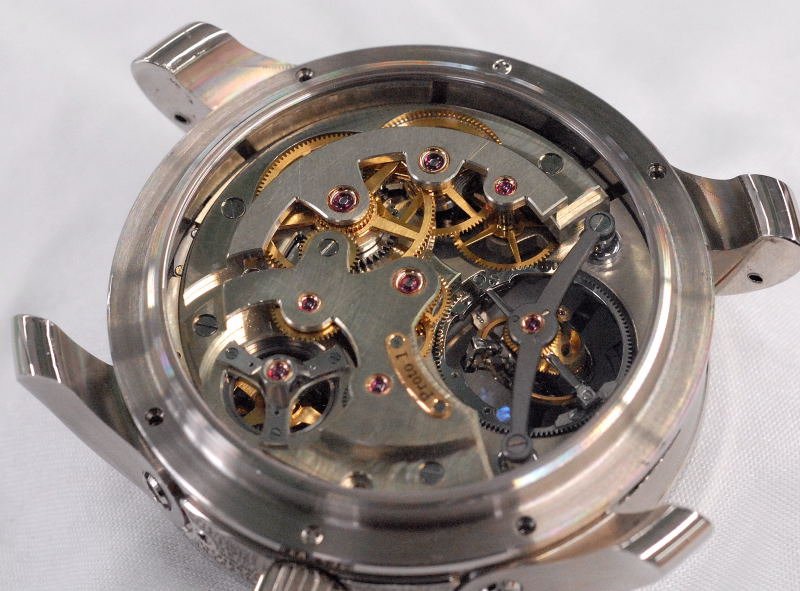
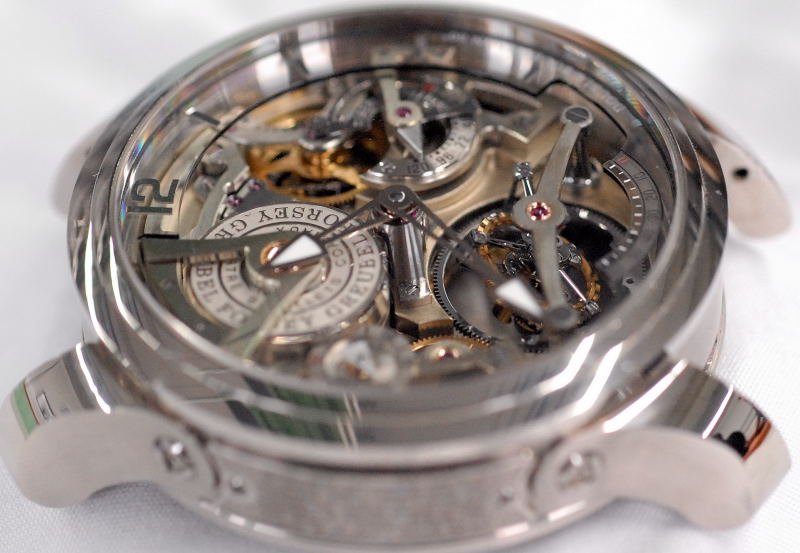
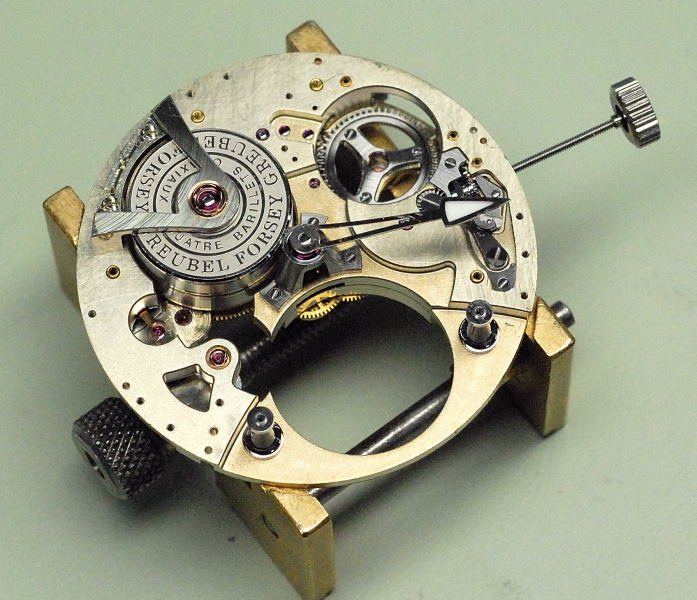
The 30 Degree Double Tourbillon system as the principal invention, is clearly visible once again; along with the differential on the power reserve. The whole process of developing the “Technique” (as with any Greubel Forsey watch) is one of developing the prototype and then making changes, testing it over a protracted period of time, dismantling the watch and examining if a part needs changing in any way. A watch as complex as this takes considerable time to assemble, test, dismantle, examine all the parts for wear and tear, for aesthetic effect, and then machine new parts as needed or desired, re-assemble the watch, and then for the testing to begin all over again. While I was at Greubel Forsey I was able to look at one of the prototype “Technique” being dismantled so that I could photograph the movement more closely.
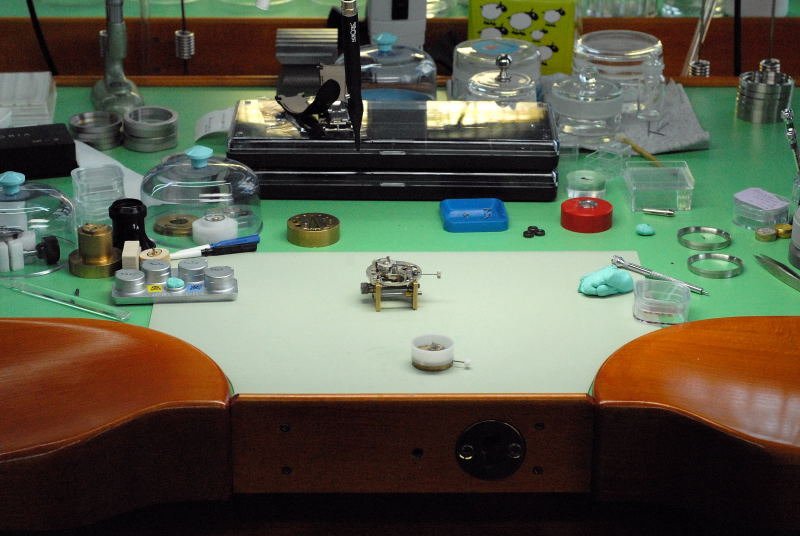
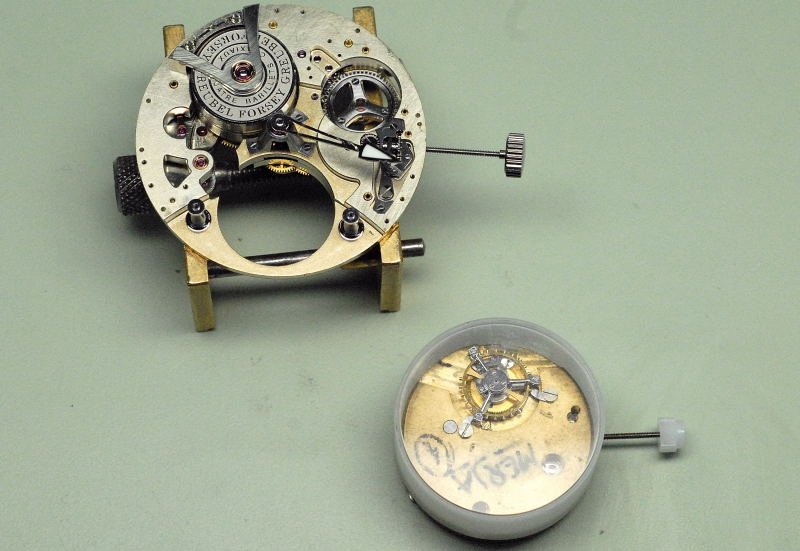
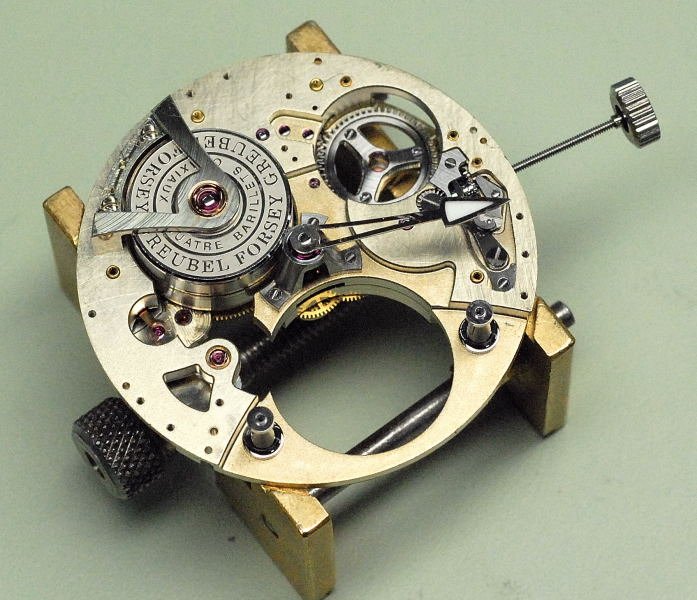
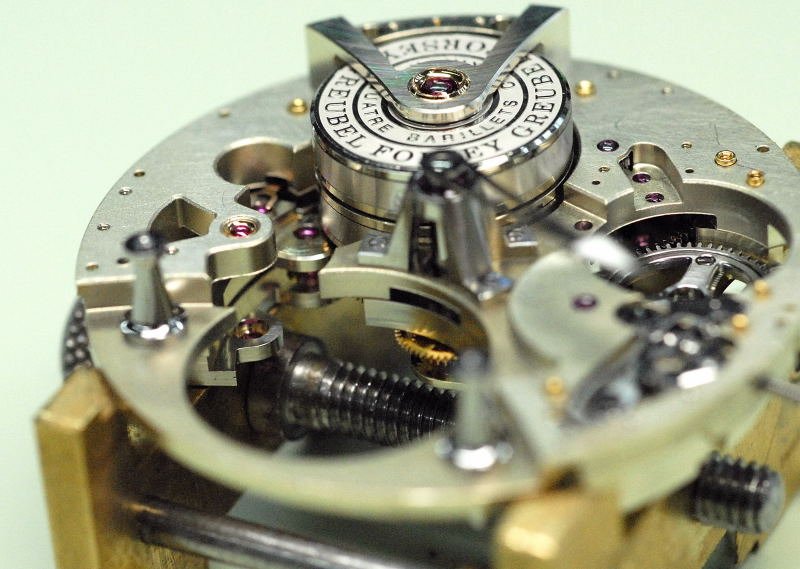
The half dismantled movement shows off how the movement is built up from the baseplate. The finishing on the barrels has the notable horizontal finish, the tower that holds the hours and minute hands can be clearly seen, along with the base for the power reserve indicator. Under the transparent dome is the one-minute rotation part of the tourbillion.
The decorative elements evolved over the development of the watch. The black background finish for the base plate is black chrome. Without it, the effect of the white gold or palladium finished elements is lost. Compare the non black base plate with the barrel bridge in the photos above. On top of the black background, new machining, CNC, and lathes make it possible to machine individual pieces from a single metal rod, to a far higher level of precision, and incorporating more complex forms for the pieces themselves. Instead of the bridges being ‘cut’ from the metal, they are machined and hence have individual edges, curvature, and form. The individual pieces, seen here in the trays before they are finished present something of a dual edged problem.
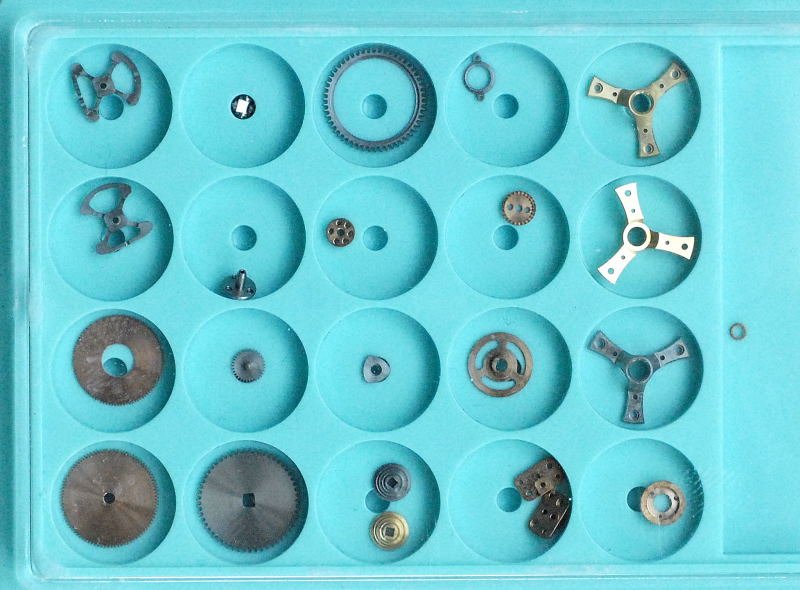
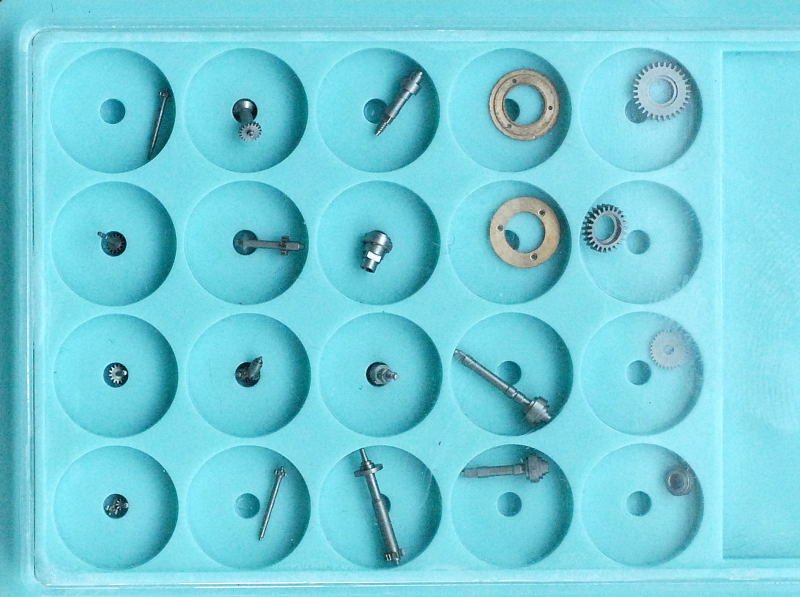
On the one hand, the new parts present more interesting forms to include in a watch where the whole movement is visible and ‘built-up’ from the baseplate. On the other hand, given Greubel Forsey’s attention to finishing, this presents a further problem of increasing the number of surfaces and the edges that are machined into the part. With the finishing, the sharp corners become decoration and highlight that component of the movement. Stephen described it as: “Each bridge and component has its own architecture.” Hence, the watch becomes more than simply taking the existing movement and producing a skeleton version; it really is producing something new with its own individual form.
Since the watch was launched, while small (almost imperceptible) changes have been made to the components of the watch; an addition of a corner, a difference in the surface finish, the most noticeable change has been to the sapphire ring that carries the numbers and markers for the hours. Take a look at the two photos:
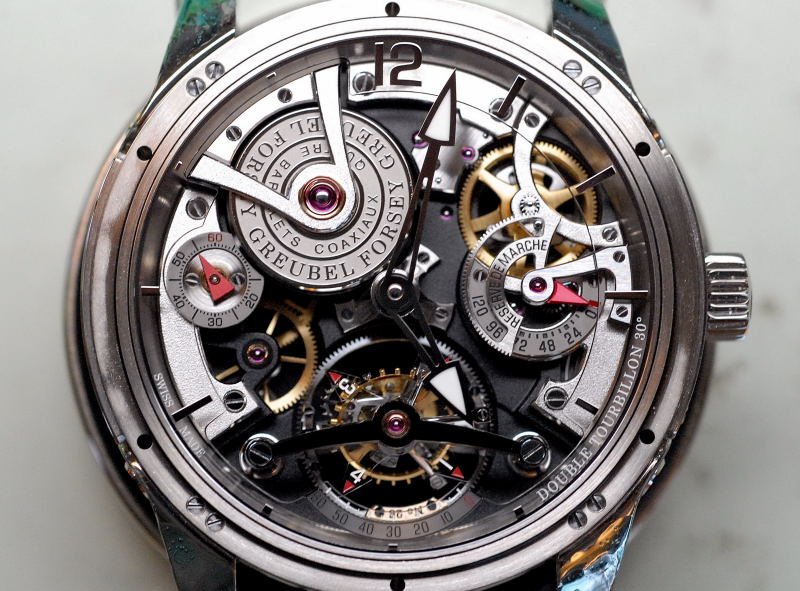
The first photo shows a Double Tourbillon Technique nearing the end of the production; the second photo was of last year’s Basel Fair prototype. The first and most noticeable difference: the number sapphire ring. In the second photo, the numbers and markers are simply printed on in white. When I first saw this version of the watch, I remember noting to myself how difficult it would be to read the time. But then, perhaps that was a secondary consideration as it would detract from the movement itself. However, it seems that Robert and Stephen were of the same mind. Rather than settle with what was shown at Basel, they have re-thought this detail of the time display. The second photo shows the final result. The numbers and hour indices are now metallic in order to provide improved reading. Added to the problem in creating the sapphire numbers and marker ring is the polishing and beveling on the edges.
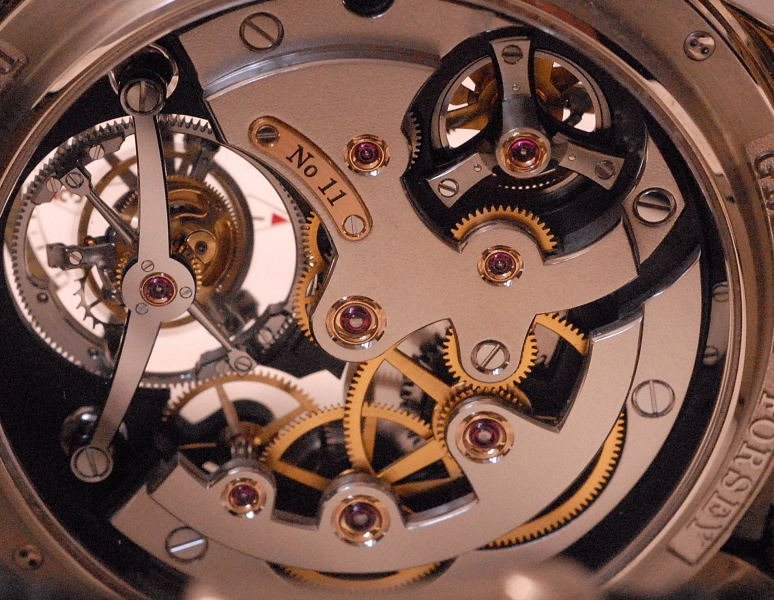
It looks simple, innocuous, but getting the sapphire ring with the numbers and markers on has been one of the two most difficult parts to complete for the watch. The other is the barrel cover. Robert and Stephen wanted this to be both engineering (in that the configuration of the mainspring had been altered over the other 30 degree double tourbillon watches), but also art. The barrel relief is engraved, then polished. To get the relief to the required level of finish was also an area of (almost unseen and undetected) changes so that the relief on the barrel in the end was sufficiently visible, but not overpowering in terms of the rest of the movement. It took a year to get the barrel cover right; the font was wrong, the barrel cover metal was too thin, then too thick. Engineering as art takes time! The importance of getting the winding barrel right becomes apparent when winding the watch; the barrel rotates and can be seen from the relief on the barrel cover.
With the advent of the new “Technique” watch, Greubel Forsey set about making other changes to the peripheral material of the watch away from the movement itself. First, was the increase in diameter for the case; from the 43.5 millimetre case to a 47.5 millimetre. Without the additional 4 millimetre’s in diameter the movement looked cramp, and the component parts could not be separated out to be more clearly visible. Second, a message to the collector was included on the side of the watch to illustrate the fundamental values and codes of Greubel Forsey.
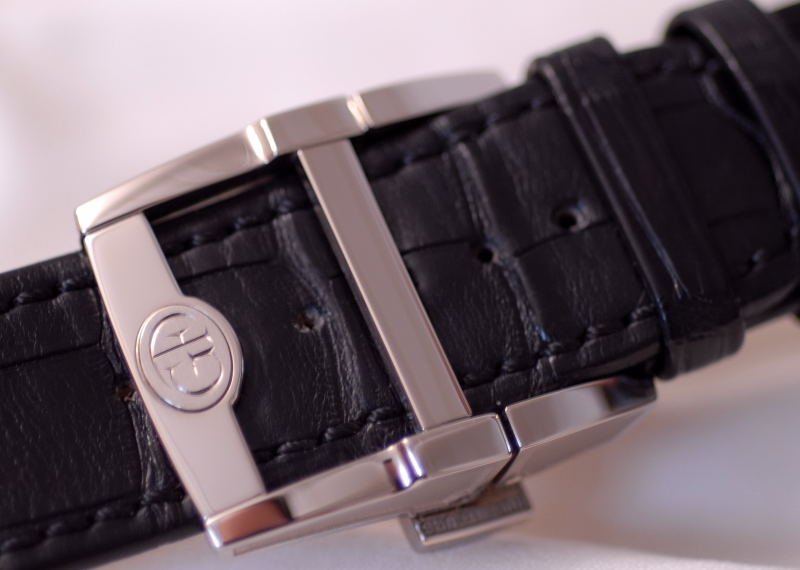
Third, with a case of white gold and more technical lugs secured by screws, Robert and Stephen decided to make a special new clasp and strap. With the Double Tourbillon “Technique”, Greubel Forsey introduced a new and technical clasp instead of the usual tang buckle. Once again, the attention to detail is evident.
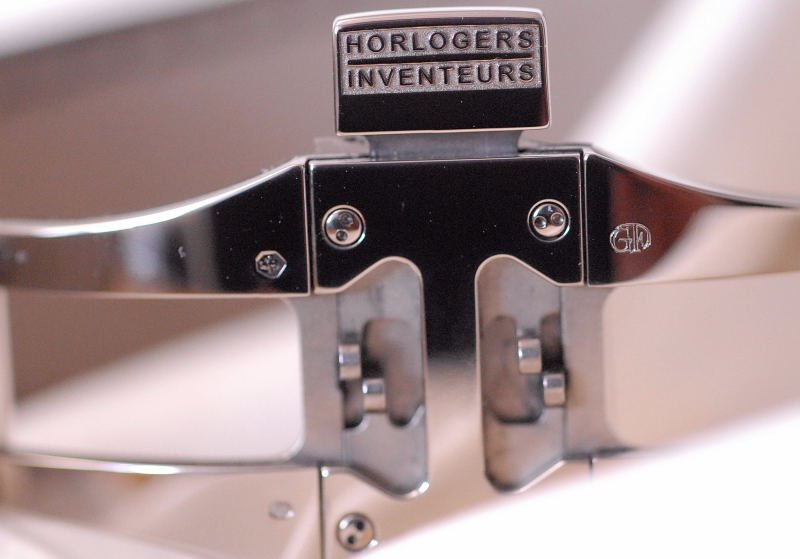
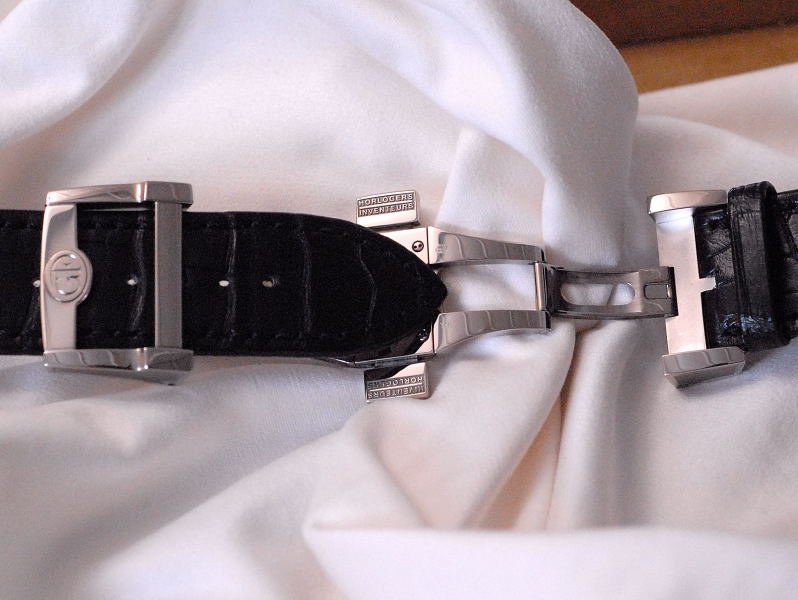
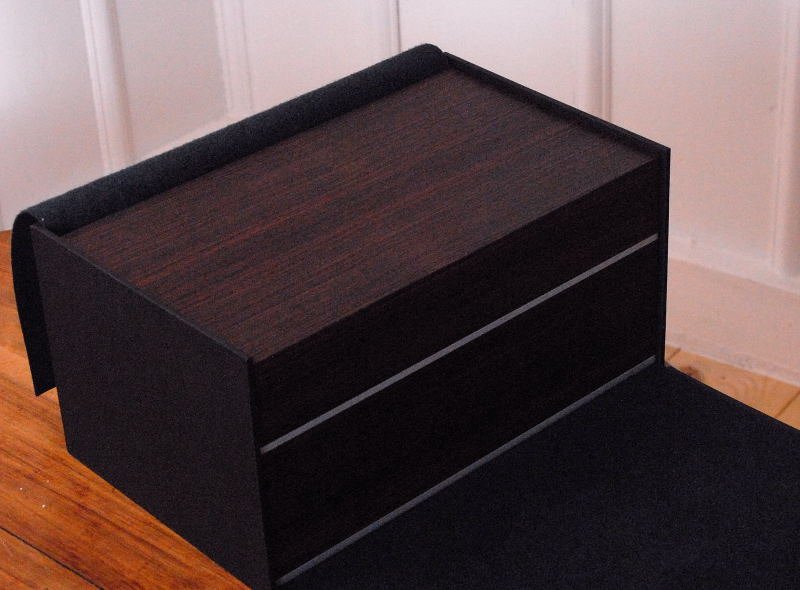
The mechanics to the clasp are operated by two pushers and the execution is in the details. First, the weight of the clasp is noticeable as it is made from white gold. The second point to the execution is the finishing and the elements such as ‘Horlogers/Inventeurs’ engraved on the clasp release catch.
The watch box has been redesigned with Madagascan hardwood, where the watch is protected by a top opening that can only open if the upper lid is in place.
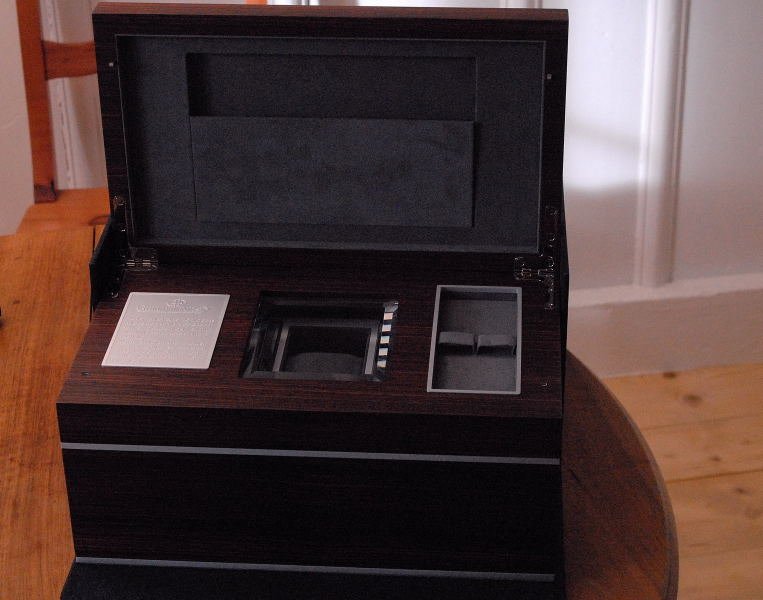
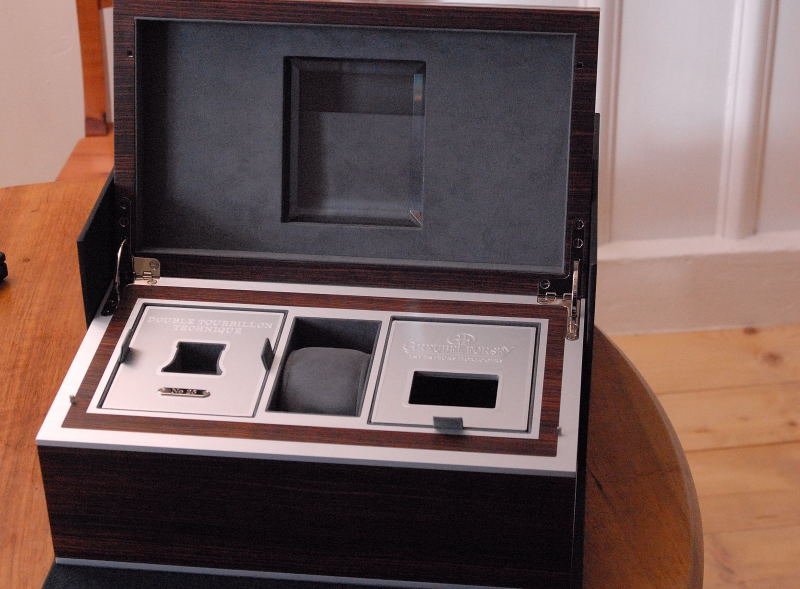

There is no doubt that the “Technique” a new dimension for Greubel Forsey and their circle of collectors. The watch undoubtedly shows to the utmost extent their skills in both engineering, design, and finishing. It is hoped that the “Technique” series will be continued to show case their inventions to date in new and innovative ways. I, for one, am definitely looking forward to seeing a version for the 24 Second incline – if that is in the future at any point.
Thanks for reading
Andrew H
This message has been edited by AnthonyTsai on 2010-02-23 21:15:58