De Bethune: Early Innovations & In-House Calibers
Independents

De Bethune: Early Innovations & In-House Calibers

By Ornatus-Mundi · Feb 24, 2013 · 15 replies
Ornatus-Mundi
WPS member · Independents forum
15 replies8985 views0 photos
f 𝕏 in 💬 🔗

Ornatus-Mundi's exploration of De Bethune's early innovations offers a crucial look at how the independent manufacture established its distinctive aesthetic and technical language within just 11 years. This article highlights the foundational design principles and in-house movement developments that continue to define De Bethune's unique position in haute horology. Readers gain insight into the brand's commitment to pushing boundaries in both form and function.


Visiting De Bethune is for us, Oliver and Magnus, always like visiting a toy store when we were kids. So much tempting timepieces to see, so many interesting developments both in terms of technology and design.

What De Bethune achieved in its 11 years of existence is nothing short of admirable. They managed to develop their very own aesthetic and technology language. The former is very much rooted in renaissance whereas the latter in enlightenment, so it seems. So full, thrilling and universal is the history of developments from La Chaux l'Auberson.

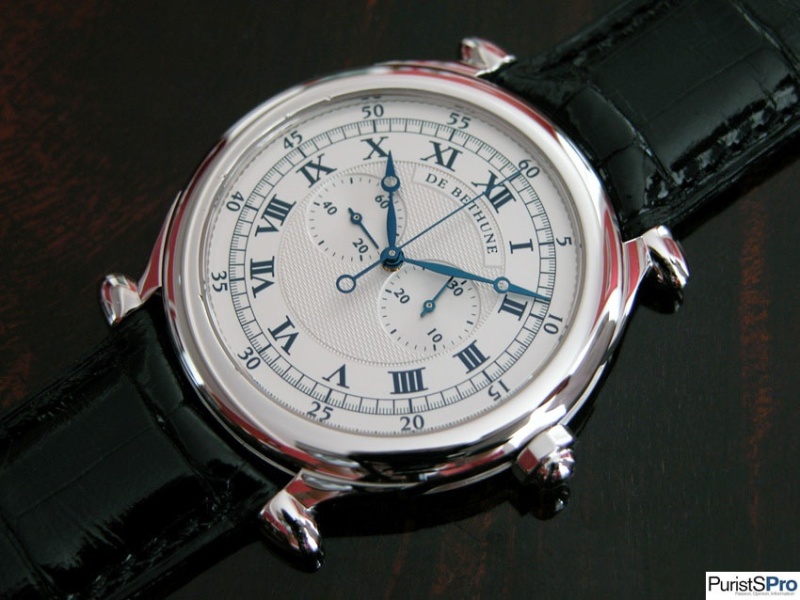
The advances have been achieved in a well-orchestrated manner, starting with the development of a design language that is still recognisable today (how's that for 'classic'?). For example, the trademark ogival lugs which debuted in the original pieces (DB1, DB2) can be found in any De Bethune wristwatch produced to far (even pretty abstracted in the Dream Watches). Here a DB1 monopusher chronograph:


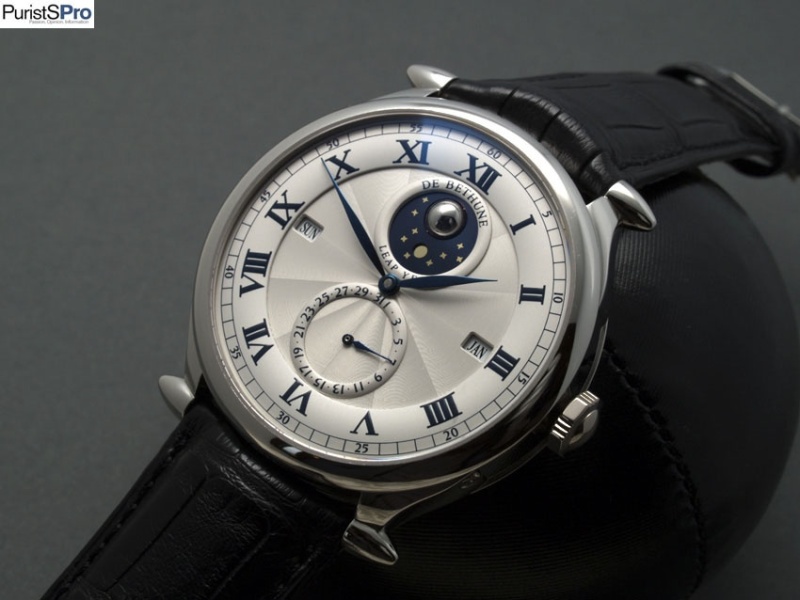
The presentation in 2004 of the instantaneous perpetual calendar watch DB15 marked a two-pronged turning point for the manufacture: A change in design paradigms and a technical milestone:


1.) Design Paradigms:
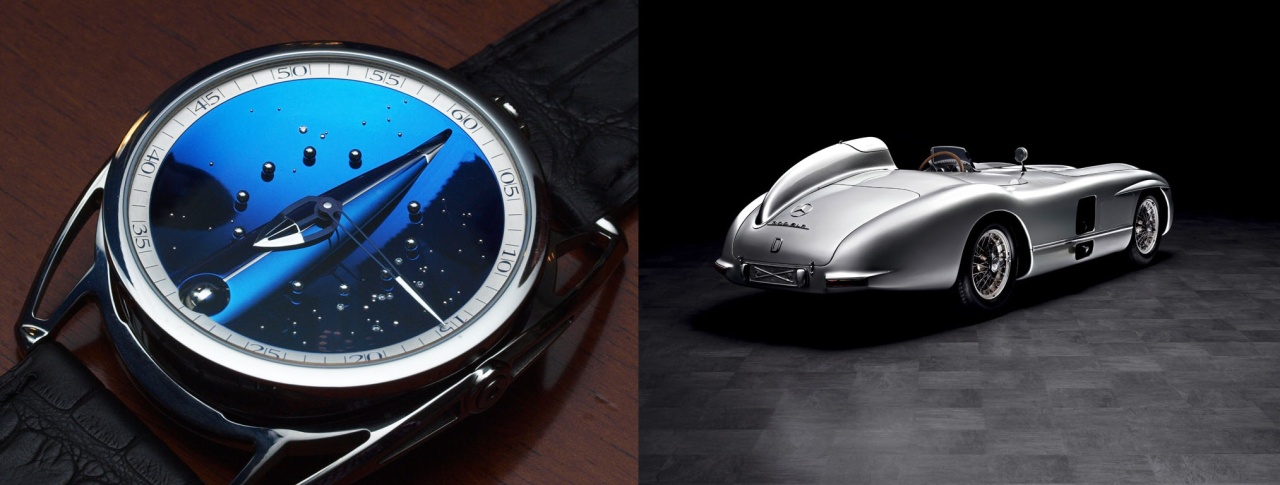
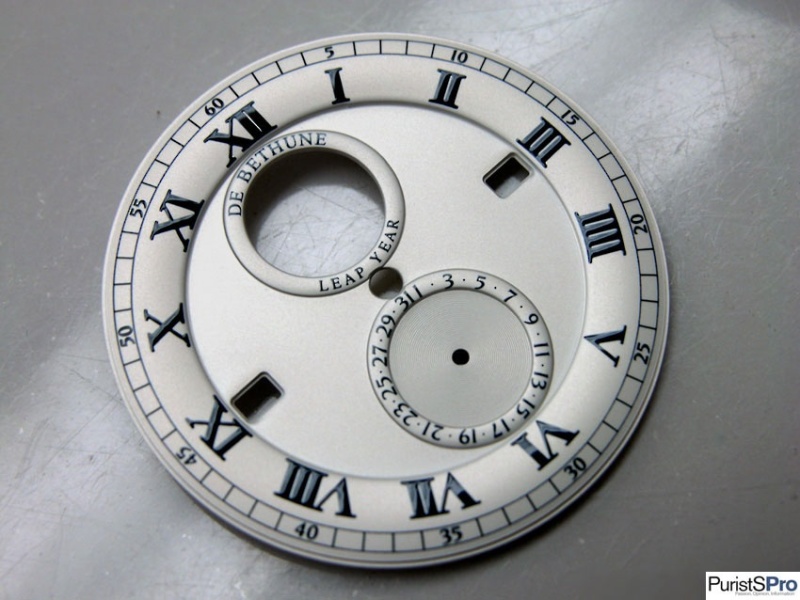
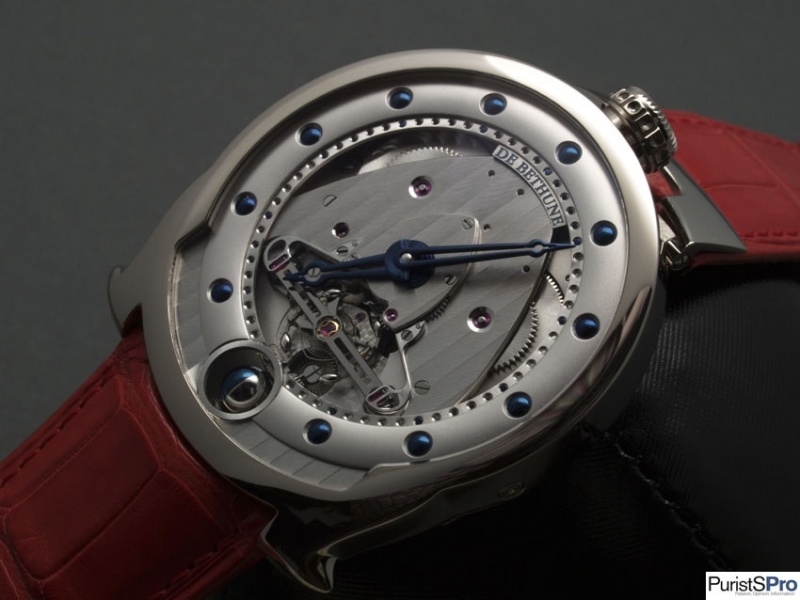
With this watch De Bethune began to explore the third dimension on its watch dials: For the first time a masterfully conceptualised landscape of plains, atolls and tiny recesses brought additional thrill and suspense to the already beautifully crafted dials. This was clearly a consequence of the dial-making capabilities acquired by the manufacture:


2.) Technical Milestone:
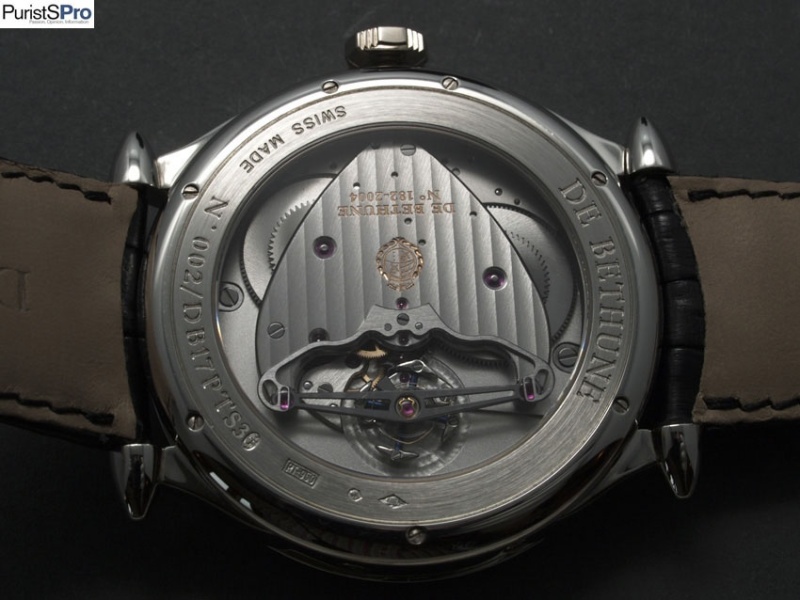
The second change the DB15 brought about was a technical one: For the first time De Bethune mastered all necessary disciplines to produce its first in-house calibre (DB2004) entirely developed & manufactured by the firm.


This movement, with its heart-shaped main bridge, was a milestone because it not only offered a unique design and a long power reserve, it proved flexible enough to incorporate all the radical technical innovations De Bethune's technical genius Denis Flageollet devised. These include:
  1. the heart-shaped movement blueprint
  2. unconventional escapements incorporating novel material (silicium, titanium, palladium, platinum)
  3. multi-parachute shock absorber systems
  4. spherical moonphase indications
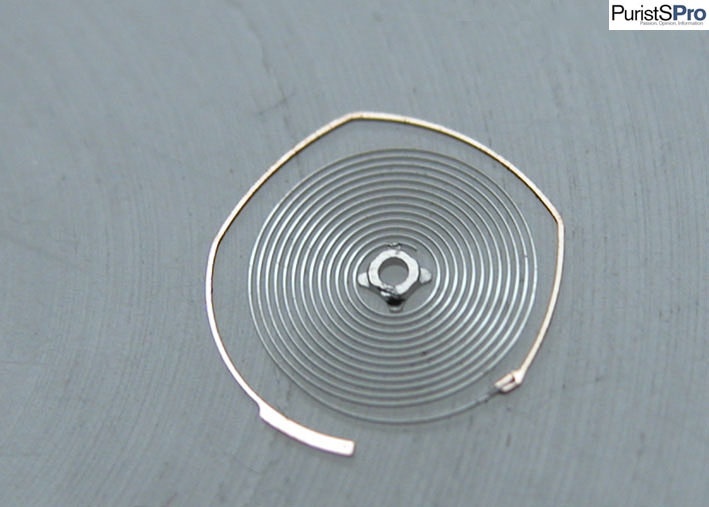
We'd like to delve a bit deeper into the progress made in terms of balances and hairsprings. The core of the technology lies in a proprietary flat two-element hairspring that combines the advantages of a Breguet hairspring (equally free "breathing" of the hairspring) with those of a flat one (flatter, avoids problems introduced in the bending process of the an overcoil, resulting in internal disturbances of the sensitive spring). In addition, its 20% lighter than conventional balance springs.


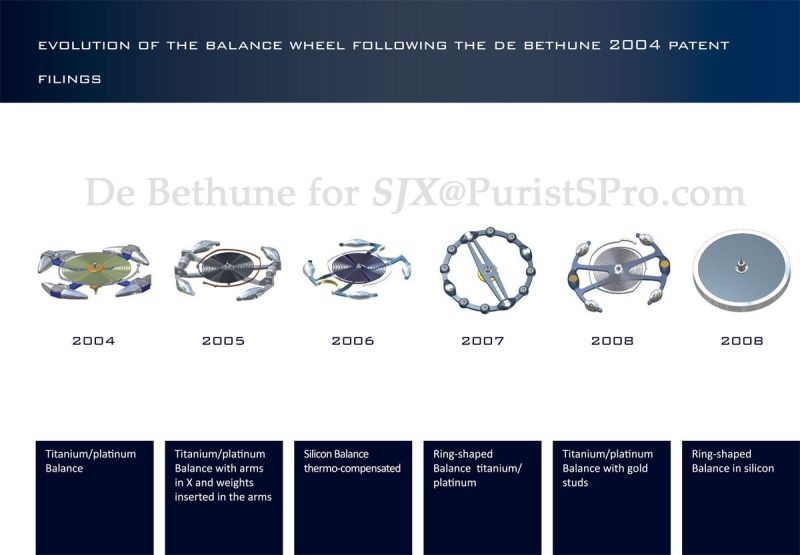
The second crucial element comes from intensive research in balance wheel design. Notably, De Bethune dispensed with the conventional ring-on-spokes balance and replaced it with those of totally unique shapes (cross- or y- shaped open balances) resp. round ones with novel materials and production technologies. The aim was to produce isochronic oscillating systems with an ideal inertia-mass ratio ("the lightest balance with the relatively highest inertia") using ultra-light materials for the central part, e.g. silicium (2.65 g/cm3 ) or titanium (4.49g/cm3), and increasing its inertia by outside weights made in platinum (density 21.45g/cm3).  

The silicium parts are produced in particle accelerators and are practically adjustment-free.

We always eagerly anticipated the inspection of any De Bethune piece in the previous years, it was always thrilling to see where the escapement technology has led them. It was almost guaranteed that you could spot something totally new even it you viewed the same watch model - so rapid was the pace of progress there! As of 2008, the technology seems mature (image taken from an article prepared by SJX):


It is thus no overstatement to consider the DB15 the ancestor for all current De Bethune watches. without this watch none of the subsequent collections would be possible.

A second cornerstone is the DBS which debuted the open-worked dial showcasing the movement bridge and also introduced the floating lug concept of many of the more avant-garde De Bethune watches.


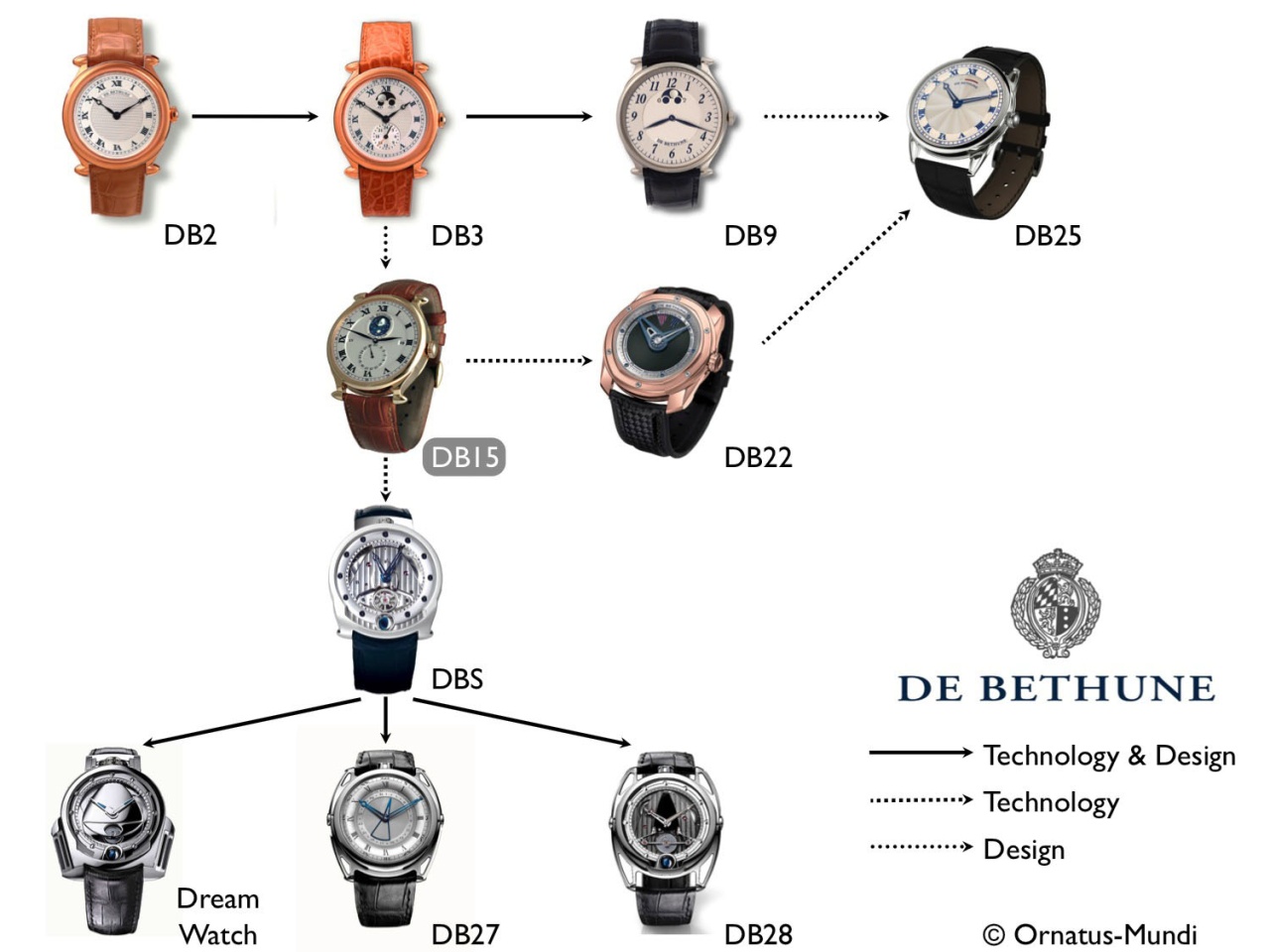
In the following image we attempted to illustrate the 'bloodline' of the current De Bethune watches by putting the - according to our understanding - landmark pieces into relation:


With this background we think we are well prepared for the presentation of the novelties 2013!

Due to the wealth of images - this comes in two parts, part 1 (DB16 and DB25) today, the rest including our conclusions later this week!

Magnus & Oliver


This message has been edited by Ornatus-Mundi on 2013-02-24 12:35:27

About the De Bethune DB25 Ref. DB25

De Bethune DB25 Reference DB25

The DB25 represents De Bethune's entry in the 44.5mm manual-wind category, distinguished by its silver dial configuration within the DB25 series. This reference launched in 2006 and continues the brand's approach to contemporary haute horlogerie complications.

The 44.5mm case is crafted from 18k white gold with a fixed bezel and sapphire crystal. Water resistance extends to 30 meters. The manual-winding caliber DB2105 movement provides a substantial 120-hour power reserve. The watch features a leather strap attachment.

This reference appeals to collectors seeking De Bethune's technical approach to timekeeping in a precious metal case. The extended power reserve and manual-wind operation position it for enthusiasts who appreciate hands-on interaction with their timepieces. The 44.5mm sizing places it in contemporary proportions within the independent watchmaking segment.

Specifications

Caliber
DB2105
Case
18k White Gold
Diameter
44.5 mm
Dial
Silver
Water Resist.
30m
Crystal
Sapphire

Key Points from the Discussion

Advertisement
The Discussion
OR
Ornatus-Mundi
Feb 24, 2013

DB16 Tourbillon Regulator This watch has caused some frowning among watch connoisseurs - a regulator with a 'normal' dial? We'll come to this later. First we want to look back to its roots. These are of course laid in the DB15 , but the direct predecessor is the DB17 , essentially a DB15 with a more 'baroque' case (e.g more 'fleshy' bezel and more pronounced dial depth, classic style 'pomme' hands): Of course it features the 3D moon display... .. and thus looks almost identical to the DB16: That

OR
Ornatus-Mundi
Feb 24, 2013

DB25 Collection Let´s start as a warm-up with something you probably all know, the DB25WS3 (44mm, mechanical self-winding movement) with blued titanium microlight dial and hand-polished steel hands: On the next picture you get a first hint about what is new. Can you already spot it? (40mm, 39mm and 44mm cases) What looks like a DB25WS1 (far left) misses the power reserve indication on the dial (optional) and 4mm on diameter. On top you get options when it comes to the movement - self-winding or

FO
foversta
Feb 24, 2013

The DB16 is one of my fav watches of the week. A fascinating piece. Thanks for the post! Fx

FO
foversta
Feb 24, 2013

I consider that the right size for the DB25 is 44mm. Because it is the original size, because the larger dials are more enjoyable to fully appreciate the DB finishings (especially with the DB25L!!!), because the lugs are very short... Anyway, these watches are more suitable for smaller wrists but if I had to choose, I would not hesitate: if you can wear the 44mm, the larger size is the preferred one! Fx

MA
Mark in Paris
Feb 24, 2013

The duo striked again, I felt a real pleasure in taking time to read these articles. One thing I noticed on the last DB16's pics I saw around is the watch's thickness. I must say it seems to be really thick, a little bit too much I would say. Anyway, the bezel width is very interesting and pleasing. I noticed in the first part that you shot a QP dial, but this one wasn't decorated with the traditional sun rays: was it a prototype that could be integrated in the DB15 or was it just an unfinished

MA
Mark in Paris
Feb 24, 2013

Maybe the answer is that it is so different that it is just another watch. I noticed that the hands have a different (skeletonized) base in the 40. I presume it was made to lighten the hands in a smaller dial. Furthermore the power reserve is "eating" the hour ring, and I think this is something I don't like. I also noticed that these hands are not slightly curved anymore on the power reserve version (at the right end of them): It was a nice shape that disapeared here. Finally, the watch seems t

Advertisement

Continue the conversation

This thread is active on the Independents forum with 15 replies. Share your knowledge with fellow collectors.

Join the Discussion →