Chronomètre Jean-Baptiste Viot: French Independent
Independents

Chronomètre Jean-Baptiste Viot: French Independent

By foversta · Feb 28, 2010 · 44 replies
foversta
WPS member · Independents forum
44 replies19523 views27 photos
f 𝕏 in 💬 🔗

Foversta introduces Jean-Baptiste Viot, a talented French watchmaker making waves in independent horology with his eponymous Chronomètre. This article highlights Viot's extensive background in prestigious houses and antique clock restoration, emphasizing how his unique vision and commitment to maintainability shape his creations, drawing parallels with other independent masters like Kari Voutilainen.

There are a lot of very talentous french watchmakers: François-Paul Journe, Denis Flageollet, Vianney Halter, Christophe Claret... but they all work for compagnies based in Switzerland.

One of the most interesting French watchmaking projects takes place in the eastern side of Paris. It comes from Jean-Baptiste Viot, a young watchmaker (b. 1967) who has decided to develop his own watch after years of working in prestigious houses.


The most fascinating point in the independant horology is to see how each watch is inspired by the background, the history, the vision of its creator. This is the case here too with Jean-Baptiste's watch and it is the reason why, we need to have to come back to his background.

Jean-Baptiste began his training in 1983 as a repairer watchmaker at the municipal school of watchmaking of Paris, continued in 1986 at the Ecole  Technique de la Vallee de Joux and in 1988 at the International Watchmaking Museum in La Chaux-de-Fonds leading to his graduation of Antique clocks repairer watchmaker.Then, in Daniel Gendron's workshop located rue Saint-Jacques in Paris, Jean-Baptiste improved his skills. After his National Service in 1993, Jean-Baptiste was back to Switzerland to start working at HDG (Haut De Gamme), a newly created brand (and sold in 1999 to Vacheron Constantin) which became a sub-contractor for prestigious brands.

Jean-Baptiste initially worked on assembling and adjusting a QP Patek Philippe and then designed and created complicated mechanisms such as a QP add-on for a Tourbillon Breguet, for Jaquet-Droz watches, Tourbillon and Minute Repeater mechanisms and also a full caliber.

The year preceding the sale of HDG to Vacheron Constantin, Jean-Baptiste started a new adventure with Breguet as head of the after-sales workshop: an incredible opportunity to restore the Antique Breguet clocks which were dedicated to join the newly created Breguet Museum.  It was an entire part of the history of watchmaking who passed in his hands during 8 years.

Following the transfer of the workshop in the Vallée de Joux, Jean-Baptiste took the decision to leave the company and implement its ideas in a personal project.

Meanwhile, how can we forget the incredible story that took place between September 2005 and September 2006 with Untergunther? Under the leadership of Jean-Baptiste, with the greatest discretion and without the authorization of the administrator of the Pantheon, the Untergunther installed their workshop under the roof of the Pantheon building to restore the Wagner clock which was sabotaged in the 60s .  You will find on the web articles that tell in detail this story and its consequences (search for untergunther+pantheon via google).

This great experience of Antique clocks influenced Jean-Baptiste when he designed his first own watch, the Chronomètre Jean-Baptiste Viot.


I met Jean-Baptiste in the corridors of the Salon Belles Montres in 2008. He was of course wearing his prototype. I took a picture of him with Kari Voutilainen and finally, by chance, this picture is full of symbols.


Kari and Jean-Baptiste share many values including the will to to revive traditional watchmaking through their own watches inspired by the old chronometers. Moreover, amusing detail, some parts used by Jean-Baptiste for his timepiece come from the Peseux 260 which is the caliber used by Kari for his chronometer.

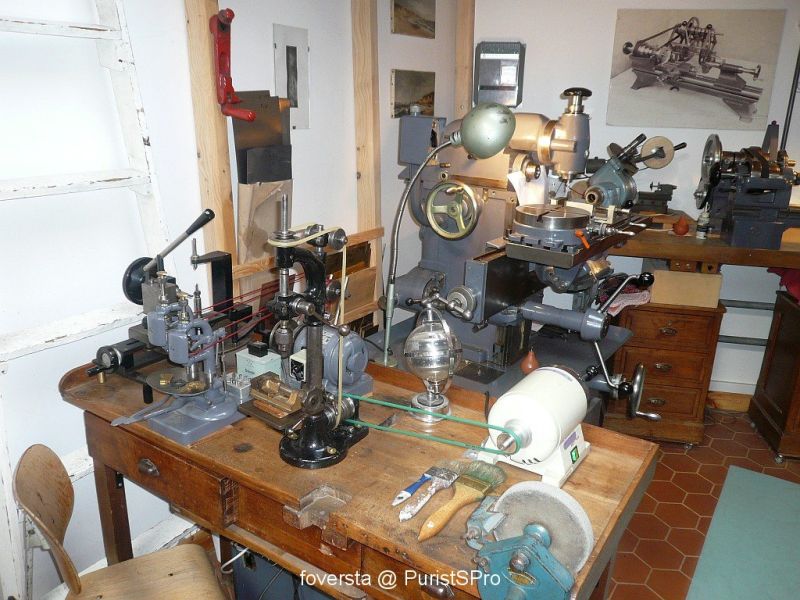
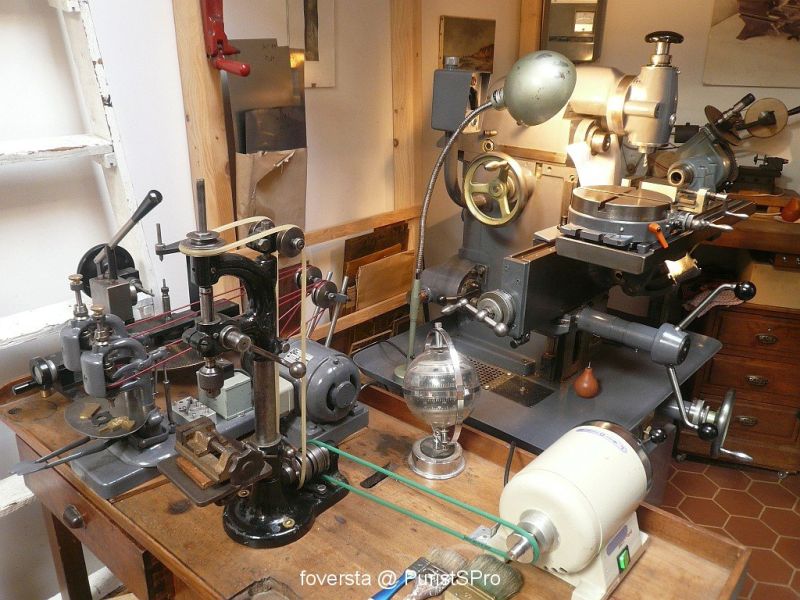
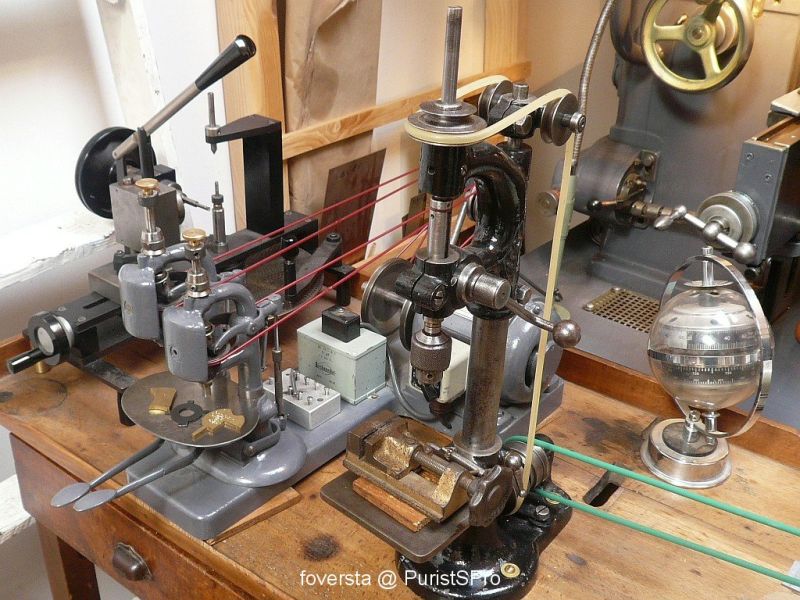
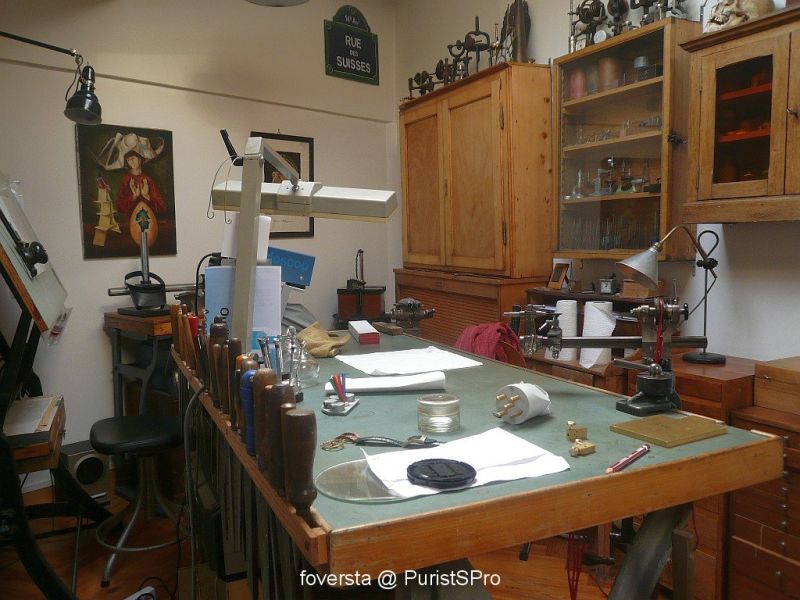
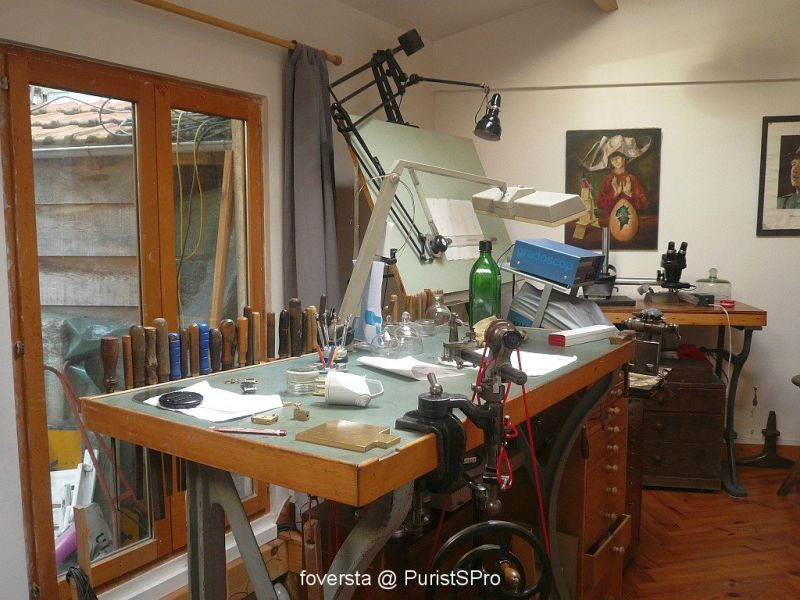
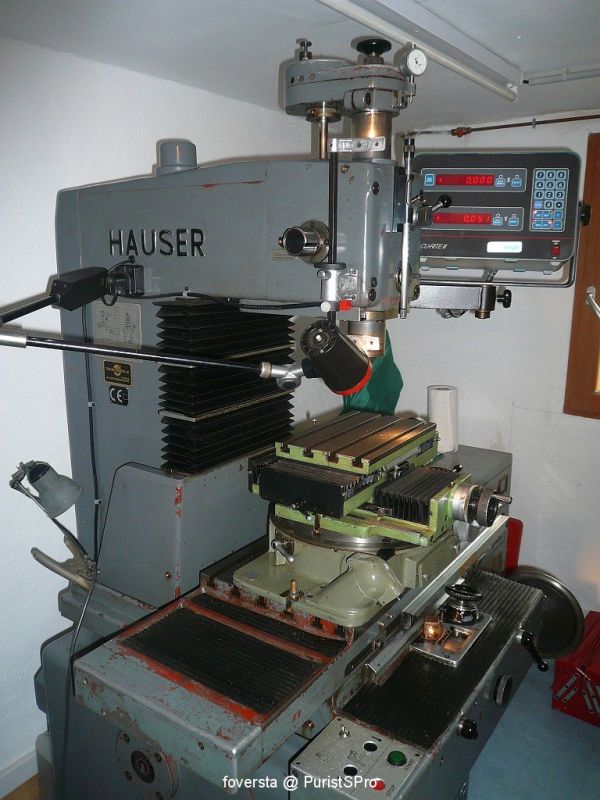
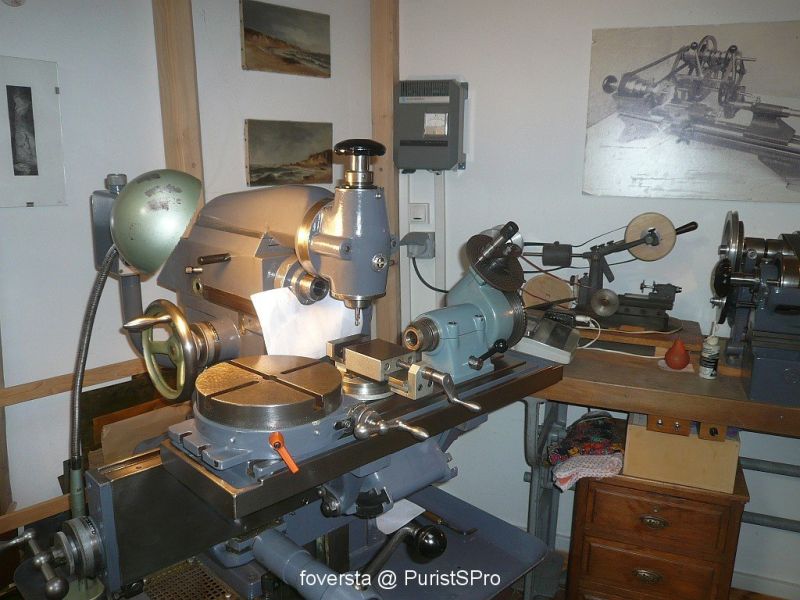
Jean-Baptiste installed his workshop at home and makes all the components of the watch except the glasses.

The pointer machine:


The workshop:


A two pendulums clock created by Jean-Baptiste:


The Chronometer of Jean-Baptiste is faithful to the idea which is summed up in one word: sustainability.


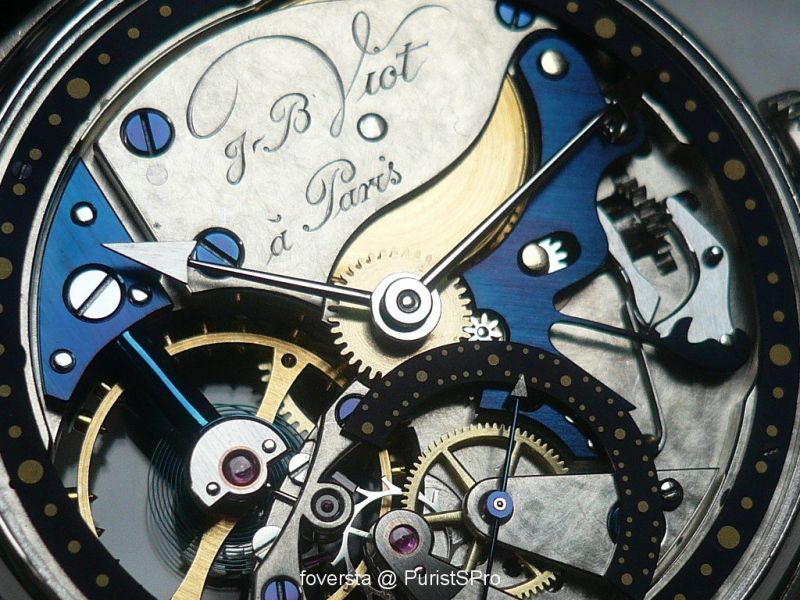
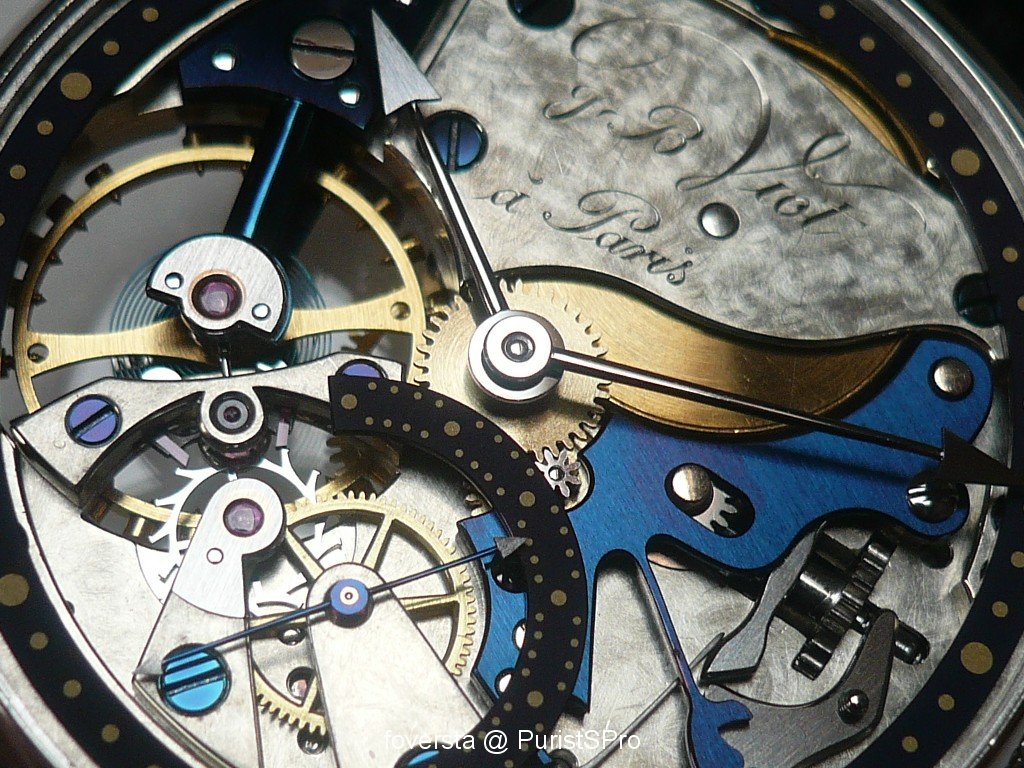
The simplicity of the layout of the caliber hides in fact a lot of  "watchmakers old tricks", one of the most visible is the position of the balance wheel bridge which can be found dial side.

The pictured watch is of course a prototype. The finishings are almost completed but the case is obviously not the definitive one (the watch will have a gold case). The glass was removed for some pictures.


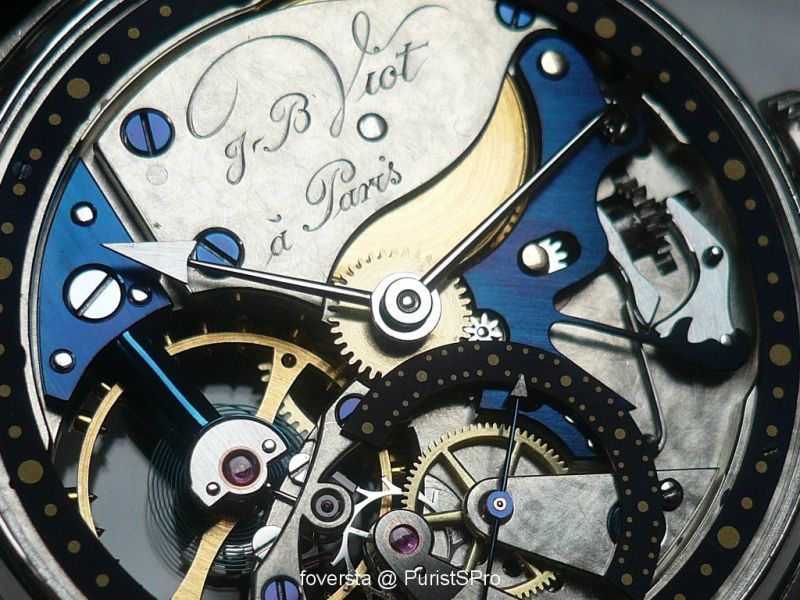
A "classic" watch  displays its caliber bridges on the back and the caliber plate on the front. Here, this is not the case. The way the caliber is designed  gives a sense of relief and depth. It is not a skeletoniked caliber, these openings are due to the layout of the caliber.


The contrasts between the different materials used cause beautiful lighting effects:


The French origins of the watch are remembered with pride by a clear engraving of an "A Paris" on the dial. This does not leave indifferent the French  watches lovers!


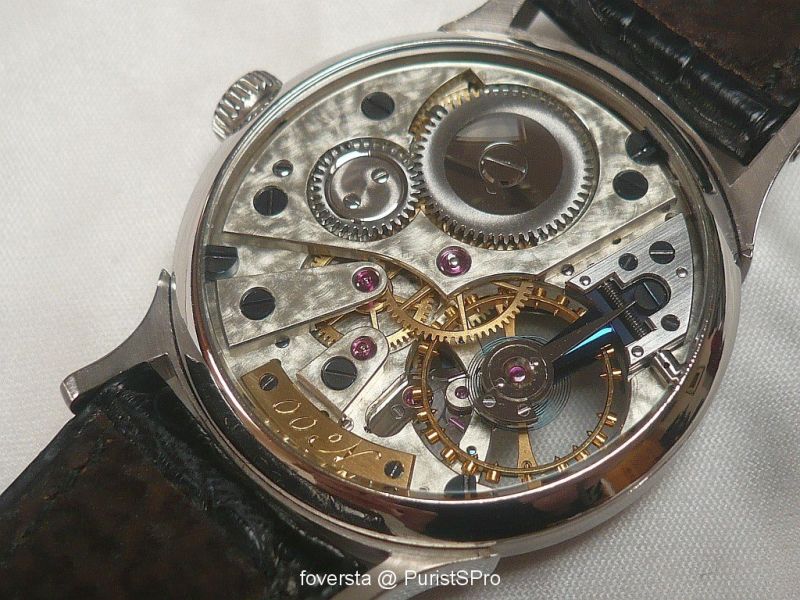
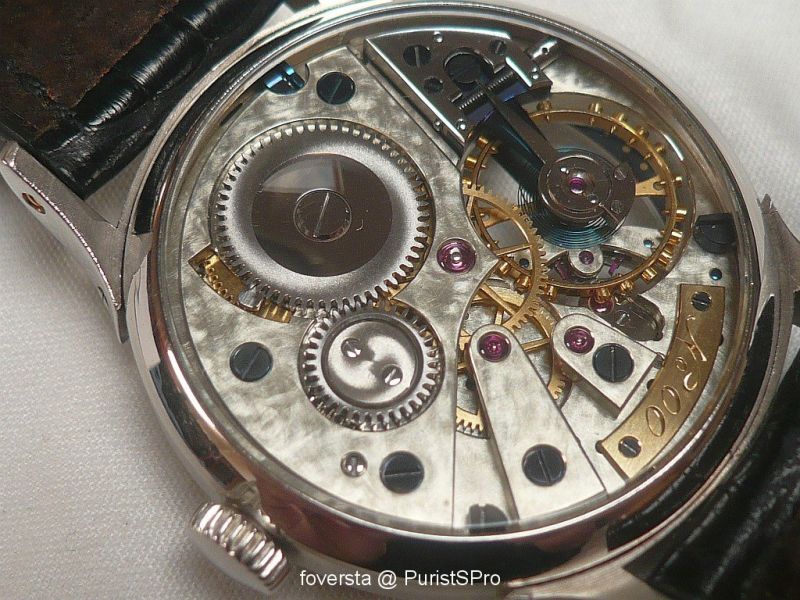
When we turn over the watch, the presentation of the caliber contrasts with the original adjustment system which is controlled by a transverse screw. You will also notice the specific finishing of the plate on both sides of the watch. We call it in French: "traits brouillés" (scrambled stripes).


For an aesthetic coherence reason, the watch is presented here without incabloc. But the customer may have one if desired.

The case diameter is ideal in this context and the watch seems to be balanced once on the wrist. The bezel is relatively thin, the wide opening of the dial makes it possible to appreciate the various elements. The shape of the case and its size makes the watch comfortable even if we will need judge it again with the final gold case.


Taking into account the fact that Jean-Baptiste handmakes almost all the components of the watch, the decoration will be customizable.

Yes, I was seduced by this watch but maybe more by the approach and ideas that led to its conception. One of the obstacles to buying a watch from an  independant watchmaker is its regular maintenance in the 10/15 years that follow.  So it is important to note that Jean-Baptiste has built his project around this theme. Another interest is that the finishings style is far from Romain Gauthier's or Philippe Dufour's one: it brings something different.

Jean-Baptiste presented his watch, the "Chronomètre JB. Viot à Paris" at the Salon Belles Montres in 2009, one week after our encounter.  This was a  milestone for the project as the public perception was a sort of test. Depending on number of orders, Jean-Baptiste is ready to produce 4 watches in 2010.  

The sale price was estimated at around 26,000 euros, VAT included during the Salon Belles Montres. I don't know if the price has since changed. I haven't met Jean-Baptiste since the Salon so I hope he got a warm welcome from the public and enough order to start producing the watch.

I must confess that as a French watch lover, the project of Jean-Baptiste makes me extremely happy. It shows that there is currently a revival of the French watchmaking. Excellent news! I Wish to Jean-Baptiste the best in his project and adventure.


This message has been edited by foversta on 2010-02-28 11:31:21 This message has been edited by AnthonyTsai on 2010-03-01 21:16:10 This message has been edited by AnthonyTsai on 2010-03-05 07:06:59

Key Points from the Discussion

Advertisement
The Discussion
MO
Mostel
Feb 28, 2010

I'd certainly be curious if I saw it on a gent's wrist. This message has been edited by Mostel on 2010-02-28 09:42:17

AA
aaronm
Feb 28, 2010

I remember his watches at the SbM, but he's quite a shy man, I never got to ask about them I am fascinated by the lathe in the last picture, it has the same style bed that I have seem often in American lathes, but rotated 90degrees. On an American it would always have the flat side up, so rests and such could ride down the length. A

NI
nickd
Feb 28, 2010

Many thanks for the report. The movement is very 3-D and striking. Do you have more information on the clock? It reminds me of something I've seen elsewhere (Janvier...Leroy...???) but I can't think what. nick

VM
VMM
Feb 28, 2010

Astonishing movement. Thanks. Vte

CH
ChristianDK
Feb 28, 2010

I have a lot of sympathy for his thoughts behind the watch - very clever. I also like the "absence of dial" the combination of modern ad classic values are very clever and appealing. Hovever im not to shure about the look. I know its a proto but it looks too busy, particularly on the front. Well maby if it was totally monochrome end with frosted finish on the bridges - what do you think? Christian This message has been edited by ChristianOfDenmark on 2010-02-28 14:21:04

CL
CL
Feb 28, 2010

This will be a very potential candidate for my next purchase. Currently , I'm just waiting for the release of the RogerSmith/George Daniels creation but I must say this one has potential. I like the feel of the watch, very antiquated, a similar kind of sensibility with earlier Journe or even Christian Kling. I think it works *CL

Advertisement

Continue the conversation

This thread is active on the Independents forum with 44 replies. Share your knowledge with fellow collectors.

Join the Discussion →