Reference Guide
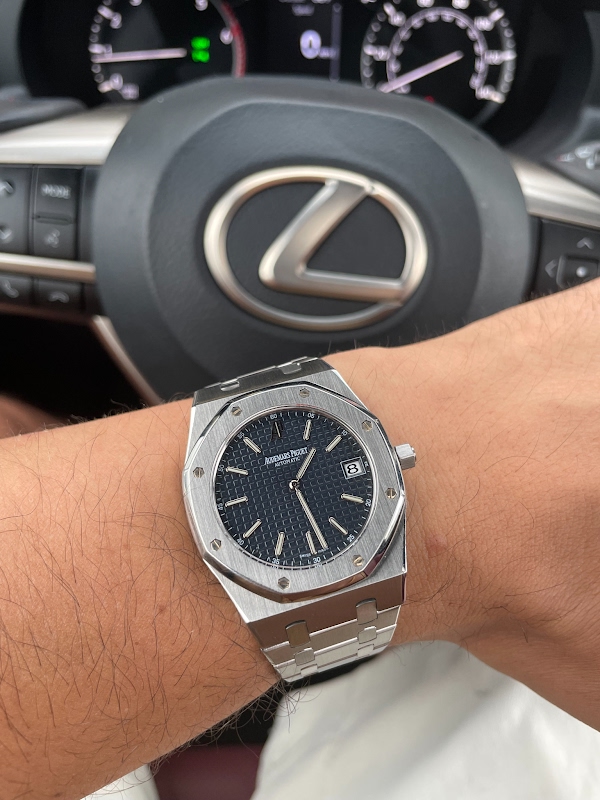
David Allen, a long-time admirer of the Audemars Piguet Royal Oak Jumbo, shares his extensive research into why the first-generation 15202 stands out as his preferred reference. His deep dive, drawing from AP Chronicles, forum discussions, and personal databases, offers a compelling argument for its unique design and construction merits. This article distills his findings, providing valuable insights for both seasoned collectors and new enthusiasts considering this iconic timepiece.


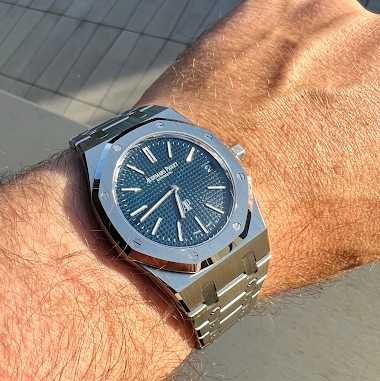
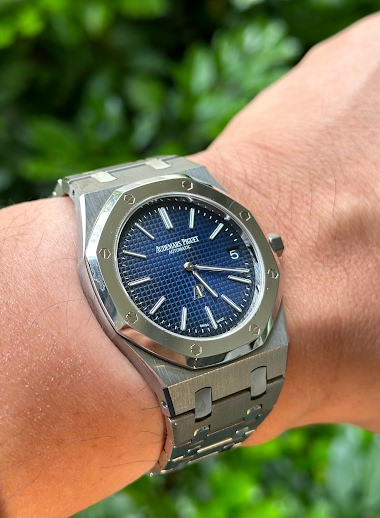
The Royal Oak jumbo is the watch I’ve most revered during the last couple of decades. However, I never found an opportunity to pick one up. With the deals I've found in the current watch market, I finally took the opportunity to meet my hero. I chose the first-gen 15202 over the second-gen after an extensive dive down the rabbit hole. After studying the AP Chronicles website; almost every RO jumbo post on this forum; posts by jumbo enthusiasts like mstanga.one, Velociphile, amongst others; Tim Mosso videos; and data from my own RO database that I've collected; I’ve learned the following regarding the first-gen 15202 and why it's the best RO for me:
It retained the monocoque case construction whereas the second-gen 15202 separated the case-back from the mid-case which added a little bit of thickness.
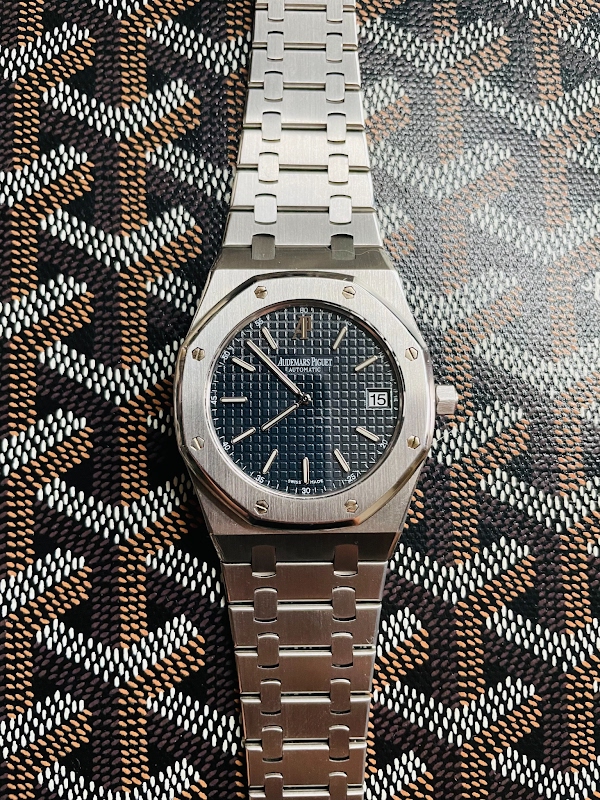
It is slightly thinner in both the case and bracelet which makes it wear more elegant and more similar to the 5402. Naturally, the first-gen case and bracelet were more time-consuming and expensive to manufacture.
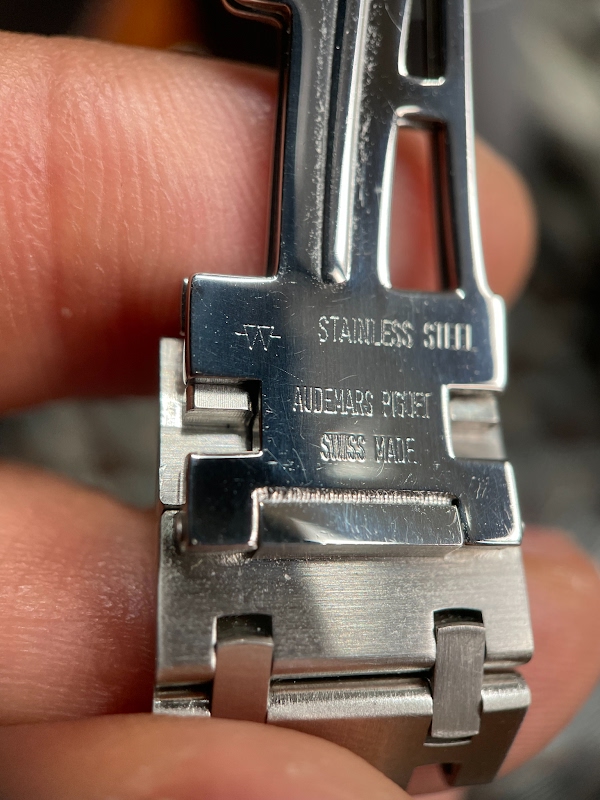
The AP monogram folding clasp found in the first-gen (produced by Werthanor) is more artistic and thinner which makes it more visually coherent. The second-gen (produced by Maspoli) moved to a butterfly clasp which added significant bulk and offered a more generic aesthetic.
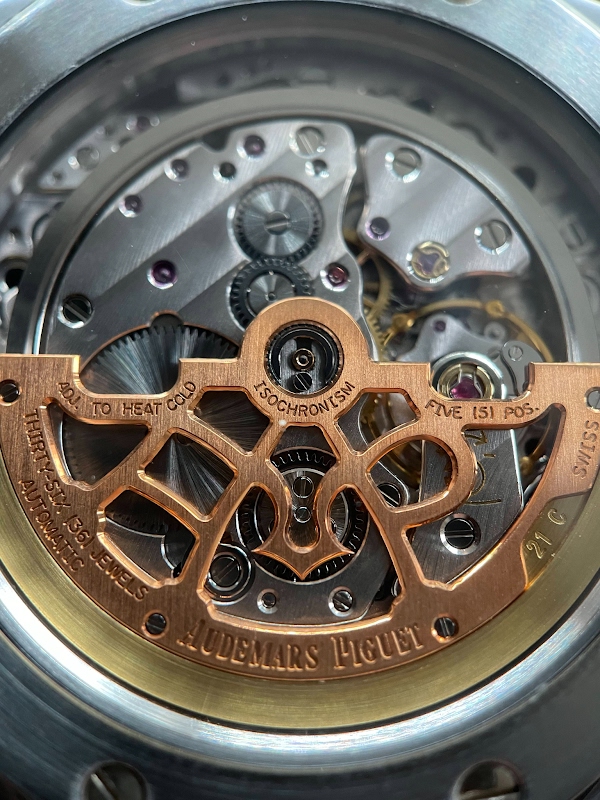
The rotor has significantly more hand finishing with an arabesque motif inspired by the first openworked Calibre 2120 introduced in 1973. The updated second-gen rotor utilized more straight-line machined edges and three times fewer interior angles (side note: the new 16202 rotor has returned to more hand finishing and more interior angles though the new 7121 movement appears to have less hand-finishing and more machine bevelling)).
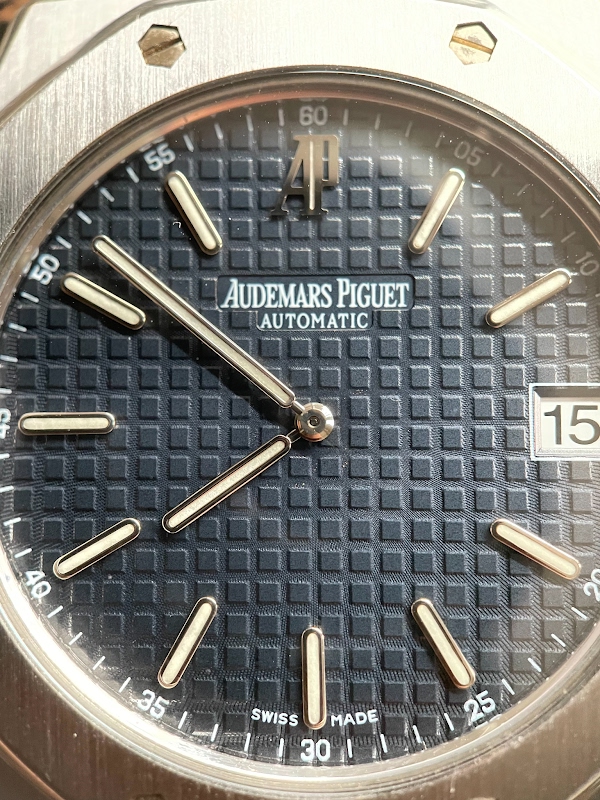
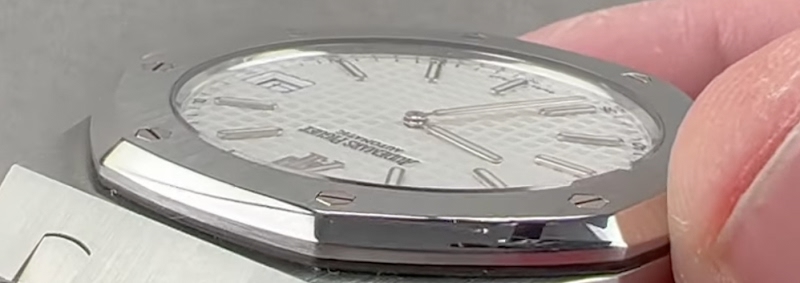
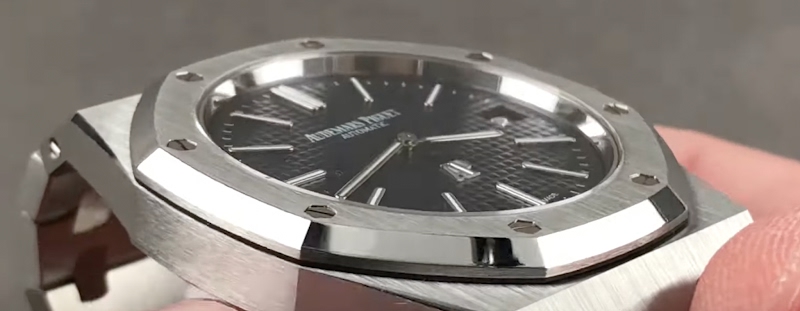
The bezel is thinner which is a result of the shorter hand-stack (very similar to what the Bvlgari Octo Finissimo has achieved). This demands tighter tolerances between the dial, indices, hands, and crystal which requires more careful assembly and gives an appearance of more refinement. In the second-gen 15202, you can clearly see a taller hand post and resulting taller rehaut.
The dial is made by esteemed dial maker, Stern Freres using the original Lienhard guilloche copying machines. Second-gen 15202 dials moved in-house after Stern terminated its contract.
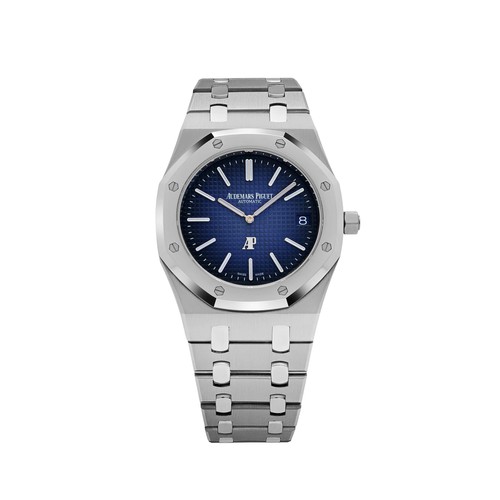
Production numbers are limited for the first gen. Roughly 3,500 were made across yellow gold, rose gold, and steel cases in white/silver, dark blue, and cosmos blue dials. Most (~1,750) were made in the white/silver dial, ~900 in dark blue, and ~600 in cosmos blue. In all, just under 300 RO jumbos were made annually over 12 years. For comparison 8,500 second-gen 15202s were made over 10 years (avg 850 per yr) and 6,050 5402s were made over 15 years (avg ~400 per yr). Even Tim Mosso anecdotally said he comes across many more second-gens than first-gen 15202s (his words were 6 to 1) and he speculates it’s because of the more labor hours required to produce the first-gen 15202.
Regarding production numbers and its impact on the perceived decline in the quality of the second-gen 15202: During the first-gen 15202 production (2000-2011), ~2.1% of watches made at AP were 15202s. During the second-gen 15202 production (2012-2021)--which coincides with the end of Philippe Merk's leadership over differences in corporate strategy and the beginning of François-Henry Bennahmias's leadership--AP experienced a ~73% increase in watch output while retaining the same ~2.1% of watches made being 15202s. If we apply Occam's razor, I assume that when a manufacturer significantly increases output on both a relative and absolute basis then I expect that the quality of the product is compromised, especially a product that requires significant manual input.
Note: calculations derived from proprietary data from: my own AP RO jumbo watch database; AP: AP Chronicles; Goldammer Vintage Watches: Audemars Piguet's Historic Production - 1892 to today; SJX: An Industry Insider’s Take on François-Henry Bennahmias’ Success at Audemars Piguet



The Royal Oak reference 5402 is recognized as the original iteration of the model, introduced in 1972. This reference established the design language that would define the Royal Oak collection, characterized by its integrated bracelet and octagonal bezel secured by visible screws. It was initially presented as a luxury sport watch, distinguishing itself through its material and finishing in a period dominated by more traditional dress watch aesthetics. The 5402 was produced in various series, with the A-series being the earliest and most sought after by collectors.
The watch features a 39mm stainless steel case, often referred to as the "Jumbo" size, which was considered substantial for its era. It houses the self-winding Caliber 2121, a thin movement derived from Jaeger-LeCoultre's Caliber 920, known for its full-rotor design. The movement provides a power reserve of approximately 40 hours. The crystal protecting the dial is acrylic, and the watch offers a water resistance of 50 meters, suitable for general wear.
For collectors, the reference 5402 holds significance as the foundational model of a major watch series. Its various production series (A, B, C, D) present nuances in dial text and case back engravings that are closely examined. The integrated steel bracelet is an integral part of its design, contributing to its distinct profile. The blue dial, often with a "tapisserie" pattern, is a hallmark of this early reference, though other dial variations exist.
There's something sporty and luxurious about this watch at the same time. Kind of like a luxury SUV car. Great piece! Thanks for remembering to share photos of the movement too!
Love the information you shared with us! Great info!
Besides the elegance of this piece speaking for itself, your points highlight subtle but notable differences between the generations. Congratulations on such a special piece, and in such great condition too!
We could have further posts detailing the variations within a given model. Some real interesting differences within the 2nd gen 15202s.
It’s been a very interesting and fluent read. Congratulations on your find of this elegant piece in seemingly great condition & hope you enjoy your watch in the best of health.
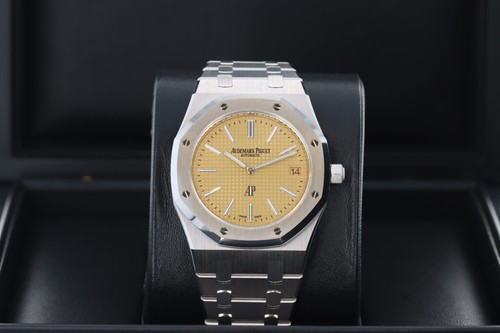
I've got this version with white dial, purchased new around 2005. I've always considered it a keeper, without question. Thanks for sharing your research.
This thread is active on the Audemars Piguet forum with 21 replies. Share your knowledge with fellow collectors.
Join the Discussion →