DonCorson's insightful report offers a rare glimpse into the Audemars Piguet manufacture in Le Brassus, highlighting the brand's enduring commitment to quality as a family-run business. This article provides a historical journey through AP's watchmaking heritage, showcasing early complicated movements and the evolution of their iconic designs. His personal reflections on the visit underscore the profound impact of experiencing AP's tradition firsthand.
Audemars Piguet is one of the few major watchmaking companies that has been able to remain a family run business. It has retained its worship of quality and fine finishing in the place of the worship of profit as has fallen most of the rest of industry worldwide. It is a particular pleasure to be able to make a visit to Audemars Piguet, on a guided tour through the Audemars Piguet museum and in their workshops.
The entrance of the Audemars Piguet factory in Le Brassus decked out for the year end holidays.

Audemars Piguet was founded by Messieurs Jules Louis Audemars and Edward Auguste Piguet in 1875. At this time the area of the Vallée de Joux was already a bastion of Haute Horlogerie producing a large part of the watches sold out of Geneva including almost all the complicated watches. Audemars Piguet was one of the first from the Vallée to start selling watches directly, without passing through intermediaries in Geneva or elsewhere. The museum tour starts out with watches made in the Vallée about the time of the founding of Audemars Piguet. We can already see many of the features that come to be associated with Audemars Piguet.
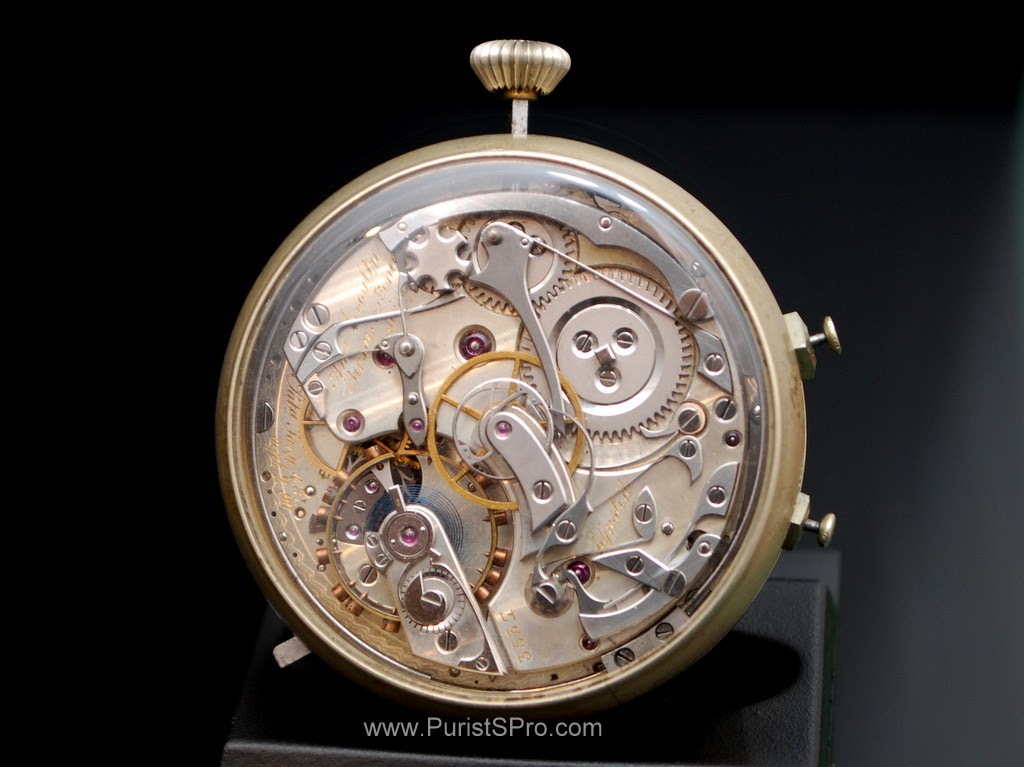
1895. Calibre Ami Le Coultre-Piguet, Chronographe à foudroyante et rattrapante. Boîte de travail.
 Vers 1840. Montre à musique, automates et répétition Piguet & Meylan
Musique et automate sur demande et au passage des heures (Petite Sonnerie). 19 lames. Répétition quarts. Or rose, gris, jaune et vert.
Vers 1840. Montre à musique, automates et répétition Piguet & Meylan
Musique et automate sur demande et au passage des heures (Petite Sonnerie). 19 lames. Répétition quarts. Or rose, gris, jaune et vert.
Sign dating from around 1889

Very much associated with AP is the “Grande Complication” the combination of 1) perpetual calendar with moon phase indication 2) chronograph with ratrappante and 3) minute repeater. (Modern Grand Complications often also include a tourbillon)
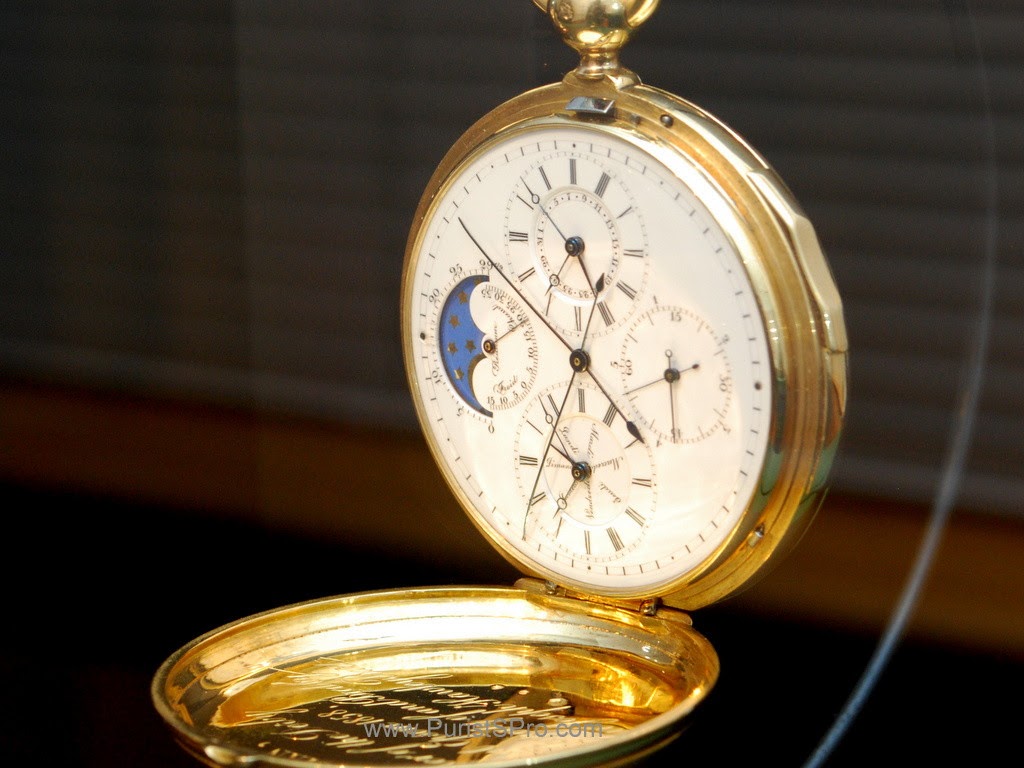 1858. Montre à complications Louis Audemars signée Leroy
Seconde
morte, seconde foudroyante, aiguille de rattrapante, compteur heures
minutes ou deuxième fuseau horaire. Calendrier complet. Répétition
quarts. Thermomètre Réaumur. Or jaune 18 carats. Trophée Derby d’Epsom 1858.
 On the left:
Vers 1875. Montre école de Edward Auguste Piguet
Chronomètre, calendrier complet, jour, date, mois , phases et âges de la lune alternés avec la petite seconde. Calibre 19 lignes. Or rose 18 carats.
On the left:
Vers 1875. Montre école de Edward Auguste Piguet
Chronomètre, calendrier complet, jour, date, mois , phases et âges de la lune alternés avec la petite seconde. Calibre 19 lignes. Or rose 18 carats.
On the right:
Vers 1875. Montre école de Jules Louis Audemars
Répétition quarts, quantième perpétuel, seconde morte, double barillet. Calibre 20 lignes. Or rose 18 carats. Considérée comme la montre école de Jules Louis Audemars. Transformée en 1882, 1887 et 1903.
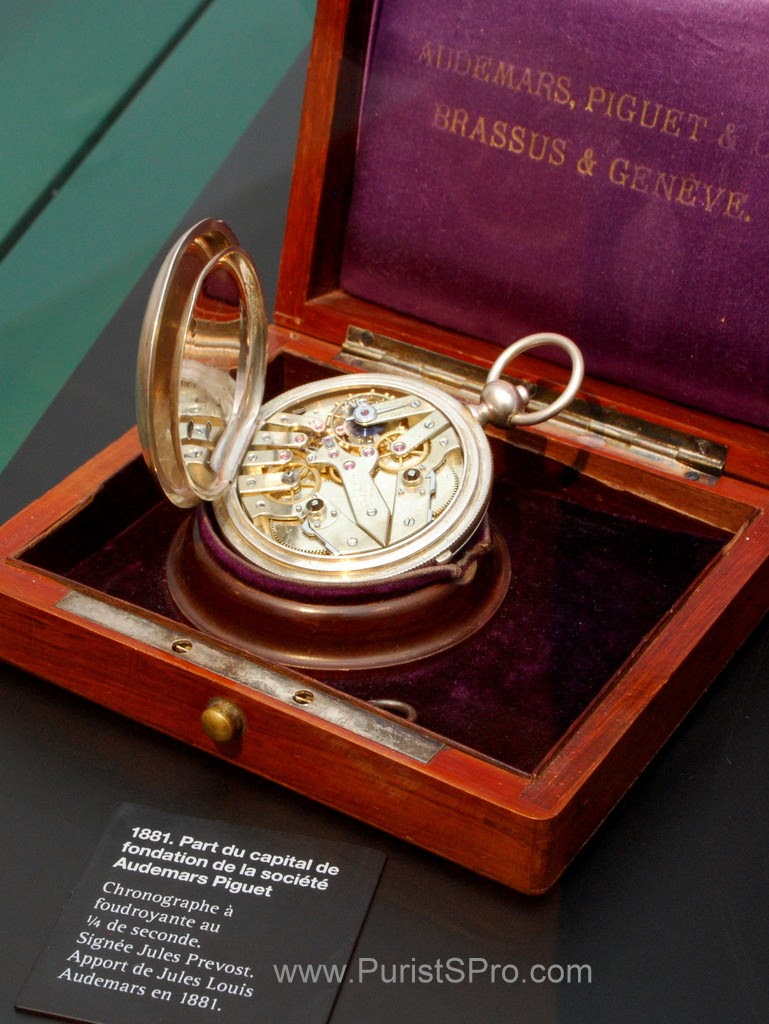
The museum includes watches from all the epochs of AP. After WW1 the wristwatch became popular necessitating the miniaturisation of the movements. Here an early perpetual calendar wristwatch.

This is the minute repetition movement found in the watch below.

 1924. Répétition minutes Calibre 8MV (Ø18,05mm) le plus petit. Platine 950 serti de diamants et saphirs. Habillage et signature Gübelin.
One of the characteristics of the Vallée du Joux is the strong intertwining of the many companies, most related to each other somehow, just as much of the population came from only a few families. As such it is hardly surprising that AP used many movements from other local companies. The idea was to use the best that could be found.
 1941. Chronographe à deux poussoirs
Compteur 30 minutes, petite seconde. Echelle tachymétrique. Calibre 13VZ. Acier et or rose 18 carats.
1941. Chronographe à deux poussoirs
Compteur 30 minutes, petite seconde. Echelle tachymétrique. Calibre 13VZ. Acier et or rose 18 carats.
Starting in the 1920's the fashion was small or thin watches. Here we see a super thin, less than 2mm thick, pocket watch movement used in the watch below.
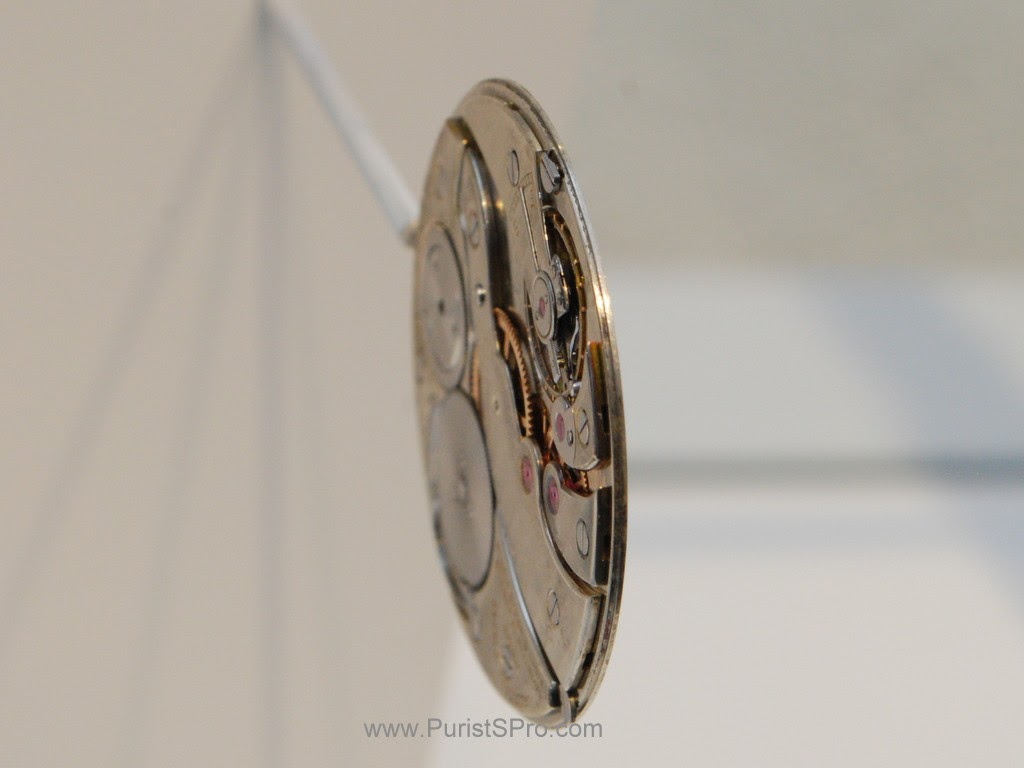 1921. Calibre le plus plat du monde Calibre 17SVF#5: hauteur 1,32 mm.
Watch made in 1944 using the movement shown above.

AP was also a worthy competitor to their neighbouring movement manufactur in Le Sentier Jaeger-LeCoultre. Here we see APs smallest movement. It was the smallest movement of the time and inspired JLC to make an even smaller one, the famous calibre 101.
 1927. Calibre mécanique le plus petit du monde Calibre 5/6SB : 15,9 x 5,8 x 3,3 mm.
After the very thin perpetual calendar and the very thin automatic movements came, of course, the worlds thinnest automatic perpetual calendar, movement2120/2800 2120 3.95mm thick. For me this is the iconic AP watch. Perpetual calendar and an unmistakable style.

The worlds first ever tourbillon automatic winding wrist watch was this AP released in 1986.
 1986. Première montre-bracelet automatique à tourbillon
Tourbillon le plus petit du monde : ø7,2mm. Hauteur totale : 5,3mm. Calibre 2870. Or jaune 18 carats. Modèle 25643.
1986. Première montre-bracelet automatique à tourbillon
Tourbillon le plus petit du monde : ø7,2mm. Hauteur totale : 5,3mm. Calibre 2870. Or jaune 18 carats. Modèle 25643.
In the tourbillon workshop at the museum we can admire the transformation of a movement through skeletonising. Here we see 2 examples of the same tourbillon movement, before and after skeletonising? (300 hours of work).

To reduce the size of the movement for a wristwatch this tourbillon uses the case as an integral part of the movement.
The case back serves as the main plate of the movement.

In this workshop tourbillons from the newest collection are also made, here an RO Offshore. These are monster watches, (or watches made for very big wrists?) especially when seen directly next to the older movements.
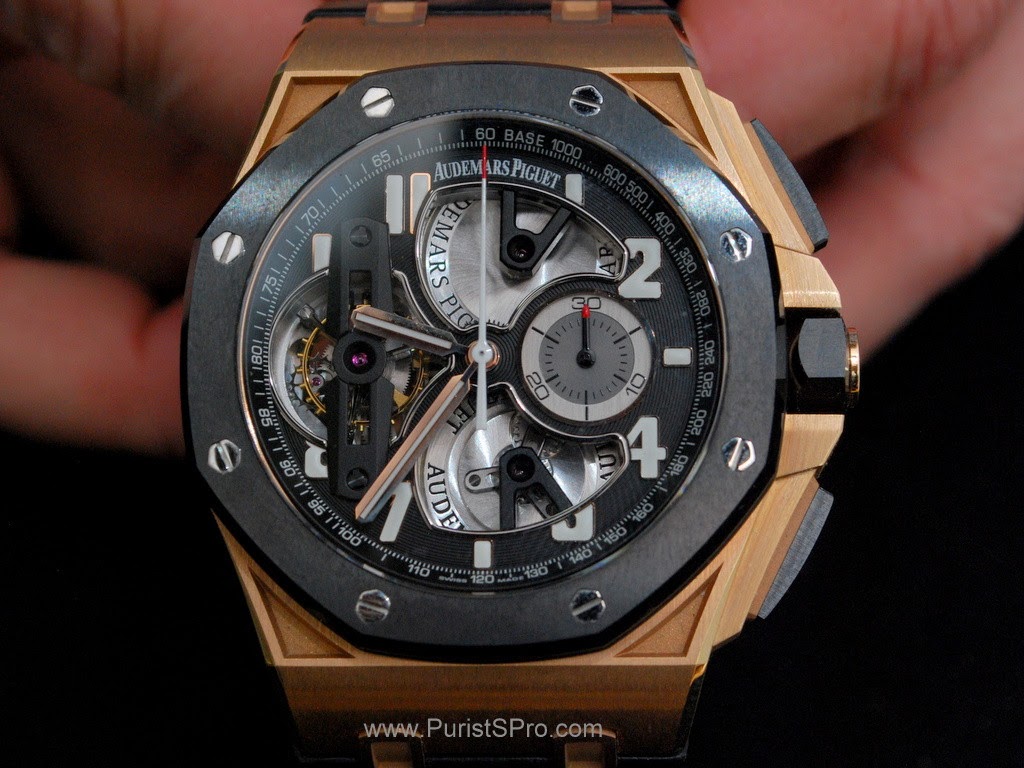

A portion of the The Royal Oak Concept Supersonnerie series is also assembled in this workshop. The balance of the production is done at the Audemars Piguet Renaud et Papi premises in Le Locle.
The piece I saw and heard was not yet ready for pictures, but the sound is absolutely amazing. It is really as has been described. No need for a box as a resonance board. I must admit that I was expecting the watch to be loud, but the sound to be ugly, like hitting a garbage can with a hammer. This is, however, not at all the case, a full and pleasant sound even at this distance across the room.

Following are some examples of skeletonised watches and how the skeletonising, also called openworking, has changed with time from highly ornamented and engraved to today’s clean geometrical style.
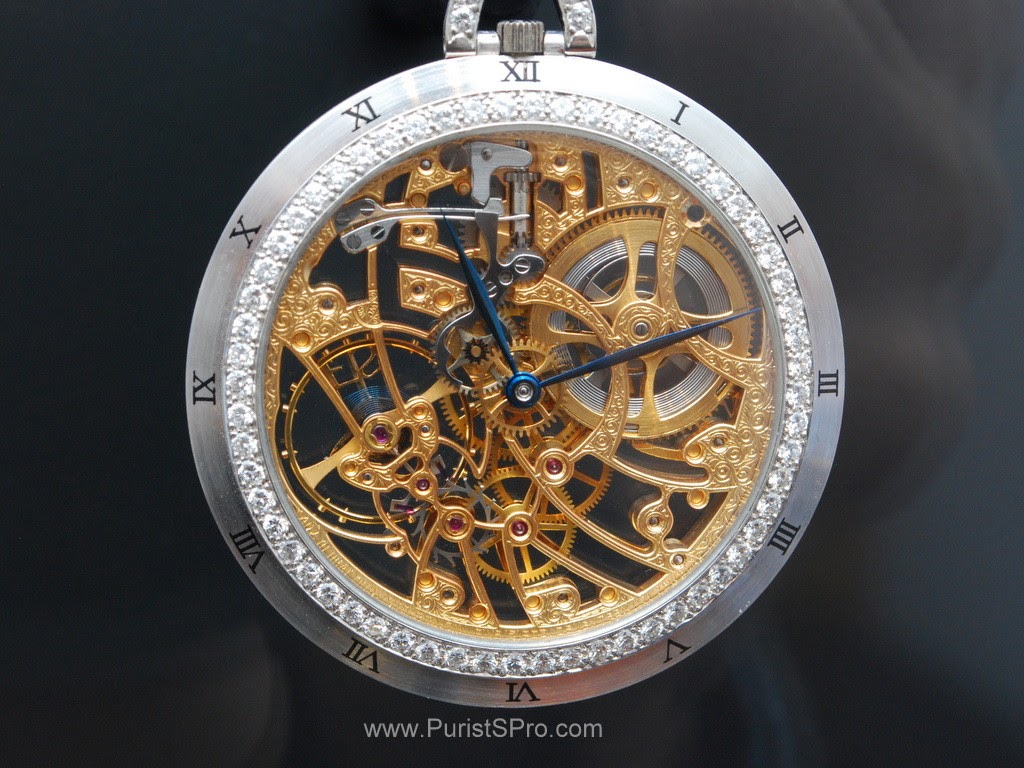 1971. Montre squelette Mouvement extraplat en or rose squeletté et gravé à la main. Calibre 5017. Or gris 18 carats serti de 68 brillants. Modèle 5656.
 1953. Montre squelette
Squelettée et gravée à la main. Calibre 10TS. Or jaune 18 carats serti de saphirs bleus et diamants. Modèle 5169.
1953. Montre squelette
Squelettée et gravée à la main. Calibre 10TS. Or jaune 18 carats serti de saphirs bleus et diamants. Modèle 5169.
Openworking was dying, the highly ornamented style no longer in demand. Not only for Audemars Piguet but for all makers. This changed in 2012, when pieces in a cleaner, more geometrical style were released for the 40th anniversary of the Royal Oak – now, Audemars Piguet can’t produce enough of them. Here a watch from 1993 and below one from 2012. What a difference ! That piece changed the way skeletonized watches look and has contributed to new interest and demand.

1993. Royal Oak extraplate Calibre 2003 (hauteur 1,64 mm) squeletté à la main. Or gris 18 carats.
Aiguilles serties. Modèle 14794.
 2012. Royal Oak Tourbillon Extraplate Squelette
Squeletté à la main. Calibre 2924. Platine 950. Modèle 40ème anniversaire 26511 limité à 40 exemplaires.
Ø 41 mm2012. Royal Oak Tourbillon Extraplate Squelette
Squeletté à la main. Calibre 2924. Platine 950. Modèle 40ème anniversaire 26511 limité à 40 exemplaires.
Ø 41 mm
2012. Royal Oak Tourbillon Extraplate Squelette
Squeletté à la main. Calibre 2924. Platine 950. Modèle 40ème anniversaire 26511 limité à 40 exemplaires.
Ø 41 mm2012. Royal Oak Tourbillon Extraplate Squelette
Squeletté à la main. Calibre 2924. Platine 950. Modèle 40ème anniversaire 26511 limité à 40 exemplaires.
Ø 41 mm
In my next post I will continue with a report from other AP workshops.


