
Baron - Mr Red
14613

Inspiration of the modern Patek: DNA is everything - Part 2
In my previous post, I showed the manner in which modern Patek Philippe watches borrow from their historical roots. The example I showed was the 2512 and 5070. Today, I will look at the 5370P and its origins.
The 5370P has been in my family now since the beginning of 2017. It comes with a wonderful leather-bound booklet giving full details of the watch. In the opening paragraph of the book, it states the following:
"The first Patek Philippe chronograph for the wrist, launched in 1923, already had the rattrapante feature. As a successor to this exceptional line, the Ref. 5370 Grand Complication wristwatch sports a newly developed split-seconds mechanism with technical-masculine charisma, crowned by black dial in genuine enamel."
A number of things struck me from this. Firstly, that I was not familiar wit this 1923 model and secondly that Patek Philippe suggest the 5370 is a successor to this original model. So, it was time to do some research. First, lets have a look at the 5370P.
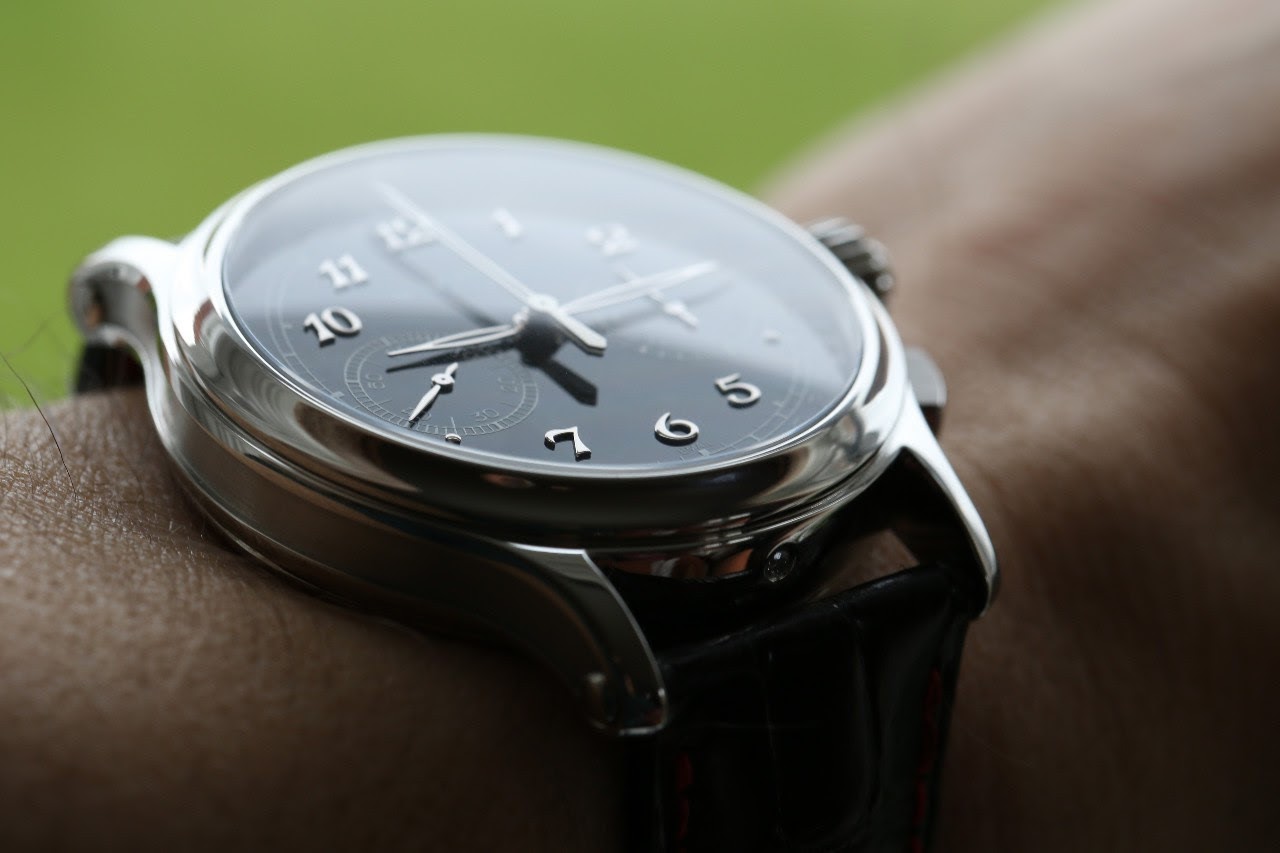
Caliber 29-535PS, manually-wound. 41mm case size, depth 13.56mm (which is some 1.8mm less than the Lange Split). Platinum case. Breguet numerals. Enamel dial.
Its not often one talks about a manual-wind, enamel dial, platinum rattrapante with Breguet numerals by Patek Philippe!!
I did an owner's review of the 5370P and attach it here: www.watchprosite.com
/
Now time to look at its great-grandfather. Firstly, lets have a look at the watch....
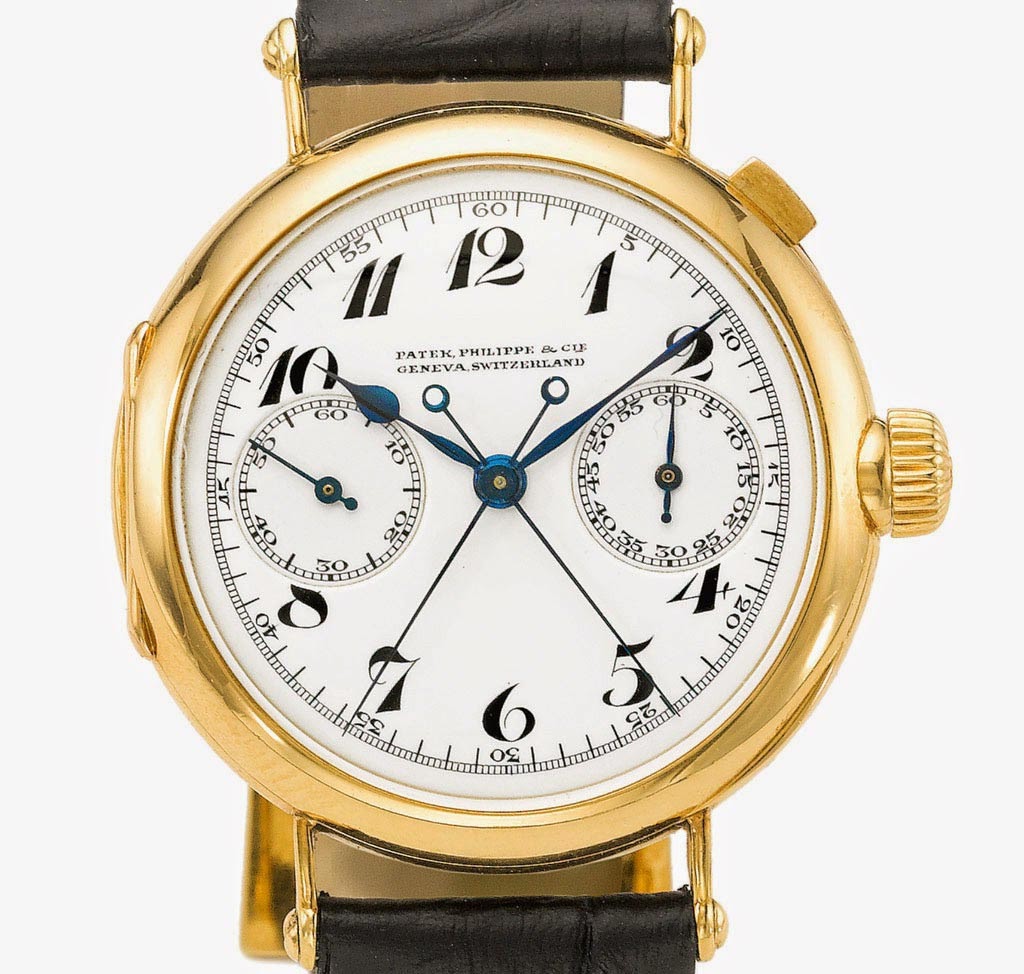
At first glimpse, the DNA is not so obvious. The watch itself is now in the Patek Philippe museum. It was purchased by the museum at auction in 2014 for the princely sum of $2.965m. I am also attaching a copy of the extracts for this specific watch. It was the first rattrapante wristwatch to have been recorded by any manufacturer, so in terms of historical importance, quite significant.
Wow! Manufactured in 1903 and not sold until 1923! 13th October 1923. So it has just celebrated its 94th birthday. 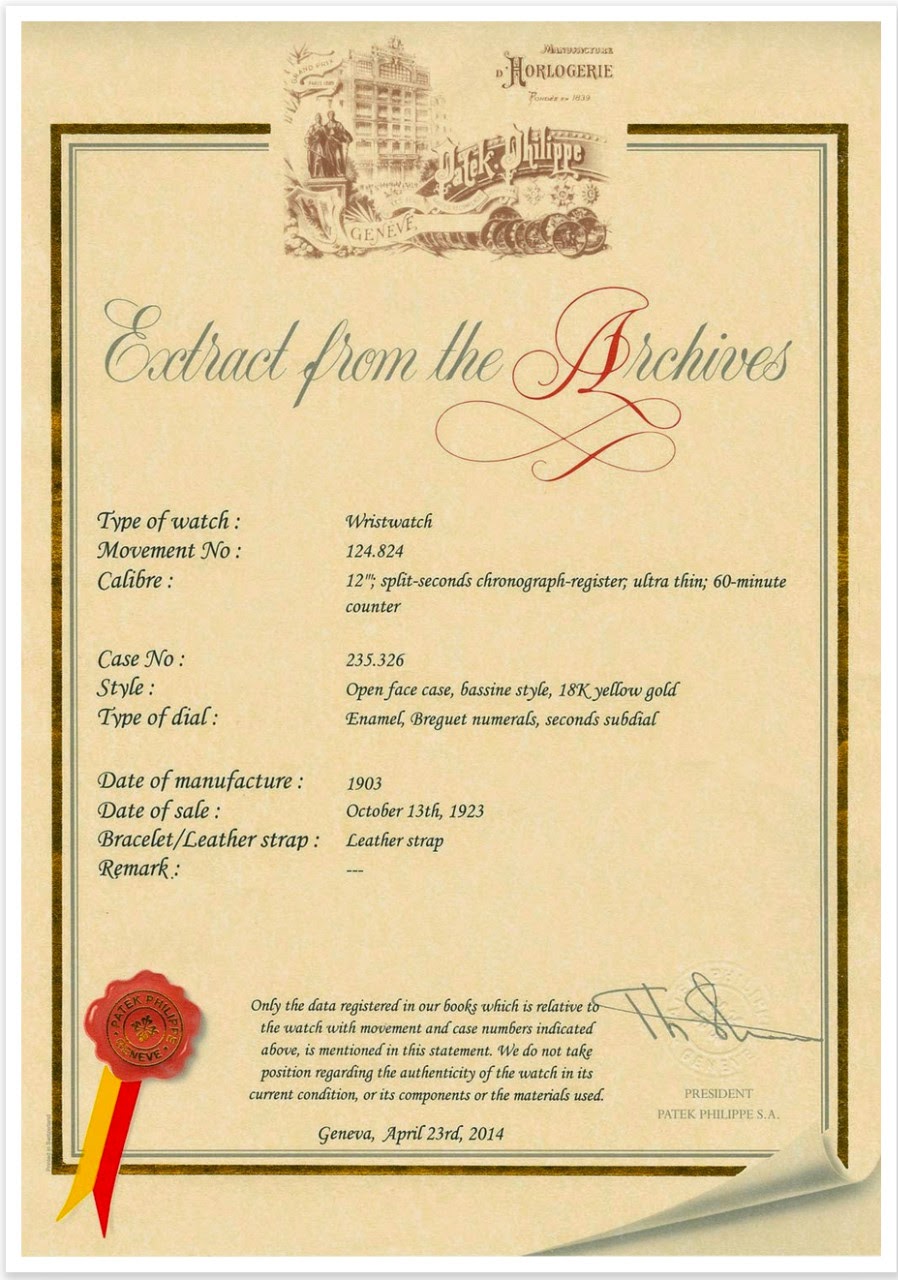
My purpose here is not to review the 5370P as I have already done that in the above link. Rather, it is to research and investigate the DNA link that Patek Philippe themsleves place right at the front of the 5370P literature. Obviously, a gap of over a century exists between the manufacture of the orginal 124.824 and the 5370P and style and fashion shifts can be seen in the comparison. The 124.824 was almost certainly a one-off special order, so is effectively unique. Although it is not 100% certain, but the movement was most likely manufactured by the Victorin Piguet firm. Case size 33mm. Yellow Gold. The first and original Rattrapante.
Its not often one talks about a manual-wind, enamel dial, gold rattrapante with Breguet numerals by Patek Philippe!! Yes, a century apart and obviously very different watches, but yes, I can see how Patek Philippe have borrowed some DNA from the original and created a "successor to this exceptional line".
A few watch manufacturers do this very successfully. DNA from the origins of the manufacturer remain important and ever-present in the modern variants. Long may that continue.
Inspiration of the modern Patek: DNA is everything - Part 2

History, legitimacy, this is the privilege of serious brands.

Thank you for a great post!

Joe, you make my life very very difficult!

Wonderful post, Mr. Baron.
a confession from me....
My favorite part:

Same as Nico's feeling: to me this 1923 Officer's watch is not the closest relative to 5370
ahh, perhaps a misunderstanding....
I think Patek wants to link the exceptional new ss-chrono movement too much to an exceptional auction result of the 1923 ies watch
I don’t think i agree
I must have misinterpreted some points you and Patek are making

Love the 5370 but Count De Monet is spot on
Alphabeta81.....
... and prior to the 5950 was the 5959

