
Piaget Technique & Aesthetic: Part 1 – Design
Piaget Technique & Aesthetic: Part 1 – Design
Piaget recently released the first of their' know-how' watchmaking videos that premiered on PuristSPro.
We were very honoured that PuristS could be the first in the world to see it....even before the Piaget company website.
Design Definition
Design is a nebulous term in itself. A discussion about design cannot be in isolation as it requires a context or setting. Unlike a lump of abstract 'art', design and particularly - industrial design - implies a relationship between form and function.
The integrated manufactures of Piaget are masters of both watchmaking and jewellery.
It may be easier to reconcile form with function for jewellery design since aesthetic plays a bigger role. The standard location of pendants, brooches, bracelets, earrings, necklaces and rings set the boundaries of the design envelope. Although designers like to tout their 'avant garde' prowess, in reality, the designs must still look good as a lady matures. The stunning necklace she wore as a gazelle-like 30-year old must still be as magnificent on a décolletage in its 7th decade!
Watch design has its own unique problems and much depends on whether there is access to custom-designed movements. If a brand relies on off-the-shelf movements, inevitably the locations of key display indicators like date, elapsed time, power reserve or moon phase are fixed by the supplied movements. That may explain the 'sameness' of design from different brands.
On the other hand, there are basic patterns of reading time ingrained into the public perception. Analogue displays with 2 or 3 hands moving 'clockwise' are the norm and instantly recognised. One does not really need to 'read time' but merely recognise the 'relationship angle' of the hands: "quarter to three" and "half past ten" are our watchwords. Complex ways of telling time like jumping digital indicators, rotating disks and retrograde displays require more thought to present the user with an intuitive ergonomic or ‘dashboard scan’.
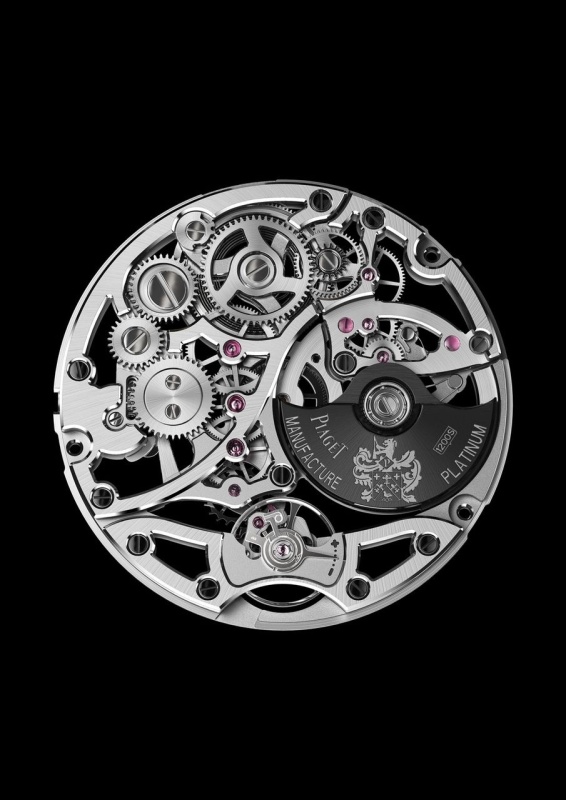
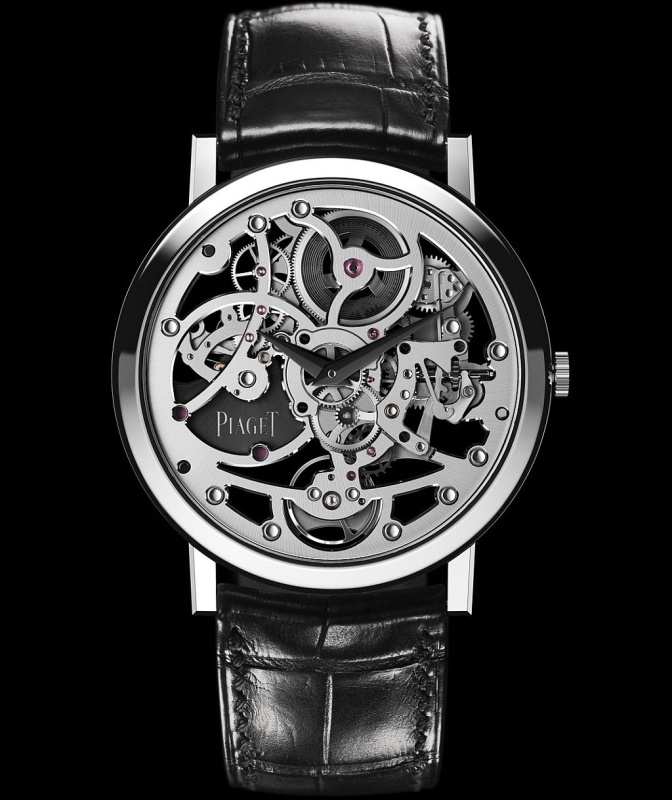
Skeletonisation and Gem-setting of the movements requires that the designers work closely with the watchmaker engineers to ensure correct tolerances prevail for correct functioning despite the decorations. Sometimes, as for the Altiplano Automatic Skeleton 1200S movement, a completely new arching balance bridge has to be designed and differ from the original 1200P. Sometimes, Less is More....
Gouverneur – A Circle of the Oval?
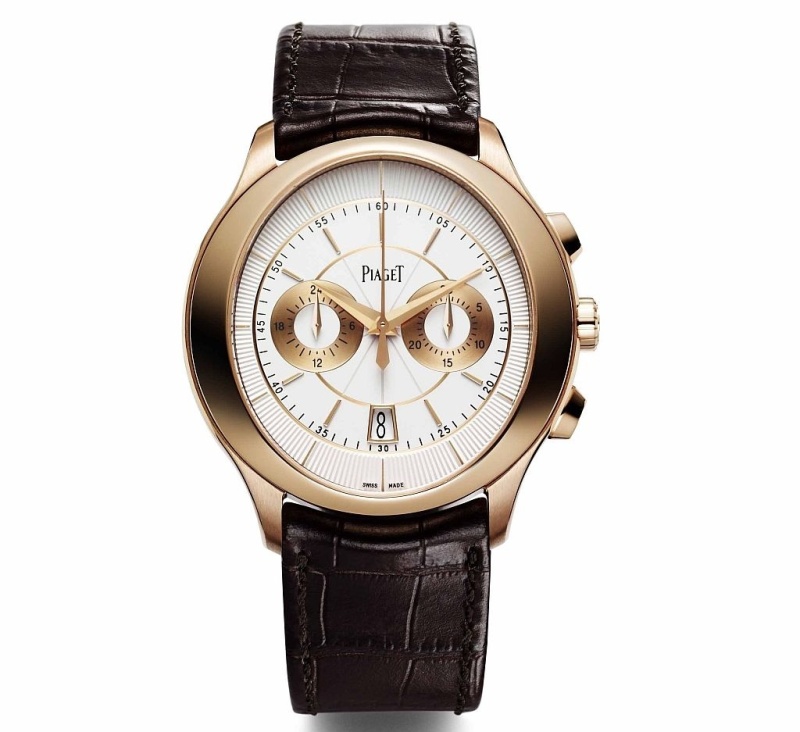
A recent design conundrum at Piaget is the 2012 Gouverneur case. The first Gouverneur watch from 1993 was easy to understand – it was a round watch. The latest Gouverneur is a playful but deeply designed shape. Even when you know the secret, it still plays tricks on your perception to appear as both a circle and oval from different angles. Perhaps that is the raison d’etre of design where it draws the observer into the object without them even realising why.
Integrated Manufacture and Design
Being an integrated manufacture, Piaget has the luxury of designing and making their watch movements. They have the flexibility to choose where to place their dial displays for maximum readability and aesthetics. Each in-house movement is selected for each watch model and the case and dial are designed around that movement. Sometimes, the movement is designed and built to a preconceived dial design.
The integrated manufactures also design and make their own bracelets and gem-setting with a seamless process from drawing board to production.
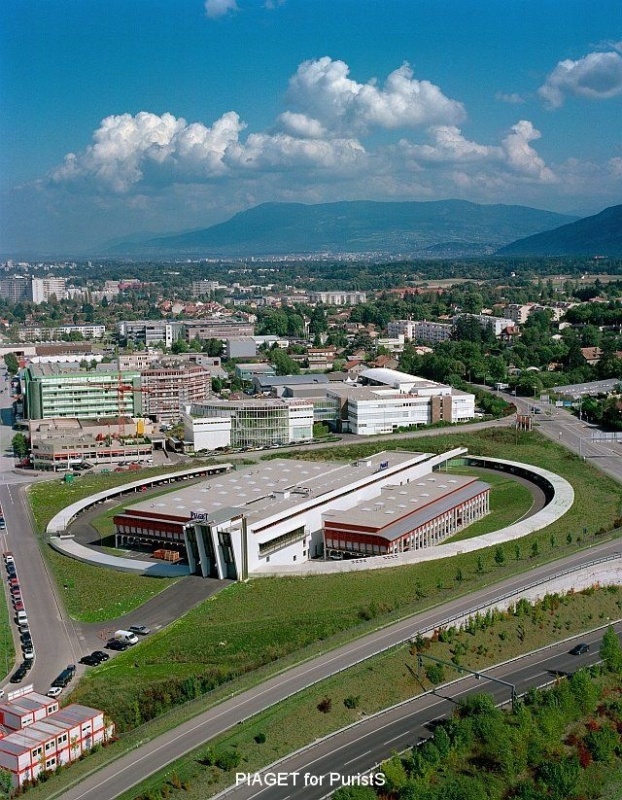
One illustration of integrated design may be the Piaget Manufacture in Geneva itself. In 2001, Piaget built a new Manufacture in the Genevan suburb of Plan-les-Ouates. The site was designed by Swiss architects Pierre Studer S.A. and is shaped like a circle to symbolise a watch dial; it is lit up at night. The architectural concept gives pride of place to light through the placement of large bay windows. Wood is widely used both inside and outside, representing a natural material that, in the architect’s words: “…does not injure the precious metal, while symbolising the jewel-case”.
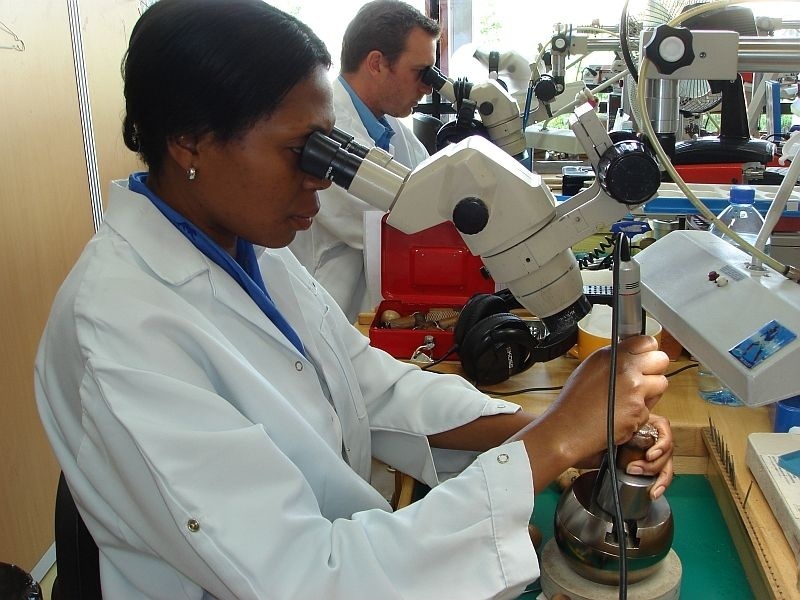
Production is organised according to lines, so as to guarantee quality and efficiency. Large areas are devoid of pillars and partitions to provide great flexibility and allow for the evolution of structures to keep pace with new creations. In setting up the Manufacture in Plan-les-Ouates, Piaget transferred more than 40 specialist professions on-site. Those specialists allow the machining of bracelet and cases, gem setting, polishing, rhodium-plating, assembly, casing-up and adjustment.
A dedicated prototype workshop and an after-sales service department work alongside the production lines. The new site houses the design of watches and high jewellery creations. The coexistence of these activities reflects Piaget’s twin vocation, as master watchmaker and master jeweller. La Côte-aux-Fées in the Swiss Jura continues to serve as the Manufacture of movements, Piaget’s original field of expertise. It is there that Piaget develops and crafts its famous calibres – always ‘ultra thin’.
Piaget Design Department
Piaget has a design studio with in-house designers who work closely together with the Marketing team. The designers use two techniques to make drawings depending on the product. They are continually looking to highlight the product’s characteristics.
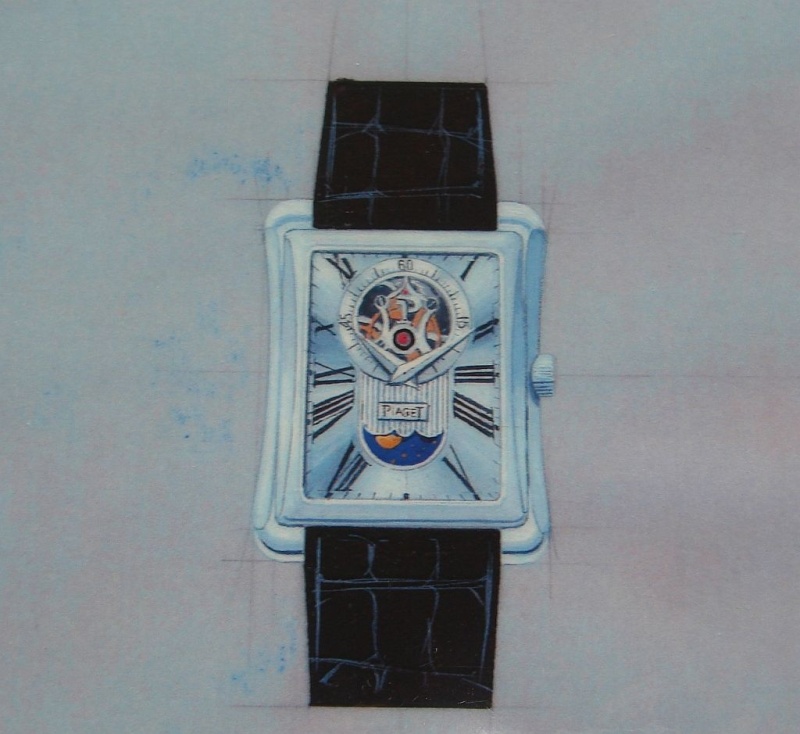
For an exceptional piece, artists use watercolour painting by hand because you can better appreciate the relief produced by the sheen of precious stones.
The second technique is a computer montage to create animations of existing models. This technique is faster and gives a completely realistic view.
All the aesthetics are approved by the Design and Marketing Directors, Piaget CEO and the Richemont Group.
Piaget Development and Production
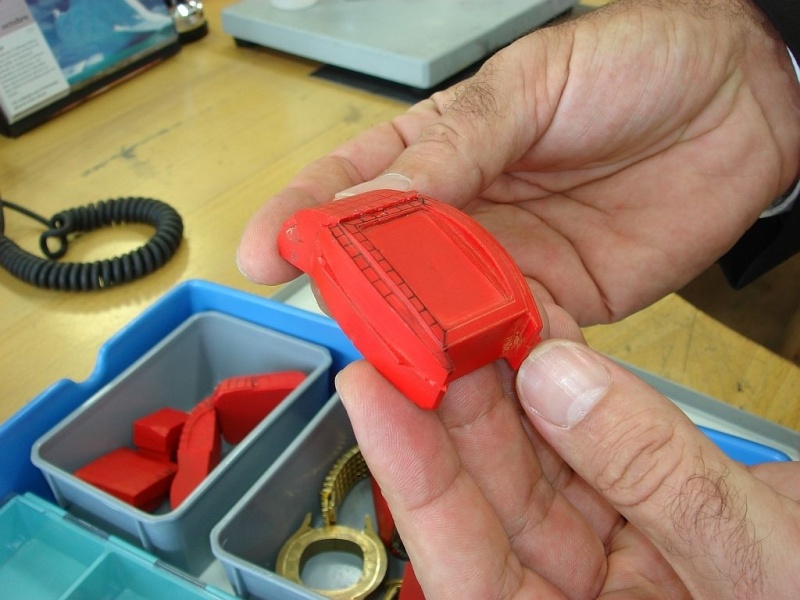
Artists’ drawings of cases can be rendered with CAD (Computer-Aided Design) programs using thousands of layers of solidifying ‘ink’ that build-up into 3-D ‘printed prototypes’. This allows the Design and Production engineers to see aspects of both form and function for the production process. The same data-points used in the design drawings are used for the programming of the production tooling process.
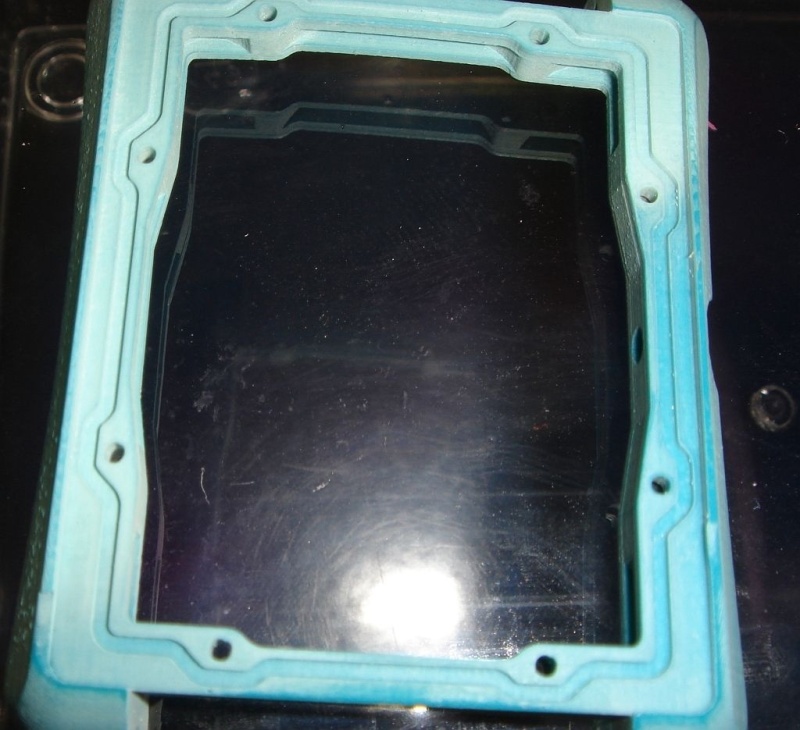
The same CAD ‘prototyping’ process can be done with harder ‘plastic’ inks to build different parts of a multi-component case. The Development Department coordinate 3-D modelling with the engineers in order to understand all the product aspects and to check tolerances, volume and ergonomics. This allows the Design and Production engineers to visualise how the components fit together.
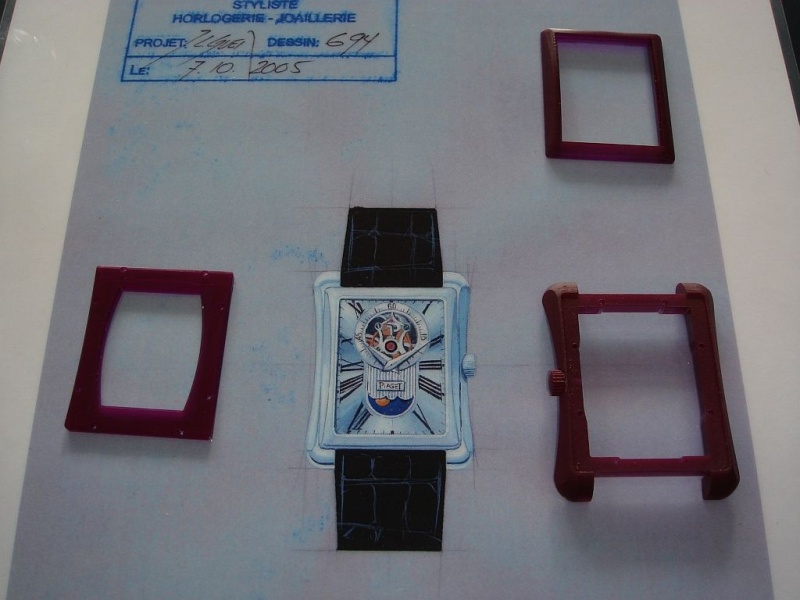
The cycle times from design idea to launch at SIHH varies dependent on the project complexity; it could be 1 – 3 years.
Piaget Inspiration
I asked where Piaget gets inspiration for the designs. At other brands, designers derive their ideas from Art, historical references, museums, contemporary fashion, Trends, and the occasional external consultant.
Sources of inspiration for Piaget:
- Patrimony, historical references with specific know-how but also shape (heart, rose, cushion) and materials (hard stones) that are important for the brand.
- Piaget has the good fortune to have a long creative history with an unlimited audacity since its beginning.
- Piaget was the pioneer for ultra-thin movements in 1957 with the 9P caliber. This technical achievement opened a huge creative spectrum and Piaget quickly understood its aesthetic implications.
- Piaget was the first company to unite fine watchmaking with fine jewellery and to dream up watches that were jewels and vice versa. They invented new and original ways of wearing watches.
- Trends, fashion and culture, in general.
Some brands claim a famous celebrity as their Muse, so I asked, Who is the Piaget muse? As expected from a brand with Calvinist roots, the answer was: “Each woman and man is a muse for Piaget and we try to offer unique and exceptional luxury products.”
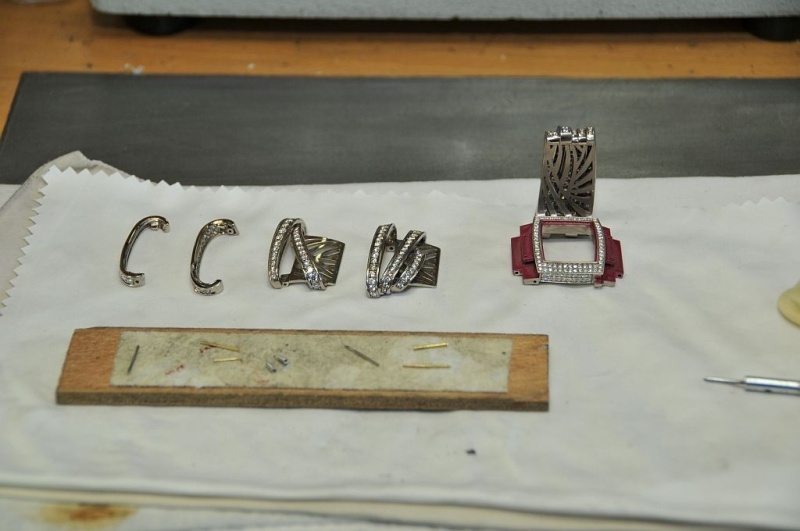
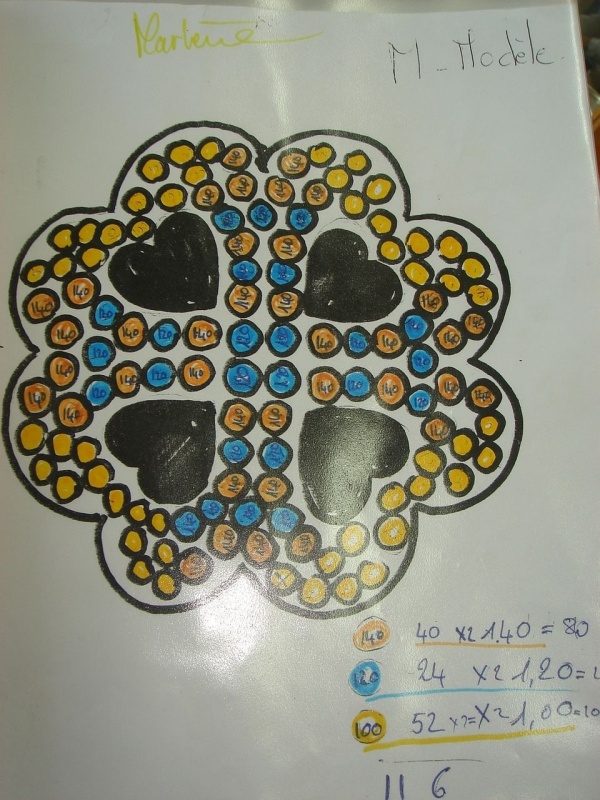
The gem-setters make an aide memoire from the original drawings to help remember the placement order and size of gem stones.
Piaget released a series of short videos about their design aesthetic and manufacturing technique (Piaget Craftsmanship) in December 2012. I wanted to know if there are any details of their work that they are proud of but did not make it into the videos.
“Piaget Creative Studio is one a few to have an unlimited creativity about a large variety of themes and we think that’s why our designers are happy and proud to work for the brand.” - Piaget.
Are the Piaget failed ideas archived, recycled or permanently in the Book of the Dead?
All the ideas are archived and will constitute the brand patrimony. The Piaget creative genius remains forever ‘Piaget’ whether commercialized product or just drawings.
Finally, I asked: “What is it that they do at Piaget Design that is ‘Oh, so Piaget’?”
The essence of the Piaget video on Design was summed up in the reply: “Liberty to create and to express yourself; that is so Piaget!”
Piaget Technique & Aesthetic series:
Piaget Technique & Aesthetic: Part 1 – Design: CLICK the following link
piaget.watchprosite.com
Piaget Technique & Aesthetic: Part 2 – Enamel: CLICK the following link
piaget.watchprosite.com
Piaget Technique & Aesthetic: Part 3 – Gem-setting (Watch Making): CLICK the following link
piaget.watchprosite.com
Piaget Technique & Aesthetic: Part 4 – Gold Thread Embroidery: CLICK the following link
piaget.watchprosite.com
Piaget Technique & Aesthetic: Part 5 – Hard Stone Dials: CLICK the following link
piaget.watchprosite.com
Piaget Technique & Aesthetic: Part 6 - Engineering: CLICK the following link
piaget.watchprosite.com
© Melvyn Teillol-Foo, PuristSPro 2012.

Thanks a lot Melvin for this great article.
Thanks Melvin!
Fx
Piaget is Not for everybody...well, except the Altiplano
FrX,
I agree the Piaget style was initially a mystery to me.
Then, I read through the history (patrimony) of the company from family owned through the quartz 'crisis' that Piaget rode by finding a niche customer....the rich jet-set.
For them, quality and function were important. Since the function of luxury was also beauty, the integration of gem setting technique was logical. I was surprised to find that dedicated Piaget jewellery is actually a LATE side busiiness from watchmaking.
There is a wide range from the iconic Piaget Polo case through the Polo FortyFive and to the Emperador and Emperador Coussin shapes; with the 2012 Gouverneur case most recent. Of course, along the way there have been Square Altiplano, Dancer, Protocole, Limelight, Magic Hour and other fancy shapes.
The common theme is (as Daos B says)..."elegance".
The Altiplano is unlike the other lines; it is for everyone. Why?
I think every gentleman needs at least one dress watch for the penguin-suit (tuxedo) evenings. As the thinnest dress watch range in the world, the Piaget Altiplano automatic or handwind are 'de riguer'....end of debate. 
More than one Altiplano has been 'stolen' by the "woman behind the man", well, at least the ones 40mm or less in diameter.
Regards,
MTF

Thanks for the article MTF. One thing I always wondered about is why do watch brand
who also specialize in jewelery have dial designs that usually are avant garde? Is it because the dial designers from these brands are also influenced by jewelery design?
Take for instance, Piaget, Chopard, and Bulgari - all 3 of these brands' watch dials usually have this unique "look" to it and totally different than more traditional watch dial designs from non-jewelery brands, for example, Patek, Rolex, and Lange (I just picked these 3 randomly). I don't know how to describe this unique look I'm referring to but I'm pretty sure many watch collectors reading this will understand what I'm referring to.
It would be awesome if we could have a sneak peak at Piaget failed ideas but I know we won't be able to because these are still proprietary secrets. I wonder if any of these failed designs were more traditionally designed?
In any case, I'm just conjuring up some thoughts after reading your article.
Thanks for reading!
Cheers,
Anthony
You may have a point there about brands with dual mastery
The examples you gave come in two classes:
Watchmakers that became Jewelllers: Piaget, Chopard, Patek Philippe (sic), Omega (double sic).
Jewellers that became Watchmakers: Bulgari, Cartier, Harry Winston, Van Cleef Arpels, Tiffany (sic).
But seriously, I only comment on the red ones, like you did.
They do have an additional style element....most likely due to having both watch and jewellery design teams.
Regards,
MTF

Piaget designs and techniques
Regards,
ED-209
When I first saw the stereolithography
in 2006, I was surprised.
It seemed such an elegant solution to the need for speed in prototyping.
Of course, I still had old fashioned ideas of clay modelling then.
Regards,
MTF

The recurring theme...
Great article, MTF! I enjoyed it.
Cheers,
Daos
The heart of Piaget watches
is their own movements.
That is the point that I frequently find that even their own customers (jewellery) are surprised when I talk with them.
"What's the big deal about having own movements?", they ask.
Good question: In practical terms...they make NO difference (gasp) if the owner just wants a watch that works and keeps time. The ideal movement is quartz and Piaget was a pioneer of Swiss quartz movement (Beta 21 project).
But for the discussion of design, havoing a movement design and production team means that the dial design is not a slave to the off-the-shelf movement. Anything is desirable and Everything is possible. Since Piaget started as a movement maker for other brands, they are most experienced to make movements that serve the design.
One of their mottos is "Technique in the service of Aesthetic"......I paraphrase because my French is minimal.
Regards,
MTF

Ouch! I wrote an answer to Anthony's post, and just realized that you elaborated it
Very well!
I admire a lot these magicians which have to stick to horological realities.
Thanks for the superb write up, and to Piaget for sharing all this with us.
Best,
Nicolas.
PS; The Piaget skeleton is really something!

I am most impressed by this...
This is THE great answer and I admire such principle.
Thanks for unveiling one "cover" of Piaget, MTF.
Ken
Some may feel that was marketing "speak" but
The Altiplano Skeleton 1200 S is my favourite Piaget.
I absolutely love tis modern expression of skeleton, light, modern, very convincing.
If I had to have one Piaget, it would be, without doubt, this one.
SUPERB!
Best,
Nicolas