Piaget ultra-thin mechanical movement
Hello everyone,
I believe it is my first (or second) time to post in the Piaget forum which I have been following for quite some time now. I am very much interested in Piaget's mastery in the field of ultra-thin and thin movements.
I would like to know everyone's opinion regarding the finishing and reliability of these movements. Are they finished to the same level as some of the other top brands (say like Lange, Patek, etc.)? Has Piaget ever applied/received the Geneva seal (if they are qualified in terms of location, of course)? Any recurring technical issues?
I recently got a Cartier Santos Dumont, and one of the deciding factors was the Piaget movement (as opposed to ETA in the Santos 100). I would really love to hear from the experts and enthusiasts out there.
Best regards (HAGWE)
Kazumi

Piaget...
Hi Kazumi,
Like you, I do not yet have a Piaget, but I have a Cartier that uses a Piaget based movement, the Louis Cartier Tank XL from the Privee Collection. Like you, the Piaget movement was a motivating factor in my purchase. I have been incredibly happy with this watch, and its movement is really beautiful and special as its a rectangular movement in a rectangular case. Many companies just make round movements and put them in square or rectangular cases. My enjoyment of this watch with its beautiful movement has helped spark my interest in Piaget watches. At least from my research and viewing of Piaget watches in person, I think their finish and movements are comparable to those from other high end manufacturers.
As for Geneve Seals, I am not sure if any of their watches have had it...I don't have my reference materials with me, perhaps someone else could shed light on that. However, I don't personally think the Geneve Seal means much. Maybe years ago it did, but I think of it mostly as a marketing tool. Sure there are certain standards to be met to get it, but its not as though watches from companies like AP or VC (some have it some don't) are poor quality for not having it. Furthermore even Patek no longer does it, although they have instituted their own seal for whatever thats worth.
I really think Piaget has some of the highest quality and most beautiful designs on the market. I am definitely looking forward to adding one to my collection at some point...I just have to decide which one should be my first.
Best regards,
Dino
PS. Congrats on your Santos Dumont, thats a very handsome watch!

There is a difference in finishing....
Kazumi,
Piaget has been one of the most important Swiss makers of ébauches or movement components for more than 130 years. Their ‘secret’ clients included Audemars Piguet, Breguet, Cartier, Ebel, Longines, Omega, Rolex, Ulysse Nardin, Vacheron & Constantin, Vulcain, Wittnauer and Zenith. More recently (since 1942) they made their own branded watches with PIAGET on the dial. I guess their movements are acceptable.
Originally, finishing of movement (bevels and patterns) had a function. They were to improve performance or to reduce contamination of lubricants or to keep lubricants in the right place for longer. Then, the art of finishing became associated with high-end work and high-end prices. Some brands decorate and polish their movements beyond function to make artistic impression e.g. A.Lange & Soehne, Chopard LUC and Glashuette Original. Even Patek Philippe decorates their more expensive watches beyond functional reasons, unlike their basic watches.
Eventualy, certain rules of finishing and construction became requirements for Geneva Seal. The most important requirement is final finishing and assembly in Geneva. As Piaget finishes their movements at the founding village of La Cote au Fees and also assembles their most complicated watches outside Geneva, they can never apply for a Geneva Seal for those watches.
Although Piaget has a manufacture in Geneva in the same industrial park as Patek Philippe and Vacheron Constatin, so in theory, they could apply for Geneva Seal for watches assembled there, they do not do so because finishing of movements is still done back at the founder's village.
Piaget movement finishing has tended towards good but functional rather than miniature art work. Even so, they never showed the movements in the past.
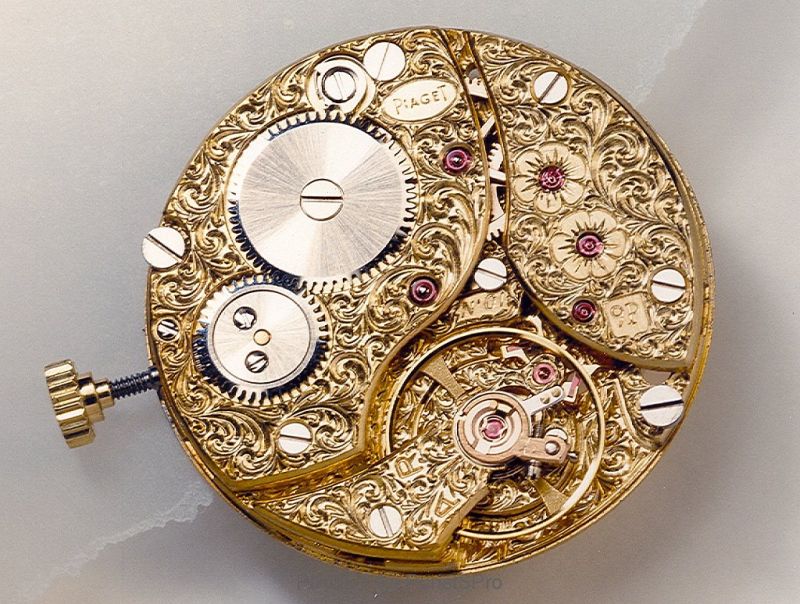
This old movement 9P2 was hidden in a closed case back watch!
Amazing that nobody could see this except the service watchmaker every 5 years.
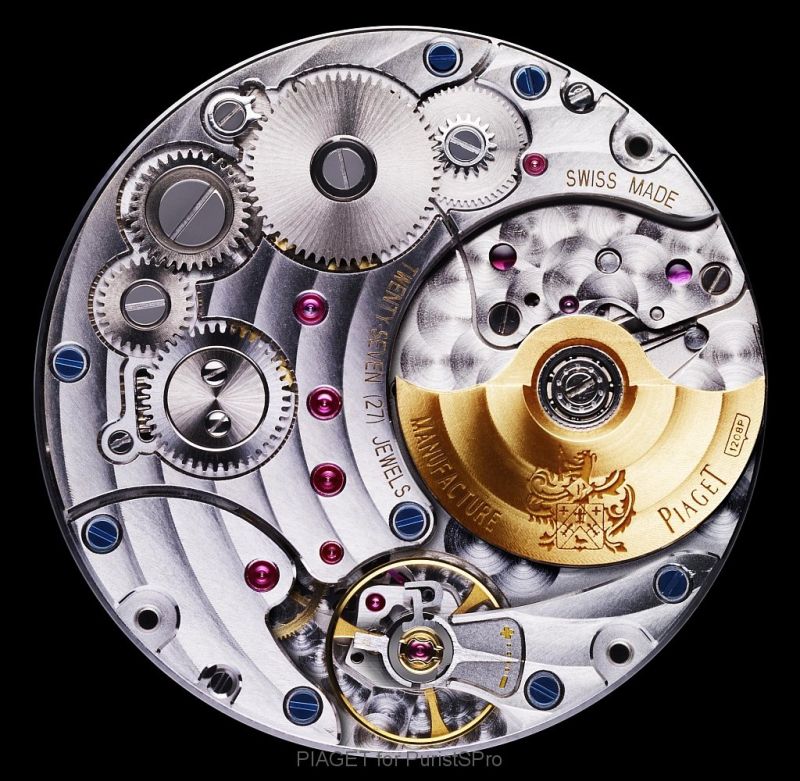
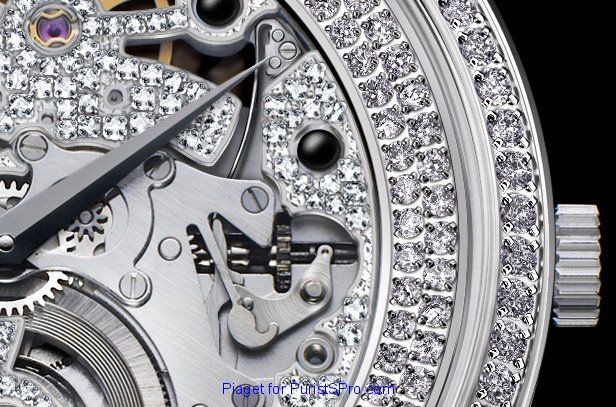
This is a modern movement 1208P that will be shown through a clear sapphire case back. Looks pretty good huh?
The difference in decoration and finishing is NOT related to whether the brand wants to show it or not.
Regards,
MTF
This message has been edited by MTF on 2010-10-16 21:51:54
Great Post...
Amazing that a watch with such a highly decorated movement would be hidden behind a solid case back. Oh well, it must have been a real treat when the watch makers open that one up for a cleaning.
Best regards,
Dino
Always do better than necessary
Dino,
Georges Édouard Piaget founded the movement workshop in 1874 and his credo was "Always do better than necessary" (in French, of course: “Faire toujours mieux que nécessaire”  .
.
That particular engraved 9P2 was inside a Georges Piaget Jubilee watch with closed case back. I suppose that is taking "better than necessary" a little too far!

MTF

Congratulations on your latest purchase!
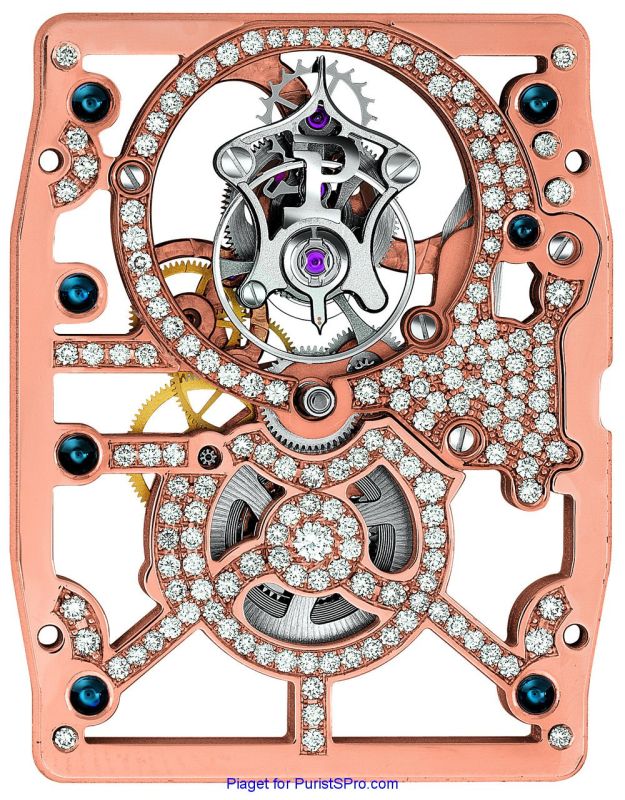
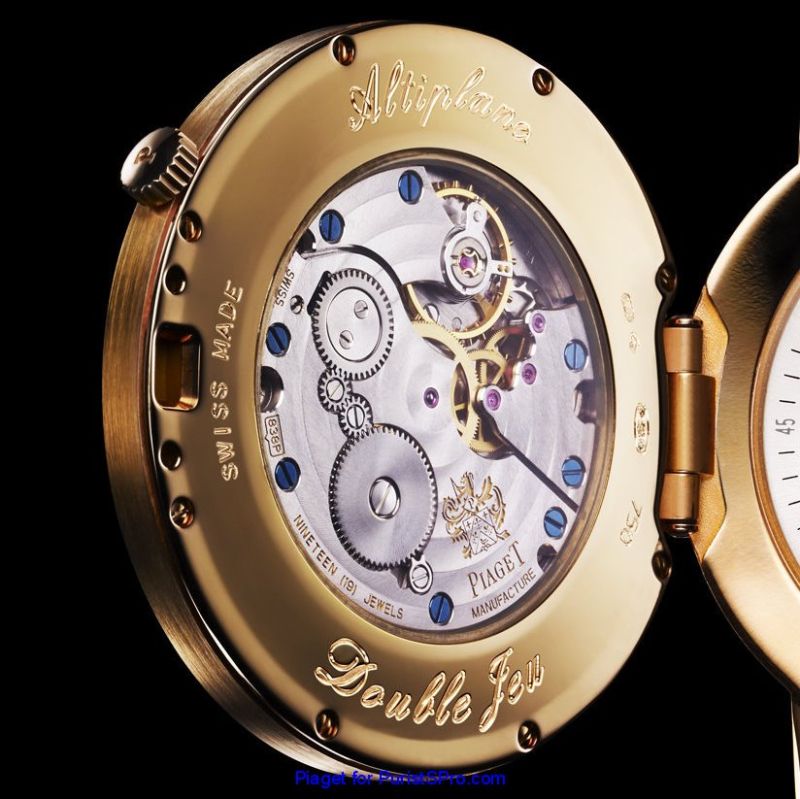
Cheers,
Daos
Thank you all for your insights, info, and images!
Thanks to everyone for their inputs! (and sorry for this late follow-up...got tied up with work)
Your comments have confirmed many of the ideas I had about the brand. I really think it is one of the most underrated (in my books) manufactures around.
It would be nice to see the particular models using Piaget movements from the list of "secret" clients MTF mentioned...especially the VC. That would really make my day.
Again, thanks and HAGWE!
Kazumi