
A visit to Hublot in Nyon
Hublot’s manufacture in Nyon, north of Geneva, was inaugurated in 2009. It sets the stage for Hublot’s second stage of growth, after the turbo-charged early years when Jean-Claude Biver first took over and grew sales ten-fold.
Nyon was selected by Jean-Claude Biver for its location, conveniently accessible from Geneva, the Vallee de Joux and Evian in France. The town is better known as the headquarters of UEFA; Hublot is the only watch manufacturer located there.
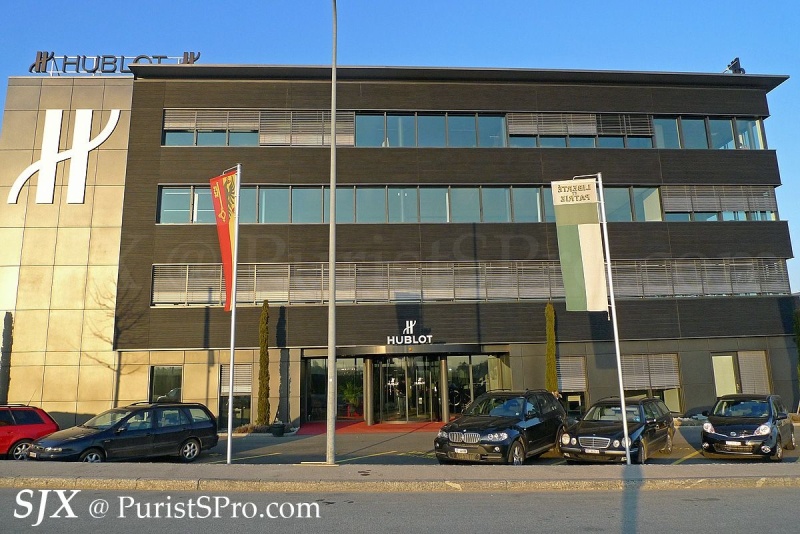

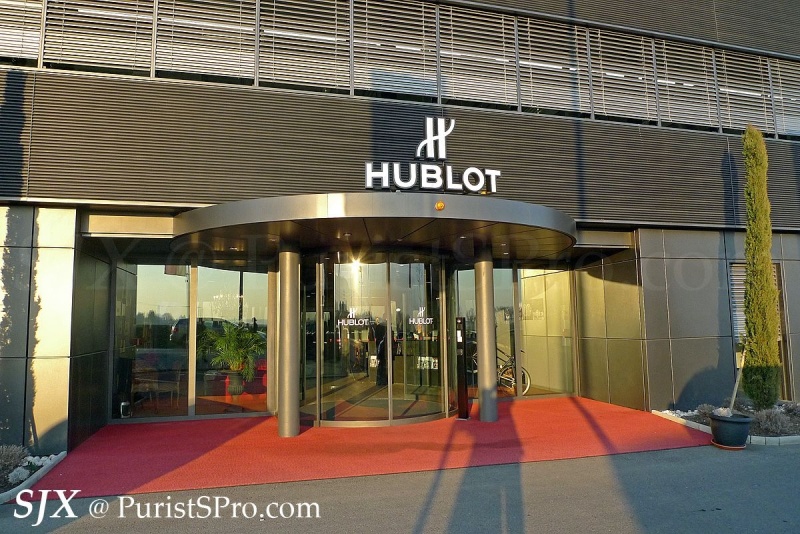
The six storey Hublot building is easily recognisable from a distance. Even without the enormous logo out front the building is entirely in black and grey, echoing the favourite shades of the Big Bang. This colour and stylistic theme is echoed through the entire structure, as we will see later. The mantra of fusion literally permeates the entire building as well as the people. The folks at Hublot love their job, and their boss, more than the average watch manufacture.
Many thanks to the team at Hublot for this wonderful visit.
- SJX
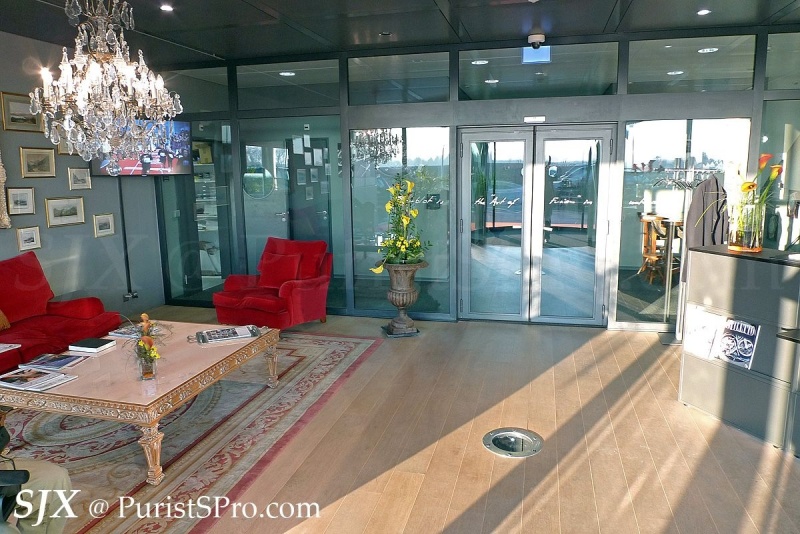
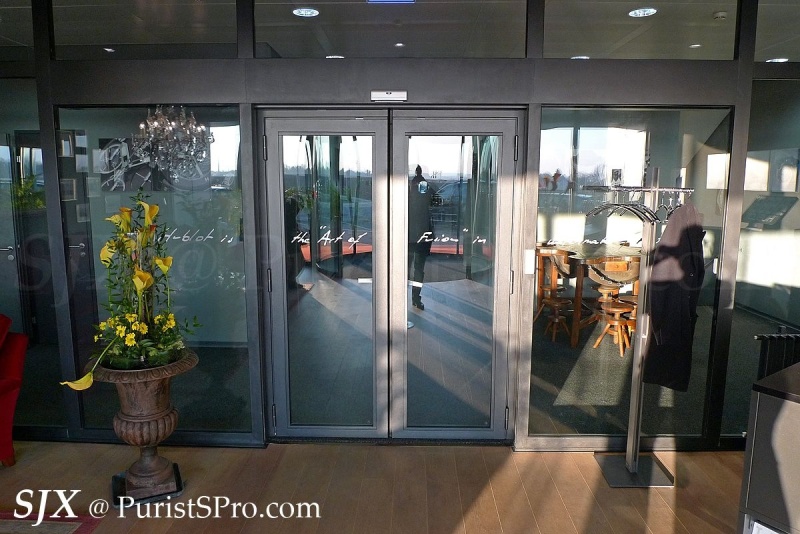
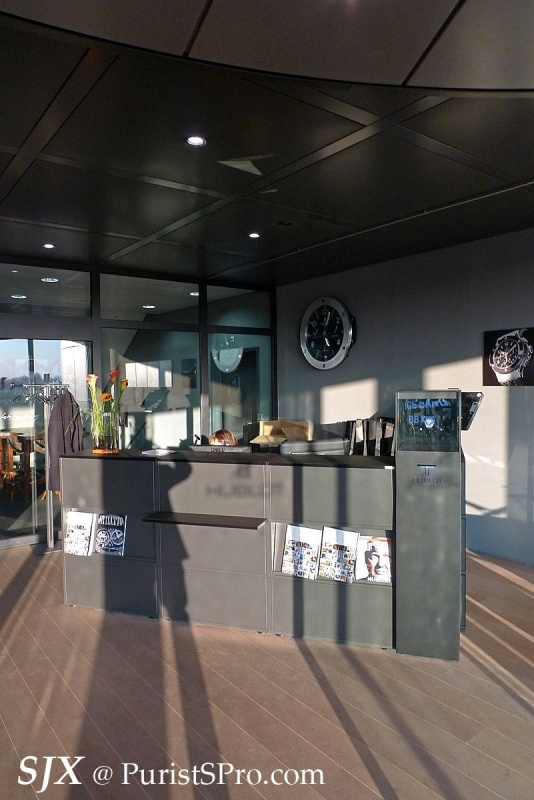
Below: The entrance lobby
This message has been edited by SJX on 2011-04-03 05:29:17
Part I: Parts production
For those who think Hublot merely buys Valjoux 7750 movements and case them as I did in the past, this should serve to convince you otherwise.
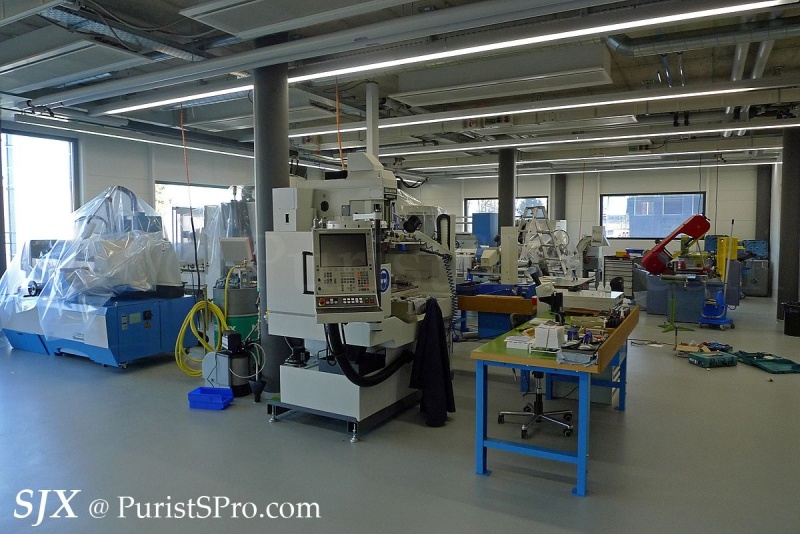
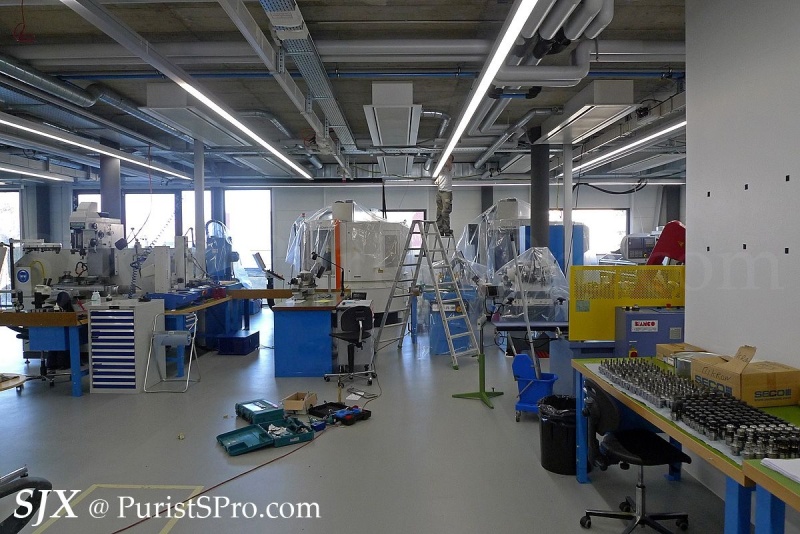
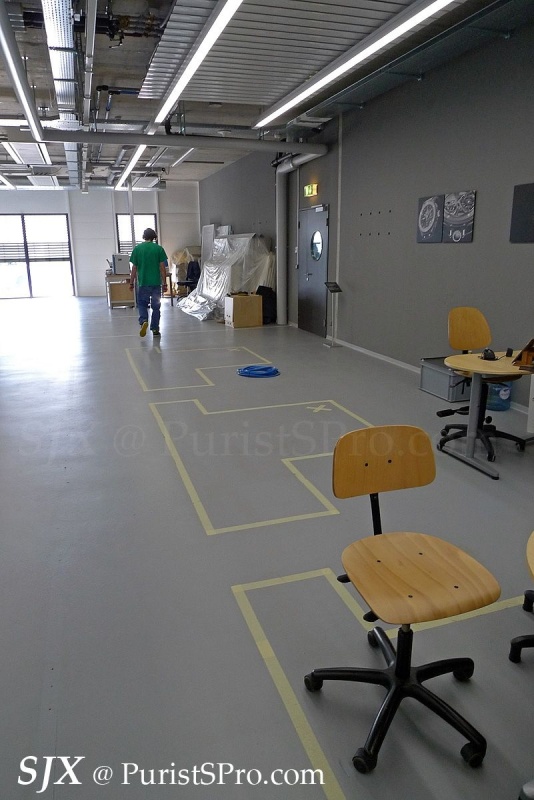
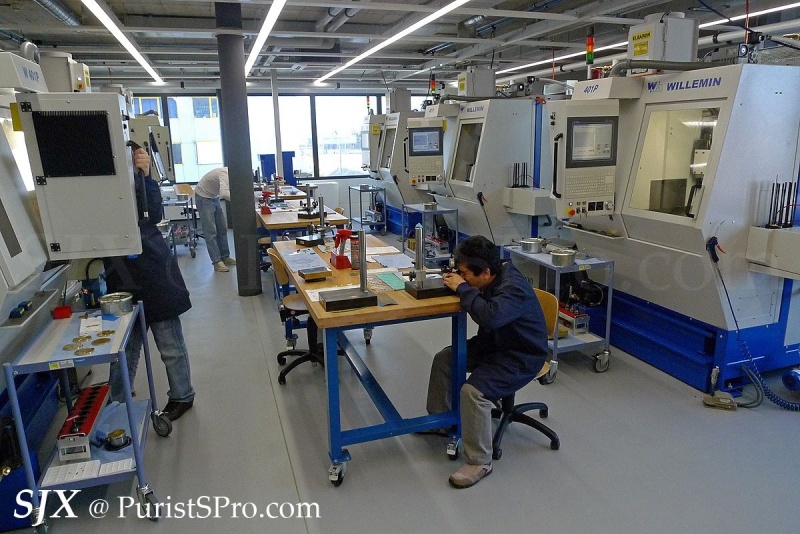
The machining workshop is undergoing significant expansion as the photos below illustrate. Several new machines have been delivered and many more are expected, as the tape outlines on the floor suggest. All of this brings Hublot to its target of becoming more vertically integrated as well as expanding annual production to 10,000 to 15,000 of the new UNICO movement.
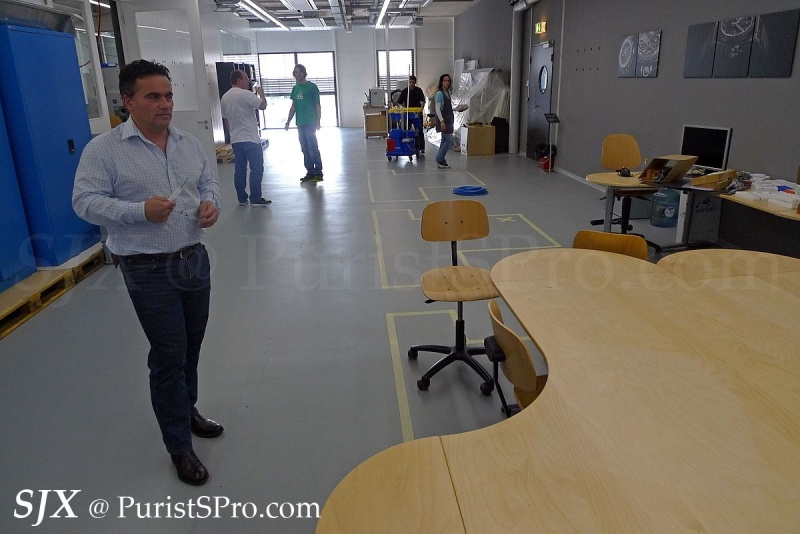
Above left: Mathias Buttet, head of Confrérie Horlogère Hublot
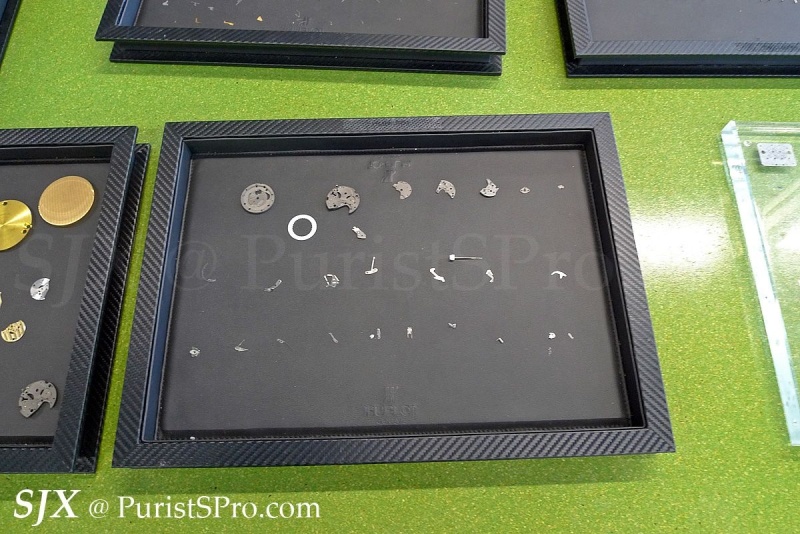
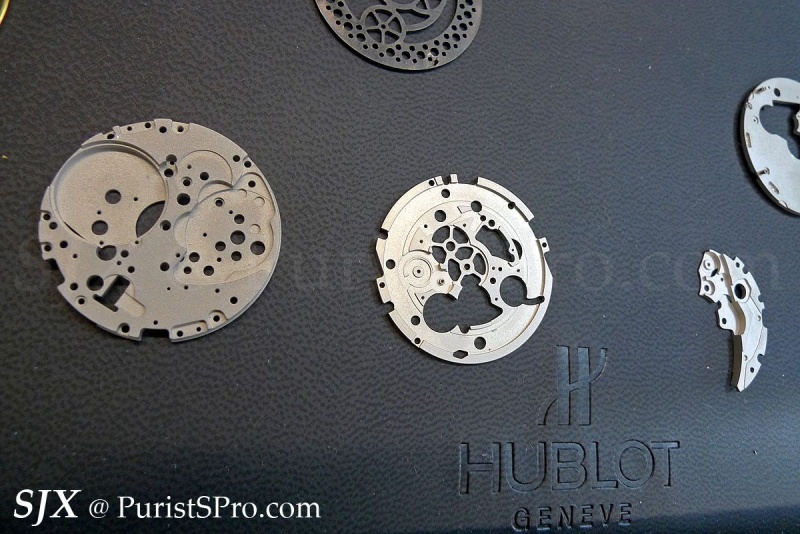
That being said, Hublot already has much of the equipment one typically sees in a manufacture: CNC machines, bar-fed machining centres, spark erosion machines etc. These make everything from bridges to screws. These machines do not only manufacture parts for simple calibres, but also grande complications put together in the BNB workshop which is explored in-depth in another part of this report.
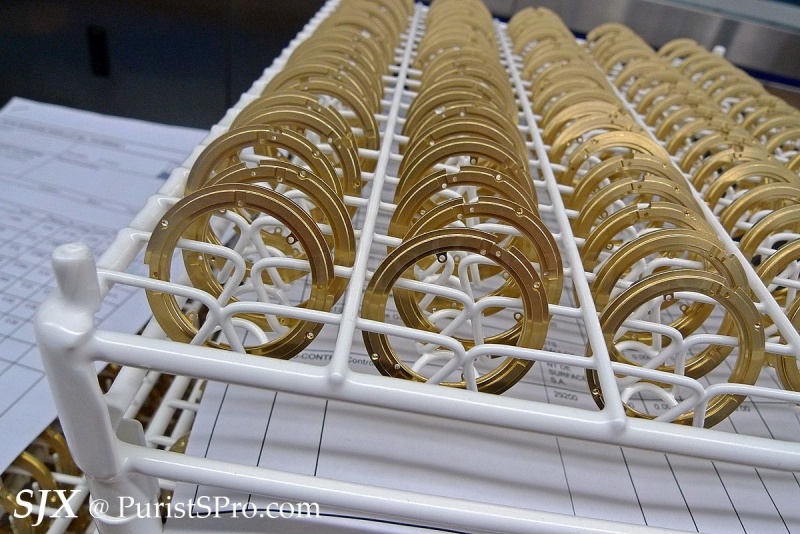
Below: Parts to be cleaned in an industrial ultrasonic cleaner
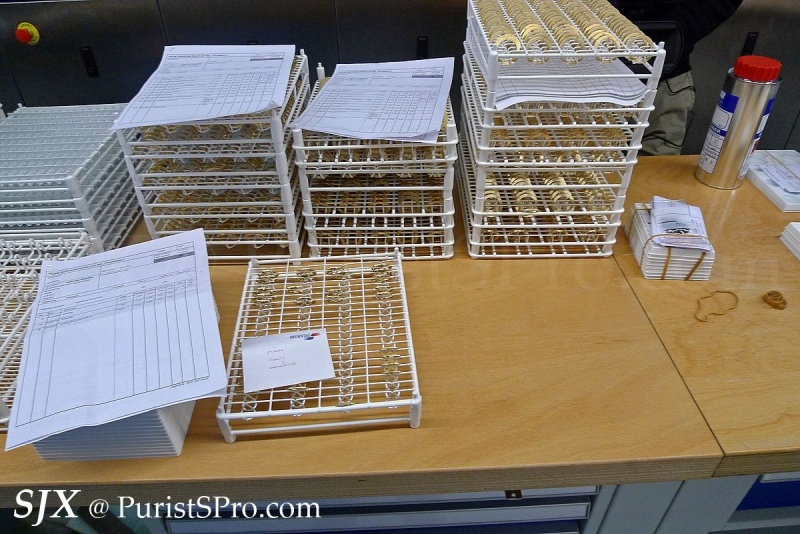

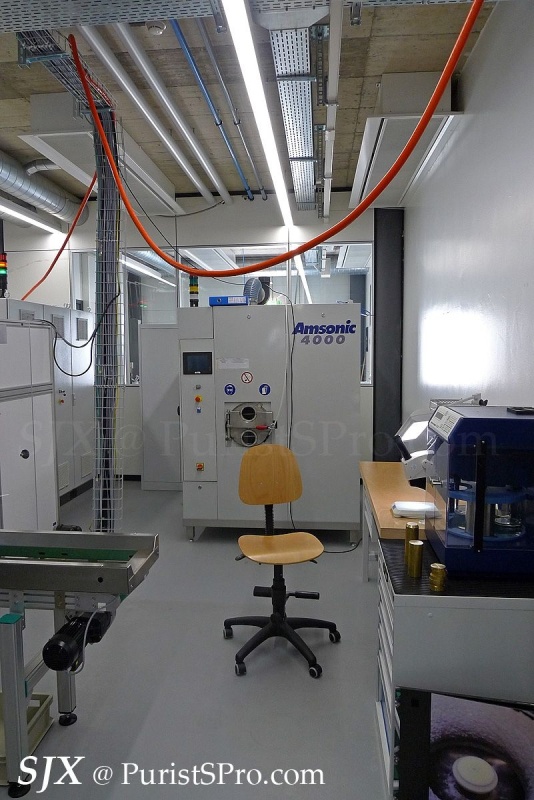
Above: A smaller ultrasonic cleaner
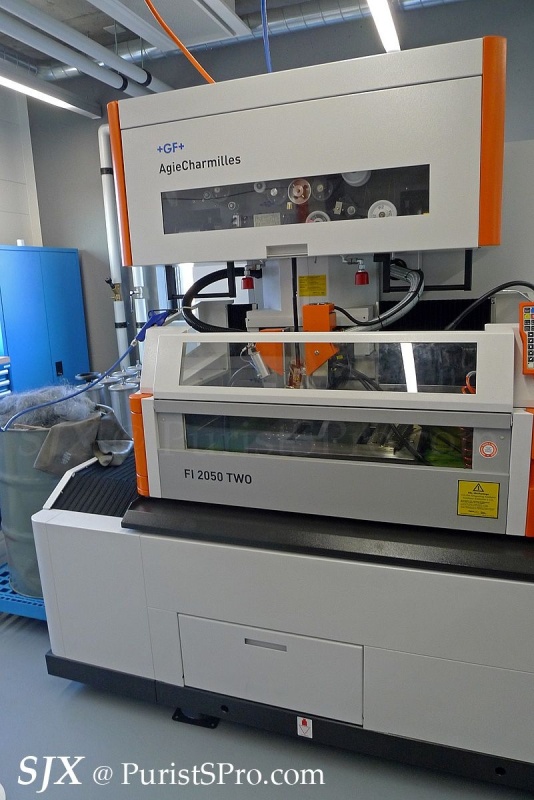
Below: Wire erosion machine

Above: Scrap wire from the wire erosion process
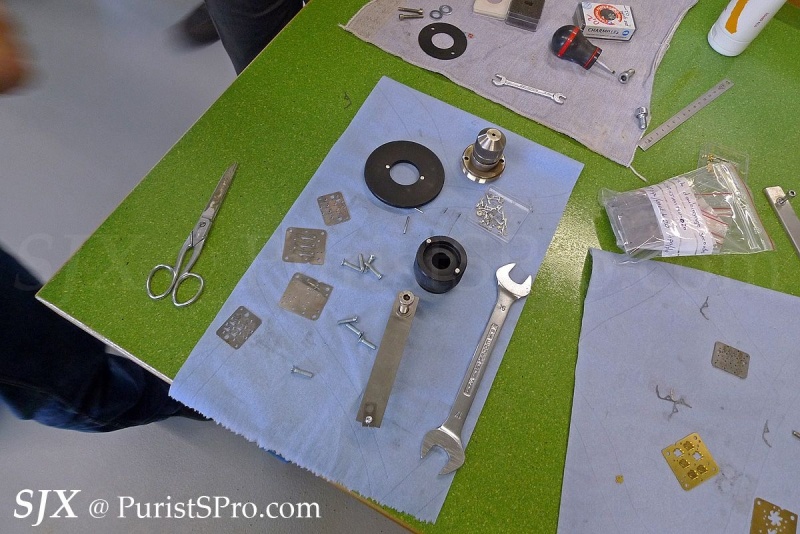
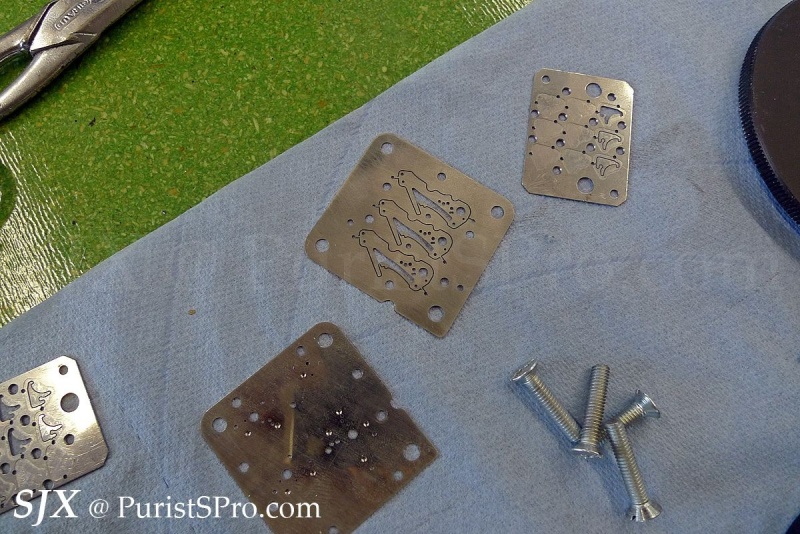
Above: Parts cut by wire erosion
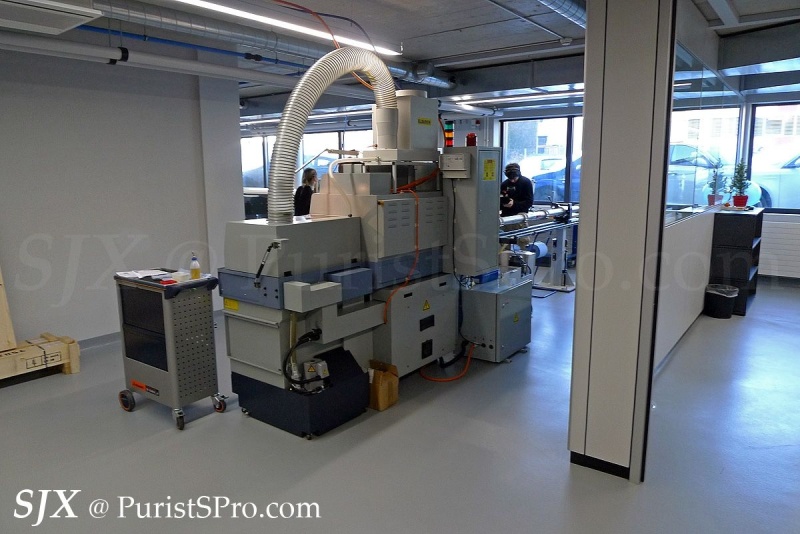
Above: Bar-fed maching centre
Below: Rods of metal, including brass for bar-feeding, and the resulting parts
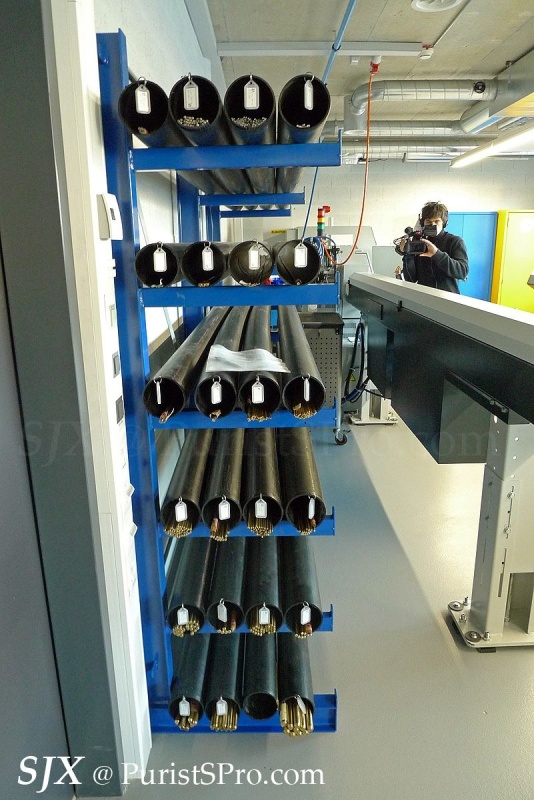
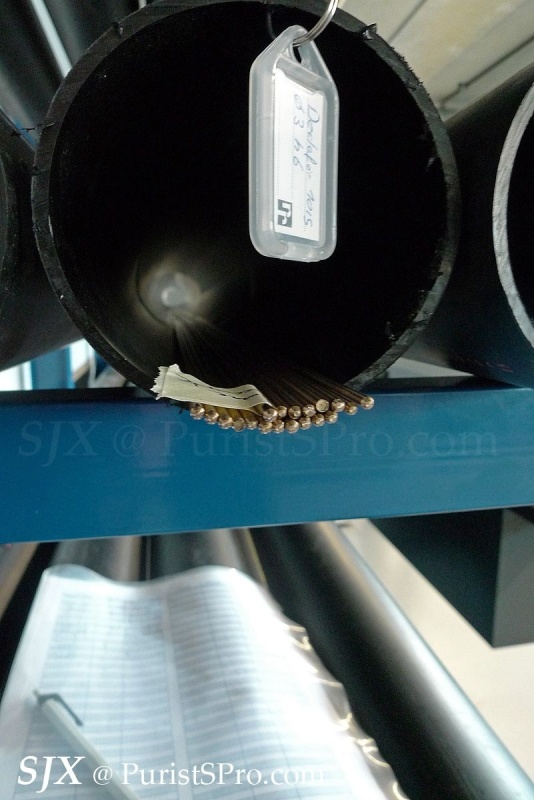
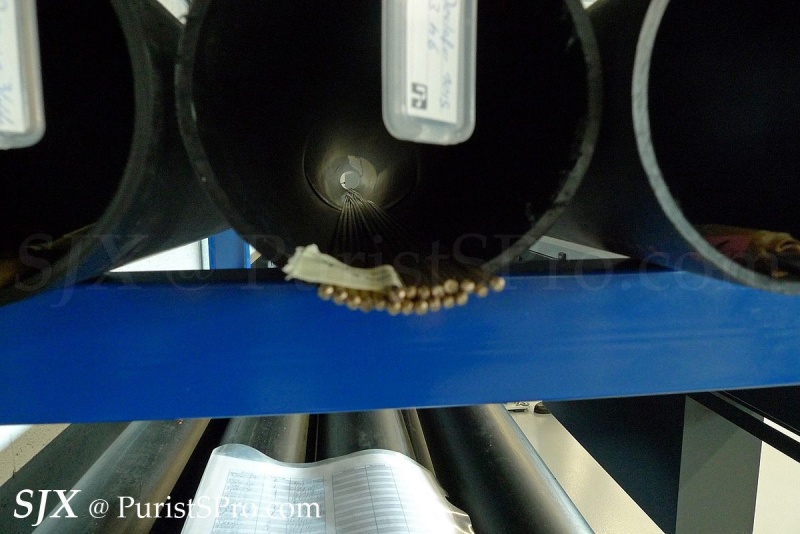
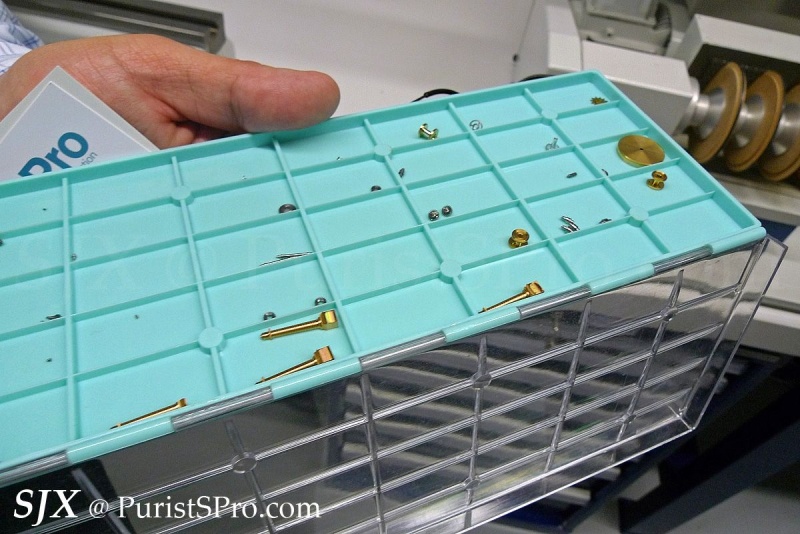
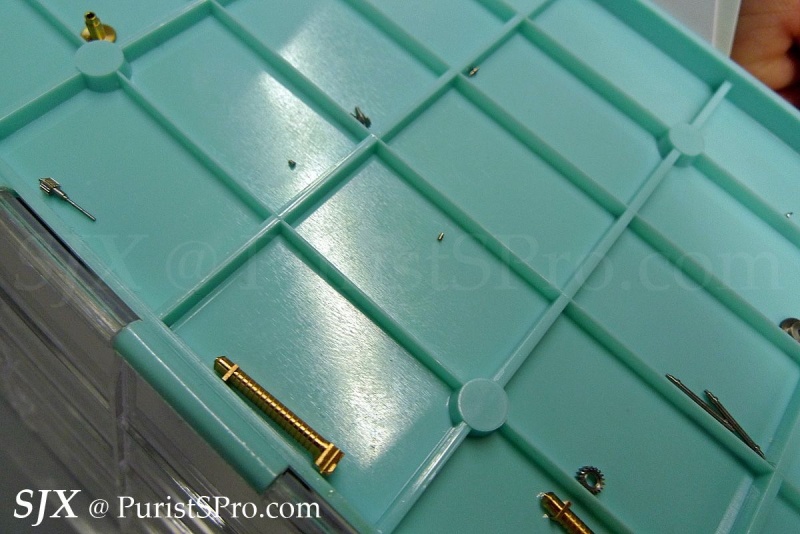
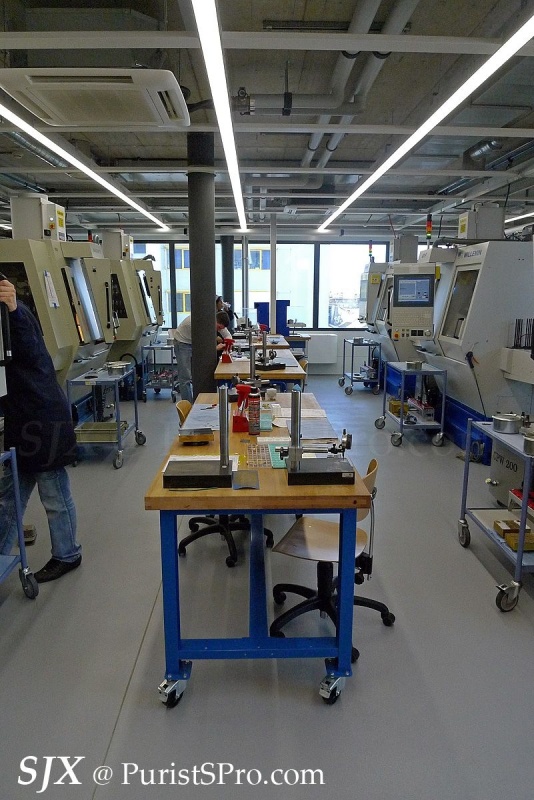
Below: More CNC machines and the components that emerge
This message has been edited by SJX on 2011-04-03 02:57:24
Part II: Component control
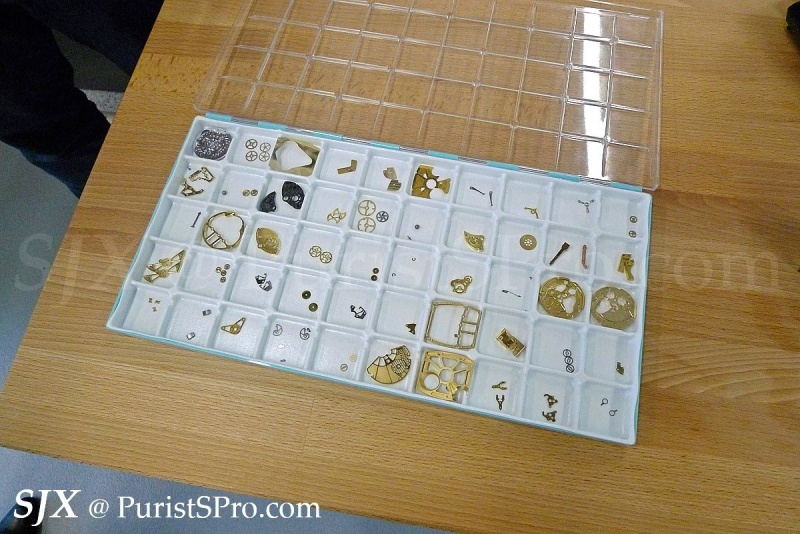
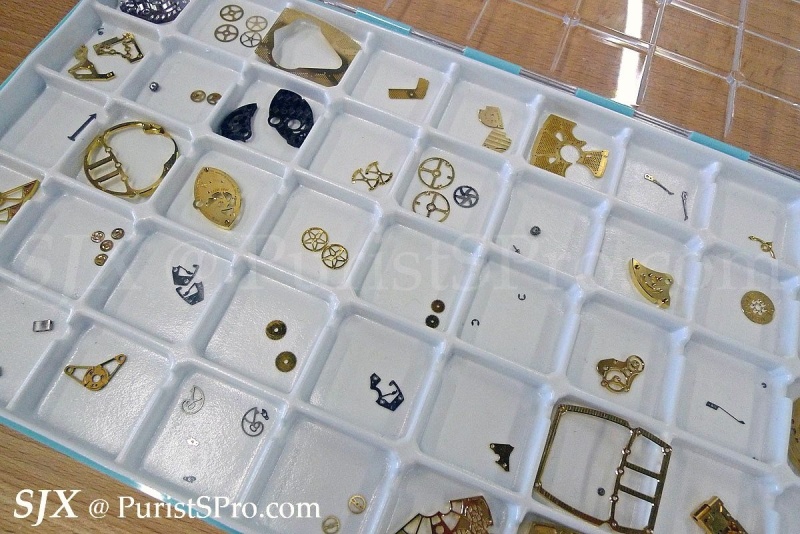
Parts made in-house, as well as parts sourced from external suppliers, are sent to the control department to ensure they meet standards in terms of dimensions, finish and appearance.
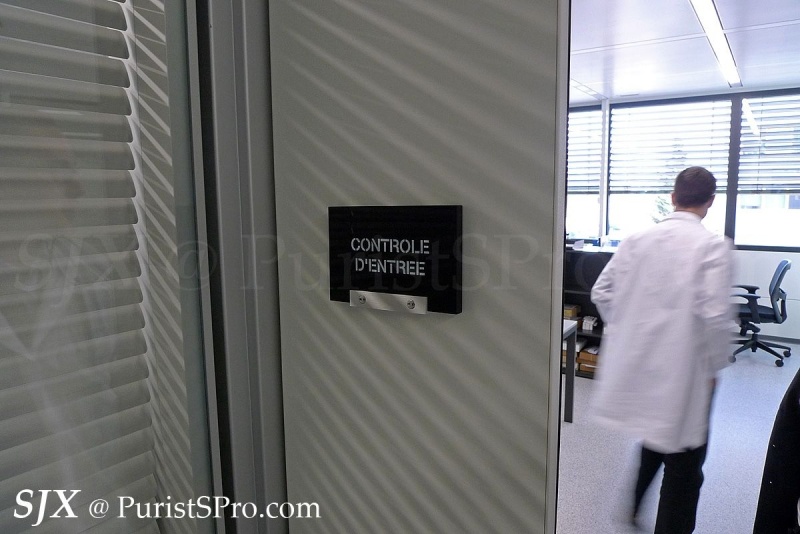
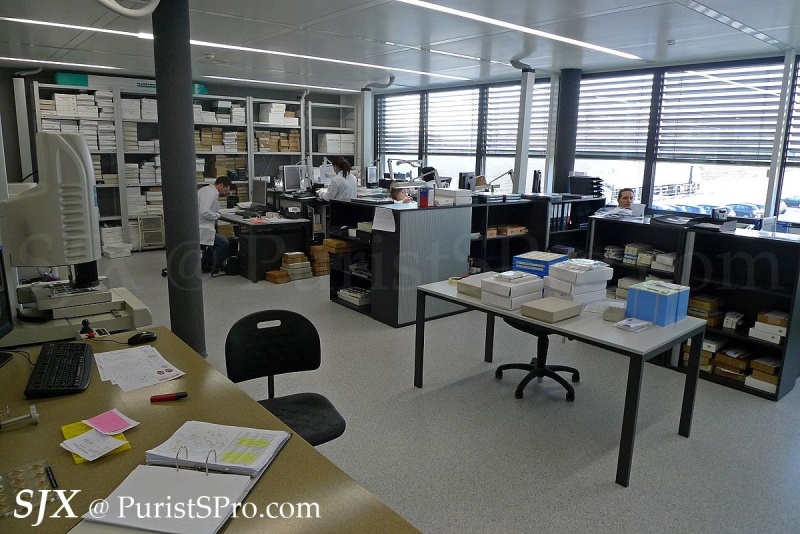

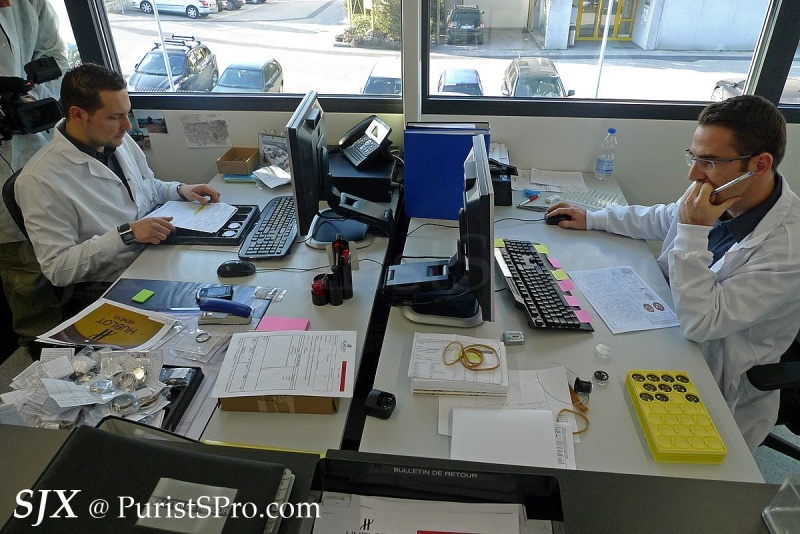
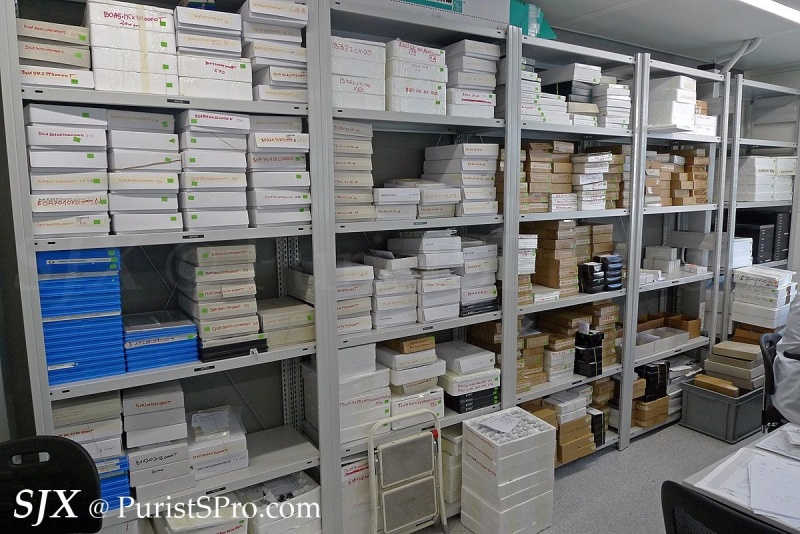
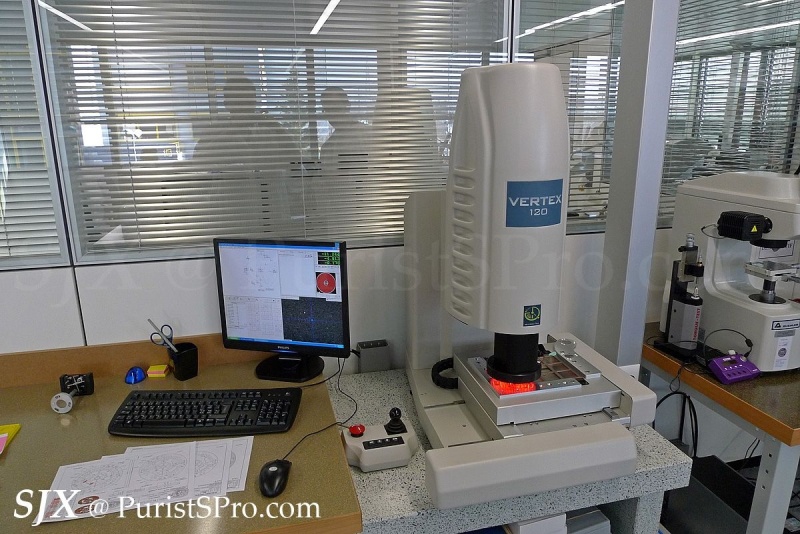
One of the standard procedures is a video microscope to compare parts against a template.
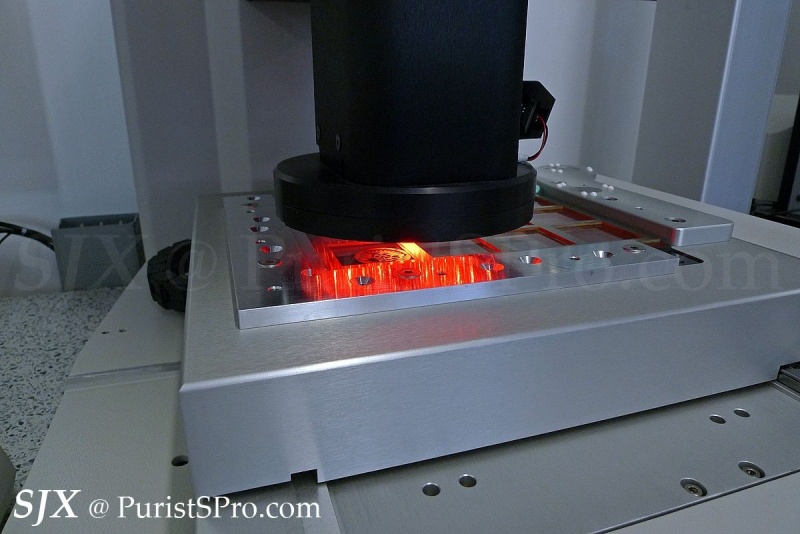
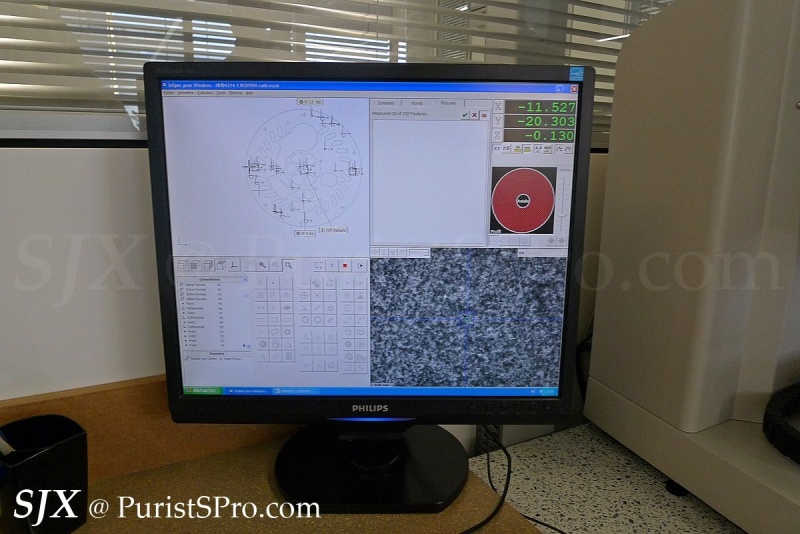
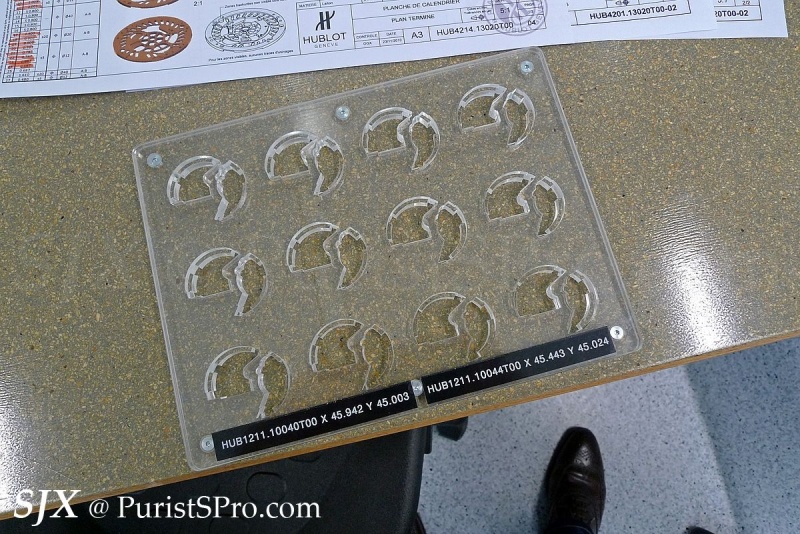
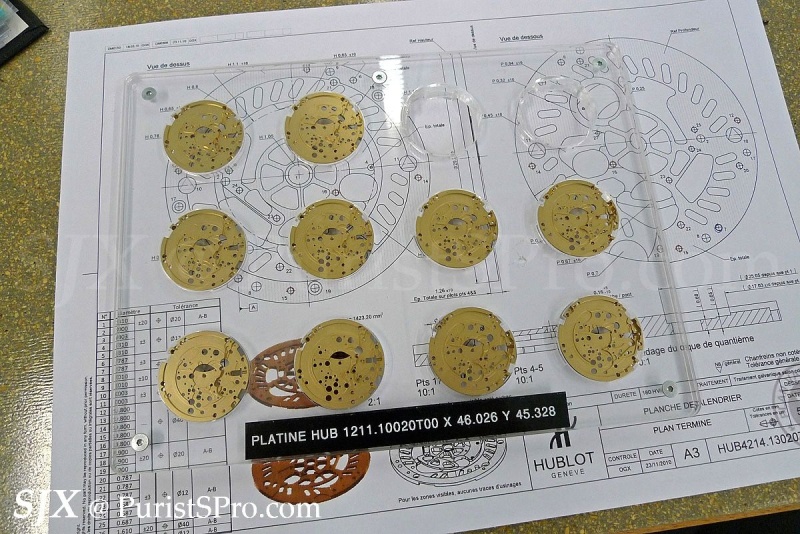
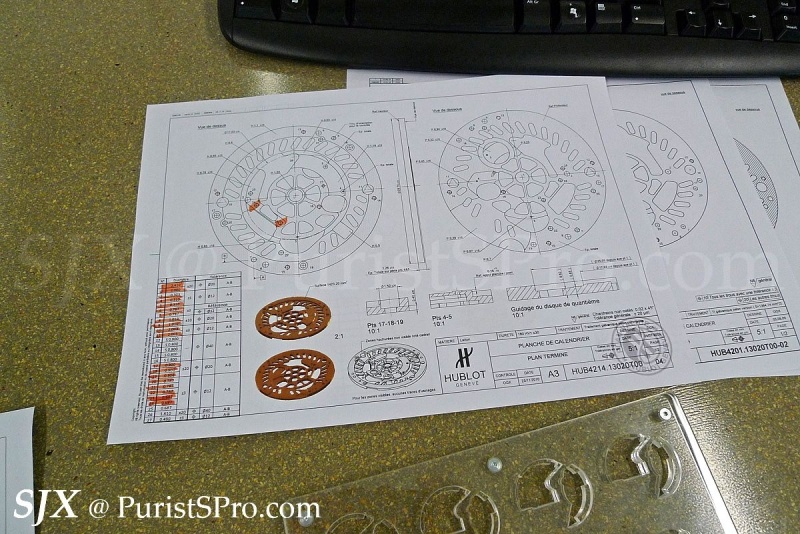
Parts that fail to pass are and a report is drawn up identifying the defects.
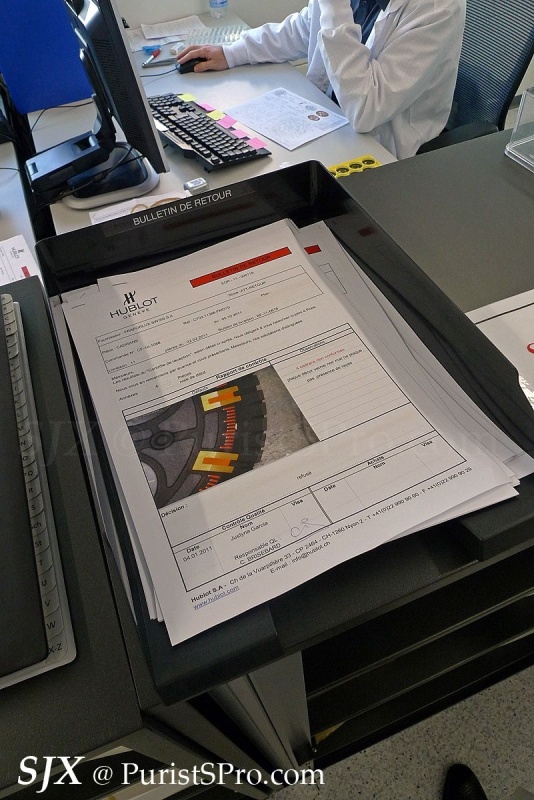
Above: A return report specifying problems with the coating on the dial
This message has been edited by SJX on 2011-04-03 03:01:58Part III: Electroplating and coating workshop
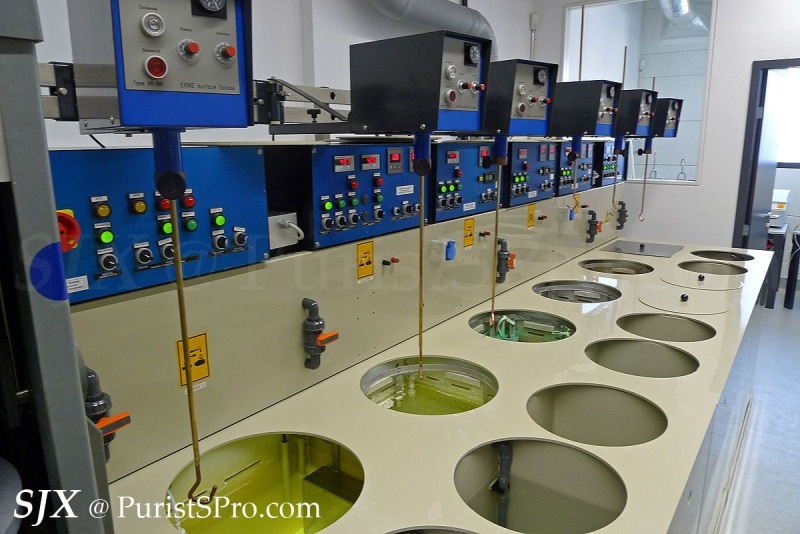
This is unusual for a watch manufacture – an in-house electroplating and coating workshop. These are not too common at watch factories, especially smaller ones like Hublot, because of the special permits required due to the hazardous chemicals needed to do plating and coating.
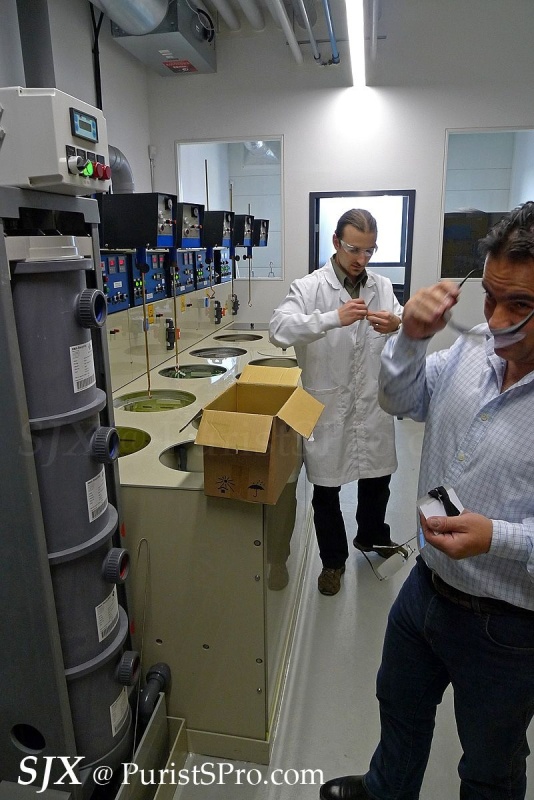
Protective goggles are needed because...
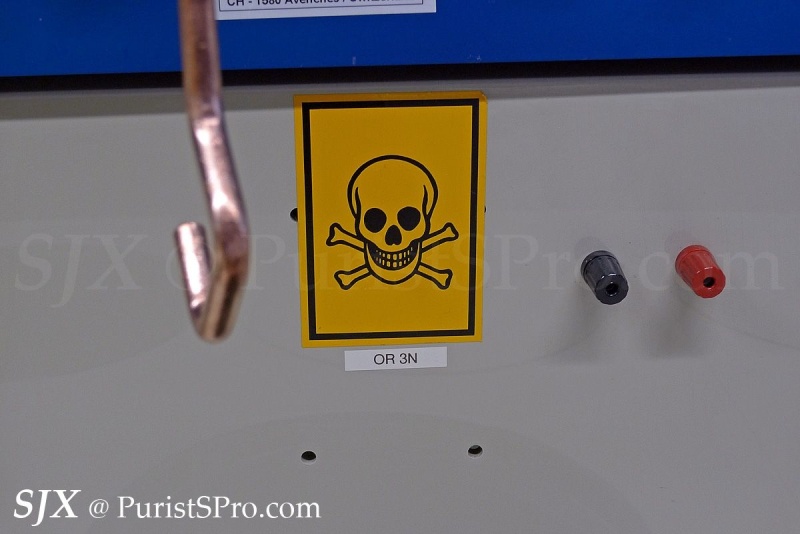
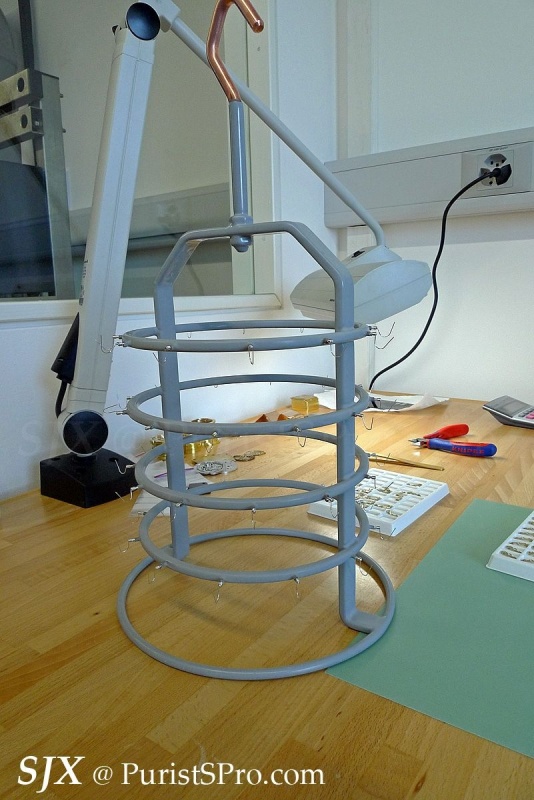
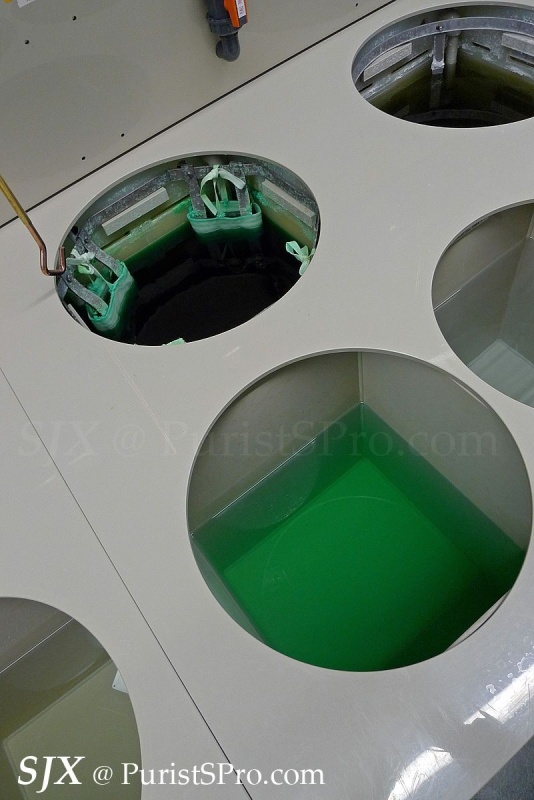
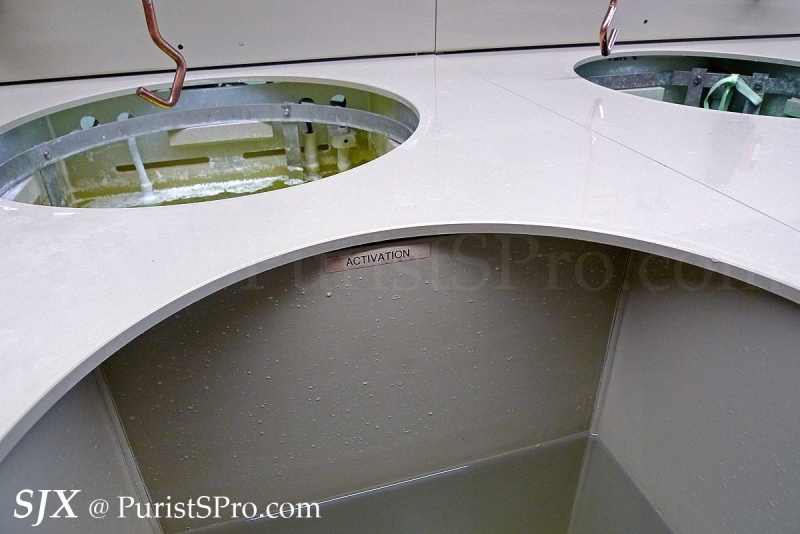
Above: Parts are hung on this and immersed in the dangerous looking electrolyte solutions shown below
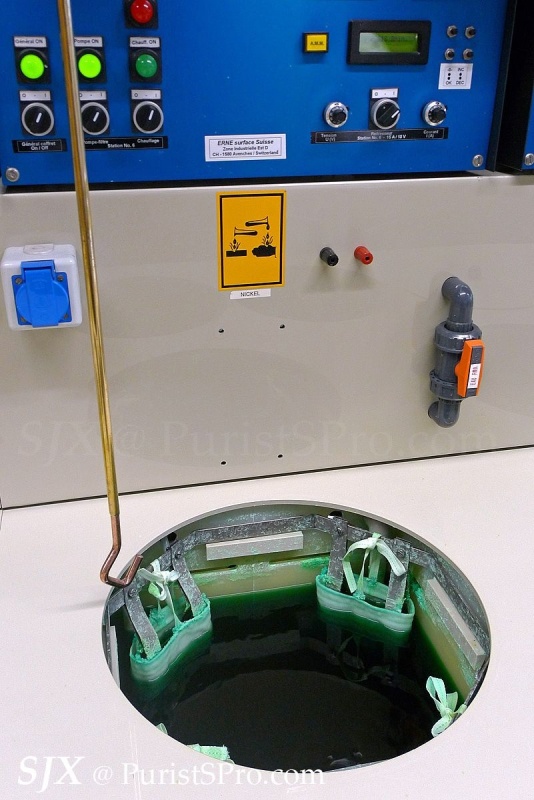
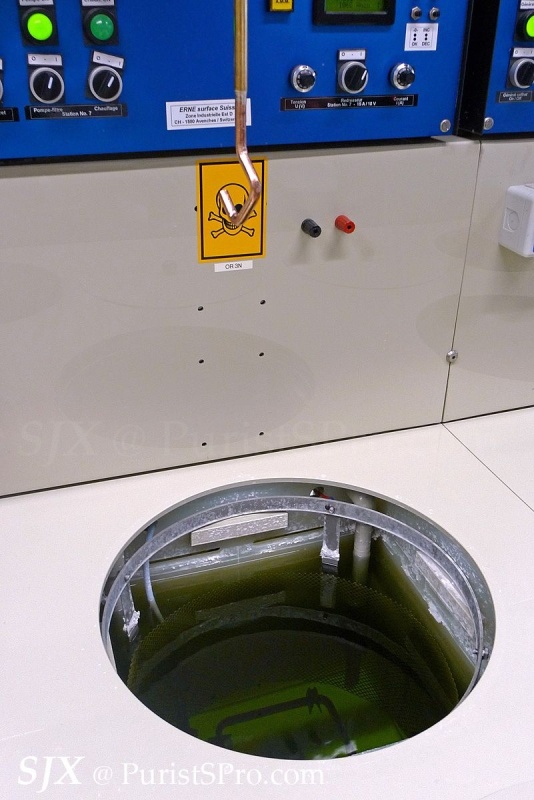
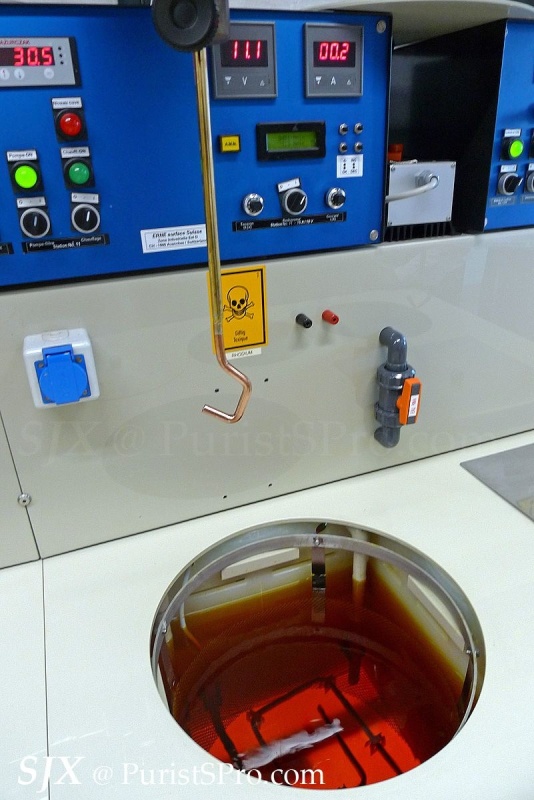
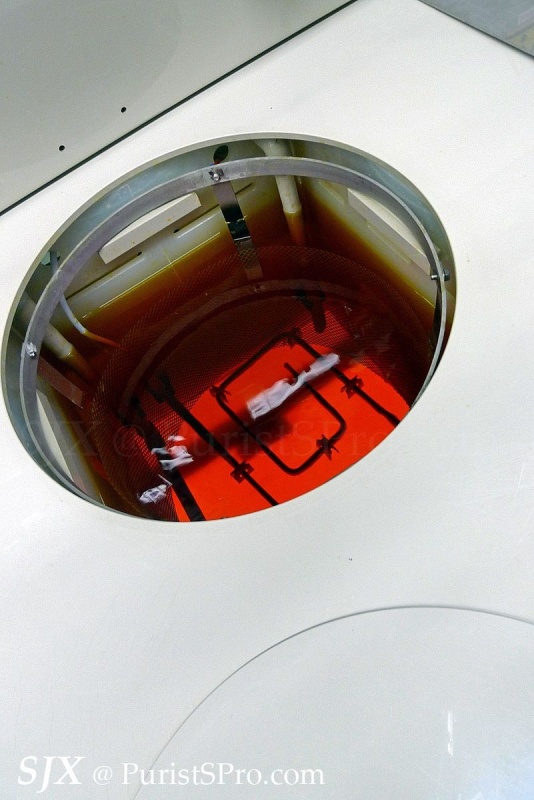
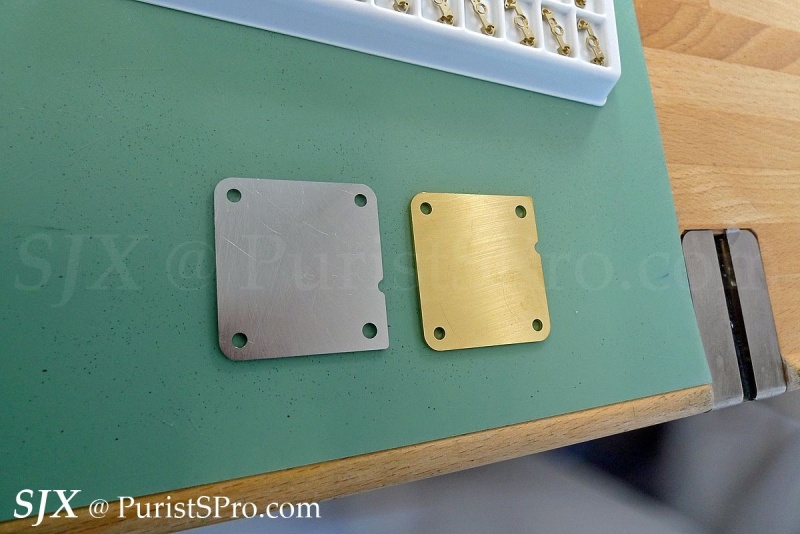
Above: Before and after gold-plating
Below: A electroplating demonstration
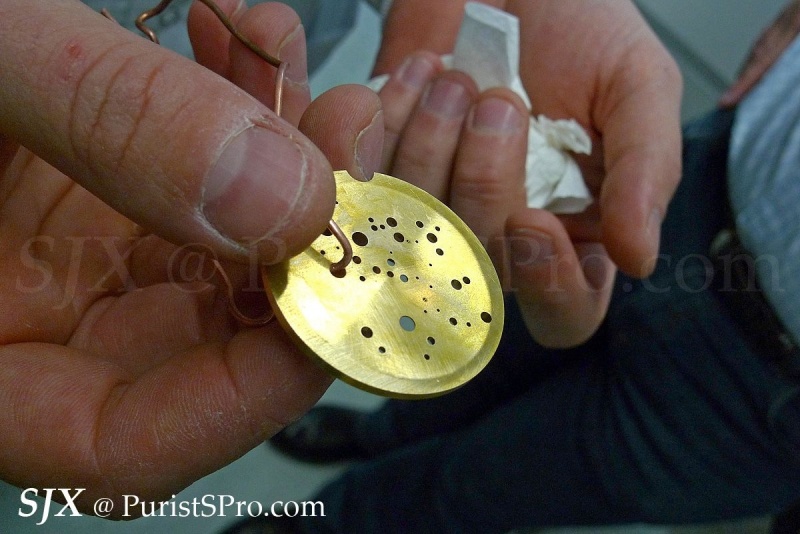
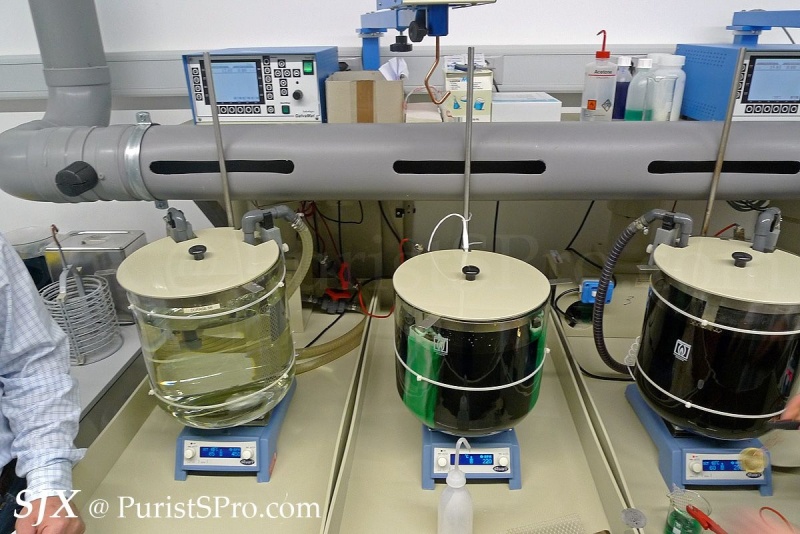
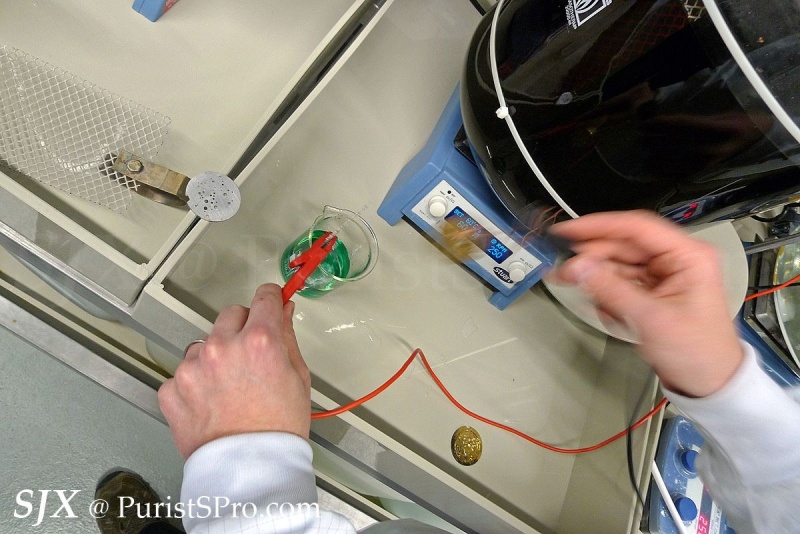
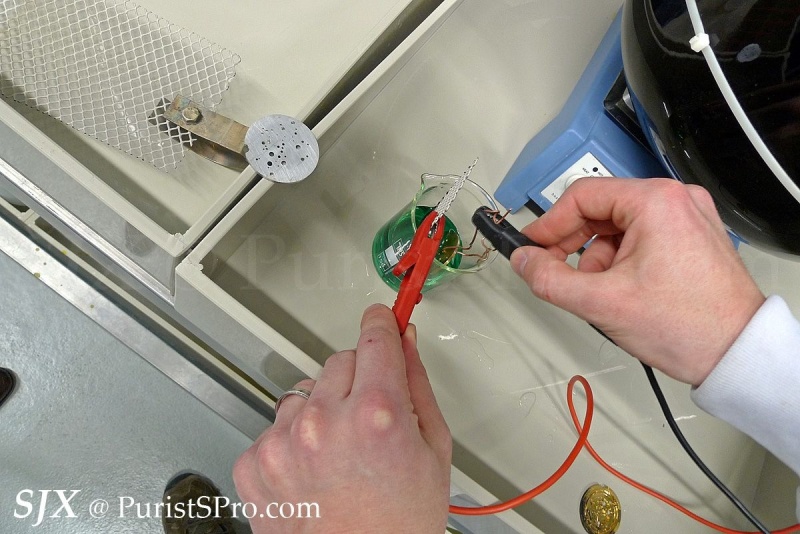
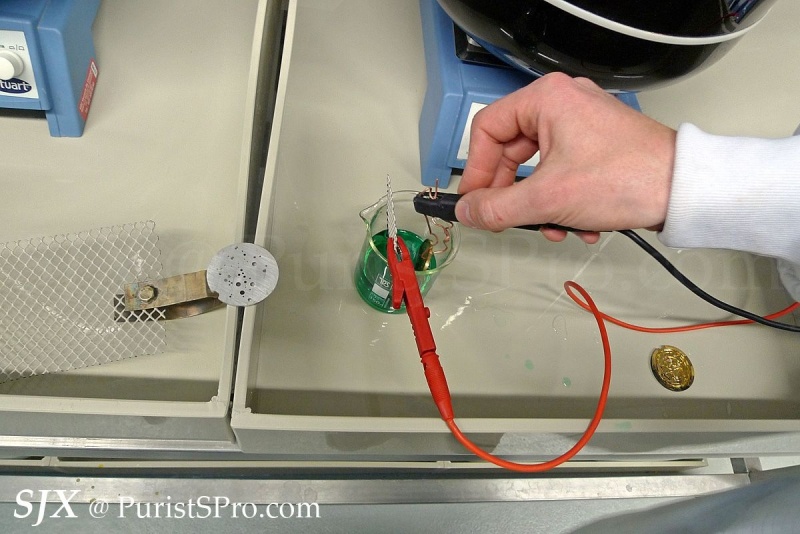
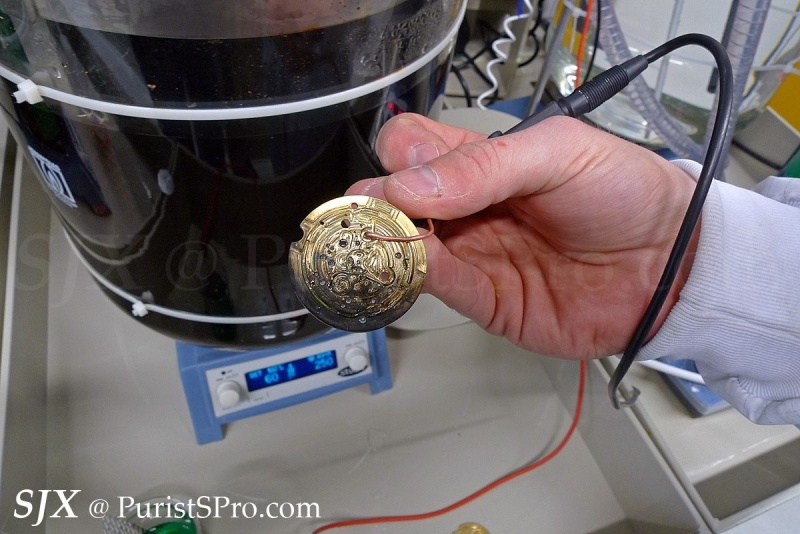
But because of Hublot’s emphasis on colours and materials, this is a key aspect of the manufacture. Doing this in-house allows for an almost unlimited range of colour variations for watch parts.
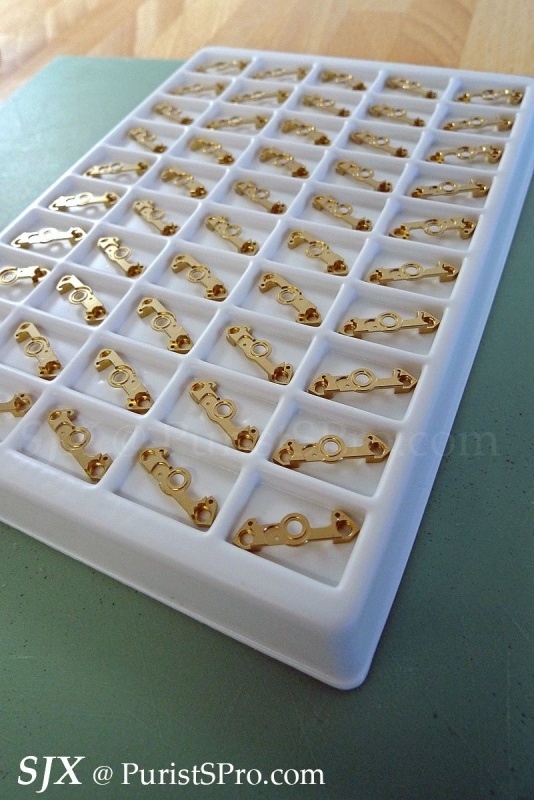
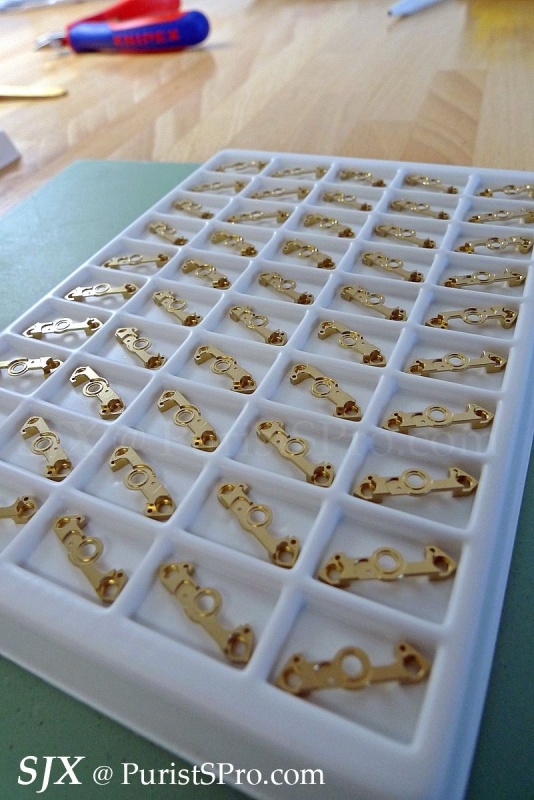
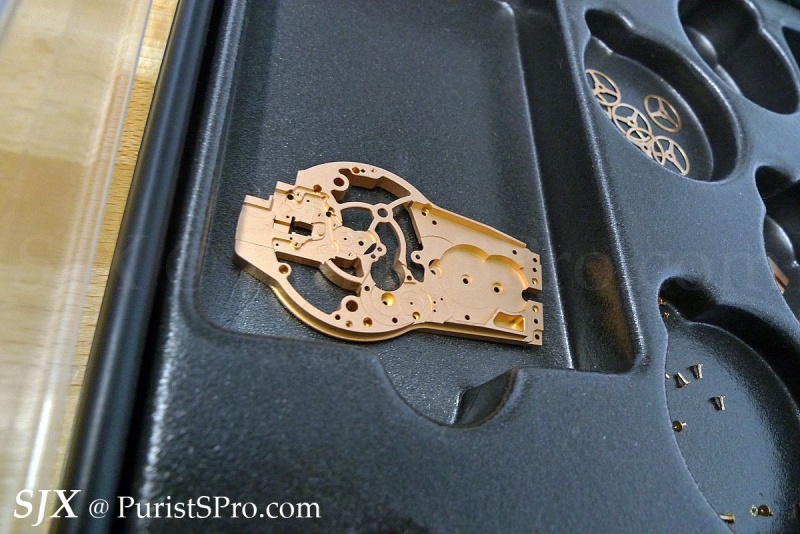
Above: Various parts that have been electroplated
Eventually this will be expanded into an in-house materials department that will also do ceramics and other materials. Notably, Hublot also sponsors a PhD in metallurgy at the nearby Lausanne Federal Polytechnic.
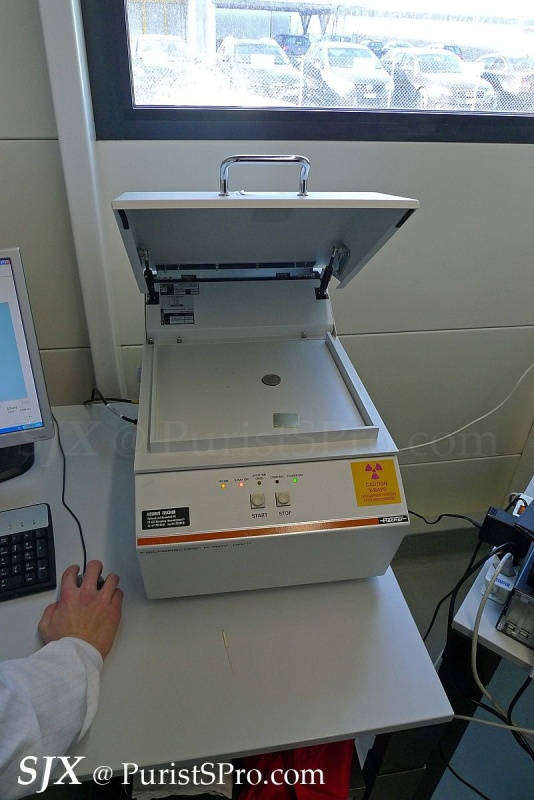
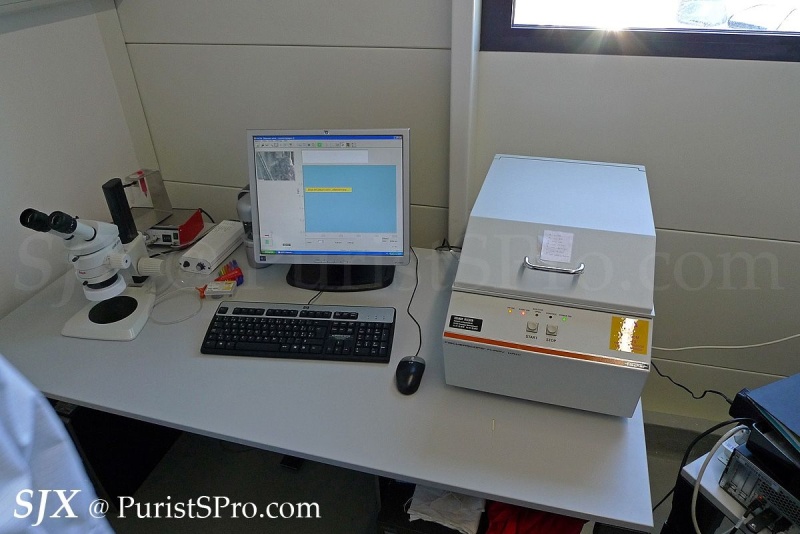
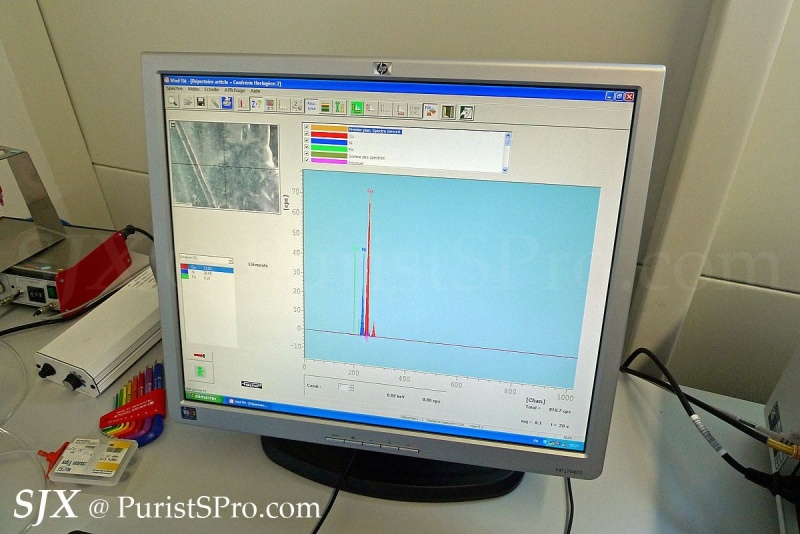
Below: A x-ray that performs material analysis and coating thickness measurement to check the conformance of plated parts
This message has been edited by SJX on 2011-04-03 03:14:32
Part IV: Movement assembly
Subassembly of various parts are done prior to assembly of the movement. This includes things like fitting of pinions to wheels and pressing of jewels.
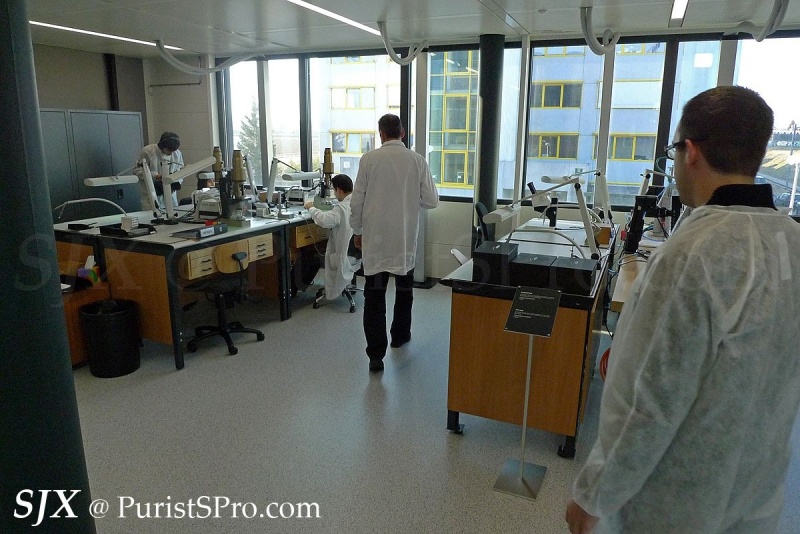
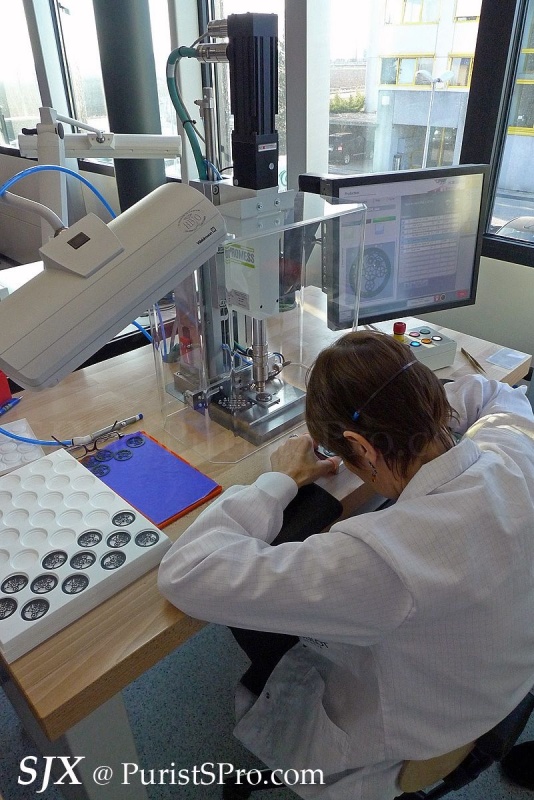
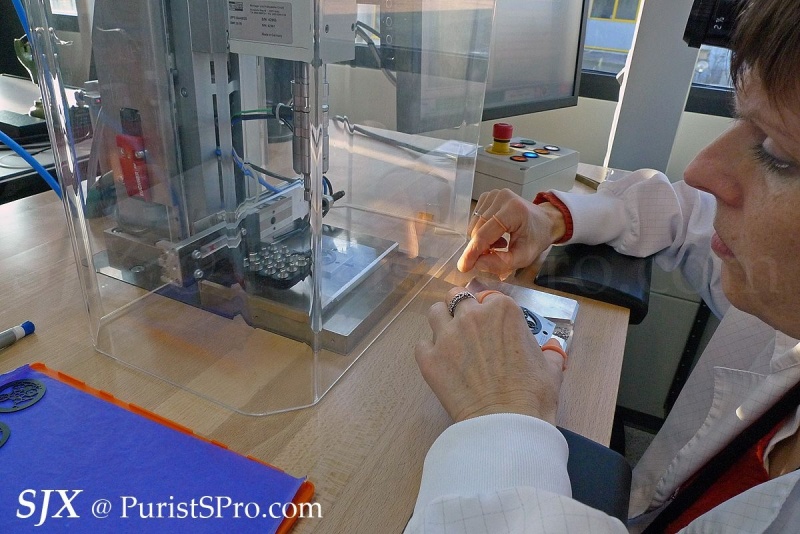
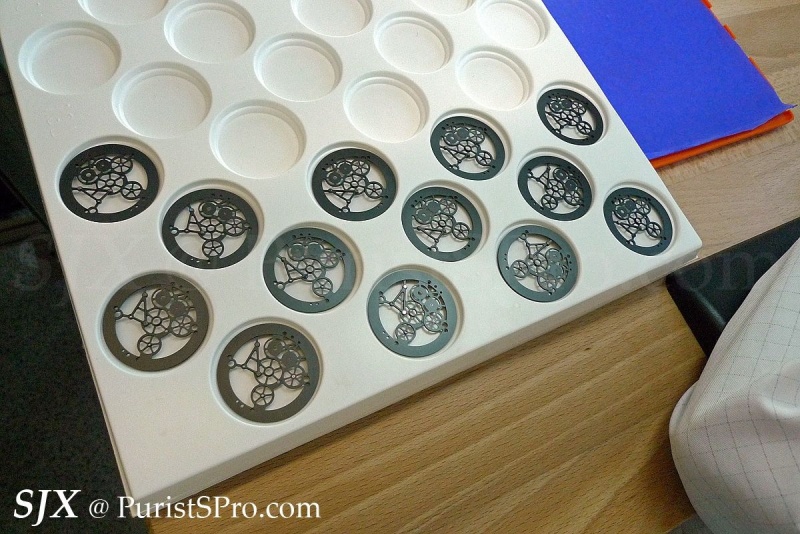
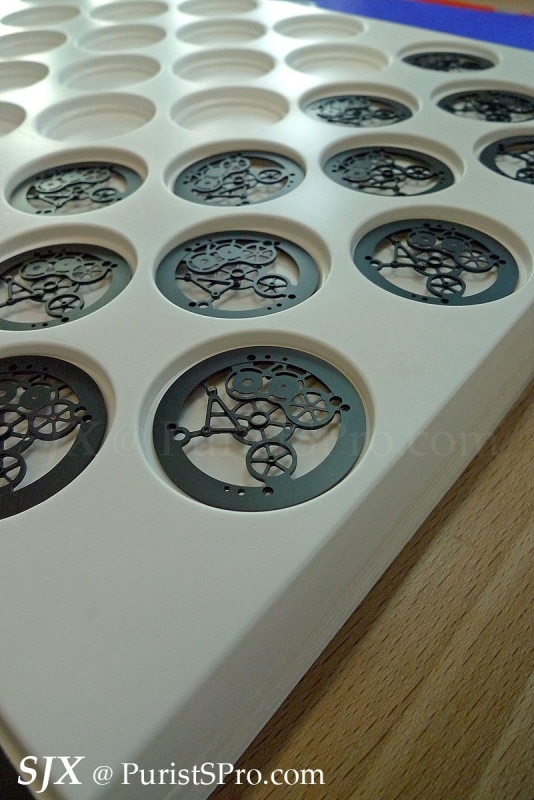
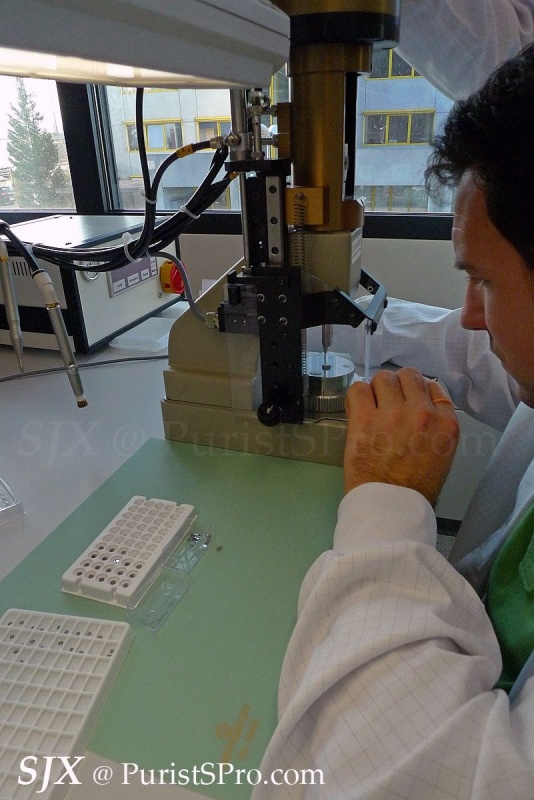
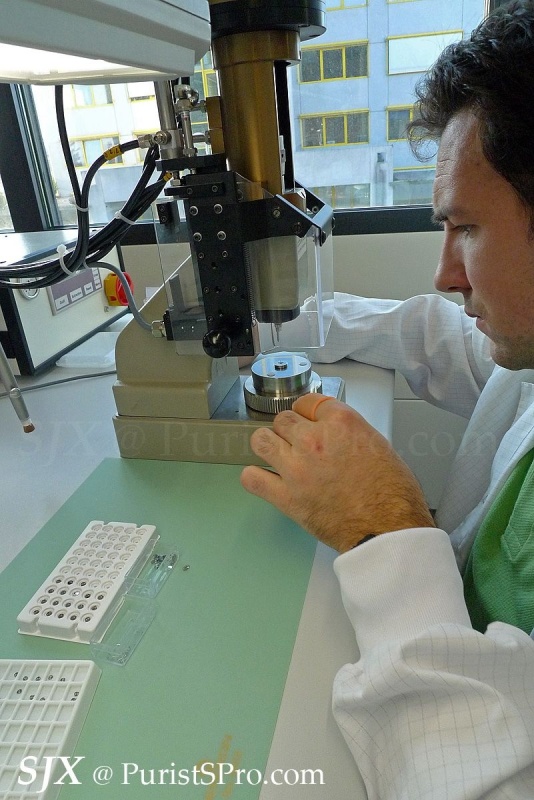
The movement itself is then put together in another workshop, assembly line style with each watchmaking fitting certain components.
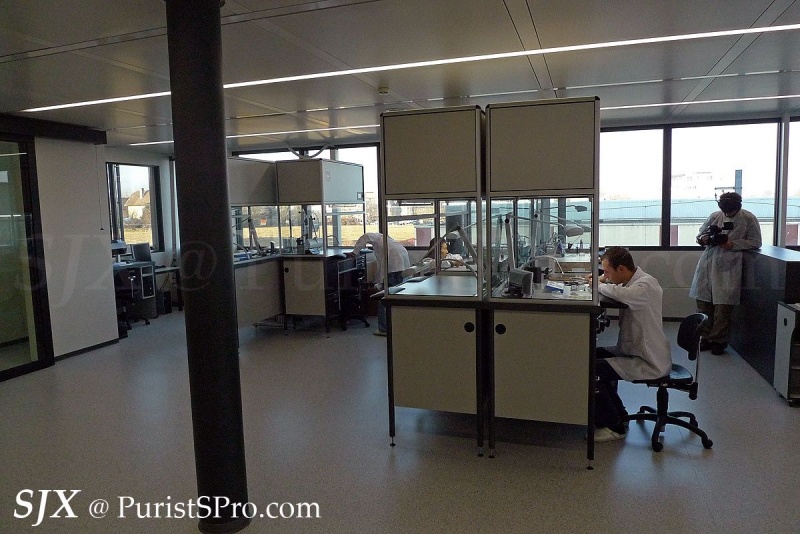
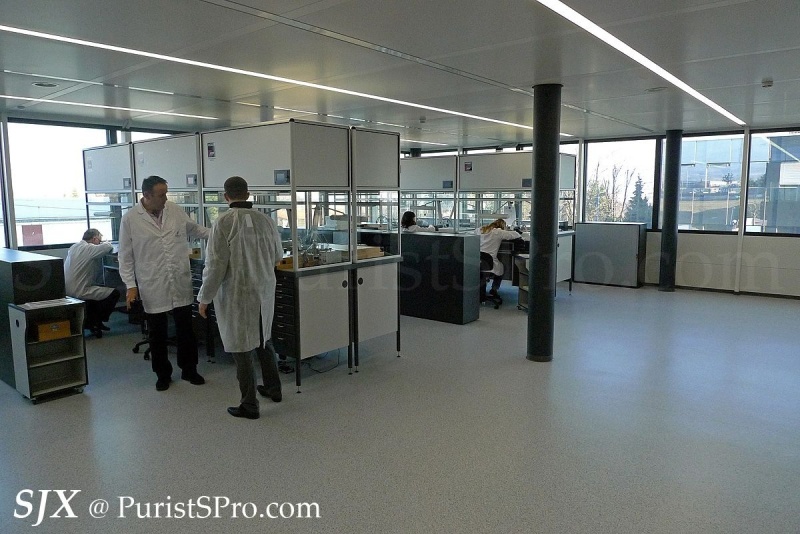
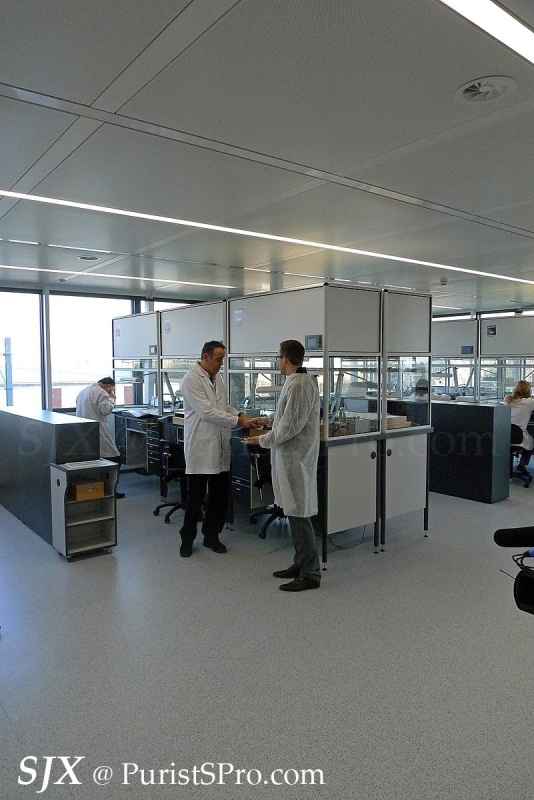
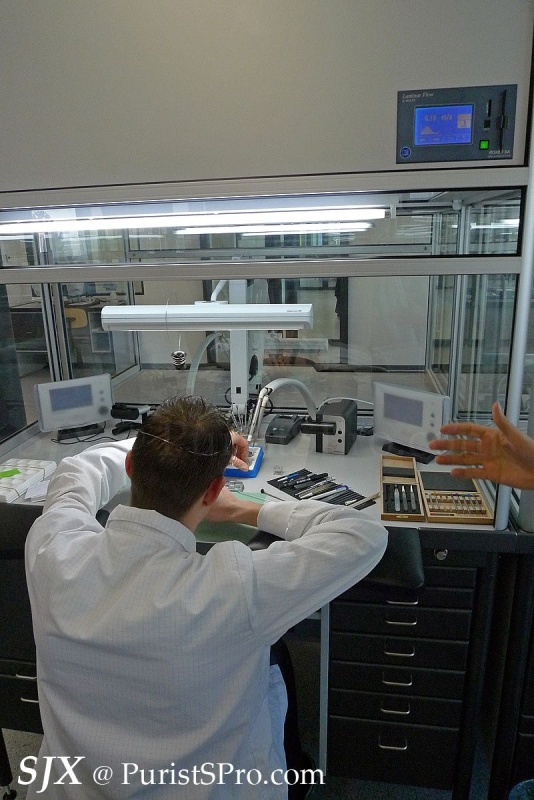
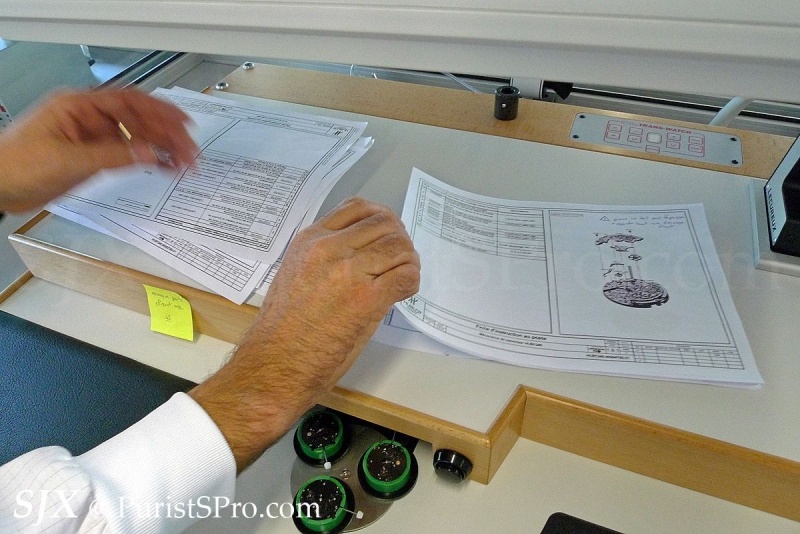
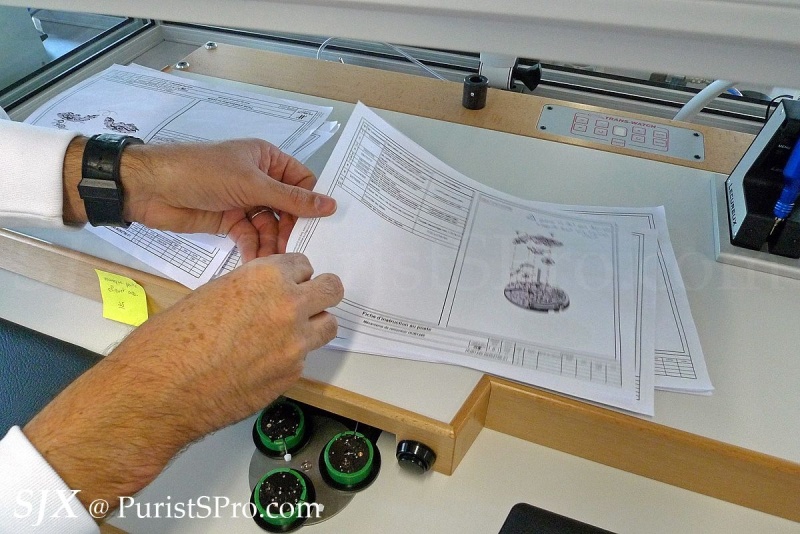
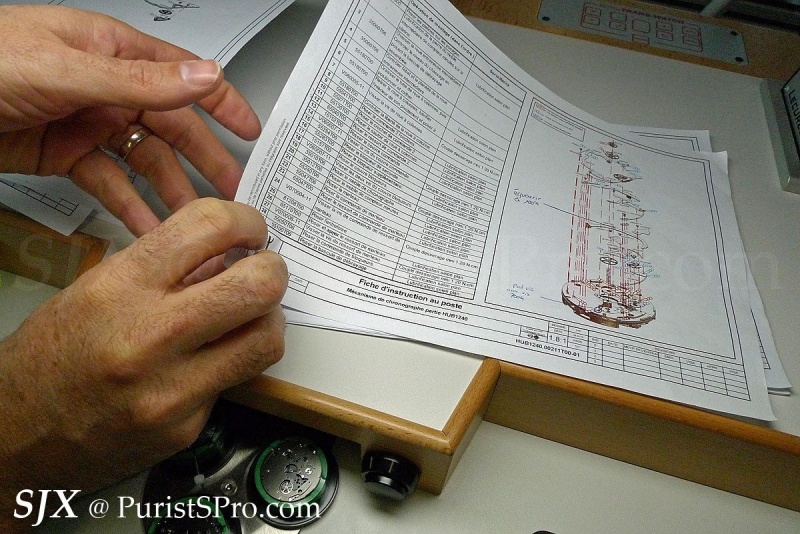
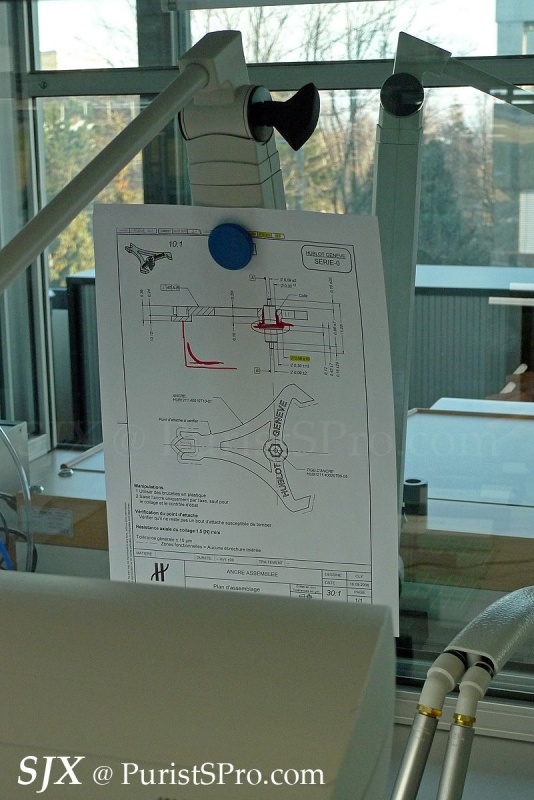
Below: Diagrams illustrating what a particular watchmaker assembles
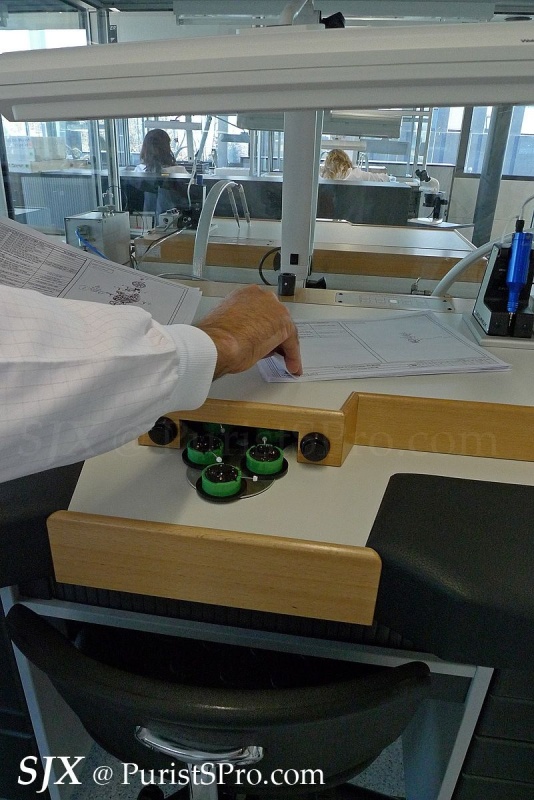
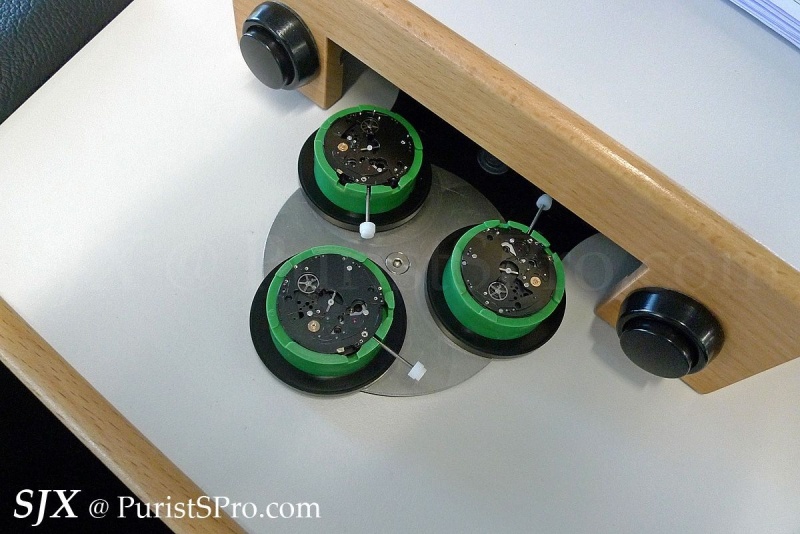
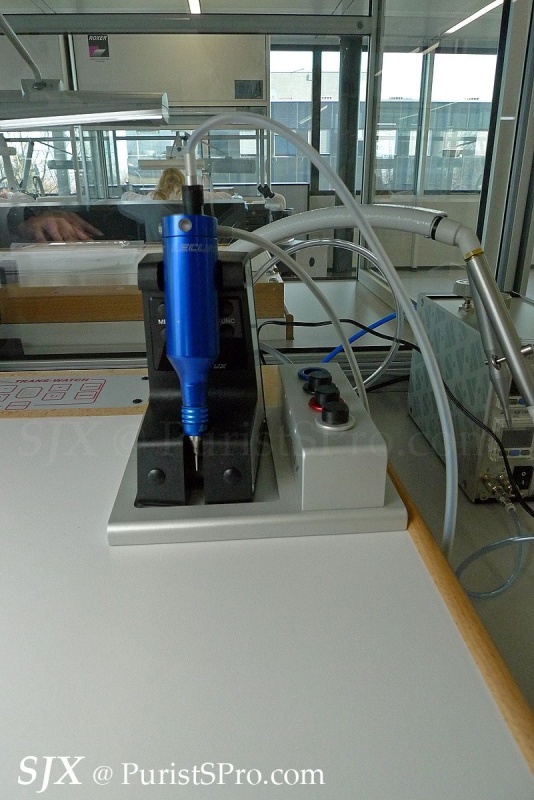
Below: Tools for oiling components
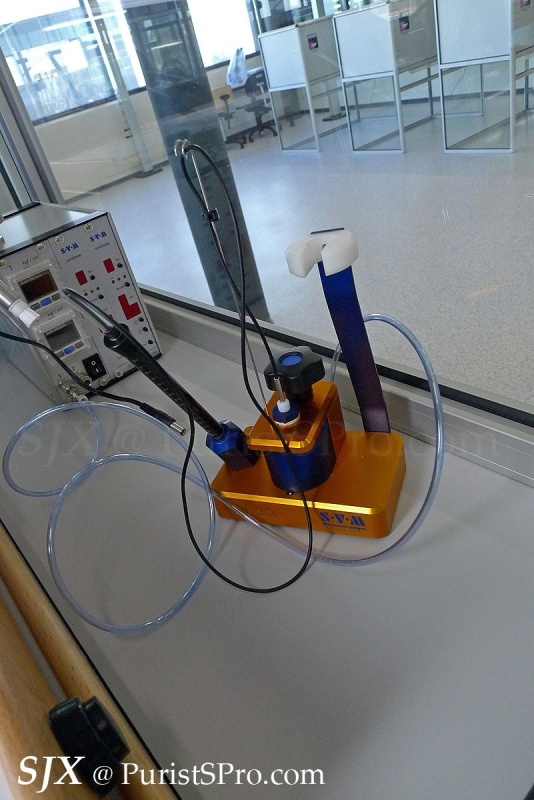
Below: Lubricating the anchor

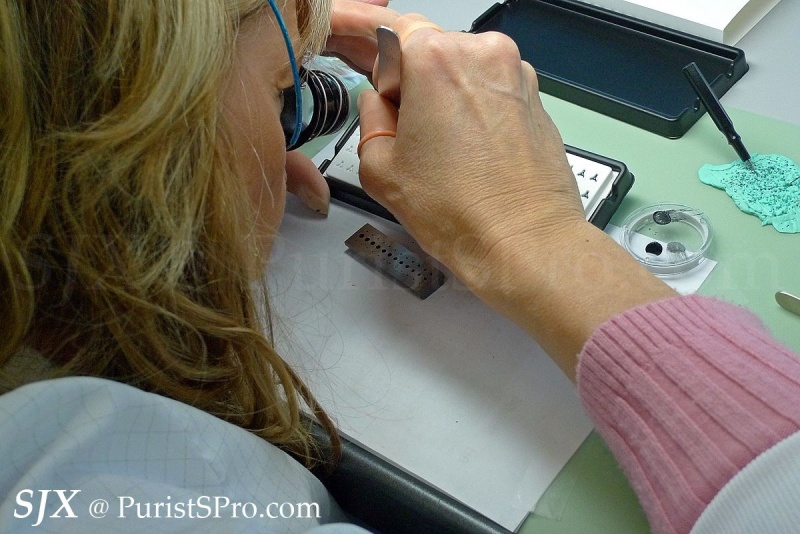
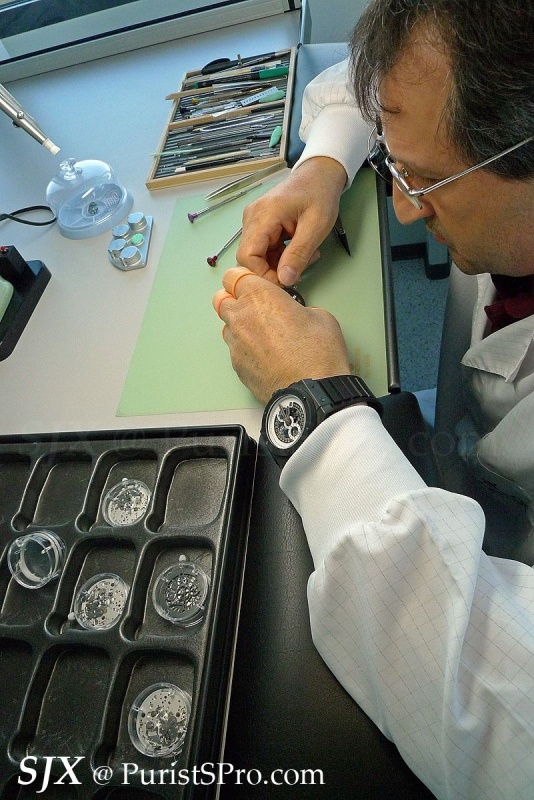
Below: Fitting a wheel
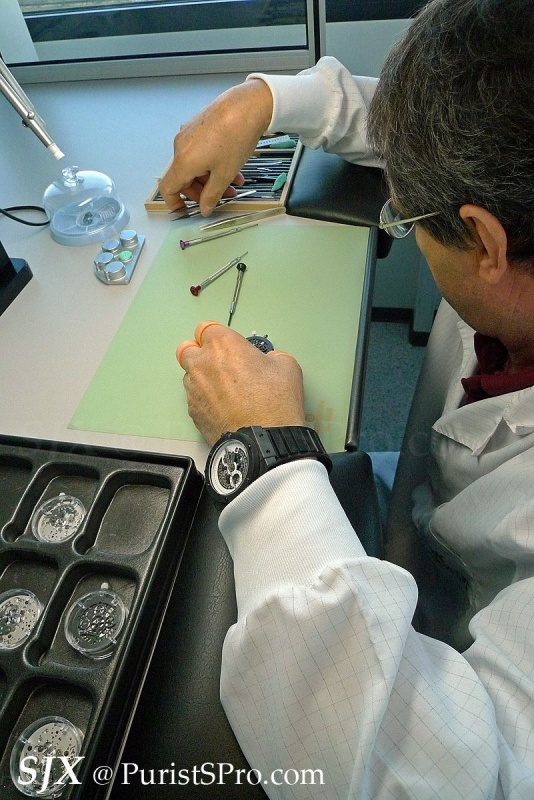
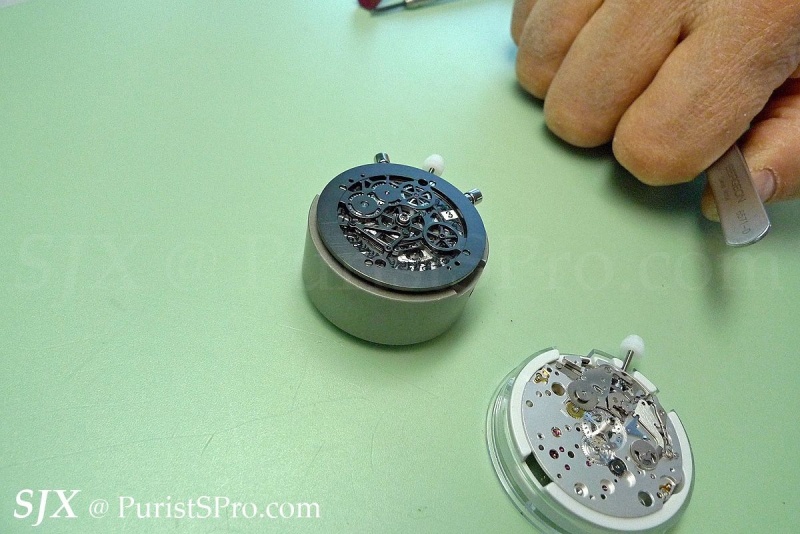
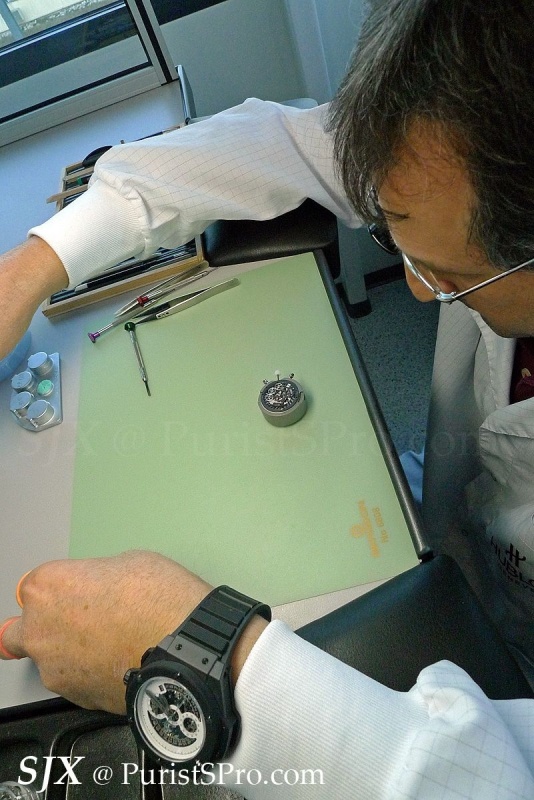
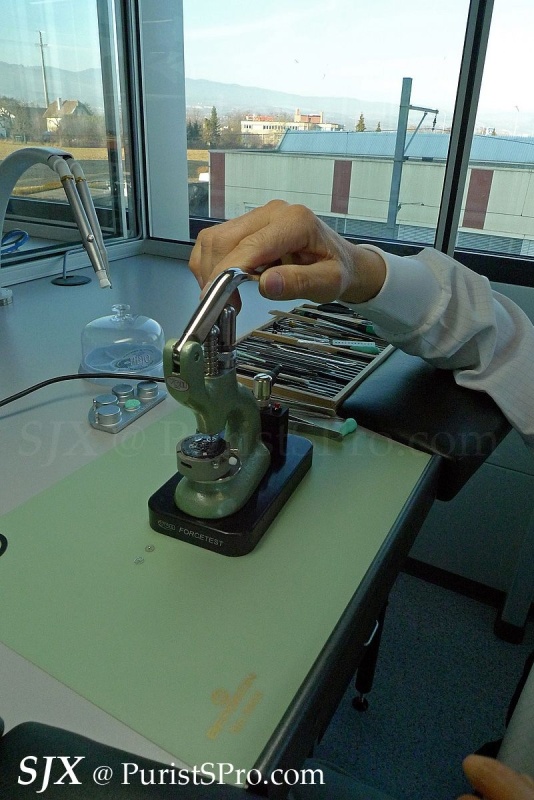
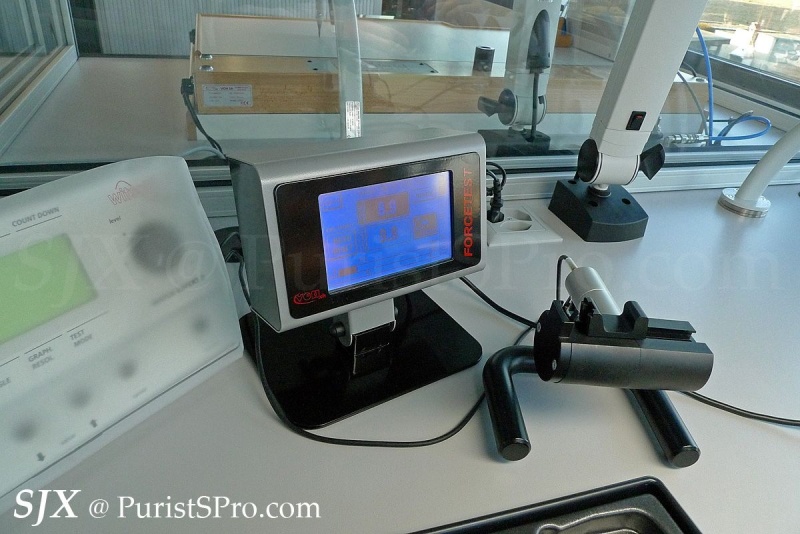
Below: The tool allows the wheel to be pressed in with constant force each time
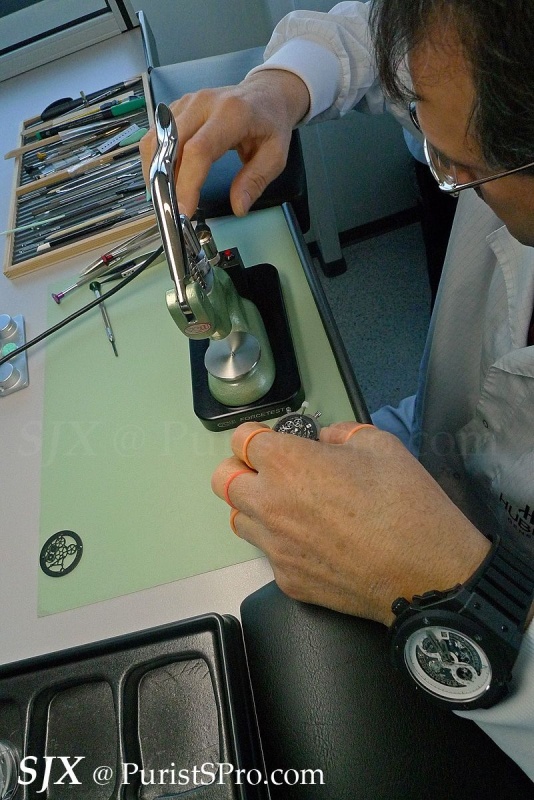
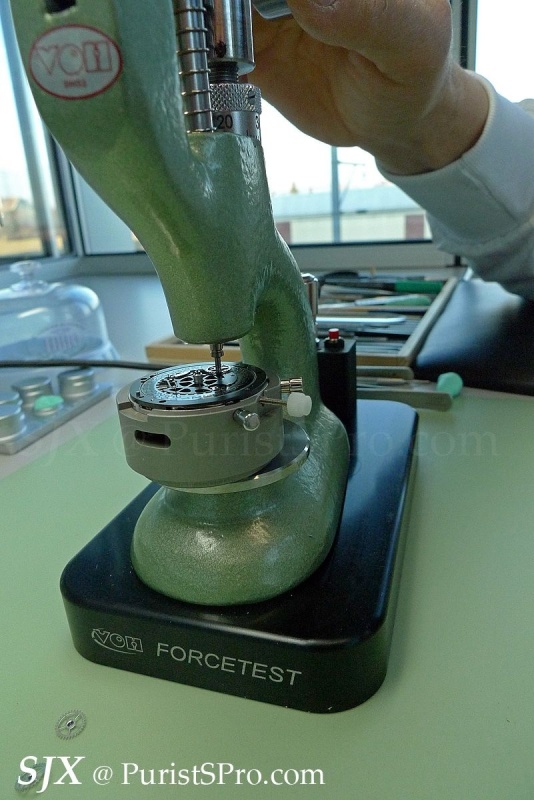
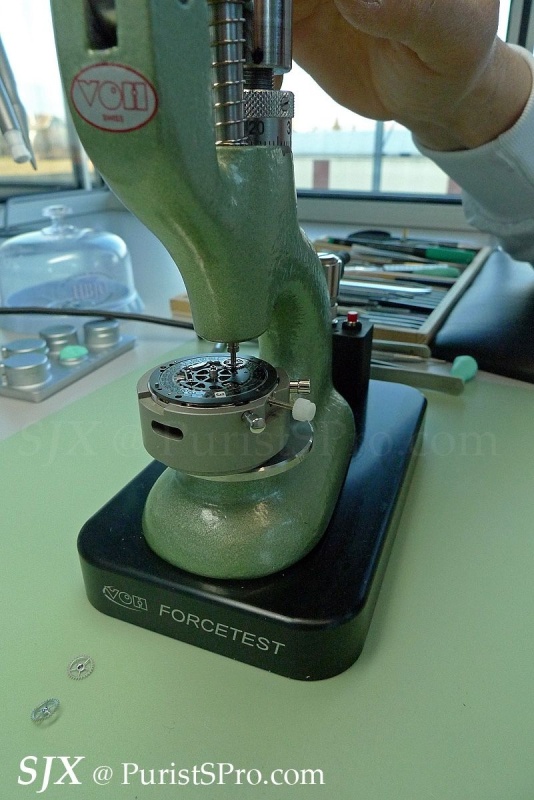
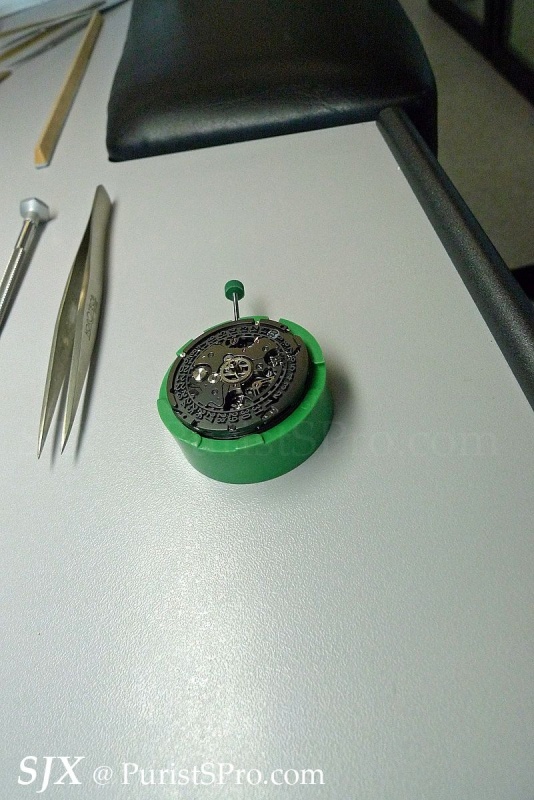
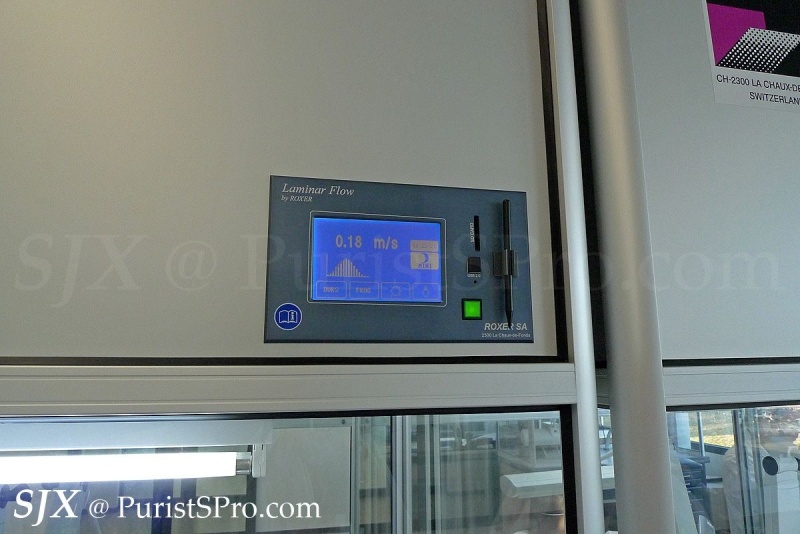
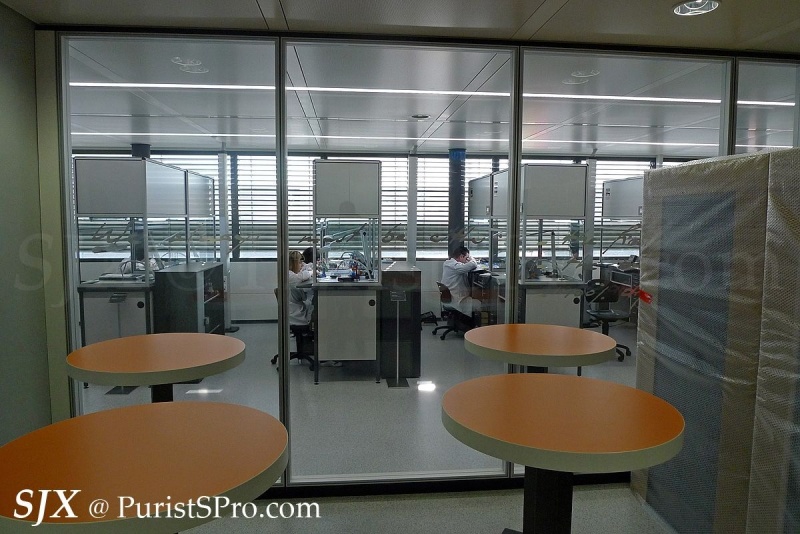
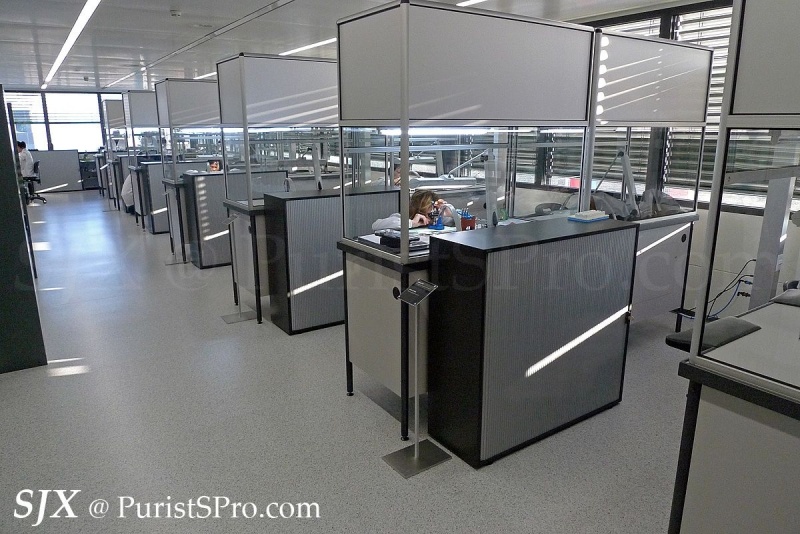
One of the interesting aspects of the assembly area is the air curtain fitted in each of the booths. These laminar flow booths create a local clean area which allows the movements to be assembled in a contaminant-free zone. This is unusual and not common in Swiss watchmaking (Seiko assembles high-end movements in clean rooms).

After assembly each movement is tested.
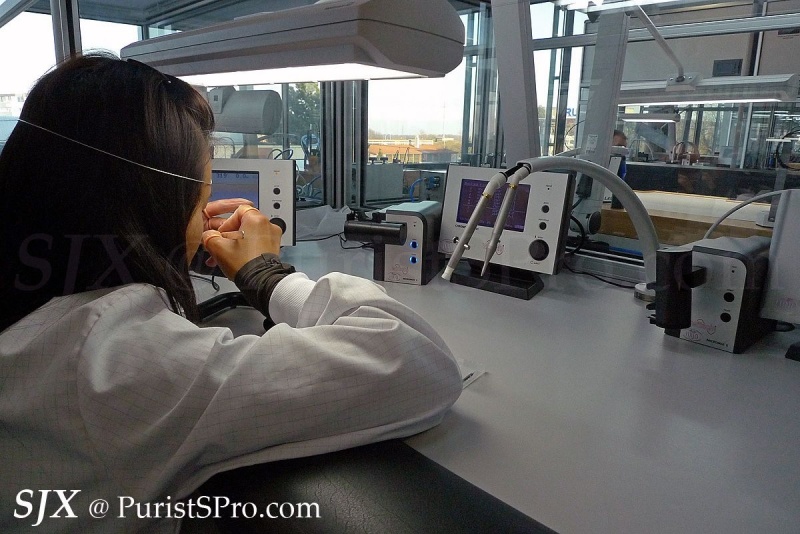
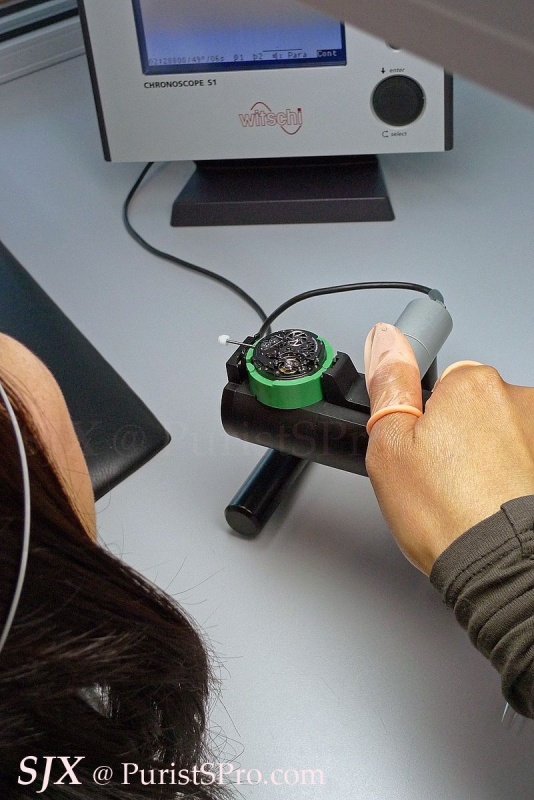
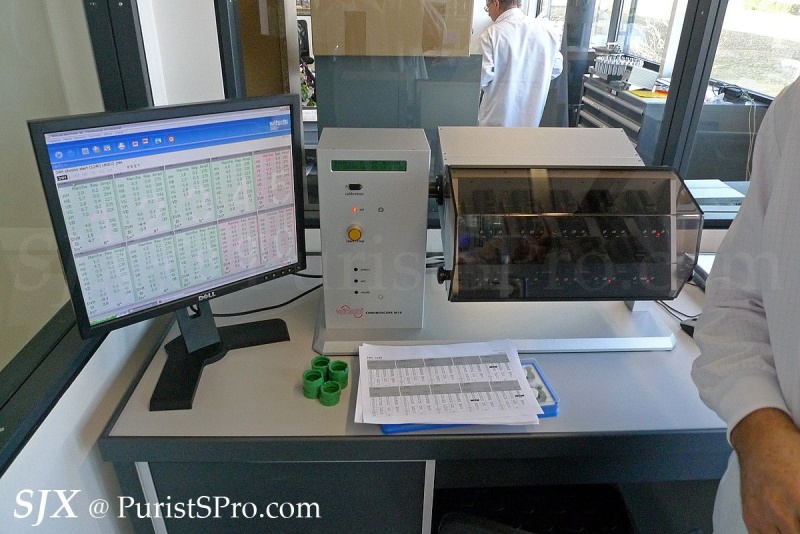
Below: Completed movements
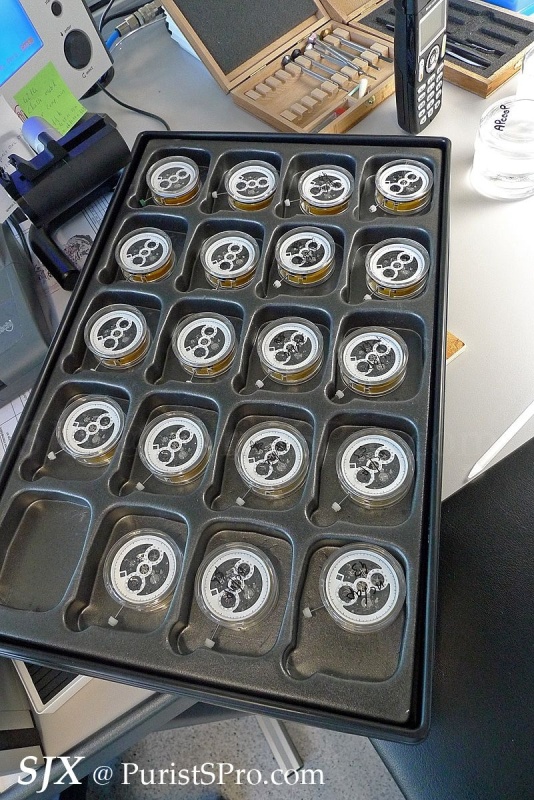
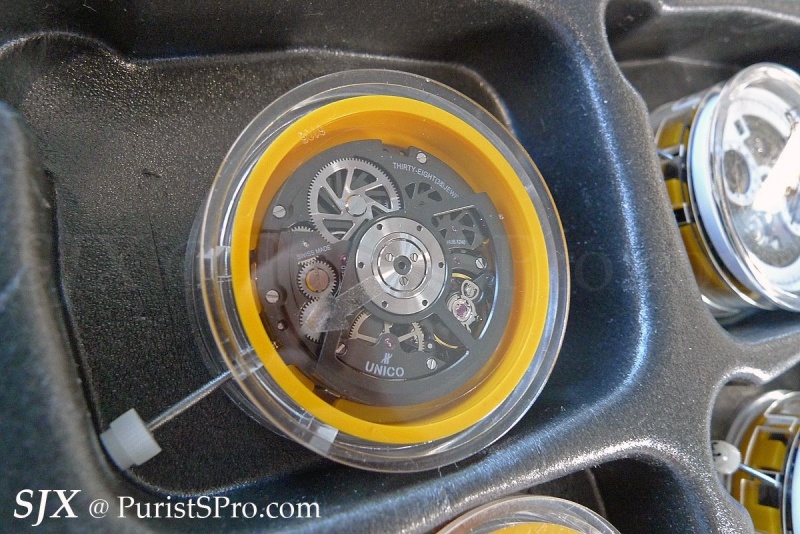
Like the machining workshop, the assembly area has significant space for expansion as part of the brand’s plan to grow production of the UNICO calibres.
Movement assembly depicted here is for the entry- to mid-range watches, like the UNICO, not high complications. The latter is entirely done in the Confrérie Horlogère Hublot atelier.
Part V: Casing up
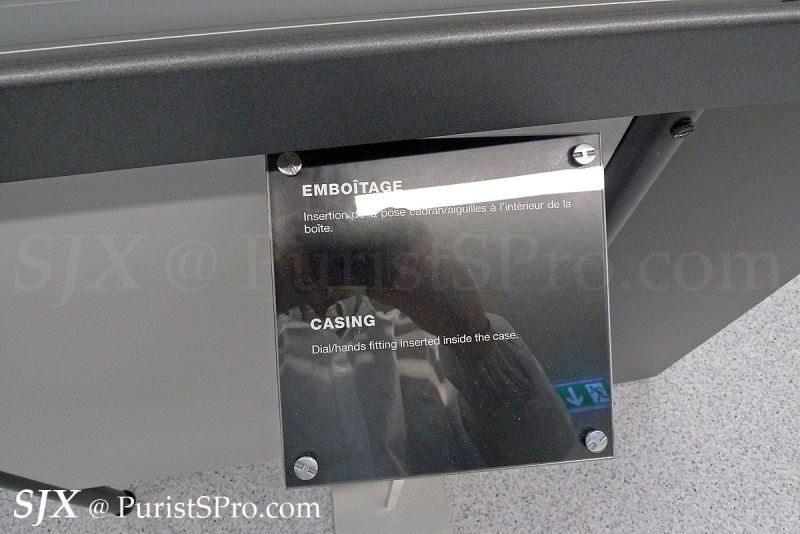
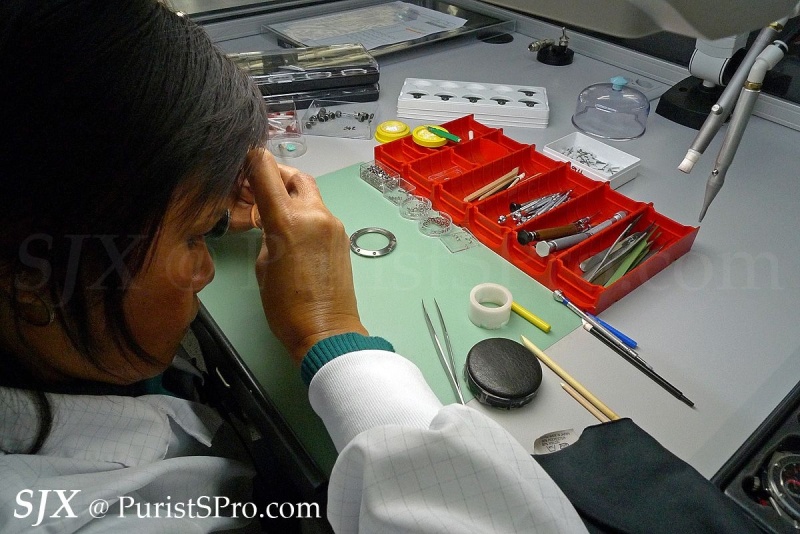
Once the movements are completed, the rest of the watch is put together. This primarily consists of fitting the dial and hands, and then casing up.
Below: Hand-fitting
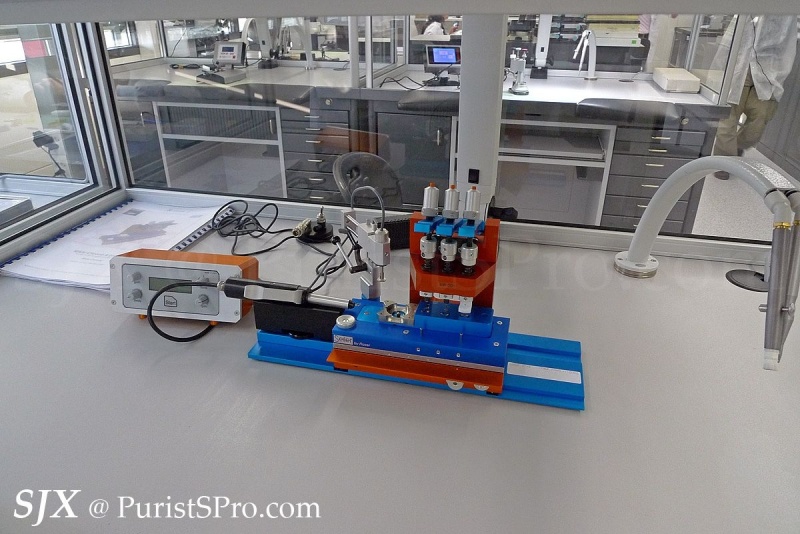
Below: Casing
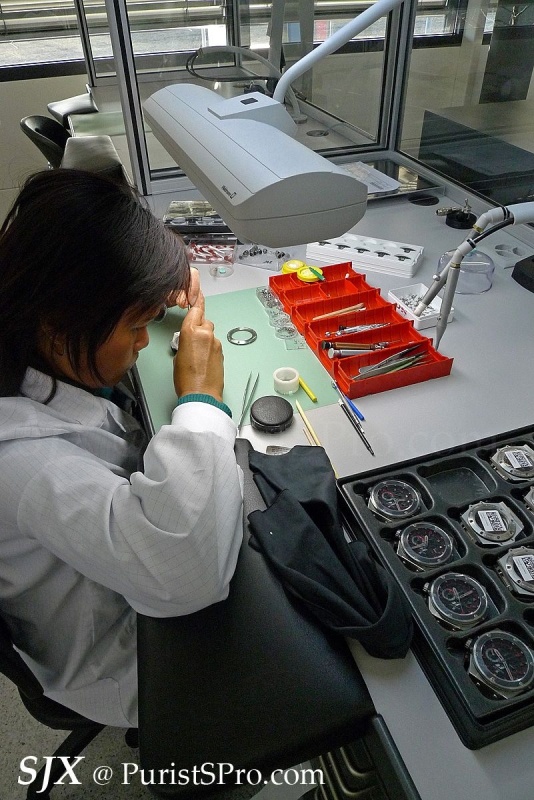
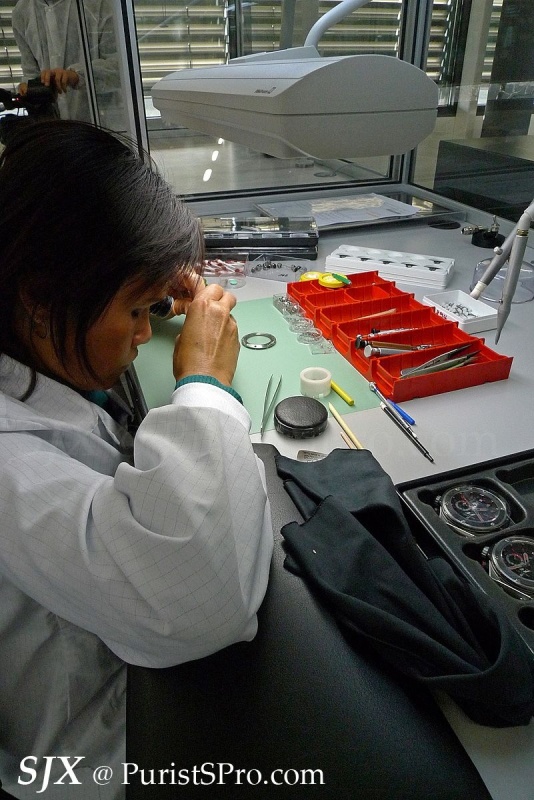
The Hublot case is more complicated than the average watch case, due to the multitude of materials used. The construction is essentially a sandwich – a Kevlar middle band in-between a metal top and bottom.
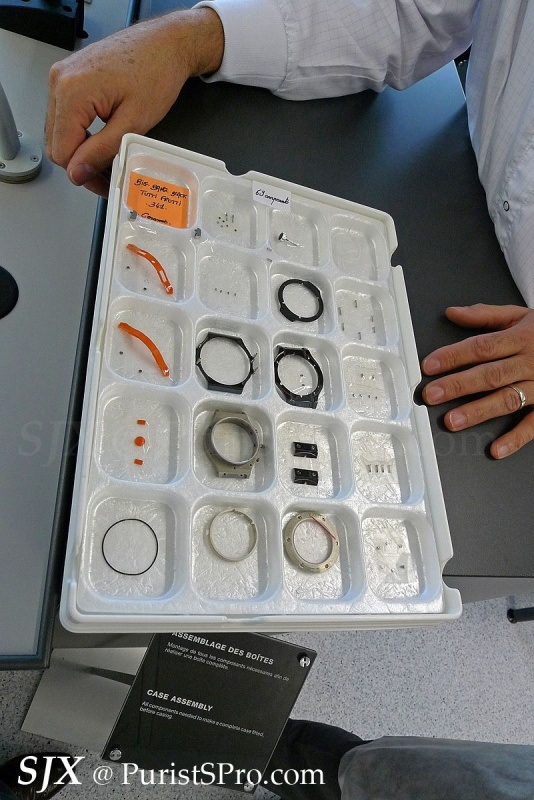
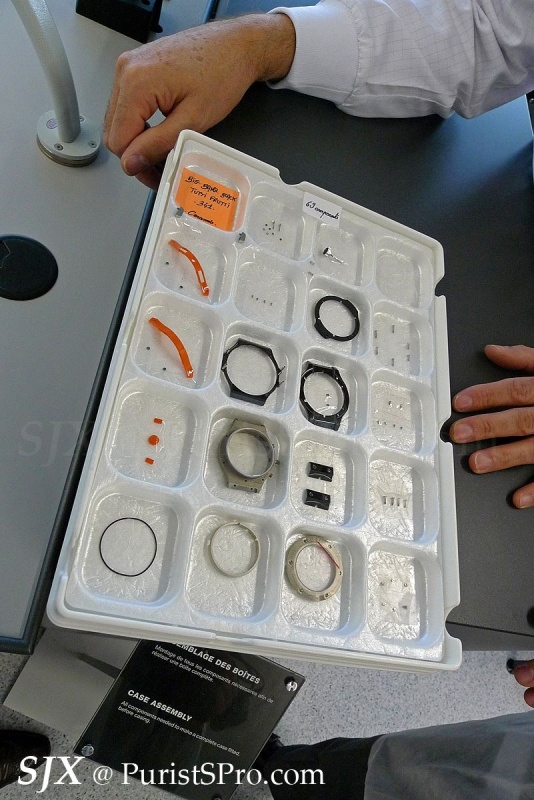
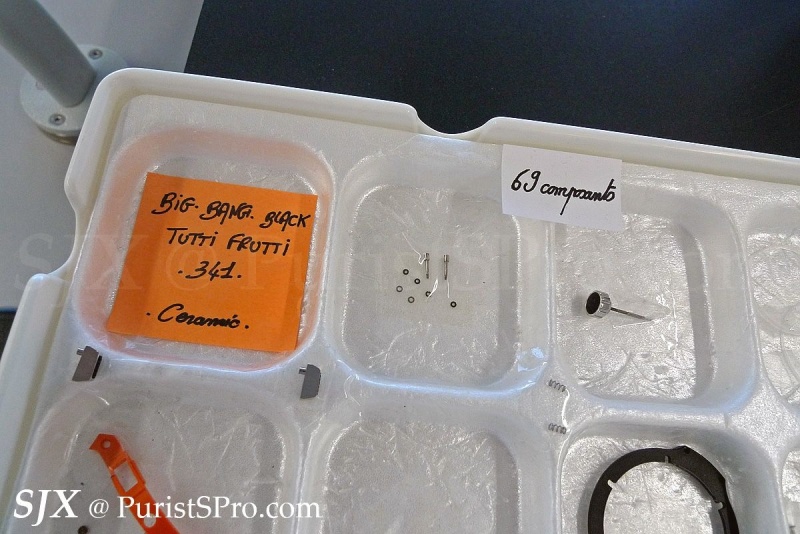
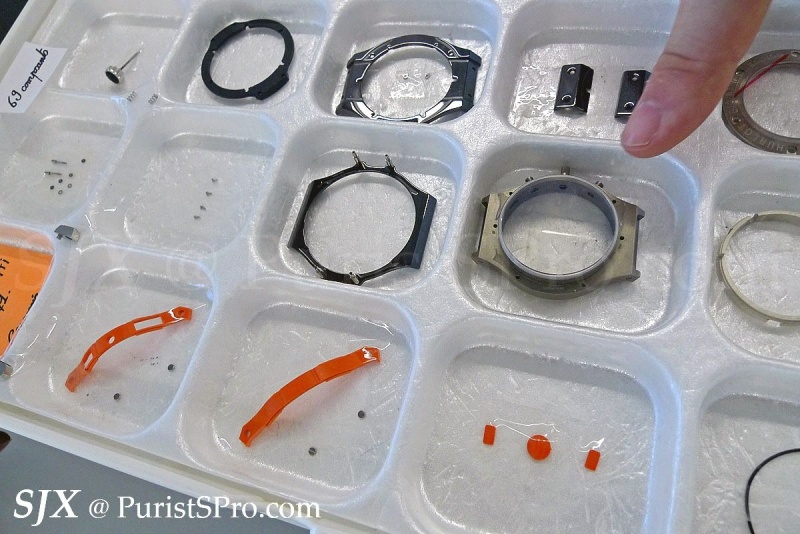
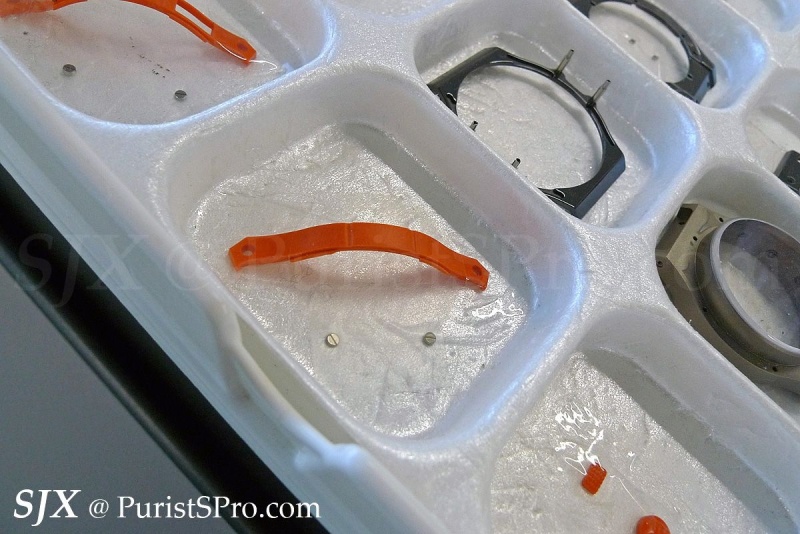
This case construction was designed for easy modification of aesthetics – each of the parts can be varied to create a different models.
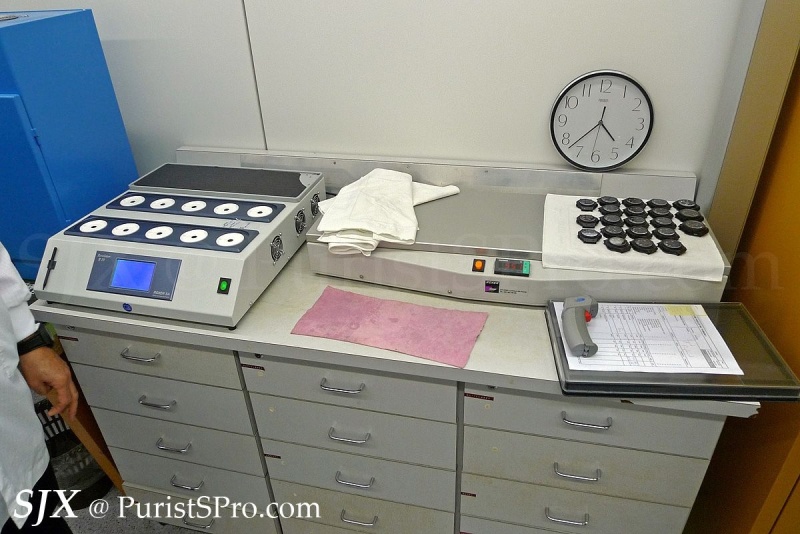
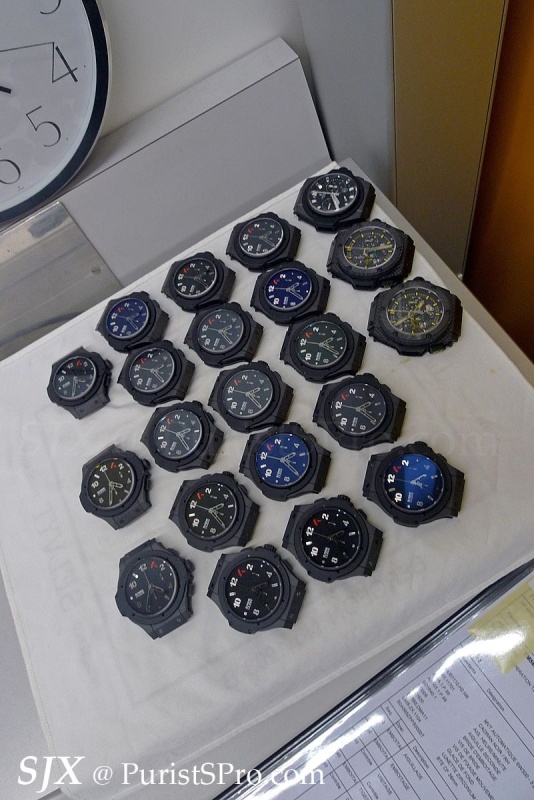
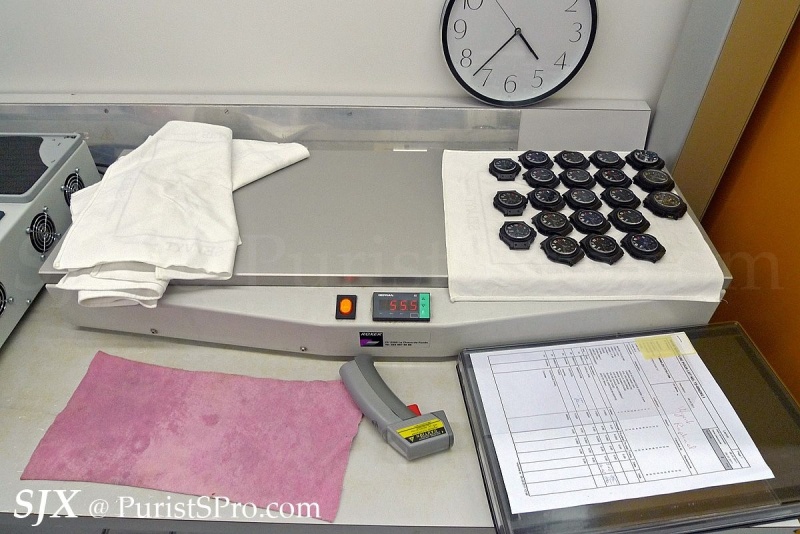
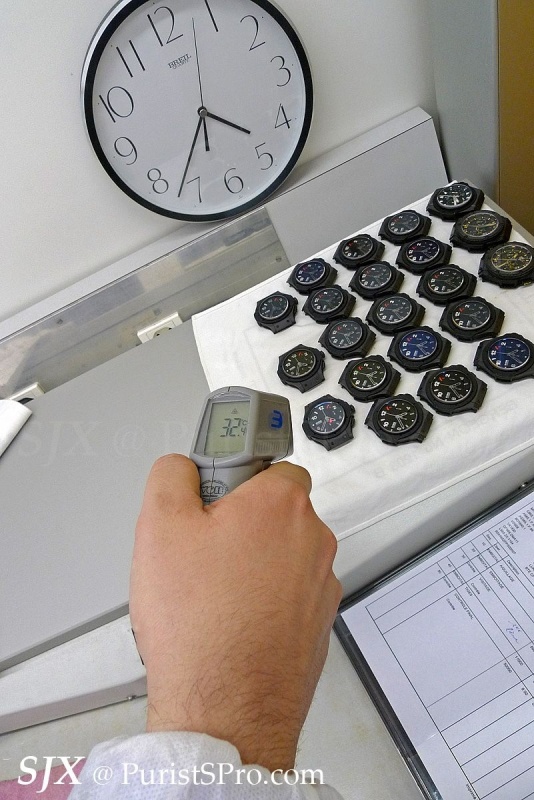
After the watches are cased they are sent for timing checks.
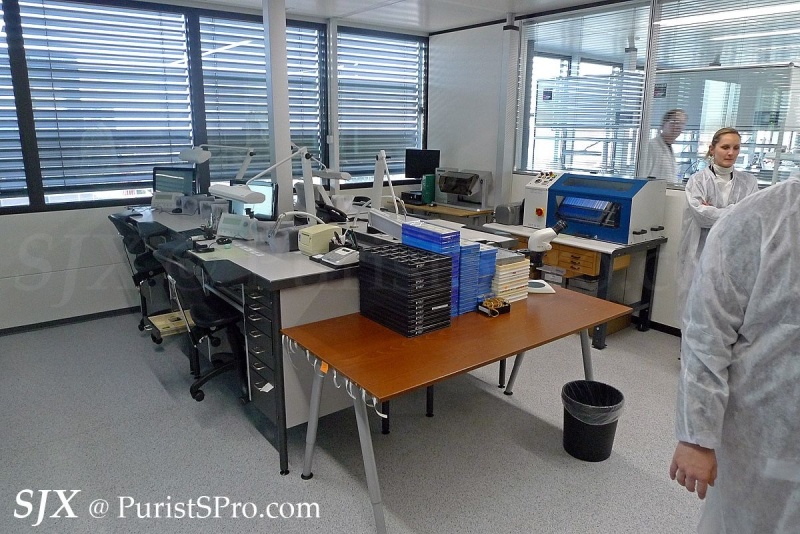
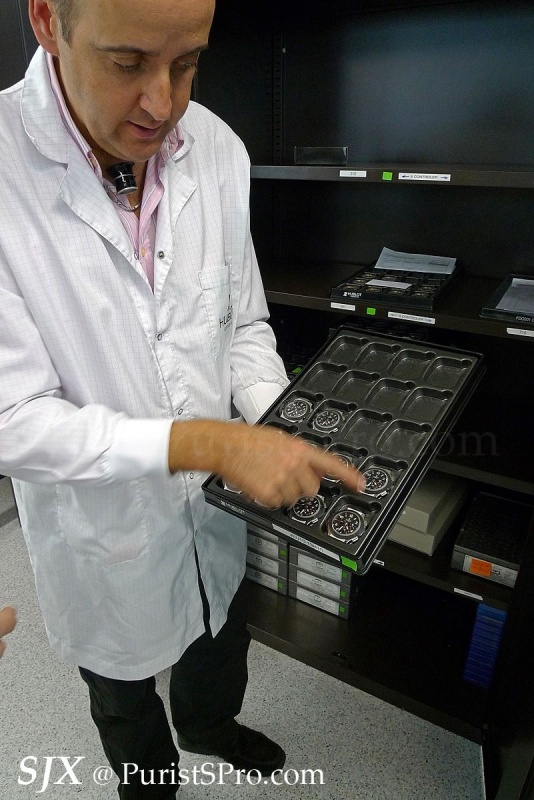
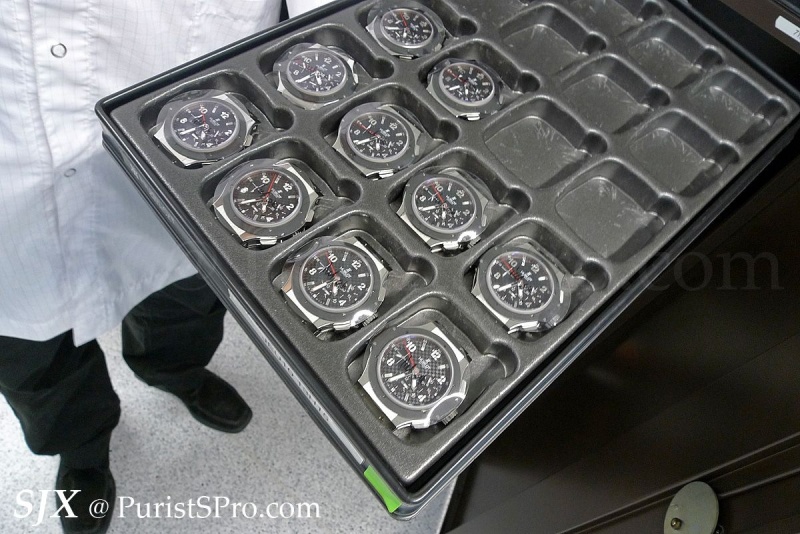
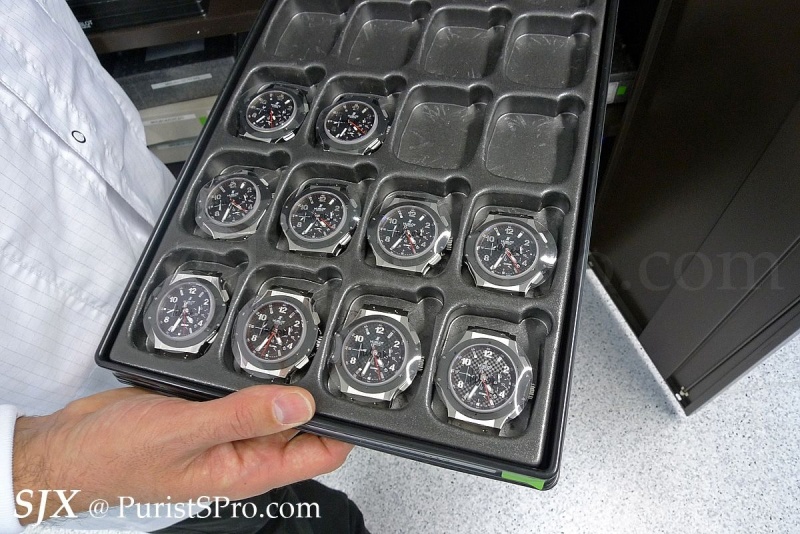
Above: Note that all the watches are showing the exact same time, give or take a few seconds
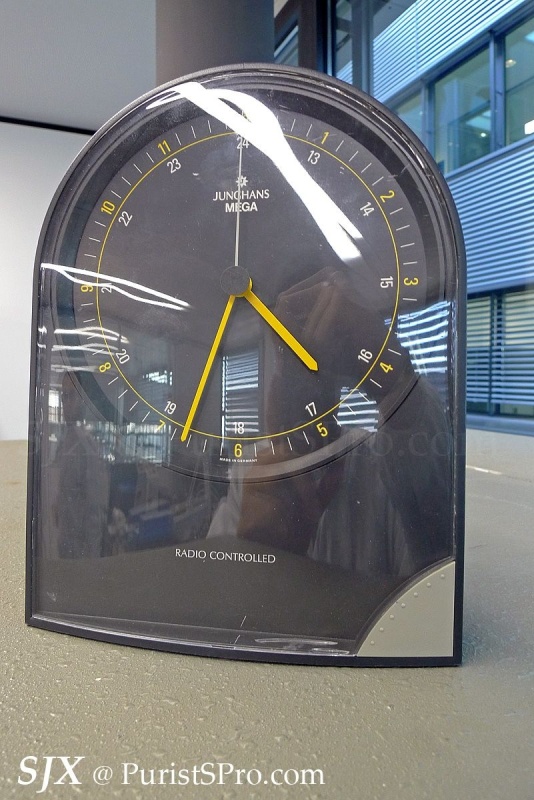
Below: They are measured against a Junghans radio-controlled clock
This message has been edited by SJX on 2011-04-03 04:09:30
Part VI: Checks and sealing
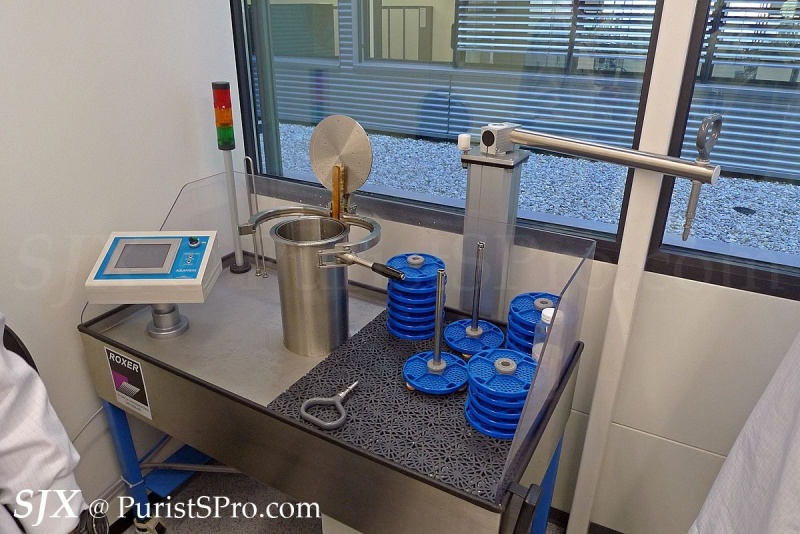
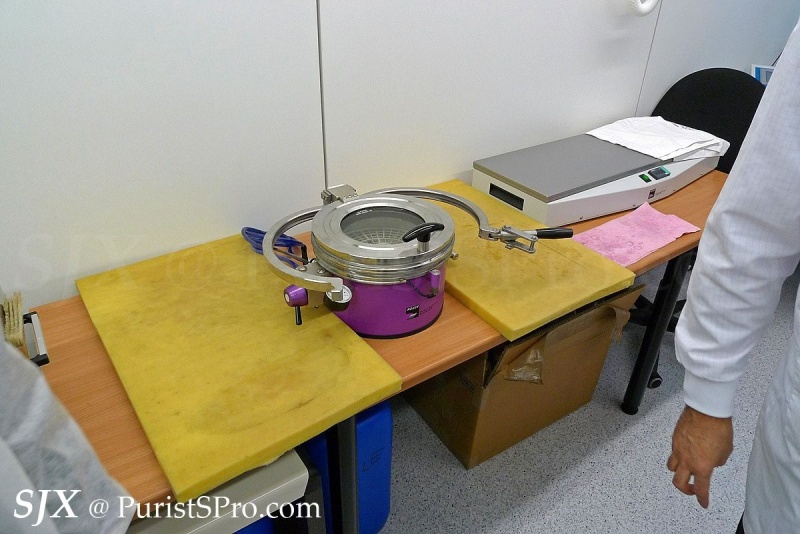
Once completed the watches are run through a series of tests, primarily water-resistance and temperature.
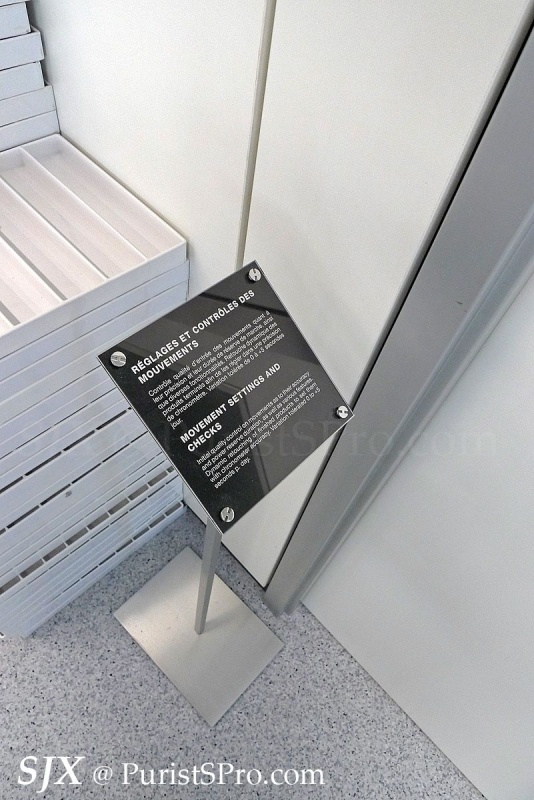
Various equipment to tests for water-resistance, pressure-resistance and integrity of seals
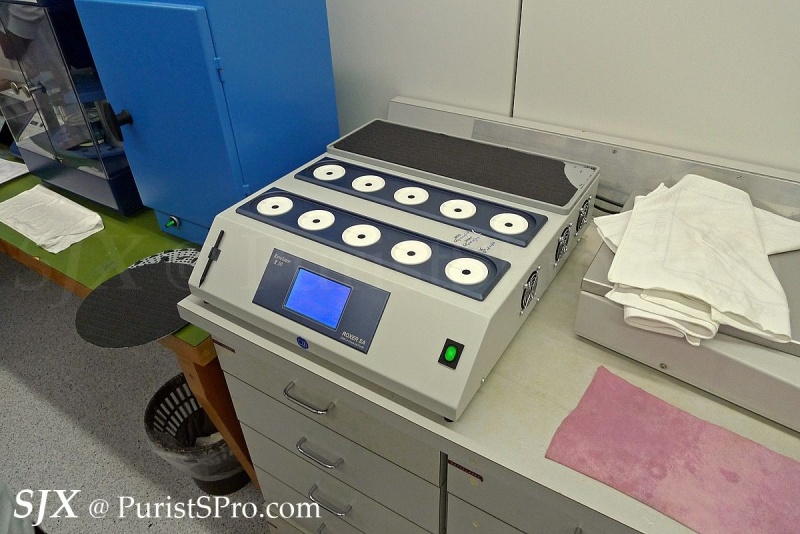
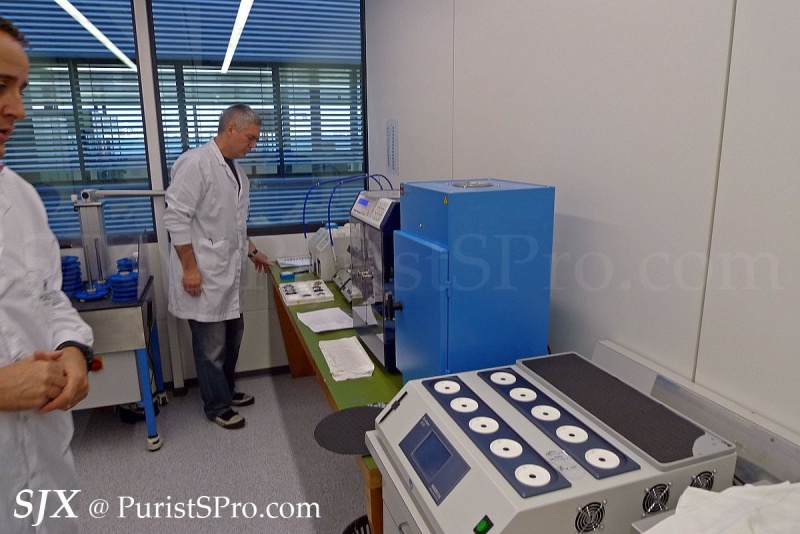
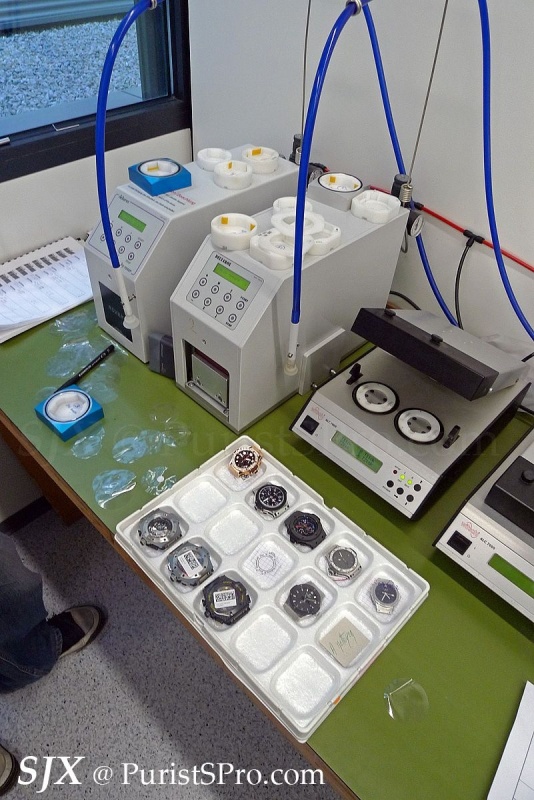
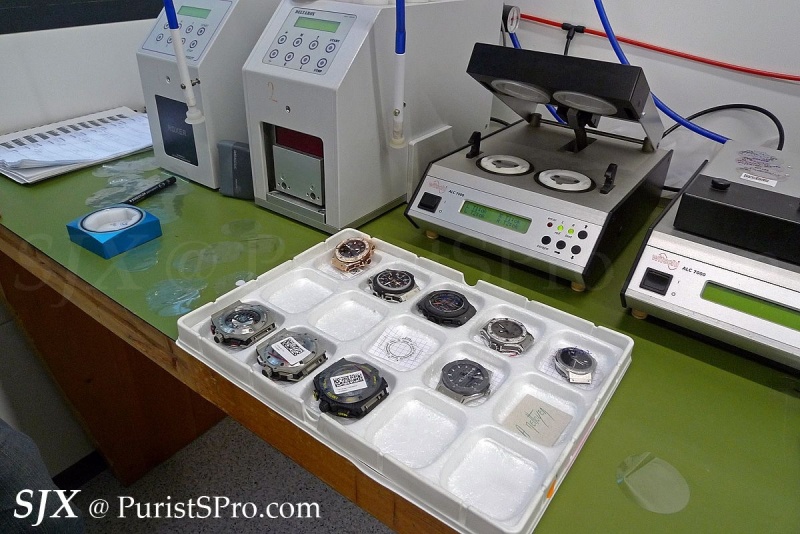
They are then individually inspected visually for defects. If something is amiss the watch in question is returned along with a note specifying the problem.
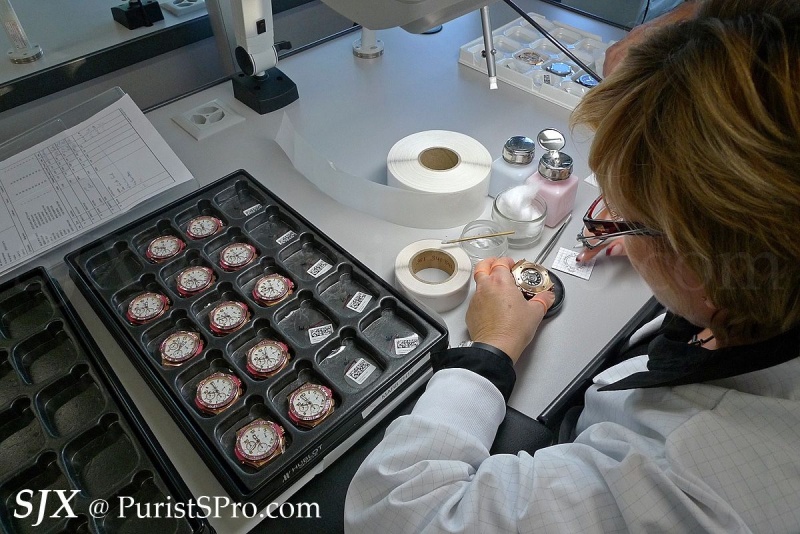
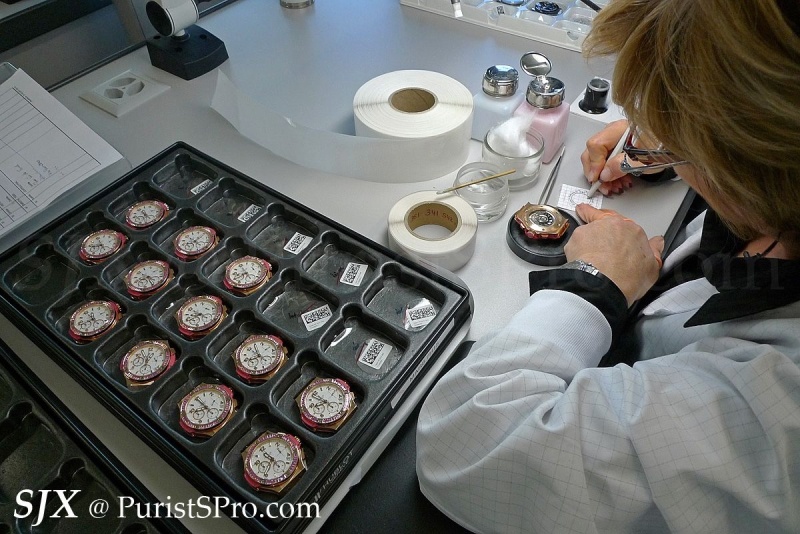
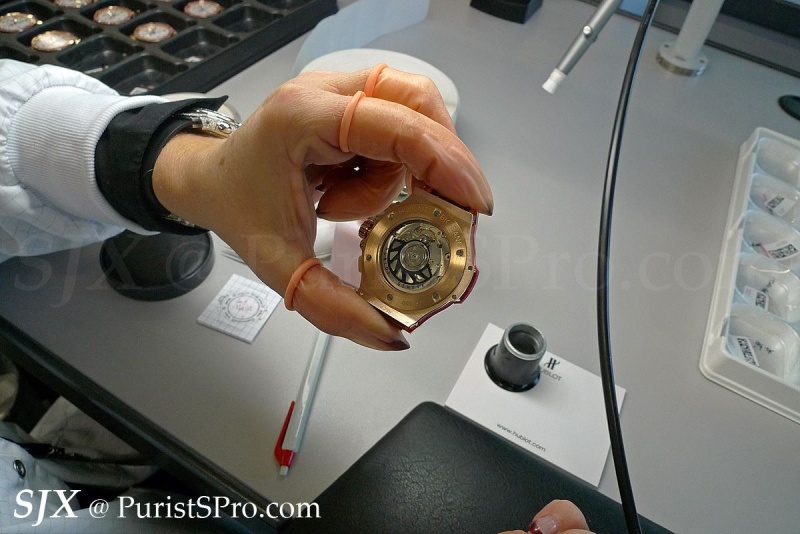
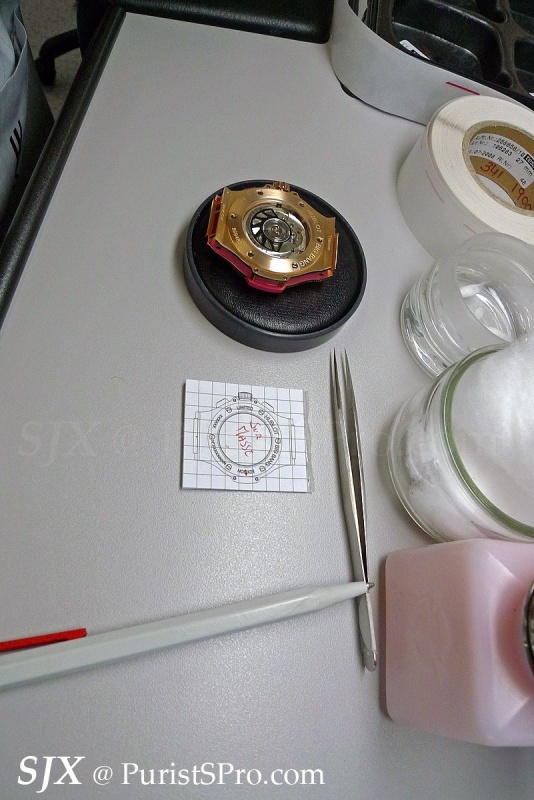
Above: A defect in the rotor of the watch
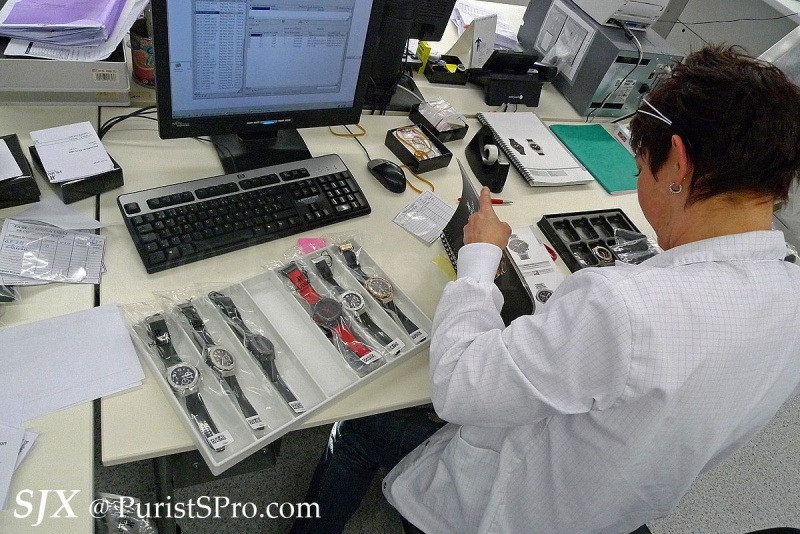
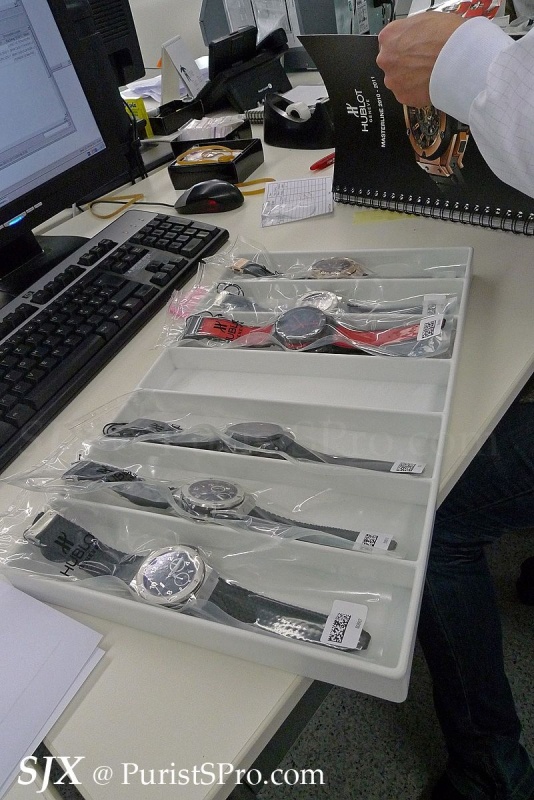
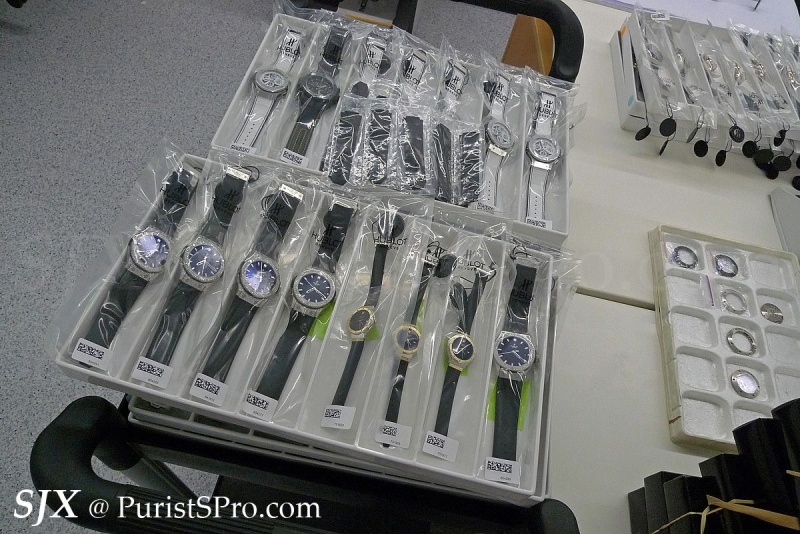
Finally straps or bracelets are fitted, and a protective film painted on some parts.
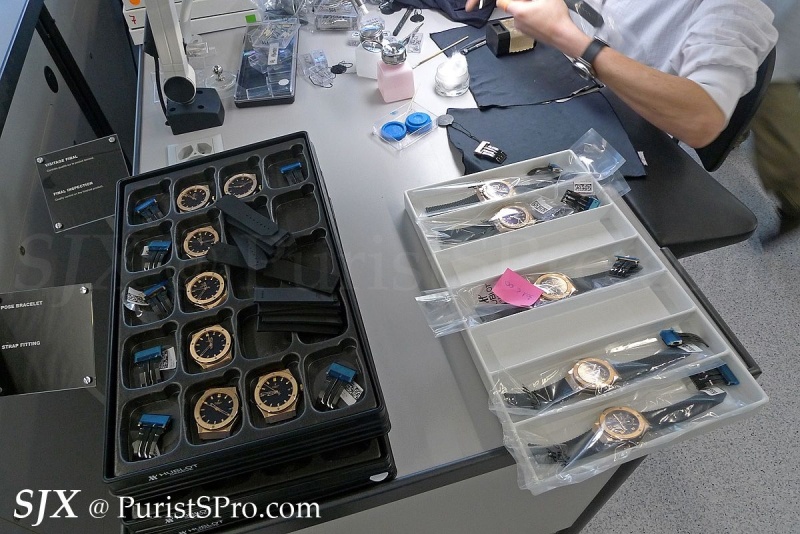
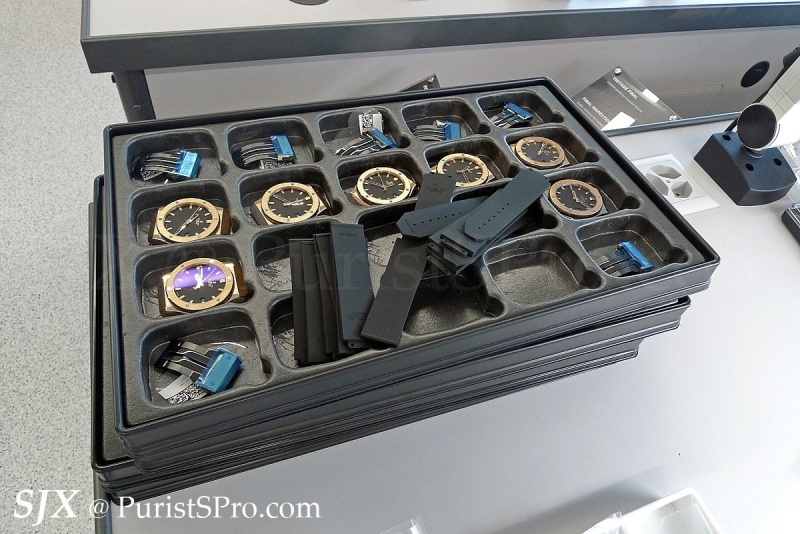
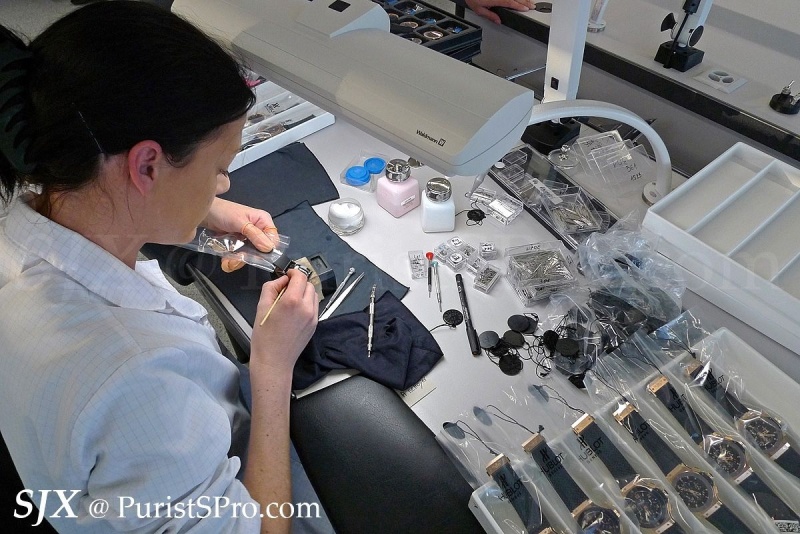
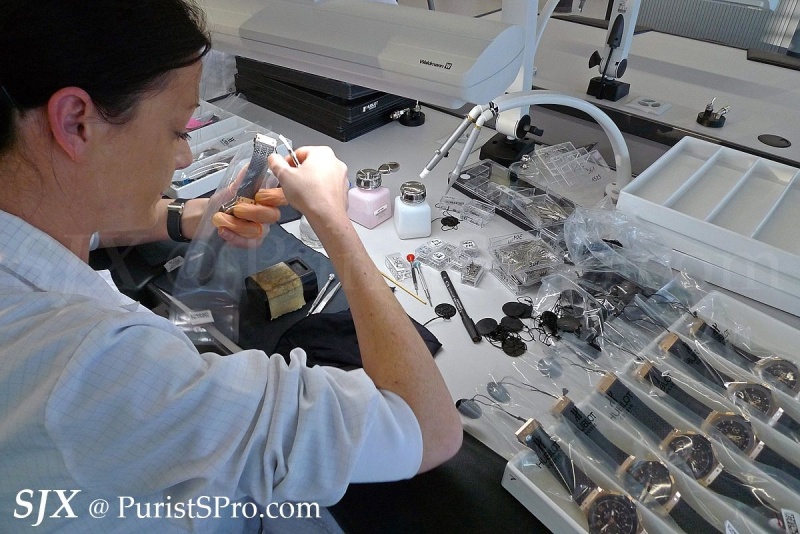
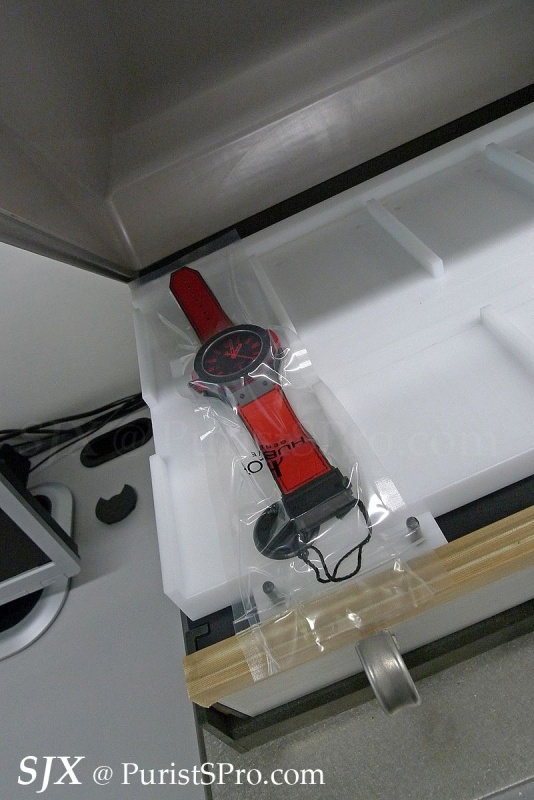
The completed watch is then sealed in plastic and then sent to the stock room.
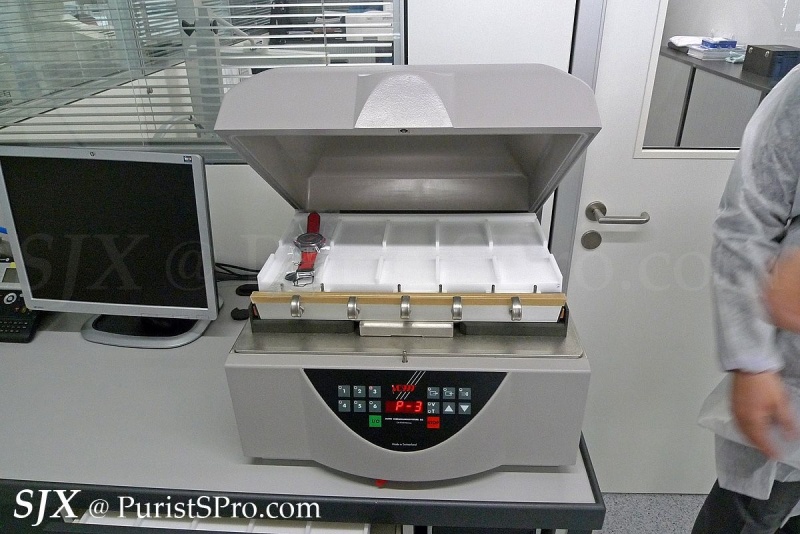
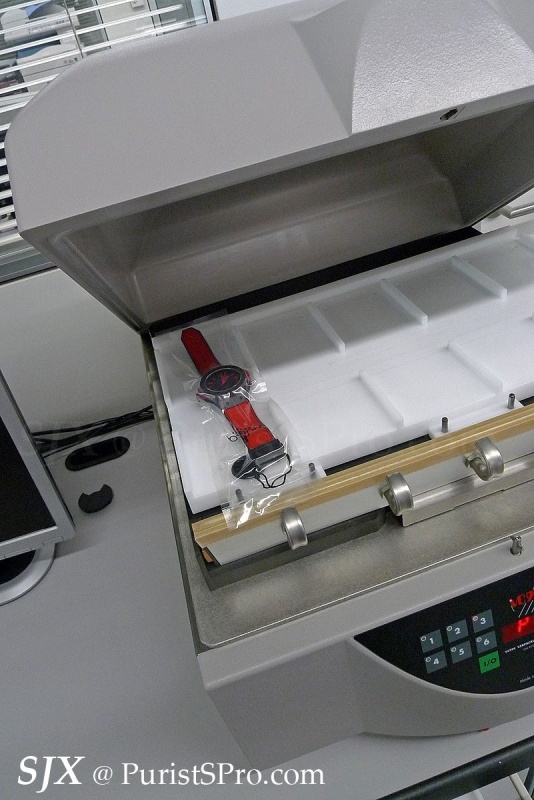
This message has been edited by SJX on 2011-04-03 05:15:57
Part VII: Confrérie Horlogère Hublot and high complications
One of the casualties of the recession was BNB Concept, a complications specialist renowned for its radical, bizarre and odd-looking complications. Hublot took over what remained of BNB Concept and integrated the team, with some 30 people including BNB co-founder Mathias Buttet (the first “B” in BNB), into Hublot as Confrérie Horlogère Hublot.
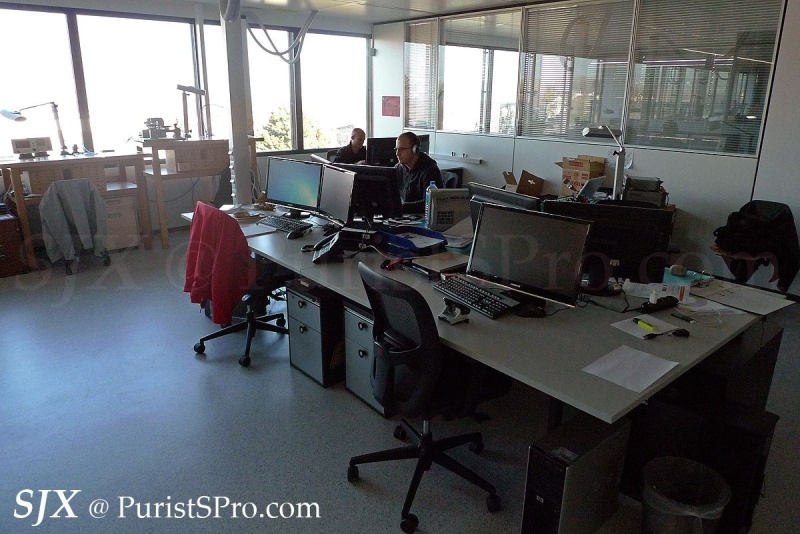
Confrérie Horlogère Hublot serves as a high complication atelier as well as R&D department for Hublot. It gives Hublot significantly more high horology know-how and credibility than before.
Amongst the many avant garde timepieces in Confrérie Horlogère’s repertoire is the Liberty Bullet, a bullet-shaped watch with tourbillon that tells the time on rotating cylinders.
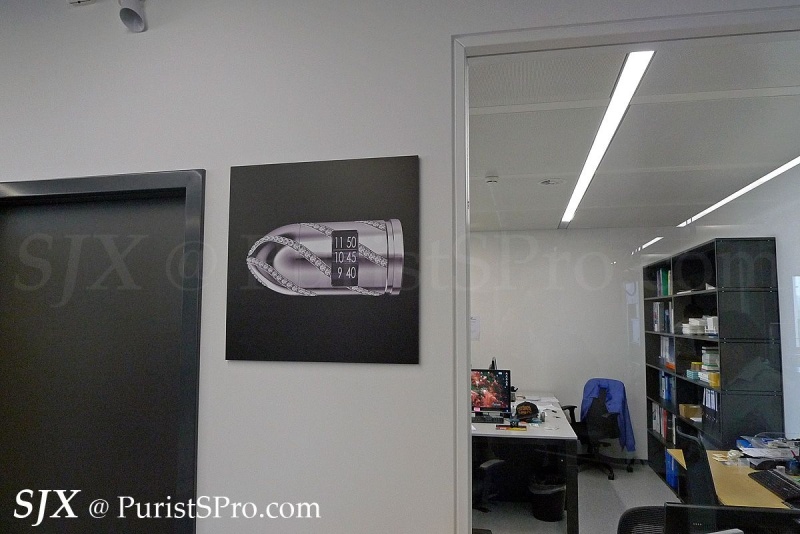
Below: Dissecting the Bullet Liberty
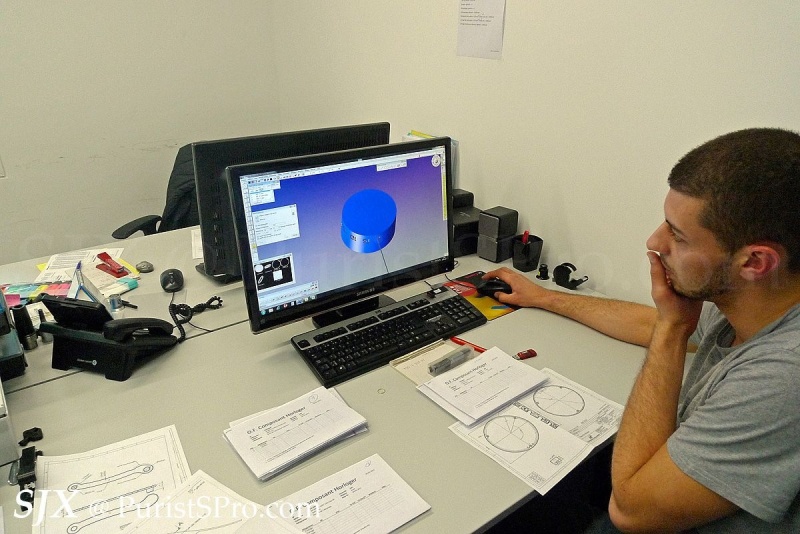
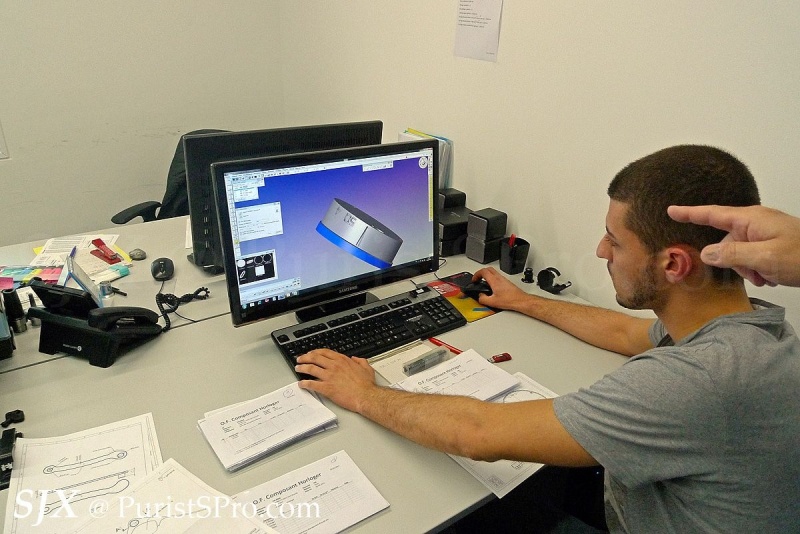
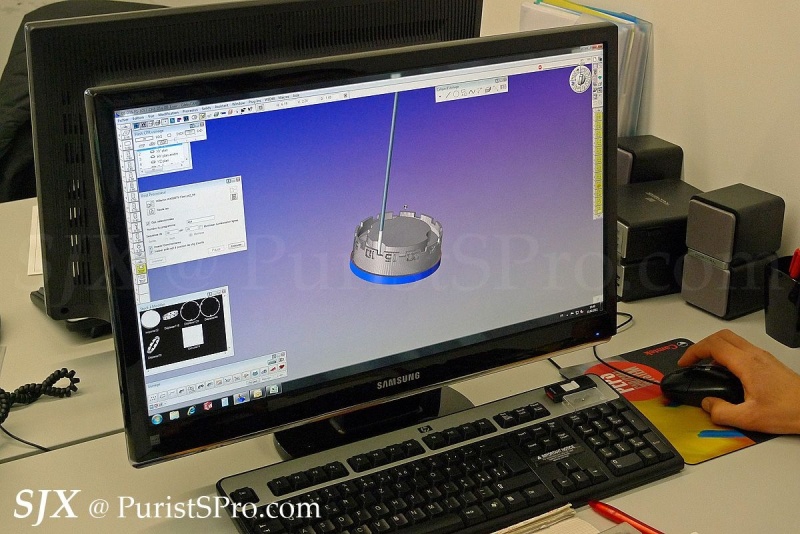
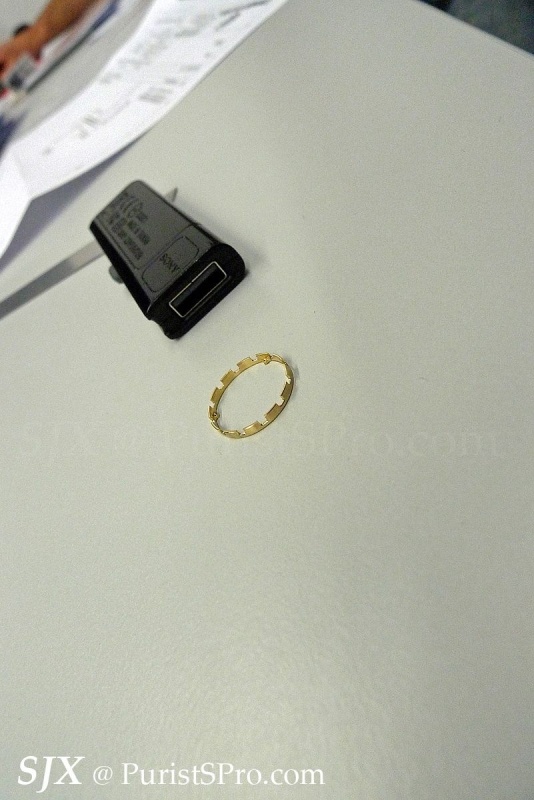
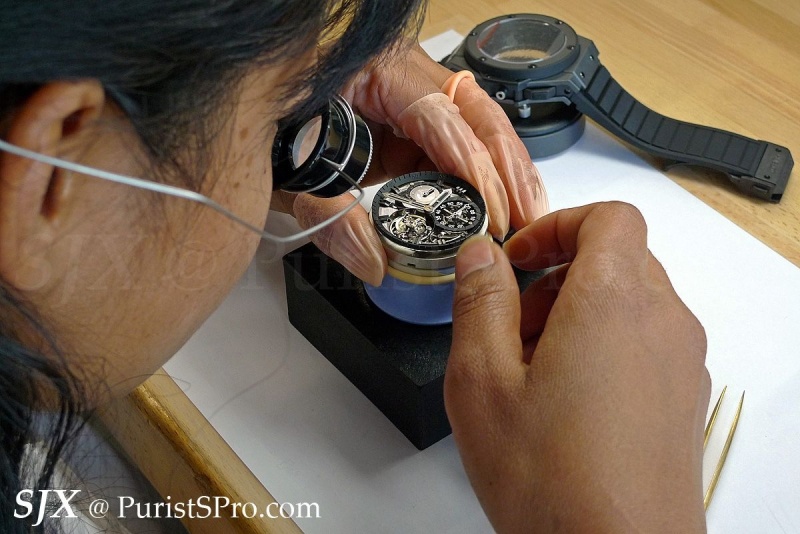
All high complications – tourbillons, repeaters and combinations of the two – are finished and put together here.
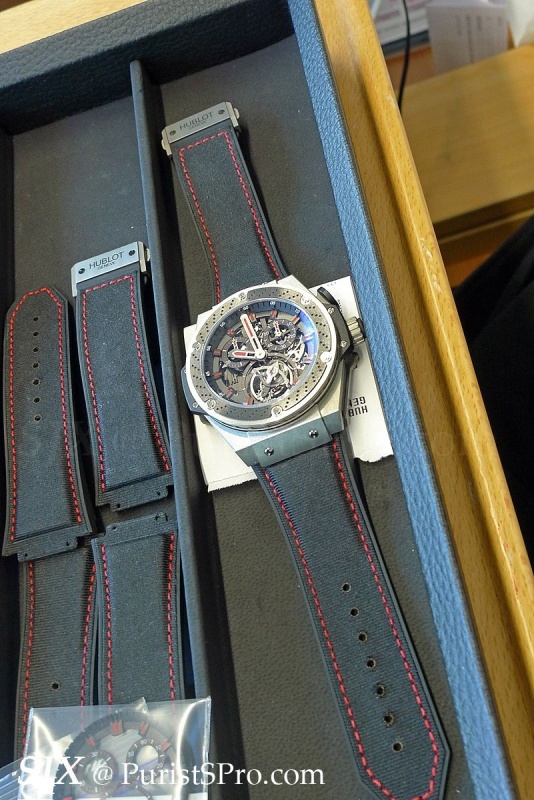
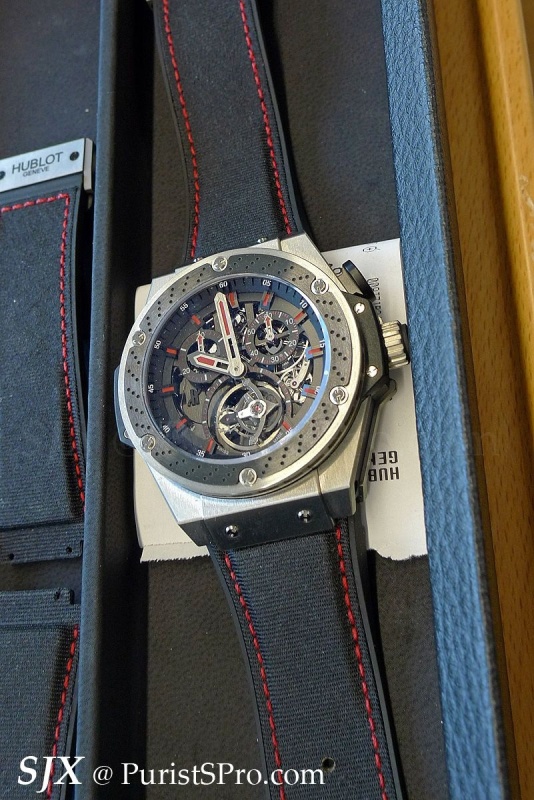
Above: Tourbillon with monopusher chronograph assembled in the atelier
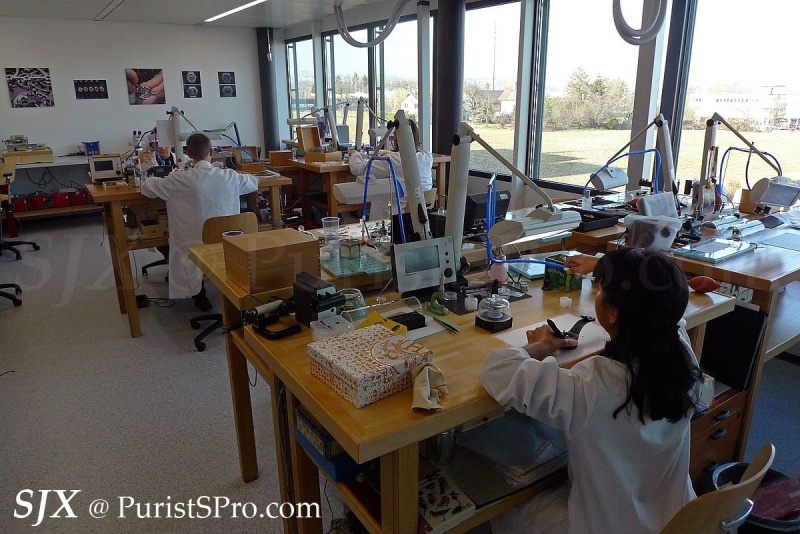
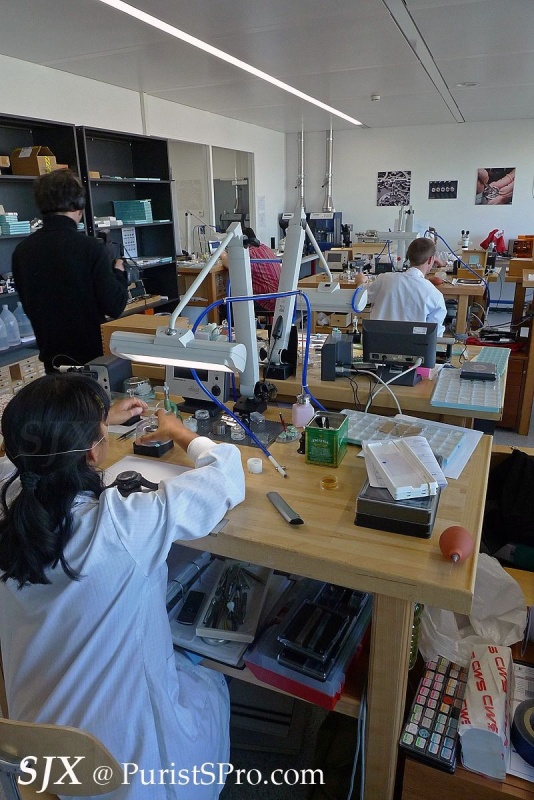
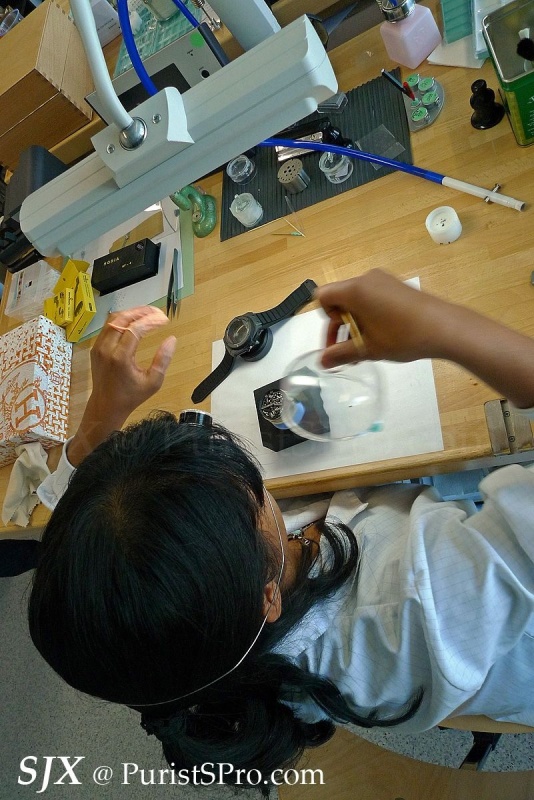
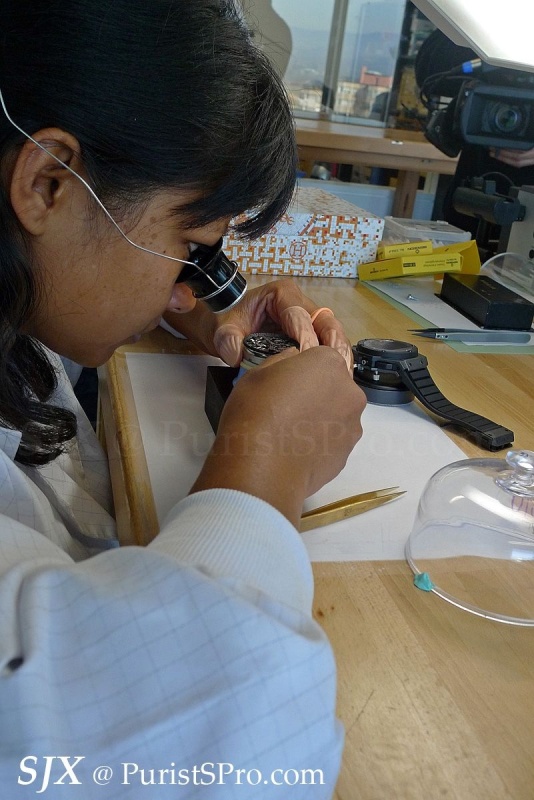
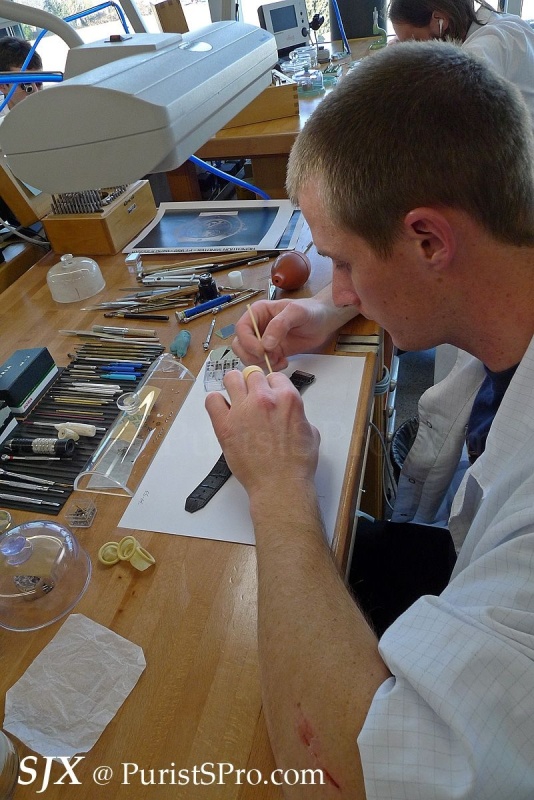
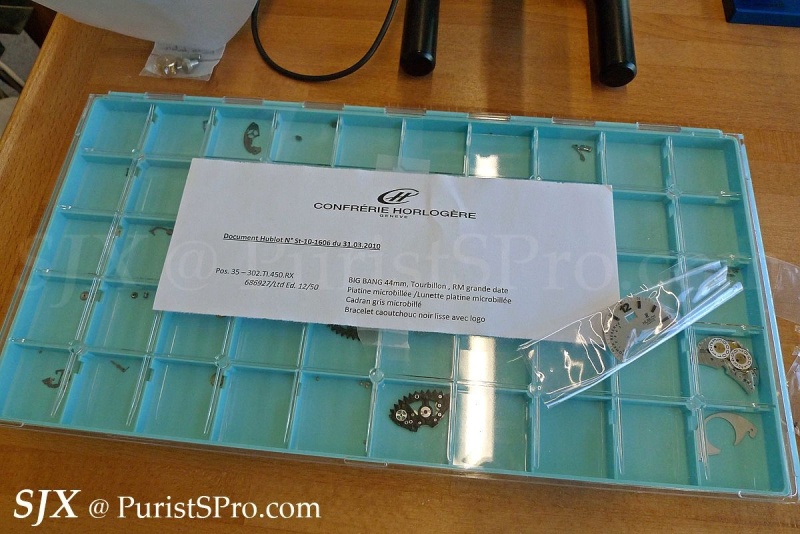
Above: Parts come in a kit for the watchmaker to assemble
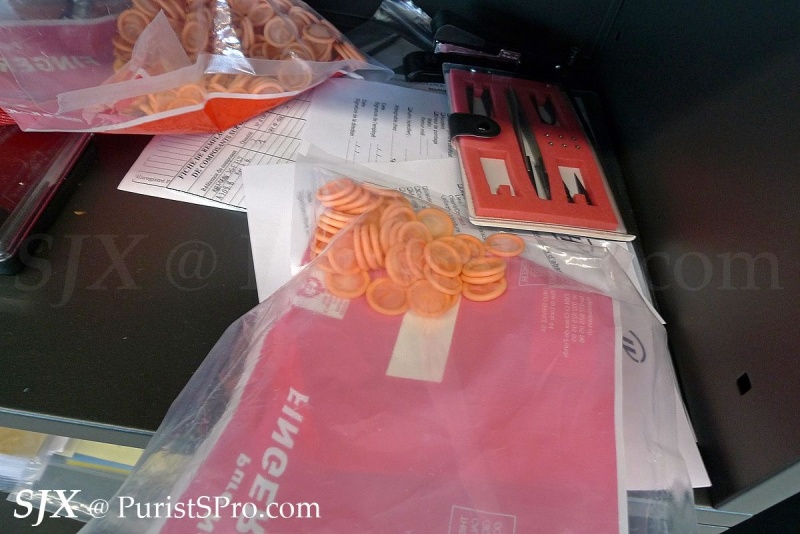
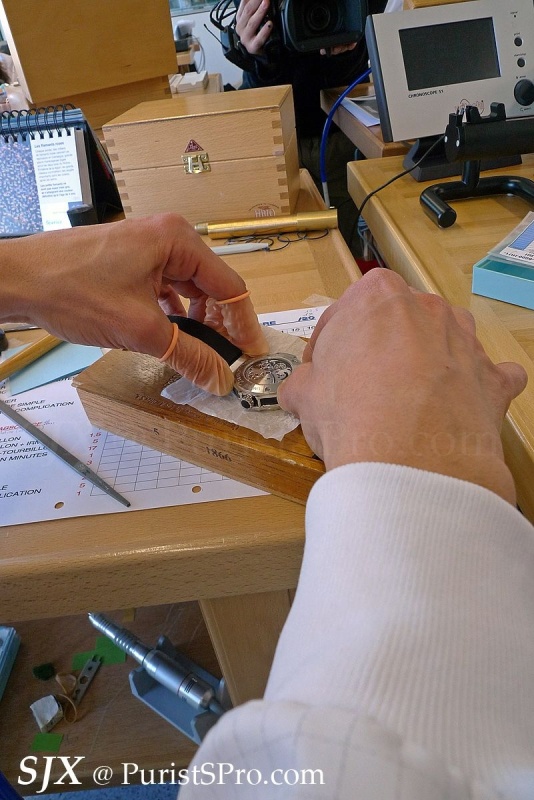
For the fingers
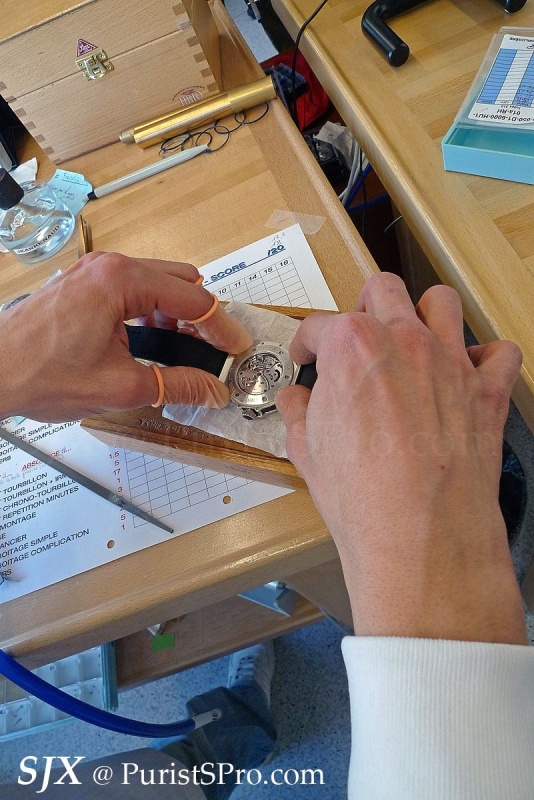
The Big Bang minute repeater is surprising, especially for such a big and heavy watch, the chime is loud and pleasant.
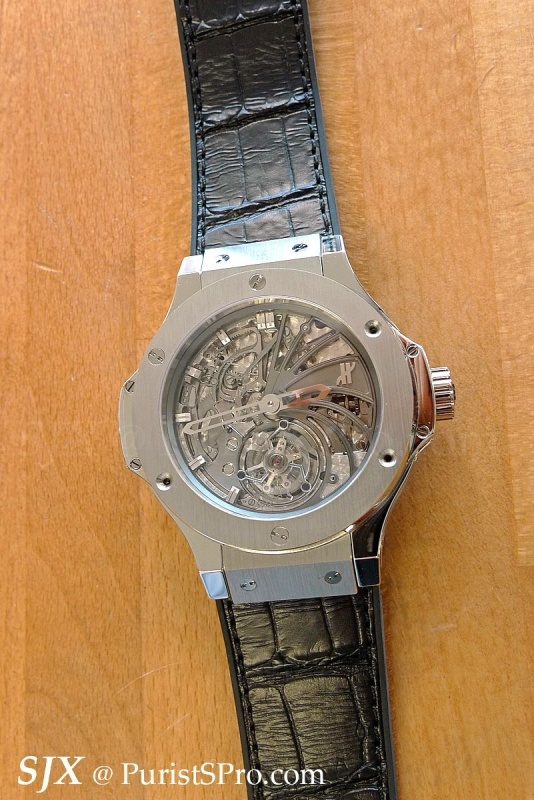
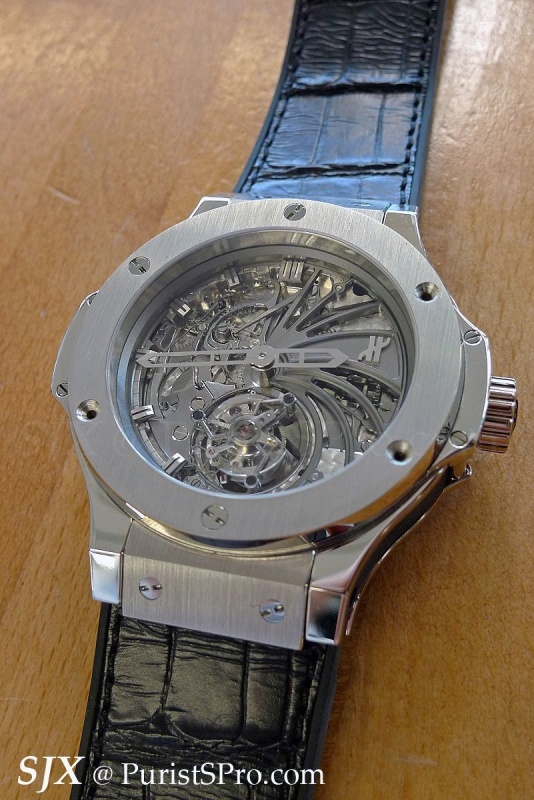
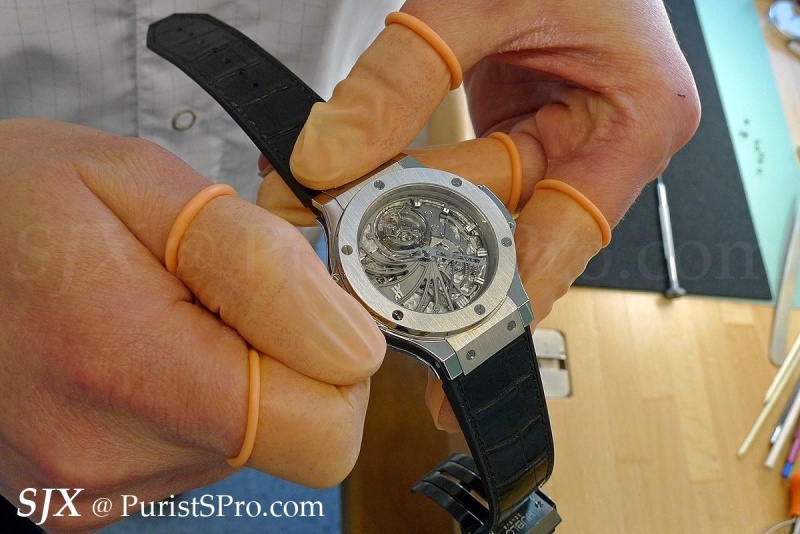
Below: Testing the repeater on a hollow wooden box which works as an amplifier
Adjacent to the atelier is the technical department, as well as Mathias Buttet’s office. He heads Confrérie Horlogère Hublot and is given a free hand to be creative.
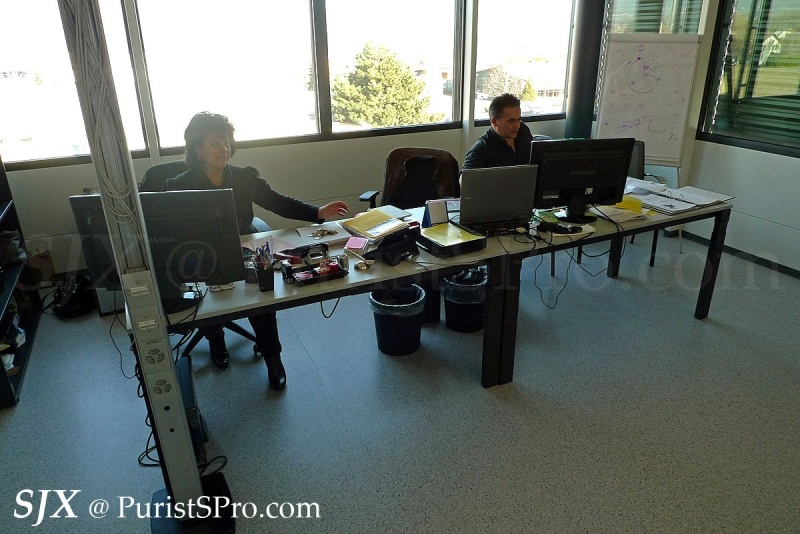
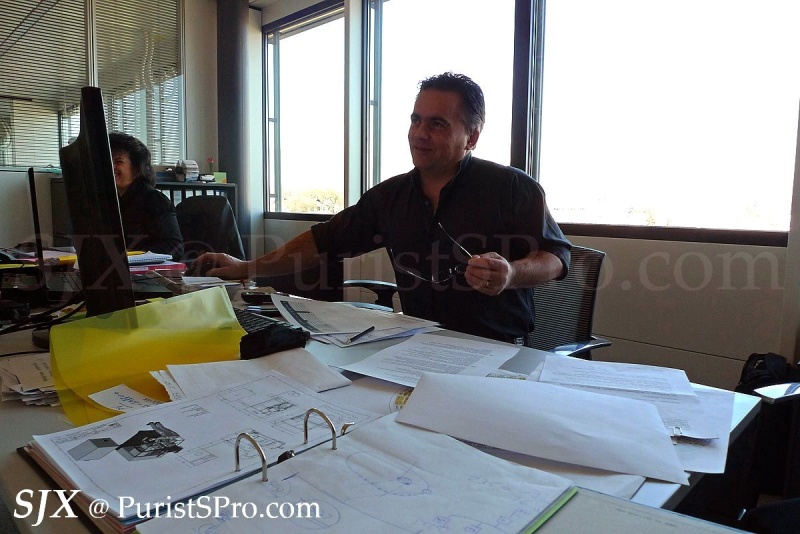
Above: Mathias Buttet
I found some of the work done by BNB before hard to comprehend but after speaking with Mr Buttet and seeing some of the works in progress I have changed my mind. Mr Buttet is a great technical mind, even if some of his ideas are not to everyone’s tastes. But one project in particular which takes inspiration from something of long, long ago, is quite amazing; that will be launched in mid-2011 or so.
This message has been edited by SJX on 2011-04-03 04:17:35Part VIII: Hublot TV – the hunter becomes the hunted
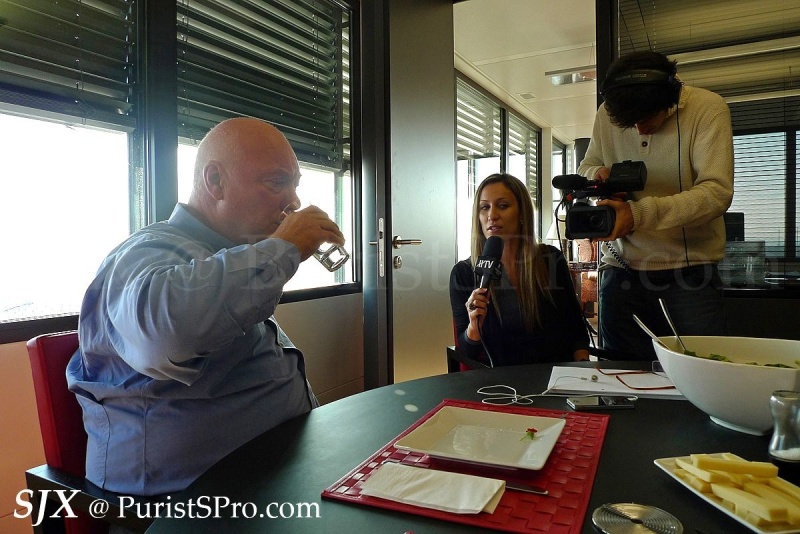
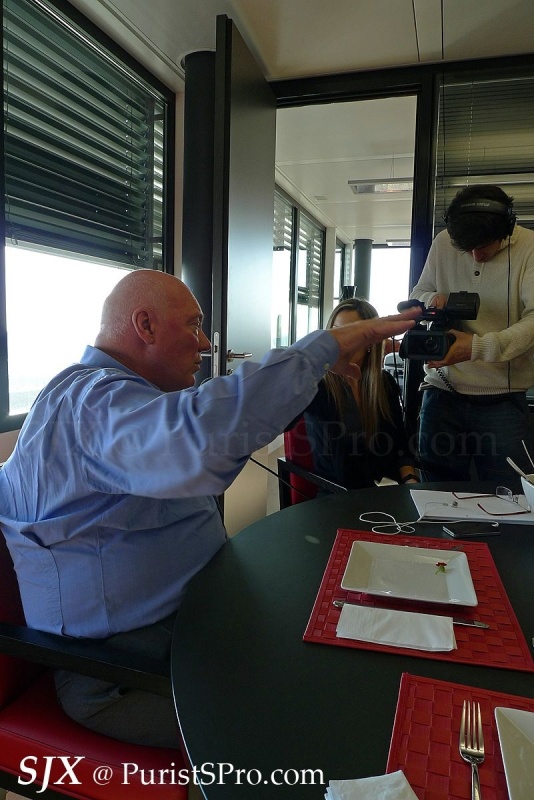
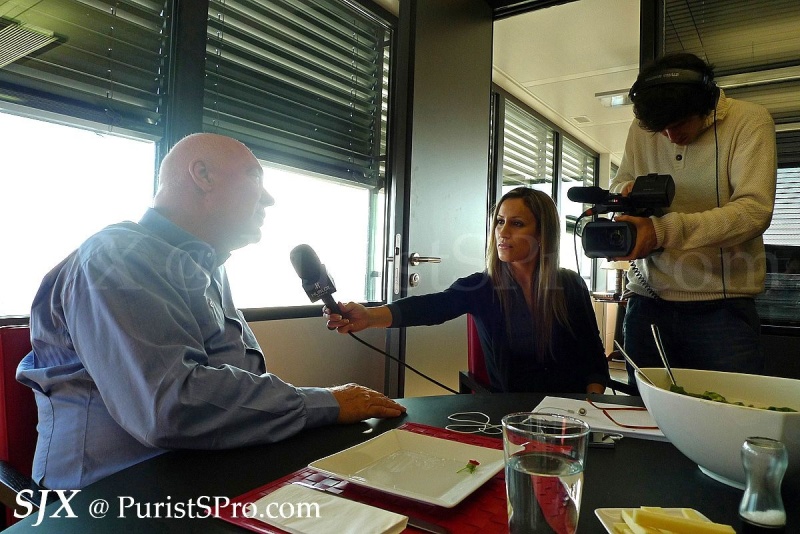
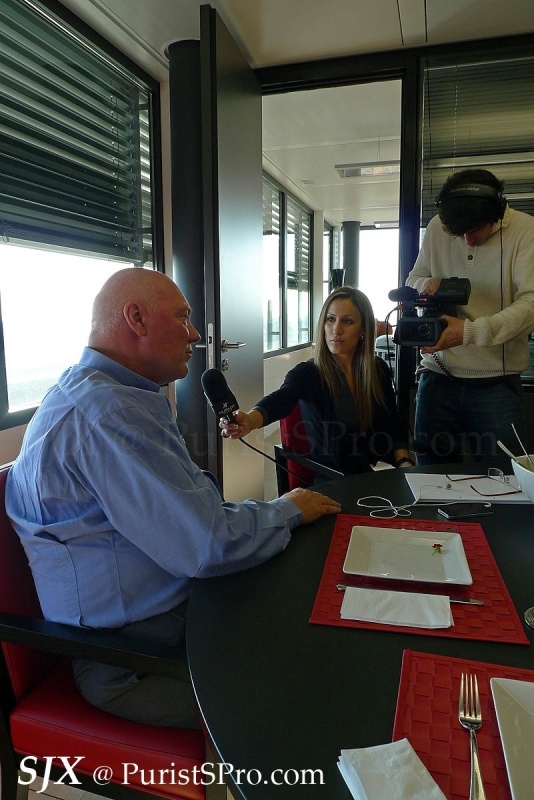
Typically when I visit a manufacture I am the only one lurking around with a camera, sneaking up on unsuspecting watchmakers. But at Hublot I was relentlessly pursued by a tireless cameraman lugging a professional video camera.

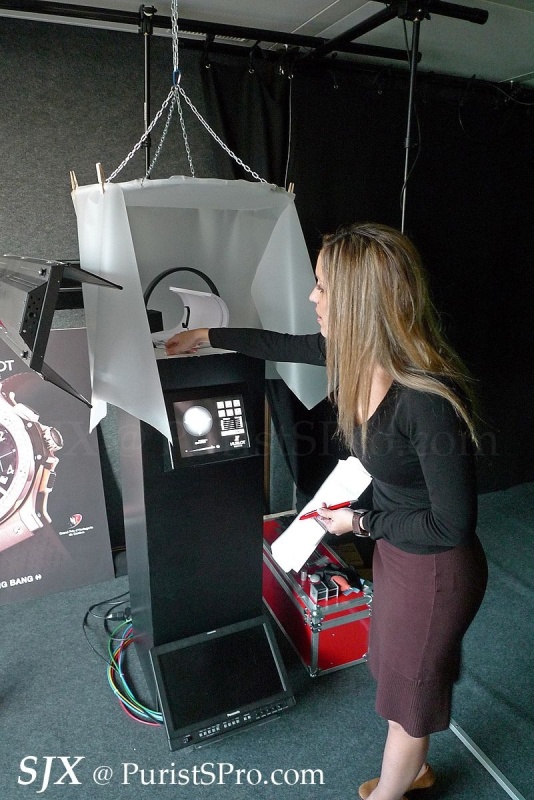
That reflects one of Hublot’s key strengths, marketing and communication. Hublot does that in a comprehensive and cohesive manner. In stark contrast to the rest of the conservative industry, Jean-Claude Biver has embraced every medium and technology available to make Hublot known to the world. As a result, Hublot is the only manufacture with an in-house television studio complete with green screen.
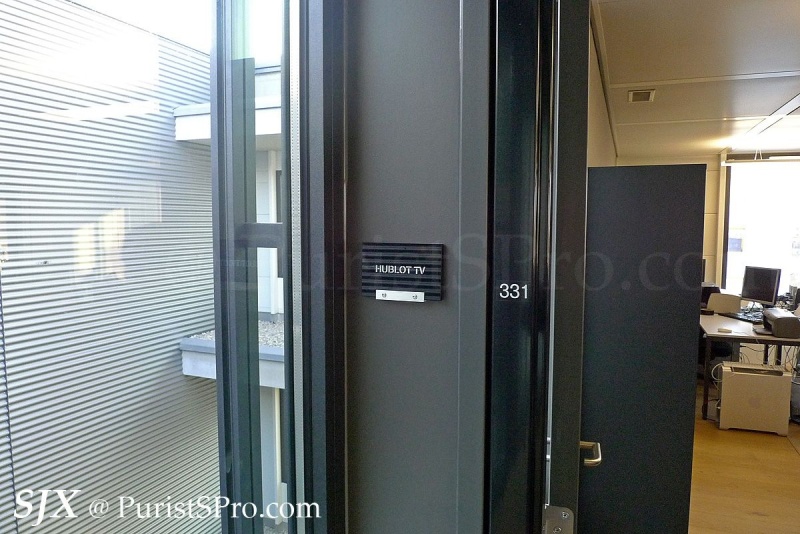
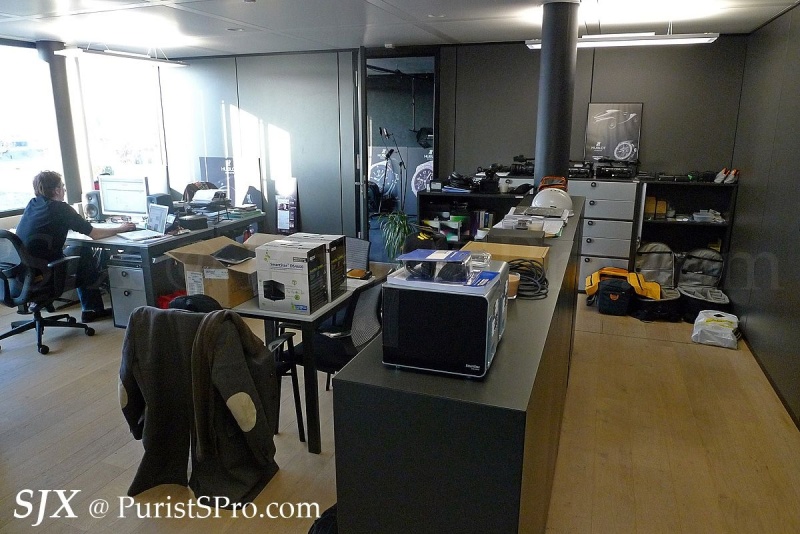
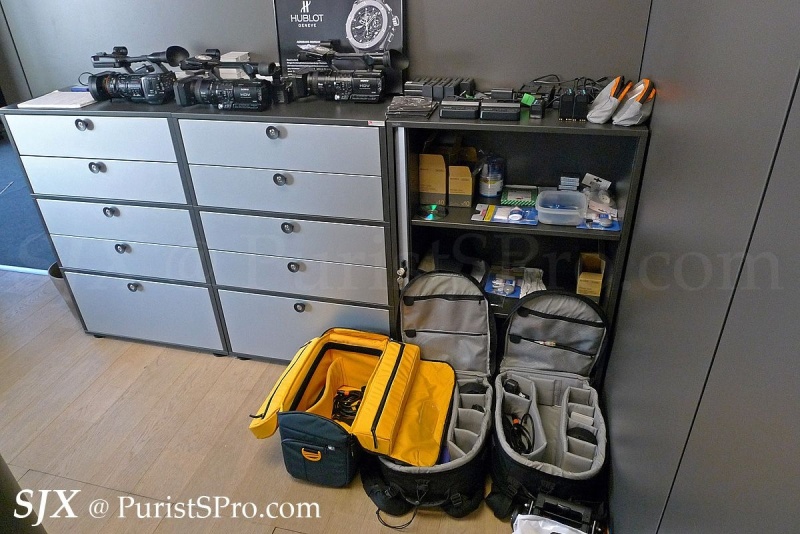
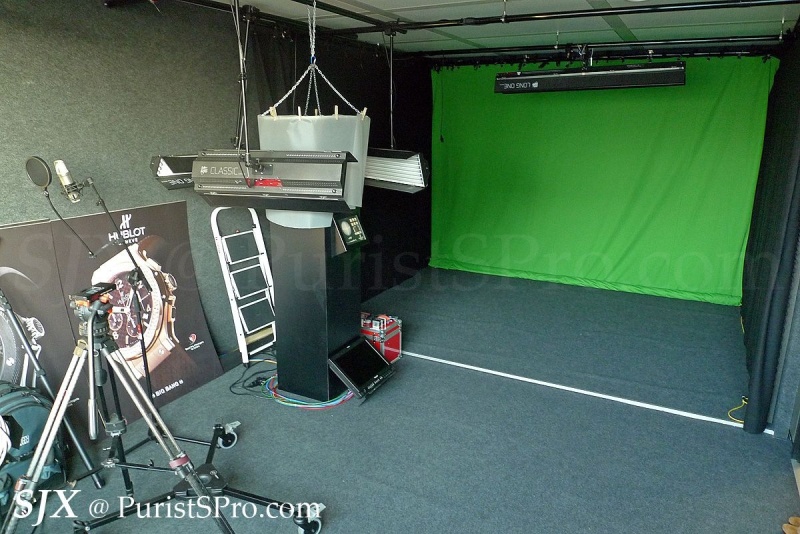
Hublot TV interviewing Jean-Claude Biver
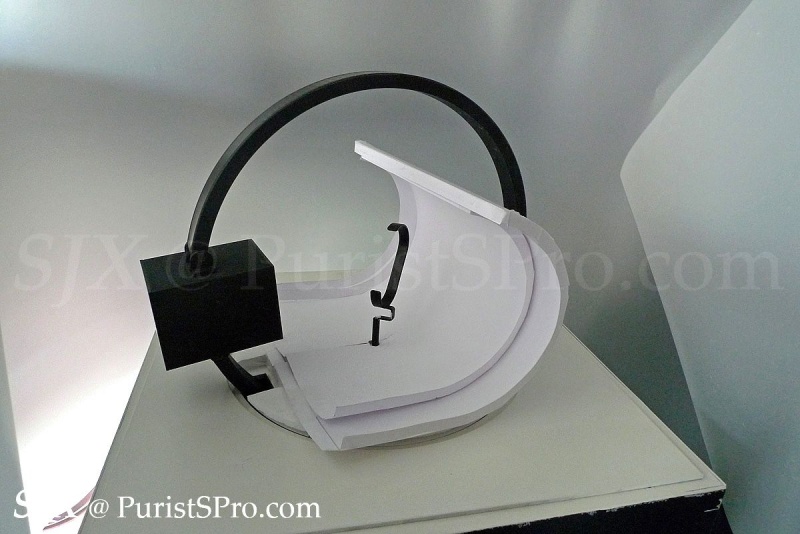
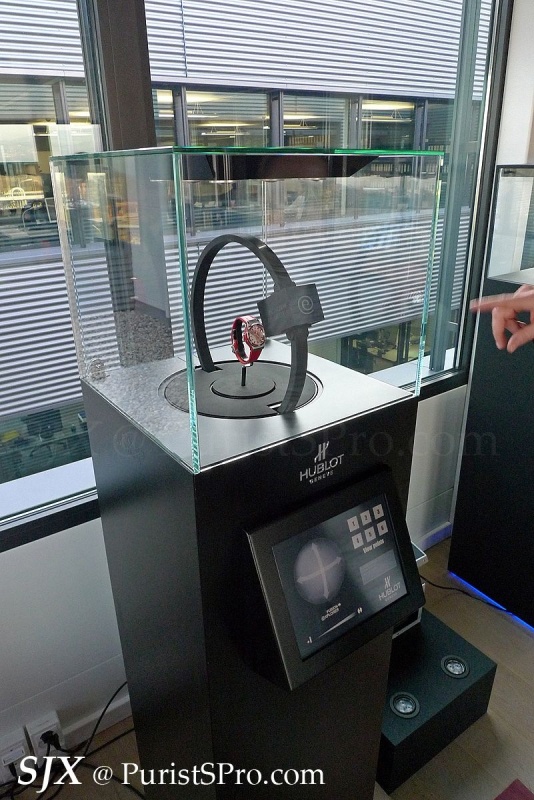
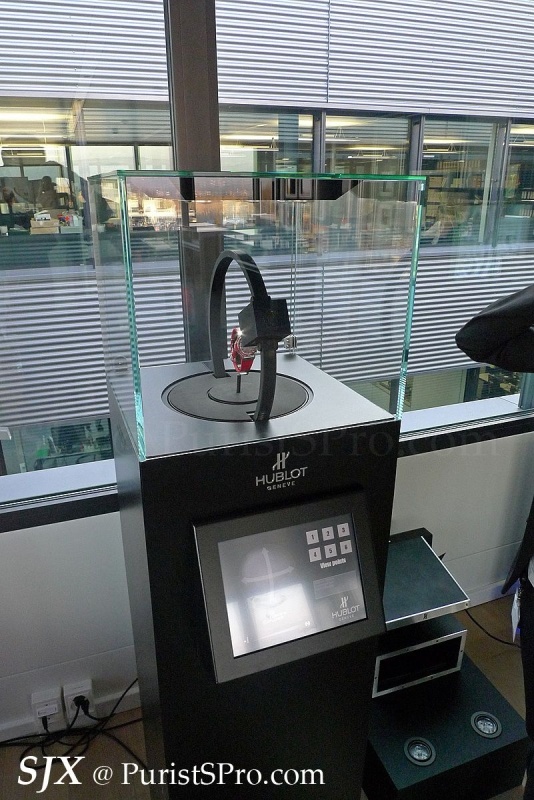
A good example of Hublot’s embrace of technology: watch models are filmed so that they can be viewed from 360 degrees, as well as magnified, for viewing on the Hublot website.
This message has been edited by SJX on 2011-04-03 04:29:33
Part IX: The mantra of fusion
In all areas of the manufacture, the mantra of fusion is evident. Nearly everything that can reasonably be in black or grey is black or grey.
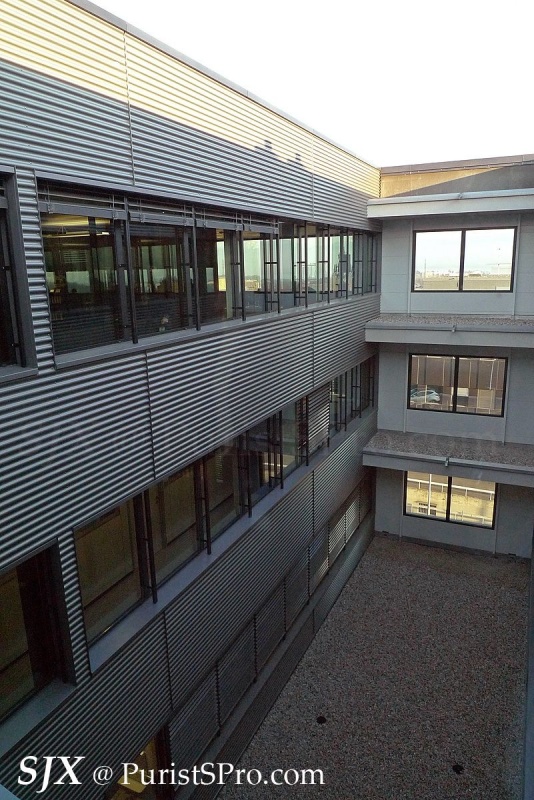
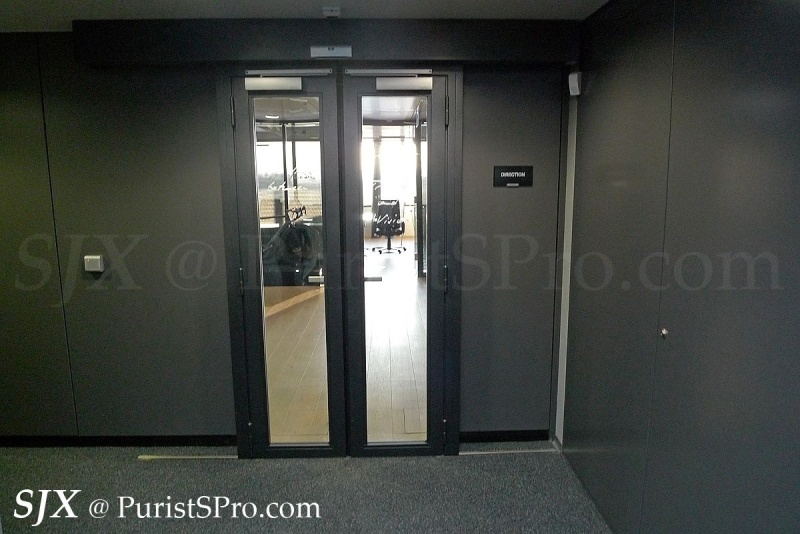
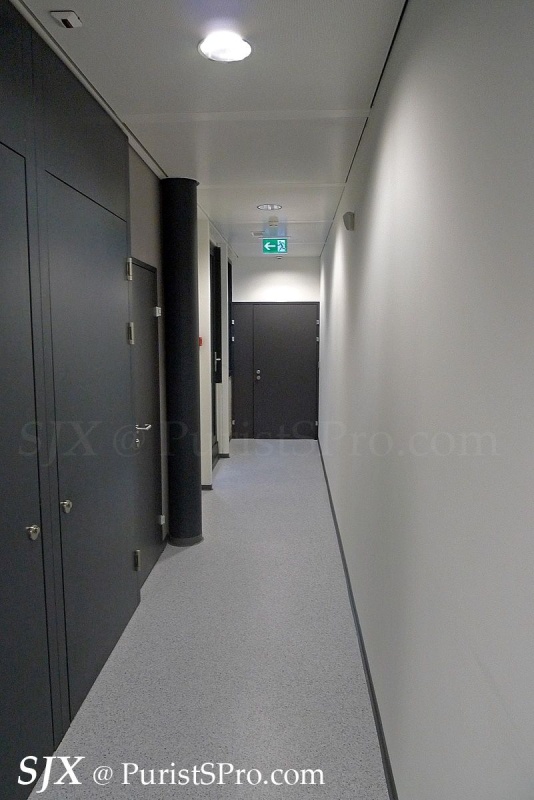
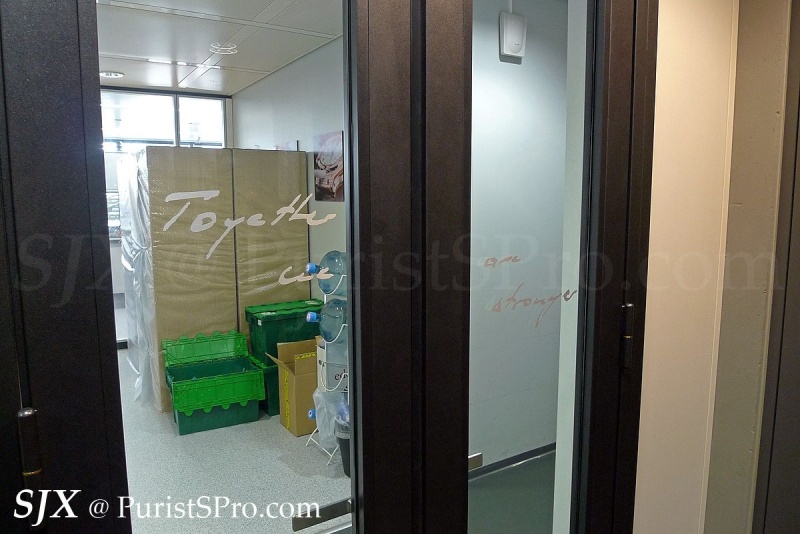
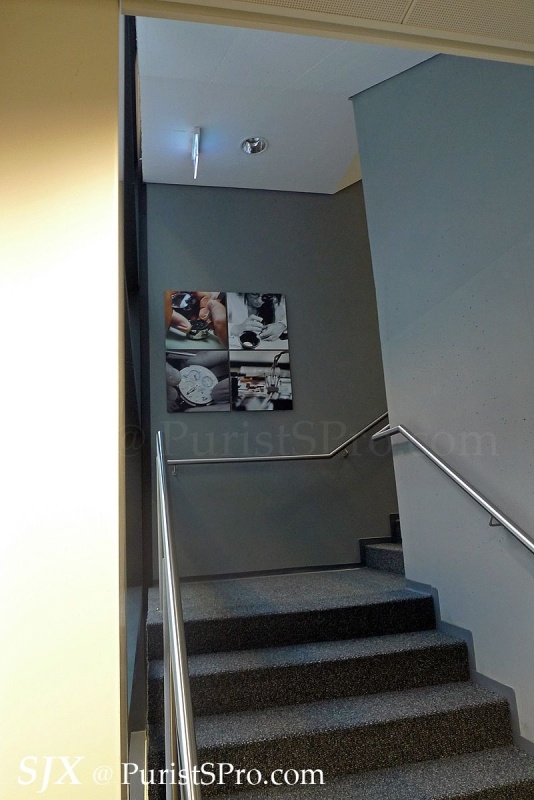
The Hublot logo is everywhere, and so are Hublot clocks.
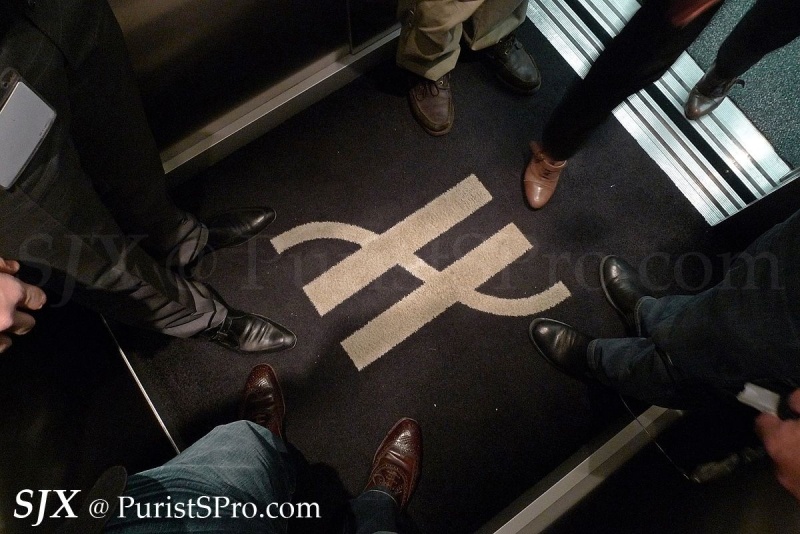
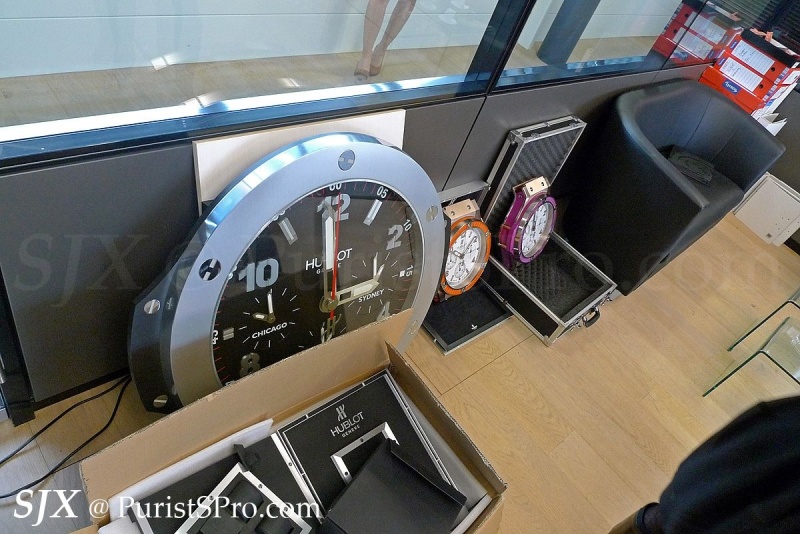
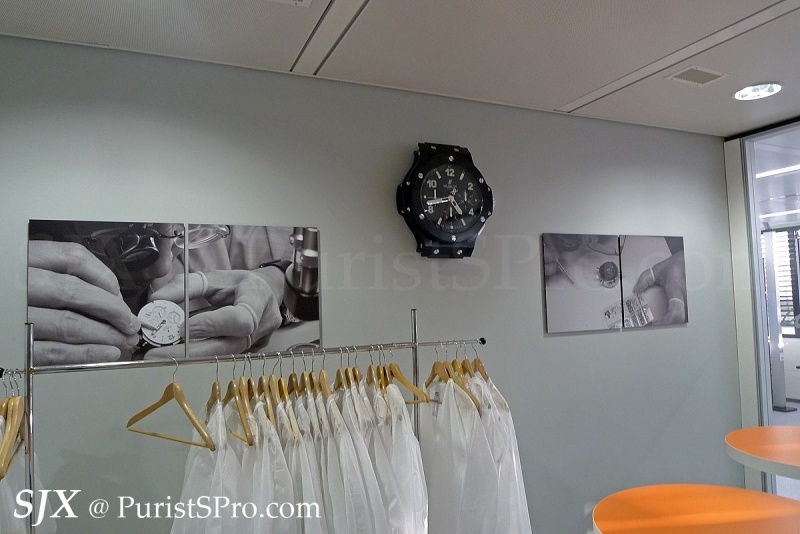
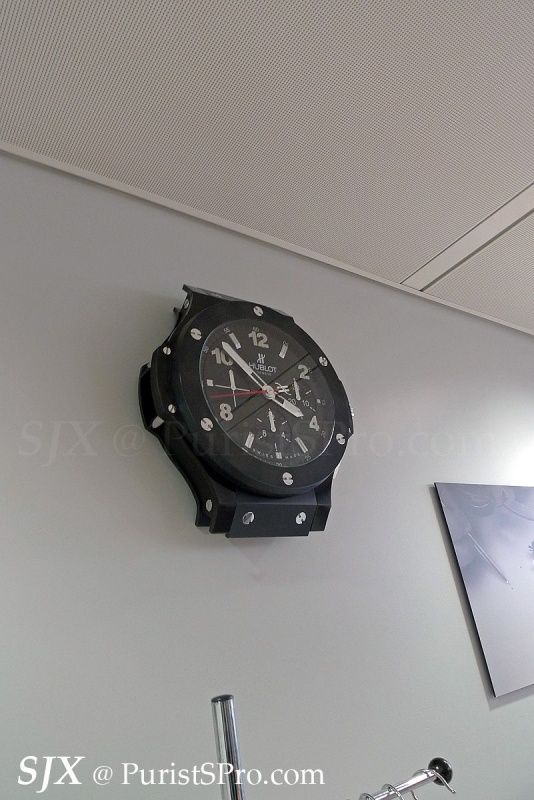
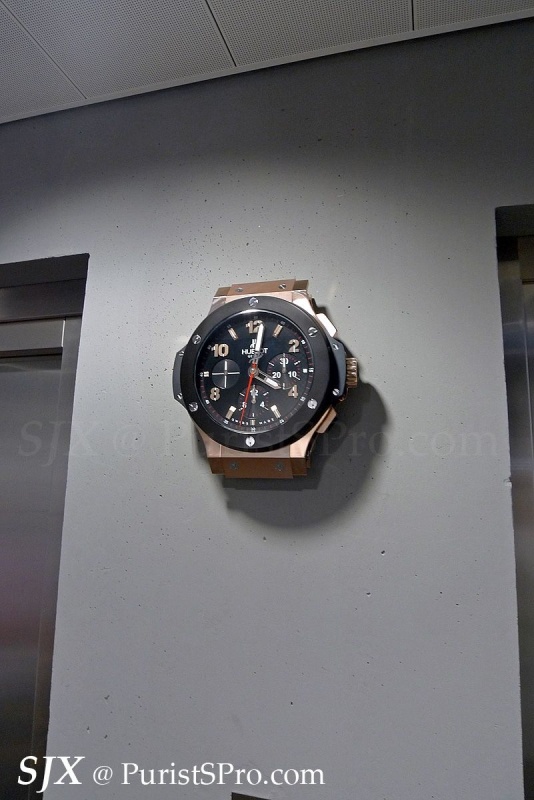
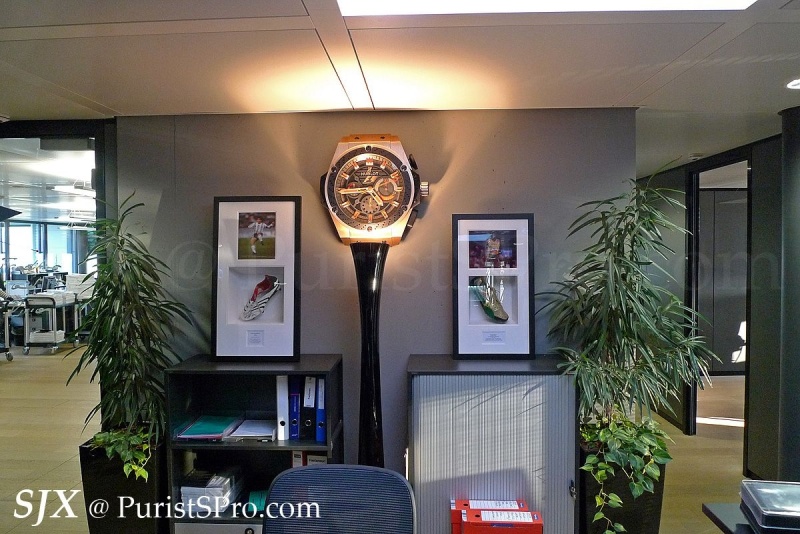
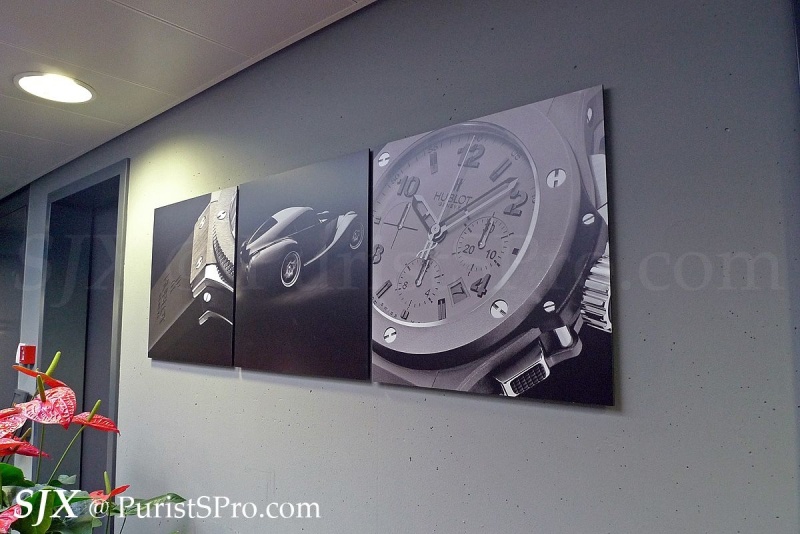
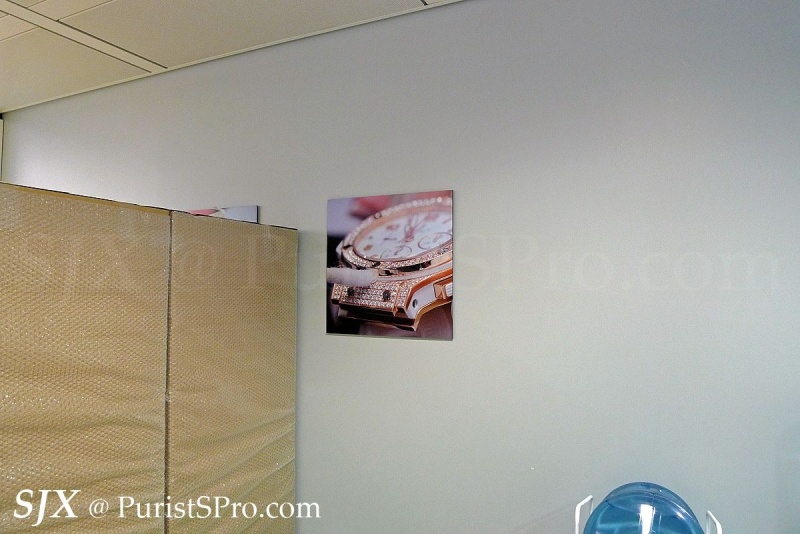
Windows are porthole-shaped.
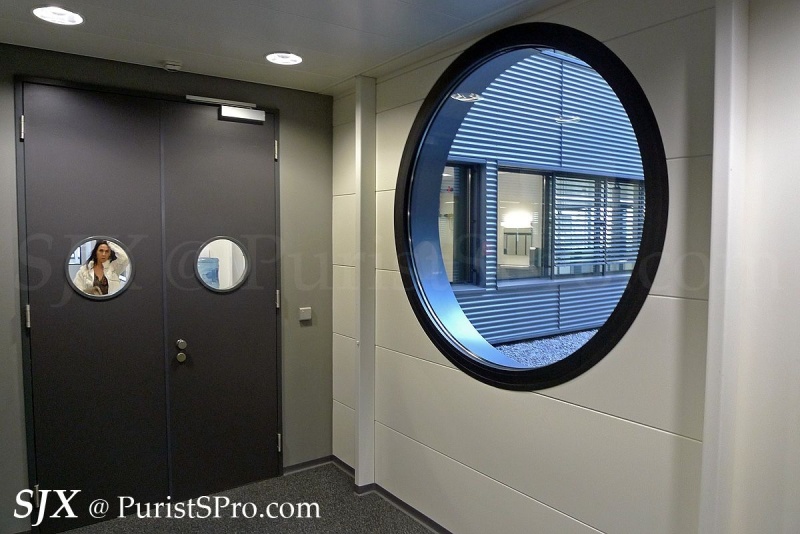
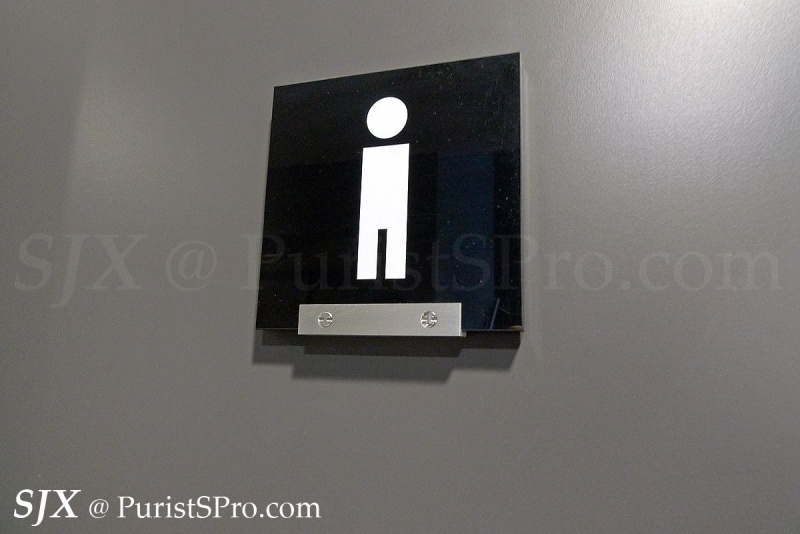
Most telling of all are the toilets. Not only are the insides of the toilet tiled in grey, but the signs on the toilet doors are fixed with “H” screws.

This message has been edited by SJX on 2011-04-03 04:22:01
Part X: Jean-Claude Biver
Hublot is Jean-Claude Biver; he doesn’t own the brand neither did he found the brand, but he is Hublot. JCB’s goal is to make Hublot a brand that will outlive him, like Ferrari without Enzo. That time will come, but right now it is difficult to imagine Hublot without him.
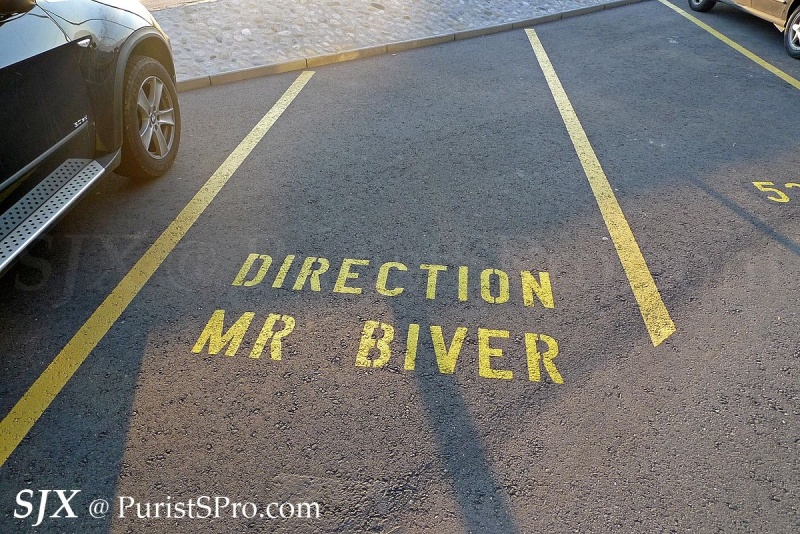
No one else can fill this space
Proof of JCB being a more than just a watch company CEO is found all over his office. Gifts from friends ranging from Depeche Mode to HM Sheikh Al Maktoum of Dubai are all over his office and outside in the reception area. JCB is such a compelling personality it's not difficult to imagine people, even if they are royalty or sportsmen, being drawn into the world of fusion.
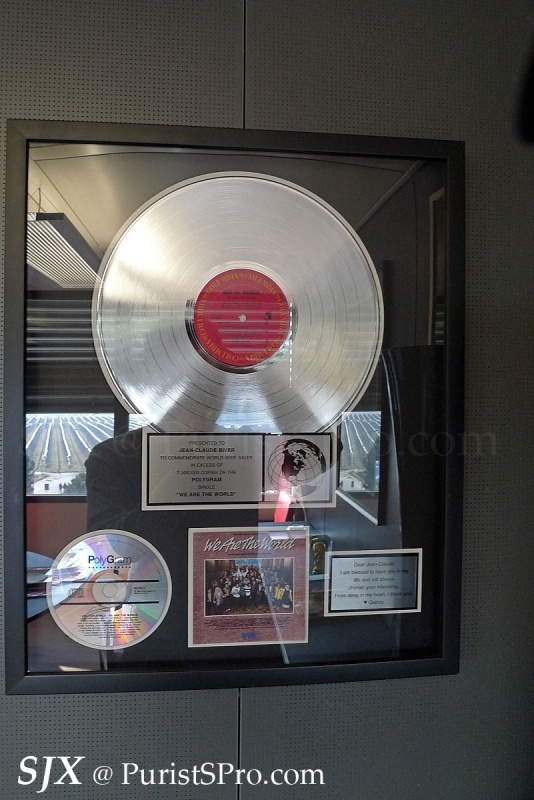
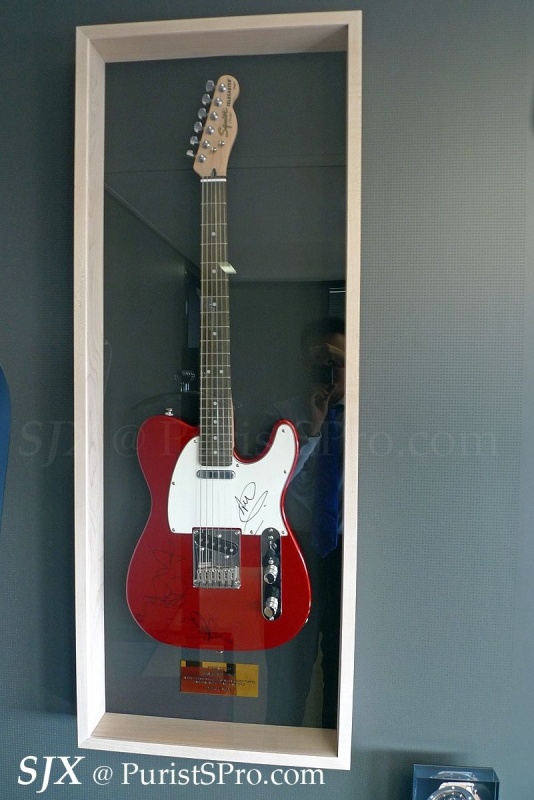
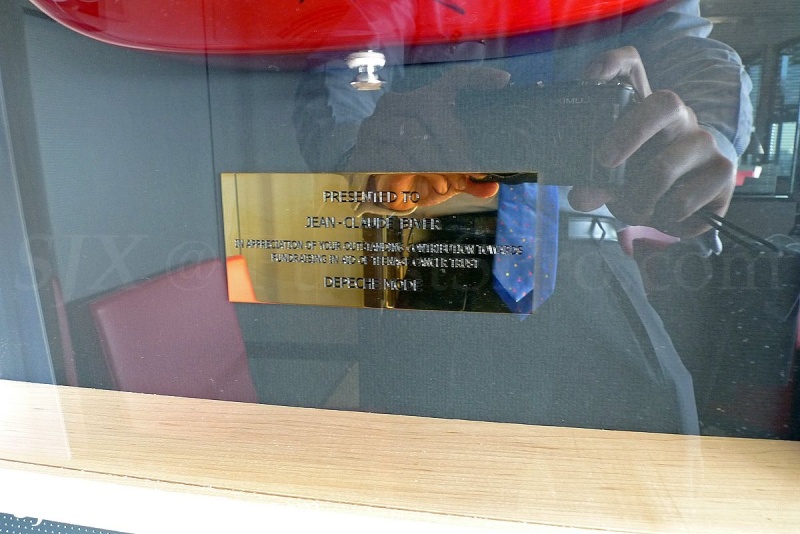
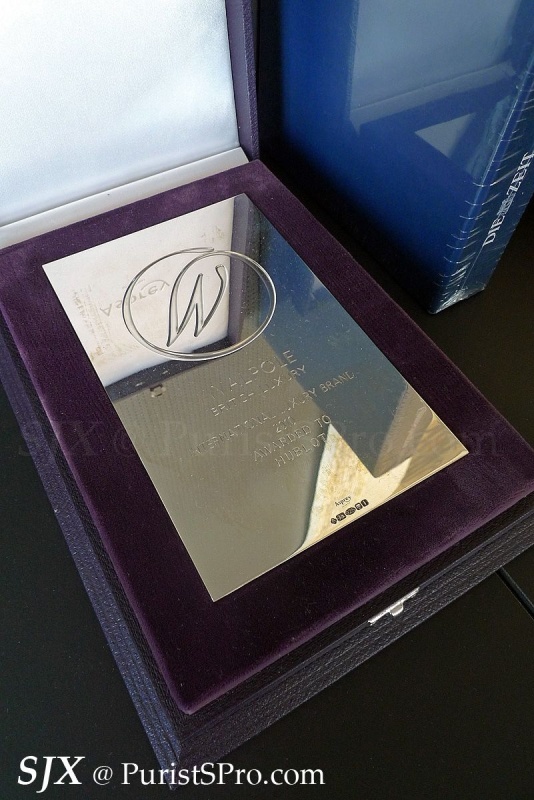
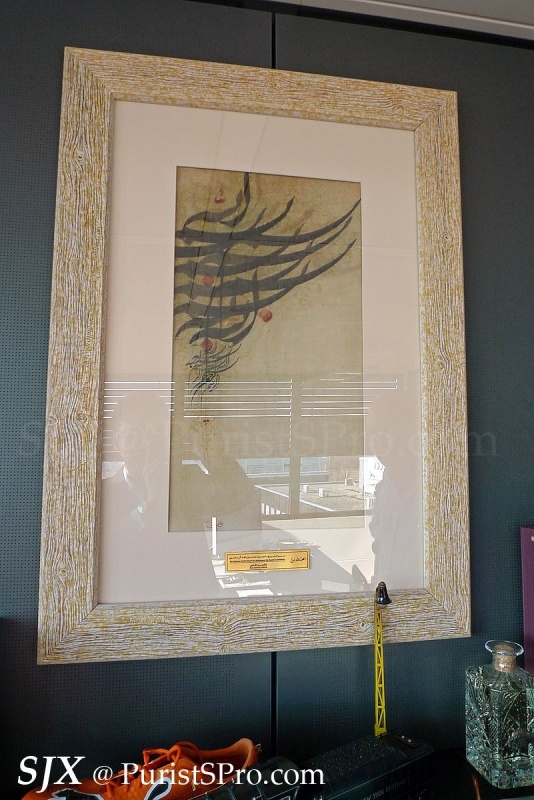
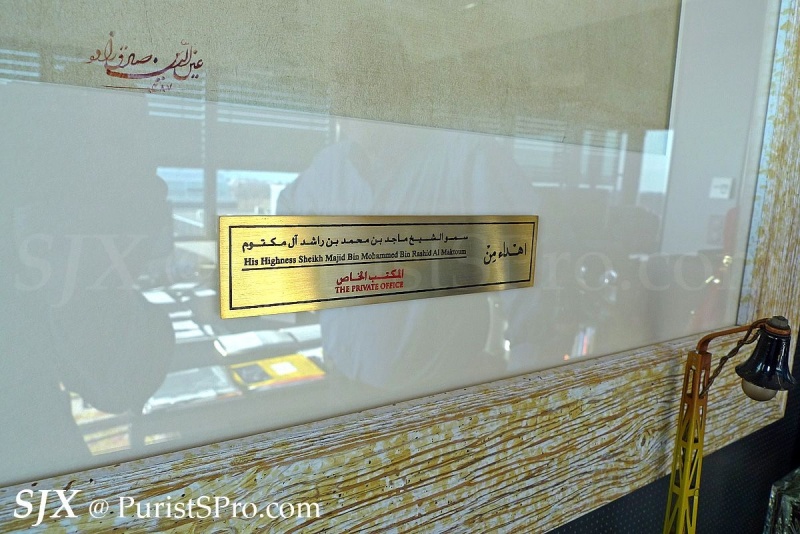
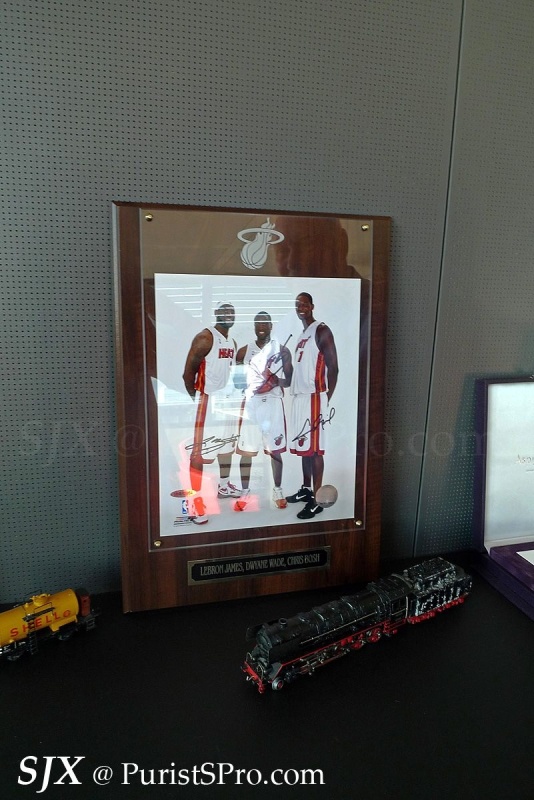
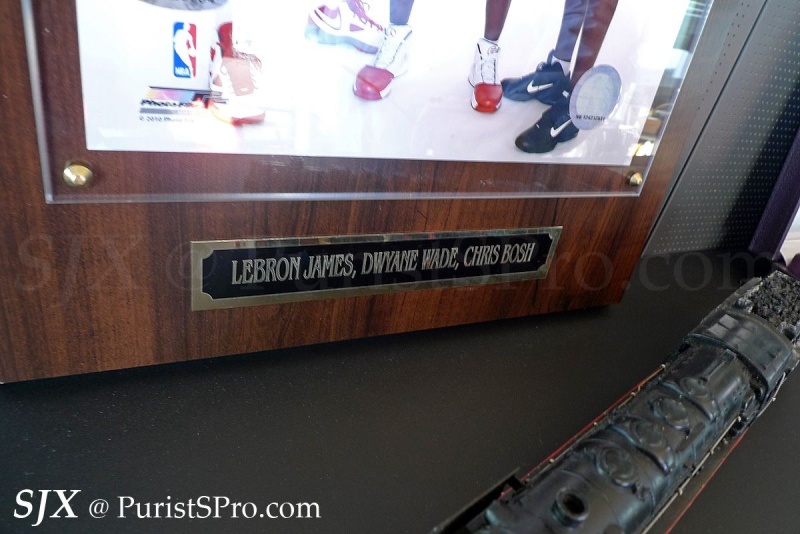
Those who have met JCB uniformly describe him as passionate and larger than life. It is not just a show put on for the public, the man works really, really hard, so hard he must love his job absolutely. He says he sleeps about four hours a night and last year spent nearly 30 days on a plane.
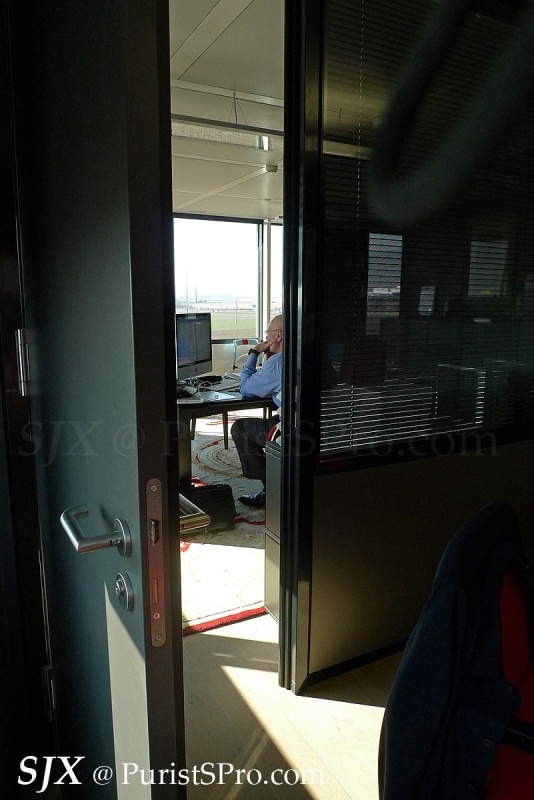
Some snapshots of JCB's office
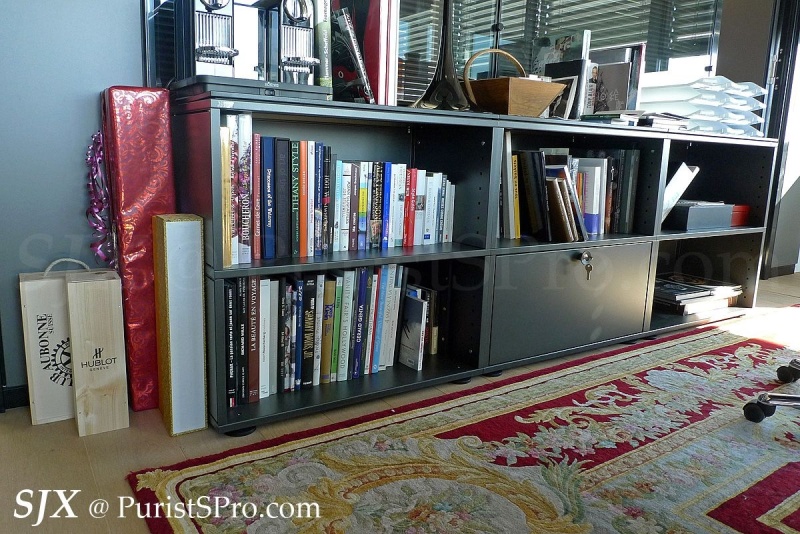
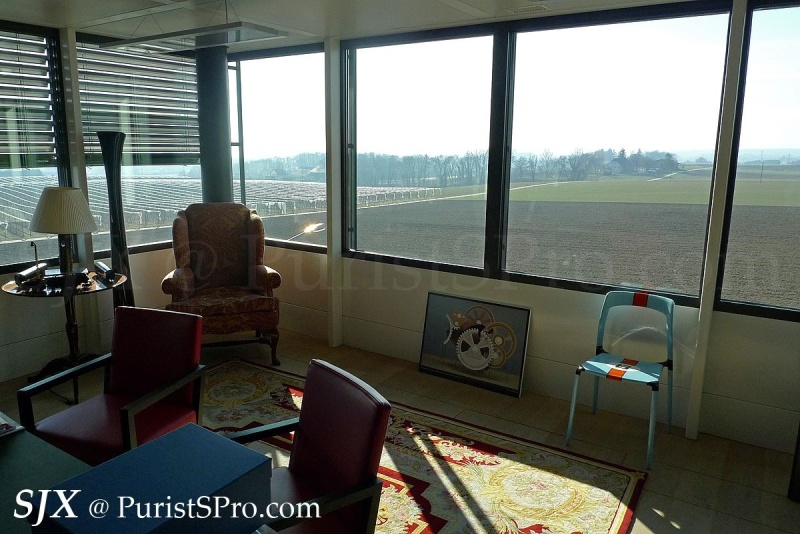
He must send hundreds if not thousands of emails each day, many to end consumers who contact him via the Hublot website; every email to the general Hublot email address reaches JCB.
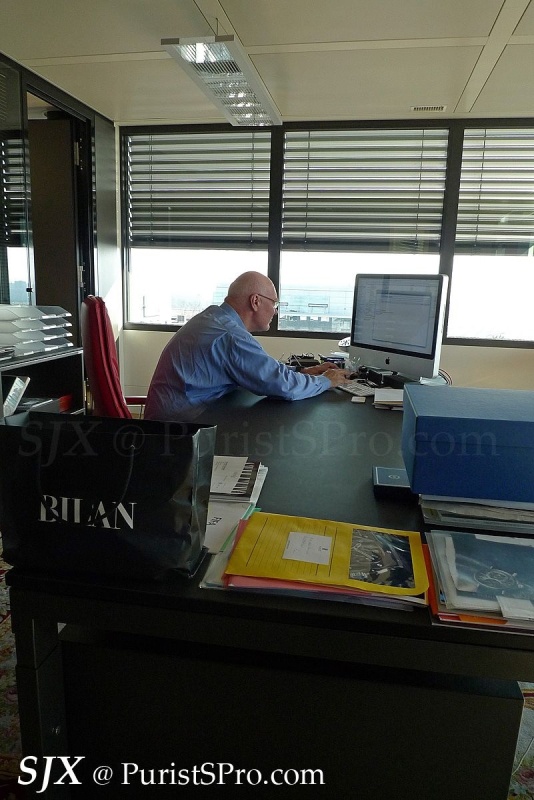
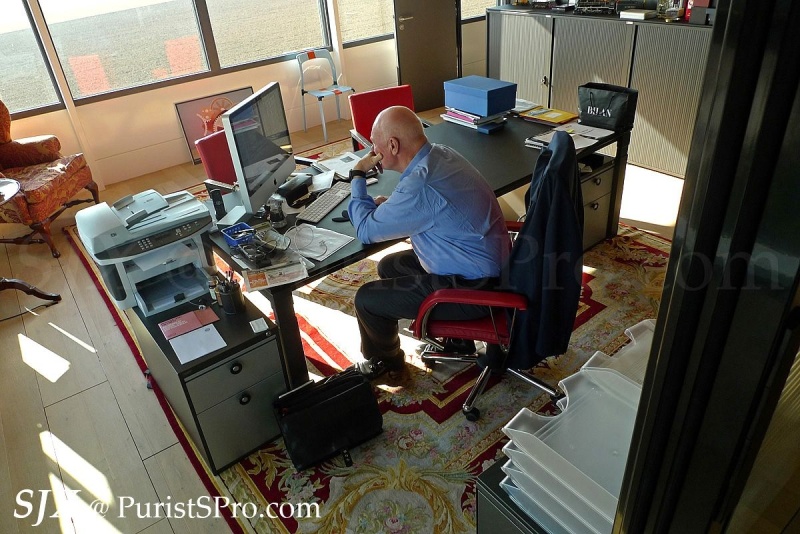
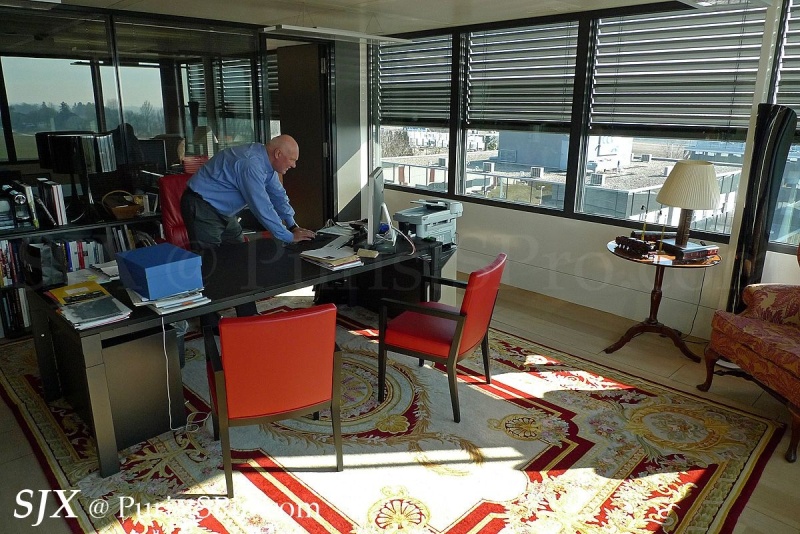
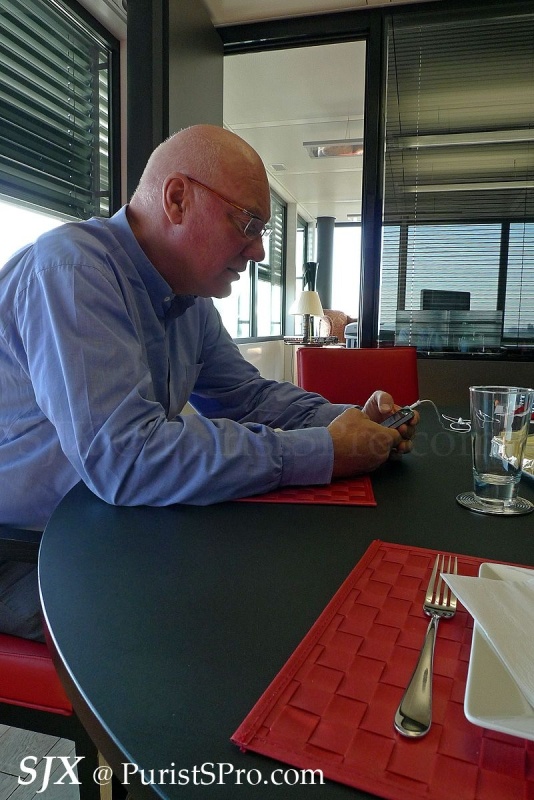
And the famous hand-written, personal guarantee from JCB is literally a hand-written guarantee. I witness him doing about a dozen of them, which he does every day, totalling about 3000 a year. And it’s not a repetitive, mechanical exercise, each hand-written guarantee is different and personal.

Above: A day's worth of guarantees
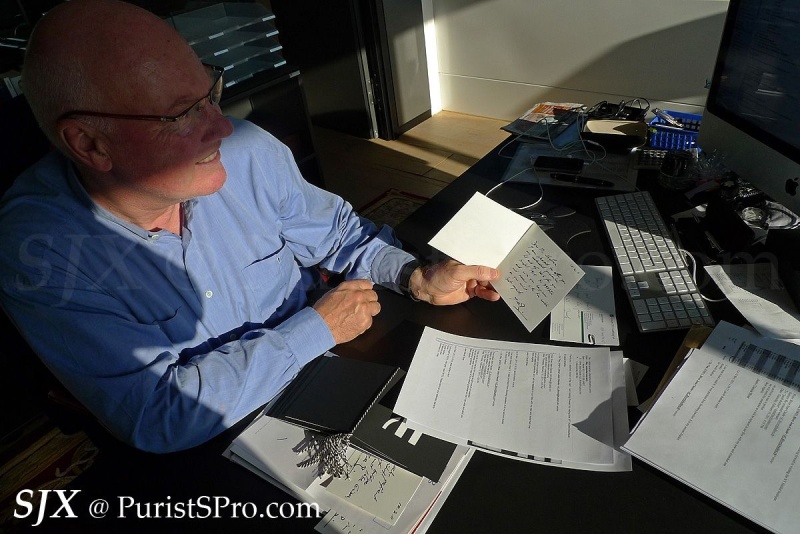
Unlike many industry executives who are hired hands enjoying a lifestyle of perks due to their position – and some of whom seem to think they are part of the same social circles as their clients – JCB is a bona fide millionaire. Swiss business magazine Bilanz pegs JCB’s net worth at CHF150 million (and a chunk of that must be his watch collection which includes seven or eight Greubel Forsey watches). JCB works because he loves doing it.
I had to ask why almost every Hublot is black or grey or some shade in-between. JCB pointed to the steam train models he has scattered around the office, and explained he loved steam trains as a boy, and most trains are black and grey.
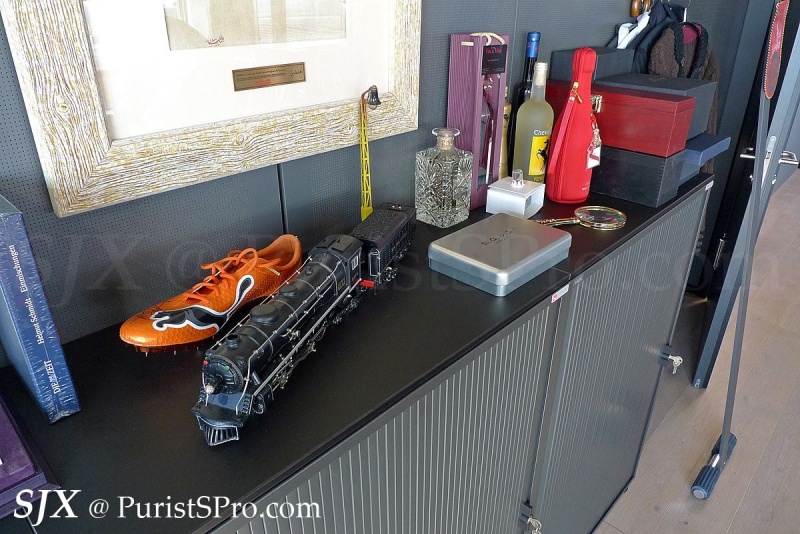
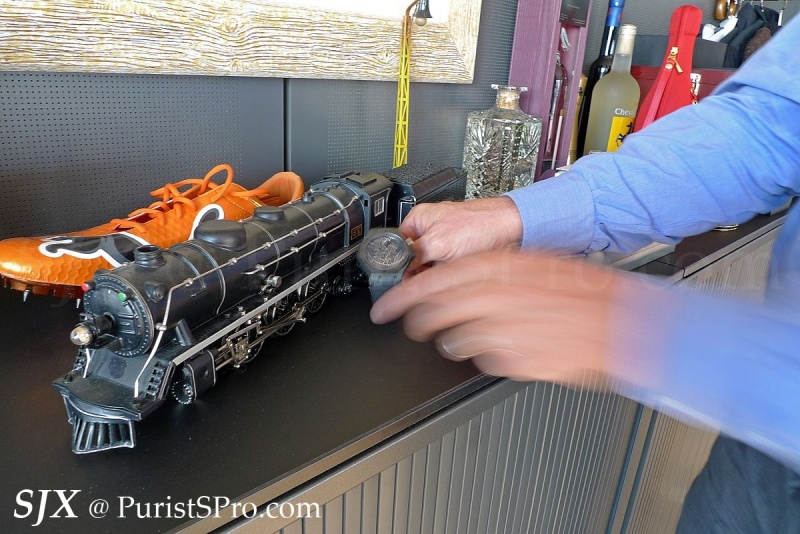
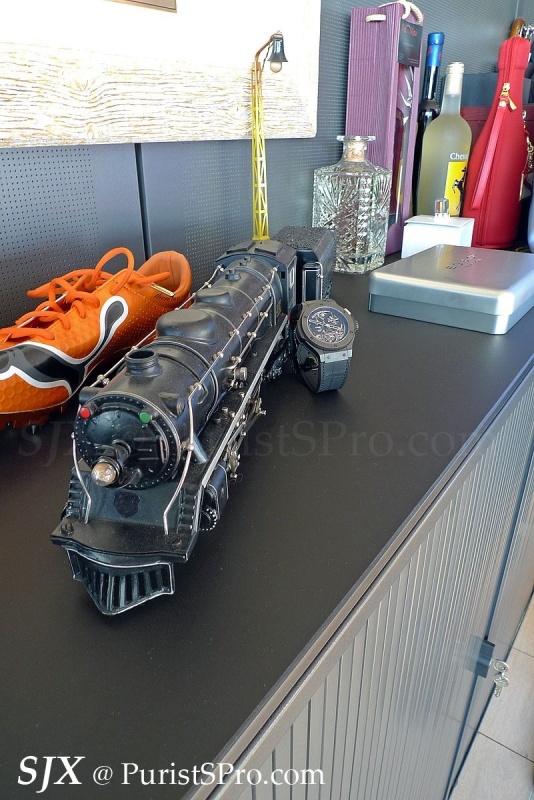
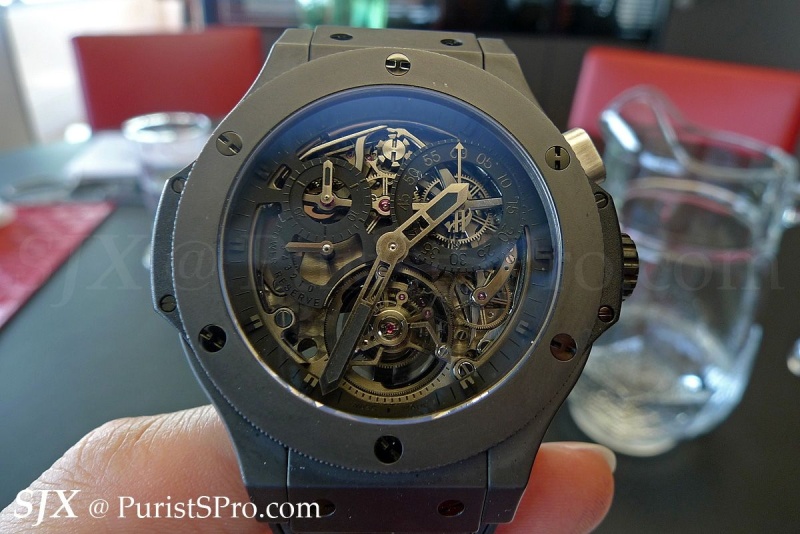
Who wouldn't relish making toys from your childhood?
- SJX
This message has been edited by SJX on 2011-04-03 05:17:02 This message has been edited by MTF on 2011-04-03 10:48:55
Wonderful post!
I also wish that Hublot continues to make stylish watches that can be considered haute horology "entry-level" for some of us too!

Superb posts JiaXian!
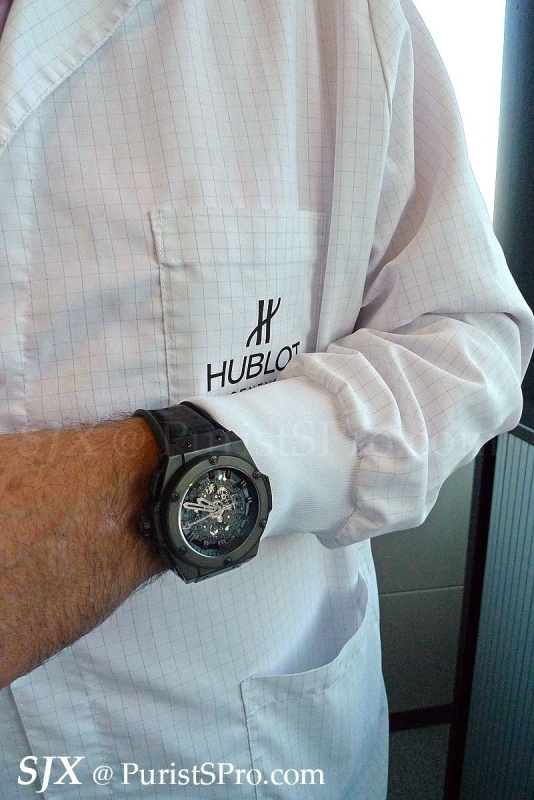
Thank you for these excellent posts! I can't help noticing the King Power watch with a white dial (looks to be a chrono, worn by one of the watch technicians) and they seem to porduce quite a number of this dial. Any info on this watch?
That is just a mock dial used during assembly
and then replaced with a production dial once completed.
Thanks for the compliment Rei.
- SJX

Fantastic post. Thanks SJX
Jon
Substance and marketing
Marketing will only do the job, if behind you have substance. Rational substance. If that's not the case, marketing will transform you at best in a fashion brand
We are creating substance, we are trying to contribute to the Art of Making Watches. To contribute with the eyes of the 21st Century, with the tools, machines, concepts, materials of our Century. Not only with the ones of the past.
No substance, no future. But for Hublot we need in addition to substance, permanent innovation and creativity.

Wow, excellent job.
Thanks for sharing these VERY interesting posts with us. It was nice to see the insides of the Hublot workshop.
Cheers.
Vte 

SJX...this is one of your most complete reports
thats reaches out to not just certain watches, or manufacturing processes, but the "human" efforts and philosophy of the manufacture, in particular, its CEO.
kudos once again.
best,
Horo


Superb report!

I have been waiting for your report, SJX!
Seriously, though, this report will change people's perception about Hublot - ever-so-evolving brand with a firm direction and means. As SJX stated in the beginning, it is no longer ETA 7750 variation watch manufacturer. This report will convince people of the evolution now happening at Hublot. I am expecting a lot more goodies from Hublot going forward and looking forward to its future. I admit that I have renewed my respect for the brand and CEO himself.
His famous handwritten guarantee card seems to come from his genuine gratitude and the owners should contact him directly via PM or Hublot homepage inquiry (not through this forum, please), and he will cordially reply to your inquiry himself and be happy to provide you with the handwritten guarantee card. It is not common for CEOs of watch brand to do that.
I discussed this habit with Mr. Biver and was told that he wouldn't mind receiving inquiries directly, and that the longer you hold onto the watch, the more he appreciates and he won't discriminate from new one from the old ones - in other words, he will extend his personal welcome to every one of the owners, old and new. So, I would be interested in hearing more of your experiences with Hublot's family-style service going forward!
So, owners - we will all welcome and congratulate you and let us talk more about our passion for Hublot here, then you send him PM or email via Hublot website, and you will be treated like royal.
Thank you Hublot team and SJX!
Best,
Ken
This message has been edited by KIH on 2011-04-03 17:43:13
Thank you
The best and most complete I have ever seen!
Thank you very much and congratulation
To any Hublot owner, I encourage you all to send me copy of your guarantee with case number and your home address in order that I can send you my handwritten and extended till end of 2016 guarantee
My direct mail is JCBiver @ hublot . ch (without space) or use PM, and my direct phone is +41796108885
You are all welcome to the family and please do not hesitate to get in touch directly with me
This message has been edited by KIH on 2011-04-03 07:42:31
incredible post !
This is so thorough and well photographed !
Thank you very much for sharing this moment with us !
Thanks for being such a great host
and letting me see practically everything at the manufacture. There is certainly a special spirit at Nyon that other manufactures do not have.
- SJX
Mr Biver, you are a model CEO
and a marketing genius! i was at one of the dinners you hosted, and i must say, you are also the most entertaining watch company CEO I can think off !!
your direct approach to business and generosity to charities are well known, and i iwsh and Hublot more success going forward. and i promise to wear my Bangs more!!
cheers, and best regards,
Horo