
Both Portofino are new movements but...
though similar to the cal. 5000 automatic the new hand-wind is entirely different, it is not merely the cal. 5000 with automatic winding mechanism removed.
While I wouldn't go so far as to call them disappointing, they are fairly commercial pieces, i.e. designed to appeal to as broad an audience as possible at this price point.
This is something many of the brands (save for Lange, GF, RM and the other ultra-high end brands) are doing - growing their target segment. So you see JLC that looks like IWC, IWC that resembles AP etc. When you sell EUR300-400 million of watches a year and you are not Rolex, Omega or Cartier, you have to broaden your horizons. Often that means lowest common denominator, making a watch that will appeal to a lot of people.
- SJX
*** SIHH 2011: Jaeger-LeCoultre ***
2011 is the anniversary of the Reverso so naturally there were several new Reverso models. But they were not the only novelties; JLC had one of the larger collections at the fair.
The headline Reverso for 2011 is the minuter repeater at the high-end but I could not get photos of this outside of the display case.
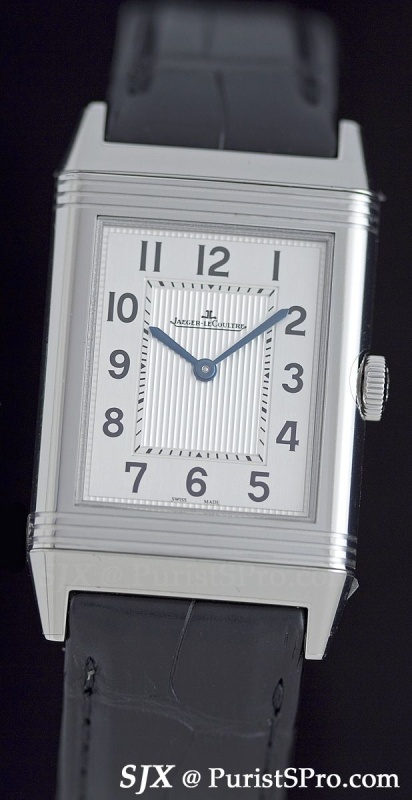
At the affordable end the Grande Reverso Ultra-Thin Tribute to 1931 has garnered a lot of praise. It is an authentic looking remake of the 1931 Reverso, complete with faux antique Luminova.
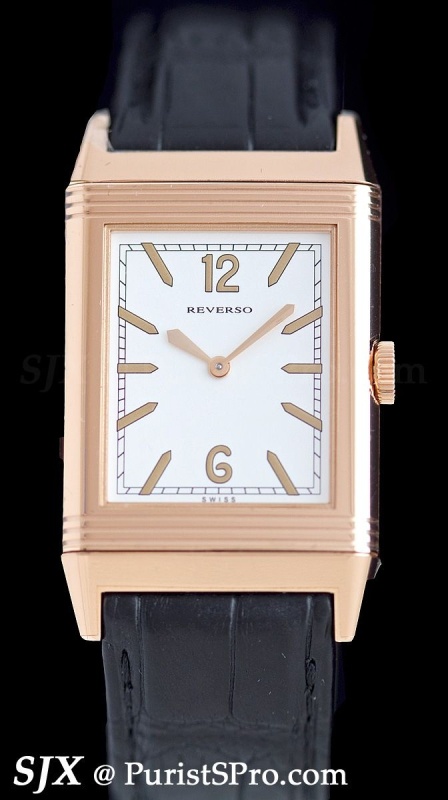
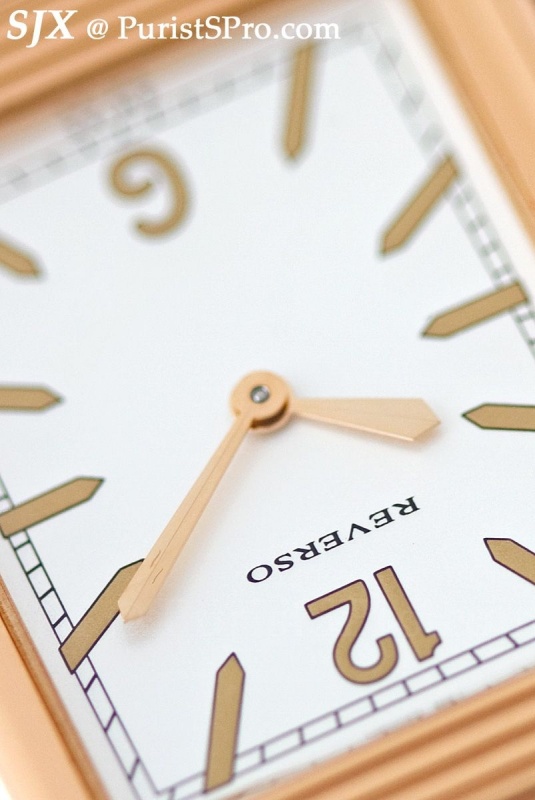
The 1931 is 46 by 27.5 mm but only 7.2 mm high, making for an elegant silhouette. This will be available in steel with black dial and a limited edition in pink gold. The steel 1931 Reverso was one of crowd favourites of the fair.
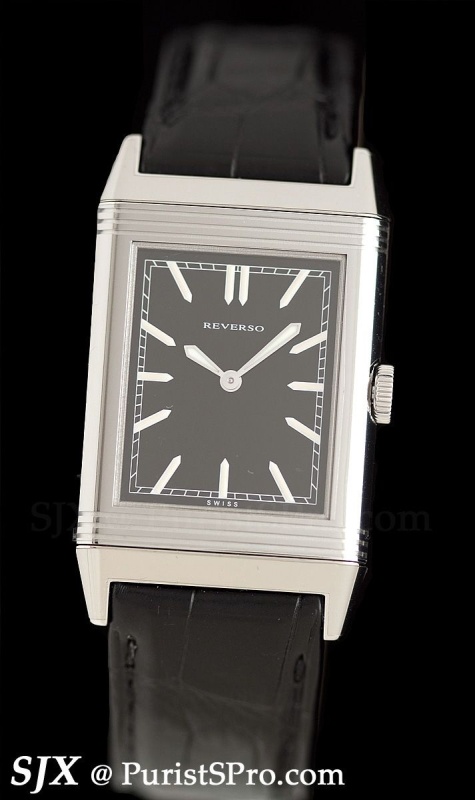
Despite this being much larger than the original, JLC has done a bang up job of recreating the look and feel of the original Reverso. That being said, the remake is fitted with leather straps containing shaped inserts at the lugs which make them sit awkwardly on some wrists. A regular soft strap would work better.
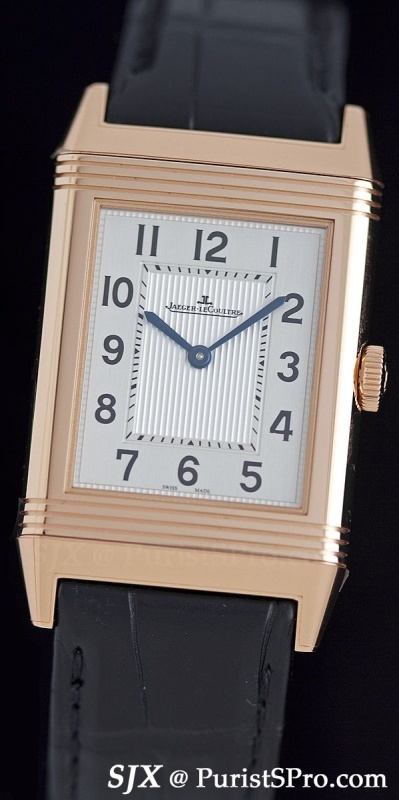
Also available is a Reverso Ultra-Thin in the more familiar silver guilloche dial with blue hands. This shares the same dimensions as the 1931 edition though I find it somehow less elegant. In this guise it looks too big whereas the 1931 looks the right size.
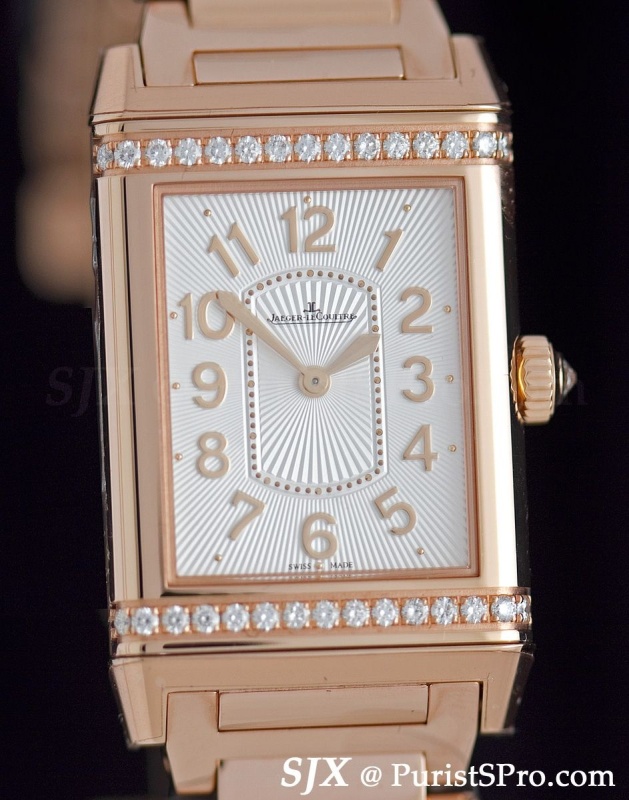
Ladies get the Grande Reverso Lady Ultra-Thin which at 12 mm high is not as slim as the men’s version but thin nevertheless. Several variants are available in gold or steel, with or without diamonds.
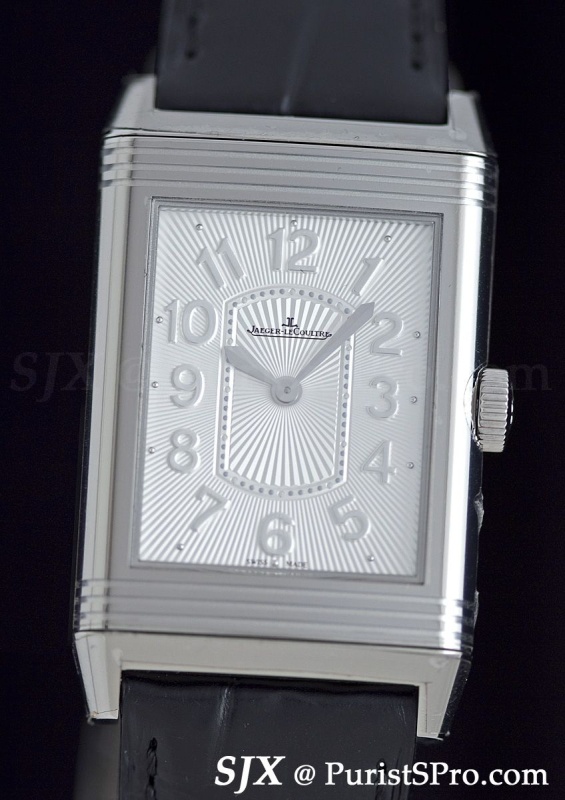
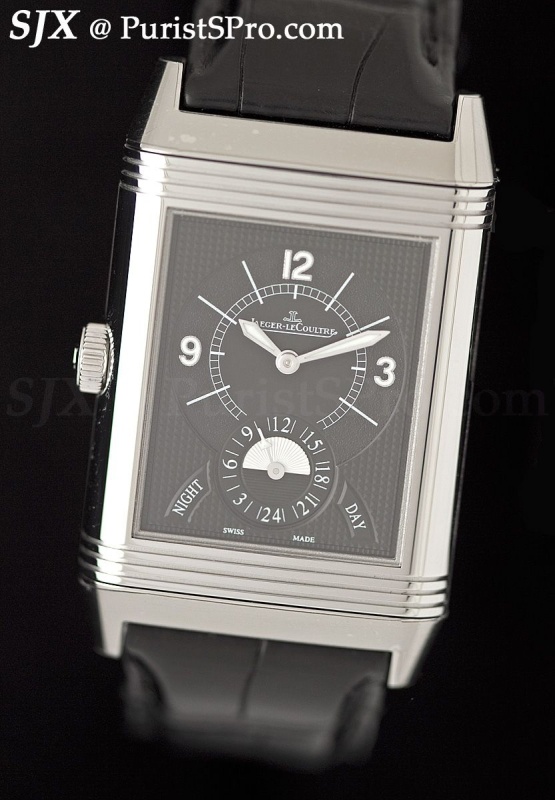
New in the Grande Reverso size is the Duo, the clever dual time zone Reverso which displays separate times on each face. This is the most obvious and practical use of the Reverso concept; silver dial on one side and black dial on the other.
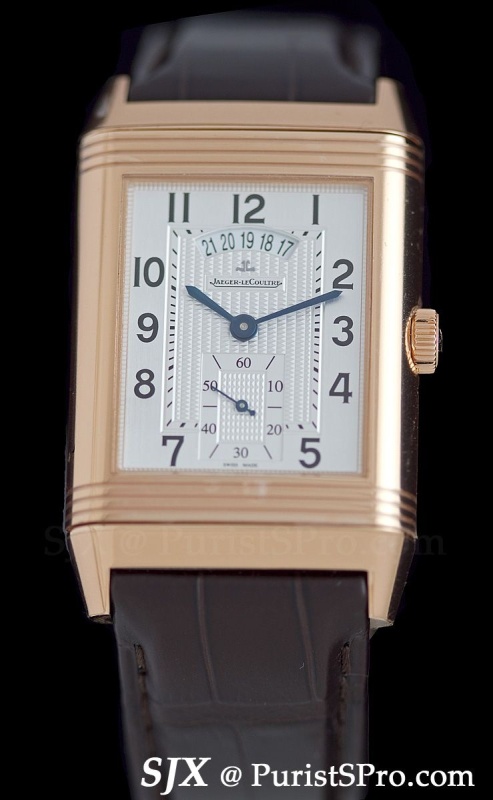
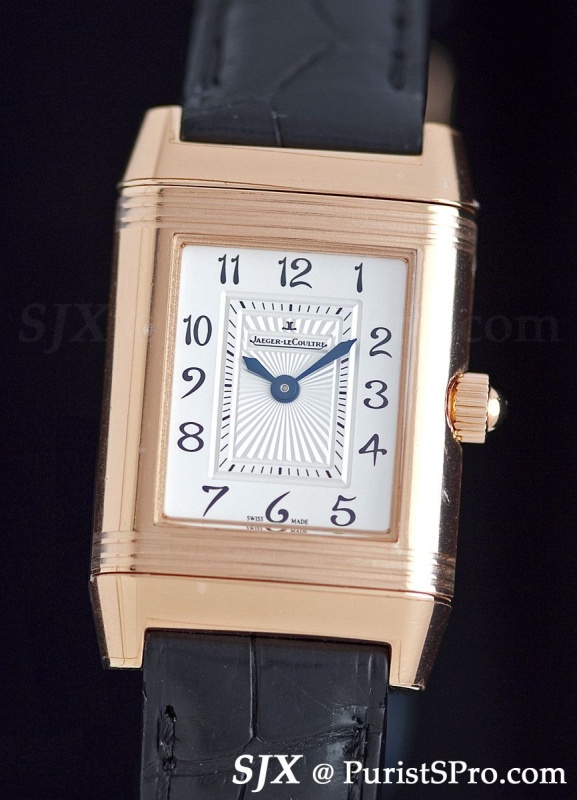
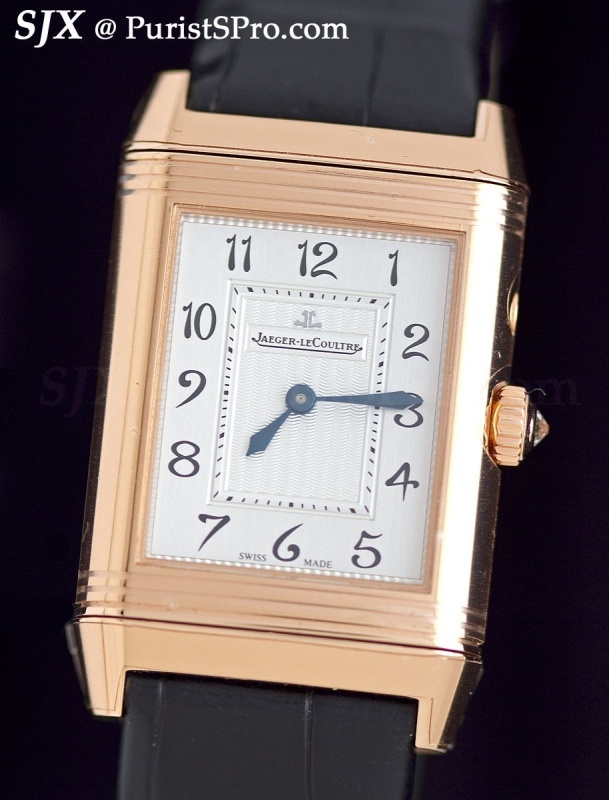
And the popular Reverso Duetto has received a facelift. With diamonds on one face and plain on the other, it offers two totally different looks. This is available only in pink gold.
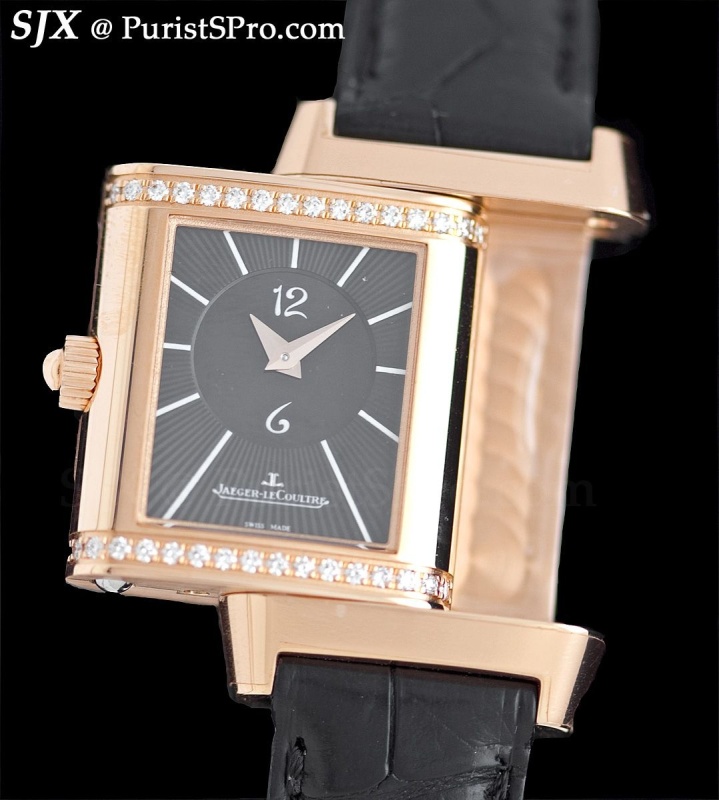
Slightly larger is the Duetto Duo, which can display two separate time zones on each face. Pink gold is also the only option for this one.
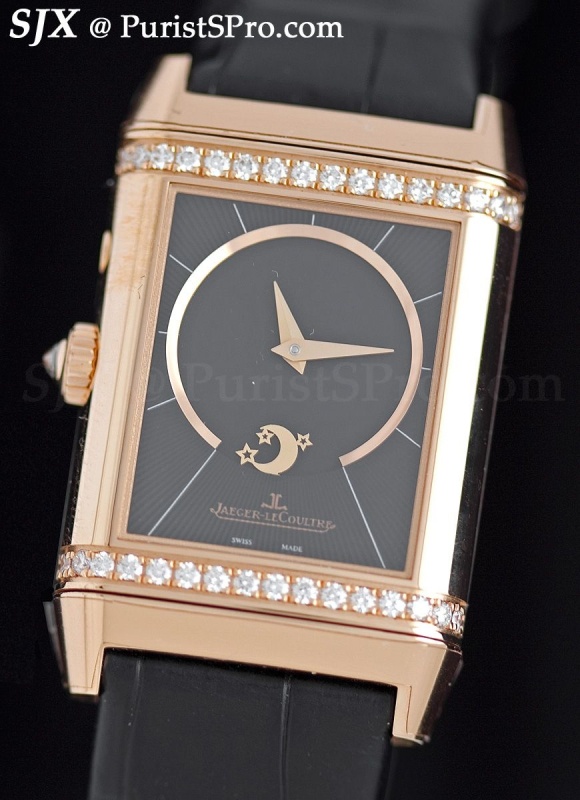
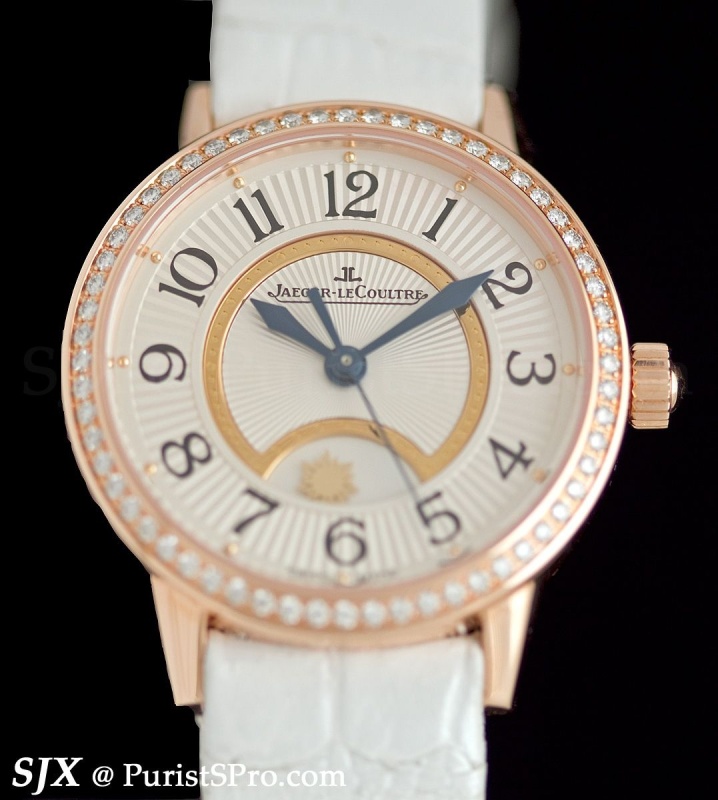
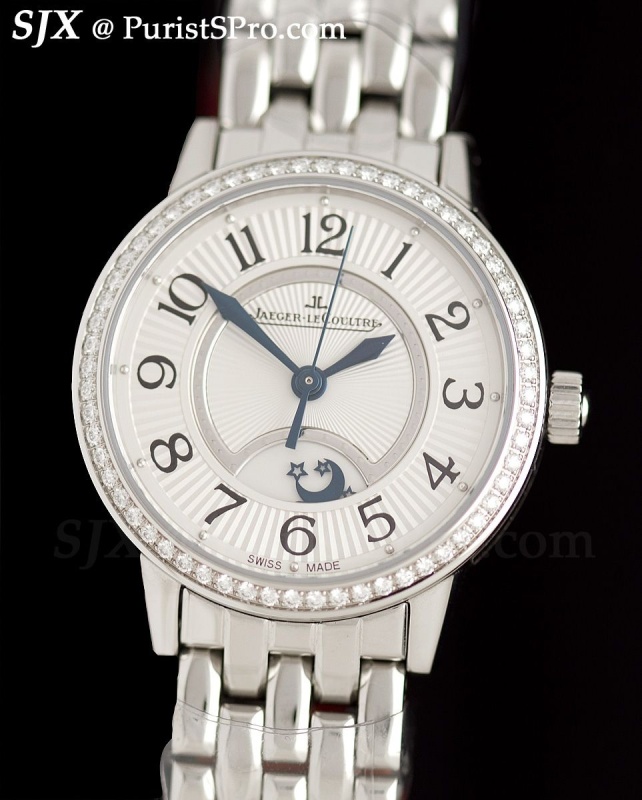
Now on to the round watches. We begin with a new ladies’ watch with night and day indicator.
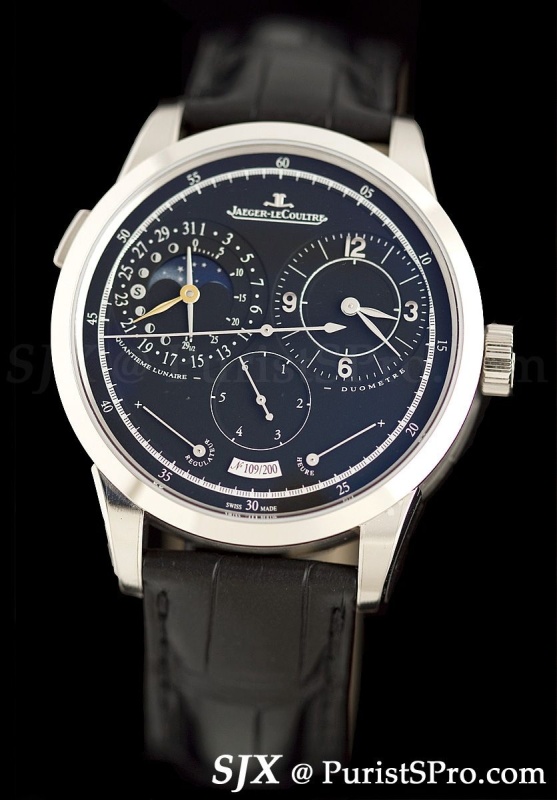
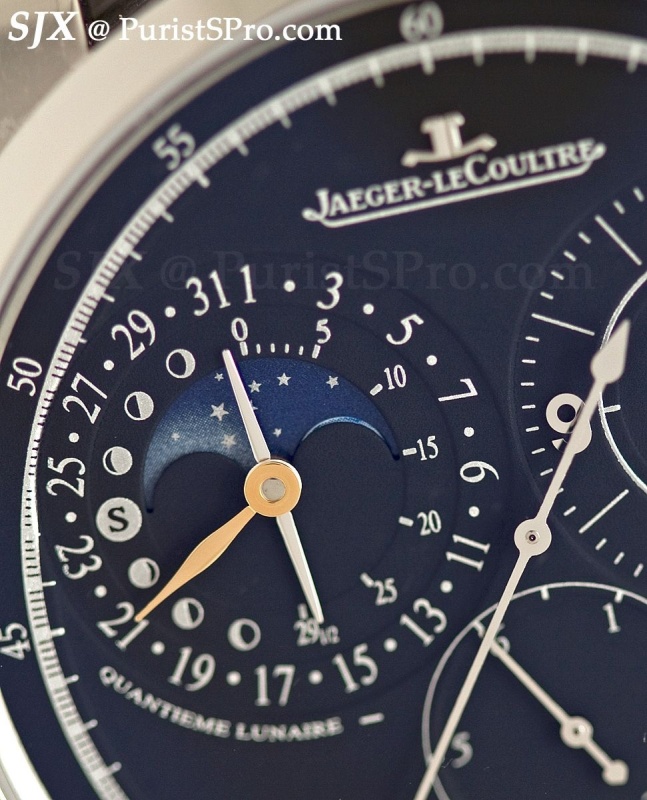
Last year’s Duomètre à Quantième Lunaire is now available in white gold with a striking charcoal dial in a limited edition of 200 pieces, just like the Duomètre a Chronographe.
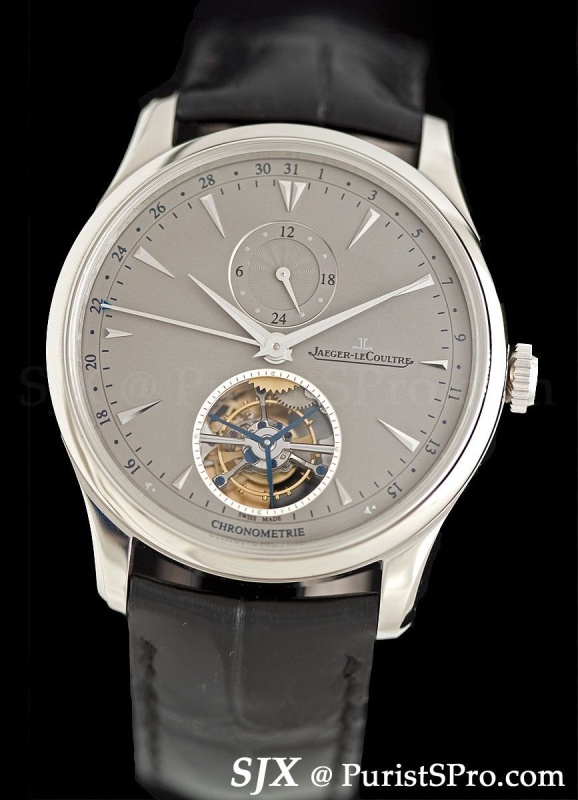
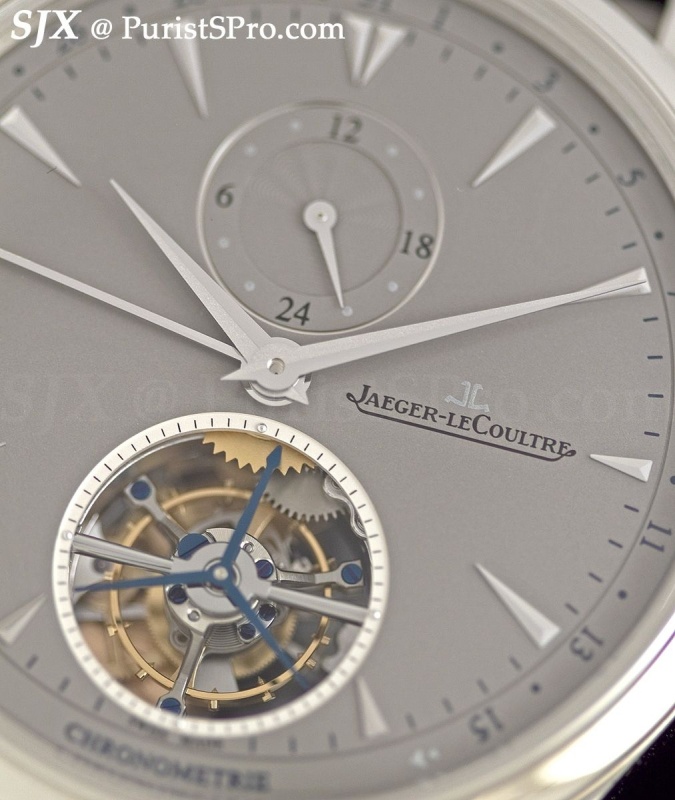
The Master Grande Tradition collection of high-end complications sees the addition of the Master Grande Tradition à Tourbillon with a 43 mm case.
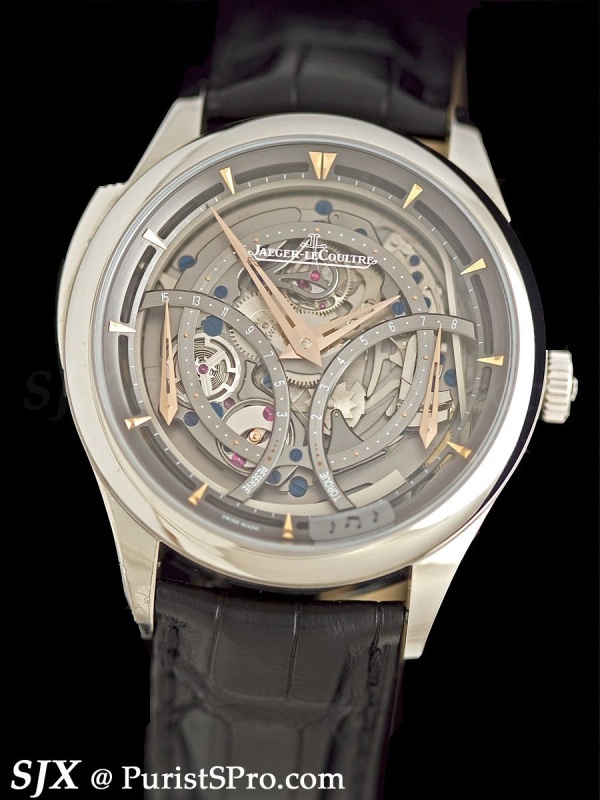
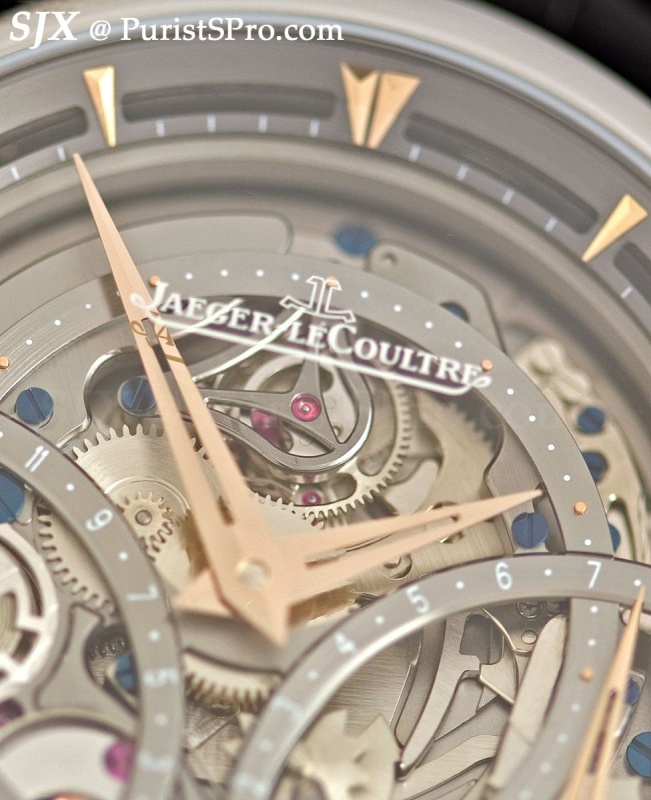
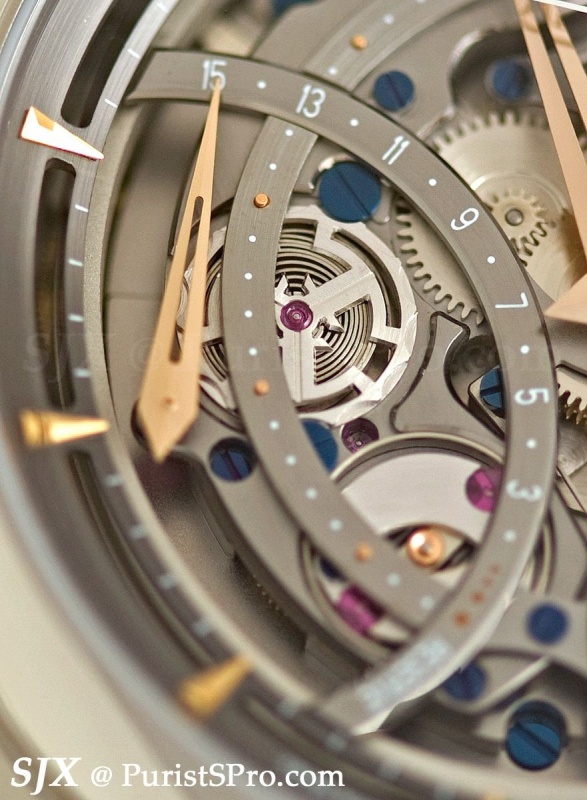
Another addition to that range is a skeleton repeater in titanium. The gold arrowhead indices and dauphine hands give this watch a very sharp look despite the roundness of the case. Like all JLC repeaters this boasts a very high decibel count though the chime could be a bit more pleasant.
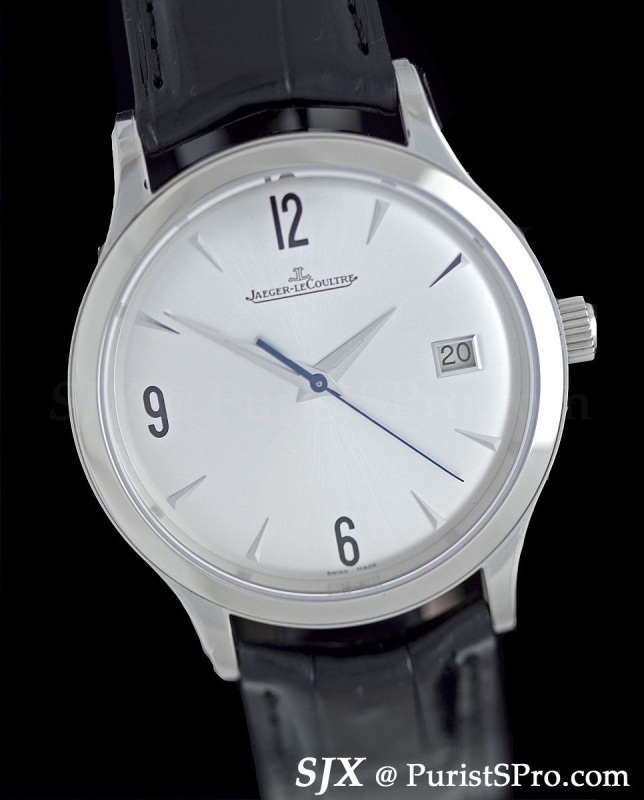
Several new additions to the Master Control range, a few of which are inspired by the original watches from the nineties like the new Master Grande Taille.
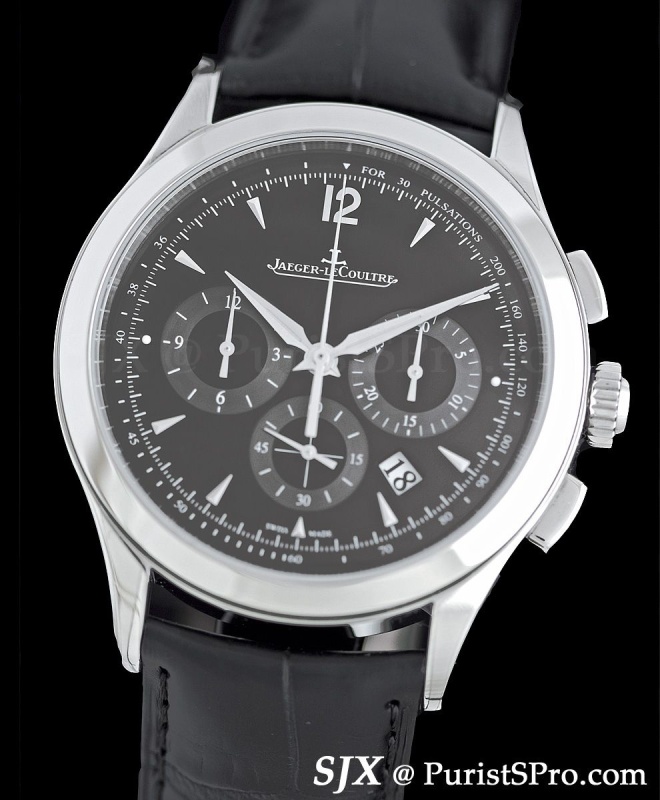
The Master chronograph launched last year is now available with a black dial in steel.
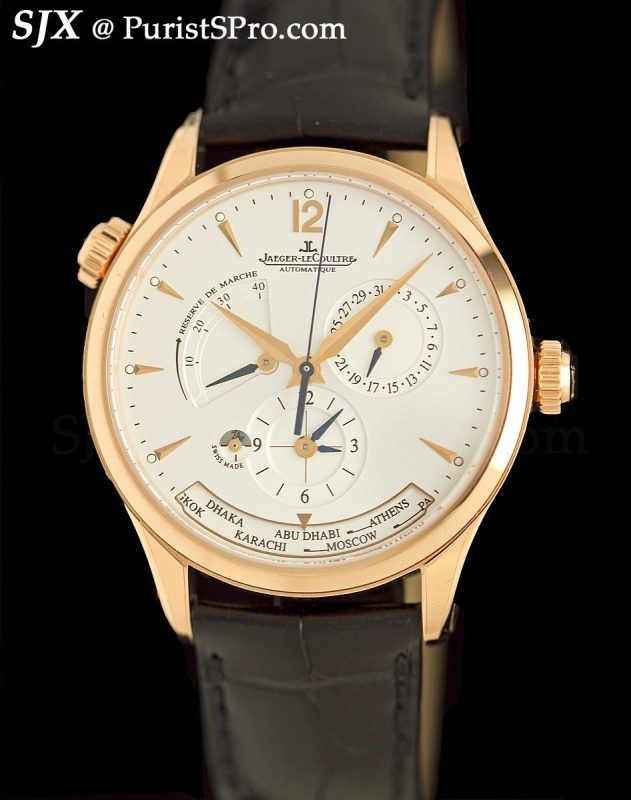
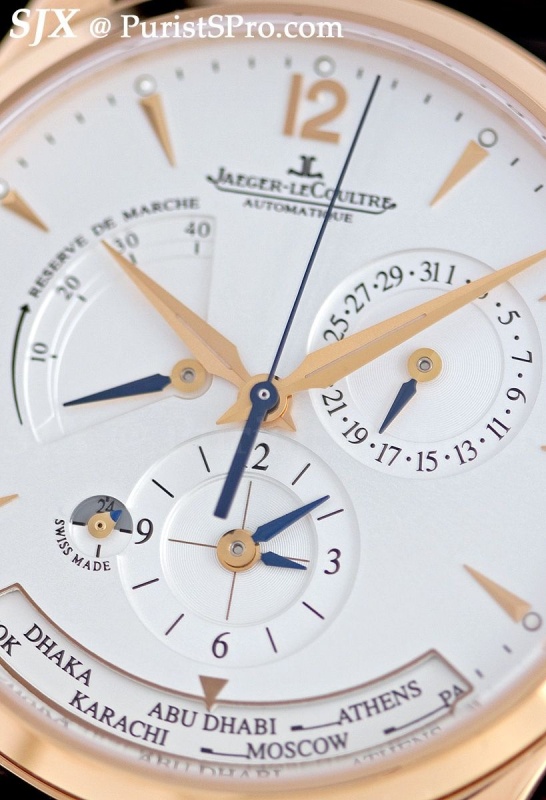
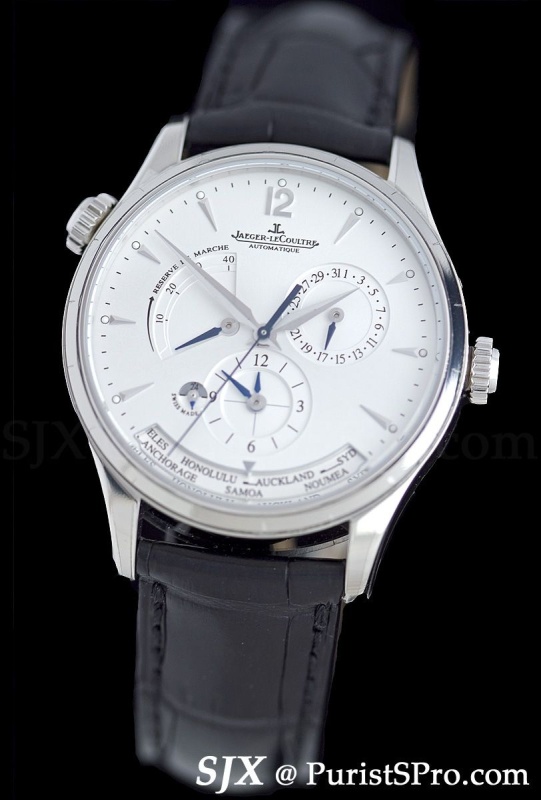
Making a return is the Master Geographique, which at one time a quintessential JLC small complication in my opinion. This is presented in a 39 mm case in steel or gold.
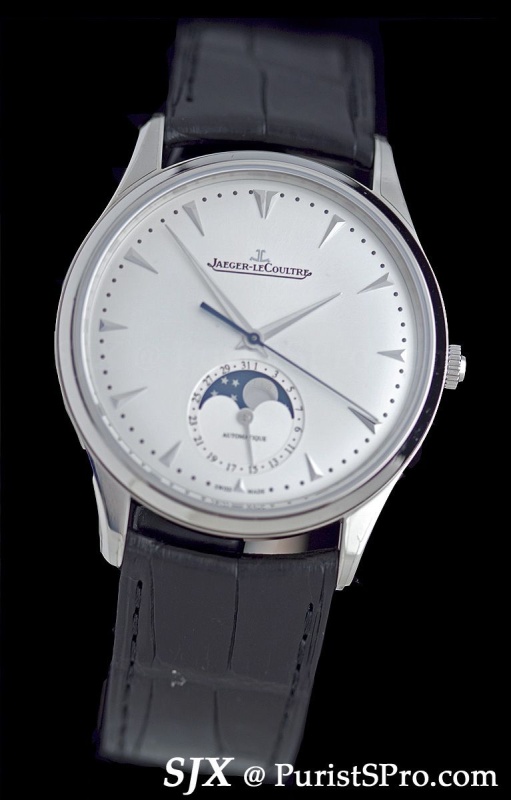
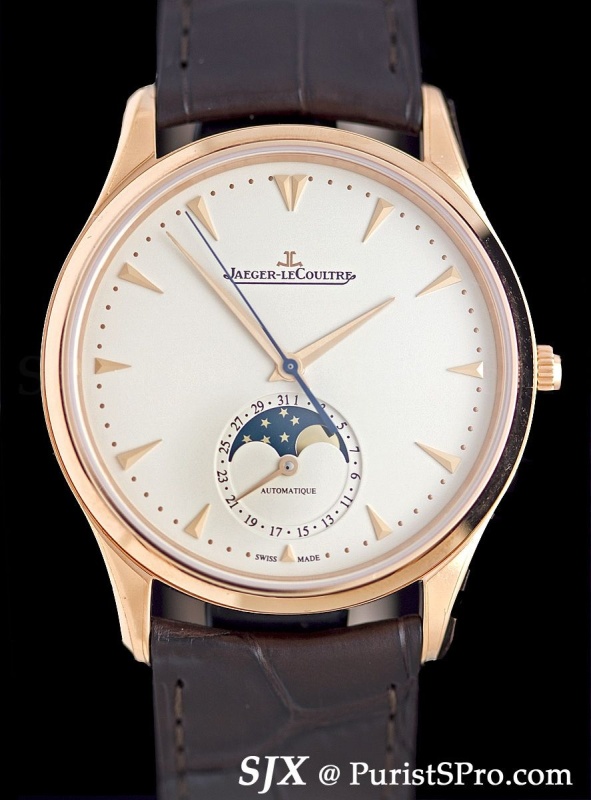
An elegant new model is the Master Ultra Thin Moon which displays the moon phase and date at six o’clock. This one is also 39 mm wide in steel or gold.
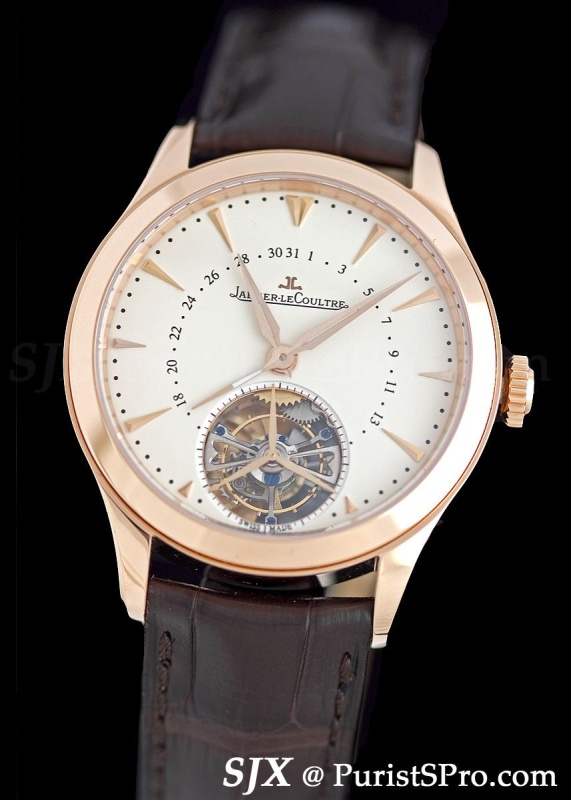
And a new Master tourbillon.
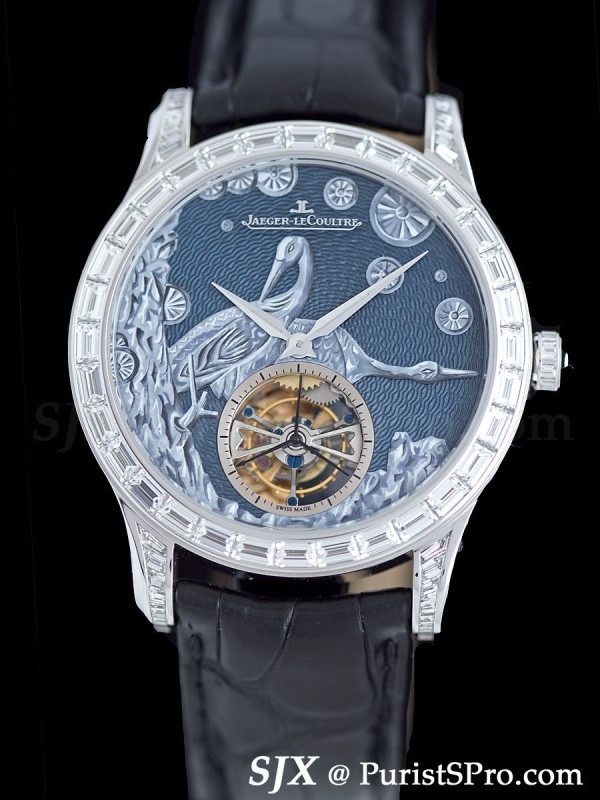
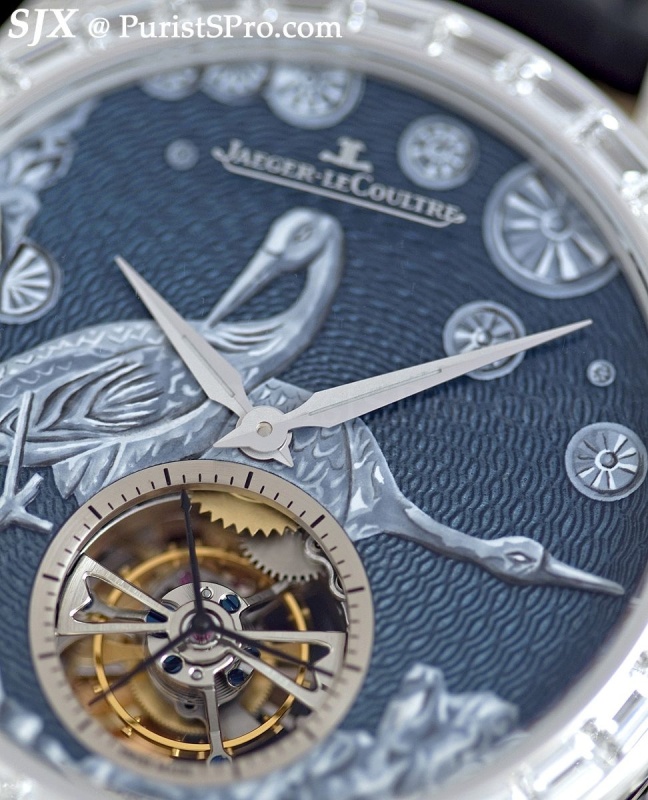
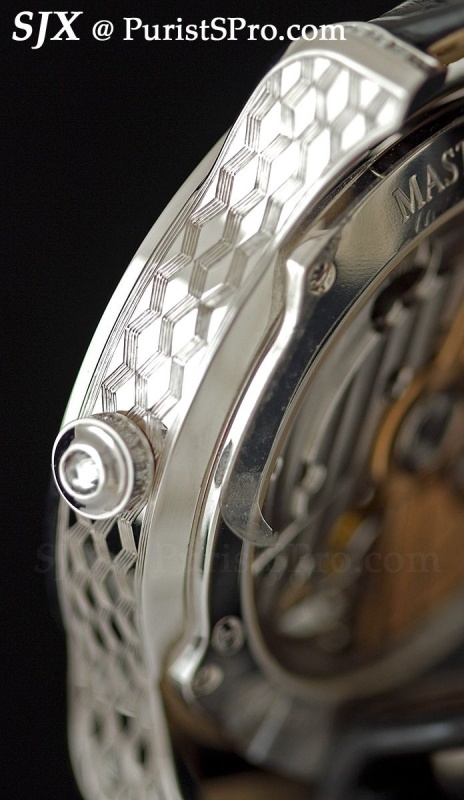
Also new for 2011 are several enamelled Master watches. A sample of one is depicted below. Notice the artful decoration on the case.
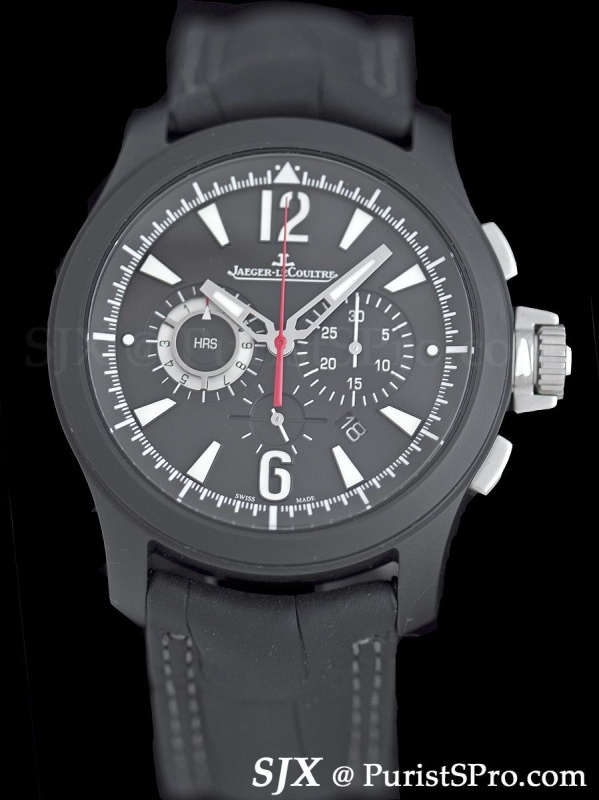
JLC also unveiled several new sports watches. The first is a Master Compressor chronograph with a ceramic case that seems slimmer than the original but I don’t have specs to compare.
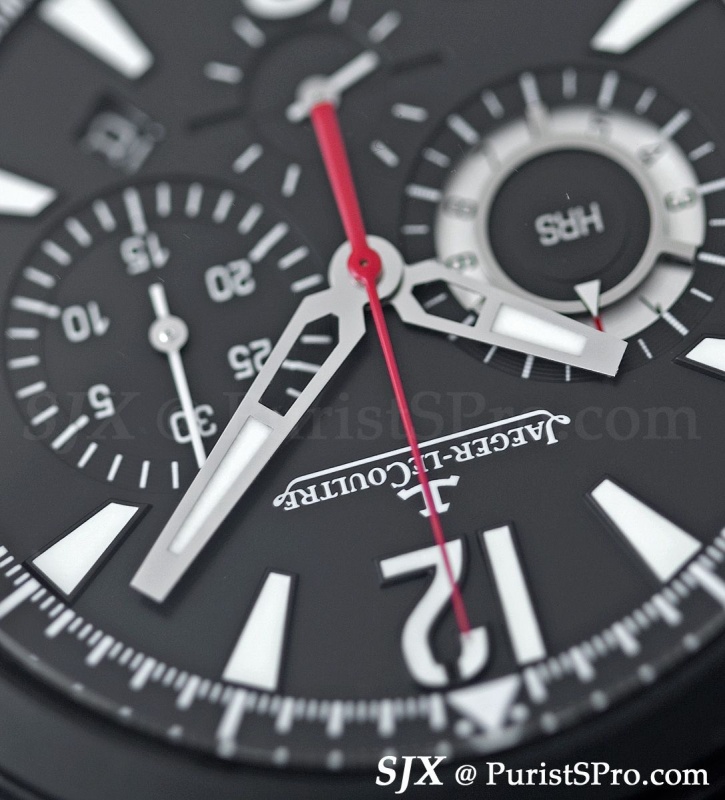
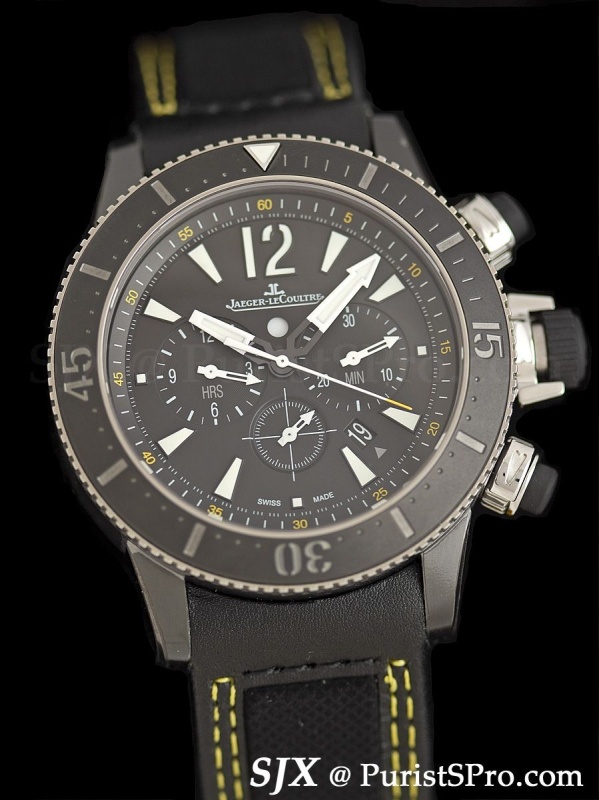
Next is a new Master Compressor Navy Seals chronograph in a black and yellow bumblebee get-up.
And of course another retro inspired highlight of the year is the pair of Memovox Tribute to Deep Sea watches. These commemorate the Memovox Deep Sea of 1959 which was the first diving wristwatch with alarm. This comes after the solid success of the Polaris re-issue of 2008.
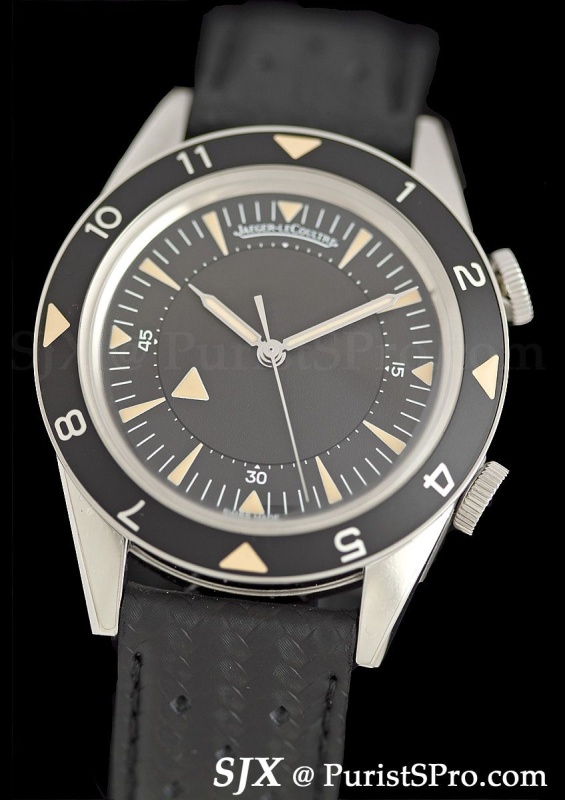
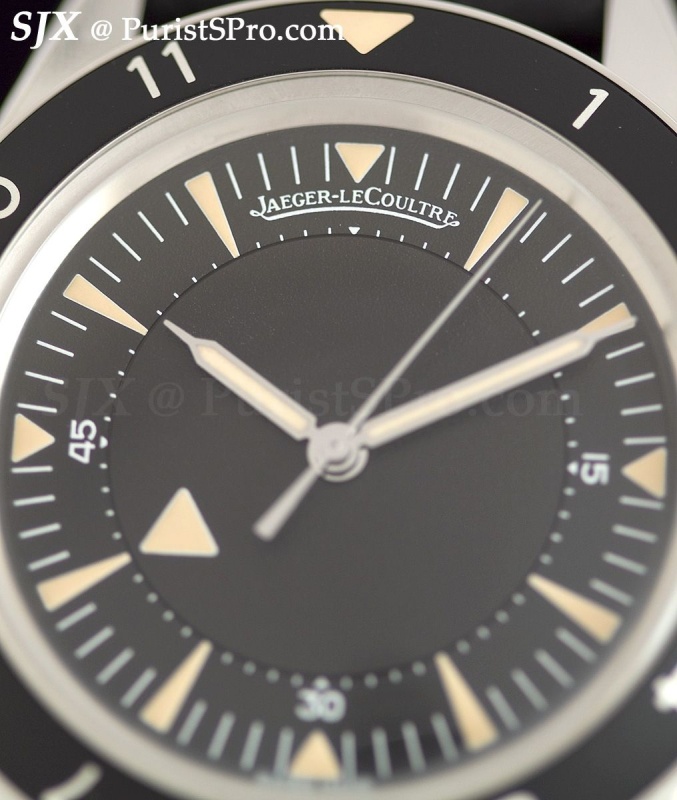
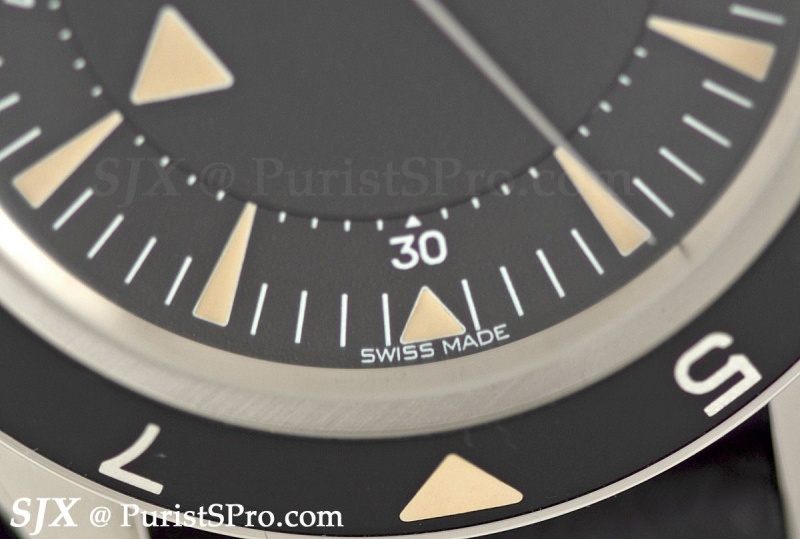
Two versions of the Deep Sea are available, the US edition signed “LeCoultre” of 359 pieces and the Europe edition with the full brand name of 959 pieces. Both are 40.5 mm in diameter, a tad larger than the originals. Initially I found the italic text on the US edition off-kilter but it is weirdly attractive; it has a quaint vintage charm. My pick is the US edition.
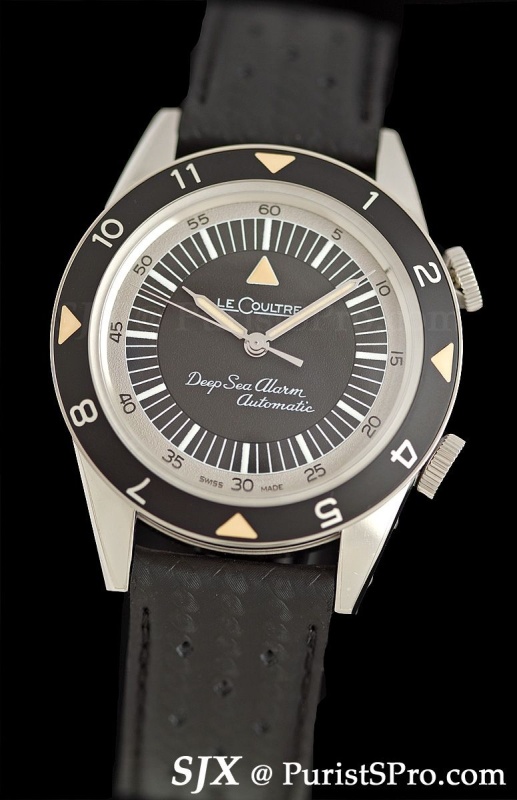
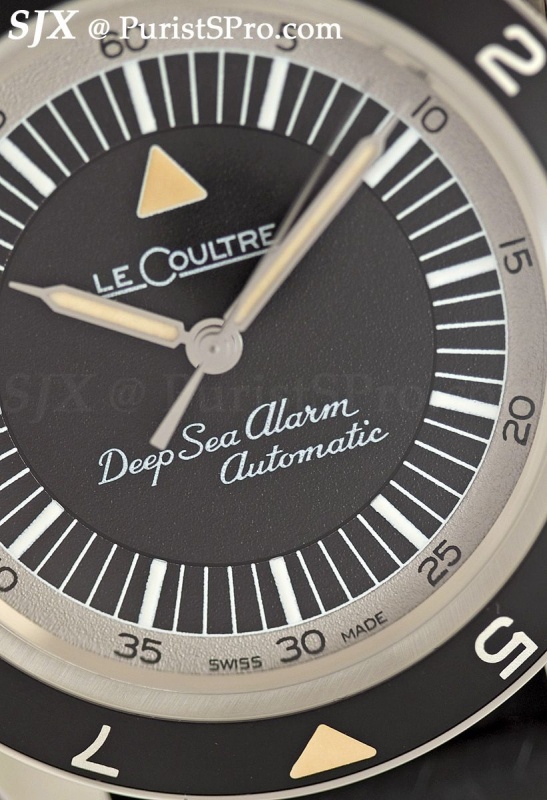
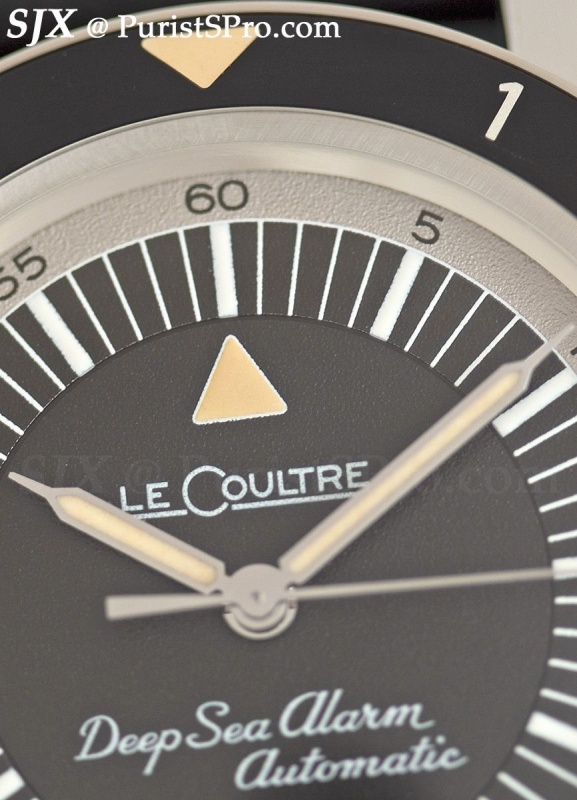
Both are convincingly vintage looking right down to the colour of the Luminova and the texture of the dial. JLC has also smartly paired them with appropriate Tropic-style straps which I wonder who manufactures now.
- SJX
This message has been edited by SJX on 2011-01-30 08:02:27 This message has been edited by AnthonyTsai on 2011-01-30 16:18:34
Not faux antique luminova, on the TT 1931 RG, SJX.
The dial is not glowing at all.
It is not luminous, but paint.
Best,
Nicolas.

Ha! ANother MR in Titanium!
Now this looks like a contender for a space in my watch case!
We'll have to see!
Cheers
Stephen
Great Report
*** MB&F ***
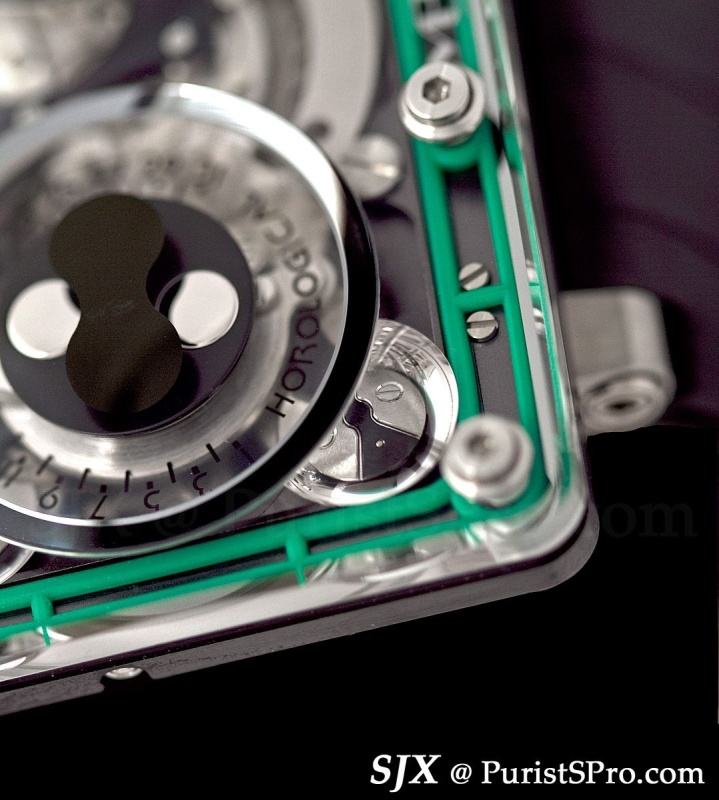
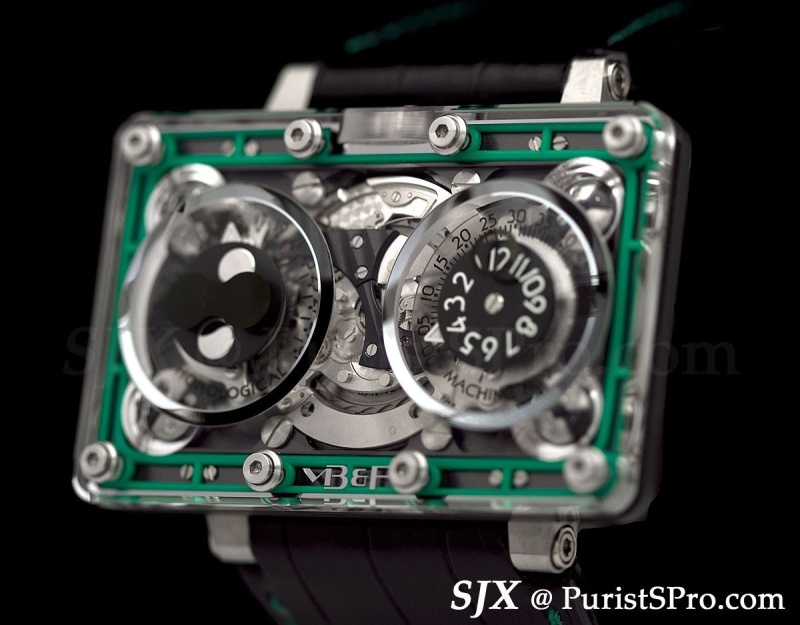
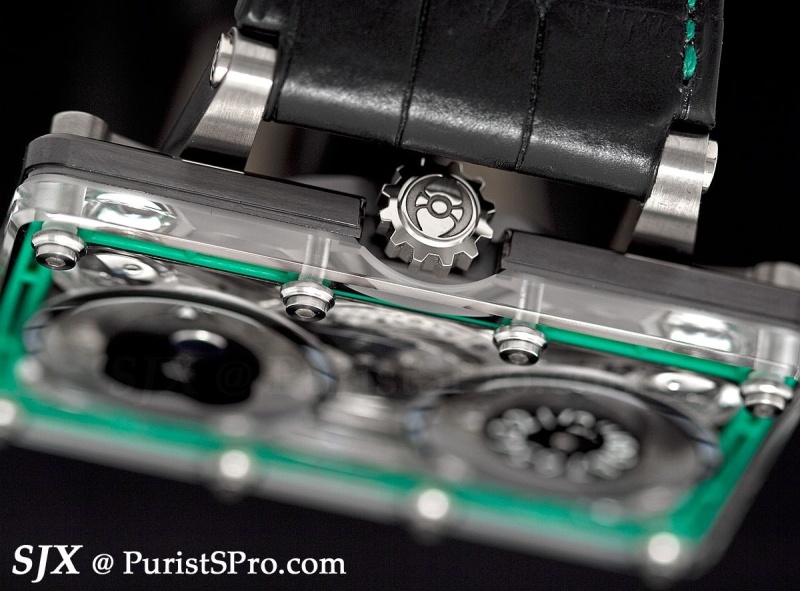
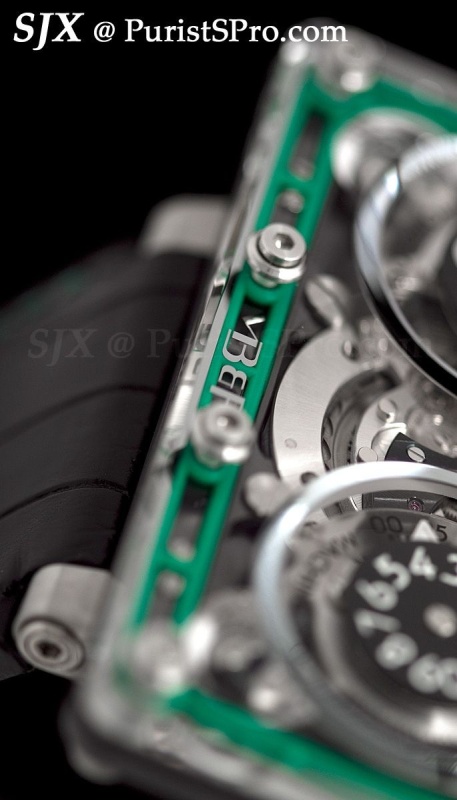
MB&F presented the final editions of the HM2, 18 pieces each of the red and black SV (‘Sapphire Vision’). Both have sapphire top plates, while the case back of the red SV is rose gold while the black SV is PVD coated titanium.
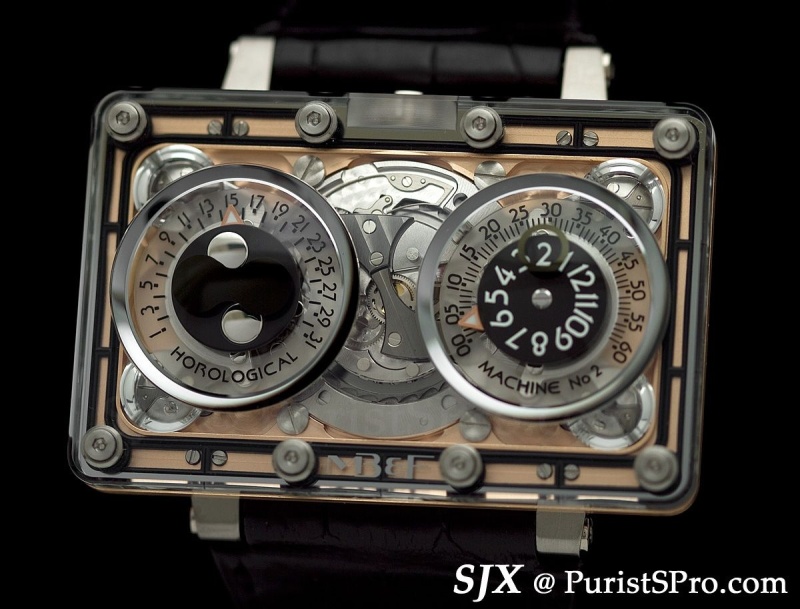
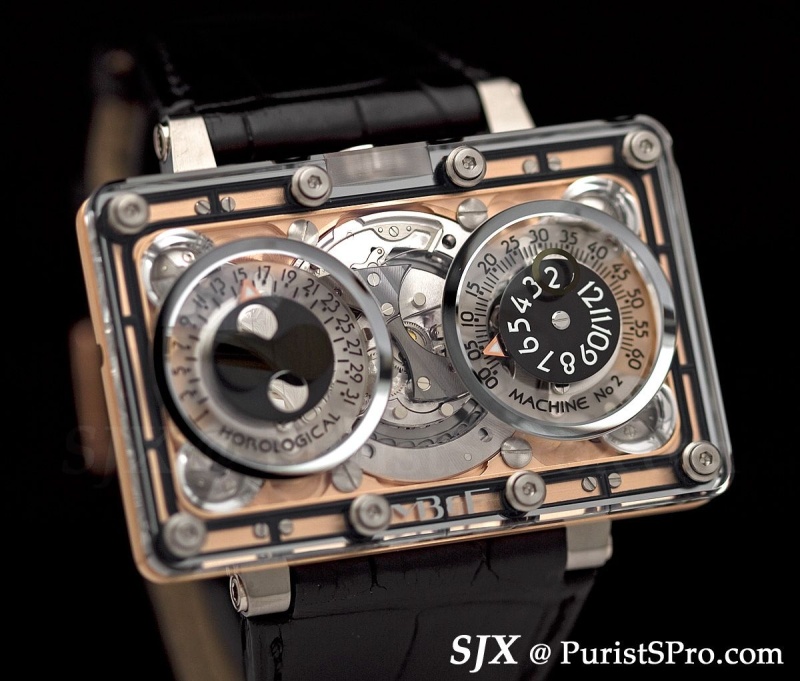
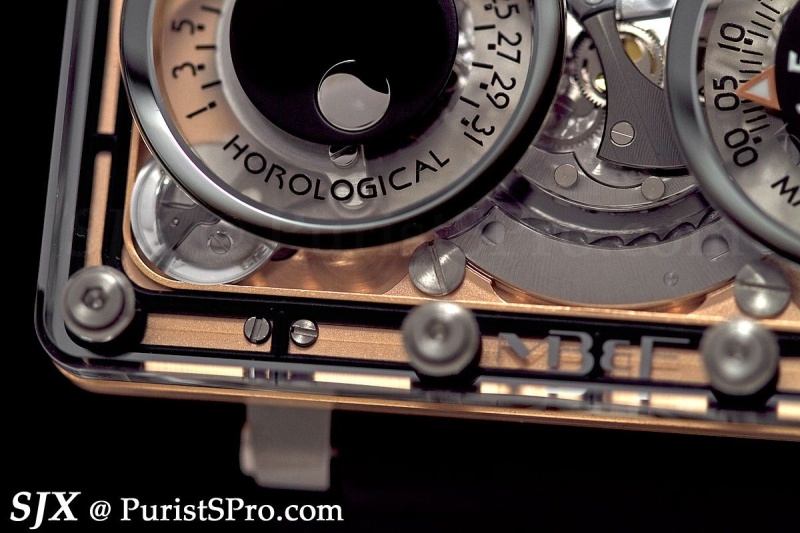
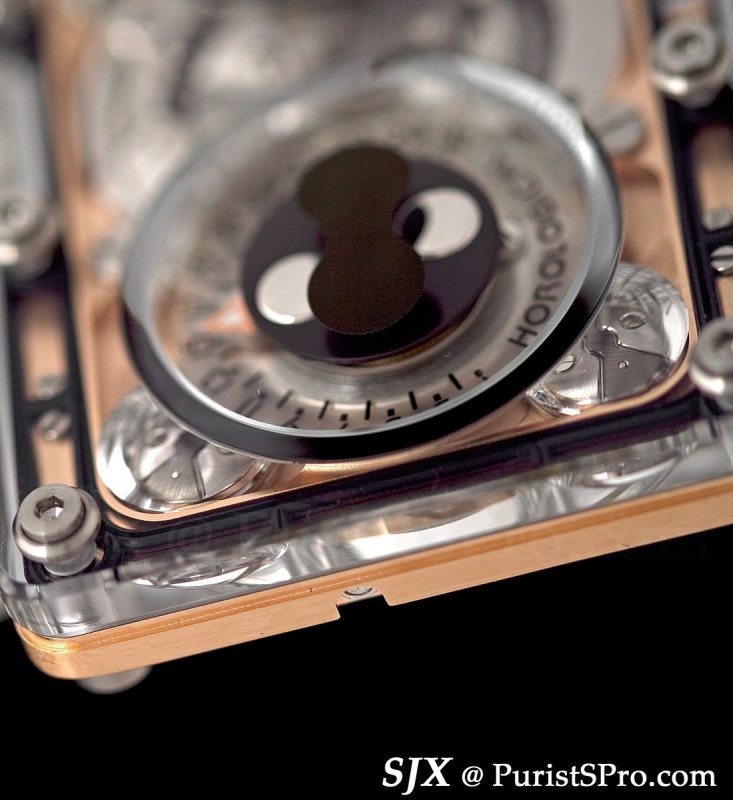
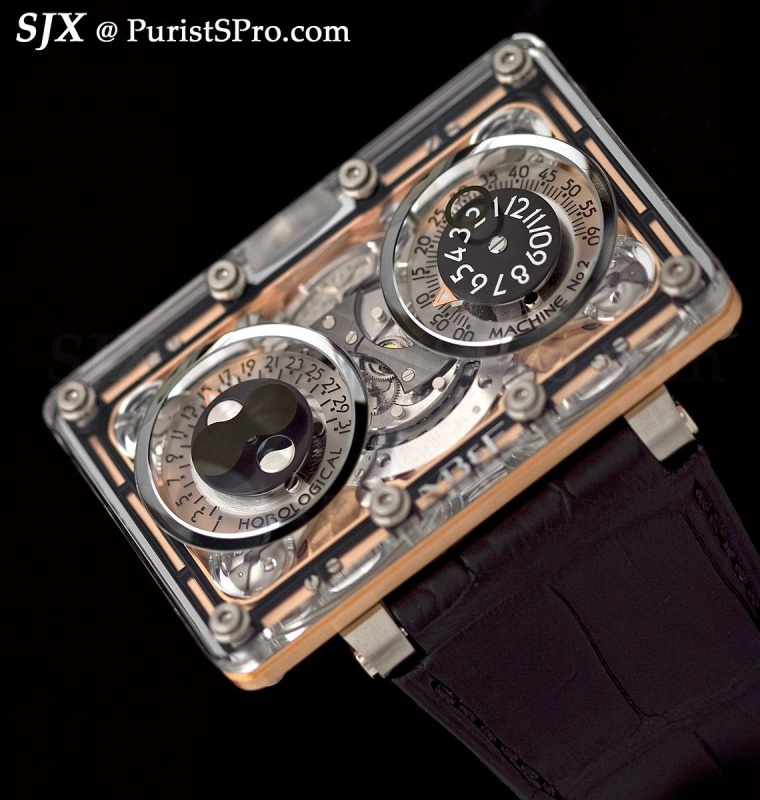
When I first saw images I had thought the red SV would be my pick of the pair, but in the metal the black SV is much more striking; the red SV somehow lacks punch. Though similar in colour to the HM3 Frog, the black SV is more serious looking than the Frog because of its shape and mechanical appearance.
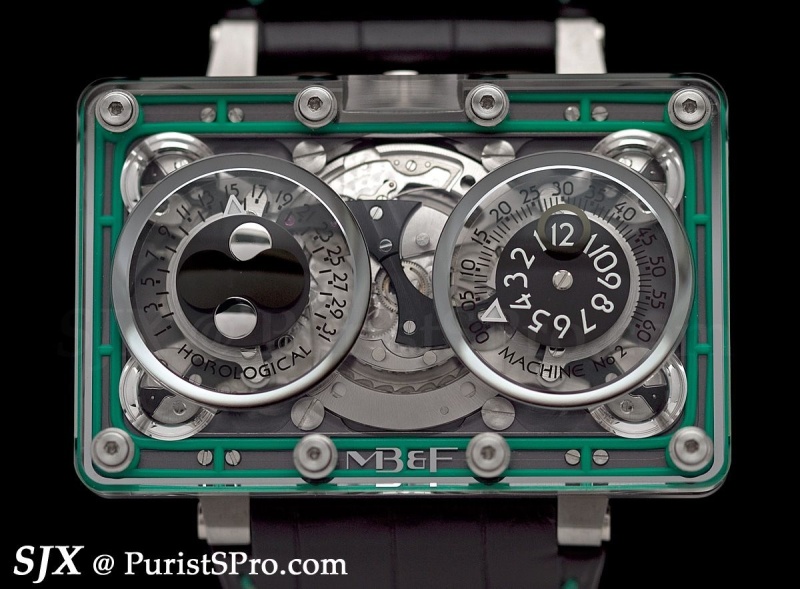
The rest of the year will see the unveiling of more variants of the HM3, the HM5 and a piece unique for Only Watch.
- SJX
This message has been edited by SJX on 2011-01-30 08:07:44 This message has been edited by AnthonyTsai on 2011-01-30 16:19:41
*** SIHH 2011: Montblanc ***
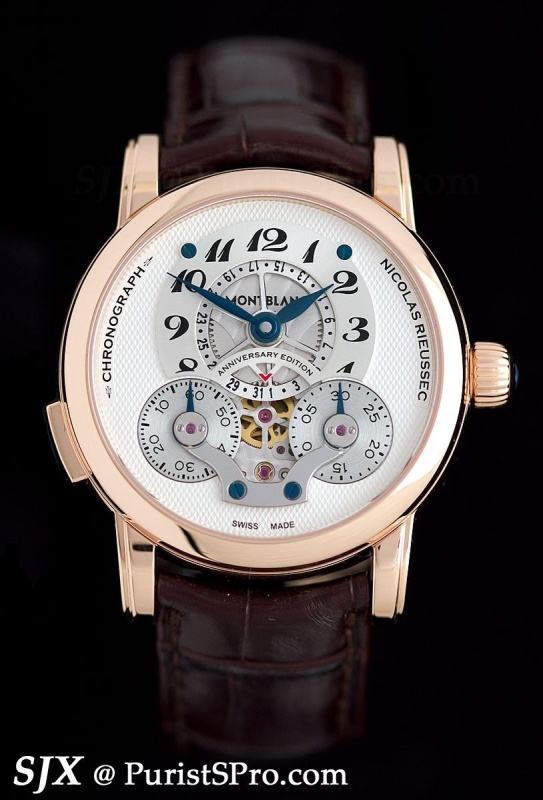
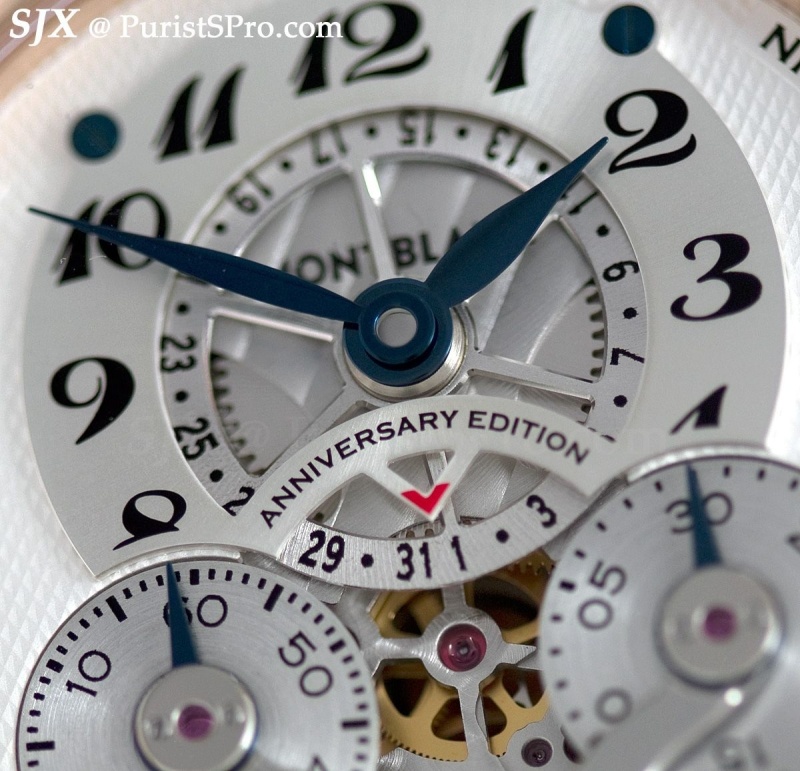
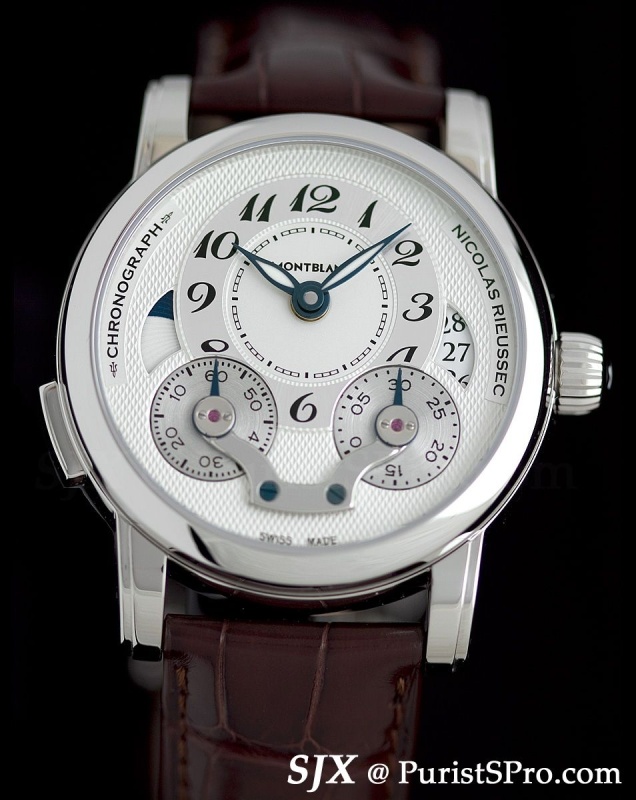
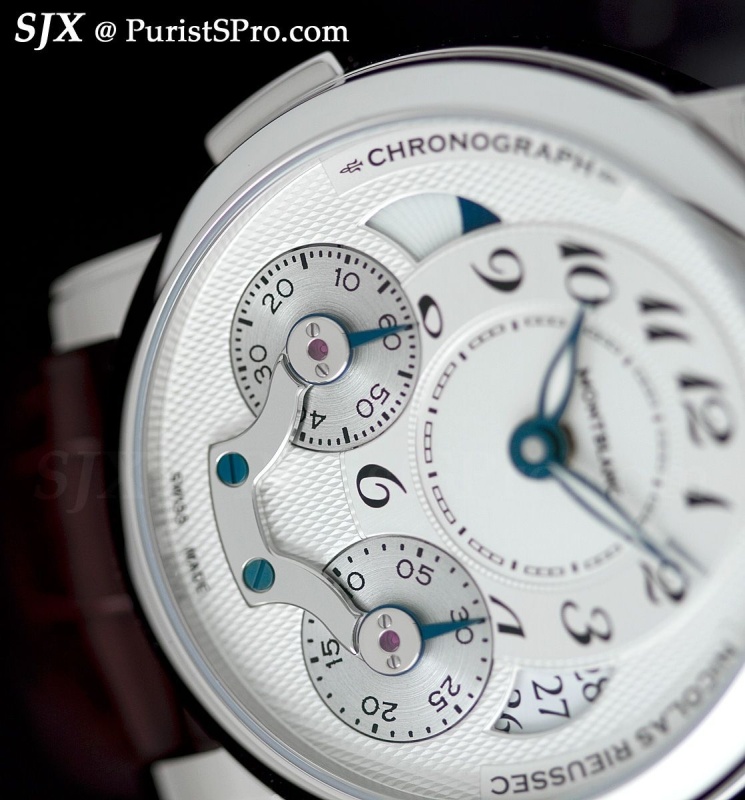
Montblanc grew its key model lines incrementally this year, starting with the Rieussec. 2011 is the 190th anniversary of Rieussec’s first stop watch, so naturally an anniversary Rieussec is mandatory. Available in platinum, rose or white gold, the Rieussec Anniversary Edition features the manual-wind Montblanc MB R110 calibre with a partially openworked dial decorated with barleycorn guilloche.
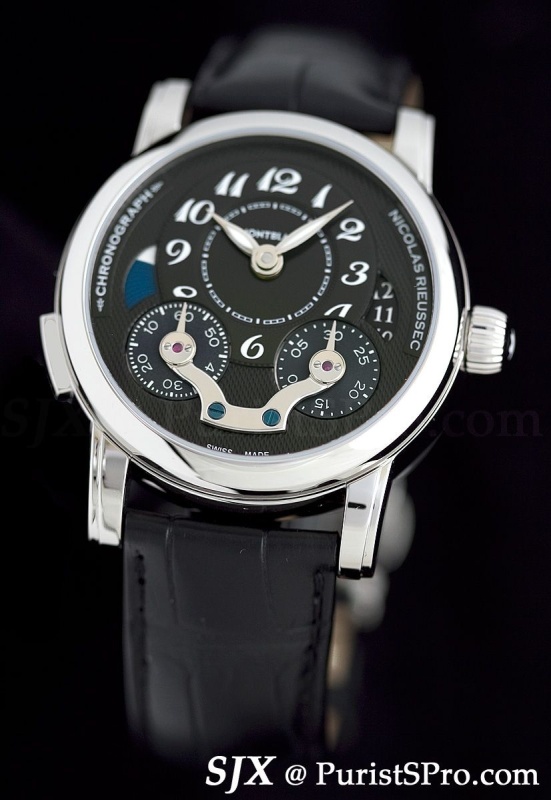
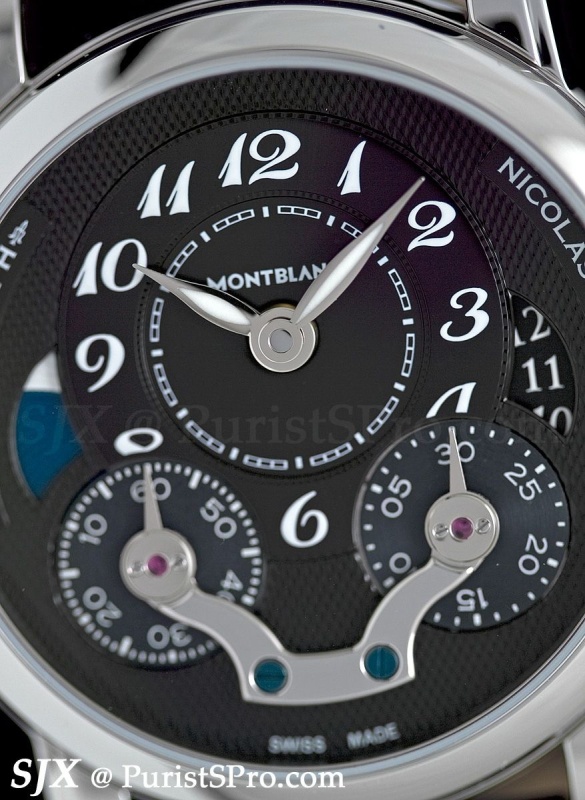
The barleycorn guilloche decoration is also found on the latest variant of the Rieussec chronograph that contains the automatic MB R200 calibre. Presented with a white or black dial in stainless steel, this version of the Rieussec is the best looking yet. The dial is cleaner than before; this new dial works best with the exposed bridge of the chronograph me thinks.
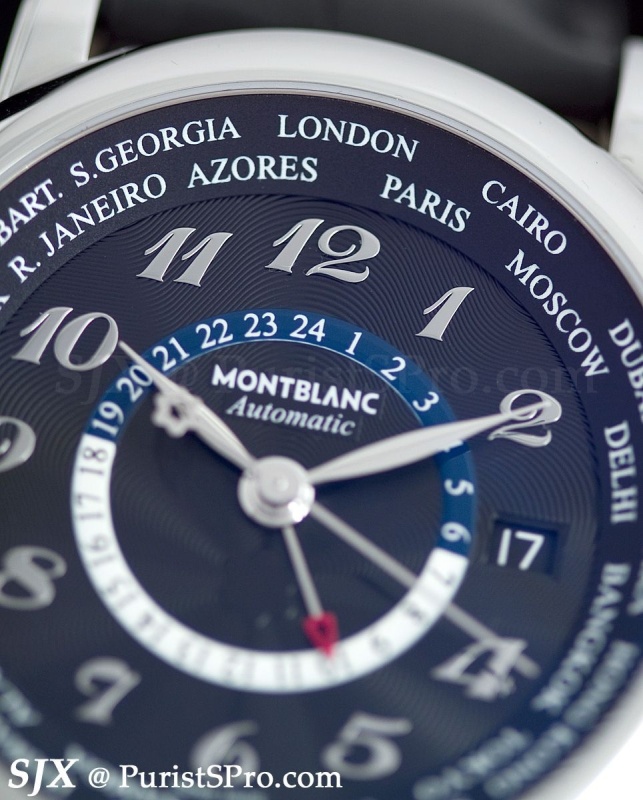
Though aesthetically related to the Rieussec, the Star collection is entry level and uses ETA movements. Two entirely new models were added, the first being the World-Time GMT Automatic. I find the design of this watch badly thought out – there are different fonts for the world time ring, numerals, date and text. Along with the Montblanc star guilloche dial, the result is an inexpensive looking watch.

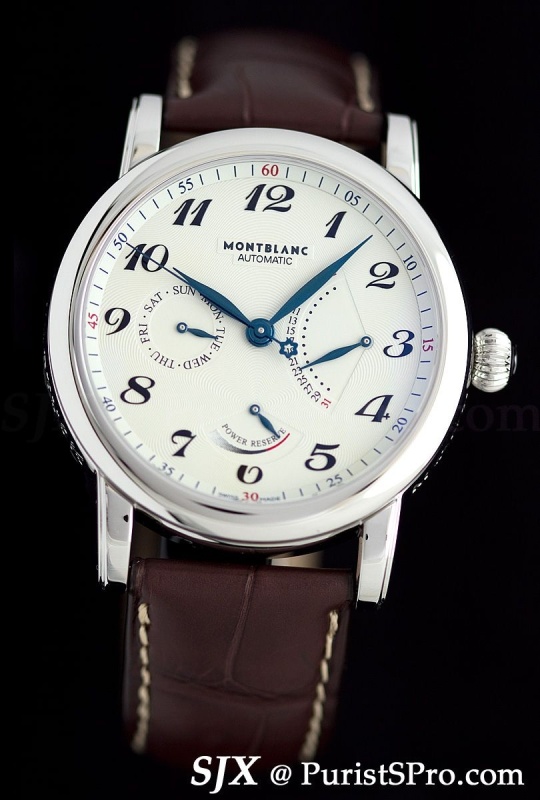
The second new model suffers from the same aesthetic malaise in my opinion. It is an automatic with day and retrograde date.
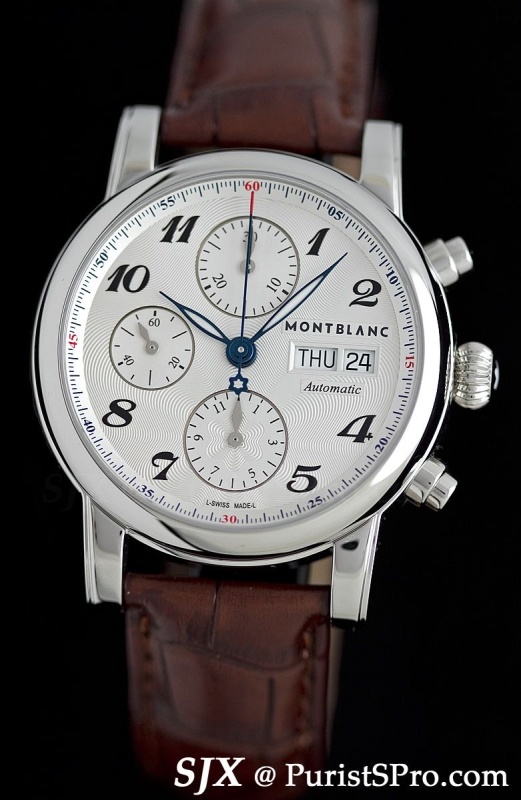
Not entirely new, but better looking in my opinion, is the new look Star chronograph.
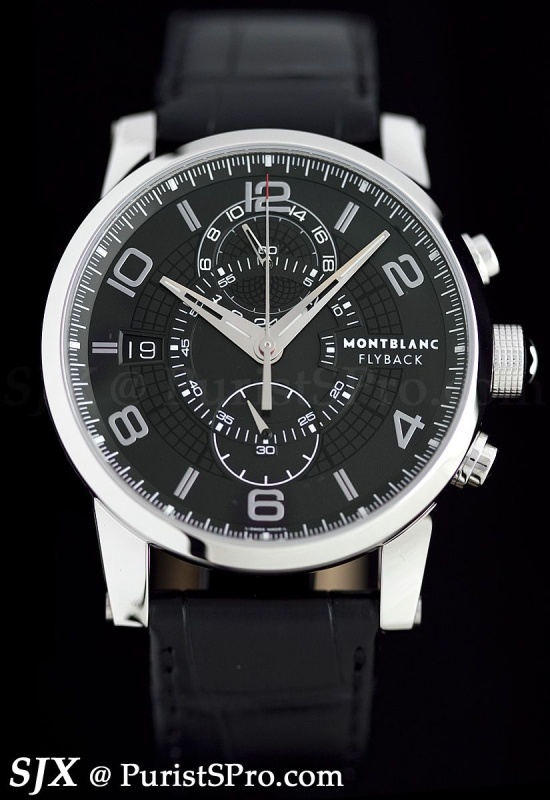
Fortunately aesthetics take a turn for the better in the Timewalker line which is Montblanc’s best looking and most distinctive range of accessibly priced watches. The new flagship of the Timewalker line, the TwinFly chronograph, contains the notable new in-house MB LL100 calibre.
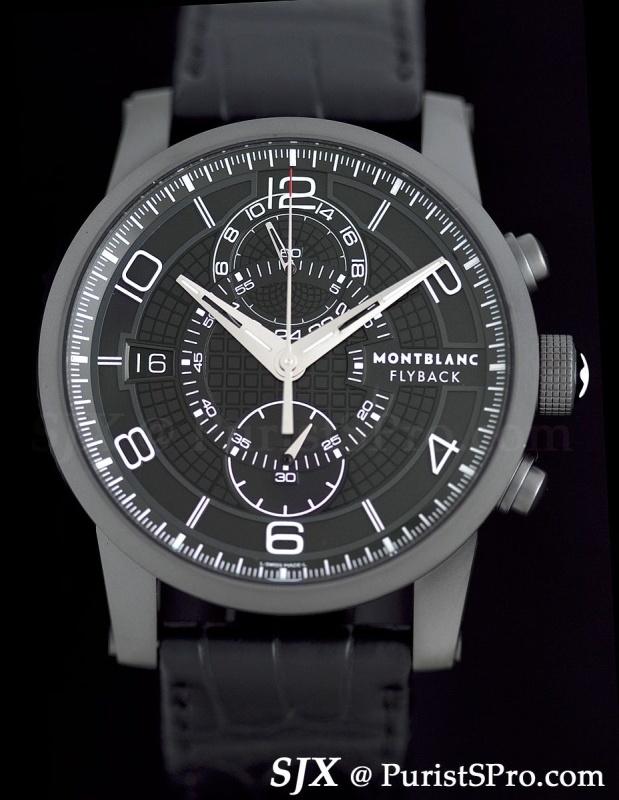
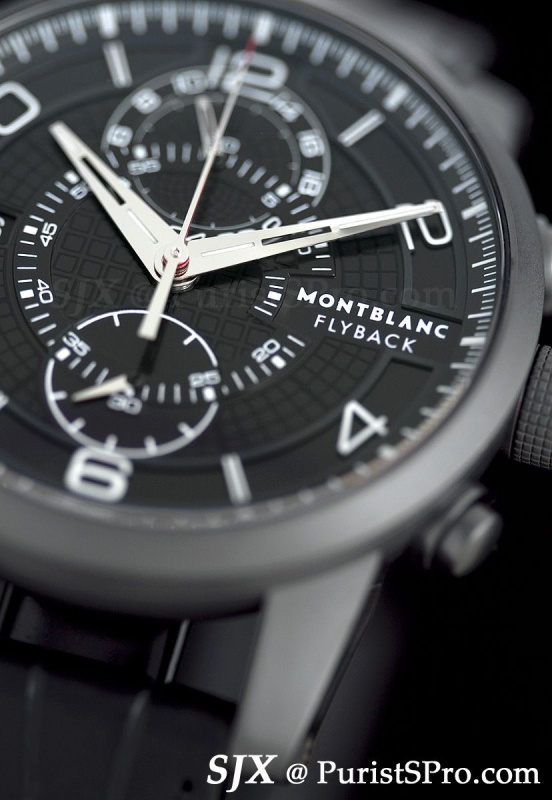
The new in-house calibre is interesting: column wheel, vertical clutch and self winding with double barrels providing 72 hours of power reserve. It also features a second time zone indicator and an unobtrusive date at nine o’clock.
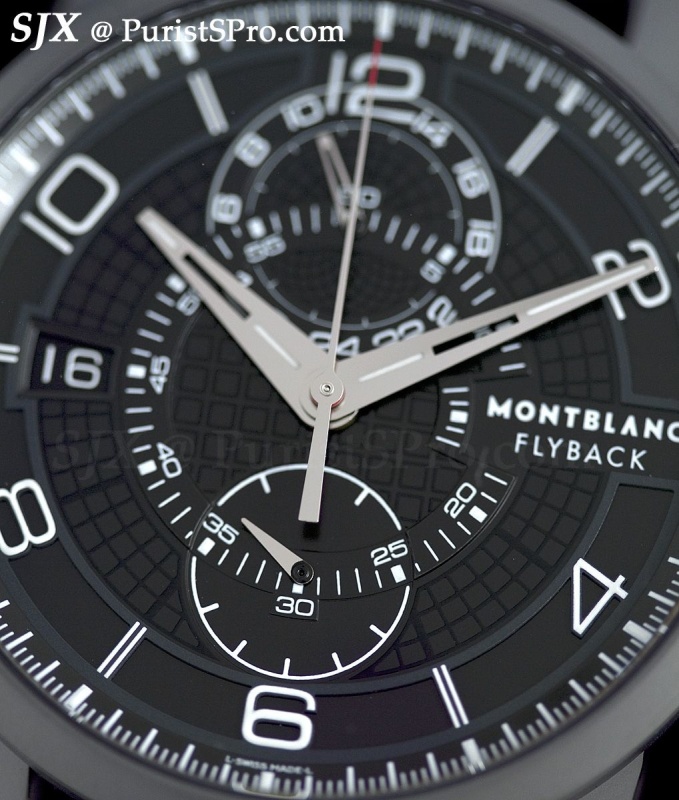
Echoing the crown is the cube motif guilloche on the dial. This gets high marks for its design, fit and finish. The TwinFly chronograph is available in a limited edition of 300 pieces in black DLC coated titanium or as regular production in steel.
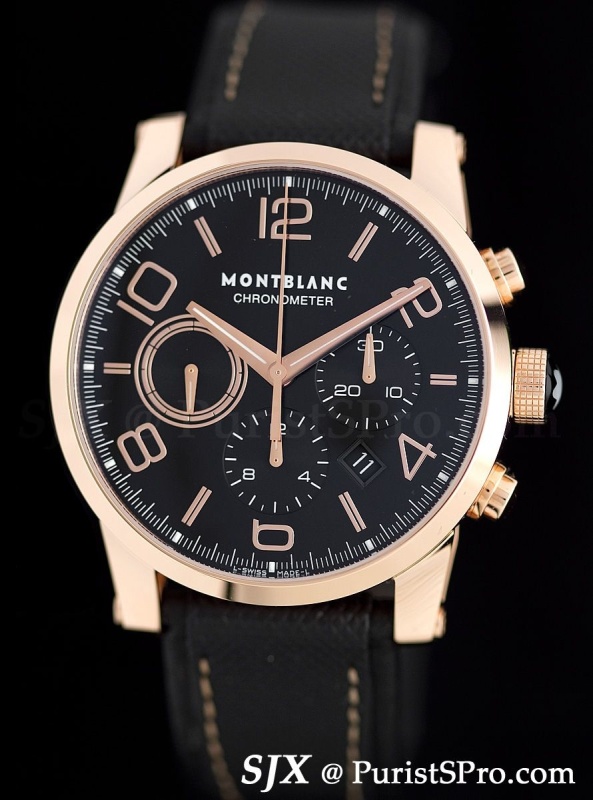
Also new to the Timewalker range are redesigned current models. The first is the Red Gold “Black” Chronograph, a rose gold chronograph with, you guessed it, a black dial. The primary change is the gold-ringed seconds subdial.
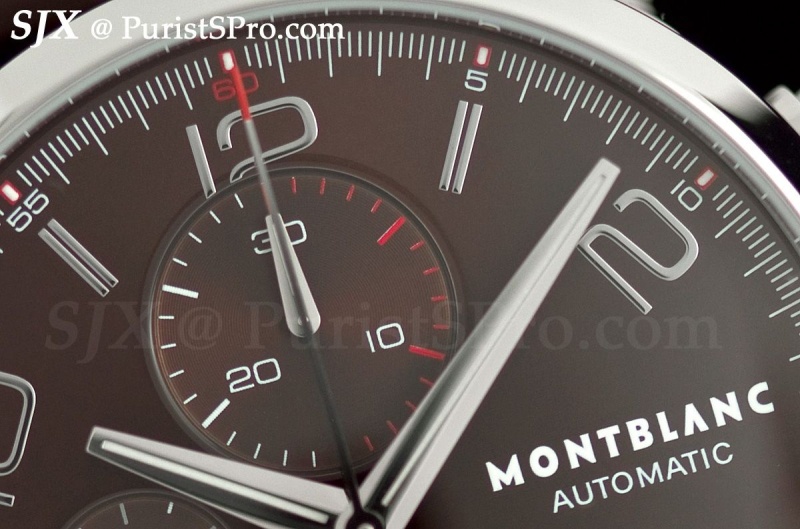
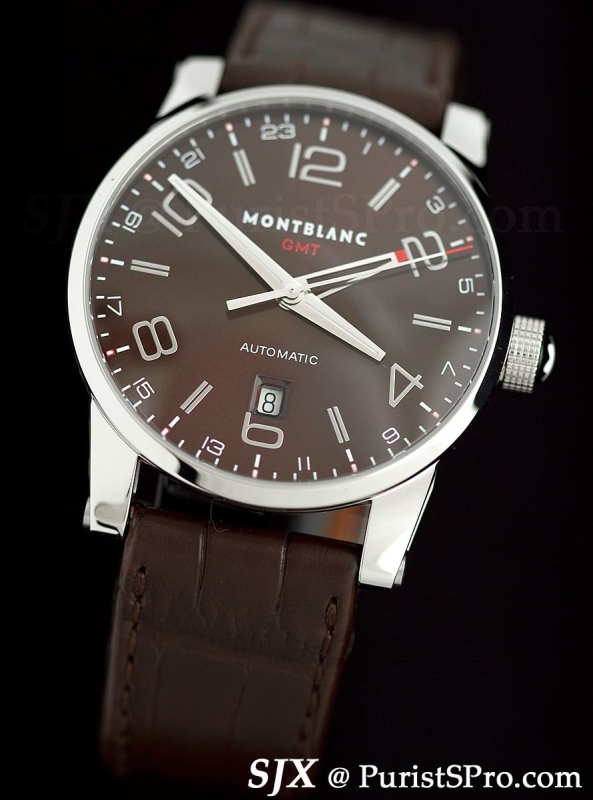
Also new is the Club Brown, a chronograph and a GMT automatic with brown dials. While these are not bad looking watches I don’t know if brown will ever really catch on.

At the very top end Montblanc continues to grown the Villeret 1858 collection in unexpected directions. The major new complication for 2011 is the Tourbillon Bi-Cylindrique. Based on the Heures Mysterieuse tourbillon, its name refers to the cylindrical double hairspring of the tourbillon. Like the Exotourbillon of 2010 this is yet another noteworthy thought out of the box.
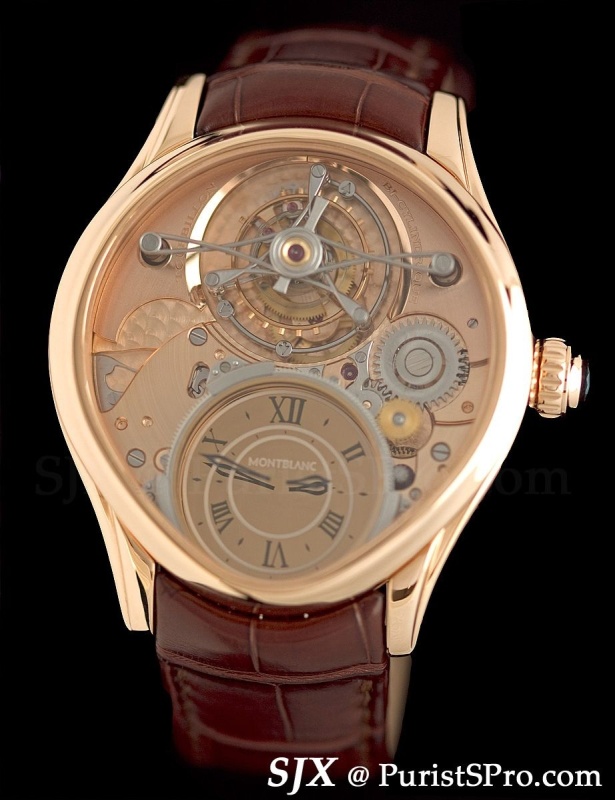
Like marine chronometers of old and the JLC Gyrotourbillon 2, the Tourbillon Bi-Cylindrique uses cylindrical hairsprings, but the Montblanc has a pair of them, one inside the other. Montblanc naturally makes these hairsprings in-house at Villeret.
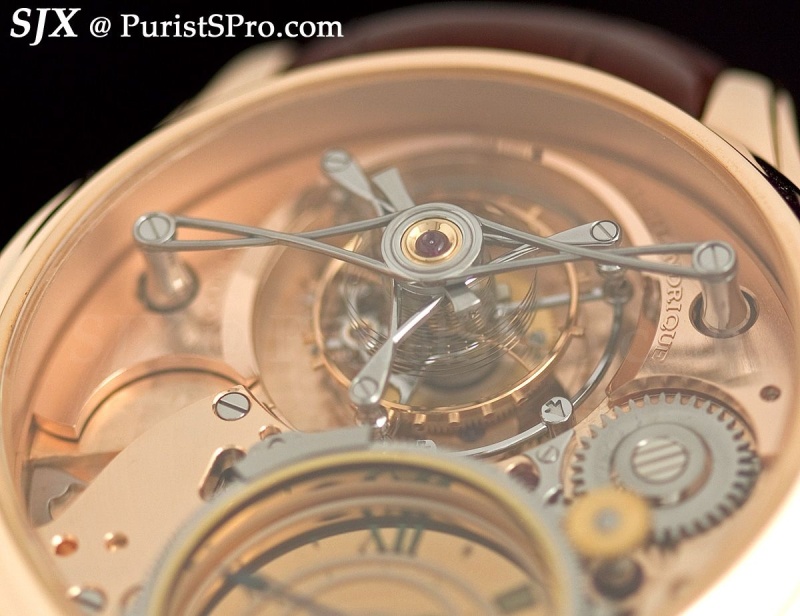
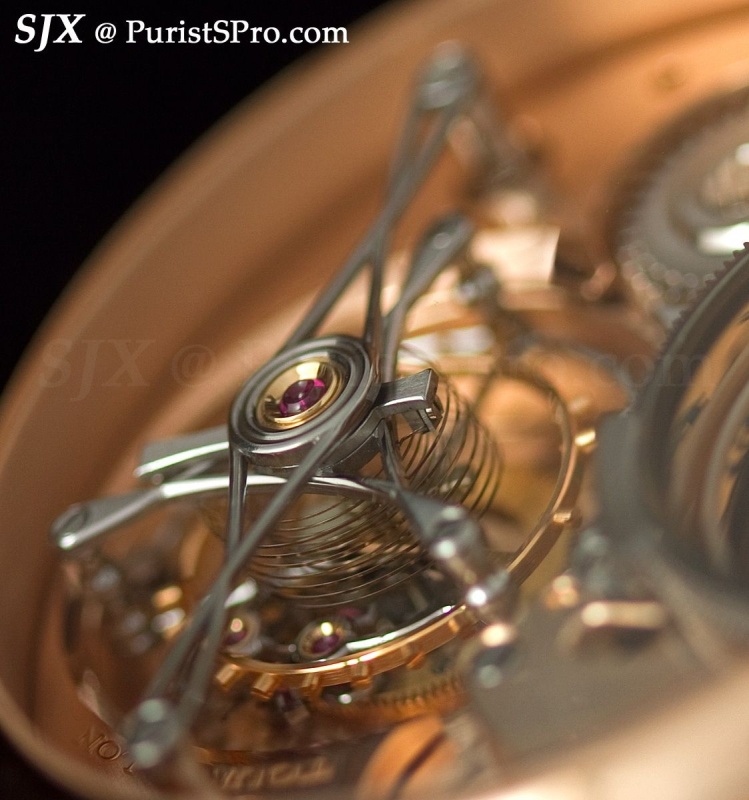
Cylindrical hairsprings have the primary advantage of expanding and contracting with better symmetry and concentricity than flat hairsprings because of their vertical exis. And because this watch has a pair of them, each of the hairsprings breathes in opposite directions, improving isochronism according to Montblanc.
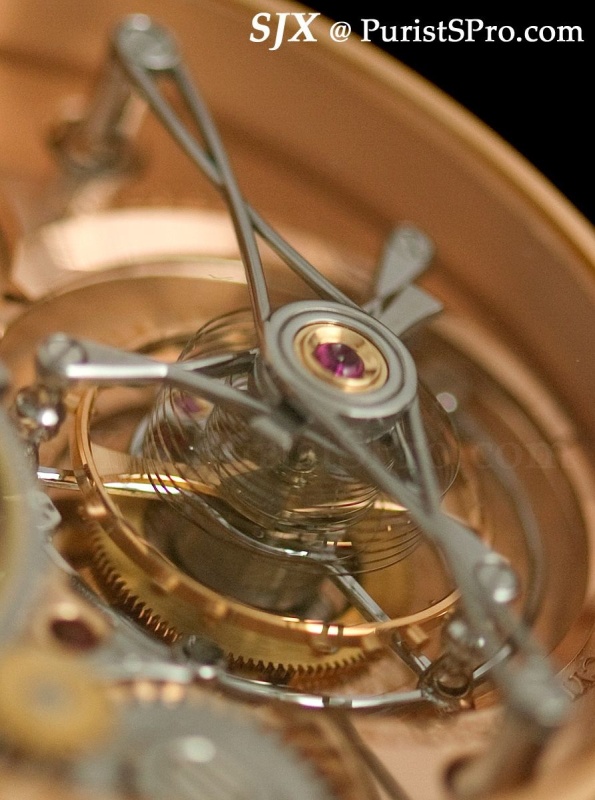

Unlike the original Heures Mysterieuse, the dial on the Bi-Cylindrique has been removed to expose the gears of the mystery hours mechanism. My photos show a prototype so some bits are missing from the watch. Only 16 pieces will be made, with eight each in rose or white gold.
- SJX
This message has been edited by SJX on 2011-01-30 08:17:28 This message has been edited by AnthonyTsai on 2011-01-30 16:19:16
Excellent Bi-Cylindrique pics.
That double hairspring looks fascinatingly beautiful and you captured it perfectly. Nice pics.
Thanks.
Vte


*** SIHH 2011: Panerai ***
Panerai’s 2011 collection continues to do what it does very well, a solid dose of retro inspiration, a dash of in-house movement credibility and dastardly limited numbers of everything.
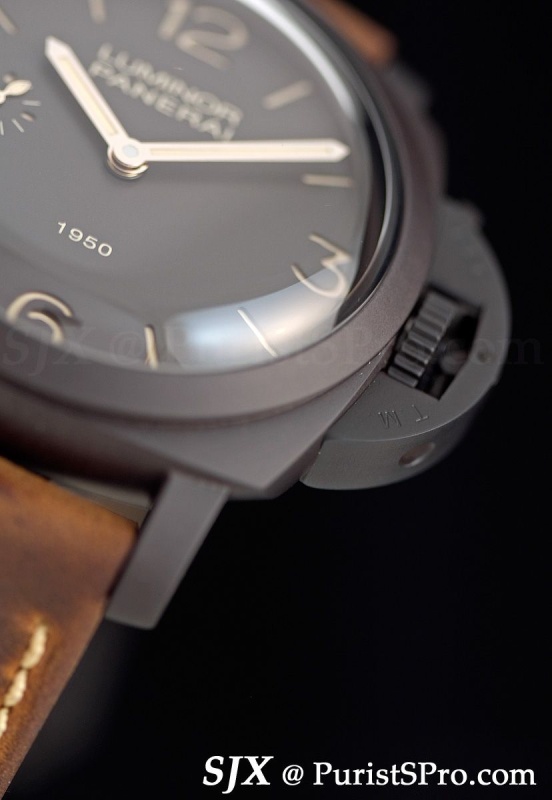
A key tactic of Panerai, if I may venture a guess, is to take one element from its vintage models each year and apply it to the new models. In past years it was “Reg. T. M.” on the crown lock, or it was faux aged Luminova. This year it is engraved dial text.
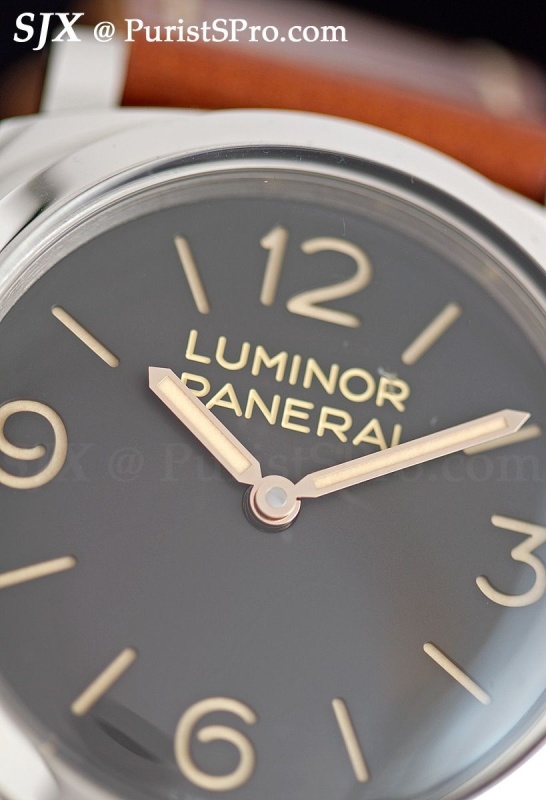
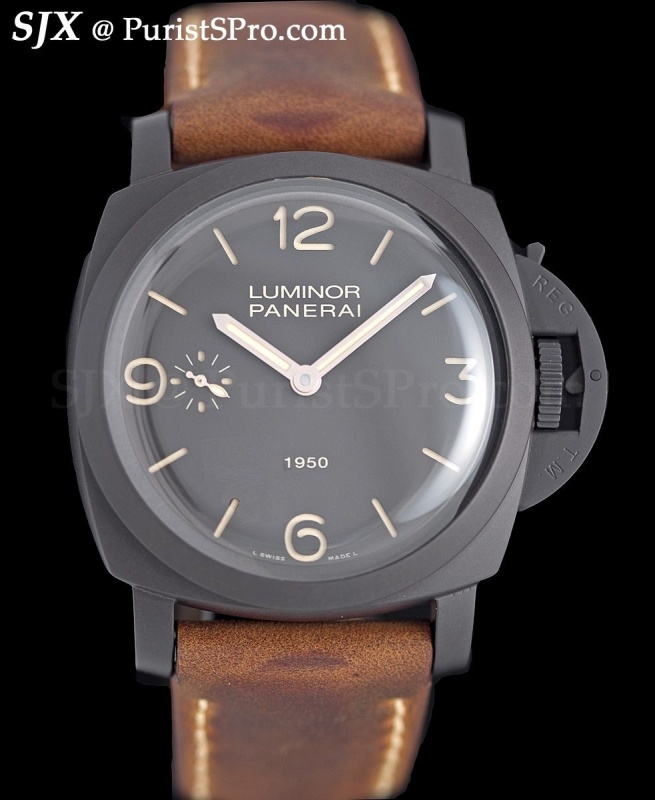
The first model with the engraved “Luminor Panerai” is the new Luminor 1950 3 Days PAM372. Inspired by the transitional Luminor, this watch case is a hybrid of the Radiomir and Luminor, with a flatter and rounder cushion-shaped case band but rectangular lugs and a crown guard. In another nod to the past it has a plexiglass crystal.
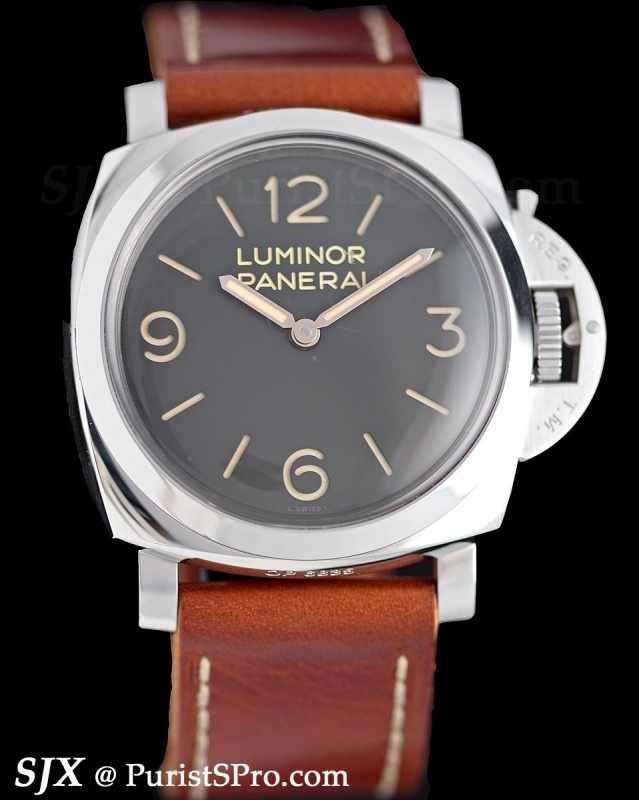
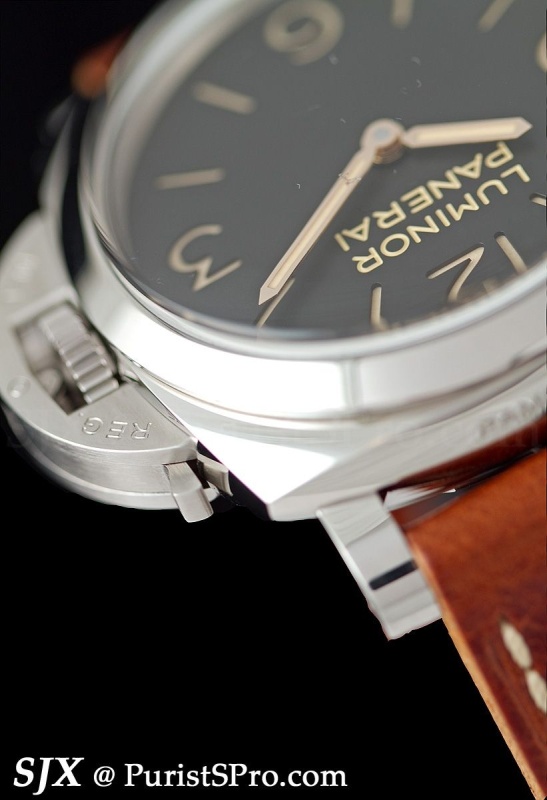
This is a 47 mm Luminor with the new P.3000 in-house movement which at 16 ½ ’” is a perfect replacement for the Unitas. Its size is perfectly appropriate for the case, making the view from the back reassuring. The case back is also notable because, like Panerai watches of old, it is flat.
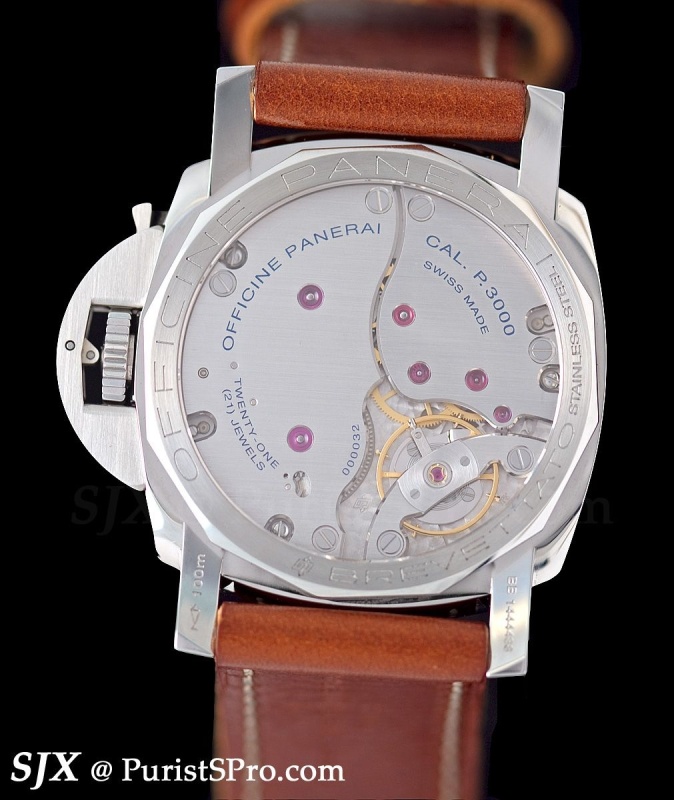
A few other notable characteristics of the P.3000 are the double barrels with 72 hours of power reserve, the full bridge for the escapement and the variable mass balance wheel.
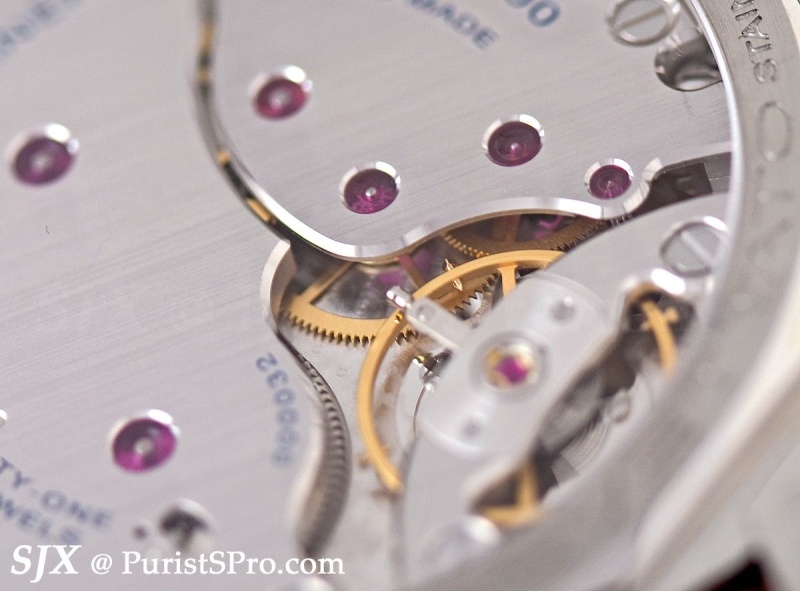
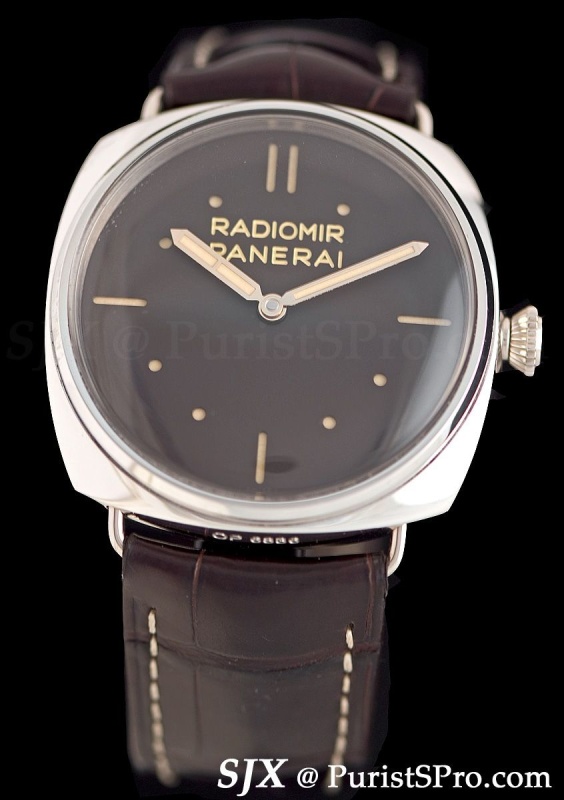
The new Luminor is not the only watch with the new P.3000 movement. Three more faithfully vintage watches in precious metal also use the new P.3000. At the very top is the Radiomir 3 Days Platino PAM 373 which also has engraved dial text. Inspired by a 1930s Panerai prototype, only two samples of which are known to exist, this is a peculiar looking watch. I am glad this dial design remained a prototype.
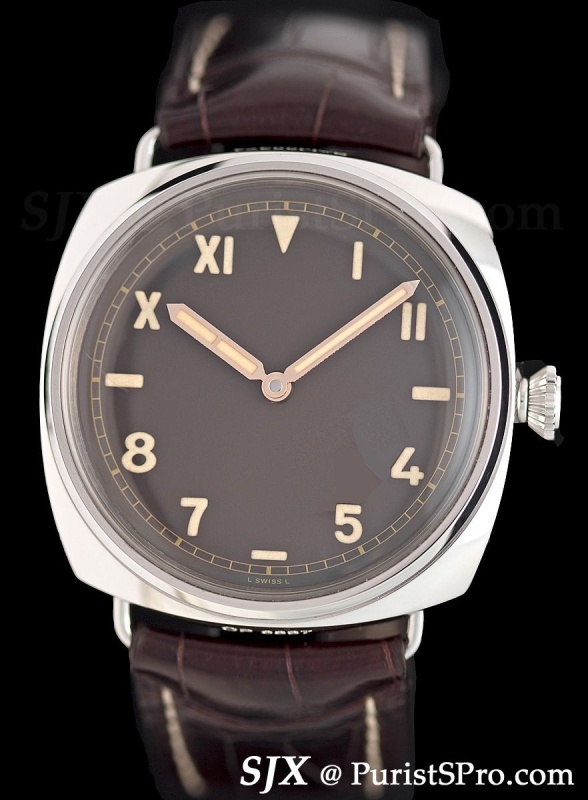
The next is the Radiomir 3 Days Oro Bianco PAM372. This one has what is commonly known as a “California” dial, with Roman and Arabic numerals.
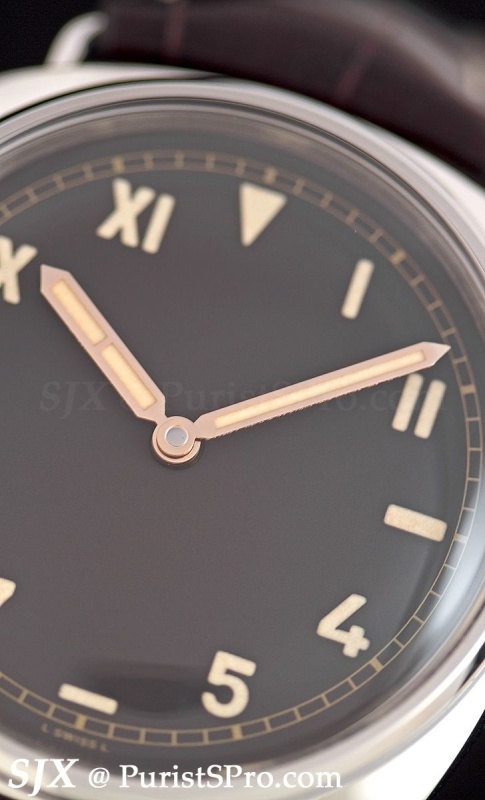
Third is the Radiomir 3 Days Oro Rosa PAM379 with the traditional 3, 6, 9, 12 Panerai dial. The text on the dial is engraved, naturally.
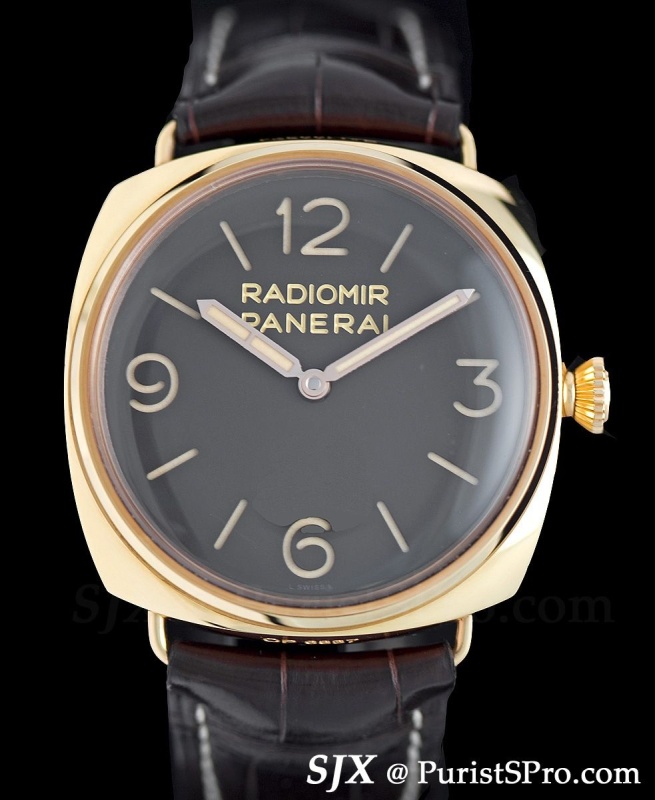
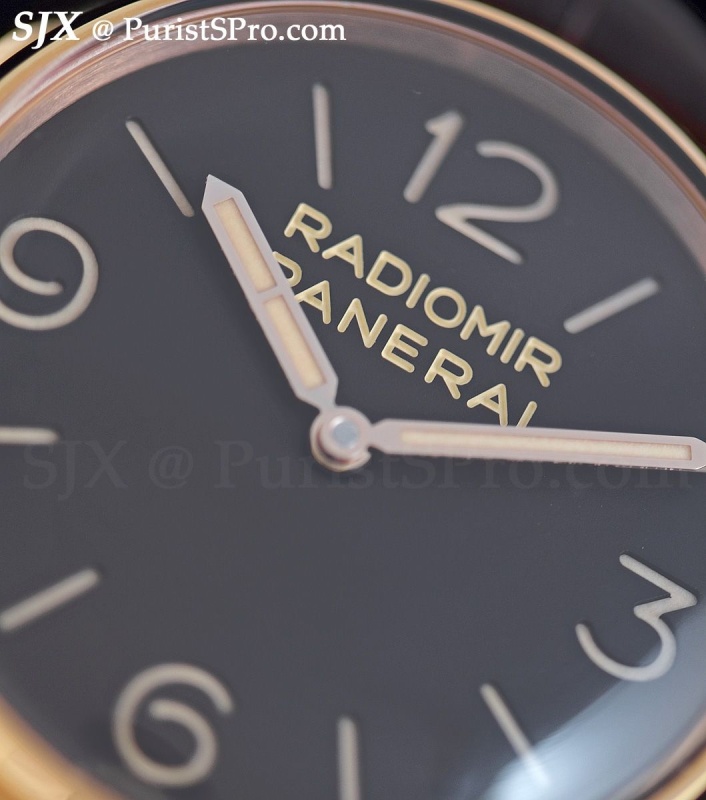
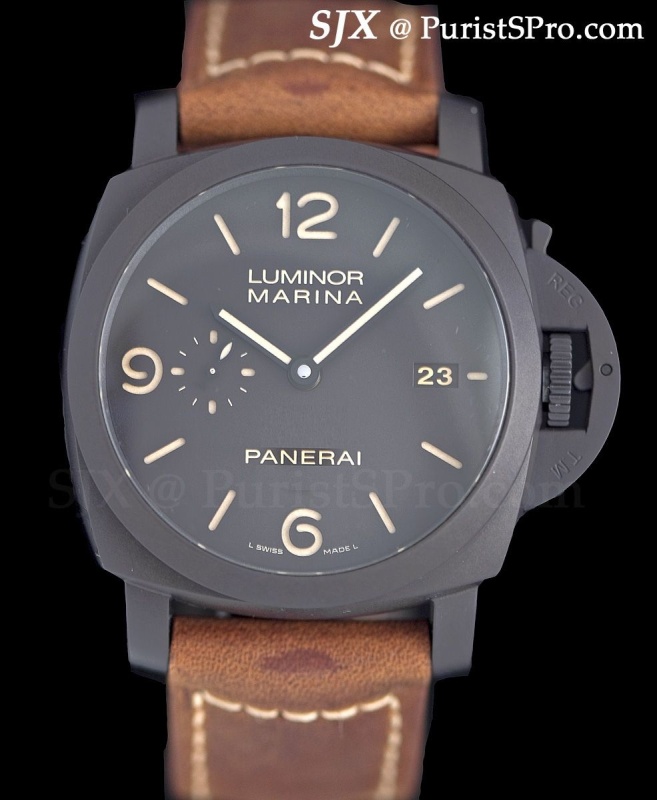
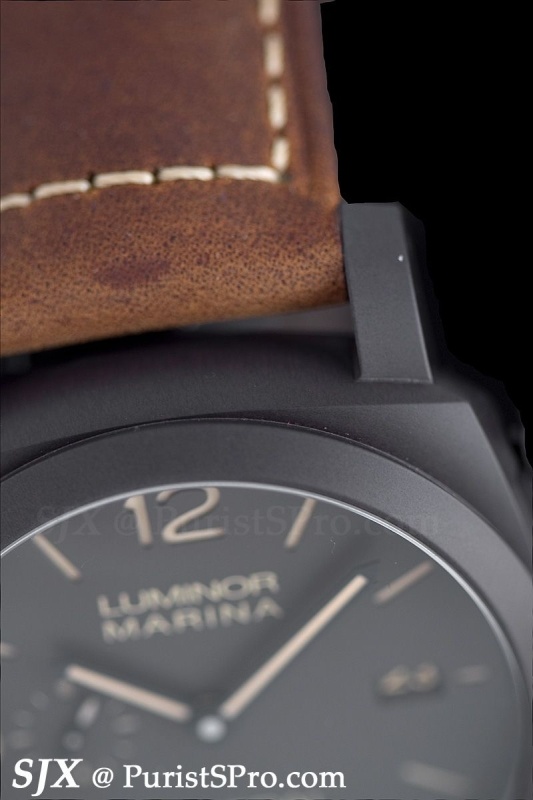
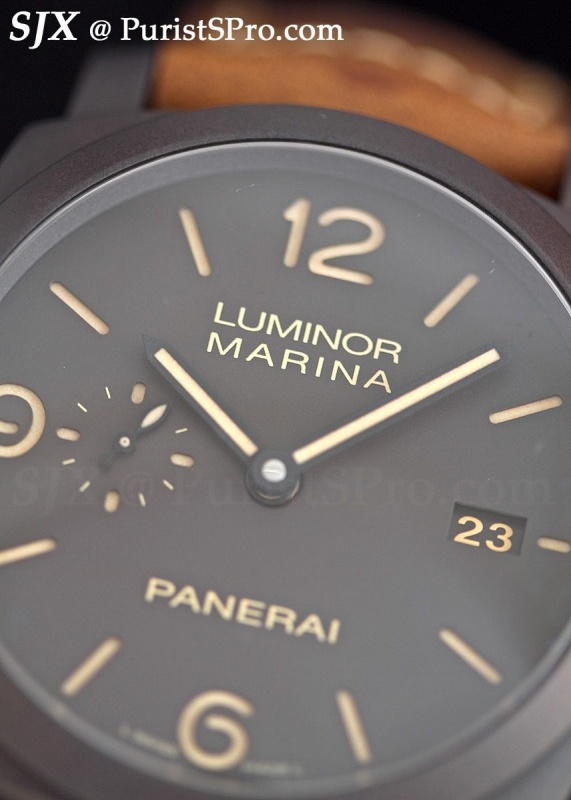
There is one more watch with the new P.3000, however, the Luminor 1950 Composite PAM375. This is a 47 mm watch in a brown composite case. Aluminium coated with ceramic, resulting in a hard yet light material, the material was first used on the Radiomir composite of 2010.
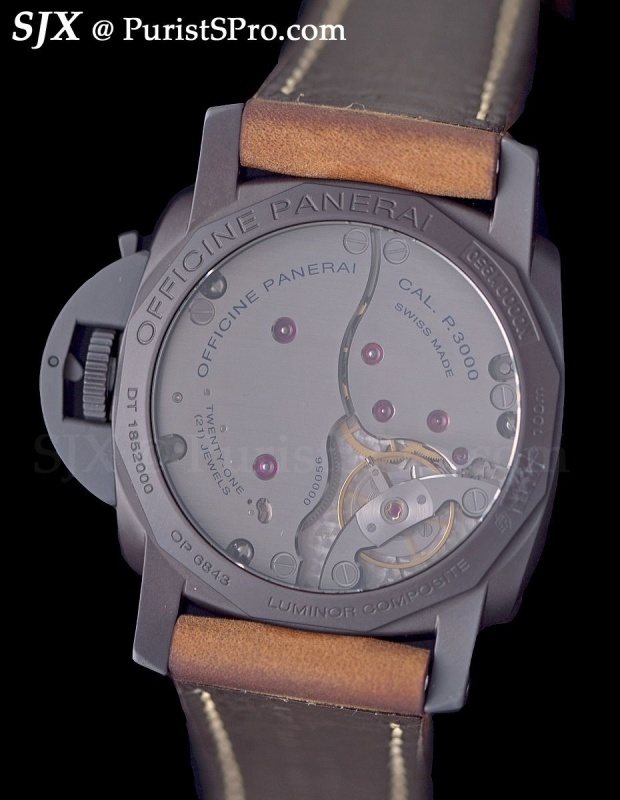
The second composite watch for 2011 is the Luminor Marina 1950 Composite 3 Days PAM386. Unlike the other composite watch, this is 44 mm and not a special edition. And this is automatic with the P.9000 movement.
But the most interesting material this year is bronze in the Luminor Submersible 1950 3 Days Automatic Bronzo PAM382. Thought not the first in watchmaking to use bronze, Panerai’s bronze alloy is uniquely red, bringing to mind a rose gold-plated watch. It is a marine bronze, resistant to seawater and corrosion, but untreated, meaning it will acquire a patina over time.
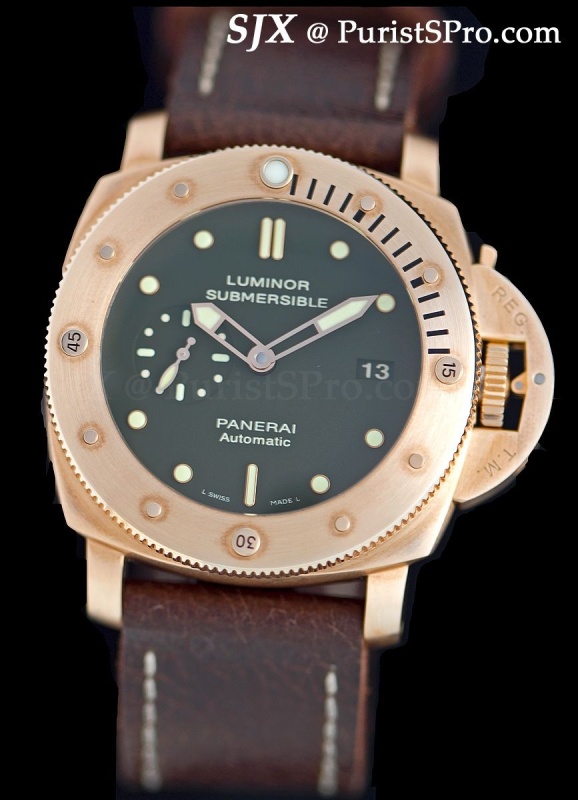
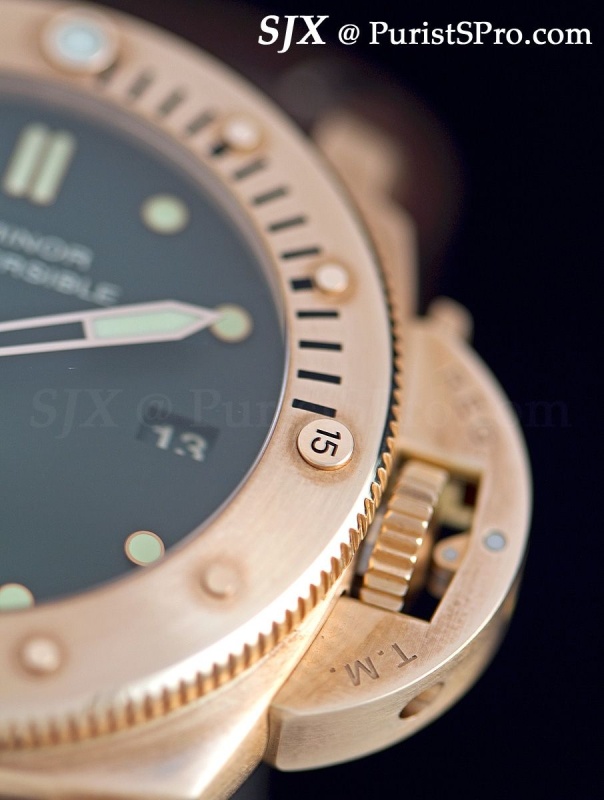
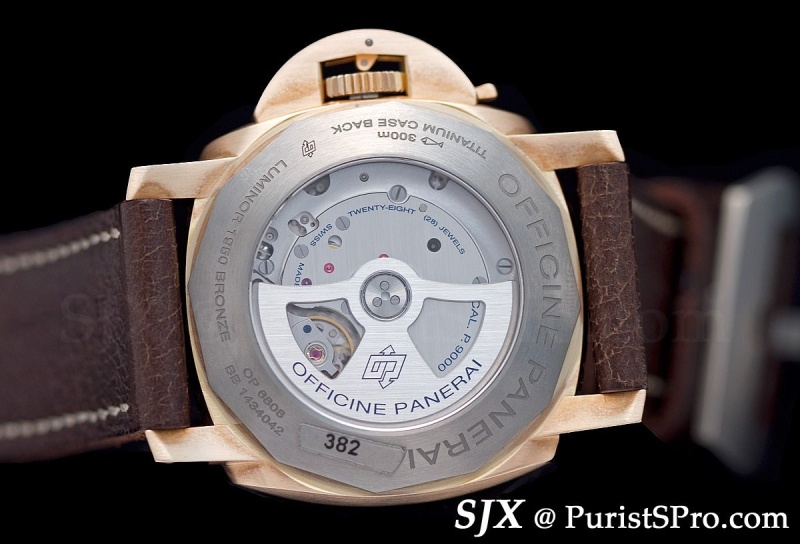
The movement is the P.9000 in-house automatic. Like all bronze watches the case back is titanium to prevent the bronze case from coming into contact with the skin. And to match the soon to be aged case this has a green dial, the first time Panerai is using green.
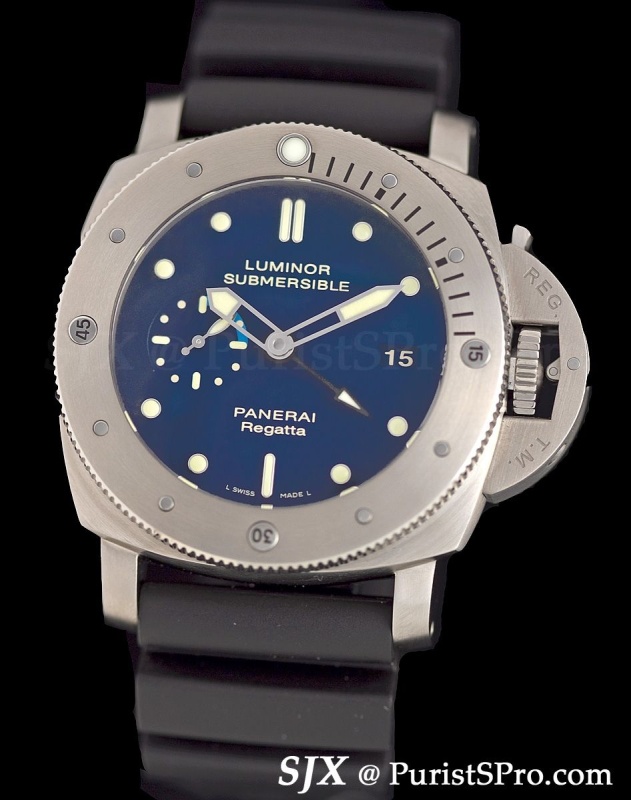
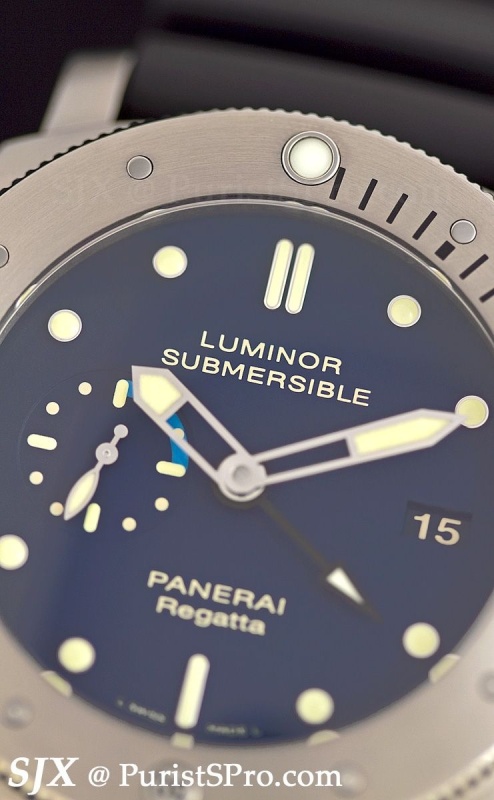
Another Luminor Submersible 1950 special edition for 2011 is the Regatta GMT PAM371. In a titanium case with second time zone function, this has a blue dial and is made for the Classic Yachts Challenge 2011.
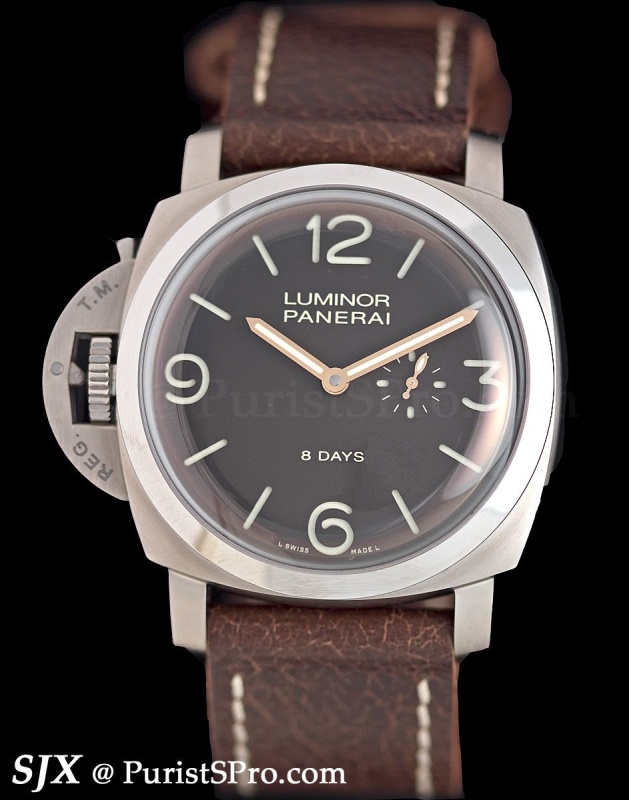
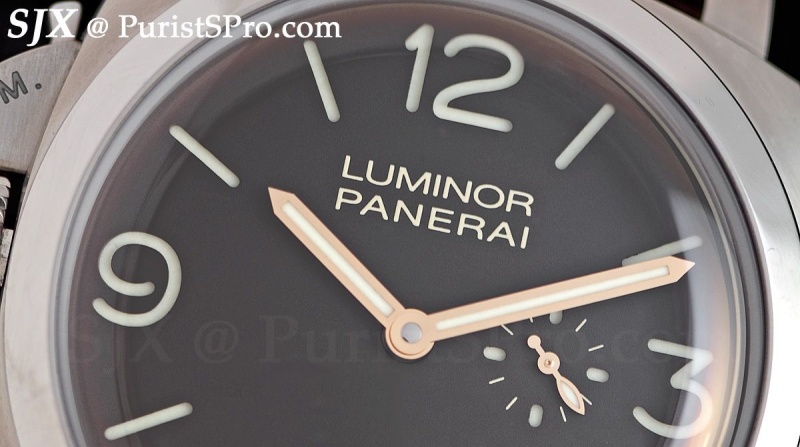
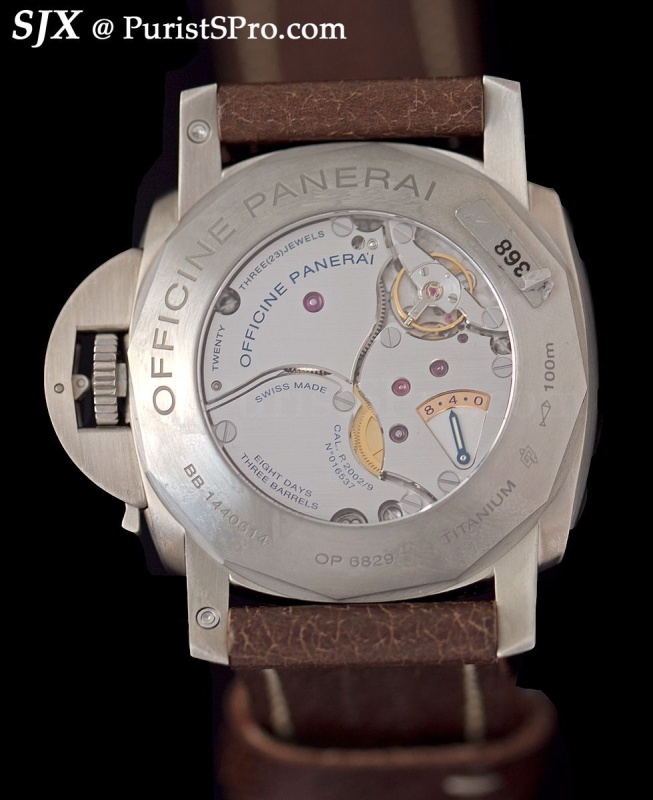
One of my favourites is the Luminor 1950 Left-Handed 8 Days Titanio PAM368. As its name indicates, this is a titanium case 1950 with the P.2002 8 day power reserve movement.
Also left-handed is the last special edition for 2011, the Luminor 1950 monopusher chronograph in titanium. This features the in-house P.2004 8 days single pusher chronograph calibre in a 44 mm case. Usually I like the Panerai aesthetic but this one looks off balance, somehow the monopusher chronograph does not work as a left-handed watch.
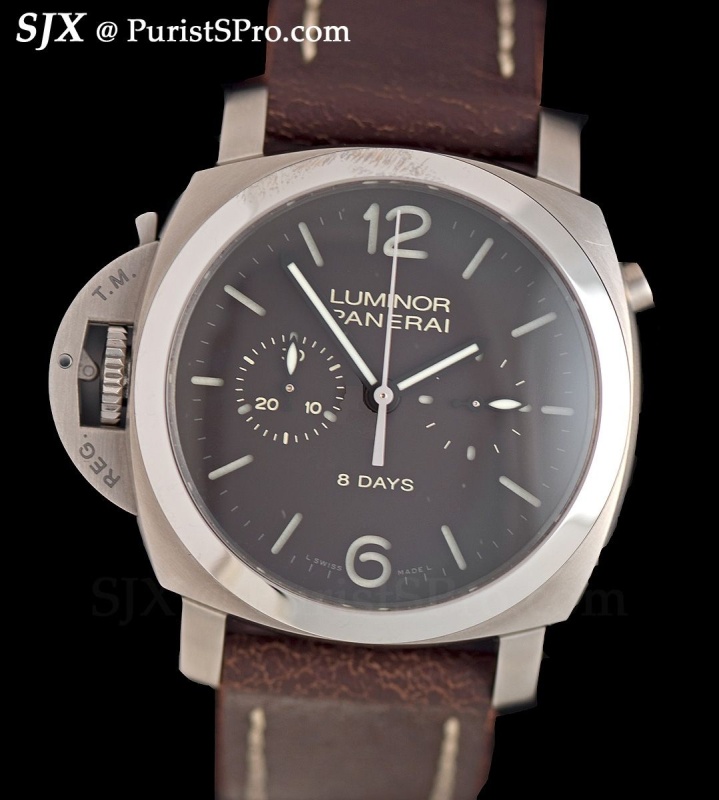
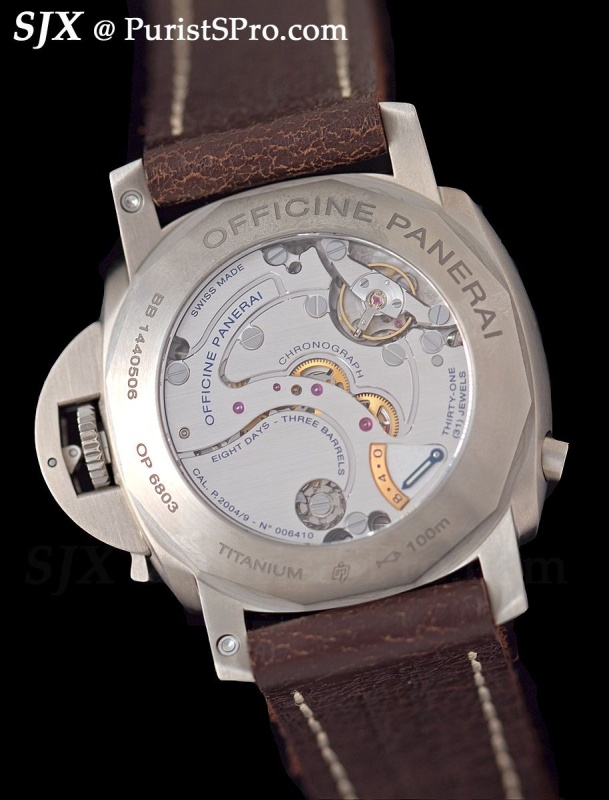
Oddly enough another Panerai I am ambivalent about is another chronograph, the Luminor Chrono Daylight PAM356. This is clearly a modern Panerai yet it has aged Luminova and matching stitching on the strap. Overall the design elements don’t sit well together.
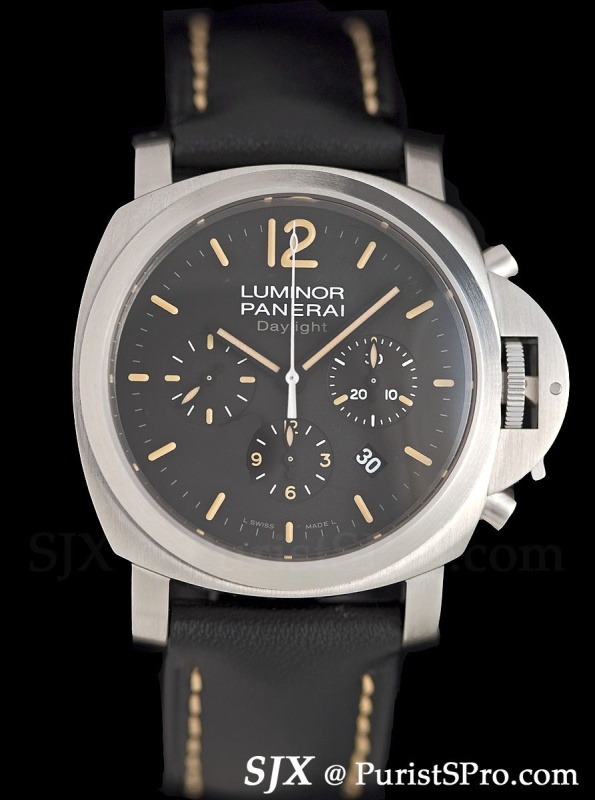
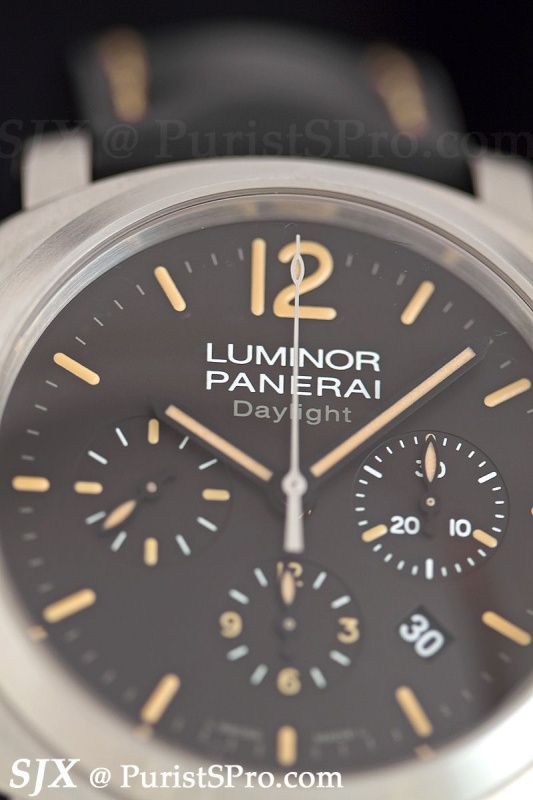
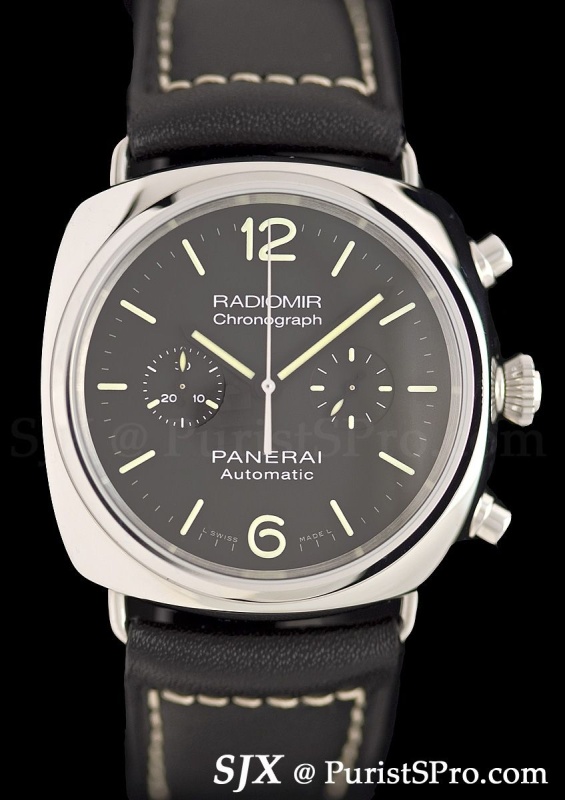
The last chronograph for the year is a 42 mm Radiomir chronograph. Again I find cause for complaint, the watch is small but thick, giving it very squat proportions. But this will presumably appeal to ladies who want a small, but complicated, Panerai.
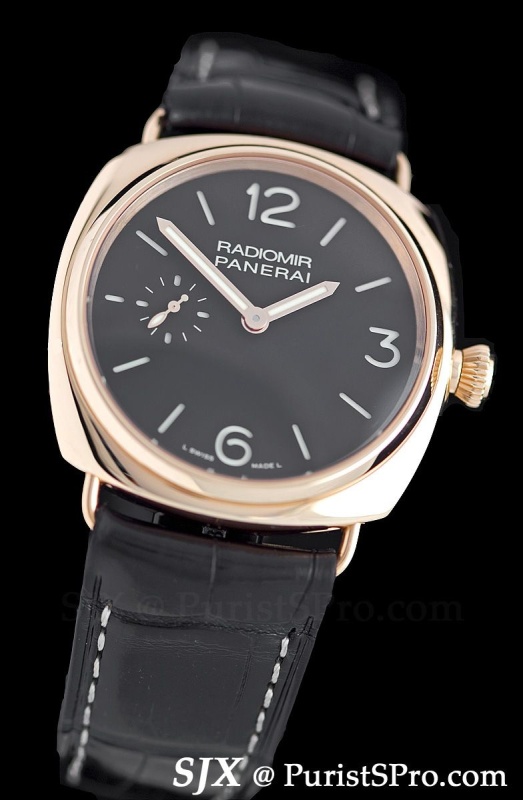
Several more Radiomir watches were unveiled and I have no complaints about these. The first is a 42 mm Radiomir in rose gold. This is actually identical to the 42 mm Radiomir of last year, except it has a polished instead of brushed case.
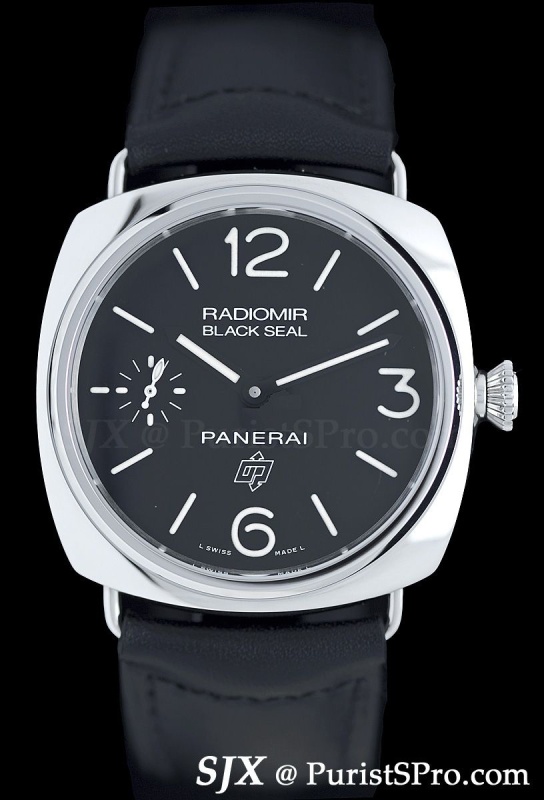
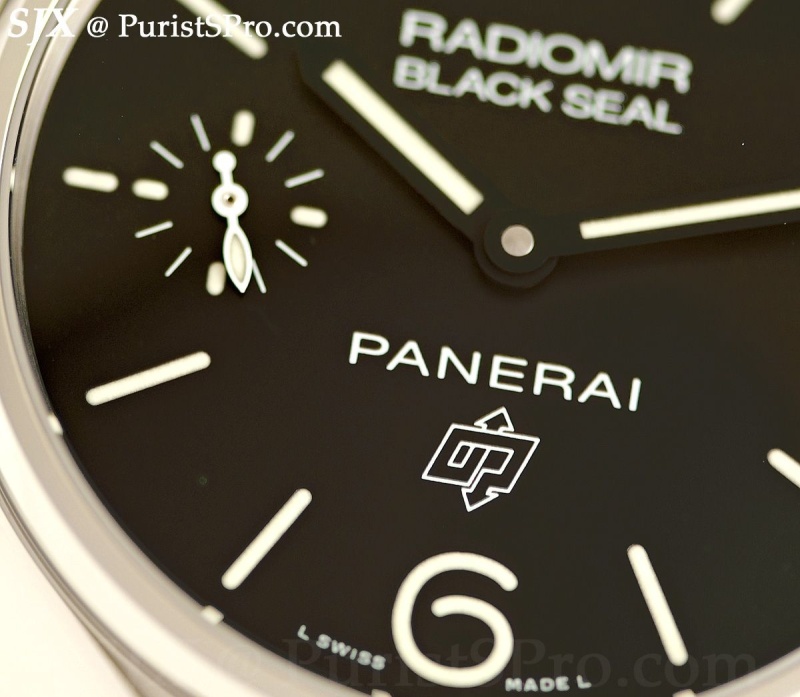
Now the Radiomir line finally has an entry level “logo” watch, the Radiomir Black Seal Logo PAM380. Like the Luminor logo models this has a solid back. Somehow I find the logo works better on the Luminor than the Radiomir though.
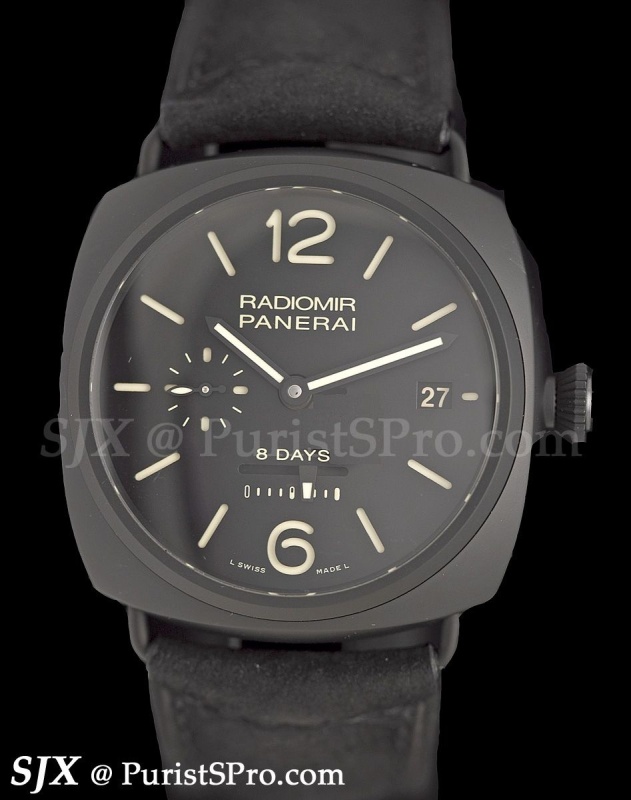
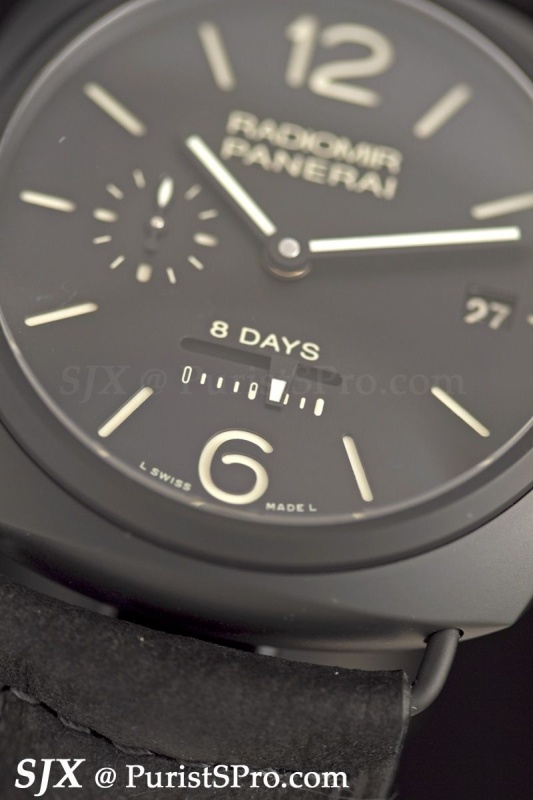
The last new addition is the Radiomir 8 Days Ceramica. 45 mm with the P.2002 calibre, this is the second ceramic Radiomir after the Black Seal.

- SJX
This message has been edited by SJX on 2011-01-30 08:52:42 This message has been edited by AnthonyTsai on 2011-01-30 16:20:19*** SIHH 2011: Parmigiani ***
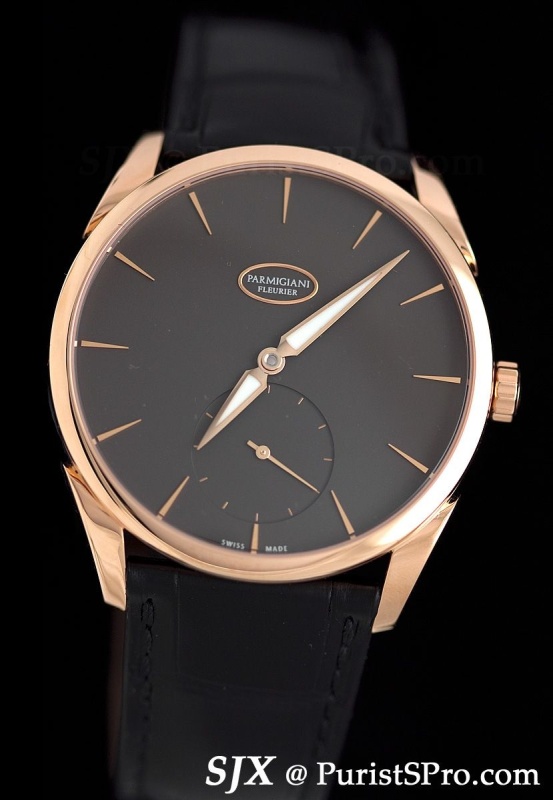
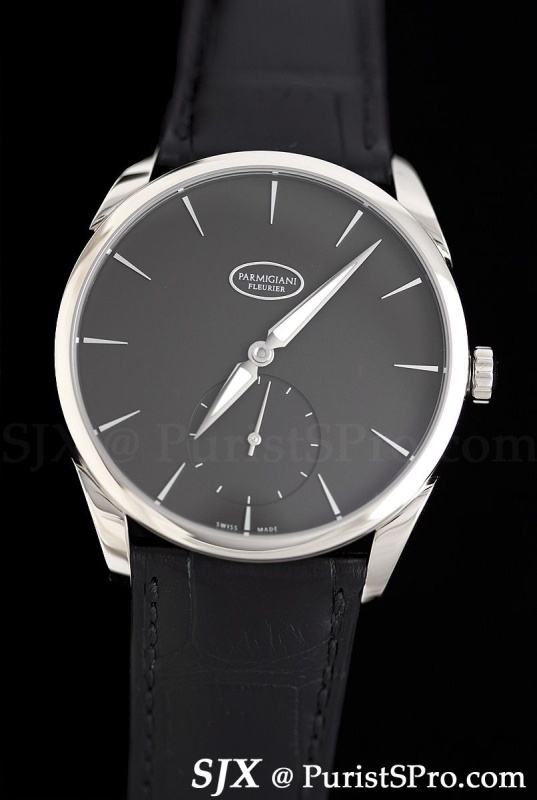
Parmigiani had two new wristwatch models for 2011. The simpler of the two is the Tonda 1950, an ultra-slim automatic in gold, with 1950 being the year of Michel Parmigiani’s birth. At 39 mm and 7.8 mm high, this is a slim and elegant watch.
Inside sits the PF 700, Parmigiani’s twelfth in-house calibre. At 13 ¼ ’’’ and 2.6 mm thick, the movement is wide but slim. It features a single barrel, microrotor and adjustable mass balance.
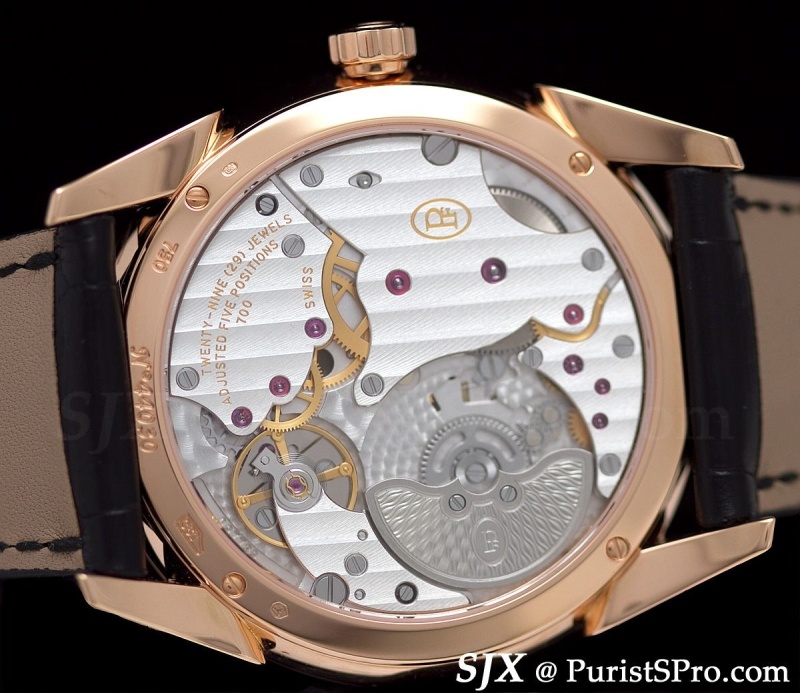
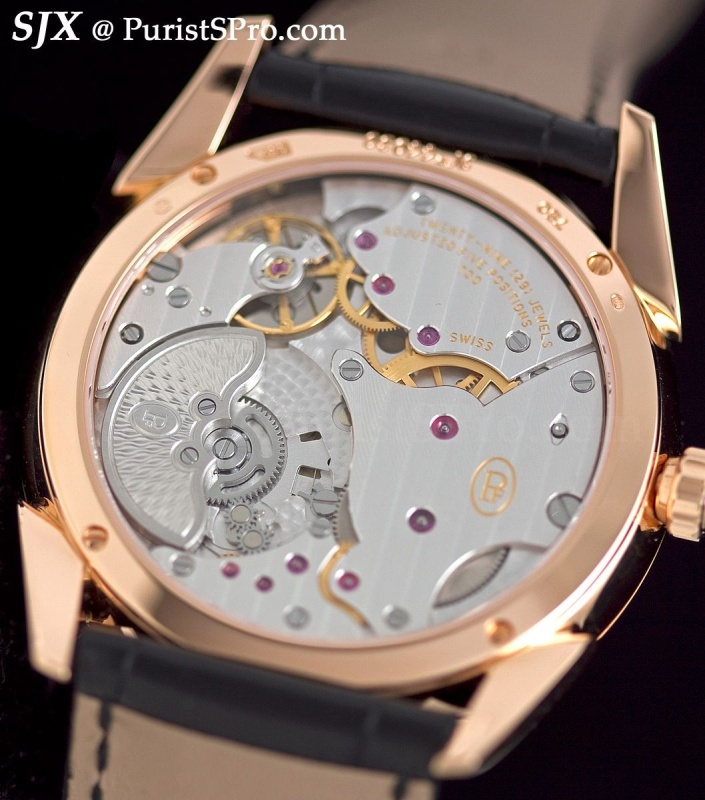
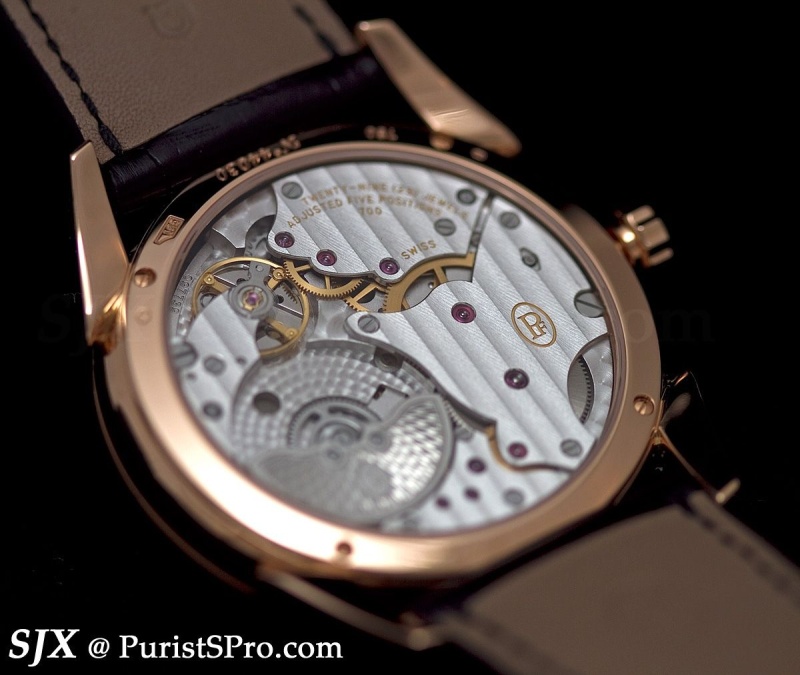
As with all Parmigiani calibres the level of movement decoration is superb. The striping, anglage, perlage, screws and jewel holes are all executed at a very high level.
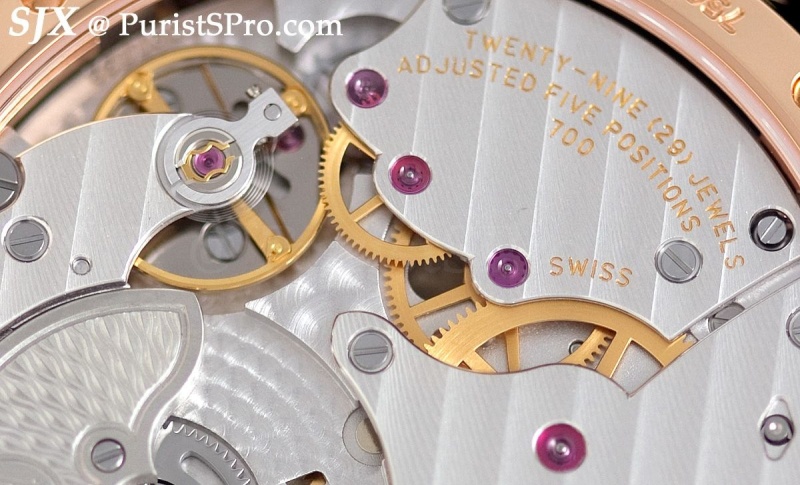
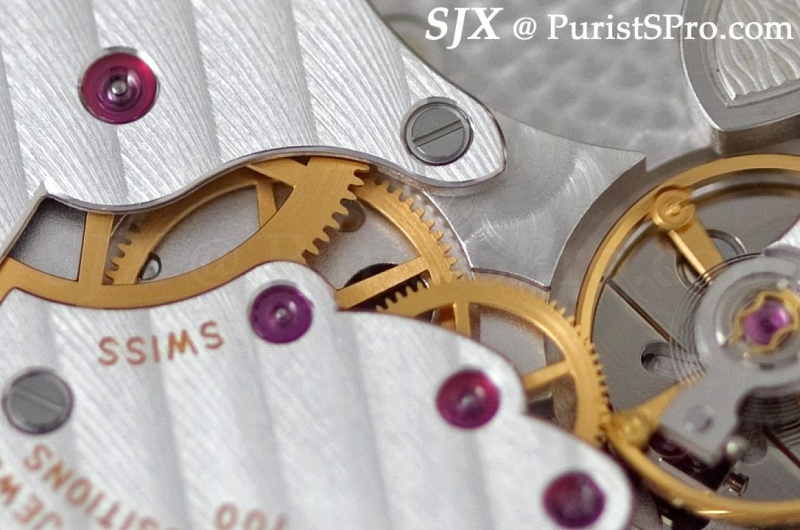
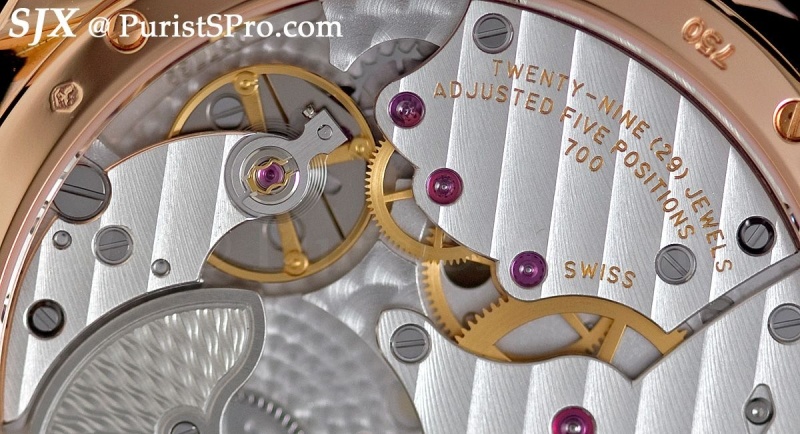
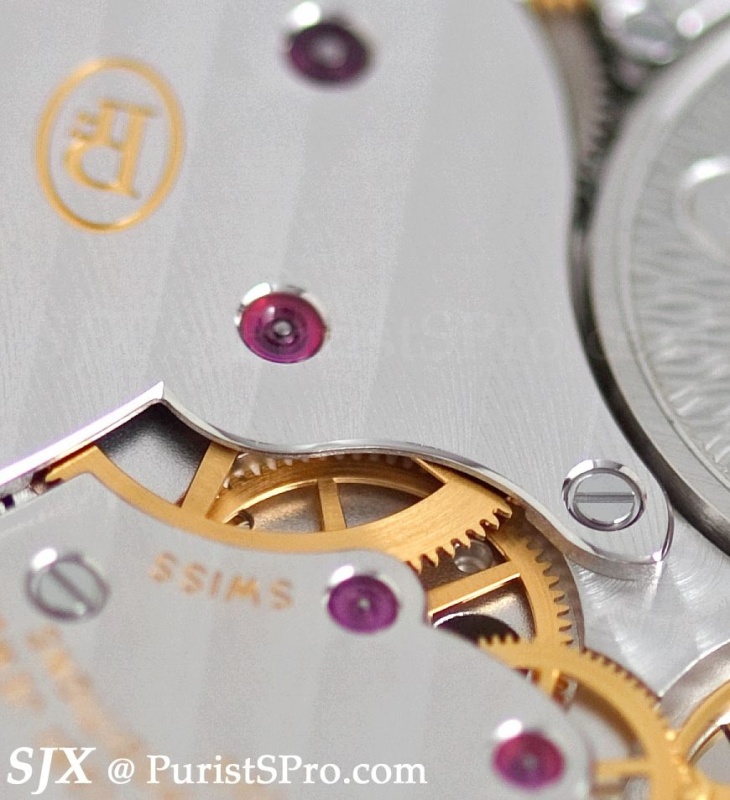
Parmigiani is one of the most integrated independent groups in Switzerland, thanks to the deep pockets of the Sandoz foundation which owns it. Vaucher is the movement maker of the group, and this PF700 calibre is also known as the Vaucher 5300 which is also in the round Richard Mille you can see in the part on RM further down. Vaucher now provides movements to Hermes and Bovet as well, and might possibly turn up in more brands in the future.
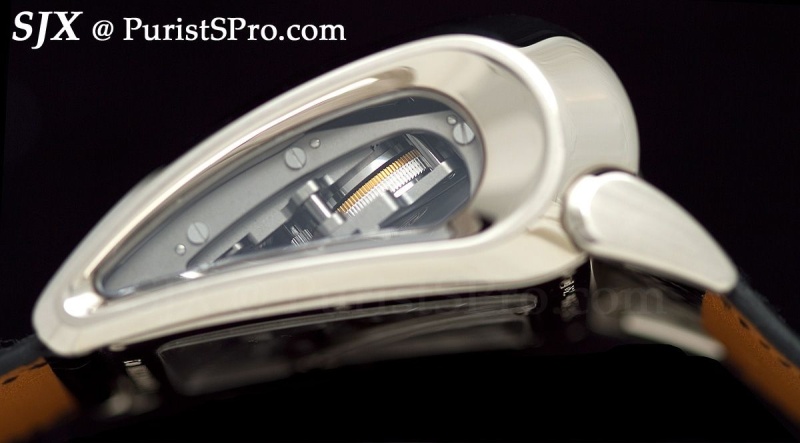
The other new wristwatch is at the other end of the price and design spectrum – the Bugatti Super Sport. Inspired by the Bugatti Veyron Super Sport, the 1200 bhp monster that is possibly the fastest road car in the world, the Super Sport watch is the second Bugatti watch made by Parmigiani.
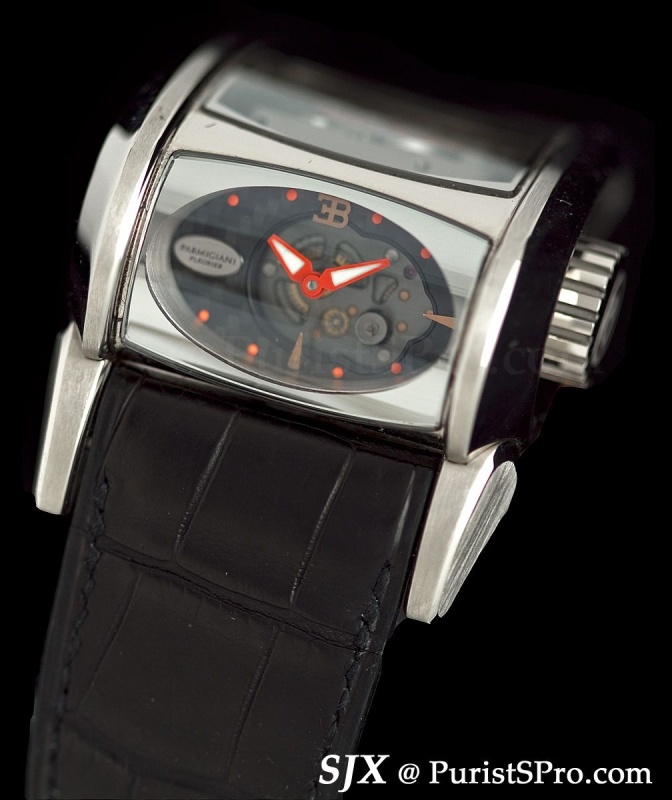
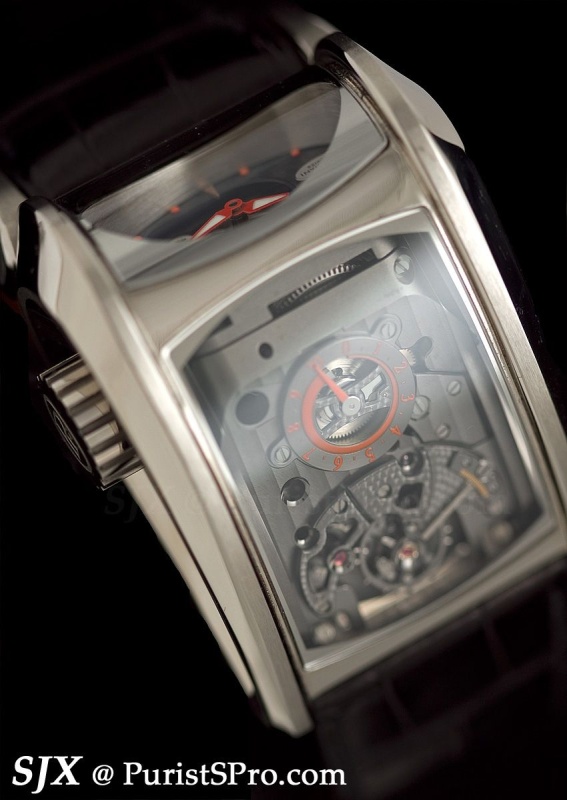
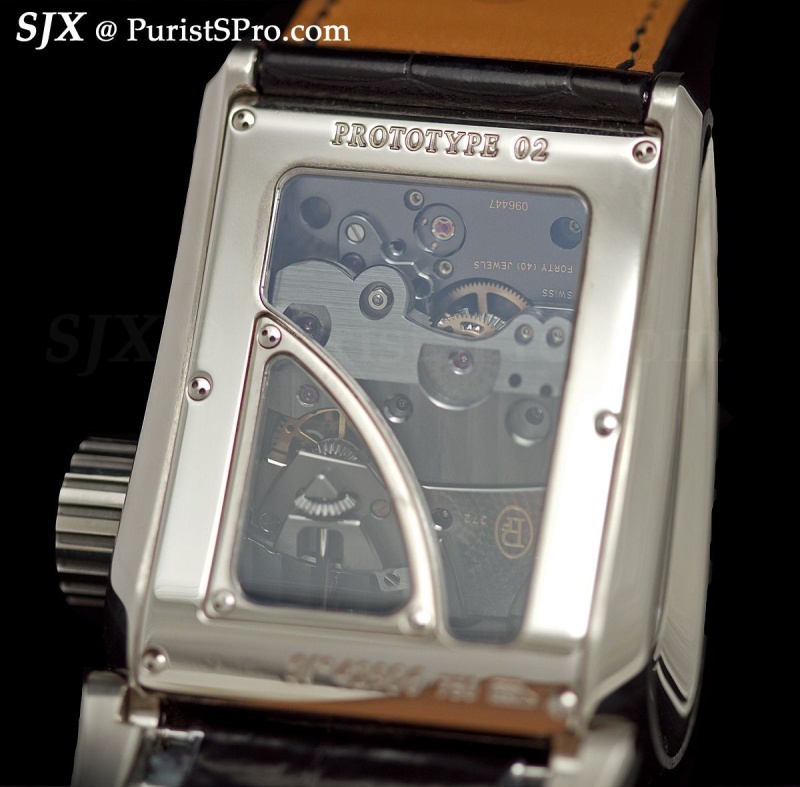
Whereas the original Bugatti watch had a traverse axis with the gears and dial stacked in a column, the Super Sport features hands that are set perpendicular to the movement. But like the original the Super Sport is easily readable while gripping a steering wheel. At the 400 km/h the Bugatti Veyron is capable of this is a fairly convenient feature I would think.
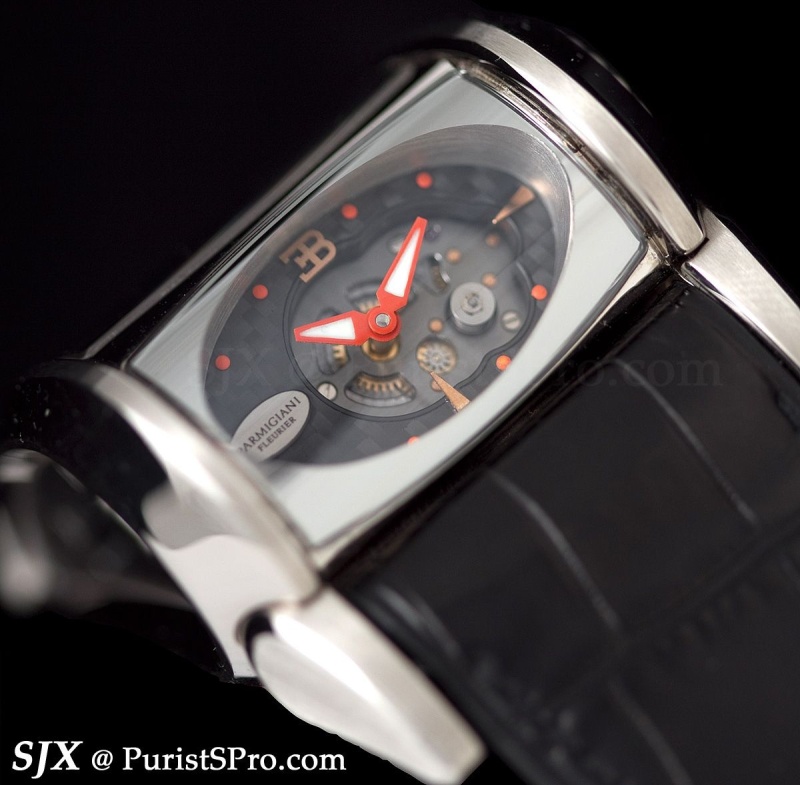
This watch also features what Parmigiani calls a dynamometric crown – nudge it slightly inwards and it pops out to allow setting of the time.
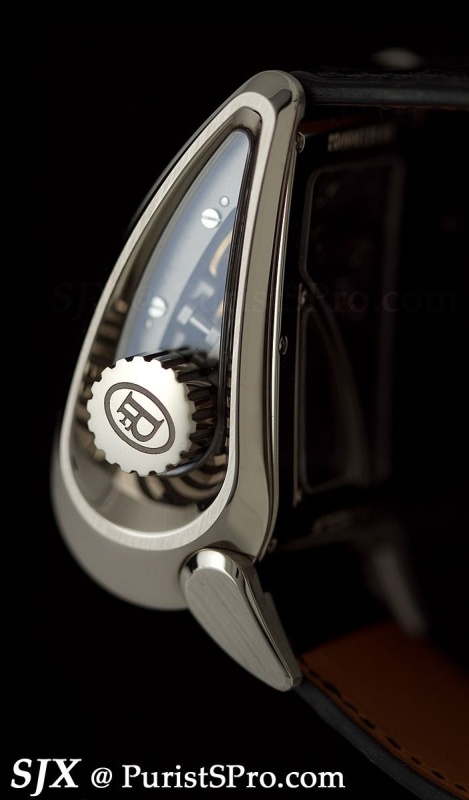
On the top of the watch sits the 10 day power reserve indicator as well as the escapement.
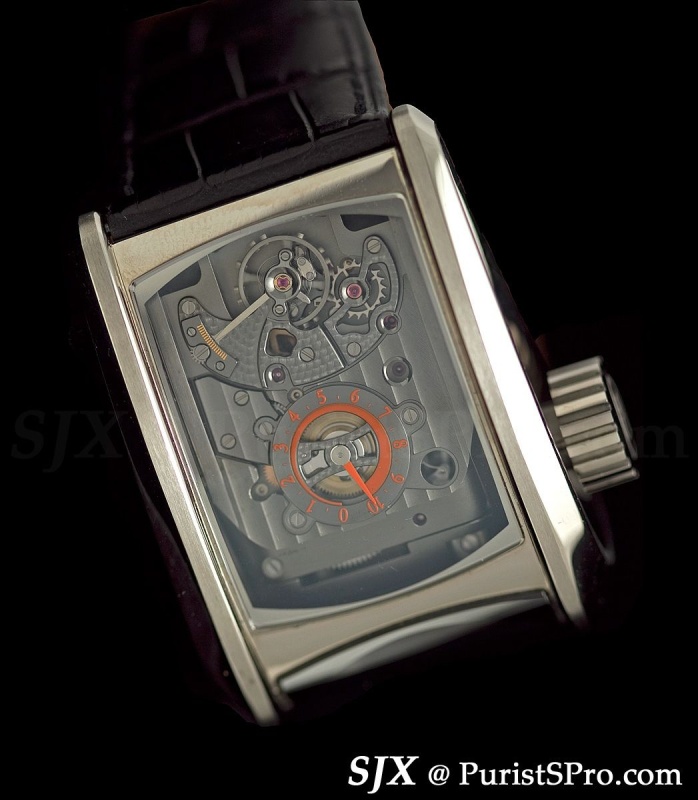
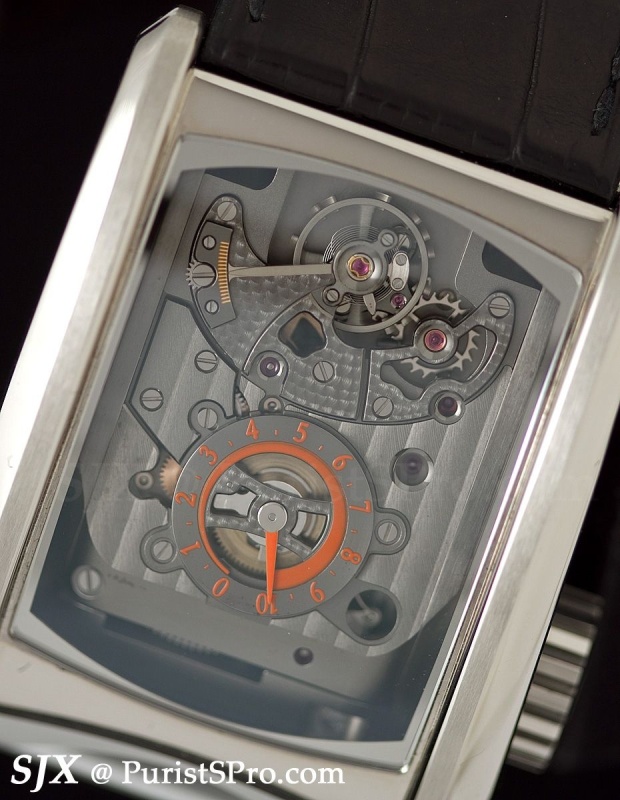
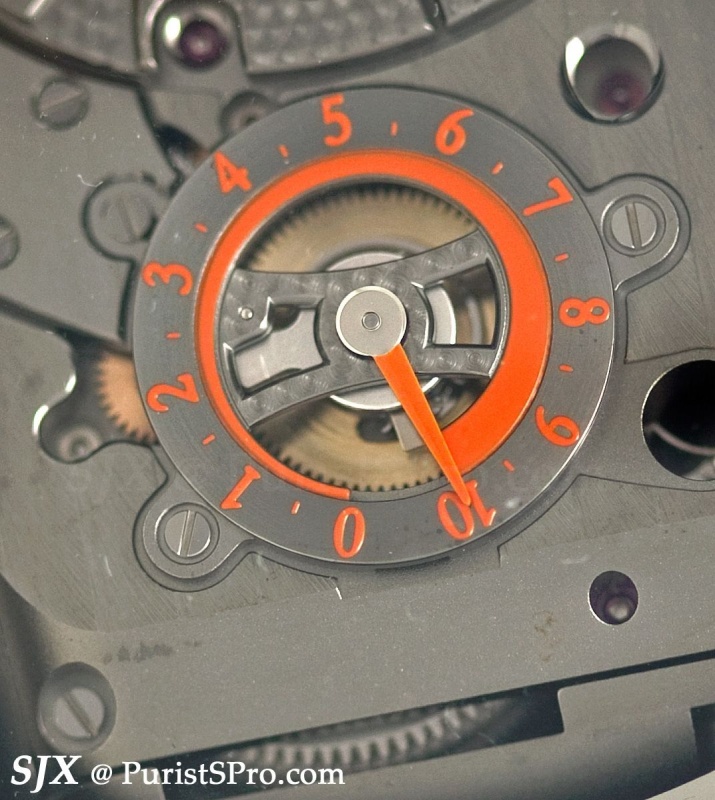
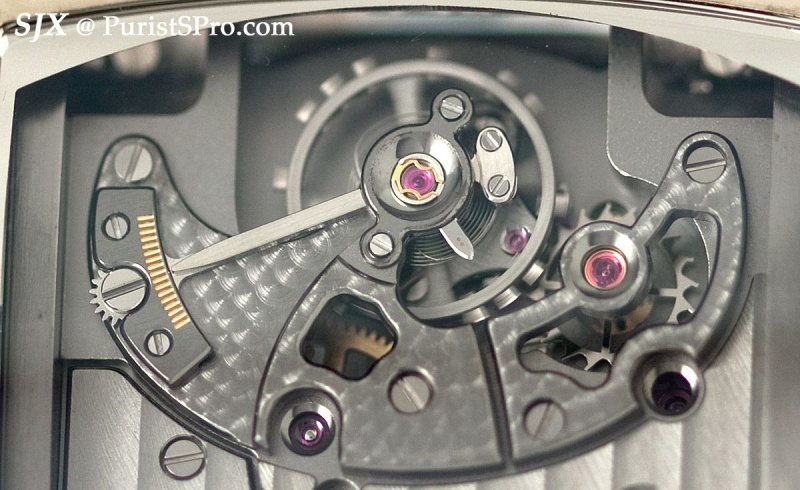
Visible from the sapphire windows on the side of the case – this watch has six sapphire crystals – is the barrel and gear train. These are actually adopted from the first Parmigiani Bugatti and are likewise stacked in a column.
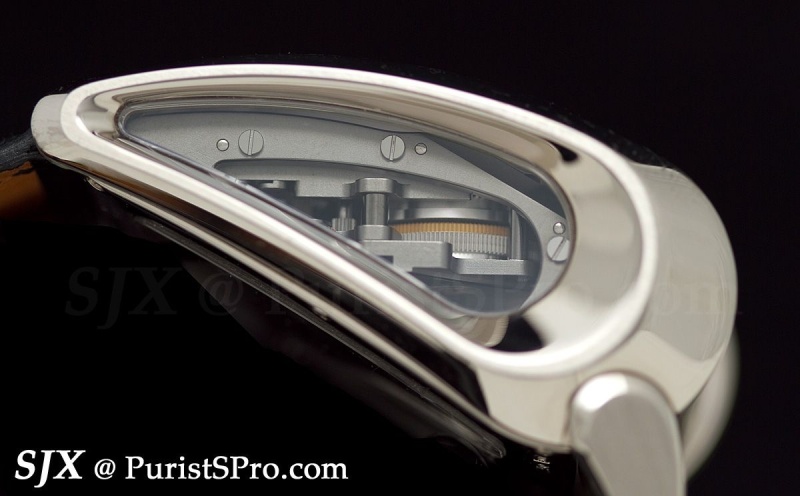
Also impressive is the sleek case, made by Les Artisans Boîtiers, Parmigiani’s casemaking sister company. Inspired by the wing of the Bugatti, the case is a massive, complex shape. It has pivoted lugs on the front which allow it to sit fairly well on the wrist.
- SJX
This message has been edited by SJX on 2011-01-30 09:00:54 This message has been edited by AnthonyTsai on 2011-01-30 16:20:38
Beautiful movements.
Thanks.
Vte
*** SIHH 2011: Piaget ***
Piaget’s flagship complication for 2011 is not unexpectedly, an ultra-slim, flying tourbillon. The Emperador Coussin Tourbillon Ultra-Thin is only 5.35 mm thick and square, making it unusual for its slimness and its shape.
Aesthetically it is a significant change from the typical Piaget look. The dial is sapphire and the movement openworked; most notable is the exposed rotor on the dial side. I am not sure if the design of this watch works, the rotor in particular reminds me of something another brand has done.
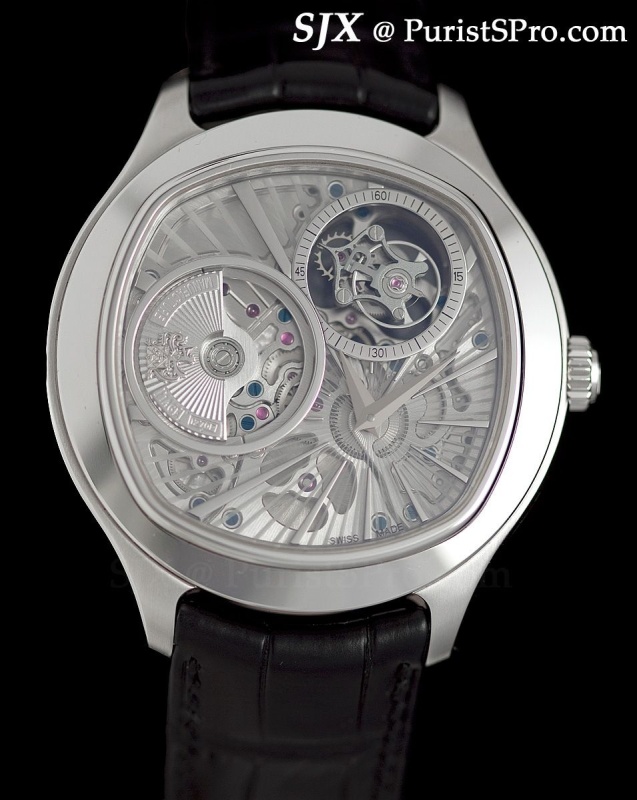
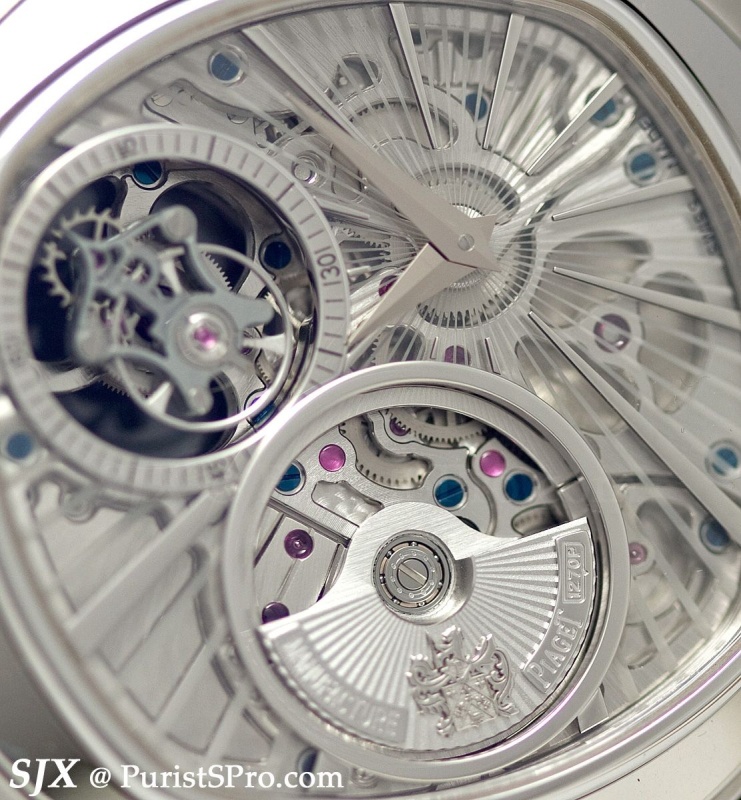
Two more tourbillons were launched, both in the Polo cases. Both are flying tourbillons, and not the orbital tourbillon Relatif previously found in the Polo case. Various stone settings are available, and Piaget will kindly set the the back of the case as well.
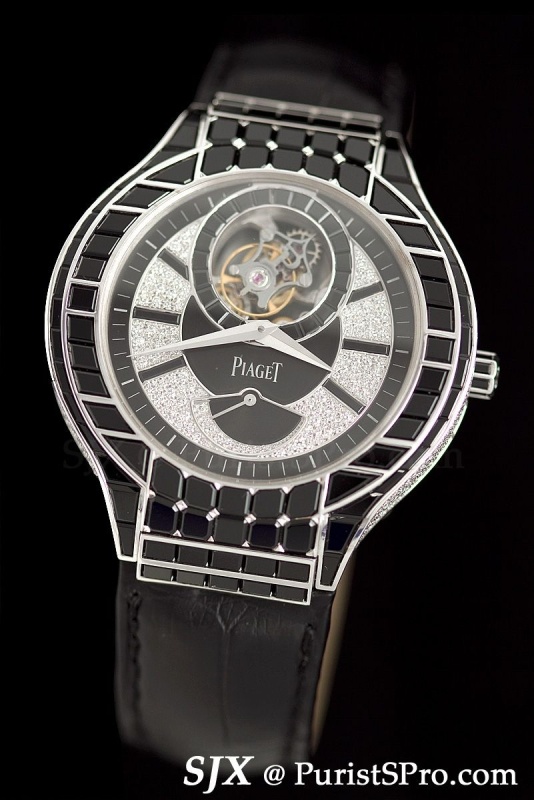
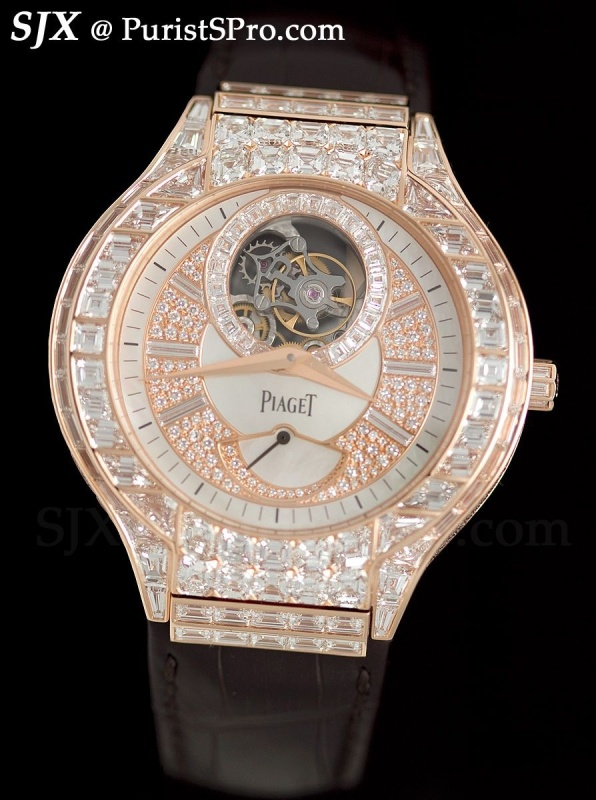
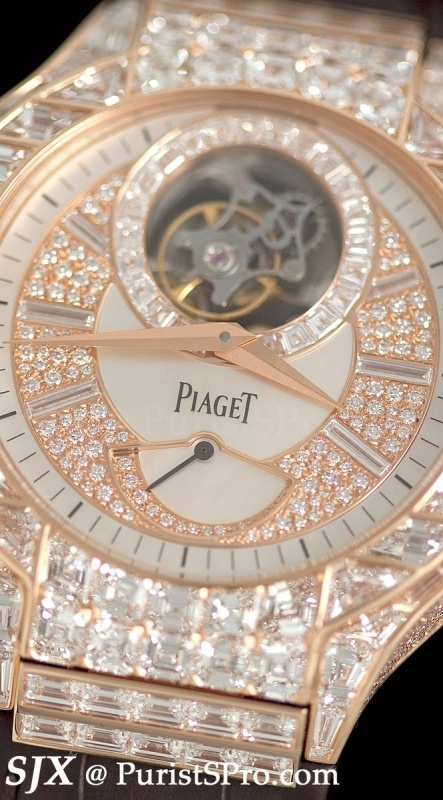
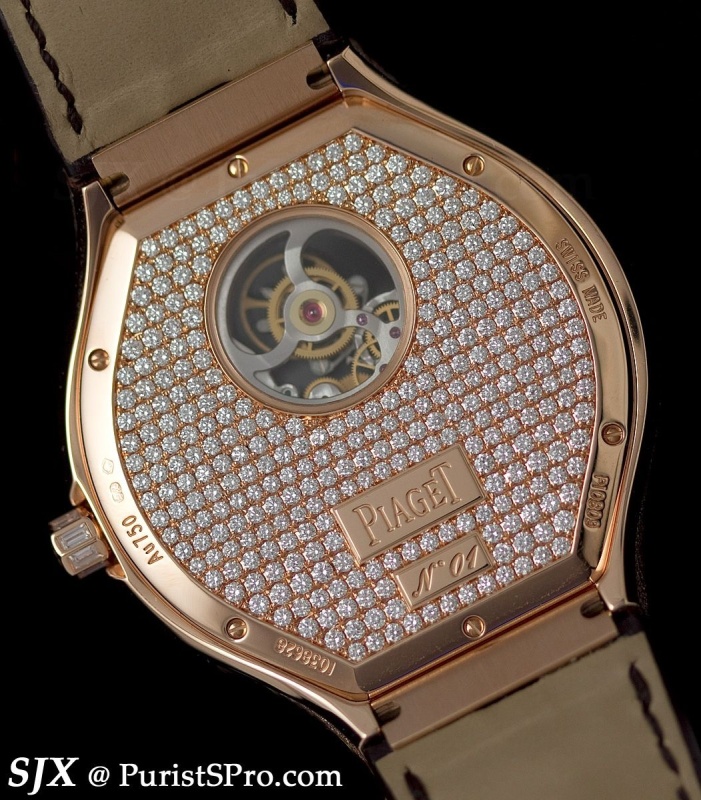
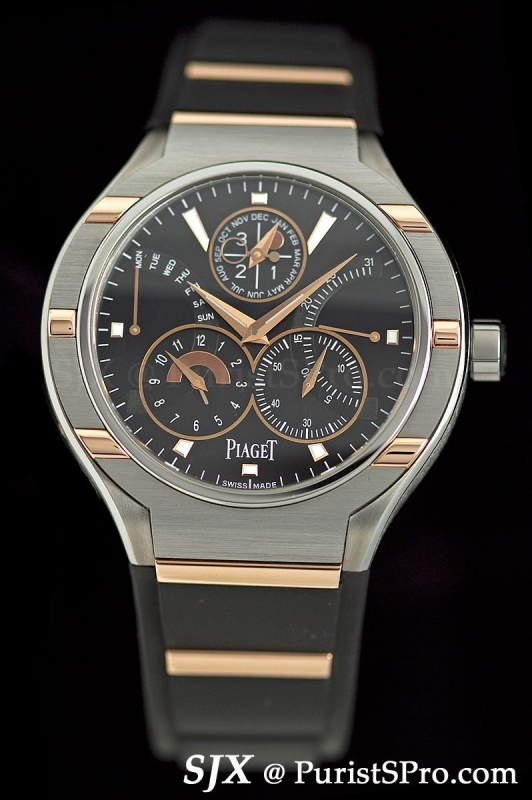
The Polo FortyFive is now available in two tone titanium and rose gold. These are very striking watches.
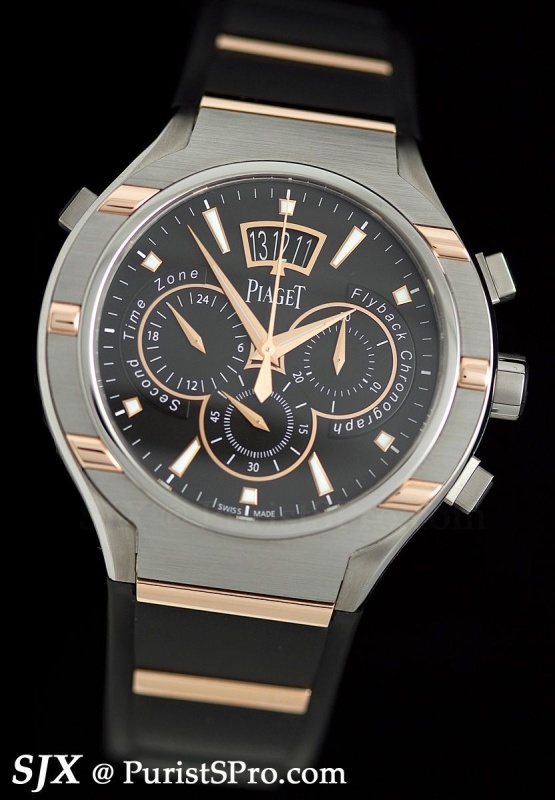
A new Polo FortyFive is the perpetual calendar. I like this better than the chronograph because it lacks superfluous text on the dial.
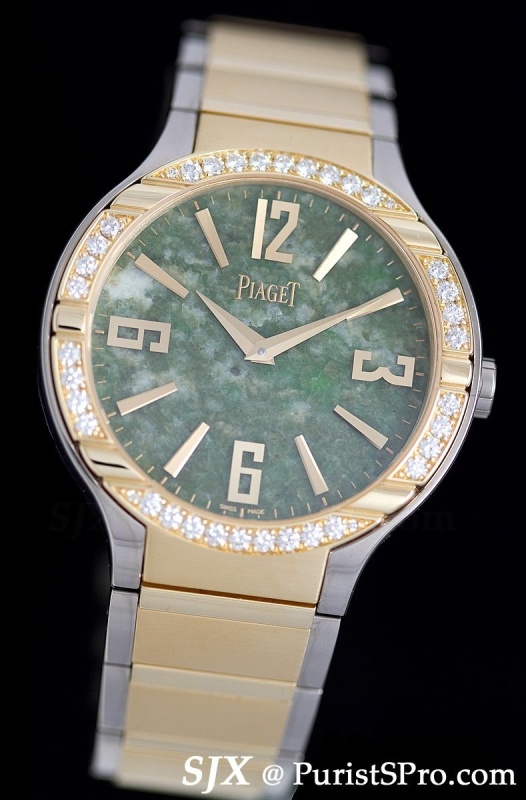
Also revised is the original Polo which now enjoys a sleeker case and bracelet. Piaget now also offers semi-precious stone dials for the Polo. Such dials were synonymous with the brand in the seventies (think ultra-slim case, gold bracelet and stone dial).
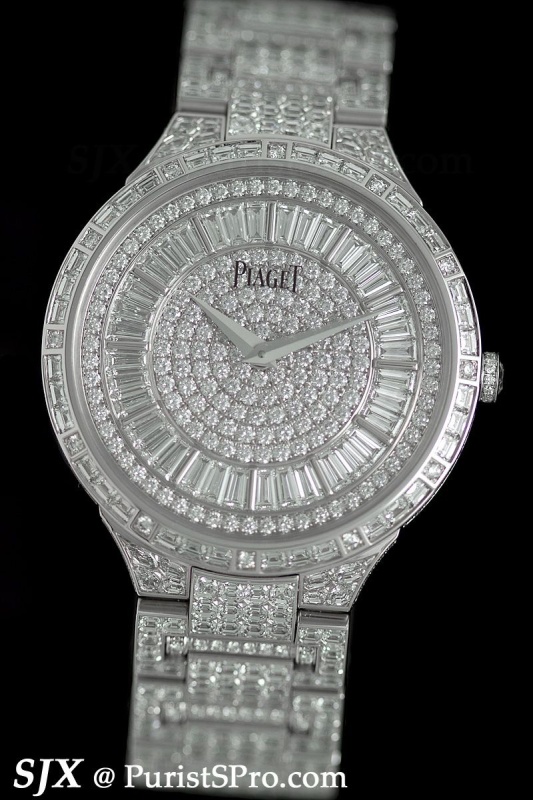
Piaget’s range of ultra-slim watches received jewellery treatment and several of them are now available with gem setting, ranging from a little to a lot.
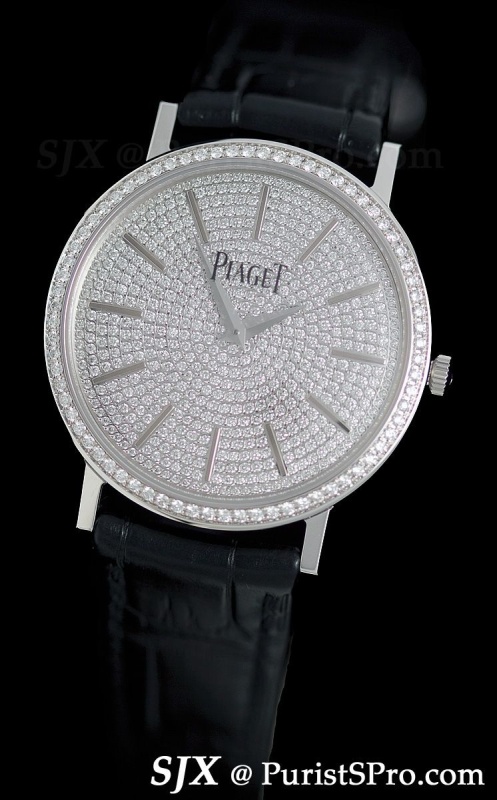
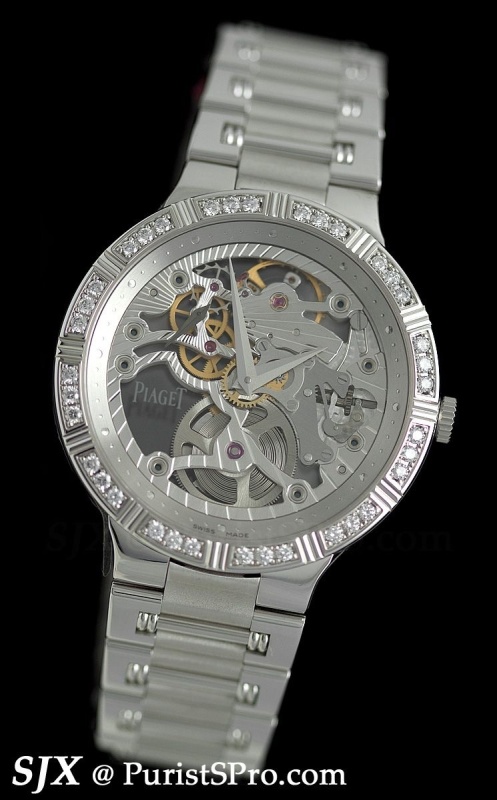
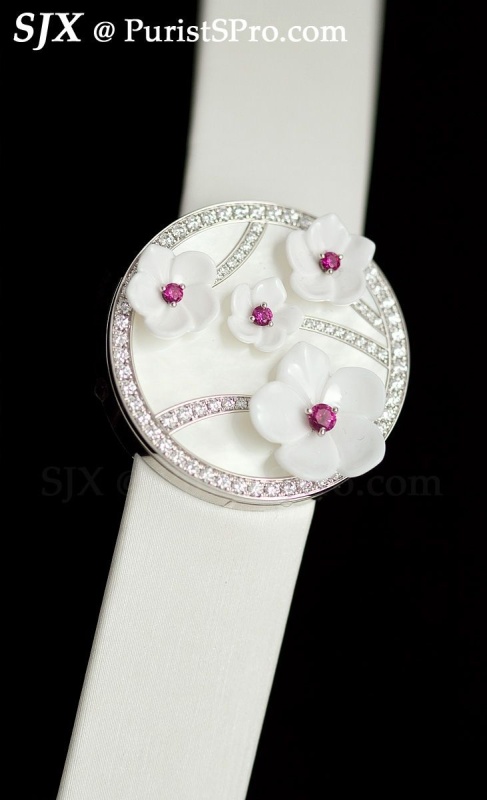
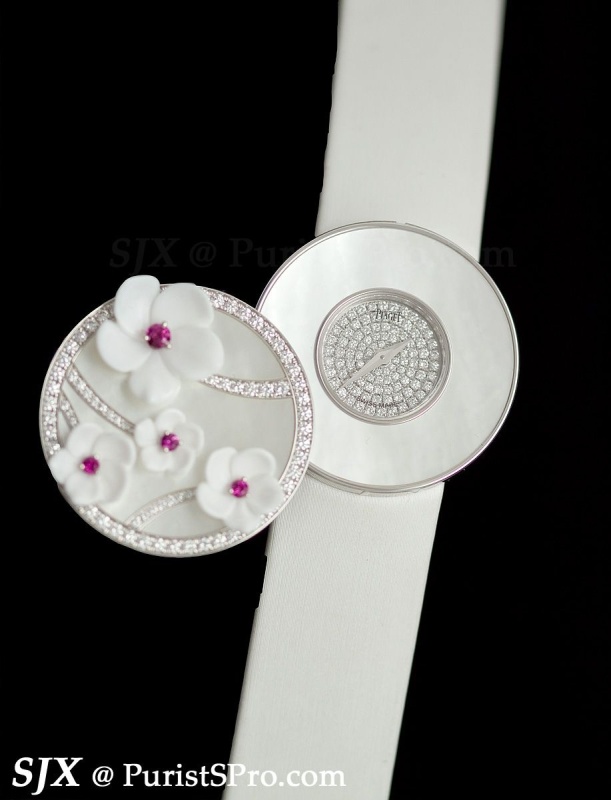
And a whole range of jewellery watches was introduced, including a delicate secret watch that flips open to reveal the time.
- SJX
This message has been edited by SJX on 2011-01-30 09:06:14 This message has been edited by AnthonyTsai on 2011-01-30 16:20:53
The Emperador Coussin Tourbillon Ultra-Thin looks most interesting to me
Care to share your detailed thoughts on it?

Piaget Polo FortyFive Perpetual Calendar
SJX,
I agree that the new Polo FortyFive Perpetual Calendar is attractive. It is not just the two-tone Ti/Rose Gold look but also that the slim perpetual calendar movement (a novelty 2 years ago) is now in a sensible Polo case. Very useable and sensible daily wear....the raison d'etre of a perpetual calendar....no?
Thanks for the write-up from Geneva 2011.
Regards,
MTF
*** SIHH 2011: Richard Mille ***
With the exception of one watch the novelties from Richard Mille all took the familiar tonneau form. The top of the line addition to the collection is the RM038 Bubba Watson. Mr Watson, whose real name is a much less memorable Gerry, is a pro golfer who holds the distinction of being the longest driver on the PGA tour.
Naturally he required a watch he could wear while making his awesome drives, like Rafael Nadal needed a watch during a match.
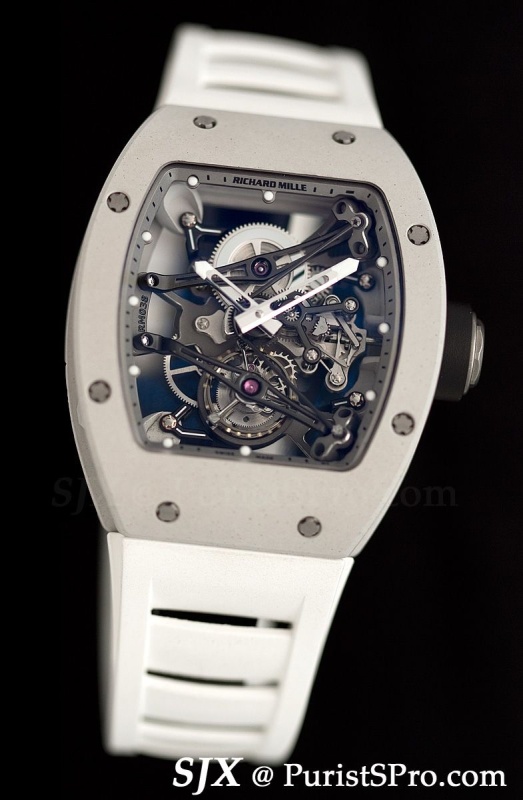
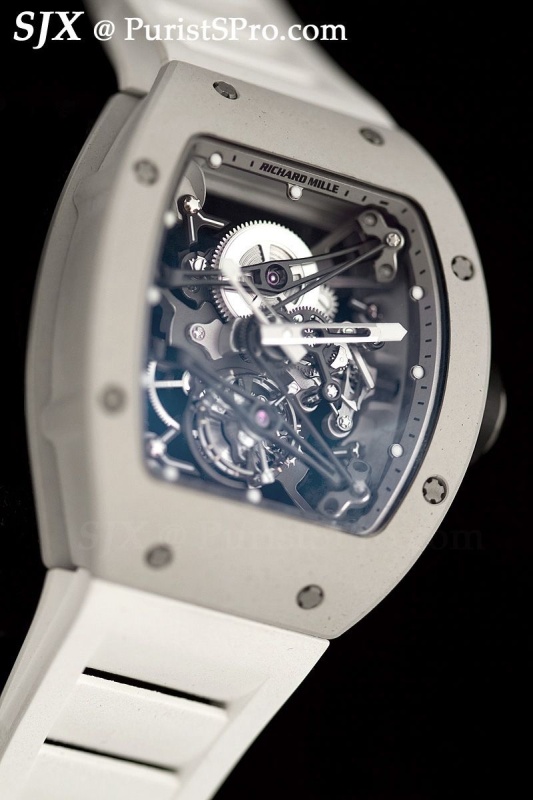
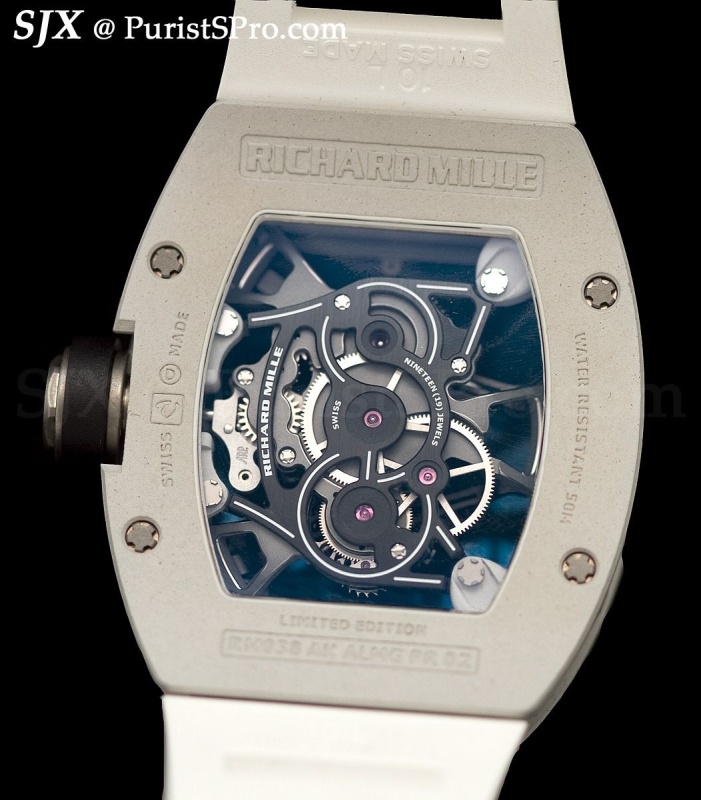
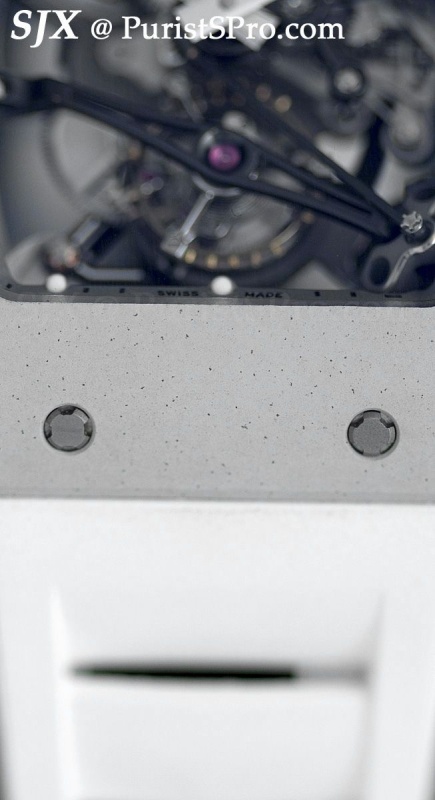
When I first saw photos I thought this would be a tacky looking iPod-esque watch. But contrary to what I had expected, this watch has a high cool factor and the ultra-skimpy skeletonised movement is pleasingly constructed. The case of the RM038 is made of a magnesium aluminium alloy coated with ceramic giving it its pale colour, while the skeletonised tourbillon movement has titanium bridges. One of the most notable features of the watch is a titanium loop around the hands to ensure they don’t fall off when Bubba swings the club.
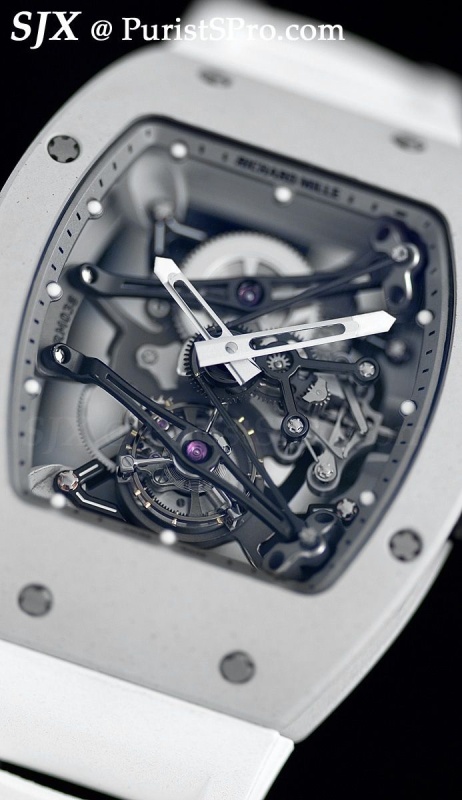
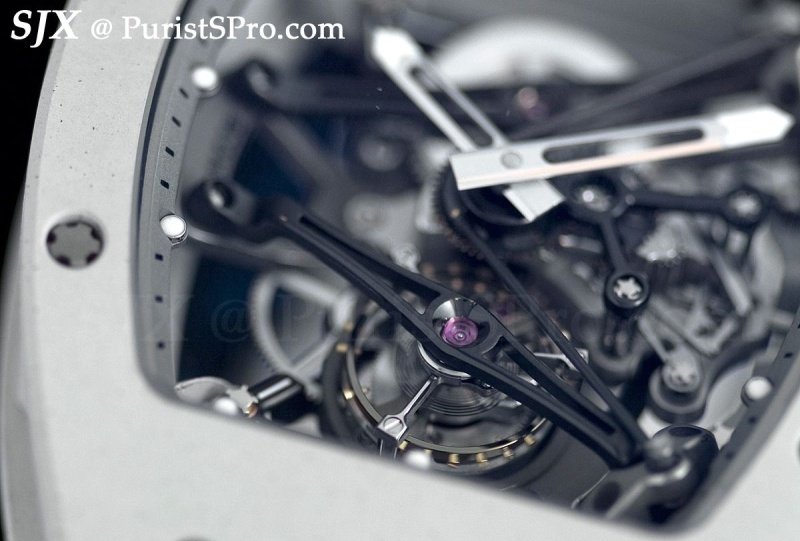
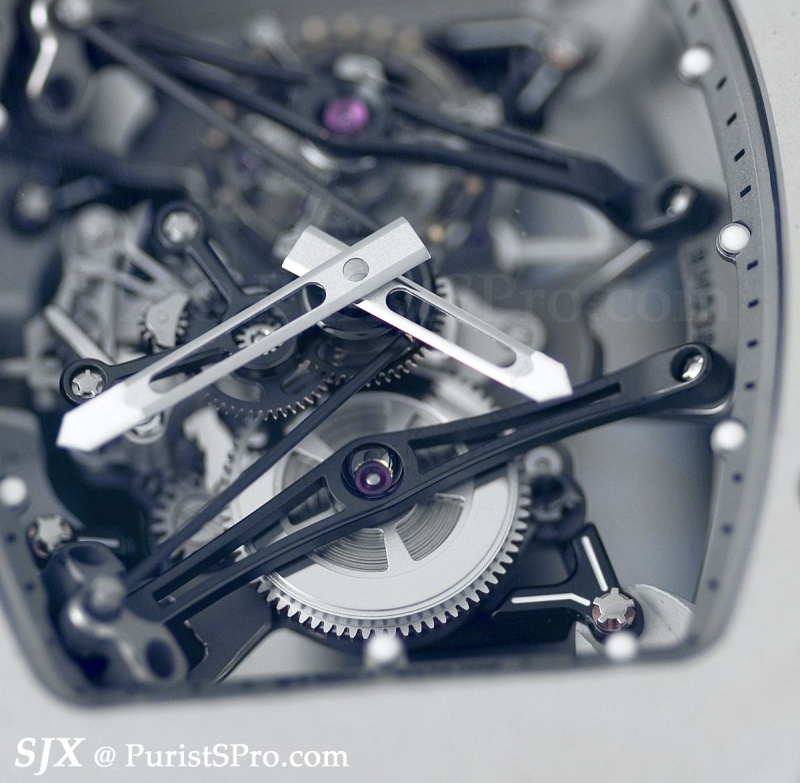
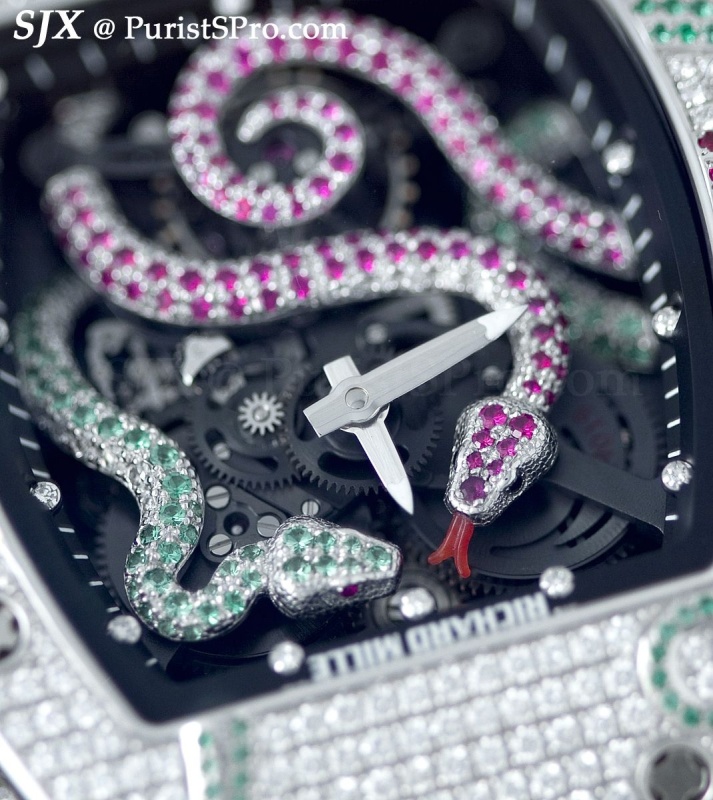
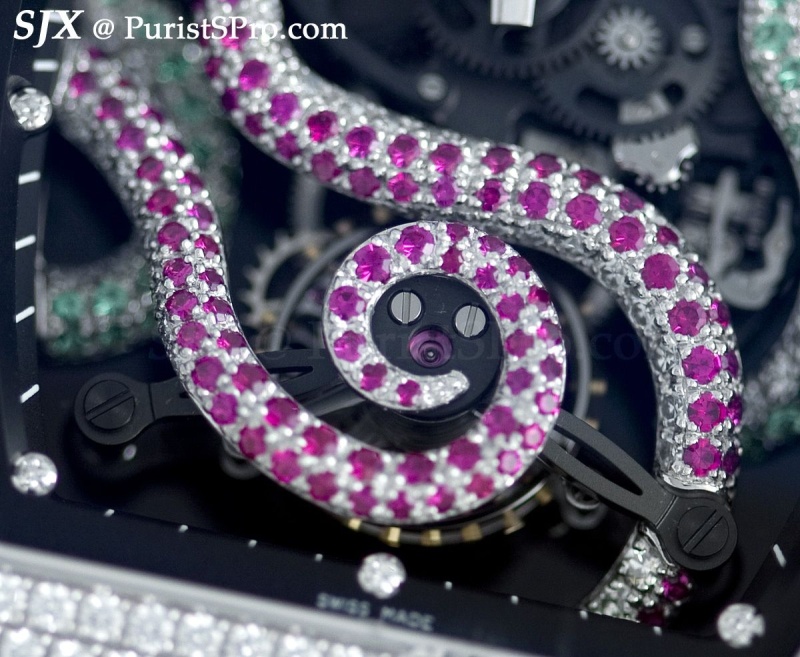
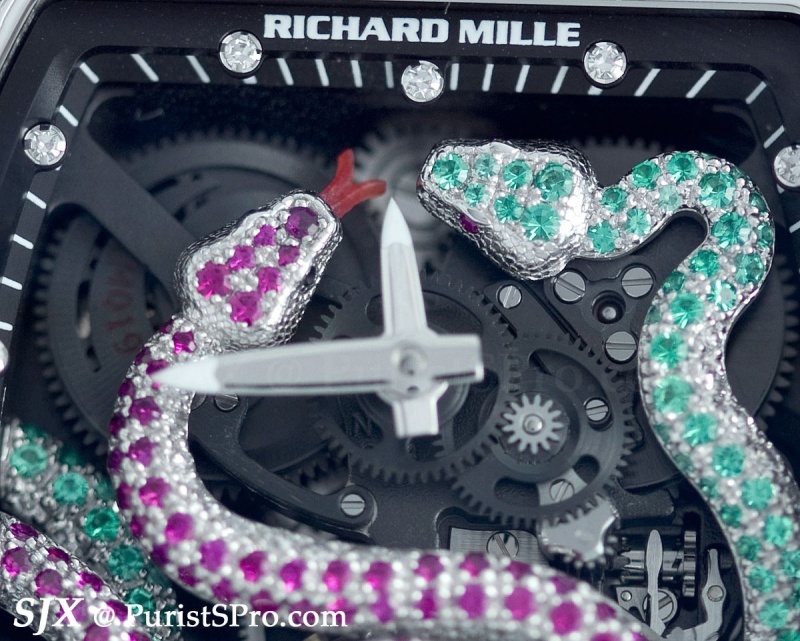
Going in another aesthetic direction is the RM026 tourbillon. Like the elegant Celtic Knot tourbillon, the RM026 also has an onyx base plate and is also designed as a ladies’ tourbillon. But taking the place of the mysterious loops of the Celtic Knot is a pair of serpents covered in gems; notice the red snake has its tongue flicking out. Each of the RM026 will be a unique piece with different stones. This one is certainly an acquired taste.
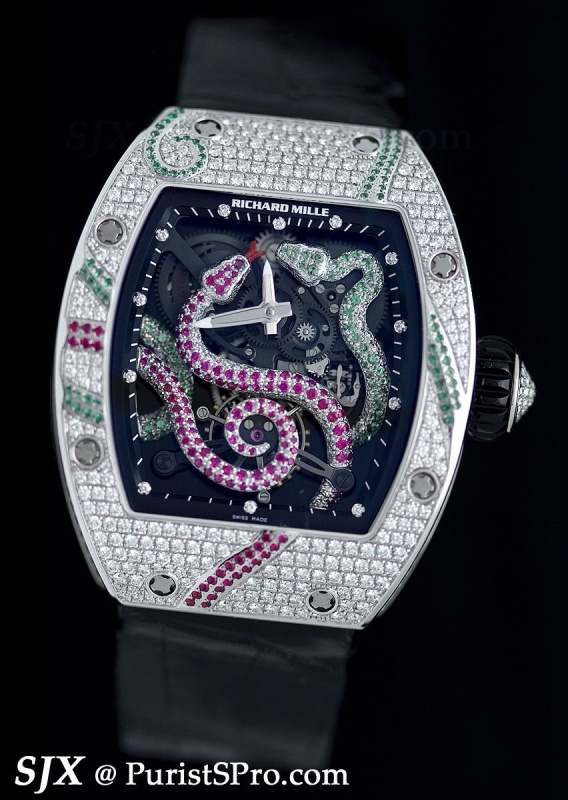
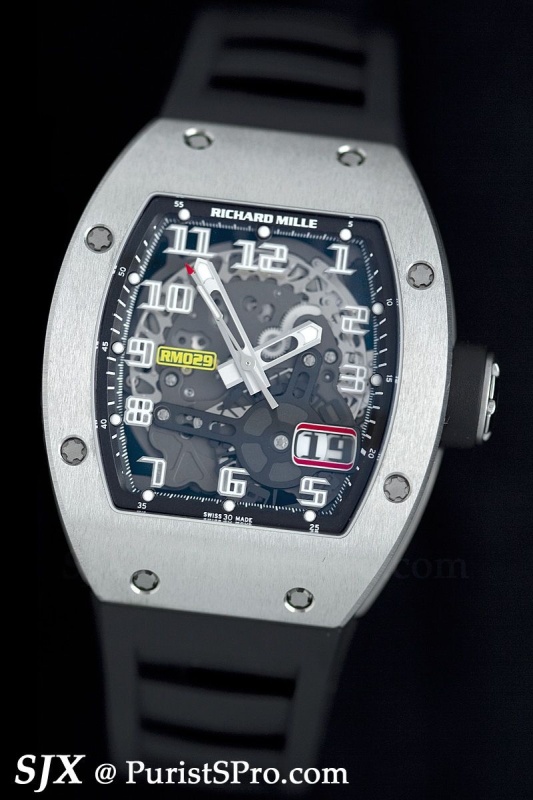
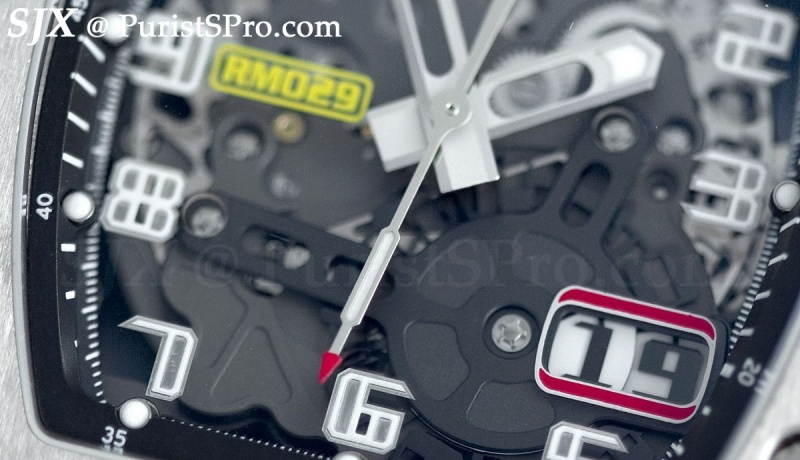
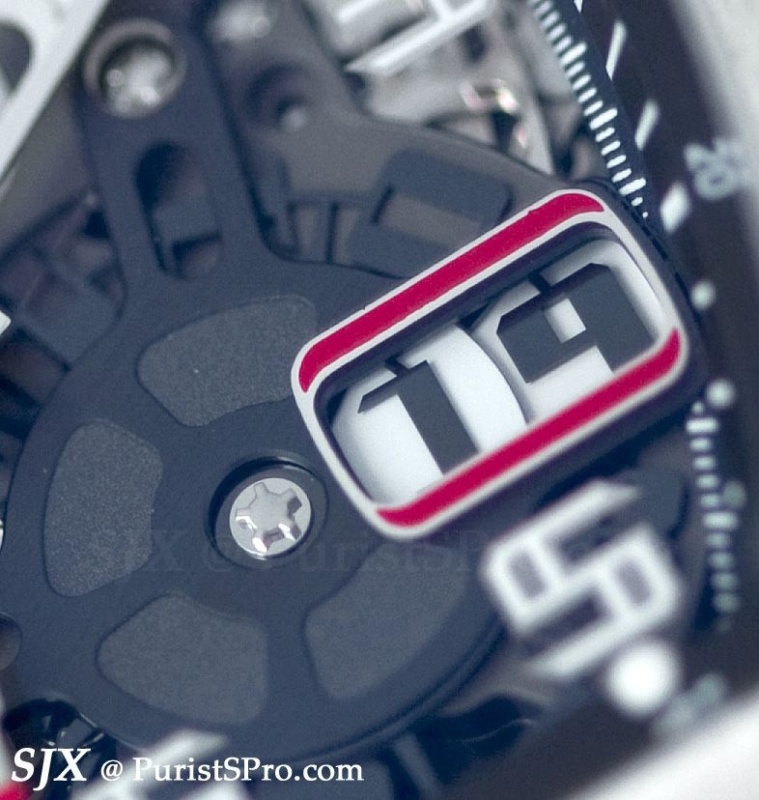
RM has also added two more entry level models to the collection, the RM029 and RM030. The RM029 is essentially an RM010 with an oversized date.
The RM030 on the other hand is a little more interesting. It has a power reserve indicator at nine o’clock, while at 12 o’clock there is an on-off display. The latter indicates whether the declutchable rotor is engaged; once the mainspring reaches 50 hours of power reserve the winding mechanism disengages and only reengages when the state of wind drops to 40 hours.
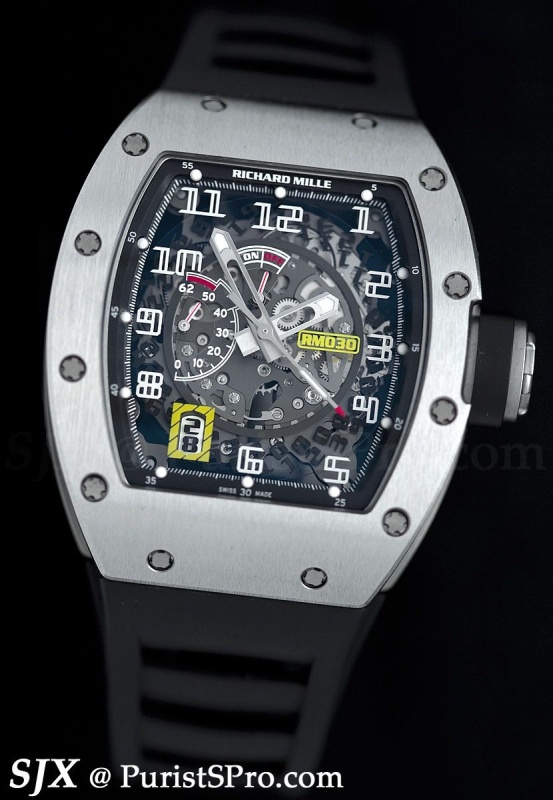
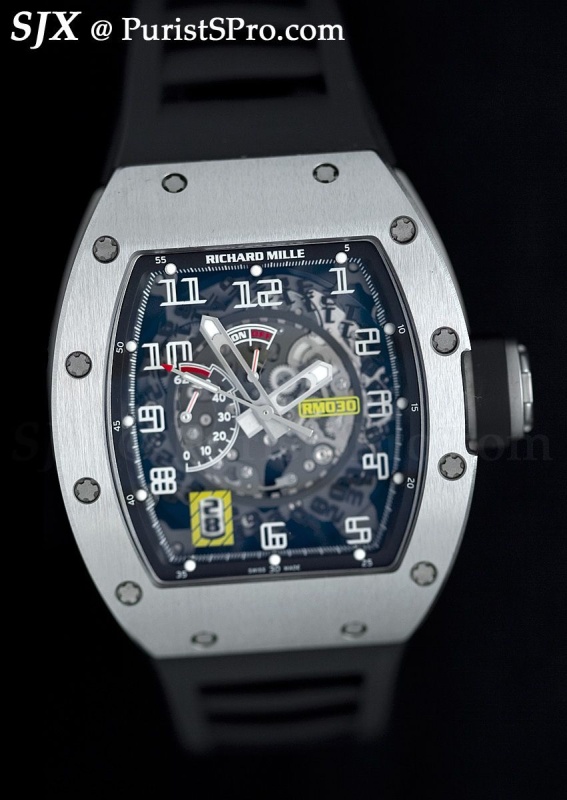
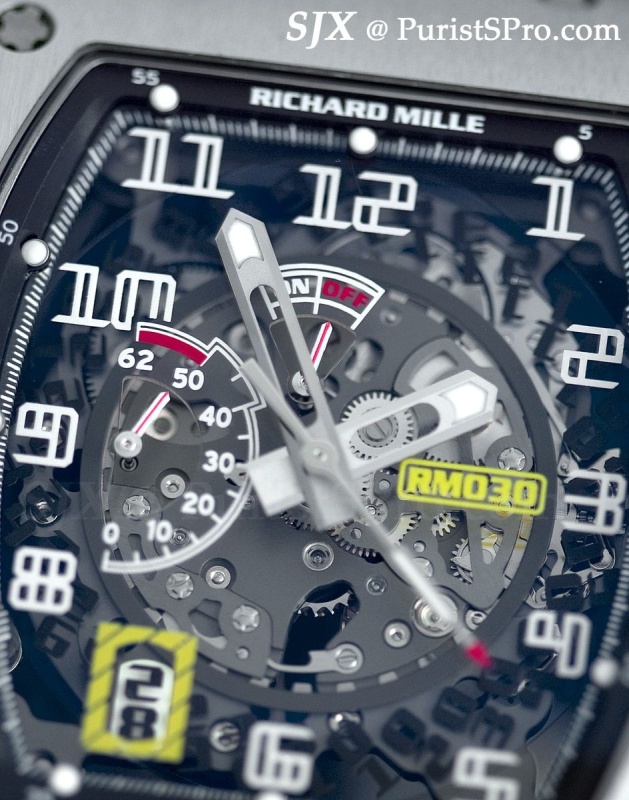
This watch is larger than the RM029 and RM010, instead it has the larger, more muscular case of the RM011. It also shares the oversized crown of the RM011.
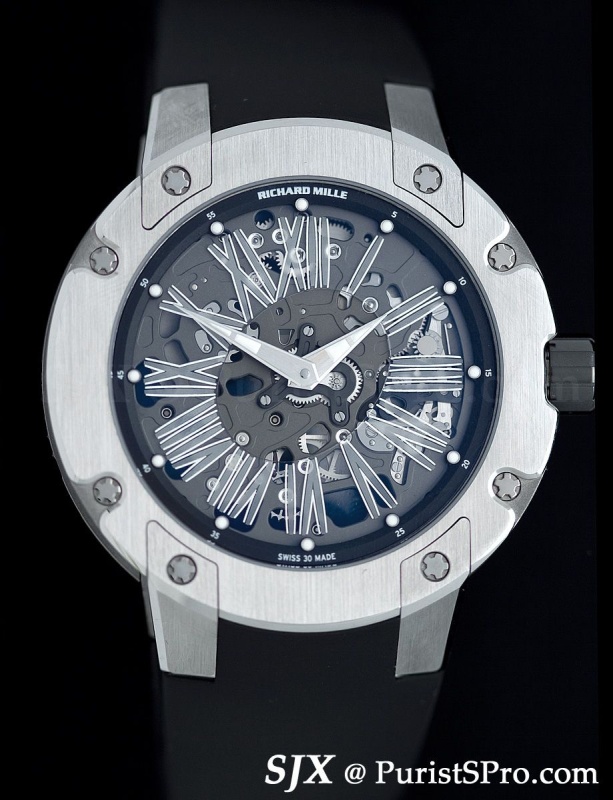
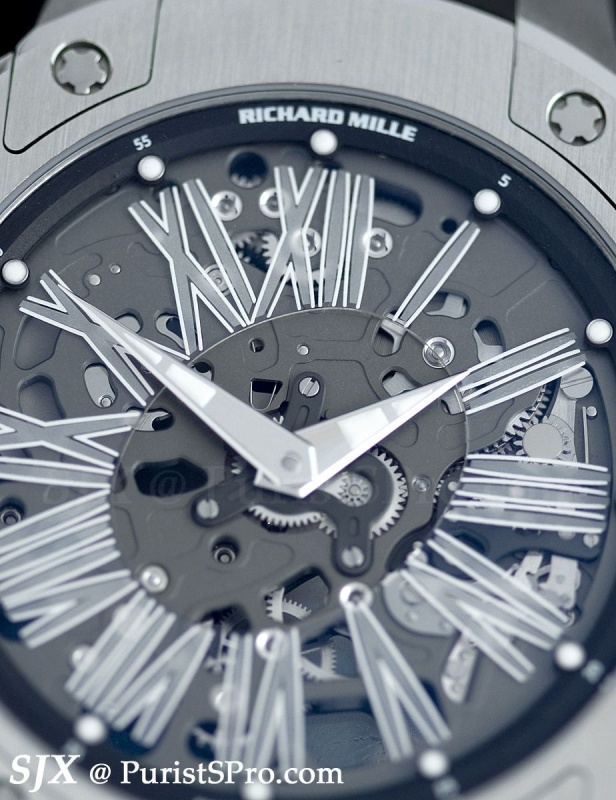
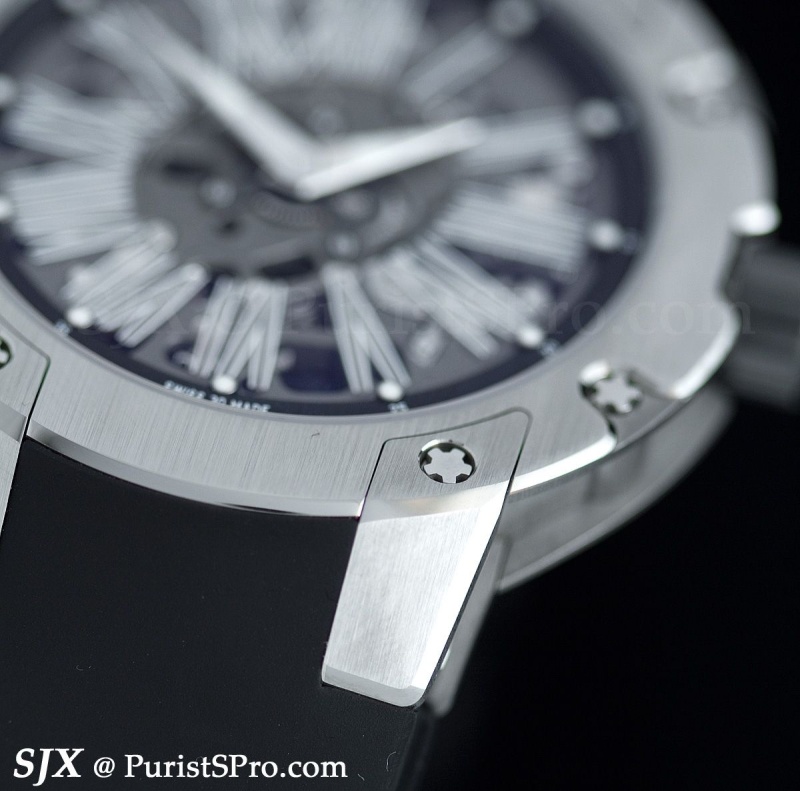
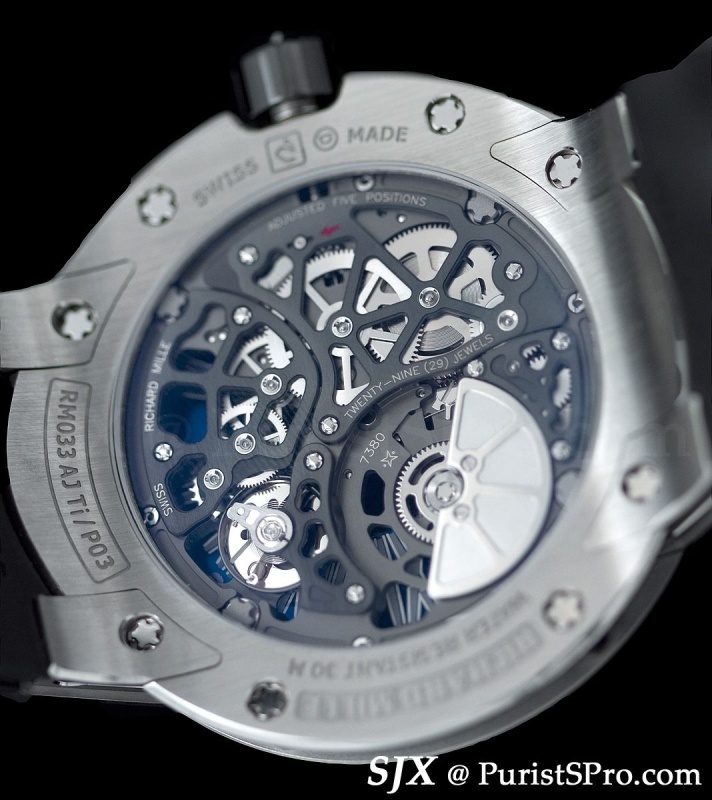
And fitting like a round peg in a tonneau hole is the RM033 ultra-thin automatic. Though it bears design elements shared with other RM watches like the sapphire dial and openworked movement, it looks and feels like no other RM. Though I understand that a watch like that is needed to round out the collection, I still ask “Why?”
- SJX
This message has been edited by AnthonyTsai on 2011-01-30 16:21:14*** SIHH 2011: Roger Dubuis ***
Roger Dubuis, along with Baume et Mercier, is one of the turnaround stories of SIHH. Management spent the last couple of years since the Richemont acquisition tightening up the production processes. Now with that done the collection will be rebuilt in a more tasteful direction, more James Bond and less Liberace.
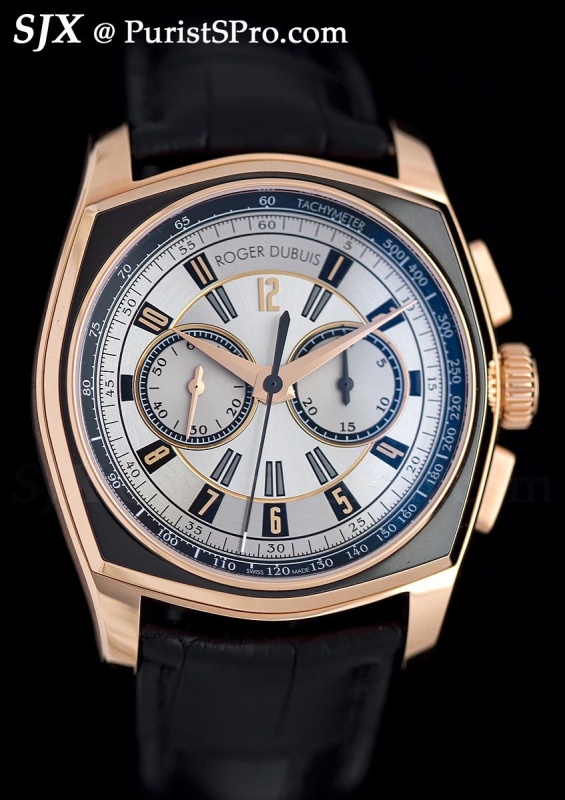
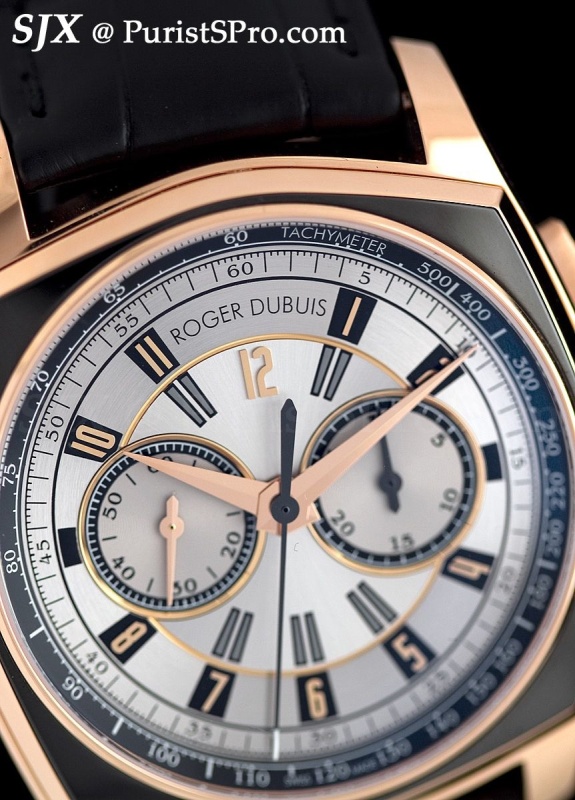
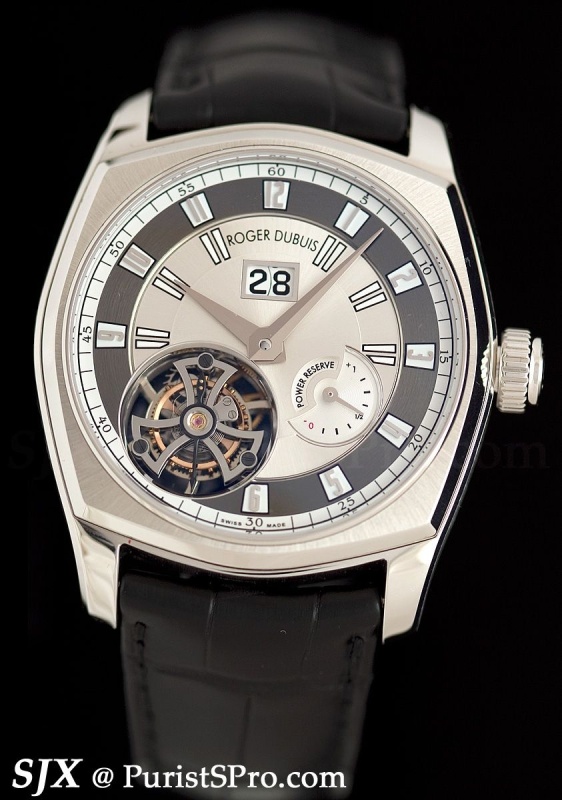
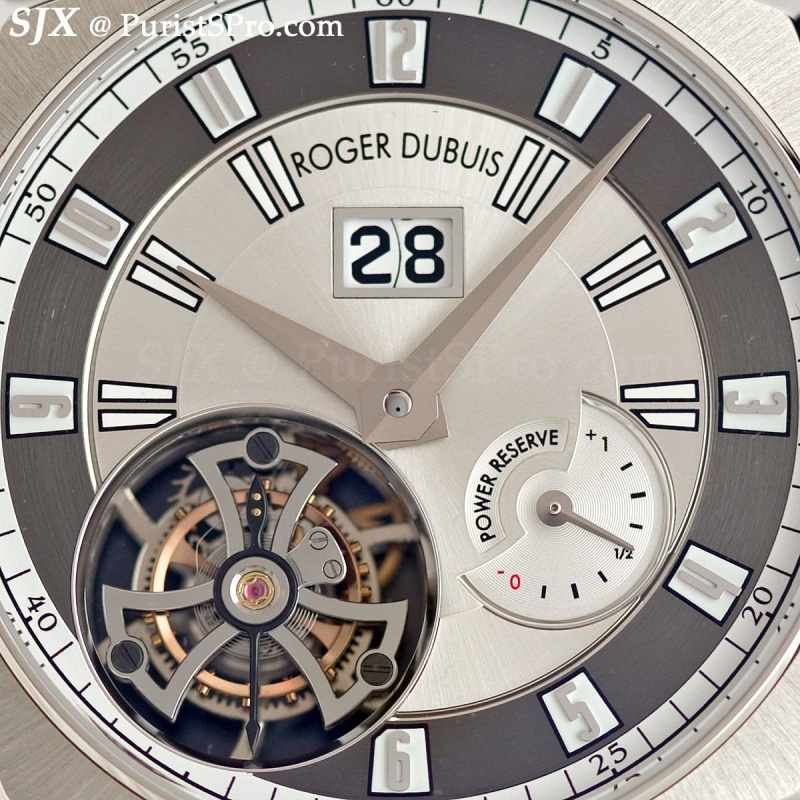
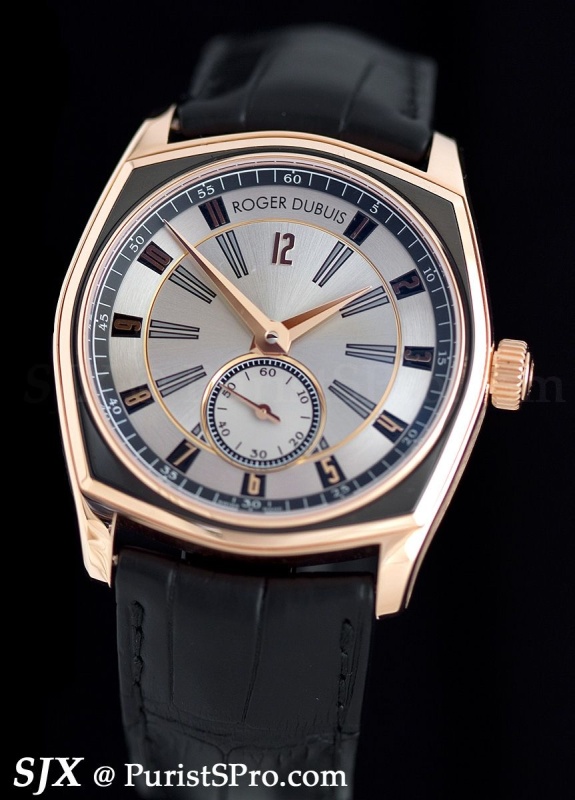
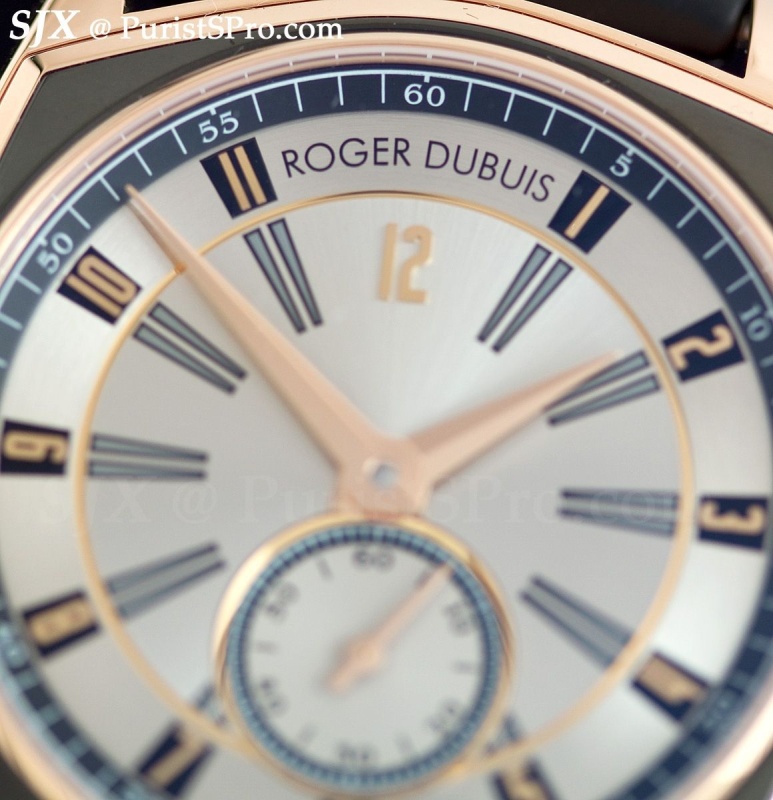
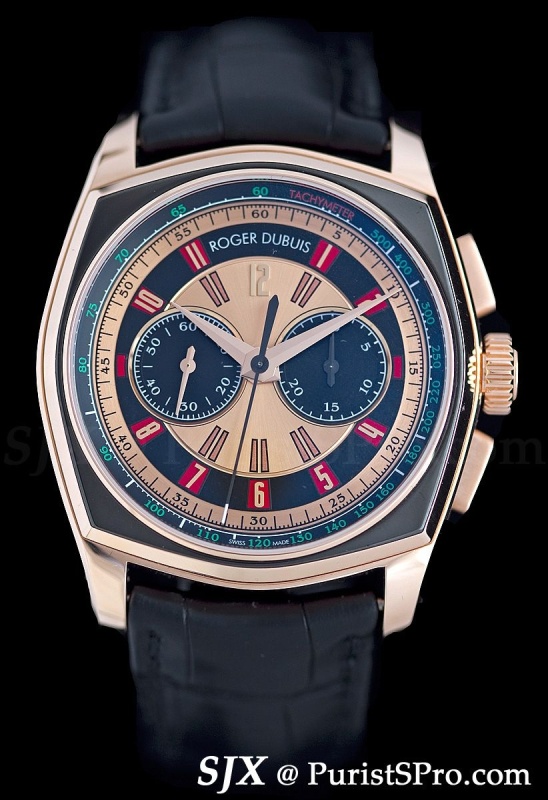
This year sees the first entirely new model range introduced since Richemont’s takeover. Known as La Monegasque, the new range has a cushion case that is inspired by the famous Sympathie but not quite as dramatically shaped. Nevertheless I find it much more urbane than any of the Roger Dubuis of recent years. And prospective buyers would be pleased to know that these are priced more competitively than the comparable RD watches of recent years.
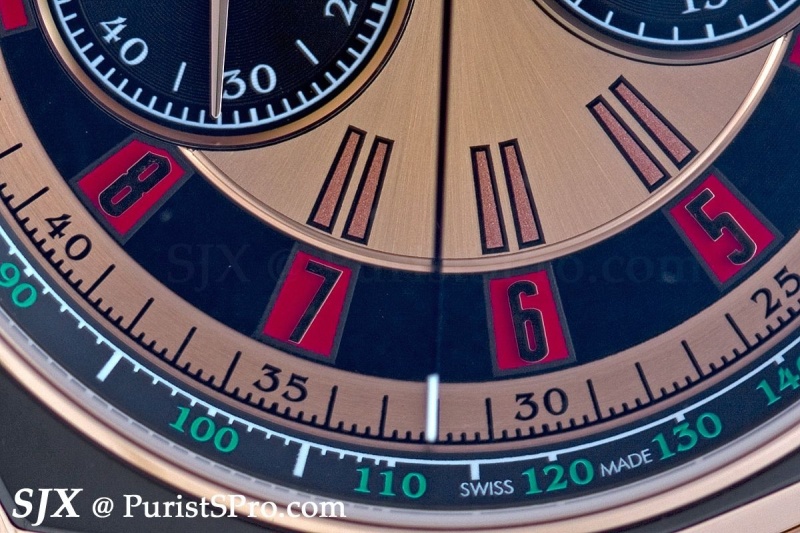
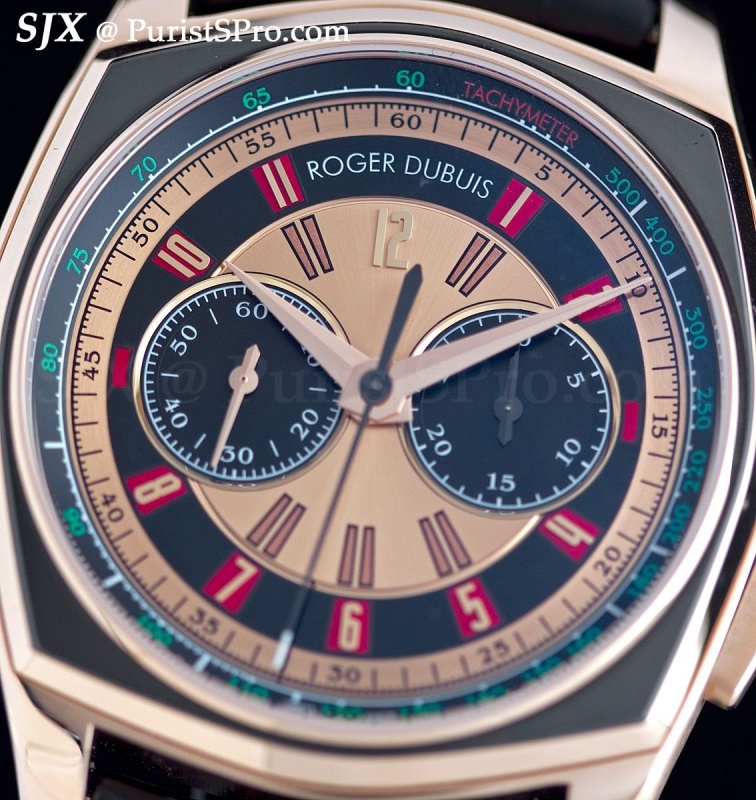
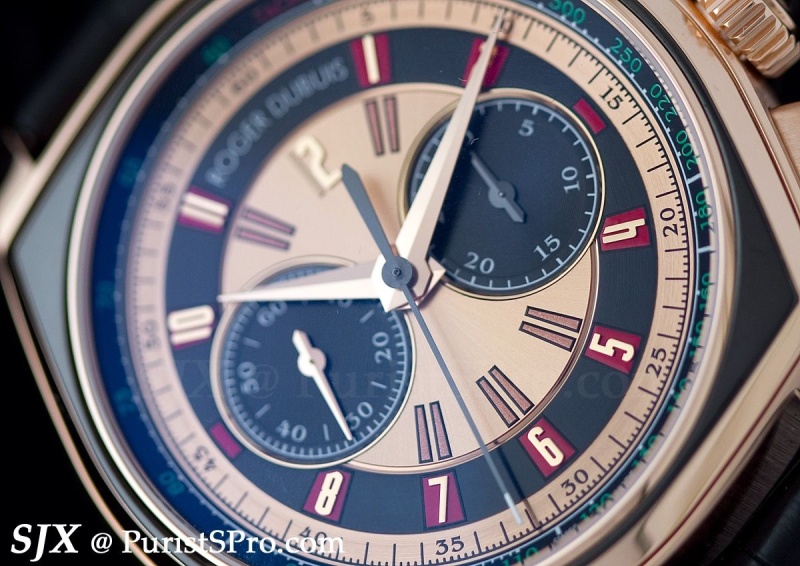
La Monegasque includes a chronograph, automatic, perpetual calendar and tourbillon. The details of the designs are worth noticing, like the black enamel border on the bezel found on some of the models. And I really like the serif font for the minute track and tachymetre.
The chronograph
The tourbillon
The automatic
The perpetual calendar, while attractive, has windows that are a tad too small in my opinion.
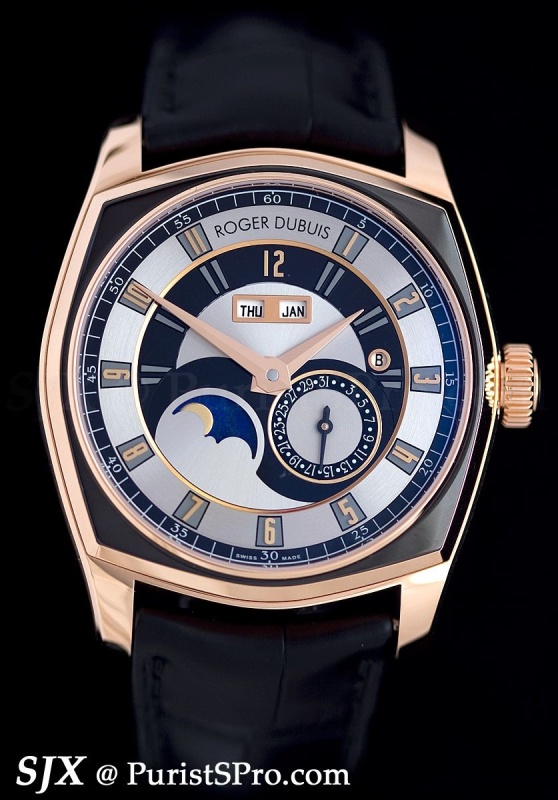
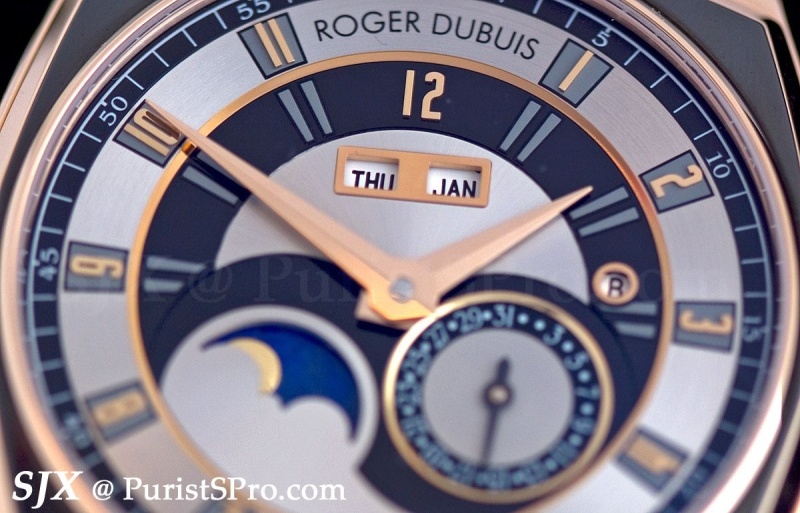
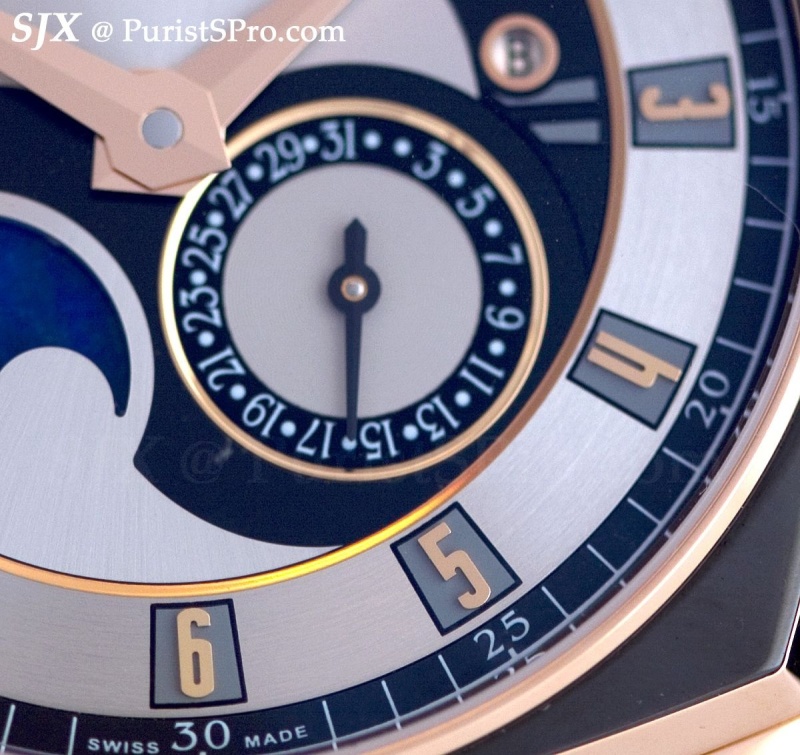
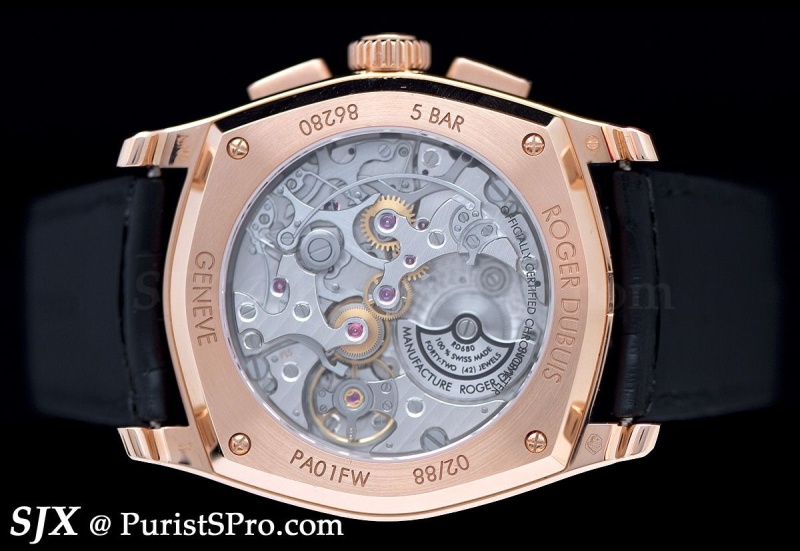
My pick of the new range is the chronograph, which uses the latest RD in-house calibre, the RD680. It is an automatic movement with microrotor featuring a column wheel chronograph. Created as the entry level chronograph movement for the brand, the RD680 is not quite as elaborate (look at the bridge shapes and levers) as the other RD calibres but nevertheless respectably constructed and finished to Geneva Seal standards. I would, however, strike out the clumsy “100% Swiss Made” line from the rotor.
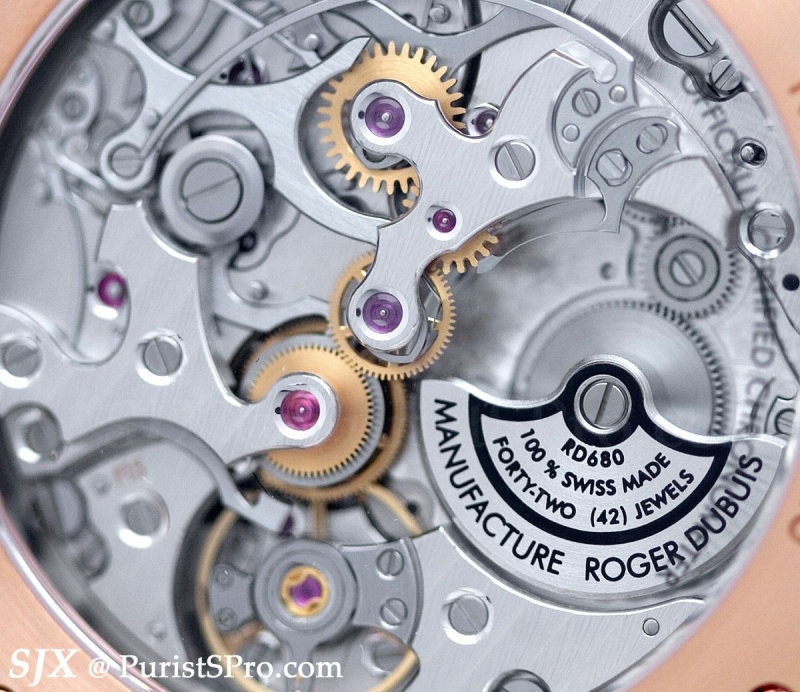
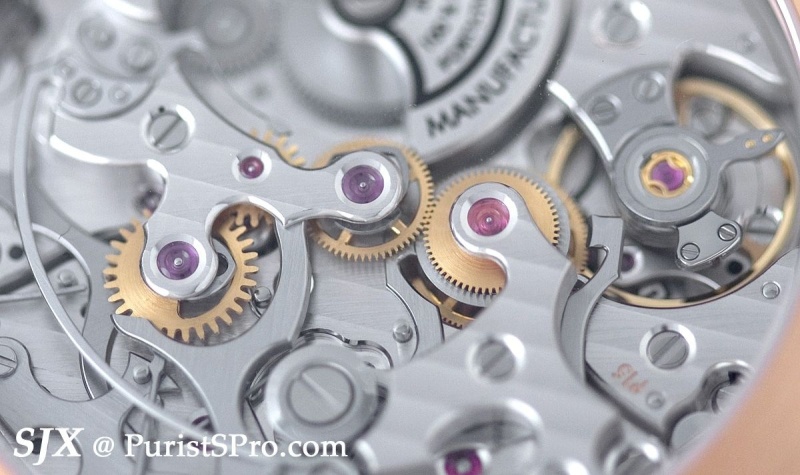
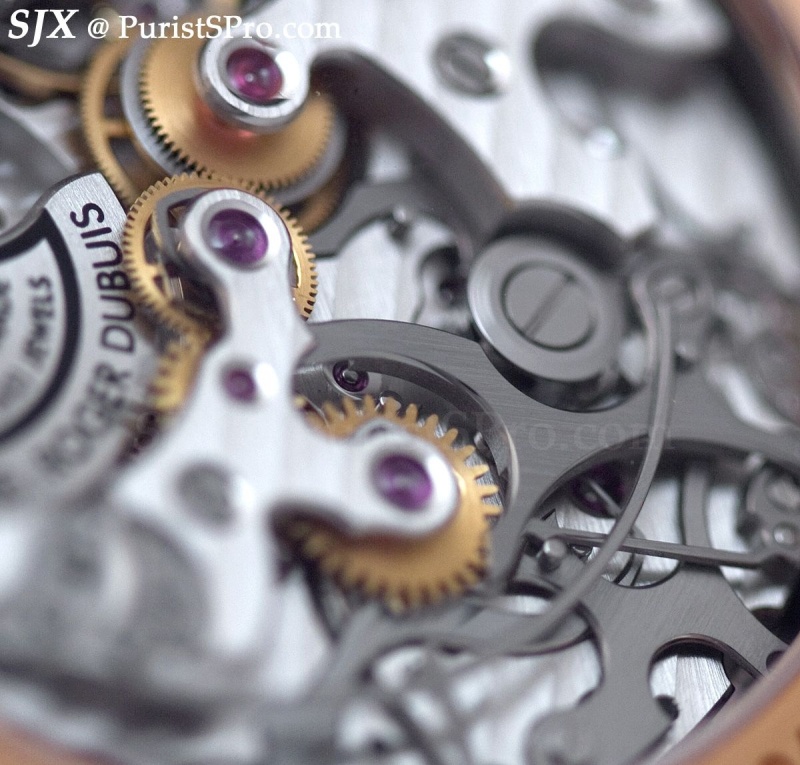
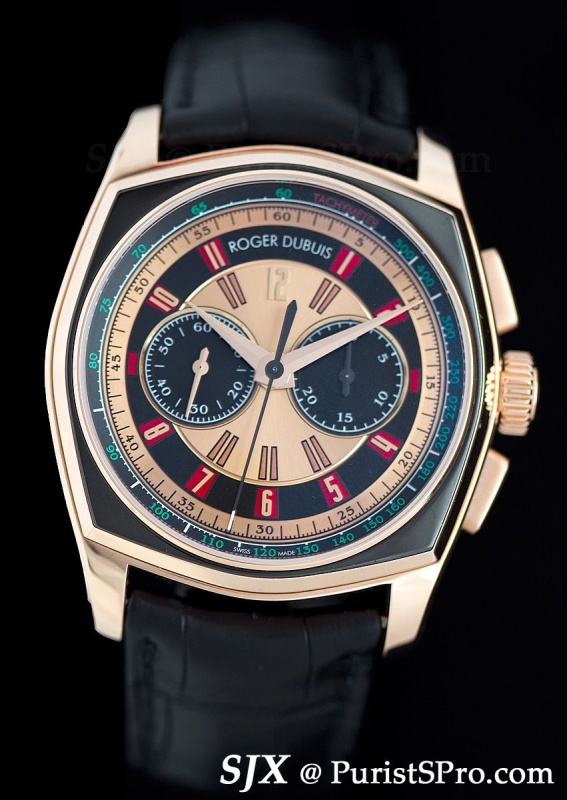
A standout is the La Monegasque Big Number, a limited edition of 128 pieces. In black, red and green, it is inspired by a roulette wheel. The model name is tacky but the watch is a good combination of bright colours without looking silly.
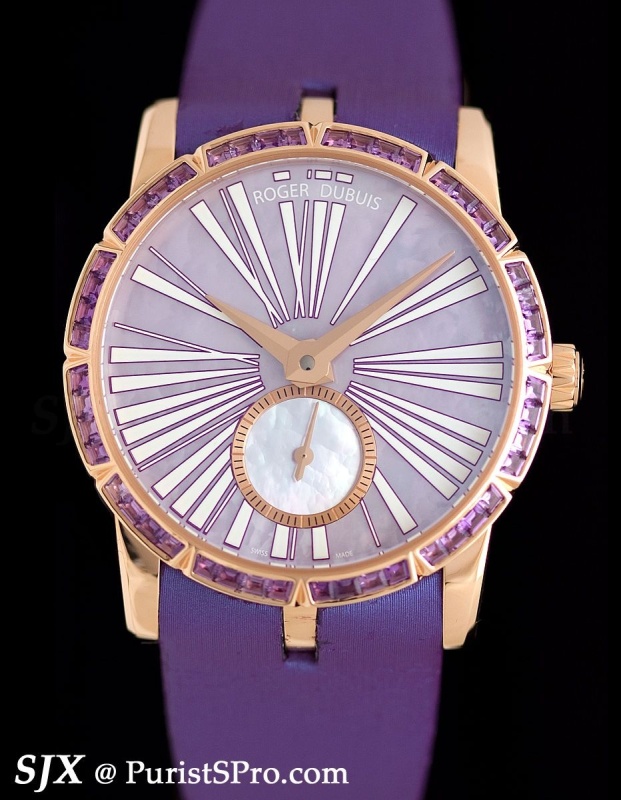
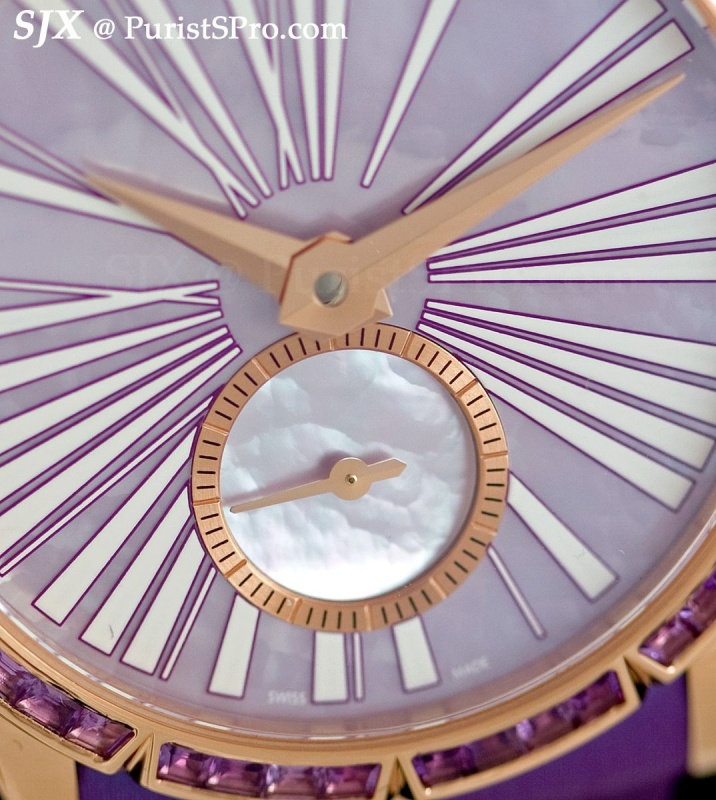
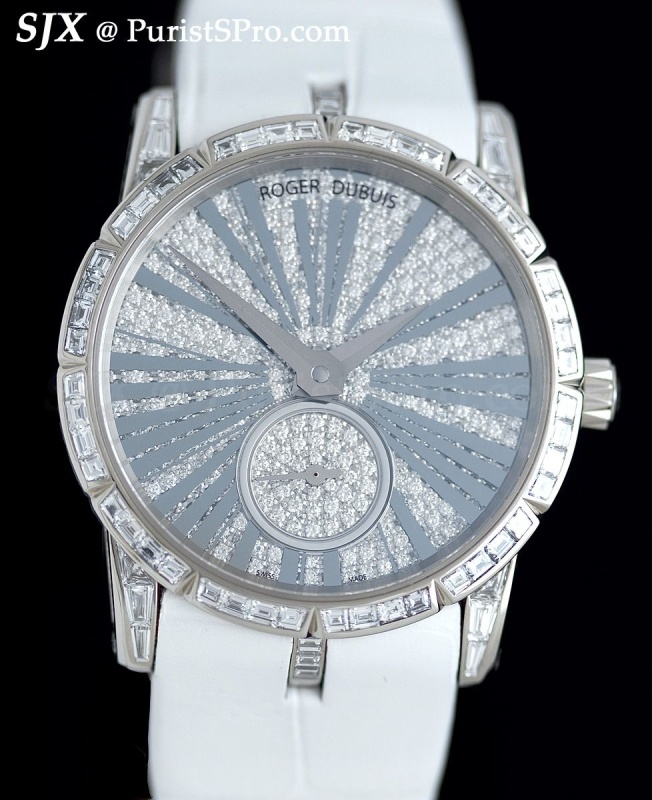
The Excalibur line sees the addition of a 36 mm ladies’ model in numerous variants with different options of colours and stone settings.
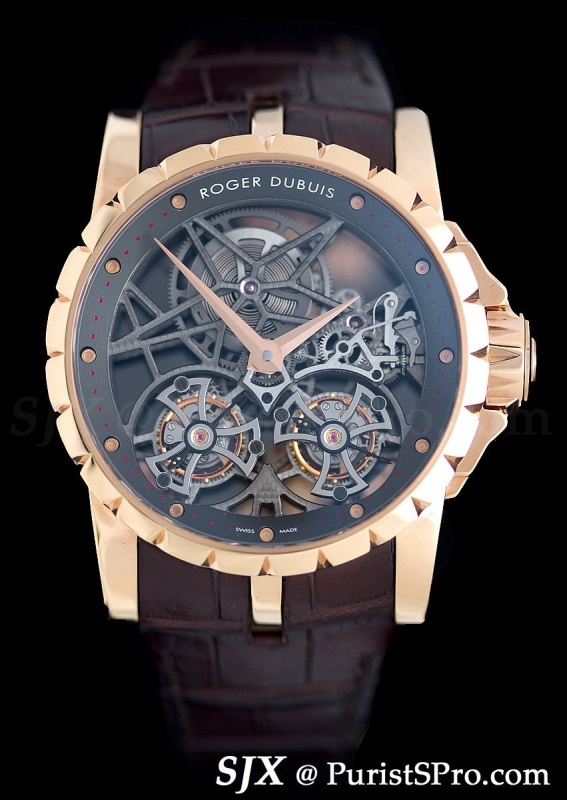
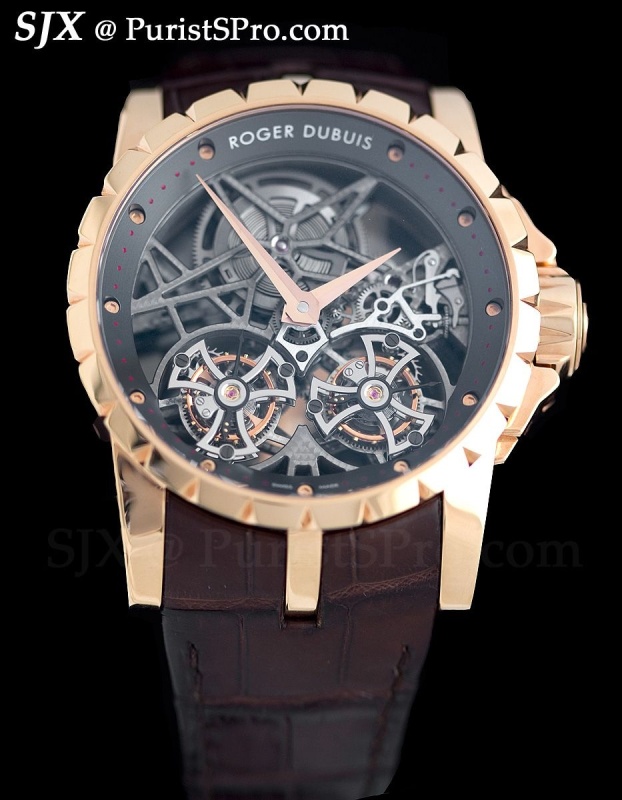
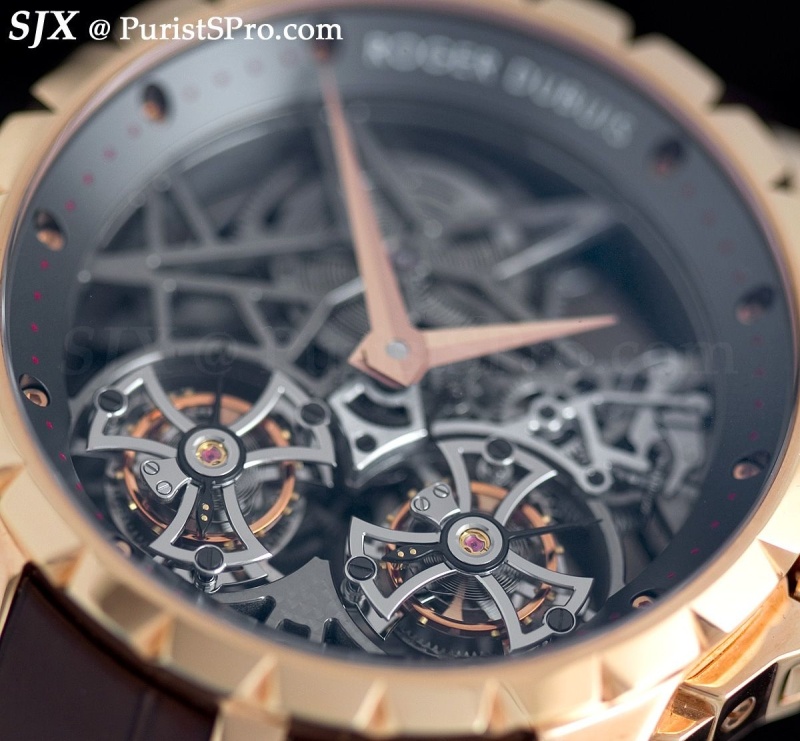
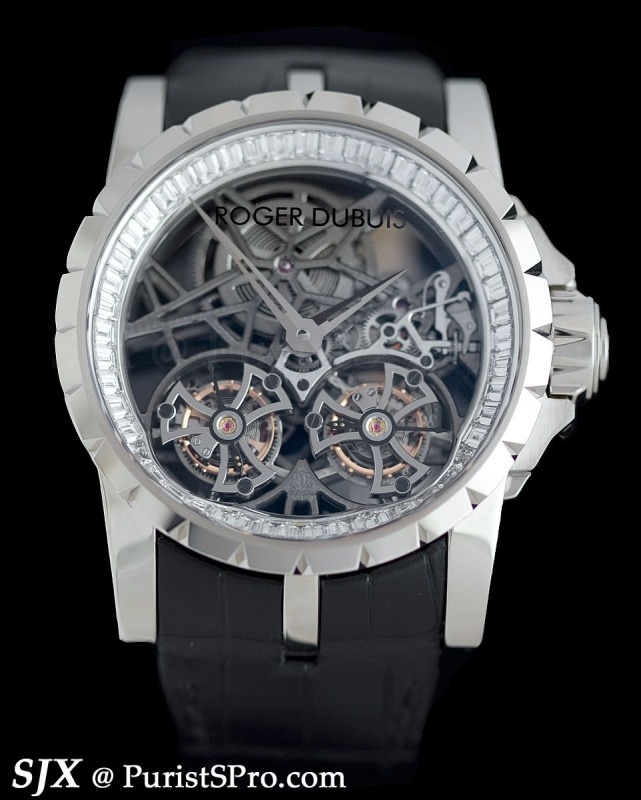
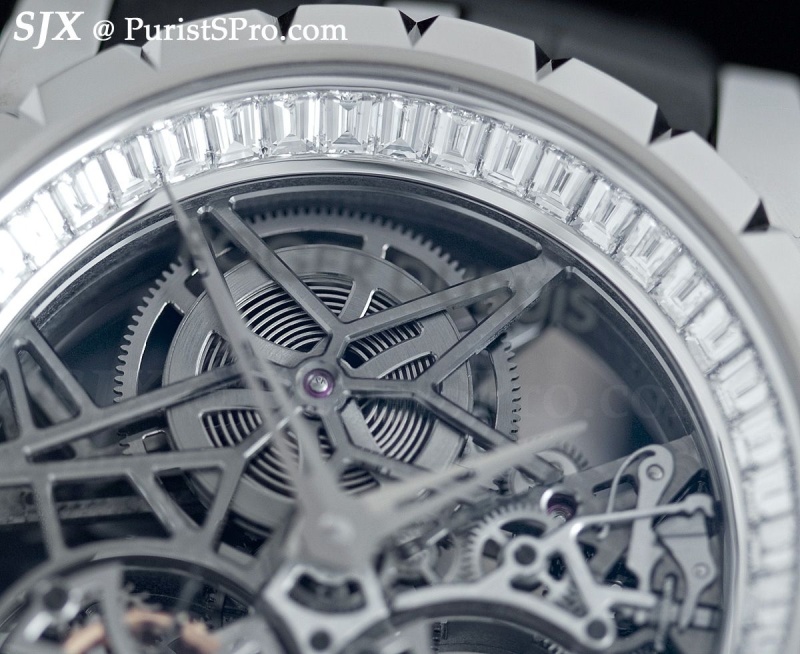
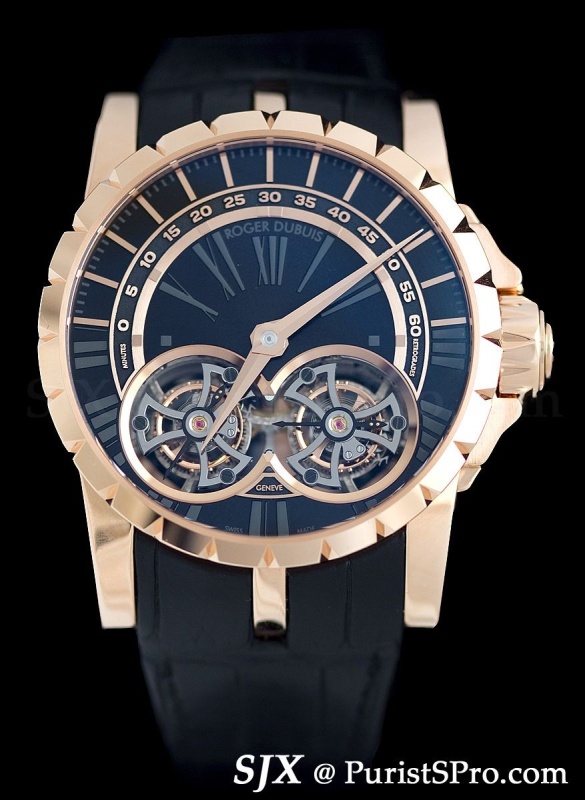
And the Excalibur Double Tourbillon, the brand’s signature complication, has been tweaked.
- SJX
This message has been edited by SJX on 2011-01-30 09:25:05 This message has been edited by AnthonyTsai on 2011-01-30 16:21:34Some thoughts and questions
Chrono inspired by roulette is so passé and gimmicky, more like something the previous owner of RD would do. The more traditional chrono is very nice, bar the 100% Swiss made, which can be quite comforting actually. How many manufacturers dare claim that!!, maybe 95% Swiss made for the rest? 90% value added Swiss made for some??!!
The bejewelled stuff for ladies look quite good. Under the previous owner, they had a jewelry line, is that still relevant? Are the stone setting done in house, or by one of the Richemont's more blink based brands?
The QP....is that a prototype, again! Like the the Lange Zeitwerk hour strike? Again, the date disc is misaligned or am I crossed eyed?
Best, Horo
No thoughts but answers
in-house in Geneva. I am not sure if the manufacturer that makes it is a
part of Richemont or an external contractor.
As for the watches, all are prototypes.
- SJX
*** Urwerk ***
Succeeding the Urwerk 103, the 110 tells the time on rotating cubes for the hours and a pointer indicating the minutes.
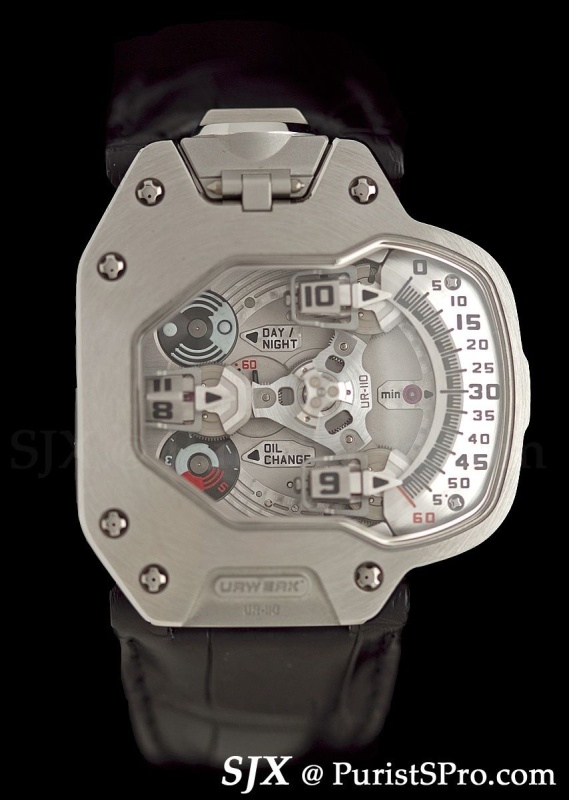
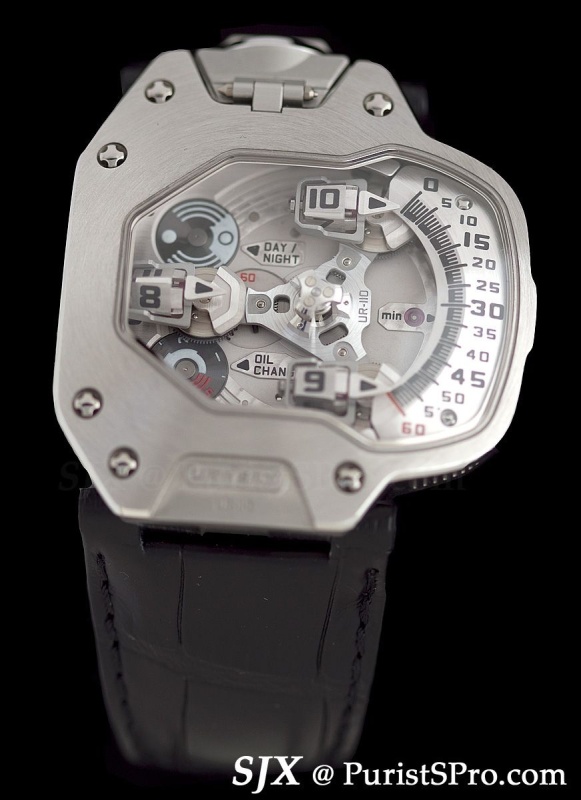
Each cube is fixed to a minute hand that travels the 60 minute arc on the right. There are three of these satellites, each fixed to a central carousel, that thanks to planetary gearing turns each of the cubes as the carousel rotates. If you think about the three armed central platform and its motion you will realise how this is evolved from the 103.
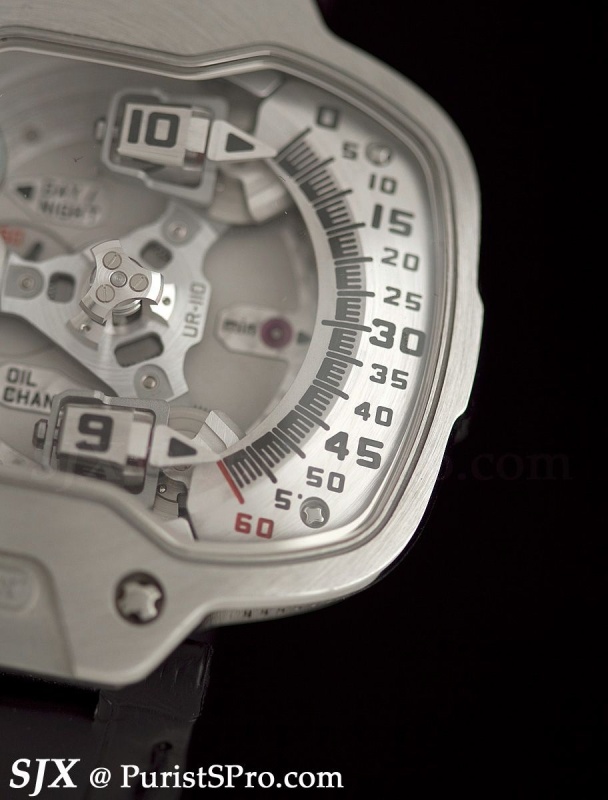
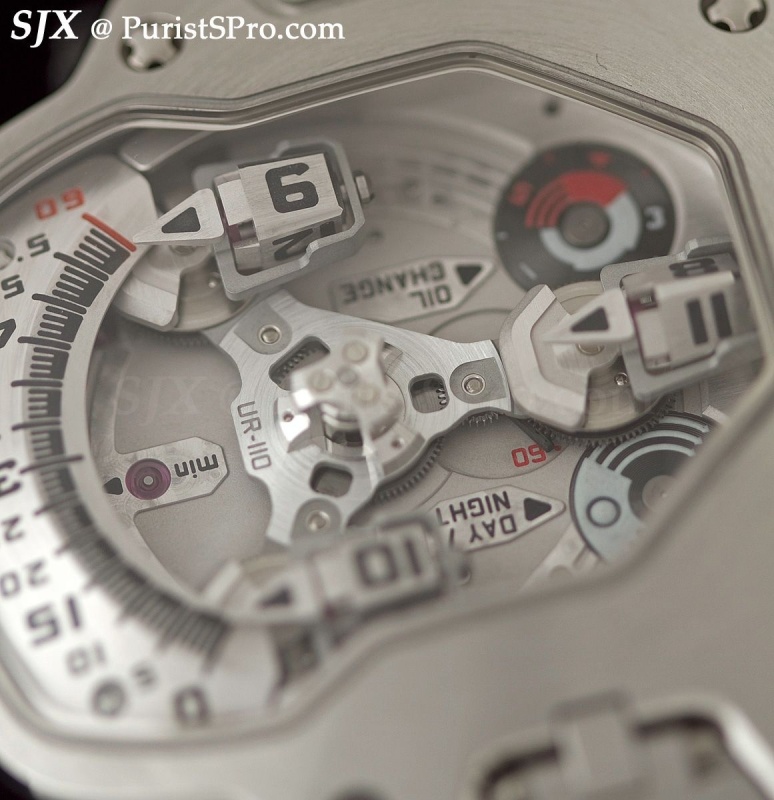
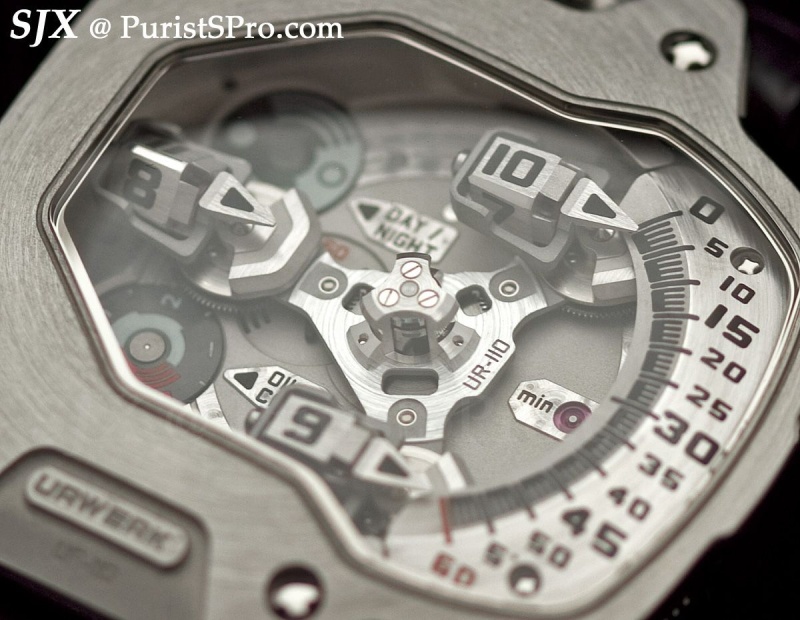
The dial also features a day/night indicator, service “oil change” display and a constant seconds hand at what is traditionally nine o’clock.
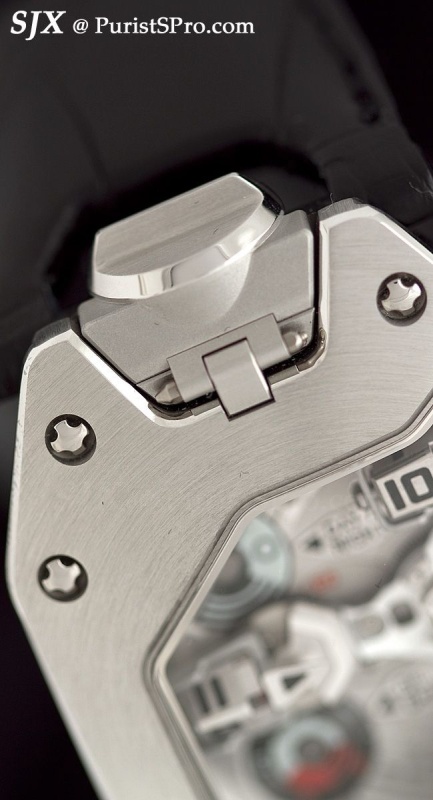
The 110 also has a useful crown lever that makes operating the crown quite handy.
Like the Urwerk 202, this is an automatic watch with turbine winding visible from the back.
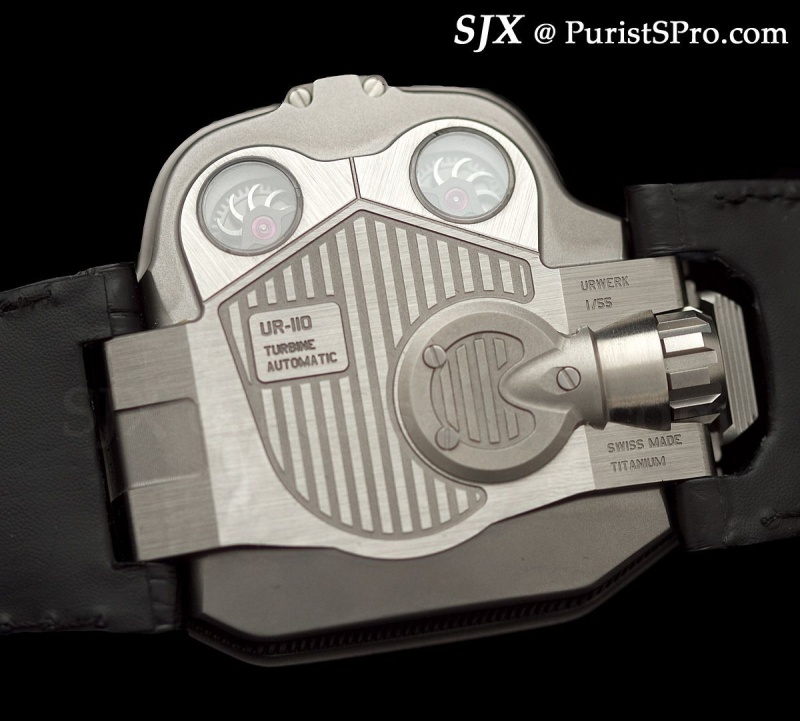
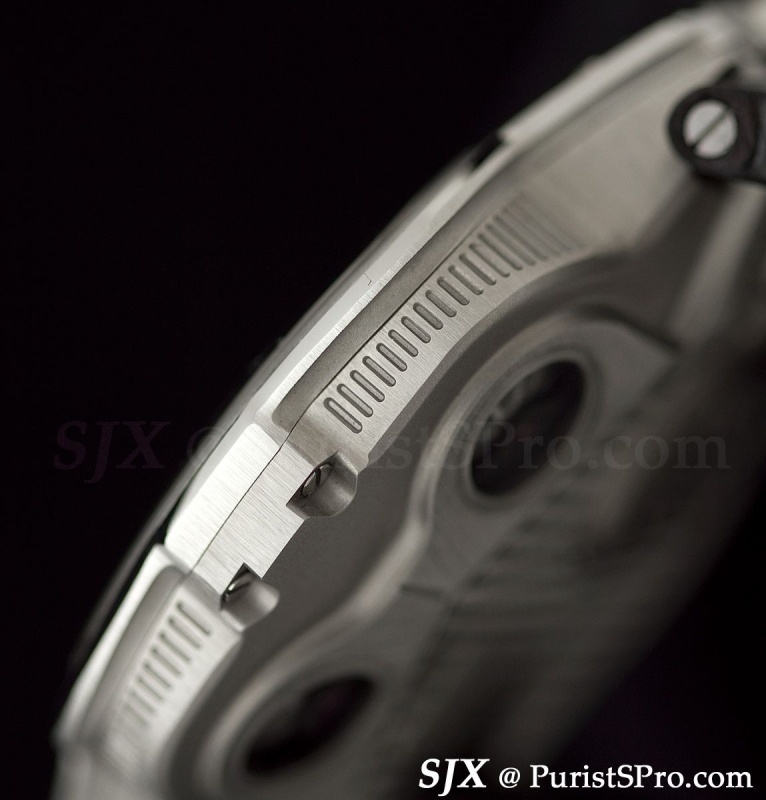
This is a thick watch at 16 mm high, but for some reason it seems slimmer than other Urwerk watches, probably because it is wider at 47 by 51 mm with plenty of open space under the crystal.
The case is titanium with a front plate of steel. One should expect further variants of this watch in the near future.
- SJX
This message has been edited by SJX on 2011-01-30 09:28:52For some reason, this is really uber-cool
And I have never been attracted to urwerks before...till this. And what a worthy successor to the 103. Wonder how the roe gold version would look like. And this version, one can see the satellite rotating system in it's full glory.
Well done Urwerk!!
Best, Horo


NICE! What is the size from lug to lug?
*** SIHH 2011: Vacheron Constantin ***
Vacheron Constantin unveiled a collection that was noticeably devoid of big complications but is nevertheless excellent.
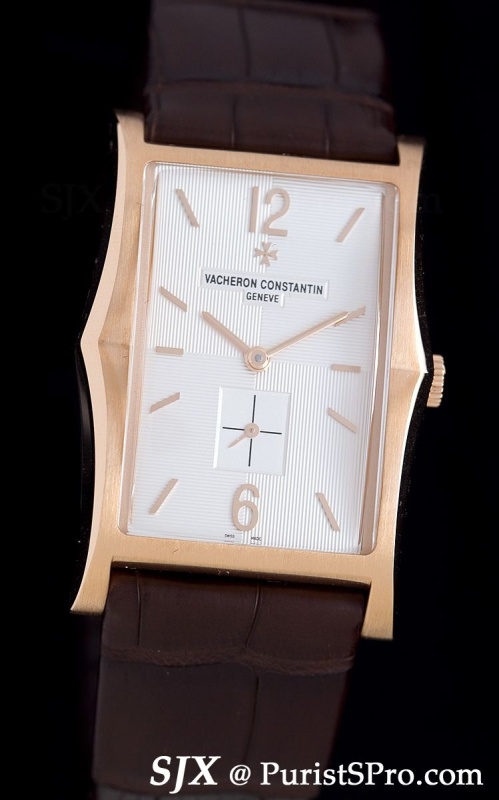
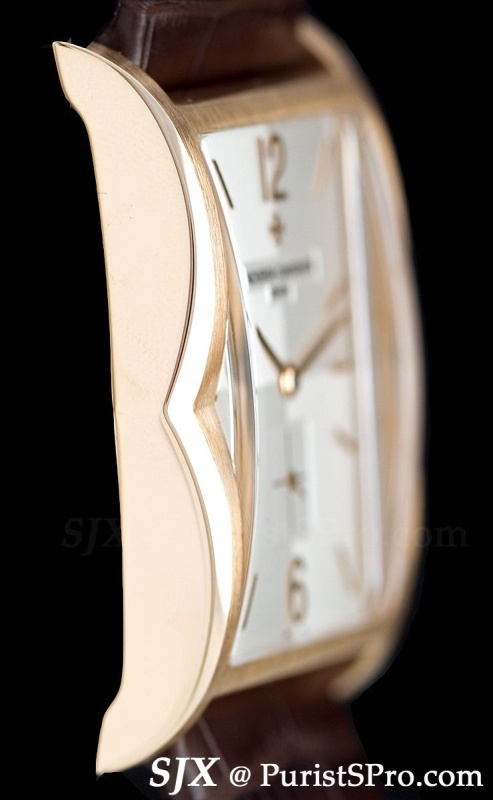
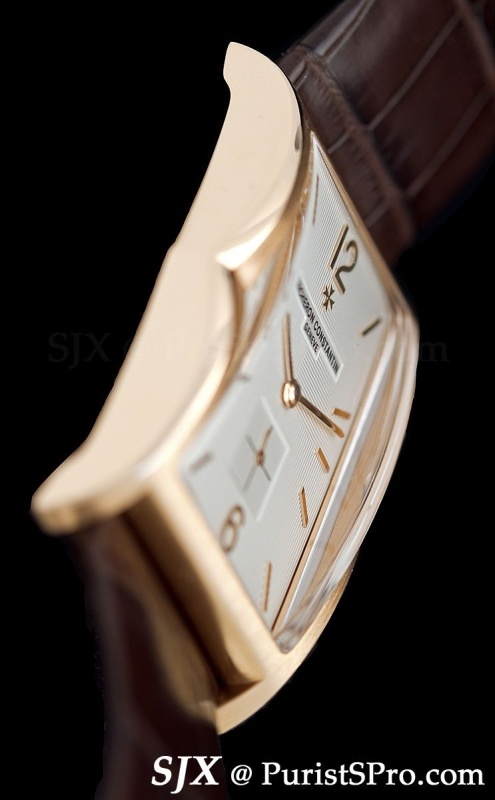
The Les Historiques 1954 Aronde follows the successful Americaine 1921 as another re-edition of a vintage form watch. This has an elegant double curved rose gold case with a curved sapphire crystal, matched with a guilloche dial with perpendicular godron segments. A watch like this could easily look feminine but at 45 by 31 mm it is a solid size.

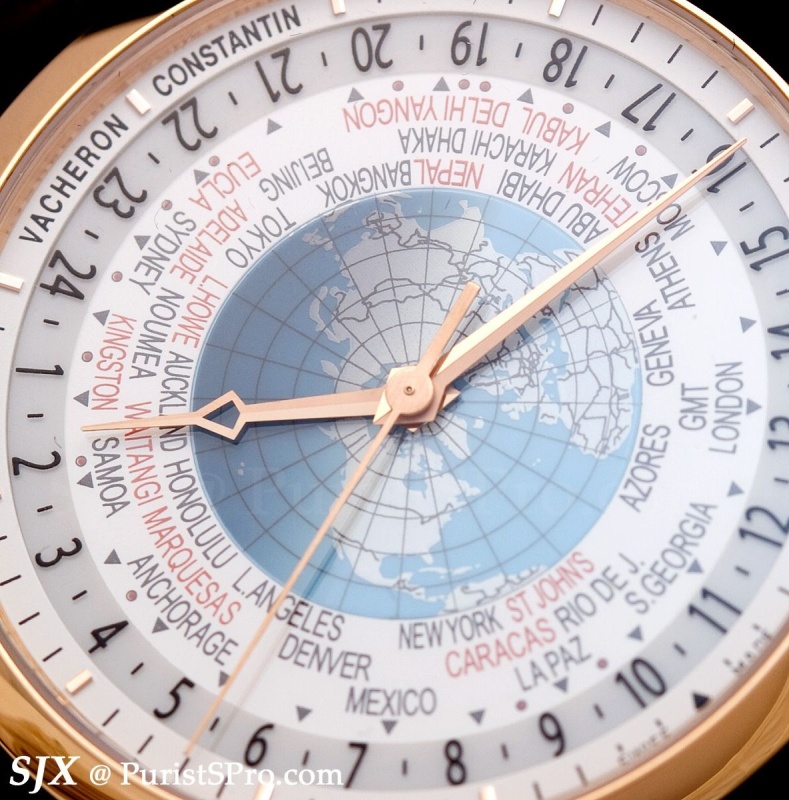
Though not a grand complication, the Patrimony Traditionnelle World Time is the most ambitious Cottier-style world time I have come across. The world time mechanism allows the time to be set to half and even quarter hour time zones, which is why the cities disc includes obscure places like Eucla and well-known but little visit locales like Kabul and Yangon. These unusual time zones are indicated in red on the dial.
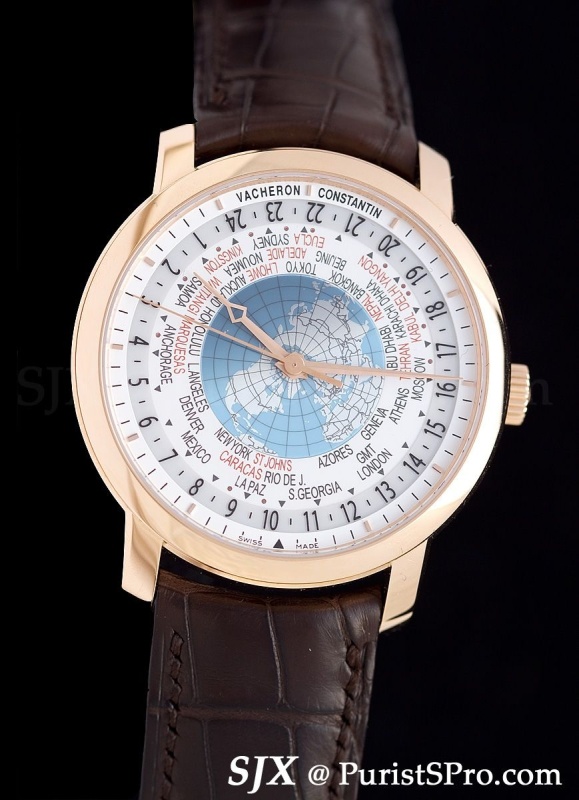
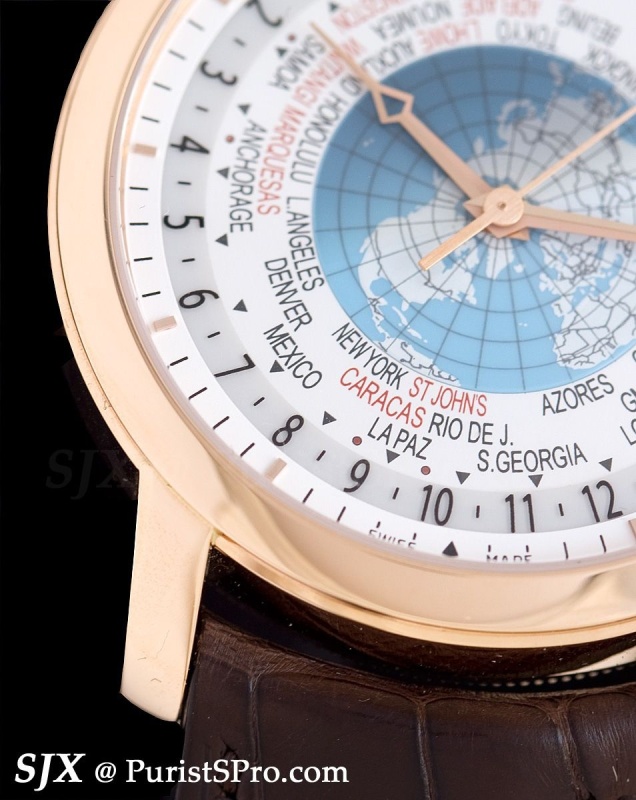
Despite having so much text on the dial, the watch is legible, partly thanks to the 42.5 mm diameter of the case.
Also clever is the day/night indicator in the centre of the dial. A sapphire disc, half of which is tinted grey, is placed over the world map on the centre. As the cities disc which is linked to the map rotates, the half tinted sapphire indicates the regions of the in light and those under dark. This is an intuitive and readable method of indicating day and night.

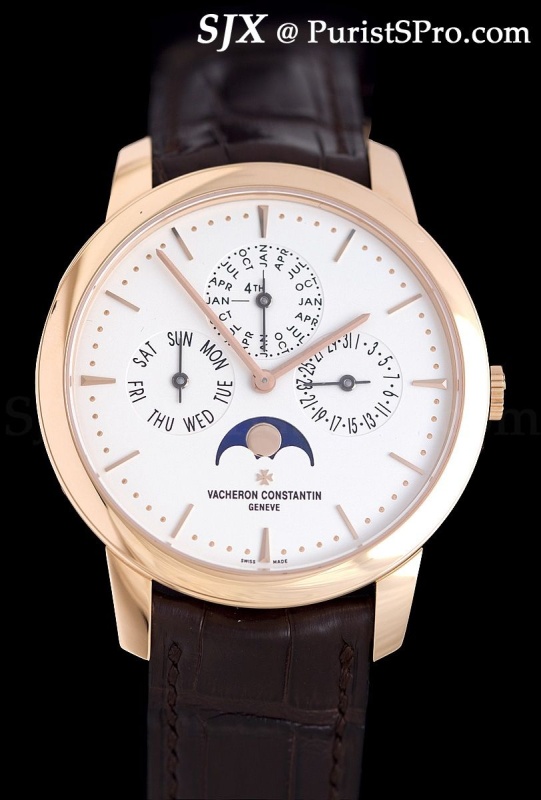
A more complicated but less novel new watch is the Patrimony Contemporaine Perpetual Calendar. This is a traditional, ultra-slim perpetual.
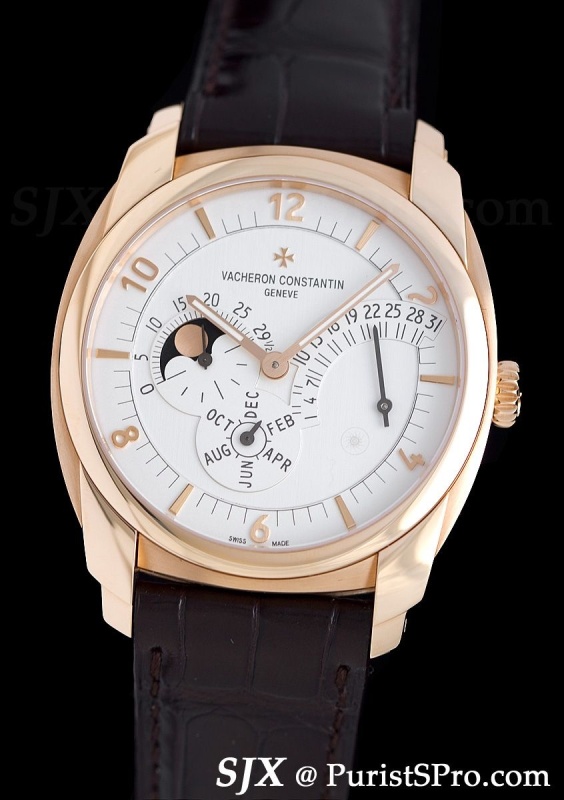
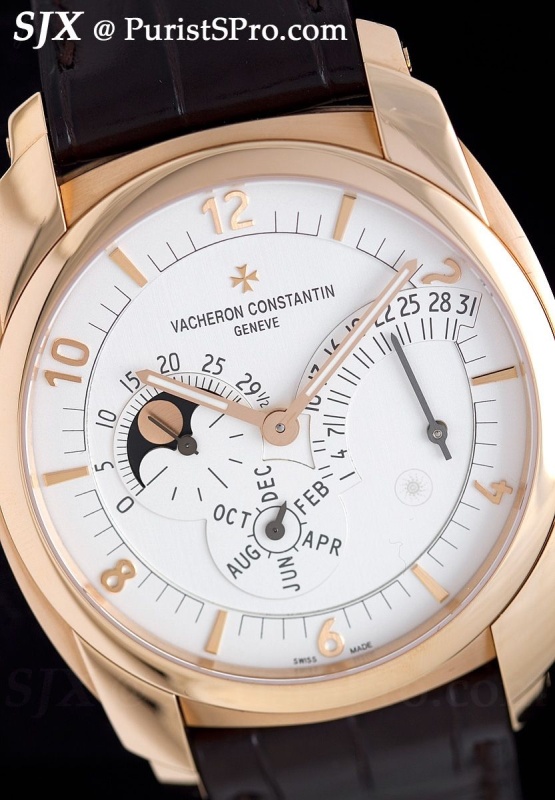
Finally the Quai de l’Ile line is now available with solid dials. I never warmed to the Quai de l’Ile but these new models are a big improvement over the open dials of the earlier versions.
Both the Quai de l’Ile automatic and day-date are available with the new dials; I think the automatic looks especially good. These are available in rose gold, titanium or palladium, with the option of mixing and matching the materials for each of the case parts like bezel, lug and case band.
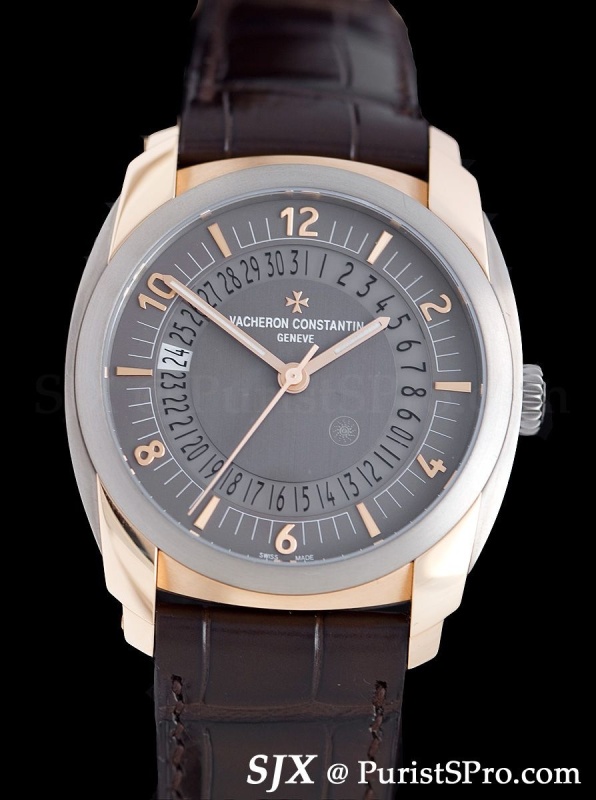
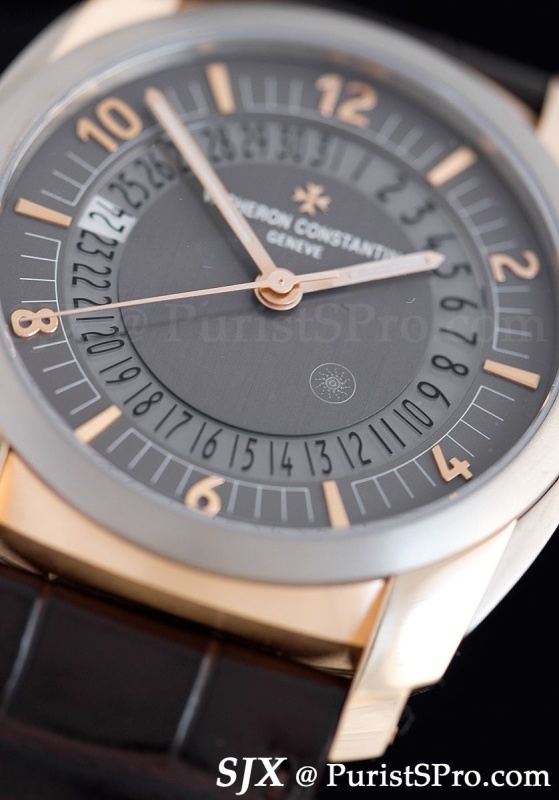
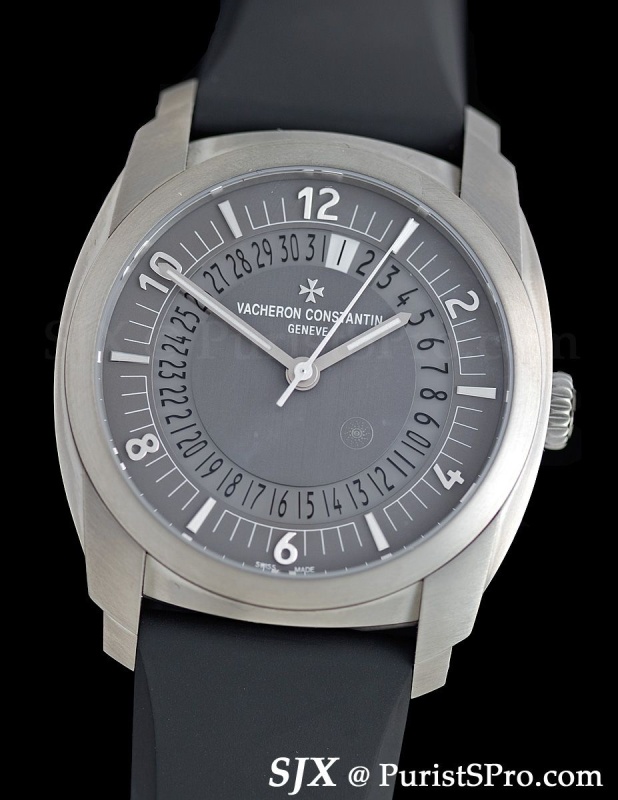
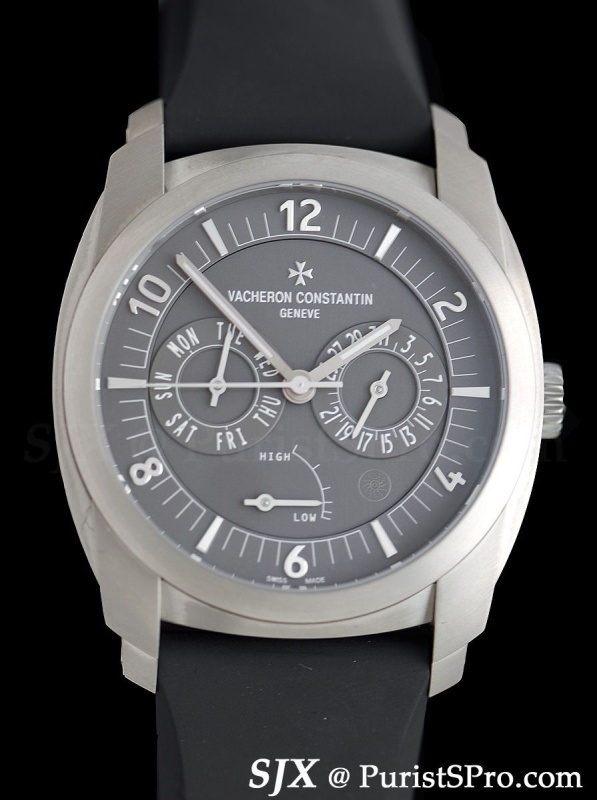
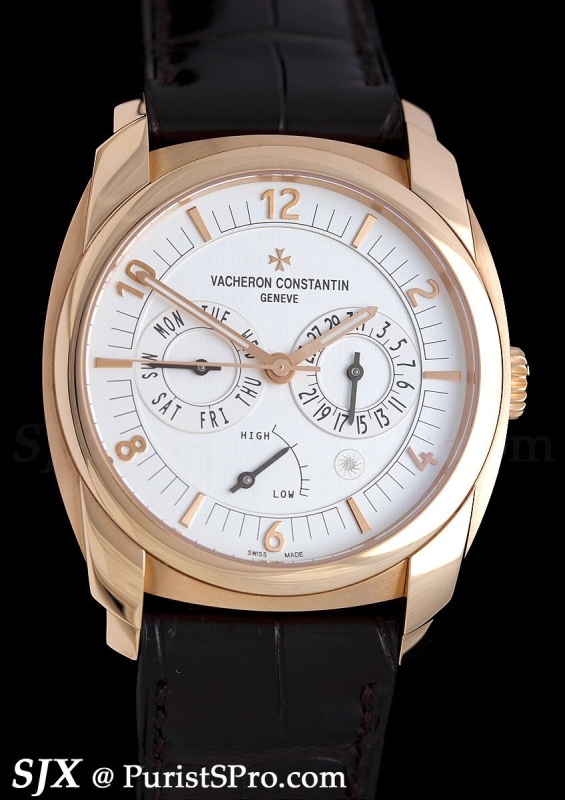
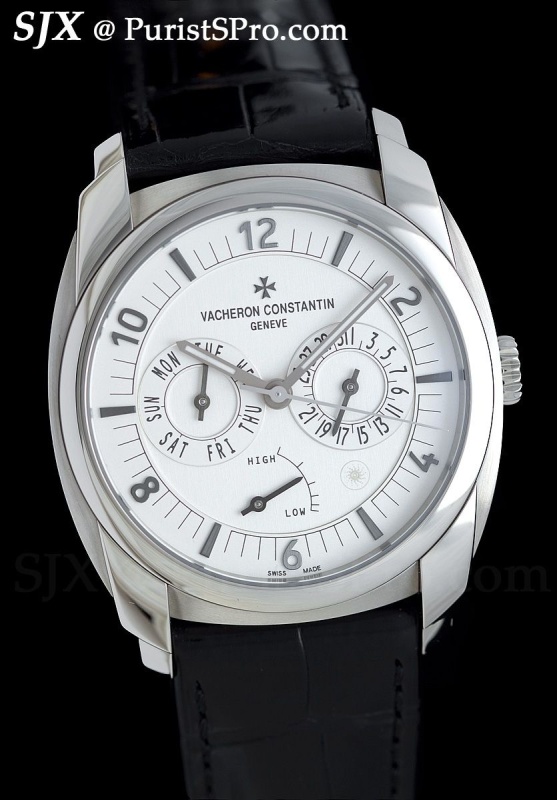
But the Quai de l’Ile line also sees a new model added, the Annual Calendar. This too has a solid dial with the option of different case material combinations.

- SJX
This message has been edited by SJX on 2011-01-30 09:35:49 This message has been edited by AnthonyTsai on 2011-01-30 16:21:50