
A head-turner in the making...
G'day,
what does it need to create a real head-turner?
Well, one may start with a lot of parts:
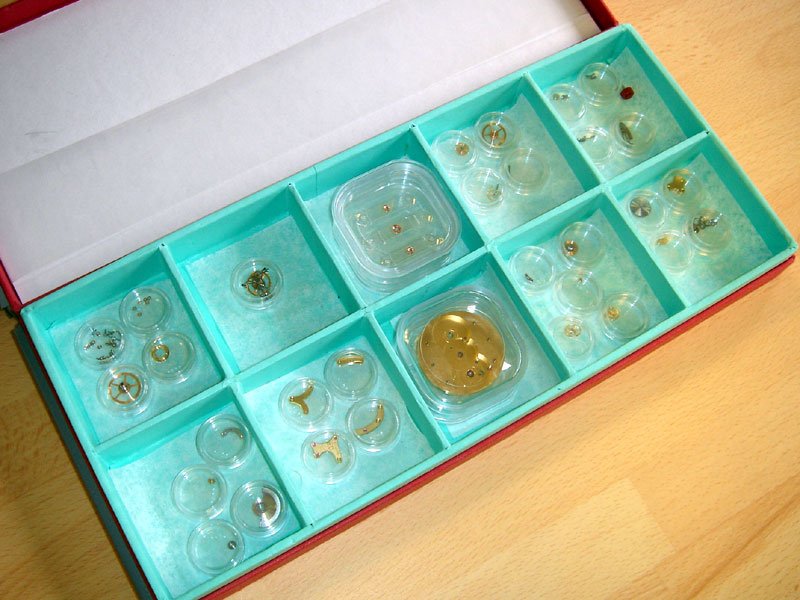
This may give an idea the final watch requires 3 basic steps:
First, the functional heart of the watch, for this one it´s the fine tourbillon carriage, is assembled and checked. At GP, each tourbillon carriage is done in four work steps; first the parts are created, then the carriage is assembled for the first time and underwents functional tests. That´s followed by complete disassembly of all it´s miniature parts, which undergo finishing and decorative work. And finally, the carriage get´s assembled again, waiting for the case and movement.
Second, the movement parts need to be produced. Before everything is finished and "niced up", a first assembly ensures all parts do match and work well; even high-precision tooling capable to work in tolerances of a few 1/100mm aren´t enough for complex pieces, thus a first assembly allows for functional tests. In this stage, the outer appearance is still "raw" and, for example, the beautiful matté grey coloration is yet to be applied:
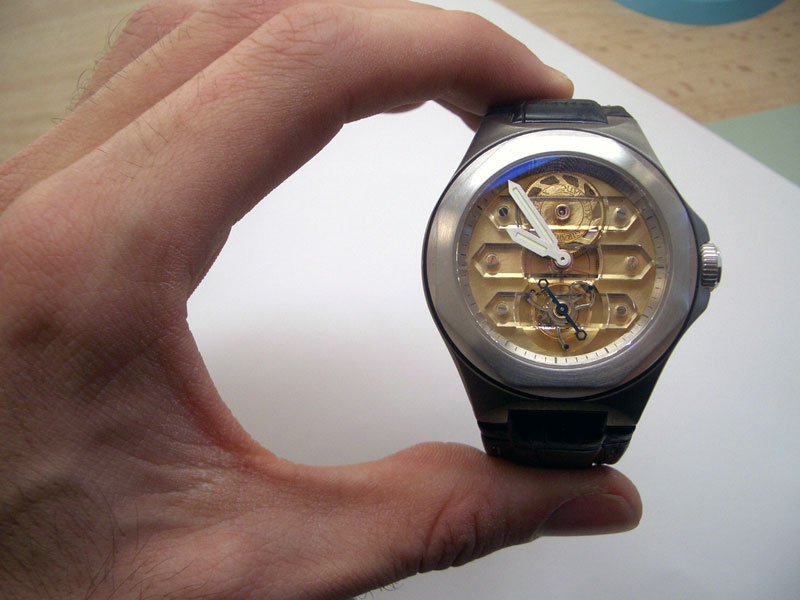
The the watch is completely disassembled again to apply finishing and decorative elements, such as the sand-blasted finish and matté grey plating. All parts are extensively finished, which each and all undergoing visual and performance checks once that´s done.
Third, the watch is fully assembled and cased up for the second time; now it´s the final assembly, which includes some "fine tuning" and performance control of the watch. This ensures it´s not only beautiful, but a practical and accurate timekeeper as well.
So many steps, for a breathtaking beauty:
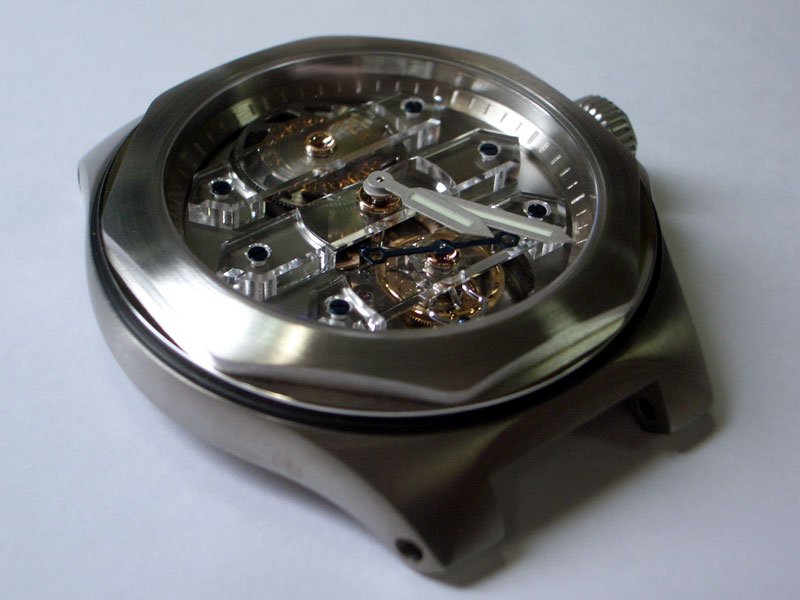
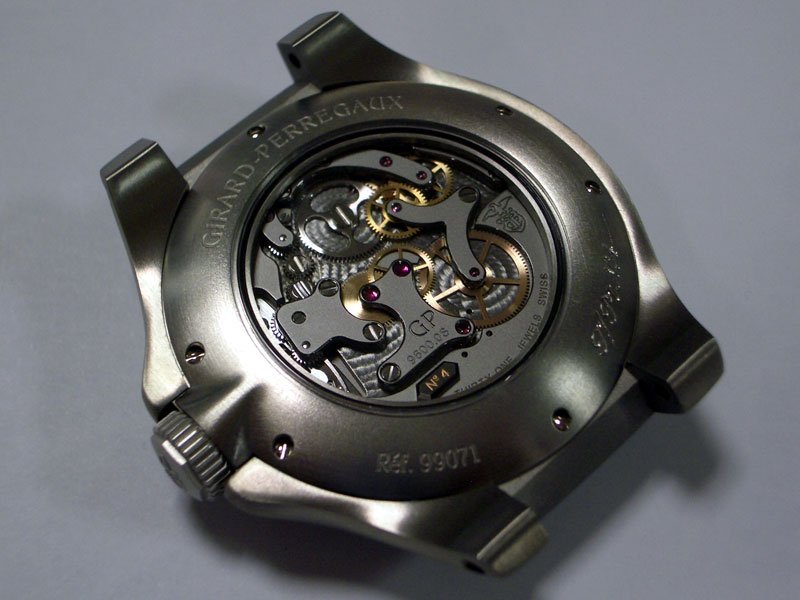
Actually these are impressions of one of the first pieces for delivery; the "Sapphire Bridges" underwent some minor changes from the first prototypes, such as use of a different plating (dark grey, instead of deep black). At GP things are always under consideration and the brand, but also the watchmakers, keep an eye of improvements. For the "Sapphire Bridges", the changed bridge layout of the movement back and the different plating turned out to be technical improvements.
And i love it!
These are real stunners and lucky are those enthusiasts who already placed a firm order!
Greetings from Germany,
Peter

Wow that dark grey plating on the outer movement parts is wicked!
Do you happen to have any close-up pics of the dark grey plated parts?
Thanks for your impressions on the Sapphire Bridges Peter!
Cheers,
Anthony
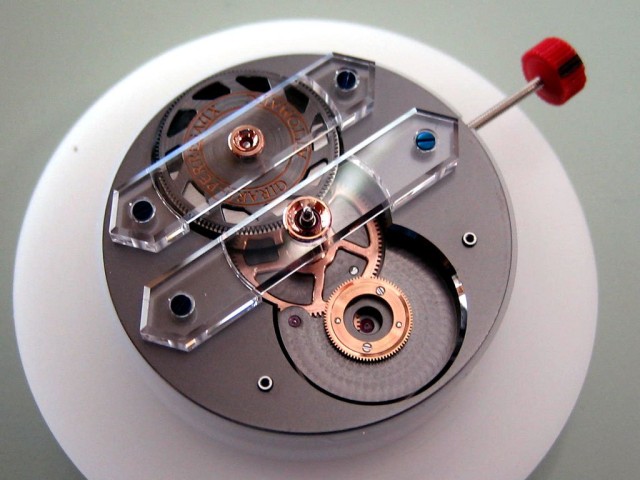
Like this?
(click to enlarge)
That´s the base plate under assembly, for the very first watch to be delivered (allocated to GP Boutique in Gstaad/Switzerland).
The dark grey plating, or "black gold" plating as it´s referred to, is a stunning finish.
I like the counterplay of gold movement parts, clear bright bridges and the dark "background" a lot; it´s a fascinating view and never stops to amaze. The grey plating interacts with light quite a lot and appear as light grey, but dark as anthracite too. That´s truly stunning. A bit like those early movements with Titanium bridges made by Renaud&Papi for Richard Mille; it´s not just dark and it´s very hard to capture.
Truly one of those things which reveal their whole beauty only to owners taking the time to appreciate!
More to come later!
Cheers,
Peter
Wow....the black gold is so beautiful
AND I think it works very well with the "clear" bridges ;-)
Thanks Peter
cheers
joe

I obviously love the 3-bridges tourbillons and I love "hi-tech" watches but...
1) I really do not like the hands. They look cheap to me.
2) I wish they kept the same bridge shape as the standard tourbillons. The straight bridges are not aesthetically pleasing to me.
3) The Laureato case seems to not be classic enough for the standard 3-bridge or techy enough for the sapphire bridge version.
The caveat is that I've never seen one in the metal, but I wish I were more excited by it.
Beautiful!
I do not mind the bridge shape as it is more modern than the classic ones.
I do agree with you Steve on the choice of case not being the best for such a masterpiece
