
Chopard L.U.C 1963 Chronograph PuristS Edition: Pictures and Hands On Review
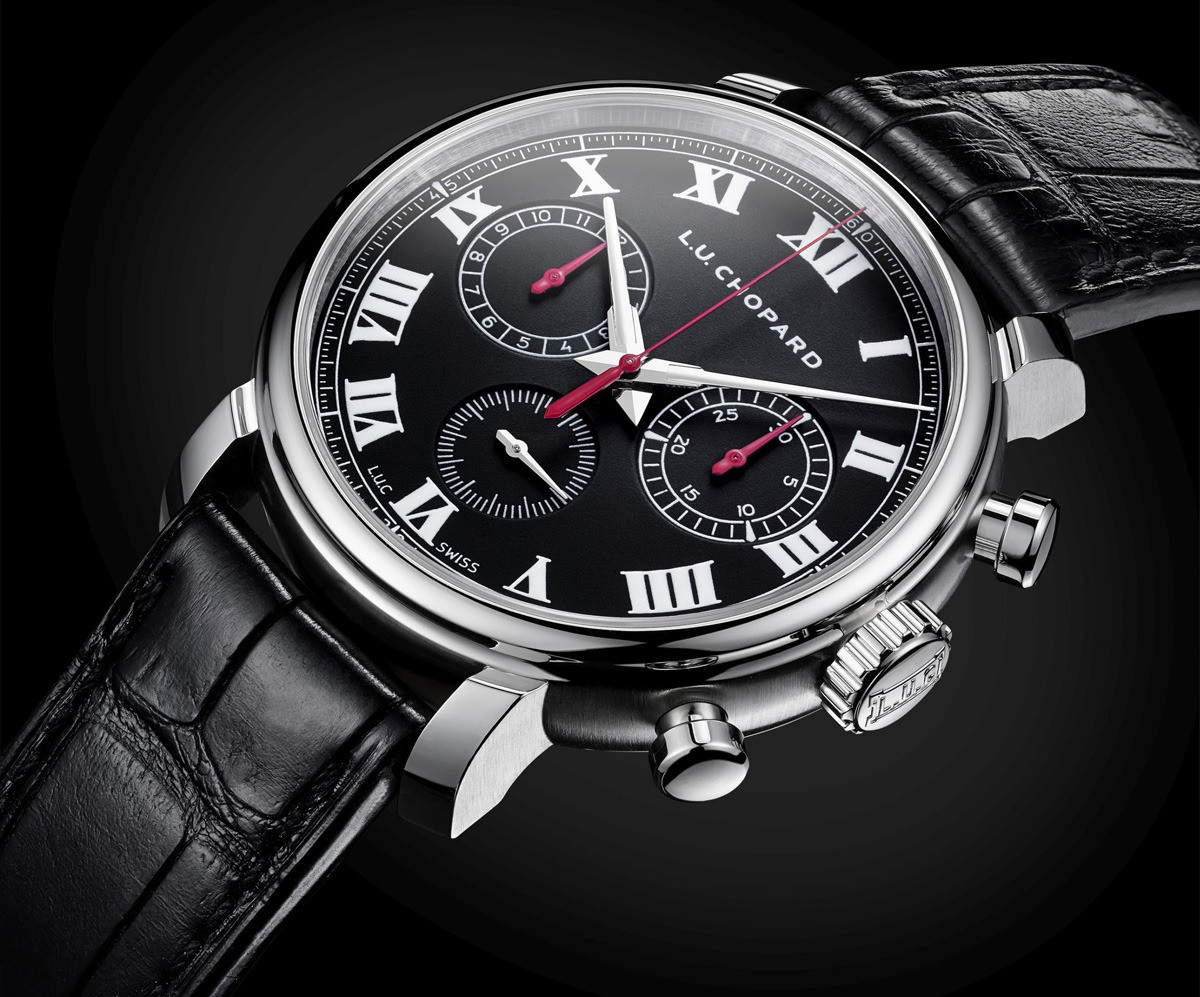
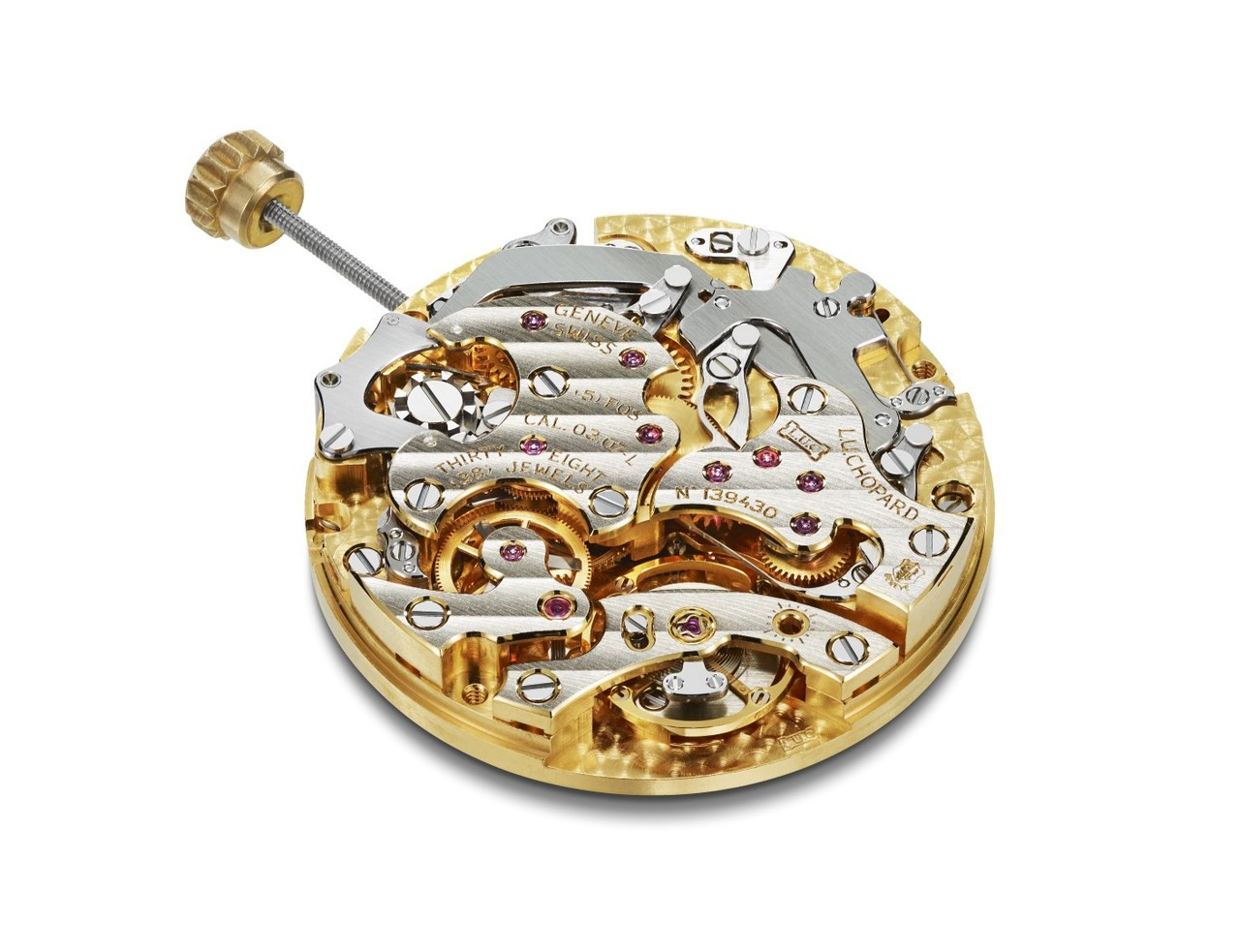
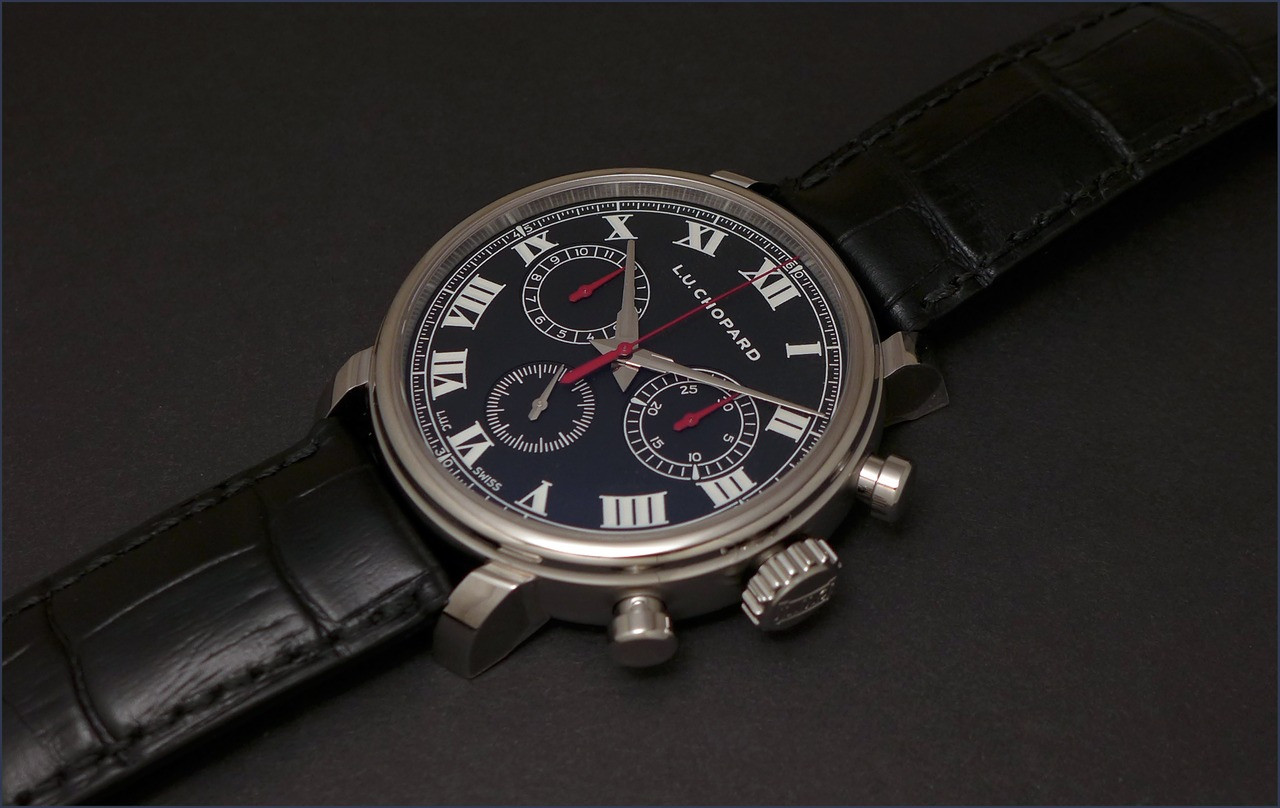
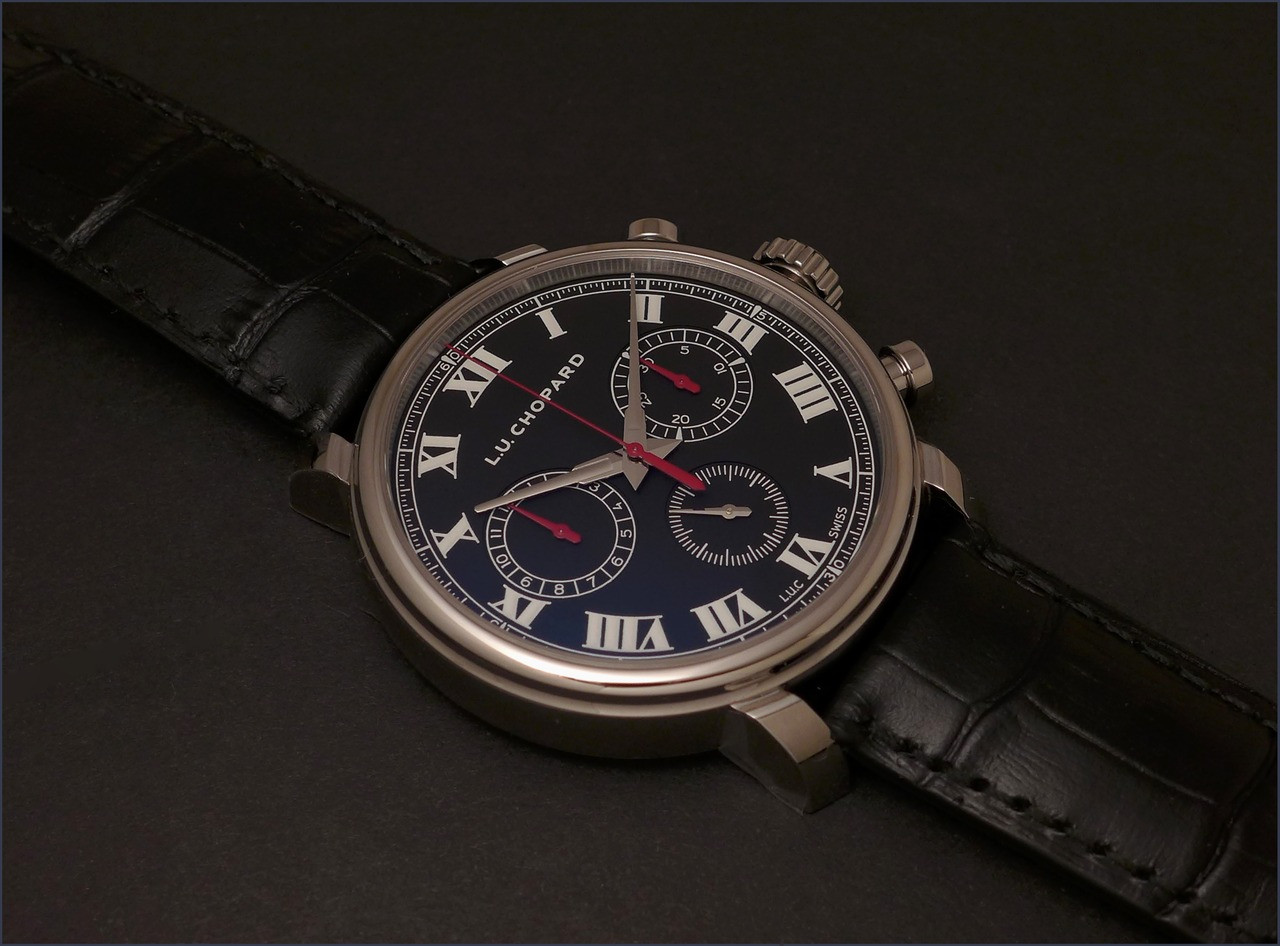
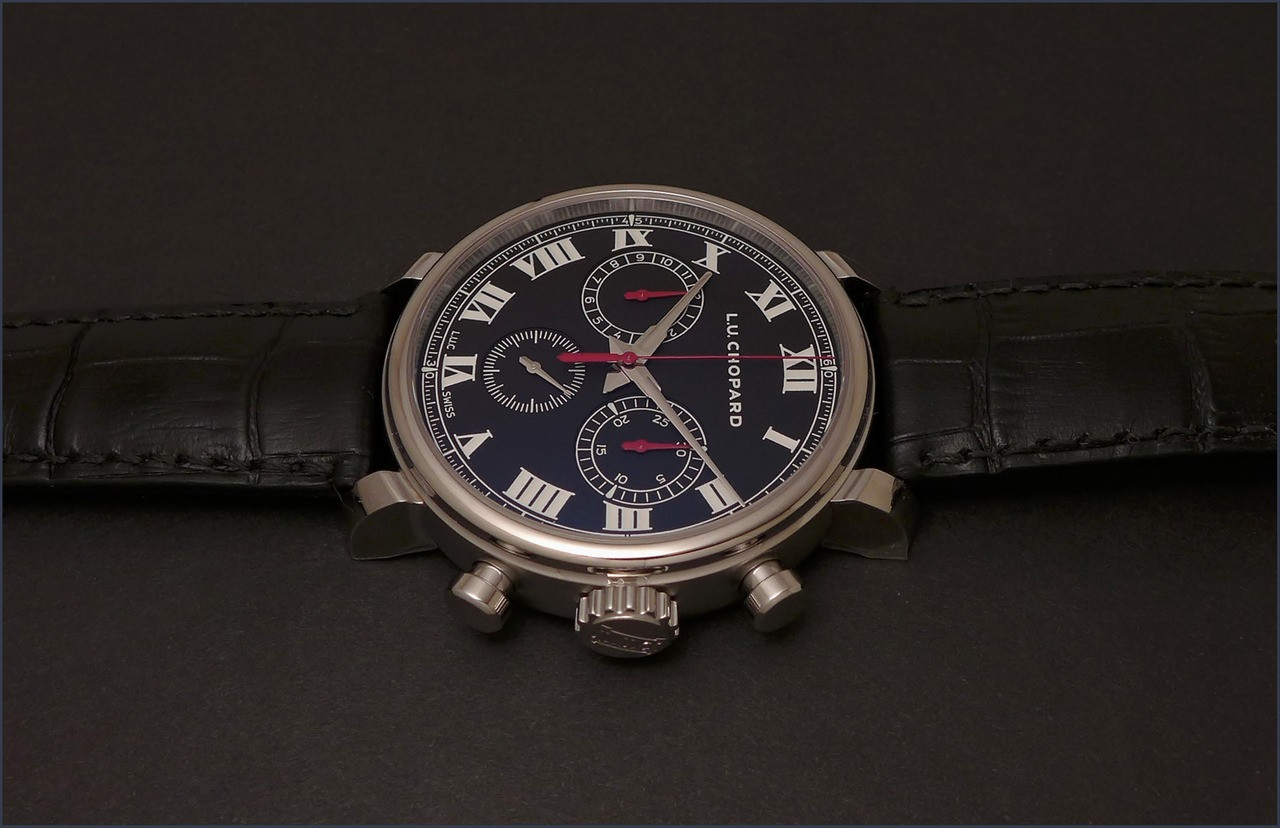
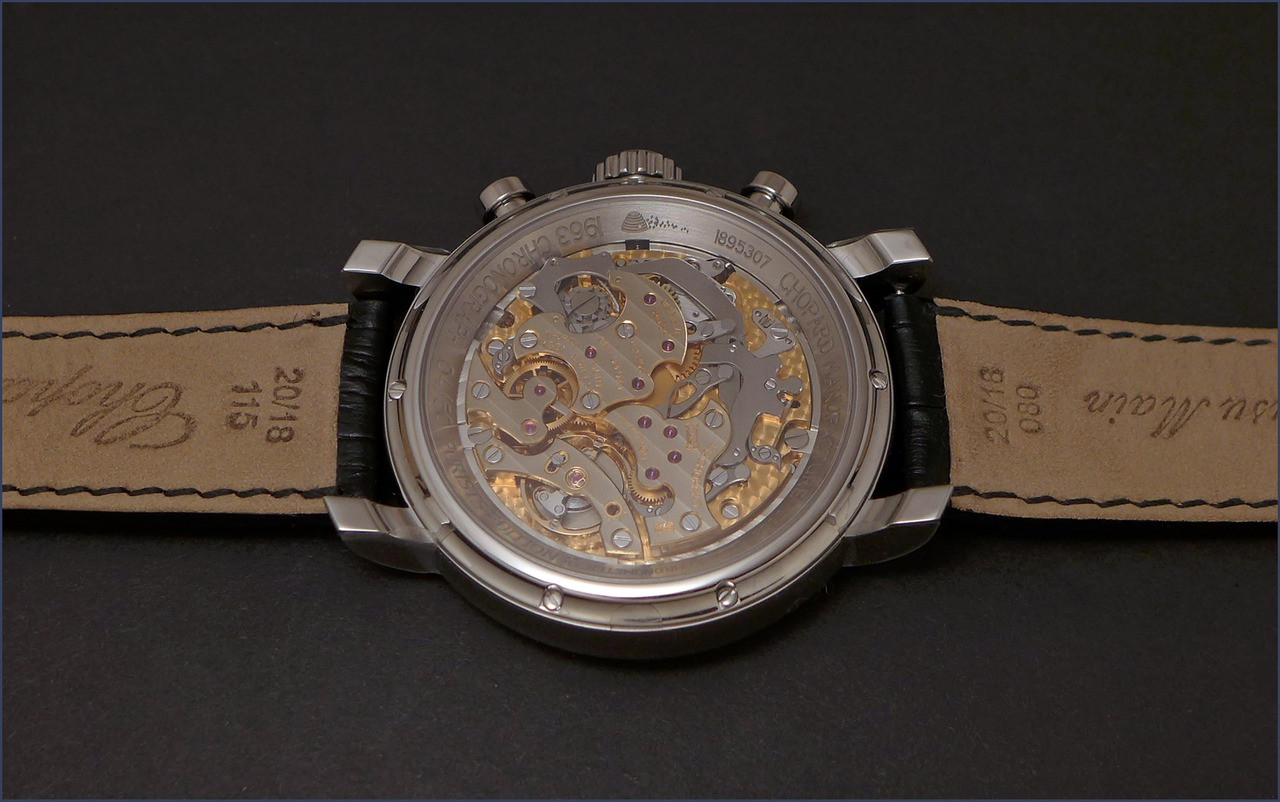

Thanks for the write up and photos Nicolas!
As often, it is mandatory to judge a watch in the flesh.
Before expressing any judgement on it. I was happy to do so and wish you have the same opportunity.
Best, my friend, and thanks for your input.
Nicolas

More background on design choices
Nico,
Thanks for your review.
You wrote:
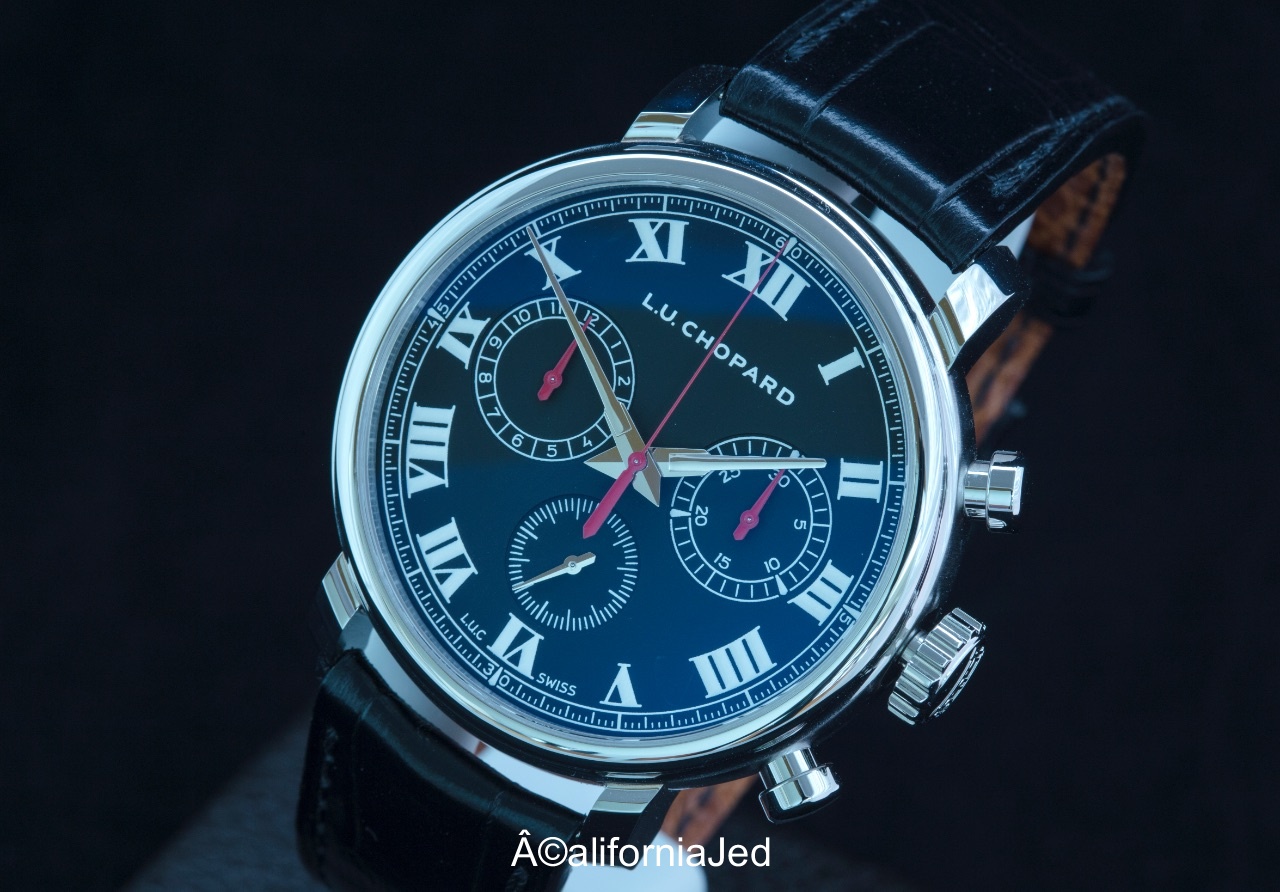
"What I like a lot is the idea behind the Watch, born from the friendship between the PuristS and Chopard, the manual winding movement, the fact this is a flyback and hacking seconds, and a Chronometer, the design of the hands, the black dial.
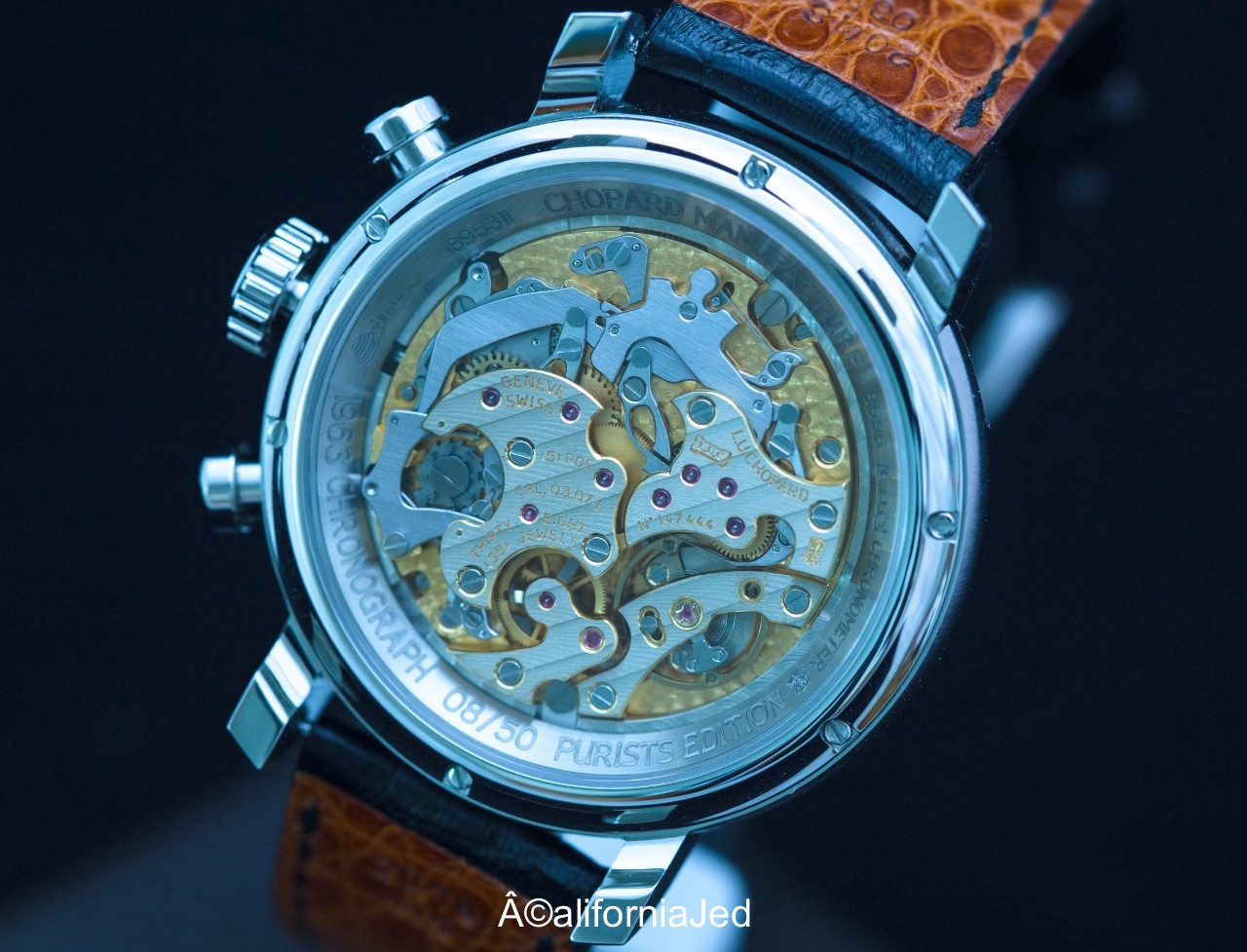
I would have much preferred arabic numbers, and just a 6 / 12 configuration, with a smaller case to better adapt the movement to the case and dial, deeper and more sensual anglages, and an all new movement, rather than removing the automatic parts of the Cal 03. 03L. Of course, the price to pay would not be the same, though..."
You are correct that personal choice had an influence but both Chopard and PuristS were also constrained by other considerations.
Cost was a factor but more importantly, was "value" because with a big budget, anyone can design anything.
Horological Value is a different metric. At the time of design, global price of gold was very high as a result of economic uncertainty and warfare. If we had made the dial from solid gold disc as originally planned, it would have been another $2000 even without grand feu enamel.....
The choice of steel case was not only for cost reasons but also following the idea that historic steel case chronographs are more desirable than gold ones. This is particularly because of the current rule at L.U.C to propose all their L.U.C movements only in precious metal cases.
Another rule broken is that the launch of any new L.U.C movement was always in a gold case. With the L.U.C 1963 PuristS chronograph, a exception from the rule was made.
The fifty L.U.C 03.07-L movements in the PuristS' edition have an additional suffix 'P' because they are different from the ones used in gold cases. It is 'sans quantième' and had to be specially homologated with Geneva Seal with different crown setting mechanism and dial side finishing.
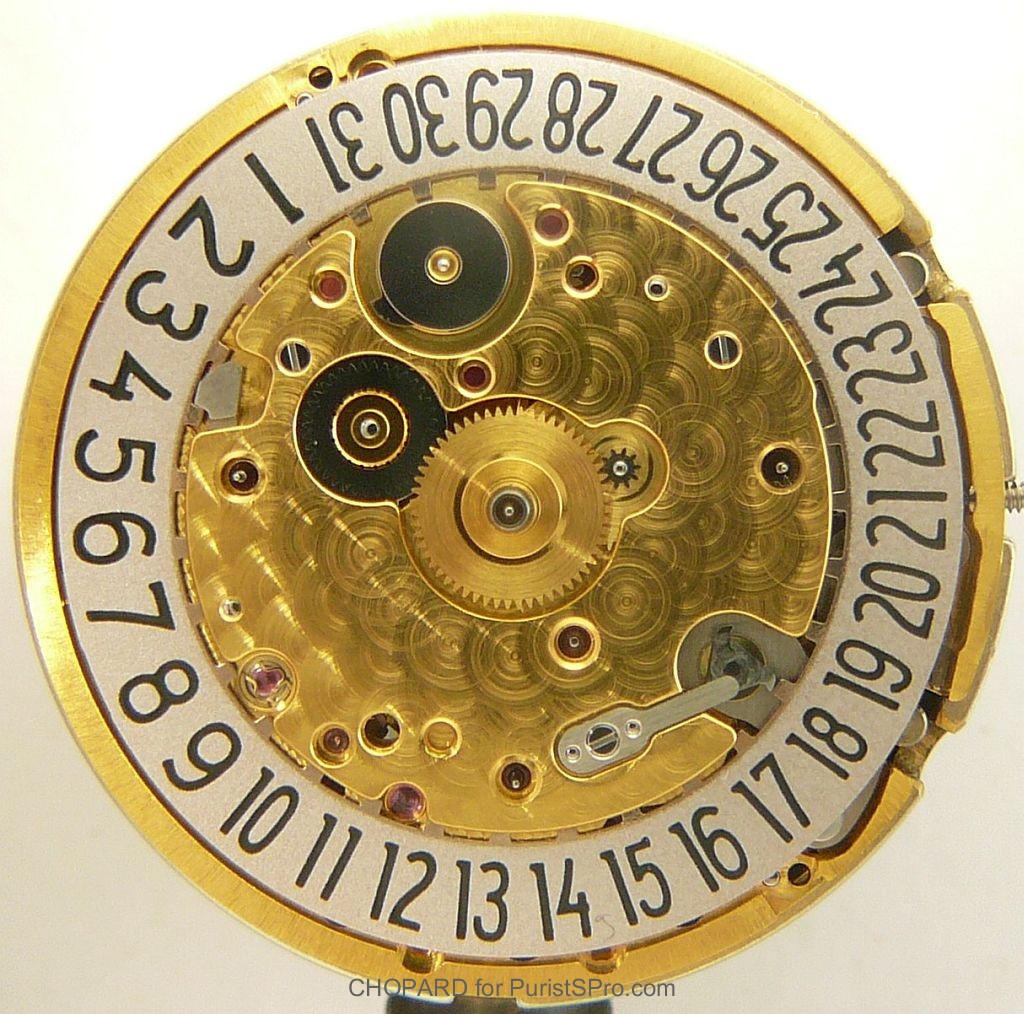
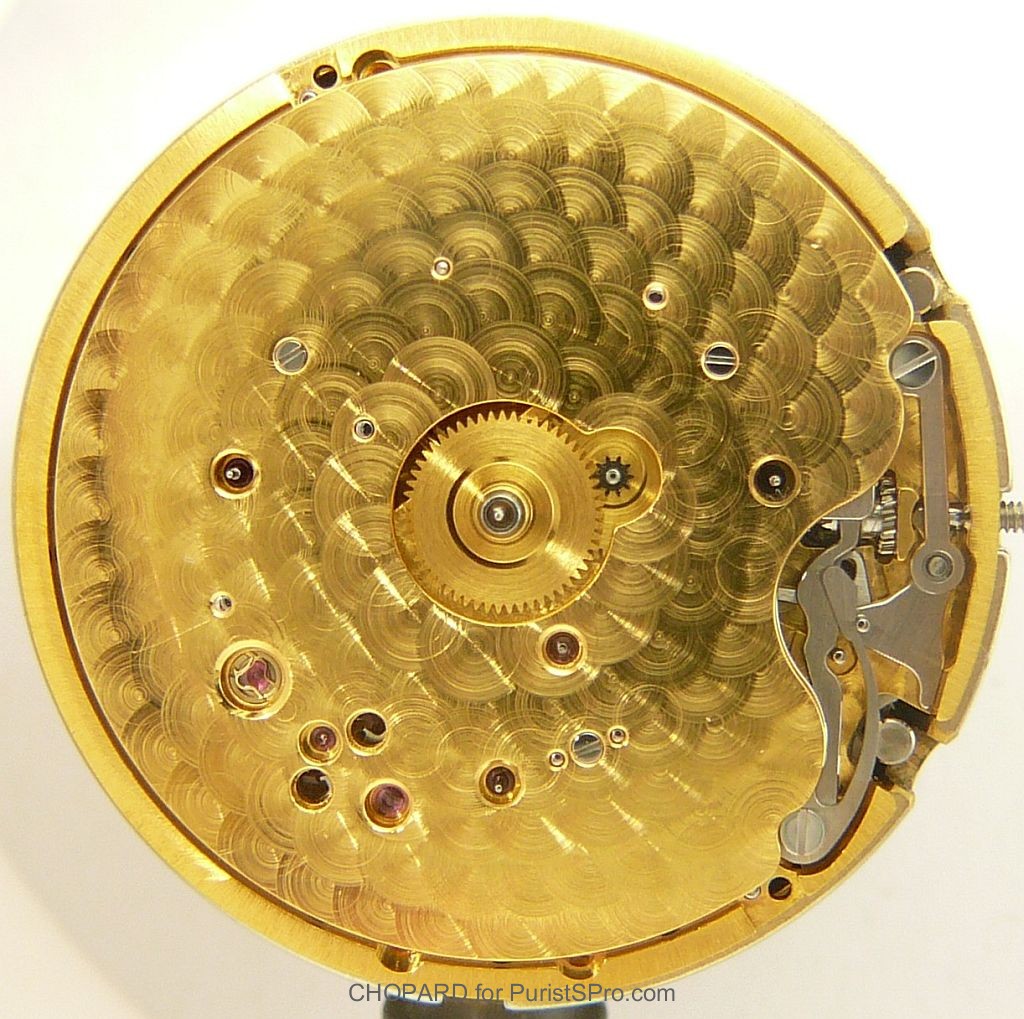
The choice of Roman numerals is linked with the original watch dials when the family bought Chopard in 1963. As this is a tribute to that year, the L.U.C 1963 watch family must have roman numerals for time display and Arabic numbers for chronograph function. That, led to the choice of 42mm case size for dial space and proportion, as you surmised.
The case shape and lugs are set by the L.U.C 1963 watch family motif having curved case bands with vertical brushed finish and short lugs to cater for smaller wrists.
Regards,
MTF
Agreed that historical chronos are more desirable than gold ones.
And I am happy to see that this chrono has some good elements.
Now the thing which most disturbs me is the origin of this chrono, I mean the automatic origins.
Costs are one thing, yes. But I already had this issue with the JLC TT Geophysic. 
Best,
Nicolas

That the movement is an evolution from a time-tested predicessor is, for me
JLC did the same thing with the Alarm movement for their manual winding Memo.
They removed the rotor and the auto parts of the Cal 918 et voilà, the Cal 914 was born!
Best, Jed.
Nicolas
Perhaps that description is a bit unfair in the case of this movement,
Best,
CaliforniaJed

Thanks Nicolas for the review on the Chopard PuristS Edition
Nice pics. I still remember session at IGOTT2 in Vegas when we were all discussing the various elements and fine details about this chronograph. Thanks for this review.
Regards,
ED-209
YES! That was a great moment! Thanks for reminding us that one, Ed. [nt]

I echo some of your sentiments

when we forget to bring a flashlight for watch inspecting

Cazalea
Thanks for your feedback, Mike. I love Ed ( or is he Ming? ) look on the last picture. ;) [nt]
LOL I'm sure it was the 'evil' twin!

I believe that pic was from a Perpetual GTG at the Rainbow several years ago?
Regards,
ED-209
I can't tell you, I am totally unable to say who is who, between you two. ;) [nt]

Thanks a lot for your review.
"I would have much preferred arabic numbers, and just a 6 / 12 configuration, with a smaller case to better adapt the movement to the case and dial, deeper and more sensual anglages, and an all new movement, rather than removing the automatic parts of the Cal 03. 03L. Of course, the price to pay would not be the same, though..."
I don't agree with the full statement. Of course, it is a matter of taste but let me explain my point of view.
Let's see if Chopard puts arabic numerals (in that case, they should keep the case size if not... there is no room to put them) and just a 6/12 configuration... My question is: do you want to see a Mille Miglia with a LUC style? Or a clone of the Chrono One? In that case, what would be the objective?
It took me time to appreciate this watch. Actually, I was not a big fan of it at the beginning.
But if you remove the roman numerals and reduce the case size, you kill what makes the key point of interest of this watch: it belongs to the 1963 family. I understood this the day I saw it with the 1963 Tourbillon. For me, it is very important to find again these common points and I started to like it when I saw it with the other family members.
Now let's speak about the movement.
It is the at the end the story to take advantage of the issues to convert them in assets. Yes, the movement is a bit too small for the case but nothing serious (I saw worse...). Yes, you can feel that it comes from an automatic starting point. But at the end, thanks to its lay-out and the inclined frange, I found the result much better than some movements with similar contexts. I don't know what you mean with "sensual" anglages. But what I see is bridges with unusual shapes which look lile jigsaw pieces and which contribute to the successful visual effect. You have at least 2 inward angles (if my memory is right) and the contrast between the colours is very appealing too.
At the end, I consider this chronograph as a watch which is not flawless but which at the end embodies a very subtle charm.
Thanks for your review.
Fx
With a 6 / 12 config, I rather see an hommage to the Classics rather than a 1000 Miglia.
By Classics, I mean Classic Chronos such as...Pateks, Vacherons... With all arabic numbers, why not, with a smaller case, it would widen the hommage to Longines, Minerva, well, not bad references.
It is not easy to make a chrono for PuristS, indeed.
But at least it is cool.
The thing which disturbs me the most, at the contrary of you, is the movement. Removing all the auto parts, I mean.
On that, we agree to disagree.
Best,
Nicolas

Sporty and elegant. Thank you for this interesting opinion review Nicolas. [nt]
