
Longines Chronograph 1/10s
From the same owner of the fantastic Breitling collection here is an uncommon (at least for me) Longines pocket chronograph.
This watch, based on a quick research, was released to be used during the Olympic Games in Mexico 1968 (I don't know if it was really used).
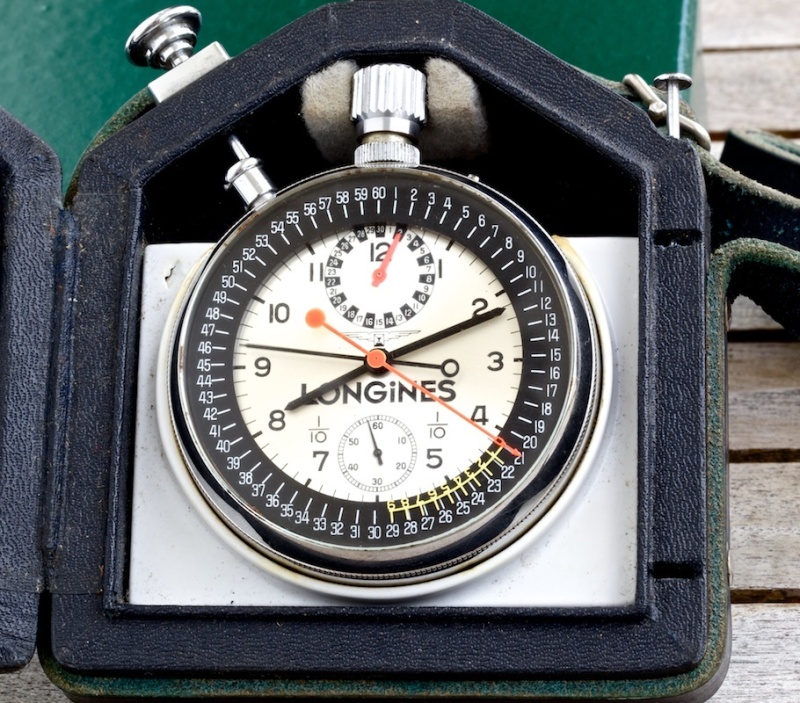
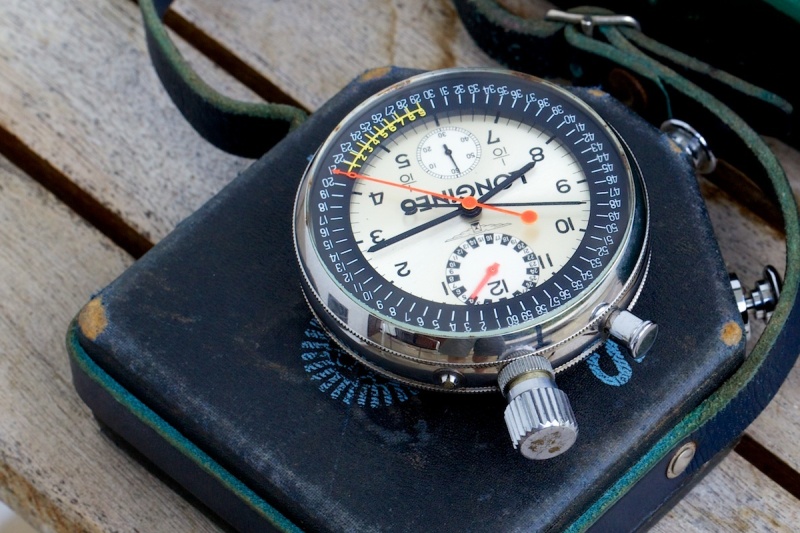
On this watch, a rattrapante or double chronograph, the main seconds hand includes a vernier allowing the measurement of 1/10 of a second.
How this works, I leave this to an expert. My experience with verniers was so long ago that I don't have a clue about how it works.
One can obtain more details on Wikipedia, searching for vernier.
Cutting short, here is the watch:
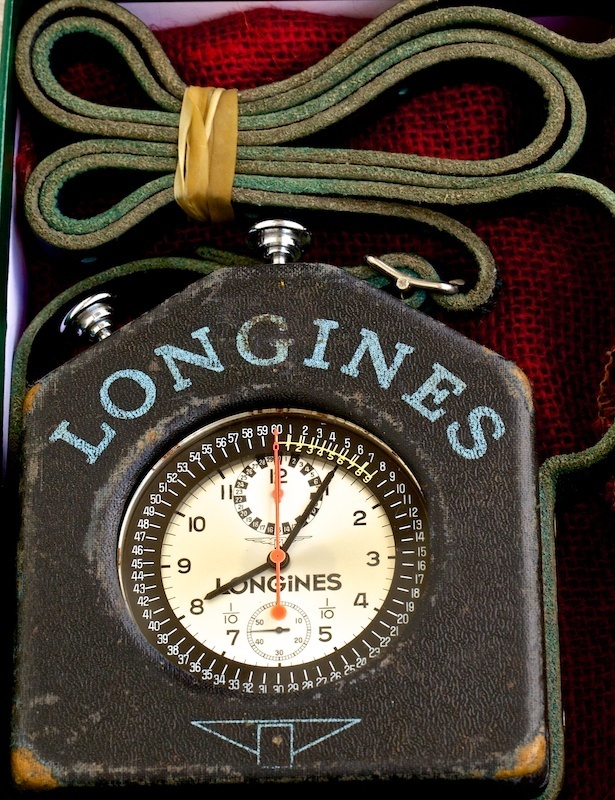
1) The watch inside the case. Notice the protective case that expose the two pushers. This baby was ... used.
2) With the protective case open
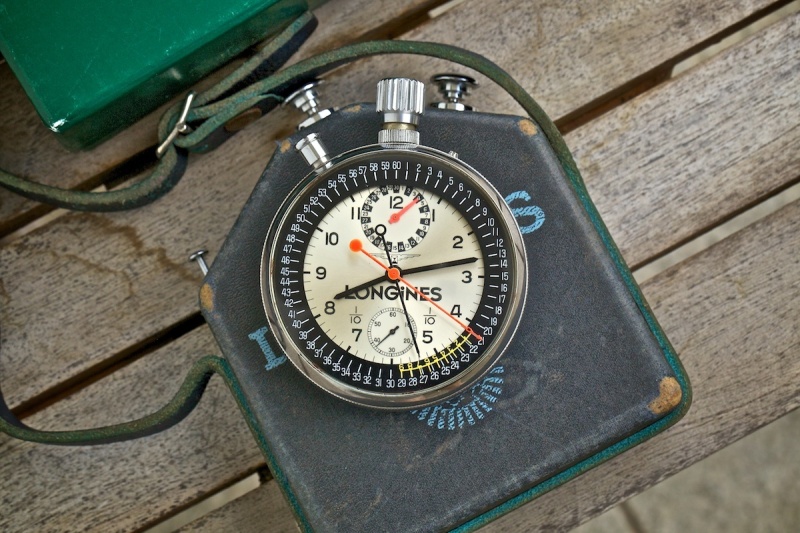
3) The watch outside the case
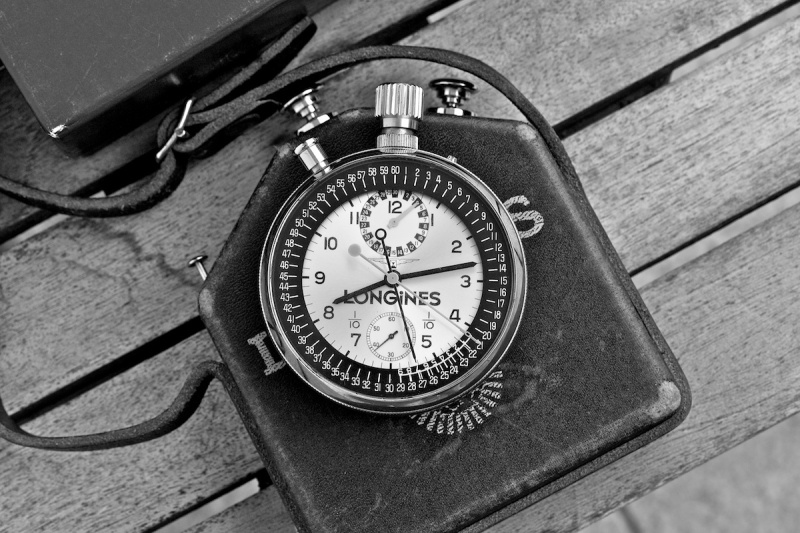
4) A B&W version
5) A side view, exposing the controls
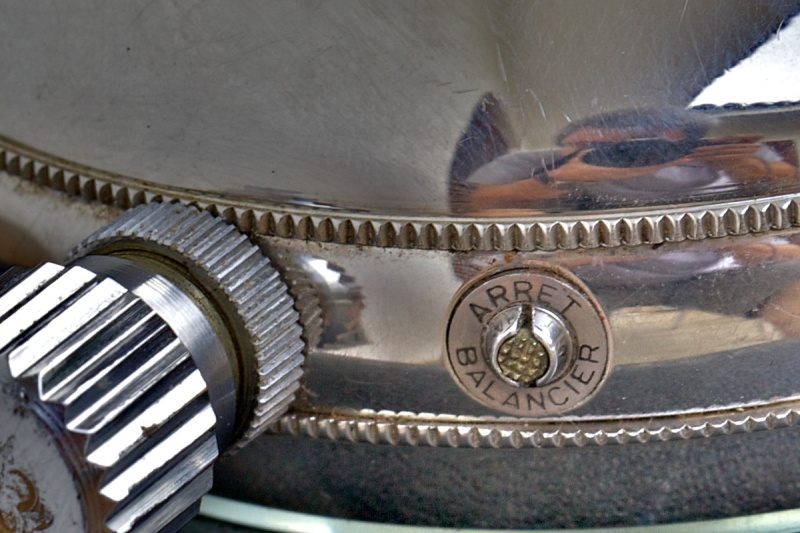
6) The watch adjustment control.
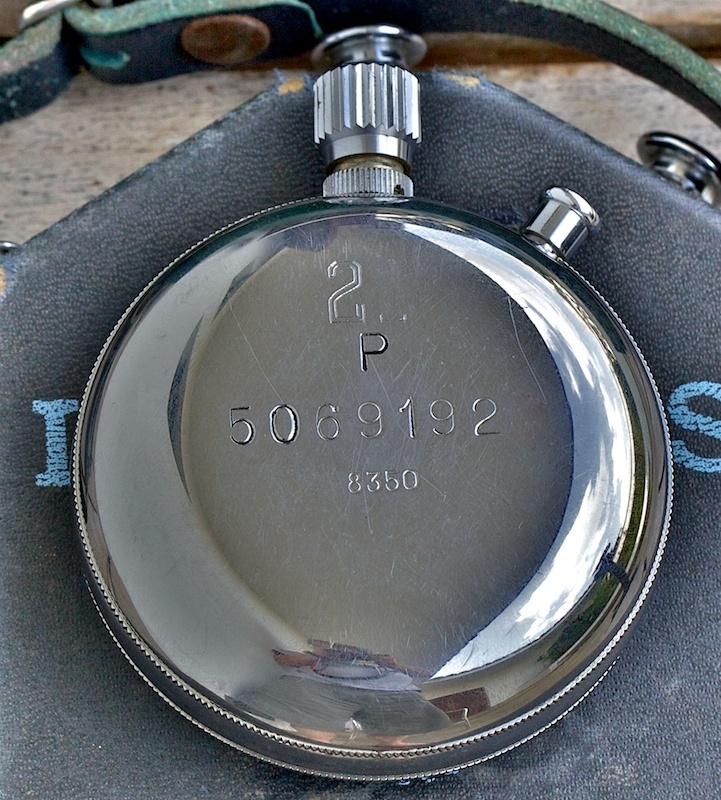
7) Case back (Last digit of the serial numbers masked).
(On the reflex, it's me wearing summer clothes -- Bermuda shorts)
It was fun to play with this watch. By a short and inconclusive test, the watch is keeping great time for a 1968 piece.
Amazes me how much effort the watch manufacturers put on time measure, long time ago.
Cheers,
Nilo
lovely watch, but surely Omega timed the 1968 Olympics
Omega released the Chronostop for the 1968 Olympics.
Longines timed the 1972 Olympics. could it have been released then? the standard release watch then was a single button chrono with no continuous second and a single 30 minute totaliser.
it is a really lovely looking piece, but i dont really understand how the attached bit on the second hand works. does the centre hand turn once a second which would make that addition make sense to me? if it rotates once a minute i cant see how it works.
perhaps i'm just being thick.
look forward to hearing more
G
It's a double chronograph ...
It operates just like a rattrapante chronograph.
Cheers,
Nilo
hehe, omega and therefore olympics...
hehe, omega and therefore olympics are in my blood.

The Vernier.
Hey G.
My guess on how the "attached bit on the second hand works":
As Nilomis wrote, it's a vernier scale.
An example of how it might work:
The watch is a 36000bhp or 1/10.
If you look carefully at Photo 2), you'll see that the orange second hand is a fraction before 21 seconds. So it is stopped at 20 seconds and a bit seconds.
If you then look at the yellow 1-9 scale hanging off the hand, you need to find which yellow line lines up exactly with any of of the 1-60 second marks on the dial.
In this case, you'll see that the line for the yellow 9 is the only one that does this (it lines up with the mark at 29 seconds), all the others are slightly off.
Therefore, the watch is stopped at 20 and 9/10 of a second.
Which matches pretty well with how far the orange second hand has passed through the 20 second area.
my technical hero comes to...
my technical hero comes to the rescue at last. thanks Ben.
i think i understand that now and it makes sense.
cheers
G

No idea ...
Sorry,
Nilo
In house
Agreed on the tip of the iceberg, RDL.
I had some doubts as for the era... At this moment Longines started to outsource the movements of their Chronographs ( Valjoux, if I am not wrong ), hence my interrogation.
Thanks for the information!
Best,
Nicolas.
This movement is from the 60's ...
Let us remember that Longines created the famous (double famous because I own one watch with this caliber) L990 in 1975 and it was presented in 1977 by Auréle Maire, Technical Director of Longines at that time.
I don't have any reference book about Longines but I know a friend that is a Longines "addict". I go to get with him more information.
Cheers,
Nilo
Longines calibers
yes, Longines has a long and deep history (like JLC) of in-house movements, own chronograph movemsnts (as few only- most bought in by Valjoux, Venus and/or bought directly the movement maker like Omega - Lemania or Zenith - Martel etc.) and many other own innovative movements (even Quartz: Longines tried their own first, with the Ultra-Quartz). And Nico, you are right: probably already under economic pressure Longines used Valjoux movements in chronographs starting at the end of the 60s. They were probably cheaper than to use and produce in-house 30 CHs. So, there is the first phase of Valjoux in chronographs and then the big shift to ETA in 70s.

I like the ...
... adjustable vernier and the fine tuning for the balance. Both very useful on an accurate chronograph.
We need to do a thread on watches with external fine regulation for the balance. Mostly seen on pocket watches, and now a few wristwatches like Urwerk.
And we need another thread (perhaps on TimeOut but OK on HoMe if watches are included) of self portraits captured in watch cases and dials. I have posted up a few, and there are some famous ones on the Internet watch fora of photographers not wearing too much.

Thanks for the great photos of a rarity.
Andrew
About externally adjustable balance, I don't know but ...
Several times that I was about to post a pic I catch an unwanted reflection.
Most of times is the camera but sometimes is some part of me.
Great idea for a post. Lets do this soon.
Cheers,
Nilo