
AnthonyTsai
[PuristS]
22366

Baselworld 2016: Linde Werdelin SpidoLite 3DTP Carbon - limited to 75 pieces
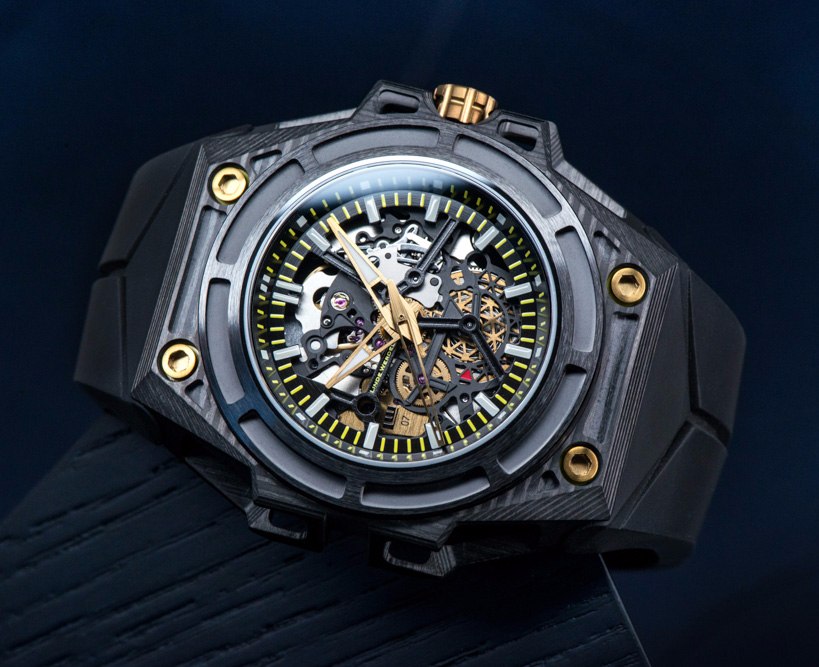
Today, Linde Werdelin is proud to announce and unveil the SpidoLite 3DTP Carbon. At the heart of Linde Werdelin is the pursuit of combining modern design and intricate, complex materials, exemplified with the SpidoLite 3DTP Carbon.
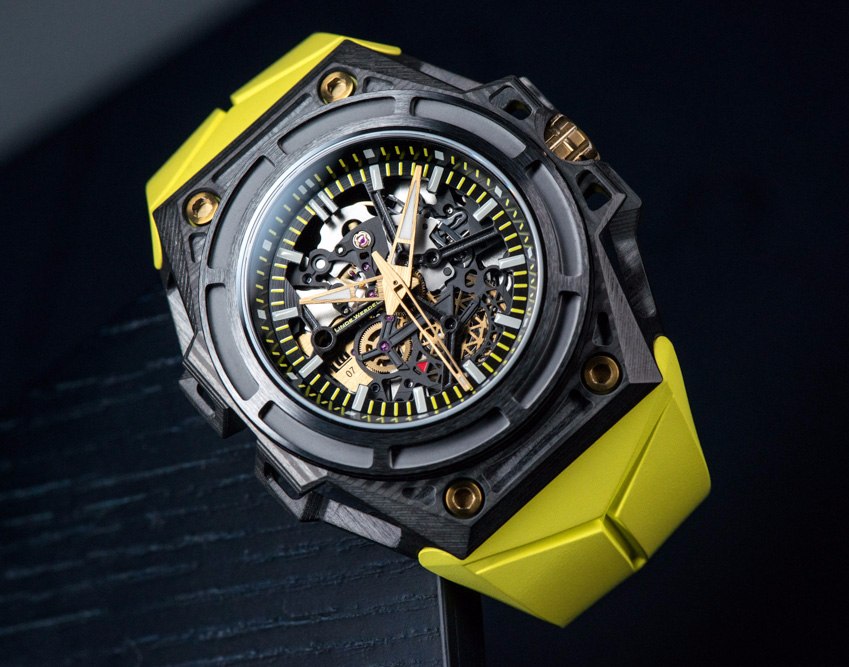
The SpidoLite 3DTP Carbon launches Thursday 17th March 2016, while Linde Werdelin are exhibiting at the Ramada Plaza Hotel. It will be available in a limited and numbered series of just 75 pieces worldwide.
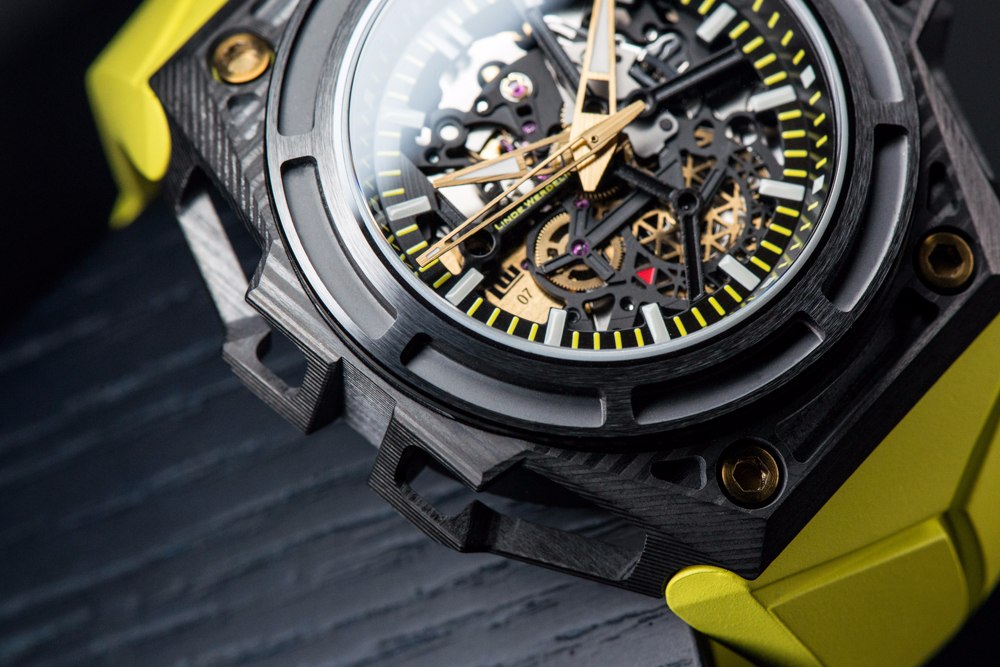
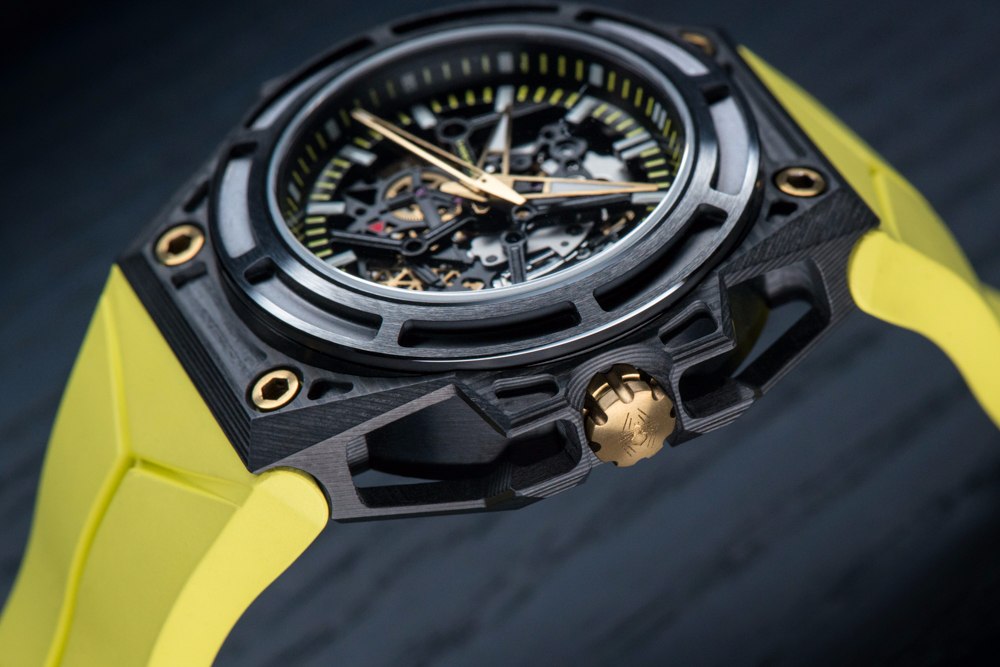
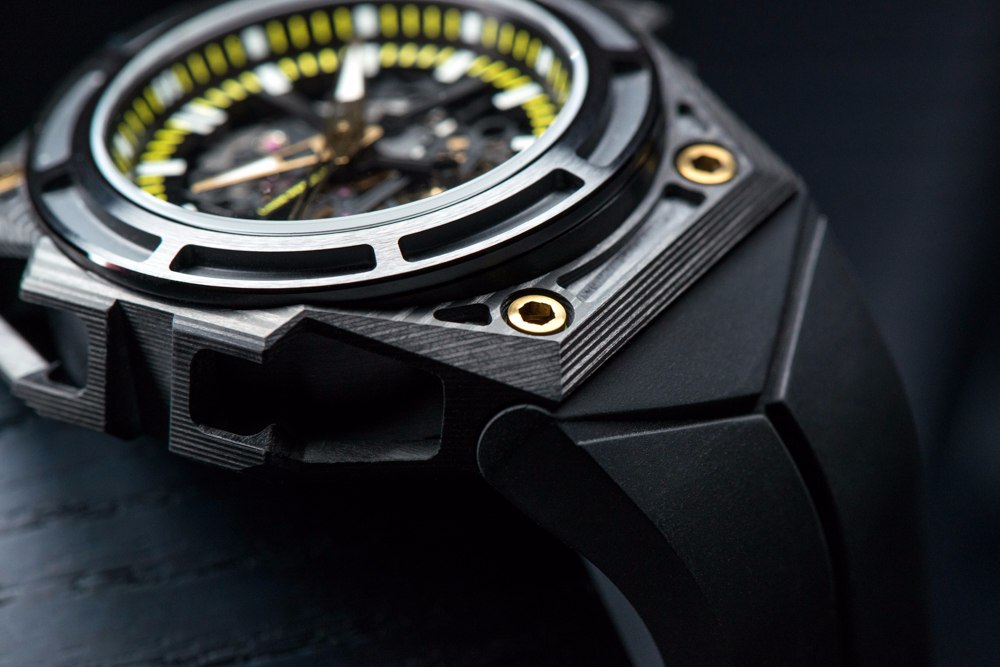
Linde Werdelin has pioneered the use of 3DTP in its Oktopus cases, and now advances the technique by perfecting it for the intricately-detailed SpidoLite case. In the skeletonised and stripped-back aesthetic of the SpidoLite case, reducing the outer case to just 3.8 grams, being able to shape the 3DTP carbon without delamination is a feat of engineering.
Morten Linde, co-founder and creative mind, elaborates further, “The SpidoLite 3DTP Carbon is testament to the LW DNA of treating weight-reduction as a design pursuit and not an end-goal. We have skeletonised, and reduced weight in, components individually, but by evaluating the design holistically can maintain strength in the construction where needed.”
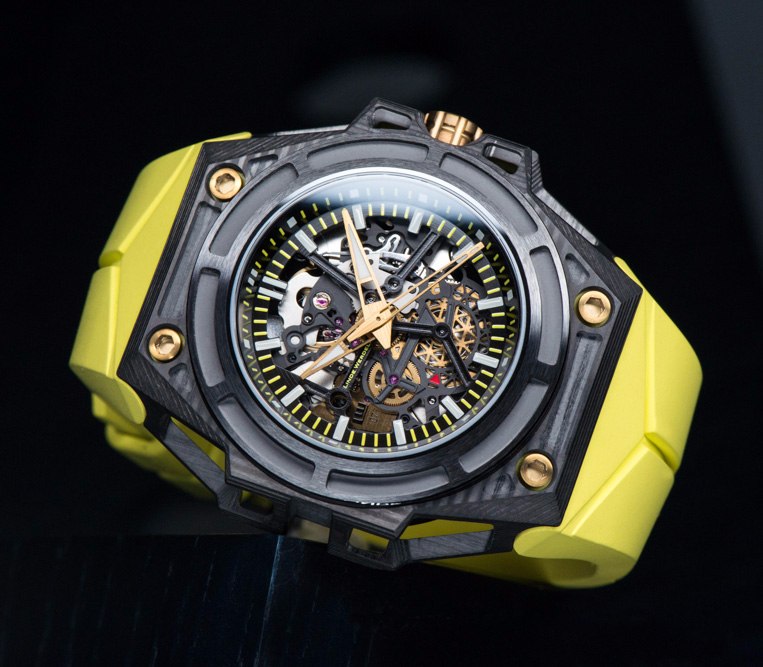
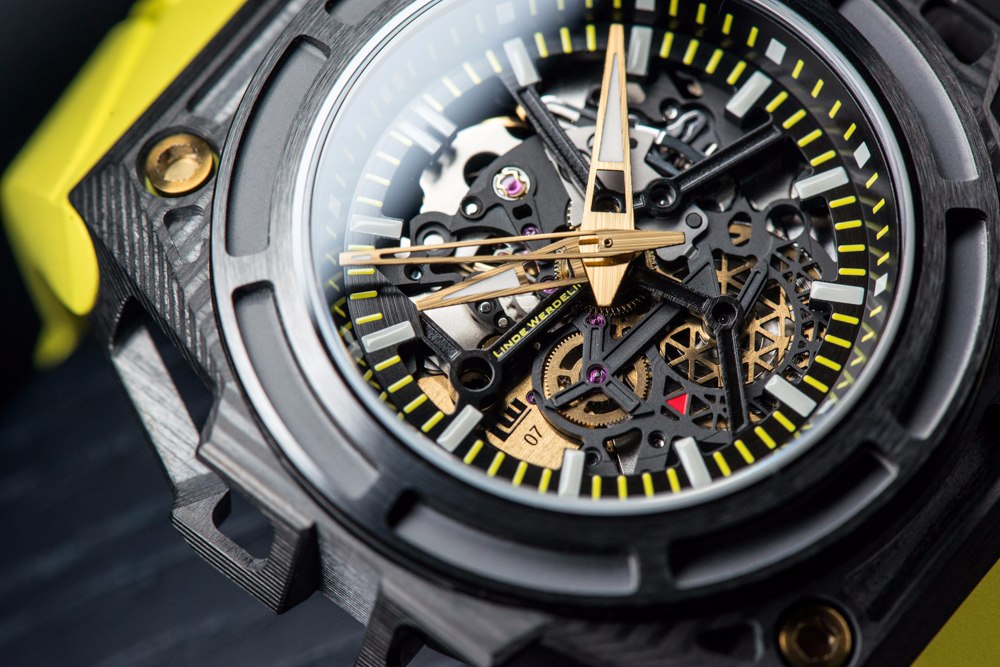
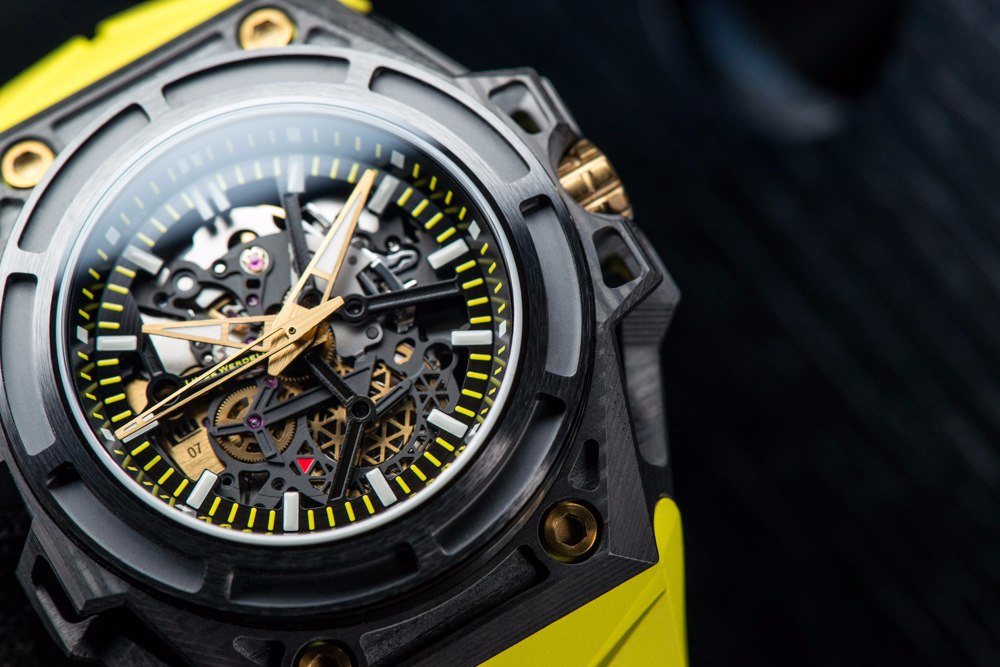
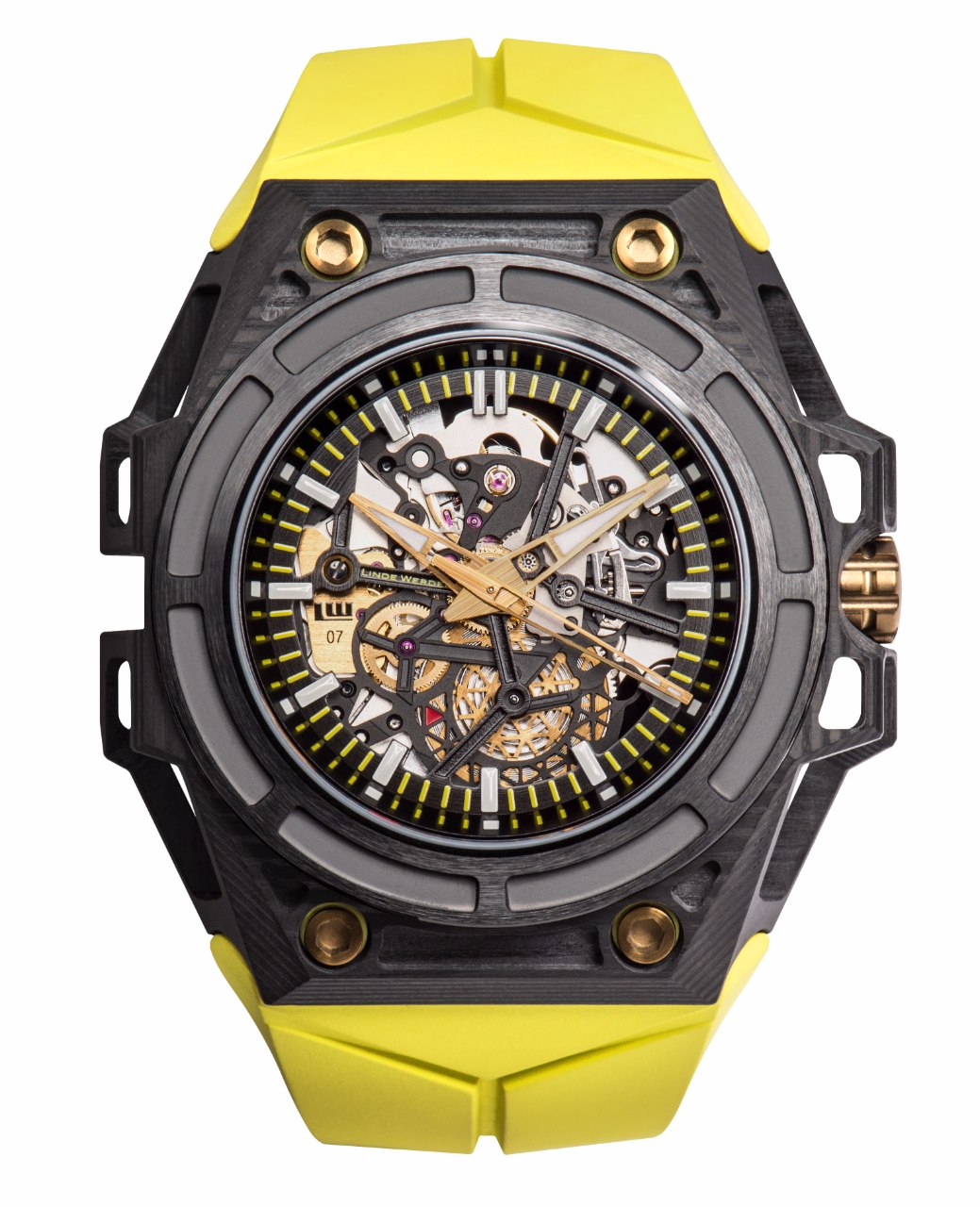
The black 3DTP outer case is accented in the dial by yellow and TiN-treated detailing, while it is contrasted with Linde Werdelin’s natural rubber
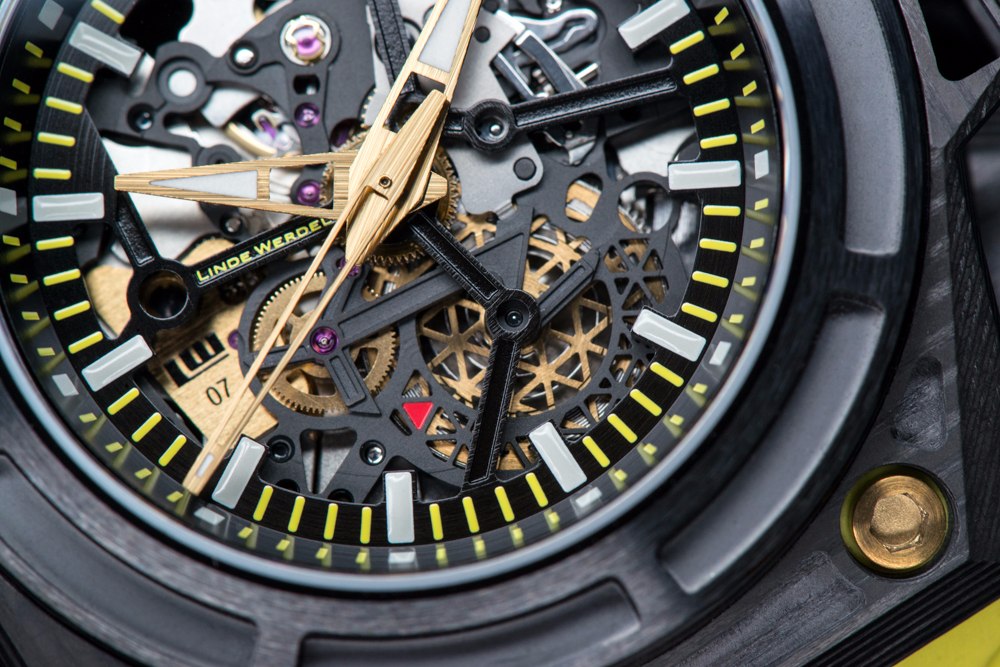
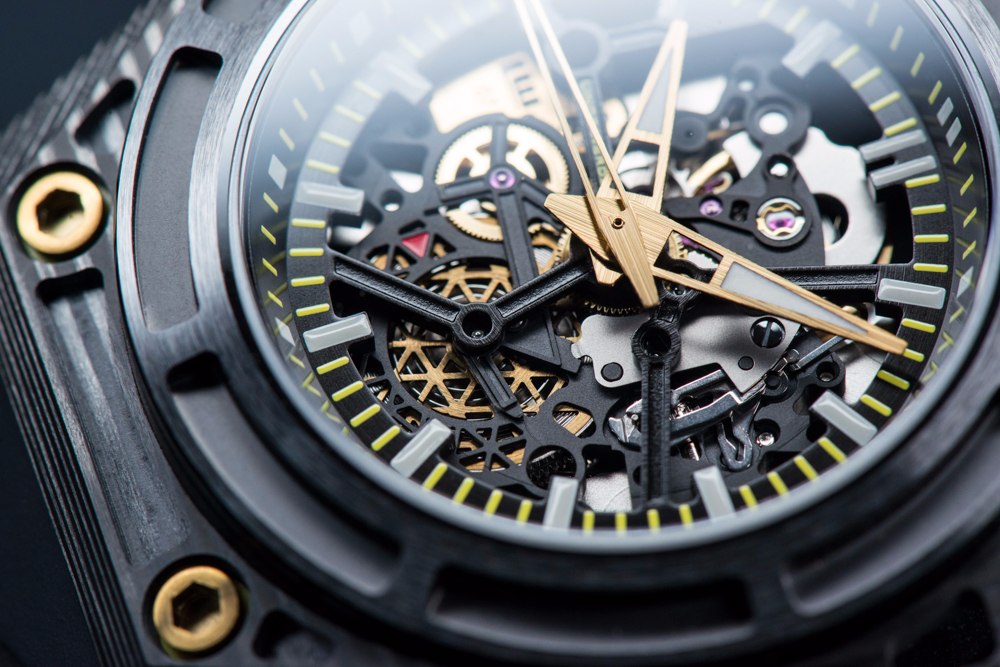
strap in yellow. Parts of the movement – the extremely-skeletonised LW07 – have been darkened with DLC treatments to create a more striking contrast, both in terms of depth and colour, with the yellow and TiN details in the dial and other parts of the movement.
The LW07 movement (its moniker indicated on the TiN-treated bridge) and open-worked dial combine to expose a simple power reserve indicator near 5 and 6 o’clock, its position revealed by a red arrow. The power reserve indicator, true to the Linde Werdelin aesthetic and philosophy, is elegant in its simplicity; it is functional and blends harmoniously with the rest of the dial. The Trigon pattern can once again be found on the open and skeletonised TiN-coated barrel cover, a design signature for Linde Werdelin.
3DTP is a marvel of engineering. Differing from traditional carbon fibre composites or forged carbon, 3DTP involves a technique of layering thin sheets of carbon that took many years to master; it took a further two years to perfect for the angular Oktopus case, and yet another two to perfect for the skeletonised SpidoLite case. The resulting case is both strong and lightweight, becoming Linde Werdelin’s lightest-ever timepiece.
Integrated with a yellow natural rubber strap as standard, Linde Werdelin’s proprietary strap system allows the wearer interchangeable options, should they wish to switch to any strap or bracelet in the series.
Jorn Werdelin, co-founder, adds, “Using 3DTP in the SpidoLite is a natural extension of the great work we did in weight-optimising the LW07 movement in the SpidoLite Titanium, to make the SpidoLite 3DTP Carbon our lightest timepiece ever.”
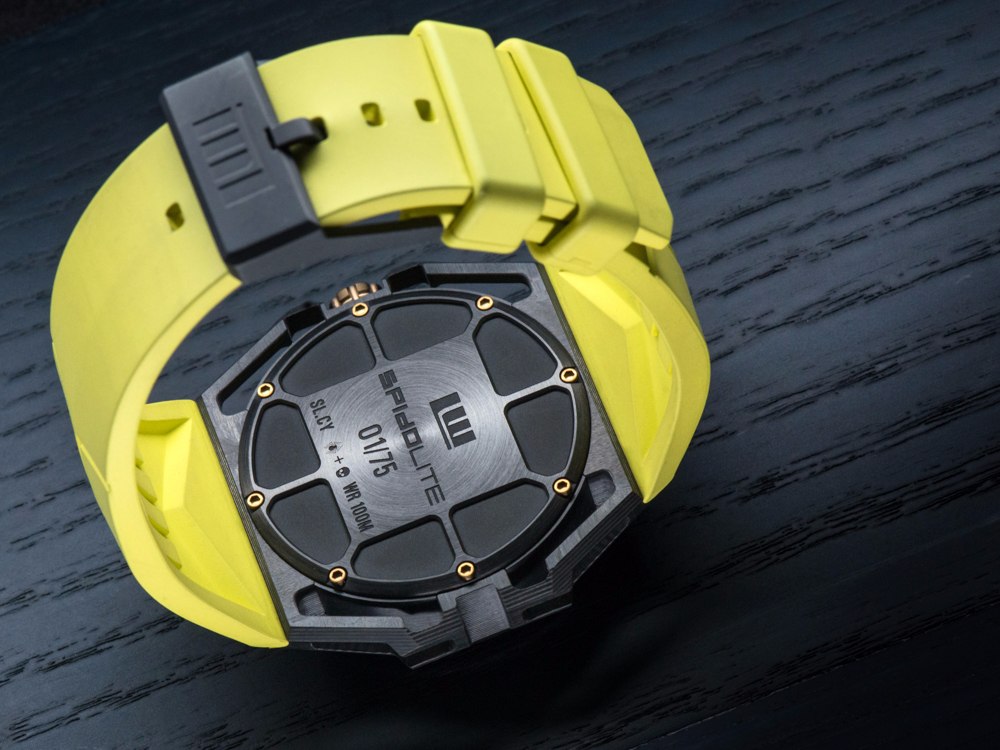
The SpidoLite 3DTP Carbon will be released on Thursday 17th March 2016, in a limited and numbered series of 75 pieces, priced at CHF 22,000. For more information, please visit Linde Werdelin’s website: LindeWerdelin.com
Technical Specifications
Case
Outer Case
- 3DTP with microbillé finish
- Sapphire crystal, anti-reflective on the inside
- Crown: Titanium with TiN treatment; push-in; engraved with a spider icon; circular satin finish
Inner Case
- DLC-treated titanium; vertical satin finish
Back Case
- DLC-treated titanium; circular satin and microbillé finish
- Eight hexakey titanium screws with TiN treatment
- Limited edition number laser engraved from 1 to 75
Bezel
- Black ceramic; satin on top surface; polished facet; microbillé in grooves
Dial
- Skeletonised dial
- Réhaut and dial: black with circular satin finish
- Hands: TiN treatment; satin finish; cool grey Luminova
- Cool grey hour indexes; yellow minute indexes
- Logotype printed in yellow
Power Reserve Indicator
- Indicated by a red arrow
- Barrel cover: Trigon pattern with TiN treatment; circular satin finish
Dimensions
- 44mm (w) x 46mm (l) x 15mm (h)
Movement
- LW07, movement skeletonised and customised by Linde Werdelin
- 42 hours power reserve
- Balance frequency: 28,800vph (4Hz)
- Jewels: 20
- Movement plate: DLC-treated with microbillé finish
- Bridge: TiN treatment; satin finish; logo and “07” printed in black
Numbered Series
- Limited to 75 individually numbered pieces worldwide
Strap
- Interchangeable natural rubber strap in yellow, with DLC-coated titanium buckle
Water Resistance
- 100m
About Linde Werdelin
Linde Werdelin creates the ultimate sports timepieces and high performance digital instruments for skiing and diving, to amplify the sporting experience whether high in the mountains or deep in the sea.
Modern by design, intelligent by materials and complex by construction; these are the fundamental ingredients that define a Linde Werdelin timepiece. Defying convention and breaking the boundaries of what is possible, Linde Werdelin commands a distinctive, respected point of view in the art of Swiss watchmaking.
Linde Werdelin timepieces are individually crafted in Switzerland in partnership with the finest, independent artisans and watchmakers. Produced with the utmost care and attention to detail, the entire collection is offered in limited and numbered series of 59, 75, 88, 99, or no more than 100 pieces for each design.
Roles of Morten Linde & Jorn Werdelin
Linde Werdelin is entirely owned and managed by its two co-founders, Morten Linde and Jorn Werdelin. While their titles are loosely defined as “creative mind” (Linde) and “strategic visionary” (Werdelin), their day-to-day roles are much more intertwined. Morten Linde is not just a designer, he’s a creator: he envisions the concepts for Linde Werdelin timepieces, first creating the designs for these and then advancing them through the production phase, working with the Swiss artisans and craftsmen to resolve problems that arise and advance the boundaries of possibility. He ensures the concept becomes the reality he envisioned. Meanwhile, Jorn Werdelin oversees the growth and future of the company, expanding Linde Werdelin’s distribution and retailer presence, and leads the Sales and Communications teams.
History of the SpidoLite
In 2008 a group of climbers approached Linde Werdelin to ask about using a watch and the Land Instrument for their next climb. The peak: Mount Everest. Their feedback was the current watches were too heavy for them – these mountaineers inhabit a world of extreme weight-saving, where ends of toothbrushes are shaved off and biscuit packaging is thrown away to save mere grams – but the instrument was invaluable and they took it.
After this, Morten Linde set about creating a lighter watch, one that would have met the climbers’ needs. Simply remaking the case in titanium would have been a quick fix, but was deemed too boring a solution. Instead, Linde found inspiration in racing vehicles converted from road-legal sports cars: everything unnecessary is stripped away and thrown out; climate control, passenger seat, radio, and so on. In watch terms, this led to a pursuit of skeletonisation.
The first timepiece to result from this was the Trigon, a partnership with celebrated Danish watchmaker Svend Andersen. As Linde Werdelin’s pursuit of skeletonisation advanced, the SpidoLite family began and flourished, as case, dial and movement were all opened up, stripped back and revealed to the wearer, all in the pursuit of a holistic approach to saving weight.
This message has been edited by AnthonyTsai on 2016-03-17 06:12:07