elliot55
2886

Start Of The Next Baktun - Redoux - PART I
Mankind’s fascination with
time and unrelenting need to track it goes back thousands of years, probably to
the age of the ancient Mayans and/or Egyptians. With the close of 2012, the Mayan calendar marks the end of
the Baktun and the rebirth of mother earth. Similarly, there are many who believe Stonhenge was designed
to track celestial bodies. And
while the sundial proved to be a great way to guess what part of the day it
was, true accuracy in timekeeping wasn’t really achieved until the early 13th
century. Although no one is really
sure, my guess is it was probably some Italian guy that figured the whole thing
out. After all, this was the time
when all the ‘smarty pantses’ were
hanging around - like Galileo and da Vinci.


Some (British) historians argue it is the Brits that can claim they were the first to reliably and accurately mark the passage of time, but my hunch tells me it was the Italians. Around 1602-ish, Galileo was very busy studying gravity’s affect and took notice of the simplistic way a pendulum swings to and fro. In so doing, he is credited with science’s greatest contribution to marking accurate time. In fact, the pendulum’s accuracy would stand for over 300 years until the invention of the quartz clock in 1932.

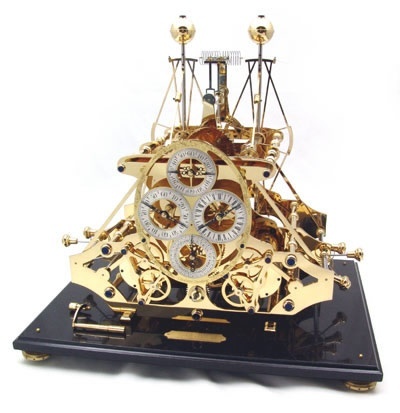
Time keeping’s next major breakthrough would come in 1735 when John Harrison, a self-proclaimed carpenter, developed a method to make a clock perform accurately on a ship. With world trade growing at an exponential rate, some voyages would last for several months. An error in course of just a few degrees could put the ship and its crew in uncharted waters and far from its destination. This gave rise to the “Longitude Act”, a prize of twenty-thousand pounds (at the time an absolutely ridiculous sum) offered by the British monarchy under King George I. Now known as a ships chronometer, this “clock in a box” is mounted on a gimbal-like device allowing the clock to move with the yaw and pitch of the ship.
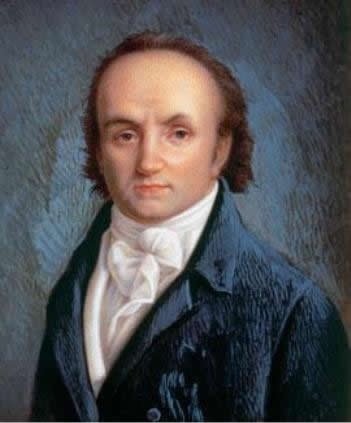
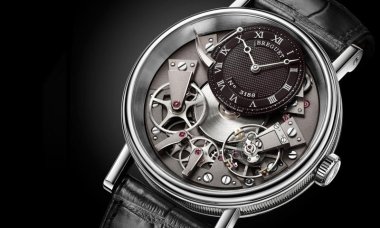
Timekeeping’s next milestone came in 1795, when Abraham Louis Breguet developed the Tourbillon (which literally means “whirlwind”) movement. In short, Breguet’s invention is a movement in a movement. Keep in mind, at the time only rich people or nobility could afford a [pocket] watch (there were no “wristwatches”). But there were working folk - like the guys on the railroad - who also needed an accurate method of keeping time. The major problem with a [pocket] watch is that the regulator is susceptible to gravity. And so, every time a conductor would take a watch out of his pocket, look at the time, and then return the watch to his pocket, a “drift” would occur in the timepiece’s accuracy. Multiply that same action across the entire line of train conductors (or the world’s ship captains) and pretty soon you have got an awful lot of trains (and boats) crashing together. The tourbillon escapement, as it is formerly known, compensates for gravity by essentially wrapping the escapement and balance wheel assembly inside of an independently rotating cage. To be sure, there is nothing more fascinating than watching a tourbillon movement, which has an almost hypnotic effect. Also known as the grandfather of modern watch making he is credited with so many innovations, even the Russian word for wristwatch is “Breguet”!
End of Part I. Part II Soon To Follow.
- Scott