
PuristSPro
[PuristSPro Moderator]
68

Audemars Piguet Royal Oak Jumbo ref. 15202: Community Insights and Lineage
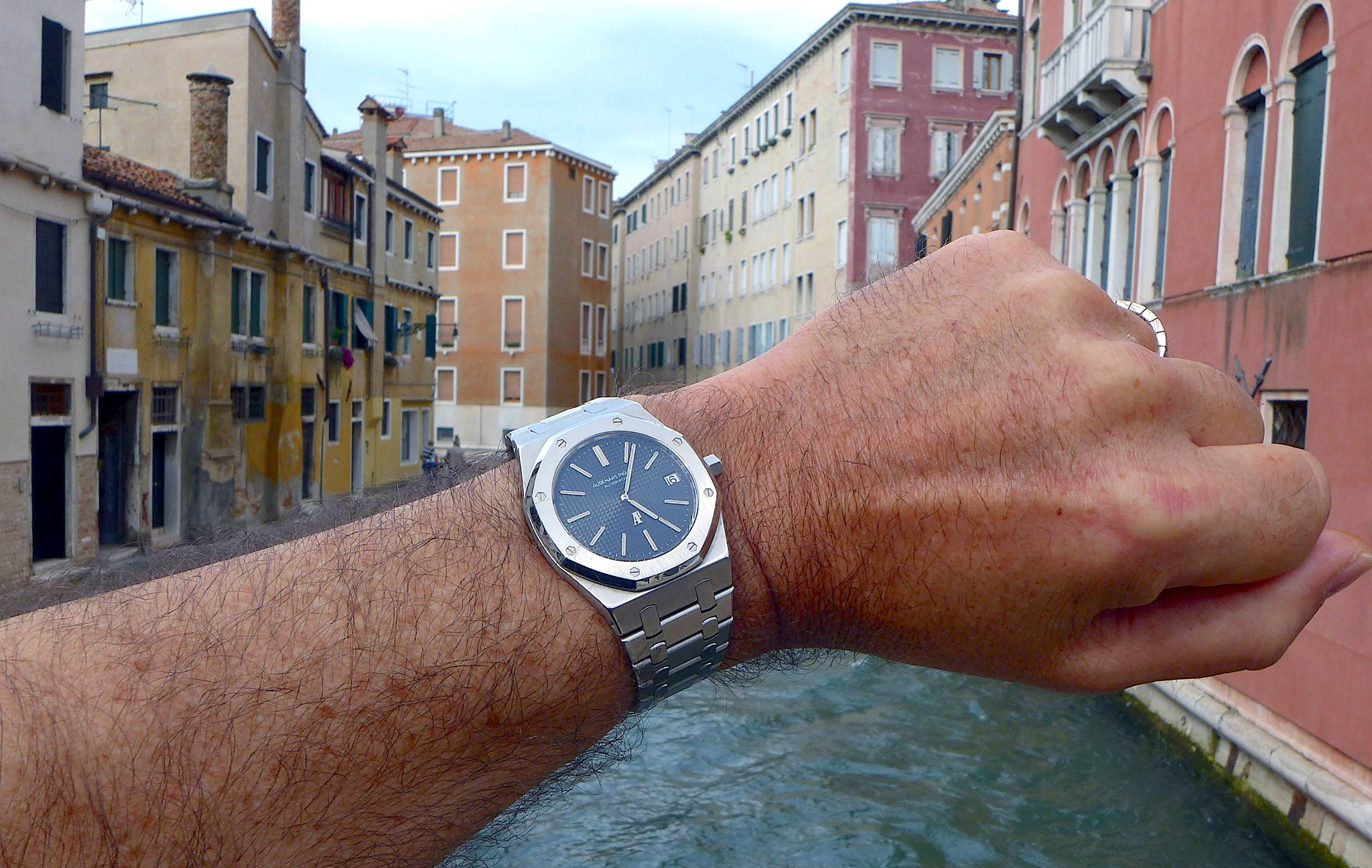
The Audemars Piguet Royal Oak Jumbo ref. 15202, launched in 2000, introduced a modern interpretation of the original Royal Oak design, initially featuring a Grande Tapisserie dial and a three-piece case construction with a sapphire crystal caseback. This reference evolved significantly with its 2012 update for the 40th anniversary, which saw a return to the Petite Tapisserie dial, a matching date disc, and the AP logo positioned at 6 o'clock, mirroring the original ref. 5402. While some collectors appreciate the matching date disc, others prefer the contrasting white date window found on the original 5402, highlighting a split in aesthetic preference. The initial batch of these 40th-anniversary models presented a light blue dial with a thinner AP logo, while later Jumbos from 2014 featured a darker dial and a wider AP logo with a white gap between the 'A' and 'P'.
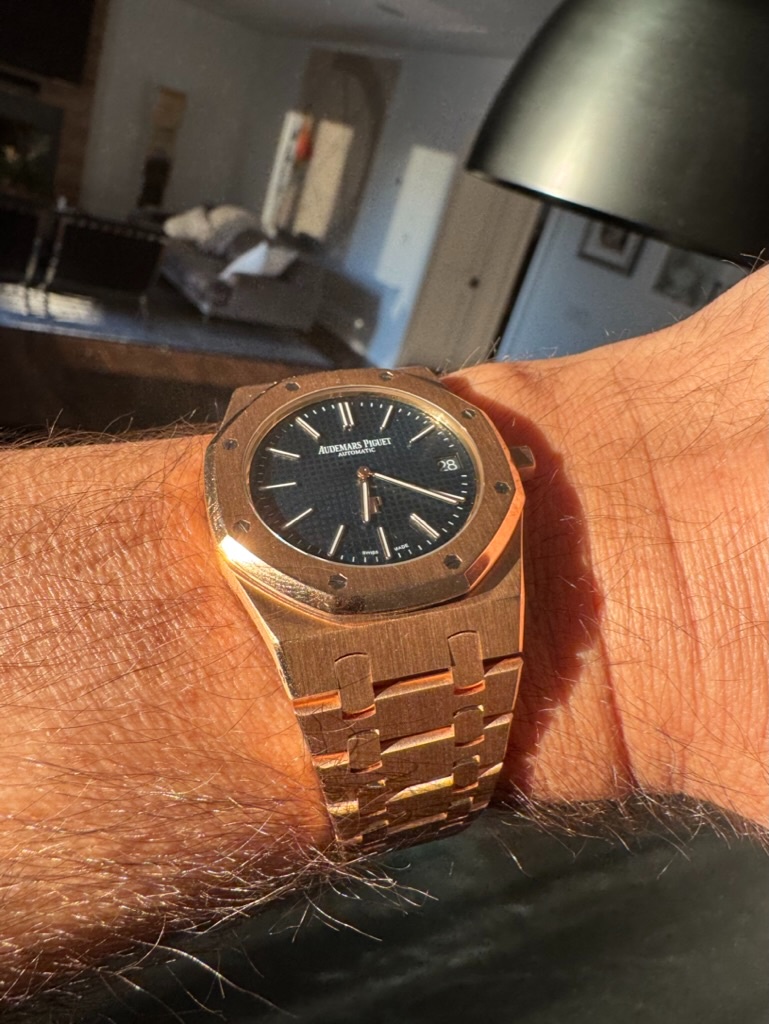
An ongoing point of contention among members revolves around the case construction of the first-generation 15202. One long-standing member asserts it retained the monocoque case construction, whereas the second-generation 15202 separated the case-back from the mid-case. Conversely, the 15202 returned to a three-piece construction with a sapphire crystal caseback, departing from the monobloc design of its predecessor, the 5402. This shift in construction is noted to have added a slight increase in thickness in the later iterations. 6

The calibre 2121, shared across generations of the Royal Oak Jumbo, is a foundational statement of ultra-thin horology. It stands as one of the thinnest full-rotor automatic movements to incorporate a date complication 4 . This extreme thinness is not just a technical feat, but a defining characteristic that dictates the entire profile and wearability of the watch. Owners often highlight how this slender architecture contributes to the elegant drape of the bracelet and the way the watch disappears on the wrist, a direct consequence of the movement's svelte dimensions. The calibre's presence, or rather its minimal footprint, is central to the "Jumbo" experience, allowing the case to hug the wrist with a grace rarely found in automatic watches 7 .

Traditionalists argue the first-generation 15202 (2000-2011) is the superior modern Jumbo, retaining a closer resemblance to the original 5402 in its spirit and manufacturing ethos. They're right. This preference stems from details such as the first-gen's more artistic and thinner AP monogram folding clasp produced by Werthanor, compared to the second-gen's bulkier, more generic Maspoli butterfly clasp. In addition, the first-gen's rotor featured significantly more hand finishing with an arabesque motif, contrasting with the second-gen's more machined edges. The bezel on the first-gen was also thinner, a result of a shorter hand-stack, demanding tighter tolerances and more careful assembly. Dials for the first-gen were produced by Stern Freres using original Lienhard guilloche machines, a practice that ceased for the second-gen when dial production moved in-house. 6
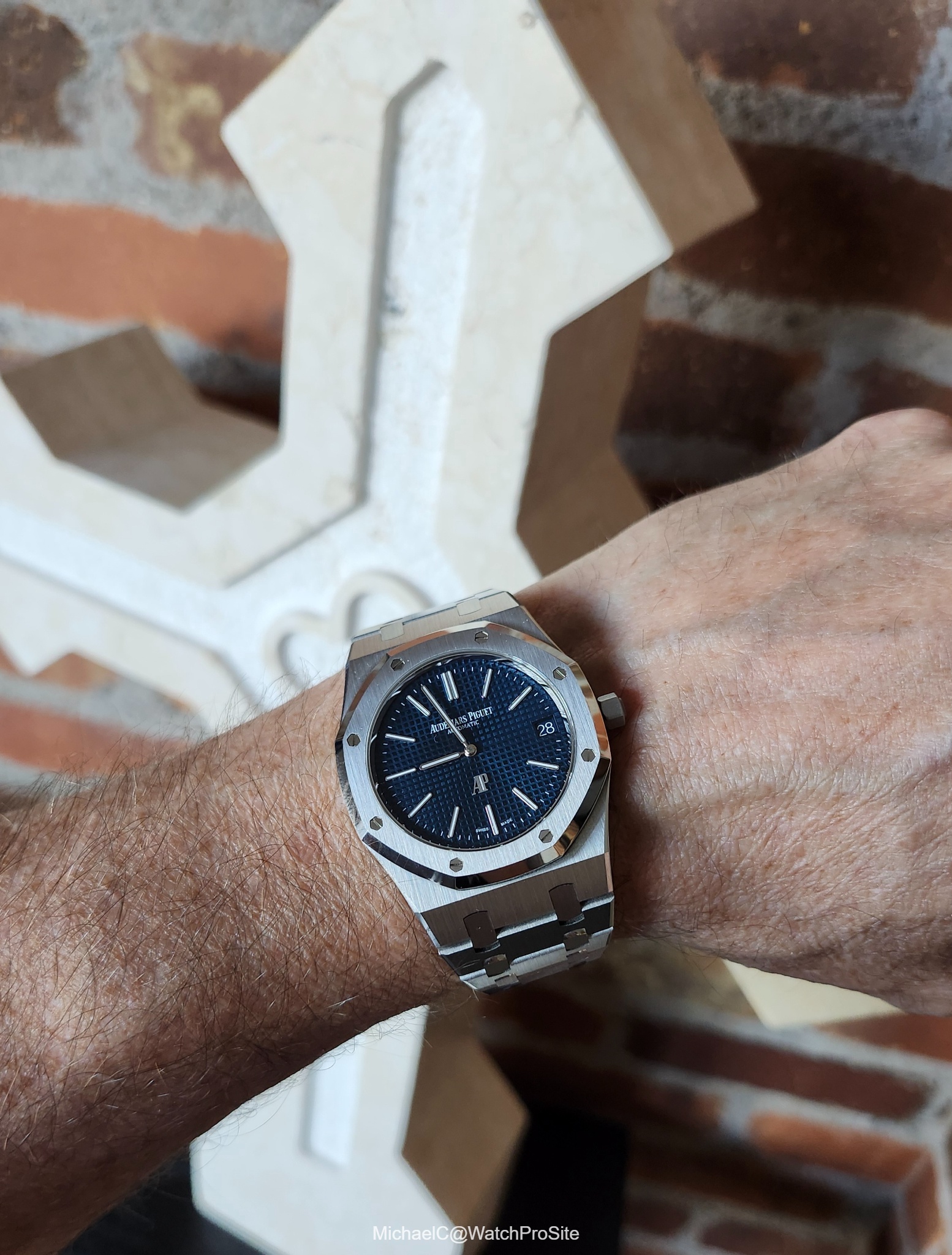
The 15202 sits within a rich lineage of Royal Oak Jumbo models, tracing back to the original ref. 5402 from 1972, which measured 39 x 7.1 mm and housed the same calibre 2121. This was followed by the 1992 Jubilee ref. 14802, a commemorative edition limited to 1,000 pieces, which introduced a three-part case to showcase the movement. The modern 15202 was eventually succeeded by the 2022 ref. 16202, which introduced the newly developed Calibre 7121 7 . Collectors who have worn both note the 15202 is considered the "daddy" compared to the ref. 15300, which featured an in-house Calibre 3120, quick-set date, and centre seconds, making it a more practical, albeit thicker, daily wear option 10 .

| Case diameter | 39mm |
| Case thickness | Approximately 8.1mm |
| Movement | Calibre 2121 |
| Movement thickness | 3.05mm |
| Movement diameter | 28mm |
| Water resistance | 5 ATM |
What are the key differences between the 15202 and the 15300?
The 15202 is thinner at approximately 8mm, features the calibre 2120 (same as 2121), a Petite Tapisserie dial, and an applied AP logo at 6 o'clock. The 15300, at 9.4mm thick, uses the in-house calibre 3120 with a quick-set date, centre seconds, and a screw-down crown, alongside a Grande Tapisserie finish. The 15300 is considered more practical and confidence-inspiring, while the 15202 is considered the "daddy" due to its adherence to the original design. 10
How does the 15202 compare to the original Royal Oak ref. 5402?
The 15202 is described as very close to the original 5402 in spirit. The 5402 featured a monocoque case and lacked a transparent caseback, a feature that the 15202 introduced. Some collectors also note the 5402 had a white date window, which was a point of preference for those who favor the matching date disc of the later 15202 iterations. 12
Was there a change in the dial appearance of the 15202 over its production?
Yes, since the release of the 40th anniversary Royal Oak 15202 Jumbo in 2012, the initial batch featured a light blue dial color and a thinner AP logo. Later Jumbos from 2014 transitioned to a much darker dial and a wider AP logo, characterized by a white gap between the 'A' and 'P'. 1
Is the white dial version of the 15202 particularly rare?
Community discussions indicate that the white dial version of the 15202 is considered quite rare 2 . Production figures for the first-generation 15202 show approximately 1,750 pieces were made with a white/silver dial out of a total of about 3,500 across all metals and dial colors 6 .
What is the community's view on the long-term value of the first-generation 15202?
One long-standing member suggests the first-generation 15202 offers better long-term value compared to the second-generation, anticipating that more collectors will eventually recognize its quality proposition and scarce production numbers. 6
Image credit: Ivan5 · amanico · Jakx · MichaelC · HSTE