
SJX
[Purist]
8540

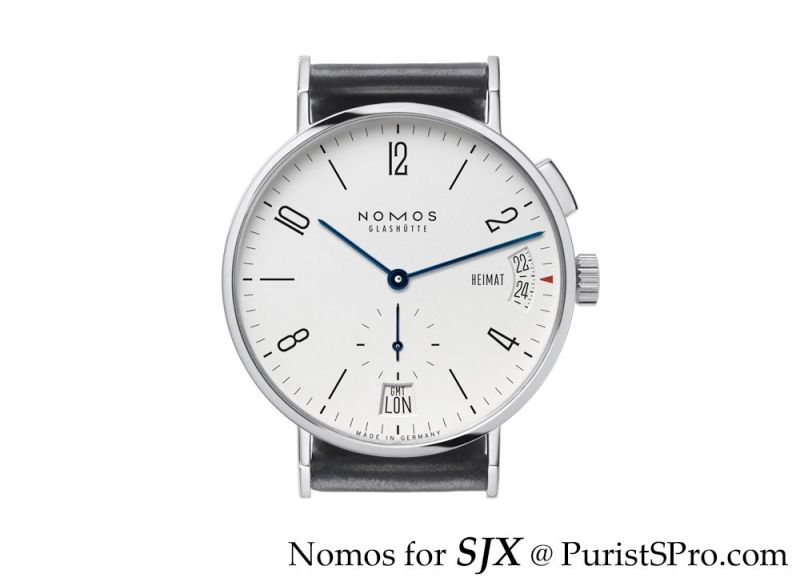
Nomos announces its first complicated models - World Time and GMT
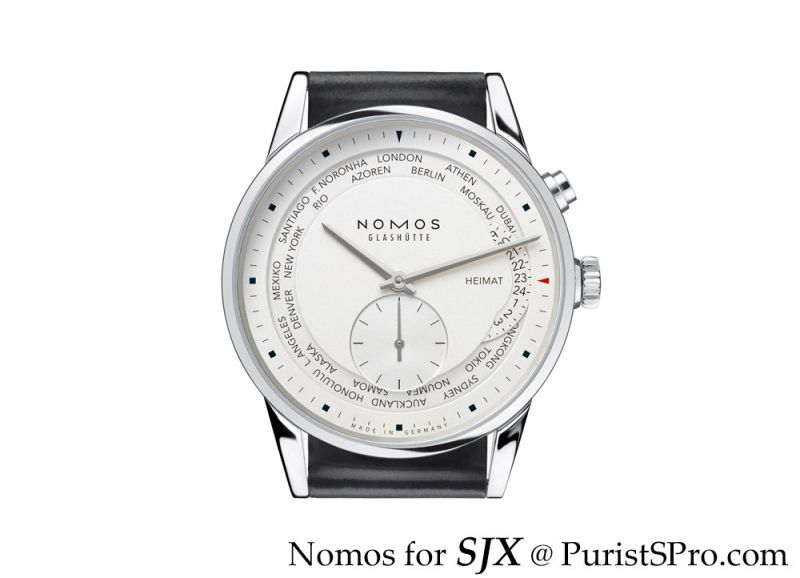
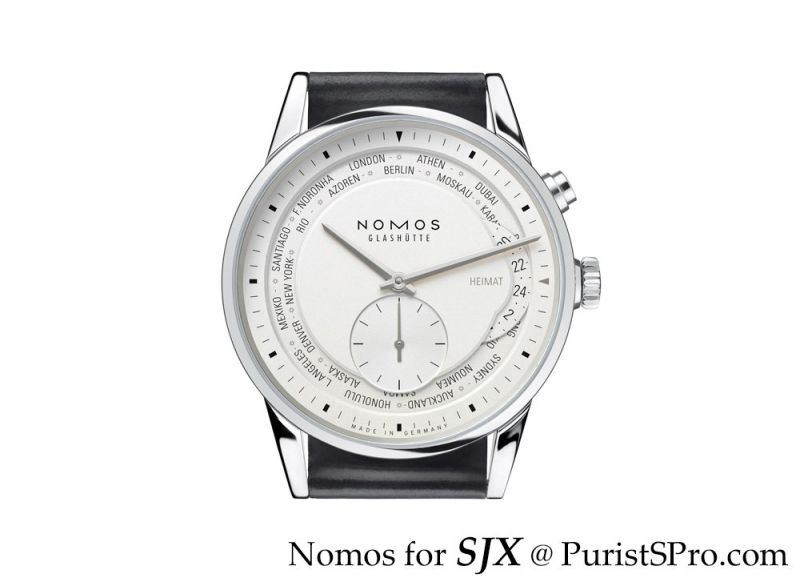
Nomos, known for its uber-clean designs, just announced its first complicated models, the Zurich Weltzeit and Tangomat GMT, powered by a new calibre xi designed by Mirko Heyne of Lang & Heyne who joined Nomos some years ago. Several versions have been made as prototypes in a series of 300 and will be tested by journalists, retailers and consumers.
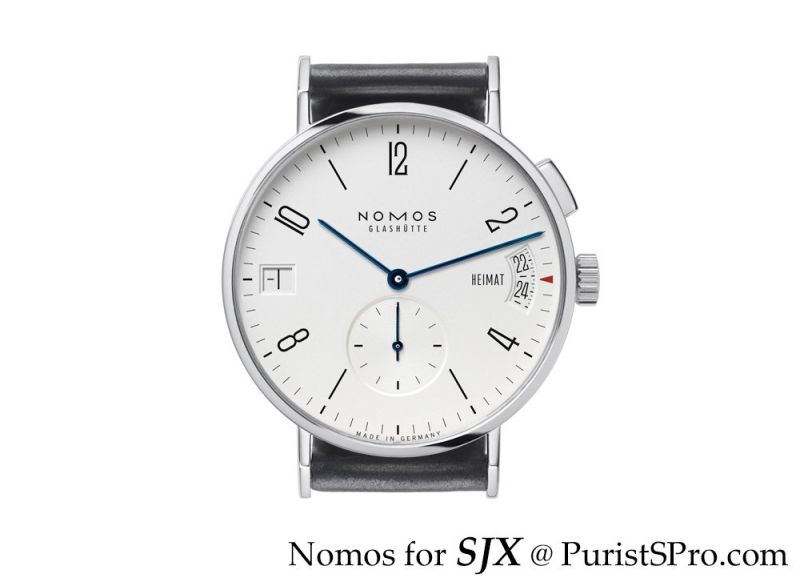
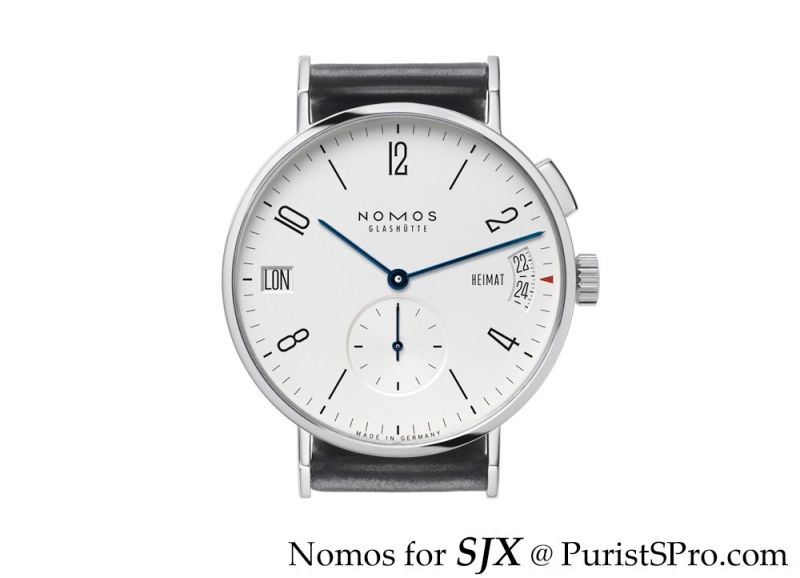
I especially like the Tangomat GMT, it is functional but still retains the Nomos look. And as someone familiar with Nomos watches I can say that the simplicity of the watches belie their wonderful movements, especially the in-house automatic calibres. These are superbly honest watches.
- SJX
Press release:
For people who think outside the box — and who like complicated watches, if they are beautifully simple: Tangomat GMT and Zürich Weltzeit have arrived!
Glashütte, June 2010. All the time in the world—times two: the NOMOS Glashütte models Tangomat and Zürich are now available with a second time zone. Both are typically NOMOS: watchmaker Mirko Heyne (34), who was the designer of the original NOMOS automatic caliber, made things a bit more complicated for himself with the xi movement—just to make it beautifully simple for those who ultimately wear the watch. So, what kind of watch wearers are these, anyway? People who see the bigger picture, travel, and use the internet; people who take trips for business as well as pleasure and have contacts all over the place—in short, modern polyglots.
Tangomat GMT and Zürich Weltzeit are quite practical watches. Inside both models ticks the xi caliber, which has no problem showing calculations, figures, and derivations. Xi makes a note of where you live and how big the time difference is between there and New York, Taipei, or Honolulu. The watches communicate all of this in one view. What is the difference between them? Whereas Zürich Weltzeit always displays the whole world all at once, Tangomat GMT only focuses on one specific second location—the place where your beloved lives, where your colleagues are at work in the company’s branch office, where your kids go to college, or where you have your chalet. In accordance with the needs of these innovative functions, the already famous cases, which were developed by the design team around Susanne Günther and Hannes Wettstein, have been adorned with new dials.
Puzzling over complicated displays, studying the instruction manual for hours, the frustration of unsuccessfully setting the watch for the nth time: wearers of the Tangomat GMT and Zürich Weltzeit are spared of these torments. A simple push-piece on the case and a location indicator on the dial are all you need to find out what time it is anywhere in the world. But most globetrotters and business travelers, just like those who are homesick or lovesick, are not satisfied with simply finding out what time it is wherever they happen to be—they also don’t want to lose sight of what time it is at home. These new watches satisfy this wish with one single display that unflinchingly continues to show the time in Castrop-Rauxel, Konstanz, or Lübeck—with a special tiny disc by the 3.
The new NOMOS automatic movement was a whole year in the making, it required 23 completely new components and multiple design studies until we could finally say: “It works. It’s beautiful.”
And now NOMOS Glashütte wants to find out if everything is truly as perfect as it seems—or if customers, retailers, and journalists will actually uncover a fly in the ointment. Two groups of 150 watches are ready to be put to the test. The manufactory is looking for testers to submit them to intensive wearing for three months. There are still open questions regarding the design too; and so, there are two dial versions for Zürich Weltzeit and four for Tangomat GMT. The testers will decide which versions will ultimately enter production in the fall. Any watch enthusiast can participate in this test, although the relatively small supply of models in this pilot series will limit the number of participants. They are available for purchase at all top-quality NOMOS specialized dealers for 2,690 Euros (Tangomat GMT) or 3,400 Euros (Zürich Weltzeit). For more information about NOMOS and this test, visit www.nomos-glashuette.com
Below: Zurich Weltzeit
Below: Zurich Weltzeit S
Below: Tangomat GMT +/-
Below: Tangomat GMT 12

Below: Tangomat GMT 9
Below: Tangomat GMT 6
Nomos announces its first complicated models - World Time and GMT

PURE NOMOS

i cant really say anymore than Faisal
I always liked the Tangomat a lot

I vote for the GMT 9 as well.

I don't understand the explanation.
The main hour hand jumps
Thanks. That makes it quite appealing.
The only models with Luminova
Slight correction...
You are right.
classy !

minority opinion


Glad to see something different from Nomos.
Another vote for the GMT 9

WOW, looks it is a good move for Nomos, very nice WT and GMT....
