
MTF
[PuristS]
13383

Chopard Imperiale: From 1994 until today
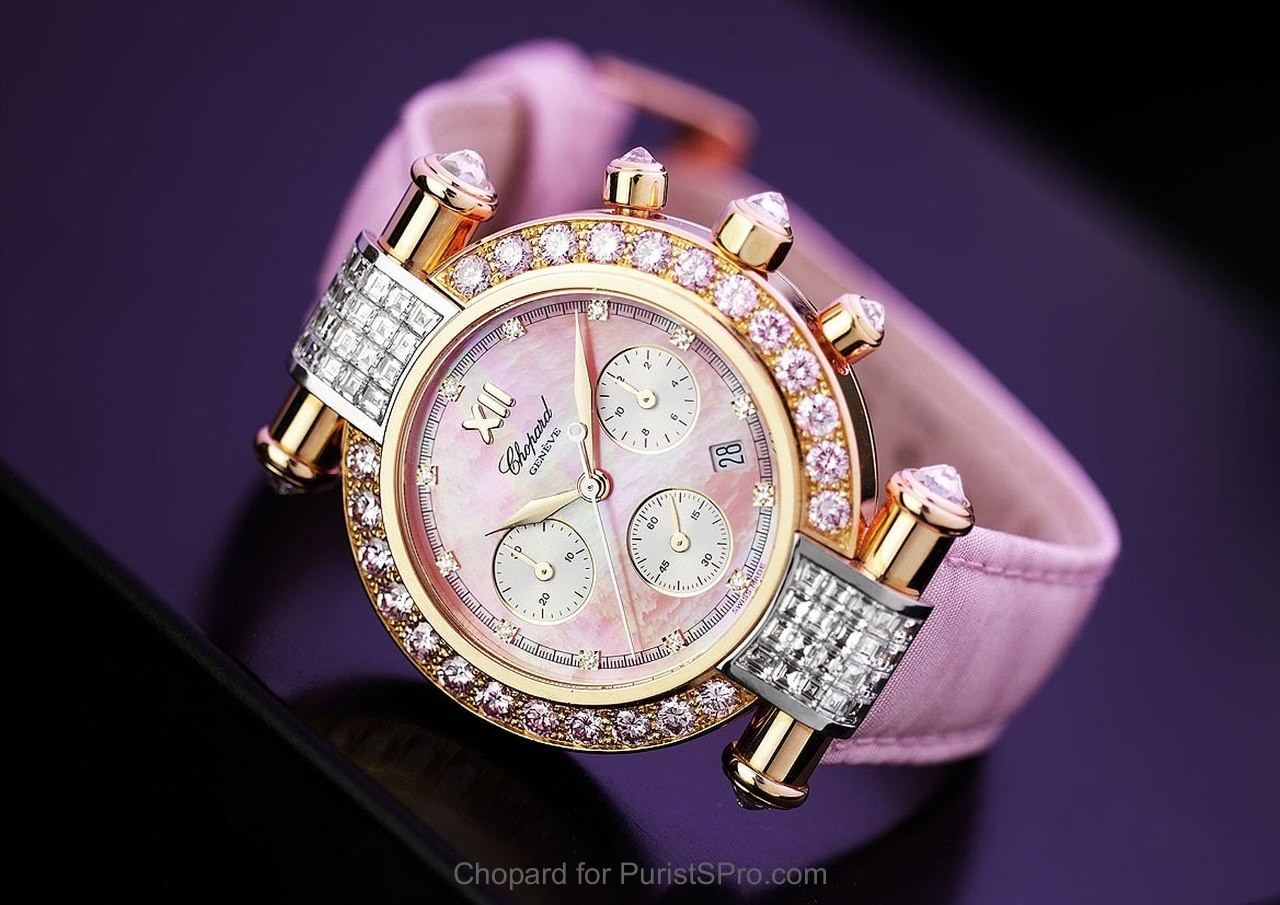
In 1994, Chopard introduced the Imperiale Collection redolent with the splendours of the French Empire.
Whether round, square, chronographs or gem-set, those Imperiale watches adopted an androgynous look for both men and women. The cases were sized generously for the era and the unique lugs set with cabochons ostensibly evoked Napoleonic columns.
However, other design cues meant that the international clientele saw more of an affinity with Ancient Roman Emperors.
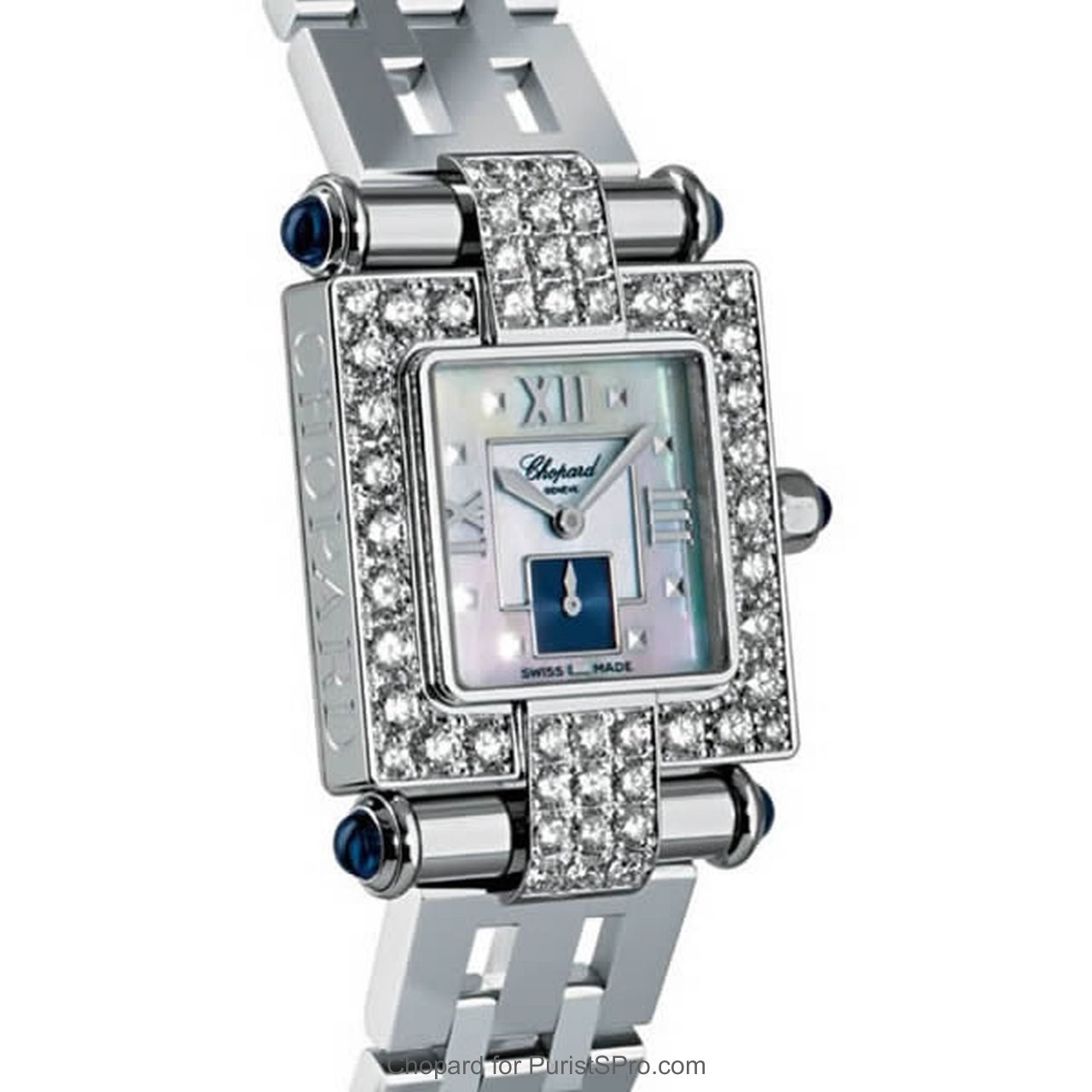
The lugs resembled Ionic Roman columns and the watch hand shape was called glaive.
This is confusing for fans of martial history.
The word "glaive" originated from French. Almost all etymologists derive it from either the Latin (gladius) or Celtic (cladivos c.f. claymore) word for sword. Nevertheless, all the earliest attestations in both French and English refer to spears. This was the meaning in English, from the 14th century to the 16th century. A glaive is a European polearm weapon, consisting of a single-edged blade on the end of a pole. For watchmakers and designers of the Imperiale Collection, the reference is a resemblance to a Roman short sword 'gladius'.
The Imperiale Collection is one of the Four Major Lines in today's Chopard Ladies' repertoire together with Happy Sport (1993) from the Happy Diamonds family, La Strada (1994), and Chopardissimo (1997) diamond watches. There are other enticing collections like Golden Diamonds, Ice Cube, Casmir, La Vie En Rose, Pushkin, Copacabana and Madison 709, but the four major lines are legendary.
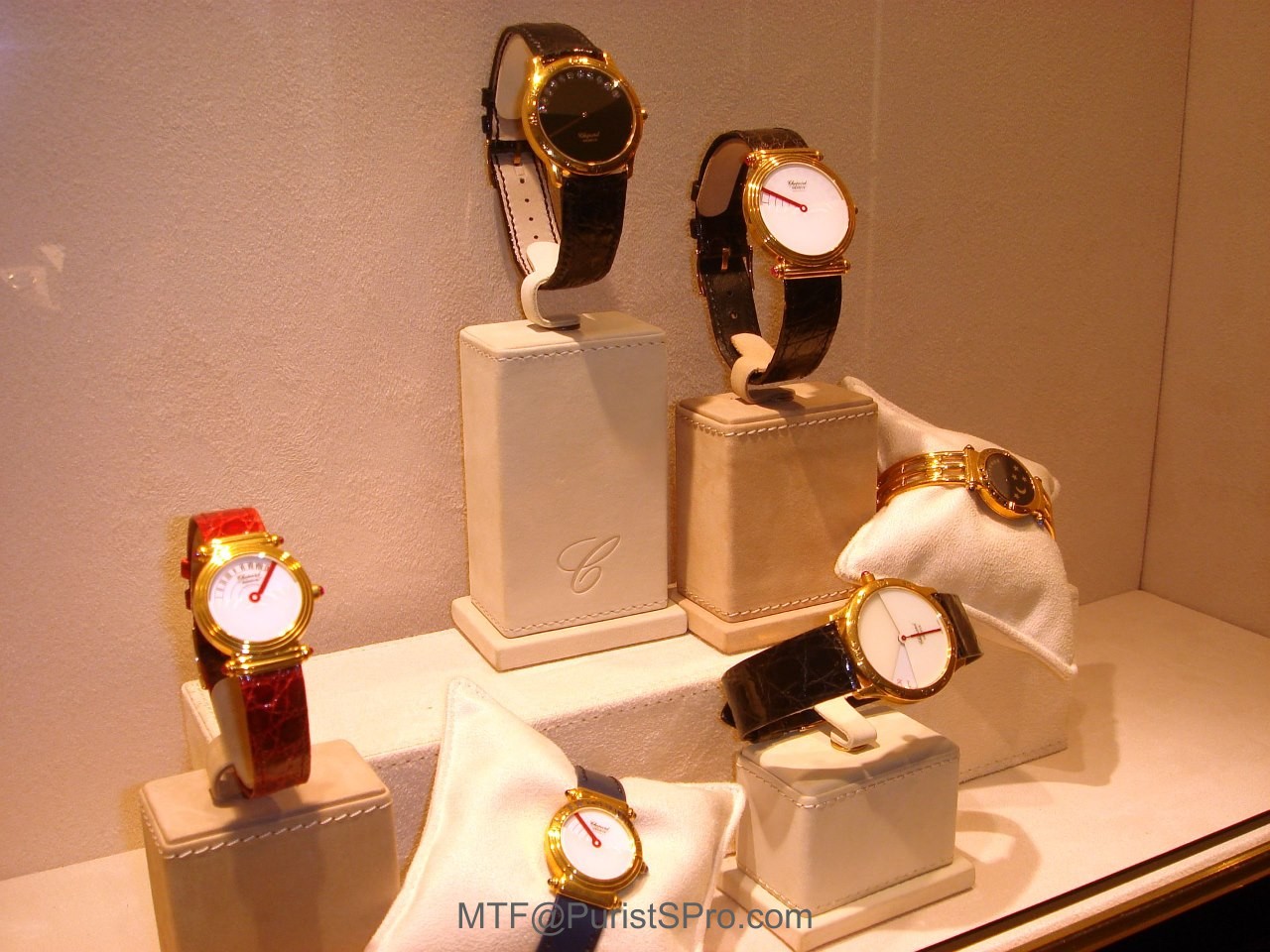
From the 1970s, we can see already the precedents of the Imperiale but the lugs were not yet fully sculptured.
Chopard did not make a distinction between men and women in that era; with the Happy Diamonds watch launched for men in the 1970s before the Happy Sport was targeted at women in the 1990s. When the Imperiale was introduced, it was sensually positioned for both genders and everything else in-between.
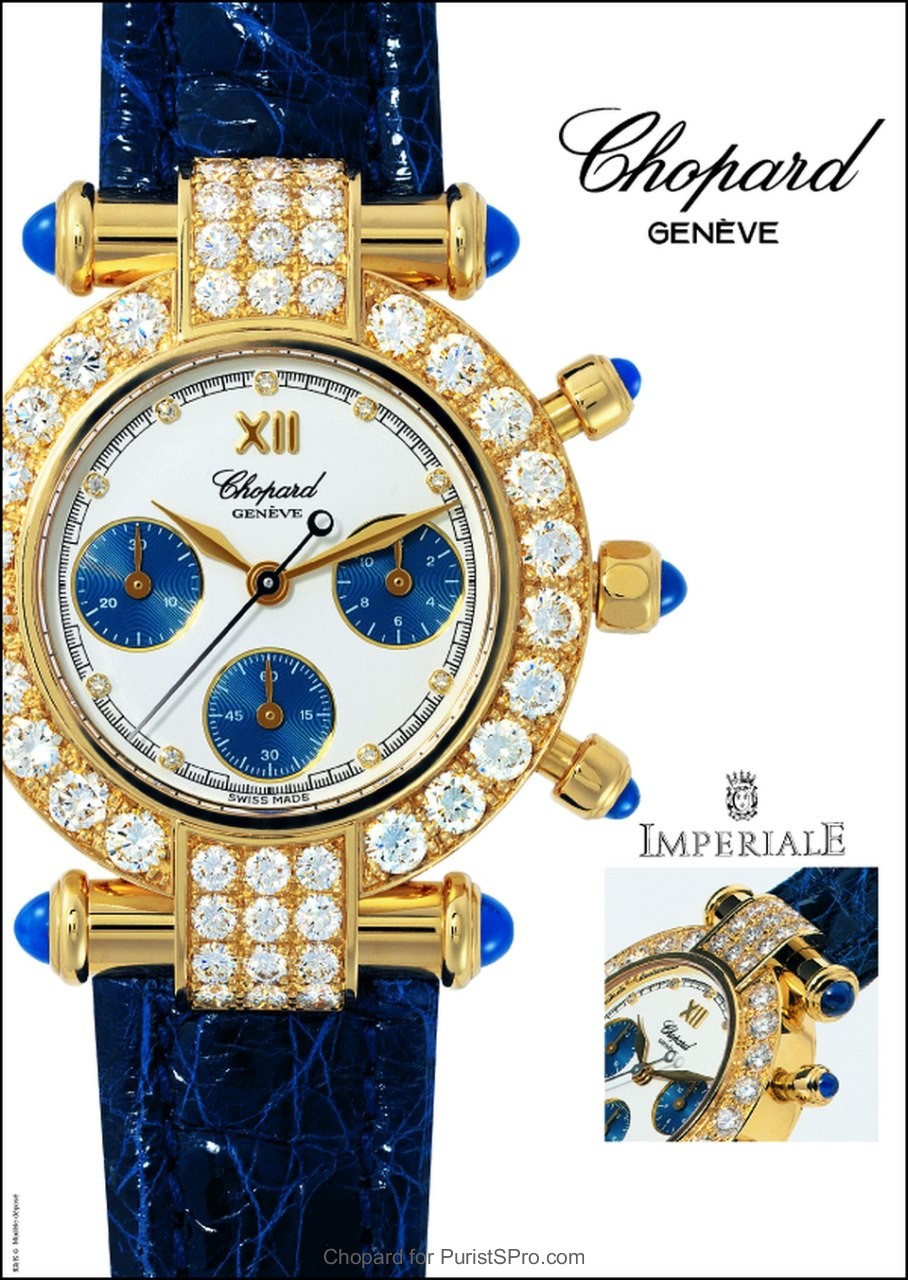
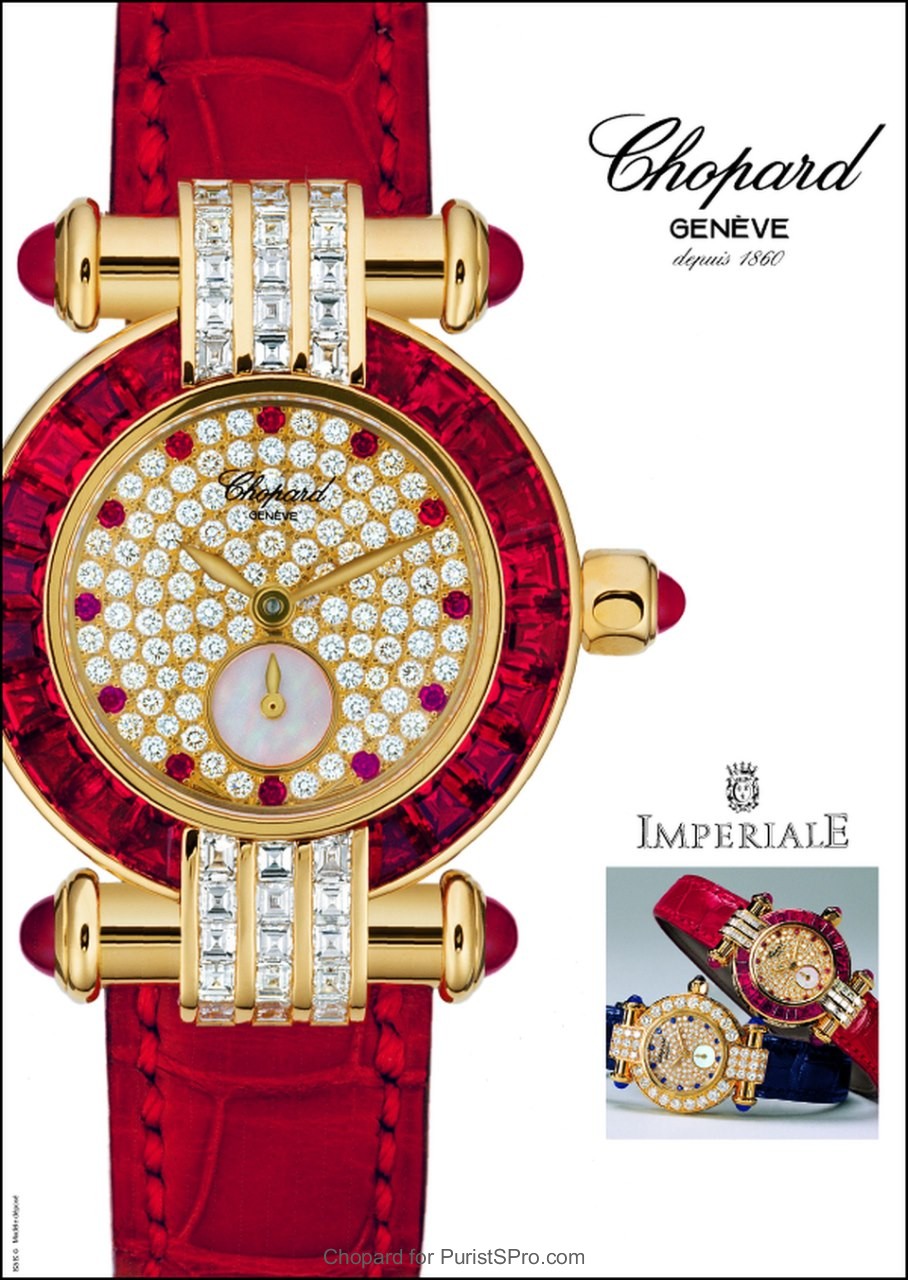
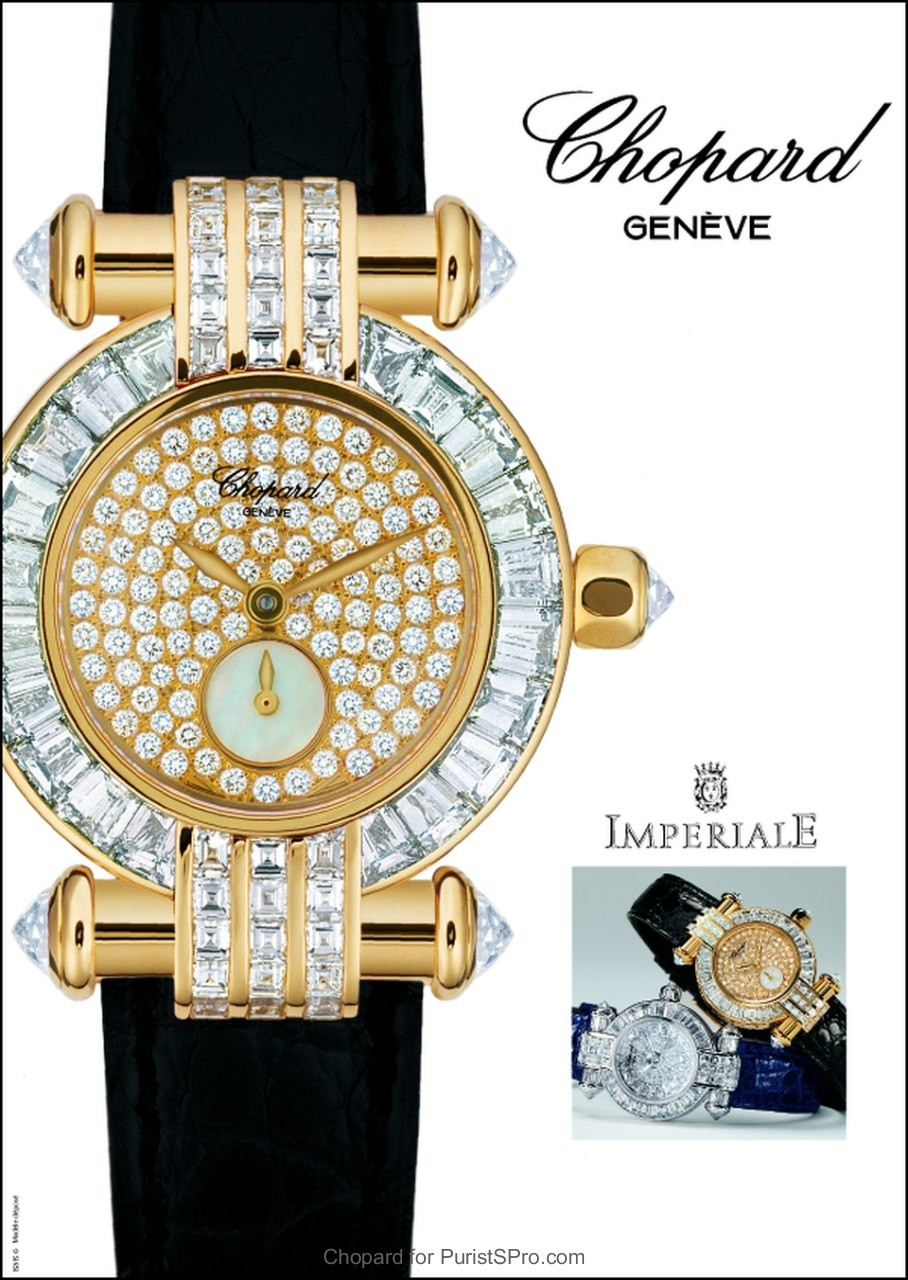
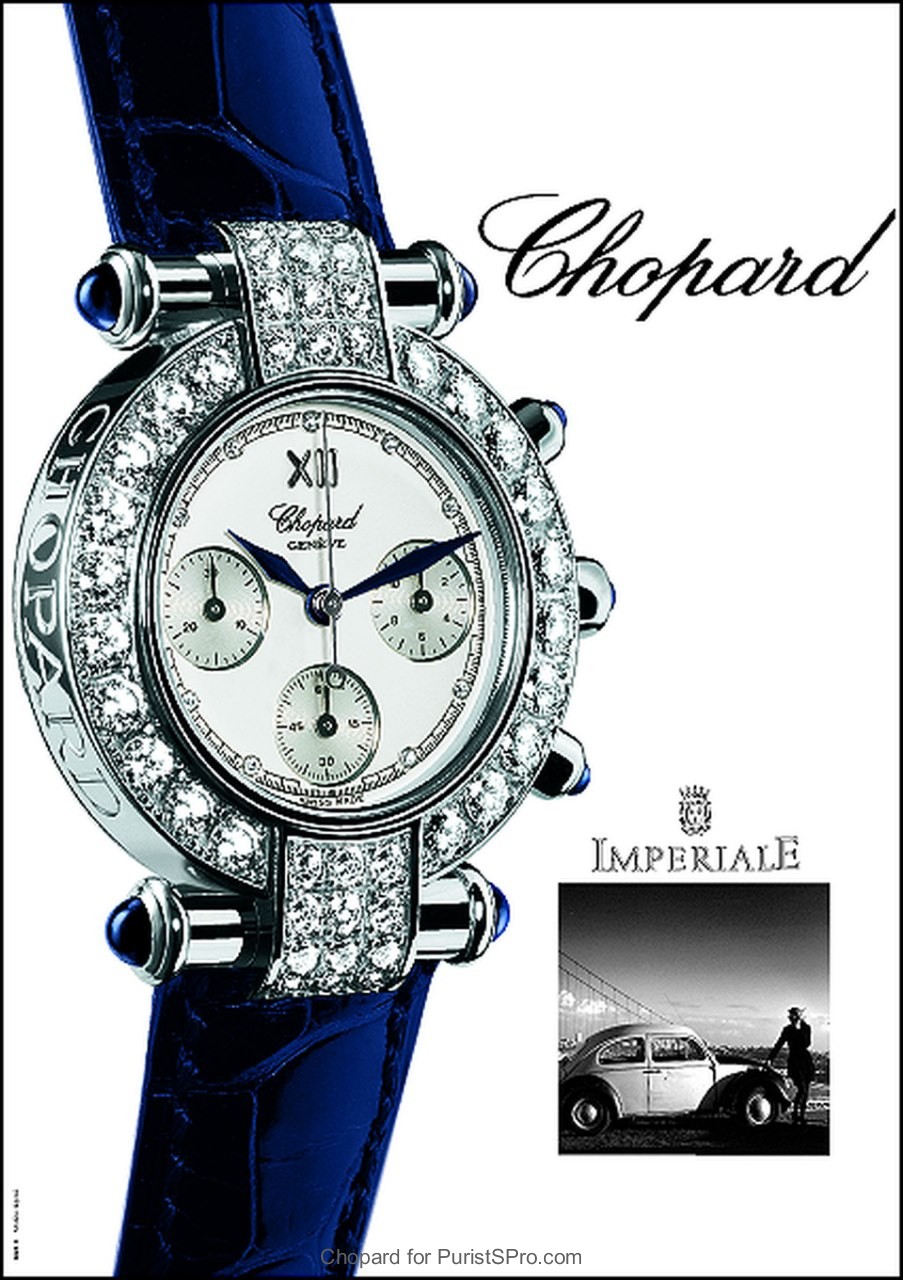
The cases were large and bold and the chronograph was the most popular variant, especially resplendent in sumptuous gem-setting.
When a gentleman or lady wore an Imperiale, they were comfortable in its imposing brilliance.
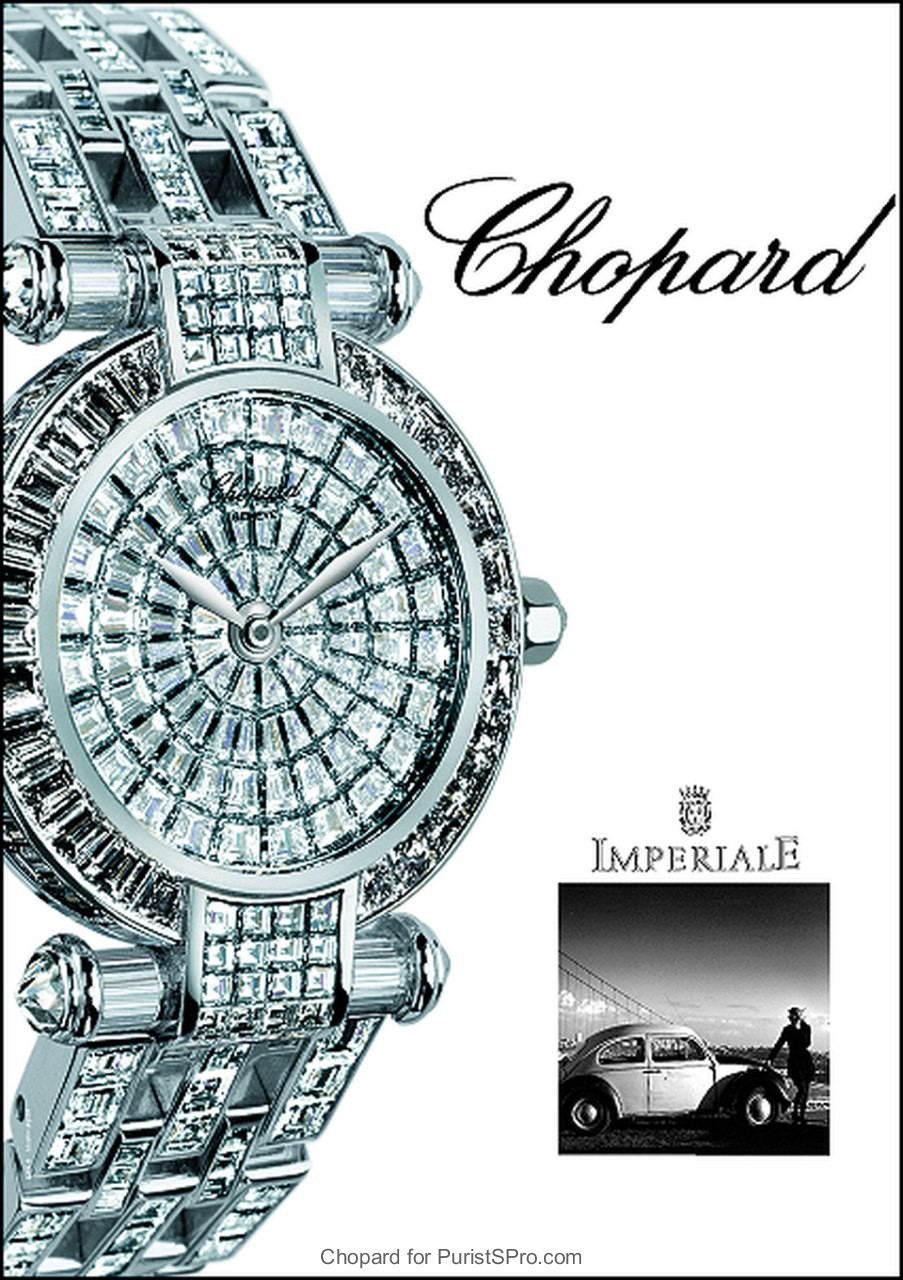
Imperiale Reborn
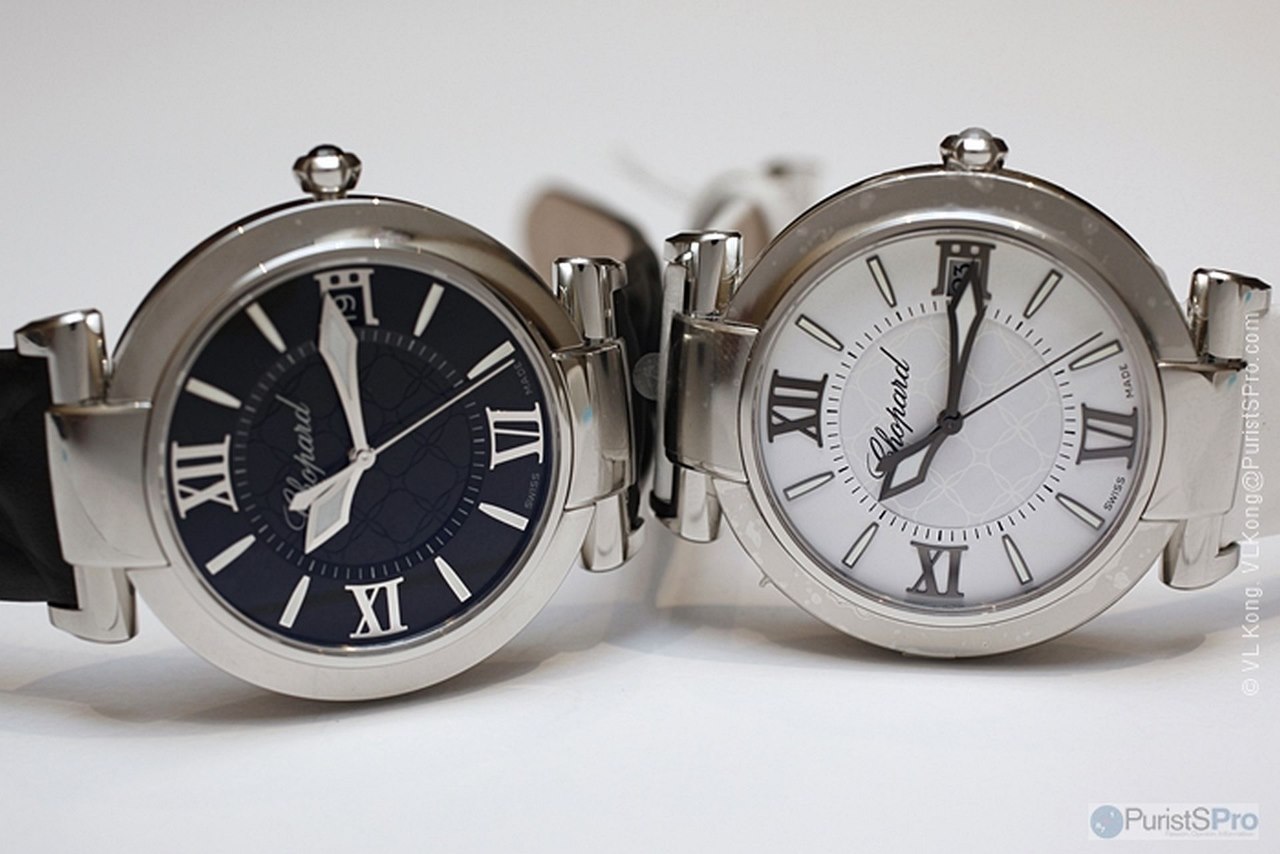
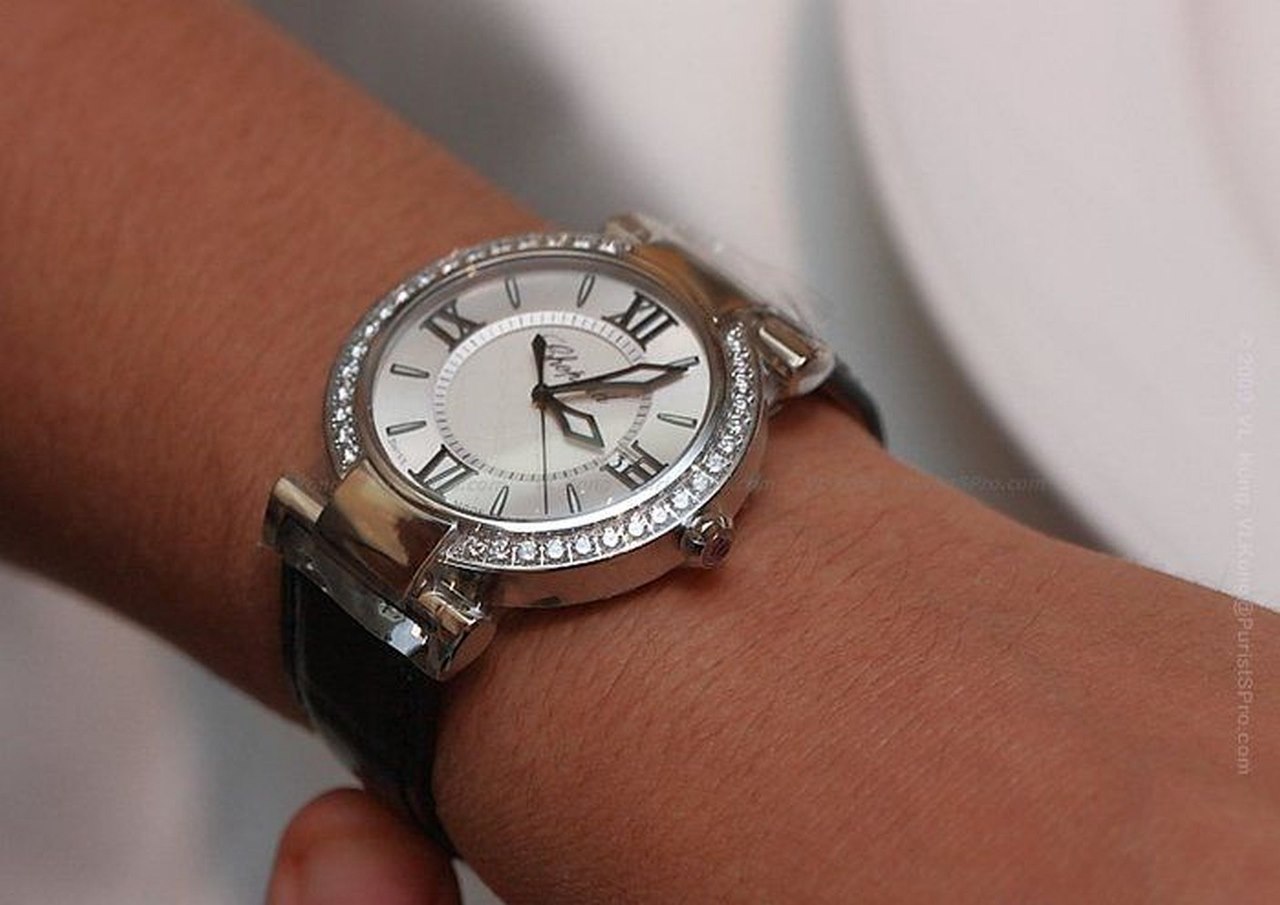
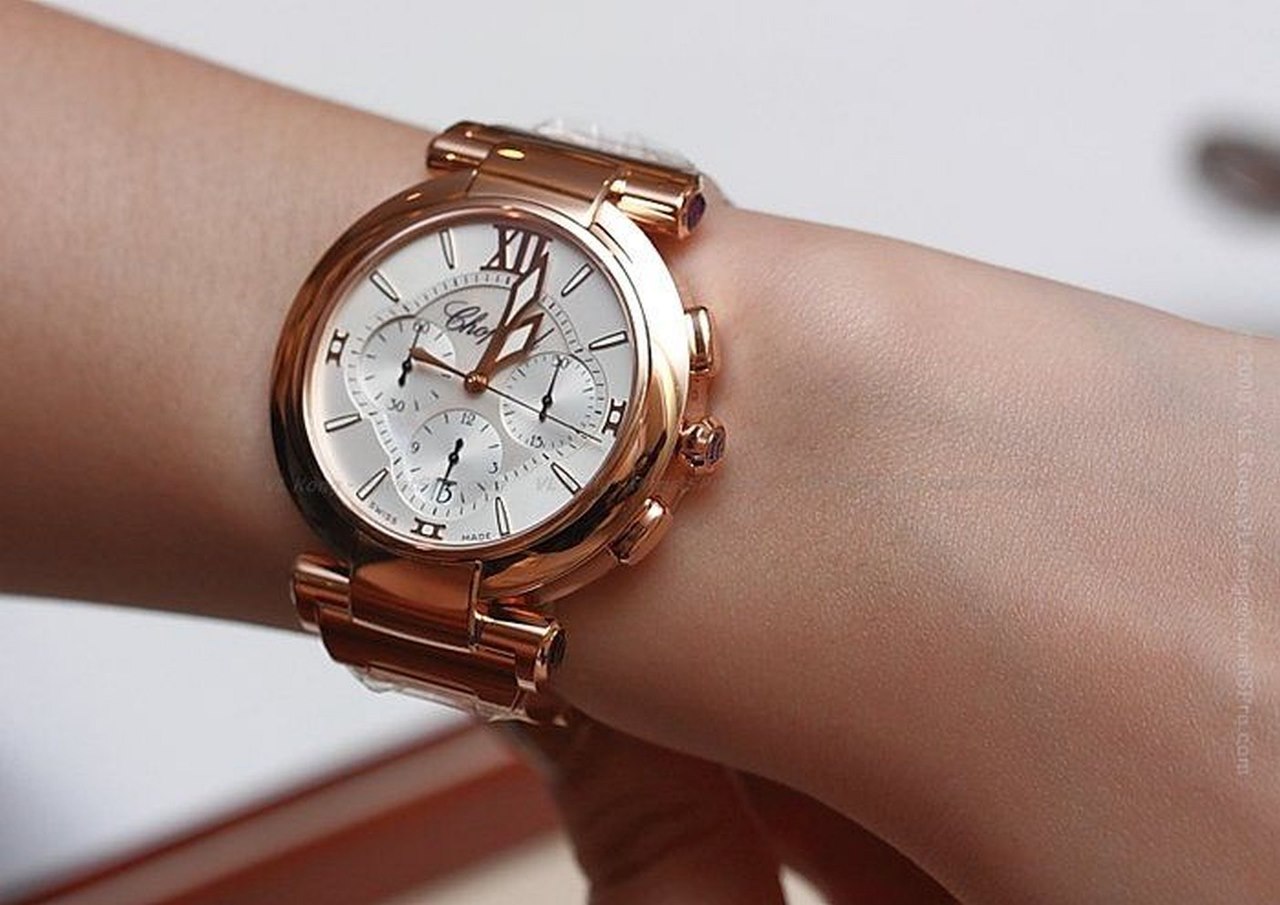
In 2010, the Imperiale Collection was updated and the current range comprises quartz movement Time Only models in 28mm and 36 mm diameter cases, mechanical automatic movement Time Only models in 36mm and 40 mm cases and the Tourbillon models in 42 mm cases.
The cases are in a variety of steel or gold colours.
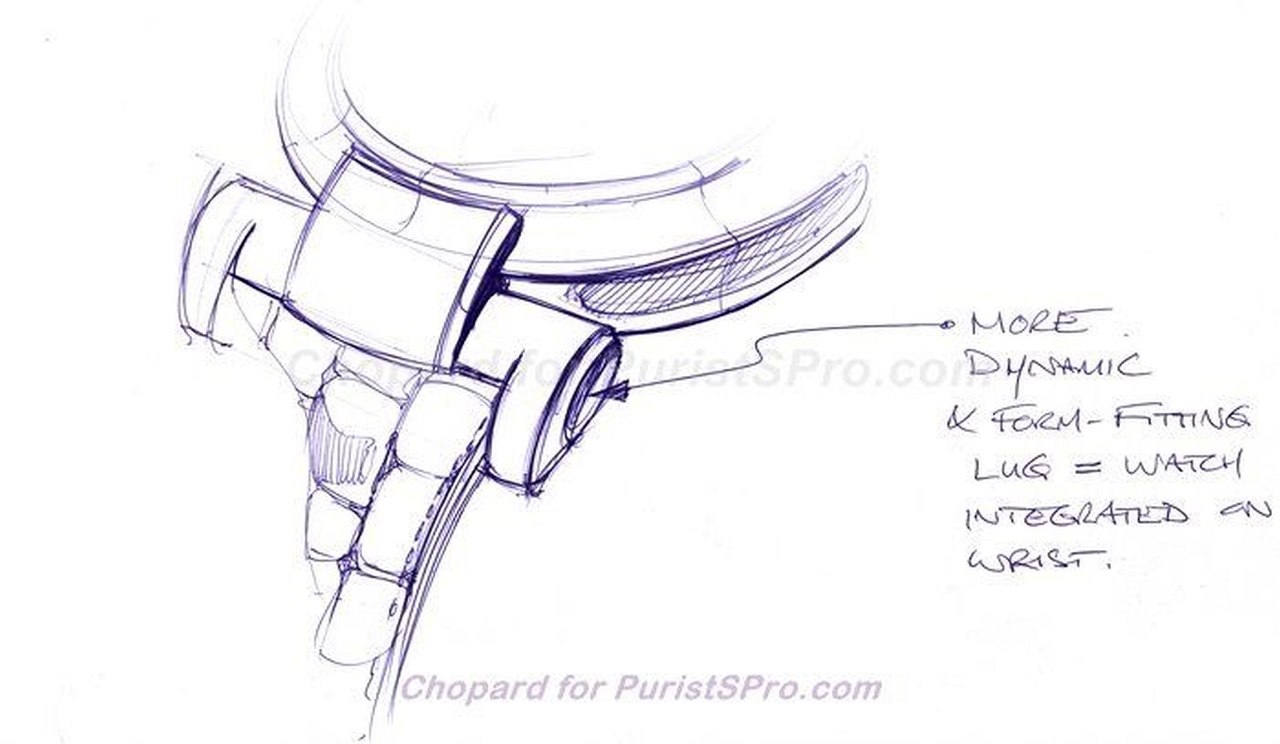
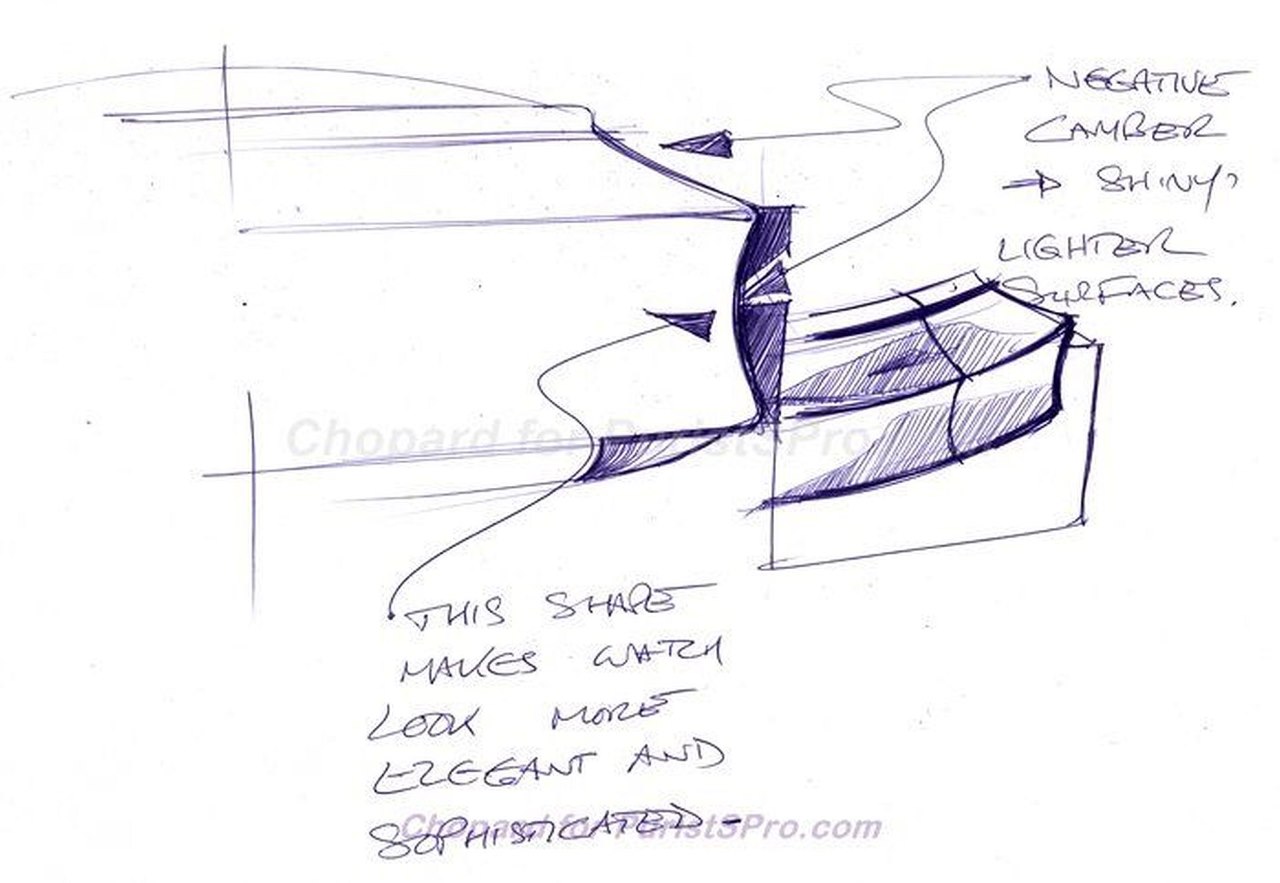
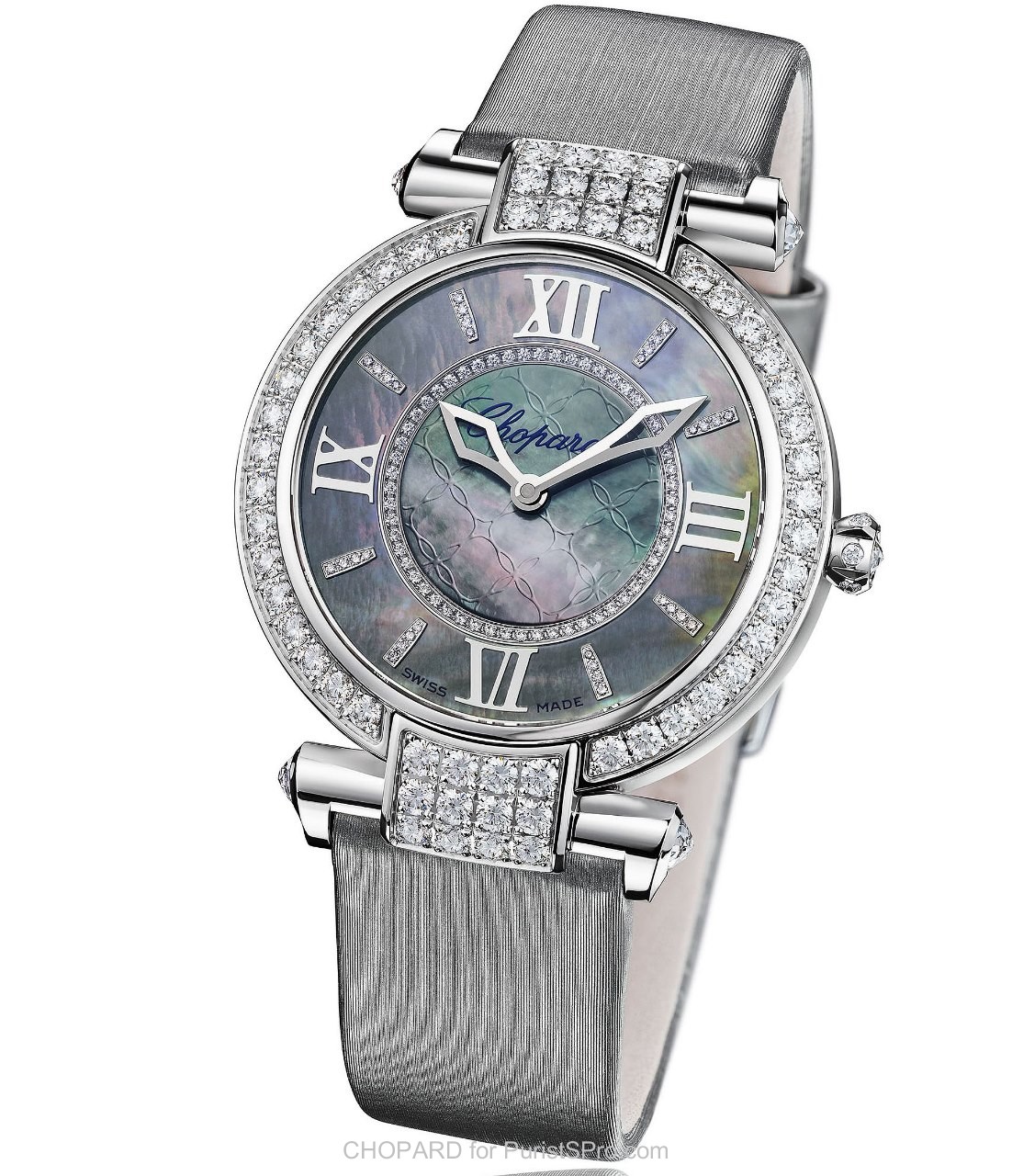
Please compare the design notes in the drawings with the final look of the new Imperiale watches.
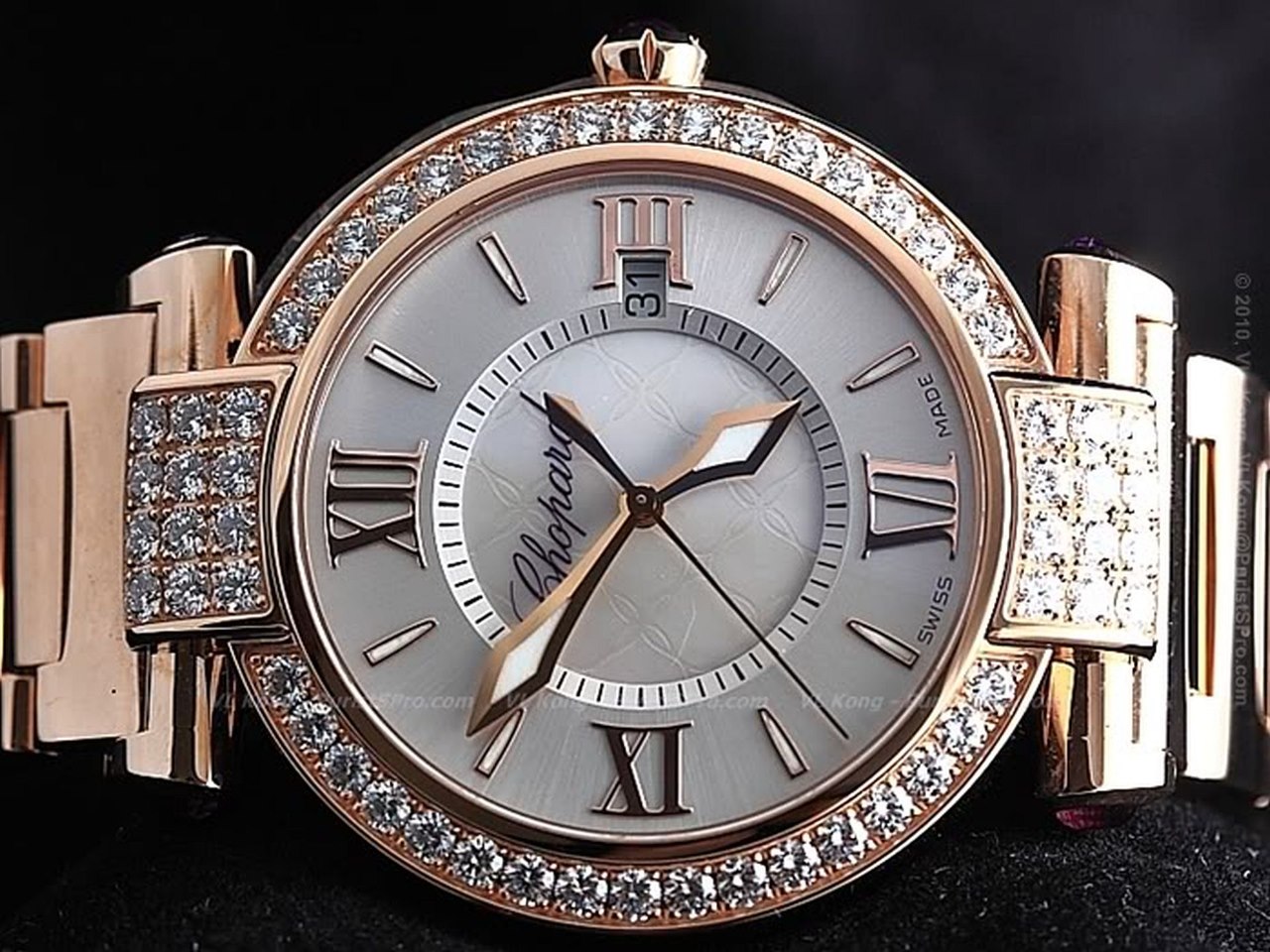
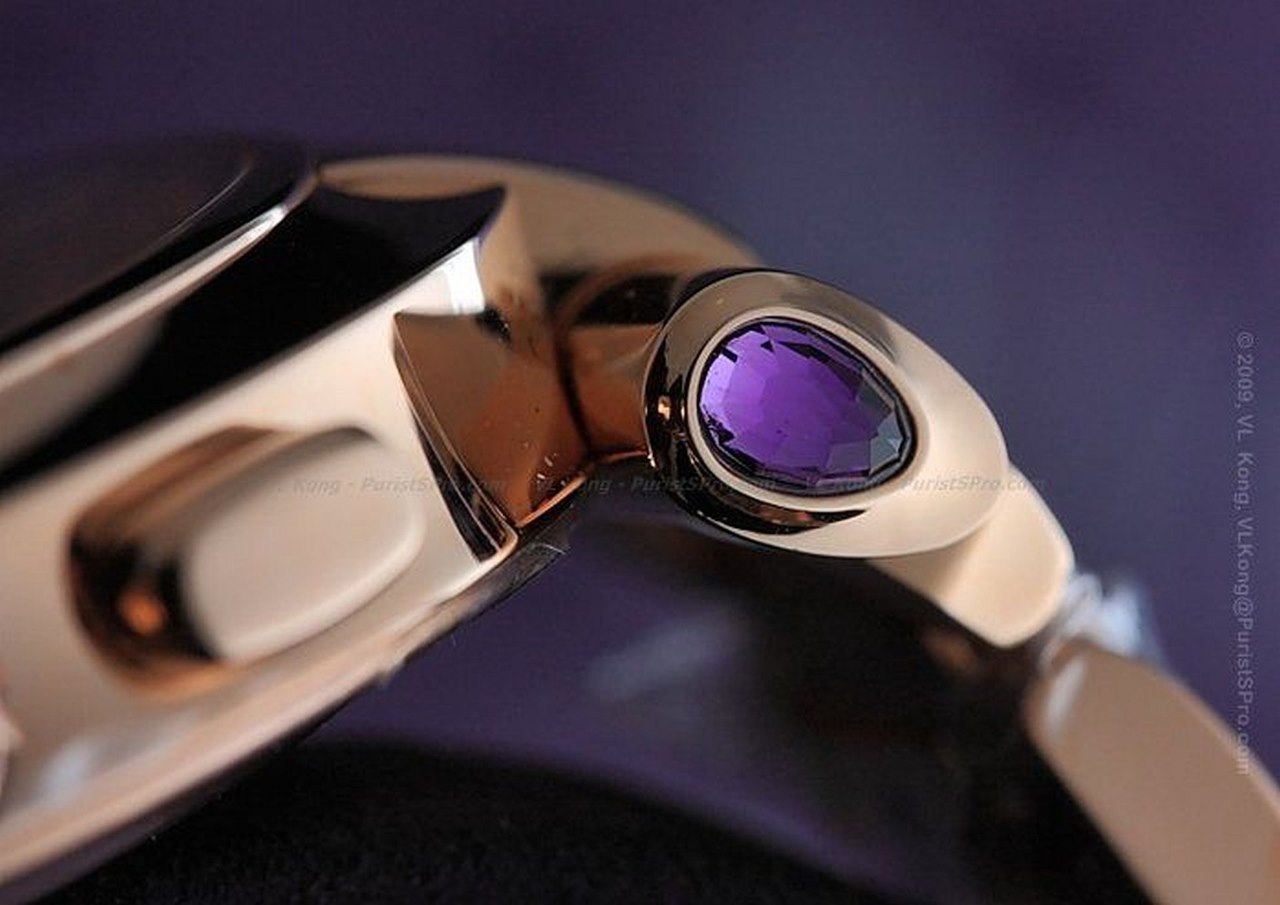
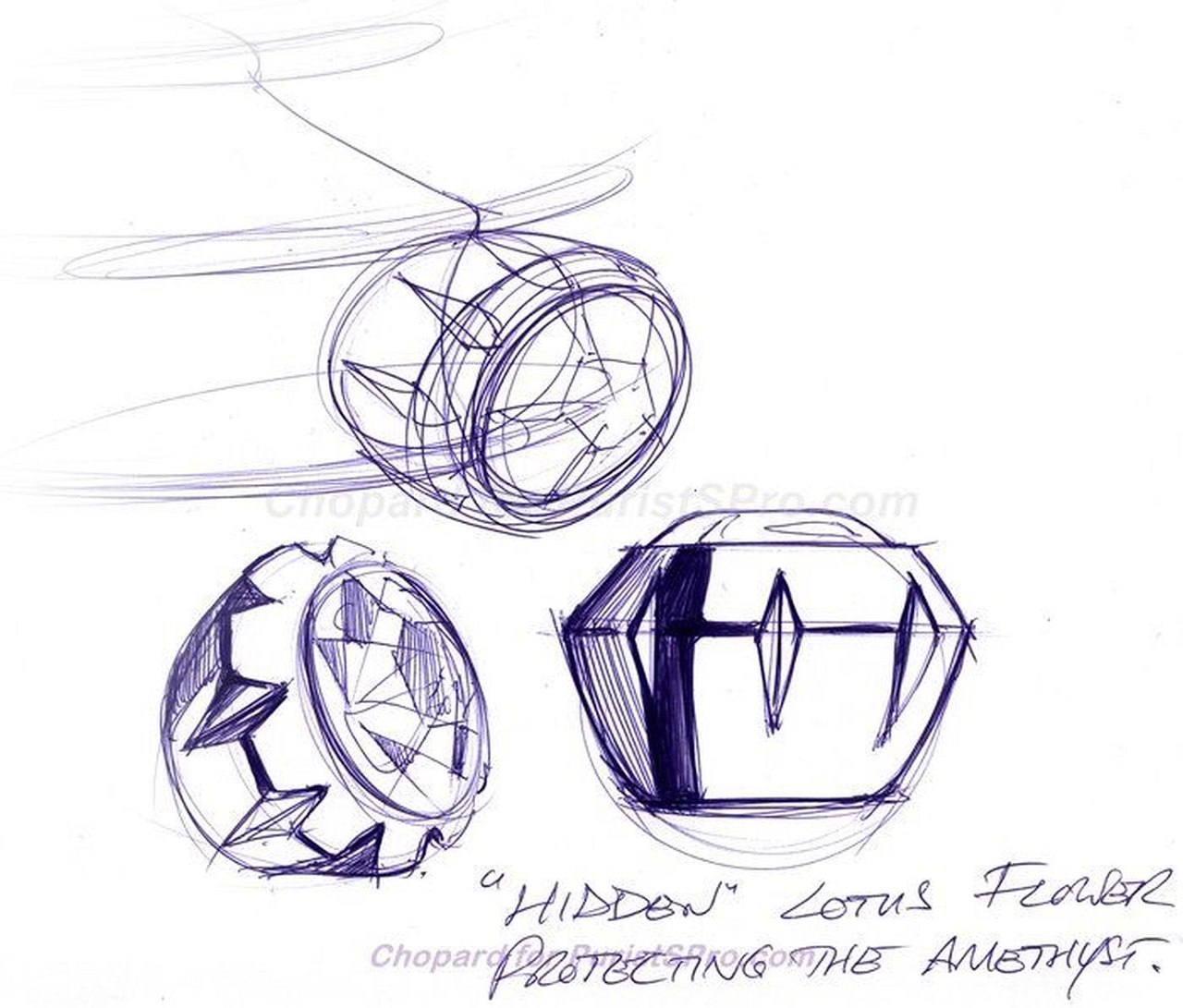
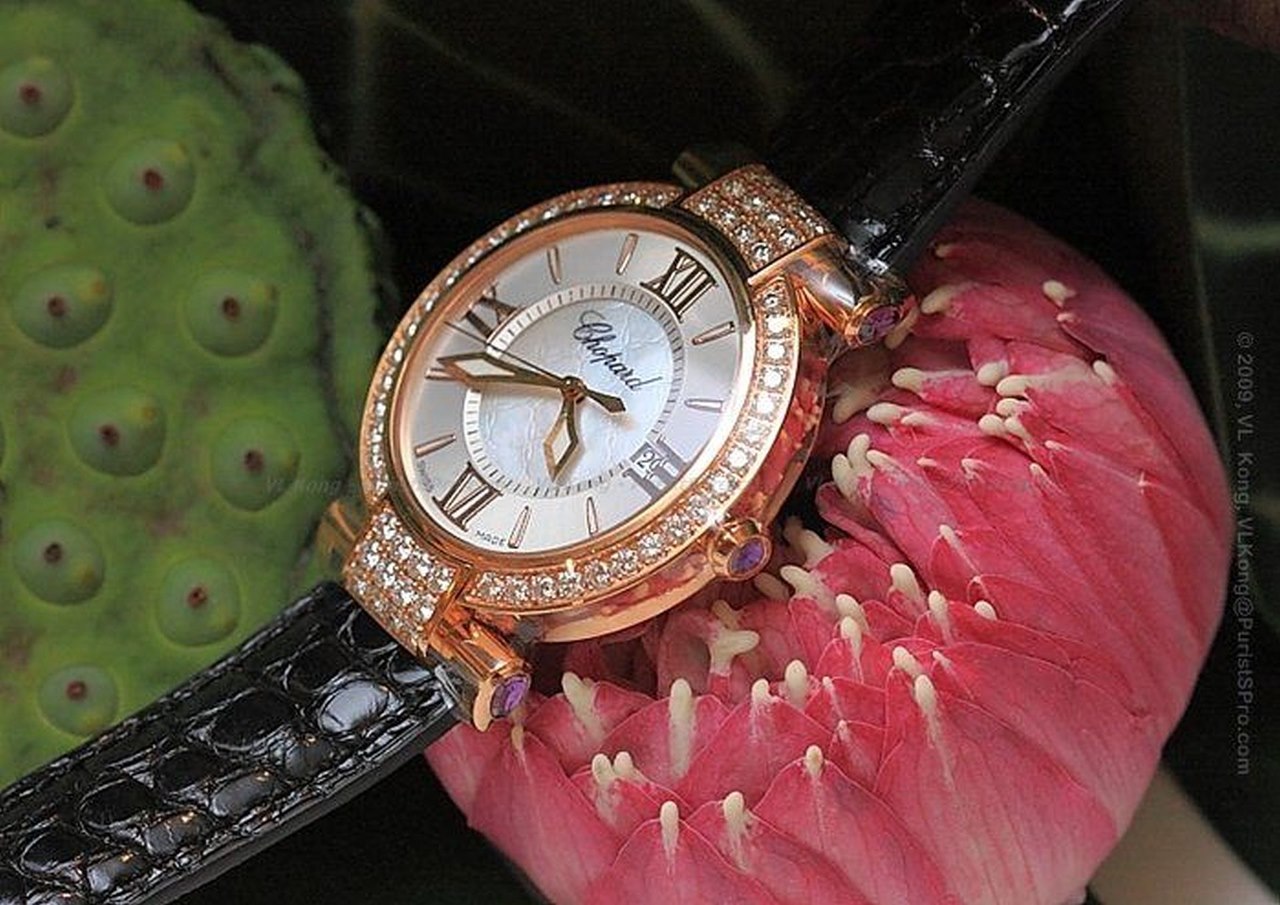
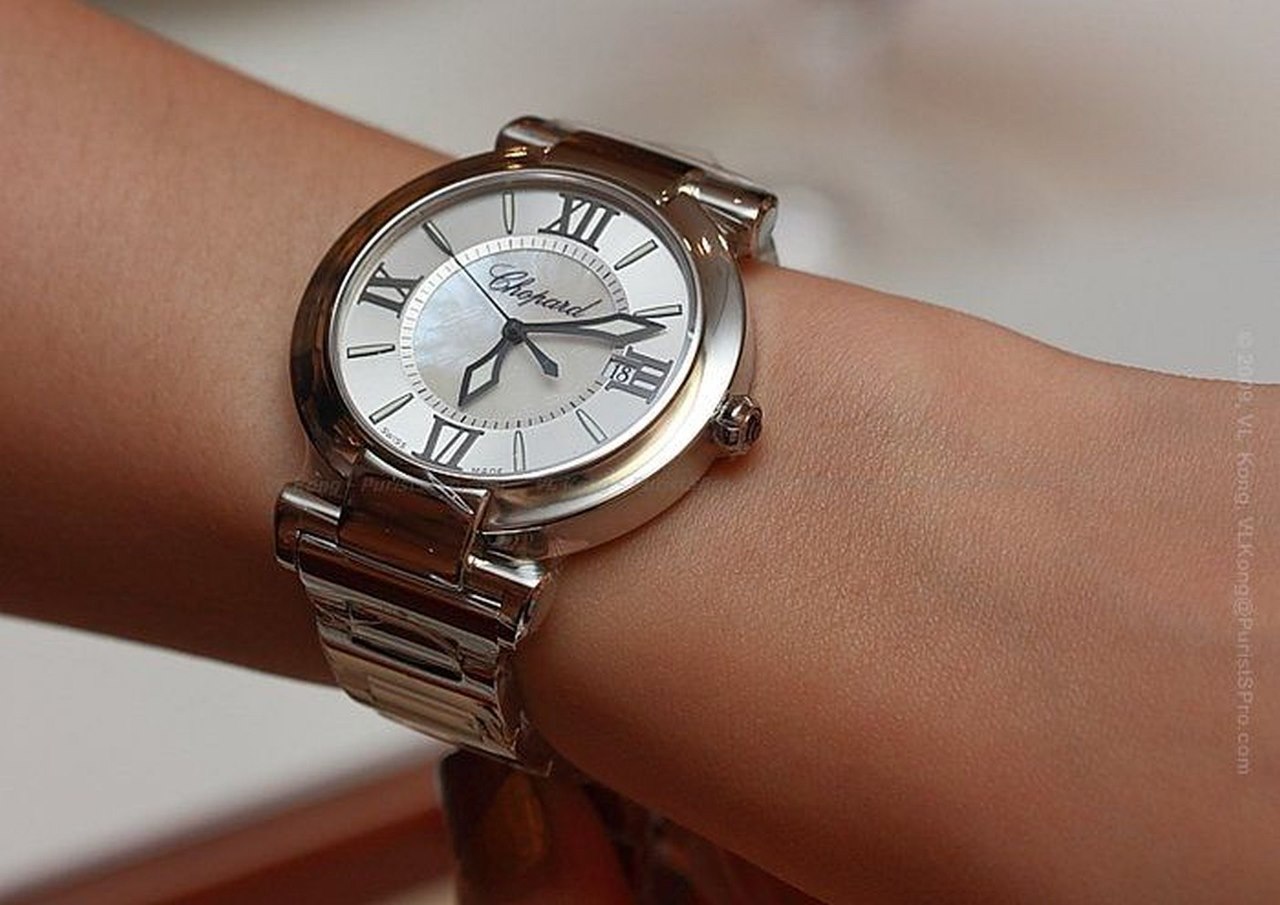
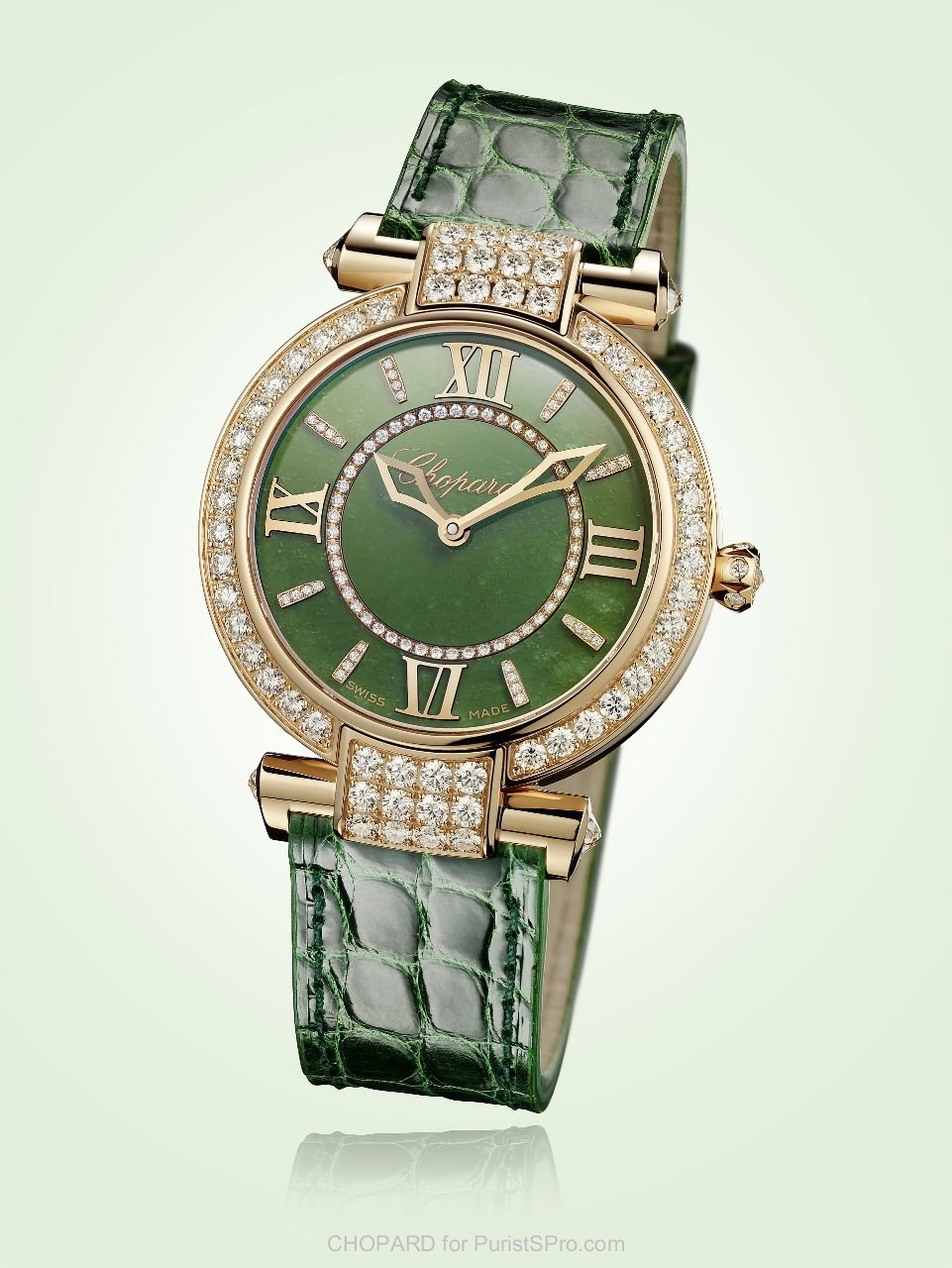
Gold 40 mm Time Only models contain in-house automatic movements.
Full gem-set 40 mm Time Only models have the 01.03-C automatic C.O.S.C. movement.
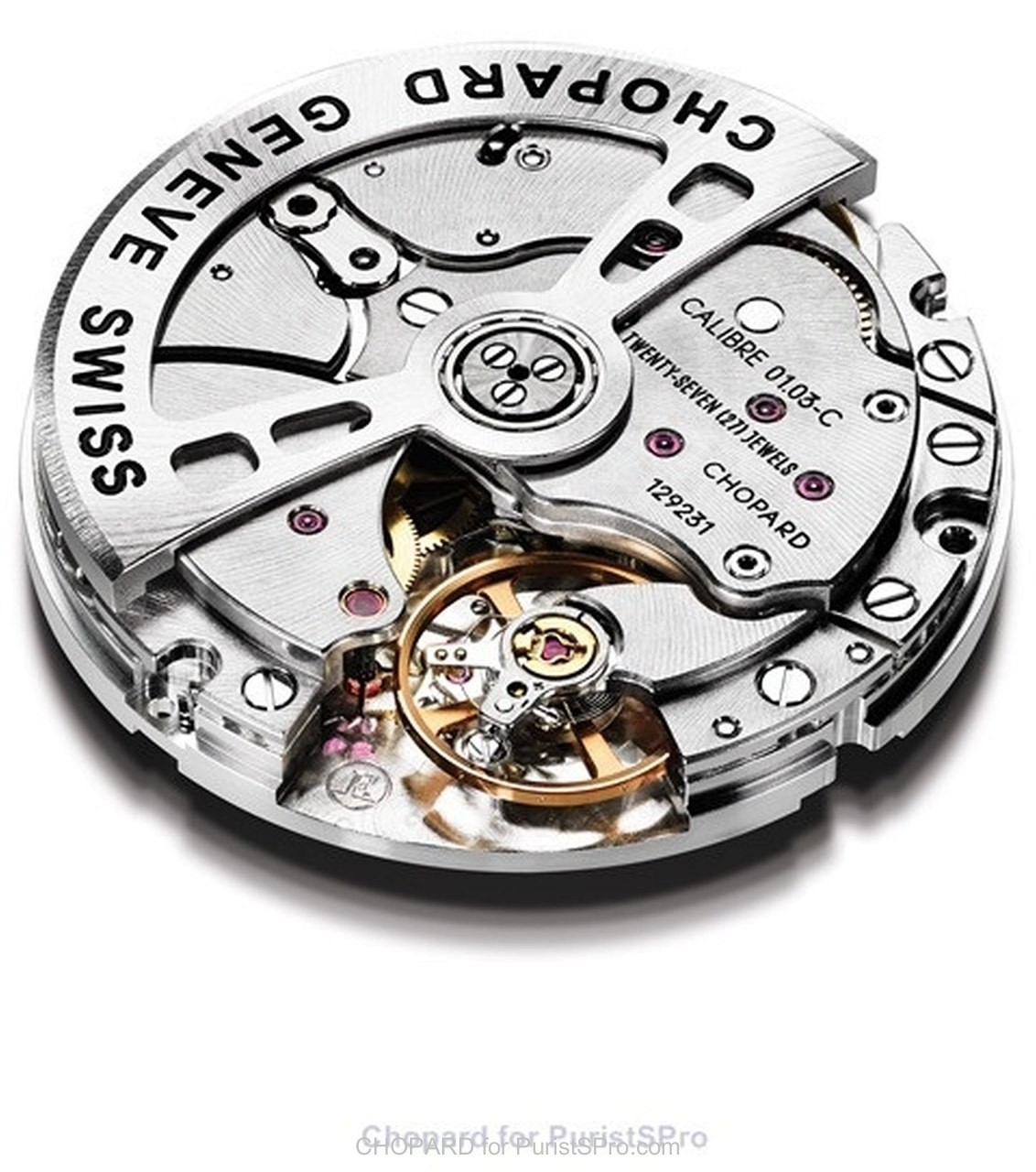
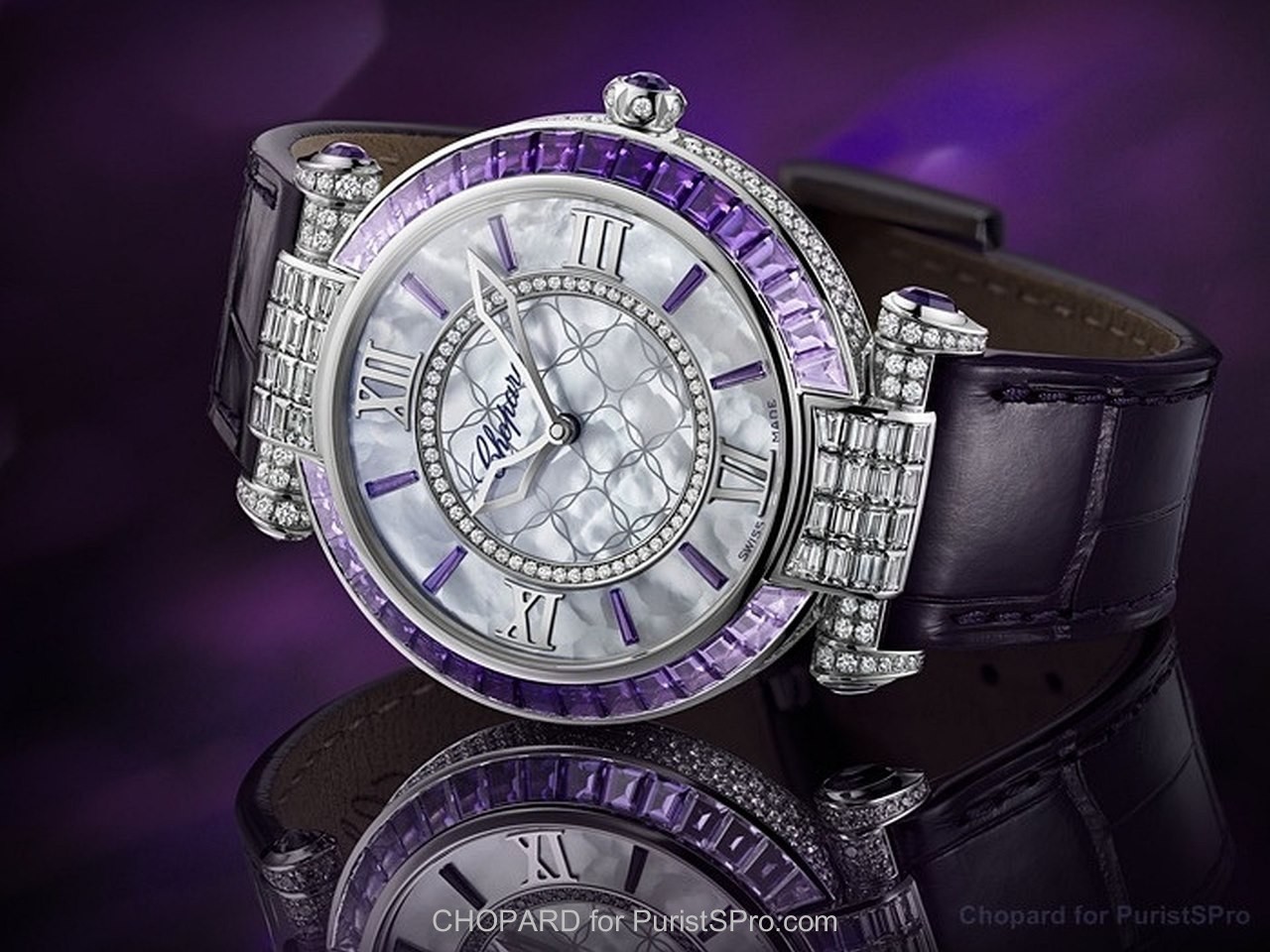
The Imperiale Embroidery look can be seen on the dial..
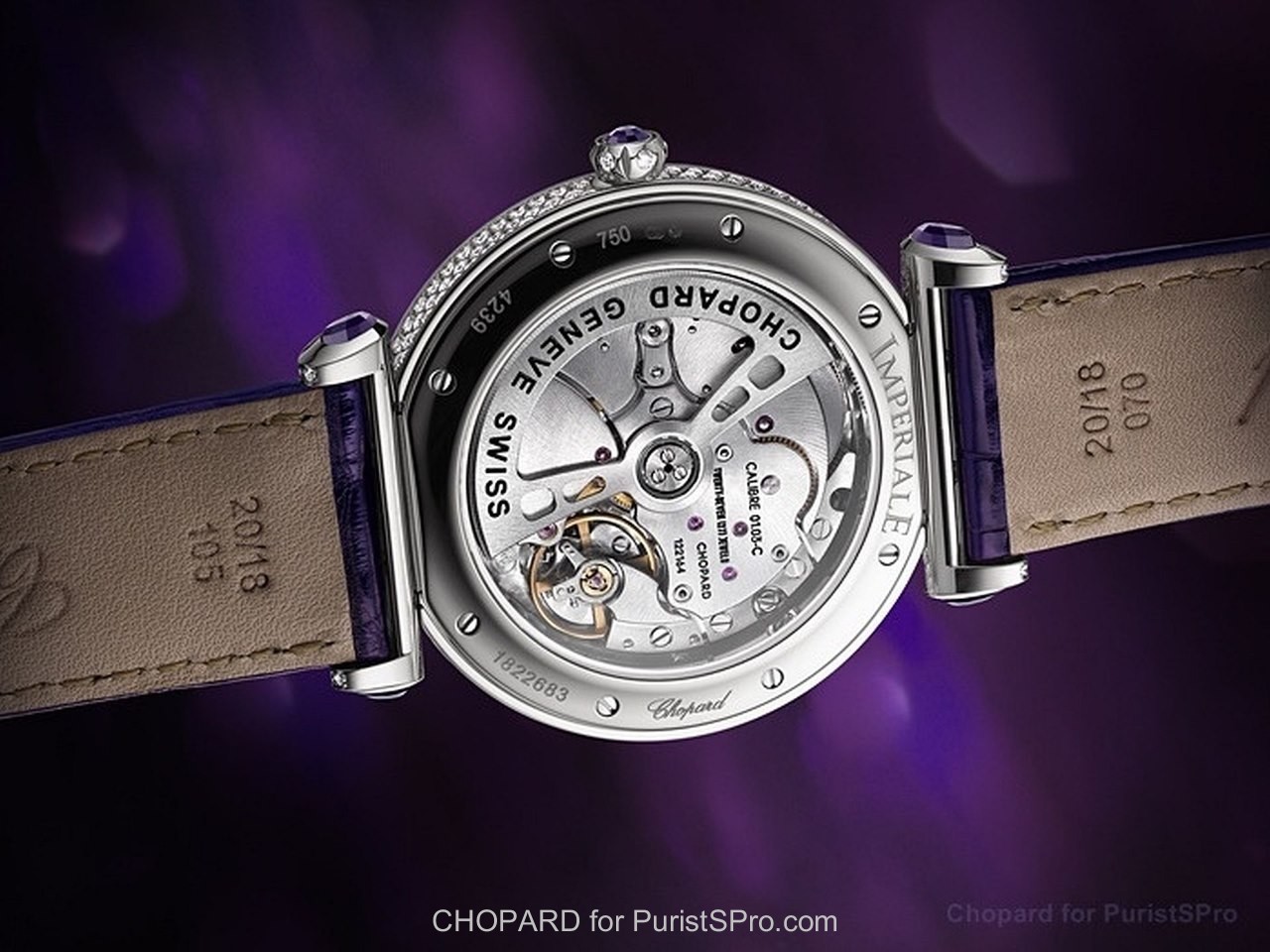
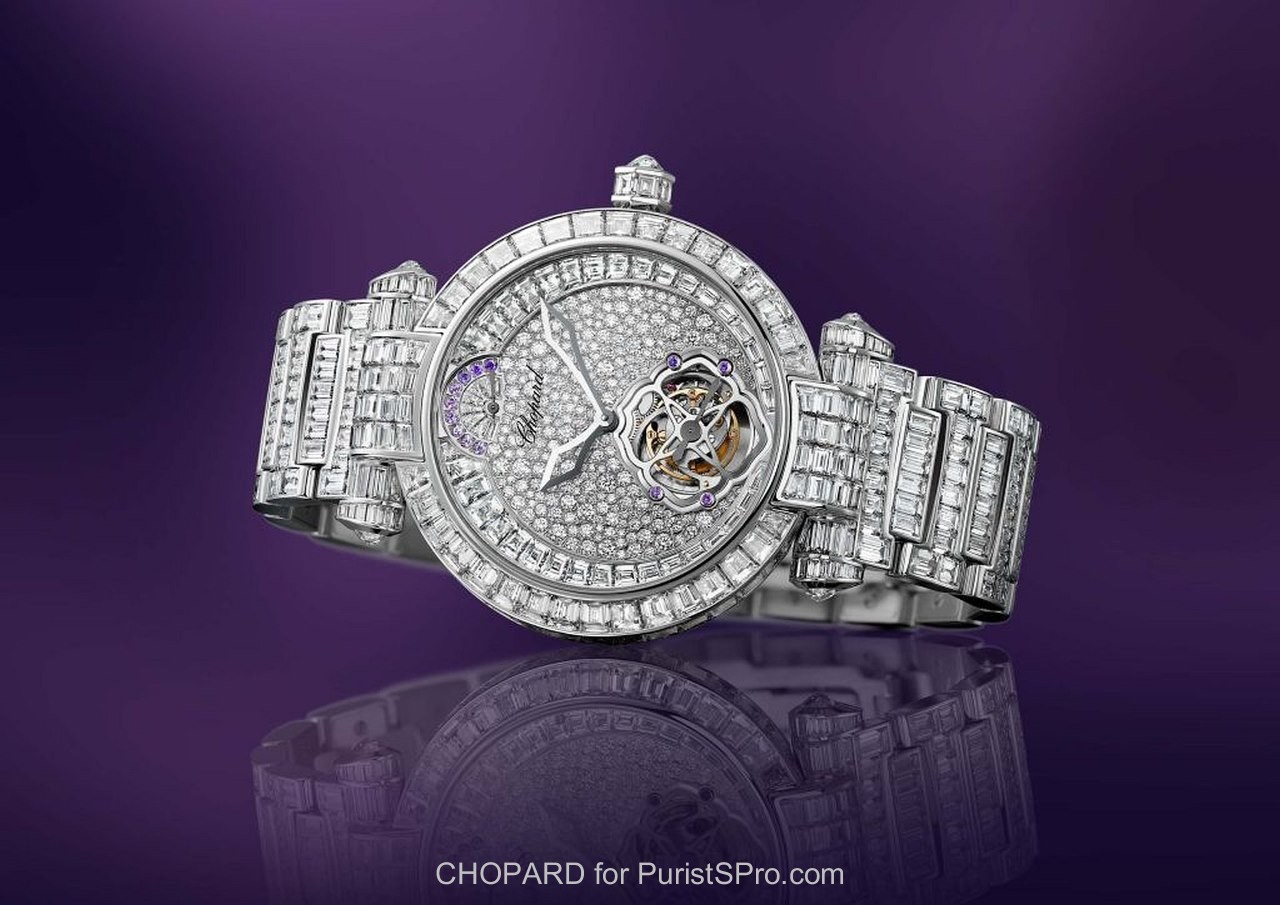
The tourbillons are L.U.C 02.14-L movements with C.O.S.C. and Geneva Seal.
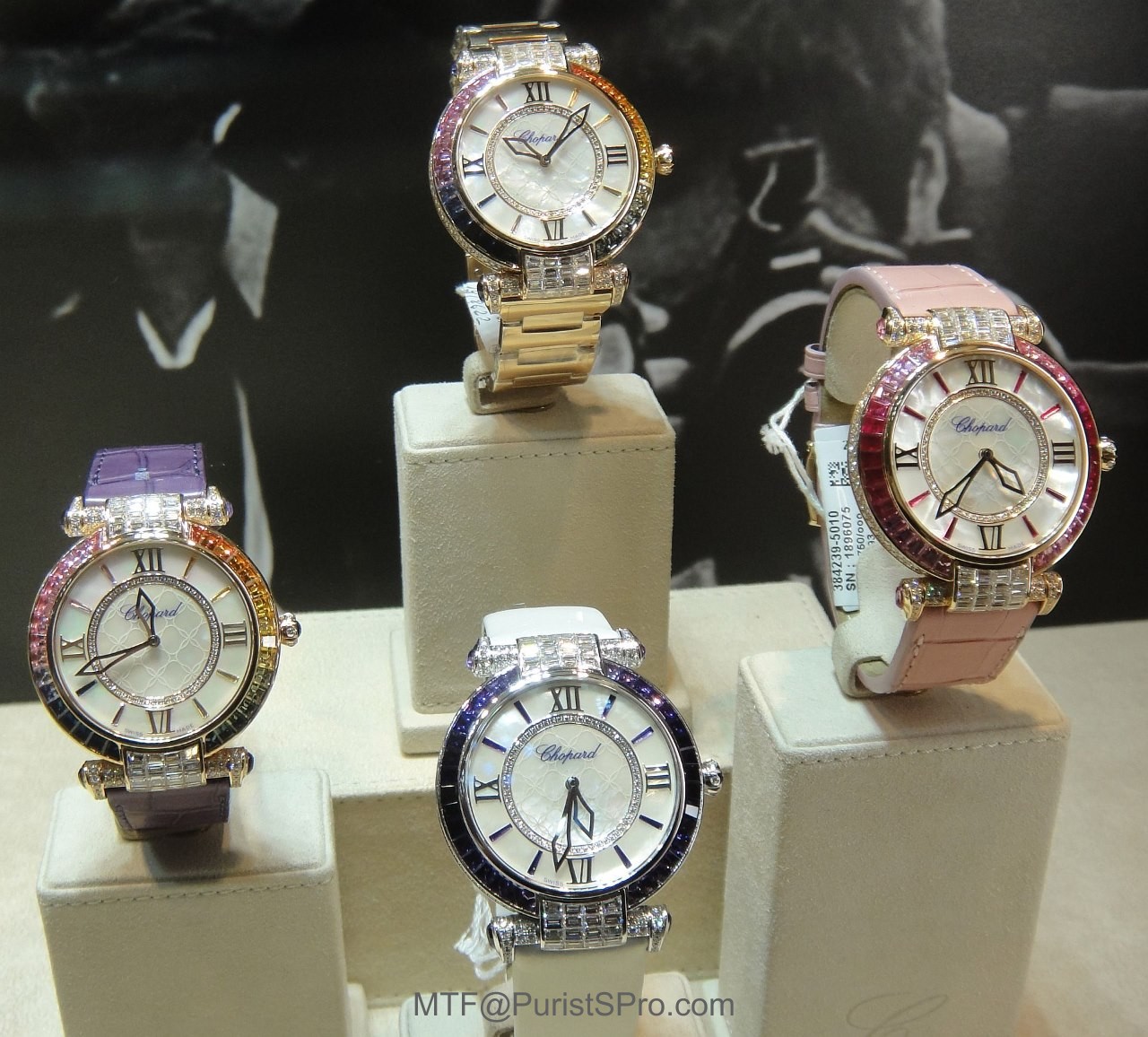
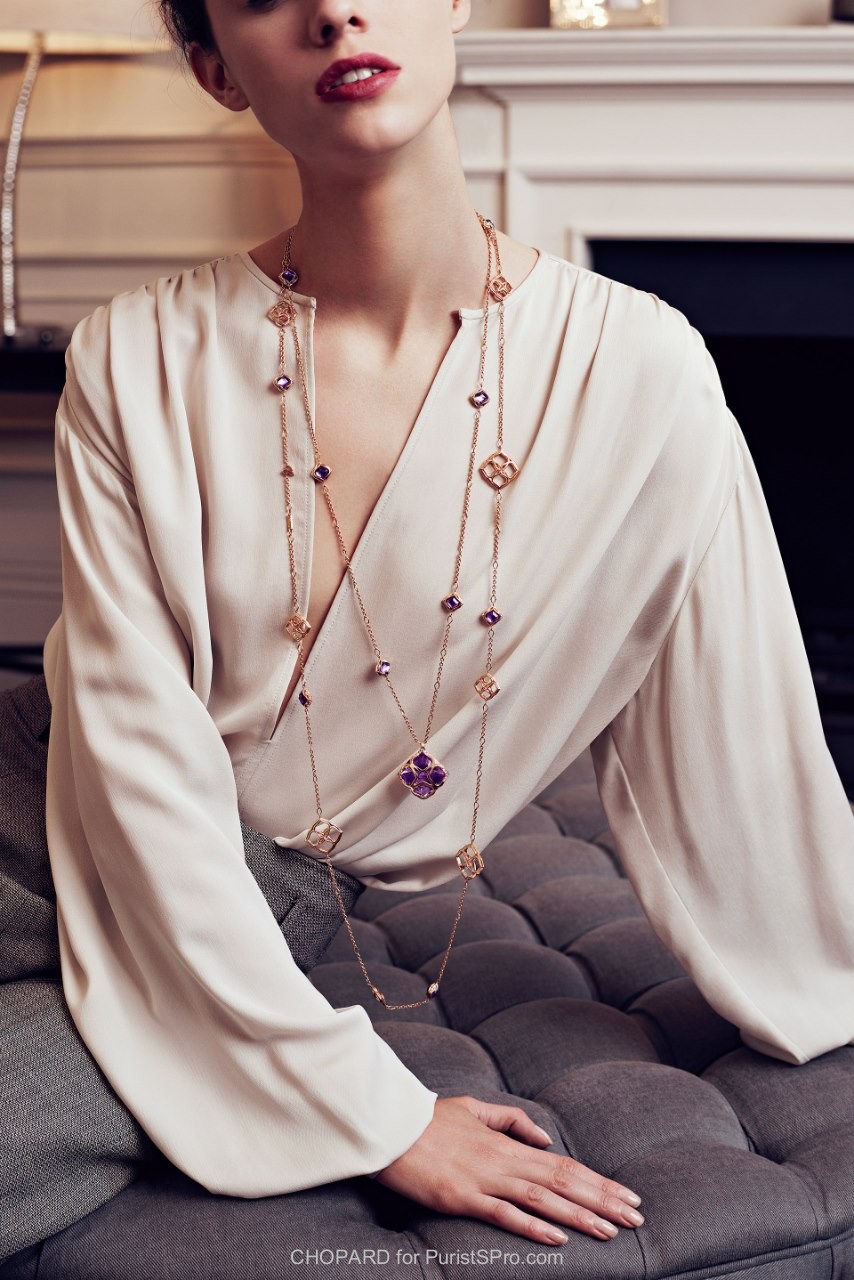
By equipping the gold and gem-set Imperiale watches with in-house mechanical movements, Chopard has added value by offering discerning ladies splendid watches that are as good on the inside as they look on the outside.
I see the Chopard Imperiale watch collection as ideal for the evolved aficionado..
Whereas the Happy Sport is a fun watch suitable for casual chic and novice collectors, the Imperiale collection offers more possibilities from entry-level to the haute de gamme of watches.
"The true cost of luxury is the choice that it affords."
The clever use of space on the revised negative camber bezel and ample sized central lugs allow for some serious 'carbon cladding' with diamonds or other gem stones. That is another measure of true luxury as nothing beats 'square footage' when it comes to gem-setting.
For some years now, the Happy Sport has been promoted with emotive and elegant advertising. We have subconsciously absorbed the images of Mother and Daughter sharing Life Moments with their Happy Sport watches as we walk through airport terminals and luxury malls or flicked through glossy magazines.
Surely, its about time that Chopard highlighted the Imperiale Collection in the same way?
Dr M. Teillol-Foo (2015)
Chopard Imperiale: From 1994 until today

Agree MTF
Chopard Imperiale does not need bling to have that swing
Wow that full diamond version is blinding! :)

The Imperiale collection
Do you think Men can still pull it off?
probably could
