
respo
4777

AMVOX2 DBS, Old School
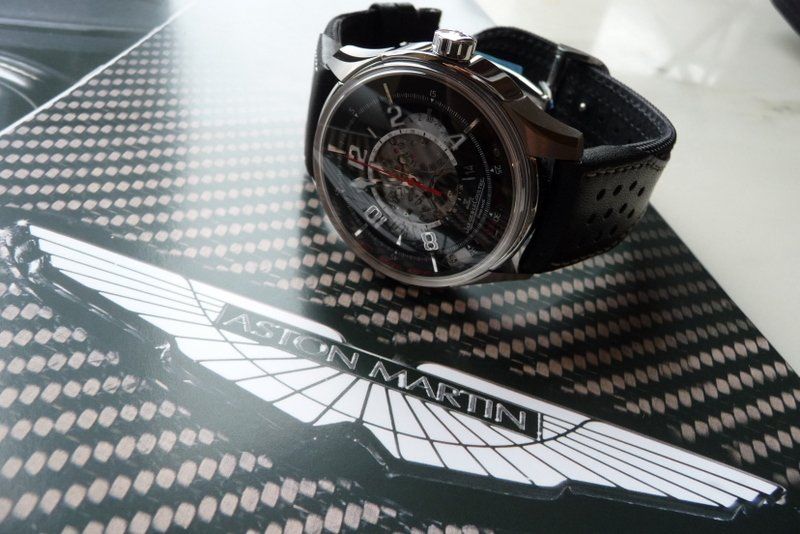
Everything has been said before about this watch, and more eloquently than I may write; and some very gorgeous photos have been posted here as well. Neither my skills nor my equipment is up to the task of photographing the AMVOX2 DBS well enough to capture a watch that changes so dramatically depending upon the lighting and angle of view.
So my “review,” such as it is, is very personal and probably overly passionate.
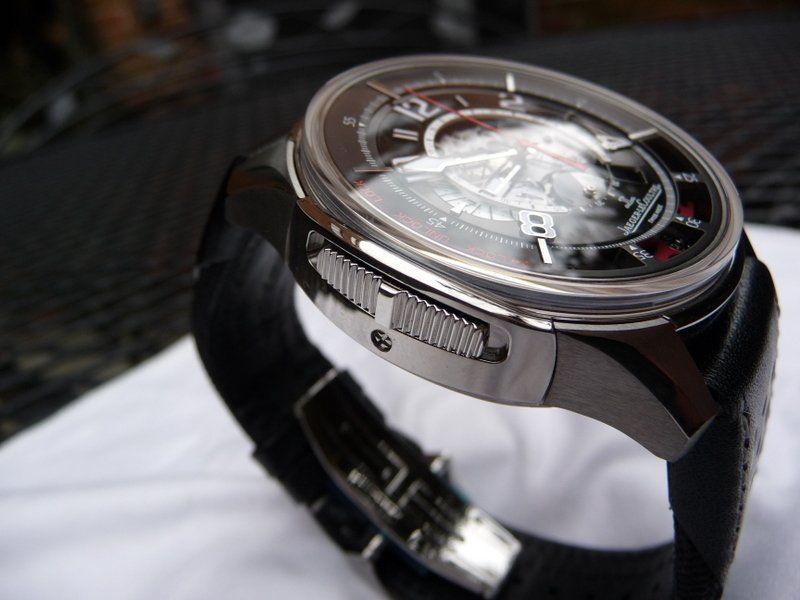
What a nice crystal, no?
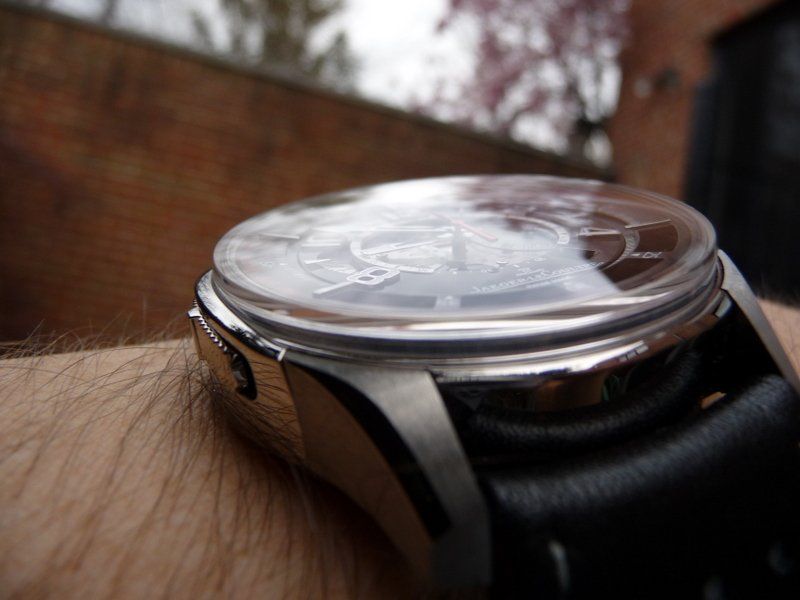
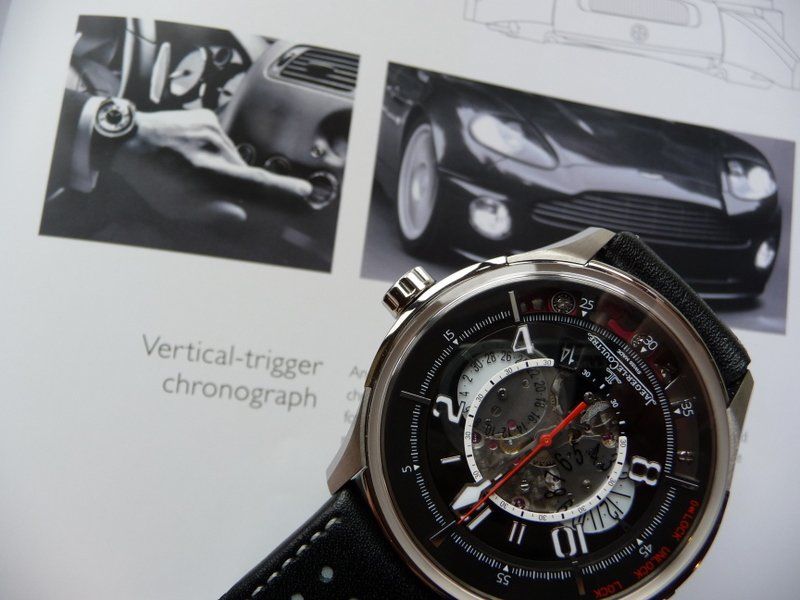
First so much has been written about the unique pusherless vertical trigger chronograph system of this watch, that I can add little to the previous reviews except to say that for me this feature was like the siren’s song.
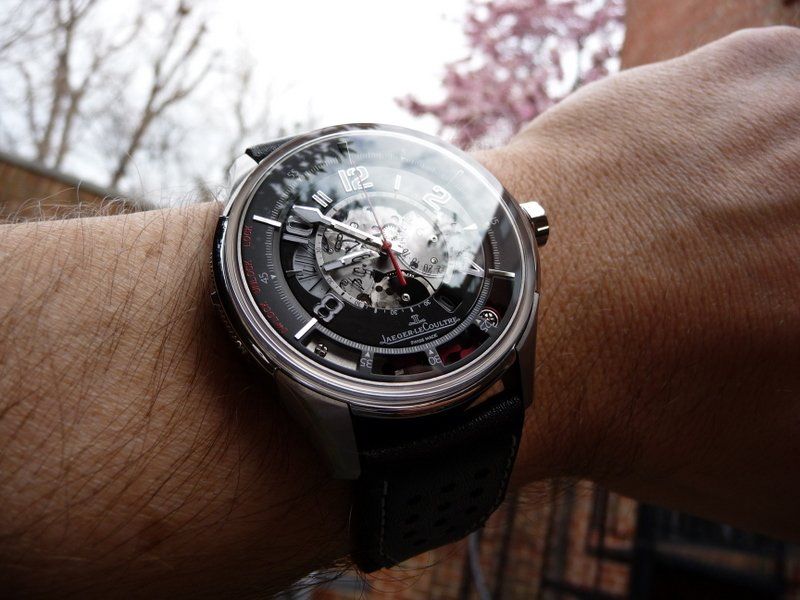
The extremely light 44 mm titanium case wears smaller than I had thought it would, perhaps due partially to the case lugs sloping gently inward, with alternating polished and brushed titanium. The racy DBS strap, with its mix of leather, cordura, and alcantara, perfectly suits the AMVOX2. Then, too, I appreciate the historical reference of the AMVOX cases derived from the case design of the original Polaris.
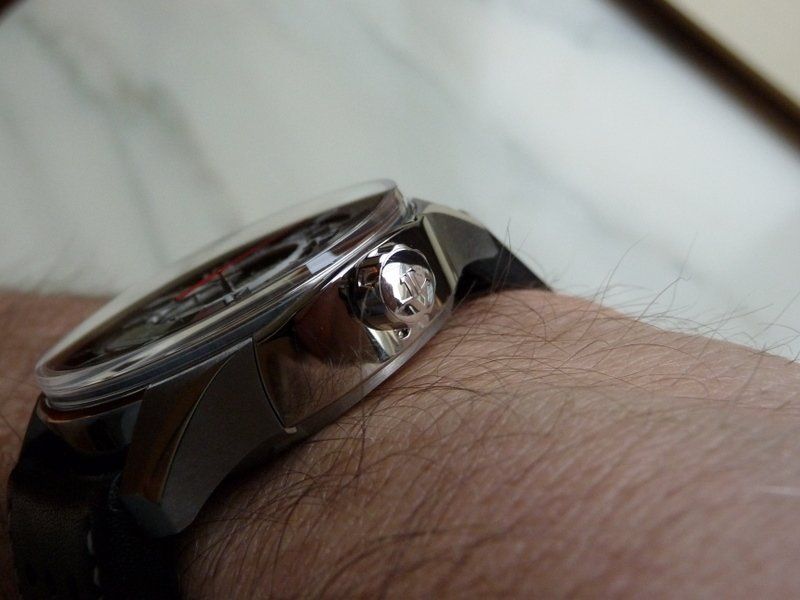
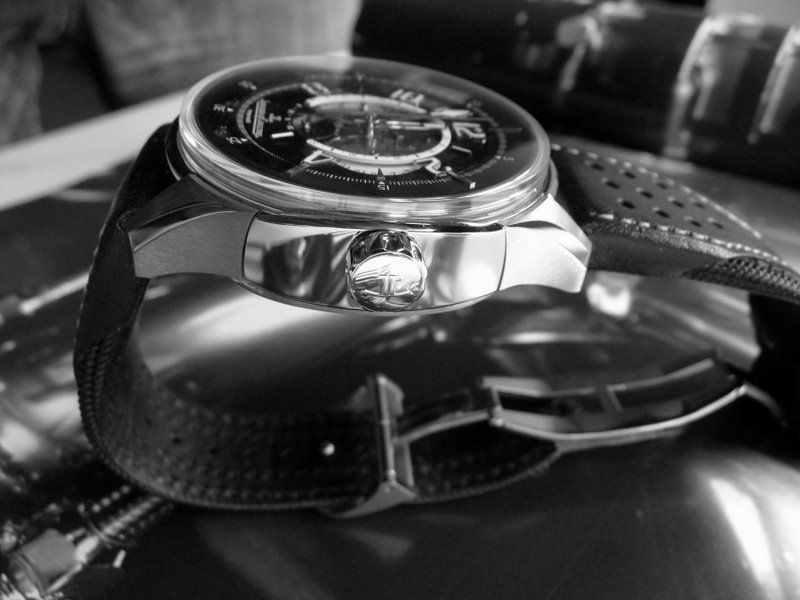
The crown is cleverly designed to include a small cutout to provide a clear view of (and service access to) the screw upon which the pivoting case/movement of the watch hinges when you engage, disengage and reset the chrono functions. JLC thought of everything!
I do seem to favor the chronograph complication above all others, so the A2 was a natural fit for my wrist. The complex case design, integrating the crystal itself no less into the start/stop/reset of the chronograph, is as brilliant as it is unorthodox.
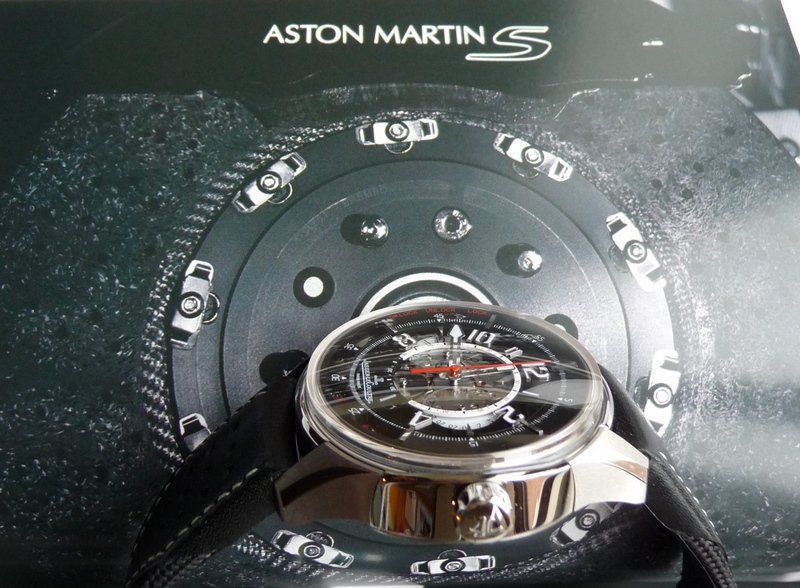
The earlier versions may more closely reveal the obvious resonance between the dial and an AM dashboard, but just to get some glimpse into the movement on any AMVOX is really special. It is lovely to see its "heart" pulsing, or rather its engine racing, amid the ruthenium-colored bridges and mainplate, while the watch is on your wrist and not have to resort to a display caseback, which the A2 does not have.
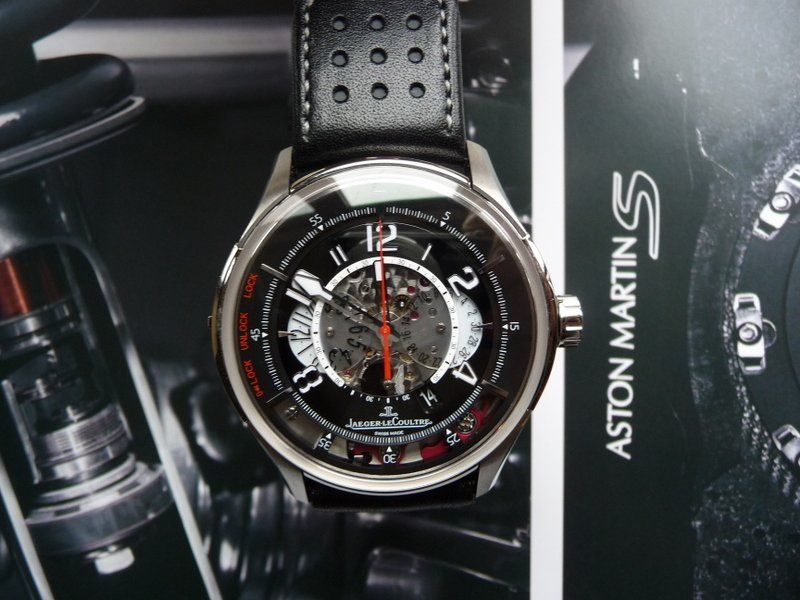
As I see it, a look under the hood at the engine seems harmonious with the Aston Martin association – after all, one could not fully admire such a car without looking at the engine.
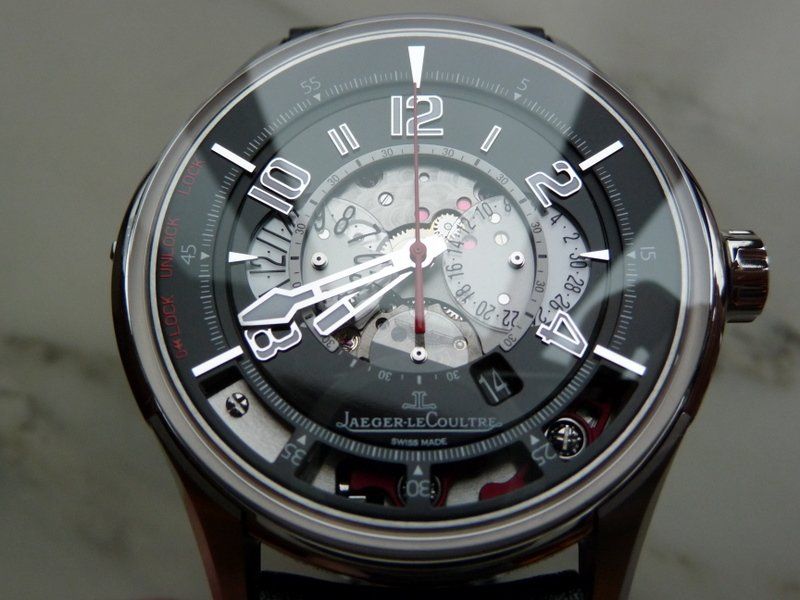
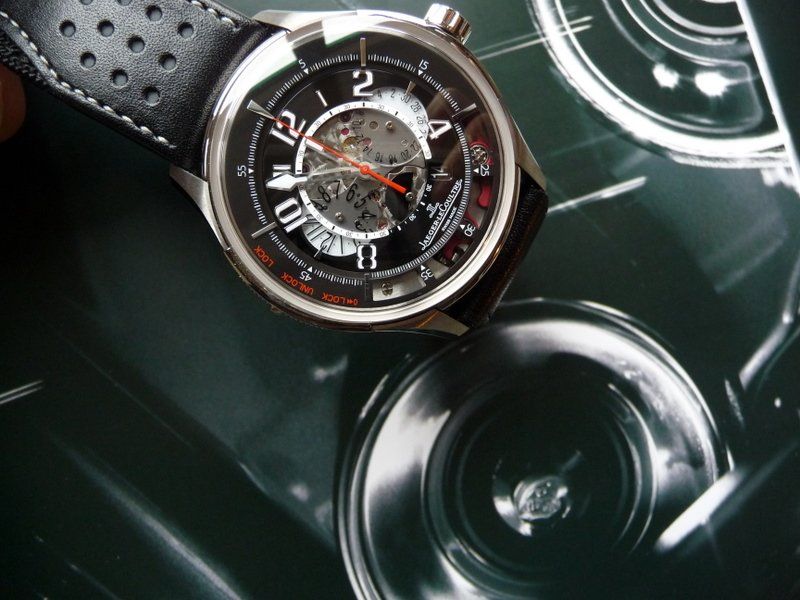
I am typically drawn to dials with interesting topography, and the A2DBS dial’s "landscape" fascinates me no end: the applied numerals and markers laid out in the dashboard speedometer 270° pattern, the several dial levels, the inner white 30-seconds track that seems to float above the counters and movement, the transparent subdial counter disks, not to mention the exposed red “brake calipers” levers pivoting on micro-ball bearings visible through the aperture at 6 o’clock.
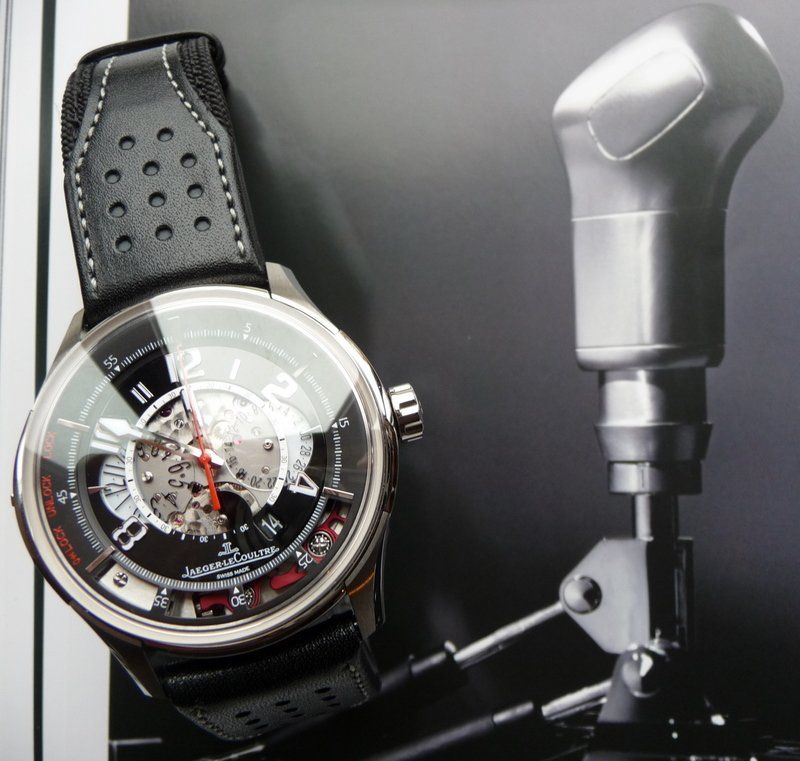
The crystal is large, leaving practically no bezel exposed, and giving the impression that the entire dial landscape is under a glass dome. The numerals really do catch the light in interesting ways. Note the somewhat quirky diminutive “1” and “11.”
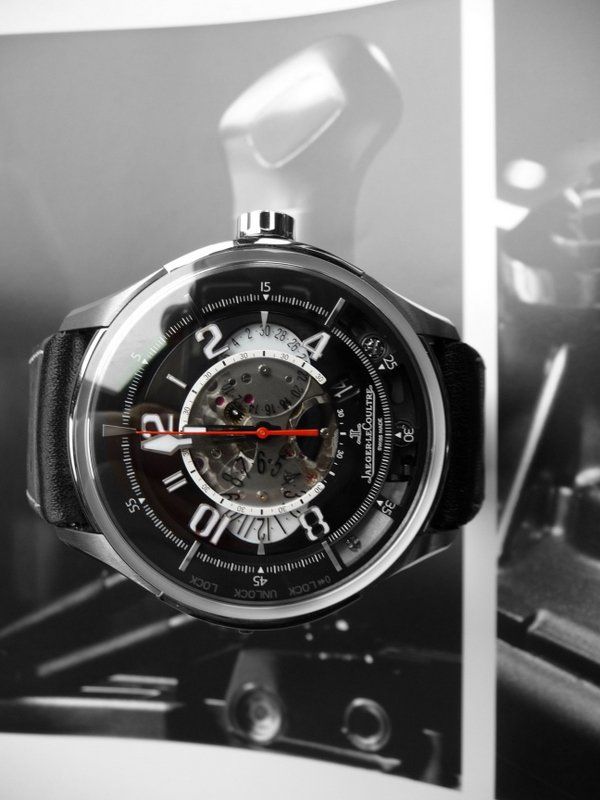
I have found myself quite distracted by the A2 in more than a few meetings during the past week.
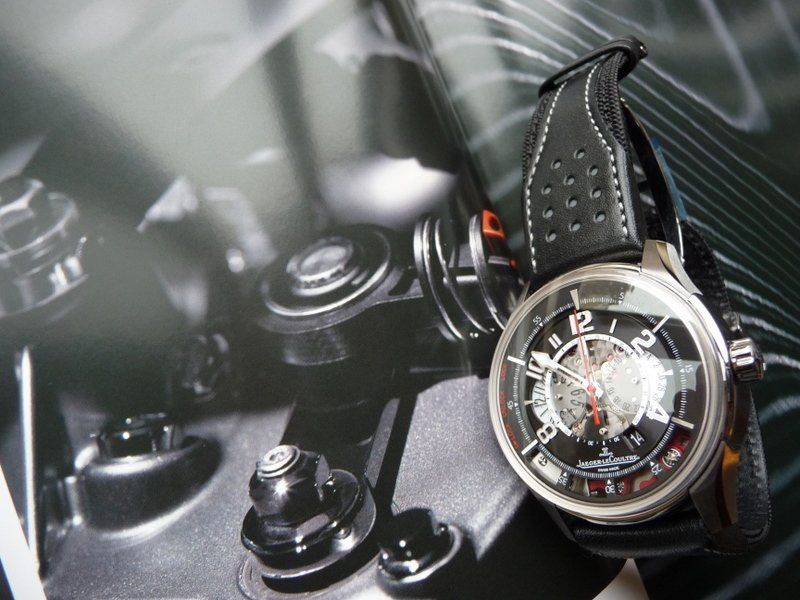
The combination of materials used to make the case and dial is wonderful, and reflect the materials used in the racing cars themselves, including the red anodized aluminum levers (i.e., just like auto brake calipers).
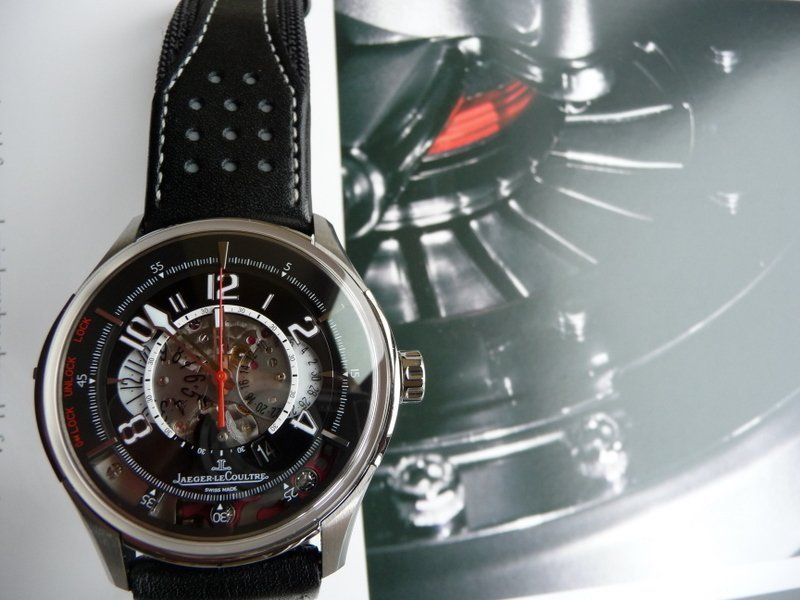
With the innovation of the chronograph setting mechanism, the AMVOX2 really is a concept watch particularly in the titanium. I know not everyone is a fan of the openwork dial, but in the case of the DBS, for me at least, it works so well with the idea of a concept watch such as this. I like all of the A2 models well enough, and probably would have been happy with any of them, but the semi-open face dial of the DBS with the transparent counter subdials and transparent bridge supporting the chronograph counters really sends this version of the A2 over the top for me. Note that the subdial counters, somewhat atypically, rotate beneath the fixed pointers – fun to observe. The partially skeletonized hour and minute hands extend the openwork theme. Even the transferred or painted numerals on the subdial counters have a depth to them that can be seen under certain lighting. What strikes me most about the titanium A2DBS is the perfect coherence of concept, design and execution.
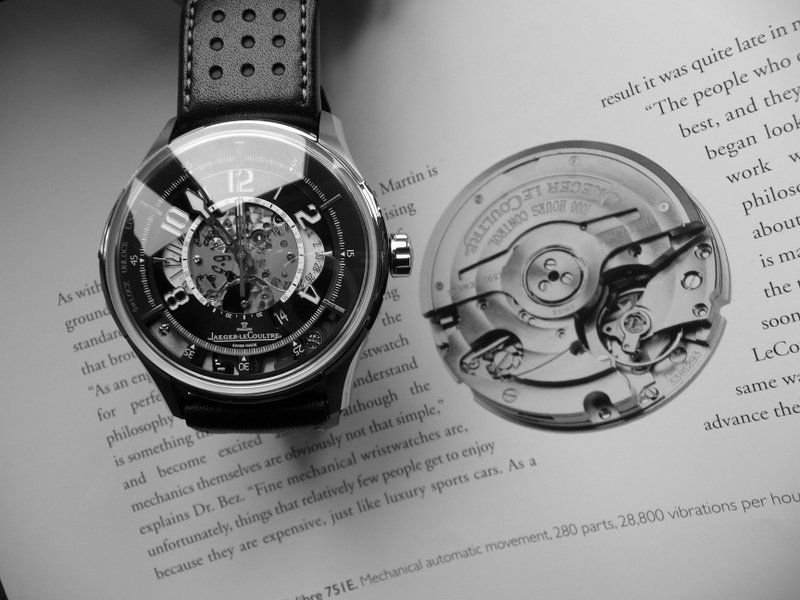
As I see it, a look under the hood at the engine seems harmonious with the Aston Martin association – after all, one could not fully admire such a car without looking at the engine.
The relationship with AM is nicely in keeping with the Manufacture's history as a supplier of measuring instruments, primarily dashboard instruments such as speedometers and fuel meters for certain car brands (e.g., AM) and high end racing cars as early as the 1920’s. I gather that some dispute the shared history as JLC presents it, but no matter; it falls under the category of “good enough for me.”
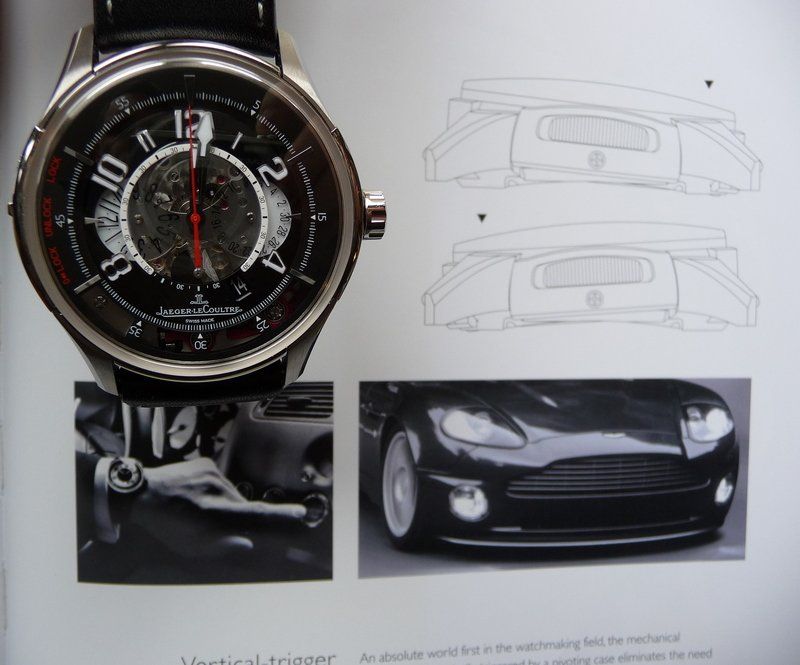
While the innovative pusherless chronograph may not be a major milestone in horology, it advances the field nonetheless, I think. With now fully 3,448 AMVOX2s produced or to be produced in every variation (plus some undisclosed number of Transponders for AM car owners), the A2 is not as rare as it once was. But no matter, more people should share in the joy of this racing watch! And each person may choose his own special version.
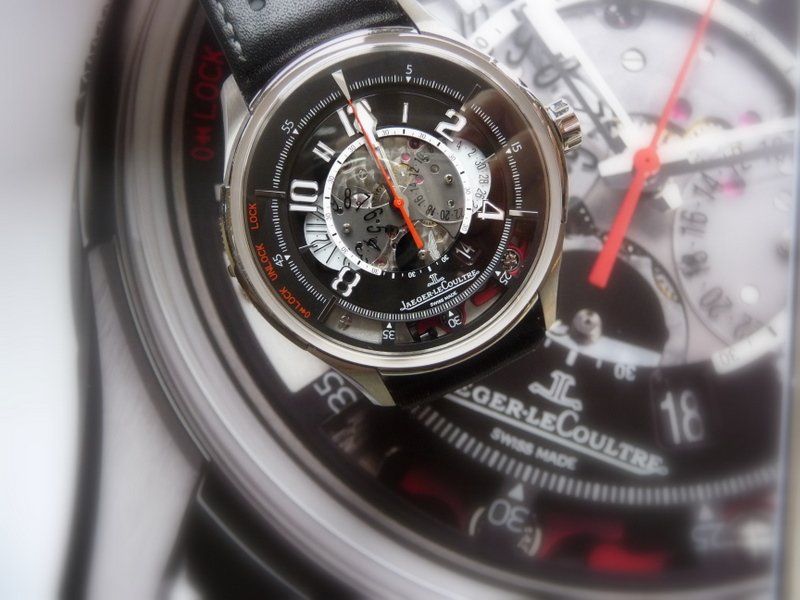
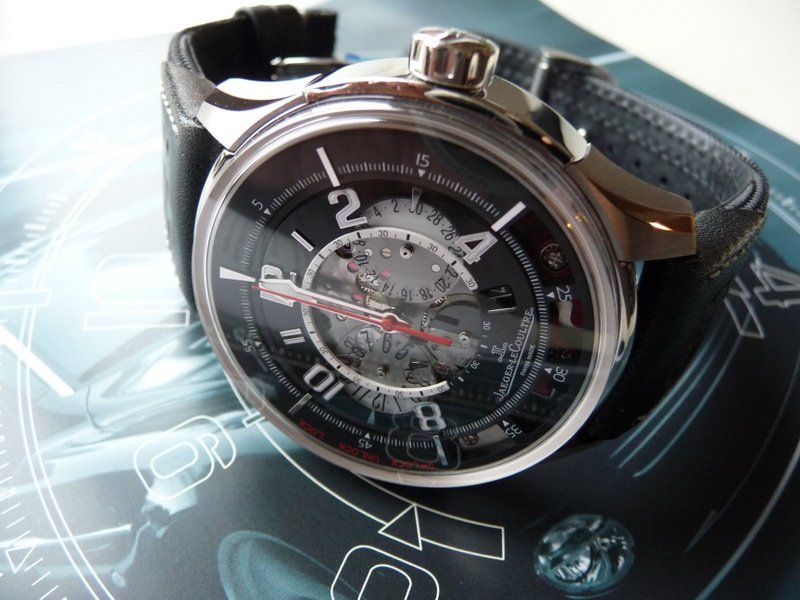
Yes, mechanical perfection!
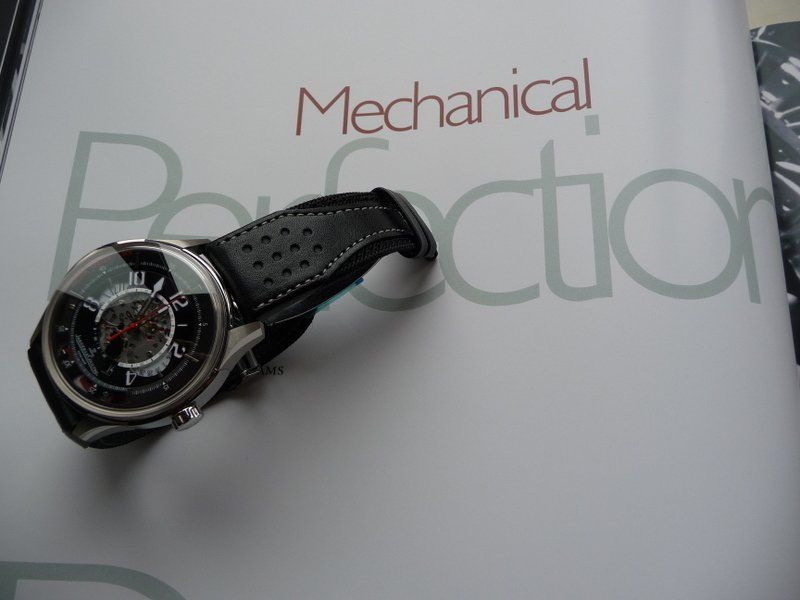
Even the polished steel crown is inspired by the AM petrol tank cap.
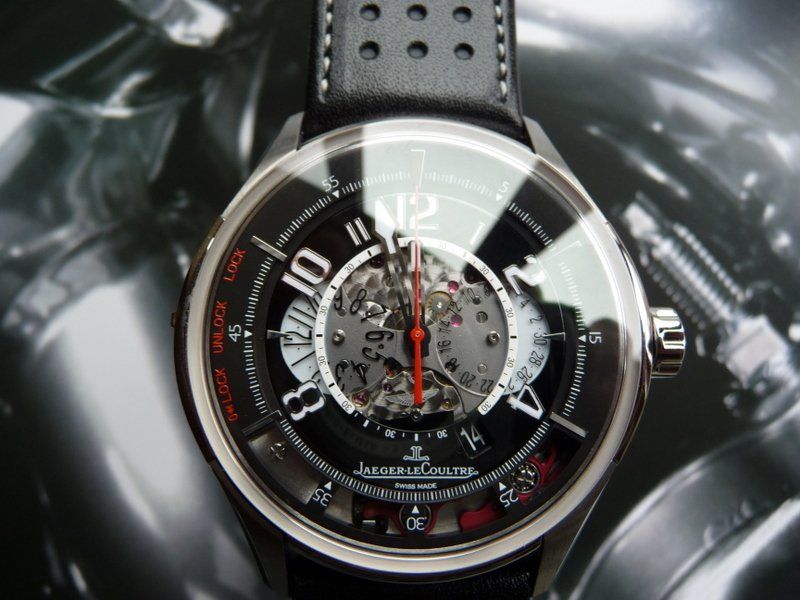
The subtle and only literal Aston Martin reference on the dial side appears on the seconds subdial (indicateur de marche). The AM logo really is quite subtle, only visible half of the time, and one really must look for it, which I think is appropriate. Look above - now you see it; look below - now you don't. Where is the AM logo?
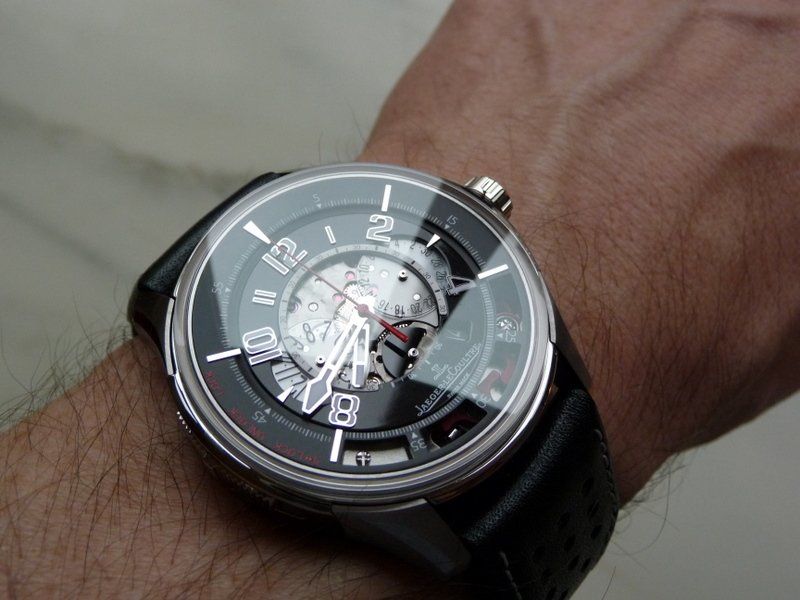
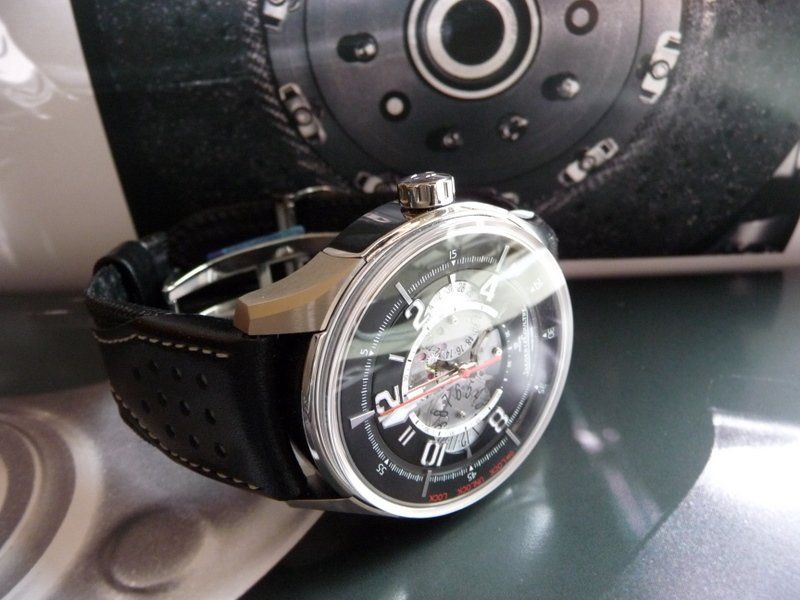
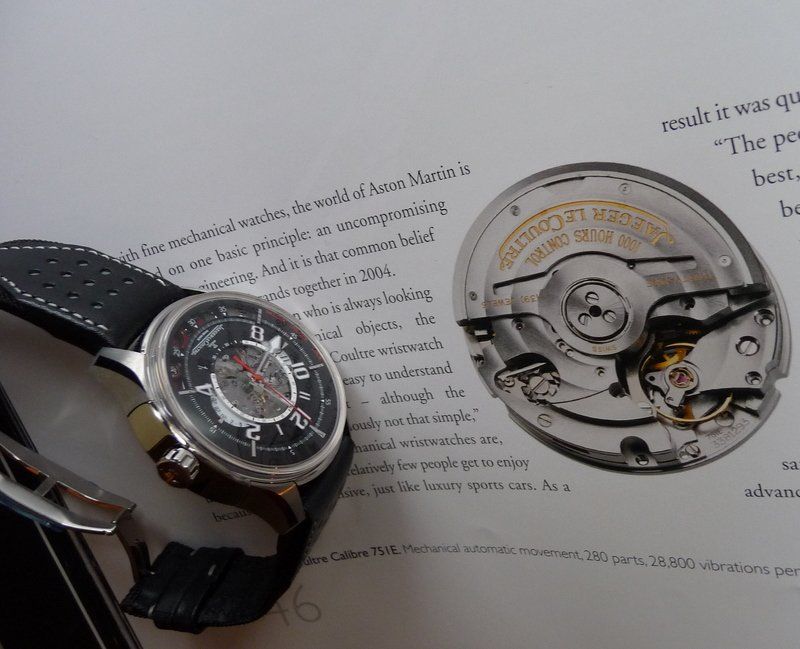
I really like movement indicators that are not specifically seconds subdials because they provide a frivolous amusement for simple minds like mine to enjoy when the chrono function is not engaged. This was one of the key design differences between the DBS and earlier editions of the A2 that swayed me to the open face dial. I love the operating indicator featured on the EWC, too. The A2 DBS’s caliber 751E ("E" denoting the inclusion of the operating indicator) has a generous power reserve of 65 hours, so I suspect the movement indicator will rarely stop.
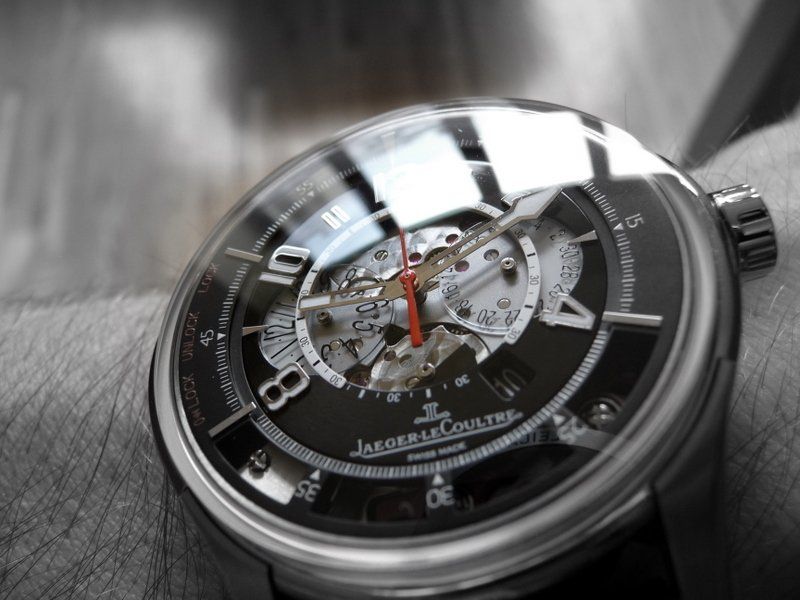
The splash of red incorporated with the silver and black also seems to harmonize with the coloring of the cars. It is exciting to watch the long, slender red seconds hand race around the dial.
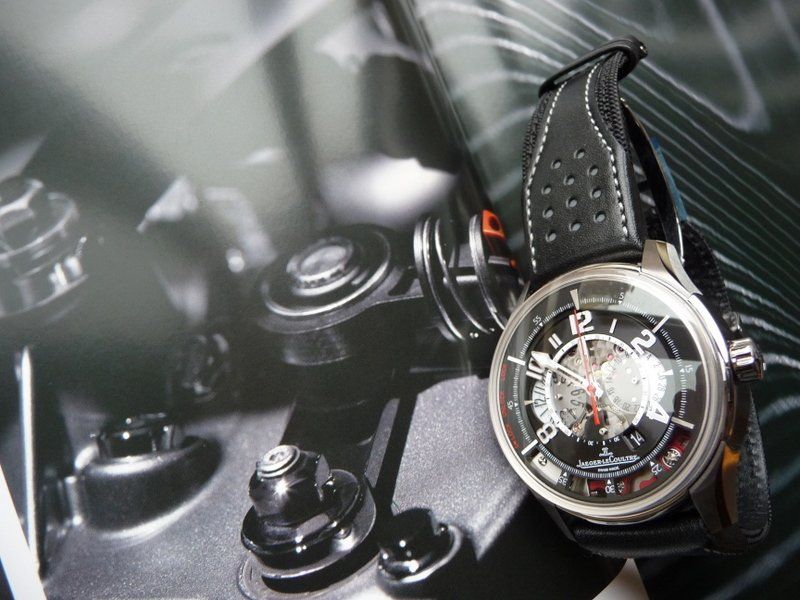
I thought long and hard about the AMVOX2 during the past year or more. Did it really add something extra beyond what I had with the Extreme World Chrono? In fact, it lacks some of the key features that the EWC boasts and which made the EWC a more practical first JLC piece for me. I know some will disagree with me on this, but I regard the EWC as a great nearly-all occasion, go anywhere watch (provided one has a big wrist and a good selection of straps and perhaps a bracelet). However, maybe I should have next moved on a true dress watch? But I kept returning to the A2; I did not NEED it, to be sure; but I certainly WANTED it desperately.
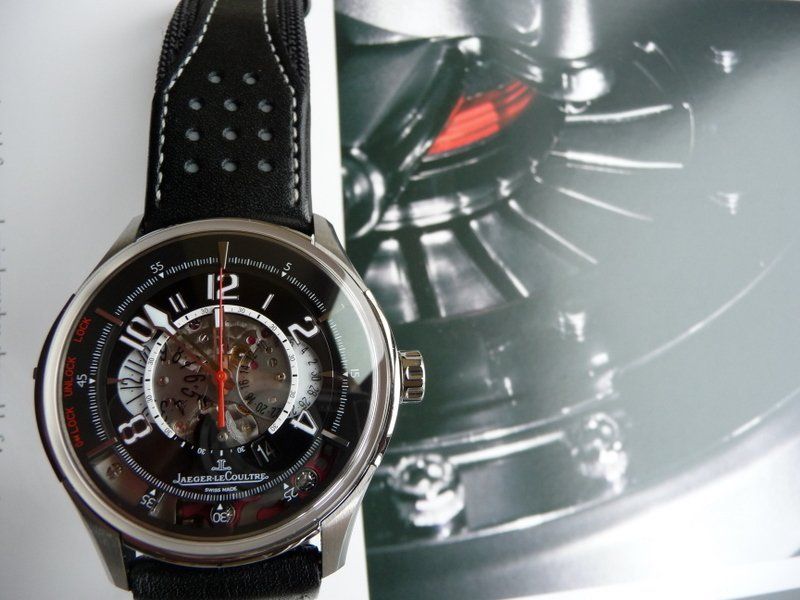
The A2 DBS just makes my heart beat a little faster every time I look at it. I feel lucky to have found a new one (with a nice number to boot) since the A2DBS was presented at SIHH 2007, already more than 2 years ago.
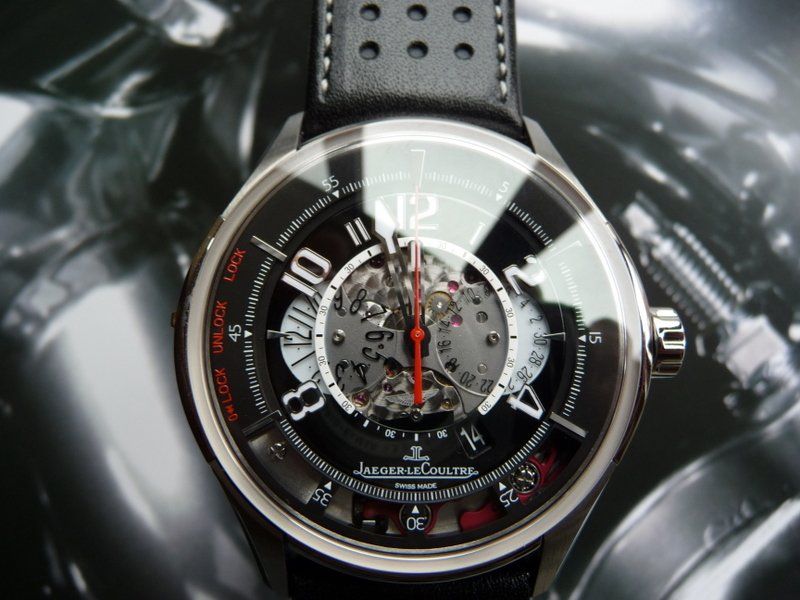
Good grief, I am quite in love. Thanks for looking and reading.
respo


AMVOX2 DBS, Old School

Even if a lot has already been said since, you just glorified this piece

So, so, so, Respo
You are to blame, my friend
You're obviously ...bitten, Respo
Not yet

A beautiful watch...

Awesome timekeepa/pics/post!!!!!!!!!!
have the car too ...
I wish I could!
we surely did try the transponder

A spectacular new addition!
Thanks Daos
WOW!
Thanks

When are you getting yours?
some time in early May
Ok, so photos????
I am looking....
The watch is amazing...
Thanks -- aready checking with JLC
A2 DBS...
My wish
ABSENCE...
Congratulations!!!!
You have a solution, gmital,