AnthonyTsai
[PuristS]
22366

A candid interview with our very own John Davis "ei8htoms"
Here's a great interview of our very own John Davis aka "ei8htoms." GMT+9 has granted us permission to repost the interview given by Bryan Andersen onto our site. Thanks!
Cheers,
Anthony
==================
DECONSTRUCTING WATCHMAKER JOHN DAVIS
Editor’s Note:
John “8ohms” Davis needs no introduction to Web-savvy watch enthusiasts. A professional watchmaker, John’s authoritative articles, interviews, and observations have been featured the past decade on leading horological Web sites like TimeZone and The PuristS (his home base), and on the Seiko/Citizen Watch Forum. Many watch fans fantasize about becoming professional watchmakers. John did it. In a six-part series (Part I here ), he documented his studies in Seattle, allowing readers to share the experience. For GMT+9’s second exclusive interview, we’re proud to talk with John Davis.
What part of America are you from? What did you do before entering watchmaking school? How did you become interested in watchmaking as a vocation?
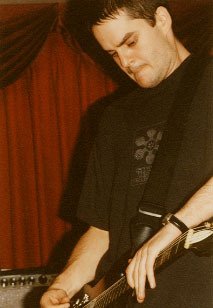
I was an Air Force brat growing up, so I’m kinda from all over. Colorado is where I got kicked out of the house (metaphorically speaking) and where I went to college (CU Boulder ), so it feels a little like home to me even though I don’t have any relatives there and haven’t been back in years. After earning a degree in Creative Writing (I flip-flopped from physics in my junior year), I focused full time on playing guitar in a deconstructionist rock band for about eight years between Boulder, Denver, and San Francisco. During that time I mostly waited tables to pay the rent.
I became immediately obsessed with watchmaking after reading an article about A. L. Breguet in a Delta Airlines in-flight magazine around 1997. It was as if a light bulb had turned on when I found out that people still made mechanical watches and I knew immediately that was what I wanted to do.
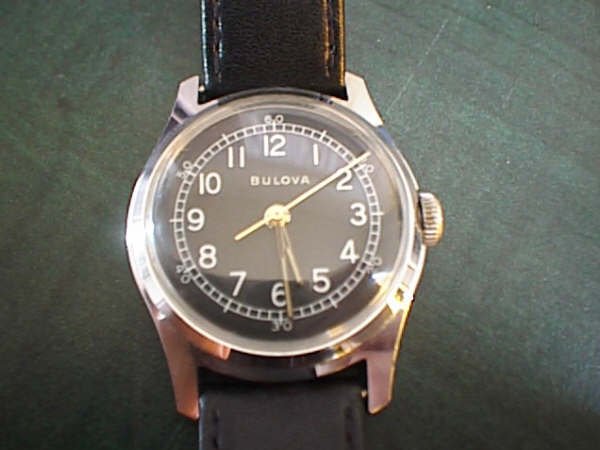
Way back before you started watchmaking school, you posted on TimeZone what was, perhaps, your first custom watch. It was a vintage Bulova and you put an 8 on the dial. It was pretty cool at the time. Do you still have it and could you share a picture?
I made that for the lead singer in the aforementioned band and she probably still has it. It went through a major revision when I was in watchmaking school and got a new stainless case (the original was chrome plated) and new dial, but still had the “signature” 8 on it in black on a black background. It was a huge improvement in fact with a military dial secured with at single blued screw, but I didn’t take any damned pictures of it or at least I can’t find them. That’s another reason I hope she’ll let me service it some time soon. Also because I can’t imagine it’s still running (at least not very well).
Walt Odets had some influence on you? Do you still keep in touch, and if so, how is he doing?
Walt definitely had a big influence on my watch writing. He basically created the genre of the technical watch review and was very helpful when I started writing in that vein. He’s a truly amazing writer and photographer and offered a lot of very valuable advice and constructive criticism along the way. He’s also a great guy and a good friend and we keep in touch regularly via the telephone now that I live on the other coast.
He’s still practicing psychology and spending a lot of his free time flying and working with his photography. He’s had at least one gallery showing of his photography recently and his work (which spans close to 40 years I’d guess) is wonderfully complex and thought provoking. He still enjoys watches, but got burnt out on the whole online watch-geek thing.
How much does one have to spend to own a mechanical watch at the highest level of engineering excellence?
I’m not sure I know what this means. Engineering excellence is something that sounds a little hard to nail down, especially it we’re looking for the highest level. I think you can get a perfectly admirable level of engineering excellence in an entry level Seiko or Orient mechanical for $50, an entry level ETA for a few hundred, an entry level Rolex for a few thousand, an entry level Patek for several thousand and so on right up to the masterpieces of horology in the half million dollar range. To me, accuracy, reliability and, above all, longevity (which includes serviceability to some extent) are the most important criteria in watchmaking.
As your exposure to European watches of the highest calibre has increased, how has your opinion of Seikos evolved?
I still very much admire Seiko’s contributions to horology and, if anything, am even more intrigued by their approach to mechanical watchmaking. Looking at a Grand Seiko movement is very disorienting for someone accustomed to Swiss and/or German watchmaking. The shape and surface finish of the bridges is immaculately precise and the level of adjustment is exquisite, but some of the screws have a slightly rough circular brushing and these weird, industrial looking slots with splayed ends. What’s that about? I plan to finally overhaul my Grand Seiko sometime soon, so perhaps getting into the movement deeper will help me to understand it better, but the sensibilities are entirely Japanese as far as I can tell.
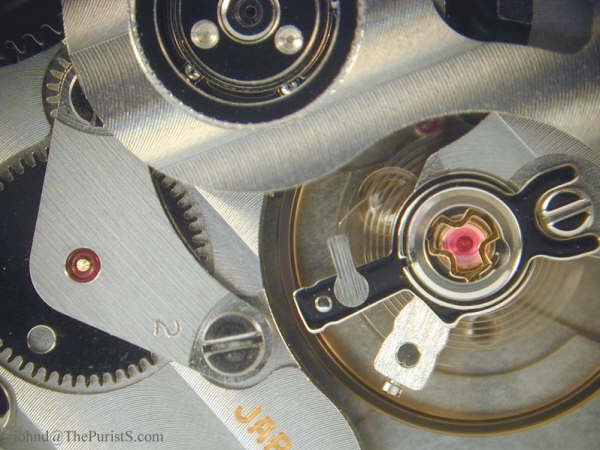
You are famous among Japanese watch enthusiasts for an outstanding review (link ) you wrote years ago on the inexpensive Seiko 7S26 caliber watch movement. At the time you held it in some regard. Has your opinion changed?
I still find it to be a fascinating piece of work, mostly because of the supreme level of functionality it offers at an amazingly affordable price point. The Magic Lever winding mechanism remains in my mind one of the finest engineering accomplishments in modern horology.
What is your favorite Seiko movement?
That’s a tough one. I don’t know enough about the modern, high-end Seiko movements to have an educated opinion about them, but the 9S55 in the GS automatics is certainly a great timekeeper in my experience. I’ve often fantasized about getting a Flightmaster too, mostly because of the movement . As far as the ones I do know well, the 6139 and 6138 are of course watershed pieces, the influence of which is still being felt today.
Seiko’s Spring Drive—Mechanical or Quartz?
Yes, apparently. I’m not all that interested in the Spring Drive technology even though it is clearly a significant achievement. Time will tell how it stands up to continued use and repeated servicing but it’s just not a direction that appeals to me personally.
How many truly skilled watchmakers are still operating in the United States, and what’s going to happen in the future?
That’s a great question. I haven’t tried to keep up on the statistics, but certainly the industry is in a state of crisis where after sales service is concerned. Arguably there are more well-trained watchmakers entering the job market every year in the US than there have been for many years or maybe ever. There are now 5 WOSTEP (Watchmakers of Switzerland Training and Educational Program) schools in the US and a handful of non-WOSTEP schools. That said, these schools are not exactly swamped with qualified applicants; and watchmaking, especially when taught in the traditional way, has a tendency to chase off those who are not passionate about it, so most of the schools do not graduate full classes.
The students that do graduate definitely have a better basic watchmaking education and understanding of theory and the fundamentals of technique than your average America watchmaker, but it takes years to develop the experience and skills to really apply that knowledge. Many service centers are already struggling to find (and keep) good watchmakers and I can only see this trend continuing for the foreseeable future. We haven’t seen salaries for watchmaking really take off yet, but perhaps that will happen to some extent as the demand continues to outstrip the supply. The very high median age for practicing watchmakers in the US will of course play a factor as the more experienced watchmakers retire and/or expire (a surprisingly number of watchmakers continue to work until ill-health or death forces them out).
The larger companies and conglomerates will probably be forced to continue to innovate in terms of service models that increase productivity per watchmaker, perhaps with more semi-skilled technicians playing support roles, but doing so in a way that does not unduly compromise the quality of the service/repair work is a tremendous challenge of course. The average turnaround time for luxury watch service is already at risk of driving away a significant number of potential customers (and certainly repeat customers) and I can only imagine this problem being compounded if repair costs rise dramatically. This would likely cause the resale market to soften and scare off would-be “investors,” etc.
The best companies will likely never have trouble finding good watchmakers. Watchmakers are attracted to good products and supportive working environments and in my experience companies that have these don’t even have to pay as much as the competition to get the best people.
You traveled to Europe a few years ago and met Philippe Dufour at his Swiss workshop. Could you please share a story?
Unfortunately, my two visits with him were so thoroughly documented (in the article on TZ and the interview on ThePuristS ) that I don’t really have any other stories to share.
Now that you are a watchmaker, has your attitude towards brands or collecting changed in a big way? Can you talk a little bit about how?
I’ve never really been a collector so much as an enthusiast and/or student of watchmaking. I bought plenty of vintage Seikos just to overhaul them and learn about their movements, but ultimately ended up selling all of them but one, a 7016 chrono. I’m actually overhauling that one now as time allows and will probably sell it too when I’m done. I don’t like to have watches lying around that I don’t wear and I’m really a one or two watch kinda guy.
I’ve found that working for a specific brand really does change your attitude about their pieces and the work of other companies over time. At times the familiarity can breed contempt of course (if you really don’t like or respect the product), but more often I think the greater understanding of the product creates a context and a certain level of respect for the watches. I’ve come to appreciate models that I otherwise would’ve never thought twice about and a sense of brand loyalty can arise even if one is resistant to it intellectually.
If you really love the product, the brand’s whole approach to watchmaking can begin to permeate one’s sensibilities. I find myself increasingly aligned with what I believe to be the strengths of the movements I work on now, but of course those shared priorities are part of what attracted me to the brand in the first place, so perhaps that’s only natural.
What are you wearing today?
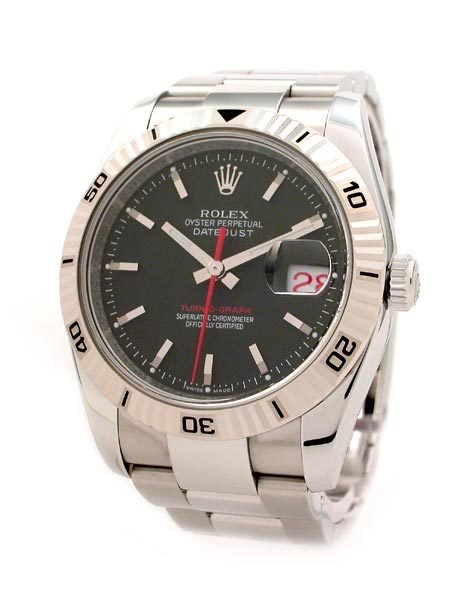
My daily wear watch is a Rolex Turn-O-Graph in ss/wg with black dial and Oyster bracelet. I absolutely love it. I sometimes wear my Grand Seiko SBGR023 for special occasions or a boron-carbide coated (Yao sapphire equipped) Black Monster for rough duty.
The hobbyist forums for watch lovers seem to generate an unusual volume of soap opera? How do you account for it?
Phew, that’s a tough one! On some of the forums, it’s clear that there is an assemblage of people that are very successful in their life (you don’t hang out on an A. Lange & Sohne forum unless you’ve got a little spare change floating around) and they are mostly used to being right, being catered-to and hearing “yes” all day long. You put them all together with a shared passion that most of them are only marginally technically savvy about and sparks are gonna fly as feathers get ruffled.
This doesn’t account for the drama on the forums devoted to less expensive watches however and certainly they are at least as likely to go up in flames from one day to the next as the Patek Philippe forum is. All I can guess is that there is a certain amount of obsessive-compulsive tendency that often accompanies an appreciation of mechanical watches. This, the anonymity of the Internet and the habit of truncating niceties and politeness in an nearly instantaneous, yet type-written medium all conspire to set people off at each other. Either that or everybody just has a big freakin’ ego. (smile)
What is your favorite Japanese watch of all time?
I tend to fantasize about the Seiko 5718 (pictured borrowed from the web), but only because of its rarity. I’m pretty sure it’s just a 7016 with a two-digit pusher-activated counter for tallying golf scores or something like that. Cool, but mostly because I’ve never seen one in real life and so precious rarely even seen in pictures.
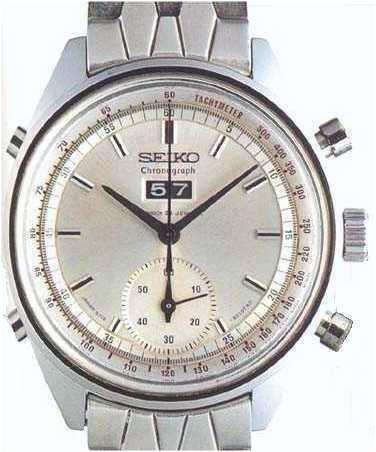
I’d also love to get a close look at one of the late ’60s Observatory Chronometer wristwatches Seiko made. I don’t even know the reference number, just that a few exist. There’s only a handful of companies that have ever put Observatory Chronometers in wristwatch cases, so that would be a piece of real historical significance to own.
What level of mastery have you now achieved as a watchmaker? Can you repair anything and what parts of your game are you working on?
I consider myself to be pretty skilled at what I do, but certainly not a Master Watchmaker as I understand the term. To my mind, you really need to have made a watch basically from scratch to earn that title. I have most of the skills to make a watch, but not really enough tooling currently. It is something I plan to do in time but I’m not in a huge hurry either.
I can vibrate a hairspring from scratch, make a balance staff or winding stem, diagnose and set up an escapement and manufacture various other parts as needed for in-depth repairs and these things already put me well above average in the American watchmaking world, but this is all par for the course for a WOSTEP graduate and just the very beginning of the road for true Master Watchmakers.
In the past six months or so I’ve spent a lot of time studying the Swiss Lever escapement to better understand all the practical checks necessary to insure good running performance and optimal reliability. I’ve written the first in a series of articles on the subject about Checking for Proper Drop/Lock in the Swiss Lever Escapement (I know, a riveting title) that will soon be published in Horological Times , the professional trade magazine of the American Watchmakers-Clockmakers Institute. The second article will likely be about proper safety action and clearances between the fork, guard pin, roller jewel and safety roller, but I’m only just starting to look at it and think about it in depth.
My greatest strengths as a watchmaker are my better than average understanding of theory, my familiarity with the fundamentals of the craft and my ability to apply them both with some critical thought and pragmatism as needed. I also enjoy innovating in terms of custom tools, advanced or novel materials and cutting-edge fault diagnosis techniques.
If you were going to buy a single special watch, what would it be?
Aren’t they all special? I’m not about to blow any huge sums of money on a watch given my current financial situation, but if I won the lottery I might try to track down a Dufour Duality, commission a Roger Smith or just buy a Richard Mille 002. My next watch will likely be another Rolex, however. A GMT II or vintage Sub or something. I do still think about the Flightmaster from time to time though too. (smile)
Copyright © 2007 gmtplusnine.com
-----------------------------------------------------------
link to article on GMT +9: http://www.gmtplusnine.com/?p=155#more-155
A candid interview with our very own John Davis "ei8htoms"