Vacheron Constantin Malte Small Seconds Review
Review

Vacheron Constantin Malte Small Seconds Review

By WHL · Nov 30, 2012 · 15 replies
WHL
WPS member · Vacheron Constantin forum
15 replies9528 views10 photos
f 𝕏 in 💬 🔗

WHL's comprehensive review of the Vacheron Constantin Malte Small Seconds offers a deep dive into the collection's evolution, particularly its embrace of the tonneau case form. This article is invaluable for understanding the design philosophy and technical advancements that shaped the Malte line, providing historical context and detailed observations on a significant modern reference. WHL highlights how Vacheron Constantin refined its tonneau offerings, culminating in the 2012 Malte Small Seconds.

15 collectors discussing this on the WatchProSite forumJoin the Conversation →
The Tonneau Form and Vacheron Constantin

Soon after the birth of the wristwatch, a product designed to meet the demand from fashionable women for jewelry that also told time, just over one hundred years ago,  there was a desire to break away from the tradition of roundness that early wristwatches had inherited from pocket watches. This signified that the wristwatch was not a derivative and a lesser type of watch from the pocketwatch, but rather that it was an object of interest on its own merits. The tonneau, or barrel shaped, case would come to comprise many variations of curvature and size, and for Vacheron Constantin it would be a material part of series production of ladies timepieces, beginning in 1912, and continue in men’s timepieces after they became fashionable after World War I. Alex Ghotbi of The Hour Lounge authored an exhaustive survey of Vacheron Constantin’s production of tonneau form wristwatches in a four part series of articles titled, “Vacheron Constantin and the Tonneau: 100 Years of Creativity,” which I highly recommend for those who are interested in learning more about Vacheron Constantin’s historical timepieces.

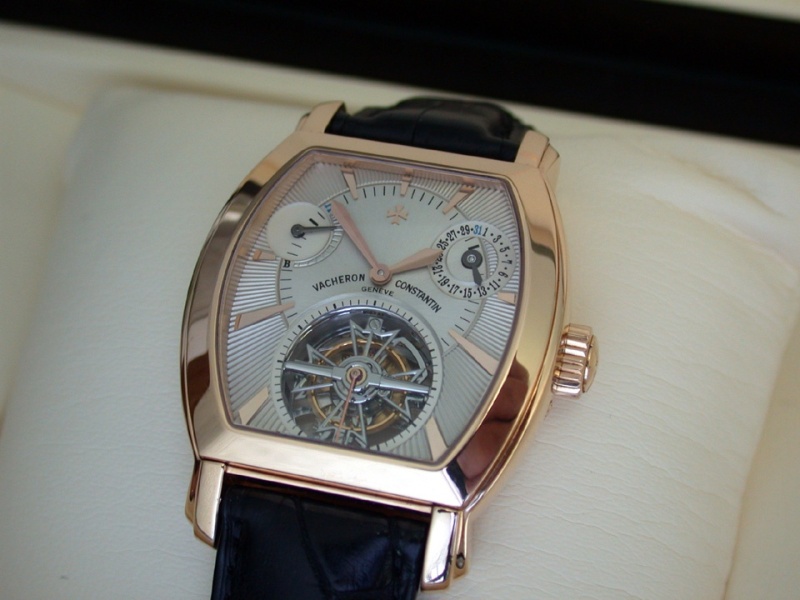
Jumping ahead to the modern era of watchmaking, with the mechanical watch renaissance firmly established as durable and growing phenomenon, Vacheron Constantin debuted the Malte collection in 2000 with a series of round cased watches of varying complexity, and a tonneau form tourbillon featuring an in-house movement that proudly announced that Vacheron Constantin was joining the ranks of manufactures.


Sharing the sword blade hands and stepped lugs of its round cousins in the Malte collection, Vacheron Constantin had a winning design on its hands.

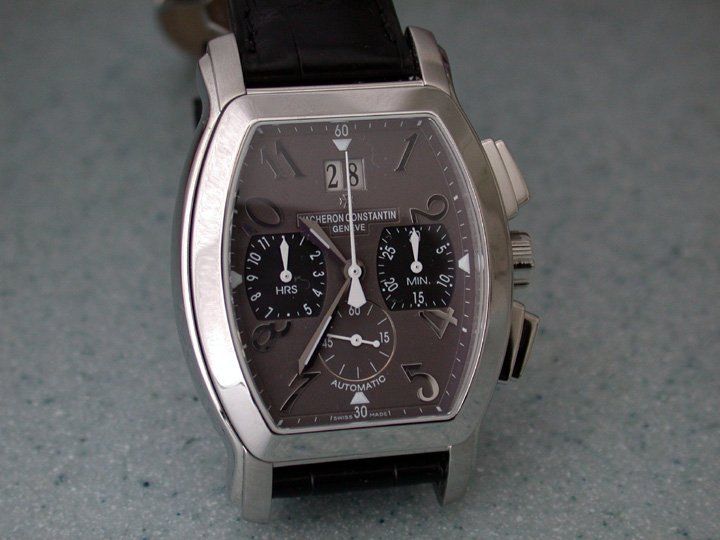
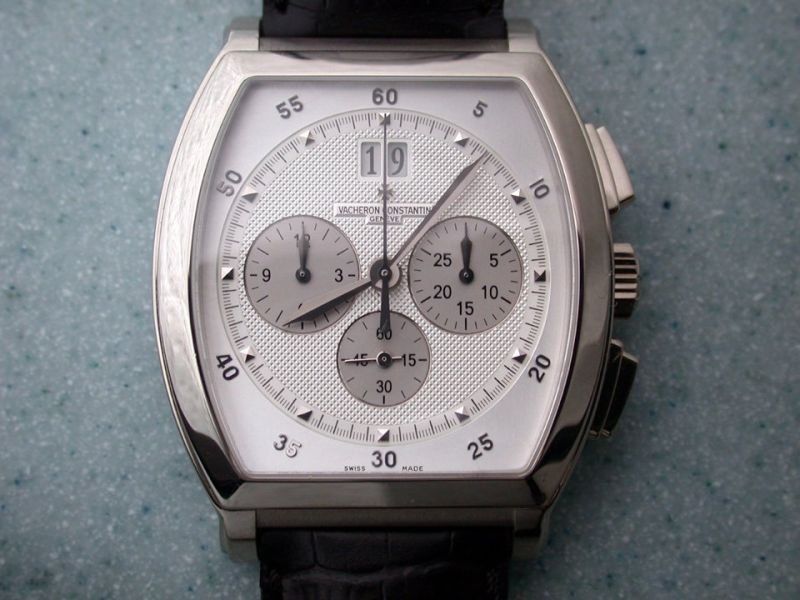
In 2001, those design cues were applied to the Royal Eagle collection of timepieces, with a Chronograph, shown below, and a Day-Date Chronometer.


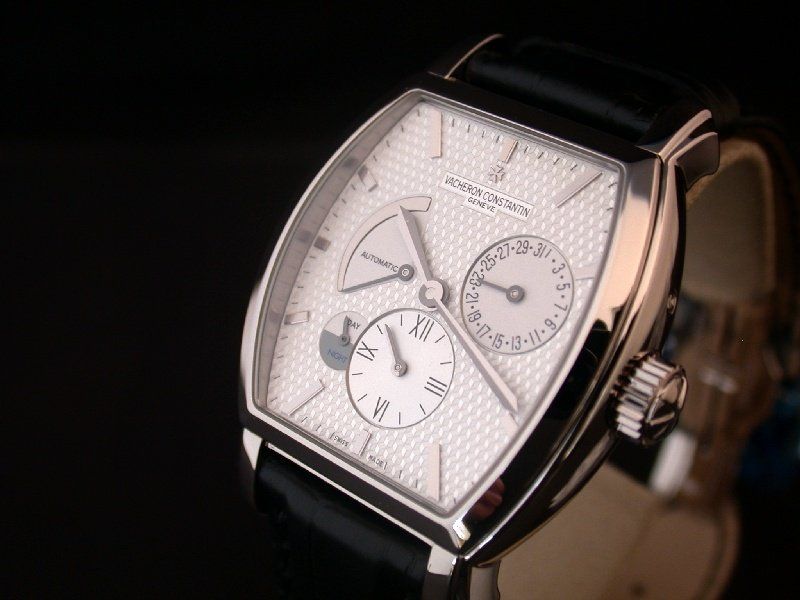
Vacheron Constantin would later add a Dual Time complication to the Malte collection, which is still in production today.


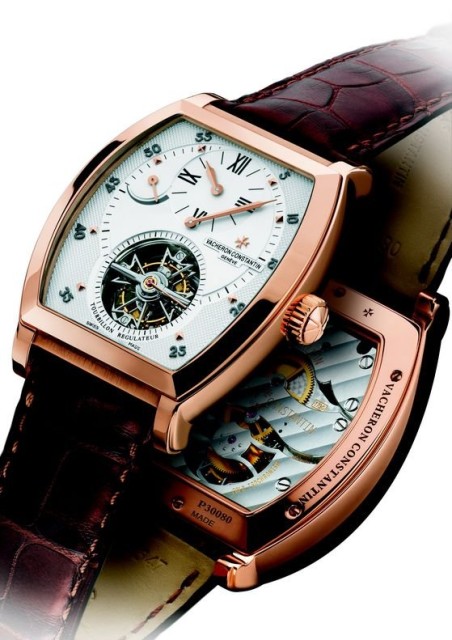
In 2008, Vacheron Constantin introduced a major revision to the concept of the Malte collection, focusing it exclusively on the tonneau form, again with the tourbillon, now with regulator display, as the prestige piece in the collection:


and with a Chronograph:


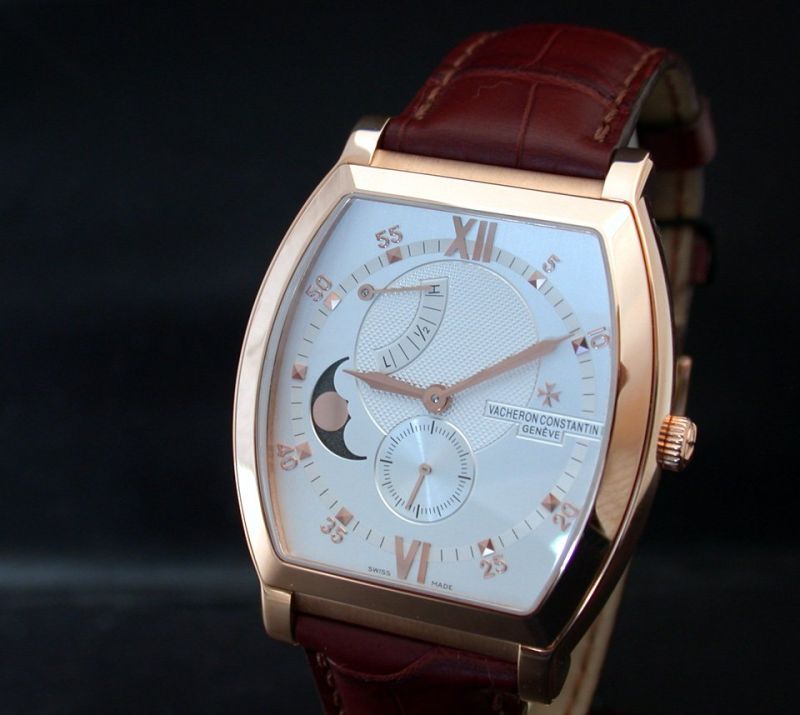
and finally with the Moonphase with Power Reserve rounding out the collection.


Characteristic of all three models was an oversized case, with the Malte Moonphase and Power Reserve the smallest at 39 mm diameter, which with a tonneau case has the wrist presence and feel of a 42 mm round watch, and a lessening of the prominence of the lugs. More effort went into making the dials of these watches, with multiple finishes applied on the gold base: guilloche, satin graining, snailing, smooth opaline, and also applied numbers and indices. The sword blade hands were modified to echo the look of the incomparable 250th anniversary collection.


A New Generation

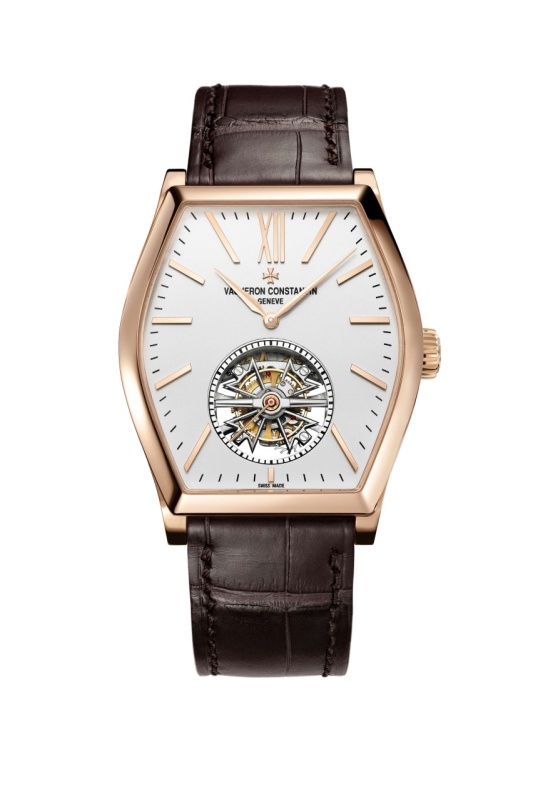
Vacheron Constantin had a strong showing at SIHH in 2012, with natural extensions of existing lines within the Overseas and Patrimony Traditionnelle families, and the exquisite beauty and inventiveness of the Metiers d’Art “Les Univers Infinis” collection. But the focus this year was on the new Malte collection. The cornerstone of the collection is the updated Malte Tourbillon:


Which uses the same base movement as the original Malte Tourbillon, but going for a more understated look by removing the date and power reserve indicators on the dial, and leaving the dial without texture.

That simplicity was taken to its minimalistic extreme with the limited edition, 100 pieces, platinum Malte 100th Anniversary watch:


This timepiece celebrates the 100th year of the tonneau form in Vacheron Constantin’s long and distinguished history. One wonders why Vacheron Constantin did not give it a platinum sandblasted dial for a new entry into Excellence Platine collection.

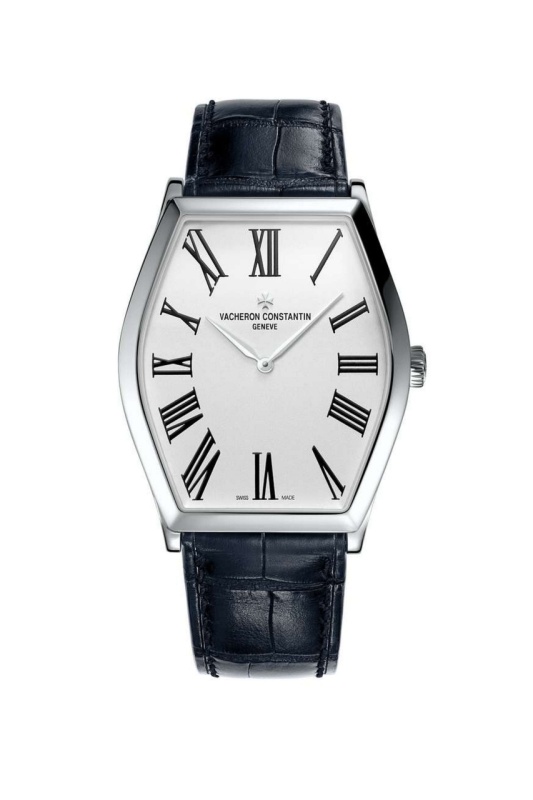
The base model is the Malte Small Seconds:


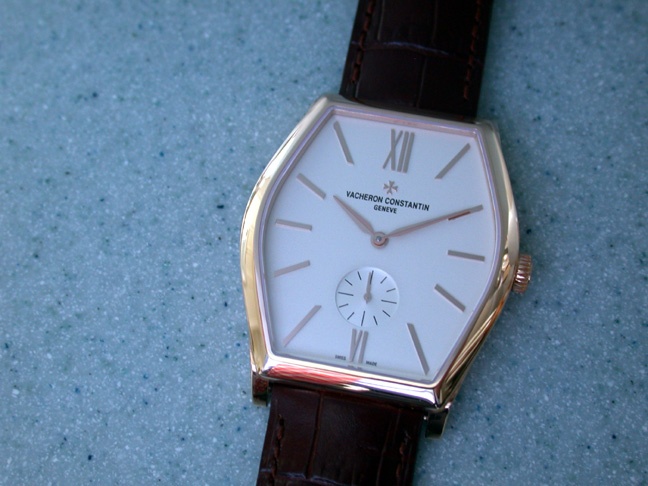
A simple, elegant, manual winding timepiece that is the focus of this review.


Case

The tonneau form can hold many variations in the proportions of the barrel shape, and with the Malte Small Seconds Vacheron Constantin has chosen a more complex curve than the smooth arc of the previous generations of Malte cases. Here it bulges outward towards the middle of the case, bringing a roundness to the form that was not present in earlier Malte models.

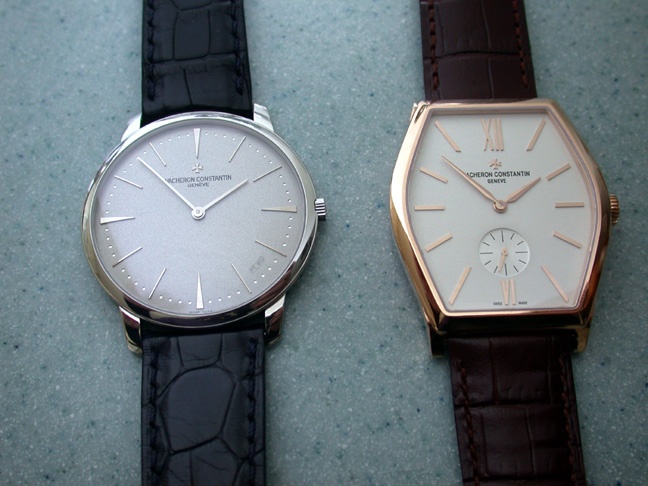
The three part (bezel, main body, and case back) 18K rose gold case measures 36.70 mm wide and 47.60 mm high, with a thickness of 9.1 mm, and like all Vacheron Constantin dress watches, is water resistant to 30 meters. While 36 mm would seem small in this era for a round watch, in the tonneau form it has the presence of a 40 mm round watch:


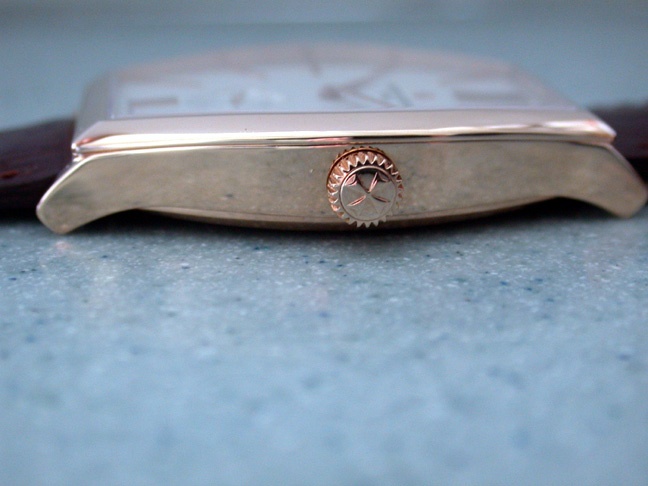
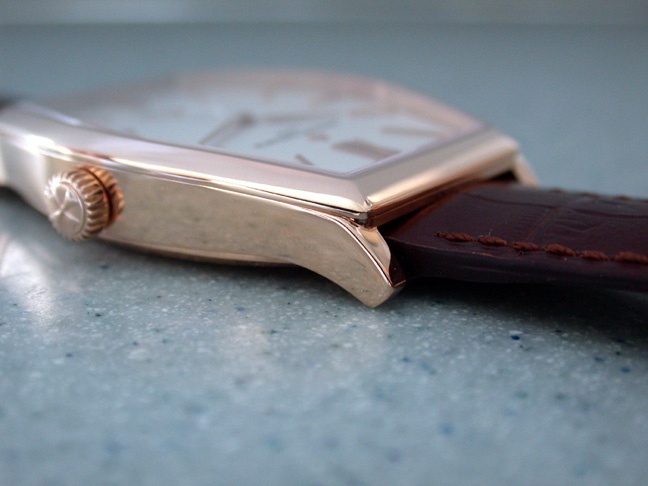
The bezel, lugs, and sides have a high polish finish.


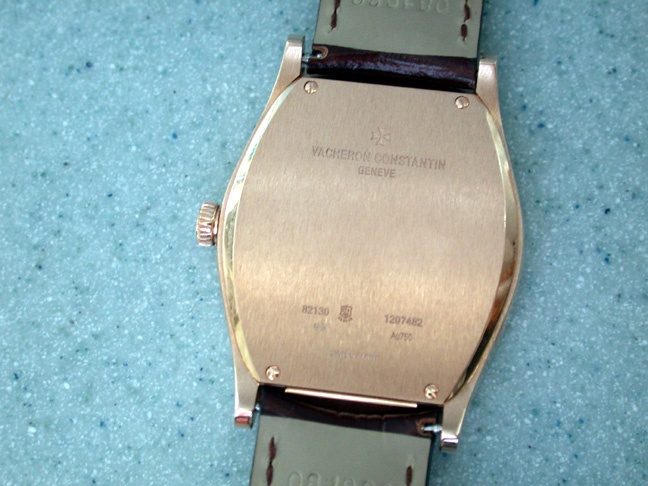
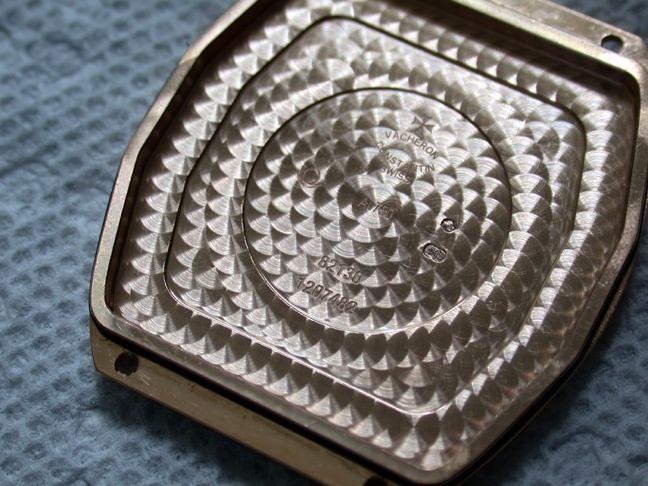
The solid case back has a beautiful satin finish, able to support a custom engraving, and the inside is exquisitely decorated with a perlage finish.


Dial

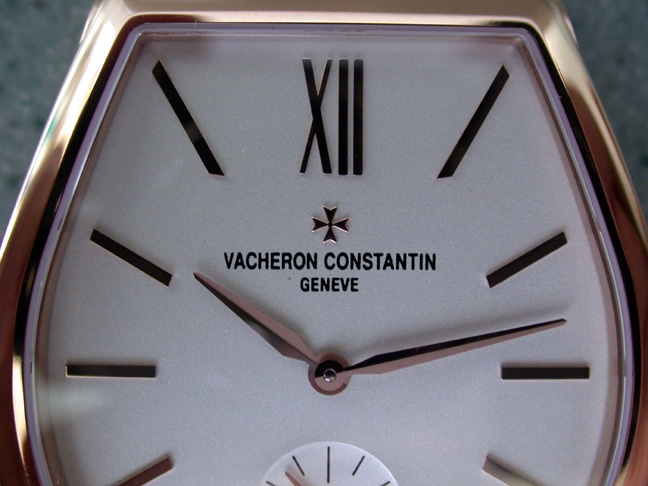
Present in each of the Malte Tourbillon Regulator, Malte Moonphase and Power Reserve, and Malte Chronograph models is a circle on the dial for the minute ring and applied hour markers, downplaying the tonneau shape and creating a visual counterpoint of shapes between the case and dial. The updated Malte collection reemphasizes the tonneau form of the case by echoing it in the dial.  The applied hour markers, a mix of Roman XII and XI and carefully shaped index markers outline the tonneau form in the interior of the case:


A dramatic change from the last set of Malte models  is the flat opaline finish, and even the omission of any minute track.

Consistent within the updated Malte collection is the use of Alpha hands, with frosted and high-polished halves to aid legibility.


Movement

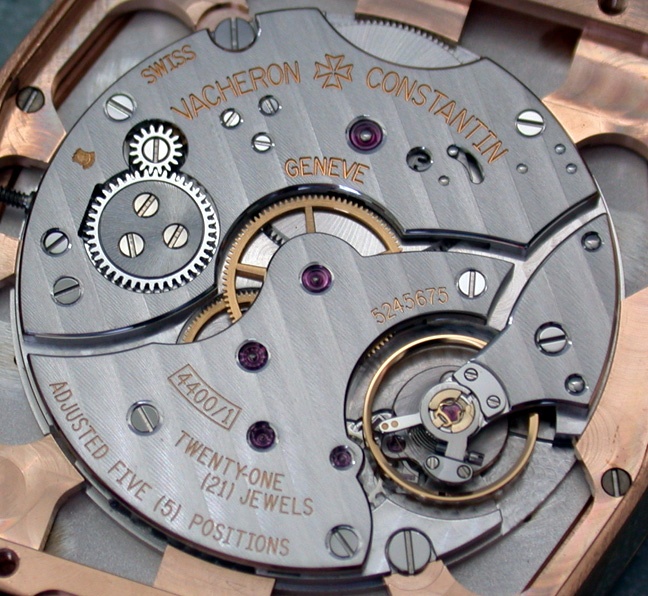
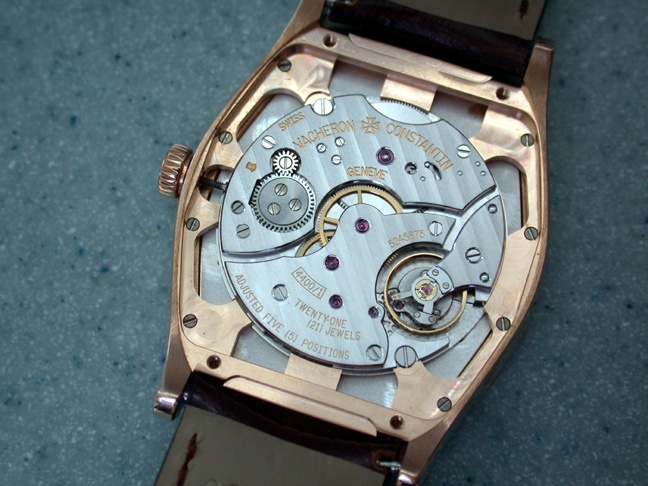
Inside the case sits Vacheron Constantin’s Calibre 4400, previously used in the Historiques American 1921 and the Patrimony Traditionnelle. The calibre 4400 is a manual winding movement, 28.60 mm in diameter and only 2.80 mm thick. It employs a single barrel with an extra long mainspring, giving the watch a 65 hour power reserve.


The Calibre 4400 was designed to fulfill the requirements to earn the Geneva Hallmark, a quality measure that ensures a movement’s longevity, durability, and quality. This year, the criteria for earning the Geneva Hallmark have expanded to dictate qualities that the entire watch must possess, not just the movement. Included in these are timing accuracy, and qualifications for how the movement is encased. Vacheron Constantin will be offering the new Geneva Hallmark certificate for all eligible watches by June, 2013.

The Malte Small Seconds being delivered at the time of this writing are with the old style Geneva Hallmark certificates, but it has have been designed to meet the updated criteria, and an obvious change is to see that the movement is attached directly to the case, eschewing the need for a casing ring, flange, and screws.


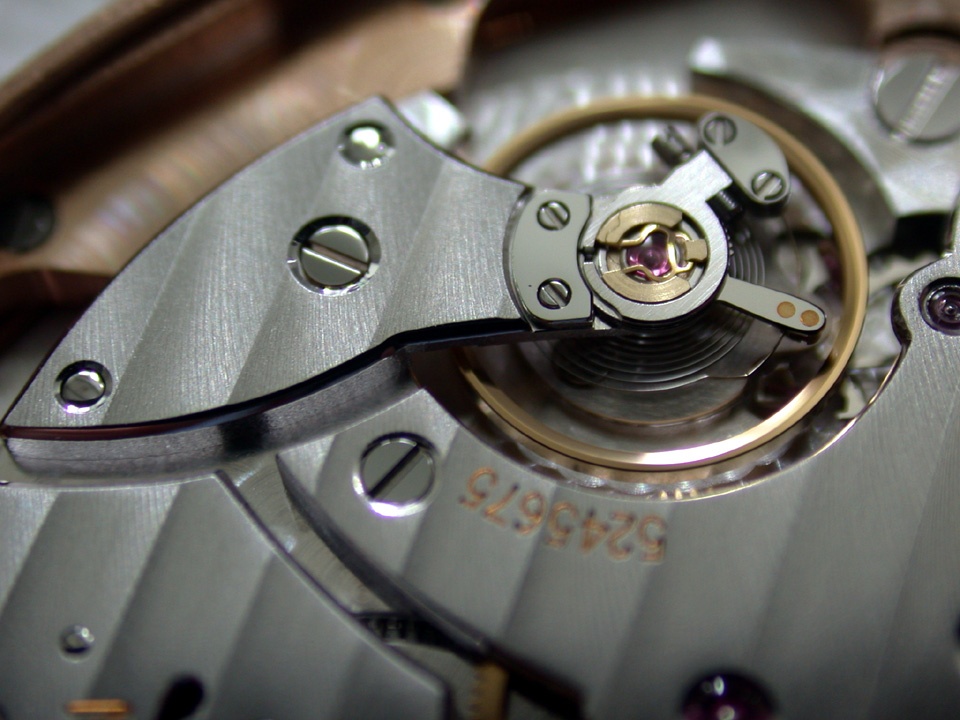
Finishing of the Vacheron Constantin calibre 4400, though never to be seen through the solid case back, is exquisite, with all the hallmarks of fine Geneva decorative and functional finishing: mirror polished screw heads, anglange on the bridges and jewel sinks, perlage on the gear sinks and top plate under the dial, and straight and circular graining on the steel parts and brass wheels, respectively.


Conclusion

The third iteration of the Malte is the most refined version to date. The bold elements like the stepped lugs and sword blade hands from the first generation, and the domineering size and complex dials from the second generation, have been toned down. Considering Vacheron Constantin’s history in exploring the tounneau form, and with some historical ancestors to this watch having a similar outline, the Malte Small Seconds could fit quite comfortably in the premium Historiques collection. It also shares the elegance and simplicity of the timepieces from Vacheron Constantin’s Patrimony Contemporaine collection. I predict that collectors will appreciate the Malte Small Seconds, along with the Malte 100th Anniversary and Malte Tourbillon, with the same high regard as these other two successful collections.

Bill Lind
VC Forum Moderator


About the Vacheron Constantin Historiques Ref. American1921

The Vacheron Constantin Historiques American 1921 is a distinctive reinterpretation of a cushion-shaped watch originally produced by the manufacture for the American market in the 1920s. This reference is characterized by its unique diagonal display, with the crown positioned at the 1 o'clock position and the dial rotated 45 degrees clockwise. This design was historically intended to allow drivers to read the time without removing their hands from the steering wheel, offering both a functional and aesthetically unconventional presentation within the Historiques collection.

This particular iteration of the American 1921 features a case crafted from precious metal, often rose gold, with a polished finish that highlights its cushion shape and stepped bezel. The watch is typically fitted with a manual-winding mechanical movement, visible through a sapphire crystal case back, providing a power reserve suitable for daily wear. The crystal protecting the dial is also sapphire, ensuring clarity and scratch resistance.

The American 1921 appeals to collectors seeking pieces with historical provenance and an unconventional design. Its distinctive orientation and vintage inspiration make it a conversation piece and a unique offering within Vacheron Constantin's contemporary lineup. Various sizes have been produced, catering to different wrist preferences while maintaining the core design principles of the original 1921 model.

Specifications

Caliber
Caliber 4400 AS
Case
18k rose gold
Diameter
40mm
Dial
Silver
Water Resist.
30m
Crystal
Sapphire

Key Points from the Discussion

Advertisement
The Discussion
AM
amanico
Nov 30, 2012
Its huge size, and its coffin shaped case left me cold.

Then to see the same movement in the Patrimony, then in the American, then in this one is another argument which didn't please me. I know that Vacheron is far from being the only one to do so, but what I don't like here is something I don't like elsewhere. If I got it well, VC decided to opt for a solid case back? If, so, it is a good solution, but a round movement in a coffin shaped watch...Hmmm, I really don't like that. I much preferred the case of the first generation. Thanks for the write u

DJ
Dje
Dec 1, 2012
Thank you Bill

Hi Bill, I saw and tried this new Malte at the SIHH in January and appreciated the refined simplicity of this watch. Still I must also say that for me Vacheron Constantin means refined watches indeed, but with a stronger look. To some extent this one looks too simple for my taste. The original Malte Tourbillon remains, more than ten years later, the epitomy of modern design by Vacheron Constantin IMVHO. Clearly a dream watch. I don't say I would not wear this one, of course, but there are many o

TI
Tick Talk
Dec 1, 2012
Please!

"And we must keep in mind that historically Vacheron Constantin is not a calibre maker." Uhhh...what was going on before 1938? ;-)

DJ
Dje
Dec 2, 2012
Right before 1938?

Hi, We can quite probably say that at the time of the presence of Georges-Auguste Leschot at Vacheron & Constantin (1839-1882) Vacheron & Constantin made some fully in-house calibres (but who can say if that was all of their production). Then it's far less clear and in the Chronos dedicated to Vacheron Constantin you can read page 45: "Un accord intervint en septembre 1938.....Jaeger-LeCoultre continuerait a produire des ébauches pour Vacheron & Constantin a la vallée de Joux alors q

TI
Tick Talk
Dec 2, 2012
the Maison Genevois

I share your interest in the history of Swiss watchmaking and particularly the "Maison Genevois"; an intricate collaboration of resources in the Genevan canton that worked as a symphony to produce, in the end, a watch! V&C has been in existence since 1755 and, up to the merger with Jaeger-LeCoultre (that's 183 years), produced the majority of it's own calibers. Yes, specialists have long existed for small-series complications, as they do today. LeCoultre supplied the vast majority of repeate

4J
4Js
Dec 1, 2012
Many Thanks

Bill, I really enjoyed this complementary piece to Alex's part 4. Great photos to dream over. If I could have only one it is the 30066 in the hong cong edition. The simplicity of time tourby without date and PR just sings or me, but the standard 30066 is fine too I like the size on wrist of the second evolution of the regulator. When I tried it on at the boutique I liked the larger presence versus the 30066 which I got to try the skeleton version in comparison. I find the tonneau shapes to be a

Continue the conversation

This thread is active on the Vacheron Constantin forum with 15 replies. Share your knowledge with fellow collectors.

Join the Discussion →