Complications
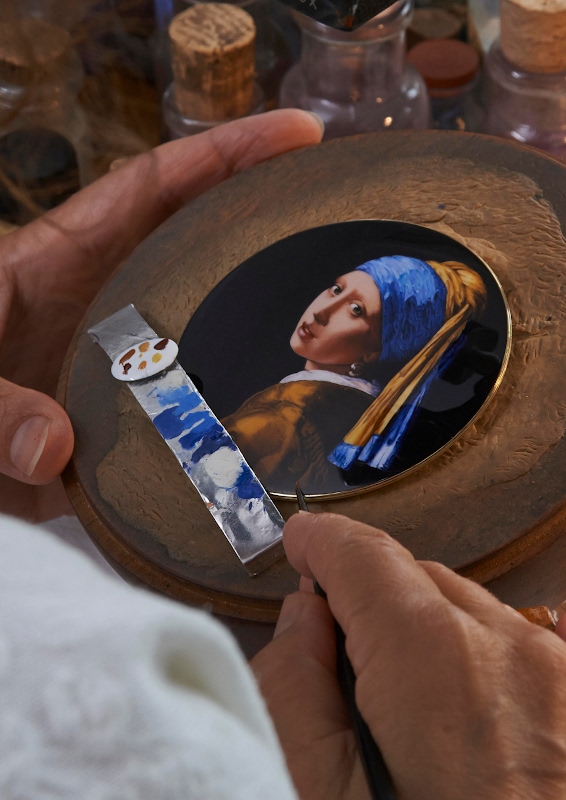
Patrick_y unveils an extraordinary Vacheron Constantin Les Cabinotiers Grand Sonnerie Carriage Clock, a unique commission that marries haute horlogerie with fine art. His detailed post provides an exclusive look at this one-of-a-kind piece, featuring a Carillon movement and an enamel miniature of Vermeer's 'Girl With A Pearl Earring' by Anita Porchet. This article explores the intricate details and community reactions to such a monumental creation.




Reference 9910C/000J-B413
Calibre
3761
Developed and crafted by Vacheron Constantin
Mechanical manual winding
71 mm (31 ½’’’) diameter, 17.05 mm thick
Movement power reserve: approximately 80h
Strikework power reserve (Grande Sonnerie mode): approximately 16 hours
2.5 Hz (18,000 vibrations/hour)
806 components
58 jewels
Hallmark of Geneva certified timepiece
Indications
Hours, minutes, small seconds
Tourbillon, minute repeater, Westminster carillon
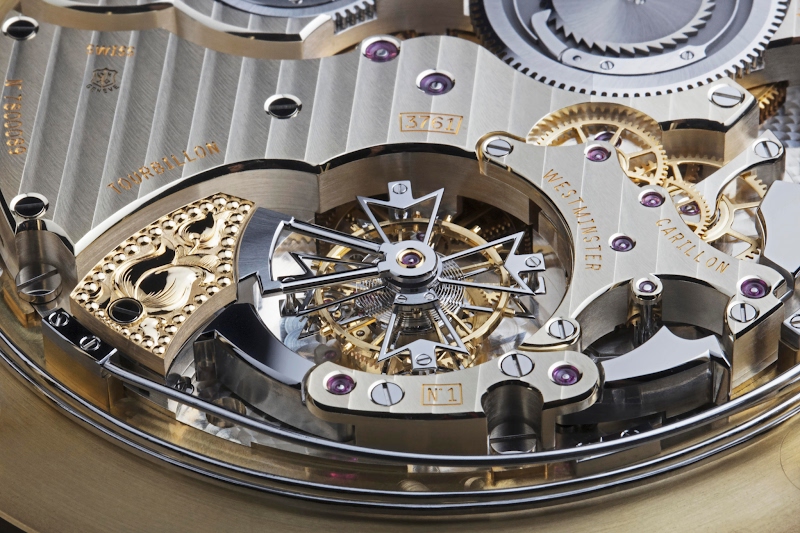
It's a Tourbillon with a 18,000 vph beat (I like slower beats on
tourbillons); the clock features 5 gongs (anything more than two gongs
makes it a Carillon); and look at that amazingly engraved balance cock and lots of
sharp internal angles.
The Case

The case is beautifully engraved by an in-house craftsman. The high relief style engraving requires some super delicate polishing work, overpolishing distorts the master image. Also, darkness and shadows have to be created as well, but how do you make that out of a lustrous material such as gold? The engraver has to make tiny lines in order to matte the material to give the perception of shadow or darkness to give a higher relief and add dimension to the piece. Below are the numerical facts of the case...
Case
18K
3N yellow gold, engraved with acanthus leaves on the case sides and
with tulips and “pearl” decor on the bezel and the caseback
Bow sculpted with two lion heads
Officer-type cover, Grand Feu miniature enamelling depicting Johannes Vermeer’s Girl with a Pearl Earring painting, hand made by Anita Porchet
98 mm diameter, 32.60 mm thick
Other Details
There are so many details about this watch that one cannot fathom the amount of complexity that goes into this watch. For instance, the hands were originally thought to be made of gold but this was too heavy, as the minute hand is 35 mm long! The inertia and mass of the hand was so great in gold that any shock would mean the hands would fall off the central pivot point (just like clapping your hands vigorously isn't great for the hands of our wristwatches). So the hands had to be made thinner and of a lighter material and are actually not made of solid gold. The little rich stories about every detail of the watch is so amazing - the ones that have been translated to the press are the more understandable (not to mention funnier) stories. Lastly, this piece took a total of seven years to go from concept to product - the project first started in 2013. The client remains anonymous, but was generous and kind enough to allow Vacheron Constantin to share and publicize this watch. Who knows, the client may be a member among us on WatchProSite...


My Thoughts
My
unsolicited opinion is that this is a fantastic and elegant piece.
It's a bit large, but again, this is a carriage clock, not a pocket
watch. The movement finishing, the authenticity (even the movement is
designed to look like a movement from 200 years ago with a slow vph),
the enamel painting, and the incredible case are all just wonderful!
It's got everything I'd want; a Grand Sonnerie, an enamel painting (our
enamel expert and moderator GLau would insist on this), a beautifully
engraved case, and a clean and elegant dial. Just an incredible piece
for a lucky collector - a PATRON of great horological art. If the collector
PATRON does happen to be a member on WatchProSite, maybe he/she will
let us have a glimpse one day in a future WristScan post! That's the
only thing that could make this piece even better for me! Many thanks
to Vacheron Constantin and this esteemed patron with tremendous taste
(and seven years patience) for creating an amazing work of art! Seven
years!
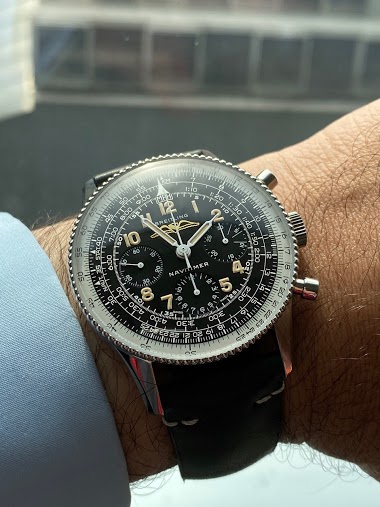
The Navitimer reference 806 is a notable early iteration of Breitling's slide rule chronograph, distinguished by its comprehensive circular slide rule bezel. This reference established many of the visual and functional characteristics that would define the Navitimer line for decades. It represents a foundational piece in the development of the brand's instrument watches, designed for calculations relevant to navigation.
The watch features a 40 mm stainless steel case, housing a manual-wind Venus 178 column-wheel chronograph caliber. This movement provides a power reserve of approximately 45 hours. The dial is black, protected by an acrylic crystal, and the watch offers a water resistance of 30 meters. The bi-directional rotating bezel is integral to the slide rule function.
For collectors, the reference 806 is significant as an early example of the Navitimer, appealing to those interested in the historical progression of aviation-related timepieces. Its production span saw variations in dial printing and sub-dial configurations, which are points of interest for specialized collectors. The model's enduring design has influenced subsequent generations of the Navitimer.
Had just read the article on watchonista before finding yours - thank you! Cheers Marc
There's a lot of information floating about the piece.
Also, seeing that maltese cross tourbillon at that scale is so hot...
I have no other words for it; speechless
This thread is active on the Vacheron Constantin forum with 23 replies. Share your knowledge with fellow collectors.
Join the Discussion →