Vintage
DrStrong's 2011 review of the Tudor Monte Carlo ref. 7159 offers a timely look at a vintage chronograph that was gaining significant collector interest. His post highlights the distinctive 'roulette wheel' dial and historical context of this often-underestimated Tudor model. This article provides valuable insights for both seasoned collectors and new enthusiasts discovering the charm of vintage Tudor.


The Tudor brand has been underestimated by watch collectors for years. Nevertheless, the interest in some of their vintage models has been growing recently. In particular, people realize now how interesting the Monte Carlo chronographs are.
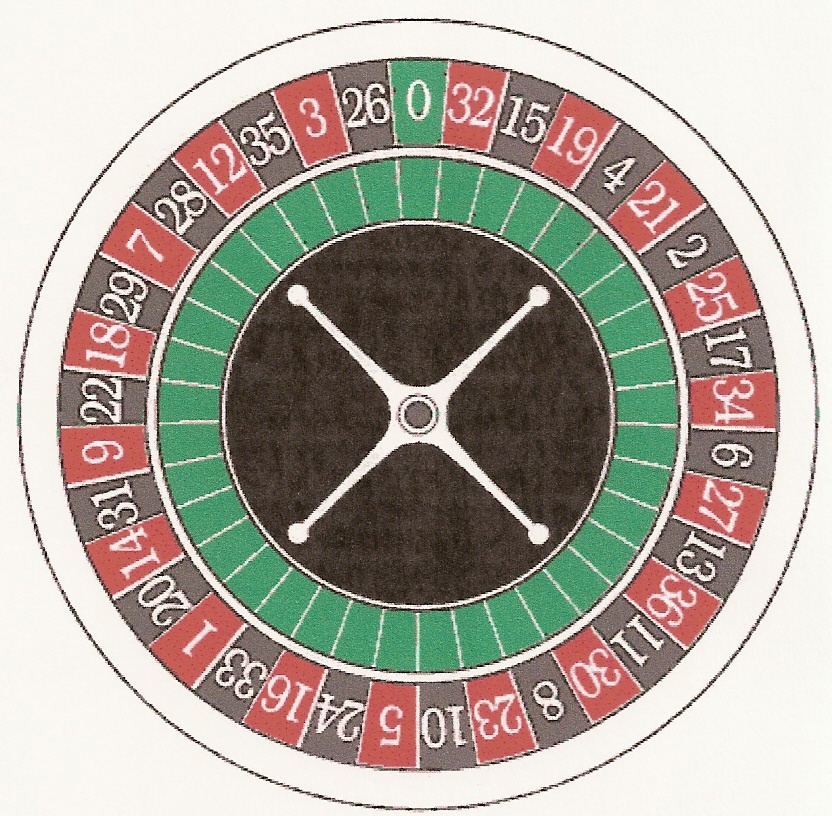
The definition of a Monte Carlo dial is simply a two-tone dial used on early plexi Tudor Chronographs. The Tudor Monte Carlo received this nick name because of the resemblance of the dial to a roulette wheel in the gambling halls in the famous casino:
History
The first Monte Carlo was lauched in 1970 under references 7031 and 7032 depending on the type of bezel: bakelite or a fixed metal. 7033 covers the prototype turnable bezel design seen in the new Monte Carlo re-edition. The dial has the “homeplate shaped” 5 sided lume dots and exists in a black or grey color.
The vintage Tudor 7033 and the 2010 Heritage re-edition
The 2010 Heritage re-edition and the vintage 7159
The watch is powered by a hand wound Valjoux 234 movement which is the Valjoux 23 with the date feature:

Valjoux 234 movement used in the Tudor Monte Carlo
The production of this references was stopped in 1972, so we can guess that the homeplate is a very rare watch.
From approx 1973, the next generation of the two registers arrived in 3 flavours:
- 7149/0 Bakelite bezel. Blue or Black dial
- 7159/0 Fixed bezel. Usually black/grey dial.
- 7169/0 Turnable bezel design. Black or Blue dial
Again, these watches were only produces over a very short time period and we can guess that the production numbers are much lower than the Rolex Cosmograph for example.
The Watch in Detail
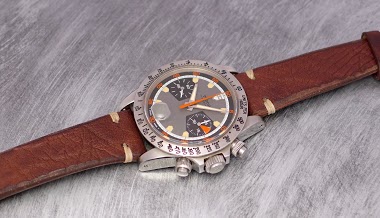
My watch is a 7159/0. It is characterized by a massive 39mm case with a brushed finish metal bezel.
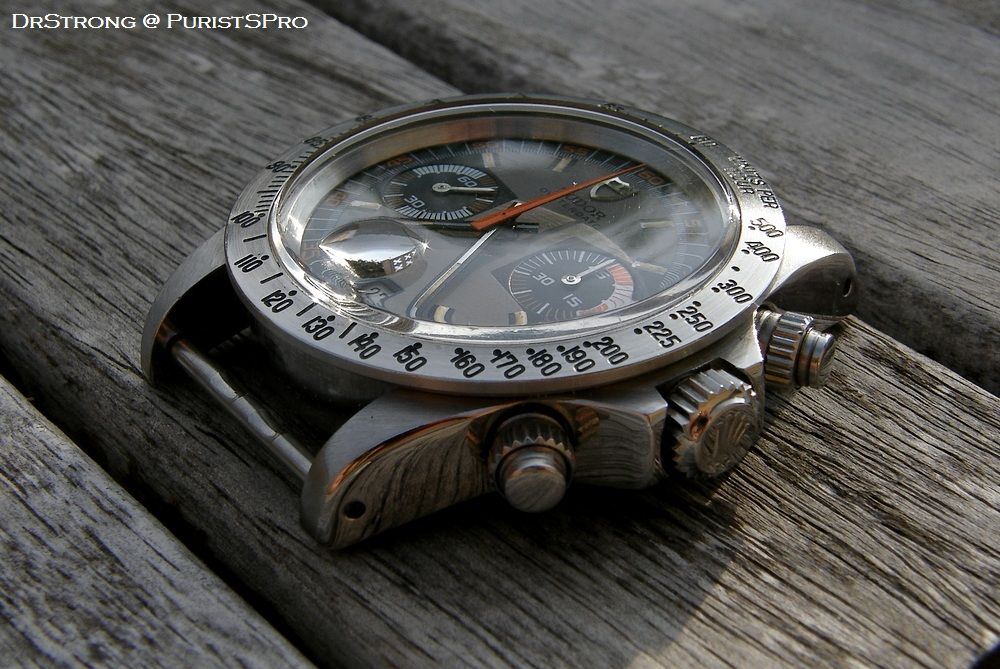
The winding crown and pushers are identical to the Rolex Cosmograph of the same era, but the watch is larger:
The thick crown guards surrounding the winding crown add to the character and bulkiness of the case:
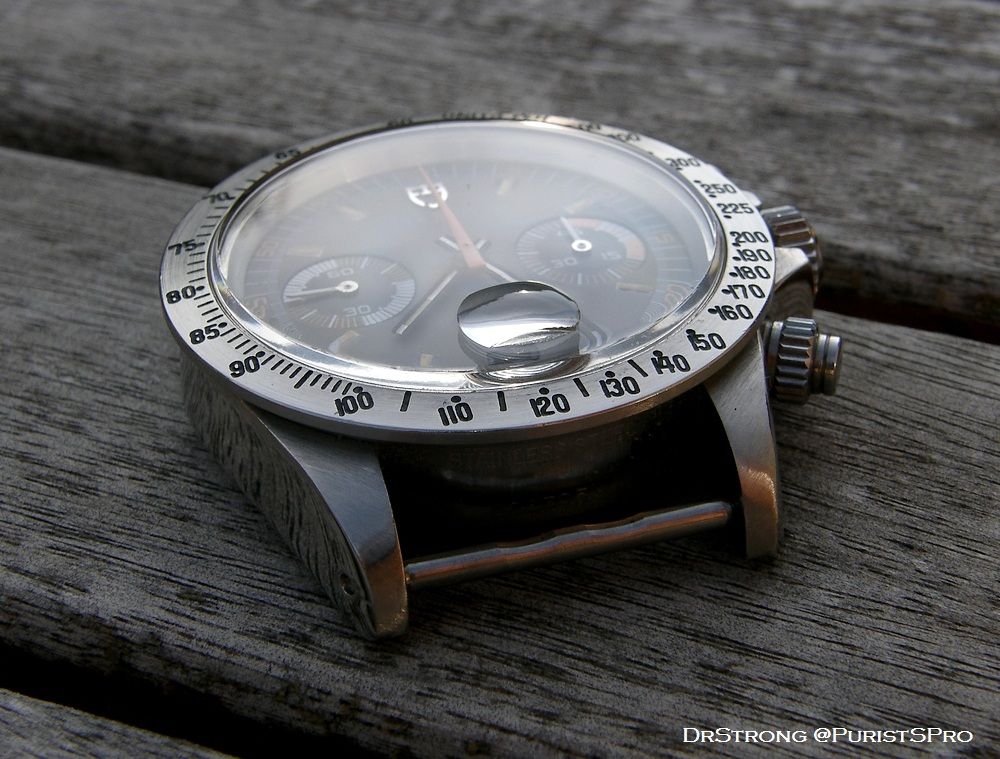
The cyclop on the plexi is usually seen at three o clock on the Submariner to magnify the date. It is located at six o clock on this watch and to my eyes it gives a lot of vintage charm to the piece. It also sort of balances the dial, which has the metal shield on top and the two subdials on each side.
The flat caseback has the specific “Tudor by Rolex” engraving:
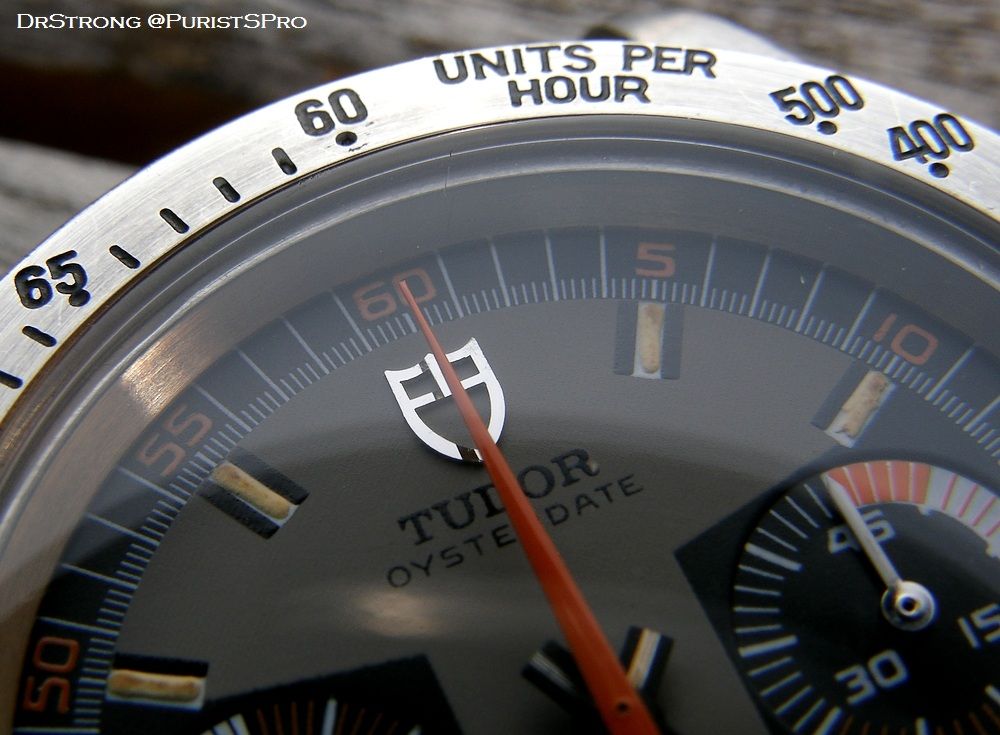
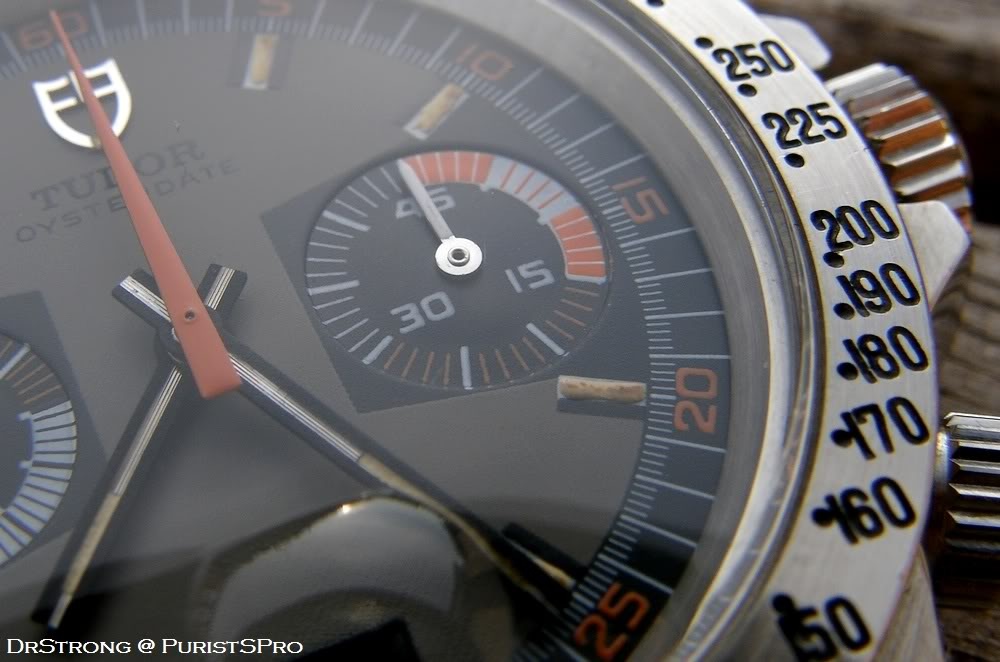
The dial is very colourful and has a lot of nice 1970’s details to look at. This is the main difference between the Tudor Monte Carlo and the Rolex Cosmograph, which had a much more classical and conventional design.
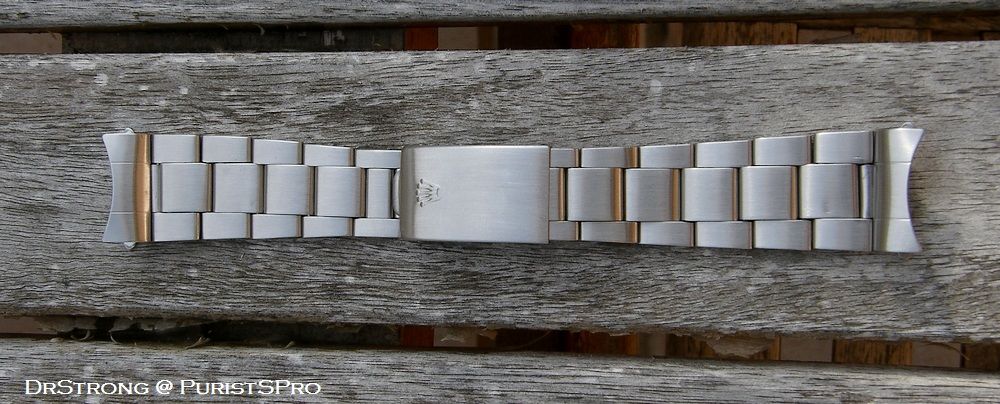
The bracelet is a folded Rolex Oyster ref. 7836, that is also used on the Rolex GMT master.
Documents
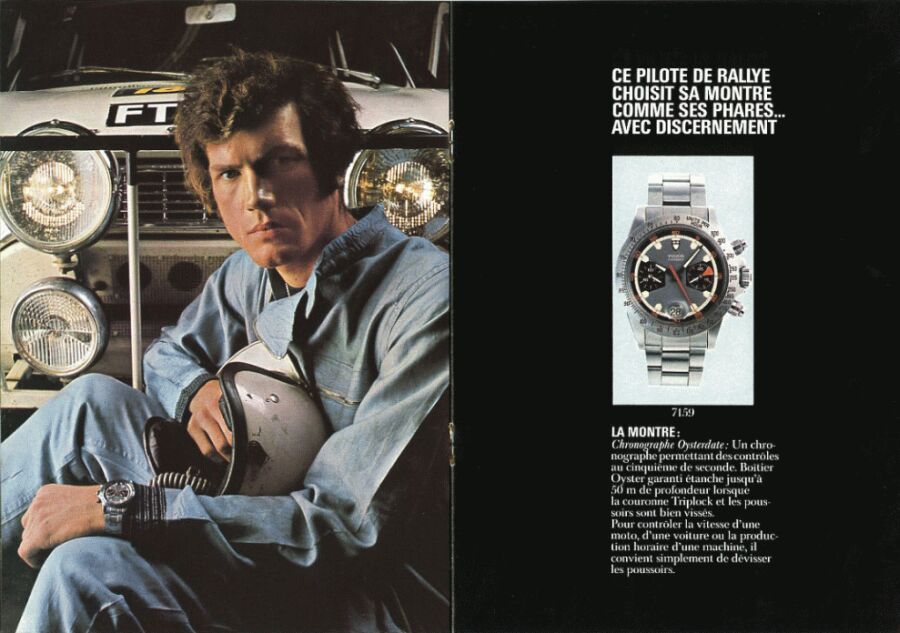
Here are some original brochures showing some Monte Carlo models. Their design prove that these watches were aimed at a younger clientele than the Rolex models.
I can feel a real sense of humor here….do you feel it too ?
Acknowledgements: Morgan King, Aakviper
The GMT Master reference 6542 was introduced in 1955 as a specialized tool watch for pilots. It is notable for its dual time zone complication, achieved through a rotating 24-hour bezel and an independently adjustable 24-hour hand. This reference marks the initial iteration of the GMT Master line, establishing the core functionality and aesthetic that would define subsequent models. Its development addressed the need for a watch capable of displaying multiple time zones simultaneously, a requirement that emerged with the advent of intercontinental air travel.
The 6542 features a 38mm stainless steel case, housing the automatic caliber 1036. This movement provides a power reserve of approximately 42 hours. The watch is fitted with an acrylic crystal and offers a water resistance of 50 meters. Early examples of the 6542 are distinguished by a Bakelite bezel insert, which was later replaced by an aluminum insert due to durability concerns. The dial is typically black, often featuring gilt printing on early examples.
This reference holds significance for collectors as the foundational model of the GMT Master series. Its distinct characteristics, particularly the early Bakelite bezels and specific dial configurations, are key points of interest. The 6542 represents the original design intent for a pilot's GMT watch, making it a reference point for understanding the evolution of the model line. Variants exist with different bezel materials and dial details, contributing to its collectibility.
Thanks for the great post, I feel I learned a lot about this watch that I did not know and now have a better comprehension of the brand. Best regards, George
No message body
Just as stunning today with that big block look. I didn't realize it was manual by looking at the thick casing but I guess that makes it all the more special. Thanks for the review! F
and very refreshing post! thanks Jeff Matt
No message body
nt
This thread is active on the Rolex forum with 30 replies. Share your knowledge with fellow collectors.
Join the Discussion →