Vintage
Chromatic Fugue's inquiry into the patina differential on a late 1980s Rolex Submariner Ref. 5513 highlights a critical consideration for vintage watch collectors: the originality and matching condition of tritium hands and dial markers. This discussion delves into how such discrepancies impact a watch's collectability and value, offering essential insights for anyone navigating the nuanced world of vintage Rolex acquisitions. The community's collective wisdom provides a valuable framework for assessing authenticity and making informed purchasing decisions.


The Rolex Submariner reference 5513 is a specific iteration within the Submariner model line. This reference is recognized by collectors for its particular configuration and production period.
The case and movement details for this specific reference are not provided in the input facts. Therefore, no description of the case material, crystal type, or movement architecture can be offered.
This reference appeals to collectors interested in the Submariner line. Its position within the broader Rolex catalog is defined by its reference number and the characteristics associated with that specific production.
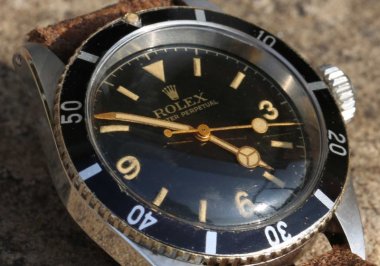
The texture is hard to appreciate on the hands with these pictures. If you have a black light you can test to see how they glow. If they are all of the same temperature and luminosity it could just be nature. Nice looking watch.
The difference in colour is between the tritium (markers) and the lumknova (hands) lume. I'll send you a photo later...
To be clear, I have it on good authority that the hands are tritium and NOT luminova. So if the hands were replaced, it was with other tritium hands.
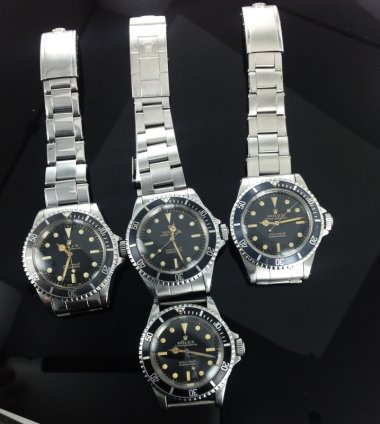
But then, they were not replaced. Below you can see what used to happen to the hands lume from the eighties. I would follow Bill's advice, let's check the luminosity!
What Mary Anny is true: get a black light and check for yourself. No one here needs to convince you of anything.
The seller — who I trust completely — has confirmed the hands are tritium (he used the black light test). So that’s not the question. Instead, my questions are these. - First, given that everything is tritium, how likely is it that these are replacement hands? I will ask the seller to send me black light photos, as Bill suggests, but my guess is that black light will reveal differences between the hands and the markers, even if not as much as visible light does. Thus, to judge whether the hands
This thread is active on the Rolex forum with 24 replies. Share your knowledge with fellow collectors.
Join the Discussion →