Journe1304 shares a detailed review of the Rolex Explorer II (Ref. 216570) after a week-long swap, offering a fresh perspective from a collector accustomed to Panerai and F.P. Journe. His insights delve into the bracelet, case, and dial, providing a nuanced comparison that highlights both the Explorer II's utilitarian strengths and its perceived shortcomings in legibility and design details.
I swapped my PAM111 for a friend’s Explorer II for a week. It was fun to experience a watch I had never had a lot of exposure to. Here are my thoughts.
Bracelet
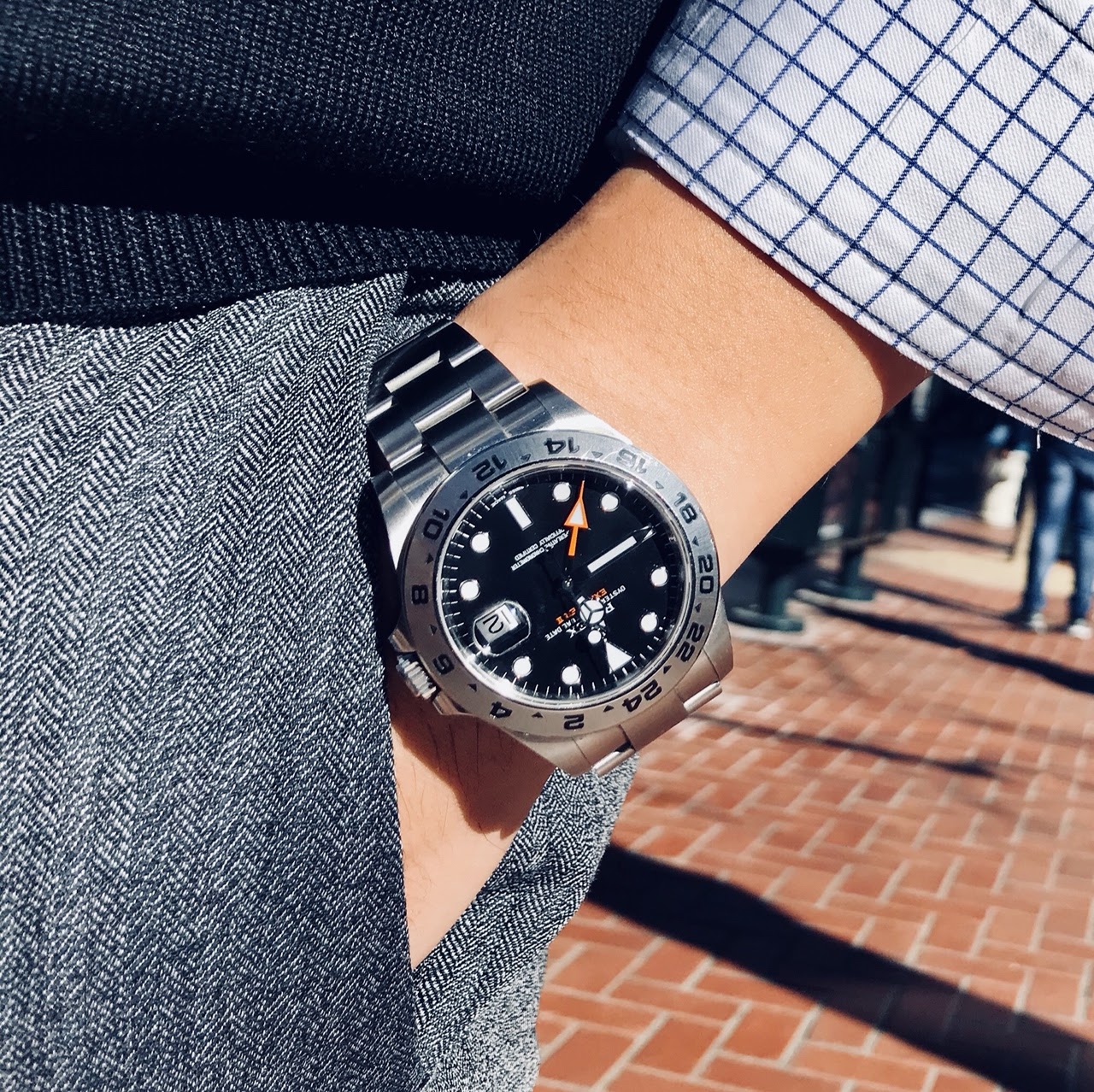
I generally do not like bracelets, the one exception being the Royal Oak. With that bias, I immediately took off the bracelet when I got the Explorer II. However, I did put it back on for the last couple of days I had the watch. Compared to the hollow endlinks of my father-in-law’s Submariner 16610, this bracelet felt much more robust with its solid endlinks and spring-loaded Oysterlock clasp. It does not have Glidelock/Easylink, which I’m very curious to try, as my wrists swell considerably on warmer days and after working out (especially on days when I steam). In the end, I’m still not a fan of bracelets, but I do recognize this one as solidly sturdy and utilitarian.
Case
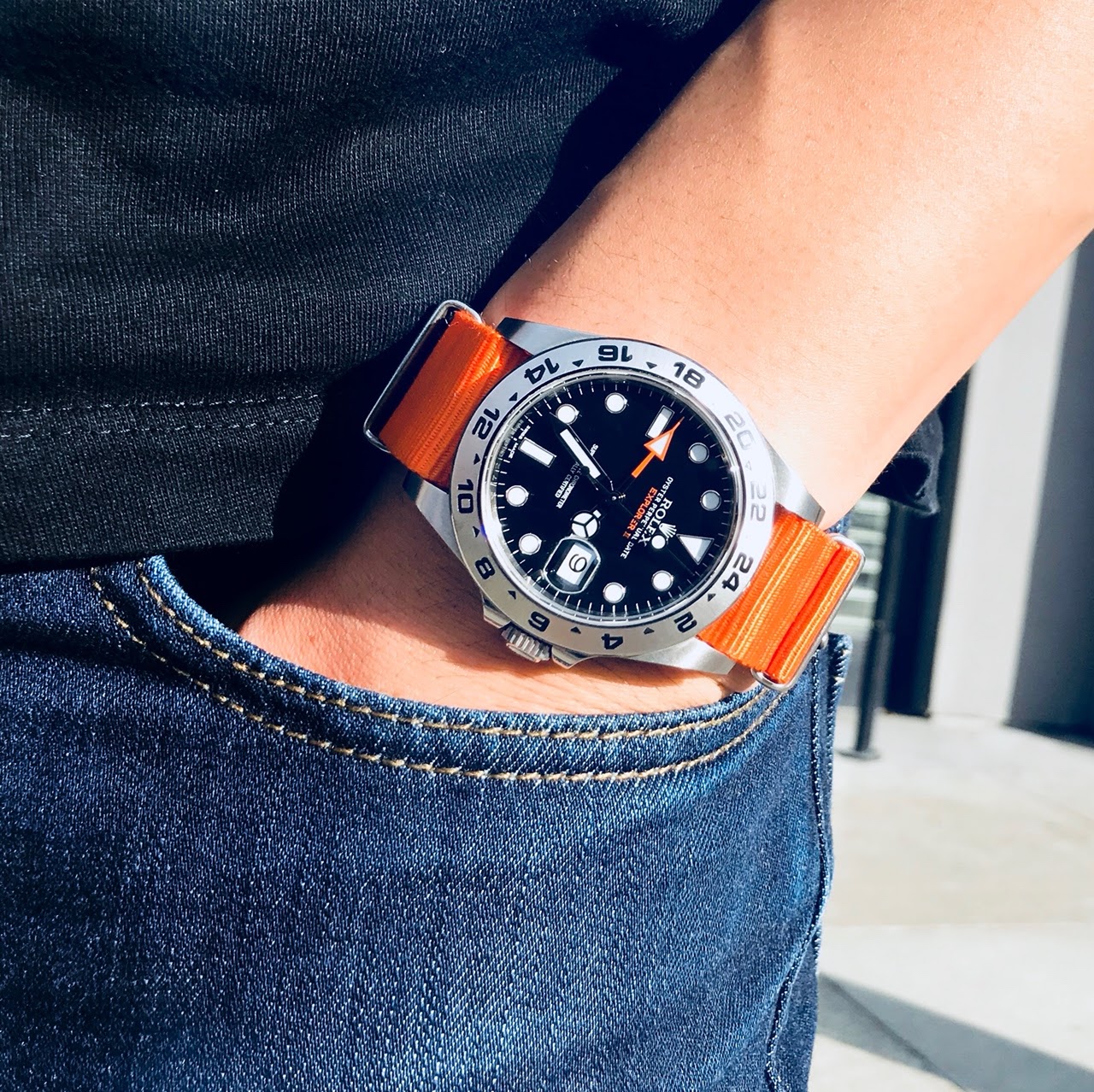
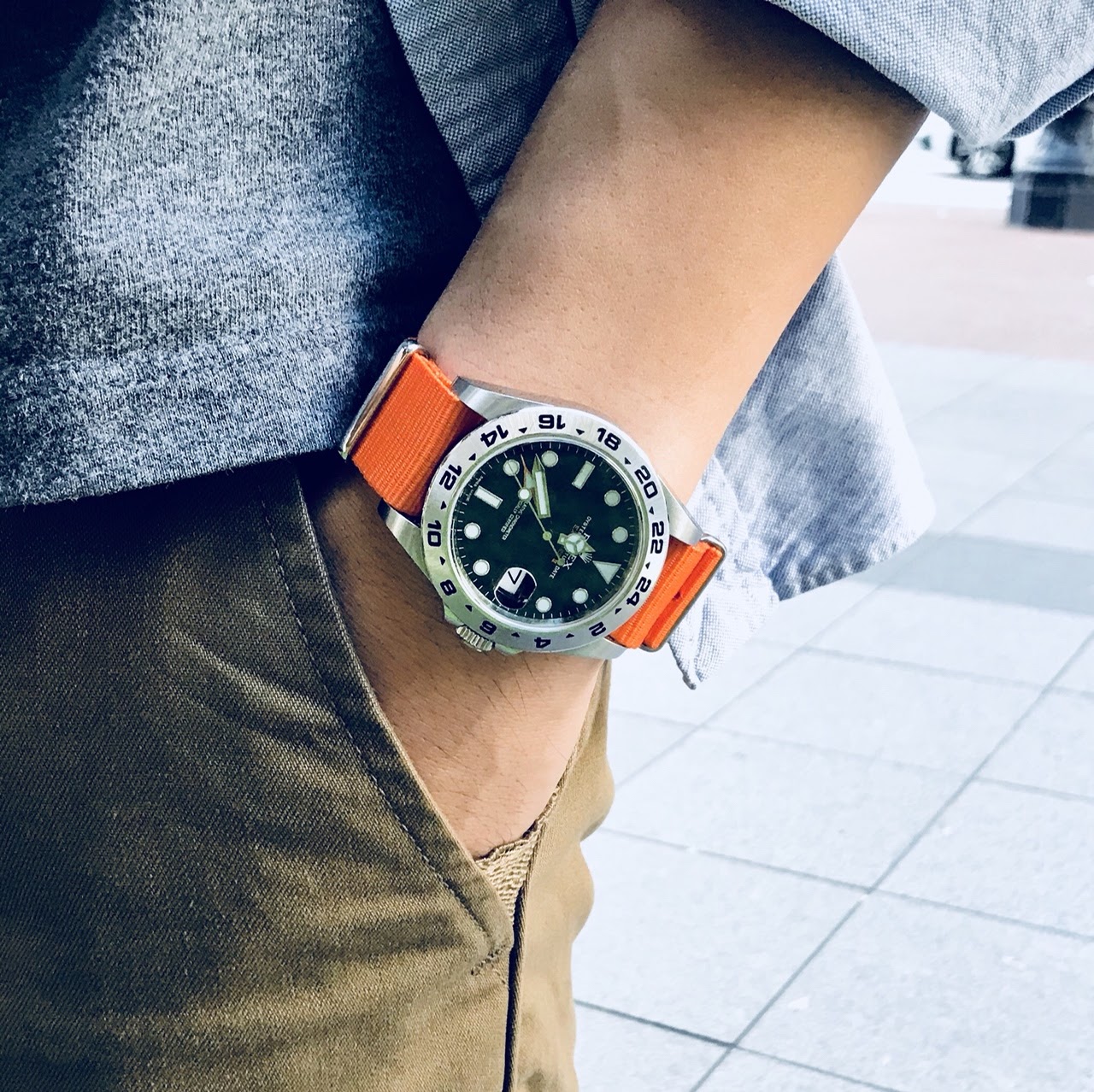
Many people think it’s too large at 42mm, but it doesn’t register as such to me because I’m used to a 44mm Panerai and a 46mm Bell & Ross (in fact, I found the 40mm of my FIL’s 16610 a touch too small). It sits comfortably on the wrist. However, as with all Rolex sport watches, it’s slightly bubble-backed, so when worn on a doubled-up NATO there’s significant space between the lugs and the wrist. It’s not terrible, but it’s noticeable enough to wish that the caseback was a little more flush against the midsection of the case or that the lugs hugged the wrist better. I’m probably in the minority, though, as most people love the newer Rolex bracelets and wouldn’t wear it on a NATO.
The balance of the finishing tilts toward the utilitarian, with little flashes of fanciness here and there. The sides of the bezel and case are highly polished. However, the overwhelming majority of the case’s surface area is brushed, the lugs aren’t beveled in any way, and the numbers on the bezel are inlaid with some sort of paint or enamel (as opposed to the platinum inlay on the GMT Master II BLNR’s bezel). Although I would trust any Rolex to hold up to any activity, this one more than all others looks the part of a rugged companion of an adventurer. I’m of split mind about this—on the one hand, this is a tool watch and it should look the part, but on the other hand it’s not an Oris and doesn’t have an Oris’ price tag for a reason.
Dial/Hands
The styling of the dial is the familiar applied indices with a triangle at 12 o’clock. I’m used to seeing the matte black dial of my Luminor or the explosive blue of my Chronometre Bleu, so the glossy black dial on the Explorer II looks sharp and is a nice touch on an otherwise overall utilitarian look to the watch.
However, legibility was an issue for me for a number of reasons. The hour, minute and GMT hands are black toward their base at the center of the dial. It makes for cool styling, but the disconnect of floating hands is confusing to eyes that are used to quickly scanning the entire hand, not just for where it’s pointing but where it sits in comparison to the other hand. This coupled with the fact that the hour markers are also lume-filled white gold means the hands don’t stand out as much as they do in Rolex’s other models. Additionally, one of the few things I dislike more than a color-contrasted date window is a cyclops over that color-contrasted date window. In this case, the white date wheel isn’t so egregious because the lume plots look white in daylight. But given that there are four center hands on the Explorer II, whenever they approach the 3 o’clock pole, the cyclops obscures the view. When all hands are joined by the GMT hand in the neighborhood, it all looks like a bad traffic accident and the time is unintelligible. Lastly, the Chromalight lume is nowhere near the brightness of what I’m used to seeing on my Luminor. It’s likely less a function of the material than the application of it (on the Panerai it’s squirted liberally on a sandwich dial that allows for more lume to be used per visible square millimeter), but the bottom line is that it doesn’t compare.
Wearability
The splashes of orange make for a sporty touch without it being inappropriate for the office, which makes the piece versatile. Putting it on a NATO strap instantly makes it super sporty, and the orange in particular is a great look that draws out the color in the GMT hand the dial script. However, the lug width is an odd 21mm rather than most Rolex’s 20mm. You can usually go bigger without it making a huge difference, but I didn’t have a 22mm NATO on hand. Still, a true strap monster would have a lug width that’s much more standard and would take on many more straps with perfection and within Rolex’s tight quality tolerances. As someone who really enjoys swapping straps to give my watches new looks, this would be incredibly annoying for me.
Conclusion
Ultimately, this watch is not for me. Although the execution is every bit of the excellence I expect from Rolex, the legibility of (or at least my failure to acclimate to) four center hands with date along with the lug width are deal breakers for me. But I’m happy to have tried it out and experienced something new in my enthusiasm for watches.