Reference Guide
DrStrong's comprehensive overview of the Rolex Cosmograph Daytona ref. 16520, dubbed the "Sapphire Era" Daytona, remains highly relevant for collectors. This article delves into the pivotal transition from manual-wind to self-winding movements, highlighting the significant design and technical advancements that defined this era for Rolex's iconic chronograph. Understanding these details is crucial for appreciating the evolution and market dynamics of the Daytona line.


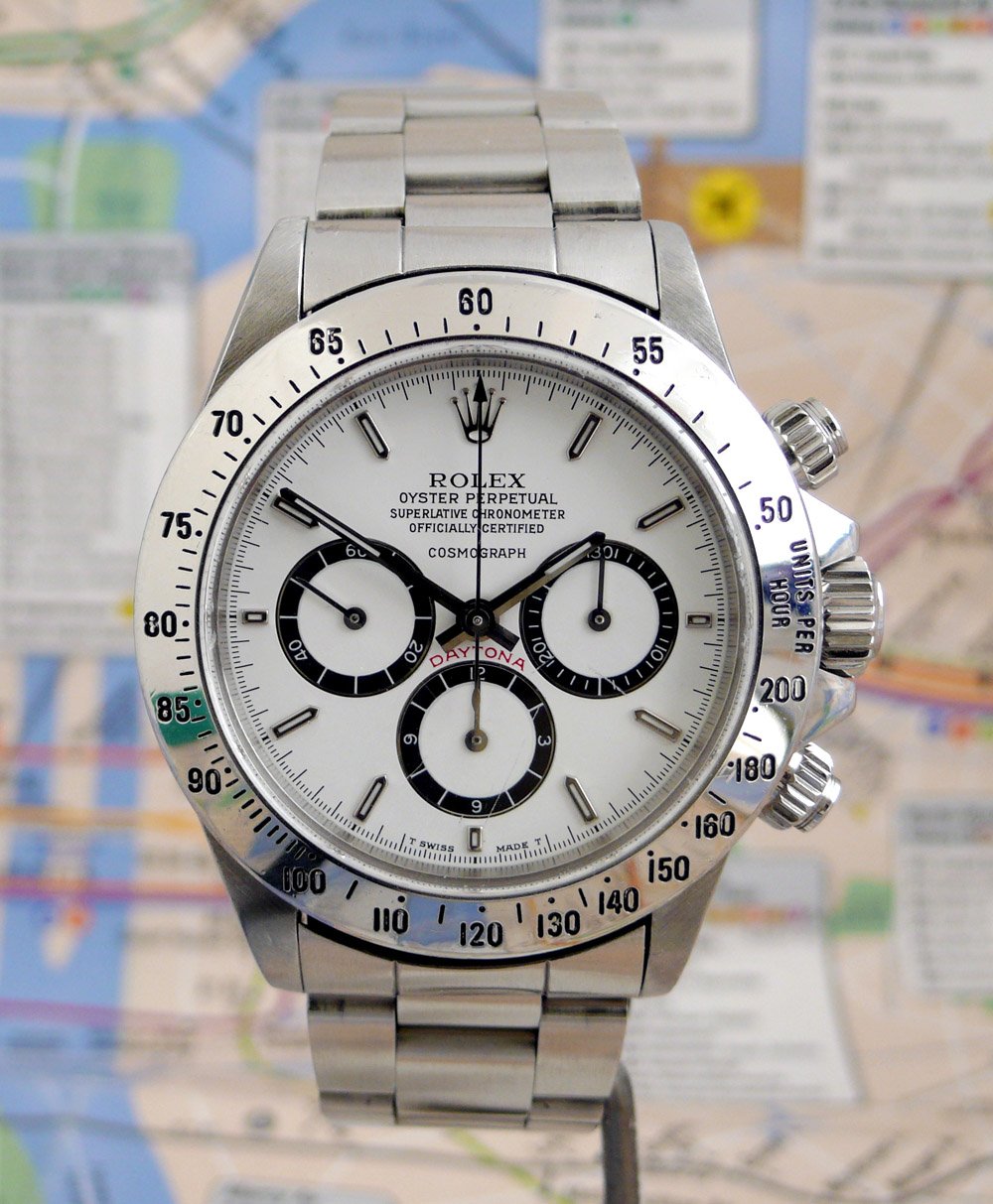
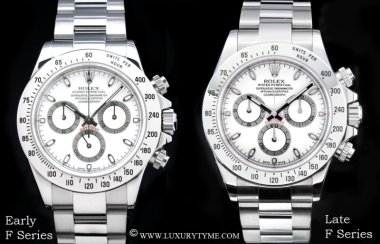
In 1988, Rolex introduced a new Daytona to replace the not so popular manual wound 6263/5. The new Daytona ref. 16520 had a similar design but with some major improvements. Here are the two models side by side: very similar, yet different…
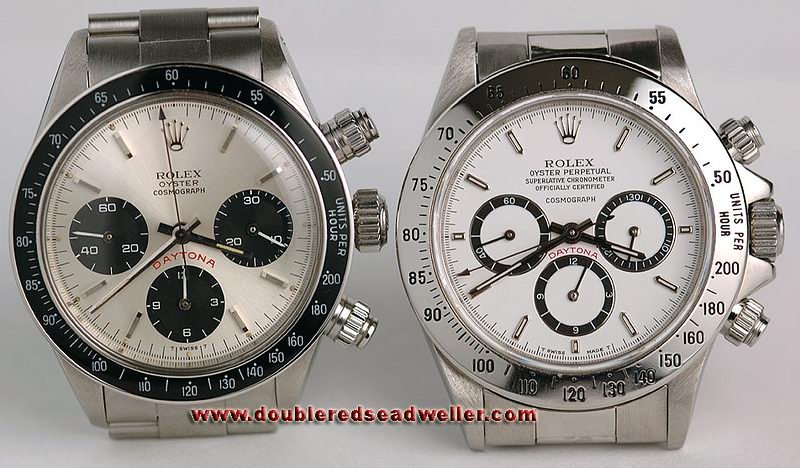
The two generations of Cosmographs (Photo Ed Delgado)
The biggest improvement was the new 4030 self winding movement based on the Zenith El Primero, which originally oscillated at 36,000 beats per hour but has been regulated to 28,800 by Rolex. This provided Rolex with an incredible accurate chronograph, which was also up to chronometer standards.
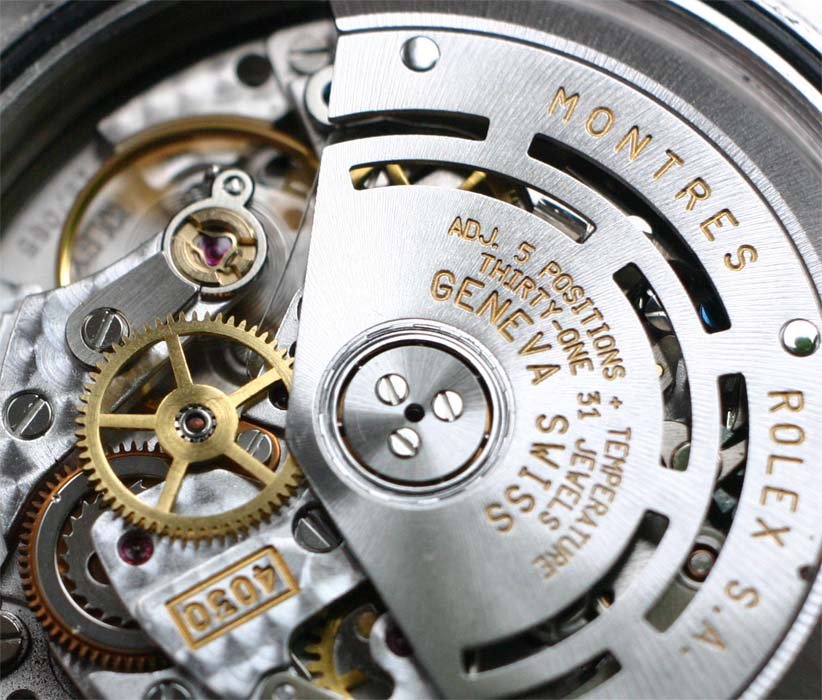
The Rolex Cal. 4030
The other noticeable improvements were the sapphire crystal, the new crown guards and the new dial/subdial layout. The bezel was now only offered in steel. This new attractive dial combination including the added bonus of a self winding movement was a big hit among Rolex customers and created a huge revival of the vintage Daytonas.
Lets’ now focus on the evolution of the watch during its 12 years of production. While the movement and case have remained unchanged, there have been several dials and bezels variations.
The dials
Mk1
This is common in the early watches and is one of the more desirable configurations with the word "Cosmograph" located lower in the dial or Floating Cosmograph. As a matter of fact, the whole text "ROLEX, Oyster Perpetual, Superlative Chronometer" is situated lower than the later dials. The subdials use a rounded and smaller font. In the hour totalizer, the number six is inverted and appears as a "9" and not as the intended "6". This "defect" appeared in dials as late as 1994-5. The minute totalizer, has four "dash" markings between five minute markers as opposed to later dials which only had three "dash" marks. This is a tritium dial and is labeled as "T SWISS T" at the six o'clock position. This dial configuration was made for about one year.
mk1 dial for Cosmograph ref. 16520 (Photo A. Shear)
Mk2
The major difference on this watch was the word "Officially Certified" was left out of the dial even though the watch was rated as a chronometer. The word "Cosmograph" was now together with the rest of the writing on the top of the dial. The subdials contained the same characteristics as the Mk1 dial. This dial configuration was also made for about one year.
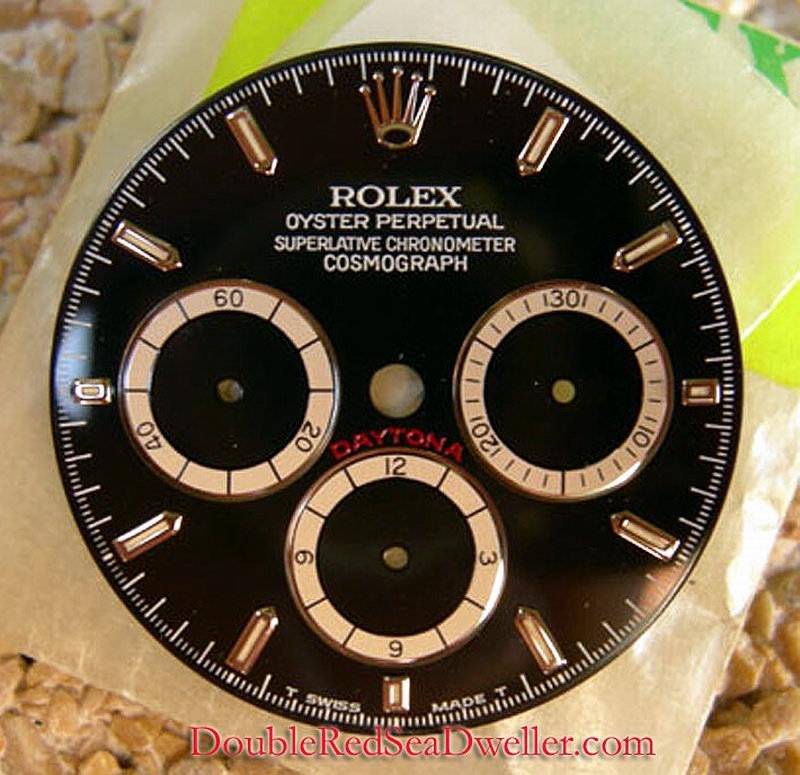
mk2 dial for Cosmograph ref. 16520 (Photo Ed Delgado)
Mk3
The subdial fonts still has the inverted "6"s in the hour totalizer, the words "OFFICIALLY CERTIFIED" reappears on the dial again.
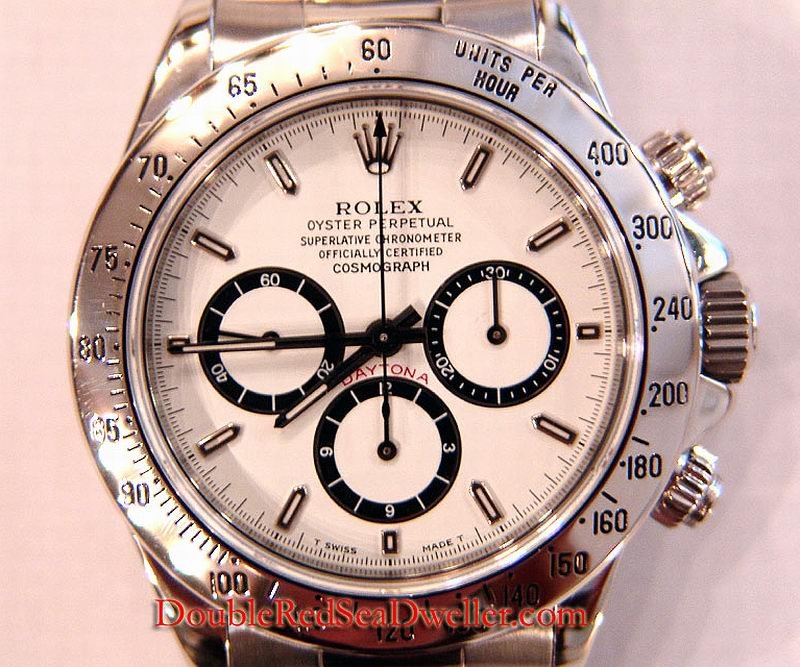
mk3 dial for Cosmograph ref. 16520
Mk4
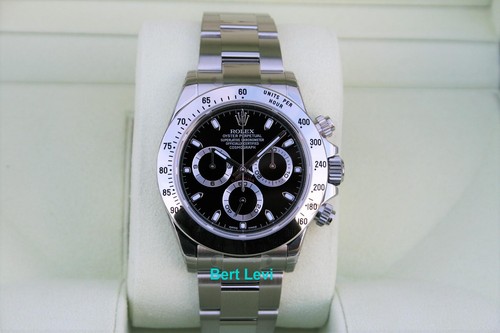
This dial was the most commonly used dial used on the 16520 and therefore the one usually associated with the watch. This dial the writing was all together and was situated slightly higher than the early dials. The fonts in all the subdials changed to a more square and bold font was easier to read. As mentioned above, less "hash" marks were noted in the minute totalizers.
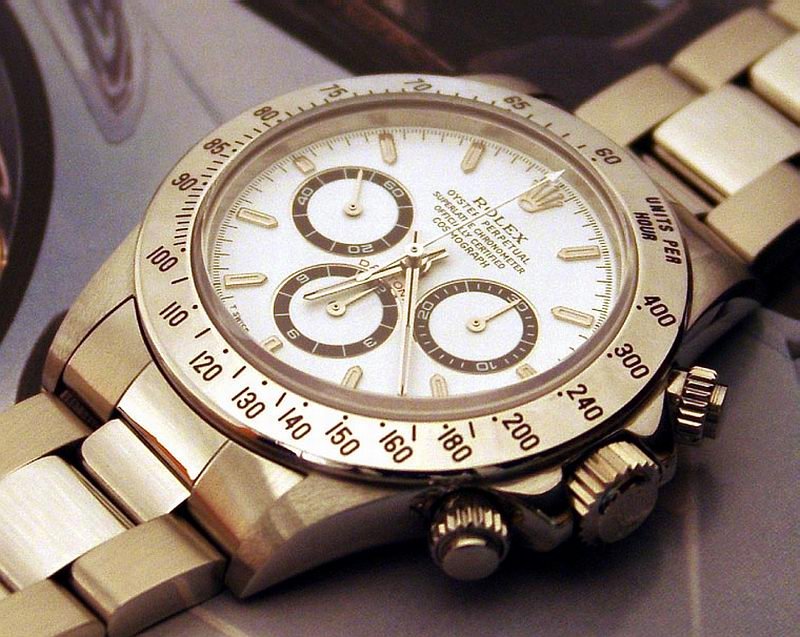
mk4 dial for Cosmograph ref. 16520 (Photo Karl)
Mk5
This is the same dial as the Mark 4 dial but in 1999 (A) till the end of production in 2000 (P), luminova was used in the markers. Therefore, the dials did not have the "T SWISS T" and instead it was labelled as "SWISS" at the six o'clock position. The hands are also luminova.
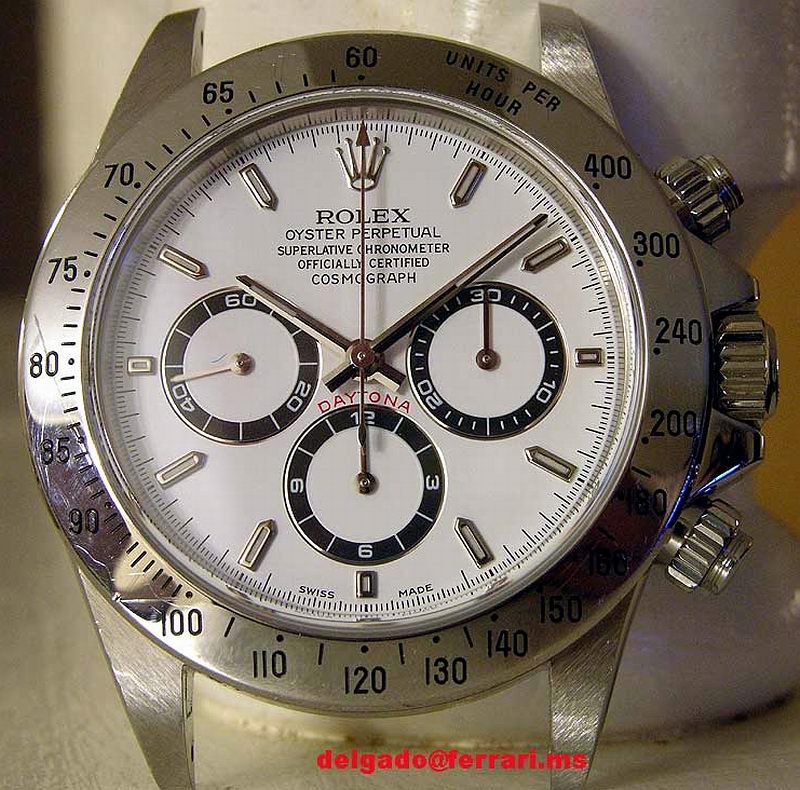
mk5 dial for Cosmograph ref. 16520 (Photo Ed Delgado)
The bezels
There have been three types of bezels during the years:
- The first bezel on the ref. 16520 was engraved until 200 and the word "UNITS PER HOUR" was located at three o'clock.
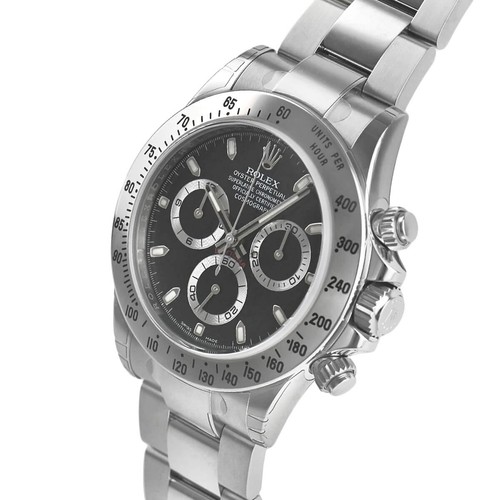
- The second type of bezel was engraved until 400, the words "UNITS PER HOUR" was located at one o clock
- This last type of bezel is similar to the previous one, but 240 is noted and 225 and 250 are missing.
In 2000, the Cosmsograph is upgraded again and the new reference 116520 is powered by an inhouse movement, has a new dial design, a new case finishing etc…But this is not history yet ;-)
Acknowledgements: Ed Delgado
This message has been edited by DrStrong on 2009-05-20 01:48:21 This message has been edited by DrStrong on 2009-05-20 02:10:17 This message has been edited by DrStrong on 2009-05-20 02:12:17 This message has been edited by AnthonyTsai on 2009-05-27 19:18:02
The Rolex Cellini reference 16520 is a notable example of the brand's dress watch offerings, distinct from its more robust sport models. This particular reference represents a period where Rolex explored more refined and understated designs, catering to a clientele seeking a timepiece suitable for formal occasions. It stands as a testament to Rolex's versatility in watchmaking, showcasing a different facet of their design philosophy compared to their Oyster Perpetual line.
This reference features a case crafted from stainless steel, measuring 40mm in diameter. It is equipped with an automatic movement, specifically the Caliber 4030, which is based on the Zenith El Primero. The movement provides a power reserve of approximately 50 hours. A sapphire crystal protects the dial, and the watch is rated for a water resistance of 100 meters. The fixed tachymeter bezel is a characteristic feature.
For collectors, the reference 16520 appeals to those interested in the evolution of Rolex's dress watch designs and their use of external base movements. Its production run from 1988 to 2000 places it within a specific era of Rolex manufacturing. The black dial and Oyster bracelet contribute to its overall aesthetic, making it a recognizable piece within the Cellini collection.
The 16520 is a really nice Dayto. The funny thing is that I prefer the 16520 white dial, rather than the 116 520 white. As for the Back dial, I slightly prefer the 116 520... Don't know why, but while comparing both of them...That was my first impression. Till recently I didn't know that Rolex changed the vph on the Zenith ( for a 28 800 one ). Very interesting, indeed. Are you tempted ( once again... ) by a 16520 version? Best, Nicolas
.
.....only made in a very few examples, very hard to find. Really a rare bird.... THIS watch is really magic. The white colour of the dial must be seen to believe and the print looks like engraved. I am really more than happy to find all full package in this extraordinary condition. @ Jeff : GREAT work ! Thank you Matthias
...about the production period and number ? I'm sure that you have done all the homework before pulling the trigger ;-) Cheers Jeff
....as 16520 in 1988, serial R 8xxxxx and R 9xxxxx range ;-) ....talking about 50 - 100 watches.... Best regards Matthias
for the great informations and terrific pictures of the beauty ! One of them in our new Masthead picture now ;-) Cheers Jeff
This thread is active on the Rolex forum with 30 replies. Share your knowledge with fellow collectors.
Join the Discussion →