
Innovation
Mark in Paris provides a comprehensive overview of Richard Mille's relentless pursuit of performance through innovative materials in watchmaking. His article highlights the brand's commitment to using advanced materials like Grade 5 Titanium and Silicon Nitride, not just for aesthetics, but for tangible benefits in lightness, strength, and shock resistance. This piece serves as an excellent reference for understanding Richard Mille's material science philosophy.
I thought it
could be interesting to have a little recap about the materials that Richard
Mille has been using in his watches.
Richard
Mille always had in mind to start from what he liked and wanted a watch to be
like before creating his models. The result is usually highly priced because he
decided from the beginning that he didn't want (and maybe didn't need) to make
compromises and to do things halfway.
In that
context, it seems also that Richard Mille finds a special pleasure in using new
materials for his watches. With curiosity, it is a matter of finding the way to
work on them, create and set the right tools, but also to answer the question
"does it bring something in terms of lightness and/or strength",
which, of course has an impact on the movement reliability and accuracy. Hard
Titanium or Alusic materials, for instance, prevent bridges and plates from
bending or breaking, but also resist wear and tear of the case, while
improving wearing comfort. The mechanisms can be shock
resistant because of very strong materials containing the
impact or softer materials absorbing it. Comfort becomes a very
important element when you've experienced one of Richard Mille's
watches.
THE CASE
Titanium Grade
5. Richard Mille began with this material.
It is a very hard and light metal
that resists corrosion well. The brushed finish of Richard Mille has a very
nice look on Titanium (my favorite in the watchmaking world) and is less
susceptible to scratches compared with Steel.
Silicon Nitride Si
3
N
4
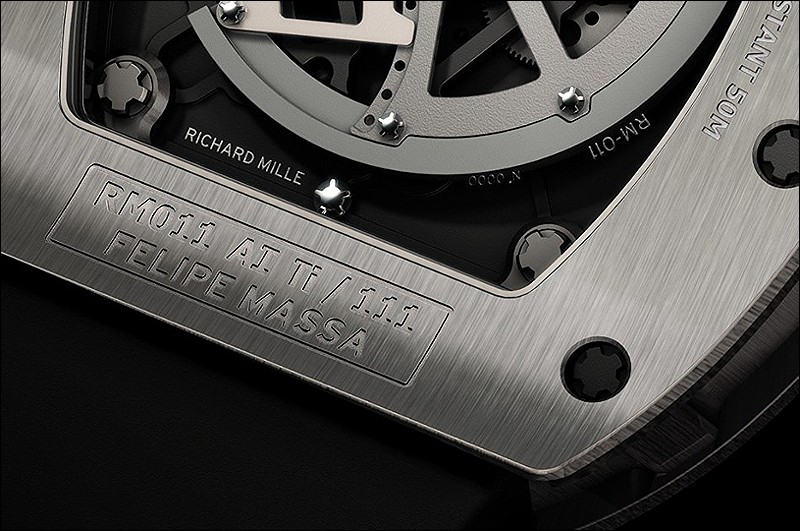
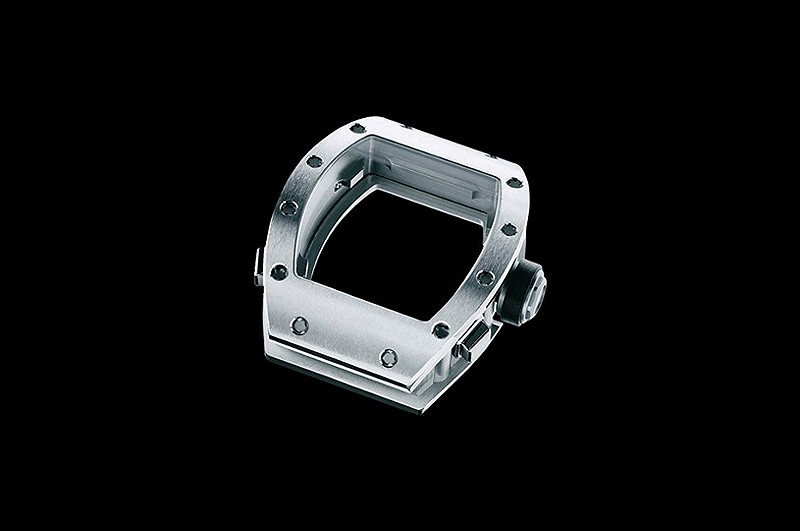
It is a very rare material used in the RM011 and
don't know much about it. I think it has been made in a very few pieces and may
have been difficult (and expensive) to develop and use.
Silicon Nitride
(RM011)
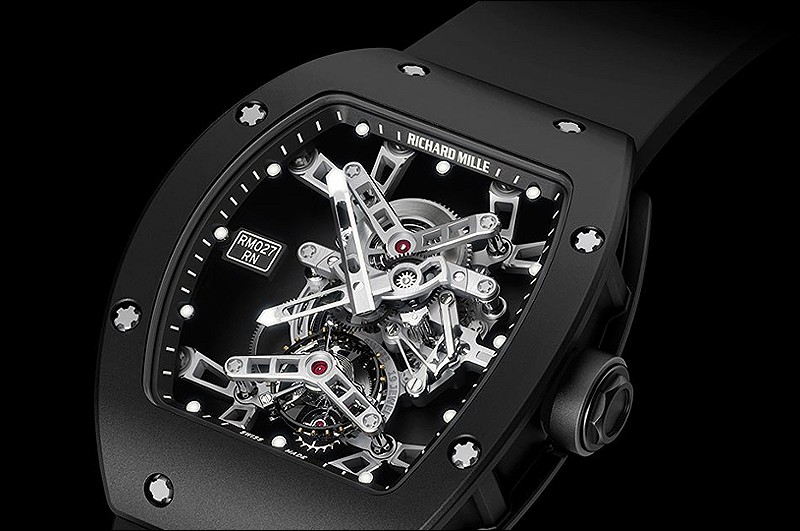
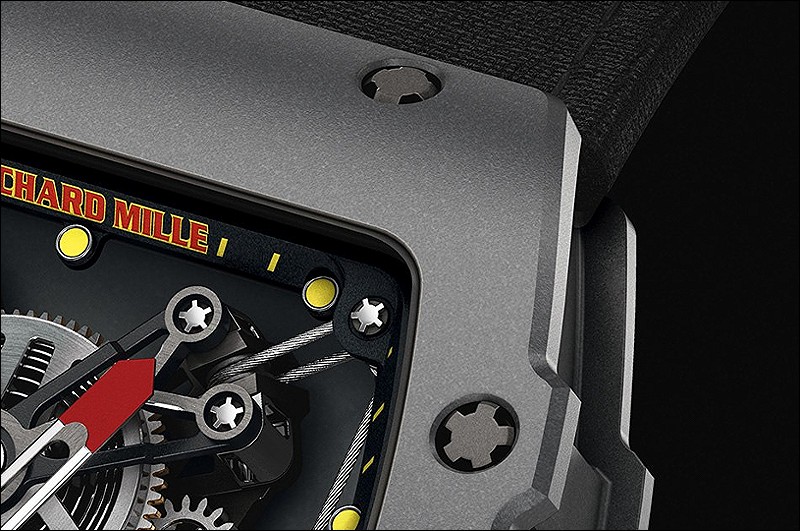
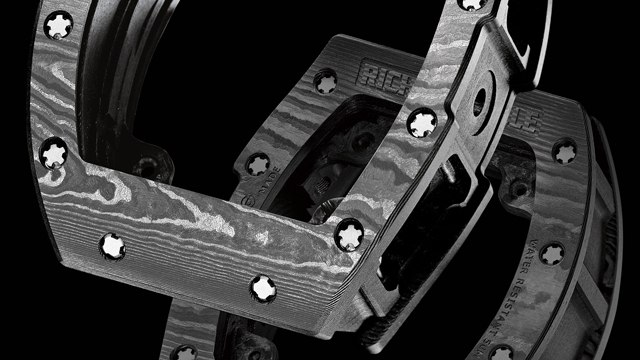
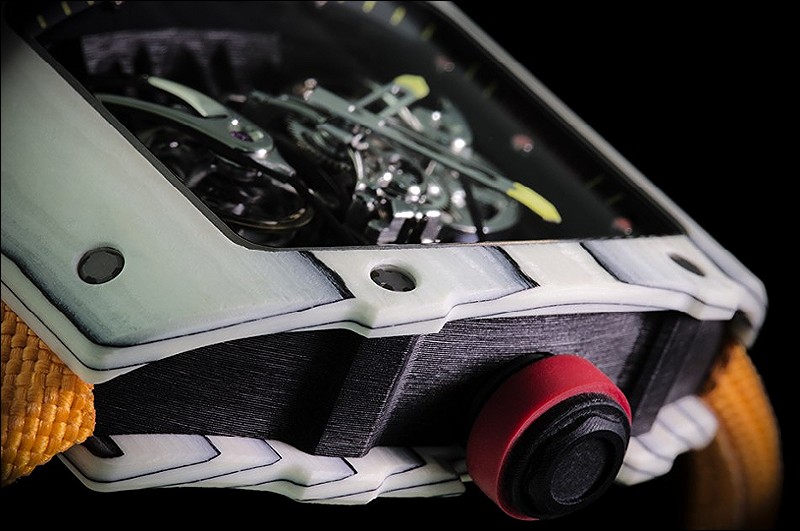
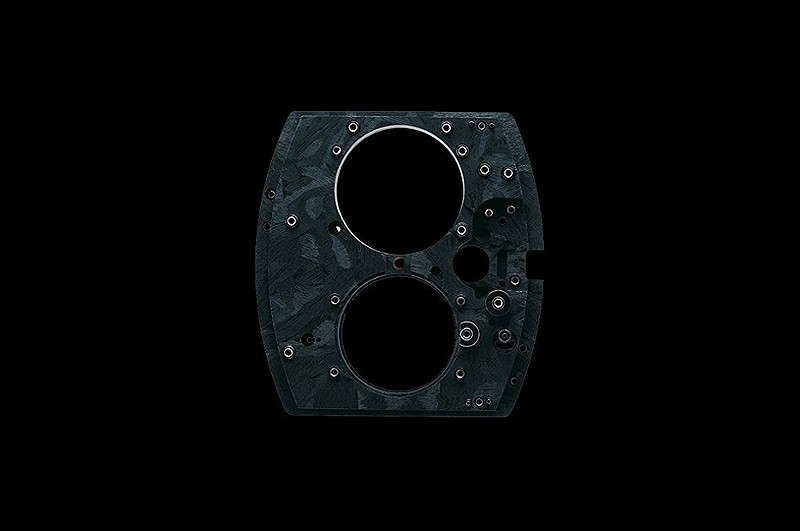
Carbon nanofiber baseplate. It is a material we saw especially in the V2 specification of the first RMs e.g. RM002 and RM003. It offers the benefit of a very limited shape change when submitted to temperature variations which is very important to maintain the gap and hence, the pressure between wheels.
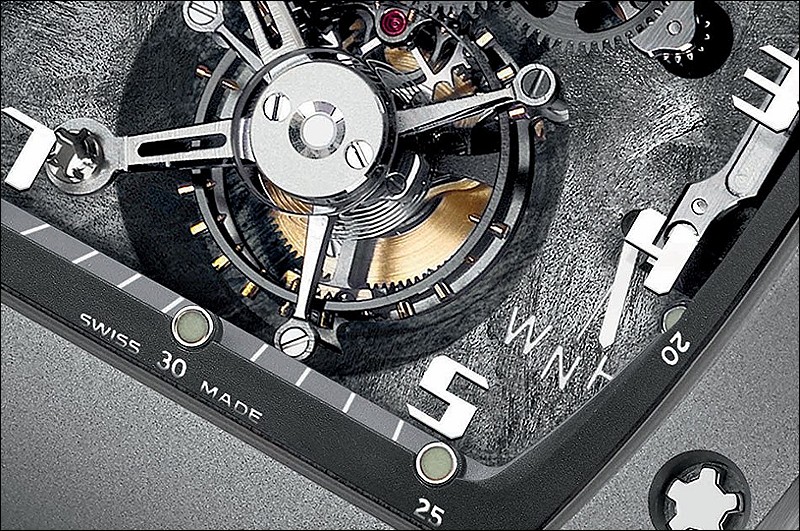
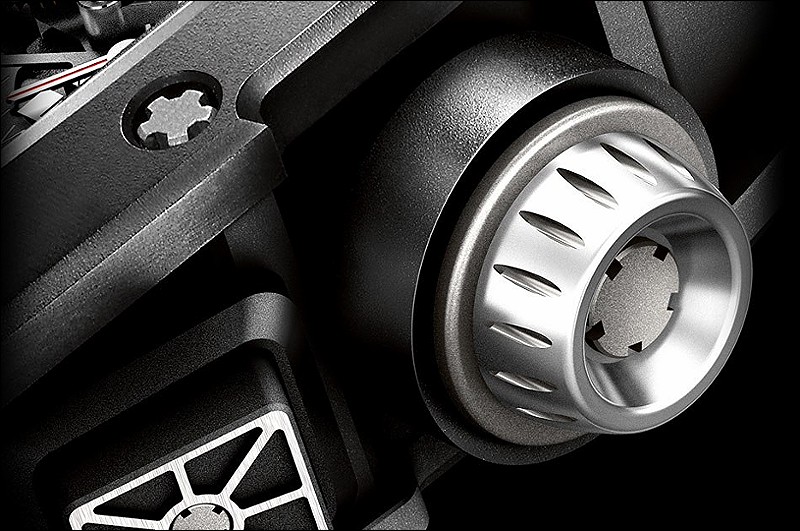
Titanium (grade 5). This well known metal is used for its high rigidity and high resistance to corrosion. It is often used for cases but is much rarer in movement's construction due to the difficulty to work on it using normal tools.
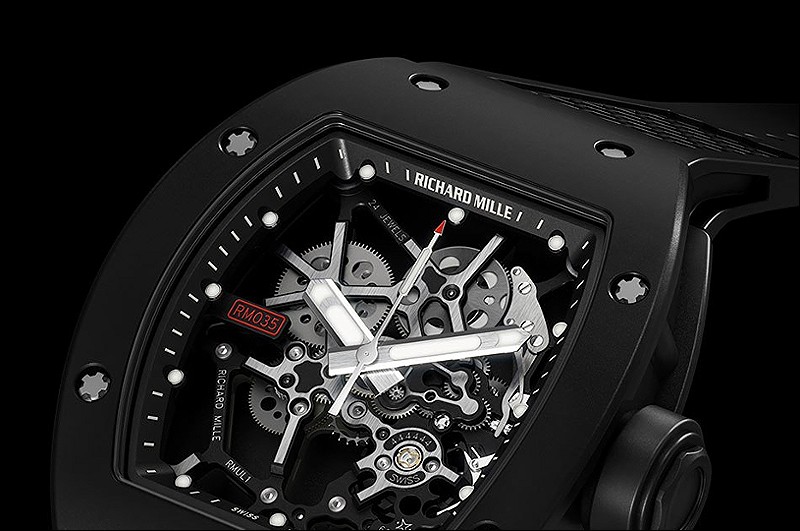
ARCAP. It is well known for its antimagnetic properties and density of 8.9g/cm3. It is almost completely insensitive to large temperature variation and corrosion. You easily can imagine the interest of such properties as dilatation has an impact on the pressure between wheels. Such properties help maintain a constant distance between components, thus improving accuracy and reliability. It is used in the RM002 and the RM031 high performance caliber.
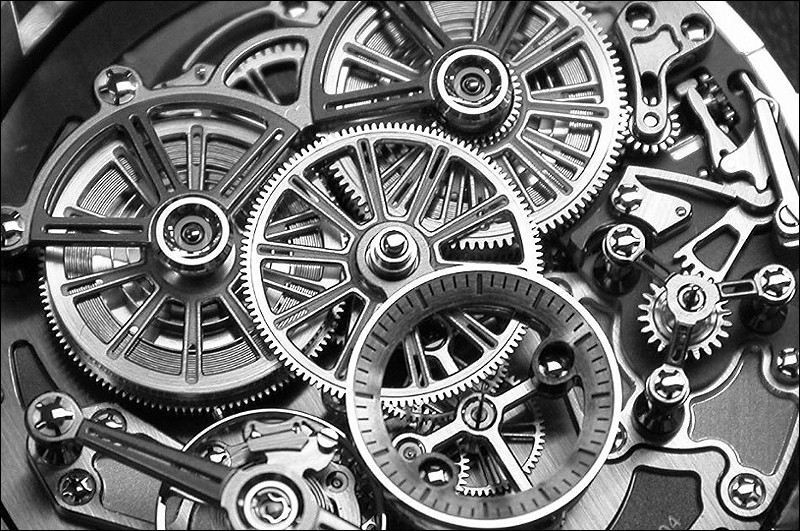
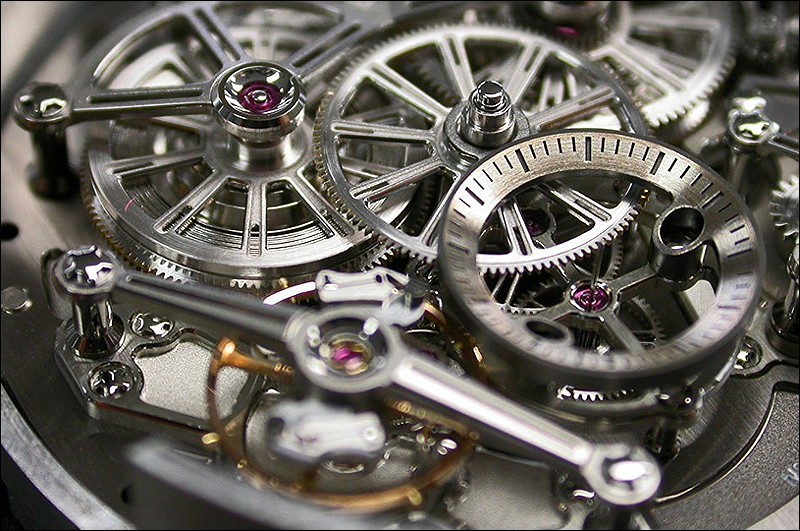
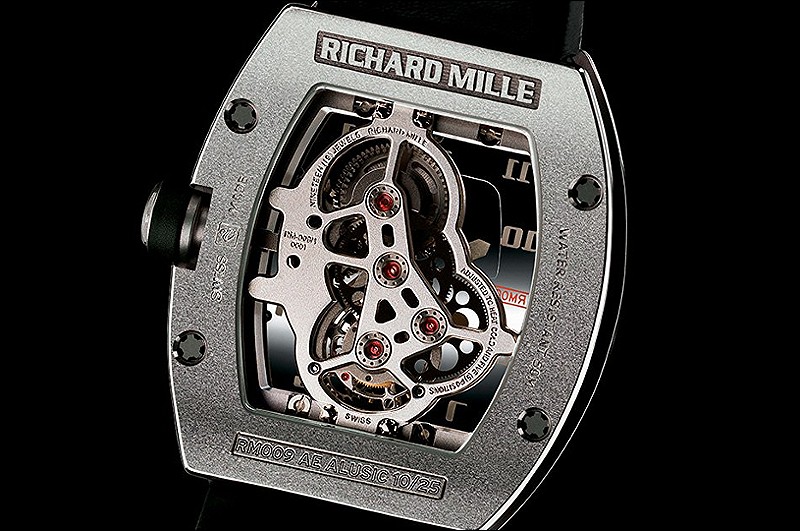
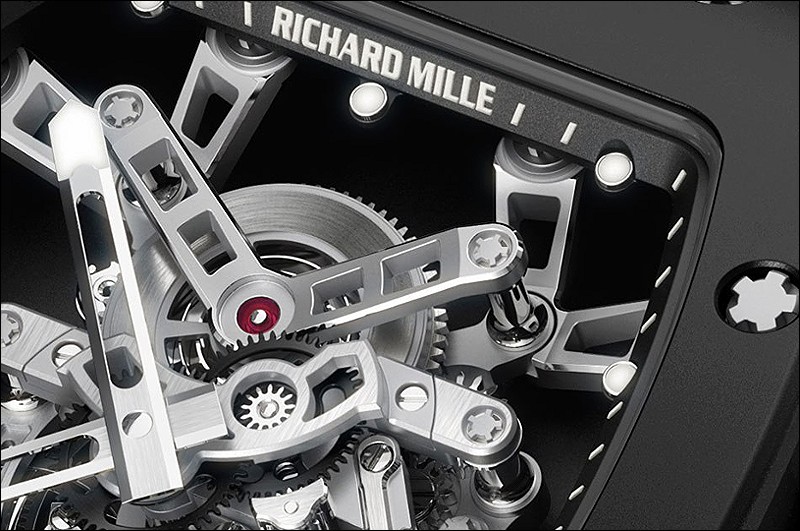
Aluminum 2000. It is used in the RM035's case. It is a 90% Magnesium and 8.9% Aluminum alloy, very light and resistant, used in F1 engine piston production.
Magnesium WE54. This 89% Magnesium alloy (with 6% Yttrium) is used in the RM038 Bubba Watson Tourbillon case. As always, lightness helps lowering inertia, thus decreasing consequence of shocks.
Carbon fiber flange. Used to craft the flange in most of RM's watches.
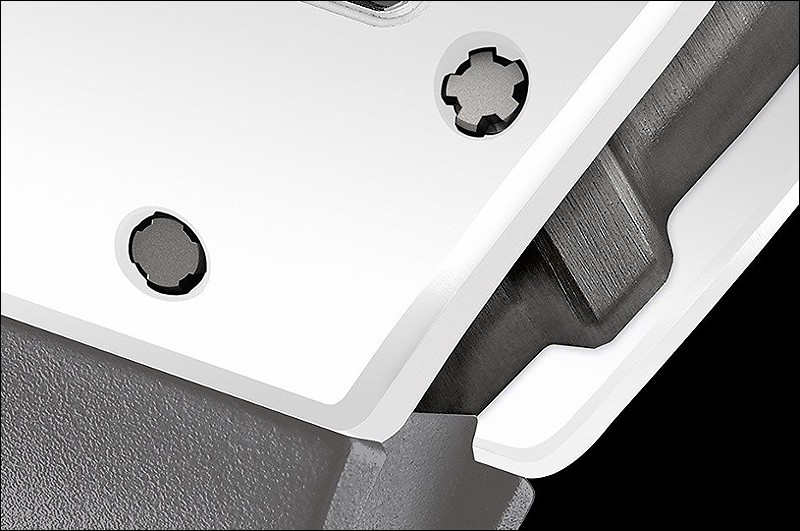
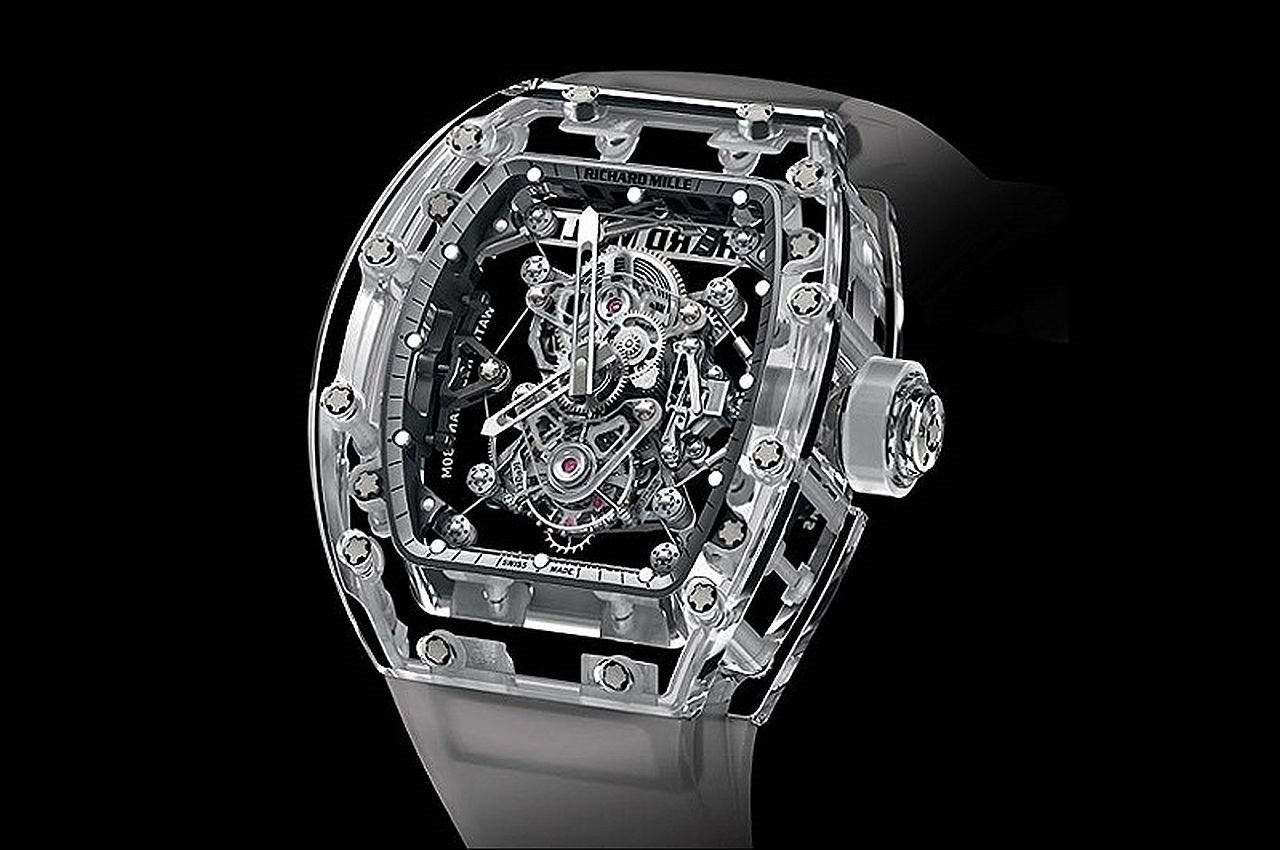
Sapphire. Used for the 1800 Vickers glass used in RM watches as well as replacing rubies in the movement (that's why they are white and not pink), except for the anchor pallets.
However, this material has also been used in the construction
of the RM056 line where the whole case (and baseplate and even a wheel
for the RM056-01 and RM056-02) are made of Sapphire. On the contrary to other
materials Richard Mille uses, although it is hard, I'm "not sure" it
is as shock resistant as other references. Nevertheless, it is the most
impressive material, visually speaking, I was very impressed by its beauty as
I'm preparing a review of the RM056-01.
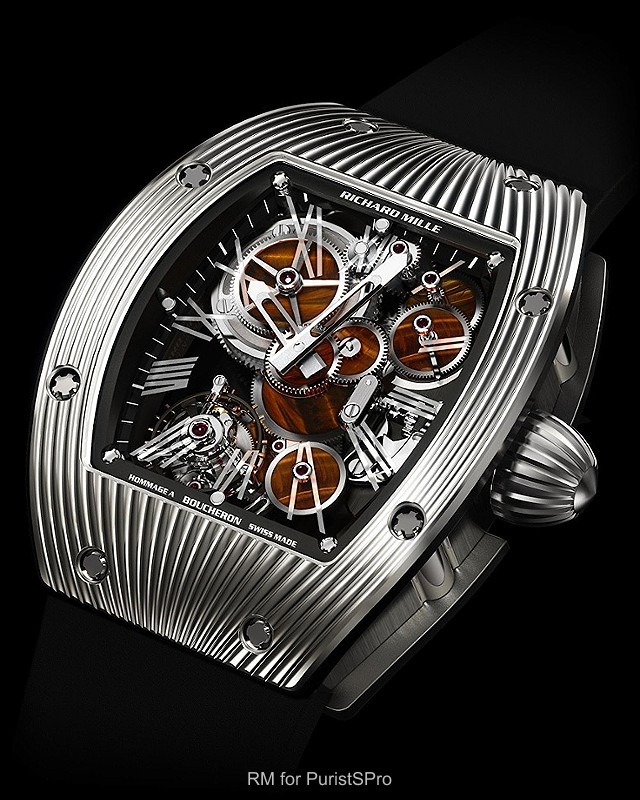
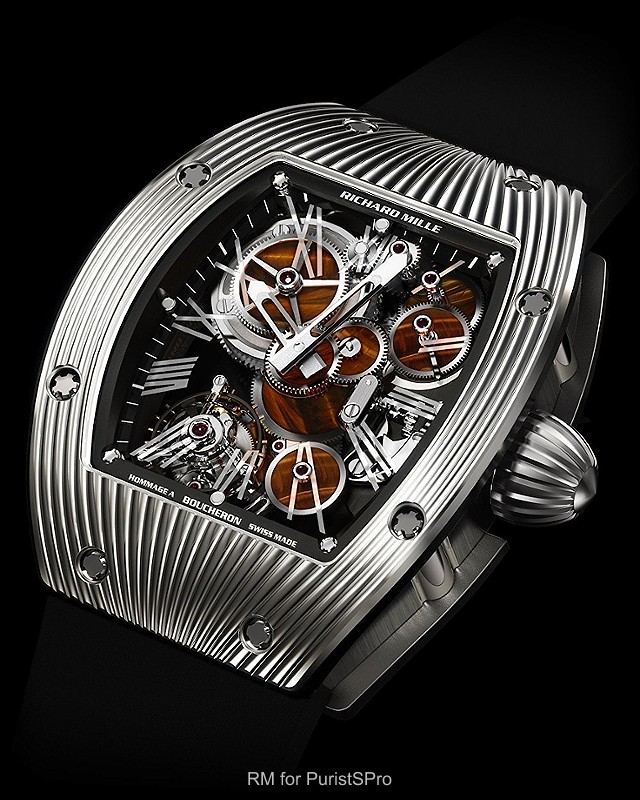
Semi-precious stones. This is not per se a material made to enhance performance but more to add in a more unusual way stones decoration to the movement. When knowing what is at stake in such wheels in terms of inertia it is far from being an easy task to perform (needed 3 years of development). The RM018 Tourbillon "Hommage to Boucheron" is a unique piece. The mainplate was already made of a transparent Sapphire glass, before the RM056. The stone material is made of a mix of Tiger's Eye, Jasp, black Onyx and Diamond. (Thank you Colton for the reminder!)
THE
STRAP
Aside from the usual crocodile leather straps, more exotic stuff is also available.
Polyurethane. Hypoallergenic rubber material
Kevlar
fiber. It is the kind of fiber straps we saw first in Raphael Nadal's
models and that became available for other models too afterwards.
CONCLUSION
We have
seen many very interesting materials that had a significant
impact on the reliability or the accuracy of a watch.
The
harder the material is for the wheels, the less wear you usually
have.
The lighter it is, the less inertia there is; with
less consequence of movements and shocks.
At the
same time, the material has to be able to absorb or resist
shocks.
We don't always realize how hard it is to work on
these materials and the research needed to imagine how we can use them in
watchmaking.
They may not always be absolutely necessary but
it feels so good when they are used.
Thanks to this brand
for going this path not many explore.
Cheers,
Mark
_______________________
The Patek Philippe World Time reference 2523, launched in 1953, is distinguished by its innovative two-crown system. One crown serves for winding the watch, while the second, positioned at 9 o’clock, controls the city disc. This design marked a significant development in the functionality and user experience of world time complications for the brand.
The reference 2523 was offered in two primary versions. The initial ref. 2523 featured larger lugs that extended above the bezel, with a case diameter of 35.5 mm. A subsequent variant, ref. 2523/1, presented a slightly larger diameter of 36 mm and thinner lugs that were integrated without extending above the bezel. Both versions were powered by the caliber 12-400 HU, which incorporated the world time module developed by Louis Cottier.
This reference appeals to collectors interested in Patek Philippe's historical advancements in complicated watchmaking, particularly the evolution of its World Time series. The distinct design differences between the 2523 and 2523/1, especially regarding lug integration and case dimensions, provide specific points of interest for enthusiasts tracking the model's development and variations.
The evolution of the materials and methods are so fantastic to look back on.. another reason to track down that Monographie published a couple years back I think. Thank you for this in-depth summary Mark, and I eagerly anticipate your review on the 056-01! One material I would add to this list though, is semi-precious stones. I recall the RM018 was a very small series of pieces, 12 pieces I think? Each with a different type of stone used in the gear-wheels. Very commendable to see the different
It has evolved in a very interesting way and I can't wait to see what's next. Thanks for mentionning the stones added to the wheels of RM references in the past, I could have indeed included them. Here is one of Andrew's posts about the Boucheron version (seems to be "Unique" from the caseback): www.watchprosite.com 1 Thanks a lot for your interesting input Colton, always nice discussing with you abou RM Have a very happy holidays too! Cheers, Mark
Thank you Mark for your inspiring article. My first reaction was to imagine how I would feel if I was in charge in a different Brand: well, I think I'd be [more than] a bit envying... My second reflection was about the Richard Mille salespersons: are you sure all of them are fully able to explain such a diversity? And... not every aerospace engineer looks attractive with a miniskirt nor every materials chemist looks sexy with a plunging neckline ;-) My third thought goes to the RM collectors/own
This is quite impressive indeed, especially in around less than 15 years. As concerning the salesperson, I imagine no they are not, at least not a majority but who knows... there are some enthusiasts in their teams. As for you 3rd thoughts, no I don't think it is. The majority of the models are very different from one another. If I had to pick for instance one of the limited RM011, I know 2 or 3 I would choose from and I wouldn't be bother to see new ones coming afterwards. It is a wider choice
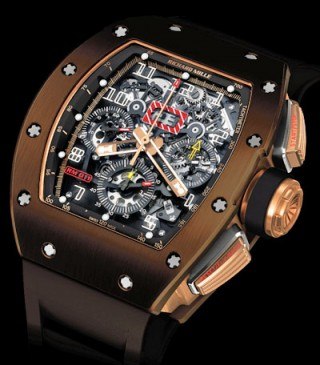
GOLD NTPT CARBON® I have never been a fan of gold watches, but this could be something that might change that.
I wonder how it looks in live. I imagine much sportier than full gold but very decorative on a woman's wrist. Cheers, Mark
This thread is active on the Richard Mille forum with 8 replies. Share your knowledge with fellow collectors.
Join the Discussion →


