
Lifestyle
MTF's post offers a captivating glimpse into Piaget's innovative use of stone dials, a signature aesthetic that defined their watches in the 1960s and 70s. This article teases the brand's return to these vibrant, natural materials, framing it within Piaget's historical 'audacity' and creative genius. Readers are invited to consider the unique appeal and technical artistry behind incorporating semi-precious stones into watch design.


Once upon a time there was Piaget…
Piaget is a story of time, but also of what the Francophiles call "audacity" and inspiration. "Audacity" means something completely different to English speakers so it was a while before I realised that my friends at Piaget were on to a good thing and not being presumptuous!
Proudly merging time-honed expertise and innovation since 1874, the Maison from La Côte-aux-Fées creates watches and jewellery that are renowned far beyond the confines of their home patch of Neuchâtel Jura mountains. Run as a family firm for generations and still with the homely feel today despite the juggernaut that is Richemont Group, Piaget is still able to inspire new trends, and to find their way unscathed through the decades.
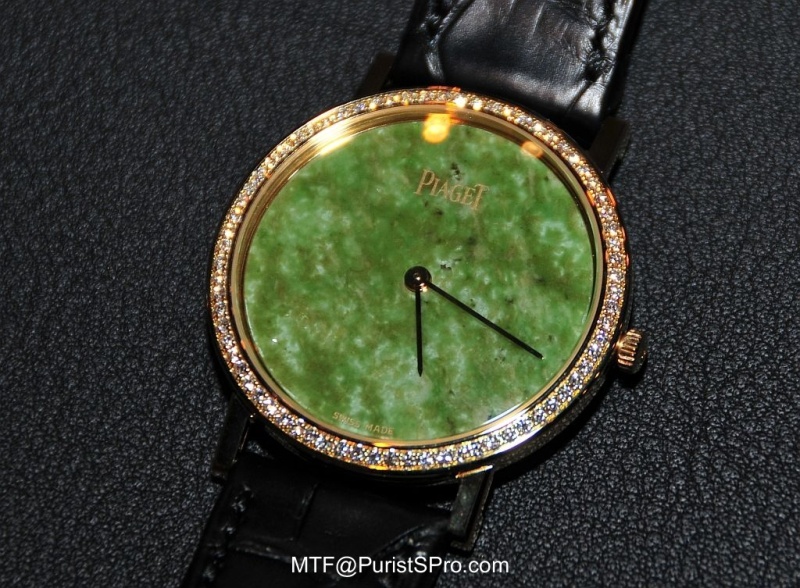
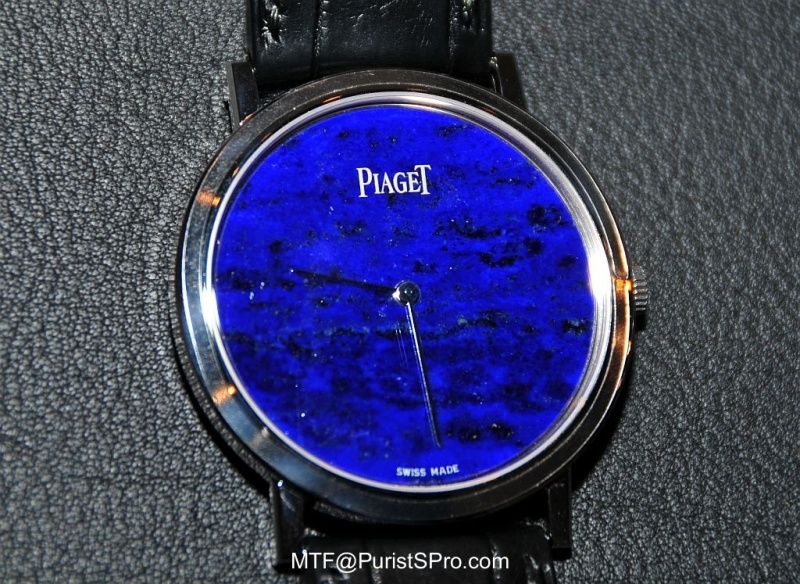
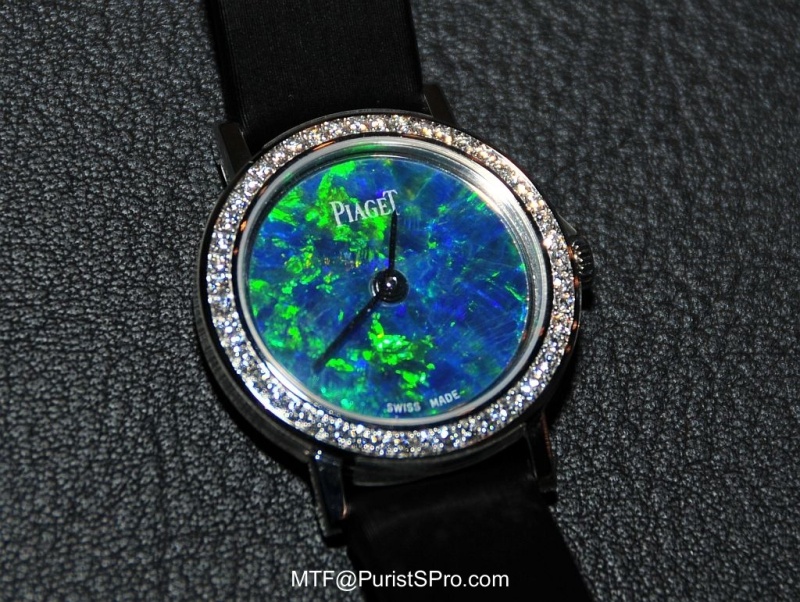
Back in the 1960s, Piaget used stone as structural components and not just decoration. After making their first appearance on Piaget dials, jade, lapis lazuli and opal were then used on watch bracelets from the 1970s onwards.
This represented a revolution combining the nobility of hard stones with a broad range of colours and was perfectly in tune with the fashions of the time. Pure creative genius..... from "Groovy, Baby!" of the Stoned Sixties to "May the Force be with you" of the Funkadelic 70s .
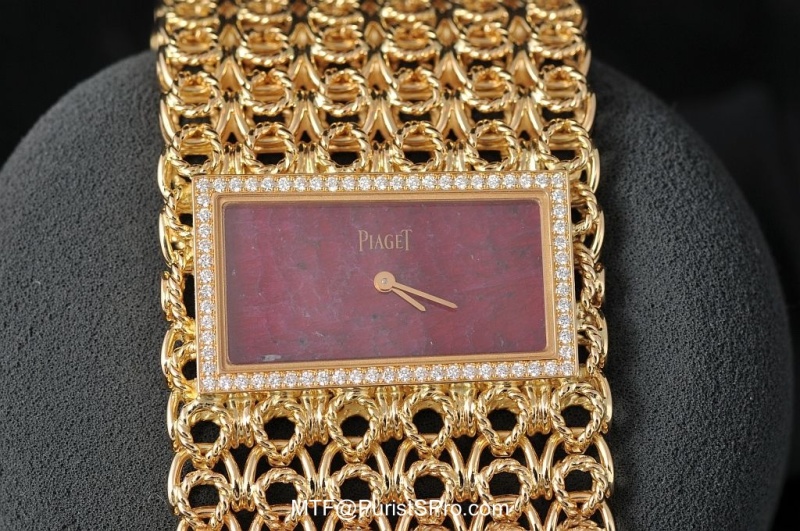
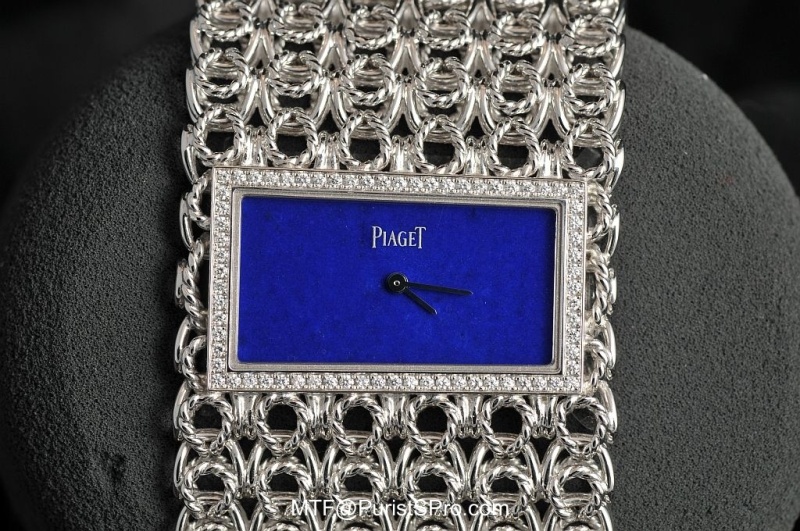
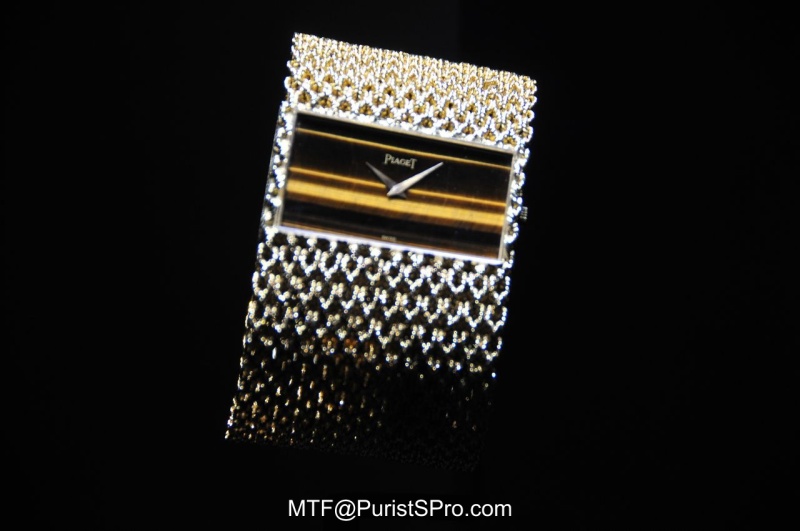
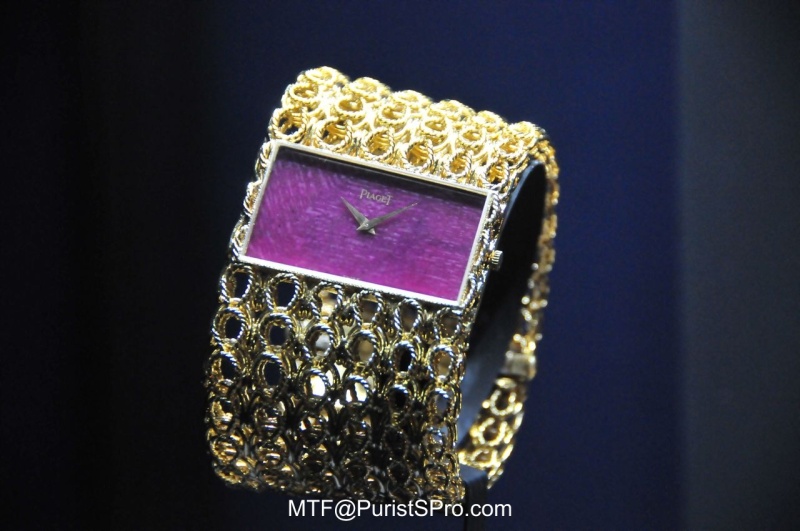
Now in 2013, Piaget returns to their stone dials that started the Swinging Sixties and Psychedelic Seventies.
I tease you hard with a few dials before the next Piaget: Technique and Aesthetique article..... 
What do you think of stone as a dial material?
Regards,
MTF
I love their colours and the subtle details they create. I remember very well the exhibition at the Biennale: Thanks Melvyn for your post! Fx
can do it. I used to think it was a simple 'cut and paste' job. How easy could it be? We have the precision cutting robots nowadays. Just slice a rock and polish it......ta-daaahh! A stone dial. But there is more to that story. It's not just technique but also aesthetique expertise.......... Regards, MTF
Hi I am not into Piaget watches but recently I have seen a Piaget with stone dial and under the Piaget logo on dial it says cutomatic ...... Any info on the watch? Regards
Sohailahmad_777, "cutomatic" would be very unusual word on the dial as it does not make sense. "Automatic" may be a possible word on watches with automatic or self-winding mechanical movements. Piaget made many variants of stone dial watches since the 1960s. It is possible that the watch you saw was a vintage automatic watch with stone dial. It is less likely to be a current production stone dial watch as they are fitted with either manual wind mechanical or battery powered quartz movements, for
Hi thanks for the reply its an 18k vintage 34 mm round watch with Piaget automatic movement . The dial is multi colour stone , its not lapis or tiger eye , something really pretty that gives u a feeling of a bucket of flowers . It is cutomatic I am sure about it. Will try and post some pics tomorrow. Regards
Sohailahmad_777, That is cursive writing and the capital 'A' looks like a 'C' so it reads as 'Automatic'. If that is a Piaget automatic round watch, the movement inside depends on the production year. Do you know the year of manufacture? How did it end up where you are? What are the markings on the back of the watch? What is engraved on the watch winding crown? Regards, MTF
This thread is active on the Piaget forum with 10 replies. Share your knowledge with fellow collectors.
Join the Discussion →


